Proficiency Testing (PT)Part 1: Are You Doing it Right?

Every laboratory knows that they must participate in proficiency testing (PT) for all of the regulated analytes they report. But did you know that there is more to it than simply checking your overall score in each survey you participate in? Whether you utilize samples from the CAP, API, or have developed your own in-house blind sample testing algorithm, there is a lot of data available to help you assess the quality of your laboratory program. In the first of this 3-part series, we’ll review why PT testing is important and the rules that must be followed. In part 2 we’ll discuss how to properly perform an investigation when scores are <100%. Lastly, in part 3 we’ll look at how to review your results so that you get the most out of them for a successful quality laboratory.

Why participate? Well frankly, because you have to. It is a CLIA/CMS requirement, and if your lab has additional accreditations, those agencies will have their own rules and requirements as well (we’ll get to the rules in a little bit). But outside of the regulations stating you must participate; all labs should want to participate. It’s an opportunity to check your accuracy against peers who are using the same instrumentation as you. Similar to utilizing an affiliated QC report, this is a way to see what the “real” value is supposed to be (despite what a manufacturer may claim it to be), and how close/far off your lab is to that true value. It can help you identify potential problems before they become huge problems with patient values being affected, and it’s also a great way to satisfy competency requirements for your staff.

The rules:

  • Participation: For every regulated analyte being tested under your laboratory permit1, you must participate in a CMS-approved PT program2.

Key things to note: This only applies to testing performed using non-waived methodologies. Waived testing is exempt from PT requirements; although it is still recommended that participation occur if an evaluation program is available. Additionally, this only applies to your primary instrumentation. For example, if you have an automated urinalysis reader and your backup methodology is to read dipsticks manually, you are only required to participate in PT for the primary methodology. (Your backup method would then be evaluated for accuracy through semi-annual correlation studies.)

  • Routine Analysis: Unless otherwise instructed by the provider of your PT samples, PT samples are to be treated the same as patient samples. Meaning they are handled, prepared, processed, examined, tested and reported the same way you would perform patient testing; AND by the same staff who would handle patient testing.

Key things to note: If nursing staff perform a particular test within their unit (for example, ACT testing in the cardiac cath lab), it is those nursing staff members who must run the PT samples. You cannot have the laboratory perform PT testing unless the laboratory also performs the patient testing. Additionally, PT samples should be rotated among all staff members who perform patient testing. Meaning all shifts, and all days of the week that the test is performed – don’t let the day shift get all the fun.

  • Repeated Analysis: Similar to rule #2, unless you routinely perform duplicate testing on your patient samples, you cannot perform duplicate or repeat testing on your PT samples. You cannot run a PT sample in duplicate “just to make sure.” Patient samples are just as important to be accurate as a PT sample, which is why we participate in a PT program in the first place.

Key things to note: After the date that laboratories are required to report results back to the PT provider, you are then allowed to use the samples for repeat testing. This can be used to check for uniformity in grading of reactions among staff members, and to assess annual competency. But only after the submission date has passed.

  • Interlaboratory Communication: You cannot discuss the results or samples from a PT survey with any other laboratory (or Facebook user group) until after the results submission deadline has passed. Doing so before that time would be considered cheating. The point of PT testing is not to see how good your networking skills are, but to ensure accuracy of your own results. Plus, the other lab may not be as good as you think they are.

Key things to note: If your laboratory is part of a larger integrated health system, be careful that you have separate designated staff assigned to enter results from each location. Entering results for more than one permit number by the same person would be considered a violation of the interlaboratory communication rule as they could compare results from Lab A to Lab B prior to submitting. Also, be mindful of what you put on social media. User groups are a great networking resource and learning tool, but you still need to follow the rules. Violating them in a public arena such as Facebook for all the world to see would put yourself and your organization in great jeopardy if you were caught. 

  • Referral of Samples: You are not permitted to forward or share your PT samples with any other laboratory until after the result submission deadline has passed. Similarly, if your laboratory has received PT samples from another lab, state regulations may require you to notify your local Department of Health to inform them of the violation.

Key things to note: The intended purpose of performing PT testing is to verify the accuracy of your own laboratory testing. If you would routinely send a positive sample to a reference lab for additional confirmation testing, you would not do so in this case. Simply report out the values for the tests that your laboratory performs only. The reference laboratory will have their own PT samples to check accuracy for the confirmation testing they perform for you. Ensure your testing menu is up to date and accurate so that your PT provider is not expecting values for a confirmatory test if you do not physically perform it in-house.

  • Records Retention: Ensure that all records and documents related to the testing of PT samples are saved for the amount of time required by your regulatory agencies (typically 2-5 years). This includes instrument print outs, LIS chart copies of the filed results, QC records for the day of testing, and any associated worksheets used to document your results.

Key things to note: Retaining a copy of the instrument maintenance logs and QC records along with the actual PT results will help you investigate any scores that are less than 100%.

  • Attestation: Both the laboratory director and all personnel performing testing must sign the included attestation statement. This is not just a way to track who performed the test, but is a legal binding document assuring that testing was carried out appropriately as per the rules defined above.

The penalties for labs that are caught violating the rules (whether intentionally or not) can be quite severe. These penalties can include the revocation of your CLIA permit; a ban for the laboratory owner and laboratory director; as well as possible financial penalties and fines.

Coming up in the next blog we’ll review the rest of the rules related to evaluation of your scored PT results, and how to perform a thorough investigation into any unsuccessful survey events.

1: https://www.cms.gov/regulations-and-guidance/legislation/clia/downloads/cliabrochure8.pdf

2: https://www.cms.gov/Regulations-and-Guidance/Legislation/CLIA/Downloads/ptlist.pdf

-Kyle Nevins, MS, MLS(ASCP)CM is one of ASCP’s 2018 Top 5 in the 40 Under Forty recognition program. She has worked in the medical laboratory profession for over 18 years. In her current position, she transitions between performing laboratory audits across the entire Northwell Health System on Long Island, NY, consulting for at-risk laboratories outside of Northwell Health, bringing laboratories up to regulatory standards, and acting as supervisor and mentor in labs with management gaps.

Blood Bank Case Study: A 54 Year Old Woman with Lethargy

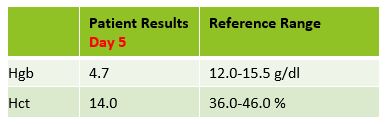
The patient is a 54 year old woman, presenting to the Emergency Room with complaints of abdominal cramps and feeling lethargic for the past few days. She also reports her stools have been black and sticky.  Her chart reveals a history of ulcers and GI bleeding.  She was transfused with 2 units packed RBCs 2 months ago for the same symptoms. CBC results are shown below.

The patient was admitted to the hospital and four units of blood were ordered. The patient is type A pos with a negative antibody screen. One unit of packed red blood cells would be expected to raise the Hgb by 1g/dl. Because the patient was actively bleeding, 4 units were crossmatched and transfused.

Two days later, the patient was discharged, with orders to follow up with her GI doctor for further testing and treatment. Three days after discharge she still felt weak and returned to the ER. On examination, it was noted that the patient’s eyes and skin appeared jaundiced. The patient had a fever of 100F. Repeat lab results are shown below.

The Physician ordered a type and crossmatch for 2 units of packed red blood cells. The patient’s antibody screen was now positive. A transfusion reaction workup was initiated

Transfusion workup

Clerical Check- No clerical errors found.

Segments from all 4 transfused units were phenotyped for Jka antigen. Three of the four units transfused typed as Jka positive.

A transfusion reaction is defined as any transfusion-related adverse event that occurs during or after transfusion of whole blood, or blood components. Transfusion reactions can be classified by time interval between the transfusion and reaction, as immune or non-immune, by presentation with fever or without fever, or as infectious or non-infectious.

A delayed transfusion reaction is defined as one whose signs or symptoms typically present days to several weeks after a transfusion. In Transfusion Medicine, we do not want to give the patient an antigen that is not present on their red blood cells. However, we do not routinely phenotype patients, so, in the patient with a negative antibody screen and history, it is always possible that the patient receives units with foreign antigens. The more immunogenic the antigen, and the greater number units received that expose the patient to this antigen, the greater likelihood that the patient will develop an antibody to the foreign antigen. Therefore, this type of reaction would also be categorized as immune.

In a delayed hemolytic transfusion reaction (DHTR) investigation, the units transfused would have appeared compatible at initial testing. This type of adverse event is fairly common in patients who have been immunized to a foreign antigen from previous transfusion or pregnancy. The antibody formed may fall to a very low level and therefore not be detected during pretransfusion screening. If the patient is subsequently transfused with another red cell unit that expresses the same antigen, an anamnestic response may occur.  The antibody level rises quickly and leads to the DHTR. In the transfusion reaction workup, this antibody can often be detected when testing is repeated. However, in some cases, particularly with Kidd antibodies, the levels again drop off so quickly they may not be detected!  The diagnosis of DHTR is often difficult because antibodies against the transfused RBCs are often undetectable and symptoms are inconclusive.

This case is a classical example of a DHTR.  Kidd antigens are notorious for causing DHT because their levels can drop off quickly and disappear, making them difficult to detect in screening. In this case, the transfusion two months earlier exposed the patient to the Jka antigen and the patient produced the corresponding antibody. The levels then dropped quickly, as elusive Kidds are known to do! When the patient returned to the ER in crisis, the antibody levels had dropped below detectable levels and the antibody screen was negative. The patient was given 4 units and returned to the ER five days after transfusion. This patient did exhibit mild jaundice and a low-grade fever. However, often, the only symptom of a DHTR is the unexpected drop in Hgb and Hct, making them even more difficult to diagnose.

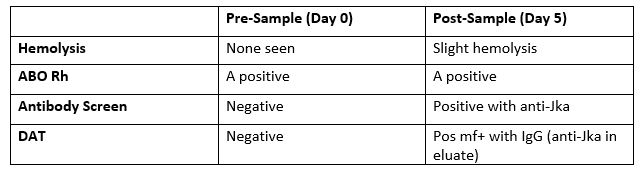
The new antibody screen, sent to the Blood Bank on day 5, detected anti-Jka. The DAT was positive mixed field due to the transfused cells. Elution was performed and anti-Jka was recovered in the eluate. In the DHTR, only the transfused cells are destroyed. Phenotyping segments from the transfused units can estimate amount of transfused RBCs that may have shortened survival. Management of this case patient would be to provide antigen negative units for all future transfusions.

Kidd  (Anti-Jka and Anti-Jkb), Rh, Fy, and K have all been associated with DHTR and occur in patients previously immunized to foreign antigens through pregnancy and transfusion. These types of reactions are generally self-limiting but can be life threatening, especially in multiply transfused patients, such as those with sickle cell anemia. Antigen negative blood must always be given, even if the current sample is not demonstrating the antibody in question. For that reason, it is vitally important to always do a thorough Blood Bank history check on all samples!

-Becky Socha, MS, MLS(ASCP)CM BB CM graduated from Merrimack College in N. Andover, Massachusetts with a BS in Medical Technology and completed her MS in Clinical Laboratory Sciences at the University of Massachusetts, Lowell. She has worked as a Medical Technologist for over 30 years. She’s worked in all areas of the clinical laboratory, but has a special interest in Hematology and Blood Banking. When she’s not busy being a mad scientist, she can be found outside riding her bicycle.

Surgical Pathology Case Study: A 42 Year Old Woman with an Enlarging Mass of the Forearm

Case History

A 42 year old female with a history of neurofibromatosis, hypertension and Hashimoto’s thyroiditis had noted a mass on her forearm approximately 15 years ago. According to the patient, the mass did not change in size and did not cause her any discomfort during that time. Approximately 6 months prior to presenting to her primary physician, the mass began to increase in size and caused discomfort and pain. Upon examination with the Orthopedic Surgery department, a 20 x 20 cm firm, smooth mass on her forearm with mild pain on palpation was noted (Image 1). On MRI, the mass appeared to partially surround the radius and ulna, and encased the median, radial and ulnar nerves. A needle core biopsy was subsequently performed on the mass revealing a high grade malignant peripheral nerve sheath tumor (MPNST). A CT scan of the chest showed no evidence of metastatic disease. During her clinical visit, the use of neoadjuvant chemotherapy and chemoradiotherapy were discussed, but based on the large size of the mass, tumor response would have to be significant in order to allow for limb conserving surgery. At the time that the patient was seen, MPNSTs were not known to be chemosensitive and the chances of significant tumor response was very low (clinical drug trials have since shown some improvements in this area). In light of the poor response to systemic therapy of these tumors and the potentially toxic side effects of chemotherapy, the decision was made to proceed with amputation of the arm through the humerus.

Diagnosis

Frozen sections were sent from all the major peripheral nerves, including the ulnar, radial and median nerves. There was no evidence of any tumor consistent with a high-grade MPNST, although there was evidence of neurofibromas. There were atypical cells with hyperchromasia in the ulnar nerve margin, however, this was not considered to be consistent with a high grade MPNST. Received in the surgical pathology lab was an above elbow amputation consisting of a 30.0 cm long distal arm, an attached hand measuring 17.0 cm in maximum length., and a 4.5 cm long exposed humerus. The specimen is covered by grossly unremarkable skin, with a palpable mass in the mid-portion of the forearm. Sectioning reveals an 18.0 x 12.0 x 11.0 cm well-circumscribed mass composed of bulging, myxoid, white-tan tissue with central areas of hemorrhagic degeneration and yellow-tan friable tissue (Image 2). The bulging white-tan tissue is mainly found peripherally and encompasses approximately two-thirds of the mass. The mass is confined to a thin translucent lining and does not grossly invade neighboring soft tissue or overlying skin. The radial, median and ulnar nerves are adjacent to but not invaded by the mass, although the distal aspect of the mass shares a translucent, myxoid-like tissue with the peripheral nerve sheath of the ulnar and median nerves.

In addition to the standard bone and soft tissue margins that are taken, representative sections of the mass with the closest approach to the overlying skin are submitted. Sections demonstrating the relationship of the distal mass to the radial, median and ulnar nerves are submitted in separate cassettes. Lastly, representative sections sampled from various areas of the mass are submitted in an additional 15 blocks.

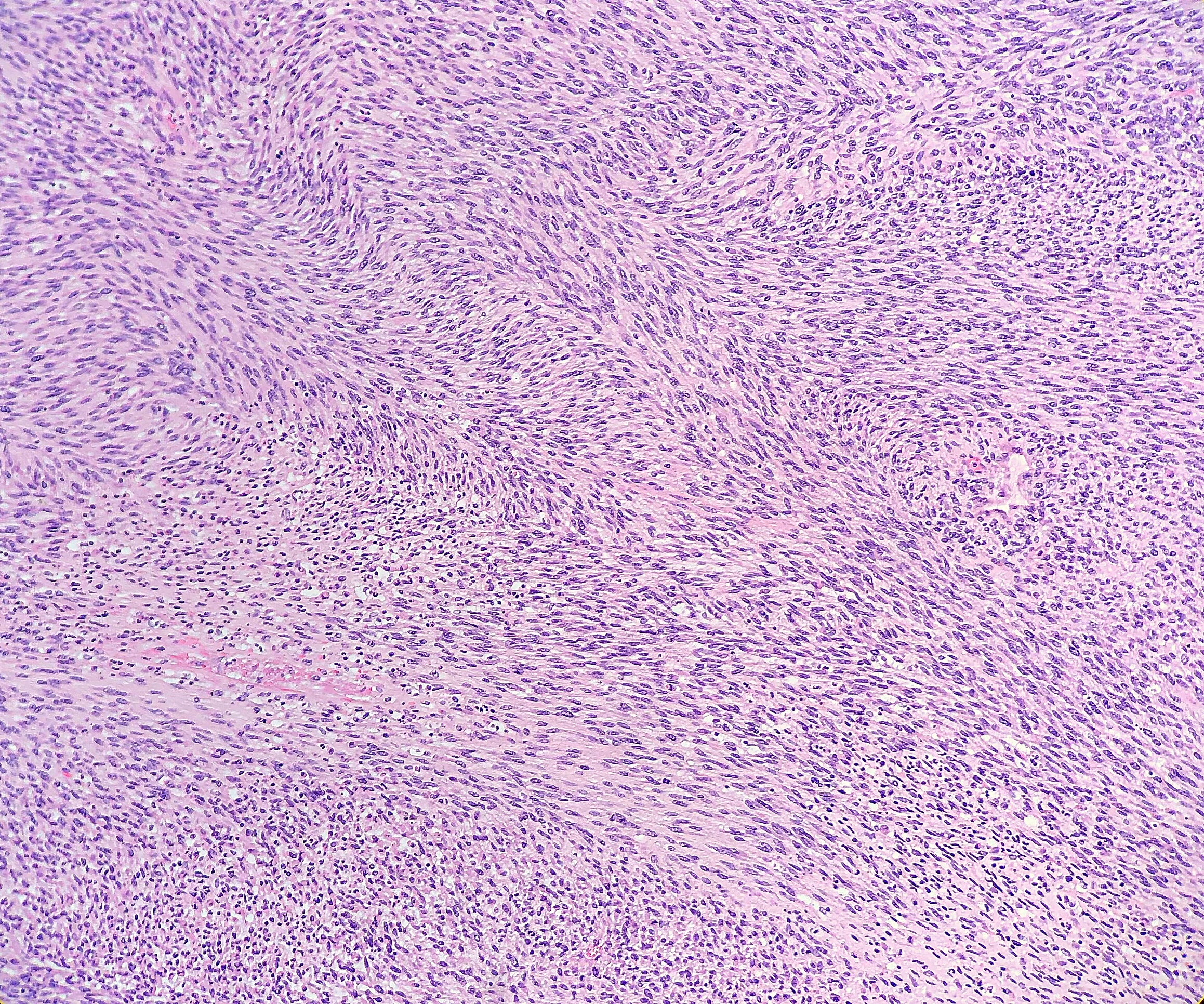
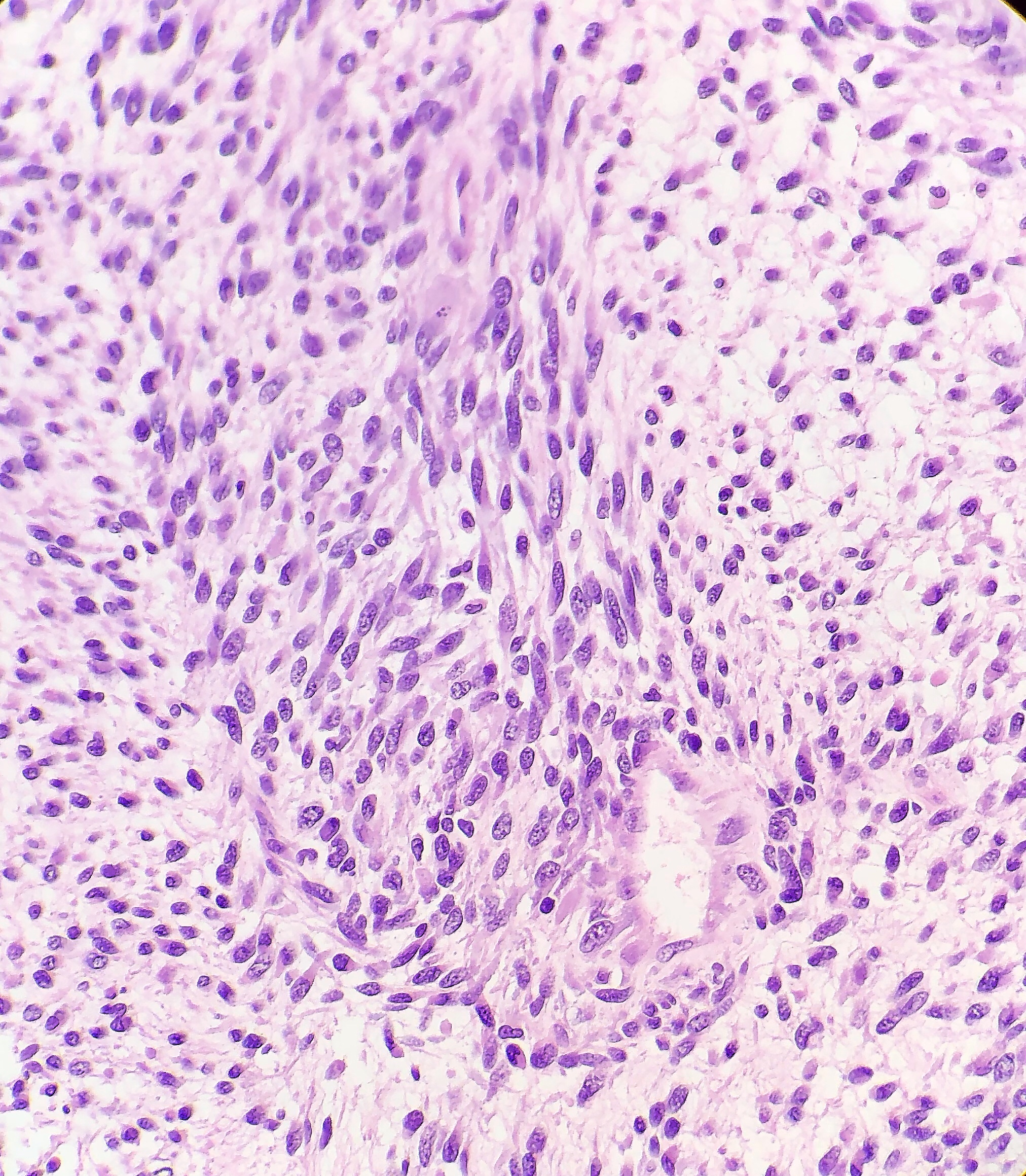
Histologically, the tumor consisted of spindle cells arranged in a fascicular pattern with intermittent whorled areas. The cells contained pleomorphic, hyperchromatic nuclei and intervening myxoid hypocellular areas. Mitotic figures were observed with sparse areas of necrosis and hemorrhage. S-100 was ordered on the prior biopsy of the mass, which was weakly positive. Based on these findings, the specimen was signed out as a malignant peripheral nerve sheath tumor.

Image 1. Above elbow amputation with a large forearm mass.
Image 2. Longitudinal cross section of arm demonstrating a bulging, white-tan mass with areas of hemorrhage and necrosis.

Discussion

Malignant peripheral nerve sheath tumors (MPNST) are locally invasive tumors that are associated with medium to large nerves (as opposed to cranial or distal small verves) and commonly recur with eventual metastatic spread. Common sites for metastatic spread include lung, liver, brain, bones and adrenals. They are usually found in adults between the second and fifth decades of life, and account for only 5% of malignant soft tissue tumors. Approximately half of MPNSTs will occur sporadically, with the other half generally arising in the setting of neurofibromatosis type 1 (such as in this case). There is a high clinical suspicion for MPNST if the patient has a history of neurofibromatosis type 1 or if the tumor arises within a major nerve component.

Grossly, MPNST will present as a large, poorly defined, fleshy tumor that runs along a nerve and involves adjacent soft tissue. Often, these tumors will have areas of hemorrhage or necrosis and can track along the length of a nerve. Histologically, the tumors are composed of monomorphic spindle cells arranged in fascicles, palisades and whorls, with compact comma-shaped, wavy or buckled hyperchromatic nuclei with alternating hypocellular foci. (Image 3 and 4). Mitotic figures and necrosis are common, and although S-100 is considered the best marker for MPNST, there is a lack of specificity and sensitivity for immunohistochemical markers. Due to the lack of immunohistochemical markers and molecular findings, as well as the variability associated with the cells, it has traditionally been difficult to diagnose MPNST. The differential diagnosis includes fibrosarcoma, monophasic synovial sarcoma, desmoplastic melanoma, and pleomorphic liposarcoma. Goldblum et al put forth the idea that a diagnosis of MPNST can be made if the tumor falls into any one of the following three categories:

  1. The tumor arises along a peripheral nerve
  2. The tumor arises from a pre-existing benign nerve sheath tumor, such as a neurofibroma
  3. The histologic features are consistent with a malignant Schwann cell tumor

Unfortunately, due to the aggressiveness of the tumor and high recurrence rate, MPNST has a poor prognosis with a 2 year overall survival rate of around 57% and a 5 year survival rate around 39%.

Image 3. Low power photomicrograph showing a spindle cell neoplasm arranged in a fascicular pattern.
Image 4. High power photomicrograph demonstrating spindle cells with hypercellular nuclei in a whorled arrangement and adjacent myxoid hypocellular areas.

References

  1. Case of the week #443. Pathology Outlines. http://www.pathologyoutlines.com/caseofweek/case443.htm. Published November 15, 2017. Accessed March 10, 2019.
  2. Frosch MP, Anthony DC, De Girolami U. Malignant Peripheral Nerve Sheath Tumor. In: Kumar V, Abbas AK, Fausto N, Aster JC. Robbins and Cotran Pathologic Basis of Disease, 8th edition. Philadelphia, PA: Elsevier, Inc. 2010: 1341-1342
  3. Guo A, Liu A, Wei L, Song X. Malignant Peripheral Nerve Sheath Tumors: Differentiation Patterns and Immunohistochemical Features – A Mini-Review and Our New Findings. J Cancer. 2012; 3:303-309. http://www.jcancer.org/v03p0303.html. Accessed March 9, 2019.
  4. Hirbe AC, Cosper PF, Dahiya S, Van Tine BA. Neoadjuvant Ifosfamide and Epirubicin in the Treatment of Malignant Peripheral Nerve Sheath Tumors. Sarcoma. https://www.hindawi.com/journals/sarcoma/2017/3761292/cta/. Accessed March 10, 2019.
  5. Ramnani, DM. Malignant Peripheral Nerve Sheath Tumor. WebPathology. https://www.webpathology.com/case.asp?case=499. Accessed March 9, 2019.
  6. Shankar V. Malignant peripheral nerve sheath tumor (MPNST). Pathology Outlines. http://www.pathologyoutlines.com/topic/softtissuempnst.html. Revised September 12, 2018. Accessed March 9, 2019.

-Cory Nash is a board certified Pathologists’ Assistant, specializing in surgical and gross pathology. He currently works as a Pathologists’ Assistant at the University of Chicago Medical Center. His job involves the macroscopic examination, dissection and tissue submission of surgical specimens, ranging from biopsies to multi-organ resections. Cory has a special interest in head and neck pathology, as well as bone and soft tissue pathology. Cory can be followed on twitter at @iplaywithorgans.

Genetic Results: Set in Stone or Written in Sand?

This month, I’m switching gears to another interest of mine: Molecular Pathology. I am currently in fellowship for Molecular Genetic Pathology which exposes me to unique, thought-provoking cases.  

Advances in genomic sequencing has allowed multiple genes to be analyzed in a single laboratory test. These so-called gene panels have increased diagnostic yield when compared to serial gene sequencing in syndromic and non-syndromic diseases with multiple genetic etiologies. However, interpretation of genetic information is complicated and evolving. This has led to wide variation in how results are reported. A genetic test result can either be positive (pathogenic or likely pathogenic), negative (benign or likely benign) or uncertain (variant of uncertain significance- VUS). A VUS may just be part of what makes each individual unique and doesn’t have enough evidence present to say that it is pathogenic or benign. Many results come back like this and can be frustrating for patients to hear and for genetic counselors and clinicians to explain.

Initial approaches to exclude benign variants through sequencing 100 “normal people” to determine the frequency of common variants in the population was fraught with bias. The “normal population” initially was constructed mostly of individuals with white European descent. Not surprisingly, lack of genetic diversity in control populations lead to errors in interpretation.

Fortunately, there are now several publicly available databases that exist to help determine whether gene variants are damaging. The first important piece comes from population sequencing efforts. These projects performed whole exome sequencing of hundreds or thousands of individuals to find variants that might be rarely expressed in a more genetically diverse population. If a variant occurs in a normal health population at a frequency >1%, then it likely doesn’t cause a severe congenital disease that would in turn prevent that genetic variant from being passed on.

The Exome Association Consortium (ExAC)1, which has been rolled into the larger gnomAD (genome aggregation database) database now contains sequencing information on 120,000 individuals (Figure 1). The smaller ESP (Exome Sequencing Project) was a project by the NHLBI division of NIH and sequenced several patients with different cardiovascular and pulmonary diseases.

Figure 1. Number and percent of various ethnicities present in 4 major population sequencing projects.

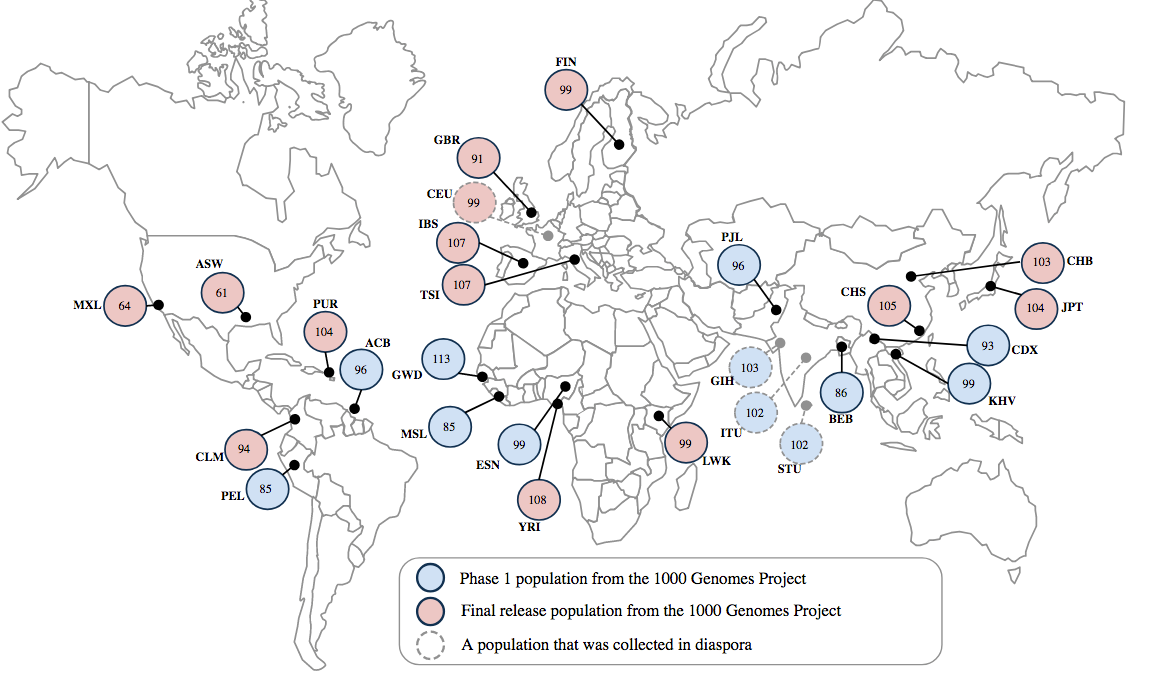
While there is ethnic diversity present in this database, the 1000 genomes project2 furthered efforts by searching all over the world to get genetic information from around 100 ethnically and geographically distinct sub-populations (Figure 2).

Figure 2. Geographic map of populations sequenced by the 1000 Genomes Project.

With use of these databases, we can effectively rule out rare polymorphisms as benign when they are expressed in several healthy individuals and especially when expressed in the homozygous state in a healthy individual. Before, it was common for a person of an ethnic minority to have different variants compared to predominantly European cohorts. In many cases, this led to uncertain test results.

One way to deal with these VUSs is for a lab to periodically review their test results in light of new knowledge. Although the CAP has a checklist3 item that requires a lab to have a policy about reassessing variants and actions taken. However, this item doesn’t require a lab to communicate the results with a physician and doesn’t specify how often to reanalyze variants. Before last year, there weren’t even any studies that indicated how often variant reanalysis should occur. Variant reanalysis had only been studied in a limited context of whole exome sequencing for rare diseases to improve the diagnostic yield4. However, this did not address the issue of frequent VUSs to determine how often they were downgraded to benign or upgraded to pathogenic.

One example of how reclassification can occur is illustrated in the case of a young African American boy who had epilepsy and received a genomic test that covered a panel of genes known to be involved in epilepsy in 2014. Two heterozygous VUS were reported back for EFHC1 (EFHC1 c.229C>A p. P77T and EFHC1 c.662G>A p. R221H), which causes an autosomal dominant epilepsy syndrome when one allele is damaged. However, this variant could later be reclassified as benign by looking at population databases. The ExAC database showed an allele frequency of 2.5% in African Americans and the 1000 Genomes database showed an 8.8% frequency in the GWD subpopulation (Gambian Western Divisions).

This case demonstrates the importance of reanalyzing genetic test results as medical knowledge continues to evolve. Recently studies looking at reclassification rates of epilepsy5 and inherited cancer syndromes6 have been published in JAMA journals and demonstrate that reclassification of variants is common. It is thus important for laboratories to periodically review previously reported variants to provide optimal quality results and patient care. I will elaborate on this further in the next blog post.

References:

  1. Lek M, Karczewski KJ, Minikel EV, et al. Analysis of protein-coding genetic variation in 60,706 humans. Nature. 2016;536:285-291.
  2. The 1000 Genomes Project Consortium, Auton A, Brooks LD, et al. A global reference for human genetic variation. Nature. 2015;526:68-74.
  3. Sequence Variants – Interpretation and Reporting, MOL.36155. 2015 College of American Pathologists (CAP) Laboratory Accreditation Program Checklist.
  4. Costain G, Jobling R, Walker S. Periodic reanalysis of whole-genome sequencing data enhances the diagnostic advantage over standard clinical genetic testing. Eur J Hu Gen. 2018.
  5. SoRelle JA, Thodeson DM, Arnold S, Gotway G, Park JY. Clinical Utility of Reinterpreting Previously Reported Genomic Epilepsy Test Results for Pediatric Patients. JAMA Pediatr. 2018 Nov 5:e182302.  
  6. Mersch J, Brown N, Pirzadeh-Miller, Mundt E, Cox HC, Brown K, Aston M, Esterling L, Manley S, Ross T. Prevalence of Variant Reclassification Following Hereditary Cancer Genetic Testing. JAMA. 2018 Sep 25;320(12):1266-1274.

-Jeff SoRelle, MD is a Molecular Genetic Pathology fellow at the University of Texas Southwestern Medical Center in Dallas, TX. His clinical research interests include understanding how the lab intersects with transgender healthcare and advancing quality in molecular diagnostics.

This work was produced with the guidance and support of:

Dr. Jason Park, MD, PhD, Associate Professor of Pathology, UT Southwestern Medical Center

Dr. Drew Thodeson, MD, Child Neurologist and Pediatric Epileptologist

Hematopathology Case Study: A 39 Year Old Woman Presenting with Persistent Cough and Pericardial Effusion

Case history

The patient is a 39 year old woman presenting with a persistent cough. Upon work up, a pericardial effusion is noted. Pericardiocentesis is performed and a smear made from the pericardial fluid reveals atypical lymphoid cells.

Cytology of the Pericardial Fluid

Image 1. Pericardial fluid cytology showing reactive mesothelial cells surrounded by benign small lymphocytes and atypical large lymphocytes.

Additional imaging reveals an anterior mediastinal mass measuring 12.6 cm. Excision of the mediastinal mass is performed. Sections of mediastinal mass show a variable population of lymphoid cells ranging from small to medium lymphocytes and some atypical large lymphocytes. These atypical large lymphocytes have irregular nuclear contours with abundant cytoplasm, vesicular chromatin and prominent nucleoli. These atypical large lymphoid cells are consistent with Hodgkin Reed-Sternberg cells. Abundant eosinophilic and scattered neutrophilic infiltration are noted within the nodules. These nodules are surrounded by dense collagen bands.

Image 2. H&E sections showing small to medium sized lymphoid cells with scattered large Hodgkin Reed-Sternberg cells infiltrating through fibrosis (frozen section A) and inflammatory cells predominantly eosinophilic infiltration (B) Fascin (C) and CD30 (D) are positive for atypical lymphoid cells.

Immunohistochemistry studies are performed, atypical large lymphoid cells are positive for CD30, Fascin and PAX5, while rare small to medium sized lymphocytes are positive for CD20, however, large atypical lymphoma cells are negative for CD20. Tumor cells are negative for CD3, CD5, CD15, LCA, ALK and EBER ISH. CD3 and CD5 highlight the reactive T cells in the background.

Image 3. PAX5 is positive in some tumor cells.

Overall, the case is consistent with nodular sclerosis classic Hodgkin lymphoma.  The presence of sheets of large lymphoma cells is suggestive of the syncytial variant.

Discussion

Nodular sclerosis classic Hodgkin’s lymphoma (NSCHL) subtype has a distinct epidemiology, clinical presentation and histology. NSCHL is more common in females with peak aged between 15 and 34 years. The risk is higher in high socioeconomic status. The patients are presenting with particularly mediastinal mass and 40% B symptoms.

NSCHL can be distinguished from the other subtypes of Hodgkin’s lymphoma (HL) with characteristic histologic features. There is a nodular growth pattern and the nodules are surrounded by collagen bands representing nodular sclerosis.  The lymphoma is composed of variable number of Hodgkin Reed-Sternberg (HRS) cells, small to medium sized lymphoid cells and non-neoplastic inflammatory cells, predominantly eosinophils, neutrophils and histiocytes. HRS cells have multinucleated or binucleated with irregular nuclear contours and prominent nucleoli. HRS cells induce fibroblastic activity by expressing IL-13 and the fibrosis begins in the lymph node by invaginating into the lymph node along vascular septa.

Immunophenotypically, the lymphoma cells are mostly positive for CD30 and 75-85% positive for CD15. Association with EBV can be demonstrated with EBER in-situ hybridization.  The malignant lymphocytes in NSCHL are variably expressing CD20, PAX5 and CD79a, however, T cell antigen markers, particularly CD4 and CD2 are aberrantly expressed in NSCHL.

NSCHL is classified mostly as grade 2 and the prognosis is better than the other subtypes of HL.  Doxorubicin, bleomycin, vinblastine and dacarbazine (ABVD) is the most frequent induction regimen for NSCHL patients with over 70% response rate.

Patients with Syncytial Variant Nodular Sclerosis Classic Hodgkin Lymphoma experience a lower than expected rate of complete therapeutic response with shorter progression-free than non-SV NSCHL treated with standard therapy. Syncytial Variant NSCHL should therefore be recognized as a high-risk subgroup within the otherwise traditionally docile NSCHL classification. This case fits the classic presentation for syncytial variant with presentation as bulky (mediastinal) disease.

References

  1. Eberle FC, Mani H, Jaffe ES. Histopathology of Hodgkin’s Lymphoma. Cancer J. 2009 Mar-Apr;15(2):129-37.
  2. Swerdlow SH, Campo E, Harris NL et al. WHO Classification of Tumors of Haematopoietic and Lymphoid Tissues (Revised 4th Edition). IARC: Lyon 2017.
  3. Sethi T, Nguyen V, Li S, Morgan D, Greer J. Differences in outcome of patients with syncytial variant Hodgkin Lymphoma compared with typical nodular sclerosis Hodgkin Lymphoma. Ther Adv Hematol 2017, Vol. 8(1):13-20.

Ayse Irem Kilic is a 2nd year AP/CP pathology resident at Loyola University Medical Center. Follow Dr. Kilic on twitter @iremessa.

Kamran M. Mirza, MD, PhD, MLS(ASCP)CM is an Assistant Professor of Pathology and Medical Education at Loyola University Health System. A past top 5 honoree in ASCP’s Forty Under 40, Dr. Mirza was named to The Pathologist’s Power List of 2018. Follow him on twitter @kmirza

Tired Traveler Travel Tips

When I was considering the Chief Medical Officer role at ASCP, there was significant travel on the table. Prior to ASCP, I was already a seasoned traveler, having been to every continent except Antarctica. I had a few travel tricks up my sleeve. However, the nearly 2 weeks per month that I find myself out of the ASCP offices have evolved my travel skills from seasoned to ninja. For your enjoyment, here are some of my best tips.

Join and explore a loyalty program. We all have frequent flyer miles with one or more airlines; however, consistent use of a single airline or group of airlines (Star Alliance, Sky Team, etc) will rapidly add up and provides perks and benefits you may have to research a bit. Most importantly, don’t get discouraged by one bad flight and switch! They are called loyalty programs for a reason. In addition to upgrades, lounge access, early boarding, and free premium snacks, perks like premium economy for the same price as economy make a huge difference as planes seats get tighter.

Book economy, fly business. Economy non-refundable tickets are the least expensive typically, especially when booked on a Tuesday. If you’re booking a common business commuter flight (Chicago to NYC, Boston to DC), make sure you’re staying over a Saturday and watch prices to book effectively over time. Typically, business customers book last minute (paying highest prices) so prices are lower when booked very early; however, commuter flights are often packed with business travelers so booking early may not always be cheapest. When you get to the airport, ask if upgrades to business are available when you check in but be patient! Booking the upgrade at the gate desk is often significantly cheaper. Set a limit for yourself. “I won’t upgrade unless the cost is less than $XXX.” This will keep your personal budgeting in check and not let your exhaustion or irritation with your last economy leg lead to something rash. 

Plan ahead. If you’re planning a vacation, especially a long flight (not a typical business flight), research prices way ahead of time and watch them for some time. There are websites into which you can load your favorite flights and received pricing alerts. Even if you’re a business traveler (for example, attending conferences), you’ll likely know the dates early and be able to do the same. The earliest flights of the day are often the cheapest but remember the opportunity cost to you of having to get up extra early (especially if hauling little ones!).

Carry on. Don’t check a bag. There are exceptions but, for the most part, don’t check a bag. Consider the laundry services at your hotel or access to laundry machines. When you are packing, lay everything out and ask yourself, “Am I going to die if this is not with me?” If the answer is “no,” move to the “maybe” pile. If you’re bringing gifts, carry them in a reusable sack as your personal item. Speaking of reusable sacks, organizing your back pack with a few of these means you can pull out “computer” or “clothes” or “other” quickly and replace them easily (it’s like file folders). If you are going on a big trip and just can’t do without a checked bag, try to fly direct and/or make sure you have a full one hour (domestic) or two hour (international) layover between flights— both will increase the likelihood of your luggage arriving. If you are a business traveler, INVEST in a very good carryon bag. Because carryon luggage at the low end of the scale is assumed to never be checked, one bad flight can destroy it. 

Toiletries. I know you have a strict beauty regiment with 12 products you can’t live without but consider lightening your load when possible. All hotels provide basic toiletries and there are stores everywhere (clearly, if you’re vacationing or working very remotely, there may be limitations, but remember context and consider the essentials). Most large format toiletries have to be checked and that’s adding challenges you don’t need. Some of my pro-travel colleagues who MUST have their complete hygiene system check bags but always use the suggestions I mention above about checked bag security. A clever, lovely friend of mine once said (when I asked why she was wearing only mascara in the middle of Africa), “If I just have this one thing I do every morning, I feel normal.” Sound advice.

Security. There is general anxiety about going through security but there doesn’t have to be. First, it’s for your safety and, unless you are a criminal or a terrorist, the security people are there for your protection and they are quite nice. Second, if you get TSA pre-check, know the drill. Nothing infuriates fellow travelers like a confused passenger in the TSA pre-check line disrobing and regurgitating the contents of their bag into a bin. If you’re not TSA pre-check, be ready to remove coats, shoes, laptop, belt, all pocket contents, and sunglasses. You can do all of that during your 10 + minute waiting in line. You should not do it when you get to the table—that’s why the line is so long. Third, when you travel internationally, the rules are always different but the security agents are still just human beings doing their job. Politeness and paying attention will make all the difference. Fourth, some of us are more likely to experience friction with security because of the way we look, our clothes, or even our perceived attitude. It’s not right, it’s not fair, and it’s annoying… but we know this and can prepare for it. Displaying courtesy and politeness at all points in the airport will get you through security quickly. If you happen to have a difficult experience, I encourage you to send a strongly worded, formal letter later (you can write it on your smartphone on the plane… just don’t send it until you are back home). There is no point in ruining your trip over someone else’s potential unfounded fear or ignorance. Lastly, I understand the world is liberated (being liberated) and we all think we have the freedom to do as we wish l; however, showing up to a security check point drunk or stoned or reeking of pot will get you heavily screened and searched. The rest of us enjoy the show but not the delays.

Boarding. The bin above your seat is not assigned to you. The space under the seat in front of you is. The bin above your seat is determined to be full by the crew, not by you. Other peoples’ bags are going to touch yours. The crew can and will place your bag correctly in the overhead bin. When you find your seat, quickly store your bags and sit quietly with your seatbelt unfastened and your hands in your lap. Don’t pull out your laptop. Don’t have 5 things in your hands and in the seat pocket. Your personal item under the seat in front of you should contain anything you’ll need during the flight. Organize yourself at home before you depart—not while the rest of the plane is trying to board. People will like you. The crew will like you. 

Seat selection. If you know you get up frequently to use the restroom normally, book an aisle seat. If you pass out on airplanes at takeoff and wake up at landing, book a window seat. If you are in a middle seat (someone has to be), it’s frustrating but it does not entitle you to more space than the people on either side of you. Booking early and checking in early is the best way to score a window or an aisle. We are all trapped on the same plane and courtesy wins the day. If you are rude or discourteous, the crew will notice and you will have a miserable flight.

Jet lag. It happens. It’s terrible. It can take you out for a day or more of your trip. There are apps and websites that explain how to avoid, reduce, or beat jet lag. But each person’s physiology is different and these remedies may fail. Common chemicals used include melatonin and caffeine. You’ll have to find your own way of coping but, for fun, here is mine. First, sleep when it’s dark and stay awake when it’s light. Avoid napping during the day. Second, if you are on an overnight flight to an earlier time zone (US to Europe), do your best to sleep on the plane. I don’t recommend drugging yourself but earplugs and an eye mask can do the trick. Lastly, the first night you are in your final destination and about 1.5 hours before bed, run a hot bath and drink a very cold beverage (beer is my preferred coolant but anything cold, with calories, and no caffeine will work). Turn the AC down to a low setting so the room is chilly (even if it’s winter).The hot bath relaxes your muscles, shifts your blood flow, and tells your brain to cool down your body. The cold liquid helps do this. Why? We are naturally diurnal and our bodies are warmer when we are awake than when we are asleep (and the switch is related to light cycles and perceived time of day). After the bath, don bathrobe or towel and sit in the cool room for 15 to 30 minutes so your body dries with water on it (more cooling effect!). Now that you are chilled, crawl in bed and sleep. As I said, this works for me and it may not work for you. And, of course, it requires a bathtub.

Consumption. Drink plenty of water. Deep vein thromboses are no laughing matter. Being well hydrated and getting up to use the restroom a few times is actually good for you. Don’t drink tea or coffee on an airplane (google it to see why). If you’re on an international flight and the alcohol is free, pretend you’re at your grandmother’s house. A glass of wine or a cocktail are fine but becoming inebriated will do you no favors. It can also cause you to sleep when you shouldn’t and it dehydrates you. Make your own choices about eating food on the airplane. It’s often hit or miss so my decisions are made in real-time.

Here’s some self-explanatory one-liners to wrap up:

  1. Wear comfortable, slip on shoes
  2. Loose fitting pants (with belt)
  3. Leave you giant pillow at home
  4. Headphones! No exceptions
  5. Ziplock bags to organize electronics
  6. Always have a pen
  7. Seats are for people, not bags
  8. Understand time zones in advance
  9. Learn “Hello” and “Thank you” in the local language
  10. Carry at least two universal travel adapters
milner-small

-Dan Milner, MD, MSc, spent 10 years at Harvard where he taught pathology, microbiology, and infectious disease. He began working in Africa in 1997 as a medical student and has built an international reputation as an expert in cerebral malaria. In his current role as Chief Medical officer of ASCP, he leads all PEPFAR activities as well as the Partners for Cancer Diagnosis and Treatment in Africa Initiative.

Working with Gen X: How Other Generations Can Adapt

Generation X is sandwiched between the two largest generations alive today: Baby Boomers and Generation Y/Millennials. This means that Generation X will never be the largest generation at the workplace, but even so, their impact is significant. Gen Xers are in a unique position as they started their careers relatively recently and can understand the challenges Millennials face, while also starting to enter leadership positions and can therefore relate to Baby Boomers.

One of the things that make Generation X stand out from other generations is that many of them have young children and aging parents. This means that having a work-life balance is important to them as they often have responsibilities to take care of their family members. They typically also prefer a divide between their personal and work lives. This is not to say that they do not make friends at work or not hang out with colleagues after work, but they tend to have a “business first” approach to their work relations.

When working with Generation X, note that they appreciate it if you use their time efficiently. When presenting an idea of have a meeting with them, make it as productive as possible and focus on what is in it for them. Gen Xers value brevity, fast turnarounds, and efficiency. This is a stark contrast with Baby Boomers, who focus on interpersonal relationships before getting a task done. Making your communication, whether it is in-person, over the phone, or via Gen X’s preferred mode of communication (email), as concise and to the point as possible will increase your effective collaboration with this generation.

As leaders, Gen Xers dislike micromanagement, both as a leader and as a follower. Their leadership style revolves around trusting others to get the job done and they expect the same courtesy in return. They value people doing what they say they are going to do, so do not promise Gen Xers that you will do something if you know you cannot. Their leadership style is therefore quite informal as they expect people to follow deadlines and get the job done, while giving their workers a high degree of freedom.

Generation X is an efficient generation who hate wasting time with empty words, promises, and incompetence. They appreciate immediate actions, a focus and straightforward approach to work without long social interactions. They respect child-friendly environments, such as being able to have a flexible schedule that allows them to accomplish their professional tasks while also taking care of their family members. They can brief and blunt, but they have an authentic and results-orientated approach to work. If you work with a Gen Xers, give them freedom to do their work and explore and only make promises you can keep. Keep your emails and interactions to the point and follow up quickly after a meeting. Having an efficient but friendly approach will take you far with this generation.

lotte-small

-Lotte Mulder earned her Master’s of Education from the Harvard Graduate School of Education in 2013, where she focused on Leadership and Group Development. She’s currently working toward a PhD in Organizational Leadership. At ASCP, Lotte designs and facilitates the ASCP Leadership Institute, an online leadership certificate program. She has also built ASCP’s first patient ambassador program, called Patient Champions, which leverages patient stories as they relate to the value of the lab.


So what does working with a Gen Xer really mean? Does it only apply to the laboratory, or do we work with people outside of the laboratory? Hmmm. How about our family, friends, social and community relationships? That said, I took this question to the streets as well as the laboratory and asked these questions.

Boomers, what’s it like working with a Gen Xer?

Gen Xers have a good work ethic; however, their family often ranks higher than their job. Boomers pride themselves in their work ethic. The Gen Xers are still so busy taking care of their aging parents, as well as, their kids, even when they’re off at college. They are the “Sandwich Generation.”

Millennials, what’s it like working with a Gen Xer?

I took this question to the classroom where I teach. My students are all working on their Masters Degree, and by the way, I have three Gen Z students in my class. Both the Millennials and Gen Z students found that the communication with a Gen Xer is different. The stated that the Gen Xers use email, messaging and Slack. As a Boomer, I didn’t know what Slack was! The Generation Y and Z students felt that the Gen Xers were resistant to change and to some technology.

One Millennial by the name of Erika shared that she found Gen Xers relatable and at ease. I found her most profound statement to be that she said the Gen Xers seemed like they were in-between and strike a balance between the Boomers and the Millennials. Hmmm…. They are known as the “Sandwich Generation” because they are often taking care of their parents and their children, but it’s interesting Erika saw them “sandwiched” in a different way.

Time to hear from our Gen Xers and how they feel about working with the Boomers and Millennials.

Gen Xers, what’s it like working with the Boomers and Millennials?

My first Gen X interview came from a regional director of a Beverage Company. As a Gen Xer, he felt that he was more effective working with the Boomers when the communication was face to face, or on the telephone. Emails worked, but he definitely noticed the Boomer preference. On the other side of the coin, this Gen Xer found that the Millennials who worked for him or with him preferred the technology communication.

The Gen X laboratory professional I interviewed found the Boomers resistant to change. This was interesting because this is how the Millennials felt about the Gen Xers! Again, is this the “Sandwich Effect!” Overall, this Gen Xer appreciated the depth and vast knowledge of the Boomer and how they wore that hard work as a badge of pride.

Lastly, on a high note, the Gen X laboratory professional really appreciated the Millennial’s enthusiasm. The grass doesn’t grow under their feet in the work place. If they perceive there’s no place to climb the ladder, they’re off and running. The Gen Xers let go of the “Boomer Job Loyalty Program,” however, they are more stable than the Millennials in the work place.  Again, they possess the gifts from the Boomers and Millennials. They are “The In-betweeners!”

Stakenas-small

-Catherine Stakenas, MA, is the Senior Director of Organizational Leadership and Development and Performance Management at ASCP. She is certified in the use and interpretation of 28 self-assessment instruments and has designed and taught masters and doctoral level students.  

Just Say Know! From Mentoring to High Performance: A Resident Perspective

As pathologists, we are responsible for increasingly intricate anatomic pathology and clinical laboratory services in a continually changing healthcare landscape that requires us to integrate emerging technologies for improved quality of medical care while also being hypervigilant to cost control and efficiency. Hospital systems working under managed care business models seek to expand their coverage networks and boost the number of patients served, and as such, it is going to be very critical for the next generation of pathologists to develop and implement the management skills and techniques necessary to effectively advocate for investment in their departments and meet such goals.

The problem, however, is that we are largely shielded from these issues during our undergraduate and even graduate medical education experiences. We focus, of course, on the basic sciences and clinical skills, which are undeniably important; however, we get significantly less instruction or discussion on functioning within our health care system, addressing quality issues, or general leadership training that is indispensable and highly valuable for practicing physicians.

Earlier in the summer, I saw a number of pathology folks on Twitter promoting and strongly encouraging residents to apply for the two-day “Just Say Know! From Mentoring to High Performance” program, formed through collaboration between ASCP and USCAP, on an approach to leadership, management, and business for pathology. I was highly intrigued and had a feeling this program was the sort of experience for which I had been looking. Traveling to Palm Springs in the middle of the Chicago winter was not a bad deal either!

Drs. Blair Holladay and David Kaminsky assembled an impressive collection of speakers for the weekend, which was divided into four focus areas: leadership, management, business and policy, and change. After an engaging introduction by Drs. Holladay and Kaminsky, current trainees Drs. Kabeer Shah and Melissa Hogan set the stage by highlighting the increasing importance of “management” and “leadership” as reflected in the ACGME milestones as well as recent literature suggesting expectations for newly-trained pathologists include these very skills (Post et al. Arch Pathol Lab Med 2017;141: 193-202).Above all, they encouraged all of the thirty residents and fellows in attendance to “be honest, be open, and be vulnerable,” and ask the tough questions of themselves to gain the most from the weekend.

Lotte Mulder from ASCP led an enlightening discussion on the differences between emotional intelligence (EI) and conventional IQ, as well as the critical need to be self-aware of how our emotions can affect our performance and to understand the extent of our own abilities, strengths, and weaknesses. Dr. Karen Kaul followed with a very timely overview of strategies for identifying mentors. She discussed how our mentorship needs will evolve over the course of our careers and that fulfilling the mentor role for another junior individual while having your own mentors is key to the professional development necessary in leadership positions.

 After lunch, Dr. Dan Milner from ASCP took us through some very interesting global health case studies that forced our group to think critically about the role of pathology and the clinical laboratory in underserved settings as well as the major obstacles and economic disparities that must be considered. There were a number of important teaching points from Dr. Milner’s international cases that will be equally helpful for understanding the disparities we encounter right here in our backyard.

Dr .Yael Heher led off the afternoon management focus series with a really comprehensive look into how she has championed quality improvement and patient safety reviews at her institution to address root causes for laboratory errors, followed by a well-timed interactive session in which we divided into groups to use the six sigma methodology to work in concrete steps through a real-life laboratory error. It was a great opportunity to see people from different institutions and backgrounds bring unique perspectives to a common problem. The first day of the program concluded with a very unique session on art and leadership in which Dr. Kaminsky led us into Downtown Palm Springs to view the Palm Springs Babies art installation set up by David Cerny. Our powers of observation as pathologists were put to the test as we were asked to describe and interpret the meanings behind the exhibit in the same way that we often use visual evidence in our day-to-day work.

The second day of the program focused on business and policy with talks by Dr. Gary Procop on how pathologists can help integrate interventions into the laboratory to improve system-level metrics and by Khosrow Shotorbani on how laboratory data can be used to optimize laboratory services in the model of the rideshare service, Uber. The morning also included an interactive session on negotiation skills, in which each of us assumed the roles of departmental chair and owner of a private practice group negotiating with newly-hired pathologists. The weekend concluded with Dr. Nathan Johnson’s 18 steps to make change a part of an organizational culture, which was based on his experiences in academic research, military operational theory, and real-life lab experiences.

The weekend provided an incredibly impactful and high-yield array of discussions, so much so that I am already finding myself applying many of the strategies and techniques described over the weekend in my role as chief resident as well as to some of the changes and initiatives that I am hoping to bring to our department. Most important, though, were the opportunities to interact with my peers from around the country. We all face similar challenges as residents, and the opportunity to learn each other’s perspectives and approaches to similar issues was just as illuminating as the structured portions of the program. I hope that the ASCP and USCAP continue to offer the Just Say Know! Program and enthusiastically join all those pathology folks on social media promoting the program last summer with my own strong recommendation to challenge yourself and be open to new ways of learning by considering participating in this event!

From Twitter, @Blair_Holladay, December 12, 2018
Photo by Imran Uraizee

-Imran Uraizee, MD, is currently chief resident and a third-year anatomic and clinical pathology resident at the University of Chicago. He also manages the Department of Pathology Twitter account, @UChicagoPath. He majored in Biology at Duke University before earning his MD at the University of Rochester School of Medicine and Dentistry. Dr. Uraizee can be followed on Twitter at @IUraizee3MD.

Hematopathology Case Study: A 43 Year Old Man with Difficulty Breathing

Case History

43 year old man presented with symptoms of superior vena cava syndrome including swelling of the head and neck and difficulty breathing. He was found to have a 9 cm anterior mediastinal mass on imaging.

Excisional Biopsy

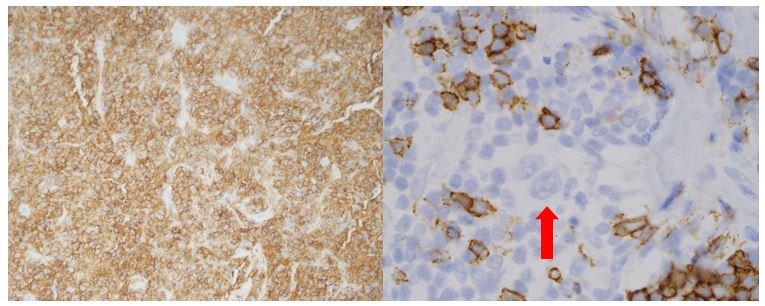
Top: H&E morphology of diffuse large cells infiltrating through fibrotic tissue.
Bottom: Small lymphocytes with scattered large multinucleated Hodgkin and Reed-Sternberg (HRS) cells.
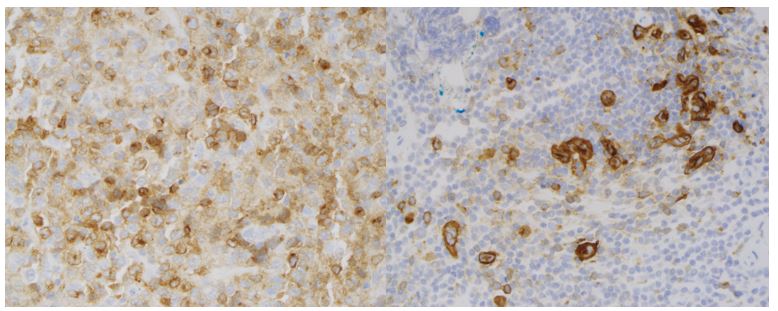
Left: CD30 showing dim/variable staining in the diffuse large cell component.
Right: CD30 highlighting Hodgkin and Reed-Sternberg cells with a golgi and membranous staining pattern.
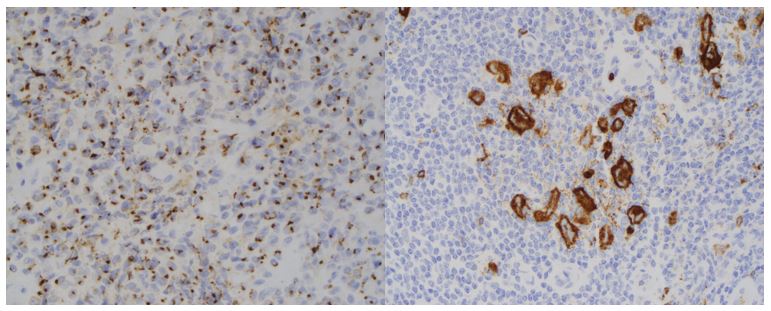
Left: CD15 showing golgi staining in the diffuse large cell component.
Right: CD15 highlighting Hodgkin and Reed-Sternberg cells with a golgi and membranous staining pattern.
Left: CD20 diffusely highlighting the large cell infiltrate.
Right: CD20 highlighting small B-cells surrounding a negative HRS cell.
Left: PAX5 diffusely highlighting the large cell infiltrate.
Right: PAX5 showing bright staining in small B-cells surrounding a dimly stained HRS cell.
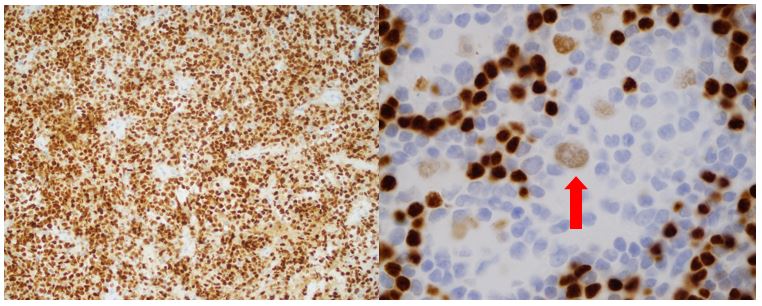
Left: Ki-67 showing a high proliferation index (90%) in the diffuse large cell component.
Right: Ki-67 showing increased staining in the HRS cells.

Diagnosis

Sections show fragments of fibrotic tissue with crush artifact. Two distinct morphologies are seen in different tissue fragments. Some tissue fragments show infiltration by cords and aggregates of abnormal large lymphoid cells with irregular nuclear contours, somewhat vesicular chromatin, small nucleoli and small to medium amounts of cytoplasm. Frequent apoptotic cells and mitotic figures are seen. In other tissue fragments, the large cell component is absent and there are focally vague nodules. The nodules are composed of small mature appearing lymphocytes, rare eosinophils and scattered medium and large mononuclear and multinucleated cells with prominent nucleoli consistent with Hodgkin cells and Reed-Sternberg cells, respectively. Admixed histiocytes are also seen.

By immunohistochemistry, the areas with different morphologies also show different staining patterns. The areas with the large cell infiltrate are immunoreactive for CD20, BCL6, and MUM1, dimly positive or negative for CD45 and negative for CD10. CD30 is variably positive in the large cell population and CD23 is largely negative. CD15 shows a golgi staining pattern. The Hodgkin and Reed-Sternberg (HRS) cells present in the areas without the large cell infiltrate are brightly immunoreactive for CD30 and CD15 (membranous and golgi pattern), dim positive for PAX5 and are negative for CD20. CD20 and PAX5 highlight small B-cells present in aggregates surrounding the HRS cells. By Ki-67 staining, the proliferation index is high (90%) within the diffuse large cell component and also highlights the HRS component.

Overall, the findings are of a composite lymphoma composed of both a diffuse large B-cell lymphoma (DLBCL) and a classic Hodgkin lymphoma (CHL).  

Discussion

Composite lymphomas occur when two morphologically and immunophenotypically distinct lymphomas occur at the same anatomical site. They are most commonly composed of two Non-Hodgkin B-cell lymphomas (NHL), however rare cases of composite CHL with NHL have been reported. In a review of the literature, Goyal et. al. documented 20 previously reported cases of composite lymphoma with CHL and DLBCL components. The median age at presentation was 51 years with 12 men and 9 women. Fifteen of the cases presented with nodal involvement and of those, three had mediastinal disease. The most common subtype of CHL was nodular sclerosis. Evaluation for IGH gene rearrangements was performed on both components of 6 cases, with either a complete or partial clonal relationship between the components seen in all of the cases tested. This suggests a shared origin from a common B-cell precursor.1

A review of literature by Wang et. al. documented 10 previously described composite lymphomas consisting of DLBCL and CHL. The most common site of occurrence was in lymph nodes, followed by three cases seen in the stomach, one case in the small intestine and one case in the anterior mediastinum. CHL is more commonly associated with EBV infection than NHL In the reviewed cases, 6 showed positivity for EBV infection in both the DLBCL and CHL components. This suggests that the lymphomas shared a common EBV-infected progenitor cell, and are also clonally related as seen in the Goyal review. 2

Composite lymphomas must be distinguished from another WHO defined entity called B-cell lymphoma, unclassifiable, with features intermediate between diffuse large B-cell lymphoma and classic Hodgkin lymphoma. This entity has previously been referred to as “grey-zone lymphoma.” These lymphomas tend to present as mediastinal masses and can cause superior vena cava syndrome. They show a wide spectrum of histologic appearances within a single tumor and often show sheet-like growth of pleomorphic cells. Some areas may resemble CHL while others resemble DLBCL. The neoplastic cells typically do not show the characteristic immunophenotype of either CHL or DLBCL. Areas that may resemble CHL will show preservation of B-cell markers, while areas more characteristic of DLBCL might lose B-cell markers and express CD30 and CD15. These tumors will show clonal rearrangement of the immunoglobulin genes. They tend to have a more aggressive clinical course and worse outcome than either CHL or DLBCL. 3

This case was ultimately diagnosed as a composite lymphoma (CL) because it consisted of separate areas with the morphologic and immunophenotypic features of both classic Hodgkin lymphoma and diffuse large B-cell lymphoma. Patients tend to have a poor prognosis with short survival. There is no standardized treatment for composite lymphomas due to their rare occurrence; however cases with a component of DLBCL are generally treated with aggressive chemotherapy such as R-CHOP.

References

  1. Goyal, G. et al. “Composite Lymphoma with Diffuse Large B-Cell Lymphoma and Classical Hodgkin Lymphoma Components: A Case Report and Review of the Literature.” Pathology – Research and Practice vol. 212,12(2016):1179-1190. http://www.ncbi.nlm.nih.gov/pubmed/27887763.
  2. Wang, Hong-Wei et al. “Composite diffuse large B-cell lymphoma and classical Hodgkin’s lymphoma of the stomach: case report and literature review” World journal of gastroenterology vol. 19,37(2013):6304-9.
  3. Swerdlow SH, Campo E, Harris NL, et al. WHO Classification of Tumours of Haematopoetic and Lymphoid Tissues (Revised 4th edition). IARC: Lyon 2017.

Chelsea Marcus, MD is a Hematopathology Fellow at Beth Israel Deaconess Medical Center in Boston, MA. She has a particular interest in High-grade B-Cell lymphomas and the genetic alterations of these lymphomas.

Dead Wrong About Forensic Pathology

(•_•)         ( •_•)>⌐■-■       (⌐■_■)

[Puts my sunglasses on dramatically]

[Won’t Get Fooled Again by The Who plays]

Image 1. Looks like this medical lab science blogger made quite the … shady… joke. CSI: Miami’s Lt. Horatio Caine (played by David Caruso) donned his shades at pivotal plot times. (Source: CBS)

Okay-okay, I couldn’t resist that. How many times have you just wanted a CSI-style joke on here? No? Just me? That’s fine…

Hello again everybody! Welcome back! Last month I talked a bit about “Just Culture,” a sort of bridge between the values we tout as clinical leaders in our laboratories and the medical culture’s evolving and value-informed paradigm shift. There was a little in there about the lessons paralleled in LMU and the benefits of interdisciplinary teamwork. This month, on the subject of interdisciplinary collaboration, I’d like to talk about our colleagues who often are secluded or in more remote areas in our hospitals, offices, and academic centers. Not here to stereotype; I’m talking about our friends in forensic pathology!

Before I get there, let me go back a bit. I’ve already written several times about the stereotypes that surround our field of lab medicine and there are two times when that is glaringly present: when you’re a medical student or when you’re in forensics. I got the chance to meet someone who falls into both categories.

I’ve just finished up my OB/GYN rotation. But before my last day, I went to the lab at our hospital and followed up on some pending biopsy results. Okay, I can’t lie to you guys: they wanted me to see if I could rush “my lab friends” to expedite the process of fixing, setting, cutting, staining, and reading/reporting—because that’s possible. So, I went to the lab and had a pleasant chat with the staff explaining the situation and they were happy to help. While I was there, however, I happened to see another short white coat (ironically from my same school) who was helping some lab personnel with some grossing. Turns out she wants to match into a pathology residency—just like me—and specifically was interested in forensic path, a field which I don’t know much about. After talking more, I asked if she’d like to share some information. Here’s my conversation with Kyla Jorgenson, a 3rd year medical student at AUC-SOM from Toronto, Canada:

I get lots of hassle when I say I want to become a pathologist. People often ask me, “what’s your back up choice” or “don’t you like patients?” It can be a challenge. What’s your experience been like?

You want to do autopsies, so you want to be a mortician, right? Not quite. Many times, I’ve been faced with blank stares when I say I want to be a forensic pathologist. Other times I get the other end of the spectrum, that’s so cool! Clearly, they’ve seen a few crime-shows and think that I’ll get to go to crime scenes in stiletto high heeled shoes with a song by The Who playing in the background as I arrive. Even today when talking with a dermatopathologist I got a, “well when you realize that hanging out with dead bodies every day isn’t the greatest, you might consider surg path.” Then after hearing my experience as an autopsy assistant and that I’m sure this is what I want to do it was the resigned sigh signalling that I was a lost cause already.

A “lost cause,” that’s frustrating. A lot of specialities rag on other ones, it seems to be part of the culture of medicine—hopefully not forever, but still can’t we all just get along?

So, my background leading to pathology involved me working for several years between college, graduate school, and medical school; in hospitals of various sizes. I have personal experiences in these fields and sort of feel “at home” when I’m dealing with hematopathology, transfusion medicine, cell therapy—that sort of thing. What piqued your interest in forensics?

I started my undergraduate degree in forensic biology at the University of Toronto in the fall of 2008 just as a major review of pediatric forensic pathology in Ontario was being released. After numerous issues came to light, the inquiry looked at policies, procedures, practices, accountability and oversight mechanisms, quality control measures and institutional arrangements within the field in Ontario from 1981 to 2001. Ontario Court of Appeal’s Honourable Justice Stephen T. Goudge developed 169 recommendations on how pediatric forensic pathology in Ontario needed to address and correct its systemic failings to restore public confidence.

(Read more about these inquiries here: https://www.attorneygeneral.jus.gov.on.ca/inquiries/goudge/index.html)

After studying the cases that prompted the inquiry and its recommendations in class, what left the greatest impression was the importance of having medicolegal autopsies performed by those trained in not just pathology, but specifically, forensic pathology. What I took away from the cases of accidental deaths falsely attributed as homicides due to lack of experience on behalf of the pathologist and other such issues, is that forensic pathology isn’t something to be dabbled in. While our patients are no longer alive, there are lives that can be affected by the work we do. In Ontario, false convictions not only stemmed from “junk science” but also from inadequacies in the training of pathologists working in a forensic capacity and also a general shortage of forensic pathologists.

Seems like a lot of us (of the few of us) who enter medical school knowing we want to go into pathology have to sort of wait their turn, as it were, collecting experiences which help make us competitive for residency matching—what keeps your “commitment algorithm” going?

Since discovering that forensic medicine is a career path as a high school student, I’ve geared my education towards training in forensics. First my undergraduate degree and then a side trip for my master’s degree in Forensic Death Scene Investigation and a job as a pathology technician at the Medical Examiner’s office on my way to medical school. I have in each step along the way, confirmed that both medicine and forensics fascinate me. Scroll through my Netflix account and you’ll find crime dramas (with the British shows being my favourite) or my podcast app filled with true crime shows; I am enraptured using science to figure out what happened.

Sidebar: at this point Kyla showed me a first-author published piece in the Journal of Forensic Sciences from 2017 that talked about law enforcement-involved firearm related deaths in Oklahoma, where she worked at the time. Basically, it showed through metadata analysis that gun-related deaths were on the rise. Not just over time, but number of times being shot. Remember when we talked about pathology’s role in the #StayInYourLane/#ThisIsOurLane discussion? Well which pathology speciality do you think works with this stuff directly? Chemistry? Cytology? Last time I checked GSWs don’t get screened for lead poisoning and you can’t FNA a bullet. Forensic pathology has often been tasked with seeing trends in morbidity and mortality and translating that to effective social and public health change: think seatbelts, stents, and maybe someday gun-related legislation changes.

Image 2a. Monthly aggregates of gun-related deaths over a 16-year period in OK. (Source: Jorgenson, K et al (2017) Trends in Officer-Involved Firearm Deaths in Oklahoma from 2000-2015, Journal of Forensic Sciences, doi: 10.1111/1556-4029.13499)
Image 2b. Number of gun shot wounds per victim over time. (Source: Jorgenson, K et al (2017) Trends in Officer-Involved Firearm Deaths in Oklahoma from 2000-2015, Journal of Forensic Sciences, doi: 10.1111/1556-4029.13499)

I was interested when I shadowed at the Cook County ME’s office a few years ago—I saw some cool things. I also remember learning a lot from the first real autopsy I saw in a hospital, ultimately it seems like a totally different field that maybe gets underappreciated even within the pathology umbrella. AP/CP residents have to do a certain number of autopsies to graduate, but the attitude I’ve noticed around the topic is a “necessary evil” and most are working towards not having to do that. So let me ask you definitively, why forensic pathology?

Medicine is science being applied to find out what happened in the body and how we can change or manipulate those variables to diagnose, prevent, treat and manage disease. Each diagnosis is solving a crime occurring within the cells in the body, if you will. In forensic medicine, not only do you get to do all that but add in the crime solving element and you get to be “Dr. Nancy Drew.” While medicolegal systems are different all over the US and Canada, chances are that as a forensic pathologist you won’t only be working on your stereotypical “forensics” cases, the gunshot wounds, stab wounds and other nefarious causes of deaths many associate with that term. You could get the generic, “cause of death atherosclerotic cardiovascular disease, manner of death natural,” for a large proportion of cases.

It’s not glamorous, you could spend your day with a two-week-old decomposing decedent that has a pulsating maggot mass devouring its torso or documenting 51 stab wounds or signing out your cases after reviewing your histology and toxicology reports or testifying on a homicide case you worked on. But for me, those all sound like pretty interesting ways to spend the day, sign me up. As a pathology technician assisting with the autopsies and external exams, I was never required to think about what was happening in the body, but I wanted to understand it all. Now as I progress through medical school and look towards residency and fellowship, I eagerly await the chance to perform my first autopsy as a physician, to put all the knowledge and experience I’ve gained towards helping move Ontario and forensic pathology forward.

Image 3. Kyla M. Jorgenson is a 3rd year medical student at the American University of the Caribbean School of Medicine with prior undergraduate and graduate studies in the field of forensic pathology, professional experience as an autopsy technician, as well as a vested interest in pursuing a career in the field moving forward in residency and fellowship. (Source: Kyla M. Jorgenson)

I’d like to thank Kyla for her time in talking with me and her willingness to share her insights with all of you. I wish her all the best of luck as she continues through her training with electives and core rotations both in the UK and state-side. If you have any questions to relay to her, please feel free to comment below and I will forward appropriately. And as always, don’t forget to share with your colleagues across every discipline!

Thanks for reading, I’ll see you next time where I’ll be writing from the Mayo Clinic Hospital in Rochester, Minnesota, conducting a formal rotation in Anatomic and Clinical Pathology! Don’t miss it, I’ll have lots to share while learning at one of the nation’s top institutions!

Until next time!

–Constantine E. Kanakis MSc, MLS (ASCP)CM graduated from Loyola University Chicago with a BS in Molecular Biology and Bioethics and then Rush University with an MS in Medical Laboratory Science. He is currently a medical student actively involved in public health and laboratory medicine, conducting clinicals at Bronx-Care Hospital Center in New York City.