Doctors are Patients, Too

Hello again everyone, and welcome back!

Last time we talked a bit about what exactly pathology and laboratory medicine training looks like—a much-needed peek behind the curtain, if you ask me. This time, I’d like to discuss something that’s been challenging me way before I started working as a resident: something that’s made both clinical medicine and academic collaboration difficult (to say the least). I talk a lot about how medicine works best when we all come together and contribute our expertise from disciplines across the board for the sake of improving patient care; I even talk about how, too often, people don’t hear the messages coming through from their colleagues and that negatively impacts our field. We’re all guilty of it, some more than others. And in the last few weeks, I’ve been nearly deaf to my colleagues.

No literally, this article is about my Meniere’s disease and how those of us with invisible illness(es) can really impact the collaborative spirit of medical science. Trigger warning: frustration, anxiety, and pathology (mine, specifically). So here’s a reminder that everyone you meet and work alongside has issues they’re dealing or struggling with. And, to those outside of medicine, remember doctors are people too. Dr. Jena Martin, a dermatopathologist I admire and follow on social media recently promoted the topic #DoctorsArePatientsToo—she writes, shares, and promotes fantastic topics on social media and I suggest you check her content out at @jenamartinmd.
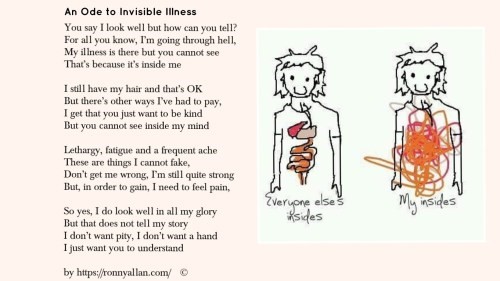
Image 1. By poet and patient Ronny Allen who was diagnosed with neuroendocrine cancer in July of 2010. He is passionate about education and awareness and advocates for patients everywhere. (Source: ronnyallan.com)

So, I’ve got a couple things to explain here. Come with me on a journey through the inner ear and out into the reaches of global pandemics!

An MD with MD

So what is Meniere’s disease (MD) and why does it deserve its own article? Well, first of all, it doesn’t deserve anything, it’s a garbage disorder with dumb symptoms and I’m only using it/myself as an example to highlight the struggle for other people working in medicine who also deal with invisible problems. But, since you asked…

Without belaboring any detail, Meniere’s is a somewhat understood inner ear disorder in which the potassium-rich, sound-signal inducing endolymphatic fluid builds up in the inner ear. This causes the organ of Corti (Image 2b) to swell up, along with the rest of the cochlea, the vestibule, and the fluid containing parts of the inner ear (Image 2a). The super pressurized vestibular-cochlear balloon is in a confined bone-space so what happens often is that small fistulas form, mixing the endo and perilymphatic fluids causing all sorts of problems not limited to but including: aural fullness, deafness, ridiculous multi-tonal/pulsatile tinnitus, distorted hearing, frequency loss, imbalance, severe peripheral/rotational vertigo lasting for hours, occasional tachycardia, anxiety, and more! There is no cure; therapy is symptom-dependent and purely aimed at management and mitigation of fulminant hearing loss. Did I mention that most times it’s one-sided, but mine is bilateral? Fun. I’ll be donating my ears to science and/or the garbage in some odd decades from now…
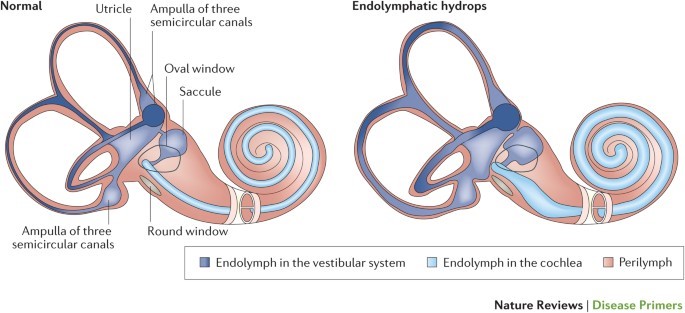
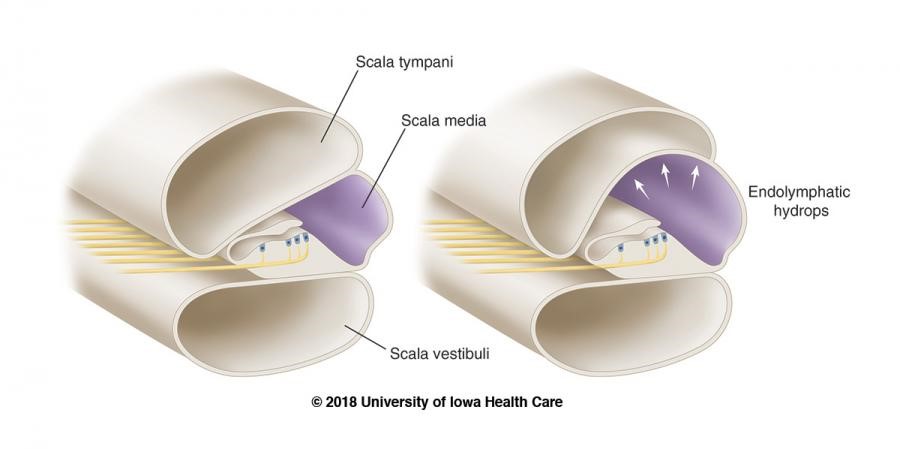
Image 2a and 2b. Dr. Strange-sound, or how I learned to stop worrying and love endolymph. Inner workings of the inner ear, note the marked swelling of fluid (hydrops) associated with the disease state compared to normal. (Sources: Nature and University of Iowa)

Let me put it this way: Over time, I will lose a stark majority of my natural hearing. I will continue to get occasional vertigo attacks, and related symptoms, until the disease (eventually…hopefully?) “burns out” and has no more capacity to damage any more already-damaged inner ear hair cells. I’ll probably get hearing aids or cochlear implants. (Whatever, I’ve always wanted to be half bionic…) I’ll probably keep a cane with me most times. (Dr. House anyone? Right? Or I could keep a sword in there? Legal issues?) But it’s not the long term that bothers me most. It’s the flare-ups. This disorder has periods of acute attacks, periods of mixed-symptom flare ups, and periods of remission. I can handle the remissions, hah. I can even handle the acute episodes—I’ve had great ENT colleagues and discovered great medication plans to manage the attacks. So that leaves the flares, which inspire writings like this one obviously. I wear my hearing aid, but it’s minimally helpful, and I practice patience until my hearing returns. But that isn’t as easy as it sounds, especially when you’re a working resident MD!

The Sound of Silence

Technically, I haven’t experienced true silence since 2015. And, during flare-ups, most of my hearing is almost entirely replaced by the only sound my ears can accommodate and attenuate for which is their own local vasculature. If Edgar Allan Poe could see me know…telltale ears, anyone? Let me paint a picture of what I’m hearing right now on a pretty rough flare-up day, at work, at my desk in the resident room. I’m drinking tea, I can’t hear myself swallowing. I monitor my heartrate on my watch and it’s about 80-90 beats per minute, in my ear, all day, whoosh-whoosh. The pot of tea the robots have been making, whistles non-stop, 24/7. The mosquitoes I’ve been writing about for years now on Lablogatory never leave my cochlea. Cool, on top of that I’ve got hearing loss and aural fullness that makes me not able to hear low-volume pages/phone rings (vibrate mode FTW) and most talking—especially behind masks. (I’ll get to that in a second.) If I turn my hearing aid too high, there’s a squeaky feedback explosion, not to mention the occasional adjustments for quiet and/or super loud talkers, yikes. Just overall, me no hear too good right now. Basically if hearing was reading text, the printer is out of toner and the paper is provolone cheese. And the cheese is on fire. Opa!

Image 3. My flaming-cheese metaphor captured, a xerox copy being made by a waiter in Chicago’s Greektown, the original home of the flaming-cheese saganaki dish. (Source: Chicago Sun Times)

Global Pandemic? Sounds Pretty Bad…

The SARS-CoV-2 pandemic has created very interesting situations at work and elsewhere, all over the globe. People are utilizing the most effective measure against spreading the illness: which up to this point is the non-pharmaceutical intervention of social distancing. Nearly every single person working today, in any field, doing anything, reading this blog, has been a part of email chains, and conference calls, and …. sigh… Zoom meetings. I know, I know… there are pro’s and con’s to this but consider these three points for those with #InvisibleIlnesses:

  1. Working from home has liberated chronically ill folks

Okay so I have an intermittent vestibular/cochlear disorder. What about folks with chronic pain, or Lyme-sequelae, or brain fog, or any other host of hurdles before they can jump onto a video call. Pretend you’re sick at home with a (non-COVID) viral bug. Can you imagine how nice it would feel to have hot tea, your medications, your cat, your spouse, and (most importantly) your couch/bed/TV nearby? Within reason, you’ve just given people who would have needed to excuse themselves a way to participate productively!

2. Imagine having a supplementary PowerPoint or chat box during conversations IRL

One of my specific challenges is missing a word here, a sentence there, and not being able to catch up in a conversation. Usually it ends up with my smile-nodding through to the next topic or checkpoint, but in the current age of virtual meetings I can un-obtrusively ask “What was that last bit?” without seeming like I tuned out. And bonus: I can often get a text translation of a point or two I might have missed from keen colleagues aware of my AV troubles. I can only imagine what it would be like for those more permanently affected.

3. The explosion of inclusivity and accessibility is remarkable

Speaking of which, the number of videos and presentations I am now seeing with closed captions/text supplements are astounding. Usually when I’m in the midst of a flare, I have to check out from audiovisual stimuli and stick to reading only. This can be quite the challenge for work sometimes. But with chat boxes and videos with captions, I feel like I can catch right up. Now, I said I’m only like this part of the time, so for those that have felt excluded and marginalized I’m happy to say that inclusivity and accessibility are growing. I’ve often thought that the importance of a news story or press conference could be measured by the presence or absence of a sign-language interpreter. Over 100 press conferences by Governor Andrew Cuomo in NY, or in Chicago, Illinois with Governor JB Pritzker and Mayor Lori Lightfoot, and each of them was accompanied by ASL accessibility. Fantastic! Just look at one of many efforts online, like @ProjectHearing on Instagram, which promotes the advancement of these topics every day!


Image 4. “Deaf people problems” is a meme collection I’ve seen over and over on social media. Awareness, check. Clear message, check. Super creative visual way to demonstrate a better version of my flaming cheese analogy, super check.
Image 5. Don’t tell anyone, but sometimes, I’m literally stuck on mute. Video conferences might become the new normal. If they are, remember to speak clearly and keep things out of the way between your talking and your microphone. Consider captions for videos and make nice PowerPoints. Please, haha.

Your Lips Move but I Can’t Hear What You’re Saying

So why, when the world is literally aflame with a viral pandemic, am I drudging you through my rant against my inner ears? And why did I just commit the travesty of endorsing zoom calls and captions (I know some people hate captions—you came for a movie not a book, I get it).

Well this whole topic illustrates to big things about working both as a physician and as a person with an invisible condition. First, like most things in medicine, to achieve success you have to adapt, improvise, and overcome. Solving patients’ problems and advocating for their best outcomes takes a little finessing of the system sometimes, you’ve got to do the same thing for yourself. Second, since doctors are patients too, its okay to ask for help. I matched with some of the best residents I’ve ever met, and they’ve offered whatever they can in helping manage my flares during work. This includes anything from extra emails/group text notification chains, forwarding pages, translating video call jumbled audio, etc. They are the best!

Meniere’s has been a challenge to me for a couple of years now, and it’s something I deal with. We’ll call it a character-building attribute. But I genuinely did worry about how this was going to affect me during residency—I had my fair share of hard days in med school basic sciences, and plenty of attending wave-offs when I simply couldn’t hear on 4:00am rounds (yeah I’m looking at you OBGYN and Surgery…). But, it’s been good.
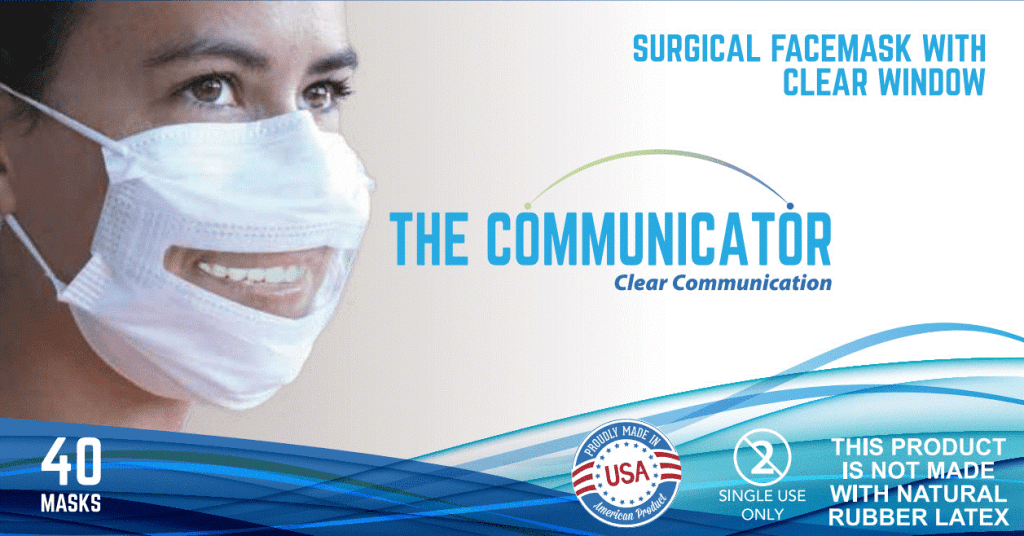
Image 6. Not a new Arnold Schwarzenegger movie, these are real and they’re incredible. Clear window facemasks are such a relief for me. I give ones to all the folks I work with and my life just got easier.

And more than just good, another resident actually has a more permanent hearing impairment and two desks over from mine are the embedded hearing interpreters provided by the department. They’ve been so friendly and provided my with so many resources that I couldn’t be more appreciative. Not only do I have another resident to confide hearing-related rants to, but I also have a department that cares enough to create a supportive and accessible environment. One of the best things they’ve provided: MASKS WITH WINDOWS! Because since this damn pandemic started, I can’t read lips anymore! I didn’t realize how much I depended on visual lip-reads to confirm my hearing that it’s been a learning curve to say the least. Imagine being mostly deaf, your hearing aid not helping much, and looking into a multi-headed scope while your attending lectures on what you’re looking at. An otherwise impossible situation, but my friends and colleagues find ways to make it work because when one person excels, we all do. I’ve been able to continue working, learning, and collaborating thanks to considerations for invisible illnesses like mine.

Consider your colleagues, what can you do to make sure they feel that their needs are met since #DoctorsArePatientsToo? See you next time!

-Constantine E. Kanakis MD, MSc, MLS (ASCP)CM is a new first year resident physician in the Pathology and Laboratory Medicine Department at Loyola University Medical Center in Chicago with interests in hematopathology, transfusion medicine, bioethics, public health, and graphic medicine. His posts focus on the broader issues important to the practice of clinical laboratory medicine and their applications to global/public health, outreach/education, and advancing medical science. He is actively involved in public health and education, advocating for visibility and advancement of pathology and lab medicine. Watch his TEDx talk entitled “Unrecognizable Medicine” and follow him on Twitter @CEKanakisMD.
The Utility of Flow Cytometry in Establishing the Correct Diagnosis of a Rare Aggressive Lymphoma

Case history

A 73 year old woman presented with shortness of breath and was found to have bilateral pleural effusions. She had a history of marginal zone B-Cell lymphoma involving the bone marrow, which was diagnosed 3 months before this presentation and was treated with Rituximab.

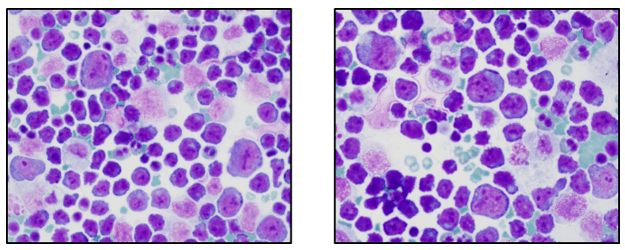
Thoracentesis revealed an atypical lymphoid population comprised of intermediate and large sized cells with eccentrically placed nuclei, multiple prominent nucleoli and scant to moderate amounts of basophilic cytoplasm (Image 1). Initial evaluation of the cytology material was concerning for large-cell transformation of the patient’s previously diagnosed marginal zone B cell lymphoma. A representative portion of the fine needle aspirate sample was sent for flow cytometric immunophenotyping.

Image 1. Cytology (Diff Quik, 400X). The atypical lymphoid population is comprised of intermediate and large sized cells with eccentrically placed nuclei, multiple prominent nucleoli and scant to moderate amounts of basophilic cytoplasm.

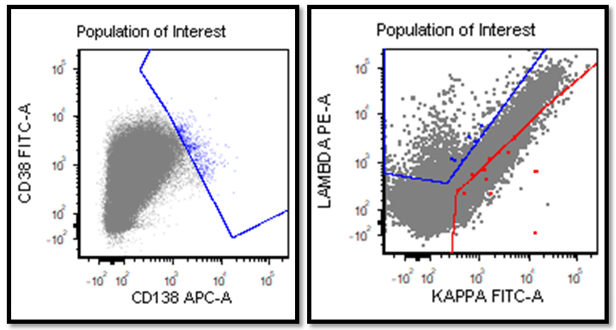
Flow cytometric immunophenotyping showed a distinct population of atypical cells with moderate CD45 expression and increased side scatter in keeping with cytoplasmic complexity (Figure 1, black arrows). On an initial screening B cell lymphoma panel these cells were negative for CD19 and positive for CD30 (partial), and CD44 (Figure 2).

Figure 1. The neoplastic population shows expression of CD30 and CD44.

The population of interest lacked expression of CD10, CD20, CD22 and surface immunoglobulin light chains and CD138 (Figure 2 and 3).

Figure 2. The neoplastic population lacks expression of CD10, CD19, CD20, and CD22.
Figure 3. The neoplastic population of cells are negative for surface immunoglobulin light chains and CD138.

CD30 expression prompted the investigation of additional T-cell markers to rule out a T cell lymphoma (Figure 4). This population showed dim expression of CD7 but was otherwise negative for pan T cell markers (CD2, CD3, CD5) as well as CD4 and CD8 (Figure 4).

Figure 4. The neoplastic population of cells are positive for CD7 (dim) and CD30 and negative for CD3, CD4, CD8, and CD26.

Given the unusual immunophenotype of the neoplasms, a diagnosis of diffuse large B cell lymphoma (transformation of the known marginal zone lymphoma) seemed less likely and other possibilities were considered.

The presence of CD30 expression and the plasmablastic morphologic features together with the clinical presentation with effusions raised the possibility of primary effusion lymphoma. IHC for anti-HHV8 was performed on the cell block sample (Image 2).

Image 2. Cytology (cell block 400X) A. Hematoxylin and eosin stain of the cell block reveals large, atypical lymphoid cells; Small and large atypical lymphoid cells are highlighted by CD30 (B), HHV8 (LANA-1) (C), and CD138 (focally) (D).

Final diagnosis  

Primary effusion lymphoma (HHV8 positive).

Discussion

Primary effusion lymphoma (PEL) is a large B-cell neoplasm usually presenting as serous effusions without a detectable tumor mass [1]. It is universally associated with the human herpesvirus 8 (HHV8). It usually occurs in the setting of immunodeficiency [2]. Some patients with PEL secondarily develop solid tumors in adjacent structures such as the pleura [3-5].

Immunophenotype of PEL:

POSITIVE: CD45, HLA-DR, CD30, CD38, VS38c, CD138, EMA, HHV8 (LANA1).

NEGATIVE: pan- B-cell markers (CD19, CD20, and CD79a), surface and cytoplasmic Ig, and BCL6.

PEL is usually negative for T/NK-cell antigens, although aberrant expression of T-cell markers may occur. PEL is usually positive for EBV-encoded small RNA (EBER) by in situ hybridization but negative for EBV latent membrane protein 1 (LMP1) by IHC.  This could be explained by EBV virus latency. It is ability of a pathogenic virus to lie dormant (latent) within a cell, denoted as the lysogenic part of the viral life cycle. EBV expresses its genes in one of three patterns, known as latency programs. EBV can exhibit one of three latency programs: Latency I, Latency II, or Latency III. Each latency program leads to the production of a limited, distinct set of viral proteins and viral RNAs. The Epstein-Barr virus encoded RNAs (EBERs): EBER1 and EBER2 are expressed during all latency forms [6], whereas LMP1 is expressed only in latency 2 and 3 rendering it a less sensitive marker for detection of EBV infection. EBV-negative PEL is common in elderly, HIV-negative patients from HHV8-endemic regions (Mediterranean) [7].

Differential Diagnosis

Most common cavities involved by PEL: pleural, pericardial, and peritoneal [8-10].

It was thought that PEL can involve an artificial cavity related to the capsule of a breast implant [11] although it was described only in one case report without appropriate HHV8 staining and before recognition of breast implant-associated anaplastic large cell lymphoma (BIA-ALCL), which this case probably was presenting [12].

Primary effusion lymphoma (PEL) Prognosis

The prognosis is very unfavorable. Median survival is < 6 months. Rare cases have been reported that responded to chemotherapy and/or immune modulation [13].

Flow Cytometry Utility

The importance of utility of flow cytometry in establishing a diagnosis of PEL has been previously shown by others [14]. In the series by Galan et al. the authors described a case of PEL in an 88-year-old HIV-negative female with right-sided pleural effusion without significant lymphadenopathies or other effusions. The cytological study of the pleural fluid revealed a dense proliferation of large plasmablastic cells. A six-color multiparametric flow cytometry immunophenotyping study revealed 45% of large in size and high cellular complexity cells positive for CD45 (dim), CD38, CD138, CD30 and HLA-DR; and negative for CD19, CD20, cytoplasmatic CD79a, surface and cytoplasmic light chains Kappa and Lambda, CD3, CD4, CD5, CD7, CD8, CD28, CD56, CD81, and CD117. In situ hybridization for EBV-encoded small RNA was negative and immunohistochemistry for Kaposi sarcoma herpesvirus (HHV8) confirmed the diagnosis of PEL. These results in addition to the current case highlight the utility of flow cytometry in the diagnosis of lymphomas involving body cavities.

In Summary

PEL is associated with a proliferation of large B-cells which are positive for HHV8, CD45 (dim), CD30, CD38, and CD138 and negative for lineage defining B cell markers (CD19, CD20, and CD79a). Although PEL is a very rare lymphoma, it is important to consider it in patients with pleural, pericardial, and peritoneal effusions by sending a sample for cytological examination and flow cytometric immunophenotyping. Due to the absence of a mass lesion, cytology and flow cytometry are essential for establishing the diagnosis of PEL.

References

  1. Said, J.a.C.E., Primary effusion lymphoma, in WHO Classification of Tumours of Haematopoietic and Lymphoid Tissues (Revised 4th edition), C.E. Swerdlow SH, Harris NL, Jaffe ES, Pileri SA, Stein H, Thiele J, Editor. 2017: Lyion. p. 323–324.
  2. Song, J.Y. and E.S. Jaffe, HHV-8-positive but EBV-negative primary effusion lymphoma. Blood, 2013. 122(23): p. 3712.
  3. Dotti, G., et al., Primary effusion lymphoma after heart transplantation: a new entity associated with human herpesvirus-8. Leukemia, 1999. 13(5): p. 664-70.
  4. Jones, D., et al., Primary-effusion lymphoma and Kaposi’s sarcoma in a cardiac-transplant recipient. N Engl J Med, 1998. 339(7): p. 444-9.
  5. Luppi, M., et al., Molecular evidence of organ-related transmission of Kaposi sarcoma-associated herpesvirus or human herpesvirus-8 in transplant patients. Blood, 2000. 96(9): p. 3279-81.
  6. Khan, G., et al., Epstein Barr virus (EBV) encoded small RNAs: targets for detection by in situ hybridisation with oligonucleotide probes. J Clin Pathol, 1992. 45(7): p. 616-20.
  7. Dupin, N., et al., Distribution of human herpesvirus-8 latently infected cells in Kaposi’s sarcoma, multicentric Castleman’s disease, and primary effusion lymphoma. Proc Natl Acad Sci U S A, 1999. 96(8): p. 4546-51.
  8. Otsuki, T., et al., Detection of HHV-8/KSHV DNA sequences in AIDS-associated extranodal lymphoid malignancies. Leukemia, 1996. 10(8): p. 1358-62.
  9. DePond, W., et al., Kaposi’s sarcoma-associated herpesvirus and human herpesvirus 8 (KSHV/HHV8)-associated lymphoma of the bowel. Report of two cases in HIV-positive men with secondary effusion lymphomas. Am J Surg Pathol, 1997. 21(6): p. 719-24.
  10. Beaty, M.W., et al., A biophenotypic human herpesvirus 8–associated primary bowel lymphoma. Am J Surg Pathol, 1999. 23(8): p. 992-4.
  11. Said, J.W., et al., Primary effusion lymphoma in women: report of two cases of Kaposi’s sarcoma herpes virus-associated effusion-based lymphoma in human immunodeficiency virus-negative women. Blood, 1996. 88(8): p. 3124-8.
  12. Lyapichev, K.A., et al., Reconsideration of the first recognition of breast implant-associated anaplastic large cell lymphoma: A critical review of the literature. Ann Diagn Pathol, 2020. 45: p. 151474.
  13. Ghosh, S.K., et al., Potentiation of TRAIL-induced apoptosis in primary effusion lymphoma through azidothymidine-mediated inhibition of NF-kappa B. Blood, 2003. 101(6): p. 2321-7.
  14. Galan, J., et al., The utility of multiparametric flow cytometry in the detection of primary effusion lymphoma (PEL). Cytometry B Clin Cytom, 2019. 96(5): p. 375-378.

This case was previously presented by authors as eCSI Case on International Clinical Cytometry Society website.  For more information please follow: https://www.cytometry.org/public/newsletters/eICCS-10-1/article7.php

-Dr. Loghavi is an Assistant Professor of hematopathology and molecular pathology MD Anderson Cancer Center in Houston, TX. She received her MD degree from the Azad University in Tehran, Iran. Shen then completed an Anatomic and Clinical Pathology residency training at Cedars Sinai Medical Center in Los Angeles, CA, followed by Surgical pathology, Hematopathology and Molecular pathology fellowship training at the University of Texas, MD Anderson Cancer Center. Dr. Loghavi is passionate about medical education. Her clinical and research interests are focused on hematologic malignancies, with particular focus on myeloid neoplasm and the applications of flow cytometric immunophenotyping and molecular methods in detection of minimal/measurable residual disease. She has authored 100 peer-reviewed articles, 5 book chapters, and numerous abstracts in the fields of hematopathology and molecular pathology. 

-Kirill Lyapichev, MD, FASCP, is a board-certified anatomical and clinical pathologist who completed 2 years of hematopathology fellowship at MD Anderson Cancer Center. He is currently a molecular genetic pathology fellow at MD Anderson Cancer Center. Additionally, he is interested and involved in other research projects including neoplastic as well as non-neoplastic entities: MALT lymphoma, Castleman Disease, Kikuchi-Fujimoto Disease, and others. In 2020 he was selected as one of ASCP’s 2020 Top 40 Under Forty. Follow him on Twitter: @KirillLyapichev.

A 2-For-1 at 61: Mediastinal Cytology Case Studies

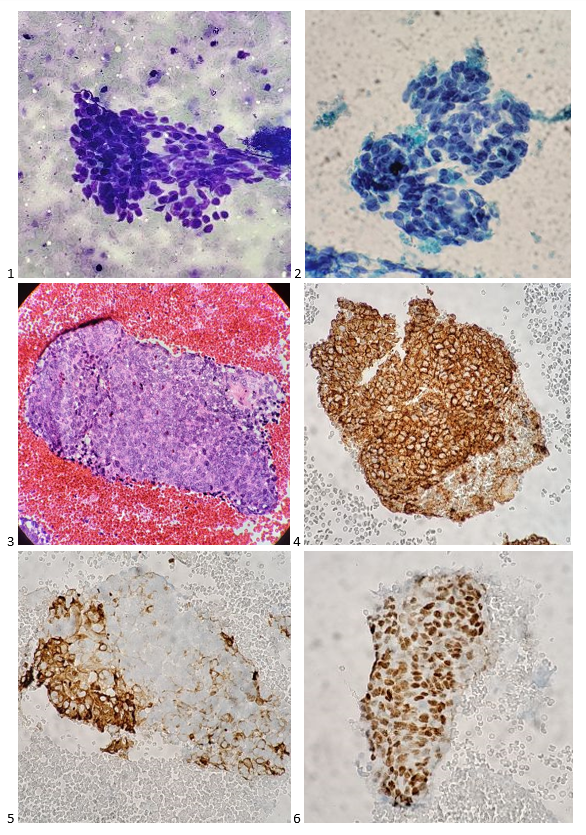
For cytologists who perform Rapid On-Site Evaluations (ROSE) on Fine Needle Aspiration (FNA) Biopsies, there is a training platform where you are guided and supported along until you are ready to fly solo. When I was ready to leave that nest, I soared! I saw (and still see) the world through ROSE-colored glasses and fell in love with the responsibility of being competent in assessing adequacy on my own. But I still remember the anxiety of my first solo FNA in diagnostic imaging—a male with a mediastinal mass, 6.2 cm, taking up far too much room in the thorax for him to be asymptomatic. During the timeout, I confirmed the patient’s information and the anatomic site of the biopsy. On the computer I can see the mass on the CT scan image, and then I glanced into the room and saw the patient prone, covered by a sterile drape, and in a much more relaxed state than myself. Diagnostic imaging is likely the coldest department in the hospital, and I was nervously (but thankfully not obviously) sweating. I prep my slides, label everything I need, and head into the procedure room for my first needle pass. I make my smears, rinse my needle into Hanks Balanced Salt Solution, and return to the patient’s side for my second needle pass. I repeat the process and stain my smears. Under the microscope, I see that my slide is saturated with epithelioid cells. Before I actually had the chance to interpret what I was seeing and formulate a differential diagnosis, I went on auto-pilot and thought, “THYMOMA!” “Alright, focus. Don’t get ahead of yourself. It might just be a lucky guess. Look at the second pass,” I said to myself. I move the next slide onto the stage, and it’s even more cellular than before. I’m on a thymoma one-track mind and holding steady. I tell the radiologist that the smears are adequate, but I need 3 more passes from a 25-gauge needle or 2 passes from a 22-gauge needle for my cell block, whichever she prefers, and I also need core biopsies. I received 2 more 22-gauge needle passes, completed my FNA quick evaluation worksheet, checked the core biopsy requisition and container labels, thanked the team, and walked back upstairs to the lab. What an adrenaline rush! Now I just need the seal of approval from my attending pathologist on cytology service for the day, and I get the green light! I presented the case to our cytopathology director, he asked me my thoughts, I shyly suggested a thymoma, and he agreed, told me it was a great sample, and I processed the remainder of my FNA. Phew. I passed, and on an uncommon tumor I briefly studied in school nonetheless.

Here’s that first solo case—an FNA of the Anterior Mediastinum on a 62 year old male patient with no prior cancer history:

Images 1-6. Anterior Mediastinal FNA – 1, DQ-stained smear; 2, Pap-stained smear; 3, H&E cell block section; 4, AE1/AE3 + Immunostain; 5, CK5/6 + Immunostain; 6, p63 + Immunostain.

Cytologic Diagnosis:

– Cytology features highly suggestive of thymic epithelial neoplasm.
Note: We performed immunocytochemical stains on paraffin sections of the cell block. Tumor cells show positive staining for AE1/AE3, CK5/6, CK7, p63, and CD117; and negative staining for CD45, CD5, CD57, TTF-1, synaptophysin, and PAX-8.  The proliferation index by Ki-67 immunostaining is approximately 10%. The combination of morphology and immunoprofile in the context of clinical presentation is consistent with thymoma.

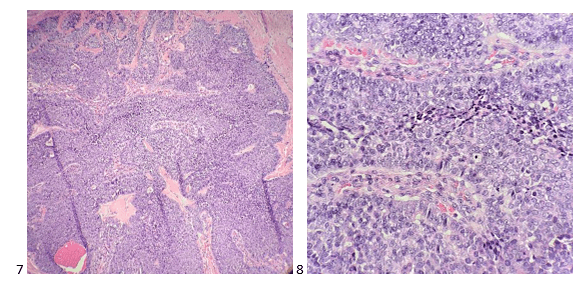
Two months later, the thymus was resected and diagnosed as the following:

– Invasive thymoma, WHO type B3

Images 7-8. Thymus Resection – 7, H&E section 100X; 8, H&E section 400X.

Flash forward 3 years from my initial thymoma case to a CT-guided biopsy of a left-sided mediastinal mass in a 61-year-old male with a history of lymphoma. I went into the procedure with the assumption that I might see a lymphoid transformation to Diffuse Large B Cell Lymphoma (DLBCL) or even Hodgkin’s due to the location. However, on my ROSE, the cells looked similar to but not exactly like the thymoma from 2014. I wanted to go full bore thymic carcinoma with squamoid features. The cells were more disorganized and pleomorphic in appearance than the first thymoma, much more variation in nuclear size. They simply appeared more aggressive. And the lymphocytes sealed the deal on the thymoma diagnosis. I knew it wasn’t DLBCL or Hodgkin’s, but then I started to look more carefully at the lymphocytes. There was something about them too… “LIGHT BULB! GET MORE MATERIAL FOR FLOW! The patient has small lymphocytic lymphoma. It’s likely here too!” Yes, there is a great deal of inner monologue on ROSE’s.

After examining the Diff-Quik slides, Pap-stained slides, and H&E Cell Block sections, I called it like I saw it: “Thymic carcinoma with squamoid features. Atypical lymphoid population, recommend correlation with flow cytometry.”

Images 9-13. Left-sided Mediastinal FNA – 9, DQ-stained smear; 10, Pap-stained smear; 11, H&E cell block section; 12, p63 + Immunostain; 13, CD5 + Immunostain.

The cytology of this case was signed out as:

– Positive for malignant cells.
– Thymic epithelial neoplasm, favor type B3 thymoma.
Note: The specimen contains atypical epithelial clusters admixed with lymphocytes. Immunohistochemical stains performed on cell block sections, with proper positive and negative controls, show that the epithelial tumor cells are positive for pancytokeratin, CK7, p63, CD5, and CD117, while negative for CDX2, TTF-1, GATA3, and WT-1. CD1a and CD57 show faint staining in rare lymphocytes. TDT is negative. CD99 is positive in focal epithelial component and few lymphocytes. The Ki-67 shows proliferative index of focally up to 20% in the epithelial component. The findings support diagnosis if type B3 thymoma (well differentiated thymic carcinoma.)
The flow cytometry report demonstrated a population of CD5 positive monoclonal B-cells.

Three months after the FNA of the mediastinal mass, the patient underwent a radical thymectomy and received the following diagnosis:

– Thymic squamous cell carcinoma arising in a background of thymoma B3 (well differentiated thymic carcinoma). Carcinoma is confined to the thymus. Lymphovascular invasion is identified. Inked surgical resection margin is negative for carcinoma.
– Lymph nodes involved by small lymphocytic lymphoma, no metastatic carcinoma seen.
– The lymphocytes in the tumor are mostly CD3+ T cells. Focal areas show some CD20+ & CD23+ B cells which may represent small lymphocytic lymphoma infiltration.

Images 14-15: Radical Thymus Resection. 14, H&E section 400X; 15, H&E section 600X.

I found this case absolutely fascinating. To be able to diagnosis two entities in one FNA – both a thymic carcinoma and a background of small lymphocytic lymphoma from one sample. There’s something to be said about those rare tumors—after screening classic textbook lung, breast, colon, and pancreatic cancers day in and day out, the infrequently diagnosed tumors (both benign and malignant) are either easily forgotten or forever engrained in the cytology knowledge bank. Fortunately, in both of these cases, thymomas fell into the latter.

Taryn Waraksa, MS, SCT(ASCP)CM, CT(IAC), has worked as a cytotechnologist at Fox Chase Cancer Center, in Philadelphia, Pennsylvania, since earning her master’s degree from Thomas Jefferson University in 2014. She is an ASCP board-certified Specialist in Cytotechnology with an additional certification by the International Academy of Cytology (IAC). She is also a 2020 ASCP 40 Under Forty Honoree.

Dr. Who?

Welcome back everyone!

Thanks for reading my piece last month on liquid biopsies. And, as a side note, there is a growing number of awesome quality content and posts from pandemic response, to inclusion, alongside COVID and case-studies so subscribe, share, and add this page to your bookmarks—STAT! Lablogatory has been a fantastic platform to share and learn so much in this past year, I could barely keep up!

Or super-STAT if you’re one of those people…but hey, that language belongs to all of us! Lab professionals, nurses, scientists, and doctors alike. And this month, I just want to take a quick moment to celebrate a milestone.

I’m officially a resident physician/trainee, medical post-graduate! (There was confetti falling just now on my end, not sure about yours, but work with me here.) It’s just one of those life-goals that feels great when you get there. But there’s a lot more to it than it seems…if I told you being a pathology resident means sacrificing early adulthood, amassing soul-crushing debt, and explaining to your peers and colleagues what it is exactly you do and why you also bear the moniker of “physician,” you’d delete that bookmarked webpage faster than I can make you scroll through this thing.

(oh good you’re still here!)

All that said, I’ve got to say: it’s worth every single bit of it. Times a million. But I really did mention some red flags that, were we discussing any other work environment, would make you definitely think twice before committing 5-10 years of your life. Furthermore, as a PGY-1 in pathology, I could stand next to any other patient-facing PGY-1 colleague (read: intern) and they wouldn’t have the faintest about what I actually do. Listen, the “lifestyle” specialty, generally 9-5er, no weekend, no 24hr call isn’t something I’m shy to celebrate, but it’s not the whole story. I’ve matched and started learning and working at a great institution with great faculty, mentors, and other residents/fellows. Bottom line: I’m more than a little happy about where I’m at professionally.

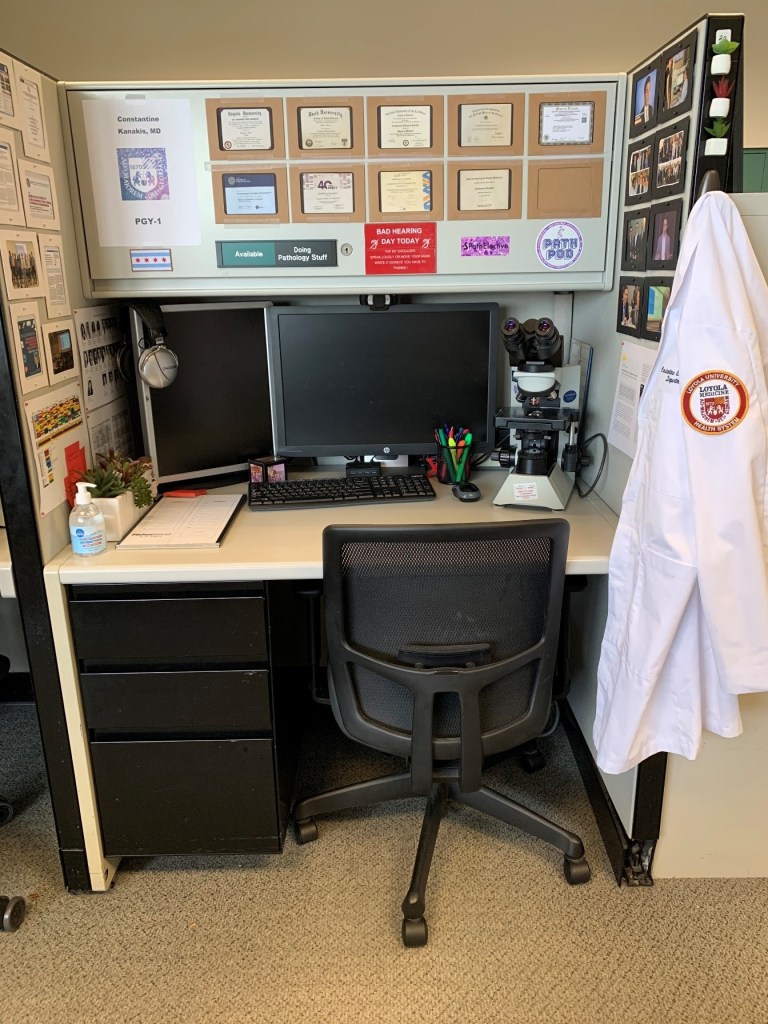
Image 1. Most path & lab med residents get cubicle-style desks to spend time reading, prepping, writing, learning, and previewing cases between responsibilities in sign-outs, tumor boards, or OR/gross room work. Most of my non-path friends don’t like this. It makes me very happy.

So, to my non-pathology friends, what is it exactly that I do during my residency training while you might be busy rounding, managing glucose levels, triaging cases, putting orders in—you know, regular intern stuff *shudders* … (pathology trainees don’t have an intern year, we jump right into the specialty and go for 3-4 straight on through). Like most of you I have a transition period where I get acclimated to the workload and patterns of my specific residency, but sans-anno-interna, I’ve got lots of work ahead to climb the steep learning curve that med school pathology merely skims.

What does non-patient-facing mean, exactly?

Well, without an intern year you jump right into what most path residents go into which is a 4-year combined anatomic and clinical pathology (AP/CP) track. You immediately begin training in all the fields in pathology. They include surgical pathology (of various sub specialties like head-and-neck, gynecologic, gastrointestinal, thoracic, neuro, etc.—think surgery, then add pathology), autopsy training, dermatopathology, cytopathology, hematopathology, transfusion medicine, clinical chemistry, microbiology, hemostasis and coagulopathy, pediatric pathology, forensic pathology, molecular, training as a laboratory director, and much, much more. Each of these services has a workload which is usually comprised of cases from biopsies and grossed specimens for histologic analysis (anatomic pathology) or the ongoing maintenance and advancement of clinical diagnostic testing through laboratory methods and management of staff/resources (clinical pathology).

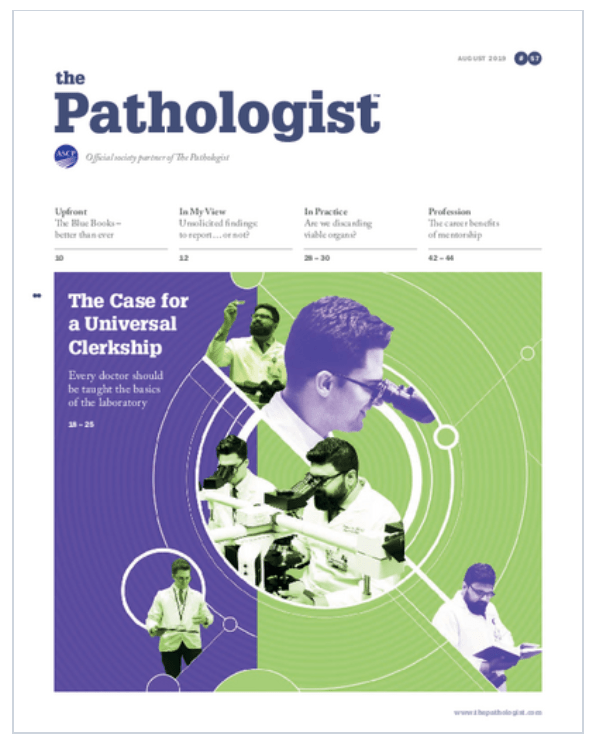
Image 2. August 2019 Issue of The Pathologist magazine. Pathologists, medical students, microscopes, you get it…Specifically, that’s one of my mentors (and now faculty) Dr. Kamran Mirza and (then) medical student Austin McHenry discussing the critical role pathology plays in every circle of medical care.

When I say “non-patient facing” this means that the majority of that work is not done in 1-on-1 settings with patients in a clinic or hospital floor. It is done ancillary to their clinical experience whereby pathology attendings manage the simultaneous training of residents and processing of case sign outs for rapid and accurate diagnostic output for our patient-facing colleagues. For example, while a patient, their family, and doctor are discussing and managing symptoms related to a possible cancer diagnosis. The pathologists are examining microscopic behavior of the cancer-in-question’s cells and adding immunohistochemical testing and molecular analyses to identify, stage, and prognosticate that cancer. Returning information about what it is and what can be done back to the patient-facing clinician, who can then best-translate a tailored approach for their patient. Old-timey medical texts would often refer to the pathologist as the “doctors’ doctor,” and I’m not here to hate on that haha. My clinical friends and readers might feel forlorn now at the prospect of 4 years of medical school training to “just look into a microscope all day?” Well, for some folks in path it means a lot more than that, every slide is a patient. So we care just as much as if they were right opposite our desk. But that’s not all we do…

(More on that in a minute.)

So What Do You Do?

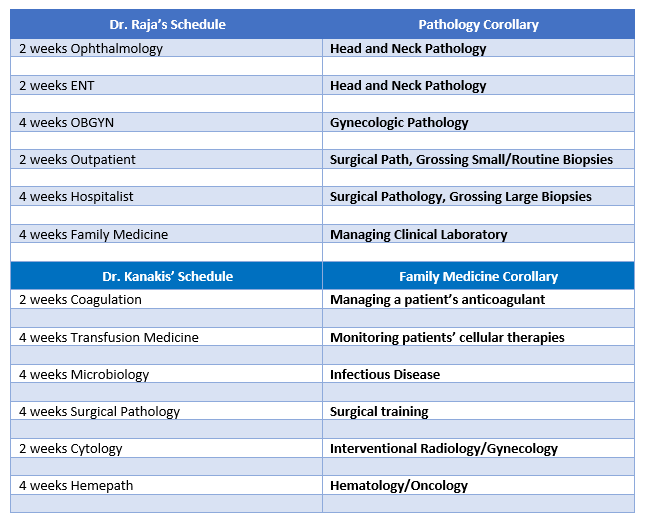
Okay, there are lot of words in path that might act as a barrier to understanding the common ground between me and …let’s say a colleague and friend in Family Medicine. So for the purposes of transparency here’s my friend from medical school Dr. Danash Raja and how a small part of his schedule and my schedule aren’t so different…

Image 3. Dr. Raja is from Alaska, and now works as a resident physician in Family Medicine in Eu Claire, Wisconsin! Alaska! Look at this graduation photo!

On both sides of this table are clinicians managing their patients and ensuring the best possible outcomes. Both sides are deeply vested in intensive hours of training, procedural experience, evidence-based best-practices from the literature, and ongoing continuing education.

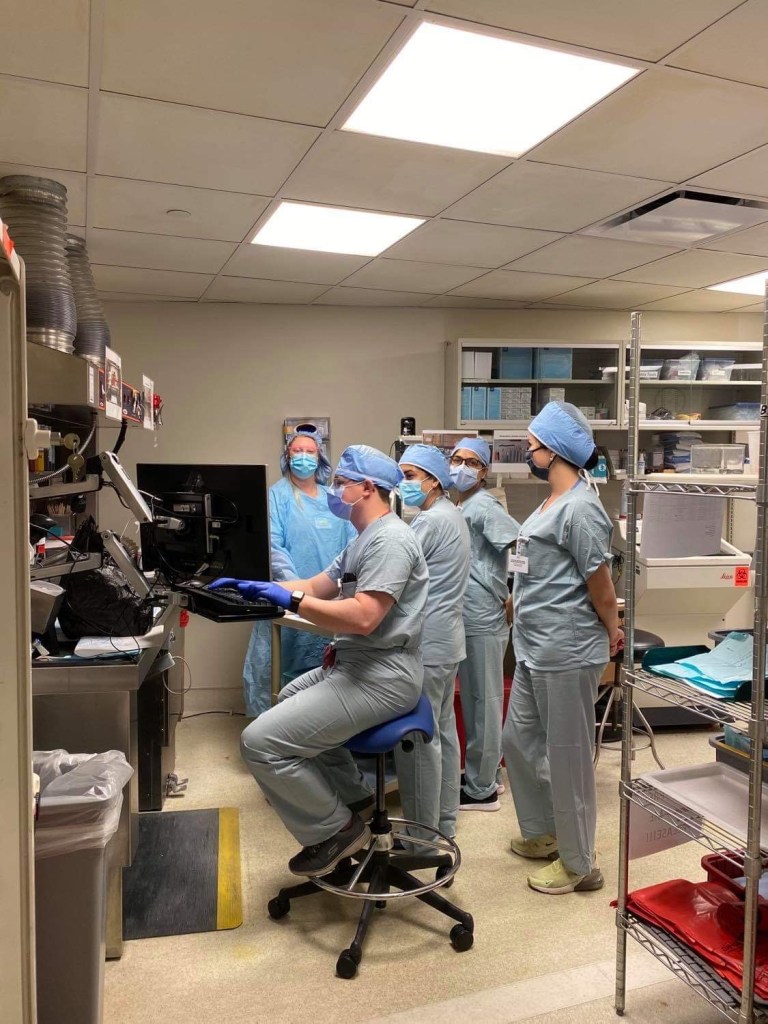
Image 4. They see me grossin’, they hatin’…A lot of surgical pathology and microscopy in general revolves around understanding the gross layout of a specimen and its orientation before it becomes a thin microscope slide. As a junior pathology resident, we spend a lot of time up near the OR. Critical skill for a crucial foundation of knowledge.

Literally the biggest differences:

  • In pathology, I get my own desk space and I need it! I’ve got to start amassing a physical and digital library to supplement the next 4-6 years of subspecialty training for the eventual day when a colleague will see me in an elevator and expect concise, thorough, and actionable material to inform their clinical management from the pathologic diagnosis.
  • Pathology residents and clinical residents both take “call” except Dr. Raja has to pull grueling 24-hour+ shifts and stay in the hospital for the duration, and I answered a page about a transfusion reaction from a grocery store once.
  • When a patient thinks about the person who helped them find out what kind of cancer they had and what treatment to begin, they’ll probably think of Dr. Raja or someone patient-facing in Heme/Onc—but I’m working on this, every day!

Bottom line: I’m as important as he is, and he is as important as I am. Our work is what really matters, and what really connects us as clinical colleagues. It’s all about patients, remember? But I’m more than happy to be the pathologist to his patient-facing, diabetes-managing, vaccine-giving, life-improving super hero doctor!

You Never See Patients?

We’re back on this. Remember how I said looking into microscopes isn’t all we do? Okay, well it’s not. And if you’re lucky enough to have matched to as awesome of a place as I did, then you know what I’m talking about. If you’ve read some of my pieces, you know full well my passion in pathology lies in Hematopathology and Transfusion Medicine. I like to sit right on the fence between AP and CP, and mostly look at the green grass on the CP yard. This month, I’ve been on service for Transfusion Medicine and let me tell you about the few weeks…

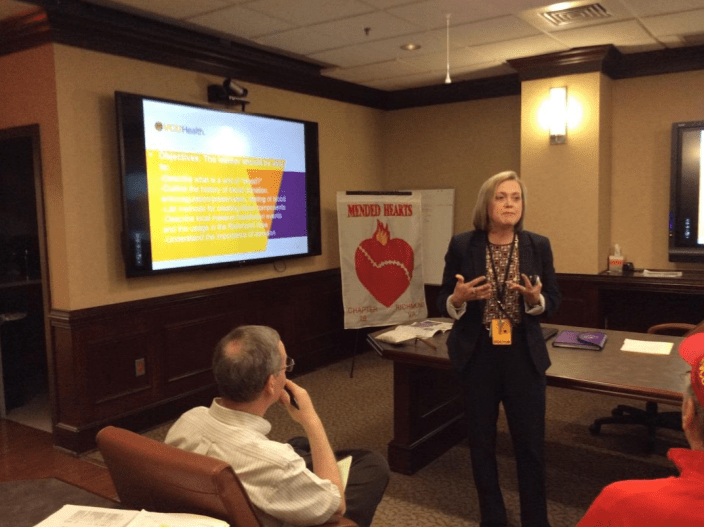
Image 5. Dr. Kimberly Sanford, ASCP leadership and Director of Transfusion Medicine at VCU was highlighted in The Pathologist magazine for her work outside the laboratory seeing patients every day, and encouraging residents to do the same and do what pathologists do best: enrich and improve the channels of communication so patients better understand their conditions and the medical process.

I, a pathologist trainee, resident physician, under the supervision of two attending physician pathologists have been seeing and following up on patients nearly every day. Gasp! No, I’m not part of some backwards resident exchange program (because OMG how dangerous haha), no I’m not lost, no I’m not being overly gunnery, that’s it, that’s the Tweet. Seriously, it’s just part of the service. Larger academic hospitals with robust clinical blood bank services often have apheresis clinics and I find myself working exactly there. Blood bank/Transfusion Medicine is one of those subspecialties where patient contact is part of the routine. At some institutions, I’ve been a part of some pathology-led teams that procure the bone marrow aspirates from their patients in Hemepath service, or conducted their own fine needle aspirations for cytology service, or dermpath services that operate in clinics alongside their dermatology colleagues—I’ve even been working on frozen sections and surgical path grossing when called into an operating room to discuss methods and approach for biopsy! There were patients at every turn, all with pathologists on the front line! Dr. Syed T. Hoda (@01sth02 on Twitter) from NYU Langone often says, “Person FIRST, doctor SECOND, specialist THIRD.” And trust him, he’s a bone and soft tissue pathologist that left the lab and went to the floors to help clinical staff when overwhelmed during the peak of the COVID crisis in NYC. So for my dual-interests, I would say I’d expect to see quite a bit of patients in my future practice.

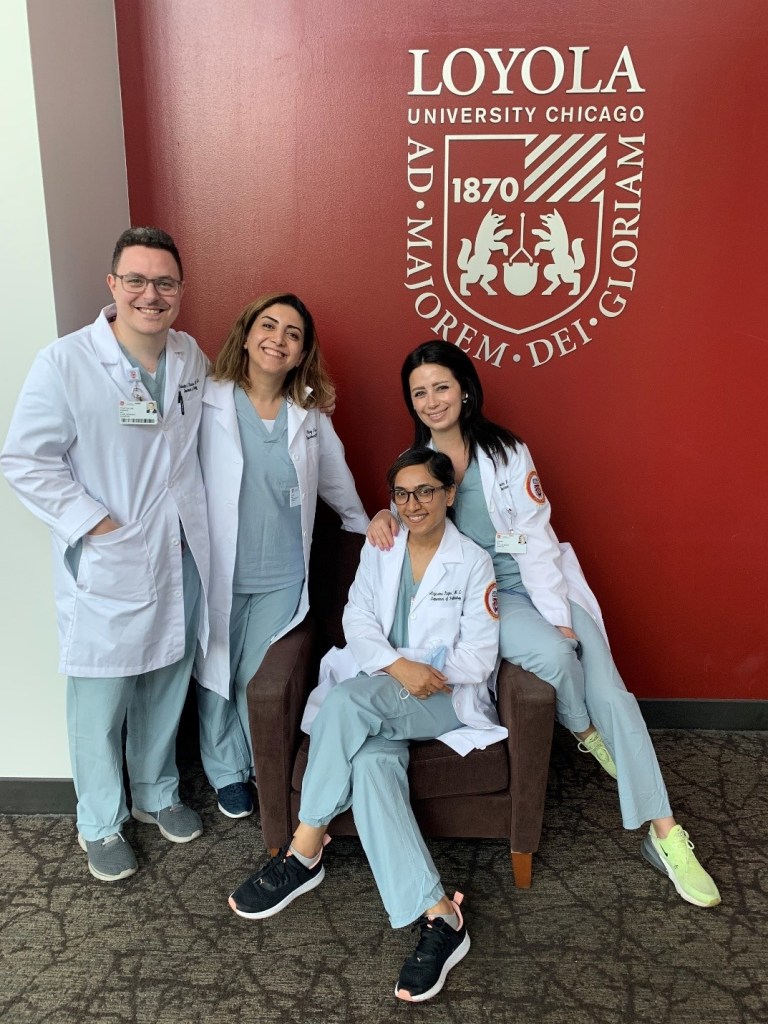
Image 6. My awesome co-residents! (Left-to-right): me, Dr. Elnaz Panah, Dr. Aayushma Regmi, and Dr. Sandra Haddad—you’re going to hear more about them, don’t worry.

So, would I pick pathology again? Uh, yeah! Without a single hesitation. Every day at work I am reminded that I am at the right place, with the right co-residents, the right faculty and mentorship, and the right environment to train and hone my future skills for a career that lines up exactly with what I want to do.If you’re interested about the intersections between clinical medicine and pathology, and want to learn more about “patient-facing pathology” keep an eye out during the 2020 ASCP Annual Meeting for a talk by yours truly as part of a panel discussion on communicating directly with patients! Register now! Free for members.

See you next time!

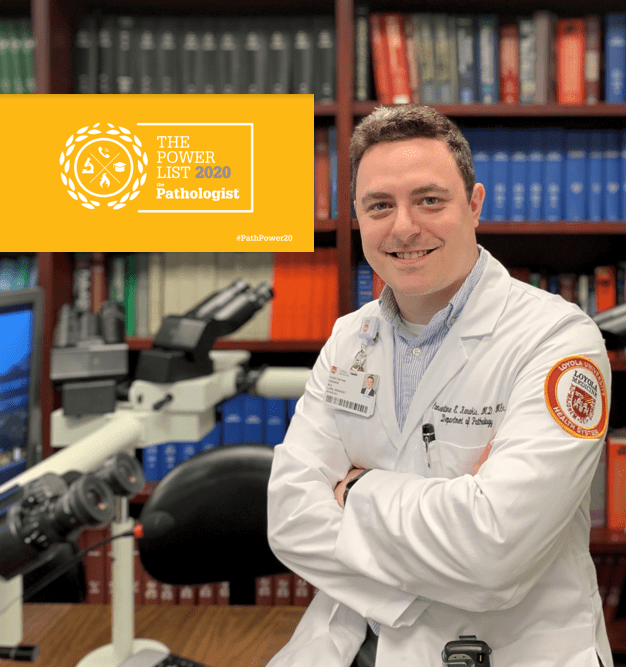
BONUS: did you notice that I referenced The Pathologist magazine a bit in this post, well it’s because they named me to their Pathology Power List for 2020! An exclusive, international list of 80 professionals in the field of pathology and laboratory medicine who contribute and advance the profession every day! I was highlighted for my active social media work and my response to the early COVID pandemic in Manhattan, NY.


-Constantine E. Kanakis MD, MSc, MLS (ASCP)CM is a new first year resident physician in the Pathology and Laboratory Medicine Department at Loyola University Medical Center in Chicago with interests in hematopathology, transfusion medicine, bioethics, public health, and graphic medicine. His posts focus on the broader issues important to the practice of clinical laboratory medicine and their applications to global/public health, outreach/education, and advancing medical science. He is actively involved in public health and education, advocating for visibility and advancement of pathology and lab medicine. Watch his TEDx talk entitled “Unrecognizable Medicine” and follow him on Twitter @CEKanakisMD.

Casualties of COVID-19: Measuring the Length, Width, and Depth of a Pandemic’s Impact

An editorial in Nature on August 12, 2020 entitled, “How to stop COVID-19 fuelling a resurgence of AIDS, malaria, and tuberculosis” provided four suggested solutions specifically for these diseases in the wake of Sars-CoV-2. For reference, here are the four approaches suggested as written in the editorial (#4 in detail):

  1. Hospitals and health authorities in affected cities and regions must recognize that AIDS, malaria and TB are surging again.
  2. Researchers must continue to refine their models using more real-world data.
  3. There is a need for public-information campaigns
  4. These campaigns cannot on their own keep surgeries and wards open, or equipment functioning. The resurgence of infectious diseases has created a greater demand for tests, treatments and research. All of these need more funding. 

Do those strike you as odd? The entire economy of nations along with the focus of their healthcare has been derailed and distracted by COVID-19 and the solution for these diseases is to recognize them, improve models, inform the public and seek more funding. You are either completely in tuned with the author in seeing that more funding is needed or you are a bit miffed that, in the wake of all that is happening, THESE guys want more money?

The US is a major contributor to the Global Fund for HIV, TB, and Malaria (the largest funder of these activities) and the total pledges to date for the GF approach $69 billion dollars with the US providing $54 billion (92%). From 2008 to 2016, the US contribution increased almost every year from $840 million to $1.65 billion annually until 2015 when it was frozen at $1.35 billion until 2019. In 2020, prior to the COVID-19 pandemic (i.e., during calendar year 2019 when the fiscal year 2020 budget was being planned), the amount from the US dropped to $958 million (2010 levels), representing a 30% drop in funding. So, to recap: The Global Fund started the year down by nearly 30% of what had been available, COVID-19 derailed all activities and drained the fiscal resources of patients and nations, and now, the progress that has been made on these diseases has been set back bay possibly a decade. The situation couldn’t be more desperate and, YES, the program needs a massive increase in funding. But, to be very clear, that massive increase pre-dated COVID-19 and represents something more distressing underneath.

I was fortunate to give the Michelle Rablais lecture at the ASCP Annual Meeting in Phoenix in 2019 where I carefully laid out the costs of controlling JUST malaria (not to mention TB and HIV) and demonstrated for the audience that as the number of cases get smaller and smaller (because your measures are so successful), the cost of finding the remaining cases goes up. As we successfully approach elimination or eradication of a disease, the final push requires at least the same but often more funding to make it across the finish line. This is not an opinion but is based on an enormous amount of data from other diseases as well as from the world’s experience with the first malaria eradication campaign. For HIV, we can’t eliminate it or eradicate it but we have converted it to a chronic disease and, therefore, infrastructure and funding to support patients ongoing is needed and by any form of math has to increase as the population lives longer and more people are added to the disease pool (although those numbers had been greatly reducing). Tuberculosis in its simplest form is a disease of poverty related to lack of access to drugs and healthcare, cramped living conditions, etc. When a pandemic derails the economy and causes the poor to become even more poor, tuberculosis is going to surge.

To the authors of this editorial I offer a gracious thank you and note with a heavy heart that the estimate of $28.5 billion additional dollars being needed to make up the ground lost by COVID-19 does also include the ground they had already lost by defunding principles trending over the last 4 years for global health.

But at least the countries that struggle with these diseases only have HIV, TB, and malaria to worry about, right? Wrong. In almost every low- to middle-income country where HIV, TB, and malaria are or have been major health challenges, hypertension, diabetes, cancer, cardiovascular disease, stroke, and mental health are equivalent or worse health problems than compared with high income countries. Do not be dissuaded by sheer numbers and always consider the outcomes, pre-COVID-19. For cancer, mortality in the US averages around 35% while in Africa it is closer to 80%. In full COVID-19 response mode, cancer programs—fledgling, underfunded, and disorganized—became non-existent and are only now (nearly 6 months after closing) starting to re-open and find their way back to where they were—fledgling, underfunded, and disorganized! Diabetics cannot go 6 months without insulin, hypertensive patients cannot have unregulated blood pressure, etc. While in the safety of a high-income country, makeshift systems, telehealth, contactless visits, etc. were brought on board to keep some semblance of a healthcare system in place, cancer patients were delayed in receiving diagnoses and treatment due to rationing of time and elimination of “elective” procedures.

As the data continues to be tallied and as models continue to be developed to understand just how much we have lost from our failed response to COVID-19 as a world and certainly as a nation, please do not slough off the staggering “additional” deaths that are going to be reported because of patients who didn’t have access to their regular health system. Every person from November 2019 until the end of this pandemic whose death occurred because their regular supply lines were disrupted, their planned treatments were cancelled, their medical supplies were not available, or their access to life-saving interventions were delayed is just as much a casualty from COVID-19 as a directly infected patient who succumbs to the disease. Our recent experience as a nation with the disasters in Puerto Rico around both the confusing death tolls from the hurricanes as well as the total death toll from the fiscal challenges of their medical system (prior to COVID-19) should serve as valuable lessons. Let us not come out of the other side of this pandemic with a similar disregard for the value of every human life or without an understanding of how our individual and collective mistakes as a nation have lead directly to these effects.

milner-small


-Dan Milner, MD, MSc, spent 10 years at Harvard where he taught pathology, microbiology, and infectious disease. He began working in Africa in 1997 as a medical student and has built an international reputation as an expert in cerebral malaria. In his current role as Chief Medical officer of ASCP, he leads all PEPFAR activities as well as the Partners for Cancer Diagnosis and Treatment in Africa Initiative.

How to Rock a Risk Assessment

As a lab safety professional, we know performing risk assessments is an integral piece of managing a safety program. In fact, assessing risks and identifying hazards are considered the beginning steps that must be completed when approaching the management of any safety-related area. Risk assessments are the starting point for handling a bloodborne pathogens program, chemical hygiene, personal protective equipment, and many other lab matters. But how can you be sure they have been performed correctly, and how often should they be performed?

OSHA gives simple guidance on basic assessment of risk in the workplace. “The employer shall assess the workplace to determine if hazards are present, or are likely to be present, which necessitate the use of personal protective equipment (PPE).” They further state, “the employer shall verify that the required workplace hazard assessment has been performed through a written certification that identifies the workplace evaluated; the person certifying that the evaluation has been performed; the dates(s) of the hazard assessment; and which identifies the document as a certification of hazard assessment.”

OSHA’s Bloodborne Pathogens standard requires that labs perform an exposure risk determination for each employee. Labs must assess exposure risk levels by job classification, and then assess exposure risk for tasks performed in the department. The Hazard Communication standard explains the need for chemical hazard determination. There are many types of risk assessments that must be performed, and regulations stipulate that they must be reviewed and updated (if necessary) every year. Things change in a dynamic department like the laboratory, and understanding the changing risks of harm can be key to keeping staff safe.

The four basic steps included in a risk assessment are hazard identification, identifying those at risk, choosing control measures, and reviewing the findings. It may sound easy, but lab hazards can come in many forms (physical, mental, chemical, biological, etc.), so walk around the department to look for those you may have missed. Review incident records as well to see what harm is occurring in the lab. Next, determine what employees may be harmed and how. Consider those who work in the lab each day and those that are just passing through the area. An evaluation of the risks follows. If the risk cannot be removed, decide what controls (engineering, administrative, PPE) need to be in place. Finally, review each risk assessment on a regular basis. Things change in the lab, and with change may come new hazard risks – or even the reduction of potential harm if risks have been reduced via elimination or substitution. Again, examine these assessments at least annually or whenever major changes occur in a particular lab safety arena.

For many laboratories, the advent of the COVID-19 pandemic brought new testing platforms and procedures to the department, and this testing had to be implemented quickly. Is there a way to use risk assessments to help introduce new processes safely? Absolutely! The use of a standard form to assess the potential hazards of new or updated processes and/or equipment is actually a high quality finishing touch on an overall assessment program, and unfortunately, it is something that is often missing in many labs.

Considering the tasks, sample handling, equipment, reagents, and overall biosafety of the new process, choose the likelihood of hazard incidents (rare, possible, likely, etc.), and classify the consequences of each occurrence (minor, moderate, major, etc.). Use a matrix to calculate the overall level of risk for the new procedure or equipment. For example, if a new COVID-19 test platform requires opening samples, the likelihood and risk of exposure may be designated as “high” or even “very high.” Next, determine the controls that should be put in place to decrease the exposure opportunities. For example, if centrifuge rotor covers, a biological safety cabinet, and a surgical mask is added to the normal lab PPE, the overall risk of that testing process is reduced. Document the decision and keep those records available for any future reviews that may be needed. Once the assessment is complete, complete the appraisal of the new process with a quick safety audit. Look for additional biohazards encountered, chemical safety, electrical safety, and even potential waste handling issues. If you couple that safety analysis with the risk assessment, you are doing an above-average job at circumventing hazards in the department. (For examples, go to https://www.aphl.org/programs/preparedness/Documents/APHL%20Risk%20Assessment%20Best%20Practices%20and%20Examples.pdf)

Keeping staff safe from exposures and injuries in the laboratory is a massive and time-consuming task, but it is required by our regulatory agencies and it needs to be a top priority. When used properly and completely, a risk assessments can be a powerful tools that begins your look into safety hazards and then closes the loop to avert them. Having an awareness and control of departmental hazards is one way to rock safety in the laboratory.

Dan Scungio, MT(ASCP), SLS, CQA (ASQ) has over 25 years experience as a certified medical technologist. Today he is the Laboratory Safety Officer for Sentara Healthcare, a system of seven hospitals and over 20 laboratories and draw sites in the Tidewater area of Virginia. He is also known as Dan the Lab Safety Man, a lab safety consultant, educator, and trainer.

Massive COVID-19 Testing: 30 Million Tests/Week

Population COVID-19 testing

Population-wide testing to identify symptomatic and asymptomatic infections could be a powerful tool to control Coronvirus Disease 2019 (COVID-19) spread, but current global testing capacity does not permit widespread testing of asymptomatic individuals. These tests are still limited to individuals who are symptomatic with limited availability to those with recent exposure to an infected person.

Because of the high prevalence of asymptomatic COVID-19 infections, proposals from the Rockefeller Foundation for disease mitigation include widespread and frequent testing of the US population. In the United States, diagnostic testing for SARS-CoV-2, the causative virus of COVID-19 is currently >2 million per week. Estimates for US testing needs for population wide surveillance range from 30 to 300 million per week. In order to scale testing by an order of magnitude, novel technologies and rethinking current testing paradigms are needed. The NIH has initiated a rapid funding program to develop SARS-CoV-2 testing, and these new technologies may play a part. However, we can broadly conceptualize key problems to address in population-wide testing in the US. The first is high-sensitivity testing which identifies active infection and can be performed with massive throughput. The second is the logistics of gathering hundreds of thousands of samples to each testing laboratory each day.

Next Generation Solutions to COVID testing

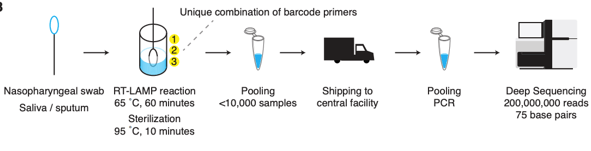
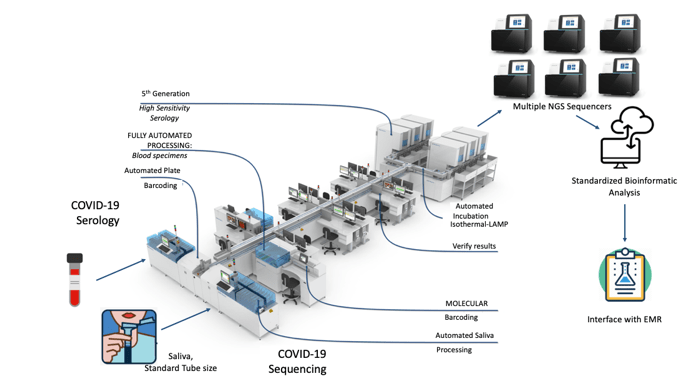
Emerging technologies using targeted next-generation sequencing have been suggested as a potential solution to population-wide testing. The key features include 1) extraction free amplification 2) an easily collected specimen such as saliva, 3) nucleotide barcodes to enable sample pooling, and 4) a limited number of targets (to allow deeper sequencing, i.e. higher sensitivity). Illumina is selling a whole genome test for SARS-CoV-2, but this limits sequencing to 3,000 tests/ run. Another recent approval for a private testing lab uses only one target, and may allow it to increase to 100,000 tests/ day. And a recent protocol for LAMP-Seq in pre-print outlines how this could work in a scheme below. An attractive aspect of this approach is decentralized specimen processing.

Whereas Bill Gates has supported a portfolio approach to vaccines placing multiple bets on different processes in parallel, a similar approach should be applied to multiplexed sequencing methods. Two sequencing runs can be performed on a single instrument in a single day, which can process several thousand samples. However, sequencing is not the only step in sequencing; library preparation and specimen handling take significant amounts of time too.

Laboratory Logistics

This technology would represent an exponential expansion in analytic testing capacity, but clinical labs will require a similar escalation in logistic capacity. The largest clinical laboratories in the world process less than 100,000 samples per day. Clinical laboratories have a long history of automation with the first robotic specimen track systems developed in the 1980s. Engineering and clinical lab expertise should thus partner to innovate on methods to handle high volumes. This level of investment for an issue that is likely to fade in 2 years, is not attractive to most private health systems, so public investment from multiple states in regional reference labs is needed.

It is still hard to conceive the necessary scale up in sample processing can be achieve within the time frame needed, so I would also propose a de-centralized sample processing approach. This would include self-collection of saliva (a safe, effective sample type with similar sensitivity as nasopharyngeal swabs), drop-off sites, and processing at places like Pharmacies (>90% of Americans live within 5 miles of a pharmacy and they could be authorized to administer tests- just as they administer vaccines). This would introduce pre-analytic problems, but if the goal is frequent and high rates of testing, then we will have to accept certain losses in sensitivity (which currently is arguably better than it needs to be). Interestingly, pre-analytic concerns with saliva have not led to sample instability or degradation of RNA causing false negatives, as described in my last post. However, other factors could affect saliva quality: smoking, age, and genetic factors of water: protein ratio affecting viscosity.

Testing solutions should be considered in the context of the planned testing network. The specimen type should be easy for the patient to provide, processed with existing laboratory equipment and resulted electronically. For example, current COVID-19 testing is based on sample collections requiring a healthcare worker encased in personal protective equipment (PPE) utilizing a swab device. Testing needs to progress to a simpler solution such as saliva which can be collected by the patient in the absence of a swab or PPE. Preliminary studies have demonstrated that saliva is sample type comparable to nasopharyngeal swab. The ideal saliva sample would be collected into an existing collection tube type (e.g. red-top tubes) which are already compatible with existing laboratory automation. In aggregate, a person could spit into a tube at-home, have the tube sent to a laboratory, and in the laboratory the tube would be directly placed onto an automated robotic track system. 

Laboratory professionals need to provide a comprehensive plan for regional and national laboratory networks which can scale to provide overwhelming force to COVID-19 testing. No other profession or governmental organization understands testing as much as we do. Our understanding of managing samples from collection to result should be applied to the pandemic at hand. Until now most laboratorians in the US have focused on the immediate needs of providing testing for symptomatic patients and healthcare workers.

Vision for automated COVID-19 testing

One could envision an automated line of testing that moves samples through processing to allow multiplexing and combinations of samples to allow large numbers of patients to be tested at once (see below). This is feasible in some specialized centers, but would require investments in automation, bioinformatics, and interfaces for a seamless process (figure below). If testing mostly asymptomatic patients, it may also be possible to do this on pooled samples. The number of samples to pool would depend on the likelihood to having a positive result (this would require sequencing all individuals in a pool).

This represents a synthesis of ideas in decentralized specimen collection, laboratory automation and massive testing throughput with Next-Generation Sequencing, but unfortunately this is not yet a reality.

References

  1. Jonathan L. Schmid-Burgk et al. LAMP-Seq: Population-Sclae COVID-19 Diagnostics Using Combinatorial Barcoding. bioRxiv 2020.04.06.025635.
  2. The Rockefeller Foundation. National Covid-19 Testing Action Plan Pragmatic steps to reopen our workplaces and our communities. 2020.
  3. Cahill TJ, Cravatt B, Goldman LR, Iwasaki A, Kemp RS, Lin MZ et al. Scientists to Stop COVID-19.  OR Rob Copeland, Wall Street Journal (2020) The Secret Group of Scientists and Billionaires Pushing a Manhattan Project for Covid-19. April 27
  4. https://www.illumina.com/products/by-type/ivd-products/covidseq.html

-Jeff SoRelle, MD is a Chief Resident of Pathology at the University of Texas Southwestern Medical Center in Dallas, TX. His clinical research interests include understanding how the lab intersects with transgender healthcare and improving genetic variant interpretation.

Microbiology Case Study: An 80 Year Old Man with Dyspnea, Fatigue, and Weight Loss

Case History

An 80 year old male was seen by his cardiologist for approximately one month of dyspnea, fatigue, and weight loss. Past medical history was significant for aortic stenosis requiring placement of a bioprosthetic valve and multivessel coronary artery disease 13 years prior. He underwent cardiac catheterization and echocardiography that revealed severe bioprosthetic valve stenosis. The patient was in the process of evaluation for a prosthetic valve replacement when he presented to the emergency room for rapid decline of the previously noted symptoms. Exam upon hospital admission was notable for cardiac murmur, lower extremity edema, mild leukocytosis, and anemia. He had normal dentition and no skin lesions. A pre-operative TEE confirmed severe aortic prosthetic valve stenosis, restricted leaflet motion, thrombus on all three leaflets, and thickening of the periannular aortic root and ascending aorta. Subsequent cardiac CT was concerning for either pseudoaneurysm or paravalvular leak suggestive of an infectious or inflammatory process.

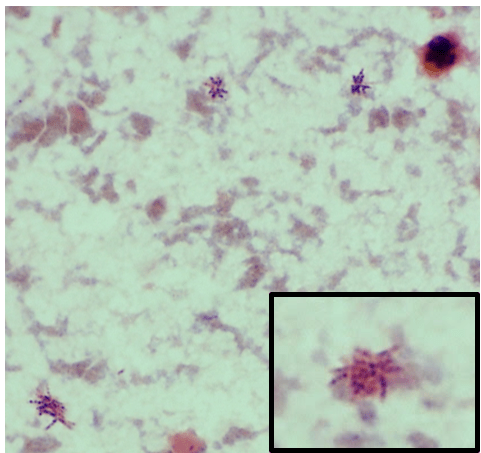
Due to the persistent, mild leukocytosis, blood cultures were obtained on the second day of admission. On hospital day 3, one set of blood cultures flagged positive with Gram-variable rods in the aerobic bottle (Image 1). The patient was empirically started on vancomycin and piperacillin/tazobactam. Repeat blood cultures were obtained on hospital days 4 and 7, both again positive for Gram-variable rods within 2 days of collection. The infectious diseases consult team suspected subacute bacterial endocarditis and changed therapy to ceftriaxone.On hospital day 9, the patient underwent a redo sternotomy for aortic valve replacement and aortic root repair. Intraoperative findings included a large amount of phlegmon on the aortic leaflets, near circumferential aortic annulus tissue destruction and abscess cavity. Culture of the intraoperative specimens was negative for bacterial growth. The anatomic pathology findings revealed fibrinoid vegetations and acute inflammation and reparative changes. The patient was subsequently discharged home in stable condition 20 days after his admission. Interval outpatient clinic visits demonstrate that he is recovering well, including a return to baseline levels of endurance and function.

Laboratory Identification

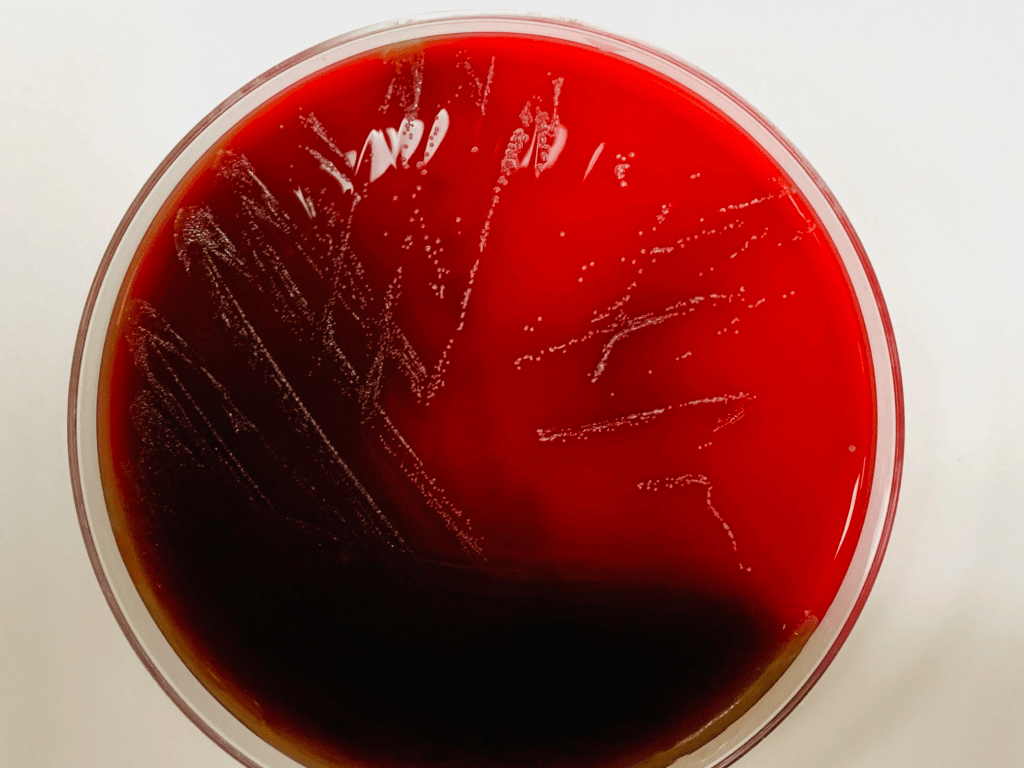
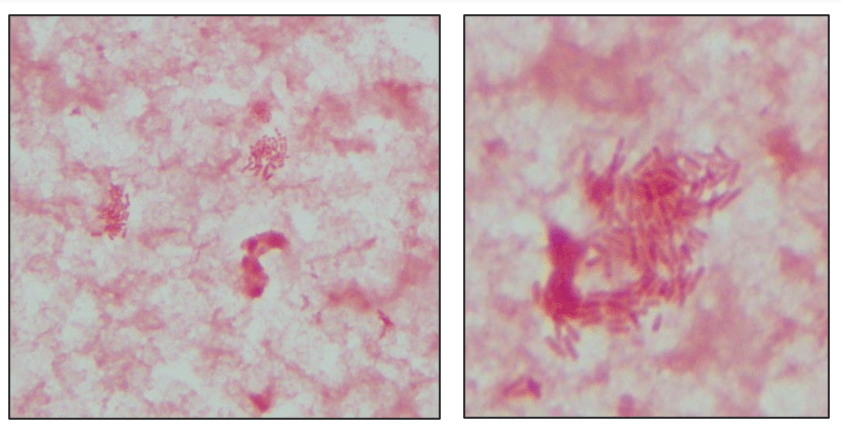
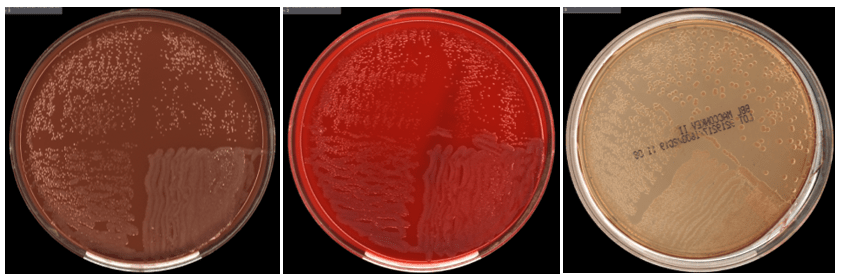
Gram stain of the positive blood cultures revealed pleomorphic gram variable rods which were arranged in clusters, pairs, short chains, and characteristic rosette patterns (Image 1 and inset). Pinpoint, opaque colonies were visible on blood and chocolate agars after 48-72 hours of incubation at 35°C in CO2 (Image 2). No growth was observed on MacConkey agar. The colonies were catalase-negative, and oxidase- and indole-positive. The recovered organism was definitively identified by MALDI-TOF MS as Cardiobacterium hominis.

Image 1. Gram stain from the positive aerobic blood culture bottles exhibiting gram variable rods (1000X magnification, oil immersion). Organisms were visualized in characteristic “rosette” patterns. Image inset is a magnified view of the rosette arrangement from another field.
Image 2. Growth on blood agar following 48 hours incubation at 35°C in 5% CO2. Small, white, pinpoint colonies were observed on blood and chocolate agars.

Discussion

In 1962, four cases of infective endocarditis (IE) due to a Pasteurella-like organism belonging to CDC Group-IID were reported. Two years later, this group of organisms was reclassified as Cardiobacterium in recognition of their ability to cause endocarditis. Two species, Cardiobacterium hominis and Cardiobacterium valvarum, have been reported to cause IE, with the former being the etiological agent in a vast majority of cases.1 There is a strong association between C. hominis bacteremia and IE, as the organism is rarely recovered from blood cultures outside of this setting. Most cases of C. hominis endocarditis involve the aortic valve, particularly in the presence of pre-existing abnormalities or when a prosthetic valve is in place.2 C. hominis is a member of the normal flora of the nose and throat of ~70% of individuals (1), and endocarditis can be caused by periodontitis or dental procedures without prophylaxis.3

C. hominis is a member of the HACEK group of organisms which also include Haemophilus spp., Aggregatibacter spp., Eikenella corrodens, and Kingella kingae. HACEK organisms exhibit similar manifestations of disease, prognosis, and epidemiology. While over 80% of cases of IE are caused by Gram-positive bacteria (notably staphylococci and oral streptococci), Gram-negative IE is far less frequent, with a majority of cases caused by HACEK organisms (1-3% of all IE cases).4 In general, IE caused by HACEK organisms has an excellent prognosis, but delays in diagnosis and associated complications can lead to poorer outcomes.2 Susceptibility testing of C. hominis is difficult to perform due to its nutritional requirements. Most strains are susceptible to fluoroquinolones, rifampin, tetracycline, and beta-lactams. As beta-lactamase producing isolates have been reported, the current American Heart Association Guidelines recommend the use of a 4-6 week course of ceftriaxone for treatment of HACEK IE; fluoroquinolones may be used in cases where patients cannot tolerate cephalosporin therapy.5

Historically, prolonged blood culture incubation for the recovery of HACEK group organisms has been recommended due to their fastidious nature and slow growth rate. However, modern automated blood culture systems utilize enriched media which readily support their growth and facilitate recovery within a standard 5-day incubation period (average of 3.4 days incubation).6 Additional studies have demonstrated that prolonged incubation times do not significantly enhance the recovery of HACEK organisms and are of little clinical value.7 This case demonstrates many hallmarks of a characteristic description of a HACEK bacterial endocarditis: 1) the patient had a prosthetic valve as a pre-existing risk factor, 2) the subacute presentation caused a delay in recognition of an infectious etiology as contributing to his clinical decline, 3) C. hominis grew in less than 5 days in our automated blood culture system without prolonged incubation, 4) blood culture Gram stain findings were consistent with the MALDI identification of a HACEK group member, and 5) the patient was treated with ceftriaxone and with surgical intervention and has recovered successfully.

References

  1. Malani AN, Aronoff DM, Bradley SF, Kauffman CA.2006. Cardiobacterium hominis endocarditis: two cases and a review of the literature. European Journal of Clinical Microbiology and Infectious Diseases 25:587-595.
  2. Sharara SL, Tayyar R, Kanafani ZA, Kanj SS.2016. HACEK endocarditis: a review. Expert Review of Anti-infective Therapy 14:539-545.
  3. Steinberg JP, Burd EM. 2015. 238 – Other Gram-Negative and Gram-Variable Bacilli, p 2667-2683.e4. In Bennett JE, Dolin R, Blaser MJ (ed), Mandell, Douglas, and Bennett’s Principles and Practice of Infectious Diseases (Eighth Edition) doi:https://doi.org/10.1016/B978-1-4557-4801-3.00238-1. Elsevier, Philadelphia, PA.
  4. Revest M, Egmann G, Cattoir V, Tattevin P.2016. HACEK endocarditis: state-of-the-art. Expert Review of Anti-infective Therapy 14:523-530.
  5. Baddour Larry M, Wilson Walter R, Bayer Arnold S, Fowler Vance G, Tleyjeh Imad M, Rybak Michael J, Barsic B, Lockhart Peter B, Gewitz Michael H, Levison Matthew E, Bolger Ann F, Steckelberg James M, Baltimore Robert S, Fink Anne M, O’Gara P, Taubert Kathryn A.2015. Infective Endocarditis in Adults: Diagnosis, Antimicrobial Therapy, and Management of Complications. Circulation 132:1435-1486.
  6. Petti CA, Bhally HS, Weinstein MP, Joho K, Wakefield T, Reller LB, Carroll KC.2006. Utility of extended blood culture incubation for isolation of Haemophilus, Actinobacillus, Cardiobacterium, Eikenella, and Kingella organisms: a retrospective multicenter evaluation. Journal of clinical microbiology 44:257-259.
  7. Weinstein MP.2005. Emerging Data Indicating that Extended Incubation of Blood Cultures Has Little Clinical Value. Clinical Infectious Diseases 41:1681-1682.

-Francesca Lee, MD, is an associate professor in the Departments of Pathology and Internal Medicine (Infectious Diseases) at UT Southwestern Medical Center. She serves as Medical Director of the microbiology laboratory and pre-analytical services at Clements University Hospital.

-Julia Sweetnam, MLS(ASCP)CM has worked for six years as medical technologist in the microbiology laboratory at Clements University Hospital. She is interested in antimicrobial susceptibility testing and diagnostic bacteriology.

-Andrew Clark, PhD, D(ABMM) is an Assistant Professor at UT Southwestern Medical Center in the Department of Pathology, and Associate Director of the Clements University Hospital microbiology laboratory. He completed a CPEP-accredited postdoctoral fellowship in Medical and Public Health Microbiology at National Institutes of Health, and is interested in antimicrobial susceptibility and anaerobe pathophysiology.

Microbiology Case Study: 40 Year Old Male with A Diabetic Foot Ulcer

Clinical Presentation and History

The patient is a 40 year old male with a past medical history of type 2 diabetes mellitus with significant neuropathy and hypertension with a past surgical history of right metatarsal osteomyelitis. He presents to hospital with fever, right ear pain, headache, two episodes of diarrhea and redness and blistering to the right 3rd metatarsal. Upon examination he was noted to have a 1 cm ulceration on the right 3rd toe on the dorsal aspect associated with redness and edema. He was therefore assessed as having diabetic foot ulcer with possible osteomyelitis for which blood cultures were performed.

Laboratory Identification

Gram stains performed on the positive blood culture broth showed gram negative rods (Image 1). In our institution initial positive blood cultures are tested by the Verigene System (Luminex Corp., Austin, TX), which allows for rapid identification of common bacterial pathogens causing blood stream infections (Escherichia coli, Klebsiella oxytoca, Klebsiella pneumonia, Pseudomonas aeruginosa, Acinetobacter spp., Citrobacter spp., Enterobacter spp., and Proteus spp.) along with detection of several resistance genes (CTX-M, IMP, KPC, NDM, OXA, VIM) within ~ 3 hours. In this case, no targets on the Verigene panel were detected. Simultaneously, the specimen was plated onto blood, chocolate and MacConkey agars where the organism grew robustly on all three plates (Image 2). The MacConkey agar showed the organism to be a non-lactose fermenter. Once the organism adequately grew on these agar plates, final species identification was performed on the automated MALDI-TOF instrument which showed Salmonella species. To appropriately type the organism, Salmonella latex agglutination testing was performed which identified Salmonella species Group B (Non-typhoidal). Of note, multiple blood cultures from this patient were positive for Salmonella species, Group B.

Image 1. Gram stain of blood culture broth containing gram negative rods.
Image 2. Growth of the organism on chocolate, 5% sheep blood, and MacConkey agars.

Discussion

Salmonella is a gram negative, flagellated facultative anaerobic, non-lactose fermenting bacilli. The taxonomy and nomenclature of salmonella organisms are quite complex however the most widely used classification scheme is the Kauffman-White which is updated yearly by the WHO. Currently, members of the 7 Salmonella subspecies can be serotyped into one of more than 2500 serotypes (serovars) according to antigenically diverse surface structures: somatic O antigens (the carbohydrate component of lipopolysaccharide [LPS]) and flagellar (H) antigens.

Nontyphoidal salmonellae are a major cause of diarrhea worldwide. In the United States, non-typhoidal salmonellosis is one of the leading causes of foodborne disease. Salmonella enteritidis and Salmonella typhimurium are among the most frequently isolated organisms. Salmonella is most commonly associated with ingestion of contaminated poultry, eggs, and milk products. Salmonella gastroenteritis typically occur within 8 to 72 hours following exposure, however lower bacterial doses can prolong the incubation period. Although Salmonella typically causes diarrheal diseases including gastroenteritis and enteric fever, however there are rare instances where hematogenous involvement leads to bacteremia, osteomyelitis or endovascular infections.

In this case the source of Salmonella-related bacteremia is still a mystery. The presumed source was osteomyelitis, but the patient’s subsequent toe amputation revealed minimal osteomyelitis and rare fungal organisms.

References

  1. Procop, Gary W. et al (2017). Koneman’s Color Atlas and Textbook of Diagnostic Microbiology. 7th edition. Philadelphia, PA.
  2. Hohmann, Elizabeth L. (2018). Nontyphoidal salmonella: Gastrointestinal infection and carriage. Uptodate.com. Retrieved on November 14, 2019. https://www-uptodate.com/contents/nontyphoidal-salmonella-gastrointestinal-infection-and-carriage

-Anna-Lee Clarke-Brodber, MD is a 3rd year AP/CP resident at University of Chicago (NorthShore). Academically, Anna-Lee has a particular interest in Cytopathology. In her spare time she enjoys hanging out with her family.

-Erin McElvania, PhD, D(ABMM), is the Director of Clinical Microbiology NorthShore University Health System in Evanston, Illinois. Follow Dr. McElvania on twitter @E-McElvania. 

Patient Advocacy in Transfusion Medicine

Since 2008 I have served as the Associate Medical Director and the Medical Director of Transfusion Medicine in a large academic medical center. In addition to overseeing the operations of our transfusion service, I also spend several days per week in our apheresis unit. We currently see between 10-20 patients daily for a wide range of therapeutic apheresis procedures performed by our 5 apheresis nurses including stem cell collection and lymphapheresis procedures for stem cell transplant and CarTcell therapy, respectively. These procedures can last from 90 minutes to 6 hours and includes both outpatients as well as acutely ill patients in our critical care units. Typically we perform procedures from 8 AM to 6 PM but there are frequent requests for procedures that last beyond these hours and occasionally in the middle of the night for life threatening conditions. Despite the long hours and unpredictable days, this provides an opportunity to bond with patients over the hours and days they spend in our apheresis unit.

I remember the first time I met Reed. He was sitting on the side of his hospital bed and was bald and pale in stark contrast to his dark blue pajamas. Although he was thin, I could tell that he was a much bigger man before chemotherapy and the transplant ravaged his body. I introduced myself and he was pleasant and engaging despite how ill he was. He had recently undergone 2 autologous stem cell transplants and now with recurrence of the multiple myeloma he had received his brother’s stem cells and was suffering severe acute graft vs. host disease (GVHD). His entire gastrointestinal (GI) tract was under assault as he was diagnosed with Grade IV GI GVHD and was losing liters of bloody stool daily. Despite the abdominal pain and cramps, I never saw him without a smile on his face. He had been treated with high doses of immunosuppression but his GVHD was unresponsive and now we were called in to perform photopheresis, which has great results for skin and pulmonary GVHD but has not been as effective for GI GVHD. In fact, all our previous patients with Grade IV GI GVHD lost their battle.

The bone marrow transplant physician advised Reed that his prognosis was poor and that he should get his affairs in order. His response to the BMT physician was, I am not leaving my wife to raise our three children by herself and I am going to walk out of this hospital. We performed photopheresis twice a week every week and gradually his symptoms improved. His hair started growing back, his color returned, and he kept his word and walked out of the hospital. He continued photopheresis twice a week every two weeks for 2 years. During that time, he met my son who was only 8 at the time and I met his wife and children. He always asked how my son was every time he came for his treatment and what activities he was involved in. When he finished his 2 years of photopheresis, he brought every pathologist and nurse a long stem red rose and thanked us for saving his life.  

Several years later, Reed started to experience renal failure as another complication of GVHD and again he was referred to our clinic for plasmapheresis. We picked up where we left off during his weekly treatments. Again, his positive attitude and compliance with treatment were successful in saving his kidneys. This past summer I went to an outdoor concert. At the end of the night, when everyone was leaving, I saw Reed and his wife! I was so happy to see him looking healthy and strong. I introduced him to everyone who was with me, telling them that Reed was our miracle patient, the only patient that survived Grade IV GI GVHD. This fall, a card was delivered to my office. It was a birthday card from Reed to celebrate my 50th birthday! That is so typical of Reed, still thinking about others and wanting to do what he can to show how important others are to him!!

-Kimberly Sanford, MD is the Medical Director of Transfusion Medicine at Virginia Commonwealth University Health.