Beyond the CBC and Reticulocyte Count: Early Detection of Iron Deficiency Anemia

In my May 2018 post (Not your Grandmother’s Hematology), I discussed the history of hematology and chronicled how far we have come in the last 60 years. We have progressed from manual counting of cells to the first Coulter Counter in 1956, which revolutionized hematology by being able to automate the counting of red blood cells, to modern instruments that can report up to 30 parameters and perform up to 400 CBCs an hour. Among these parameters are what are termed advanced clinical parameters, new parameters which provide physicians with additional information about the state of blood cells. In this blog I will explore how one of these advanced clinical parameters, the Reticulocyte Hemoglobin content, can provide physicians with information that can assist them with earlier detection, differential diagnosis and better management of iron deficiency and iron deficiency anemia. 

Case Study 

A 29 year old female was seen by her gynecologist reporting a history of heavy menstrual bleeding with current bleeding lasting 15 days. The doctor discussed various treatment options with the patient and a CBC was performed. CBC results are shown below.

Test Result Flags Reference
WBC 7.23   4.5-10.5 K/CMM
RBC 4.38   3.70-5.30 M/CMM
HGB 12.0   12.0-15.5 GM/DL
HCT 36.2   36.0-46.0 %
MCV 82.6   80-100 FL
MCH 27.4   27.0-34.0 PG
MCHC 33.1   32.0-36.0 %
PLT 243   150-450 K/CMM
MPV 11.0   9.6-12.0 FL
RDW 12.5   0-15.1 %

This CBC shows no abnormal flags. Based on patient history and presentation, the physician questioned iron deficiency despite normal hemoglobin and hematocrit, MCV and MCHC. He ordered a reticulocyte profile on the same specimen with the following results:

Test Result Flags Reference Range
Retic 1.55   0.5-2.0 %
Abs Retic 0.0679 H 0.0391-0.057 M/CMM
Imm Retic Frac 14.9   2.3-15.9 %
Ret-Hgb 24.6 L 30-35 PG

Reticulocyte counts are the quantity of the youngest red blood cells released from the bone marrow into the peripheral blood. Reticulocytes are reported as a % and the absolute reticulocyte count is calculated by multiplying the Retic% by the RBC. The immature reticulocyte fraction (IRF) is the rate of production of reticulocytes and depends largely on the ability of the bone marrow to respond to erythropoietin. The reticulocyte hemoglobin (Ret-He) content is the amount of hemoglobin in newly formed red blood cells. (There are two different hematology systems that report reticulocyte hemoglobin content. The two nomenclatures used for reticulocyte hemoglobin are Ret-He and CHr and studies have been done that demonstrate their equivalence)

Note that the Ret-He reflects the quality of the newly formed reticulocytes. Ret-He is a direct measurement of the amount of hemoglobin in each reticulocyte, which indicates the amount of iron available for incorporation into the precursors of mature red cells. This patient’s retic% and IRF are within normal ranges, but her absolute reticulocyte count is high. A Ret-He less than 29 pg in an adult is indicative of iron deficiency. With a normal CBC and low Ret-He, this is an early indication that iron deficiency is indeed present. With the absence of sufficient iron, this patient would eventually develop a microcytic, hypochromic anemia. Therefore, Ret-He can measure and indicate inadequate hemoglobin production before the hemoglobin and hematocrit decrease.

In this case the importance of clinical awareness is illustrated. This physician remembered a recent laboratory technical bulletin announcing implementation of a new hematology analyzer system with the availability of new parameters for reticulocyte counts. When the CBC results came back from the laboratory, the patient had already gone home, and no serum had been drawn to perform a ferritin level. Rather than calling the patient back to have another sample drawn, the Ret-He could be done from the same blood sample already in the lab. Ret-He is a faster, easier and less expensive test than additional iron studies and bone marrow iron stains. Ret-He can easily be used at a very low cost to get that first piece of information to decide whether or not iron deficiency is a concern. A high or normal Ret-He would have ruled out an iron deficiency with a fairly high confidence level. In this case, the low Ret-He could be used to guide further workups. A subsequent blood drawn revealed a low ferritin and iron deficiency was confirmed. The patient was advised to take an iron supplement along with ongoing treatment for the bleeding.

This case is just one example of the clinical utility of the Ret-He. Using the Ret-He, physicians can determine iron deficiency before iron deficiency IDA develops. A low Ret-He can alert a physician to iron deficiency without the presence of anemia, microcytosis or hypochromia. Ret-He can also be used to monitor and show early response to iron therapy before any other parameters change. A case example is that of a 5 month old who was brought to the emergency room with a Hgb of 7 g/dl and a Ret-He of 11.9 pg. In pediatric patients, a Ret-He less than 27.5 is an indicator of IDA. In this child, treatment with oral iron showed that the Ret-He had risen to 24.6 pg seven days after the onset of iron therapy, while the CBC remained virtually the same. This provided a very early indication that the iron therapy was effective.1 The Ret-He can also been used to minimize transfusions. The AABB Choosing Wisely Campaign lists 5 things that physicians and patients should questions before transfusion. One of the guidelines states “Don’t transfuse red blood cells for iron deficiency without hemodynamic instability.“2 Historically, physicians have used a ‘wait and see’ approach and watched Hgb levels drop before they start looking at iron. Using a Ret-He, iron deficiency could be determined, for example, in a patient with a Hgb of 11 g/dl. Oral or intravenous iron could be started before the Hgb drops below 7 g/dl and transfusion becomes necessary. The AABB Choosing Wisely Campaign emphasizes this by stating that patients with chronic iron deficiency or pre-operative patients with iron deficiency should be given iron therapy before transfusion is considered.2 Ret-He can give the earliest indication of iron deficiency and can be used to monitor the response to iron therapy. Another clinical utility of Ret-He has been to help diagnose or rule out iron deficiency in oncology patients. Additionally, Ret-He has been included in guidelines for anemia management in end stage renal disease patients on dialysis and who get erythropoietin.

The Ret-He parameter has proved clinically useful in early determination of functional iron deficiency. Traditionally ordered chemistry iron studies are indirect measures that have certain inherent inaccuracies due to the presence of inflammation and infection, or in patients on iron therapy. Ret-He is a direct and very effective screening tool and physicians can use Ret-He with other RBC indicies to improve anemia diagnosis and management in many patient populations. Ret-He can be used as a screening measure, and used to reflex for iron studies. Therefore, laboratories who have instruments that can report Ret-He and CHr should develop an education program to help clinicians effectively use Ret-He. Together physicians and laboratorians can develop their own guidelines for reflex testing and improvement for patient care.

References

  1. Case Studies Demonstrating the Clinical Application of the Advanced Clinical Parameters (1/20/2016) Chantale Pambrun, MD, FRCPC, Head of Division of Hematopathology and Assistant Professor of Pathology and Laboratory Medicine, IWK Children’s & Women’s Health Centre and Dalhousie University
  2. https://www.aabb.org/pbm/Documents/Choosing-Wisely-Five-Things-Physicians-and-Patients-Should-Question.PDF
  3. Advanced parameters offer faster, surer guidance to cancer care. Anne Paxton. CAP Today. Sept 2017
  4. The Value-driven Laboratory. Reticulocyte Hemoglobin Content (Ret-He): A Parameter Well-Established Clinical Value. Sysmex America White Paper.
  5. Sysmex Clinical Support Team. Utility of RET-He, August 10. 2015
  6. Brugnara C, Schiller B, Moran J. Reticulocyte hemoglobin equivalent (Ret-He) and assessment of iron-deficient states. Clinical Laboratory Hematology 2006;28:303 – 308.


Socha-small

-Becky Socha, MS, MLS(ASCP)CM BB CM graduated from Merrimack College in N. Andover, Massachusetts with a BS in Medical Technology and completed her MS in Clinical Laboratory Sciences at the University of Massachusetts, Lowell. She has worked as a Medical Technologist for over 30 years. She’s worked in all areas of the clinical laboratory, but has a special interest in Hematology and Blood Banking. When she’s not busy being a mad scientist, she can be found outside riding her bicycle.

Microbiology Case Study: A 22 Year Old Female with Wound Infection


Case History

22 year old female with a past medical history of scoliosis presents for routine follow-up after hospital discharge for post-op wound infection following a spinal fusion surgery. Patient had an anterior and posterior spinal fusion with allograft and hardware on 1/18/18. She had a laminectomy and irrigation for post-op epidural hematoma on 1/19/18. Subsequently, she developed a lumbar spine abscess and underwent irrigation and debridement of the abscess on 3/1/18. Two operative cultures of the left paraspinal musculature grew only tiny clear colonies on the anaerobic blood plates. Gram stain of these colonies did not show any organism. MALDI-ToF MS identified these colonies as Mycoplasma hominis which was confirmed at a reference laboratory by PCR. The patient was given daptomycin plus levofloxacin. Since discharge from the hospital, she had wound healing with intermittent discharge.

Lab Identification

Mycoplasma hominis requires a specific rich and complex agar medium for growth and grows tiny colonies on standard media such as Columbia agar. In a patient with urogenital disease, Mycoplasma hominis is diagnosed with a urogenital specimen culture and confirmed by PCR. In a patient with spinal hardware infection, Mycoplasma hominis is diagnosed by a culture of infected tissue with PCR confirmation.

Discussion

Mycoplasma is a bacteria that lacks a cell wall and contains the smallest bacterial genome totally sequenced. Due to its lack of cell wall, Mycoplasma cannot be visualized with a Gram stain, and it is innately resistant to b-lactams.1 Due to its small bacterial genome, 580 kpb, it cannot be detected by light microscopy and requires complex nutrients for growth1.

Mycoplasmas are frequently part of the oropharyngeal and genital tract flora among healthy subjects.1 There are more than 200 Mycoplasma species, of which 13 have been isolated from humans. Only 6 species, among which 5 are pathogens, live in the urogenital tract.2 As one of the Mycoplasma species detected in the genitourinary tract, M. hominis can be either a pathogen or part of the normal flora.1 Colonization with M. hominis is associated with younger age, lower socioeconomic status, multiple sexual partners, African American ethnicity, and hormonal status.1 Infection with M. hominis is more common among pregnant women.1

Mycoplasma hominis is associated with genital infections in females but not in males. Examples of infections include pelvic inflammatory disease and bacterial vaginosis.1 In addition, it is responsible for pregnancy-related infections such as chorioamnionitis and post-partum fever secondary to endometritis.1 Moreover, M. hominis is associated with infections of the newborns, meningitis among premature babies, and low birth weight among neonates.1 Lastly, M. hominis can lead to extragenital infections including spinal hardware infections, septic arthritis, retroperitoneal abscess, hematoma infection, and osteitis.1

Infections by Mycoplasma hominis are infrequent and difficult to confirm prior to the start of empiric therapy.2 Urogenital and systemic infections due to Mycoplasma hominis are treated with oral tetracycline.1 For organisms resistant to tetracycline, fluoroquinolones are recommended.1 For wound infections or abscesses, doxycycline, clindamycin, or fluoroquinolones are recommended for at least 2 weeks.1 Drainage and debridement may be necessary.1

References

  1. Pereyre S. et Mycoplasma hominis, M. genitalium and Ureaplasma spp.  Antimicrobe http://www.antimicrobe.org/m06.asp
  1. Baum S. Mycoplasma hominis and ureaplasma urealyticum infections. (2017, Dec. 7th).  Last retrieved on March 27, 2018 from https://www.uptodate.com/contents/mycoplasma-hominis-and-ureaplasma-urealyticum-infections


-Ting Chen, MD is a 1st year anatomic and clinical pathology resident at the University of Vermont Medical Center.

Wojewoda-small

-Christi Wojewoda, MD, is the Director of Clinical Microbiology at the University of Vermont Medical Center and an Associate Professor at the University of Vermont.

Managing Up For Safety

Several employee injuries over a six-month period did nothing to get the attention of the laboratory leadership. The Occupational Health nurse was nearing retirement, and she didn’t pay attention to the fact that these injuries came from the same area- the autopsy suite- and that many had a common cause. The pathologist knew that the employees were getting hurt because of bad conditions in the morgue area. The autopsy table was old and had rusted sharp edges that frequently caused cuts on the hands of those handling it. The body storage refrigerator was small, and staff members from the security department and nursing suffered back injuries from the awkward positions needed to load and unload bodies on the shelves. However, the pathologist’s complaints to the lab manager were unheeded, mainly because he complained about something different every day.

The new lab safety officer noted the lab injury reports and very quickly noticed a pattern. She interviewed the affected staff and took a look around the autopsy suite. She used her camera and took pictures of the old rusty table and the high shelves in the tiny body storage refrigerator. She tallied the cost to the facility of the accumulated injuries and placed the information in a presentation that included the photographs. She made an appointment with the hospital administrator and gave her brief presentation. Before the week was out, the lab had approved funding for updated autopsy furniture and a mechanical lift for moving bodies.

In life, each person has a specific “sphere of influence,” those things you are able to touch and on which you have an effect. It is typically a waste of time to expend energy on those things you cannot change- like a traffic jam, for instance. Stewing about that truly is a waste and accomplishes little. If your role deals with lab safety, then you do have influence on every safety issue in the department, even though it may not always seem that way.

As a lab safety professional, it can be frustrating to see safety issues go unnoticed or unattended, especially after they have been reported. The apparent roadblocks to solutions may be a lack of funds, busy or disinterested leadership, and even an overall poor culture of safety. There are steps you can take, however, which can help you move around the roadblocks and bring those unattended safety issues toward a solution.

Finances is a common hindrance to making changes in the laboratory such as remodeling a space or even getting new or improved safety equipment. Safety is always value-added, but it is important to be able to prove it to those holding the financial reins. First, tally the cost of any injuries that may have occurred due to the safety issue. That total should include any medical treatment, time off of work, the cost of replacement employees or overtime incurred, and time to make any temporary fixes and to communicate to staff. If there is a possibility of penalties or fines should the issue be noted by an outside regulatory agency, those should be considered as well. Many times, the total of the costs for the safety issue are greater than the cost of the fix. In the healthcare setting where finances are getting more attention each year, this can be a powerful tool to get things done.

If lab leadership is uninterested or too busy to help you with safety issues, there are some long-term solutions. First, make sure you act as the safety role model and build trust with peers and leadership. If your discussions with them are reasonable, and if your focus is on sensible, realistic solutions, you will have a better response than if you get angry or try to control everything. That relationship-building can be critical to your ability to influence changes when needed. If the overall safety culture in the lab is poor, you can still have a positive effect on it even without the full support of leadership. That leadership support always helps, but making positive changes can occur without it, and that also comes through being a role model and working well with the lab staff.

A successful lab safety professional develops and increases their sphere of influence over time, but it can be an uphill battle depending on the location and the other people involved. Knowing what the important issues are and when to tackle them is key, and learning that while navigating through a particular culture and organizational structure can take time. Have patience, and you will eventually be able to leverage your safety knowledge to be able to manage upward in order to create a safer laboratory.


Scungio 1

Dan Scungio, MT(ASCP), SLS, CQA (ASQ) has over 25 years experience as a certified medical technologist. Today he is the Laboratory Safety Officer for Sentara Healthcare, a system of seven hospitals and over 20 laboratories and draw sites in the Tidewater area of Virginia. He is also known as Dan the Lab Safety Man, a lab safety consultant, educator, and trainer.

Hematopathology Case Study: A 67 Year Old Female with a Sore Throat

History 

A 67 year old female presents with a two-month history of sore throat. She endorses dysphagia and left-sided otalgia but denies voice changes, shortness of breath, hemoptysis, weight loss, fever or night sweats. She has smoked 1 pack/day for 41 years and occasionally drinks alcohol. Her past medical history is notable for systemic lupus erythematosus for which she takes Plaquenil.

Physical examination slightly elevated systolic blood pressure. She is afebrile. Pertinent neck exam findings include mild tonsillar asymmetry (left slightly larger than right), and a firm mass at left base of tongue, and a 3 cm lymph node in the neck (left level III). A biopsy sample was taken from the tongue mass. 

Biopsy

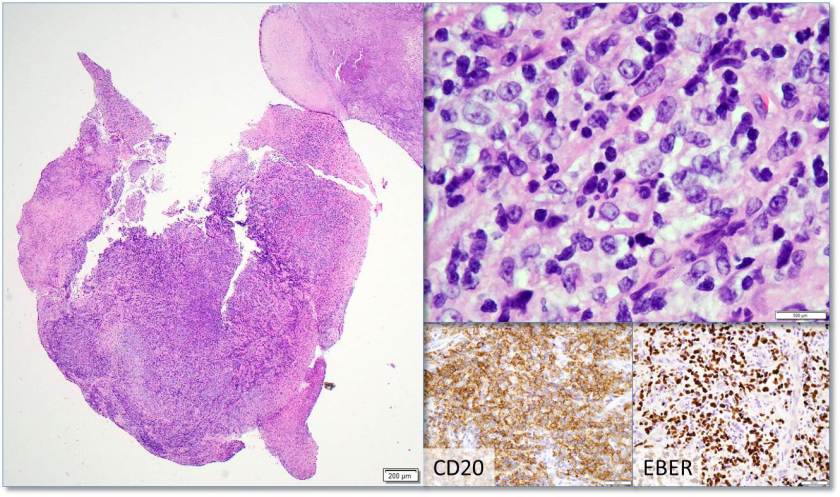
EBV-1

H&E stained sections reveal sheets of large lymphocytes. The lymphoid cells are medium to large in size with irregular nuclear contours and prominent nuclei. Areas of necrosis are prominent. No specific areas of epithelial ulceration are noted. Immunophenotypic characterization of the larger cells reveals positivity for CD20, CD30, CD79a, PAX5, MUM1, Epstein Barr virus encoded RNA (EBER) and a variable Ki-67 proliferation index, which is up to 60-70% in the larger cells, but around 20-30% overall. Only rare cells are positive for BCL-2 and BCL-6. The lymphoma cells are negative for keratin AE1/AE3, CD10, CD4, CD8, CD21, CD23, CD7, CD5, Cyclin D1, CD68, CD56, and CD43. The background T cells express CD5 and CD7 and are a mixture of CD4 and CD8 with CD4 predominance.

We considered the diagnosis of EBV-positive mucocutaneous ulcer (a more indolent entity); however, the lack of history of an ulcer/ulceration and the presence of a mass-lesion (with additional adenopathy) does not support this diagnosis.

The findings are most consistent with EBV-positive DLBCL, NOS (WHO 2017), previously known as EBV positive DLBCL of the elderly (WHO 2008). 

Discussion 

Epstein Barr Virus, a member of the Herpesviridae family is mostly known for causing Infectious Mononucleosis. However, the ubiquitous virus which is present in about 90% of adults but often asymptomatic1, has a predilection for epithelial cells including B-cells.2 Incorporation of the viral genome and viral takeover of the cells proliferative machinery underlies the pathogenesis of any EBV-related disease/malignancy. It has been associated with a gastric carcinoma, fulminant hepatitis, undifferentiated nasopharyngeal carcinoma, and B cell, T cell and NK cell lymphomas3, including EBV+ diffuse large B-cell lymphoma, not otherwise specified (DLBCL-NOS).

EBV-positive diffuse large B-cell lymphoma, not otherwise specified (EBV+ DLBCL-NOS) was formerly known as EBV-positive diffuse large B-cell lymphoma (DLBCL) of the elderly. The WHO classification substituted “not otherwise specified” in place of “for the elderly” to reflect two things: 1) EBV is associated with other specific neoplastic Large B-Cell diseases such as lymphomatoid granulomatosis, and 2) EBV+DLBCL can affect younger individuals as well as the elderly. 2

EBV+DLBCL-NOS patients may occur in nodal or extranodal sites, with up to 40% presenting with extranodal sites at least in the early stages. Patients may be asymptomatic with or without B symptoms but usually, patients present with rapidly enlarging tumors at single or multinodal sites, as well as at extranodal sites. 4

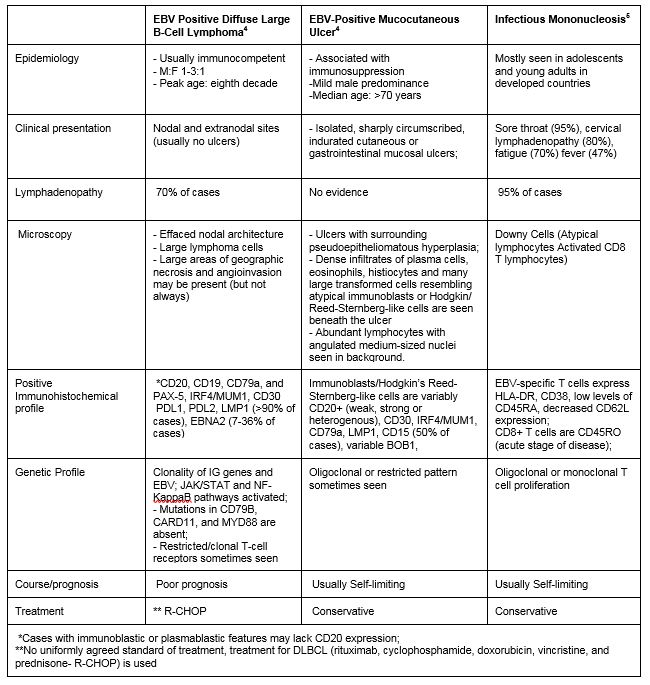
The patient’s presentation with sore throat and the finding of neck mass with EBV-positive large B-cells associated with ulcer-like necrosis raises a differential diagnosis that ranges from reactive to malignant. Table 1 shows a comparison between three differential diagnoses: EBV+DLBCL-NOS; EBV-positive mucocutaneous ulcer; and infectious mononucleosis.

EVB-t1
Table 1. Comparison of 3 EBV-positive differentials in the head and neck

Unfortunately, there is currently no uniformly agreed standard of treatment for EBV+DLBCL which has a worse prognosis than EBV negative DLBCL.2 The standard treatment for DLBCL (rituximab, cyclophosphamide, doxorubicin, vincristine, and prednisone- R-CHOP) is used but it responds poorly to treatment, with a median survival of 2 years.

Therefore, early detection by clinical suspicion and testing all DLBCL patients for EBV is very important.2 

 References

  1. Tsuchiya S. Diagnosis of Epstein–Barr virus-associated diseases. Critical Reviews in Oncology and Hematology. 2002;44(3):227-238. https://www.sciencedirect.com/science/article/pii/S1040842802001142. doi: 10.1016/S1040-8428(02)00114-2.
  2. Murthy SL, Hitchcock MA, Endicott-Yazdani T, Watson JT, Krause JR. Epstein-barr virus–positive diffuse large B-cell lymphoma. Proceedings (Baylor University.Medical Center). 2017;30(4):443-444. http://www.ncbi.nlm.nih.gov/pmc/articles/PMC5595389/.
  3. Okano, Motohiko, MD, PhD|Gross, Thomas G., MD, PhD. Acute or chronic life-threatening diseases associated with epstein-barr virus infection. American Journal of the Medical Sciences, The. 2012;343(6):483-489. https://www.clinicalkey.es/playcontent/1-s2.0-S0002962915309435. doi: 10.1097/MAJ.0b013e318236e02d.
  4. Swerdlow S, Campo E, Harris NL, Jaffe ES, Pileri SA, Stein H, Thiele J, Arber D, Hasserjian R, Le Beau M. WHO classification of tumours of haematopoietic and lymphoid tissues. 2017.
  5. Dunmire SK, Hogquist KA, Balfour HH. Infectious Mononucleosis. Current topics in microbiology and immunology. 2015;390:211-240. doi:10.1007/978-3-319-22822-8_9.


Adesola picture-small

-Adesola Akinyemi, M.D., MPH, recently earned his MPH-Health Policy and Management from New York Medical College. He plans on pursuing residency training in pathology. His interests include cytopathology, neuropathology, and health outcomes improvement through systems thinking and design.

Mirza-small

-Kamran M. Mirza, MD PhD is an Assistant Professor of Pathology and Medical Director of Molecular Pathology at Loyola University Medical Center. He was a top 5 honoree in ASCP’s Forty Under 40 2017. Follow Dr. Mirza on twitter @kmirza.

Microbiology Case Study: A 70 Year Old Female with Bronchiectasis

Case History 

A 70 year old female presents with bronchiectasis with acute exacerbation. She is a non-smoker, although claims to have been exposed to secondhand smoke, and she has chronic sinusitis. The patient recently traveled to Savannah, Georgia where she developed a productive cough. She was prescribed doxycycline and was then sent home. She returned to the pulmonary clinic for a follow up consultation after her cough worsened.

Laboratory Identification

hflu1
Image 1. Intracellular gram negative coccobacilli with polymorphonuclear cells found in the sputum smear (100x oil immersion).
hflu2
Image 2. The predominant organism found in this patient’s sputum culture is growing 4+ on chocolate agar, but not growing on blood and MacConkey agars.
hflu3
Image 3. Close up of chocolate agar showing 4+ growth of wet, translucent colonies.

The Gram stain and smear showed 4+ neutrophils, 4+ gram negative coccobacilli and little to no mixed respiratory flora. The following day, the culture grew 1+ respiratory flora on the blood plate, no growth on the MacConkey plate, and 4+ translucent colonies on the chocolate plate. 

Discussion 

The predominant organism was identified by the MALDI-TOF as Haemophilus influenzae. The Gram stain and culture findings are consistent with the MALDI-TOF identification. H. influenzae is an oxidase positive, gram negative coccobacilli known for its requirement of X (hemin) and V (NAD) factors found in chocolate agar. Because of its growth requirements, H. influenzae will not grow on MacConkey agar despite being a gram negative organism. It may be cultured on blood agar if the agar is inoculated with an organism such as Staphylococcus aureus, which can provide the V factor, while the X factor is provided by the agar itself. This phenomenon is known as satelliting. Identification of H. influenzae may also be done using a Haemophilus ID Quad plate. Each section of the plate contains varying factors and allows for Haemophilus identification to the species level based on the growth and hemolysis pattern.

H. influenzae is normal flora of mucous membranes and frequently colonizes the human oral cavity and upper respiratory tract. Commonly, H. influenzae causes pneumonia, as with our patient, bronchitis, and ear infections. However, it is also a known cause for bacterial meningitis, endocarditis, and osteomyelitis. Transmission of H. influenzae occurs through respiratory droplets so proper PPE precautions must be taken by clinicians when working with infected patients. It is important for laboratory professionals to work with the organism using proper PPE and BSL-2 practices and plating of respiratory specimens should occur in a biosafety cabinet.

Susceptibility testing is not routinely performed on isolates of H. influenzae. β-lactamase production can be determined by using nitrocefin, a chromogenic cephalosporin spot test. 

References

  1. Haemophilus influenzae Disease (Including Hib). (2018, February 13). Retrieved June 28, 2018, from https://www.cdc.gov/hi-disease/index.html
  2. (2012, March 15). Retrieved June 28, 2018, from https://www.cdc.gov/meningitis/lab-manual/chpt09-id-characterization-hi.html. Identification and Characterization of Haemophilus influenzae
  3. Manual of Clinical Microbiology, 11th edition


MS

-Madaine Saguinsin, MLS (ASCP), graduated from Purdue University with a BS in Medical Laboratory Sciences and is a medical technologist at NorthShore University Health System. Her interests are microbiology and parasitology.

-Erin McElvania, PhD, D(ABMM), is the Director of Clinical Microbiology NorthShore University Health System in Evanston, Illinois.

Next Generation Sequencing – Ion Torrent Semiconductor Sequencing

We’ve finally made it to the sequencing step of the NGS workflow. This post we will discuss the technology and process behind the Ion Torrent sequencing step. Next time, we will review the Illumina sequencing process.

When we left off, the final product of the clonal amplification had been prepared – Ion Sphere Particles (ISPs) covered in single stranded amplicons (hopefully all of the same amplicon). Next, control Ion Sphere Particles are added to the mix, along with sequencing primer, which is complimentary to one of the adapter sequences added back in library preparation. The primer is annealed to each of the amplicons on every ISP. This mixture of control ISPs and specimen ISPs is then loaded onto the chip. The size of the chip is determined by the number of bases needing to be sequenced. There are three different types of chips for the Personal Genome Machine (PGM) – 314, 316, 318 – and five different types for their GeneStudio S5 system (510, 520, 530, 540, 550), offering enough coverage for a single sample of a hotspot panel, all the way up to enough coverage for a specimen of exome sequencing. Each of the chips contains a top layer covered in tiny wells. Each well is just large enough to fit a single ISP. The ISP solution is loaded onto the chip, then flowed over it by centrifuging it in different directions, in order to attempt to get as many ISPs into wells as possible. The chip is then ready for sequencing.

Each well of the chip can be thought as of the smallest pH meter in the world. So before sequencing can be started, the instrument must be prepped (initialized) so that all of the reagents added to the chip are in the correct pH range. On the PGM, this takes approximately an hour and requires some hands-on steps and high quality 18MΩ water. On the GeneStudio S5, the reagents are added and the initialization is begun and, as long as everything works correctly, doesn’t require any other hands on time.

After the initialization is complete, the chip is loaded onto the instrument. The sequencing run is started and runs according to the plan prepared before the run. Thermo Fisher’s Ion Torrent uses semiconductor sequencing technology. Nucleotides are flowed over the chip one at a time. If the nucleotide is incorporated, a hydrogen ion is released. This release of hydrogen decreases the pH of the liquid surrounding the ISP. This pH change is then detected by the sensing layer beneath the well, where it is converted to a voltage change and is picked up by the software and recorded as that nucleotide. Let’s say two nucleotides in a row are incorporated (two G’s complementary to two C’s) – double the hydrogen is released, which results in double the signal, so the software will record two G’s in a row. The benefit of this type of technology is that it is fast – it only takes 15 seconds for each nucleotide flow, so a 200bp fragment can be sequenced in less than 3 hours.

ion-torrent
Image courtesy of http://www.genomics.cn/en/


rapp_small

-Sharleen Rapp, BS, MB (ASCP)CM is a Molecular Diagnostics Coordinator in the Molecular Diagnostics Laboratory at Nebraska Medicine. 

History of Generations: Baby Boomers

One of most well-known names of generations, besides perhaps Millennials, are the Baby Boomers. The Baby Boomers generation is currently the largest generation. Of all the generations, they cover the largest span of time (those born from 1946 to 1964). In large parts of the world, there was a big surge in births after the Second World War. That war had a significant influence on their values, perceptions, attitude, and approach to work.

One of the major aspects that make Baby Boomers stand out from previous generations is that this was really the first generation in which women started to work outside the home in large numbers, at least in the Western Hemisphere. This has a major influence on the home and work environment. In the United States, the children of Baby Boomers often had a latchkey around their neck so that they could go home after school without their parents being there.

Baby Boomers played a large role in shaping today’s society; they used music as a political tool, they increased focus environmental conservation, they were involved with the civil rights and women’s rights movements, and they are politically informed and outspoken. It is also the first generation in which both divorce and homosexuality became accepted. Overall, this generation is known for optimism, adaptability, having a strong work ethic, and being team-oriented.

Even though technology did not become part of daily life until Generation X, Baby Boomers witnessed enormous technological milestones, such as the first orbit around earth, landing a man on the moon, and the creation of the first nuclear power plant. All these events set the stage for later advances, and Baby Boomers are typically interested in learning how to use technology, although it does not come as natural to them as future generations. They also have tend to work longer and retire later in age, mainly because they link their self-worth to their job. In other words, their work ethic becomes their “worth ethic.” Knowing this when working with them is important, as they appreciate recognition in forms of awards, title changes, and public acknowledgement for their contributions.

Because this generation spans such a long time (and because some Boomers had children later in life due to second and third marriages), Baby Boomers are parents to both Generation X and Generation Y.  There is a lot to learn from this generation, so next time you work with one ask for some of their insights and understanding. This generation makes great mentors, especially because they are likely to have children of mentee age.


lotte-small

-Lotte Mulder earned her Master’s of Education from the Harvard Graduate School of Education in 2013, where she focused on Leadership and Group Development. She’s currently working toward a PhD in Organizational Leadership. At ASCP, Lotte designs and facilitates the ASCP Leadership Institute, an online leadership certificate program. She has also built ASCP’s first patient ambassador program, called Patient Champions, which leverages patient stories as they relate to the value of the lab.


Here is an interesting fact: there are two sub-sets of Baby Boomers. The first ones are the “Save-The-World Revolutionaries” of the ’60s and ’70s. The second set of Boomers are the career climbers, the yuppies, of the ’70s/’80s. The most profound characteristic of a Baby Boomer is their work ethic. They identify with their job, profession, or their career. So much so, that this generation has remained in the workforce beyond the age of 70.

In a lot of ways, I’m the typical Baby Boomer woman. I married the first time just before I was 20 years old. Divorced in my early 30’s and moved forward in my career because that’s what the “Boomer Women” did. They worked inside and outside of the home.

As a laboratory professional that left the bench many decades ago, and now working in the field of Organizational Leadership and Development, I am approaching the age of 70. I’m starting to realize my retirement day is closer than I’d like.    Like others of my generation, this concerns me because I am defined by my career! The thought of not working left me searching for my identity so much that I started seeing a therapist last year. I was, and am fortunate to work for an incredible organization that doesn’t judge one by their age. They look at the skills and competencies one brings to the table. I’m consciously working on succession planning so that my institutional knowledge remains with the organization and its people. It also helps to have two gifted professionals who wanted to learn from me and grow. Then it takes a manager like mine who supports me through this often painful process. I am blessed with that kind of support. Sometimes the work ethic equals “worth ethic” in the body, mind, and spirit of a Baby Boomer, which is something to keep in mind when working with this generation.


Stakenas-small

-Catherine Stakenas, MA, is the Senior Director of Organizational Leadership and Development and Performance Management at ASCP. She is certified in the use and interpretation of 28 self-assessment instruments and has designed and taught masters and doctoral level students.  

Microbiology Case Study: A 60 Year Old Female with Right Ear Pain

Case History

60 year old female presents to the emergency department with increased pain in her right ear and decreased hearing. She denies ear discharge. She endorses vertigo for 7 months that is precipitated by sudden changes in head position. On physical exam, the right ear canal is obscured by a foreign body. Ear swab is positive for growth on fungal culture.

Lab Identification

Image 1. Salt and pepper fungal colonies isolated from ear swab.

aspniger
Image 1. Salt and pepper fungal colonies isolated from ear swab.
aspniger2
Image 2. Septate hyphae with unbranched condidiophore connected to a swollen vesicle covered in phialides that produce chains of conidia.

The identification of Aspergillus niger is made based on macroscopic colony morphology and microscopic structures. On the potato flake agar, Aspergillus niger grows salt and pepper colonies. For microscopic examination, a slide is made by touching the colonies with a piece of clear tape, putting a drop of lactophenol analine blue on a glass slide, and placing the tape on the slide. Microscopically, Aspergillus niger appears as septate hyphae with long smooth unbranched conidiophores. Compared with other Aspergillus species, the phialides of niger cover the entire vesicle and form a “radiate” head, which splits into several loose columns.

Discussion

Aspergillus is a common mold that lives both indoors and outdoors. The Aspergillus genus is composed of 180 species, among which 34 are associated with human disease.1 A. fumigatus is the most common cause of aspergillosis syndromes. A. terreus is a species of particular concern due to its resistance to amphotericin. An invasive disease due to A. terreus has a poor prognosis.1

Healthy individuals inhale hundreds of conidia of Aspergillus per day without illness. However, people with a weakened immune system or lung disease are at higher risk of developing infections from inhaling the condidia. Presentations of aspergillosis range from allergy to fungal balls, to dissemination.1 Examples of aspergillosis include asthma, allergic bronchopulmonary aspergillosis, and allergic sinusitis.1

Invasive otitis externa due to Aspergillus is a rare, potentially life-threatening invasive fungal infection affecting immunocompromised patients.2 It spreads from the external auditory canal to adjacent anatomical structures such as soft tissues, cartilage, and bone.2 The condition can lead to osteomyelitis of the base of the skull with progressive cranial nerve palsies, irreversible hearing, and neurological impairment.2 The infection can be treated with antifungals.

References

  1. Barnes PD, Marr KA. Aspergillosis: spectrum of disease, diagnosis, and treatment. Infect Dis Clin North Am. 2006 Sep;20(3):545-61, vi.
  2. Parize, P. et al. Antifungal Therapy of Aspergillus Invasive Otitis Externa: Efficacy of Voriconazole and Review. Antimicrobial agents and chemotherapy. 2018 April; 62(4). http://aac.asm.org/content/53/3/1048.long


-Ting Chen, MD is a 1st year anatomic and clinical pathology resident at the University of Vermont Medical Center.

Wojewoda-small

-Christi Wojewoda, MD, is the Director of Clinical Microbiology at the University of Vermont Medical Center and an Associate Professor at the University of Vermont.

Hematopathology Case Study: Two Cases with Surprising Hematopoetic Elements

Case 1 History

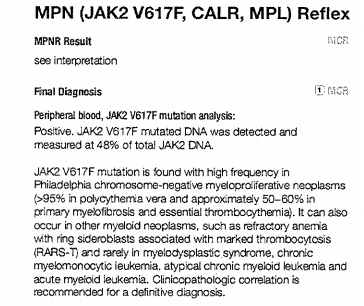
Sixty-one year old man with new diagnosis of Bud-Chiari syndrome and extensive peripheral, splenic and hepatic venous thrombosis with increasing fatigue, abdominal discomfort and abnormal liver function tests. A liver biopsy was performed and a hypercoagulability work-up, including JAK2 mutation analysis was initiated.

2-cases-liver2x
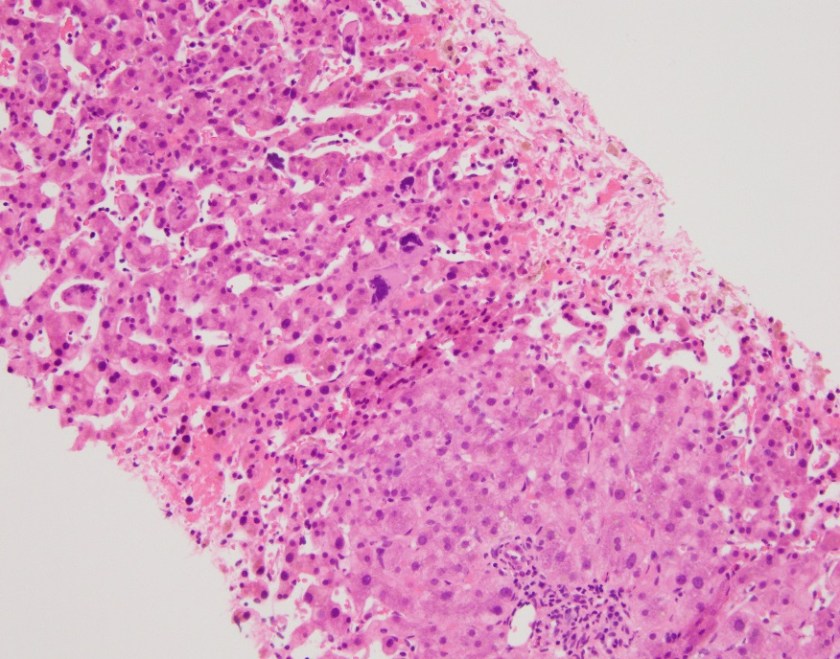
Liver core biopsy 2X
2-cases-liver10x
Liver core biopsy 10X

Diagnosis

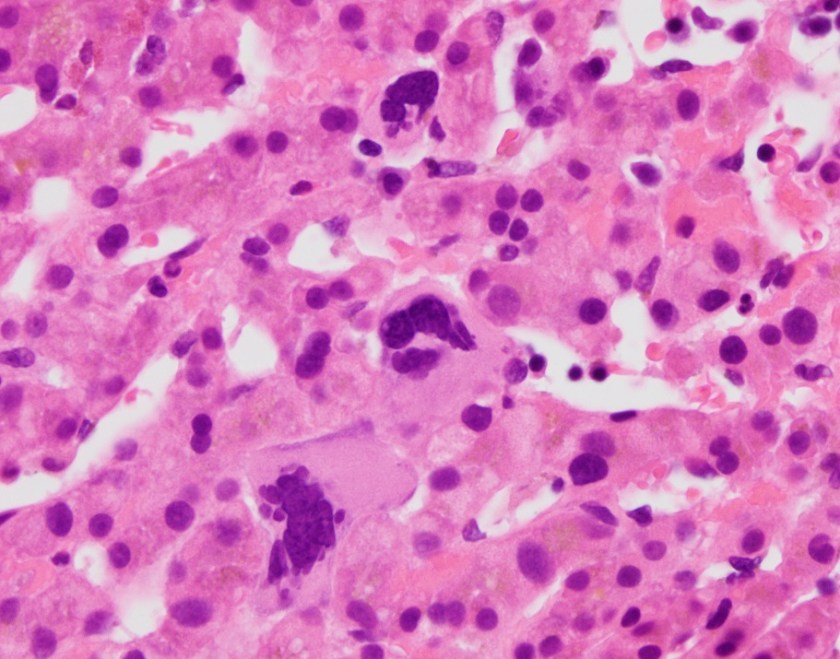
The liver biopsy showed extensive hemorrhage, hepatocellular necrosis and collapse with mild portal and lobular mixed inflammation. Occasional megakaryocytes and nucleated red blood cell precursors were noted. The case was sent to hematopathology for further review.

2-cases-liver40x
Liver core biopsy 40X
2-cases-liver40x2
Liver core biopsy 40X
2-cases-jak2analysis
JAK2 Mutations Analysis

Hematopathology Diagnosis

Sections show liver parenchyma with changes of the patient’s known history of venous outflow obstruction, as well as extramedullary hematopoiesis, including scattered megakaryocytes (arrows) and erythroid precursors (circle). In the setting of a positive JAK2 V617F mutation, this constellation of findings is consistent with a myeloproliferative neoplasm.

Case 2 History

Fifty-nine year old man with a history of hypertension and alcohol abuse with posterior mediastinal lymphadenopathy. Recent bone marrow biopsy showed mildly hypercellular bone marrow with megakaryocytic and myeloid hyperplasia, and increased stromal reticulin with concern for primary myelofibrosis. A lymph node biopsy was performed.

2-cases-lymph10x.jpg
Lymph node biopsy 10X
2-cases-lymph40x
Lymph node biopsy 40X
2-cases-myelo.jpg
Myeloperoxidase
2-cases-CD71
CD71
2-cases-CD61
CD61
2-cases-CD34
CD34
2-cases-CD3
CD3
2-cases-CD20
CD20

Diagnosis

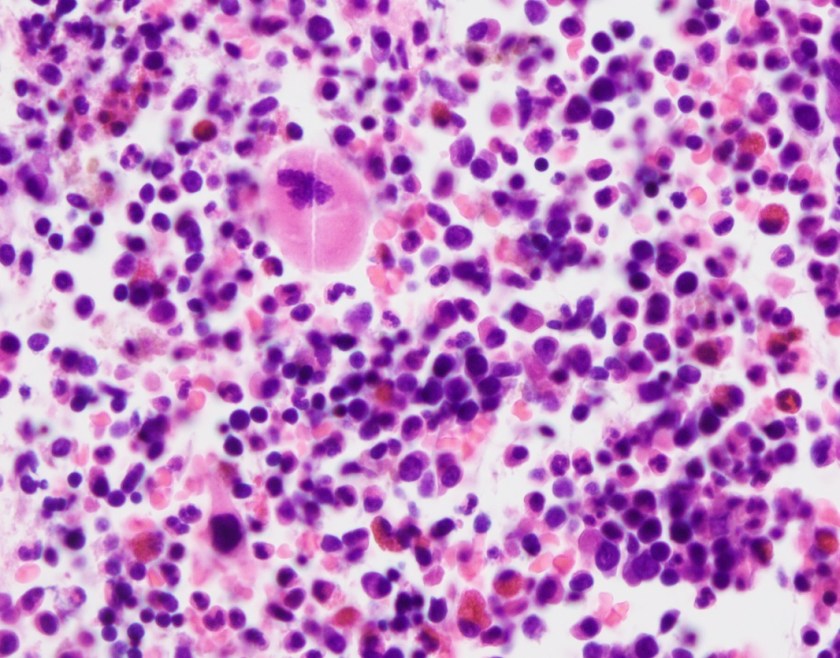
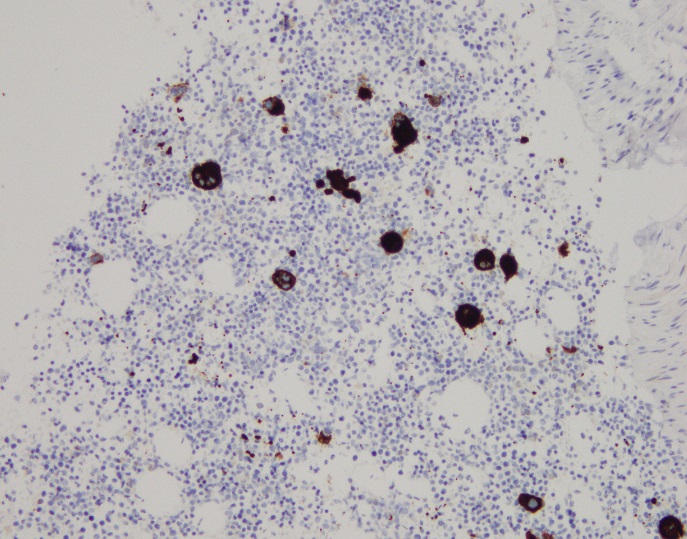
The lymph node biopsy shows fragments composed of adipocytes and maturing trilineage hematopoiesis. Multiple small to medium sized lymphoid aggregates are also seen, composed of small and mature appearing lymphocytes. The lymphocytes are a mixture of CD3 positive T cells and CD20 positive B cells with focal B cell predominance. Myeloperoxidase highlights myeloid precursors, which comprise 70-80% of the cellularity. CD71 highlights erythroid precursors, which comprise 20-30% of the cellularity. CD61 highlights megakaryocytes. CD34 highlights vessels and only rare CD34-positive cells are seen. Taken together, the findings are consistent with extramedullary hematopoiesis.

Discussion

Extramedullary hematopoiesis (EMH) is defined as hematopoiesis that occurs outside of the bone marrow. It can occur in both normal and pathologic states and has been seen in several hematologic disorders including chronic myeloproliferative neoplasms. Myeloproliferative neoplasms (MPN) are a group of clonal hematopoetic stem cell disorders that include polycythemia vera (PV), essential thrombocythemia (ET) and primary myelofibrosis (PMF).1 JAK2V617F mutation is the most frequent mutation associated with MPNs, found in roughly 96% of patients with PV and 65% of patients with ET and PMF. This mutation leads to constitutive activation of the JAK/STAT pathway and is a driver of myeloproliferation.2  The patient in case 1 was found to have a JAK2 mutation during the work-up for hypercoagulability. This suggests that he may have an underlying MPN, however JAK2 mutations have been found in patients with venous thrombosis, but without overt evidence of MPNs.3 The patient in case 2 had a bone marrow biopsy with features concerning for primary myelofibrosis. In PMF, there is generally a proliferation of myeloid cells in addition to marrow fibrosis. Increasing fibrosis can eventually result in pancytopenia as the fibrosis takes over the marrow space in addition to altering the bone marrow environment so that it is unable to support normal hematopoiesis. Ultimately, this can lead to extramedullary hematopoesis. EMH most commonly occurs in the spleen and liver, but has been described in many other sites including the mediastinum and lymph nodes. In addition to being a driver of proliferation, it is thought that JAK2 mutations make hematopoetic stem and progenitor cells more sensitive to growth factors and can cause the cells to mobilize to the liver and spleen.4  Patients with EMH can have symptoms related to the site of involvement. Depending on the extent of involvement and location, EMH may require treatment with low dose radiation. While EMH is a rare finding, it should prompt an investigation for an underlying MPN.

References

  1. Imai K, Aoi T, Kitai H,et al. A case of perirenal extramedullary hematopoiesis in a patient with primary myelofibrosis. CEN Case Reports. 2017;6(2):194-199. doi:10.1007/s13730-017-0274-1.
  2. Kim CH. Homeostatic and pathogenic extramedullary hematopoiesis. Journal of blood medicine. 2010;1:13-19.3https://www.ncbi.nlm.nih.gov/pubmed/17263783.
  3. De Stefano, V, Fiorini, A, Rossi, E, et al. Incidence of JAK2 V617F mutation among patients with splanchnic or cerebral venous thrombosis and without overt chronic myeloproliferative disorders. Journal of Thrombosis and Haemostasis. 2007;5(4):708-14. https://www.ncbi.nlm.nih.gov/pubmed/17263783.
  4. Passamonti F, Maffioli M, Caramazza D, et al. Myeloproliferative neoplasms: From JAK2 mutations discovery to JAK2 inhibitor therapies. Oncotarget. 2011;2(6):485-490.

Marcus, Chelsea_099-Edit

Chelsea Marcus, MD is a third year resident in anatomic and clinical pathology at Beth Israel Deaconess Medical Center in Boston, MA and will be starting her fellowship in Hematopathology at BIDMC in July. She has a particular interest in High-grade B-Cell lymphomas and the genetic alterations of these lymphomas.

Cut it Out … No, Really, I Need Margins

Hello everyone! Back again with another post about that interesting space between my experiences working in laboratory medicine as an MLS and my current path through medical school toward a career in pathology. Last month, I discussed how the new 5th generation cardiac enzyme assays are evolving and reaffirming the relationships between lab data and clinical decision making. This month, as I adjust to a very different circadian rhythm, I’d like to talk about some topics in my surgery rotation as they relate to surgical pathology and the lab.

Just to summarize, besides epidemiological research and public health initiatives I’ve written about here on this blog, I had several years of lab work before medical school. In my experience, I have seen the gamut of required steps for pathology specimens peri/post-operatively. Everything from placenta, bone, blood, marrow, skin, brain, lung, GI, to any other organ system’s tissue is processed, blocked, stained and examined on glass by pathologists who write reports for their clinical colleagues.  Often, we in the lab receive phone calls from providers inquiring about turn-around times and results as they  follow-up on their patients and cases. In Chicago, I was able to see and train in a great trauma center at Northwestern, community hospitals like Swedish Covenant and Weiss Memorial, and an academic hospital centers like Rush and UIC. What I learned there is just how much really depends on those pathology reports. Cytology, diagnostic immunohistochemistry, morphology, margins, and gross analysis all contribute to a final diagnosis. After an extended observership at UAB Medical Center, I was fortunate to see first-hand the critical process involved in signing out dermatology consults, examining gross pathology, and even frozen neuropathology specimens. Sitting with attendings in the OR and frozen rooms deciding between glioblastoma multiforme, lymphoma, or something benign (read: defer to permanent slide diagnosis later) was fascinating. Meanwhile, I’m now a month into formal surgical rotations at Bronx-Care Hospital in NY and I get to see the other side of the pathology report.

The Relationships Between Surgeons and Pathologists are Critical

Many surgical interventions and procedures require resection of known or suspected pathologic tissue. Whether it’s malignancy, benign growth, obstruction, adhesion, or otherwise mechanically compromising tissue, many patients require a surgeon to remove the entity in question. And, while the difficulty of these excisions and resections may vary depending on location, cases rely heavily on the pathologist-surgeon collaboration. Virtually all neoplasms are diagnosed through anatomic pathology assessment under a microscope. Fine needle aspirates, pap smears, bone marrow biopsies, and countless other tissues must go through pathology before being finalized. This interdisciplinary collaboration between the surgical team and the pathology team is, of course, by nature acutely critical. In proper circumstances, open cases in the operating room are consulted to a pathologist STAT. The effective communication between the pathologist and surgeon awaiting the intraoperative consultation is key to effectively treating their shared patient. Sometimes operating rooms will have live microscopic image-casting, sometimes there is an intercom system, sometimes its solely based on electronic forms in the EHR, and sometimes pathologists need to go into the surgical field to examine the resection intraoperatively in person. However it happens, this is a very important relationship that patients might not be aware of.

The Point of View Between Surgical Pathology and Clinical Surgeons Are Different

So this sounds like a perfect match, right? Surgeons and pathologists living in harmony? Unfortunately, harmony isn’t part of regular onboarding at many institutions so, as with any staff, there are different scopes and sometimes this can be a challenge. Getting a frozen notification as a pathologist is a serious task. They are emergent and must be addressed immediately and diagnoses are made with serious gravity, often consulting with other pathologists. This is also, however, a singular teaching moment as every frozen section is different and pathologists use these learning opportunities to teach their residents and medical students. In the interests of accurate diagnoses, educational value, and appropriate response to the OR, pathologists take measures to ensure success. For example, frozen specimens will be received, a history and presentation of the patient is discussed, the specimen is partitioned for frozen section (STAT), permanent section, and further studies (routine). So, for the pathologist it’s all about accuracy, reliability, and what they can confidently report. The surgeon has a different point of view: they are operating with a specific physical goal in mind by either resecting a tumor, or isolating good margins from a known malignancy, or ensuring the tissue being removed is correct/adequate for its therapeutic purpose. Fun fact: surgical pathology was a field originally developed by surgeons! There are things a pathologist only knows, and there are things a surgeon only knows—but when working together, the overlap of medical knowledge increases the coverage of care for their shared patients’ outcomes.

surgpath1
Image 1. A pathologist processes a frozen specimen on a cryostat machine. A summary of frozen sections from JAMA, 2005;294(24):3200. doi:10.1001/jama.294.24.3200

The Cold Truth About Frozen Sections

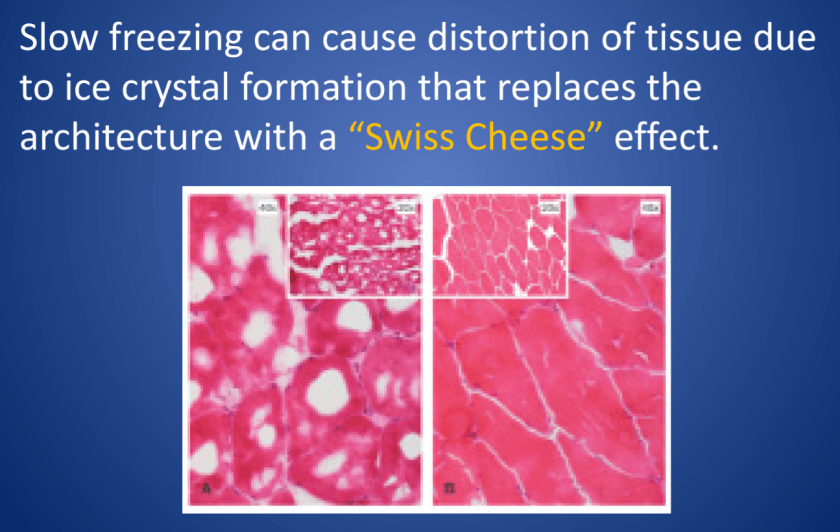
Frozen specimens aren’t perfect. In these specimens, tissue gets stiffened by freezing instead of routine paraffin embedding, and because of that a frozen section could be distorted by folds, tears, and other artifacts that might appear because of mechanical manipulation during processing. Frozen samples also leave artifacts where water would crystallize and freeze, but one of the caveats regarding artifacts in frozen sections is that FAT DOES NOT FREEZE. Instead, specimens that have large fat content (i.e. brain tissue) have to be examined carefully to not confuse findings with inflammation or other pathologic processes. Ultimately, it takes numerous cases to properly hone the skills required to confidently diagnose from frozen section. While they might not be perfect, it is a critical tool used between the surgical and pathology teams. Challenges in this handoff process relate to proper use of this surgical tool. For instance, if a frozen is called for and the surgery is closed by the time a pathology report is filed, then (assuming there were no serious delays) this may have been an inappropriate specimen decision. Furthermore, specimens must be discussed prior to receipt for appropriateness and clinical relevance. Fatty lipomas aren’t going to go to frozen section, they shouldn’t be ordered. A thyroid lobectomy? That’s a better utilization of resources and tools.

surgpath2
Image 2. A demonstration of water-related crystal formation causing distortion and artifact (LEFT) on frozen section of muscle tissue, compared to normal (RIGHT). From Northwestern, source: http://www.feinberg.northwestern.edu/research/docs/cores/mhpl/tissuefreezing.pdf

Ultimately, with proper training and experience a pathologist can effectively use the frozen section as a useful clinical tool to improve patient outcomes. Surgeons operating in the best interests of their patients, should strive to create a functional and successful communication between both services. My experiences in NY with surgeons of various kinds reveals a common truth among them: pathology is a critical player in surgical interventions, and without margins, diagnostic stains, and other work-ups, those interventions would be much more difficult and risky.

Thanks again! See you next time!

Bonus: for more content specifically detailing some of the cellular morphologies and cytology I discussed above, please check out I Heart Pathology, a compendium website my friend and colleague at UAB, Dr. Tiffany Graham, manages. It’s meant for other pathology residents to review and refresh on material and it’s updated as often as possible. Check out the link here: https://www.iheartpathology.net/


ckanakisheadshot_small

–Constantine E. Kanakis MSc, MLS (ASCP)CM graduated from Loyola University Chicago with a BS in Molecular Biology and Bioethics and then Rush University with an MS in Medical Laboratory Science. He is currently a medical student actively involved in public health and laboratory medicine, conducting clinicals at Bronx-Care Hospital Center in New York City.