History of Generations: Millennials

Of all the generations, it is my personal experience that this generation has received the most pushback regarding their work style, work ethics, and its influence. However, this generation is absolutely essential in today’s work environments. They bring a different perspective to work because they care about self-expression and having a purpose.

Millennials are typically born between 1981 and1999.. Their parents are Baby Boomers or Gen Xers. This is the first generation that has never known work without computer, even though not every household had (and has) one. Schools started to invest in computer labs and computer training and it started to become mandatory in the Western World to submit homework that was typed instead of handwritten. This generation was young, or sometimes not even born yet, when the internet connected the world and information became was readily and widely available. One of the characteristics of Millennials is valuing instant gratification, because they are used to having the world at their fingertips. Another is self-expression, due in large part to the widespread use of cell phones and social media.

Because of the internet and globalization, this is the most diverse generation. This is another great benefit they bring to organizations, because they create a diverse work force with people from different ethnical, educational, and socio-economic backgrounds.

This generation was told that they could achieve anything they wanted, so they are creative, optimistic, and focused. They experienced tremendous academic pressures and school shootings, which caused many students to feel unsafe in school. This led many millennials to live by the notion “You Only Live Once” (YOLO), which is also embedded in their professional lives through a focus on purpose and professional development opportunities.

 

lotte-small

-Lotte Mulder earned her Master’s of Education from the Harvard Graduate School of Education in 2013, where she focused on Leadership and Group Development. She’s currently working toward a PhD in Organizational Leadership. At ASCP, Lotte designs and facilitates the ASCP Leadership Institute, an online leadership certificate program. She has also built ASCP’s first patient ambassador program, called Patient Champions, which leverages patient stories as they relate to the value of the lab.


When the Millennial generation is discussed, most sources agree they share these common traits:

  • live in a world of technology, have never known a world without computers, and get most information from the internet
  • Are rewarded for participation, not achievement, yet are achievement and career oriented
  • Experience enormous academic pressure
  • Want to make a difference in this world and find a career with a purpose

I was thinking about writing this post as I went to the gym for a personal training session.  As I was stretching and lifting weights, I noticed all the millennials in the fitness center!  It occurred to me that instead of relying on what researchers say are important to them, I could do my own small survey. I decided to use the KISS Principle.  In other words, “Keep It Simple Stakenas!”  I focused on one question with three parts, “What are the three most important things to you in your life as a millennial?

When I was done with my workout, I began to walk up to people who looked like they could be millennials.  Of course I made a few errors, and fortunately, they were Gen Xers and received my first question as a compliment.

Those that I interviewed who chose to elaborate all seemed to center on one shared opinion.  They sought a cause greater than themselves and a strong desire for meaningful experiences, such as learning about different cultures, people, and travel.  One stated, “I want to be the best citizen of the world that I can be.”

The first response in the first interview took me by surprise.  When asked what the most important things to her were, she said, “wifi.” The second person I interviewed immediately said, the “phone,” then finished with Family and Friends. Five of the 12 interviewed stated that their career was important and work-life balance.

As I grouped the interview answers in topics of importance, I found a common thread. I learned that 11 of the 12 people I interviewed shared what I have called “The 4 F’s,” Family, Friends, Fitness and/or Faith.

Millennials will always be there if you need a “charge!”  They understand that “wifi and cell phones” carry with them opportunities for friendships, family connections, careers, education, and even access to ways of worship regardless of your faith.

God Bless Our Millennials!


Stakenas-small

-Catherine Stakenas, MA, is the Senior Director of Organizational Leadership and Development and Performance Management at ASCP. She is certified in the use and interpretation of 28 self-assessment instruments and has designed and taught masters and doctoral level students.  

Crisis Communication

It’s not every day, but most days it seems like I’m “putting out a fire”…. or two. I’m sure you know exactly what I’m talking about. Four people called in sick and now you’re extremely short staffed, your automated instrument just broke and now you have to process everything manually, you just found out that product X is contaminated and patient care could be jeopardized; the list goes on and on.

Unfortunately, not everyone is prepared for crisis. This is a problem because poor crisis management can result in harm to the organization, its stakeholders (patients, clinicians, vendors, staff, employees), or its reputation. A major threat to good crisis management is poor communication. You can prepare a great plan, but if your plan is not communicated well/properly, then your crisis could turn into a major disaster. 

The Issue

Without proper communication, operational response can break down, which can cause a significant delay in crisis resolution (1). The financial and/or reputational effect becomes more severe the longer it takes to resolve an issue. Additionally, poor communication can cause your stakeholders to react in a negative way, such as get angry, become confused, or perceive your operation/department as incompetent, or even worse- negligent.

The Solution

Anticipate the crisis. Having a plan in place can really save the day. When planning, your team should consider pre-analytical, analytical, and post-analytical risk. To some extent, analytical risk assessments should already be in place as they are required for individualized quality control plan (IQCP). The IQCP assesses specimen, test system, reagent, environmental, and testing personnel risks (2).

Identifying a communication team can help to ensure that your crisis management plan is communicated properly. The communication team should be trained on the policies and crisis management plan. Make sure that staff and leadership know who the members of the crisis communication team are, so that when a crisis does occur everyone knows who to turn to or where to look for information.

Establish a crisis notification system. Most hospitals have notification systems, but does your laboratory or department have an established notification system? Depending on the situation you will need to contact different groups of people. Having a list prepared ahead of time eliminates forgetting to communicate to a particular group or individual in the heat of the moment. Pagers, phone numbers, addresses, text messages, emails. Make sure all information is easy to access and up-to-date.

Assess the crisis situation. Ask questions. Make sure you have all the appropriate information before reacting. Our gut reaction is to act fast, which is usually a good thing, but not to the detriment of your crisis management plan. Keep calm and carry on.

Perform a post-crisis analysis. After the crisis is resolved (not too long after), it is important to review the event and determine if the process was a success. Document lessons learned; key steps to keep and areas of improvement.

The Conclusion

The laboratory is like a box of chocolates- you never know what you’re going to get….so it’s best to be prepared. Organizational response to crisis should include a good communication plan. Lastly, don’t forget to test you plan and make sure it works. 

The References

  1. https://www.bernsteincrisismanagement.com/the-10-steps-of-crisis-communications/
  2. https://www.cms.gov/Regulations-and-Guidance/Legislation/CLIA/Downloads/IQCP-Workbook.pdf


Martinez Headshot-small 2017

-Raquel Martinez, PhD, D(ABMM), was named an ASCP 40 Under Forty TOP FIVE honoree for 2017. She is one of two System Directors of Clinical and Molecular Microbiology at Geisinger Health System in Danville, Pennsylvania. Her research interests focus on infectious disease diagnostics, specifically rapid molecular technologies for the detection of bloodstream and respiratory virus infections, and antimicrobial resistance, with the overall goal to improve patient outcomes.

Compliments in Disguise, More than Meets the Eye

Hello again everyone!

As with most clinical situations, there is often more going on than you can see on the surface. The classic example being the lab values that might have derangements that aren’t apparent clinically; something we rely on heavily in medicine. While most of the situations in these cases apply to diagnostic methods in patient care, sometimes those nuances exist outside of patient care. For example, a simple comment or phrase can hint at an individual’s potential biases and/or carry with them a weight of opinion that means more than what it sounded like.

comp1
Image 1. Emerging from their laboratory, a pathologist, lab manager, and shift supervisor arrive ready to discuss clinical lab metrics with hospital administration. Many of us transform our roles within and outside of the lab, creating a complex team of clinicians all for the sake of our patients. (Source: Transformers: The Movie, obviously)
comp2
Image 2. Instruments get routine service visits from industry reps, while supervisors oversee, and bench techs commiserate all in matching lab coats. Laboratorians often enjoy the exclusivity of the laboratory, working mostly “with your own” can sometimes facilitate an easier experience. But beware of comfort zones: if you don’t spend your time learning about others’ scopes, they won’t learn about yours. (Source: The Simpsons)


Last January, I brought up the topic of stereotypes in pathology which seem to reflect common misconceptions about the field of laboratory medicine. This time I think I’d like to explore that topic a little more in-depth, as I’ve noticed a few things during my clinicals as a medical student. Those of us with careers or histories of lab work or pathology experience know that we’re mostly regarded as a “behind the scene” crowd. That can be true, and to a certain extent a necessary part of patient care, but what happens when these stereotypes catch up with you? What happens when they become a part of your training? Since I have the great luck to have been on both sides of this question, here are my thoughts on what it really means when lab folks are thought of as a mysterious secret hospital-basement society.

First of all, these stereotypes aren’t anything new. We’ve all been sharing and resharing the same story every couple of years from article to article. I shared a few last January: Dr. Lori Rasca’s “Lonely Life of a Clinical Pathologist,” Dr. Sarah Riley’s call to bring the lab to the forefront of medical practice, and survey after survey about things like burn-out and wages. Go ahead and google things about careers in pathology and you’ll get a mixed bag. Often times, you’ll see programs or departments tout the importance of a profession in clinical pathology. Yale University School of Medicine conducted a survey last March where they asked middle-school students “what does a pathologist do?” The responses varied—and were mostly wrong. So the department wrote a piece about the clinical roles of those in laboratory medicine addressing specialization, patient contact, and tech-innovation.  One line that stuck out to me: “[you’ll] sometimes hear a surgeon say, ‘I’m only as good as my pathologist.’” Fantastic, I wrote about that last June where I talked about how the relationships between surgery and pathology are critical. The fact of the matter is, pathology is always changing; and with it, the roles of pathologists do too. An article from April 2011 in the College of American Pathology’s CAP Today featured Dr. Sylvia L. Asa and she wrote at length about the future of pathology in response to current stereotypes:

“The 2020 pathologist should not be someone who hides in the basement of a hospital and looks at glass slides or even whole-slide images, but someone who’s able to take all the information from the clinical pathology lab, from radiology, from endoscopy, from slides and the molecular lab, and sit down with the patient to explain the disease he or she has. That is how we will stay relevant in the public eye and every patient will know who their pathologist is. And we should make sure that the patient’s pathologist is the person who, when the patient searches the Internet, is an expert in the field.”

Next, medical students experience a myriad of sifted and specialized knowledge which changes scope and tone from one month/service/attending to another. When you’re in internal medicine, ID specialists are lazy; when you’re in surgery, IM residents are flustered; when you’re in ED, the other attendings don’t have as many thrilling stories; and when you’re in clinic with family medicine staff, you know no one else can handle the “front lines” like you guys do…right? Basically, everyone has a point of view and we naturally find ourselves working with other professionals who have specialized in the same field as us. But when you get too comfortable with your homogenous staff, that’s when those (otherwise normal) opinions can get complicated. Most of the time, pathology is viewed as an outsiders’ specialty. People might think you’re socially inept, or don’t like patients, or even can’t “cut it” on the wards. (That was harder for me to type than for you to read, trust me.) But it does happen; and when it becomes a conversation piece, med students have two classic options: Smile and agree with everything your attending says because their word is gold and they ultimately sign your evaluations or take the chance to address misconceptions and stereotypes—which do you think is easier? Earlier this year, a medical student from Ireland named Robert Ta wrote about his path to pathology in an article published in the International Journal of Medical Students (yes, it’s a real thing—and it’s great!). In it he discussed his enlightening experiences observing laboratory medicine for the first time and falling for the interdisciplinary work and diagnostic algorithms pathology offers. He even cited all-too-familiar classics we’ve all heard such as ““you must really hate dealing with people,” “[you must] have no clinical skills,” “[you have] no social skills,” “[you are] only interested in research,” “[you] must love working with dead people,” and everyone’s favorite “but you’re great with patients … why you would want to go into pathology?”

comp3
Image 3. “I know you just finished—and honored—your surgery rotation but those scalpel-jockeys don’t really know how to take care of patients. Room 12B has gout and I am not about to cut his toe off!” Every time we switch rotations, medical students hear what everyone thinks about everyone else’s specialties. It can be exhausting keeping it all straight—I think by the time you graduate it just means you’ve lost track of who’s who… (Source: Medscape)

For the minority of students that figure out what specialty they like early on, those siren-songs can be a barrage to your patience. What ultimately happens is you could create a narrative of why you like pathology as an ad nauseum auto-pilot response, or you could try and engage people for their viewpoints and glean what insights you can—maybe you could even share some insight yourself. But something really interesting happens when you pursue these conversations a bit further: you learn a little more about the other person(s) and a little more about yourself in the process. I had heard the lattermost in the above list of “hits” a million times, and I used to think of it as a sort-of backhanded compliment. It wasn’t until I heard it from an attending I really respected, that my perception changed. I had done a full day’s worth of med student work in a particular clinic alongside my attending. It was full of difficult cases, challenging patients, biopsies, spot diagnoses, etc. On a few occasions I nailed a couple questions (a med student feather-in-cap moment) alongside interns and other students. At the end of the day, a conversation came up about interest in specialties, and I said pathology. Being greeted with a few comments/questions about it, along with a brief but great conversation, the attending finally said that they were impressed with me and to say that my skills would be wasted in the lab is a misnomer. Rather, my “clinical skills/work ethic” wherever I’d end up would be a valuable asset to patients anywhere in the hospital. (Um, that was a gold-star day. I think it was also a Friday, so just amazing overall.) So these stereotypic comments that used to make me feel frustrated, just got turned into one of my most memorable compliments—and I couldn’t be more grateful.

Turns out, medicine is full of moments like this. Where suddenly you learn or adjust a small piece of information and your point-of-view shifts to a new outlook. Dr. Justin Kreuter, a clinical pathologist, at the Mayo Clinic in Rochester, MN, recently wrote a perspectives piece for Mayo Medical Laboratories. It was all about taking the time to critically reflect. He linked to a few interesting articles and talked about how he takes time each day to reflect on moments and experiences he had. A mindfulness of “deliberate practice” (one of the various ways we can practice becoming better at something) shows us that being aware of opinions, cause-and-effect relationships, and our roles in certain situations can shape how we move forward from various experiences. Check his articles out and take his advice; who knows what you might learn about frustrating moments in your day, when instead you might change the entire conversation?

See you all next time!


ckanakisheadshot_small

–Constantine E. Kanakis MSc, MLS (ASCP)CM graduated from Loyola University Chicago with a BS in Molecular Biology and Bioethics and then Rush University with an MS in Medical Laboratory Science. He is currently a medical student actively involved in public health and laboratory medicine, conducting clinicals at Bronx-Care Hospital Center in New York City.

Stress: When to Use It and When to Reduce It

To be honest, the word “stress” makes me feel stressed. As soon as this little six-letter words pops up in my head, my heart rate increases, my blood pressure increases, and I lose focus. Even the good type of stress, called eustress, does not sound good in my ear. It evokes thoughts of panic, of too much to do and too little time, and of shutting down.  I want to turn off all the lights and hide underneath my bed so that the stress-goblins can’t find me.

There many types of stress, including acute stress, episodic acute stress, and chronic stress. Acute stress is short, but it can be frequent. It happens for example when you make a mistake at work or when you are about to give a presentation. Acute stress is not necessarily detrimental to your well-being, but it can become harmful is you experience it a lot. Episodic acute stress is when this type of stress occurs often. It makes people irritable, short-tempered, and aggressive because they live in a constant feeling of running behind, as if they can never catch up with life. Chronic stress is when you experience stress over long periods of time. It has a significant impact on a person’s mental, emotional, and physical health and it can lead to burnout. Burnout is the physical and/or mental collapse caused by prolonged or chronic stress. It can take weeks or even months to fully recover from it, during which a person is typically not able to work. Needless to say, it is critical to avoid burnout at any cost.

Knowing how to recognize and reduce symptoms of stress has become a critical part of today’s professional life. The constant pressure to be reachable can create or increase stress, so what we really need to learn is how to create a balance between work and taking time to rejuvenate so that we are more productive during the hours we need to focus.

People develop coping resources to handle stress throughout their personal and professional lives. When you experience stress, keep track of what work best for you so that you end up with a personal coping resource list. For example, when I am stressed, exercise helps me feel better. I also know that I at times I need to check my email first thing when I wake up to get a sense of any urgent issues, and sometimes I need to delete my work email off my phone in order to cope with my stress levels. Knowing what works for YOU is the key, so trying new things and exploring different options is a great way to keep your stress levels at bay.

Work is never done. However, knowing when and how to take a break to clear and refresh your mind needs to be part of everyone’s long-term professional goal. Life and work is a marathon, so developing coping skills to handle both acute and chronic stress is essential to make sure we all make it across the finish line.

Note: Stay tuned for the upcoming release of our ASCP Leadership Institute course called Stress Analysis and Coping Resources!


lotte-small

-Lotte Mulder earned her Master’s of Education from the Harvard Graduate School of Education in 2013, where she focused on Leadership and Group Development. She’s currently working toward a PhD in Organizational Leadership. At ASCP, Lotte designs and facilitates the ASCP Leadership Institute, an online leadership certificate program. She has also built ASCP’s first patient ambassador program, called Patient Champions, which leverages patient stories as they relate to the value of the lab.

Lab Safety for Every Member of the Team

Gretchen had been the lab secretary for six months, and she was getting comfortable in the role. From her office she scheduled meetings for the manager and paid bills, but her job took her into the lab proper at least once every day. She liked that her job allowed her to wear skirts and sandals in the hot summer months-she was glad she didn’t have to follow the dress code that was used in the lab.

Stephan was new to the lab courier team, and his training had to occur quickly since he replaced someone who filled weekend slots often. He was shown the routes to drive, but when trained in the lab area, he was only shown where to pick up and drop off specimens.

Dr. Kane had been the lab medical director for many years. One day she was talking to the histology tech and noticed the use of pictogram labels on secondary chemical containers. She had no idea what they were for, and she asked how long the lab had been using them.

Unfortunately, these scenarios are realistic, and they illustrate a problem that can create deep roots in a laboratory, and those roots can lead to a poor safety culture that will be difficult to manage. If you’re in charge of safety in the lab, it is vital to know who needs safety training, how to give that training, and when to provide it.

The who is important. Does your lab host students for clinical rotations? Do research personnel perform tasks in the department? Administrative personnel and even lab leaders who enter the department should also have safety training on record. Don’t expect pathologists to keep up with the latest safety regulations on their own either, they have many other things on their plates. Even if they are under contract and not truly employees, they should be included with certain safety training offerings. Consider biomedical engineering personnel and maintenance workers- some safety training can prevent accidents and exposures for those important team members as well. Fully train couriers and phlebotomists or anyone else who will process specimens in the lab setting. If you’re just starting to figure out safety training in your lab, make a list of all the different people who may enter the area.

Clearly all of these various people will not need the same level of lab safety training. A courier might need to know about dry ice safety, for example, but that information may mean nothing to the secretary. Be sure to customize the training for the different employees as needed. Nothing will turn people off faster than information they don’t need. If there are changes to safety regulations that require new education, be sure to involve laboratory medical staff. For example, the implementation of the Globally Harmonized System in 2016 or this year’s EPA Generator Improvement Regulations both created major changes with lab safety processes. The lab medical director is responsible for oversight of the lab, and not having knowledge about such major changes can hinder that responsibility and expose the lab to both safety and accreditation issues.

Now that you know who to train and what education is needed for each role, it is time to figure out when and how to provide that lab safety training. Some topics require annual training by OSHA and other agencies, and a computer-based module is usually acceptable. That said, other required training must include live interaction, quizzes, return demonstrations and certificates of completion. It can be a complicated task to figure out which is which, and reviewing the requirements from the source agency (OSHA, DOT, EPA, CAP, etc.) will guide you. Next, it becomes important to know your audience- those who will receive the training. What type of education will work best- a live class, computer modules, webinar, interactive round-table sessions- there may be a need for a combination of these styles.

Once you determine your safety training needs and methods, there will be more to consider in order to maintain a steady culture of safety. Conducting regular drills to ensure staff understanding should be added to your calendar. Fire drills, evacuation drills, disaster drills, and hazardous spill drills are just some that can be conducted throughout the year to ensure staff readiness. Consider giving out information on a specific safety topic each month at staff meetings. This reinforcement of the required training will benefit the entire team and the lab safety program.

It takes time and effort to create a solid laboratory safety training program. If you have to start at the beginning, learn your resources and ask for help. If you are taking over a safety program already in place, make sure the on-going training meets regulations, and create a plan to continually raise safety awareness in the laboratory for all whose job may take them into the department. That will create long-lasting value and safety for every member of the team.


Scungio 1

Dan Scungio, MT(ASCP), SLS, CQA (ASQ) has over 25 years experience as a certified medical technologist. Today he is the Laboratory Safety Officer for Sentara Healthcare, a system of seven hospitals and over 20 laboratories and draw sites in the Tidewater area of Virginia. He is also known as Dan the Lab Safety Man, a lab safety consultant, educator, and trainer.

Essential Diagnostics List – Ready, Set, Go!

In a recent post I introduced the WHO’s draft of the Essential Diagnostics List (the EDL). The EDL is a catalog of in vitro diagnostics (IVD) designed to complement the Essential Medicines List. The EDL is not necessary meant to be a global list, but something to be adopted and adapted by each country, and tests added, subtracted, or prioritized based on each country’s disease burden. While the draft is still in development, at least one country is already on track to have adopted a country specific EDL by the end of the year!

India is working towards being the first country to have an EDL by the end of 2018. It so happens that the draft of the EDL was announced while India was in the process of rolling out a Free Diagnostics Initiative (FDI) in 29 of its states. The goal of the FDI is to “ensure the availability of a minimum set of diagnostics appropriate to the level of care to reduce out of pocket expenditure on diagnostics and to encourage appropriate treatment of based on accurate diagnosis”. Similar to the EDL, the FDI plans for different IVDs at different levels of laboratories, from community healthcare centers to reference laboratories. The development of an EDL seems like a natural product of India’s FDI. Talk about perfect timing!

The Indian Council on Medical Research (ICMR), comprised of clinicians, microbiologists, and medical device industry leaders, has convened to adapt the EDL to India’s infection patterns and diseases. They plan to have their national EDL ready to present by the beginning of 2019. The ICMR intends that an Indian EDL will optimize utilization of the Indian EML. “The objective is to test and treat rather than treat and test” states Dr. Kamina Walia of the ICMR. The ICMR also realizes that in order for diagnostics to be affordable, the country’s laboratory infrastructure will need to be strengthened, including building laboratory capacity where none currently exists.

It is so exciting to see the EDL already under consideration by a nation. It’s even more exciting to hear medical experts speak about how laboratory infrastructure should be strengthened, and to know that medical device industry leaders are coming to the table. It’s going to be fun to watch this develop over the next decade.

Do you want to be involved in the EDL project? There is time! The WHO is accepting applications for IVDs to be added to the second edition of the EDL, which will be released in 2019. The deadline for submissions is September 15, 2019. Instructions can be found here.


Sarah Brown Headshot_small

Sarah Riley, PhD, DABCC, is an Assistant Professor of Pediatrics and Pathology and Immunology at Washington University in St. Louis School of Medicine. She is passionate about bringing the lab out of the basement and into the forefront of global health.  

With Great Power Comes Great … Reliability

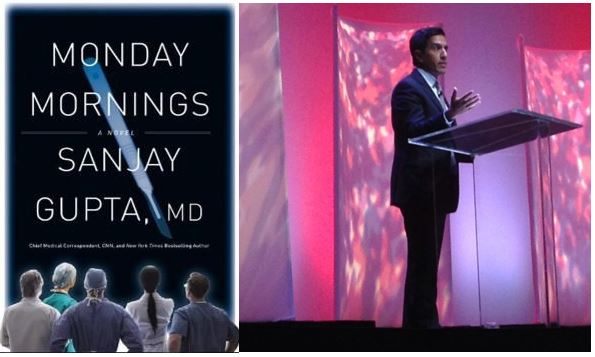
Hello again everyone! Your friendly neighborhood med student here, back with another clinical pearl from my hospital rotations. I usually keep a look-out for topics in clinical medicine that would be valuable learning experiences to share with you, my colleagues back in the lab. Last month I talked about the important cross-over between pathology and my current general surgery rotation.  This time around I’d like to discuss a topic that was brought up at the hospital’s in-house surgical mortality and morbidity meeting (M&M) on a recent Wednesday morning. (Side note: CNN Medical Correspondent, journalist, and Emory neurosurgeon Dr. Sanjay Gupta wrote a book on M&M meetings in 2012 called Monday Mornings. It was adopted as a TV series as well. The book was excellent, I highly recommend it! Some of you may remember that Dr. Gupta participated at the ASCP Annual Meeting in 2015 as a keynote speaker.) Aside from going over a few cases with reportable teaching moments and less-than-optimal outcomes, this M&M included an in-service on High Reliability Organizations (HROs) which really reflect a lot of parallels between working as a clinician, studying as a medical student, and working as a laboratory professional.

m&m1
Image 1a-1b. Sanjay Gupta, MD and his 2012 medical novel with realistic depictions of mortality and morbidity conferences surgeons participate in. This process of reflection and analysis is both preventative of mistakes and errors, but also effective as a comprehensive assessment of pitfalls and gaps in reliability. M&M meetings are a critical part of surgical teams and a useful HRO tool. Pictured (right) is Dr. Gupta at the 2015 ASCP Annual Meeting in Long Beach, CA where he discussed the ever-evolving nature of healthcare and his time as a medical correspondent.

What is a High Reliability Organization?

HROs are teams or organizations which operate under stress to produce a certain outcome or product. There is usually a tensely critical environment in which this outcome occurs within and its accompanied by a complex hierarchy of personnel accompanied by technologically advanced equipment or skill-driven work. To imagine the best examples of HROs, think of situations where something that could go wrong must never happen: air traffic control at a major international hub, the engineering department at a critical dam/levy/channel lock, the safety department for a nuclear reactor in a power plant, mission control at NASA, and—of course—clinical environments which include everything from surgical teams to critical laboratories! Basically all of these entities operate with the odds stacked against them with high potential for catastrophe, but they do their best to avoid failure and maintain quality controls. Essentially, I argue that health care organizations and, especially laboratories, are high-level HROs.

m&m2
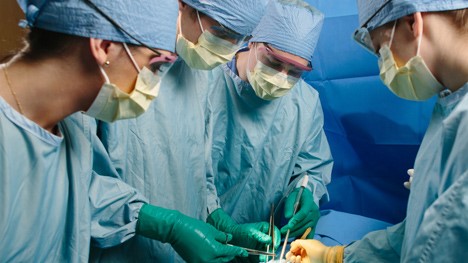
Image 2. “Time Out’s” are called before every single surgical procedure. After a patient gets through various stages of clearance regarding fitness and appropriateness of surgery, the final step before that first incision is a time-out. This is a conference of review between nurses, anesthesiologists, OR scrub techs, medical students, circulation staff, and other inputs that would affect patient care. Details checked include patients’ names, MRNs, DOBs, procedure, locations, etc. Effective communication at all stages helps HROs achieve low error rates. (Photo: Mayo Clinic, Surgical Outcomes Program)

Connecting HROs, ASCP, and you…

I recently finished the Lab Management University (LMU) training offered by ASCP earlier this year. What I found interesting in many personnel-related modules was a mindfulness of the staff one might work with. This considered not just the skills, experience, or credentials that individuals may possess, but it also reflected their cultural background, communication preferences, potential talents or limitations, and insights into different points of view. Not only does LMU do a fantastic job exploring these personnel traits, it also turns the reflection inward to uncover possible biases one might have. This is mindfulness—a super trendy and upcoming philosophy of operating in the present with the full attention a moment deserves both personally and professionally. Mindfulness for the individual, the clinician, and the student are all great ways to center yourself as you encounter challenges. However, mindfulness for an organization takes on a different scope. What mindfulness does at an organizational level is essentially create an HRO: it creates a system in which reliability is created against adverse challenges in the setting of awareness, transparency, and complexity.

m&m3
Image 3. High Reliability Organizations (HROs) are built on a foundation of mindfulness—the same mindfulness individuals practice for effective centering and decision-making acts as a tool for efficacy in organizations’ attempts at self-awareness and process improvement. Reducing error and operating at high performance levels are held up by five major pillars which address problem detection and problem management/resolution. (Source: BioRAFT™ Safety and Compliance Consulting, Cambridge, MA)

Let’s Walk through an HRO in action from the desk, to the surgical suite, and in the lab:

The foundation of HROs is rooted in that mindfulness. It acts as a guiding tool to focus the principles or HROs which contribute to reducing errors buy integrating rigorous protocols, cross-examining complex clinical tasks and critical functions, and securing complex decision making in dynamic and fast-paced environments.

The Five Major Pillars of High Reliability Organizations (HROs)
1. Preoccupation with failure

This is a critical tenet of HROs as they constantly evaluate vulnerability of a process for errors and pitfalls. Collective mindfulness turns the obsession of not wanting to fail into a useful way to be aware of possible challenges and address them proactively and effectively.

Surgical Teams Medical Students Laboratory Professionals
Surgical teams are always analyzing and reanalyzing how effective they are through M&M meetings and other metrics which reflect error rates. Near miss reporting acts as a functional model for proactive utilization of this mindful approach to improving outcomes. Med students are pro’s at being worried about failure; from board exams, to rotations, to performance in clinicals, and competing with other med students—it’s a strong motivator Labs are chock-full of dashboard metrics that delineate performance standards of equipment, materials, testing, and personnel. This often reflects itself in reimbursement, or administrative buy-in later.
2. Reluctance to simplify explanations

This is a tough one to understand. One would think simpler explanations of problems means an easier way to achieve a solution. But some problems are multi-faceted and complex, requiring different input from various sources/individuals. A balance must be achieved for efficiency’s sake.

Surgical Teams Medical Students Laboratory Professionals
While it may be tempting to want to reduce information to simple bullet points to get through more cases, each patient is different, and protocols must be addressed comprehensively and dynamically to identify best practice for each patient. There is a lot of input medical students are exposed to regarding knowledge intake. It can be overwhelming. Studying can be hard enough, but when your grades need a boost and “more” studying doesn’t help, it’s time to investigate new ways to put information into that hippocampus… How many times have you been asked, “Where are my results?” Identifying problems in TAT would be complex and require investigating a process in depth rather than dealing with blame shift from bad orders, to phlebotomy delay, transport delay, or even testing/reporting delays.
3. Sensitivity to operations

Being acutely aware of the processes involved in HRO-style decision making is critical. There is a reason for standardization and protocol wherein SOPs guide all staff to common output. Relying on this standardization is an effective way to insure success.

Surgical Teams Medical Students Laboratory Professionals
Time outs before surgery, protocols for various work-ups, and specific procedures regarding surgical interventions allow various clinicians to treat multiple patients with the same relative outcomes. Knowing how clinicals work and how to make them better allows opportunities for advancing not only your rotation, but future rotations. Standing up and owning ideas for operative improvement is great. Interdisciplinary bridges are effective tools for creating a culture of medical collaboration. Helping other clinicians understand the scope and tools available to them in the laboratory makes everyone’s job easier and safer.
4. Deference to expertise

In healthcare, a collaborative spirit allows more experienced clinicians to offer their expertise based on years of working and learning. Alongside this, concurrent literature is always looking at present-day standards and best practices. HROs rely on hierarchical models for decision-making.

Surgical Teams Medical Students Laboratory Professionals
Almost all surgeons are experts at something—just ask them! Joking aside, senior surgeons offer valuable insight on cases to junior residents. And combining experience with data in best practices improves outcomes dramatically. We are part of a medical system. We have knowledge that greener medical students might desperately need, and we also might be able to lend insight to senior attendings and teachers who were trained well before we were in school. That said, we defer to expertise a lot—we really know nothing, relatively speaking… The hierarchy of laboratory medicine lends itself to this pillar of HROs. Pathologists might helm the wheel of a particular lab, but there are section heads or experienced techs, or clinical managers who know the guts of testing and reporting that offer invaluable information for outcomes!
5. Commitment to resilience

This is at the heart of any clinical team. Medical error is a reality of the field we are in. Allowable medical error gives us some leeway, but ultimately, we hope to be error free for our patients. When mistakes do occur, it’s imperative to own up to them and use them as learning opportunities. When we do that, managers are thankful for not wasting resources on investigations, and we have the chance to quickly recover.

Surgical Teams Medical Students Laboratory Professionals
Mistakes happen. But failures should be rare. If events happen, they should be learned from. M&M meetings are great places for this to happen. Often times, surgical staff are pushed to the limits of abilities, hours in a day, demand of patient load, and of course response to trauma. We are archetypes of resilience. If we weren’t, we wouldn’t be wearing the short white coats. We constantly have to go through tests, checkpoints, and performance evaluations to make sure we can rise above and be responsible for our own clinical decisions tomorrow. There are errors because of instrumentation, errors because of quality control, and errors because, well, simply because. Sometimes the mistakes that occur in the lab despite binders of QC should represent teaching moments with staff re-training. (I’ve even made a few—but you bounce back and become better for it.)


Well, if you made it this far you certainly have a commitment to resilience! This stuff isn’t the most exciting but it’s what makes our healthcare system work. At the base of it all are the ancillary staff working with everyone up the ladder to the chief of surgery, from the medical student to the attending, from the medical lab scientists up to the pathologists. Every part of an HRO (especially in healthcare) is a part of a dynamic and growing entity. As long as we are all aware of our roles, our scopes, and our impacts, out patients will only benefit!

See you all next time!

Post script: listen to the latest podcast in a series by a colleague and me where we discuss clinical stories and pearls of wisdom through medical school. These audio sessions are part of LectureKeepr an online resource for medical students, made by medical students. Check them out here: LectureKeepr. As the sessions relate to my posts here on Lablogatory I’ll include a link—this post will focus more in depth on what I presented here regarding HROs.


ckanakisheadshot_small

–Constantine E. Kanakis MSc, MLS (ASCP)CM graduated from Loyola University Chicago with a BS in Molecular Biology and Bioethics and then Rush University with an MS in Medical Laboratory Science. He is currently a medical student actively involved in public health and laboratory medicine, conducting clinicals at Bronx-Care Hospital Center in New York City.

Leading in a VUCA World

Leading people can be a challenging task regardless of the industry or size of an organization. Adding volatile, uncertain, complex, and ambiguous (VUCA) environment into the mix and the leadership challenge increases. Today’s organizations are increasingly complex, ambiguous, uncertain, and volatile because change is accelerating and intensifying. How can leaders equip themselves to manage a VUCA workplace? The first step is understanding what each terms means.

Volatile Situations describe circumstances that change constantly and unexpectedly, and a certain level of instability of a task or challenge is present. However, the best leadership approach is to use available information, be proactive, and have multiple plans and strategies in place. An example of a volatile circumstance is a natural disaster. In such a circumstance not only is the natural disaster a volatile situation, but also the constantly changing nature of the aftermath; which emergency agencies are coming and when, where are people stuck, etc. There are a lot of changes occurring in a volatile situation.   Being proactive and prepared in volatile circumstances can be expensive, but that preparation is necessary to handle these situations.

Uncertain Situations are situations known for a lack of information, so on some level they are the opposite of volatile situations. In uncertain circumstances there is no reliable information about cause and effect and it is not known if change will happen, can happen, or have a positive effect if it does happen. The best approach in these circumstances is to find more information, more data, and more analytics. Once leaders have access to more data, they need to make sure the data is analyzed and implemented into new strategies and change processes. An example of an uncertain situation is when a competitor suddenly emerges that takes direct aim at your company by undercutting prices. In this case, it is important to collect as much data and information as possible to respond to the situation appropriately through new strategies.

Complex Situations have several interconnected and interdependent aspects which have a clear relationship. In these situations, there is partial information available but because everything is interlinked, it is a challenge to process the information in a way that reliably predicts the future. The approach is to reduce the number of linkages, or at least to make them clearer, so the complexity of the situation or task is easily understood and managed. An example of a complex situation is when implementing a process change affects all departments in an organization. In such a circumstance, everything is interconnected and it can be hard to predict how this change will impact everyone and to prepare for it. The key here is to make the change as simple as possible and to assess the impact it makes on every aspect of the organization before implementing the change.

Ambiguous Situations are situations which have relationships that are completely unknown and ambiguous; there appears to be no rhyme or reason. The phrase that comes to mind in these situations is “you don’t know what you don’t know.” In such ambiguity, leaders need to learn from mistakes, hypotheses, and test rounds so it is important to experiment in order to gain information. An example of an ambiguous situation is when you are launching a new product or starting a new business. There are a lot of unknowns in these circumstances so making hypotheses and learning from mistakes is essential for leaders’ success.

In order to lead in a VUCA world, leaders need to analyze these four situation types to confirm which one they are currently leading in. Next is to find the right approach in order to lead people, a department, or an organization through the volatile, uncertain, complex, or ambiguous situation. Knowing is half the answer, so the next time you find yourself in a VUCA situation, start by not only analyzing the situation and possible solutions, but also by analyzing your own reaction to each of the four situations. Being able to understand and control your own reaction will increase your leadership skills in all VUCA and non-VUCA worlds.


lotte-small

-Lotte Mulder earned her Master’s of Education from the Harvard Graduate School of Education in 2013, where she focused on Leadership and Group Development. She’s currently working toward a PhD in Organizational Leadership. At ASCP, Lotte designs and facilitates the ASCP Leadership Institute, an online leadership certificate program. She has also built ASCP’s first patient ambassador program, called Patient Champions, which leverages patient stories as they relate to the value of the lab.

Managing Up For Safety

Several employee injuries over a six-month period did nothing to get the attention of the laboratory leadership. The Occupational Health nurse was nearing retirement, and she didn’t pay attention to the fact that these injuries came from the same area- the autopsy suite- and that many had a common cause. The pathologist knew that the employees were getting hurt because of bad conditions in the morgue area. The autopsy table was old and had rusted sharp edges that frequently caused cuts on the hands of those handling it. The body storage refrigerator was small, and staff members from the security department and nursing suffered back injuries from the awkward positions needed to load and unload bodies on the shelves. However, the pathologist’s complaints to the lab manager were unheeded, mainly because he complained about something different every day.

The new lab safety officer noted the lab injury reports and very quickly noticed a pattern. She interviewed the affected staff and took a look around the autopsy suite. She used her camera and took pictures of the old rusty table and the high shelves in the tiny body storage refrigerator. She tallied the cost to the facility of the accumulated injuries and placed the information in a presentation that included the photographs. She made an appointment with the hospital administrator and gave her brief presentation. Before the week was out, the lab had approved funding for updated autopsy furniture and a mechanical lift for moving bodies.

In life, each person has a specific “sphere of influence,” those things you are able to touch and on which you have an effect. It is typically a waste of time to expend energy on those things you cannot change- like a traffic jam, for instance. Stewing about that truly is a waste and accomplishes little. If your role deals with lab safety, then you do have influence on every safety issue in the department, even though it may not always seem that way.

As a lab safety professional, it can be frustrating to see safety issues go unnoticed or unattended, especially after they have been reported. The apparent roadblocks to solutions may be a lack of funds, busy or disinterested leadership, and even an overall poor culture of safety. There are steps you can take, however, which can help you move around the roadblocks and bring those unattended safety issues toward a solution.

Finances is a common hindrance to making changes in the laboratory such as remodeling a space or even getting new or improved safety equipment. Safety is always value-added, but it is important to be able to prove it to those holding the financial reins. First, tally the cost of any injuries that may have occurred due to the safety issue. That total should include any medical treatment, time off of work, the cost of replacement employees or overtime incurred, and time to make any temporary fixes and to communicate to staff. If there is a possibility of penalties or fines should the issue be noted by an outside regulatory agency, those should be considered as well. Many times, the total of the costs for the safety issue are greater than the cost of the fix. In the healthcare setting where finances are getting more attention each year, this can be a powerful tool to get things done.

If lab leadership is uninterested or too busy to help you with safety issues, there are some long-term solutions. First, make sure you act as the safety role model and build trust with peers and leadership. If your discussions with them are reasonable, and if your focus is on sensible, realistic solutions, you will have a better response than if you get angry or try to control everything. That relationship-building can be critical to your ability to influence changes when needed. If the overall safety culture in the lab is poor, you can still have a positive effect on it even without the full support of leadership. That leadership support always helps, but making positive changes can occur without it, and that also comes through being a role model and working well with the lab staff.

A successful lab safety professional develops and increases their sphere of influence over time, but it can be an uphill battle depending on the location and the other people involved. Knowing what the important issues are and when to tackle them is key, and learning that while navigating through a particular culture and organizational structure can take time. Have patience, and you will eventually be able to leverage your safety knowledge to be able to manage upward in order to create a safer laboratory.


Scungio 1

Dan Scungio, MT(ASCP), SLS, CQA (ASQ) has over 25 years experience as a certified medical technologist. Today he is the Laboratory Safety Officer for Sentara Healthcare, a system of seven hospitals and over 20 laboratories and draw sites in the Tidewater area of Virginia. He is also known as Dan the Lab Safety Man, a lab safety consultant, educator, and trainer.

Cut it Out … No, Really, I Need Margins

Hello everyone! Back again with another post about that interesting space between my experiences working in laboratory medicine as an MLS and my current path through medical school toward a career in pathology. Last month, I discussed how the new 5th generation cardiac enzyme assays are evolving and reaffirming the relationships between lab data and clinical decision making. This month, as I adjust to a very different circadian rhythm, I’d like to talk about some topics in my surgery rotation as they relate to surgical pathology and the lab.

Just to summarize, besides epidemiological research and public health initiatives I’ve written about here on this blog, I had several years of lab work before medical school. In my experience, I have seen the gamut of required steps for pathology specimens peri/post-operatively. Everything from placenta, bone, blood, marrow, skin, brain, lung, GI, to any other organ system’s tissue is processed, blocked, stained and examined on glass by pathologists who write reports for their clinical colleagues.  Often, we in the lab receive phone calls from providers inquiring about turn-around times and results as they  follow-up on their patients and cases. In Chicago, I was able to see and train in a great trauma center at Northwestern, community hospitals like Swedish Covenant and Weiss Memorial, and an academic hospital centers like Rush and UIC. What I learned there is just how much really depends on those pathology reports. Cytology, diagnostic immunohistochemistry, morphology, margins, and gross analysis all contribute to a final diagnosis. After an extended observership at UAB Medical Center, I was fortunate to see first-hand the critical process involved in signing out dermatology consults, examining gross pathology, and even frozen neuropathology specimens. Sitting with attendings in the OR and frozen rooms deciding between glioblastoma multiforme, lymphoma, or something benign (read: defer to permanent slide diagnosis later) was fascinating. Meanwhile, I’m now a month into formal surgical rotations at Bronx-Care Hospital in NY and I get to see the other side of the pathology report.

The Relationships Between Surgeons and Pathologists are Critical

Many surgical interventions and procedures require resection of known or suspected pathologic tissue. Whether it’s malignancy, benign growth, obstruction, adhesion, or otherwise mechanically compromising tissue, many patients require a surgeon to remove the entity in question. And, while the difficulty of these excisions and resections may vary depending on location, cases rely heavily on the pathologist-surgeon collaboration. Virtually all neoplasms are diagnosed through anatomic pathology assessment under a microscope. Fine needle aspirates, pap smears, bone marrow biopsies, and countless other tissues must go through pathology before being finalized. This interdisciplinary collaboration between the surgical team and the pathology team is, of course, by nature acutely critical. In proper circumstances, open cases in the operating room are consulted to a pathologist STAT. The effective communication between the pathologist and surgeon awaiting the intraoperative consultation is key to effectively treating their shared patient. Sometimes operating rooms will have live microscopic image-casting, sometimes there is an intercom system, sometimes its solely based on electronic forms in the EHR, and sometimes pathologists need to go into the surgical field to examine the resection intraoperatively in person. However it happens, this is a very important relationship that patients might not be aware of.

The Point of View Between Surgical Pathology and Clinical Surgeons Are Different

So this sounds like a perfect match, right? Surgeons and pathologists living in harmony? Unfortunately, harmony isn’t part of regular onboarding at many institutions so, as with any staff, there are different scopes and sometimes this can be a challenge. Getting a frozen notification as a pathologist is a serious task. They are emergent and must be addressed immediately and diagnoses are made with serious gravity, often consulting with other pathologists. This is also, however, a singular teaching moment as every frozen section is different and pathologists use these learning opportunities to teach their residents and medical students. In the interests of accurate diagnoses, educational value, and appropriate response to the OR, pathologists take measures to ensure success. For example, frozen specimens will be received, a history and presentation of the patient is discussed, the specimen is partitioned for frozen section (STAT), permanent section, and further studies (routine). So, for the pathologist it’s all about accuracy, reliability, and what they can confidently report. The surgeon has a different point of view: they are operating with a specific physical goal in mind by either resecting a tumor, or isolating good margins from a known malignancy, or ensuring the tissue being removed is correct/adequate for its therapeutic purpose. Fun fact: surgical pathology was a field originally developed by surgeons! There are things a pathologist only knows, and there are things a surgeon only knows—but when working together, the overlap of medical knowledge increases the coverage of care for their shared patients’ outcomes.

surgpath1
Image 1. A pathologist processes a frozen specimen on a cryostat machine. A summary of frozen sections from JAMA, 2005;294(24):3200. doi:10.1001/jama.294.24.3200

The Cold Truth About Frozen Sections

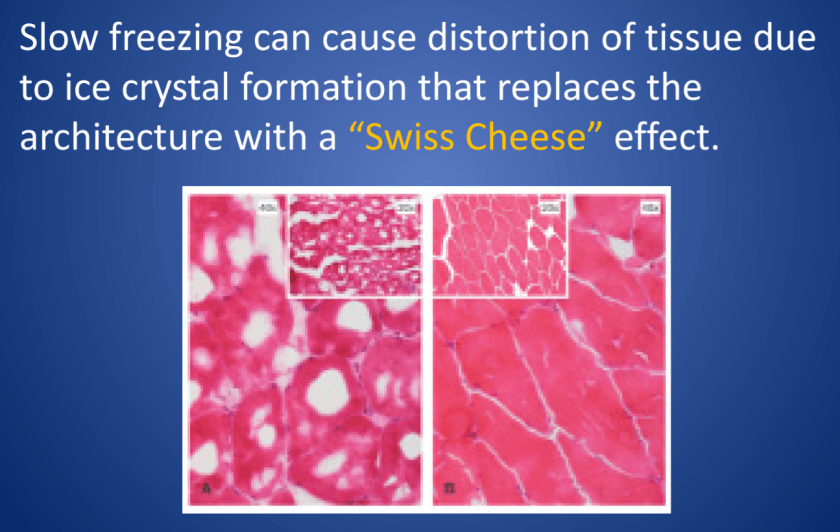
Frozen specimens aren’t perfect. In these specimens, tissue gets stiffened by freezing instead of routine paraffin embedding, and because of that a frozen section could be distorted by folds, tears, and other artifacts that might appear because of mechanical manipulation during processing. Frozen samples also leave artifacts where water would crystallize and freeze, but one of the caveats regarding artifacts in frozen sections is that FAT DOES NOT FREEZE. Instead, specimens that have large fat content (i.e. brain tissue) have to be examined carefully to not confuse findings with inflammation or other pathologic processes. Ultimately, it takes numerous cases to properly hone the skills required to confidently diagnose from frozen section. While they might not be perfect, it is a critical tool used between the surgical and pathology teams. Challenges in this handoff process relate to proper use of this surgical tool. For instance, if a frozen is called for and the surgery is closed by the time a pathology report is filed, then (assuming there were no serious delays) this may have been an inappropriate specimen decision. Furthermore, specimens must be discussed prior to receipt for appropriateness and clinical relevance. Fatty lipomas aren’t going to go to frozen section, they shouldn’t be ordered. A thyroid lobectomy? That’s a better utilization of resources and tools.

surgpath2
Image 2. A demonstration of water-related crystal formation causing distortion and artifact (LEFT) on frozen section of muscle tissue, compared to normal (RIGHT). From Northwestern, source: http://www.feinberg.northwestern.edu/research/docs/cores/mhpl/tissuefreezing.pdf

Ultimately, with proper training and experience a pathologist can effectively use the frozen section as a useful clinical tool to improve patient outcomes. Surgeons operating in the best interests of their patients, should strive to create a functional and successful communication between both services. My experiences in NY with surgeons of various kinds reveals a common truth among them: pathology is a critical player in surgical interventions, and without margins, diagnostic stains, and other work-ups, those interventions would be much more difficult and risky.

Thanks again! See you next time!

Bonus: for more content specifically detailing some of the cellular morphologies and cytology I discussed above, please check out I Heart Pathology, a compendium website my friend and colleague at UAB, Dr. Tiffany Graham, manages. It’s meant for other pathology residents to review and refresh on material and it’s updated as often as possible. Check out the link here: https://www.iheartpathology.net/


ckanakisheadshot_small

–Constantine E. Kanakis MSc, MLS (ASCP)CM graduated from Loyola University Chicago with a BS in Molecular Biology and Bioethics and then Rush University with an MS in Medical Laboratory Science. He is currently a medical student actively involved in public health and laboratory medicine, conducting clinicals at Bronx-Care Hospital Center in New York City.