Lab Safety for Every Member of the Team

Gretchen had been the lab secretary for six months, and she was getting comfortable in the role. From her office she scheduled meetings for the manager and paid bills, but her job took her into the lab proper at least once every day. She liked that her job allowed her to wear skirts and sandals in the hot summer months-she was glad she didn’t have to follow the dress code that was used in the lab.

Stephan was new to the lab courier team, and his training had to occur quickly since he replaced someone who filled weekend slots often. He was shown the routes to drive, but when trained in the lab area, he was only shown where to pick up and drop off specimens.

Dr. Kane had been the lab medical director for many years. One day she was talking to the histology tech and noticed the use of pictogram labels on secondary chemical containers. She had no idea what they were for, and she asked how long the lab had been using them.

Unfortunately, these scenarios are realistic, and they illustrate a problem that can create deep roots in a laboratory, and those roots can lead to a poor safety culture that will be difficult to manage. If you’re in charge of safety in the lab, it is vital to know who needs safety training, how to give that training, and when to provide it.

The who is important. Does your lab host students for clinical rotations? Do research personnel perform tasks in the department? Administrative personnel and even lab leaders who enter the department should also have safety training on record. Don’t expect pathologists to keep up with the latest safety regulations on their own either, they have many other things on their plates. Even if they are under contract and not truly employees, they should be included with certain safety training offerings. Consider biomedical engineering personnel and maintenance workers- some safety training can prevent accidents and exposures for those important team members as well. Fully train couriers and phlebotomists or anyone else who will process specimens in the lab setting. If you’re just starting to figure out safety training in your lab, make a list of all the different people who may enter the area.

Clearly all of these various people will not need the same level of lab safety training. A courier might need to know about dry ice safety, for example, but that information may mean nothing to the secretary. Be sure to customize the training for the different employees as needed. Nothing will turn people off faster than information they don’t need. If there are changes to safety regulations that require new education, be sure to involve laboratory medical staff. For example, the implementation of the Globally Harmonized System in 2016 or this year’s EPA Generator Improvement Regulations both created major changes with lab safety processes. The lab medical director is responsible for oversight of the lab, and not having knowledge about such major changes can hinder that responsibility and expose the lab to both safety and accreditation issues.

Now that you know who to train and what education is needed for each role, it is time to figure out when and how to provide that lab safety training. Some topics require annual training by OSHA and other agencies, and a computer-based module is usually acceptable. That said, other required training must include live interaction, quizzes, return demonstrations and certificates of completion. It can be a complicated task to figure out which is which, and reviewing the requirements from the source agency (OSHA, DOT, EPA, CAP, etc.) will guide you. Next, it becomes important to know your audience- those who will receive the training. What type of education will work best- a live class, computer modules, webinar, interactive round-table sessions- there may be a need for a combination of these styles.

Once you determine your safety training needs and methods, there will be more to consider in order to maintain a steady culture of safety. Conducting regular drills to ensure staff understanding should be added to your calendar. Fire drills, evacuation drills, disaster drills, and hazardous spill drills are just some that can be conducted throughout the year to ensure staff readiness. Consider giving out information on a specific safety topic each month at staff meetings. This reinforcement of the required training will benefit the entire team and the lab safety program.

It takes time and effort to create a solid laboratory safety training program. If you have to start at the beginning, learn your resources and ask for help. If you are taking over a safety program already in place, make sure the on-going training meets regulations, and create a plan to continually raise safety awareness in the laboratory for all whose job may take them into the department. That will create long-lasting value and safety for every member of the team.
 

Scungio 1

Dan Scungio, MT(ASCP), SLS, CQA (ASQ) has over 25 years experience as a certified medical technologist. Today he is the Laboratory Safety Officer for Sentara Healthcare, a system of seven hospitals and over 20 laboratories and draw sites in the Tidewater area of Virginia. He is also known as Dan the Lab Safety Man, a lab safety consultant, educator, and trainer.


Microbiology Case Study: A 56 Year Old Man with Bacteremia

Case History

A 56 year old man with a history of hypertension, asthma and COPD, bladder stones, congenital bladder abnormality, and bladder exstrophy presented to the ED with fatigue, generalized weakness, poor appetite, fever, and nausea. He had intermittent right flank pain and generalized abdominal pain. The patient also reported he had passed bladder stones in the past year.

In the ED he had an elevated peripheral white blood cell count of 12.9 x10³/μl with a differential of 81% neutrophils, 11% lymphocytes, and 6% monocytes. His creatinine was elevated at 5.4 mg/dl. CT imaging of the urogenital tract showed hydronephrosis with evidence of infection.

Blood and urine specimens were sent for culture. The urine culture grew 10-50,000 cfu/ml Aerococcus urinae. After 30 hours of incubation, the anaerobic blood culture was positive for small, coccoid-looking gram positive rods (Image 1). The following bacteria grew on solid media under anaerobic conditions after 48 hours of incubation (Image 2).

actscha1
Image 1. Gram stain showing small, coccoid-looking Gram-positive rods
actscha2
Image 2. Tiny colonies growing on non-selective anaerobic media after 48 hours.

Discussion

The organism growing in the blood culture was identified as Actinotignum schaalii. A. schaalii is a facultative aerobe that prefers enriched media and grows best in anaerobic or 5% CO2 environments. It is a non-hemolytic, non-motile, and non-spore forming Gram-positive rod. A. schaalii is negative for catalase, oxidase, CAMP factor, and nitrate reduction, but is hippurate positive. It is also negative for lactose, mannitol, raffinose, sorbitol, and trehalose acid production.

Actinotignum schaalii was formerly named Actinobaculum schaalii. The Actinotignum genus now consists of A. urinale, A. sanguinis, and A. schaalii. A. schaalii is part of urogenital microbiota in healthy adults and can cause urinary tract infections, especially as it thrives in the humid atmosphere of diapered children or elderly adults. Isolation of this organism is associated with urinary incontinence, bladder cancer, catherization, neurogenic bladder, renal failure, prostate cancer, and chronic renal failure. The presence of A. schaalii in the urogenital tract can progress to bacteremia and rarely it can also cause groin abscesses.

Actinotignum schaalii is an under recognized uropathogen due to its fastidious nature—it is slowly growing and prefers enriched media grown under anaerobic conditions. None of these conditions are met as part of a routine urine culture as urine cultures are often finaled in < 48 hours, they may not use enriched media, and they are incubated under aerobic rather than anaerobic conditions. Because of these factors, A. schaalii rarely grows in urine culture despite it being a known colonizer of the urogenital tract and occasional uropathogen. Instead it is most commonly recovered from blood cultures as a result of urosepsis. When colonies do grow from blood culture, they are very difficult to identify by biochemical methods. A. schaalii is often misidentified by biochemical panels as Arcanobacterium spp. or Gardnerella vaginalis (API Coryne system, bioMerieux), Actinomyces meyeri (Rapid ID32A system, bioMerieux), or Actinomyces israelii (Rapid ANA II system, Remel). In our lab Bruker Biotyper MALDI-TOF MS was able to identify A. schaalii with high confidence. Based on the most current literature, Vitek MS misidentifies A. schaalii as G. vaginalis or A. meyeri. This data is from 2015, so it’s possible the Vitek MS spectra database has been updated and now identifies A. schaalii.

A. schaalii is routinely susceptible to all β-lactams but requires an extended duration of antimicrobial treatment compared to other uropathogens. It is resistant to trimethoprim/sulfamethoxazole and quinolones, both of which are commonly prescribed for urinary tract infection. Therefore, patients with A. schaalii are at risk for recurrent urinary tract infections due to inappropriate or inadequate antibiotic treatment.

Our patient was prescribed ciprofloxacin for presumed urinary tract infection prior to his bacteremia. He was switched to ceftriaxone upon hospital admission. His bacteremia was cleared and the patient was discharged 5 days later on an oral β-lactam antibiotic. 

References

  1. Lotte, R., L. Lotte, and R. Ruimy. “Actinotignum schaalii (formerly Actinobaculum schaalii): a newly recognized pathogen—review of the literature.” Clinical Microbiology and Infection1 (2016): 28-36. Le
  2. Le Brun, Cécile, et al. “Urinary tract infection caused by Actinobaculum schaalii: a urosepsis pathogen that should not be underestimated.” JMM Case Reports2 (2015).
  3. Manual of Clinical Microbiology, 11th edition


-Erin McElvania, PhD, D(ABMM), is the Director of Clinical Microbiology NorthShore University Health System in Evanston, Illinois.

Essential Diagnostics List – Ready, Set, Go!

In a recent post I introduced the WHO’s draft of the Essential Diagnostics List (the EDL). The EDL is a catalog of in vitro diagnostics (IVD) designed to complement the Essential Medicines List. The EDL is not necessary meant to be a global list, but something to be adopted and adapted by each country, and tests added, subtracted, or prioritized based on each country’s disease burden. While the draft is still in development, at least one country is already on track to have adopted a country specific EDL by the end of the year!

India is working towards being the first country to have an EDL by the end of 2018. It so happens that the draft of the EDL was announced while India was in the process of rolling out a Free Diagnostics Initiative (FDI) in 29 of its states. The goal of the FDI is to “ensure the availability of a minimum set of diagnostics appropriate to the level of care to reduce out of pocket expenditure on diagnostics and to encourage appropriate treatment of based on accurate diagnosis”. Similar to the EDL, the FDI plans for different IVDs at different levels of laboratories, from community healthcare centers to reference laboratories. The development of an EDL seems like a natural product of India’s FDI. Talk about perfect timing!

The Indian Council on Medical Research (ICMR), comprised of clinicians, microbiologists, and medical device industry leaders, has convened to adapt the EDL to India’s infection patterns and diseases. They plan to have their national EDL ready to present by the beginning of 2019. The ICMR intends that an Indian EDL will optimize utilization of the Indian EML. “The objective is to test and treat rather than treat and test” states Dr. Kamina Walia of the ICMR. The ICMR also realizes that in order for diagnostics to be affordable, the country’s laboratory infrastructure will need to be strengthened, including building laboratory capacity where none currently exists.

It is so exciting to see the EDL already under consideration by a nation. It’s even more exciting to hear medical experts speak about how laboratory infrastructure should be strengthened, and to know that medical device industry leaders are coming to the table. It’s going to be fun to watch this develop over the next decade.

Do you want to be involved in the EDL project? There is time! The WHO is accepting applications for IVDs to be added to the second edition of the EDL, which will be released in 2019. The deadline for submissions is September 15, 2019. Instructions can be found here.


Sarah Brown Headshot_small

Sarah Riley, PhD, DABCC, is an Assistant Professor of Pediatrics and Pathology and Immunology at Washington University in St. Louis School of Medicine. She is passionate about bringing the lab out of the basement and into the forefront of global health.  

Microbiology Case Study: A 62 Year Old Male with Productive Cough

Case History

62 year old male from Louisiana with a medical history of COPD presents with fever, productive cough, weight loss, and a red nodule on the left hand. Chest x-ray shows interstitial and lobar infiltrates. Patient reports no recent travel history. Mycobacterial culture of the sputum is positive for an organism. MALDI-ToF of the sputum culture confirms the result.

Lab Identification

mycokans1
Image 1. Kinyoun stained long bacilli with a banded, ladder like pattern isolated from sputum culture.
mycokans2
Image 2. Bright lemon yellow colonies growing on LJ slant after exposure to light on the right compared with unpigmented control colonies on the left.
mycokans3
Image 3. Bright yellow colonies growing on 7H11 media after exposure to light on the right compared with unpigmented control colonies on the left.

Mycobacterium kansasii grows on 7H11 media and Lowenstein-Jensen (LJ) slants. The colonies appear smooth or rough and unpigmented when isolated in the dark. Upon exposure to light, colonies turn bright lemon yellow due to enhanced b-carotene production, which makes M. kansasii a photochromogen. M. kansasii stains positive with acid-fast stains. On Kinyoun stain, it shows long bacilli with a banded, ladder like pattern. M. kansasii is positive for nitrate reduction, catalase, urease, and tween hydrolysis. It is negative for niacin and pyrazinamindase. The identification of M. kansasii is confirmed by MALDI or DNA probe of an isolate.

Discussion

Mycobacterium kansasii is a slow growing photochromogen, an organism that grows unpigmented colonies in the dark but produces a bright lemon yellow pigment upon exposed to light3. It is also an acid-fast positive long bacillus that causes TB-like chronic pneumonia, which is the second most common non-TB mycobacterial infection after MAC in the AIDS population. There are five genotypes of Mycobacterium kansasii. Genotypes I and II infect humans, with I being the most prevalent. Because environmental sources of M. kansasii are rarely identified, isolation of M. kansasii from a culture is never considered a contaminant.

M. kansasii is usually found in the tap water in cities endemic for the infection. In the U.S., it is most prevalent in the central and southern states including Louisiana, Illinois, Texas, and Florida1. Internationally, it is most prevalent in Israel, Korea, France, Japan, Portugal, with the highest incidence in England, Wales, and among South American gold miners.

The majority of patients with M. kansasii infection have an underlying pulmonary disease such as COPD, bronchiectasis, or TB infection3. The clinical manifestation of M. kansasii infection includes a primarily unilateral cavitary infiltrate in the lungs without pleural effusions. Patients are generally older compared with those infected with TB. They present with productive cough, weight loss, fever, night sweats, and dyspnea. Symptoms are usually less severe but more chronic compared with those of TB pneumonia. M. kansasii can also present as cutaneous lesions similar to sporothrichosis. Lesions include nodules, pustules, red plaques, and ulcers1.

M. kansasii infection is diagnosed by chest X-ray or chest CT, positive respiratory culture, and clinical exclusion of other diagnoses2. The criteria for a positive culture include either two consecutive positive sputum cultures, one positive culture from bronchoscopy specimens, or one positive culture with compatible clinical symptoms2. The treatment of M. kansasii infection depends on the resistance of the organism to rifampin. Rifampin-sensitive organisms are treated with at least three drugs including rifampin, ethambutol, isoniazid, and pyridoxine1. Rifampin-resistant organisms are treated with three drugs including clarithromycin or azithromycin, moxifloxacin, ethambutol, sulfamethoxazole, or streptomycin1. Due to drug interaction, rifampin is contra-indicated among HIV patients taking protease inhibitors and nonnucleoside reverse transcriptase inhibitors. Because rifampin increases the metabolism of these HIV medications, it can lead to HIV drug resistance among these patients.


References

  1. Akram SM, Bhimji SS. Mycobacterium Kansasii. StatPearls. 2018. https://www.ncbi.nlm.nih.gov/books/NBK430906/
  2. Johnston JC, Chiang L, Elwood K. Mycobacterium Microbiol Spectrum. 2017;5(1):TNMI7-0011-2016. doi:10.1128/microbiolspec.TNMI7-0011-2016.
  3. Meraz A, Raheem S. Pulmonary Mycobacterium Kansasii Infection –A Tale of a Right Upper Lobe Cavitary Lesion [abstract]. Journal of Hospital Medicine. 2015; 10 (suppl 2). https://www.shmabstracts.com/abstract/pulmonary-mycobacterium-kansasii-infection-a-tale-of-a-right-upper-lobe-cavitary-lesion/. Accessed March 12, 2018.


-Ting Chen, MD is a 1st year anatomic and clinical pathology resident at the University of Vermont Medical Center.

Wojewoda-small

-Christi Wojewoda, MD, is the Director of Clinical Microbiology at the University of Vermont Medical Center and an Associate Professor at the University of Vermont.

Microbiology Case Study: A 50 Year Old Man with Altered Mental Status

Case Histor

A 50 year old man presented to the emergency room with altered mental status, fever, and hypotension. His medical history was significant for quadriplegia, chronic indwelling urinary catheter with frequent urinary tract infections, and diabetes mellitus. The patient was intubated and started on vasopressors for presumed septic shock. CT scan of the abdomen showed dilated loops of bowel with possible ileus and pneumoperitoneum around the sigmoid colon.

Laboratory Identification

  • Clostridium difficile Fecal PCR: Negative
  • Fecal Bacterial Pathogen PCR: Negative for Salmonella spp., Shigella or Enteroinvasive E. coli spp., Campylobacter spp., or Shiga toxin producing genes
  • Urine culture: 2 strains of Pseudomonas aeruginosa and Klebsiella pneumoniae

Blood culture: At 41 hours, two of four blood culture bottles became positive (one aerobic bottle in each set). Gram stain showed budding yeast with pseudohyphae (Image 1). Growth of white, smooth colonies with foot-like projections was observed on agar (Image 2). MALDI-TOF analysis confirmed identification of the organism as Candida albicans.

candalbi1
Image 1: Gram stain of blood culture bottle demonstrating yeast form (left) and pseudohyphae (right).
candalbi2
Image 2: Colony morphology on chocolate agar demonstrating smooth white colonies with surrounding “feet.”

Discussion

Candida spp. are the most common yeast cultured from clinical specimens. Candida albicans is characterized macroscopically by growth of smooth, white colonies with surrounding “feet” which represent projections of pseudohyphae. The pseudohyphae are distinguished microscopically from true hyphae by constriction of the cells where they meet (with true hyphae, the cell walls will remain parallel). When incubated at 37 C for 2 hours C. albicans will produce germ tubes (extensions from the yeast cell representing an attempt at forming true hyphae).

Candida spp. are normal flora found in the gastrointestinal tract, mucous membranes, and skin. Invasive candidiasis is typically an opportunistic infection with the patient’s own, endogenous flora (although nosocomial spread also occurs). Although it can be normal skin flora, the growth of Candida spp. from a blood culture should be presumed to be pathogenic; treatment should be initiated, and attempts made to identify the source. Typically, invasive candidiasis arises from one of three sources: 1) colonization and biofilm formation on an indwelling intravenous catheter 2) dissemination from a deep nidus of infection (often urinary tract) or 3) translocation from the gastrointestinal tract. Patients in intensive care, those who are immunocompromised, at extremes of age, those who have been on broad spectrum antibiotics, and those with GI tract perforation or anastamotic leaks post-operatively are at greatest risk for developing invasive candidiasis.

C. albicans has historically been the most common species of yeast causing invasive disease. However, non-albicans species (C. glabrata, C. parapsilosis, C. tropicalis and C. krusei) now cause almost 50% of invasive candidiasis. This changing epidemiology is relevant because the different species demonstrate different susceptibility profiles to antifungal agents, including azoles and echinocandins. C. auris is another recently emerging species that shows resistance to multiple antifungal agents, and has been described as causing outbreaks of healthcare-associated infections.

Although the patient’s chronic indwelling urinary catheter raised suspicion for a urinary source of the candidemia, the urine culture failed to support that theory. Given the findings of the CT abdomen in this patient, translocation from the GI tract is favored as the source of the candidemia. The patient’s history of treatment with antibiotics for repeated urinary tract infections, however, may have placed him at greater risk for developing invasive candidiasis.

-Alison Krywanczyk, MD is a 4th year anatomic and clinical pathology resident at the University of Vermont Medical Center.

Wojewoda-small

-Christi Wojewoda, MD, is the Director of Clinical Microbiology at the University of Vermont Medical Center and an Associate Professor at the University of Vermont.


History of Generations: Gen X

Generation X stands out from other generations in a few ways. This generation is an integral part of the current work force, but both the previous generation (Baby Boomers) and the next generation (Generation Y) are significantly larger. Because they are sandwiched between these two, Generation X will never be the largest generation at work, but they still have a significant influence.

Generation X is the first generation in which their parents either both worked outside of the home in large numbers or were raised in single-parent households. This had a lot to do with the fact that divorce was becoming more common in the Western world and more women started to work outside the home. These children thus grew up a lot more independent and are known in the United States as “latch-key kids” because they would come home from school to an empty house. They started their school years without computers, but many finished their schooling with computers so they were raised in the transition phase from the information to the digital age.

This generation also grew up during significant events that shaped our world today. Some examples are the Cold War, the Challenger disaster, Chernobyl, the Berlin Wall, the release of Nelson Mandela.

Generation X is known for being very entrepreneurial, partly because of their cynical attitude towards large companies who failed their parents, and partly because of their independence, adaptability, and flexibility. Their desires are focused on the smaller scale; for example, they want to save their neighborhood, not the world. Typically, Generation X marry later in life, sometimes after cohabitating, and are quicker to divorce. They see values as a relative concept but they have a strong belief that people should be open-minded and tolerate everyone.


lotte-small

-Lotte Mulder earned her Master’s of Education from the Harvard Graduate School of Education in 2013, where she focused on Leadership and Group Development. She’s currently working toward a PhD in Organizational Leadership. At ASCP, Lotte designs and facilitates the ASCP Leadership Institute, an online leadership certificate program. She has also built ASCP’s first patient ambassador program, called Patient Champions, which leverages patient stories as they relate to the value of the lab.


Hello everyone.  It’s your baby-boomer, Catherine, again.  I’d like to share with you my experience of what it’s like to be the parent of children from the Gen X generation, and working with a Gen Xer.

As with most of our generations, there are varying dates of when the generation started and when it ended, so let’s make it simple and go with the mid 1960’s as the start of the Gen Xer’s, ending in the early 1980’s.

Parenting Gen Xers 

I’m the proud parent of two Gen Xers. My son Mitch is 45 years old, and my daughter Katie is 42. Just because they are sandwiched between two of the largest generations, don’t underestimate the Gen X generation!  As I researched generations and was writing a course on generations, (“DeCoding American Generations”), it became clear that my children shared in the experiences of this richly gifted generation.

This generation is often referred to as the “latchkey generation.”  My children, Mitch and Katie, were the typical grammar school Gen Xers because I was one of those divorce statistics.  As a single mom, they came home from school every day with their house key in hand.  They learned responsibilities, became very independent, and became street smart.

The Gen Xers were the first to introduce the other generations to the concept of work-life balance. Both Mitch and Katie place a high value on quality of life.  Over the years, both of them have moved from higher paying jobs to lesser paying jobs in order to improve the quality of their family life.

What I’ve learned working with Gen Xers

As a “Boomer,” my greatest learning from the Gen Xers is the importance of work-life balance. In my current position at ASCP, I’ve had the privilege of working with people of this gifted generation.  They not only walk the talk of work life balance; they encourage others to do the same. I’ve listened to their stories and they’re not afraid to change jobs or careers, which is so different from their Baby Boomer parents.  It is often written that they acquired a cynical attitude toward corporate America because of the diminished employee loyalty their parents experienced. However, the Gen Xer took the high road and overcame the fear of changing jobs.  They took what they learned through their childhood and developed courage, the kind of courage that it takes to receive feedback and be the forever continual learner.  I’ll always be grateful to co-workers like Carroll, who would walk by my office at 5:30 at night “tapping her watch.”  She sent the Gen X message that life is about more than just work.


Stakenas-small

-Catherine Stakenas, MA, is the Senior Director of Organizational Leadership and Development and Performance Management at ASCP. She is certified in the use and interpretation of 28 self-assessment instruments and has designed and taught masters and doctoral level students.  

Hematopathology Case Study: An 85 Year Old Man with Pancytopenia

Case History

An 85 year old man presented with pancytopenia and weakness. His labs include WBC of 3.2, HgB of 9.9 and platelets of 137.

Bone Marrow Biopsy

hairycellbm10x
Bone Marrow Aspirate, 10x
hairycellbm40x
Bone Marrow Aspirate, 40x
hairycellcore10x
Core Biopsy, 10x
hairycellcore40x
Core Biopsy, 40x

Flow Cytometry

hairycellflow

hairycellplasmacell

hairycellplasmacellgate

Diagnosis

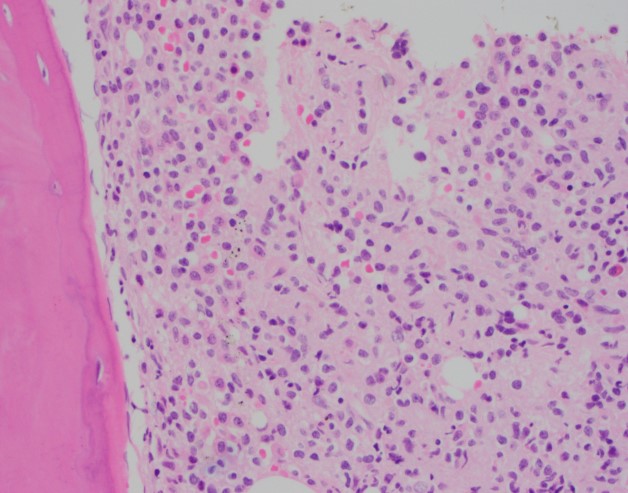
The bone marrow aspirate shows multiple cellular spicules with a prominent population of lymphoid cells with oval to reniform nuclei, dispersed chromatin and abundant pale cytoplasm. Scattered plasma cells are also present.

The core biopsy shows an infiltrating population of atypical lymphocytes with moderate amounts of pale eosinophilic cytoplasm and mature chromatin that stain positive for CD20. Frequent mononuclear cells consistent with plasma cells are also seen scattered throughout the bone marrow and stain positive for CD138.

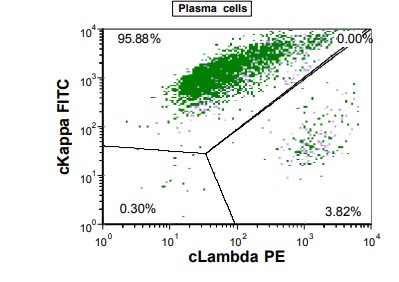
Flow cytometry revealed that 80% of the lymphoid gate represented a kappa light chain restricted population that co-expressed B-cell markers CD19, CD20 and CD22 along with classic hairy cell leukemia specific markers CD11c, CD25 and CD103. A second population of kappa restricted cells fell in the plasma cell gate. The cells co-expressed CD138, CD56 and were largely negative for CD19 and CD20.

Overall, there is a hypercellular bone marrow with a prominent mononuclear lymphoid infiltrate consistent with hairy cell leukemia and a concurrent population of plasma cells consistent with plasma cell neoplasm.

Discussion

Hairy cell leukemia is a rare lymphoid neoplasm that accounts for only 2% of lymphoid leukemias. Patients tend to be in their 50s-60s with a 4:1 male predominance. The tumor is generally found in the bone marrow and spleen with rare circulating cells in the peripheral blood. Patients are generally cytopenic at presentation and symptoms include weakness and fatigue. Splenomegaly is common and hepatomegaly can also be seen.. 1

Hairy cell leukemia involves the clonal expansion of B-cells with a unique immunophenotypic profile. They are bright for CD19, CD20, CD22 and CD200, negative or dim for CD5, CD23 and CD10 and positive for CD11c, CD103, CD123 and CD25. Hairy cell leukemia must be distinguished from two provisional entities, hairy cell leukemia-variant and splenic diffuse red pulp lymphoma. These two entities do not have the classic morphology or staining profile of hairy cell leukemia.2

BRAF V600E mutations are detected in more than 80% of cases of classic hairy cell leukemia. The mutation is considered to be a driver mutation, but additional mutations are usually present that lead to disease progression. Hairy cell leukemia-variant is usually negative for BRAF mutations and has a more aggressive clinical course.3

Patients with hairy cell leukemia are given purine analogues as first line treatment and generally do well. However, patients who do not respond or who undergo relapse have few options. Increasingly, BRAF V600E inhibitors are being used for patients with hairy cell leukemia. Multiple studies have now confirmed the efficacy of vemurafenib and dabrafenib, however patients can be quick to relapse once off the drugs. Combination approaches should be considered for the most effective treatment. 4

References

  1. Swerdlow SH, Campo E, Harris NL, et al. WHO Classification of Tumours of Haematopoetic and Lymphoid Tissues (Revised 4th edition). IARC: Lyon 2017.
  2. Troussard X, Cornet E. Hairy cell leukemia 2018: Update on diagnosis, risk‐stratification, and treatment. American Journal of Hematology. 2017;92(12):1382-1390. doi:10.1002/ajh.24936.
  3. Maitre E, Bertrand P, Maingonnat C, et al. New generation sequencing of targeted genes in the classical and the variant form of hairy cell leukemia highlights mutations in epigenetic regulation genes. Oncotarget. 2018;9(48):28866-28876. doi:10.18632/oncotarget.25601.
  4. Roider T, Falini B, Dietrich S. Recent advances in understanding and managing hairy cell leukemia. F1000Research. 2018;7:F1000 Faculty Rev-509. doi:10.12688/f1000research.13265.1.


Marcus, Chelsea_099-Edit

Chelsea Marcus, MD is a third year resident in anatomic and clinical pathology at Beth Israel Deaconess Medical Center in Boston, MA and will be starting her fellowship in Hematopathology at BIDMC in July. She has a particular interest in High-grade B-Cell lymphomas and the genetic alterations of these lymphomas.

With Great Power Comes Great … Reliability

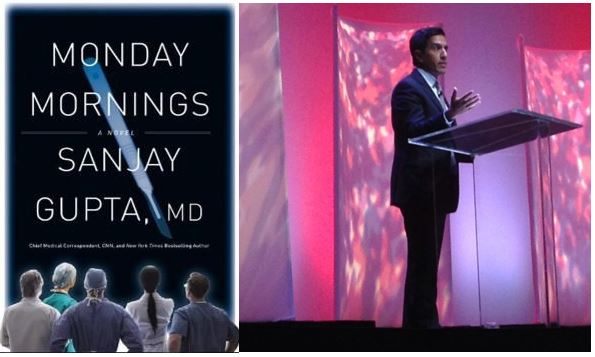
Hello again everyone! Your friendly neighborhood med student here, back with another clinical pearl from my hospital rotations. I usually keep a look-out for topics in clinical medicine that would be valuable learning experiences to share with you, my colleagues back in the lab. Last month I talked about the important cross-over between pathology and my current general surgery rotation.  This time around I’d like to discuss a topic that was brought up at the hospital’s in-house surgical mortality and morbidity meeting (M&M) on a recent Wednesday morning. (Side note: CNN Medical Correspondent, journalist, and Emory neurosurgeon Dr. Sanjay Gupta wrote a book on M&M meetings in 2012 called Monday Mornings. It was adopted as a TV series as well. The book was excellent, I highly recommend it! Some of you may remember that Dr. Gupta participated at the ASCP Annual Meeting in 2015 as a keynote speaker.) Aside from going over a few cases with reportable teaching moments and less-than-optimal outcomes, this M&M included an in-service on High Reliability Organizations (HROs) which really reflect a lot of parallels between working as a clinician, studying as a medical student, and working as a laboratory professional.

m&amp;m1
Image 1a-1b. Sanjay Gupta, MD and his 2012 medical novel with realistic depictions of mortality and morbidity conferences surgeons participate in. This process of reflection and analysis is both preventative of mistakes and errors, but also effective as a comprehensive assessment of pitfalls and gaps in reliability. M&M meetings are a critical part of surgical teams and a useful HRO tool. Pictured (right) is Dr. Gupta at the 2015 ASCP Annual Meeting in Long Beach, CA where he discussed the ever-evolving nature of healthcare and his time as a medical correspondent.

What is a High Reliability Organization?

HROs are teams or organizations which operate under stress to produce a certain outcome or product. There is usually a tensely critical environment in which this outcome occurs within and its accompanied by a complex hierarchy of personnel accompanied by technologically advanced equipment or skill-driven work. To imagine the best examples of HROs, think of situations where something that could go wrong must never happen: air traffic control at a major international hub, the engineering department at a critical dam/levy/channel lock, the safety department for a nuclear reactor in a power plant, mission control at NASA, and—of course—clinical environments which include everything from surgical teams to critical laboratories! Basically all of these entities operate with the odds stacked against them with high potential for catastrophe, but they do their best to avoid failure and maintain quality controls. Essentially, I argue that health care organizations and, especially laboratories, are high-level HROs.

m&amp;m2
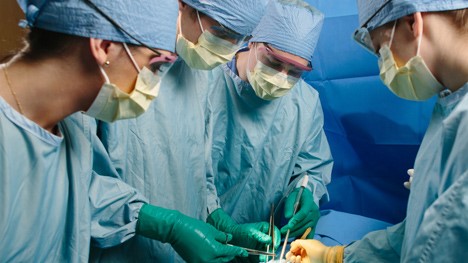
Image 2. “Time Out’s” are called before every single surgical procedure. After a patient gets through various stages of clearance regarding fitness and appropriateness of surgery, the final step before that first incision is a time-out. This is a conference of review between nurses, anesthesiologists, OR scrub techs, medical students, circulation staff, and other inputs that would affect patient care. Details checked include patients’ names, MRNs, DOBs, procedure, locations, etc. Effective communication at all stages helps HROs achieve low error rates. (Photo: Mayo Clinic, Surgical Outcomes Program)

Connecting HROs, ASCP, and you…

I recently finished the Lab Management University (LMU) training offered by ASCP earlier this year. What I found interesting in many personnel-related modules was a mindfulness of the staff one might work with. This considered not just the skills, experience, or credentials that individuals may possess, but it also reflected their cultural background, communication preferences, potential talents or limitations, and insights into different points of view. Not only does LMU do a fantastic job exploring these personnel traits, it also turns the reflection inward to uncover possible biases one might have. This is mindfulness—a super trendy and upcoming philosophy of operating in the present with the full attention a moment deserves both personally and professionally. Mindfulness for the individual, the clinician, and the student are all great ways to center yourself as you encounter challenges. However, mindfulness for an organization takes on a different scope. What mindfulness does at an organizational level is essentially create an HRO: it creates a system in which reliability is created against adverse challenges in the setting of awareness, transparency, and complexity.

m&amp;m3
Image 3. High Reliability Organizations (HROs) are built on a foundation of mindfulness—the same mindfulness individuals practice for effective centering and decision-making acts as a tool for efficacy in organizations’ attempts at self-awareness and process improvement. Reducing error and operating at high performance levels are held up by five major pillars which address problem detection and problem management/resolution. (Source: BioRAFT™ Safety and Compliance Consulting, Cambridge, MA)

Let’s Walk through an HRO in action from the desk, to the surgical suite, and in the lab:

The foundation of HROs is rooted in that mindfulness. It acts as a guiding tool to focus the principles or HROs which contribute to reducing errors buy integrating rigorous protocols, cross-examining complex clinical tasks and critical functions, and securing complex decision making in dynamic and fast-paced environments.

The Five Major Pillars of High Reliability Organizations (HROs)
1. Preoccupation with failure

This is a critical tenet of HROs as they constantly evaluate vulnerability of a process for errors and pitfalls. Collective mindfulness turns the obsession of not wanting to fail into a useful way to be aware of possible challenges and address them proactively and effectively.

Surgical Teams Medical Students Laboratory Professionals
Surgical teams are always analyzing and reanalyzing how effective they are through M&M meetings and other metrics which reflect error rates. Near miss reporting acts as a functional model for proactive utilization of this mindful approach to improving outcomes. Med students are pro’s at being worried about failure; from board exams, to rotations, to performance in clinicals, and competing with other med students—it’s a strong motivator Labs are chock-full of dashboard metrics that delineate performance standards of equipment, materials, testing, and personnel. This often reflects itself in reimbursement, or administrative buy-in later.
2. Reluctance to simplify explanations

This is a tough one to understand. One would think simpler explanations of problems means an easier way to achieve a solution. But some problems are multi-faceted and complex, requiring different input from various sources/individuals. A balance must be achieved for efficiency’s sake.

Surgical Teams Medical Students Laboratory Professionals
While it may be tempting to want to reduce information to simple bullet points to get through more cases, each patient is different, and protocols must be addressed comprehensively and dynamically to identify best practice for each patient. There is a lot of input medical students are exposed to regarding knowledge intake. It can be overwhelming. Studying can be hard enough, but when your grades need a boost and “more” studying doesn’t help, it’s time to investigate new ways to put information into that hippocampus… How many times have you been asked, “Where are my results?” Identifying problems in TAT would be complex and require investigating a process in depth rather than dealing with blame shift from bad orders, to phlebotomy delay, transport delay, or even testing/reporting delays.
3. Sensitivity to operations

Being acutely aware of the processes involved in HRO-style decision making is critical. There is a reason for standardization and protocol wherein SOPs guide all staff to common output. Relying on this standardization is an effective way to insure success.

Surgical Teams Medical Students Laboratory Professionals
Time outs before surgery, protocols for various work-ups, and specific procedures regarding surgical interventions allow various clinicians to treat multiple patients with the same relative outcomes. Knowing how clinicals work and how to make them better allows opportunities for advancing not only your rotation, but future rotations. Standing up and owning ideas for operative improvement is great. Interdisciplinary bridges are effective tools for creating a culture of medical collaboration. Helping other clinicians understand the scope and tools available to them in the laboratory makes everyone’s job easier and safer.
4. Deference to expertise

In healthcare, a collaborative spirit allows more experienced clinicians to offer their expertise based on years of working and learning. Alongside this, concurrent literature is always looking at present-day standards and best practices. HROs rely on hierarchical models for decision-making.

Surgical Teams Medical Students Laboratory Professionals
Almost all surgeons are experts at something—just ask them! Joking aside, senior surgeons offer valuable insight on cases to junior residents. And combining experience with data in best practices improves outcomes dramatically. We are part of a medical system. We have knowledge that greener medical students might desperately need, and we also might be able to lend insight to senior attendings and teachers who were trained well before we were in school. That said, we defer to expertise a lot—we really know nothing, relatively speaking… The hierarchy of laboratory medicine lends itself to this pillar of HROs. Pathologists might helm the wheel of a particular lab, but there are section heads or experienced techs, or clinical managers who know the guts of testing and reporting that offer invaluable information for outcomes!
5. Commitment to resilience

This is at the heart of any clinical team. Medical error is a reality of the field we are in. Allowable medical error gives us some leeway, but ultimately, we hope to be error free for our patients. When mistakes do occur, it’s imperative to own up to them and use them as learning opportunities. When we do that, managers are thankful for not wasting resources on investigations, and we have the chance to quickly recover.

Surgical Teams Medical Students Laboratory Professionals
Mistakes happen. But failures should be rare. If events happen, they should be learned from. M&M meetings are great places for this to happen. Often times, surgical staff are pushed to the limits of abilities, hours in a day, demand of patient load, and of course response to trauma. We are archetypes of resilience. If we weren’t, we wouldn’t be wearing the short white coats. We constantly have to go through tests, checkpoints, and performance evaluations to make sure we can rise above and be responsible for our own clinical decisions tomorrow. There are errors because of instrumentation, errors because of quality control, and errors because, well, simply because. Sometimes the mistakes that occur in the lab despite binders of QC should represent teaching moments with staff re-training. (I’ve even made a few—but you bounce back and become better for it.)


Well, if you made it this far you certainly have a commitment to resilience! This stuff isn’t the most exciting but it’s what makes our healthcare system work. At the base of it all are the ancillary staff working with everyone up the ladder to the chief of surgery, from the medical student to the attending, from the medical lab scientists up to the pathologists. Every part of an HRO (especially in healthcare) is a part of a dynamic and growing entity. As long as we are all aware of our roles, our scopes, and our impacts, out patients will only benefit!

See you all next time!

Post script: listen to the latest podcast in a series by a colleague and me where we discuss clinical stories and pearls of wisdom through medical school. These audio sessions are part of LectureKeepr an online resource for medical students, made by medical students. Check them out here: LectureKeepr. As the sessions relate to my posts here on Lablogatory I’ll include a link—this post will focus more in depth on what I presented here regarding HROs.


ckanakisheadshot_small

–Constantine E. Kanakis MSc, MLS (ASCP)CM graduated from Loyola University Chicago with a BS in Molecular Biology and Bioethics and then Rush University with an MS in Medical Laboratory Science. He is currently a medical student actively involved in public health and laboratory medicine, conducting clinicals at Bronx-Care Hospital Center in New York City.

Microbiology Case Study: A 49 Year Old with HIV and CNS Lymphoma

Case History 

A 49 year old African American female was transferred from an outside hospital due to orbital cellulitis. Her past medical history was significant for HIV, CNS lymphoma, for which she was taking methotrexate & rituximab, and type II diabetes. Her vitals were: blood pressure 181/145, heart rate 145, temperature 98.6°F and respiratory rate 20. On physical examination, her right eye was bulging, with conjunctiva & eyelid swelling, and her iris was non-reactive. Scant serous drainage was noted. Admission labs showed a normal white blood cell count (9.8 TH/cm2), glucose of 211 mg/dL (normal: 74-106 mg/dL), hemoglobin A1C of 7.7% (normal: 4.2-6.0%) and platelets were low at 41,000 TH/cm2. An infection was suspected and the patient was started on vancomycin and piperacillin-tazobactam. She had a head CT scan which showed right periorbital cellulitis and diffuse sinus disease but no abscess formation. Nasal endoscopy was performed and extensive adhesions & black colored, necrotic tissue of the right nasal cavity was noted in addition to whitish debris, consistent with fungal overgrowth extending into the nasopharynx. Biopsies were taken for frozen section and bacterial & fungal culture and Infectious Disease was consulted for management of a probable rhinocerebral fungal infection.

Laboratory Identification

rhiz1
Image 1. Biopsy of the right nasal wall showed tissue invasion and necrosis with broad, ribbon like hyphae that were pauciseptate and branched at right angles (H&E, 40x).
rhiz2
Image 2. Fluffy, white fungal growth on Sabouraud Dextrose and Sabouraud Dextrose with Chloramphenicol agars at 72 hours of incubation at 25°C. There was no growth on the Mycobiotic agar slant.
rhiz3
Image 3. Tape prep showed a round sporangium containing small sporgangiospores located directly below the rhizoids of the mold which is consistent with the diagnosis of Rhizopus spp. (lactophenol cotton blue, 40x).

Discussion 

Rhizopus spp. belong to the order Mucorales, are ubiquitous in the environment and are the most common etiologic agents of mucormycosis. Rhizopus spp. typically cause invasive infections in the nasal sinus, brain, eye and lung, particularly in patients that have uncontrolled diabetes, HIV or are immunosuppressed. Mucorales are angioinvasive, exhibit perineural invasion and there is usually thrombosis, infraction and necrosis of surrounding tissue. As the illness can progress quite rapidly, prompt diagnosis and treatment is necessary.

If a Mucorales is suspected, tissue specimens obtained during a surgical procedure should be sent for frozen section, direct examination with calcofluor white/KOH and fungal culture. On histologic exam or microscopic exam in the microbiology laboratory, the hyphae of Rhizopus spp. are wide & ribbion-like with few to no septations (pauci- or aseptate) and wide angle branching (90°) (Image 1). Further classification requires culture.

If a Mucorales is suspected, the tissue submitted for fungal culture should be minced into small pieces and directly applied to the appropriate fungal media. Grinding of tissue will kill the hyphae and result in no growth from culture. Mucorales will not grow on media containing cycloheximide. Rhizopus spp. grow rapidly within 1-4 days and start as white, fluffy colonies that become grey or brown in color as they mature (Image 2). The Mucorales are described as “lid lifters” due to their rapid growth and “cotton candy” like colonies that fill the plate. On lactophenol cotton blue prep, Rhizopus spp. have unbranching sporangiophores that terminate in a round sporangium and arise directly under well-developed rhizoids (Image 3). The sporangium ruptures when mature and releases many oval sporangiospores.

Treatment of patients with mucormycosis is usually a dual approach with wide surgical excision and amphotericin B, which has been shown to be an effective anti-fungal drug in the majority of Mucorales. In contrast, voriconazole has poor activity against these isolates. If susceptibility testing is needed, CLSI provides reference broth microdilution guidelines. In the case of our patient, due to the grave prognosis of her condition, in addition to her other comorbidities, the family elected for comfort care measures only and board spectrum anti-fungals were not started.


Stempak

-Lisa Stempak, MD, is an Assistant Professor of Pathology at the University of Mississippi Medical Center in Jackson, MS. She is certified by the American Board of Pathology in Anatomic and Clinical Pathology as well as Medical Microbiology. She is the Director of Clinical Pathology as well as the Microbiology and Serology Laboratories.  Her interests include infectious disease histology, process and quality improvement and resident education.

Leading in a VUCA World

Leading people can be a challenging task regardless of the industry or size of an organization. Adding volatile, uncertain, complex, and ambiguous (VUCA) environment into the mix and the leadership challenge increases. Today’s organizations are increasingly complex, ambiguous, uncertain, and volatile because change is accelerating and intensifying. How can leaders equip themselves to manage a VUCA workplace? The first step is understanding what each terms means.

Volatile Situations describe circumstances that change constantly and unexpectedly, and a certain level of instability of a task or challenge is present. However, the best leadership approach is to use available information, be proactive, and have multiple plans and strategies in place. An example of a volatile circumstance is a natural disaster. In such a circumstance not only is the natural disaster a volatile situation, but also the constantly changing nature of the aftermath; which emergency agencies are coming and when, where are people stuck, etc. There are a lot of changes occurring in a volatile situation.   Being proactive and prepared in volatile circumstances can be expensive, but that preparation is necessary to handle these situations.

Uncertain Situations are situations known for a lack of information, so on some level they are the opposite of volatile situations. In uncertain circumstances there is no reliable information about cause and effect and it is not known if change will happen, can happen, or have a positive effect if it does happen. The best approach in these circumstances is to find more information, more data, and more analytics. Once leaders have access to more data, they need to make sure the data is analyzed and implemented into new strategies and change processes. An example of an uncertain situation is when a competitor suddenly emerges that takes direct aim at your company by undercutting prices. In this case, it is important to collect as much data and information as possible to respond to the situation appropriately through new strategies.

Complex Situations have several interconnected and interdependent aspects which have a clear relationship. In these situations, there is partial information available but because everything is interlinked, it is a challenge to process the information in a way that reliably predicts the future. The approach is to reduce the number of linkages, or at least to make them clearer, so the complexity of the situation or task is easily understood and managed. An example of a complex situation is when implementing a process change affects all departments in an organization. In such a circumstance, everything is interconnected and it can be hard to predict how this change will impact everyone and to prepare for it. The key here is to make the change as simple as possible and to assess the impact it makes on every aspect of the organization before implementing the change.

Ambiguous Situations are situations which have relationships that are completely unknown and ambiguous; there appears to be no rhyme or reason. The phrase that comes to mind in these situations is “you don’t know what you don’t know.” In such ambiguity, leaders need to learn from mistakes, hypotheses, and test rounds so it is important to experiment in order to gain information. An example of an ambiguous situation is when you are launching a new product or starting a new business. There are a lot of unknowns in these circumstances so making hypotheses and learning from mistakes is essential for leaders’ success.

In order to lead in a VUCA world, leaders need to analyze these four situation types to confirm which one they are currently leading in. Next is to find the right approach in order to lead people, a department, or an organization through the volatile, uncertain, complex, or ambiguous situation. Knowing is half the answer, so the next time you find yourself in a VUCA situation, start by not only analyzing the situation and possible solutions, but also by analyzing your own reaction to each of the four situations. Being able to understand and control your own reaction will increase your leadership skills in all VUCA and non-VUCA worlds.


lotte-small

-Lotte Mulder earned her Master’s of Education from the Harvard Graduate School of Education in 2013, where she focused on Leadership and Group Development. She’s currently working toward a PhD in Organizational Leadership. At ASCP, Lotte designs and facilitates the ASCP Leadership Institute, an online leadership certificate program. She has also built ASCP’s first patient ambassador program, called Patient Champions, which leverages patient stories as they relate to the value of the lab.