Microbiology Case Study: A 73 Year Old Man with Altered Mental Status and Fever

Case History

A 73 year old man was brought to the emergency room with altered mental status and fever, which developed a few days following a 1-2 day illness characterized by myalgia and diarrhea. He was admitted to the hospital and blood cultures were drawn.

Laboratory Identification

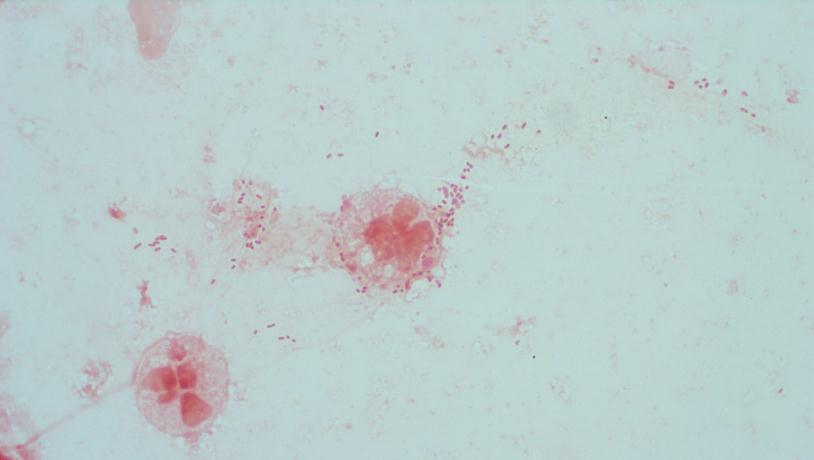
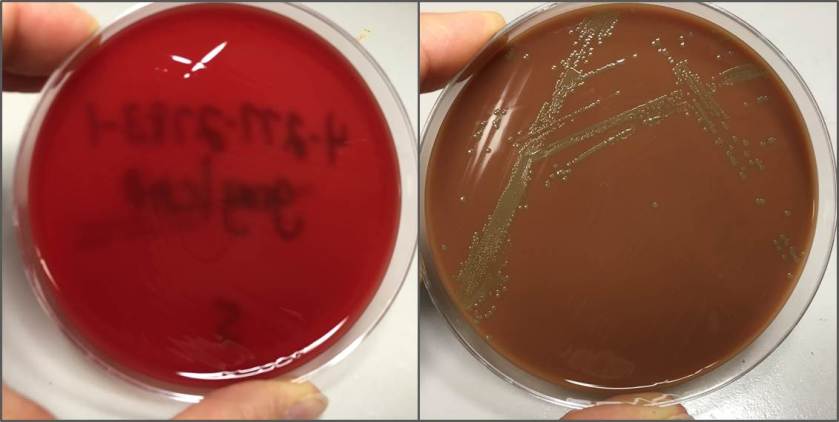
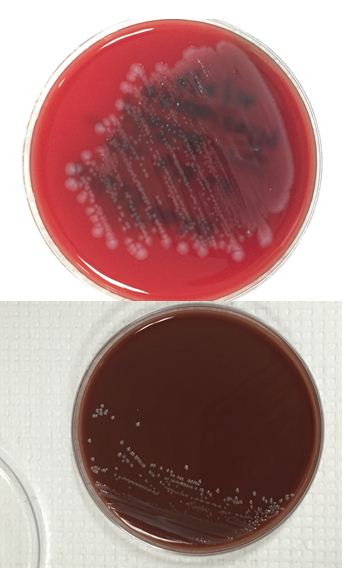
The bottles flagged positive after 12 hours and Gram stain showed small, Gram positive rods (Figure 1). Growth of white, smooth translucent colonies was seen on the blood and chocolate plates, with a small rim of beta-hemolysis on the blood plate (Figure 2). MALDI-TOF confirmed the identification as Listeria monocytogenes.

list2

Figure 1. Gram stain morphology of the colonies growing, demonstrating short Gram positive bacilli.
 list1

Figure 2. Smooth white colonies growing on the blood and chocolate plates, with a soft rim of beta-hemolysis visible on the blood plate.

Discussion

Listeria monocytogenes is prevalent throughout the environment, and can also colonize the human gastrointestinal tract. Humans are exposed by consumption of contaminated food, particularly soft cheeses, deli meats, and fruit. Listeria can grow at 4C which means it can multiply in refrigerated foods, making even low-level contamination a potential hazard. On gram stain, it is a short gram positive rod which may form chains. In some cases, the rods may be so short as to resemble chains of Streptococci, and with the soft surrounding beta hemolysis, could potentially be confused for Group B Streptococcus. However, Listeria is catalase positive, while Group B Strep is negative. Another characteristic feature of Listeria is the “tumbling motility” on wet prep at 20-25C, or “umbrella motility” in tube agar. Listeria also has the unique feature of manipulating the host cells’ intracellular actin framework, using it to facilitate direct cell-to-cell spread of the bacteria. The main virulence factor is the listeriolysin toxin, which is postulated to permit survival of the organism within macrophages via cytotoxic activity.

Listeria can cause a self-limited febrile gastroenteritis in previously healthy individuals, but typically only if they consume a large inoculum. However, in neonates, the elderly, or the immunosuppressed, it can invade and cause sepsis, meningitis, or meningoencephalitis. In pregnant women, Listeria can cross the placenta and lead to intrauterine fetal demise, premature labor, or neonatal meningitis, as well as the typically fatal condition granulomatosis infantiseptica in which the newborn develops widespread abscesses throughout multiple organ systems. Infection during pregnancy usually happens during the 3rd trimester, though the effects seem to be more severe with earlier infection.

 Listeria has been cultured from the stool of up to 3.4% of healthy, asymptomatic humans, and so there is little utility in stool cultures for Listeria except for epidemiologic purposes during an outbreak. Infections due to outbreaks of Listeria are far less common than sporadic infections, which comprise 95% of Listeria infections. Additionally, traditional stool cultures are poor at detecting Listeria and selective media is usually required. Blood and cerebrospinal fluid are the preferred sites of culture if there is suspicion for disseminated infection. Meningitis caused by Listeria is unique in that is can cause a lymphocyte-predominant CSF pleocytosis, which may result in confusion for viral meningitis. Additionally, gram stains of the CSF are only positive in approximately 1/3 of patients, so a high index of suspicion needs to be maintained while awaiting final culture results. While antibiotic treatment is not recommended for otherwise healthy patients with febrile gastroenteritis, it is recommended for those with disseminated infection or at high risk of dissemination (i.e. extremes of age, immunocompromised, or pregnant).


-Alison Krywanczyk, MD is a 3rd year anatomic and clinical pathology resident at the University of Vermont Medical Center.

Wojewoda-small

-Christi Wojewoda, MD, is the Director of Clinical Microbiology at the University of Vermont Medical Center and an Assistant Professor at the University of Vermont.
Healthy Me

Hello again! Last month, I wrote a primer on my experiences working in the realms of public health while in medical school. I am proud to have an active role in leading some Zika virus-related research and outreach while here in the country of Sint Maarten.

I left off last time with a photo of our most current successful partnership with local government and the local Red Cross where we organized student volunteers to do home inspections and contribute to vector control efforts. Our contributions were praised and are ongoing as more students volunteer for tangible public health working experience in the field. Concurrent with another research project happening on campus regarding Zika seroprevalence, the school community is excited and engaged in all of these efforts. Though it is early now, by the next phase of that project I will be sharing how immunologic work aimed at Zika detection is done here and how labs—everywhere—are absolutely vital.

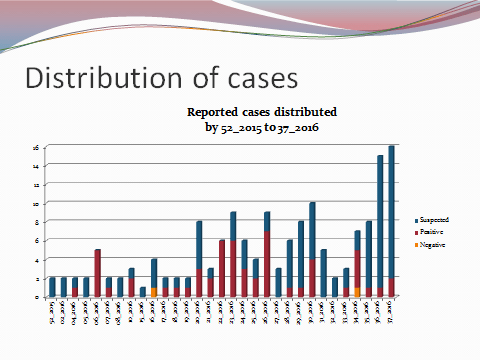
Relying on epidemiologic and laboratory data has shaped the way we look at Zika virus in this area. A vast spike in reported cases to public health offices matched with an equal increase in laboratory confirmed cases has raised alarm for local officials. While the increased ability to detect and report Zika within the community is growing due to advancing research, the measures taken to mitigate the risks of infection and transmission have not changed despite public health efforts already. With the history of Arbovirus being a routine part of life in the region, behavioral change seems to be a significant hurdle with respect to social determinants of health.

health1

Figure 1. Distribution of cases on Sint Maarten per epidemiologic year 2015-2016, per the Ministry of Health, Social Development, and Labor – Collective Prevention Services Department.

For now, working partnerships have grown in the last month and have brought on exciting developments. Incorporating the public health outreach within the oversight of a service-learning course at AUC School of Medicine, ongoing works related to Zika education and prevention are supported by local government. The Sint Maarten Ministry of Health, Social Development, and Labour as well as their office of Collective Prevention Services were impressed with my team’s initiative and so enthusiastic about our first public health effort that they wanted to be a involved with our work. Having such prominent sponsors is lending both credibility and attention. The relationship that has developed between the mobilized student volunteers has fostered an attitude of inclusivity and collaboration.

health2

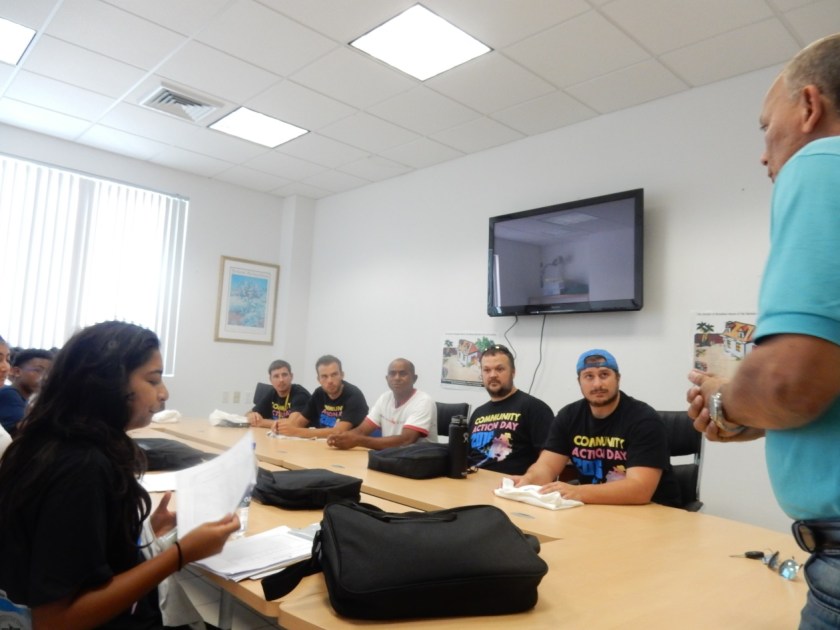
Figure 2. Representative meeting of student volunteers, Sint Maarten Red Cross, and others at a briefing of the Collective Prevention Services training session, October 2016.

One of the more recent and successes involved a program aimed at school children from various parts of the island. Local churches here have a program called “Healthy Me” where by school-aged children between 4 – 16 from various regions within the Sint Maarten community come to one school or community center to learn about their own health. Often times, my medical school’s pediatric interest group will send a large number of volunteers to talk to the children about metrics of health including conducting eye exams, measuring height and weight, blood pressure, pulse, and discussing diet. This time, my team proposed we collaborate with this event and hold Zika related presentations in one of the classrooms adjacent to those other screening rooms. We were approved and held nearly ten sessions with a total of almost 400 children!

Having a youth-tailored presentation along with coloring-activity books, we were able to impart a strong message to the children regarding source reduction and vector control. Writing an age appropriate presentation, engaging the children with active participation, and distributing activity booklets modeled after CDC education materials received positive feedback. Our community partners with Collective Prevention Services at the Ministry of Health supplied their overwhelming support and truly enjoyed being a part of the project. They have since requested to use our presentation materials and activity books at schools throughout Sint Maarten with the hopes of contributing positive public health outcomes from children to their parents and families.

health3.jpg

Figure 3. Me delivering one of the Healthy Me presentations to children, October 2016.

health4.png

Figure 4. Healthy Me Zika Presentation.

health5

Figure 5. Pamphlets for Children.

Citing the CDC’s approach to similar Arbovirus threats in the past, it became clear to my team and I that behavioral change is a significant part of improving public health outcomes within a community. A grassroots, or “bottom up” approach, both involves the community and positively influences behavioral changes to reduce risk and transmission. While the region here is fraught with historical exposure to Arbovirus threats, awareness and risk reduction are still critical for a population’s overall health.

Recently, the WHO released a statement calling for Zika to no longer be considered an epidemiologic emergency. This news has been met with both relief and criticism. Despite the virus receiving this downgrade, they still assert that it will continue to pose a threat as an ongoing infectious agent with complications that must be monitored by public health officials. While cases continue to increase over time, the management and reduction of risk is something both laboratories and public health officials will continue to address. Regardless of its status as an emergent epidemic or not, laboratories will still conduct studies to confirm reported cases, local government will continue to address the residents of this island to reduce risk, and I will continue to report about the state of progress between them. Labs, public health, and media are all part of the mechanism which translates data into results—and I am happy to be a part of that process.

Thanks for reading!

References

1. Vlaun, N., & Davelaar, G. (2016). ZIKA Virus on Sint Maarten . Philipsburg, Sint Maarten: Ministry of Public Health Social Development and Labour, Collective Prevention Services.

2. Davelaar, G. (2016). Results of the Pilot project “Cull de Sac,” a Mosquito Surveillance Plan for Sint Maarten . Philipsburg, Sint Maarten: Ministry of Health Social Development and Labor, Collective Prevention Services.

3. Gubler, D. J. (1988, December 7). Aedes Aegypti and Aedes Aegypti-borne Disease Control in the 1990s: Top Down or Bottom Up. Washington, DC: Centers for Disease Control and Prevention.

4. WHO (2016). “Fifth meeting of the Emergency Committee under the International Health Regulations (2005) regarding microcephaly, other neurological disorders and Zika virus” Statement, 18 November 2016. http://www.who.int/mediacentre/news/statements/2016/zika-fifth-ec/en/


ckanakisheadshot_small

-Constantine E. Kanakis MSc, MLS (ASCP)CM graduated from Loyola University Chicago with a BS in Molecular Biology and Bioethics and then Rush University with an MS in Medical Laboratory Science. He is currently a medical student at the American University of the Caribbean and actively involved with local public health.

Microbiology Case Study: A 57 Year Old Woman with Recurrent Fever

Case History

A 57 year old female presents to the hospital with complaints of a recurrent fever for the past few days. Her past medical history is significant for acute myeloid leukemia (AML). On physical examination, she has multiple, warm, erythematous, non-painful papules and nodules involving her extremities. One of the lesions, located on the dorsal aspect of her finger, had ulcerated. She is found to be neutropenic with a white blood cell count of 0.36 TH/cm2 (reference range 4.0-10 TH/cm2). A chest CT scan is performed and reveals multiple, small hyperdense pulmonary nodules.  As part of the work up for febrile neutropenia, blood cultures are collected. Dermatology was also consulted and a skin biopsy at the advancing edge of the lesion was performed.

Laboratory Identification

fus1

Figure 1. Review of the deep portion of the punch biopsy demonstrates panniculus with a deep, dilated vessel containing fibrin and possible fungal organisms (H&E, 40x).

fus2

Figure 2. Deep dilated blood vessel with fibrin and fungal forms consistent with a hyaline septate mold were identified (H&E, 400x). Mycotic organisms were confirmed by a Grocott’s methenamine silver (GMS) stain.

fus3

Figure 3. Gram stain from a positive blood culture vial highlighting narrow hyphal elements with acute angle branching consistent with a hyaline septate mold (400x).

fus4.png

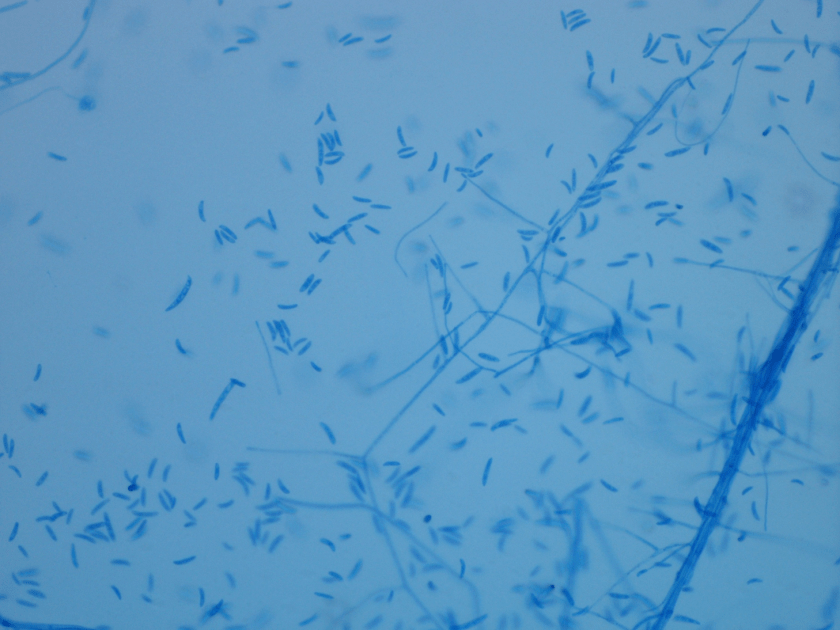
Figure 4. Lactophenol cotton blue preparation highlighting septate hyphae and numerous macroconidia that can be described as canoe or banana shaped (400x).


All of the specimens were collected on the same day and the results from the skin biopsy which showed fungal elements consistent with a hyaline septate mold were reported first (Figure 1). After 2 days of incubation, multiple blood culture bottles were positive for a mold similar to what was seen on tissue biopsy, indicating a disseminated fungal infection in this severely immunocompromised patient (Figure 2). Fungal cultures were set up from the blood and after 5 days of incubation at 30°C, lavender cottony colonies with lighter periphery grew on Sabouraud’s dextrose agar (SDA). The lactophenol cotton blue preparation showed many macroconidia with three to five septa (Figure 4). All of the findings are consistent with Fusarium spp.

Discussion

Fusarium spp. are filamentous fungi which are classified as a rapidly growing, hyaline septate mold. This opportunistic mold can be found all over the United States in the soil and on plants. In immunocompetent individuals, Fusarium spp. can cause localized infections, most commonly as the result of traumatic inoculation. Frequently, the eye is the site of infection, leading to keratitis. This can be due to trauma, contamination of contact lenses or solution, or corticosteroid drops. Fusarium has been reported as the infectious pathogen and has many clinical manifestations such as pneumonia, sinusitis, and wound infections. However, in immunocompromised patients, Fusarium spp. pose a greater threat for invasive and disseminated infections. Of the fungal organisms routinely implicated in fungemia (in addition to Candida, Cryptococcus and Histoplasma), Fusarium spp. have a high frequency of positive blood cultures.

Blood cultures positive for a septate mold and the presence of characteristic skin lesions are highly indicative of a disseminated Fusarium infection, especially in a severely neutropenic patient. To support the diagnosis of fusariosis, it is reassuring to have two different specimens each growing the same pathogen. In the case of our patient, both blood and skin tissue cultures grew Fusarium spp. with the same colony and microscopic morphology. The patient was unable to produce sufficient sputum for respiratory cultures, but the lung abnormalities were attributed to the fungal process as well.

In the laboratory, Fusarium spp. grow relatively rapidly on Sabouraud’s dextrose agar and can usually be identified within 3 to 5 days. Colonies are typically cottony in appearance and develop a pink to lavender color as they mature. The reverse of the plate is usually light. Fusarium spp. produce both macroconidia and microconidia. The characteristic macroconidia have been described as canoe, banana or sickle shaped and are separated by 3 to 5 transverse septa. The microconidia arise from short conidiophores and are more oval in shape, containing zero to one septa and can be single or arranged in clusters.

In cases of invasive fusariosis, anti-fungal agents such as voriconazole or high-dose amphotericin B are therapies of choice. In the case of neutropenic patients, growth factors (G-CSF or GM-CSF) or granulocyte transfusions are potential treatment options as well. Surgical debridement of necrotic tissue has shown benefit in patients with large abscesses. Additionally, if the cause of the fungemia is thought to the result of an infected line, the catheter should be removed.

Disseminated involvement of Fusarium spp. has a high rate of mortality associated with the infection.  Often times the prognosis is related to the extent of infection and the degree immunosuppression.  It is important to suspect Fusarium infections in the clinical setting of a severely neutropenic patient with skin lesions and having a low threshold for beginning anti-fungal therapy. An accurate and prompt diagnosis will lead to appropriate treatment and improved outcomes.


kt

-Katie Tumminello, MD, is a fourth year Anatomic and Clinical Pathology resident at the University of Mississippi Medical Center. 

Stempak

-Lisa Stempak, MD, is an Assistant Professor of Pathology at the University of Mississippi Medical Center in Jackson, MS. She is certified by the American Board of Pathology in Anatomic and Clinical Pathology as well as Medical Microbiology. She is the director of the Microbiology and Serology Laboratories.  Her interests include infectious disease histology, process and quality improvement and resident education. 


The Lonely Life of a Clinical Pathologist: Finding a Mentor

Over the last few blog posts I have spoken about my involvement in the laboratory and hospital to find other people interested in clinical pathology. While this has helped fuel my passion for laboratory medicine, one of the issues that made me feel the loneliest was the responsibility I felt as a new pathologist and not having someone to help share that burden.

As a pathology trainee I saw several new pathologists start their positions in microbiology, hematology, and even anatomic pathology. They always seemed to be cool, calm, and collected (unless they were running around trying to get their research published).  What I did not focus on was that they also had a built-in mentor (the experienced pathologist) who was there to discuss a tough case or help them make a difficult decision.

When I took a community practice based job I was immediately entrenched in a decision making role. The sense of responsibility I felt to our patients, and making sure those decisions affected care in a positive way, was more overwhelming than I expected. The decisions included items such as which instruments to bring into the lab, when to report certain isolates, and even how to handle irate clinicians about the way we report our results. Every time I encountered a new situation I had not experienced first-hand in residency, I wanted to run my approach by someone to make sure it was the right way of doing things. I had one mentor I am pretty sure I texted every day the first two weeks of my job (thanks Dr. Lars Westblade!) for every single technical question that came up in microbiology. While it may seem excessive, it was the only thing that gave my decision making confidence at that time.

As the year went on, other mentors from training were also there for me, but I realized I needed a mentor on site that I could run major decisions by, as they understood the environment I was in more than my training mentors could. I was hesitant to seek advice from my bosses, as I was hired for my clinical pathology expertise, but as I reached out for guidance, I came to find the senior pathologist could guide me in the politics of my current situation while I could make decisions on the technical background. I can now see that having a senior pathologist with a wealth of information on how to handle situations and clinicians has been invaluable to the start of my career. The wisdom imparted has given me direction and experience in making decisions that residency could not fully prepare me for, such as handling physicians not happy with aspects of the lab or employees who did not want to perform tasks I asked of them.

Beyond individual mentors, another area that helped me with technical aspects of my job has been belonging to clinical pathology societies. American Society for Microbiology has several different list-serves you can post questions and get answers back from experts all over the country and world. The American Association for Clinical Chemistry has a board called “The Artery” that you can also post questions to and experts will answer. These formats have been priceless when seeking advice on certain topics literature does not seem to cover and are examples of why belonging to professional societies really bolsters your career.

As the year has progressed and I have made one decision after the next, my confidence has been built up so that I don’t have to discuss every decision with my mentors; that being said, I still have them on speed dial. While I think that responsibility is one area that residency was not able to fully prepare me for, I can see that it is a work in progress and one aspect of my job that will continue to motivate me to be the best I can be and make the best decisions for our patients.

Now to hear from you: did responsibility overwhelm you your first year of practice? How do you utilize mentors and professional societies to help approach unique and new situations?


racsa_small

-Lori Racsa, DO, is the director of microbiology, immunology, and chemistry at Unity Point Health Methodist, and a Clinical Assistant Professor at the University Of Illinois College Of Medicine at Peoria. While microbiology is her passion, has a keen interest in getting the laboratory involved as a key component of an interdisciplinary patient care team.

Microbiology Case Study: A 5 Month Old with Redness in her Left Eye

Case History

A 5 month old girl was brought to her pediatrician by her mother for redness of the medial canthus of her left eye. There was some associated thick discharge as well. The mother mentioned that her daughter had excessive tearing from the left eye since birth. The pediatrician diagnosed dacryocystitis, and prescribed a course of oral cefdinir. However, the swelling and redness continued to worsen, and the infant began to have low-grade fevers. She was sent to pediatric ophthalmology for a consult, and admitted to the hospital on IV clindamycin. The following day, she was taken to the operating room, where they opened the obstructed nasolacrimal duct and sent the contents for culture.

Laboratory Work-Up

Gram stain and smear: No neutrophils, no bacteria seen.

Routine bacterial culture showed growth of small, smooth and translucent colonies on the chocolate agar only. The colonies had a distinct wet-mouse odor.

Repeat review of the gram stain showed moderate neutrophils, with gram negative coccibacilli both extracellular and intracellular.

Hflu1
Chocolate plate demonstrating growth of smooth, translucent colonies.
Hflu2
Thick, uninterpretable region of gram stain.
Hflu3
Repeat review of gram stain showed gram negative coccobacilli, with intraleukocytic organisms.

Discussion

The gram stain and colony morphology described above are consistent with Haemophilus influenzae. Identification of the organism was confirmed by MALDI-TOF.

Congenital nasolacrimal duct obstruction is a common problem, affecting up to 6% of newborns. The vast majority of cases will resolve without treatment by the time the child is 6 months old. However, complications can arise, include acute or chronic dacryocystitis. Acute dacryocystitis causes swelling, warmth, and erythema with or without purulent discharge. The organisms most commonly implicated are alpha-hemolytic streptococci, Staphylococcus epidermidis, and Staphylococcus aureus. In chronic dacryocystitis, there is purulent drainage from the eye but no other signs or symptoms. The most common organisms isolated in these cases are Streptococcus pneumonia, Haemophilus influenzae, Pseudomonas aeruginosa, and viridans group Streptococci.  Acute dacryocystitis usually requires systemic antibiotics, while chronic can be treated with topical antibiotics. In this case, the infant had clinical features of acute dacryocystitis, but infection with an organism more typically associated with chronic dacryocystitis.

H. influenzae is a gram negative coccobacillus, which grows only on chocolate agar due to its requirement for factors V and X. However, H. influenzae can grow on blood agar if it is growing around an organism that hemolyzes the red blood cells in the media, releasing factor V (i.e. Staphylococcus aureus), a phenomenon known as satelliting.

As illustrated by this case, reviewing gram smears inconsistent with the final culture is an important aspect of quality assurance in the microbiology laboratory. This allows the opportunity to provide continuous feedback to technologists on their technique, and lets us keep track of any trends or common mistakes that may be occurring. In this instance, on review of the gram smear it appears the original reader examined only the very thick portions of the smear, which were uninterpretable. However, by moving out to the edges, neutrophils and bacteria were clearly visible. Feedback was provided to the original reader. The provider was immediately called and notified that a corrected report would be issued; the patient was switched to oral Augmentin based on these results.

-Alison Krywanczyk, MD is a 3rd year anatomic and clinical pathology resident at the University of Vermont Medical Center.

Wojewoda-small

-Christi Wojewoda, MD, is the Director of Clinical Microbiology at the University of Vermont Medical Center and an Assistant Professor at the University of Vermont.

Microbiology Case Study: 15 Year Old with Bacteremia

Case History

A 15-year-old male patient with acute myeloid leukemia (AML) had a central line placed for chemotherapy and subsequently developed symptoms of fever, abdominal pain, and diarrhea a few weeks later. He was treated with metronidazole for intra-abdominal infection and experienced improvement in diarrhea and abdominal pain, however his fever remained. Blood cultures were drawn from his central line and were positive.

gran1

Figure 1. Gram stain of the positive blood culture showing Gram-variable cocci in pairs and chains

gran2

Figure 2. Growth profile on organism on 5% sheep blood and chocolate agars

gran3

Figure 3. Colony Gram stain demonstrating pleomorphic, Gram-variable cocci in pairs and short chains

Laboratory diagnosis

Gram stain of the blood specimen revealed Gram-variable cocci in pairs and chains (Figure 1). The specimen was cultured on 5% sheep blood, chocolate blood, MacConkey, and Columbia colistin nalidix agar (CNA) agars. The next day, growth of small, round, grey colonies was seen only on the chocolate agar (Figure 2). Catalase test was negative. MALDI-TOF (Matrix Assisted Laser Desorption/Ionization, Time-of-Flight) identified Granulicatella adiacens with a 2.267 match score.

Discussion

The Granulicatella genus is a former member of the Abiotrophia genus, previously known as nutritionally variant or satelliting streptococci. The Granulicatella genera consists of G. adiacens and G. elegans (formerly A. adiacens and A. elegans respectively); of the Abiotrophia genus, only A. defectiva remains. These organisms are normal flora of the oral cavity, upper respiratory tract, gastrointestinal tract, and genitourinary tract. Granulicatella endocarditis is an uncommon, but well-documented phenomenon of both native and prosthetic valves and accounts for 5-6% of all streptococcal endocarditis. Other potential complications include ocular, central nervous system, musculoskeletal infections, bacteremia, pneumonia, scrotal abscess, septic arthritis, peritoneal dialysis-associated peritonitis, and breast-implant associated infections.

The Granulicatella spp. are catalase-negative, oxidase-negative, facultative anaerobic, gram-positive coccobacillus arranged in pairs and chains; although pleomorphism may occur (Figure 3, colony Gram stain). Notably, Granulicatella will grow on chocolate blood agar, but not 5% sheep blood agar or CNA agar because it requires Pyridoxine or vitamin B6 for growth. In addition to chocolate agar, Granulicatella can grow on Brucella agar with 5% horse blood and in thioglyconate broth. Granulicatella and other nutritionally variant streptococci exhibit satelliting behavior.  Satellite testing is performed on a media that supports no or little growth of Granulicatella (e.g. sheep blood agar). A single streak of Staphyloccous aureus across an area of the media inoculated with Granulicatella is incubated at 35°C in a high CO2 atmosphere. Granulicatella will grow only in the vicinity of S. aureus growth.  An alternate test for satelliting involves supplementation of media with pyridoxine hydrochloride, to allow growth of Granulicatella.

Biochemical reactions include: pyrrolidonyl arylamidase production (PYR) positive, leucine aminopeptidase production (LAP) positive, 6.5% NaCl negative, and bile esculin negative. Species identification is accomplished by arginine hydrolysis (ARG) and beta-glucuronidase (BGUR) activity testing. G. elegans is ARG-positive, while G. adiacens and Abitrophia are both negative. G. adiacens is further identified by a positive BGUR analysis, and Abiotrophia is again negative.

Abiotrophia and Granulicatella have shown variable susceptibility to both penicillin and aminoglycoside antibiotics. There is documented resistance to clindamycin, tetracycline, erythromycin, and ciprofloxacin, but not to rifampin or vancomycin. Current recommendations are to treat similarly as for enterococcal endocarditis using a combination therapy of a beta-lactam antibiotic with an aminoglycoside antibiotic, such as penicillin plus gentamycin. Unfortunately, relapse rates appear high despite appropriate treatment.

The likely source of this patient’s Granulicatella bacteremia is bacterial translocation from the gut in the setting of an immunocompromised state. The work up for a central line source of the bacteremia is still currently in progress, and echocardiogram was negative for vegetation.  He is currently being treated with vancomycin for bacteremia, and cefepime and metronidazole for intra-abdominal infection.

References

  1. Ruoff, K. Aerococcus, Abiotrophia, and other aerobic catalase-negative, gram-positive cocci. Manual of Clinical Microbiology, 10th Edition(pp. 365–376). American Society of Microbiology.
  2. Procop, G. W., Church, D. L., Hall, G. S., Janda, W. M., Koneman, E. W., Schreckenberger, P. C., & Woods, G. L. (2016). Koneman’s Color Atlas and Textbook of Diagnostic Microbiology(7th ed.). Philadelphia: Wolters Kluwer.
  3. Cargill, J., Scott, K., Gascoyne-Binzi, D., Sandoe, J. “Granulicatella infections: diagnosis and management.” Journal of Medical Microbiology 16 (2012): 755-761.


-Melinda Flores, MD, is a 1st year clinical and anatomic pathology resident at the University of Texas Southwestern Medical Center, Dallas, Texas.

-Erin McElvania TeKippe, PhD, D(ABMM), is the Director of Clinical Microbiology at Children’s Medical Center in Dallas Texas and an Assistant Professor of Pathology and Pediatrics at University of Texas Southwestern Medical Center.


The ABCs of BSCs

Many labs have received notices this year that their Biological Safety Cabinet (BSC) certification company will no longer certify a certain type of BSC that those labs have had for years. NSF International (formerly the National Sanitation Foundation) is an organization that supplies product testing, inspection and certification. NSF is accredited by the American National Standards Institute (ANSI) to develop American National Standards, and in 2010 an updated version of the NSF/ANSI 49 was published. This is better known as the Biosafety Cabinetry: Design, Construction, Performance, and Field Certification standard.

The names can be confusing, but the important message is the revisions to the standard eliminated the option of direct-connected Type A cabinets (which had been previously allowed). Also, an alarm requirement was added for canopy connected Type A cabinets. There was time allowed for sites with these types of BSCs to make necessary adjustments, and in 2016 field certification agencies have been told they can no longer certify BSCs which do not meet the updated standards.

That means that some labs that have not updated their BSCs or purchased new ones, they are left with uncertified (and therefore unusable) cabinets.

There are three main classes of BSCs. Class I offers the least amount of protection, and it pulls air in and over the work area. The air is then exhausted via a HEPA filter. Class II BSCs are the most commonly-used cabinets in clinical laboratories. They offer a maintained inward airflow, a HEPA-filtered unidirectional airflow within the work area, and a HEPA-filtered exhaust into the room or to the facility exhaust system. Class III BSCs (or glove boxes) are for use with high risk biological agents, and they are typically sealed and gas-tight enclosures.

The commonly-used class II cabinets come in a variety of designs or types:

  • A1 – 70% of the air recirculates through the supply HEPA filter, the other 30% of air goes through the exhaust HEPA filter.
  • A2 – 70% of the air is recirculated through the supply HEPA filter, the other 30% of air goes through the exhaust HEPA filter. The air intake is faster than in a type A1 cabinet.
  • B1 – 40% of the air is recirculated, 60% of air is exhausted.
  • B2 –   No air is recirculated within, it is all exhausted into the facility system.

Some older Class II Type A cabinets had the exhaust directly connected to the facility exhaust system. This is no longer permitted since hard connections need to meet specific regulated criteria and is not considered the safest type of connection. If connected to an exhaust system, the cabinets must use a canopy (thimble or air-gap) connection which has an opening to the room. Because there is always the potential for equipment failure (and a possibility of air contamination to the room via the opening), an alarm system must also now be in place to alert the user of this possible danger. In 2016, all BSC field service workers were notified not to certify Type A cabinets with a hard connection or with a non-alarmed canopy connection. If you received a memo and had an issue with certification this year, that’s why!

No matter what Class II type of BSC you are using, there are some basic safety guidelines every user should know in order to keep protected while working. If the blower is not kept on all the time, turn it on about ten minutes before use. This will stabilize the protective air flow in the cabinet.  Adjust the seat height so that the user’s face is above the front opening. Set all specimens and materials that are needed inside the work space, and separate the clean from the dirty. Do not set anything on the front grille.  Objects too close to the front, side, and rear air grilles can disturb airflow and compromise the specimen and the worker’s safety.

When working in a BSC, avoid frequent and fast motions. When moving arms in and out of BSC, move them slowly and perpendicular to the sash. This will allow less interference with the air flow. Be sure to limit traffic in the area when working- people walking behind a BSC in use will disturb the air flow such that air will pass out of the cabinet into the breathing zone of the user. In general, fume hoods and BSCs should never be located in high traffic areas.

Once work is completed inside the BSC, properly dispose of all waste material. Disinfect the cabinet surfaces using an extension apparatus to reach the back wall. Never put your head inside the BSC. Use a bleach solution for disinfection. If damage to the surface is a concern, wipe down the surface with water after using the bleach. Let the BSC run for at least 10 minutes before turning off.

It is important to remember that a Biological Safety Cabinet is an engineering control designed to protect the worker, but it only does so if used properly. Make sure all users are properly trained to use a BSC safely. Have them certified annually, and let certified professionals perform the required maintenance. If you received a memo this year, it may be time to purchase a newer BSC in order to maintain safe work practices in your lab. Ask your field service representatives for the best option for your laboratory.


Scungio 1

-Dan Scungio, MT(ASCP), SLS, CQA (ASQ) has over 25 years experience as a certified medical technologist. Today he is the Laboratory Safety Officer for Sentara Healthcare, a system of seven hospitals and over 20 laboratories and draw sites in the Tidewater area of Virginia. He is also known as Dan the Lab Safety Man, a lab safety consultant, educator, and trainer.

Candida auris: An Emerging Pathogen

Clinical laboratory professionals, microbiologists, and pathologists need to be aware of an emerging fungal pathogen. According to the CDC, Candida auris is a threat because:

  • It’s multi-drug resistant
  • It’s often incorrectly identified by common laboratory techniques and analyzers
  • It causes outbreaks in the healthcare setting.

Here are a few resources if you’d like to read more.


The Heavy Problem of Lead Exposure

Lead toxicity has been a hot topic in the lay press since the news broke of contaminated water in Flint, MI. Over 4% of children less than 6 years old had blood lead levels (BLL) greater than 5 mcg/dL, the CDC recommended upper reference interval threshold. While Flint has caught much attention, lead toxicity is not an isolated problem. In the US, there are at least 12 states with elevated BLL prevalence higher than that of the Michigan town. For example, in 2014, Pennsylvania reported 8.5 percent of children tested had high BLL. Ohio reported a prevalence 3 times that of Flint.

Globally, lead toxicity accounts for 0.6% of the burden of disease. Some researchers suggest that 26 million people are at risk for lead toxicity, worldwide.

Lead toxicity occurs from environmental exposure. The leading causes of lead exposure include:

  • Lead added to gasoline
  • Lead from active industry, such as mining (especially in soils)
  • Lead based paints and pigments
  • Lead solder in food cans
  • Ceramic glazes
  • Drinking water systems with lead solder and lead pipes
  • Lead in products, such as herbal and traditional medicines, folk remedies, cosmetics and toys
  • Lead released by incineration of lead-containing waste
  • Lead in electronic waste (e-waste)
  • Lead in the food chain, via contaminated soil
  • Lead contamination as a legacy of historical contamination from former industrial sites

In the United States, lead exposure is primarily from lead paint, followed by lead in the soil and lead in pipes. Leaded paint and pipes are found mostly in older homes and buildings in urban areas. In fact, zip codes associated with high numbers of pre-1950s housing were significantly associated with high BLLs in children <6 years old (1). Unfortunately, these are more likely to be inhabited by low income families.

Lead exposure can cause irreversible cognitive and behavioral impairment. Lead toxicity is due to several mechanisms. Lead can disrupt cellular pathways by binding to metal-binding enzymes, and sulfhydryl and amide groups on enzymes. Lead is particularly detrimental to the heme synthesis pathway, because it can downregulate 3 of the 7 enzymes in the pathway.

Lead can be measured in whole blood by AAP or ICP. Venous whole blood should be collected in metal-free phlebotomy tubes. Screening for elevated BLL can be done at the point of care with the LeadCare II, the only FDA-approved, CLIA-waived POCT device that measures lead currently on the market. The LeadCare measures lead by anodic stripping, and is designed to use capillary blood samples. While elevated capillary blood samples should be confirmed with mass spectrometry on venous blood, the POCT does have the advantage of a quick result while at the patient’s side, increasing the likelihood of obtaining that confirmatory sample.

Despite the availability of fast and affordable testing for lead exposure, the US is not doing a great job maintaining screening programs. 2012, CDC released new guidelines moving the threshold from 10 mcg/dL to 5 mcg/dL. At the same time, federal funding for lead screening programs was cut – from $29 million to $2 million! According to the CDC, we are currently testing ~10% of our at-risk, less than 6 year old population. Only 11 states have federally supported lead screening programs. While Medicaid requires all enrolled children to be screened for lead exposure at 1 and 2 years of age, this requirement is not enforced.  Based on Medicaid payment claims, in Ohio only 41% of children enrolled in the program and living in high-risk zip codes were screened for lead exposure.  Other states, like Missouri, have state-run programs. Still others have no recommended guidelines for lead screening. Many states do not report lead screening results to the CDC, meaning that lead exposure in the US might be severely under-reported.

On October 20, 2016, the EPA released a Management Alert recommending clarification of EPA authority to issue emergency orders to protect the public. Some argue this is too little too late. Should all the blame go to the EPA? Should we as laboratory professionals join the effort to eradicate lead exposure? We can help by championing and advocating for lead screening programs in our states and consistently and thoroughly reporting lead testing results.

Blood Lead Concentration (mcg/dL) Effect(s)
10-20 Impaired cognition and behavior, fine-motor coordination, hearing, growth
20-40 Reduced nerve conduction velocity, impaired vitamin D metabolism, decreased hemoglobin synthesis, increased blood pressure, peripheral neuropathy
40-90 Colic, frank anemia, nephropathy, encephalopathy
90-150 Encephalopathy, death

Table: Some clinical manifestations of lead poisoning in children.


Reference:

  1. McClure LF, Niles JK, Kaufman HW. Blood lead levels in young children: US, 2009-2015. J Pediatr 2016; 175: 173-81.


Sarah Brown Headshot_small

-Sarah Brown, PhD, DABCC, is an Assistant Professor of Pediatrics and Pathology and Immunology at Washington University in St. Louis School of Medicine. She is passionate about bringing the lab out of the basement and into the forefront of global health.  

Hematology Quiz: A Patient with Multiple Myeloma

What is the red cell phenomenon in this blood smear from a patient with multiple myeloma?

roux1

  • Agglutination
  • Erythrocytosis
  • Polychromasia
  • Rouleaux
  • Anisocytosis


The red cell phenomenon in this blood smear is rouleaux. The massive amount of serum immunoglobulin in patients with multiple myeloma interferes with the normal repellent force between red cells, allowing the cells to pile up on top of each other in formations that resemble stacks of coins. Rouleaux formation can also occur in hyperproteinemia due to other causes, such as chronic inflammation or hyperfibrinogenemia of pregnancy, and it usually occurs artifactually in the thick end of any blood smear.


Krafts

-Kristine Krafts, MD, is an Assistant Professor of Pathology at the University of Minnesota School of Medicine and School of Dentistry and the founder of the educational website Pathology Student.