Global Health Narratives Interview Series: Meet Dr. Adebowale Adeniran

Adebowale Adeniran, MD is a surgical pathologist and cytopathologist currently practicing at Yale University and serves as the Director of Cytopathology there. He completed his medical school training in Nigeria and moved to the United States to complete a residency and fellowship.

I am fortunate enough to know him as my future attending, as I will be joining the cytopathology fellowship program at Yale in 2020. I also know him through attending last year’s Friends of Africa meeting at USCAP, where he gave a presentation about the status of pathology services in Africa. His points were compelling and he spoke with passion and heart about the issue. He is a true global health advocate and I was delighted to have the chance to talk with him about the work that he is doing in Africa and learn more about the USCAP Friends of Africa group. Read on to be inspired by his commitment to global health and learn how you can also get involved!

Q: How did you recognize the need to contribute to improving pathology services in Africa?

A: Being from Nigeria and having worked there for a short time as a House Officer, I knew that there were improvements to be made in the healthcare delivery system, but I hadn’t thought of improving pathology services specifically. It wasn’t until I was in my second fellowship at Memorial Sloan Kettering that I had the opportunity to meet Dr. Brian West. He told me about the USCAP Friends of Africa group in which he was an active part and had been since the start. He was involved in education initiatives and would routinely travel to Africa to give lectures and educational seminars.

I went to the next Friends of Africa meeting at the annual USCAP meeting and was able to speak to others doing similar work to Dr. West. This inspired me to also get involved and have been participating in the group ever since. I learned that pathologists practicing back home in Nigeria, and in most other countries in Sub Saharan Africa, face challenges in practicing pathology that we don’t have in the US. It only takes seeing the situation once to realize the great need there is. There are a range of problems, from outdated equipment, to supply shortages, to all of the things that we take for granted like consistent access to electricity and water supply. In general, governments tend to be apathetic to funding healthcare and especially pathology services, which results in compromised patient care with very few pathologists to read cases, long turnaround times, and limited diagnoses. The training programs are usually working with few or old textbooks and limited exposure to advanced testing modalities. You see these problems and your heart bleeds; you feel compelled to get involved and give back.

Q: What is the mission of the USCAP Friends of Africa?

A: The organization has evolved and expanded over the years to increase their outreach to Sub Saharan Africa with the aim of improving pathology services there. The main leaders in the group, Drs. Adekunle Adesina, Patrick Adegboyega, Kunle Adesokan, and Jaiye Ogunniyi-Thomas have made big strides since the start and pathology has come a long way because of it. The group is supported by the USCAP Foundation and they work to distribute free educational materials to pathologists and training programs. They also work with the East and West African divisions of the IAP in developing and hosting teaching projects called “Schools of Pathology”, which are special yearly meetings. They are usually around a weeklong of intensive teaching and mentoring, and they will be held in different countries in West and East Africa to equalize the opportunities for people to participate. Pathologists from across the regions travel to be a part of it.

Q: What ways have you found to contribute to improving pathology services in Africa?

A: For the last five or six years, I’ve worked most frequently in Nigeria in my medical school alma mater, where I travel back yearly to give lectures and teach residents with slide sessions. It’s also a good opportunity for me to review any difficult cases with the department and offer an outside consultation. I also send journals and reading materials they don’t have access to otherwise. I’ve also had opportunity to work with three other medical schools in the area in similar ways.

Volunteering with USCAP Friends of Africa, I participated in last year’s School of Pathology meeting that was held in Lagos, Nigeria. This was the first time that I was able to teach in that program and it was a very good experience.

Q: In what ways can the pathology community get involved with global health?

A: One very simple and easy way to contribute is to give a donation to the USCAP Foundation Global Partners. Every year since 2015, they sponsor pathologists from low and middle income countries to travel to the USCAP meeting through a scholarship, the Global Partners Travel Award. This supports those who often don’t have easy access to attending academic conferences and who cannot afford the travel cost and meeting registration fees to travel to USCAP.

Another is by attending the USCAP Friends of Africa meeting at the annual USCAP meeting and signing up for the many ways you can volunteer your time and expertise. Anyone who has the desire and ability to go and teach, organize slide sessions, or collaborate on research projects, has the opportunity to do so through this organization. These things go a long way and are really appreciated.

Donations of textbooks, supplies, and equipment such as cryostats are also needed. Developing the laboratory services in these countries is really needed and I would encourage those who can to set up private pathology laboratories to help meet the need.

Academic institutions in the US can offer ways of enhancing training opportunities for African pathologists and trainees by offering short- or long-term exchange programs. This helps to bridge the gap between practiced based learning in resource limited vs. US institutions.


-Dana Razzano, MD is a Chief Resident in her third year in anatomic and clinical pathology at New York Medical College at Westchester Medical Center and will be starting her fellowship in Cytopathology at Yale University in 2020. She was a top 5 honoree in ASCP’s Forty Under 40 2018 and was named to The Pathologist’s Power List of 2018. Follow Dr. Razzano on twitter @Dr_DR_Cells.
A Pathology Emergency

Hi everybody! Welcome back. Thanks for following along last month’s update on Zika epidemiology and clinical lab crossovers. This time I’ve got a story to tell…

This is my last month of medical school! And, as such, I decided to go out with a bang and finish up with my last rotation in Emergency Medicine at The Brooklyn Hospital Center. It was a fantastic month! One would think that EM and Path are two very distant specialties, but they are more alike than you might realize. That could be a whole separate article but consider this: managing critical situations, ensuring fast-paced accurate response times, engaging in high-stakes algorithms, and making sure mistakes are caught early. Sounds to me like there’s lots of overlap…remember my discussion on high reliability organizations or the critical role interdisciplinary medicine plays in creating good patient outcomes? All things aside, all clinicians have a critical role to play, but what happens when you put an (almost) pathologist in an emergency room?

Basically, you get me having a fun four weeks—I used to be an EMT and help teach EMS courses, so I do like this stuff. But something else happened this month that really made this experience special…

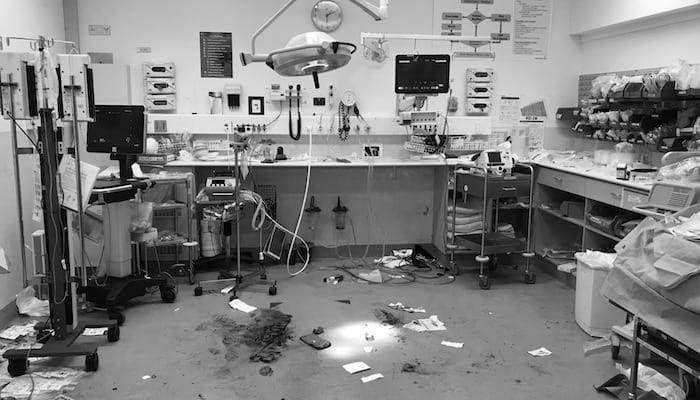
Image 1. Typically, med students have minor roles to play in real-life critical codes, but some of our duties include managing monitor attachments for vital signs, securing peripheral IV access, obtaining emergency labs, and other supportive measures while the rest of the code team manages…well, the resuscitation efforts. Source: Life in the Fast Lane.

Saturday, July 27th. I got to sleep in because I was on the night shift for four days. No big deal. When I finally got to the hospital, there was pandemonium. Extra ambulances in the loading bay, a couple squad cars outside, a stab wound victim in the trauma bay, lots of noise and folks everywhere—what was routine hospital stuff somehow seemed like I was in the middle of filming an actual episode of ER. (I’m obviously partial to particular shows…okay, maybe Chicago Med?) When I report to my team, I learn that the computers have been down. All day. No electronic health records, no charting, no histories, no internet to look up guidelines/recommendations on UpToDate—and most tragically: no lab results.

Ok. This is it. I’m on the other (read: clinical) side of an awful downtime shift. I’ve experienced plenty of downtime in the lab, but this night I took a deep breath, reminded myself its going to be okay, and did my best to label things right. But a problem appears that’s more serious than labeling type and screens the right way without a computer: results are backlogged for hours! I’m talking no blood gases, no lactic acids, no pregnancy confirmations! I overheard senior residents and my attending that night talk about how the lab is struggling and they didn’t have enough people to figure out this downtime debacle.

This was a moment. It’s not often med students get to be literally useful in any clinical situation but after high-speed thinking about it, I interjected and made my elevator pitch:

“Dr. X, Dr. Y – I’ve got several years of hospital lab experience and lots of background in managing crises and downtime situations, if you want I’ll head over to the lab and see if I can help this situation at all, at least for the ER…”

There was a short pause. Then an enthusiastic wave of approval with hands waving me to go help out our laboratorian colleagues. Please note: the instances where tidbits of knowledge as a medical laboratory scientist prove useful as a medical student on rounds are far and few between for their ability to really captivate a group of doctors who identify themselves far from any lab medicine; so, this was a win. Explaining the importance of order of draw, or why sensitivity goes down when you don’t adequately fill blood cultures, or why peripheral smears should come with some interdisciplinary caveats aren’t quite as sexy as an emergency room, on metaphorical fire, with no one but you knowing anything about how labs work.

So, I ran on over to the laboratory, fully intending to do what I could to help in my unofficial just-a-friendly-neighborhood-med student capacity. That’s when I met Jalissa Hall!

I walked into the main lab area and asked if I could talk to the supervisor, thinking I would just explain my experience and offer what I could to their staff who I’m sure were buried in downtime SOPs and make sure I got critical results back to my team in the ER—a win-win! When I asked who was in charge, a very busy Ms. Hall walked out from behind the chemistry section and said, “you can talk to me. What’s going on?” I’m sure she thought I was there to complain, seemingly like many other clinicians were, but I stopped and gave her the same elevator speech I delivered moments ago with the postscript: “what can I do for you?” I remember she stopped, thought about if for roughly 10 seconds, and presented me with her situation briefing:

  • Computers have been down since roughly 05:00 am
  • There’s a computer virus that had all servers shut down indefinitely
  • There’s no communication between the hospitals EHR and the labs LIS
  • Moreover, no patient information is coming across to the analyzers (MRNs, specimen IDs, etc.)
  • There are 4-5 critical units (ER, OR, ICU, OB, NICU) that require STAT results
  • Clinicians have been coming to the lab all day looking for informal results reporting
  • The limited lab staff has had to manually print results on paper and work to match them with barcodes, specimens, and manual requisitions before releasing results
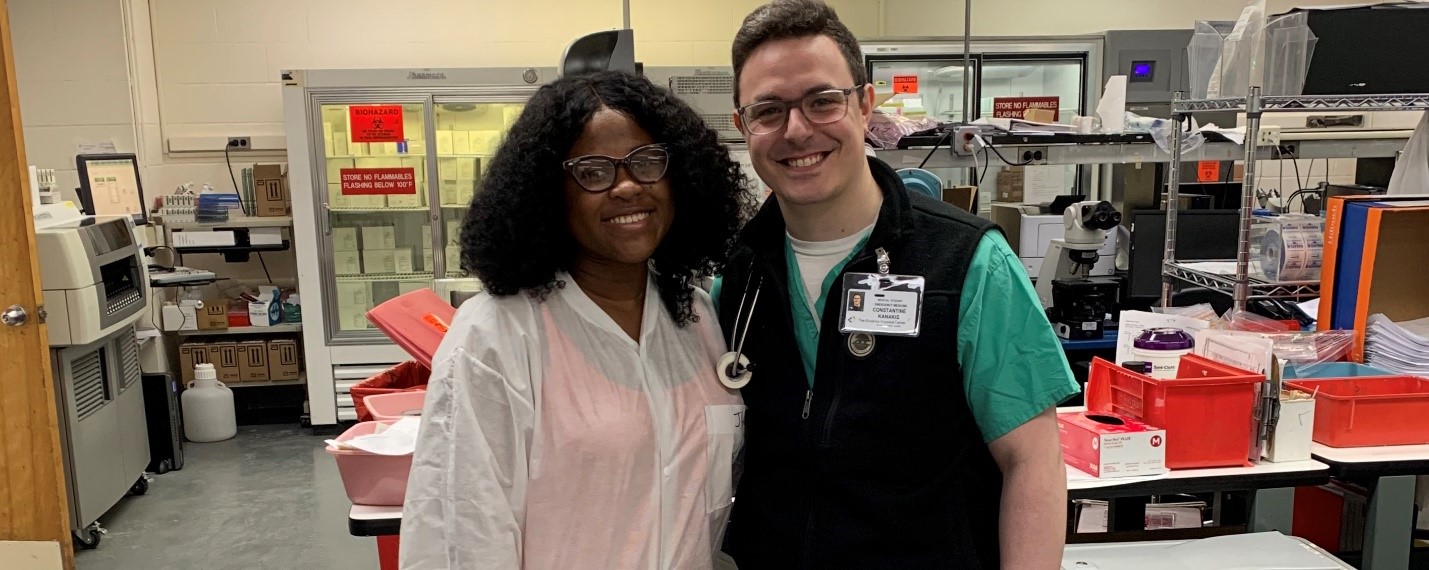
Image 2. Jalissa Hall, MLS(ASCP) (left) and a very tired me (right) after a great night of solving lab-related communication problems! Anyone else need an emergency room pathologist? Sounds like a new clinical specialty/fellowship to me…

Deal. I know I can’t jump on the analyzers because New York is one of the states that requires clinical laboratory licensure (which I do not hold). In my informal survey I noted three medical lab scientists (including Ms. Hall), someone in specimen processing, and someone in blood bank. Basically, in order to make sure the lab could operate at peak performance with what they had, I helped alleviate the “paper problem” for them at least for the ER specimens. I matched requisitions with instrument raw data, made copies for downtime recording, delivered copied results to the ER, rinsed, lathered, and repeated—for eight hours! I obviously had to toe the line for the ER results, but there were other nurses and doctors who came in for the other areas’ results. No one worked more than the folks in that lab that night, and no one more so than Jalissa. After things cooled down a bit, I got the chance to connect with her and talk about her career and asked if she had anything to share with all of you—she definitely did.

Lablogatory family: please meet Jalissa Hall, MLS (ASCP)!
(Responses paraphrased because, honestly it was late, and downtime was busy, and we were tired, ok?)

Jalissa has been working for about five years as a generalist, with two jobs—like most of us have done. She works at The Brooklyn Hospital Center as a generalist and at NYU Hospital Lab in their hematology section. She is a graduate from the excellent MLS program at Stony Brook University in NY. She’s got ambitious career goals that are aimed at climbing as high as she can in laboratory medicine, and she’s got the enthusiasm and work ethic to match! I got the chance to ask her some real questions, during a real down-time crisis. This is what she had to say:

What made you go into laboratory medicine?

JH: I really want to help people. I love the behind-the-scenes aspect of being a medical laboratory scientist, but I think sometimes it can be too behind the scenes…

What did you think of tonight’s downtime issues?

JH: …it could have gone better. There seems to have been some panic, people kept walking in and shuffling the papers around. I tried my best to organize by floor, have two copies of each result (one for us and one to send upstairs), and requisitions match orders, but it was difficult. We have a downtime protocol, but we just couldn’t keep up with the volume and extent of how long it’s been down for. There’s really been no help outside the lab to work with us during this time so it’s a challenge.

What could have happened better?

JH: No outside help meant no room to breathe. On the inside, supervisors off duty tonight called staff in but none were available to come in. We don’t have an on-call person. We’re understaffed or short-staffed like so many labs out there; it’s problematic.

How is this going to look tomorrow?

JH: It’s not looking good, haha! Morning draw is definitely going to have a hard time. Catching up with these backlogs is one thing, but if orders can’t come across the LIS we’ll have to address that problem for sure. We’ve got a great staff though, so I’m sure it’s going to be fine.

What would be your “top tips” for all our fellow laboratorians reading this?

JH: First and foremost, being driven matters. If you want to get ahead, if you want to excel and climb high within an organization or in our profession, you have to work hard and keep working toward your goals.

Pro-tip #1: One of the biggest issues is “vertical cooperation.” Basically, some call it administration-buy-in, but it means administration working with employees in the lab to make the best decisions for our patients. If employees are burned out or if there aren’t enough resources to effectively perform our responsibilities it creates risks! It all comes down to patients, and making sure we’re in the best position to deliver diagnostic data for them means considering all aspects of lab management.

Pro-tip#2: If we want to fix the workforce shortages our labs regularly experience, we have to increase our efforts in advocacy within our profession. Having programs increase awareness of this job as a profession increases the pull and interest of potential new partners to work with. My school did it, other schools do this; increasing the number of programs that expose students to career opportunities in lab medicine would address our short-staffing problems everywhere!

Pro-tip #3: TELL OTHERS ABOUT OUR PROFESSION! I talked about our role being too behind the scenes…well the way to fix that is professional PRIDE! Own our accomplishments, share our role, advocate for our recognition, celebrate our peers!

Pro-tip #4: The future is not scary. Lots of folks shy away from tech advancement, fearing that automation and other developments mean losing jobs—it doesn’t. Why can’t today’s lab scientists become tomorrows experts on automation, LIS software, and other aspects of our cutting-edge field?

It was a pleasure to meet Jalissa and even better to work alongside her and learn about her passions and goals within the field we both care about! It was particularly special for me to be able to use my knowledge and experience to really contribute to my clinical team and bring laboratory medicine to the forefront where it doesn’t often shine!

Image 3. In a fantastic book I read recently, the authors of You’re It: Crisis, Change, and How to Lead When it Matters Most talk about leadership as a moment—a moment where you step up to a situation because you have skills and experiences which make you uniquely qualified to serve in a role which aims at a positive outcome. I had a small version of that in front of my attending (important for evaluations in medical school of course), but that downtime night was Jalissa’s “you’re it” moment for sure! (Source: Google)

Signing off from any new clinical rotations because this guy’s done with his medical school clerkships! Now I’ve gotta knock out some board exams and go on some residency interviews…wish me luck! I’ll check in with you next month after the 2019 ASCP Annual Meeting in Phoenix, Arizona—hope to see some of you there!

See you all next time and thanks for reading!

–Constantine E. Kanakis MSc, MLS (ASCP)CM graduated from Loyola University Chicago with a BS in Molecular Biology and Bioethics and then Rush University with an MS in Medical Laboratory Science. He is currently a medical student actively involved in public health and laboratory medicine, conducting clinicals at Bronx-Care Hospital Center in New York City.

Microbiology Case Study: An 18 Year Old with Fever, Chills and Abdominal Pain

Clinical History

An 18 year old male presented to the emergency department (ED) with fever, chills, and generalized lower abdominal pain. He noted the fever began 6 days ago and had been intermittent since that time. He also reported nausea and vomiting with a decrease in appetite. The patient was from India and was treated for malaria 8 months ago, directly prior to arrival in the United States. He stated he received three days of intravenous medications with resolution of symptoms. In the ED, his vitals were blood pressure 129/75, heart rate 133, temperature 104.1°F, respirations 20, and 99% oxygen saturation on room air. On physical exam, patient had mild jaundice and scleral icterus and severe right lower quadrant pain on palpation. CT scan of the abdomen showed mesenteric adenitis, but no appendicitis. Initial laboratory testing showed a mild anemia and thrombocytopenia (hemoglobin 12.1 g/dL, hematocrit 35.9%, platelets 78,000 TH/cm2) and increased indirect bilirubin (2.67 mg/dL). The patient received piperacillin-tazobactam while blood and urine cultures as well as a malaria smear were pending.  

Laboratory Identification

The BinaxNOW lateral flow immunochromatographic assay for Plasmodium spp. was performed.

Image 1. The BinaxNOW assay was positive for malaria protein antigen, representing P. vivax, P. ovale, P. malariae, or a mix of these species.
Image 2. A thin smear showed amoeboid gametocytes in enlarged red blood cells as compared to uninfected cells (Giemsa stain, 100x oil immersion).
Image 3. A thin smear showed very rare trophozoites with thick chromatin bands and single, large chromatin dots (Giemsa stain, 100x oil immersion).

The positive BinaxNOW results and morphologic findings on smear review were most consistent with a P. vivax infection. The level of parasitemia was approximately 0.2%. Blood and urine cultures were negative.

Discussion

Malaria classically presents with fever and chills, weakness, headache, myalgias, nausea, and vomiting in patients who live in tropical and subtropical regions. The four most common species that infect humans through transmission by the female Anopheles mosquito include P. falciparum, P. vivax, P. ovale, and P. malariae. If malaria is not diagnosed and treated in a timely manner, complications including anemia, thrombocytopenia, renal failure, acute respiratory distress syndrome (ARDS), and cerebral malaria can result. P. falciparum is the most deadly species due to the parasite’s ability to cause high levels of parasitemia.  

In laboratories in the United States, malaria testing often times incorporates Plasmodium spp. antigen detection via the BinaxNOW assay and peripheral blood smears. While the performance of the BinaxNOW is acceptable, particularly for P. falciparum, thick and thin peripheral blood smears remain the gold standard for malaria diagnosis, especially when the parasitemia level is low. The thick blood smear allows for screening a large amount of blood for malarial parasites and the thin smear allows for species identification and assessment of parasitemia. Ideally, multiple blood smears obtained from different times of the day should be collected in order to exclude the diagnosis. The window prior to a febrile spike is the best time to obtain the specimen, as the number of circulating parasites is greatest.

Clinically, the most important distinction is between P. falciparum and all other species. A number of features including the morphology of the trophozoites, schizonts, and gametocytes, size of the infected red cells, the presence of multiply infected red blood cells, and the region that the patient lives in or traveled to are helpful in determining species level identification.

P. vivax infects enlarged, young red blood cells and multiple trophozoites may be present in one red blood cell. The trophozoites have thick, blue cytoplasm and usually one, large chromatin dot. The schizont can contain 12 to 24 merozoites and the gametocyte is large and oval in shape. Schuffner’s stippling and malarial pigment are common. It is important to correctly identify P. vivax and P. ovale as they have hypnozoite forms in the liver and patients can relapse unless they are treated with an additional medication to eradicate these forms.

In the case of our patient, he received chloroquine, the treatment of choice for P. vivax arising in India. Primaquine and tafenoquine are both options for eradication of the hypnozoite form in the liver. These medications can cause hemolytic anemia in patients with glucose-6-phosphate dehydrogenase (G6PD) deficiency so quantification of the enzyme is required prior to administering therapy. Our patient had normal G6PD levels and received tafenoquine as well. 

-Karla Perrizo, MD, is a clinical pathology resident at the University of Mississippi Medical Center.

-Lisa Stempak, MD, is an Assistant Professor of Pathology at the University of Mississippi Medical Center in Jackson, MS. She is certified by the American Board of Pathology in Anatomic and Clinical Pathology as well as Medical Microbiology. She is the Director of Clinical Pathology as well as the Microbiology and Serology Laboratories. Her interests include infectious disease histology, process and quality improvement, and resident education.

An Introduction to Laboratory Regulations – Part II (Testing Complexity)

Last month we reviewed the different federal regulatory agencies responsible for establishing laboratory testing guidelines, and a brief overview of the different roles each department has. This month we’ll attempt to demystify testing complexity (waived, non-waived, PPM) and why testing classification matters. Still to come, we’ll review the optional accreditations available to labs, and how accreditation differs from certification.

For all in vitro diagnostic tests, the FDA is responsible for categorizing each test based on their perceived complexity during the pre-market approval process. From least to most complex, the categorizations are waived, moderate complexity, and high complexity. The reason this is important is because with each jump in test category, the CLIA rules associated with performing testing will change – as will the permit designation required to perform testing. This includes things such as QC requirements, validation testing, and personnel requirements to define who can perform testing in the first place.

Waived tests are considered easy to use, with little to no chance that the test result will provide wrong information or cause harm if it is done incorrectly. This includes over-the-counter tests such as home use urine pregnancy kits, where if the sample is applied incorrectly or in insufficient volume there will simply be no result obtained at all. Many Point of Care tests fall under this category, with testing performed in a wide variety of locations including physician offices, urgent care clinics, imaging centers and nursing homes. Locations performing waived testing only are still required to obtain an appropriate CLIA Certificate of Waiver. (See the reference links at the end for a list of all FDA approved CLIA-Waived tests.)

For waived testing, laboratories must follow the manufacturer’s instructions for testing, including the stated FDA approved intended use, without any deviation. If the procedure is modified, or the test is used with specimens not approved by the FDA – the complexity classification of the test will change from waived to high complexity. A common situation where this occurs is with fingerstick whole blood glucometers. Most device manufacturers on the market today for point of care glucose testing are not FDA approved for use with critically ill patients. Using these waived meters for patients deemed “critically ill” based on your local institution’s designation would change the complexity of testing from waived, to high, for this population of patients as it would be considered “off-label use” – meaning you are using it against FDA recommendations and approved forms of use for the test/instrument.

Another caveat to be mindful of is your local state regulations. Certain states (NY, especially) have very strict rules regarding testing complexity designation. In NY, all tests performed within the same designated laboratory space will have the same testing complexity designation. Meaning that if you have a moderate complexity CBC analyzer in the same room you perform your waived urine pregnancy tests – both are now considered moderate complexity. Even though you’re following the manufacturer’s instructions for the pregnancy kit, using only approved specimen types, and the kit is on the FDA approved CLIA-Waived list – that test is now moderate complexity just because it is in the same room as other higher complexity tests. That same pregnancy kit is considered waived when kept separate in the emergency department, but becomes moderate complexity (or higher) when used in the central laboratory.

Nonwaived tests refer to both moderate and high complexity testing. After the FDA has approved a marketing submission, their CLIA categorization of the test follows by utilizing a scorecard to grade the test complexity on 7 different criteria. All phases of testing (preanalytic, analytic and postanalytic) are evaluated in these steps:

  1. Knowledge – low scores require minimal scientific and technical knowledge to perform the test, and knowledge needed can be easily obtained through on-the-job instruction.
  2. Training & Experience – low scores require minimal training and limited experience to perform the test.
  3. Reagents & Materials Preparation – low scores have stable and reliable reagents, and require no special handling, precautions, or storage conditions. They typically come prepackaged, premeasured, and ready for use; whereas high scores may include manual steps such as volumetric measurements and/or reconstitution.
  4. Characteristics of Operational Steps – low scores have automatically executed steps (such as dispensing specific volumes of sample/reagent, temperature monitoring, or timing of steps); high scores require close monitoring or control, precise temperatures or timing, accurate pipetting or extensive calculations.
  5. Calibration, Quality Control, and Proficiency Testing Materials – low scores have all required reagents, controls and PT material commercially available and products are stable.
  6. Test System Troubleshooting & Equipment Maintenance – low scores have automatic troubleshooting or self-correction of errors (failed internal QC will automatically repeat), or requires minimal judgement. Equipment maintenance will be performed by the manufacturer or is minimal and easily performed, whereas high scores require decision-making and direct intervention to resolve most issues, or maintenance tasks require special skills and abilities.
  7. Interpretation & Judgement – low scores require minimal interpretation and judgement for resolution of problems or determination of test results.

Low scores indicate low complexity, with tests obtaining a total score of ≤12 being categorized as moderate complexity. Tests with final scores >12 are categorized as high complexity.

PPM: Within the category of nonwaived tests is a subcategory referred to as Provider Performed Microscopy (PPM). These are tests that are performed directly by a clinician during a patient visit, and require the use of a microscope limited to bright-field or phase-contrast microscopy. Based on the nature of the sample obtained, testing must be performed immediately at the time of collection as delays could compromise the accuracy of test results. As controls are typically not commercially available for these tests, the testing is restricted to clinicians only as knowledge and judgment is required to confirm testing accuracy and correlation to the clinical presentation.

Tests allowed under a PPM certificate are mostly related to OB/GYN procedures, with a full list available through CMS here:

Click to access ppmplist.pdf

So why does it matter?

So the next time you receive a request to add a new test at your laboratory, you’ll be armed with a fairly long list of the requirements that come with that test based on its complexity. Coming up next month we’ll discuss the difference between laboratory certification and accreditation, along with the benefits of obtaining accreditation for your lab.

References

  1. Electronic Code of Federal Regulations: https://www.ecfr.gov/cgi-bin/text-idx?SID=1248e3189da5e5f936e55315402bc38b&node=pt42.5.493&rgn=div5
  2. CLIA-Waived Analytes: https://www.accessdata.fda.gov/scripts/cdrh/cfdocs/cfClia/analyteswaived.cfm
  3. CLIA Complexity Database: https://www.accessdata.fda.gov/scripts/cdrh/cfdocs/cfCLIA/Search.cfm?sAN=0
  4. FDA Approved Devices: https://www.accessdata.fda.gov/scripts/cdrh/devicesatfda/index.cfm


-Kyle Nevins, MS, MLS(ASCP)CM is one of ASCP’s 2018 Top 5 in the 40 Under Forty recognition program. She has worked in the medical laboratory profession for over 18 years. In her current position, she transitions between performing laboratory audits across the entire Northwell Health System on Long Island, NY, consulting for at-risk laboratories outside of Northwell Health, bringing laboratories up to regulatory standards, and acting as supervisor and mentor in labs with management gaps.

Blood Bank Case Study: “Oh I’m so confused! What type am I?” Weak D Phenotypes in Pregnant Women

In my July post, “Blood Bank Case Study: What’s Your Type?” I discussed some of the dilemmas when dealing with a weak D phenotype and the fact that there is no standard or general consensus as to the testing performed or terminology to be used in resulting a weak D patient. Results obtained on patient testing also vary depending on the method used, and the anti-D reagent and enhancement used in testing. This can be confusing to medical technologists, physicians and to patients.

For anyone who has not been in the Blood bank for a while, the Du variant was first recognized in 1946 and renamed weak D in 1992. To review last month’s blog, serologic studies have distinguished three broad categories of D variants, weak D, partial D, and DEL, from conventional D. A serologic weak D phenotype is one that has no or weak reactivity (≤2+) of RBCs with an anti‐D reagent at immediate spin, but does agglutinate with antihuman globulin. Since there is no general consensus on how labs perform and report patient testing for weak D, it is left up to individual interpretation as to what type blood these patients should receive, and, if pregnant, if they should receive Rh D immune globulin (Rhogam). Last month I focused on testing, resulting, donors and blood administration. In this blog I will focus on issues concerning weak D in the obstetric population and how labs can move forward now and in the future towards the best patient care and blood management.

About 15% of Caucasians are RhD negative. About 3% are weak D phenotypes.In the genral population, this means that about 0.2% to 1.0% inherit RHD genes that code for serologic weak D phenotypes.2 In Europe and the US, weak D phenotypes are the most common D variants found, but we also know that the prevalence of weak D phenotypes varies by race and ethnicity. Today we have much more information about D antigen expression than we had in the past, because we have the availability to genotype these weak D RBCs. We know that more than 84 weak D types have been identified, but types 1, 2, and 3 account for more than 90% of these in people of European ethnicity.1  Currently, with the mixed ethnicity population in the US, about 80% of people who inherit RHD genes for serologic weak D phenotypes are found to be weak D type 1, 2, or 3.3 We also know that types 1, 2 and 3 are unlikely to become alloimmunized to anti-D, so they can safely be treated as RhD positive and receive RhD positive units.

The introduction of RhD immune globulin in 1968 is one of the great success stories in obstetrics. Rhogam has been used very successfully in developed countries in the prevention and treatment of hemolytic disease of the fetus and newborn due to RhD alloimmunization. The routine recommendation is that women who are candidates for Rhogam receive one dose at approximately 28 weeks’ gestation and a second dose after the delivery of an Rh pos baby. Additional recommendations are for administration of Rhogam after threatened miscarriage, abdominal trauma during pregnancy and before invasive diagnostic procedures.

But, who is a candidate? Any unsensitized woman who is RhD negative and who may be carrying or who delivers an RhD positive baby is a candidate for Rhogam. And, that brings us back to the problem that we have no standardization for the reporting of serological weak D phenotypes.

As an example, let’s look at a patient who has 3 children. Many labs do not do weak D testing on patients and report anyone who is RhD negative at immediate spin as RhD negative. This patient was typed at such a lab (Lab #1) as RhD negative, and received Rhogam for her first pregnancy. During her 2nd pregnancy, she had moved to a different state, and went to another lab (Lab #2) for prenatal testing. This lab performed serologic weak D testing and found this patient to be weak D positive and reported her type as RhD positive. Rhogam was not further discussed during this pregnancy and the patient did not receive Rhogam. The patient had blood drawn during her 3rd pregnancy at yet a third hospital (Lab #3). Some labs distinguish women who are pregnant or of childbearing age from the general population, and have different procedures on the reporting of RhD type on these women. This hospital’s procedure was to do weak D testing on all patients, but, in women of childbearing age, if weak D positive, they report these women as RhD negative. The patient was told she was RhD negative and would be a candidate for Rhogam. At this time the woman thought she remembered that she didn’t get Rhogam with her second pregnancy and was a little confused, but with 2 young children and pregnant with her 3rd, she simply followed the doctor’s recommendation and didn’t question further. When her 3rd child was 4 months old, she attended a Red Cross blood drive at work and donated a unit of blood. Soon she received a blood donor card in the mail that said she was RhD positive. At this point she was thoroughly confused and questioned all the lab results she had had done over the past 6 years. On her next visit to the doctor she questioned her obstetrician. The obstetrician recommended RhD genotyping. The woman was found to be weak D type 2. The doctor explained to her that all blood donors who are weak D are treated as RhD positive, but, that as a patient, policies and procedures vary. However, he also informed her that now that they had her genotype, she would be considered RhD positive. He explained that the genotype was DNA testing, would not need to be repeated, she would not need Rhogam for any future pregnancies and she could safely receive RhD positive blood products.

The American College of Obstetricians and Gynecologists (ACOG) guidance practice bulletin of 1981 recommended that recommended that RhD‐negative women “whether Du positive or Du negative” were candidates for Rhogam. Shortly afterwards, that recommendation was reversed and revised to read “[a] woman who is genetically Du‐positive is Rh‐positive and administration of Rh immune globulin is unnecessary.1 This remained the recommendation of the group until the latest version of this publication in 2017. The 2017 ACOG guidelines recommend giving Rhogam to weak D positive patients, “in appropriate clinical situations, until further studies are available.”3 Another comparative study published in 2018 reported inconsistency between national groups over how to treat weak D phenotypes and recommended the creation of international guidelines.4

Thus, the controversy over whether a pregnant woman who is weak D positive is RHD positive or RHD negative continues. The latest recommendations, and those of ACOG, are for a move to genotyping patients with a serological weak D phenotype. There are several benefits to this. As we can see from my case study example, genotyping put this woman at ease and gave her definitive answers about her blood type. It also can do the same thing for medical technologists and physicians. RHD genotyping only needs to be performed once on a patient. If performed at the first prenatal appointment, this would alleviate much confusion as to procedures and how to report the results. I have in blood bank, that whenever we have a weak D on a prenatal patient, there are questions about how to result them, and we refer to the SOPs. We also occasionally get a patient who had previously been typed elsewhere where the reporting procedures were different and there is therefore an apparent discrepancy between the current and historical typing. This causes frequent phone calls from physicians and nurses asking for clarifications on weak D types, and questions about Rhogam. Lastly, RHD genotyping could avoid confusion which could lead to transcription and computer entry errors when entering types on these patients. RHD genotyping would solve all of these problems and eliminate confusion.

Additional benefits of RHD genotyping are, if RHD genotyping was performed on all weak D transfusion recipients, we could save as many as 47,700 units of RHD negative RBCs annually.3 With the availabilityof molecular testing, there is no reason to administer RhD negative units to patients who can use RhD positive units. This could help alleviate the constant shortage of RHD negative units. With RHD molecular testing, these critical units could be reserved for patients who are truly RhD negative.

It may not be feasible for all laboratories to perform molecular testing for RHD genotypes, but reference laboratories should offer affordable testing for the most prevalent and clinically relevant RHD genotypes. From a study done of over 3100 laboratories, it was found that, at this time in the US, most labs are managing weak D phenotypes as RhD negative. Laboratories not performing weak D testing are essentially avoiding their detection. Clinical laboratories should instead increase the detection of serological weak D and interpret these with the use of RHD genotyping. Rhogam shortages exists, and RHD genotyping could save thousands of injections of Rhogam annually in the US alone, and at the same time, avoid the unnecessary administration of products to patients. The work group study calculated that annually, approximately 24,700 doses of unnecessary Rhogam could be avoided.1 It is time to move forwards to molecular testing for the best patient care and blood management.

References

  1. Sandler SG, Flegel, WA, Westhoff CM, et al. It’s time to phase in RHD genotyping for patients with a serologic weak D phenotype. Transfusion 2015;55:680‐9
  2. Garratty G. Do we need to be more concerned about weak D antigens? Transfusion 2005;45:1547‐1551.
  3. Practice Bulletin No. 181: Prevention of Rh D AlloimmunizationObstetrics & Gynecology: August 2017 – Volume 130 – Issue 2 – p e57-e70 doi: 10.1097/AOG.0000000000002232
  4. Sperling, JD et al. Prevention of RhD Alloimmunization: A Comparison of Four National Guidelines. Am J Perinatol. 35(2):110-119. doi: 10.1055/s-0037-1606609. Epub 2017 Sep 14.

-Becky Socha, MS, MLS(ASCP)CM BB CM graduated from Merrimack College in N. Andover, Massachusetts with a BS in Medical Technology and completed her MS in Clinical Laboratory Sciences at the University of Massachusetts, Lowell. She has worked as a Medical Technologist for over 30 years. She’s worked in all areas of the clinical laboratory, but has a special interest in Hematology and Blood Banking. When she’s not busy being a mad scientist, she can be found outside riding her bicycle.

Microbiology Case Study: A 57 Year Old Man with Fever

Case History

A 57 year old male with a recent history of a left above the knee amputation developed a fever during the same admission of 101.1°F. His amputation had been complicated by poor wound healing, and he had a simultaneous right leg abscess that grew methicillin-sensitive Staphylococcus aureus. Examination of his wound showed serosanguinous drainage with no erythema or purulence. Blood cultures and a wound swab were sent for microbiological analysis.

Laboratory Findings Wound cultures grew methicillin-resistant Staphyloccocus aureus thought to represent colonization rather than true infection. Blood cultures flagged positive in one anaerobic bottle only at 30 hours. A gram smear showed gram-negative cocci (Image 1). Anaerobic blood plates grew pinpoint colonies (Image 2). MALDI-TOF identified the bacteria as a Veillonella species.

Image 1. Gram stain from anaerobic culture showing gram negative cocci.
Image 2. Growth on anaerobic blood plate.

Discussion

Veillonella species are gram negative cocci. They are lactate fermenting, obligate anaerobes and are considered normal flora of the intestines and oral mucosa. As such, they are usually regarded as a contaminant. They have, however, been implicated in osteomyelitis, prosthesis infections, and endocarditis. They are particularly associated with poor oral hygiene, chronic periodontitis, and smoking. They have important implications in dental disease due to their ability to form biofilms. They are frequently resistant to ampicillin and have also been noted to be resistant to tetracyclines in periodontal patients. Identification is done by molecular methods, typically MALDI-TOF. PCR has also been developed, but is not routinely used.

This was considered a contamination due the absence of symptoms and isolation in one bottle only. A follow up blood culture was negative. Routine wound care was resumed.

References

  1. Rovery C, Etienne A, Foucault C, Berger P, Brouqui P. Veillonella montpellierensis endocarditis. Emerg Infect Dis. 2005;11(7):1112–1114.
  2. Mashima I, Theodorea CF, Thaweboon B, Thaweboon S, Nakazawa F. Identification of Veillonella Species in the Tongue Biofilm by Using a Novel One-Step Polymerase Chain Reaction Method. PLoS One. 2016;11(6):e0157516. Published 2016 Jun 21.

-Jonathan Wilcock, MD is a 1st year anatomic and clinical pathology resident at the University of Vermont Medical Center.

-Christi Wojewoda, MD, is the Director of Clinical Microbiology at the University of Vermont Medical Center and an Associate Professor at the University of Vermont.

Surgical Pathology Case Study: A 6 Year Old Patient with Sudden Onset Abdominal Pain and a Worrisome Mass on Imaging

Case History

The patient is a 6 year old who developed abdominal pain 2 days prior to admission. The patient was in school when the abdominal pain began, resulting in the patient doubling over in pain. The pain resolved within 1 hour, however, because the initial presentation was an unremitting abdominal pain, the patient was taken to an outside hospital for evaluation. There was no vomiting, diarrhea, or constipation. On physical exam, the patient was very tender to palpation in the right lower quadrant and was unable to tolerate deep palpation. A computed tomography scan was subsequently ordered which showed a large mass in the pelvic peritoneum. The patient was admitted to surgery for an exploratory laparotomy, with resection of the pelvic mass.

Diagnosis

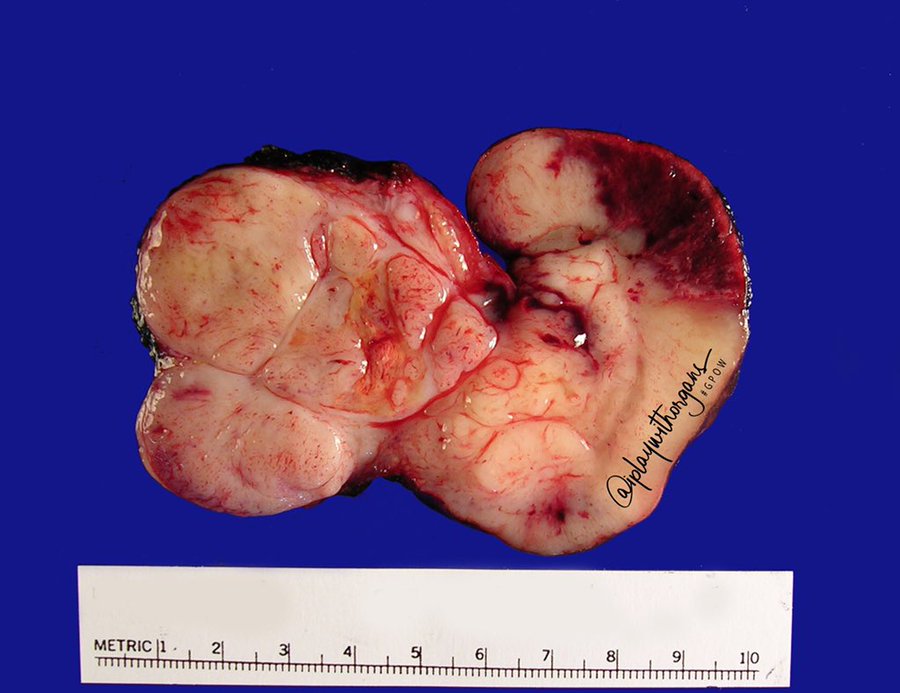
Received fresh in the Surgical Pathology laboratory is a 162.5 gm, 10.2 x 7.5 x 4.0 cm lobulated, ovoid mass of pink-tan, rubbery tissue that appears encapsulated by a thin translucent membrane. The margins are inked black and the specimen is serially sectioned revealing glistening, gray-tan soft tissue with focal areas of yellow discoloration and softening. Along one edge of the specimen, there is a 4.0 x 1.5 cm rim of dark red-brown, rubbery tissue (Figure 1). Portions of the fresh specimen are submitted in glutaraldehyde for electron microscopy if needed, RPMI for cytogenetics, and are snap-frozen as well. Touch preparations are also made and gross photographs are taken. Representative sections are submitted as follows:

Cassette 1-7:    Sections of mass including inked capsule

Cassette 8-10:   Representative sections from central portion of mass including areas of softening and discoloration

Cassette 11-13: Additional representative sections of the mass

Image 1. Cut surface of a gray-tan mass with yellow areas of discoloration and hemorrhage around periphery.

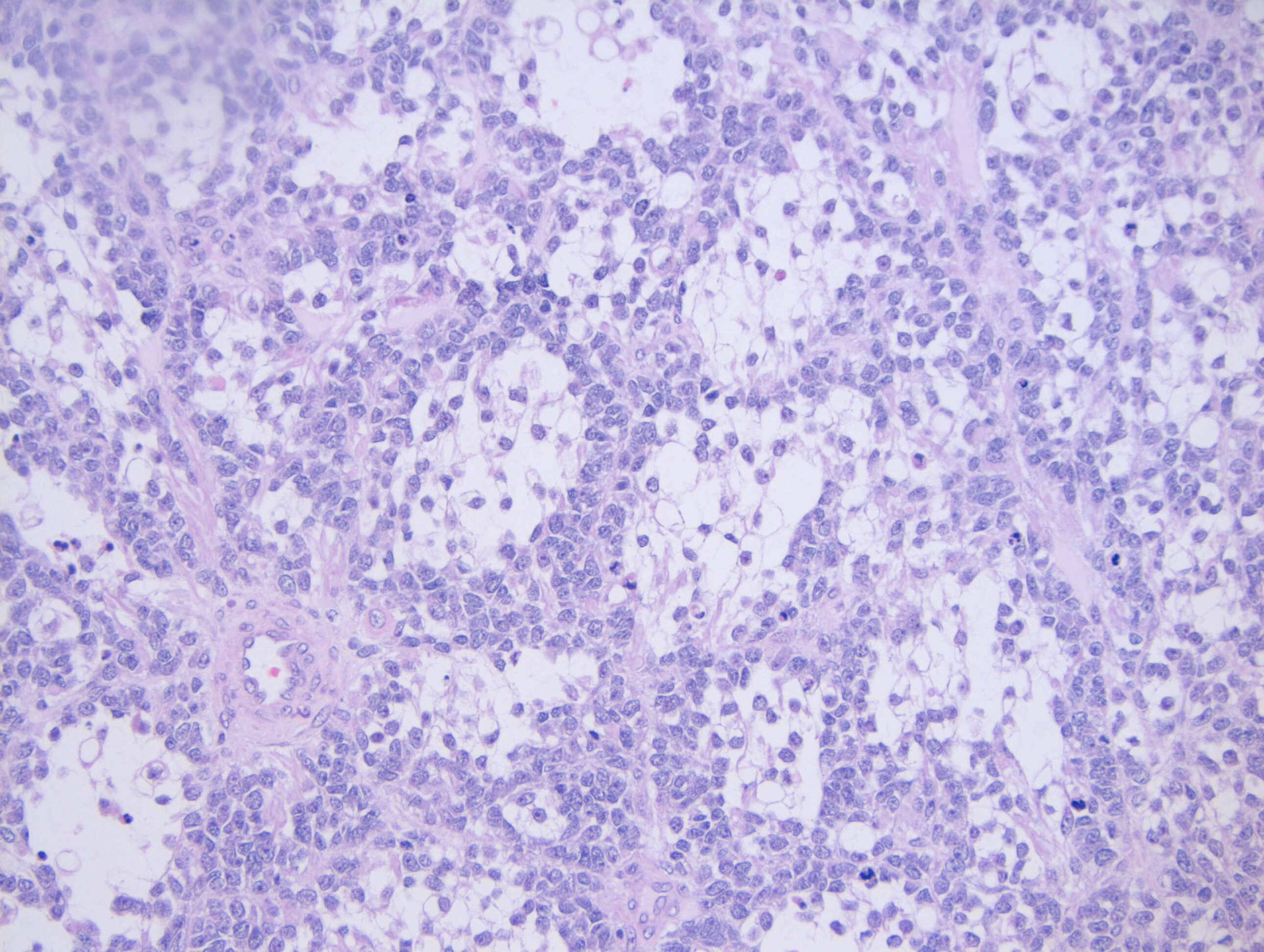
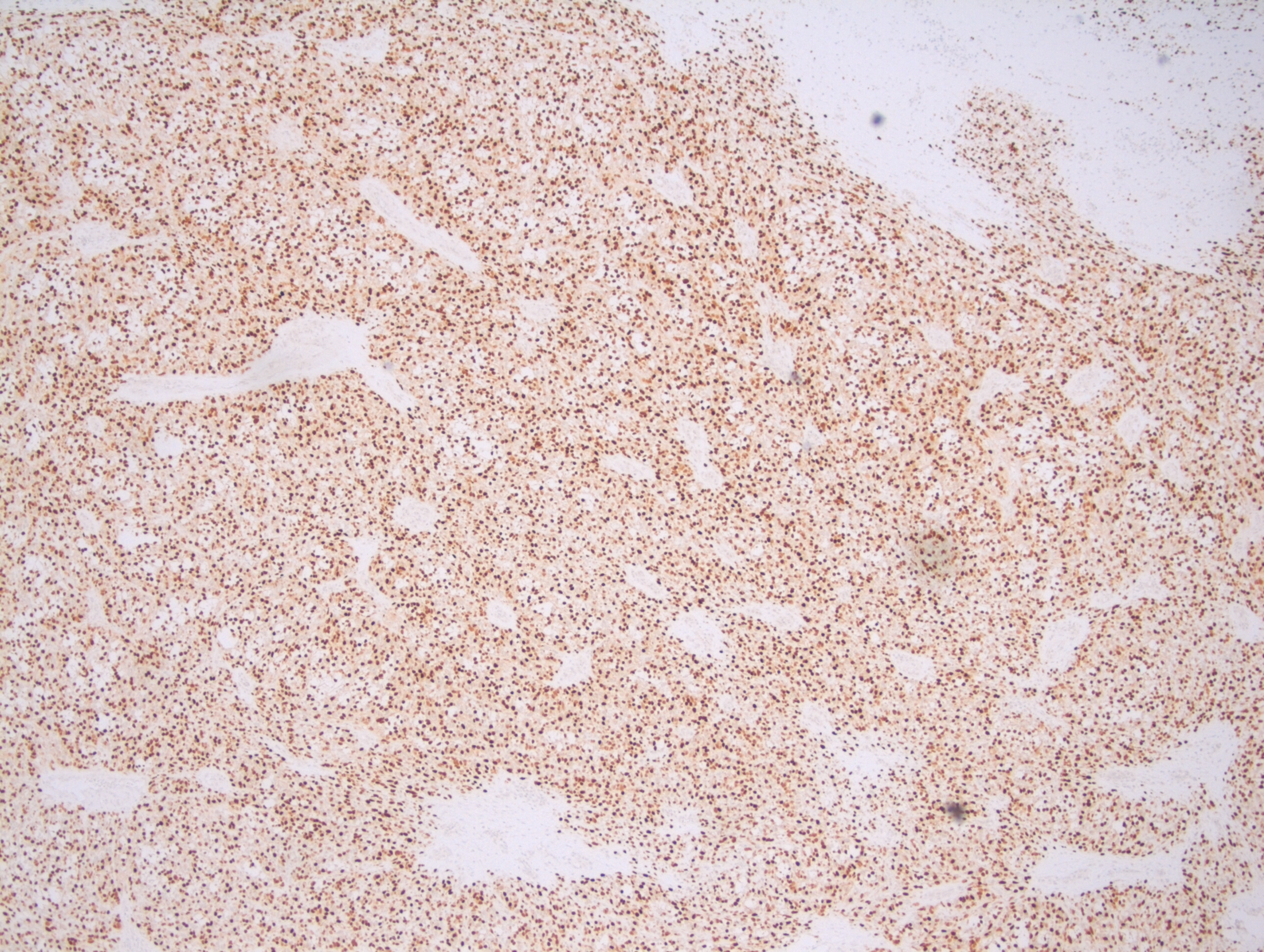
Histologically, the mass is composed of sheets and nests of small round cells along thin fibrous septa, giant multinucleated cells, and rare strap cells. Necrosis less than 5%. The margins are positive, although the specimen is unoriented. Venous and lymphatic invasion is absent. Immunohistochemical (IHC) stains are ordered and the results are listed below:

Positive IHC stains: Myogenin, desmin, CD56 and Bcl-2

Negative IHC stains: S-100, keratin AE1/AE3, CAM 5.2, SMA, CD99, Fli-1, WT-1, and EMA

In addition to the IHC stains, a portion of tissue was sent for cytogenetics testing, which showed a chromosomal translocation at t(2;13)(q35;q14). Based on the histologic appearance, IHC stains, and cytogenetic testing, the specimen was signed out as an alveolar rhabdomyosarcoma with a pathologic stageof pT2b, N0, MX.

Following the diagnosis, the patient was placed on a chemotherapy regimen of Vincristine, Adriamycin, Etoposide and Cytoxan, as well as radiation therapy.

Discussion

Rhabdomyosarcoma is the most common malignant soft tissue tumor in children and is the most common malignant solid tumor in children after neuroblastoma and Wilms tumor, accounting for 5-10% of all childhood tumors. 90% of these tumors occur in patients under the age of 25, and approximately 70% occur in children under 10 years of age. The most common locations of rhabdomyosarcoma are in the head and neck region, followed by the genitourinary system, extremities and then torso.

The 2013 World Health Organization classification of skeletal muscle tumors divided rhabdomyosarcoma into four types based on histology:

  1. Embryonal rhabdomyosarcoma (botryoides and anaplastic variant)
  2. Alveolar rhabdomyosarcoma (solid and anaplastic variant)
  3. Pleomorphic rhabdomyosarcoma
  4. Spindle cell/sclerosing rhabdomyosarcoma

Alveolar rhabdomyosarcoma (ARMS) accounts for approximately 20-30% of all rhabdomyosarcoma tumors, with no genetic predisposition. Although it is most common in teenagers, ARMS affects all ages. Most patients will present with a painless soft tissue mass, but based on the size and location of the mass, it may cause mass effect. A quarter of patients will have metastasis at the time of diagnosis, most commonly to the bone marrow, bones, and lymph nodes.

Grossly, ARMS presents as a solid, well-defined mass with a fleshy, tan-gray cut surface. Histologically, it is composed of small, blue, round cells and occasional round to spindle shaped rhabdomyoblasts. When compared to embryonal rhabdomyosarcoma, the rhabdomyoblasts in ARMS are slightly larger. ARMS is broken down into two subtypes: the classic subtype and the solid subtype. In the classic subtype, the tumor is composed of nests of cells that adhere to the edges of fibrous septa, resembling pulmonary alveoli (hence the name alveolar rhabdomyosarcoma). Multinucleated giant cells with a peripherally located nuclei may also be present. In the solid subtype, there will be nests and sheets of neoplastic cells that are separated by thin fibrovascular septa, but will not form in the classic alveolar pattern (Image 2).

Image 2. 20x photomicrograph demonstrating the neoplastic cells lining up along thin fibrous septa, giving the appearance of pulmonary alveoli

Due to the various appearances of rhabdomyosarcoma, it has become important to integrate immunohistochemical (IHC) stains and molecular testing into the diagnosis. The most common IHC stains that are used to determine the rhabdomyoblastic differentiation of a sarcoma is through the use of Myogenin and Myogenic differentiation 1 (MyoD1) stains, in which both stains will be positive in rhabdomyosarcoma. These two stains can be furthered used to help narrow down a diagnosis of ARMS because if more than 50% of the neoplastic cells express Myogenin, this is highly suggestive of a diagnosis of ARMS (Figure 3). In ARMS, the MyoD1 will have a variable expression. Additional positive IHC stains for ARMS can include: desmin, P-cadherin, and bcl-2.

Image 3. Myogenin IHC stain demonstrating a strong, homogenous expression

To go along with IHC stains, molecular testing has been shown to be affective with determining the type of rhabdomyosarcoma. There have been two translocations that have been identified in ARMS. The first is at t(2;13)(q35;q14), which results in a fusion of the PAX3 gene with the FOXO1 gene (previously known as the FKHR gene). This translocation is present in 60% of all ARMS cases, and has been found to occur mostly in older children and younger adults. The second translocation is at t(1;13)(p36;q14), which results in a fusion of the PAX7 gene with FOXO1, and is present in approximately 20% of all ARMS cases. The remaining 20% are fusion negative, and are associated with the solid subtype histologically. There is early preliminary data that shows a less aggressive disease course in patients with the PAX7-FOXO1 fusion, compared to those with the PAX3-FOXO1 fusion.

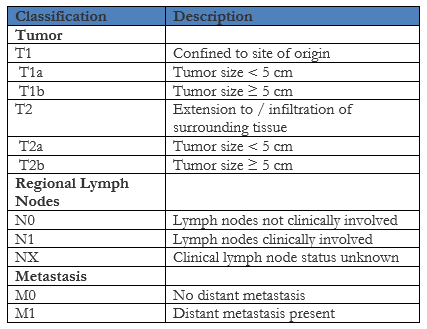
In order to determine the best treatment course, patients who are diagnosed with rhabdomyosarcoma are divided into a low risk, intermediate risk or high risk group based on the pathologic stage, clinical stage and clinical group. The pathologic stage is determined using the Pretreatment TNM Staging System that was set forth by the Intergroup Rhabdomyosarcoma Study (IRS) group (not the same as the TNM staging system put out by the American Joint Committee on Cancer) below:

The clinical stage is then determined using the TNM staging above and the Pretreatment Clinical Staging System below that is also put out by the IRS group:

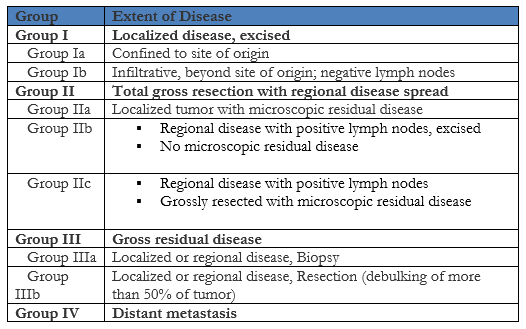
In the above Clinical Staging System, a favorable site is defined as occurring in the orbit, biliary tract, head and neck region (excluding parameningeal) and genitourinary region (excluding prostate and bladder). Any other site not listed is considered unfavorable. Next, a clinical group is assigned based on the extent of the disease using the Clinical Grouping System below, which again is put out by the IRS group:

Lastly, based on the clinical stage and clinical group determined above, the patient is assigned a risk group of either low risk, intermediate risk, or high risk using the Children’s Oncology Group guidelines listed below:

When compared to embryonal rhabdomyosarcoma, which is the most common type of rhabdomyosarcoma, ARMS has a worst prognosis. The IRS group clinical group and stage can help to predict the overall outcome of the patient, with the standard treatment regimen composed of surgery, radiation therapy and chemotherapy.

References

  1. Dziuba I, Kurzawa P, Dopierala M, Larque A, Januszkiewicz-Lewandowska D. Rhabdomyosarcoma in Children – Current Pathologic and Molecular Classification. Pol J Pathol. 2018;69(1):20-32. doi:10.5114/pjp.2018.75333
  2. Liu H, Zhao W, Huang M, Zhou X, Gong Y, Lu Y. Alveolar rhabdomyosarcoma of nasopharynx and paranasal sinuses with metastasis to breast in a middle-aged woman: a case report and literature review. Int J Clin Exp Pathol. 2015;8(11):15316–15321. Published 2015 Nov 1.
  3. Owosho AA B Ch D, Huang SC Md, Chen S Mbbs, et al. A clinicopathologic study of head and neck rhabdomyosarcomas showing FOXO1 fusion-positive alveolar and MYOD1-mutant sclerosing are associated with unfavorable outcome. Oral Oncol. 2016;61:89–97. doi:10.1016/j.oraloncology.2016.08.017
  4. Ozer E. Alveolar Rhabdomyosarcoma. Pathology Outlines. http://www.pathologyoutlines.com/topic/softtissuealvrhabdo.html. Revised March 26, 2019. Accessed July 26, 2019.
  5. Rudzinski ER, Anderson JR, Hawkins DS, Skapek SX, Parham DM, Teot LA. The World Health Organization Classification of Skeletal Muscle Tumors in Pediatric Rhabdomyosarcoma: A Report From the Children’s Oncology Group. Arch Pathol Lab Med. 2015;139(10):1281–1287. doi:10.5858/arpa.2014-0475-OA
  6. Rhabdomyosarcoma Staging and Clinical Risk Groups. Stanford Medicine Surgical Pathology Criteria. http://surgpathcriteria.stanford.edu/srbc/rhabdomyosarcoma/staging.html. Accessed August 10, 2019

-Cory Nash is a board certified Pathologists’ Assistant, specializing in surgical and gross pathology. He currently works as a Pathologists’ Assistant at the University of Chicago Medical Center. His job involves the macroscopic examination, dissection and tissue submission of surgical specimens, ranging from biopsies to multi-organ resections. Cory has a special interest in head and neck pathology, as well as bone and soft tissue pathology. Cory can be followed on twitter at @iplaywithorgans.

When Gender Goes Awry in Electronic Health Records

For most people working in laboratory medicine, their first encounter with transgender patients likely arose from an issue involving the Electronic Health Record (HER). For me, I was called into the reference lab, because an abnormally high estradiol result was found by the referring lab. They were concerned this might be coming from a hormone secreting tumor, but inspection of the patient’s record revealed they had been taking higher than recommended doses of their feminizing hormones.

Today I will share stories from issues that arise in EMR when gender doesn’t equal sex. While these may not specifically happen to all of you, I hope they can be informative or help you anticipate future problems.

Transgender issues came up at one of our institutions when providers were getting dozens of messages in their in-baskets about new flagged lab results for multiple patients. This is very annoying, because they have to address each of these messages or they are out of compliance with the hospital. An investigation revealed that all of the patients involved were transgender patients. In order to get estradiol, sold as oral contraception pills, the pharmacy had to administratively change their sex in the EHR for approval, then change it back.

This moved their corresponding reference ranges out of sync, which triggered a new results flag. Changing the sex back triggered other flags and more messages. This was finally resolved after a committee was convened and several meetings occurred, but no one would have anticipated this type of issue arising from a simple action to get patients their medicine.

Sometimes transgender patients have their sex changed legally. If an EHR only includes one sex entry instead of gender and sex assigned at birth, then certain lab errors may prevent processing of important samples. The pregnancy test for a transgender man could be auto-rejected. This can be an issue even for providers in front of the patient as was recently reported in a case to the NEJM about a transman who was mistaken as obese instead of pregnant and miscarried their child.

Similarly, a prostate biopsy from a transgender woman could be auto-rejected by a surgical pathology system as an inappropriate specimen type for the patient. Even further, an EHR could fail to prompt a provider from making a prostate cancer risk assessment in a transgender woman, which could result in improper screening.

I would recommend that EHR includes three separate fields (sex assigned at birth, gender, and legal sex) to fully recognize transgender patients and provide optimal personalized healthcare to them.

References

  1. Gupta S, Imborek KL, Krasowski MD. Challenges in Transgender Healthcare: The Pathology Perspective. Lab Med. 2016 Aug; 47(3):180-188.
  2.  Stroumsa D, Roberts EFS, Kinnear H, Harris LH. The Power and Limits of Classification – A 32-YearOld Man with Abdominal Pain. N Engl J Med. 2019 May 16;380(20):1885-1888. doi:10.1056/NEJMp1811491.

-Jeff SoRelle, MD is a Chief Resident of Pathology at the University of Texas Southwestern Medical Center in Dallas, TX. His clinical research interests include understanding how the lab intersects with transgender healthcare and improving genetic variant interpretation.

The Disaster Risk Assessment

There are multiple types of risk assessments required when managing a laboratory safety program. OSHA’s Bloodborne and Airborne pathogens standards require assessing the risk of employees’ exposure to particular lab hazards. Risk assessments can be used to determine whether or not to add an emergency eyewash station, and all lab chemicals need to be assessed for the hazards they pose. These are just some assessments that are needed, and there are particular steps to take when performing them. But what about the lab emergency management plan? Should the lab perform a risk assessment for that? The answer is yes, although the terminology used may be different. To prepare a disaster readiness plan for the lab, the risk assessment that is needed is known as a Hazard Vulnerability Analysis (HVA).

The Centers for Medicare & Medicaid Services (CMS) requires that all healthcare facilities use an “all-hazards” approach when considering emergency preparedness and planning. While some laboratories may be included with the facility-wide disaster plan, the lab should absolutely have its own plan with specific instructions that apply directly to the department. That means the lab should also consider an all-hazards approach.

It may seem daunting to try to consider every possible disaster that could occur in the department, but that is not exactly what the directive from CMS dictates. An all-hazards approach means that emergency plans should be scalable or flexible so that it can be used for many types of disasters. The plan should focus on the lab’s ability to continue to offer services, especially those deemed critical, as a disaster situation unfolds.

The first step to the plan creation is the risk assessment- the Hazard Vulnerability Analysis. The HVA can be a table that lists all of the potential types of disaster; natural, man-made, facility-specific, etc. List as many as you can think of, and be sure to include specific disasters that may be particular to your locale (earthquakes, blizzards, etc.). Rate each disaster type by probability, severity of impact, and level of readiness of the lab to respond. Using that data, you can calculate the risk percentage for each emergency type.

One other requirement imposed by CMS is that facilities must include emerging infectious diseases as one potential type of hazard class. With the advent of particular diseases in the past years like Ebola, Zika, and certain influenza types, it is important to consider how an outbreak would affect lab operations and staffing. The risk level of infectious diseases may vary as incidents and outbreaks occur in particular geographic regions or if pandemics arise.

The HVA should be reviewed and updated as necessary each year. Things change that can affect what is on your HVA list. The addition of a nearby airport might make you consider adding airline disaster to the HVA. A change in weather patterns could occur as well. In 2011 a surprise earthquake in Virginia made state facilities re-look at their HVA list of possible emergency situations. Also, the actual list of disasters might not change, but there may be a change in the potential of a particular incident occurring.

If your lab or facility has not yet performed the HVA risk assessment, there is no need to panic. There are several model HVA tools available on line that can be used. As with any risk assessment, be sure to keep documentation readily available, review it each year, and make sure staff are trained about not only the HVA process, but in how to use the emergency management plan as well. There is a great amount of work that can go into preparing for a disaster, and training and drills for your staff will help to facilitate a smoother activation of the plan when the real emergency situation occurs.

Dan Scungio, MT(ASCP), SLS, CQA (ASQ) has over 25 years experience as a certified medical technologist. Today he is the Laboratory Safety Officer for Sentara Healthcare, a system of seven hospitals and over 20 laboratories and draw sites in the Tidewater area of Virginia. He is also known as Dan the Lab Safety Man, a lab safety consultant, educator, and trainer.

Microbiology Case Study: An 83 Year Old Male with Fever

Case History

The infectious disease service was consulted on an 83 year old male for fever.

His past medical history was significant for diabetes mellitus, anemia and renal insufficiency. He initially presented 3 weeks ago with chills, rigors and fever to 103 degrees Fahrenheit. For the past several months, the patient has had weight loss (10-20 pounds over an unspecified timeframe), fatigue and new iron deficiency anemia. A heart murmur was heard on physical exam. The patient was admitted for suspicion of sepsis and he was started on empiric antibiotics vancomycin and ceftriaxone. Three sets of blood cultures were drawn prior to initiation of antibiotics, which were all positive for gram positive cocci in pairs and chains. Transesophageal echocardiogram (TEE). TEE showed large vegetation on posterior mitral leaflet measuring 1cm x 1.8 cm, and a smaller mass on the anterior leaflet. A week after admission, a mitral valve replacement was performed followed and a portion of the valve was sent for culture (Figure 1).

Laboratory Identification

Image 1. Gram stain from mitral valve specimen showing a large accumulation of gram positive cocci in chains (100x magnification).
Image 2. Brown-Hopps stain of the surgically resected mitral valve tissue vegetation showing sheets of gram positive bacteria (40x magnification).

Discussion

The gram positive organism from blood and mitral valve culture was identified as Streptococcus mitis by MALDI-TOF mass spectrometry. S. mitis is a member of the Streptococcus genus. Streptococci have a number of features that aid in laboratory identification: they are Gram positive, catalase-negative, spherical/ovoid, with organisms that are usually found in chains. They are facultative anaerobes.

More specifically, S. mitis belongs to the viridans streptococci group which includes Streptococcus mutans, Streptococcus sanguis, and Streptococcus salivarius, among many others. The most common infection caused by viridans streptococci is bacterial endocarditis, as in the case of this patient. Other infections can include brain abscesses, liver abscesses, dental caries, and bacteremia.

Patients with bacterial endocarditis have an infection of the heart valves or the endoecardial wall that leads to formations of vegetations. These vegetations are composed of thrombotic debris and organisms (Image 2), often associated with destruction of cardiac tissue. Its onset often involves severe symptoms including fever, chills, and weakness. Fever is the most consistent symptom of infective endocarditis, but it may be subtle or even absent in some cases, especially in older adults. Weight loss and flu-like symptoms may also be seen. Left-sided infective endocarditis, as in the case of our patient, will present with murmur in 90% of cases. In long-standing infective endocarditis, patients may present with Roth spots (retinal hemorrhages), Osler nodes (subcutaneous nodules in the digits), microthromboemboli (which appear as splinter hemorrhages under fingernails and toenails), and Janeway lesions (red nontender lesions on the palms or soles).

In the laboratory, the diagnosis of S. mitis and other viridians streptococci is often detected via blood culture as in the case of this patient. Once the blood culture bottle becomes positive, a Gram stain is performed, which shows Gram positive cocci in chains (Image 1). These features are helpful in differentiating Streptococcus from Staphylococcus (which appears as clusters instead of chains). Biochemical testing can be done to narrow down the species and identify S. mitis, which is optochin resistant (as opposed to S. pneumonia), acetoin negative (in contrast to most other viridans organisms), and urease negative (which differentiates it from S. vestibularis which is urease positive).

Surgical pathology can also aid in diagnosis by microscopically identifying vegetations on the affected valve (Image 2). Treatment of bacterial endocarditis is usually with penicillin or ceftriaxone, however susceptibility testing should be performed on S. mitis and other viridians streptococci because resistance can occur to penicillin. Blood cultures are followed until they are negative for 72 hours. In the case of our patient, his cultures became negative shortly after he started treatment. Susceptibility testing showed that the organism is sensitive to penicillin and ceftriaxone. The patient was continued on ceftriaxone and is clinically improving.

-Haytham Hasan, MD, is an Anatomic and Clinical Pathology resident at NorthShore Evanston Hospital (University of Chicago).

-Erin McElvania, PhD, D(ABMM), is the Director of Clinical Microbiology NorthShore University Health System in Evanston, Illinois. Follow Dr. McElvania on twitter @E-McElvania.