Biomarker Testing for Cancer Patients: Barriers and Solutions, Part One

We are seeing an unprecedented amount of new targeted therapies for cancer treatment that are tied to diagnostic tests. Drug companies are heavily invested in ensuring the right patients get the right therapy. This is because it actually benefits pharma companies and patients. Patients get a very specific therapy that will likely improve their survival rate and improve their quality of life. By being selective and targeting only patient populations that are likely to respond based on the biology of their tumor, pharma companies show improvements over existing therapies which supports their request for FDA-approval.

With every pharma company tying their drug to specific rare biomarkers, broad molecular profiling such as NGS becomes more important than ever. We will never find the needle in the haystack if we don’t examine the entire stack. However, most cancer patient care occurs in the community where NGS testing is not usually offered locally. There are specific barriers to biomarker identification in the community setting. I will take the next few months to discuss specific barriers and how a lab might overcome these obstacles in order to increase patient access to precision medicine. Just as no barrier is identical between institutions, no solution will be one-size fits all. Feel free to cherry pick and modify solutions that you feel would address your local issues. Remember don’t let perfect be the enemy of the good. Small incremental improvements are impactful and generally require fewer resources than trying to revamp your entire process.

Here are the top 10 barriers that I’ve seen to biomarker testing in the community:

  1. High cost of testing.
  2. Long turnaround time for results.
  3. Limited tissue quantity.
  4. Preanalytical issues with tissue.
  5. Low biomarker testing rates.
  6. Lack of standardization in biomarker testing.
  7. Siloed disciplines.
  8. Low reimbursement.
  9. Lengthy complex reports.
  10. Lack of education on guidelines.

This month I will address the first two barriers that I commonly see with respect to biomarker testing. Molecular testing is expensive and turnaround time is often long. This was especially true for technology such as NGS. There are a few solutions to the high cost and long turnaround time for molecular testing that I’ve seen work well.

Solutions to costly molecular testing such as NGS:

  1. Insource NGS testing.
  2. Continue to send-out but renegotiate your contracts with reference laboratories to ensure pricing is as low as possible.

Let’s dig into the decision to insource NGS versus continuing to outsource testing. It’s easy for me to say insource the test and describe the benefits of doing so, but if your volume is low and you don’t have the facility or expertise, this solution is not likely to work for you. There is a new platform coming to market that claims to make it easier to insource NGS without extensive molecular expertise, however the company will need to provide data to support that claim. If they do show they can provide NGS testing with less expertise, then this could be a game changer for community labs looking to insource NGS testing.  

The benefits of insourcing testing include decrease cost of providing biomarker testing, decreased turnaround time on testing, and local provider input into the test menu. Some of the things that we considered when deciding to insource NGS was the cost to perform NGS testing versus sending it out, volume of specimens to be tested, expertise required, facility requirements, ease of workflow, did available panels meet our clinician and guideline needs, and if there was a comprehensive pipeline available from the vendor. We found a solution that fit our needs in all of these buckets.

After determining that insourcing NGS was the right thing to do for our health system we had to secure funding for the project. We prepared a business case using reference laboratory cost avoidance. This is an example business case for a NGS project:

  • Imagine that you currently send out 200 NGS tests per year for the same panel.
  • This reference lab NGS panel costs $3500 per sample.
  • You calculate that by insourcing the testing you can perform the test for $600 per sample (fully loaded with tech time, repeat rate, control cost, validation cost, QA cost, overhead).
  • This would save the health system $580,000 per year [($3500-$600)X(200 tests)].
  • Pretend the instrumentation required to perform the test in house cost $300,000.

Even the first year, the project could save the health system $280,000 ($580,000-$300,000). Subsequent years would be even more favorable. Showing a favorable return on investment (usually within a 5 year time period) would make it easy for the C-suite to approve insourcing this project.

Obviously money is not the only deciding factor when insourcing testing. I have to be able to perform a test cheaper, faster, and at least as well as the reference laboratory if not better or I will not insource a test.

There are a variety of reasons that you may not want to insource NGS testing. You may not have the expertise, facility, or volume for it to make sense to insource the testing. Are you stuck paying whatever your reference lab is charging you because you can’t in source the test? No.

If you have not negotiated the pricing and billing structure of your molecular pathology reference lab recently, it may be time to take a look around. Here are a few things to consider getting better pricing on send out testing:

  • Renegotiate. You can try to renegotiate with your current reference lab to decrease your contracted price.
  • Shop around. The molecular pathology lab market is growing. With competition comes better pricing.
  • Increase volume. You could try to standardize which lab your physicians are using to increase the volume to your reference lab. Most reference lab contracts are negotiated based on volume. So if you can increase the volume, it is likely that you can decrease the price you’re paying.
  • Direct billing. It is worth addressing who is billing the patient (and who has the highest risk of being stuck with the bill if the testing is not covered). Many molecular pathology labs now directly bill the patient (as long as the patient was not an inpatient within the last 14 days). You may want to explore this option when negotiating contracts.
  • Insurance coverage. You should also consider whether the test offered by the lab is approved for coverage by your most common payers.
  • Out of pocket costs. Many labs now have maximum out of pocket costs to patients that are reasonable. This ensures your patients are stuck with large bills.  

Whether you decide to insource or continue to outsource NGS testing, there are options that could decrease the cost and turnaround time for biomarker testing.

-Tabetha Sundin, PhD, HCLD (ABB), MB (ASCP)CM,  has over 10 years of laboratory experience in clinical molecular diagnostics including oncology, genetics, and infectious diseases. She is the Scientific Director of Molecular Diagnostics and Serology at Sentara Healthcare. Dr. Sundin holds appointments as Adjunct Associate Professor at Old Dominion University and Assistant Professor at Eastern Virginia Medical School and is involved with numerous efforts to support the molecular diagnostics field. 

From Safety Eyes to X-Ray Vision

In the Immunohistochemical stain lab, Rory made up his special stains under the chemical fume hood. One of the reagents he used was hydrochloric acid. At the end of each month there was usually a little bit of acid that needed to be disposed of as waste. He poured the waste acid into a glass jar and labeled the jar as “waste HCl.” He then carried the jar through the door to the room next door where there was an acid storage cabinet. That was where the contracted chemical waste vendor picked up other wastes from the lab.

Lydia was working the night shift in blood bank when she was changing the waste container on the automated type and screen analyzer. She splashed some waste into her eye when pulling the container out of the analyzer. She rubbed some water from the restroom sink in her eyes and decided not to report the incident as she was already in trouble with the supervisor for her continued absences.

I often talk to Lab Safety Professionals about using their “Safety Eyes” while performing their duties. It’s a latent ability we all have and can develop with some practice. With it, one can walk into a laboratory and quickly see safety issues and even make a swift assessment of the overall safety culture. Much of what can be seen using that super-power belongs to the lab’s physical environment- that which lies on the surface and should be visible to all. But sometimes there are deeper issues, those that may be more hidden. With practice, one might easily spot incorrect use of PPE, unlabeled chemicals or trip hazards. But how do you spot those other safety issues that can be just as dangerous- or even more so? How can your Safety Eyes ability be honed into something more powerful….like X-ray vision?

In the first scenario above, you may see nothing wrong, especially if you’ve performed that process yourself for years. One week later the EPA inspector came in for a laboratory waste audit, and they cited the lab for moving waste from the point of its generation to another area which was not designated as a Central Accumulation Area (CAA). Hazardous (chemical) waste cannot be moved to another location outside the line of sight of its generation point unless that other area is treated a CAA.

In the second scenario Lydia woke up the next day because her eye began to burn. She went to the emergency room and told her story. Because she missed the window of opportunity for proper treatment of an unknown source exposure to biohazards, she had to undergo long-term treatments which involved strong medications which have unpleasant side effects. She also had to be tested regularly for Hepatitis and HIV.

Some people you may know in the lab have been performing unsafe acts for years with little or no known consequences. Have they been doing the right thing or have they been lucky? What will it take to correct those unsafe actions? A fine? An exposure or injury? Hopefully not. Sometimes the reason unsafe acts occur is that staff is unaware of the regulations or the potential consequences. Influencing others’ safety behaviors is another more subtle super-power of the Lab Safety Professional, but it can be both important and useful.

As a safety professional, make sure you develop your basic super powers- your Influence and your Safety Eyes- but also be sure to augment what you already know how to use. Learn to use some X-ray Vision. Look more deeply for those processes and actions that may have been in place for years. It is not too late to make a change and prevent an incident that was years in the making.

Dan Scungio, MT(ASCP), SLS, CQA (ASQ) has over 25 years experience as a certified medical technologist. Today he is the Laboratory Safety Officer for Sentara Healthcare, a system of seven hospitals and over 20 laboratories and draw sites in the Tidewater area of Virginia. He is also known as Dan the Lab Safety Man, a lab safety consultant, educator, and trainer.

Pieces of PCR Products

Molecular diagnostics tests come in many forms, but one of the simplest assays is a fragment based assay. The principle of such an assay is to perform polymerase chain reaction (PCR) on a segment of DNA. If there is a mutation, the PCR fragments will be different in size. Notably, this method is good for detecting mutations that cause the insertion or deletion of multiple nucleotides. This type of assay is not suitable for single base pair changes or small insertion/ deletions.

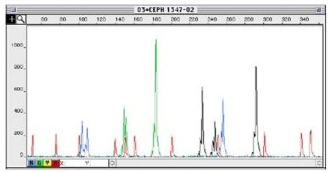
The fragment size is analyzed by labeling the PCR products with a fluorescent dye and then running them through a Sanger capillary sequencer. The fragments will be separated based on size and ideally give clean peaks with low background (Figure 1).

Figure 1. Sample fragment analysis plot (x-axis is time, y-axis is fluorescence intensity) with smaller fragments coming off earlier (more to the left on x-axis). Red peaks represent the molecular size ladder for calibration. Other colors represent fragments labeled with other fluorophores. The ladder also helps you ensure that fragments of different lengths are coming off of the analyzer at similar levels.

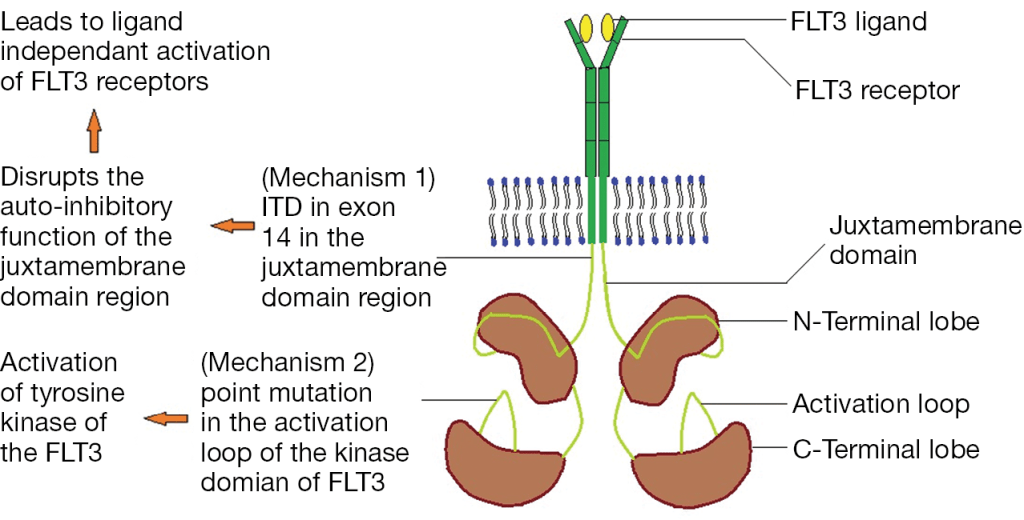
One common application of this assay type is to detect FLT3 internal tandem duplications (ITD). FLT3, Fms Related Tyrosine Kinase 3, is a tyrosine kinase growth factor receptor for FTL3-ligand, and regulates hematopoiesis. Mutations in FLT3 are found in 1/3 of Acute Myeloid Leukemia cases and confer a worse prognosis. FLT3 mutations lead to ligand-independent activation by either disrupting the auto-ihibitory loop of the juxtamembraneous domain through an ITD mutation or by an activating point mutation in the tyrosine kinase domain (TKD) (Figure 2).  

Figure 2. Mechanisms of FLT3 activating mutations through internal tandem duplication (ITD) in the juxtamembraneous domain or activating point mutations in the tyrosine kinase domain (TKD).

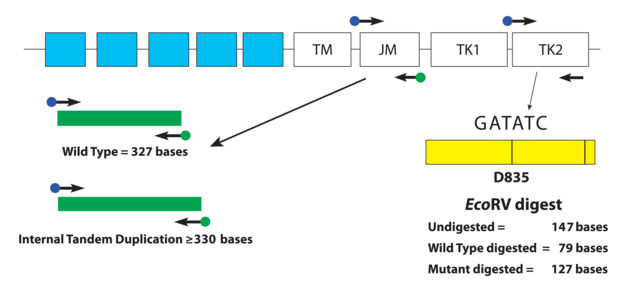
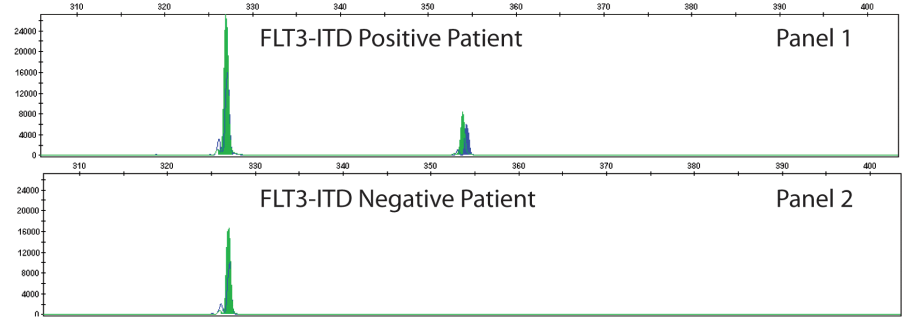
The type of FLT3 mutation is also important as there are tyrosine kinase inhibitors (TKI’s) that are being investigated for use in FTL3+ cases. Type I inhibitors bind FLT3 in the active conformation either in the ATP binding pocket or at the activation loop; these inhibitors are useful for both ITD and TKD mutations. However, Type II inhibitors bind inactive FLT3 near the ATP binding domain, so they affect ITD but not TKD mutations.As the site of ITDs is consistently in exons 14 and 15 of FLT3, primers flanking this region were designed to detect any mutations in this area (Figure 3). As some artifacts can arise from the PCR process and create false positive peaks, a green primer labels PCR products from one direction and a blue primer labels PCR fragments from the other direction, therefore enhancing specificity (Figure 4). A wild type (WT) sequence will thus be 327bp in either direction.

Figure 3. Depicted is a representation of the FLT3 JM region and the activating loop of the kinase domain. Green and blue dots with black arrows represent the relative positions of primers that target the JM region for ITD and yellow dots with black arrows represent the relative positions of the primers that target TKD mutations in the activating loop of the kinase domain. The yellow box has vertical black lines that represent the position of the wild-type EcoRV restriction digest sites. Image adapted from InVivoScribe.
Figure 4. A FLT3-ITD positive case is shown on the top with a longer segment present with both green and blue peaks present confirming a larger PCR product size. This mutation is present in only minority of cells that represent the aberrant AML population. Image adapted from InVivoScribe.

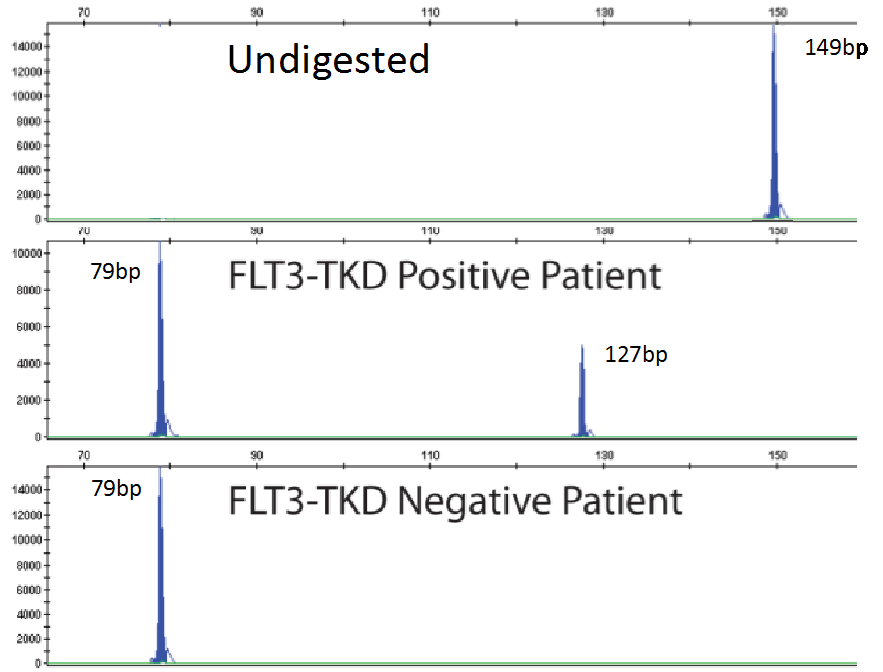
As mentioned previously, fragment analysis is not suited to detecting point mutations as would be found for TKDs. However, the FLT3 assay has overcome this issue. Investigators determined that the TKD point mutation at codon D835 disrupts the endonuclease recognition site of the enzyme ecoRV (Figure 3). Customized primers again produce a unique PCR fragment (149bp long), which when digested with ecoRV will produce a 79bp fragment in wild type FLT3. If a FLT3-TKD mutation is present the ecoRV will not cleave the fragment at this location, but another ecoRV cleavage site (right side of yellow box) will create a 127bp fragment (Figure 5). Without this second cleavage site, an enzyme failure could be interpreted as a mutation. Thus, the enzyme, ecoRV, must be active and only functional at a single site to produce a TKD mutation.

Figure 5. Panels representing PCR fragments that are undigested by ecoRV (top), digested and have a TKD mutation present (middle) and no TKD mutation detected (bottom). Image adapted from InVivoScribe.

References

  1. Daver Naval, Schlenk RF, Russell NH, and Levis MJ. Targeting FLT3 mutations in AML: review of current knowledge and evidence. Leukemia 2019; 33:299-312.
  2. https://invivoscribe.com/products/companion-diagnostics-cdx/. Last accessed December 8th, 2019.
  3. Pawar R, Bali OPS, Malhotra BK, Lamba G. Recent advances and novel agents for FLT3 mutated acute myeloid leukemia. Stem Cell Invest. 2014; 1(3). doi: 10.3978/j.issn.2306-9759.2014.03.03

-Jeff SoRelle, MD is a Chief Resident of Pathology at the University of Texas Southwestern Medical Center in Dallas, TX. His clinical research interests include understanding how the lab intersects with transgender healthcare and improving genetic variant interpretation.

A 54 Year Old with Vomiting and Diarrhea Followed by Pneumonia

A 54 year old male former smoker and alcohol user presented to the Emergency Department with a five day history of nausea, vomiting, diarrhea, weakness, fever with chills, breaking out in sweats, and abdominal discomfort. He denied recent sick contacts, travel or exposure to potentially contaminated foods. He had a past medical history that was significant for Chronic Obstructive Pulmonary Disease (COPD), mitral valve regurgitation and ST elevation myocardial infarction (STEMI). Some of his medications are inhaled Fluticasone, Advair Diskus, Furosemide and Spironolactone. He has also had a mitral valve replacement.

His initial laboratory tests revealed leukocytosis with neutrophilia, non-specific electrolyte derangements and negative stool tests for enteric bacterial pathogens. His symptoms progressed within the first 24 hours of admission, with a decrease in oxygen saturation (SPO2) and dyspnea so further investigations were carried out. Subsequently, a chest X-Ray was done, which showed pneumonia. The patient had a bronchoscopy and bronchoalveolar lavage (BAL) fluid was sent to the laboratory for aerobic, fungal, and acid fast bacilli culture, as well as Legionella spp. and Pneumocystis jiroveci direct fluorescent antigen testing.

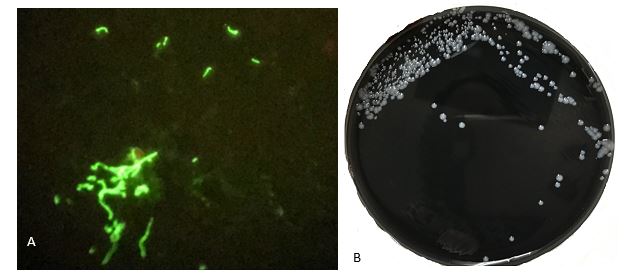
Image 1. Results of Bronchoalveolar Lavage. A. Direct Fluorescence Antibody to Legionella antigens; B. Legionella pneumophilia colonies on Buffered Yeast Charcoal Extract agar plate (BCYE), showing convex, round colonies with entire edges.

Discussion

The presence of pneumonia and diarrhea in the patient raised suspicion for Legionnaires’ Disease, so the patient’s specimens including BAL fluid and bronchial washings were tested by direct fluorescent antigen (Image 1A) which confirmed Legionnaires’ Disease as the diagnosis.

Legionnaires’ Disease (LD), is a form of pneumonia caused by Legionella species, most commonly Legionella pneumophilia. Legionella spp.are motile, obligate aerobic, facultative intracellular and weakly gram negative rods. They are also nutritionally fastidious, requiring specific nutrients such as L-cysteine, and iron. They live in amoebas or in biofilms all over the world and are seen in high concentrations in warm waters plumbing systems, water heaters, warm water spas and cooling towers, and in very low concentrations in freely flowing cold water and biocide-treated waters.1 They are disseminated by devices that aerosolize water such as cooling units, hot tubs, water fountains and showers and cause disease when this contaminated aerosolized water is inhaled. The inhaled bacteria then enter the bacteria-killing macrophages in the lungs. Once in, they hijack the intracellular mechanism of the macrophages, feed off them, multiply within them, and then kill the macrophages, releasing more bacteria into the surrounding tissues.1

The incubation period of Legionella infections is 2 to 14 days, with a median of 4 days. In humans, Legionella spp. causes Legionellosis which comprises two separate diseases. These are Pontiac fever, a mild, self-limited flu-like illness, and LD, an atypical form of pneumonia which affects multiple organs. LD can range from mild to fatal in severity and about 12% of patients die from the disease.1 In most cases, LD begins with fever and symptoms of gastrointestinal infection including diarrhea and vomiting before patients develop respiratory symptoms such as cough and difficulty in breathing. However, LD also involves other organs/systems, causing renal failure and cardiogenic shock. LD occurs world-wide and all-year round but most cases occur between late fall and early spring.1

Although LD is relatively rare in the US, it is believed to be underdiagnosed due to failure to test for Legionella infection, poor sensitivity of test methods used to detect the disease, and failure to report all diagnosed cases.1 However, the rate of reported cases in the US has increased by about 5.5 times in the past 20 years to 7,500 reported cases in 20172, which may be partially attributed to increased and improved testing. 

LD is more likely to occur in people with a suppressed immune system – particularly those on high-dose corticosteroids like Fluticasone, people with chronic lung, heart or kidney diseases, people who smoke or smoked in the past, people who travel, especially overnight travel, people who have received solid organ transplants, and people who use certain medications such as anti-tumor necrosis factor drugs.1 LD is often fatal and survival depends on how severe the pneumonia when treatment starts, the presence or absence of other serious comorbidities, and how early specific treatment for the disease is commenced.1 Therefore, prompt diagnosis is very important to survive LD.

Unfortunately, LD patients often present with nonspecific symptoms as well as chest X-ray, biochemical and hematological laboratory tests results. Therefore microbiological investigations which identify Legionella spp. are crucial in the management of these cases. The most commonly used test method is the Urinary Antigen test which detects the most common cause of Legionnaires’ disease, L. pneumophila serogroup 1. But, it does not detect other potentially pathogenic Legionella species and serogroups. Legionella spp. can also be cultured and identified, but this requires the use of Buffered Charcoal Yeast Extract [BCYE] agar which provides the specific growth requirements of Legionella spp.Common specimens for culture include lower respiratory secretions such as BAL and bronchial washings, lung tissue and pleural fluid. Other methods used to diagnose LD include polymerase chain reaction (PCR), direct fluorescence antibody (DFA), and paired serology. However, the Centers for Disease Prevention and Control, CDC recommends testing with culture and urinary antigen test in combination.2

LD is treated with Azithromycin or Levofloxacin. 95 to 99% of cases can be cured if they are otherwise healthy but treatment is started early.1

References

  1. Edelstein, Paul H. and Lück, Christian. “Legionella.” In Manual of Clinical Microbiology, Eleventh Edition, pp. 887-904. American Society of Microbiology, 2015.
  2. Centers for Disease Control and Prevention. Legionella (Legionnaires’ Disease and Pontiac Fever). https://www.cdc.gov/legionella/clinicians.html. April 30, 2018

Adesola Akinyemi, M.D., MPH, is a first year anatomic and clinical pathology resident at University of Chicago (NorthShore). He is interested in most areas of pathology including surgical pathology, cytopathology and neuropathology–and is enjoying it all. He is also passionate about health outcomes improvement through systems thinking and design, and other aspects of healthcare management. Find him on Twitter: @AkinyemiDesola

-Erin McElvania, PhD, D(ABMM), is the Director of Clinical Microbiology NorthShore University Health System in Evanston, Illinois. Follow Dr. McElvania on twitter @E-McElvania. 

Up in Smoke

Hello again everybody, and welcome back! Last month, I was flattered by a double feature with my post about giving a TEDx talk and Dr. Razzano interviewing me for her global health series. This month, I’d like to address a topic that’s been literally everywhere lately and is just as hard to ignore as…well, second-hand smoke. So, fasten your seatbelts, ensure your seats and tray tables are in the upright position, make sure your biases are stowed in the seat before you, and (of course) please note the no smoking sign as we take off on the topic of vaping!

Image 1. What? I’ve been traveling a lot. There’s inspiration everywhere!

The Smoking Gun

You may have noted that in the past few weeks or months the topic of vaping has been a mainstay of nighttime news stories and front-page print articles. That’s because there’s a lot happening, and from a lot of different angles. It can be messy and confusing, especially because there’s a scientific and non-scientific debate: availability, marketing, health risk, research, and more—all happening at once. I’m going to talk a little bit about all of this, but mostly we’ll look at the medical aspect of vaping as some fantastic publications are making their way into medical journals, including our very own American Journal of Clinical Pathology (AJCP). Recently, friend, colleague, and fellow member of the ASCP Social Media Team and pulmonary pathologist at the Cleveland Clinic, Dr. Sanjay Mukhopadhyay (@smlungpathguy on Twitter) published a noteworthy article with AJCP demonstrating the histopathologic findings of vaping associated lung injury. In essence, vaping causes acute lung injury which is recognized in tissue, supporting the case that both further studies are mandated for health and safety and that vaping should currently be considered a potential critical health risk.

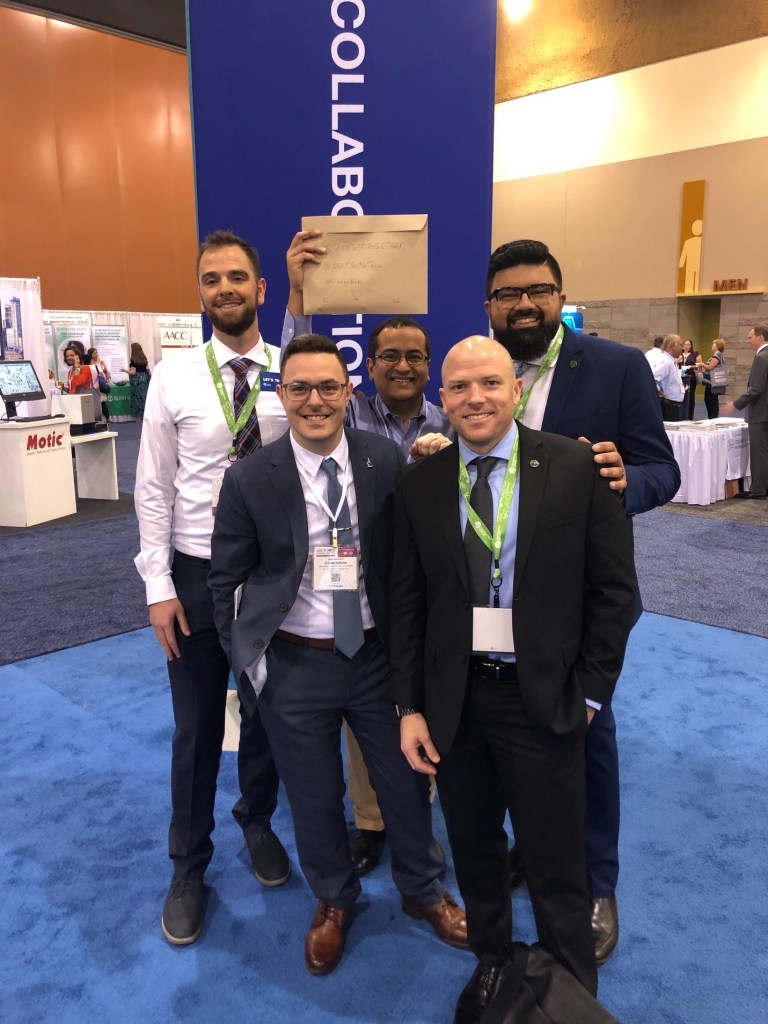
Image 2. About half of the official ASCP Social Media Team (#ASCPSoMeTeam!) from left to right Lab scientist and educator Aaron Odegard (@odie0222), myself (@CEKanakisMD), Dr. Sanjay Mukhopadhyay (@smlungpathguy), famous resident Dr. Adam Booth (@ALBoothMD), and Dr. Kamran Mirza (@Kmirza). If you want updates with great pathology and lab medicine stories and content—follow ALL OF THESE twitter handles!

In this paper, Dr. Mukhopadhyay, et al, tried to capture the direct tissue-related effects of vaping. EVALI, Electronic-Cigarette or Vaping use Associated Lung Injury, has received quite a bit of spotlight in the media as I mentioned. Case series featured in the New England Journal of Medicine (NEJM) highlighted patients in the Midwest with EVALI-type pulmonary disease, but the number of publications on the topic is currently scarce—let alone ones that demonstrate the actual pathophysiology in-process in those affected patients. In the AJCP paper, lung biopsies from a small number of male patients who havdrespiratory illness and concurrent histories of vaping were examined. With all other pulmonary pathology worked up and negative, their biopsies showed various patterns of acute lung injury. The NEJM cases were also worked up and found to be negative for the differentials of pulmonary disease whether infectious, inflammatory, or otherwise; adding credence to a developing body of research supporting the connection between vaping and EVALI.

Image 3. Here’s the mainstay paper I keep referencing. It’s part of a growing number of published works on the topic and part of our expanding understanding of EVALI and its health implications from both public health and pathologic/diagnostic viewpoints.

Where There’s Smoke, There’s…a Lot of Stuff, Actually

There are a ton of stories in the lay-press about vaping-related illnesses. The surveillance data from those NEJM case series and the CDC show a median age of 19 with an overwhelming 94% being hospitalized and roughly two-thirds of those requiring ICU intervention and one-third having to be placed on mechanical ventilation. Of note, 11% of these patients claimed that they vaped pure nicotine product, while 89% smoked cannabinoids/THC in their vape products. Most of them presented to medical care with oxygen saturations <89% on room air (normal O2 sats are variable by patient, but they should be above 95% in ideally healthy individuals). This is neither an endorsement or comment on the medical uses of cannabinoids or a statement on their health effects. Instead, it should be worth mentioning that not only are electronic-cigarette products a new way of smoking higher concentrations of tobacco-obtained or synthetic nicotine but also other products, which have very little data with regard to their associated health risks.

Image 4a. If you haven’t been able to read Dr. Mukhopadhyay’s paper yet, don’t worry I got you. Here are a few cases’ computed tomography (CT) scans that show clinically diagnostic evidence of pulmonary disease visible as (A) ground-glass opacity, GGO, with a pattern that mimics a peripheral eosinophilic pneumonia, (B) more GGOs with areas of consolidation, or solid-looking lung tissue, (C) lower lung GGOs and consolidation with some thickened tissue, and (D) patchy GGOs. All of these cases and more demonstrated some kind of pneumonia and lung tissue pathology but had been worked up and found negative for other causes of disease aside from their shared history of vaping.
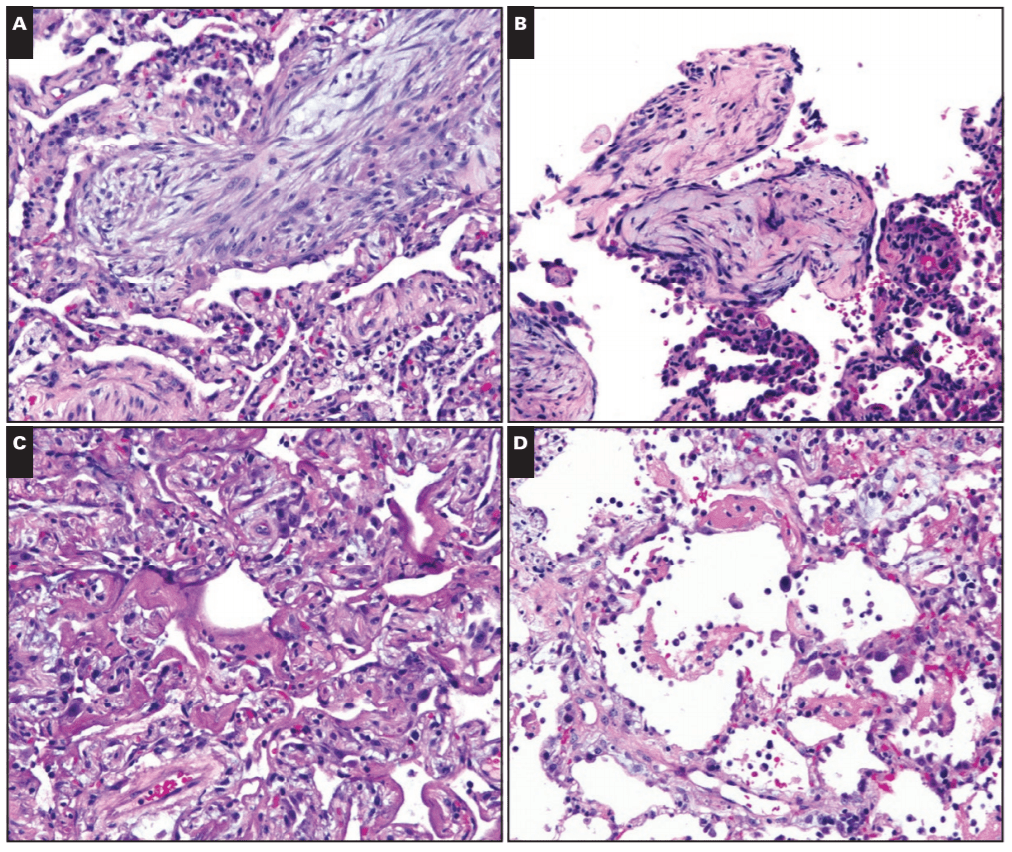
Image 4b. Okay, this is a blog for medical laboratory professionals, right? So here’s some slides for the glass pushers! PLEASE NOTE: this is just a sample of a number of histopathologic findings published in the paper, so to see the rest go to the primary source. I’ve highlighted these images as they demonstrate the two major lung injury patterns seen in the EVALI entity: organizing pneumonia seen in (A) & (B) and diffuse alveolar damage (DAD) seen in figures (C) & (D).

Put This in Your Pipe and (please don’t) Smoke It

Okay, I mentioned cannabinoids. Now that I have your attention, I want to walk you through a unique piece of the EVALI discussion you may have seen in the media: the implication of Vitamin-E substances as a potential culprit for these lung-related injuries. The New York Times recently published a piece that cites the CDC’s consideration of Vit-E Acetate as a “a very strong culprit.” Think about it this way: the aerosol generated by vaping devices can reach very high temperatures (higher than traditional cigarettes), if a substance is inhaled at this temperature, and contains lipid-soluble-contents like Vitamin-E acetate, you’re breathing in a grease fire! Here’s an oversimplification: some studies of vaping came up with a theory that a grease fire would cause injury in the lungs similar to a pattern caused by inadvertent inhalation of mineral oil into the lungs known as “exogenous lipoid pneumonia”. However, when expert lung pathologists including Dr. Mukhopadhyay looked at lung biopsies from EVALI patients, they didn’t find even a single case of exogenous lipoid pneumonia. What does this mean? Not much at this point. It’s certainly possible that vitamin E acetate causes lung damage but not in the way mineral oil does. As the CDC materials state, this is early days if it is indeed a health epidemic (it probably is though, please stop vaping). More research is needed, as always, but you can read the NYT article and CDC primer article here.

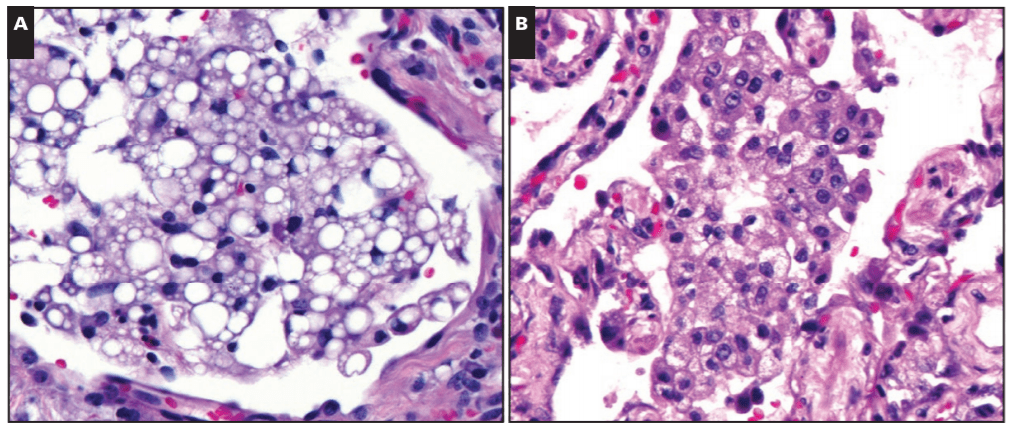
Image 5. Not all that glitters is…Vitamin-E Acetate. The paper includes images of exogenous lipoid pneumonia (not from the cases studied) and endogenous lipoid pneumonia (from an EVALI case) as a comparison. Note that from a tissue standpoint, the lipid- filled macrophages on the right from an EVALI patient do not resemble the lipid-filled macrophages on the left (caused by mineral oil). Sure, there’s lipid in macrophages in the EVALI lung, but is that because a lipid is causing the damage, or because lipid from the membranes of injured cells is being cleaned up by macrophages? Lung pathologists think that the latter is more likely.

Fired Up, Ready to Go and Sending Smoke Signals

So, imagine you’re a vaper. Imagine you started because it helped you quit traditional cigarettes. That’s fantastic, good for you. You’re on the road to smoking cessation and better health! But perhaps the vaping-associated lung injury cases has made you a little defensive. Trust me I learned the hard way as I joined in the discussion earlier this month on a live-tweet pathology journal club on the AJCP article featured here. They happen under the hashtag #PathJC and lots of folks jump into the discussion from different places, institutions, time zones, and across disciplines—but its not just a bunch of pathologists analyzing an article in an academic bubble. Twitter is a public forum and that brings with it public scrutiny and commentary. As such, there were lots of lay people participating in the discussion and many individuals who held a positive opinion of electronic cigarettes. So not only did we have a very comprehensive discussion in the merits and shortcomings of published literature on the topic of EVALI, we also had to field questions and engage in non-jargon conversations with concerned (and sometimes passionate) members of the non-scientific community. Suffice it to say, it’s a tricky tightrope to walk when you’re trying to balance your anti-smoking public health crusade with some good old-fashioned medical education challenged with a sprinkle of vitriol on the most open of forums, the internet. But that’s okay! I strongly think, that in the future of medical practice, those of us in any discipline (but especially pathology and lab medicine) should lead the charge as champions of truth to connect our revered medical data to people in real terms—basically translate translational medicine.

Image 6. Why am I showing you my twitter profile picture? Easy: one of those “incendiary” comments in discussing smoking and vaping in a public forum actually included someone screen capturing my profile and accosting my “smug” pose and taste for esophageal damage in drinking hot coffee, citing poor data references for caffeine related deaths versus that of smoking. How do you deal with this? Calmly, with open honest information and, most importantly, with humility to address the barriers in communication between opposing points of view. Champions of truth, remember? But once you notice you’re talking to folks online who represent companies in the tobacco industry, ABORT MISSION, you went too far, haha! (True story, yikes!)

Once the Smoke Settles

Basically, everything’s going to be okay. There’s always a crisis or an epidemic happening that we have to address with limited data, developing knowledge, and some cohort of representative push back. That’s the nature of public health. But I’ll pull straight from the authors’ conclusion in the AJCP paper and remind you that not only is this just one, single study with very small number of cases to measure clinical outcomes, but further study is needed to support what is just beginning to be a correlation between vaping and lung injury.

TL;DR – it might seem obvious to some that hot smoke burns your lungs, but we’ve got to prove it and take steps to protect our patients everywhere.

And the good news is there are lots of us working on this. Scientists, public health officials, researchers, reporters, medical professionals, and especially pathologists are here collecting data and adding knowledge to that growing body of evidence to address this …hot topic.

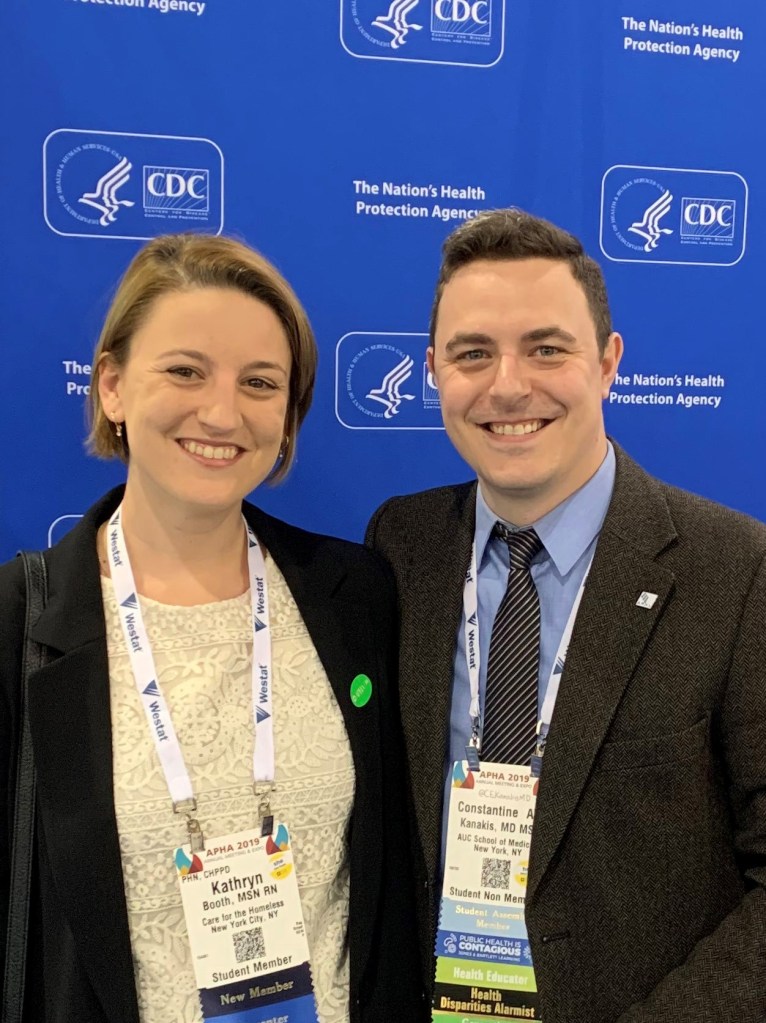
Image 7. Here’s at least two of those people. Spoiler: it’s my wife and me. Here we are the recent American Public Health Association (APHA) conference in Philadelphia where the topic of vaping, smoking, and lung injury were very much in the forefront of public health research as it fits into the context of social determinants of health, medical literacy campaigns, and other concurrently related health issues like asthma and COPD.
Image 8. I actually joined that live tweet #PathJC journal club discussion from the APHA 2019 conference and was lucky enough to have, in-hand, the official EVALI clinical information release from the CDC booth in the expo floor. Check it out on my Twitter feed.

Breathe Easy

What’s past this smokescreen challenge? The same thing as always: hard work, collaboration, innovation, and paradigm shifting. If you’ve read my previous posts, you know I like to wax a bit about the future of medicine and the humanity behind our profession. Taking everything into consideration with this newest and hottest of public health concerns, our role as diagnosticians and translational representatives is as important as ever. And, if we want to ensure the recognized contributions of pathology in the wider field of medicine (and health-at-large) we should work with our colleagues in and out of the medical profession to demystify this kind of research, cleanly communicate health data to the public, and push the boundaries of personalized health and improved patient outcomes. But beware: when you address big topics like smoking, vaping, EVALI, and THC use, it can be easy to get too hot, and even burn out.

Thanks again, see you next time, and hope you had a Happy Thanksgiving!

(This is absolutely stolen from @iHeartHisto on Twitter, but enjoy a slice of pump-skin pie!)

Constantine E. Kanakis MD, MSc, MLS (ASCP)CM completed his BS at Loyola University Chicago and his MS at Rush University. He writes about experiences through medical school through the lens of a medical lab scientist with interests in hematopathology, molecular, bioethics, transfusion medicine, and graphic medicine. He is currently a 2020 AP/CP Residency Applicant and actively involved in public health and education, advocating for visibility and advancement of pathology and lab medicine. Follow him on Twitter @CEKanakisMD

Microbiology Case Study: An Unusual Morphologic Presentation of an Uncommon Dimorphic Fungi in Vermont

Clinical history

A 62 year old woman from the state of Vermont with a past medical history of anxiety, depression, and granulomatous dermatitis presented to her primary care physician for bilateral Achilles tendonitis, bilateral knee effusion, and bilateral conjunctivitis; all of which were self-limited. Additional laboratory work-up from the encounter revealed an incidental 7mm right medial lung nodule with associated unilateral hilar lymphadenopathy. The patient denied any history of using tobacco products but had a remote travel history to Arizona and seasonally visited California. An endobronchial ultrasound guided fine needle aspiration was performed and the on-site evaluation showed abundant necrosis with scattered refractile objects consistent with fungal organisms. Additional tissue was submitted for cytology and fungal cultures.

Laboratory identification

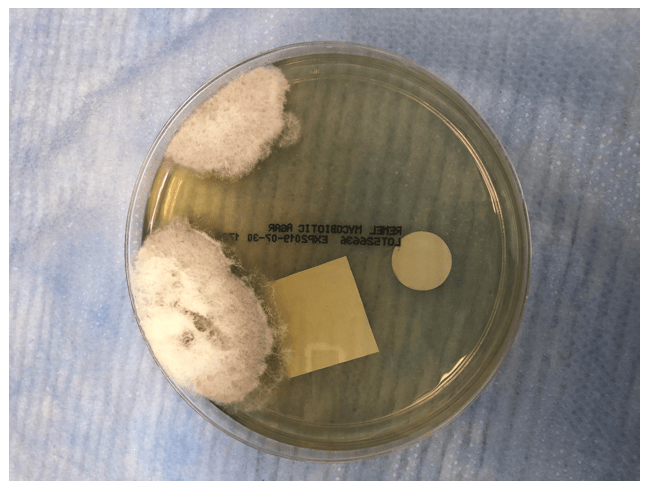
Initial review of the cytology revealed abundant alveolar macrophages and inflammatory cells in a background of necrotic debris. The modified gomori methenamine-silver nitrate(GMS) stain highlighted several variably sized 8-15um broad-based budding yeast with a double contour cell wall (Image 1). Secondary review of the slides showed additional rare large 50-70um thick-walled spherules with 2-4um endospores (Image 2). Following 10 days of incubation there was growth of a fluffy white colony of mold on both the potato flake and mycosel agar plates (Images 3-4). The lactophenol cotton blue adhesive tape preparation highlighted large thick-walled barrel shaped arthroconidia with alternating empty cells (Image 5). A nucleic acid probe definitively identified the organism as Coccidiodes posadasii/immitis.

Image 1. Modified gomori methenamine-silver nitrate (GMS) stain highlighting broad-based budding yeast with a double contour cell wall measuring 12um in greatest dimension (100x oil immersion).
Image 2. Modified gomori methenamine-silver nitrate (GMS) stain highlighting a large 70um spherule with 2-4um endospores. (100x oil immersion).
Image 3. Aerobic growth of a white fluffy mold on potato flake agar plate following 10 days of incubation.
Image 4. Aerobic growth of a white fluffy mold on mycosel agar plate following 10 days of incubation.
Image 5. Lactophenol cotton blue adhesive tape preparation highlighted large thick-walled barrel shaped arthroconidia with alternating empty cells

Discussion

Coccidiodes immitis is a dimorphic fungus commonly found in the Southwestern United States and Central/South America. Immunocompetent patients can develop a self-limited acute pneumonia (Valley Fever) and the diagnosis is frequently under recognized. Immunocompromised patients however, such as those with acquired immunodeficiency syndrome (AIDS) can develop systemic disease with fungal dissemination to the bones, lungs, and skin (1). The estimated risk of exposure in endemic regions is approximately 3% per year with the greatest risk occurring during the dry season (5). Infection typically begins with inhalation of the arthroconidia which then mature in the lungs from barrel shaped cells to enlarging spherules up to 80um in diameter. Mature spherules consist of internal septations with 2-4um endospores which subsequently rupture releasing endospores into infected tissues which can mimic Histoplasma. When large round yeast forms are observed in tissue it is important to maintain a broad differential diagnosis which includes Coccidioides, Blastomyces, Paracoccidioides and in some instances Candida species. Although 8-15um broad-based budding yeast lacking endospores are typically associated with Blastomyces this can also represent germinating Coccidiodes endospores. Within the literature there are case reports describing Coccidioidomycosis infections with unusual in vivo morphologic forms consisting of juxtaposed immature spherules without endospores and germinating endospores (2). These elements on microscopic examination can easily be mistaken for budding cells of Blastomyces. Furthermore Blastomyces can rarely exhibit “giant” multinucleated yeast cells, mimicking Coccidioides (3).  Therefore, as highlighted by our case for accurate differentiation of these two fungi correlation of the patients travel history, fungal cultures, and cytology is recommended. 

In the case of our patient, although she was a resident of Vermont, a growing endemic hotspot for Blastomyces infections, she had additional travel history to Arizona and California increasing her risk for infection with Coccidiodes. Furthermore her urine antigen test for Blastomyces was negative and her fungal culture only grew Coccidiodes as confirmed by the lactophenol cotton blue preparation and nucleic acid probe. In addition, Blastomyces typically take several weeks longer than Coccidiodes to grow on culture and microscopically present with septate hyphae with short or long conidiophores with pear-shaped conidia at the tips of conidiophores (lollipops). Collectively her clinical history and laboratory work up was most suggestive of a Coccidioidomycosis. Although rare and less likely, it is also possible that she may have had a remote or concurrent Blastomyces infection which was unable to grow on culture and could not be definitively excluded.

Typically for immunocompetent hosts, asymptomatic Coccidioidomycosis (Valley fever) infections do not need require treatment. However in the context of this patient’s history of dermatologic and rheumatologic complaints, her systemic course warranted treatment with 6 months of itraconazole (4). Of note, itraconazole is also the treatment of choice for Blastomyces ­infection but would require a shorter 3 months duration of treatment.

References

  1. Saubolle MA, Mckellar PP, Sussland D. Epidemiologic, clinical, and diagnostic aspects of coccidioidomycosis. J Clin Microbiol. 2007;45(1):26-30.
  2. Kaufman L, Valero G, Padhye AA. Misleading manifestations of Coccidioides immitis in vivo. J Clin Microbiol. 1998;36(12):3721-3.
  3. Wu SJ, Valyi-nagy T, Engelhard HH, Do MA, Janda WM. Secondary intracerebral blastomycosis with giant yeast forms. Mycopathologia. 2005;160(3):253-7.
  4. Monaco WE, Batsis JA. A case of disseminated blastomycosis in Vermont. Diagn Microbiol Infect Dis. 2013;75(4):423-5.
  5. Dodge RR, Lebowitz MD, Barbee R, Burrows B. Estimates of C. immitis infection by skin test reactivity in an endemic community. Am J Public Health. 1985;75(8):863-5.

-Noman Javed, MD is a 3rd year anatomic and clinical pathology resident at the University of Vermont Medical Center.

-Christi Wojewoda, MD, is the Director of Clinical Microbiology at the University of Vermont Medical Center and an Associate Professor at the University of Vermont.

Global Health Narratives Interview Series: Meet Dr. Von G. Samedi

Von G. Samedi, MD, PhD, is a cytopathologist at the University of Colorado in Denver, CO. I had the pleasure of meeting Dr. Samedi as a result of the thoughtful introduction facilitated by Dr. Melissa Upton, who thought we should talk given our shared interest in global pathology.

I learned that Dr. Samedi is originally from Haiti and completed his MD, PhD, and pathology training in the US. He has always been interested in global health as part of his personal and professional passion and has spent the last decade dedicating his expertise to improving pathology services in low resource settings. It was readily apparent to me that Dr. Samedi’s approach to the world’s healthcare issues is based in the fact that he views these as shared problems – ones that he can and does help solve. This mindset is reflected in the way he lives his life – admirably contributing to society in any way that he possibly can. I was eager to hear of the opportunities he’s found in order to contribute, so that I might learn and share with all of you the ways that we can all get involved. Read on to discover the inspiring story of someone who has persisted in finding ways to give to the world through service!

Q: When did you first get started working in global health through pathology?

A: I started working with ASCP when I was a 4th year pathology resident in 2010 when they called me to assist their project in Haiti, which was in response to the tremendous damage caused from the earthquake. I had signed up as a potential volunteer on their website prior to this and they reached out to me seeing that I had language proficiency in both French and Creole. I spent 21 days working with them and my residency program allowed me to count this time as an outside elective. Their main goal was to work with the Haiti’s national public health laboratory (Laboratoire National de Santé Publique) and its various national and international partners to set up and run a laboratory in this acute disaster situation, and the hands-on experience I gained in doing this was well worth my program elective time.

After this, ASCP requested that I continue to volunteer with them and since then, I have been working on pathology and laboratory medicine improvement projects at their partner sites all over the world.

Q: Can you tell me about your experiences volunteering with ASCP’s global health initiatives?

A: Working with ASCP at their global partner sites has allowed me to volunteer in a variety of ways which is unique to the needs of each situation. Every trip has been different. In Botswana, I helped process and read the cervical biopsy specimens that had accumulated as a result of a government program to address the high incidence of cervical cancer. The biopsy program was successful except that there weren’t enough pathologists to give results from the tissue samples – so the government reached out to ASCP to help fill the gap in care. In Ukraine, I worked with laboratorians and clinicians in which I helped conduct a workshop on HIV related testing services. In the Ivory Coast, I worked as a part of a mentorship program to assist a newly formed pathology organization gain functional independence. In Rwanda, the project was focused on bringing telepathology services into the laboratory. In Kenya, I worked with ASCP to offer support to the local pathology association. I’ve also returned to Haiti since 2010 and now we’ve shifted away from disaster management and focused on local laboratorian training with the goal of achieving sustainability.

Q: Why do you volunteer to improve global pathology services?

A: Historically, pathology and global health are not thought of as connected, yet without pathology, there is no practice of modern medicine. It is the same anywhere in the world as it is in the US, you must have a functioning pathology laboratory in order to effectively deliver health care. Once you understand this, you understand the need that exists in low- and middle-income countries where there is ample opportunity to serve and give back. Doing so gives me a sense of purpose and it is not just a one-way relationship, as I also benefit from interacting with my global colleagues and learning from them. What I have seen my colleagues do with so few resources is impressive and inspiring.

Q: How do you fit volunteering into your schedule?

A: My volunteering experiences have ranged anywhere between 3 to 21 days. I prioritize this work and have been fortunate to work for departments that support it, often allowing me to use professional time and vacation time to work on these projects.

Q: What advice would you give someone new to engaging in global health?

A: The key is to focus on building relationships for the long term. Be patient, flexible, and realize that what you want to accomplish may not happen in the first or even the second visit. Sometimes things just don’t go as planned and you have to keep working and go with the flow. If anyone in laboratory medicine is looking for volunteering opportunities, reach out to ASCP and volunteer to get involved – you can travel to their partner sites, volunteer to read cases through their telepathology program, or serve on ASCP’s global health committees. There’s a way for everyone and anyone working in laboratory medicine to get involved, no matter what your specialty and capacity to serve is.

-Dana Razzano, MD is a former Chief Resident in her fourth year in anatomic and clinical pathology at New York Medical College at Westchester Medical Center and will be starting her fellowship in Cytopathology at Yale University in 2020. She is passionate about global health and bringing pathology and laboratory medicine services to low and middle income countries. She was a top 5 honoree in ASCP’s Forty Under 40 in 2018 and was named to The Pathologist’s Power List of 2018 and 2019. Follow Dr. Razzano on twitter @Dr_DR_Cells.

The Best Gift of the Season: A Gift of Self

We few, we happy few, we band of brothers;

For he today that sheds his blood with me

Shall be my brother.

Henry V (Act 4, scene 3), Shakespeare.

Good morning! We’re entering the holiday season, and it’s an exciting time for all. I love seeing the ethnic and cultural diversity as we all celebrate our favorite holidays with family and friends. I myself look forward to the holiday season. It’s a festive time and a season of giving and sharing. It’s a favorite time of year to share traditions and create new ones. However, at a time when stores have Christmas candy on the shelves, holiday lights up and holiday music playing on the day after Halloween, I feel a bit rushed and want to slow down and find better ways to celebrate and enjoy the season. Over the past few years I have been making a special effort to become more environmentally conscious; remembering my reusable bags at stores, purchasing more reusable products, and reusing, recycling, and upcycling whenever I can. I belong to a community ‘buy nothing’ group and am warmed by the generosity of strangers to others in the community. It’s wonderful to give from our abundance and to receive wish list items from neighbors without having to exchange money. And it’s great for the environment, too. Used items are being put to use by others, and not into landfills. People in the community have asked for or gifted furniture, clothing, tools, toys and many other goods and services. I have gifted no longer needed clothing, household items, excess fabric from my fabric stash, and donated my time to participate in a career fair at a local high school. I have been given a car set for my grandchildren when they visit, toys, and someone even loaned me a bike trailer so we could take my granddaughter out for a bike ride. The generosity makes it feel like the holiday season all year round.

So, you may be asking, “where is this blog going?” I saw a memo from Red Cross this week that there is a critical need for blood and platelets and thought that giving to our community with the gift of blood would be a wonderful way to make this holiday season even better! It’s one of the most generous gifts we can give, and costs nothing. Every 2 seconds in the US, someone needs a blood product. That’s about 36,000 units of red blood cells, 7,000 units of platelets and 10,000 units of plasma needed every day. 21 million blood products are transfused every year.1 That’s a lot of blood. And, these blood products cannot be manufactured, so must come from volunteer donors.

In the US, we need to collect about 13,000 units a day to meet demand. Approximately 14 million units of whole blood are collected each year from roughly 7 million donors.1 The blood is processed into components and used in the treatment of surgical, obstetric, oncology, and other patients. One unit of whole blood can be made into up to 3 components and used to help up to 3 patients. Yet, even with all these donations we still cannot keep up with demand. Weather, holidays, illness and travel can all affect blood donations. Shortages are not just apparent during the winter holiday season. This past summer, the Red Cross announced a critical blood shortage around the July 4th holiday. Compared to other weeks, there were 17,000 fewer blood donations during the week of July 4th. As of July 9, the Red Cross had less than a three-day supply of most blood types and less than a two-day supply of Type O blood. 2 During the summer, and particularly during the holiday week, people are busy with other activities or traveling. In the winter, busy schedules, holiday travel, winter weather and seasonal illnesses contribute to fewer blood and platelet donations. Severe weather can also cause the cancellation of blood drives which greatly impact the blood supply.

Some people donate blood because they see this critical need and hear the calls for blood. Others donate because a classmate or friend asked them to. Some people feel it’s their civic duty. For some, it just makes them feel good to help another person. And, others donate for the cookies and tee shirt. Yet, for all donors, it is a form of volunteerism and giving to the community. But, did you know that, other than the benefits from helping others, there are benefits to the donor, as well? Helping others can improve our emotional and physical health. It can help reduce stress, improve emotional well-being and help people feel a sense of belonging. A study conducted in Sweden concluded that regular blood donors enjoy better than average health.Blood donors had an overall mortality 30% lower and a cancer incidence 4% lower than the control population.3 Donating blood may help reduce high iron stores, a risk factor for heart attack. In addition, there have been several studies over the past few years, exploring the hypothesis that regular blood donations may help in the management of hypertension and high cholesterol.

Another interesting benefit of blood donation is being able to contribute to science and research. For example, there is currently a study being conducted on donor blood to test an investigational nucleic acid test for Babesia microti. Babesia microti is responsible for most transfusion-transmitted babesiosis cases in the United States, but there is no licensed test for screening for B. microti in donated blood. Participation in this study can help obtain FDA approval for a screening test. By giving your consent to use your blood sample, there is no additional blood taken and no further time commitment, but you can help protect the public health by supporting the development of a new blood safety test.

How can we, as individuals, help? About 38% of the population is eligible to donate blood, but less than 10% of the population actually donates. To be eligible to donate, you should be in good general health and feeling well. You must be at least 17 years old in most states (16 years old with parental consent in some states) but there is no age limit to donation. Adult doors must weigh 110 lbs, but there are additional height and weight requirements for donors 18 years old and younger. There have also been some recent changes to blood donor requirements. I will not be able list all of them here, but some of them don’t change a deferral, only the reasoning behind the deferral. One of the most prominent changes is, as of 2016, the indefinite deferral for men who have had sex with men, has been changed to a 12 month deferral since the last sexual contact with another man . Also changed is the minimum hemoglobin for male donors. This has been raised from 12.5g/dl to 13.0 g/dl. Until this time, the cutoff was the same for both males and females. Males with a Hgb below 13.0 g/dl are considered anemic and are no longer eligible to donate blood. On the other hand, the criteria for females to be mildly anemic is a Hgb below 12.0 g/dl, so females between 12.0 g/dl and 12.5 g/dl, though not considered anemic, are still not eligible to donate. The minimum hemoglobin for females has not changed and remains 12.5 g/dl. To review other eligibility requirements, visit https://www.redcrossblood.org/donate-blood/how-to-donate/common-concerns/first-time-donors.html

So, in this busy season, we often find ourselves with little time to get our own “to do” lists done, yet alone volunteer our time for others. But most of us would welcome an hour to reduce stress and improve our emotional well-being. Please consider a gift of self this season. It takes about an hour of your time, you get to sit and relax with your feet up, to feel good about yourself, and you’ll even get a snack!

Happy Holidays!

References

  1. redcrossblood.org
  2. https://news.azpm.org/p/news-splash/2019/7/19/155196-fourth-of-july-donation-slowdown-leads-to-blood-shortage/
  3. Edgre, G et al. Improving health profile of blood donors as a consequence of transfusion safety efforts. Transfusion. 2007 Nov;47(11):2017-24.
  4. Kamhieh-Milz S, et al.Regular blood donation may help in the management of hypertension: an observational study on 292 blood donors. Transfusion. 2016 Mar;56(3):637-44. doi: 10.1111/trf.13428. Epub 2015 Dec 8.

-Becky Socha, MS, MLS(ASCP)CM BB CM graduated from Merrimack College in N. Andover, Massachusetts with a BS in Medical Technology and completed her MS in Clinical Laboratory Sciences at the University of Massachusetts, Lowell. She has worked as a Medical Technologist for over 30 years. She’s worked in all areas of the clinical laboratory, but has a special interest in Hematology and Blood Banking. When she’s not busy being a mad scientist, she can be found outside riding her bicycle.

Vitamin D: An Overview

Introduction

Vitamin D is one of the most commonly ordered laboratory tests in the primary care setting, as well as one of the most widely used forms of dietary supplementation today. While the rationale underlying vitamin D testing and supplementation for deficiency may seem straightforward, in actuality, the metabolism and physiologic functions of vitamin D in the body are quite nuanced and complex, and there remains significant controversy surrounding the appropriate utilization of vitamin D measurement and clinical interpretation of vitamin D test results. In this post, let’s review the basic principles of vitamin D metabolism, its function and mechanisms of regulation in the human body, methods of measurement in the laboratory, and ramifications of vitamin D values on clinical decision-making and management.

Vitamin D Metabolism

Vitamin D is a fat-soluble vitamin and encompasses a group of compounds, all containing a four-ring steroid backbone. The two main forms of vitamin D utilized by humans are vitamin D3 (cholecalciferol) and vitamin D2 (ergocalciferol). Vitamin D3 is primarily synthesized in the skin from 7-dehydrocholesterol in the presence of sunlight (UVB rays), while vitamin D2 is synthesized in plants from ergosterol and is used to fortify many foods (milk, bread, cereal, etc.).1

Once synthesized in the skin or ingested from the gastrointestinal tract, both vitamin D2 and vitamin D3 travel in the bloodstream (bound to vitamin D-binding protein) to the liver, where both are converted to 25-hydroxyvitamin D [25(OH)D, calcidiol/calcifediol] by the action of 25-hydroxylase.1,2 While 25(OH)D has only limited biologic activity, it has a very long half-life (2-3 weeks) and is therefore the primary form of vitamin D found in the blood.1 Notably, the half-life of 25(OH)D2 is shorter than that of 25(OH)D3 (possibly due to lower affinity to vitamin D-binding protein) and therefore it is present in significantly lower concentrations than 25(OH)3 in the blood.3

25(OH)D is then further converted to 1,25-dihydroxyvitamin D [1,25(OH)2, calcitriol] via the action of 1-α-hydroxylase primarily in the kidney.1 In contrast to 25(OH)D, 1,25(OH)2D is the biologically active form of vitamin D, but it has a much shorter half-life (5-8 hours) and therefore has much lower circulating levels in the blood.1 25(OH)D may alternatively be converted to 24,25-dihydroxyvitamin D [24,25(OH)2D] by 24-α-hydroxylase, also in the kidney. 24,25(OH)2D is an inactive metabolite and thus serves as an end-product in this degradation-type pathway of 25(OH)D.1,4

Vitamin D Physiology

The overall effect of vitamin D in the body is to increase calcium and phosphate levels in the blood. Via binding of 1,25(OH)2D to nuclear receptors within cells, it acts at three main sites: 1) the intestine, where it increases calcium and phosphate absorption, 2) the bones, where it increases calcium resorption by promoting osteoclast maturation, and 3) the kidney, where it increases calcium reabsorption by enhancing the effects of parathyroid hormone (PTH) on the distal convoluted tubule.1

Conversion of 25(OH)D to 1,25(OH)2D by 1-alpha-hydroxylase is tightly regulated by calcium, phosphate, and PTH concentrations in the body. Decreased calcium or phosphate levels, or increased PTH levels in the blood (most commonly resulting from a fall in calcium) will stimulate 1-α-hydroxylase activity and lead to increased production of 1,25(OH)2D, while increased calcium or phosphate levels or decreased PTH levels will suppress 1-α-hydroxylase activity and thus lead to decreased production of 1,25(OH)2D.1,2

From a clinical perspective on vitamin D physiology, there are numerous causes of abnormal vitamin D levels in the body. Here are some common causes of low vitamin D levels:

  • Inadequate intake of vitamin D (whether from diet, inadequate sunlight, or malabsorption)
  • Decreased PTH (hypoparathyroidism, hyperphosphatemia, hypercalcemia of malignancy)
  • End-organ resistance to PTH (pseudohypoparathyroidism)
  • Decreased 1-α-hydroxylase activity (renal failure, vitamin D-dependent rickets type 1)5

Conversely, causes of high vitamin D levels are listed below:

  • Excessive intake of vitamin D (usually from supplements)
  • Increased PTH (primary hyperparathyroidism)
  • Increased extrarenal 1-α-hydroxylase activity (seen in granulomatous diseases such as sarcoidosis, as well as some lymphomas)
  • End-organ resistance to vitamin D (vitamin D-dependent rickets type 2)5

Vitamin D Measurement in the Laboratory

25(OH)D is the most commonly measured vitamin D metabolite in laboratory assays, since (as mentioned above) it has a longer half-life and a larger concentration in the blood compared to 1,25(OH)2D. In addition, its concentration does not fluctuate as significantly as that of 1,25(OH)2D, since its production from 25-hydroxylase in the liver is not so tightly regulated as 1-α-hydroxylase activity in the kidney.1,6 Nevertheless, 1,25(OH)2D measurement is indicated in a few specific clinical circumstances, including workups for idiopathic hypercalcemia and bone/mineral disorders, and for evaluation of vitamin D status in the setting of renal failure (where 1-α-hydroxylase activity is decreased).1,7

While the gold standard for vitamin D measurement is liquid chromatography coupled to tandem mass spectrometry (LC-MS/MS), most laboratories utilize immunoassays (including radioimmunoassays, chemoluminescent immunoassays, and enzyme-linked immunoassays) for vitamin D quantitation.1,7 One significant difference between these two methods is that while LC-MS/MS can differentiate vitamin D3 and vitamin D2 metabolites, immunoassays cannot.6 In addition, the antibodies used in many 25(OH)D immunoassays often have lower cross-reactivities with 25(OH)D2 and therefore may underestimate this form when giving the total 25(OH)D value.6 These antibodies also have varying cross-reactivities with other vitamin D metabolites and so may result in an overestimation of the total 25(OH)D due to positive interference from these metabolites.6

Another advantage of the LC-MS/MS method is that it can detect C3 epimers of 25(OH)D, while immunoassays cannot.8 The physiologic significance of these epimers has not yet been clearly delineated, but recent evidence has shown that while these epimers do not affect calcium concentrations, they do contribute to suppression of PTH levels.8 In addition, while these epimers comprise a low proportion (about 2-3%) of the overall 25(OH)D concentration in adults, they have been found in significantly higher proportions (up to 60%) in infant and pediatric populations.8,9 Thus, the detection of these epimers (and their quantitation, which is possible through high-performance LC-MS/MS) may be more important in these patient populations.

Interpretation of Vitamin D Results

The optimal serum levels of 25(OH)D are not universally established. First of all, levels vary with factors affecting sunlight exposure including latitude, skin pigmentation, and sunscreen use.1 Levels also demonstrate significant seasonal variation, with winter measurements up to 40-50% lower than summer measurements.1 Recommended minimum 25(OH)D levels for optimal bone health differ among various national organizations and generally range from 20 ng/mL to 30 ng/mL; as mentioned above, these thresholds are controversial and there is no established consensus.10-12

Vitamin D deficiency is very common, with the majority of patients exhibiting no clinical symptoms and normal calcium and phosphate concentrations. However, a significant proportion of these asymptomatic patients will have increased PTH levels and concomitant increased risk of osteopenia/osteoporosis and fractures; therefore, all patients with vitamin D deficiency should be treated with repletion.13 If deficiency is severe and persistent, bone demineralization with rickets (in children) and osteomalacia (in adults and children) can develop. In contrast, vitamin D toxicity is very rare and is usually associated with over-supplementation; patients develop hypercalcemia with related symptoms including confusion, muscle weakness, nausea and vomiting, and polydipsia and polyuria.14

Recent studies have linked vitamin D deficiency (usually with residency at higher latitudes) to a wide variety of clinical disorders ranging from autoimmune diseases (multiple sclerosis, rheumatoid arthritis, type I diabetes), to cancers (including colon, breast, and prostate), to psychiatric illnesses (schizophrenia, depression), and cardiovascular disease (including hypertension and congestive heart failure).15 Whether these links possess a causal basis or are merely associative needs to be further investigated. Nevertheless, what is certain is that understanding the functions of vitamin D in the body and methodologies of vitamin D measurement in the laboratory is crucial in appreciating its clinical significance and various, ever-expanding applications in disease pathophysiology and management.

References

  1. McPherson RA, Pincus MR. Henry’s Clinical Diagnosis and Management by Laboratory Methods. Elsevier Health Sciences; 2017.
  2. Brown AJ. Regulation of vitamin D action. Nephrology, dialysis, transplantation: official publication of the European Dialysis and Transplant Association-European Renal Association. 1999 Jan 1;14(1):11-6.
  3. Armas LA, Hollis BW, Heaney RP. Vitamin D2 is much less effective than vitamin D3 in humans. The Journal of Clinical Endocrinology & Metabolism. 2004 Nov 1;89(11):5387-91.
  4. Cashman KD, Hayes A, Galvin K, Merkel J, Jones G, Kaufmann M, Hoofnagle AN, Carter GD, Durazo-Arvizu RA, Sempos CT. Significance of serum 24, 25-dihydroxyvitamin D in the assessment of vitamin D status: a double-edged sword?. Clinical chemistry. 2015 Apr 1;61(4):636-45.
  5. Clarke W. Contemporary practice in clinical chemistry. Amer Assn for Clinical Chemistry; 2016.
  6. Zerwekh JE. Blood biomarkers of vitamin D status. The American journal of clinical nutrition. 2008 Apr 1;87(4):1087-91.
  7. Hollis BW. Assessment and interpretation of circulating 25-hydroxyvitamin D and 1, 25-dihydroxyvitamin D in the clinical environment. Endocrinology and Metabolism Clinics. 2010 Jun 1;39(2):271-86.
  8. Lutsey PL, Eckfeldt JH, Ogagarue ER, Folsom AR, Michos ED, Gross M. The 25-hydroxyvitamin D3 C-3 epimer: distribution, correlates, and reclassification of 25-hydroxyvitamin D status in the population-based Atherosclerosis Risk in Communities Study (ARIC). Clinica chimica acta. 2015 Mar 10;442:75-81.
  9. Singh RJ, Taylor RL, Reddy GS, Grebe SK. C-3 epimers can account for a significant proportion of total circulating 25-hydroxyvitamin D in infants, complicating accurate measurement and interpretation of vitamin D status. The Journal of Clinical Endocrinology & Metabolism. 2006 Aug 1;91(8):3055-61.
  10. Del Valle HB, Yaktine AL, Taylor CL, Ross AC, editors. Dietary reference intakes for calcium and vitamin D. National Academies Press; 2011 Apr 30.
  11. Vieth R. What is the optimal vitamin D status for health?. Progress in biophysics and molecular biology. 2006 Sep 1;92(1):26-32.
  12. American Geriatrics Society Workgroup on Vitamin D Supplementation for Older Adults. Recommendations abstracted from the American geriatrics society consensus statement on vitamin D for prevention of falls and their consequences. Journal of the American Geriatrics Society. 2014 Jan;62(1):147-52.
  13. Valcour A, Blocki F, Hawkins DM, Rao SD. Effects of age and serum 25-OH-vitamin D on serum parathyroid hormone levels. The Journal of Clinical Endocrinology & Metabolism. 2012 Nov 1;97(11):3989-95.
  14. Ozkan B, Hatun S, Bereket A. Vitamin D intoxication. Turk J Pediatr. 2012 Mar 1;54(2):93-8.
  15. Holick MF. Vitamin D deficiency. New England Journal of Medicine. 2007 Jul 19;357(3):266-81.

-Michelle Lin, MD, is a second-year anatomic and clinical pathology resident at Houston Methodist Hospital in Houston, Texas.

Personalized Medicine and Precision Medicine

There are often new buzzwords flying around that everyone uses, but few actually understand what they mean. Personalized and precision medicine are two of these terms that are often used interchangeably. Every lab wants to say they are performing personalized medicine. And to be fair we really do all provide personalized medicine in some form. Almost all lab results are used to customize the treatment for patients. However these buzzwords are used to refer to tests that describe linking genetic, lifestyle, or environmental information with predicted response to treatment. Precision medicine may be the more accurate term to describe identifying effective treatment for the right patient at the right time based on genetic, lifestyle, or environmental information. The term personalized medicine may give the false impression that therapies were developed specifically for the patient, when really they are developed to target a specific genotype or phenotype.

One example of precision medicine being used clinically today is in oncology. Many cancer drugs now require an associated test to determine the presence or absence of a specific biomarker to determine which patients are likely respond to the therapy. The biomarker tests that are linked to a specific therapy are called companion diagnostics. Biomarkers analyzed can be a specific protein or gene such as programmed death ligand-1 (PD-L1) or epidermal growth factor receptor (EGFR) or they can be much broader such as tumor mutational burden (TMB) or immune signatures. Identifying biomarkers that determine which patients are likely to respond to therapy and only giving patients with the biomarker the drug increases response rates to the therapy and may decrease side effects. More than half of the clinical trials for cancer drugs in 2018 were linked to a specific biomarker. Linking drug selection with specific laboratory tests is causing an increased need for multidisciplinary collaboration among pathology, oncology, and the laboratory.

In our lab we perform precision medicine using PCR or NGS assays to analyze patient’s tumor for specific genes. Although we still perform single gene testing when ordered, most of our cases are analyzed by a NGS panel. NGS panel testing allows us to look at numerous biomarkers with one test. This decreases the cost, time and tissue utilized to determine the patient’s biomarker status. Our NGS panel analyzes 52 genes to look for mutations that would indicate a patient is likely to respond to a targeted therapy. Most of our oncology testing is done on lung, colon, and melanoma specimens, although the panel is validated for most solid tumors. The report that we issue the oncologist provides clear information on which therapies the patient is likely to respond to or likely to be resistant to based on their tumor’s genetic profile. We also include information in the report to match patients to clinical trials. Precision medicine utilizing panel NGS testing for predicted response to treatment is becoming standard of care for many solid tumors.  

-Tabetha Sundin, PhD, HCLD (ABB), MB (ASCP)CM,  has over 10 years of laboratory experience in clinical molecular diagnostics including oncology, genetics, and infectious diseases. She is the Scientific Director of Molecular Diagnostics and Serology at Sentara Healthcare. Dr. Sundin holds appointments as Adjunct Associate Professor at Old Dominion University and Assistant Professor at Eastern Virginia Medical School and is involved with numerous efforts to support the molecular diagnostics field.