History of Generations: Gen X

Generation X stands out from other generations in a few ways. This generation is an integral part of the current work force, but both the previous generation (Baby Boomers) and the next generation (Generation Y) are significantly larger. Because they are sandwiched between these two, Generation X will never be the largest generation at work, but they still have a significant influence.

Generation X is the first generation in which their parents either both worked outside of the home in large numbers or were raised in single-parent households. This had a lot to do with the fact that divorce was becoming more common in the Western world and more women started to work outside the home. These children thus grew up a lot more independent and are known in the United States as “latch-key kids” because they would come home from school to an empty house. They started their school years without computers, but many finished their schooling with computers so they were raised in the transition phase from the information to the digital age.

This generation also grew up during significant events that shaped our world today. Some examples are the Cold War, the Challenger disaster, Chernobyl, the Berlin Wall, the release of Nelson Mandela.

Generation X is known for being very entrepreneurial, partly because of their cynical attitude towards large companies who failed their parents, and partly because of their independence, adaptability, and flexibility. Their desires are focused on the smaller scale; for example, they want to save their neighborhood, not the world. Typically, Generation X marry later in life, sometimes after cohabitating, and are quicker to divorce. They see values as a relative concept but they have a strong belief that people should be open-minded and tolerate everyone.

 

lotte-small

-Lotte Mulder earned her Master’s of Education from the Harvard Graduate School of Education in 2013, where she focused on Leadership and Group Development. She’s currently working toward a PhD in Organizational Leadership. At ASCP, Lotte designs and facilitates the ASCP Leadership Institute, an online leadership certificate program. She has also built ASCP’s first patient ambassador program, called Patient Champions, which leverages patient stories as they relate to the value of the lab.


Hello everyone.  It’s your baby-boomer, Catherine, again.  I’d like to share with you my experience of what it’s like to be the parent of children from the Gen X generation, and working with a Gen Xer.

As with most of our generations, there are varying dates of when the generation started and when it ended, so let’s make it simple and go with the mid 1960’s as the start of the Gen Xer’s, ending in the early 1980’s.

Parenting Gen Xers 

I’m the proud parent of two Gen Xers. My son Mitch is 45 years old, and my daughter Katie is 42. Just because they are sandwiched between two of the largest generations, don’t underestimate the Gen X generation!  As I researched generations and was writing a course on generations, (“DeCoding American Generations”), it became clear that my children shared in the experiences of this richly gifted generation.

This generation is often referred to as the “latchkey generation.”  My children, Mitch and Katie, were the typical grammar school Gen Xers because I was one of those divorce statistics.  As a single mom, they came home from school every day with their house key in hand.  They learned responsibilities, became very independent, and became street smart.

The Gen Xers were the first to introduce the other generations to the concept of work-life balance. Both Mitch and Katie place a high value on quality of life.  Over the years, both of them have moved from higher paying jobs to lesser paying jobs in order to improve the quality of their family life.

What I’ve learned working with Gen Xers

As a “Boomer,” my greatest learning from the Gen Xers is the importance of work-life balance. In my current position at ASCP, I’ve had the privilege of working with people of this gifted generation.  They not only walk the talk of work life balance; they encourage others to do the same. I’ve listened to their stories and they’re not afraid to change jobs or careers, which is so different from their Baby Boomer parents.  It is often written that they acquired a cynical attitude toward corporate America because of the diminished employee loyalty their parents experienced. However, the Gen Xer took the high road and overcame the fear of changing jobs.  They took what they learned through their childhood and developed courage, the kind of courage that it takes to receive feedback and be the forever continual learner.  I’ll always be grateful to co-workers like Carroll, who would walk by my office at 5:30 at night “tapping her watch.”  She sent the Gen X message that life is about more than just work.


Stakenas-small

-Catherine Stakenas, MA, is the Senior Director of Organizational Leadership and Development and Performance Management at ASCP. She is certified in the use and interpretation of 28 self-assessment instruments and has designed and taught masters and doctoral level students.  

Hematopathology Case Study: An 85 Year Old Man with Pancytopenia

Case History

An 85 year old man presented with pancytopenia and weakness. His labs include WBC of 3.2, HgB of 9.9 and platelets of 137.

Bone Marrow Biopsy

hairycellbm10x
Bone Marrow Aspirate, 10x
hairycellbm40x
Bone Marrow Aspirate, 40x
hairycellcore10x
Core Biopsy, 10x
hairycellcore40x
Core Biopsy, 40x

Flow Cytometry

hairycellflow

hairycellplasmacell

hairycellplasmacellgate

Diagnosis

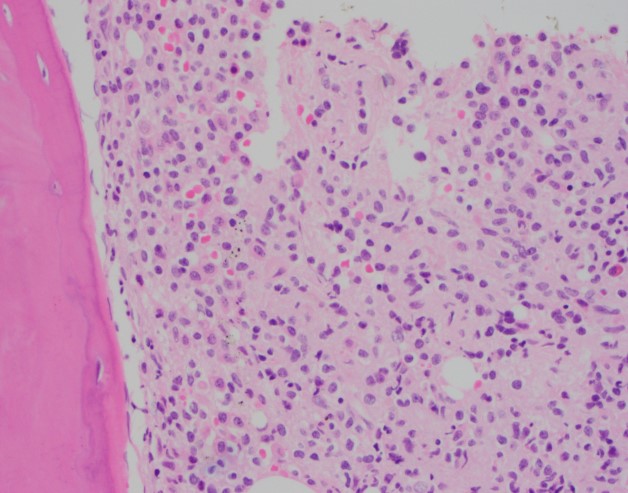
The bone marrow aspirate shows multiple cellular spicules with a prominent population of lymphoid cells with oval to reniform nuclei, dispersed chromatin and abundant pale cytoplasm. Scattered plasma cells are also present.

The core biopsy shows an infiltrating population of atypical lymphocytes with moderate amounts of pale eosinophilic cytoplasm and mature chromatin that stain positive for CD20. Frequent mononuclear cells consistent with plasma cells are also seen scattered throughout the bone marrow and stain positive for CD138.

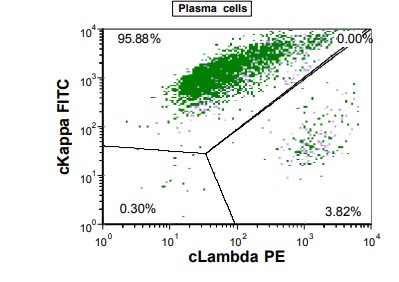
Flow cytometry revealed that 80% of the lymphoid gate represented a kappa light chain restricted population that co-expressed B-cell markers CD19, CD20 and CD22 along with classic hairy cell leukemia specific markers CD11c, CD25 and CD103. A second population of kappa restricted cells fell in the plasma cell gate. The cells co-expressed CD138, CD56 and were largely negative for CD19 and CD20.

Overall, there is a hypercellular bone marrow with a prominent mononuclear lymphoid infiltrate consistent with hairy cell leukemia and a concurrent population of plasma cells consistent with plasma cell neoplasm.

Discussion

Hairy cell leukemia is a rare lymphoid neoplasm that accounts for only 2% of lymphoid leukemias. Patients tend to be in their 50s-60s with a 4:1 male predominance. The tumor is generally found in the bone marrow and spleen with rare circulating cells in the peripheral blood. Patients are generally cytopenic at presentation and symptoms include weakness and fatigue. Splenomegaly is common and hepatomegaly can also be seen.. 1

Hairy cell leukemia involves the clonal expansion of B-cells with a unique immunophenotypic profile. They are bright for CD19, CD20, CD22 and CD200, negative or dim for CD5, CD23 and CD10 and positive for CD11c, CD103, CD123 and CD25. Hairy cell leukemia must be distinguished from two provisional entities, hairy cell leukemia-variant and splenic diffuse red pulp lymphoma. These two entities do not have the classic morphology or staining profile of hairy cell leukemia.2

BRAF V600E mutations are detected in more than 80% of cases of classic hairy cell leukemia. The mutation is considered to be a driver mutation, but additional mutations are usually present that lead to disease progression. Hairy cell leukemia-variant is usually negative for BRAF mutations and has a more aggressive clinical course.3

Patients with hairy cell leukemia are given purine analogues as first line treatment and generally do well. However, patients who do not respond or who undergo relapse have few options. Increasingly, BRAF V600E inhibitors are being used for patients with hairy cell leukemia. Multiple studies have now confirmed the efficacy of vemurafenib and dabrafenib, however patients can be quick to relapse once off the drugs. Combination approaches should be considered for the most effective treatment. 4

References

  1. Swerdlow SH, Campo E, Harris NL, et al. WHO Classification of Tumours of Haematopoetic and Lymphoid Tissues (Revised 4th edition). IARC: Lyon 2017.
  2. Troussard X, Cornet E. Hairy cell leukemia 2018: Update on diagnosis, risk‐stratification, and treatment. American Journal of Hematology. 2017;92(12):1382-1390. doi:10.1002/ajh.24936.
  3. Maitre E, Bertrand P, Maingonnat C, et al. New generation sequencing of targeted genes in the classical and the variant form of hairy cell leukemia highlights mutations in epigenetic regulation genes. Oncotarget. 2018;9(48):28866-28876. doi:10.18632/oncotarget.25601.
  4. Roider T, Falini B, Dietrich S. Recent advances in understanding and managing hairy cell leukemia. F1000Research. 2018;7:F1000 Faculty Rev-509. doi:10.12688/f1000research.13265.1.


Marcus, Chelsea_099-Edit

Chelsea Marcus, MD is a third year resident in anatomic and clinical pathology at Beth Israel Deaconess Medical Center in Boston, MA and will be starting her fellowship in Hematopathology at BIDMC in July. She has a particular interest in High-grade B-Cell lymphomas and the genetic alterations of these lymphomas.

With Great Power Comes Great … Reliability

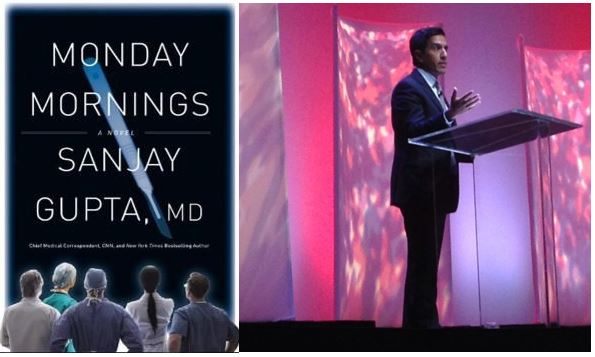
Hello again everyone! Your friendly neighborhood med student here, back with another clinical pearl from my hospital rotations. I usually keep a look-out for topics in clinical medicine that would be valuable learning experiences to share with you, my colleagues back in the lab. Last month I talked about the important cross-over between pathology and my current general surgery rotation.  This time around I’d like to discuss a topic that was brought up at the hospital’s in-house surgical mortality and morbidity meeting (M&M) on a recent Wednesday morning. (Side note: CNN Medical Correspondent, journalist, and Emory neurosurgeon Dr. Sanjay Gupta wrote a book on M&M meetings in 2012 called Monday Mornings. It was adopted as a TV series as well. The book was excellent, I highly recommend it! Some of you may remember that Dr. Gupta participated at the ASCP Annual Meeting in 2015 as a keynote speaker.) Aside from going over a few cases with reportable teaching moments and less-than-optimal outcomes, this M&M included an in-service on High Reliability Organizations (HROs) which really reflect a lot of parallels between working as a clinician, studying as a medical student, and working as a laboratory professional.

m&m1
Image 1a-1b. Sanjay Gupta, MD and his 2012 medical novel with realistic depictions of mortality and morbidity conferences surgeons participate in. This process of reflection and analysis is both preventative of mistakes and errors, but also effective as a comprehensive assessment of pitfalls and gaps in reliability. M&M meetings are a critical part of surgical teams and a useful HRO tool. Pictured (right) is Dr. Gupta at the 2015 ASCP Annual Meeting in Long Beach, CA where he discussed the ever-evolving nature of healthcare and his time as a medical correspondent.

What is a High Reliability Organization?

HROs are teams or organizations which operate under stress to produce a certain outcome or product. There is usually a tensely critical environment in which this outcome occurs within and its accompanied by a complex hierarchy of personnel accompanied by technologically advanced equipment or skill-driven work. To imagine the best examples of HROs, think of situations where something that could go wrong must never happen: air traffic control at a major international hub, the engineering department at a critical dam/levy/channel lock, the safety department for a nuclear reactor in a power plant, mission control at NASA, and—of course—clinical environments which include everything from surgical teams to critical laboratories! Basically all of these entities operate with the odds stacked against them with high potential for catastrophe, but they do their best to avoid failure and maintain quality controls. Essentially, I argue that health care organizations and, especially laboratories, are high-level HROs.

m&m2
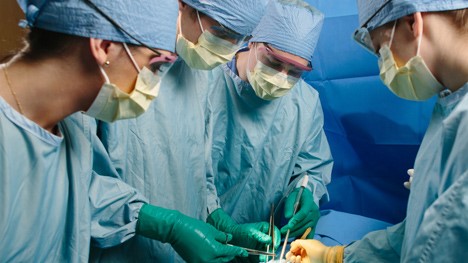
Image 2. “Time Out’s” are called before every single surgical procedure. After a patient gets through various stages of clearance regarding fitness and appropriateness of surgery, the final step before that first incision is a time-out. This is a conference of review between nurses, anesthesiologists, OR scrub techs, medical students, circulation staff, and other inputs that would affect patient care. Details checked include patients’ names, MRNs, DOBs, procedure, locations, etc. Effective communication at all stages helps HROs achieve low error rates. (Photo: Mayo Clinic, Surgical Outcomes Program)

Connecting HROs, ASCP, and you…

I recently finished the Lab Management University (LMU) training offered by ASCP earlier this year. What I found interesting in many personnel-related modules was a mindfulness of the staff one might work with. This considered not just the skills, experience, or credentials that individuals may possess, but it also reflected their cultural background, communication preferences, potential talents or limitations, and insights into different points of view. Not only does LMU do a fantastic job exploring these personnel traits, it also turns the reflection inward to uncover possible biases one might have. This is mindfulness—a super trendy and upcoming philosophy of operating in the present with the full attention a moment deserves both personally and professionally. Mindfulness for the individual, the clinician, and the student are all great ways to center yourself as you encounter challenges. However, mindfulness for an organization takes on a different scope. What mindfulness does at an organizational level is essentially create an HRO: it creates a system in which reliability is created against adverse challenges in the setting of awareness, transparency, and complexity.

m&m3
Image 3. High Reliability Organizations (HROs) are built on a foundation of mindfulness—the same mindfulness individuals practice for effective centering and decision-making acts as a tool for efficacy in organizations’ attempts at self-awareness and process improvement. Reducing error and operating at high performance levels are held up by five major pillars which address problem detection and problem management/resolution. (Source: BioRAFT™ Safety and Compliance Consulting, Cambridge, MA)

Let’s Walk through an HRO in action from the desk, to the surgical suite, and in the lab:

The foundation of HROs is rooted in that mindfulness. It acts as a guiding tool to focus the principles or HROs which contribute to reducing errors buy integrating rigorous protocols, cross-examining complex clinical tasks and critical functions, and securing complex decision making in dynamic and fast-paced environments.

The Five Major Pillars of High Reliability Organizations (HROs)
1. Preoccupation with failure

This is a critical tenet of HROs as they constantly evaluate vulnerability of a process for errors and pitfalls. Collective mindfulness turns the obsession of not wanting to fail into a useful way to be aware of possible challenges and address them proactively and effectively.

Surgical Teams Medical Students Laboratory Professionals
Surgical teams are always analyzing and reanalyzing how effective they are through M&M meetings and other metrics which reflect error rates. Near miss reporting acts as a functional model for proactive utilization of this mindful approach to improving outcomes. Med students are pro’s at being worried about failure; from board exams, to rotations, to performance in clinicals, and competing with other med students—it’s a strong motivator Labs are chock-full of dashboard metrics that delineate performance standards of equipment, materials, testing, and personnel. This often reflects itself in reimbursement, or administrative buy-in later.
2. Reluctance to simplify explanations

This is a tough one to understand. One would think simpler explanations of problems means an easier way to achieve a solution. But some problems are multi-faceted and complex, requiring different input from various sources/individuals. A balance must be achieved for efficiency’s sake.

Surgical Teams Medical Students Laboratory Professionals
While it may be tempting to want to reduce information to simple bullet points to get through more cases, each patient is different, and protocols must be addressed comprehensively and dynamically to identify best practice for each patient. There is a lot of input medical students are exposed to regarding knowledge intake. It can be overwhelming. Studying can be hard enough, but when your grades need a boost and “more” studying doesn’t help, it’s time to investigate new ways to put information into that hippocampus… How many times have you been asked, “Where are my results?” Identifying problems in TAT would be complex and require investigating a process in depth rather than dealing with blame shift from bad orders, to phlebotomy delay, transport delay, or even testing/reporting delays.
3. Sensitivity to operations

Being acutely aware of the processes involved in HRO-style decision making is critical. There is a reason for standardization and protocol wherein SOPs guide all staff to common output. Relying on this standardization is an effective way to insure success.

Surgical Teams Medical Students Laboratory Professionals
Time outs before surgery, protocols for various work-ups, and specific procedures regarding surgical interventions allow various clinicians to treat multiple patients with the same relative outcomes. Knowing how clinicals work and how to make them better allows opportunities for advancing not only your rotation, but future rotations. Standing up and owning ideas for operative improvement is great. Interdisciplinary bridges are effective tools for creating a culture of medical collaboration. Helping other clinicians understand the scope and tools available to them in the laboratory makes everyone’s job easier and safer.
4. Deference to expertise

In healthcare, a collaborative spirit allows more experienced clinicians to offer their expertise based on years of working and learning. Alongside this, concurrent literature is always looking at present-day standards and best practices. HROs rely on hierarchical models for decision-making.

Surgical Teams Medical Students Laboratory Professionals
Almost all surgeons are experts at something—just ask them! Joking aside, senior surgeons offer valuable insight on cases to junior residents. And combining experience with data in best practices improves outcomes dramatically. We are part of a medical system. We have knowledge that greener medical students might desperately need, and we also might be able to lend insight to senior attendings and teachers who were trained well before we were in school. That said, we defer to expertise a lot—we really know nothing, relatively speaking… The hierarchy of laboratory medicine lends itself to this pillar of HROs. Pathologists might helm the wheel of a particular lab, but there are section heads or experienced techs, or clinical managers who know the guts of testing and reporting that offer invaluable information for outcomes!
5. Commitment to resilience

This is at the heart of any clinical team. Medical error is a reality of the field we are in. Allowable medical error gives us some leeway, but ultimately, we hope to be error free for our patients. When mistakes do occur, it’s imperative to own up to them and use them as learning opportunities. When we do that, managers are thankful for not wasting resources on investigations, and we have the chance to quickly recover.

Surgical Teams Medical Students Laboratory Professionals
Mistakes happen. But failures should be rare. If events happen, they should be learned from. M&M meetings are great places for this to happen. Often times, surgical staff are pushed to the limits of abilities, hours in a day, demand of patient load, and of course response to trauma. We are archetypes of resilience. If we weren’t, we wouldn’t be wearing the short white coats. We constantly have to go through tests, checkpoints, and performance evaluations to make sure we can rise above and be responsible for our own clinical decisions tomorrow. There are errors because of instrumentation, errors because of quality control, and errors because, well, simply because. Sometimes the mistakes that occur in the lab despite binders of QC should represent teaching moments with staff re-training. (I’ve even made a few—but you bounce back and become better for it.)


Well, if you made it this far you certainly have a commitment to resilience! This stuff isn’t the most exciting but it’s what makes our healthcare system work. At the base of it all are the ancillary staff working with everyone up the ladder to the chief of surgery, from the medical student to the attending, from the medical lab scientists up to the pathologists. Every part of an HRO (especially in healthcare) is a part of a dynamic and growing entity. As long as we are all aware of our roles, our scopes, and our impacts, out patients will only benefit!

See you all next time!

Post script: listen to the latest podcast in a series by a colleague and me where we discuss clinical stories and pearls of wisdom through medical school. These audio sessions are part of LectureKeepr an online resource for medical students, made by medical students. Check them out here: LectureKeepr. As the sessions relate to my posts here on Lablogatory I’ll include a link—this post will focus more in depth on what I presented here regarding HROs.


ckanakisheadshot_small

–Constantine E. Kanakis MSc, MLS (ASCP)CM graduated from Loyola University Chicago with a BS in Molecular Biology and Bioethics and then Rush University with an MS in Medical Laboratory Science. He is currently a medical student actively involved in public health and laboratory medicine, conducting clinicals at Bronx-Care Hospital Center in New York City.

Microbiology Case Study: A 49 Year Old with HIV and CNS Lymphoma

Case History 

A 49 year old African American female was transferred from an outside hospital due to orbital cellulitis. Her past medical history was significant for HIV, CNS lymphoma, for which she was taking methotrexate & rituximab, and type II diabetes. Her vitals were: blood pressure 181/145, heart rate 145, temperature 98.6°F and respiratory rate 20. On physical examination, her right eye was bulging, with conjunctiva & eyelid swelling, and her iris was non-reactive. Scant serous drainage was noted. Admission labs showed a normal white blood cell count (9.8 TH/cm2), glucose of 211 mg/dL (normal: 74-106 mg/dL), hemoglobin A1C of 7.7% (normal: 4.2-6.0%) and platelets were low at 41,000 TH/cm2. An infection was suspected and the patient was started on vancomycin and piperacillin-tazobactam. She had a head CT scan which showed right periorbital cellulitis and diffuse sinus disease but no abscess formation. Nasal endoscopy was performed and extensive adhesions & black colored, necrotic tissue of the right nasal cavity was noted in addition to whitish debris, consistent with fungal overgrowth extending into the nasopharynx. Biopsies were taken for frozen section and bacterial & fungal culture and Infectious Disease was consulted for management of a probable rhinocerebral fungal infection.

Laboratory Identification

rhiz1
Image 1. Biopsy of the right nasal wall showed tissue invasion and necrosis with broad, ribbon like hyphae that were pauciseptate and branched at right angles (H&E, 40x).
rhiz2
Image 2. Fluffy, white fungal growth on Sabouraud Dextrose and Sabouraud Dextrose with Chloramphenicol agars at 72 hours of incubation at 25°C. There was no growth on the Mycobiotic agar slant.
rhiz3
Image 3. Tape prep showed a round sporangium containing small sporgangiospores located directly below the rhizoids of the mold which is consistent with the diagnosis of Rhizopus spp. (lactophenol cotton blue, 40x).

Discussion 

Rhizopus spp. belong to the order Mucorales, are ubiquitous in the environment and are the most common etiologic agents of mucormycosis. Rhizopus spp. typically cause invasive infections in the nasal sinus, brain, eye and lung, particularly in patients that have uncontrolled diabetes, HIV or are immunosuppressed. Mucorales are angioinvasive, exhibit perineural invasion and there is usually thrombosis, infraction and necrosis of surrounding tissue. As the illness can progress quite rapidly, prompt diagnosis and treatment is necessary.

If a Mucorales is suspected, tissue specimens obtained during a surgical procedure should be sent for frozen section, direct examination with calcofluor white/KOH and fungal culture. On histologic exam or microscopic exam in the microbiology laboratory, the hyphae of Rhizopus spp. are wide & ribbion-like with few to no septations (pauci- or aseptate) and wide angle branching (90°) (Image 1). Further classification requires culture.

If a Mucorales is suspected, the tissue submitted for fungal culture should be minced into small pieces and directly applied to the appropriate fungal media. Grinding of tissue will kill the hyphae and result in no growth from culture. Mucorales will not grow on media containing cycloheximide. Rhizopus spp. grow rapidly within 1-4 days and start as white, fluffy colonies that become grey or brown in color as they mature (Image 2). The Mucorales are described as “lid lifters” due to their rapid growth and “cotton candy” like colonies that fill the plate. On lactophenol cotton blue prep, Rhizopus spp. have unbranching sporangiophores that terminate in a round sporangium and arise directly under well-developed rhizoids (Image 3). The sporangium ruptures when mature and releases many oval sporangiospores.

Treatment of patients with mucormycosis is usually a dual approach with wide surgical excision and amphotericin B, which has been shown to be an effective anti-fungal drug in the majority of Mucorales. In contrast, voriconazole has poor activity against these isolates. If susceptibility testing is needed, CLSI provides reference broth microdilution guidelines. In the case of our patient, due to the grave prognosis of her condition, in addition to her other comorbidities, the family elected for comfort care measures only and board spectrum anti-fungals were not started.


Stempak

-Lisa Stempak, MD, is an Assistant Professor of Pathology at the University of Mississippi Medical Center in Jackson, MS. She is certified by the American Board of Pathology in Anatomic and Clinical Pathology as well as Medical Microbiology. She is the Director of Clinical Pathology as well as the Microbiology and Serology Laboratories.  Her interests include infectious disease histology, process and quality improvement and resident education.

Leading in a VUCA World

Leading people can be a challenging task regardless of the industry or size of an organization. Adding volatile, uncertain, complex, and ambiguous (VUCA) environment into the mix and the leadership challenge increases. Today’s organizations are increasingly complex, ambiguous, uncertain, and volatile because change is accelerating and intensifying. How can leaders equip themselves to manage a VUCA workplace? The first step is understanding what each terms means.

Volatile Situations describe circumstances that change constantly and unexpectedly, and a certain level of instability of a task or challenge is present. However, the best leadership approach is to use available information, be proactive, and have multiple plans and strategies in place. An example of a volatile circumstance is a natural disaster. In such a circumstance not only is the natural disaster a volatile situation, but also the constantly changing nature of the aftermath; which emergency agencies are coming and when, where are people stuck, etc. There are a lot of changes occurring in a volatile situation.   Being proactive and prepared in volatile circumstances can be expensive, but that preparation is necessary to handle these situations.

Uncertain Situations are situations known for a lack of information, so on some level they are the opposite of volatile situations. In uncertain circumstances there is no reliable information about cause and effect and it is not known if change will happen, can happen, or have a positive effect if it does happen. The best approach in these circumstances is to find more information, more data, and more analytics. Once leaders have access to more data, they need to make sure the data is analyzed and implemented into new strategies and change processes. An example of an uncertain situation is when a competitor suddenly emerges that takes direct aim at your company by undercutting prices. In this case, it is important to collect as much data and information as possible to respond to the situation appropriately through new strategies.

Complex Situations have several interconnected and interdependent aspects which have a clear relationship. In these situations, there is partial information available but because everything is interlinked, it is a challenge to process the information in a way that reliably predicts the future. The approach is to reduce the number of linkages, or at least to make them clearer, so the complexity of the situation or task is easily understood and managed. An example of a complex situation is when implementing a process change affects all departments in an organization. In such a circumstance, everything is interconnected and it can be hard to predict how this change will impact everyone and to prepare for it. The key here is to make the change as simple as possible and to assess the impact it makes on every aspect of the organization before implementing the change.

Ambiguous Situations are situations which have relationships that are completely unknown and ambiguous; there appears to be no rhyme or reason. The phrase that comes to mind in these situations is “you don’t know what you don’t know.” In such ambiguity, leaders need to learn from mistakes, hypotheses, and test rounds so it is important to experiment in order to gain information. An example of an ambiguous situation is when you are launching a new product or starting a new business. There are a lot of unknowns in these circumstances so making hypotheses and learning from mistakes is essential for leaders’ success.

In order to lead in a VUCA world, leaders need to analyze these four situation types to confirm which one they are currently leading in. Next is to find the right approach in order to lead people, a department, or an organization through the volatile, uncertain, complex, or ambiguous situation. Knowing is half the answer, so the next time you find yourself in a VUCA situation, start by not only analyzing the situation and possible solutions, but also by analyzing your own reaction to each of the four situations. Being able to understand and control your own reaction will increase your leadership skills in all VUCA and non-VUCA worlds.


lotte-small

-Lotte Mulder earned her Master’s of Education from the Harvard Graduate School of Education in 2013, where she focused on Leadership and Group Development. She’s currently working toward a PhD in Organizational Leadership. At ASCP, Lotte designs and facilitates the ASCP Leadership Institute, an online leadership certificate program. She has also built ASCP’s first patient ambassador program, called Patient Champions, which leverages patient stories as they relate to the value of the lab.

Beyond the CBC and Reticulocyte Count: Early Detection of Iron Deficiency Anemia

In my May 2018 post (Not your Grandmother’s Hematology), I discussed the history of hematology and chronicled how far we have come in the last 60 years. We have progressed from manual counting of cells to the first Coulter Counter in 1956, which revolutionized hematology by being able to automate the counting of red blood cells, to modern instruments that can report up to 30 parameters and perform up to 400 CBCs an hour. Among these parameters are what are termed advanced clinical parameters, new parameters which provide physicians with additional information about the state of blood cells. In this blog I will explore how one of these advanced clinical parameters, the Reticulocyte Hemoglobin content, can provide physicians with information that can assist them with earlier detection, differential diagnosis and better management of iron deficiency and iron deficiency anemia. 

Case Study 

A 29 year old female was seen by her gynecologist reporting a history of heavy menstrual bleeding with current bleeding lasting 15 days. The doctor discussed various treatment options with the patient and a CBC was performed. CBC results are shown below.

Test Result Flags Reference
WBC 7.23   4.5-10.5 K/CMM
RBC 4.38   3.70-5.30 M/CMM
HGB 12.0   12.0-15.5 GM/DL
HCT 36.2   36.0-46.0 %
MCV 82.6   80-100 FL
MCH 27.4   27.0-34.0 PG
MCHC 33.1   32.0-36.0 %
PLT 243   150-450 K/CMM
MPV 11.0   9.6-12.0 FL
RDW 12.5   0-15.1 %

This CBC shows no abnormal flags. Based on patient history and presentation, the physician questioned iron deficiency despite normal hemoglobin and hematocrit, MCV and MCHC. He ordered a reticulocyte profile on the same specimen with the following results:

Test Result Flags Reference Range
Retic 1.55   0.5-2.0 %
Abs Retic 0.0679 H 0.0391-0.057 M/CMM
Imm Retic Frac 14.9   2.3-15.9 %
Ret-Hgb 24.6 L 30-35 PG

Reticulocyte counts are the quantity of the youngest red blood cells released from the bone marrow into the peripheral blood. Reticulocytes are reported as a % and the absolute reticulocyte count is calculated by multiplying the Retic% by the RBC. The immature reticulocyte fraction (IRF) is the rate of production of reticulocytes and depends largely on the ability of the bone marrow to respond to erythropoietin. The reticulocyte hemoglobin (Ret-He) content is the amount of hemoglobin in newly formed red blood cells. (There are two different hematology systems that report reticulocyte hemoglobin content. The two nomenclatures used for reticulocyte hemoglobin are Ret-He and CHr and studies have been done that demonstrate their equivalence)

Note that the Ret-He reflects the quality of the newly formed reticulocytes. Ret-He is a direct measurement of the amount of hemoglobin in each reticulocyte, which indicates the amount of iron available for incorporation into the precursors of mature red cells. This patient’s retic% and IRF are within normal ranges, but her absolute reticulocyte count is high. A Ret-He less than 29 pg in an adult is indicative of iron deficiency. With a normal CBC and low Ret-He, this is an early indication that iron deficiency is indeed present. With the absence of sufficient iron, this patient would eventually develop a microcytic, hypochromic anemia. Therefore, Ret-He can measure and indicate inadequate hemoglobin production before the hemoglobin and hematocrit decrease.

In this case the importance of clinical awareness is illustrated. This physician remembered a recent laboratory technical bulletin announcing implementation of a new hematology analyzer system with the availability of new parameters for reticulocyte counts. When the CBC results came back from the laboratory, the patient had already gone home, and no serum had been drawn to perform a ferritin level. Rather than calling the patient back to have another sample drawn, the Ret-He could be done from the same blood sample already in the lab. Ret-He is a faster, easier and less expensive test than additional iron studies and bone marrow iron stains. Ret-He can easily be used at a very low cost to get that first piece of information to decide whether or not iron deficiency is a concern. A high or normal Ret-He would have ruled out an iron deficiency with a fairly high confidence level. In this case, the low Ret-He could be used to guide further workups. A subsequent blood drawn revealed a low ferritin and iron deficiency was confirmed. The patient was advised to take an iron supplement along with ongoing treatment for the bleeding.

This case is just one example of the clinical utility of the Ret-He. Using the Ret-He, physicians can determine iron deficiency before iron deficiency IDA develops. A low Ret-He can alert a physician to iron deficiency without the presence of anemia, microcytosis or hypochromia. Ret-He can also be used to monitor and show early response to iron therapy before any other parameters change. A case example is that of a 5 month old who was brought to the emergency room with a Hgb of 7 g/dl and a Ret-He of 11.9 pg. In pediatric patients, a Ret-He less than 27.5 is an indicator of IDA. In this child, treatment with oral iron showed that the Ret-He had risen to 24.6 pg seven days after the onset of iron therapy, while the CBC remained virtually the same. This provided a very early indication that the iron therapy was effective.1 The Ret-He can also been used to minimize transfusions. The AABB Choosing Wisely Campaign lists 5 things that physicians and patients should questions before transfusion. One of the guidelines states “Don’t transfuse red blood cells for iron deficiency without hemodynamic instability.“2 Historically, physicians have used a ‘wait and see’ approach and watched Hgb levels drop before they start looking at iron. Using a Ret-He, iron deficiency could be determined, for example, in a patient with a Hgb of 11 g/dl. Oral or intravenous iron could be started before the Hgb drops below 7 g/dl and transfusion becomes necessary. The AABB Choosing Wisely Campaign emphasizes this by stating that patients with chronic iron deficiency or pre-operative patients with iron deficiency should be given iron therapy before transfusion is considered.2 Ret-He can give the earliest indication of iron deficiency and can be used to monitor the response to iron therapy. Another clinical utility of Ret-He has been to help diagnose or rule out iron deficiency in oncology patients. Additionally, Ret-He has been included in guidelines for anemia management in end stage renal disease patients on dialysis and who get erythropoietin.

The Ret-He parameter has proved clinically useful in early determination of functional iron deficiency. Traditionally ordered chemistry iron studies are indirect measures that have certain inherent inaccuracies due to the presence of inflammation and infection, or in patients on iron therapy. Ret-He is a direct and very effective screening tool and physicians can use Ret-He with other RBC indicies to improve anemia diagnosis and management in many patient populations. Ret-He can be used as a screening measure, and used to reflex for iron studies. Therefore, laboratories who have instruments that can report Ret-He and CHr should develop an education program to help clinicians effectively use Ret-He. Together physicians and laboratorians can develop their own guidelines for reflex testing and improvement for patient care.

References

  1. Case Studies Demonstrating the Clinical Application of the Advanced Clinical Parameters (1/20/2016) Chantale Pambrun, MD, FRCPC, Head of Division of Hematopathology and Assistant Professor of Pathology and Laboratory Medicine, IWK Children’s & Women’s Health Centre and Dalhousie University
  2. https://www.aabb.org/pbm/Documents/Choosing-Wisely-Five-Things-Physicians-and-Patients-Should-Question.PDF
  3. Advanced parameters offer faster, surer guidance to cancer care. Anne Paxton. CAP Today. Sept 2017
  4. The Value-driven Laboratory. Reticulocyte Hemoglobin Content (Ret-He): A Parameter Well-Established Clinical Value. Sysmex America White Paper.
  5. Sysmex Clinical Support Team. Utility of RET-He, August 10. 2015
  6. Brugnara C, Schiller B, Moran J. Reticulocyte hemoglobin equivalent (Ret-He) and assessment of iron-deficient states. Clinical Laboratory Hematology 2006;28:303 – 308.


Socha-small

-Becky Socha, MS, MLS(ASCP)CM BB CM graduated from Merrimack College in N. Andover, Massachusetts with a BS in Medical Technology and completed her MS in Clinical Laboratory Sciences at the University of Massachusetts, Lowell. She has worked as a Medical Technologist for over 30 years. She’s worked in all areas of the clinical laboratory, but has a special interest in Hematology and Blood Banking. When she’s not busy being a mad scientist, she can be found outside riding her bicycle.

Microbiology Case Study: A 22 Year Old Female with Wound Infection


Case History

22 year old female with a past medical history of scoliosis presents for routine follow-up after hospital discharge for post-op wound infection following a spinal fusion surgery. Patient had an anterior and posterior spinal fusion with allograft and hardware on 1/18/18. She had a laminectomy and irrigation for post-op epidural hematoma on 1/19/18. Subsequently, she developed a lumbar spine abscess and underwent irrigation and debridement of the abscess on 3/1/18. Two operative cultures of the left paraspinal musculature grew only tiny clear colonies on the anaerobic blood plates. Gram stain of these colonies did not show any organism. MALDI-ToF MS identified these colonies as Mycoplasma hominis which was confirmed at a reference laboratory by PCR. The patient was given daptomycin plus levofloxacin. Since discharge from the hospital, she had wound healing with intermittent discharge.

Lab Identification

Mycoplasma hominis requires a specific rich and complex agar medium for growth and grows tiny colonies on standard media such as Columbia agar. In a patient with urogenital disease, Mycoplasma hominis is diagnosed with a urogenital specimen culture and confirmed by PCR. In a patient with spinal hardware infection, Mycoplasma hominis is diagnosed by a culture of infected tissue with PCR confirmation.

Discussion

Mycoplasma is a bacteria that lacks a cell wall and contains the smallest bacterial genome totally sequenced. Due to its lack of cell wall, Mycoplasma cannot be visualized with a Gram stain, and it is innately resistant to b-lactams.1 Due to its small bacterial genome, 580 kpb, it cannot be detected by light microscopy and requires complex nutrients for growth1.

Mycoplasmas are frequently part of the oropharyngeal and genital tract flora among healthy subjects.1 There are more than 200 Mycoplasma species, of which 13 have been isolated from humans. Only 6 species, among which 5 are pathogens, live in the urogenital tract.2 As one of the Mycoplasma species detected in the genitourinary tract, M. hominis can be either a pathogen or part of the normal flora.1 Colonization with M. hominis is associated with younger age, lower socioeconomic status, multiple sexual partners, African American ethnicity, and hormonal status.1 Infection with M. hominis is more common among pregnant women.1

Mycoplasma hominis is associated with genital infections in females but not in males. Examples of infections include pelvic inflammatory disease and bacterial vaginosis.1 In addition, it is responsible for pregnancy-related infections such as chorioamnionitis and post-partum fever secondary to endometritis.1 Moreover, M. hominis is associated with infections of the newborns, meningitis among premature babies, and low birth weight among neonates.1 Lastly, M. hominis can lead to extragenital infections including spinal hardware infections, septic arthritis, retroperitoneal abscess, hematoma infection, and osteitis.1

Infections by Mycoplasma hominis are infrequent and difficult to confirm prior to the start of empiric therapy.2 Urogenital and systemic infections due to Mycoplasma hominis are treated with oral tetracycline.1 For organisms resistant to tetracycline, fluoroquinolones are recommended.1 For wound infections or abscesses, doxycycline, clindamycin, or fluoroquinolones are recommended for at least 2 weeks.1 Drainage and debridement may be necessary.1

References

  1. Pereyre S. et Mycoplasma hominis, M. genitalium and Ureaplasma spp.  Antimicrobe http://www.antimicrobe.org/m06.asp
  1. Baum S. Mycoplasma hominis and ureaplasma urealyticum infections. (2017, Dec. 7th).  Last retrieved on March 27, 2018 from https://www.uptodate.com/contents/mycoplasma-hominis-and-ureaplasma-urealyticum-infections


-Ting Chen, MD is a 1st year anatomic and clinical pathology resident at the University of Vermont Medical Center.

Wojewoda-small

-Christi Wojewoda, MD, is the Director of Clinical Microbiology at the University of Vermont Medical Center and an Associate Professor at the University of Vermont.

Managing Up For Safety

Several employee injuries over a six-month period did nothing to get the attention of the laboratory leadership. The Occupational Health nurse was nearing retirement, and she didn’t pay attention to the fact that these injuries came from the same area- the autopsy suite- and that many had a common cause. The pathologist knew that the employees were getting hurt because of bad conditions in the morgue area. The autopsy table was old and had rusted sharp edges that frequently caused cuts on the hands of those handling it. The body storage refrigerator was small, and staff members from the security department and nursing suffered back injuries from the awkward positions needed to load and unload bodies on the shelves. However, the pathologist’s complaints to the lab manager were unheeded, mainly because he complained about something different every day.

The new lab safety officer noted the lab injury reports and very quickly noticed a pattern. She interviewed the affected staff and took a look around the autopsy suite. She used her camera and took pictures of the old rusty table and the high shelves in the tiny body storage refrigerator. She tallied the cost to the facility of the accumulated injuries and placed the information in a presentation that included the photographs. She made an appointment with the hospital administrator and gave her brief presentation. Before the week was out, the lab had approved funding for updated autopsy furniture and a mechanical lift for moving bodies.

In life, each person has a specific “sphere of influence,” those things you are able to touch and on which you have an effect. It is typically a waste of time to expend energy on those things you cannot change- like a traffic jam, for instance. Stewing about that truly is a waste and accomplishes little. If your role deals with lab safety, then you do have influence on every safety issue in the department, even though it may not always seem that way.

As a lab safety professional, it can be frustrating to see safety issues go unnoticed or unattended, especially after they have been reported. The apparent roadblocks to solutions may be a lack of funds, busy or disinterested leadership, and even an overall poor culture of safety. There are steps you can take, however, which can help you move around the roadblocks and bring those unattended safety issues toward a solution.

Finances is a common hindrance to making changes in the laboratory such as remodeling a space or even getting new or improved safety equipment. Safety is always value-added, but it is important to be able to prove it to those holding the financial reins. First, tally the cost of any injuries that may have occurred due to the safety issue. That total should include any medical treatment, time off of work, the cost of replacement employees or overtime incurred, and time to make any temporary fixes and to communicate to staff. If there is a possibility of penalties or fines should the issue be noted by an outside regulatory agency, those should be considered as well. Many times, the total of the costs for the safety issue are greater than the cost of the fix. In the healthcare setting where finances are getting more attention each year, this can be a powerful tool to get things done.

If lab leadership is uninterested or too busy to help you with safety issues, there are some long-term solutions. First, make sure you act as the safety role model and build trust with peers and leadership. If your discussions with them are reasonable, and if your focus is on sensible, realistic solutions, you will have a better response than if you get angry or try to control everything. That relationship-building can be critical to your ability to influence changes when needed. If the overall safety culture in the lab is poor, you can still have a positive effect on it even without the full support of leadership. That leadership support always helps, but making positive changes can occur without it, and that also comes through being a role model and working well with the lab staff.

A successful lab safety professional develops and increases their sphere of influence over time, but it can be an uphill battle depending on the location and the other people involved. Knowing what the important issues are and when to tackle them is key, and learning that while navigating through a particular culture and organizational structure can take time. Have patience, and you will eventually be able to leverage your safety knowledge to be able to manage upward in order to create a safer laboratory.


Scungio 1

Dan Scungio, MT(ASCP), SLS, CQA (ASQ) has over 25 years experience as a certified medical technologist. Today he is the Laboratory Safety Officer for Sentara Healthcare, a system of seven hospitals and over 20 laboratories and draw sites in the Tidewater area of Virginia. He is also known as Dan the Lab Safety Man, a lab safety consultant, educator, and trainer.

Hematopathology Case Study: A 67 Year Old Female with a Sore Throat

History 

A 67 year old female presents with a two-month history of sore throat. She endorses dysphagia and left-sided otalgia but denies voice changes, shortness of breath, hemoptysis, weight loss, fever or night sweats. She has smoked 1 pack/day for 41 years and occasionally drinks alcohol. Her past medical history is notable for systemic lupus erythematosus for which she takes Plaquenil.

Physical examination slightly elevated systolic blood pressure. She is afebrile. Pertinent neck exam findings include mild tonsillar asymmetry (left slightly larger than right), and a firm mass at left base of tongue, and a 3 cm lymph node in the neck (left level III). A biopsy sample was taken from the tongue mass. 

Biopsy

EBV-1

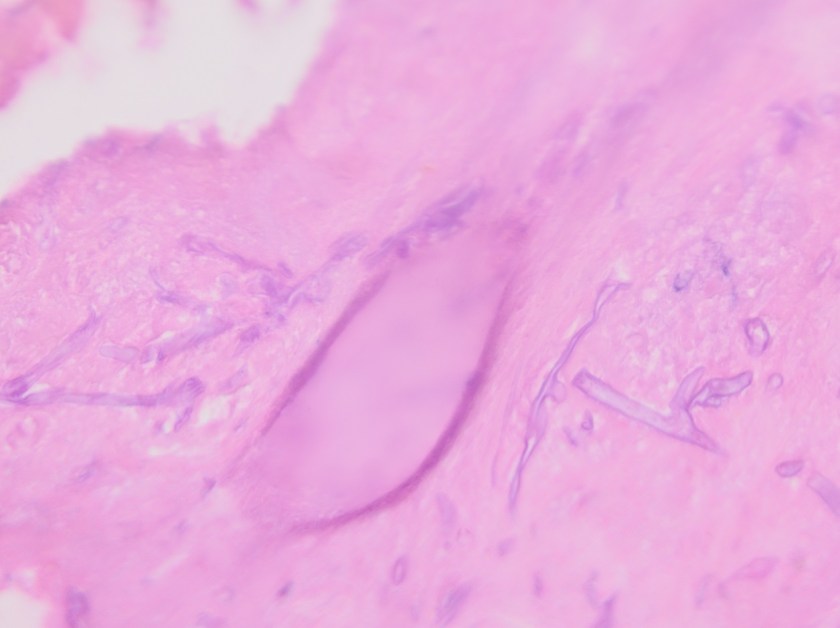
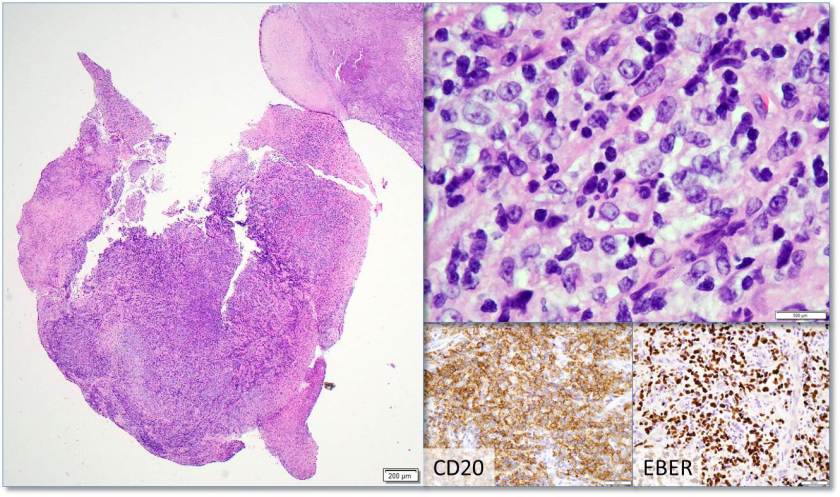
H&E stained sections reveal sheets of large lymphocytes. The lymphoid cells are medium to large in size with irregular nuclear contours and prominent nuclei. Areas of necrosis are prominent. No specific areas of epithelial ulceration are noted. Immunophenotypic characterization of the larger cells reveals positivity for CD20, CD30, CD79a, PAX5, MUM1, Epstein Barr virus encoded RNA (EBER) and a variable Ki-67 proliferation index, which is up to 60-70% in the larger cells, but around 20-30% overall. Only rare cells are positive for BCL-2 and BCL-6. The lymphoma cells are negative for keratin AE1/AE3, CD10, CD4, CD8, CD21, CD23, CD7, CD5, Cyclin D1, CD68, CD56, and CD43. The background T cells express CD5 and CD7 and are a mixture of CD4 and CD8 with CD4 predominance.

We considered the diagnosis of EBV-positive mucocutaneous ulcer (a more indolent entity); however, the lack of history of an ulcer/ulceration and the presence of a mass-lesion (with additional adenopathy) does not support this diagnosis.

The findings are most consistent with EBV-positive DLBCL, NOS (WHO 2017), previously known as EBV positive DLBCL of the elderly (WHO 2008). 

Discussion 

Epstein Barr Virus, a member of the Herpesviridae family is mostly known for causing Infectious Mononucleosis. However, the ubiquitous virus which is present in about 90% of adults but often asymptomatic1, has a predilection for epithelial cells including B-cells.2 Incorporation of the viral genome and viral takeover of the cells proliferative machinery underlies the pathogenesis of any EBV-related disease/malignancy. It has been associated with a gastric carcinoma, fulminant hepatitis, undifferentiated nasopharyngeal carcinoma, and B cell, T cell and NK cell lymphomas3, including EBV+ diffuse large B-cell lymphoma, not otherwise specified (DLBCL-NOS).

EBV-positive diffuse large B-cell lymphoma, not otherwise specified (EBV+ DLBCL-NOS) was formerly known as EBV-positive diffuse large B-cell lymphoma (DLBCL) of the elderly. The WHO classification substituted “not otherwise specified” in place of “for the elderly” to reflect two things: 1) EBV is associated with other specific neoplastic Large B-Cell diseases such as lymphomatoid granulomatosis, and 2) EBV+DLBCL can affect younger individuals as well as the elderly. 2

EBV+DLBCL-NOS patients may occur in nodal or extranodal sites, with up to 40% presenting with extranodal sites at least in the early stages. Patients may be asymptomatic with or without B symptoms but usually, patients present with rapidly enlarging tumors at single or multinodal sites, as well as at extranodal sites. 4

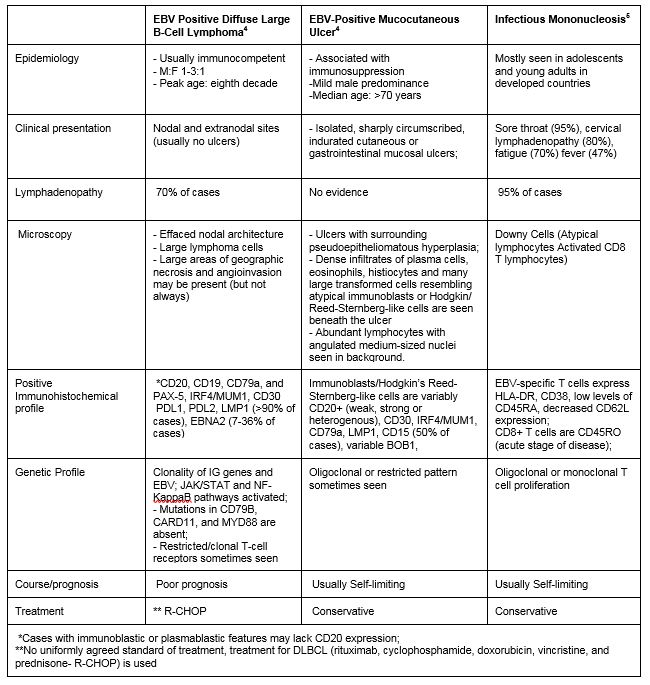
The patient’s presentation with sore throat and the finding of neck mass with EBV-positive large B-cells associated with ulcer-like necrosis raises a differential diagnosis that ranges from reactive to malignant. Table 1 shows a comparison between three differential diagnoses: EBV+DLBCL-NOS; EBV-positive mucocutaneous ulcer; and infectious mononucleosis.

EVB-t1
Table 1. Comparison of 3 EBV-positive differentials in the head and neck

Unfortunately, there is currently no uniformly agreed standard of treatment for EBV+DLBCL which has a worse prognosis than EBV negative DLBCL.2 The standard treatment for DLBCL (rituximab, cyclophosphamide, doxorubicin, vincristine, and prednisone- R-CHOP) is used but it responds poorly to treatment, with a median survival of 2 years.

Therefore, early detection by clinical suspicion and testing all DLBCL patients for EBV is very important.2 

 References

  1. Tsuchiya S. Diagnosis of Epstein–Barr virus-associated diseases. Critical Reviews in Oncology and Hematology. 2002;44(3):227-238. https://www.sciencedirect.com/science/article/pii/S1040842802001142. doi: 10.1016/S1040-8428(02)00114-2.
  2. Murthy SL, Hitchcock MA, Endicott-Yazdani T, Watson JT, Krause JR. Epstein-barr virus–positive diffuse large B-cell lymphoma. Proceedings (Baylor University.Medical Center). 2017;30(4):443-444. http://www.ncbi.nlm.nih.gov/pmc/articles/PMC5595389/.
  3. Okano, Motohiko, MD, PhD|Gross, Thomas G., MD, PhD. Acute or chronic life-threatening diseases associated with epstein-barr virus infection. American Journal of the Medical Sciences, The. 2012;343(6):483-489. https://www.clinicalkey.es/playcontent/1-s2.0-S0002962915309435. doi: 10.1097/MAJ.0b013e318236e02d.
  4. Swerdlow S, Campo E, Harris NL, Jaffe ES, Pileri SA, Stein H, Thiele J, Arber D, Hasserjian R, Le Beau M. WHO classification of tumours of haematopoietic and lymphoid tissues. 2017.
  5. Dunmire SK, Hogquist KA, Balfour HH. Infectious Mononucleosis. Current topics in microbiology and immunology. 2015;390:211-240. doi:10.1007/978-3-319-22822-8_9.


Adesola picture-small

-Adesola Akinyemi, M.D., MPH, recently earned his MPH-Health Policy and Management from New York Medical College. He plans on pursuing residency training in pathology. His interests include cytopathology, neuropathology, and health outcomes improvement through systems thinking and design.

Mirza-small

-Kamran M. Mirza, MD PhD is an Assistant Professor of Pathology and Medical Director of Molecular Pathology at Loyola University Medical Center. He was a top 5 honoree in ASCP’s Forty Under 40 2017. Follow Dr. Mirza on twitter @kmirza.

Microbiology Case Study: A 70 Year Old Female with Bronchiectasis

Case History 

A 70 year old female presents with bronchiectasis with acute exacerbation. She is a non-smoker, although claims to have been exposed to secondhand smoke, and she has chronic sinusitis. The patient recently traveled to Savannah, Georgia where she developed a productive cough. She was prescribed doxycycline and was then sent home. She returned to the pulmonary clinic for a follow up consultation after her cough worsened.

Laboratory Identification

hflu1
Image 1. Intracellular gram negative coccobacilli with polymorphonuclear cells found in the sputum smear (100x oil immersion).
hflu2
Image 2. The predominant organism found in this patient’s sputum culture is growing 4+ on chocolate agar, but not growing on blood and MacConkey agars.
hflu3
Image 3. Close up of chocolate agar showing 4+ growth of wet, translucent colonies.

The Gram stain and smear showed 4+ neutrophils, 4+ gram negative coccobacilli and little to no mixed respiratory flora. The following day, the culture grew 1+ respiratory flora on the blood plate, no growth on the MacConkey plate, and 4+ translucent colonies on the chocolate plate. 

Discussion 

The predominant organism was identified by the MALDI-TOF as Haemophilus influenzae. The Gram stain and culture findings are consistent with the MALDI-TOF identification. H. influenzae is an oxidase positive, gram negative coccobacilli known for its requirement of X (hemin) and V (NAD) factors found in chocolate agar. Because of its growth requirements, H. influenzae will not grow on MacConkey agar despite being a gram negative organism. It may be cultured on blood agar if the agar is inoculated with an organism such as Staphylococcus aureus, which can provide the V factor, while the X factor is provided by the agar itself. This phenomenon is known as satelliting. Identification of H. influenzae may also be done using a Haemophilus ID Quad plate. Each section of the plate contains varying factors and allows for Haemophilus identification to the species level based on the growth and hemolysis pattern.

H. influenzae is normal flora of mucous membranes and frequently colonizes the human oral cavity and upper respiratory tract. Commonly, H. influenzae causes pneumonia, as with our patient, bronchitis, and ear infections. However, it is also a known cause for bacterial meningitis, endocarditis, and osteomyelitis. Transmission of H. influenzae occurs through respiratory droplets so proper PPE precautions must be taken by clinicians when working with infected patients. It is important for laboratory professionals to work with the organism using proper PPE and BSL-2 practices and plating of respiratory specimens should occur in a biosafety cabinet.

Susceptibility testing is not routinely performed on isolates of H. influenzae. β-lactamase production can be determined by using nitrocefin, a chromogenic cephalosporin spot test. 

References

  1. Haemophilus influenzae Disease (Including Hib). (2018, February 13). Retrieved June 28, 2018, from https://www.cdc.gov/hi-disease/index.html
  2. (2012, March 15). Retrieved June 28, 2018, from https://www.cdc.gov/meningitis/lab-manual/chpt09-id-characterization-hi.html. Identification and Characterization of Haemophilus influenzae
  3. Manual of Clinical Microbiology, 11th edition


MS

-Madaine Saguinsin, MLS (ASCP), graduated from Purdue University with a BS in Medical Laboratory Sciences and is a medical technologist at NorthShore University Health System. Her interests are microbiology and parasitology.

-Erin McElvania, PhD, D(ABMM), is the Director of Clinical Microbiology NorthShore University Health System in Evanston, Illinois.