The Pathology Value Chain and Global Health

In part 1, we reviewed Michael Porter’s Value Chain and looked at inbound logistics for pathology. Now we will turn to operations, or the production of diagnostic results.

In the United States, almost all cancer diagnosis and care are in the private sector. There are very few examples of diagnostic services that are provided for free. Because laboratories derive revenue from every specimen for the most part, there is a natural desire to increase the volume in the laboratory from management because volume equals revenue. Pathology also has inherent economy of scope and scale such that a basic system that could process 1 case per day for an operating cost of $500,000 per year, could process 200 cases per day for a cost of $4,000,000 per year (a 200-fold increase in volume with only a 8-fold increase in cost). It is important to note in this comparison that in the former, the cost per case is $2000 while in the latter it is $80 (a 25-fold difference). When we consider an allocated or operating budget to run a pathology diagnostic laboratory where revenue is not reflected to laboratory management, this desire to increase volume is lacking directly by laboratory staff (more work but no additional funding) but still may be desired by higher level administration for revenues that pay for other aspects of the system (cross-subsidization). Consider a laboratory that is asked to process 25,000 samples per year, has 6 support staff and 3 pathologists. This would equate to each pathologist signing out ~50 cases per day on average, Monday – Friday, with four weeks of vacation annually. If those pathologists are the direct recipients of the profits of the laboratory, such a high case sign-out rate may be acceptable. If they only receive their allotted salary with no potential for profit sharing, they are unlikely to maintain such a high rate of production. Moreover, they will likely demand higher salary and/or additional staff and will do so much more quickly as volumes increase than would pathologists who share in profits. When we transfer this concept to a public low-resourced laboratory setting in a low- and/or middle-income country where government salaries are lower, there are far fewer skilled personnel, and budgets are smaller, there is essentially no incentive for public/government-funded laboratories to increase volume because it results in more work for the existing staff with no benefit. Yet, with the small volumes we see in LMICs currently, their costs per case are much higher than in HICs. When we turn our lens to the patient and that patient’s maximum value, the profit-sharing model is likely to yield the shortest turnaround time for a given patient. There is a trade-off in this scenario between speed of results and amount of communication/coordination between the clinician and the pathologist. Allocated budgets and public laboratories may produce slower results that are of the same technical quality and, in academic settings, may include additional communication/coordination with clinical teams. Standards exist for a maximum turnaround time goal (i.e., for the College of American Pathologists, it is 3 days). Without external regulation and accreditation, laboratories may fail to provide value to the patient by delaying diagnoses until they essentially are useless. Turnaround times in LMICs may be considered “very good” at 2-weeks, a timepoint that would not be sustainable for HICs laboratories.

Operations – This activity “includes procedures for converting raw materials into a finished product or service”. For the lens of maximum value to the patient, from the moment a biopsy is received in the laboratory to the moment a final report is generated should be minimized and the report itself should adhere to quality standards internally and externally. Once all reagents and supplies are obtained and specimens are received, the operations process can be engaged which includes grossing, processing, embedding, microtomy, staining, special stains, immunohistochemistry, case professional review, and report production. In each step of this stepwise process, specific skilled personnel are needed, matched with specific reagents and supplies to complete the step. Laboratory efficiency and product quality can be dually achieved with highly trained personnel, functioning, well-maintained equipment, optimized workflow, continuous communication and data collection, and highly skilled management to control the process wholly and in parts. One of the challenges for HIC pathology laboratories or health systems are large resections (i.e., mastectomies, colectomies, etc.) and autopsies. The former is integral to cancer care for mid-stage cancers to inform margins and guide treatment; however, they require more personnel time to gross, process, and read, more physical resources to dissect and sample, and may have a series of challenges related to “what’s left in the bucket?” that do not occur when a small biopsy is entirely submitted (although standardization of grossing and reporting can often ameliorate this issue). For the latter (i.e., autopsies), the costs of these procedures are extremely high across the board and there is, to date, no reimbursement or payment for this final procedure in a patient’s medical journey. The value of the autopsy has been explained elsewhere but such value to healthcare systems and to individual and groups of patients is often not delineated enough to make these services a priority, unfortunately. Stepping back from operations, what is commonplace in HICs is that large academic center pathology laboratories most often associated with comprehensive cancer centers are evaluating major cancer surgery specimens as well as autopsies while their private practice and community hospitals focus on small biopsies. There are certainly private practice and community hospitals that evaluate large specimens, but they do so in the context of large biopsy volumes (i.e., cross-subsidization). Tertiary care center pathology laboratories receive referrals (secondary review of biopsies) and surgical samples without the large volumes of primary biopsies to provide off setting revenue. Without high volumes of biopsies to subsidize the costs of large resections, value chain for laboratories becomes quickly degraded and laboratories may even become cost centers, especially if complex immunohistochemical works ups are considered. For patients, care at academic centers and comprehensive cancer centers is viewed as superior with access to clinical trials, multidisciplinary teams, advanced technology, and highly complex diagnosis of rare entities; however, the bulk of pathology services provided, being standardized, are essentially task-shifted from for-profit high volume laboratories that could subsidize the costs to large health systems that cost more to run often without the benefit of the primary diagnostic biopsy material revenue flow.

It is quite easy to see how this part of the value chain can fail in an LMIC because pathology operations are large, complex, and interlocking. For example, if the single embedding center goes offline, manual processes, which are slower and produce poorer quality blocks must be used and efficiency is lost. If the tissue processor goes offline, the entire process is stopped until it is restarted. If there is one pathologist and they go on vacation or immigrate to another country offering better salary, the process is stopped indefinitely. As mentioned above, for a laboratory with a low volume and limited staff, increases in volume are a considered negative because incentivization is lacking. Because these laboratories are often the “only game in town”, they must deal with small biopsies, large resections, and autopsies but without the revenue streams seen in HICs to offset costs or create cross-subsidization (i.e., reimbursement, private pay, etc). This is due to limited access for patients and biopsy rates for the population that may be less than 20% (i.e., of all people that NEED a biopsy, less than 20% receive a biopsy due to access issues). There is a great need to achieve balance in this problem between the minimal volume a lab should process and adequate compensation for laboratory staff to achieve this volume. Modelling and projections expected for a given population can be used to inform governments and market makers about what number of services are needed and, subsequently, public-private partnerships become a primary tool to achieve the balance. For individual gaps such as lack of staff, the value of the operations can be improved with training, telepathology support, visiting pathologists, and management training and improve the overall value improved for the patient.

To summarize this piece, operations for diagnostic pathology has an inherent economy of scope and scale such that an optimal case mix exists which creates maximum value for the patient—shortest turnaround time with most accurate results—and creates a sustainable revenue stream for the laboratory operations (mix of biopsies and resections). Competitive advantage is complex in this space because speed and volume are contrasted with specimen complexity, all of which should be performed through a standard of care.

In the next part, we will look at outbound logistics or the outgoing report to the clinical team.

References

  1. Porter, M. (1985). The value chain and competitive advantage, Chapter 2 in Competitive Advantage: Creating and Sustaining Superior Performance. Free Press, New York, 33-61.
  2. Histology. Wikipedia. https://en.wikipedia.org/wiki/Histology#:~:text=In%20the%2019th%20century%20histology,by%20Karl%20Meyer%20in%201819.
  3. Thorpe A et al. The healthcare diagnostics value game. KPMG International. Global Strategy Group. https://assets.kpmg/content/dam/kpmg/xx/pdf/2018/07/the-healthcare-diagnostics-value-game.pdf
  4. Digital Pathology Market CAGR, Value Chain Study, PESTEL Analysis and SWOT Study|Omnyx LLC, 3DHISTECH Ltd, Definiens AG. https://www.pharmiweb.com/press-release/2020-06-30/digital-pathology-market-cagr-value-chain-study-pestel-analysis-and-swot-study-omnyx-llc-3dhistec
  5. Friedman B. The Three Key Components of the Diagnostic Value Chain. Lab Soft News. January 2007. https://labsoftnews.typepad.com/lab_soft_news/2007/01/the_three_eleme.html
  6. XIFIN. The Evolution of Diagnostics: Climbing the Value Chain. January 2020. https://www.xifin.com/resources/blog/202001/evolution-diagnostics-climbing-value-chain
  7. Sommer R. Profiting from Diagnostic Laboratories. November 2011. Seeking alpha. https://seekingalpha.com/article/305931-profiting-from-diagnostic-laboratories#:~:text=The%20three%20year%20average%20operating,current%20operating%20margin%20of%2012.9%25.

milner-small


-Dan Milner, MD, MSc, spent 10 years at Harvard where he taught pathology, microbiology, and infectious disease. He began working in Africa in 1997 as a medical student and has built an international reputation as an expert in cerebral malaria. In his current role as Chief Medical officer of ASCP, he leads all PEPFAR activities as well as the Partners for Cancer Diagnosis and Treatment in Africa Initiative.


Set the World on Fire, but Don’t Burnout

Hello everyone and welcome back!

So here I am: a med school matriculant, top-choice program matched, doing exactly the training and work I’ve wanted to since before medical school. Totally made it! But before I go all “Fresh Prince of Maywood” on you, there’s a lot to unpack within the word “residency.” I’ve discussed this before, comparing pathology subspecialties with my primary care friend Dr. Raja’s rotation schedule, but you probably already know a little about what pathology residents do. I want to talk about what most folks might not know, why most residents absolutely disappear from their families or loved ones, and why going in with already greying hair isn’t going to make this any better, ha-ha…

Image 1. Me, and me. Look what 6 months of residency can do. Wow. Kidding. It’s an Instagram filter. Or is it…? It is. But what if it isn’t….?

I’m a resident at Loyola Medicine in Maywood, IL; I also went to undergrad (over a decade ago) at Loyola Chicago. So, for me, this is a very cool full-circle experience. I bring this symmetry up because a lot of people talk about the “culture” of an institution when they’re looking for a perfect match. I’ve talked about my experiences with hospitals’ institutional cultures before, at Bronx Care, Staten Island, Mayo Clinic, Danbury, Brooklyn, and more before medical school. I choose to highlight Loyola for you both because it’s already home to me, and also because it has a unique disposition.  When you walk across the stage at graduation, Loyolans are instructed to “Set the world on fire”—a quote from the university’s namesake and patron St. Ignacious Loyola. It follows a Jesuit tradition of valuing education as one of the most powerful tools to address social inequality, injustice, poverty, and whatever ails our society. By being bold and passionate (like a fire, get it…?) true leadership can manifest in graduates’ futures.

Image 2. Me again. Imbued with Jesuit mantras, ready to set the world “aflame.” Notice me in the bottom right, however, not really seeming to pay attention to the stage. Thinking about my poor future colleagues perhaps…

But all graduations are decorated with pomp and circumstance. As graduates sit and wait for their name, they are pontificated at about the importance, poignancy, and grand scale of opportunity that awaits them. But what happens after graduating, college, or graduate school, or medical school? The answer varies widely for many, but I can speak to those who end up with the long white coats. I’ll be honest, allegorically, college is a lesson in walking, graduate school is a lesson in running, medical school is a lesson in cartwheels—after you’ve somewhat mastered this, the world that awaits you demands powerful cartwheels (with tricks) up multiple Mt. Everests, and you might be able to use the bathroom…you might. Haha, a little hyperbole. I mean I am SO glad pathology training isn’t like some other specialties (looking at you surgery…) but the demand is there, nonetheless. I would say ours might be more cerebral because, what we trade in for not having an intern year, we are “gifted” with having to lean 4+ years of material presented as an iceberg tip in medical school.

In a recent Inside the Lab podcast, the topic of burnout was discussed. (Check it out here!) Labratorians—and healthcare staff in every role—have been feeling the COVID push all year. More is expected of us, more is demanded of our system and its output, and there is no relief or break in sight. That prolonged demand on our expertise (and time) puts a significant strain on all our collective psyche’s. Nowhere is that more apparent than in healthcare. Paramedics run long uninterrupted shifts seeing tragic emergency one after another. Nurses do 12hr shifts back to back for days, especially when there isn’t enough staff to support days off (while patient census climbs higher and higher). But in medicine, poor medical school post-graduates are expected to literally “reside” in the hospital, ergo resident. The term came from the training model coined at Johns Hopkins in the early 1900s. And, up until a few years ago, the powers that be decided that residents should log no more than a maximum of 80 hours a week with the longest shift you can work 24 hours. Fun fact: the IRS, yes those guys, defines full-time work as 30-40 hours per week or 130 hours per month. If you work a “full time” job, you probably work 40 hours a week/160 hours a month. So, for young resident physicians: that two full time jobs, coming in hot at just about the average US salary of 55-60k. Outstanding. However, while I find myself lucky and would anecdotally say that I don’t think I’ll be getting any notifications or flags on logging too many hours at the hospital, the reality is that many physician trainees work right up to the maximum (and more). The old guard cites that 80 hours isn’t enough time to train a functioning physician, as they leave patient care at a sensitive time where they effectively abandon their learning. But …burnout. The “reduction” to 80 hours one would think reduces stress and burnout, but lo and behold a paper (from FIFTEEN years ago) says nu-uh. “Changes in parameters of resident and faculty emotional exhaustion, depersonalization, and personal accomplishment did not show statistical significance…Despite successful reductions in resident work hours, measures of burnout were not significantly affected.” (JAMA, 2004)

Image 3. I’m not here to cite stuffy papers and the voluminous research on physician and resident burnout. Instead, I’m here to highlight the motivations those of us in healthcare cite as our driving force to keep at it, especially in a pandemic.

Regardless, those of us in postgraduate medical training are here for a reason. I identify as one of the few who finds himself in a lucky spot, where my institution—and my profession of choice—don’t demand that kind of hourly expectation of me. But many of my other colleges aren’t as lucky. Surgeons, internists, family doctors, and more are working themselves to the limit. And that doesn’t include anything about the COVID pandemic. Whether you’re a graduate of Loyola or not, we’re all expected to “set the world on fire,” I just hope we don’t burn out in the process. Stay in tune with your needs and your support system, learn to recognize signs of burnout as much more than fatigue, and remember to extend compassion to everyone—you never know what load they might be carrying. Remember those things and you can navigate a packed work-week…or a pandemic!

Thanks for reading!

See you next time!

Constantine E. Kanakis MD, MSc, MLS(ASCP)CM is a first-year resident physician in the Pathology and Laboratory Medicine Department at Loyola University Medical Center in Chicago with interests in hematopathology, transfusion medicine, bioethics, public health, and graphic medicine. He is a certified CAP inspector, holds an ASCP LMU certificate, and xxx. He was named on the 2017 ASCP Forty Under 40 list, The Pathologist magazine’s 2020 Power List and serves on ASCP’s Commission for Continuing Professional Development, Social Media Committee, and Patient Champions Advisory Board. He was featured in several online forums during the peak of the COVID pandemic discussing laboratory-related testing considerations, delivered a TEDx talk called “Unrecognizable Medicine,” and sits on 
the Auxiliary Board of the American Red Cross in Illinois. Dr. Kanakis is active on social media; follow him at @CEKanakisMD.

Lead Like No One is Watching

Even though I readily share and celebrate my accolades with family and friends, I have generally been quiet with my coworkers regarding career moves. When I passed the ASCP Specialist in Cytotechnology BOC exam three years into my career as a cytotechnologist, I only shared the news with my supervisor, cytopathology director, and a few other pathologists. After dabbling in budget and supply purchasing and compiling monthly and annual QA statistics, I completed ASCP’s certificate program from Lab Management University in 2018. The following year, I traveled to Puerto Rico for the American Society for Cytotechnology (ASCT) conference and sat for the International Academy of Cytology (IAC) Comprehensive Examination. Six weeks after the exam, I received word that I passed, and again, I immediately shared the exciting news with my supervisor and cytopathology director. No one else at work had a clue until a year later when they noticed extra initials behind my sign-out signature. Then, the ASCP 40 Under Forty application and eight weeks of waiting came and went this past summer and once again, I elatedly celebrated with my superiors. I have always moved in silence amongst my peers to maintain an inclusive and docile/same-level environment. While some might be supportive, not everyone actively encourages growth. Furthermore, not everyone wants an all-you-can-eat buffet on their work plate, and many lab professionals are happy with a less stressful, entry-level competency kind of routine. And that is perfectly A-OK too! Regardless, I am who I am, and for the lab professional who loves continuing education and learning new techniques and advancements across the field of health care, I wondered what career moves I would make in 2021. What goals should I set out to achieve? What is my next step?

There it is. A doctoral program. 100% Online and meant for the full-time working professional. I have officially embarked on my eight-semester-long journey to earning a Doctorate of Health Science (DHSc) with a concentration of Organizational Excellence in Healthcare. Rather than a traditional PhD which prepares scholars for research-based careers in a very focused area, the DHSc is an applied doctorate focusing on healthcare leadership in various disciplines. Now that I am halfway through my first semester, I can honestly say this is one of the best decisions I have ever made. Learning about applied leadership theory in healthcare and how to effectively, efficiently, and efficaciously lead in a complex healthcare landscape has been so intellectually stimulating thus far. Most recently, my classmates and I engaged in a discussion emphasizing how today’s leaders must stay relevant in their dynamic fields, and we shared our required competencies (i.e., the knowledge, skills, and abilities) for leading people and managing resources for both today and tomorrow (Ledlow & Stephens, 2018). A recurrent theme we uncovered is the necessity for continuing education – whether it be formal or informal. Staying relevant requires healthcare leaders to read, research, and teach. As cytotechnologists, we have existing continuing education programs in place, such as ASCP’s Credential Maintenance Program, recommending certificants to participate in and record credits to renew their certifications. We have Interlaboratory Comparison Programs through the College of American Pathologists (CAP) that feature ancillary studies as a diagnostic companion to cytology slides. We watch cytoteleconferences provided by the American Society of Cytopathology (ASC). We are encouraged to attend our affiliated societies’ national conferences to collaborate interprofessionally. With all that is available, however, we still need to do more than just claim continuing education credits.

We need to stay abreast on how our field of laboratory medicine is changing and how we can accommodate those changes and adapt to those changes. We need inspiration and motivation throughout the organizational hierarchy. We need passion and commitment from all levels and all disciplines. We need transformational, flexible, and culturally competent leaders to serve as mentors for the next generation of leaders. We need leaders who continuously self-reflect and improve as they build diverse, yet cohesive teams that thrive on generating positive outcomes for the organization. To the current leaders, leaders-in-training, and the followers with potential – we must get better, we must take more initiative, we must aspire to learn more than just the “what” or the “how,” but most importantly the “why.” For the upcoming year and beyond, I challenge you to continuously learn more about your field of laboratory medicine and its impact on society. Ask why the pap guidelines have changed. Ask about the advantages of robotic bronchoscopy. Ask what molecular tests are available and which are currently in development. Ask what we can do to reduce the burden of disease in our community! Refrain from saying, “I don’t know” and respond with, “I’ll find out.” Become an expert in your field by understanding the interdependency of laboratory disciplines and beyond, and strive to actively network with each other. For those who want more, please do more! Pursue more! There is no ceiling on your potential, and there are no limits to your growth.

So sayonara to 2020, and hello to 2021! New year, new me? No. New year, improved me. And hopefully an improved you!

Image 1. “Be a Star!” (Thyroid, FNA – DQ-stained smear. Dx: Papillary Thyroid Carcinoma)

References

1. Ledlow, G.R. & Stephens, J.H. (2018). Leadership for health professionals: Theory, skills, and applications (3rd ed.) Jones & Bartlett Learning.

-Taryn Waraksa, MS, SCT(ASCP)CM, CT(IAC), has worked as a cytotechnologist at Fox Chase Cancer Center, in Philadelphia, Pennsylvania, since earning her master’s degree from Thomas Jefferson University in 2014. She is an ASCP board-certified Specialist in Cytotechnology with an additional certification by the International Academy of Cytology (IAC). She is also a 2020 ASCP 40 Under Forty Honoree.

A Cording Too: “Cording” in Clinical Isolates of Mycobacterium

A cornerstone of good clinical microbiology laboratory practice is to look for visual clues in how organisms grow in culture. This can help quickly signal to the laboratorian that a particularly meaningful pathogen is present.

For example, a wound culture where an anaerobic blood agar plate is showing a double zone of hemolysis? The tech should immediately think that Clostridium perfrigens may be present. An abscess culture growing a ridiculously mucoid colony of a lactose-fermenting Gram negative rod? Hyper-mucoid Klebsiella pneumoniae is a hypervirulent strain associated with abscess formation. Training and experience in what to look for in cultures is one of the fascinating and exciting (and potentially daunting) aspects of clinical microbiology!

But crucially, sometimes the textbook visual association is NOT as specific a finding as we may believe! One such example: Mycobacterium species and cording.

Cording and M. tuberculosis

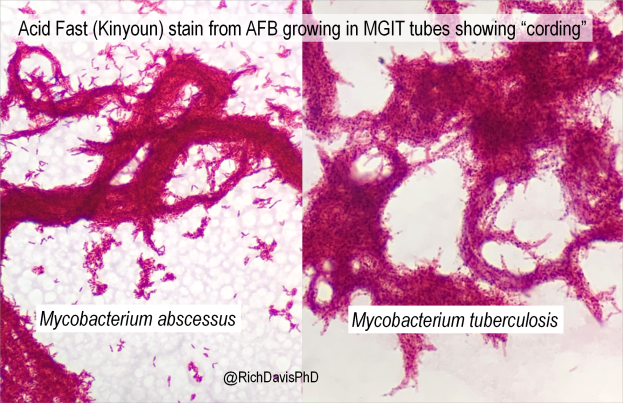
“Cording” is term used to describe twisting, serpentine appearance of Mycobacterium in liquid broth culture. And, at least in many places, it is taught to budding microbiologists and infectious disease clinicians as a hallmark characteristic of Mycobacterium tuberculosis (Mtb).

How long have people been observing Mtb cording in liquid culture? From very beginning!

Robert Koch, originator of the famous Koch’s Postulates, used Mtb (now recognized to be just one member of the M. tuberculosis complex) to demonstrate that disease was caused by discrete organisms originating from one host and infecting another, what we accept as germ theory. In his original description of Mtb, Koch wrote that the bacilli would “ordinarily form small groups of cells which are pressed together and arranged in bundles.”

Cording phenotype is distinct from “clumping.” With cording, bacilli lay in tightly packed parallel strands, and not clumped together showing random bacilli orientation.

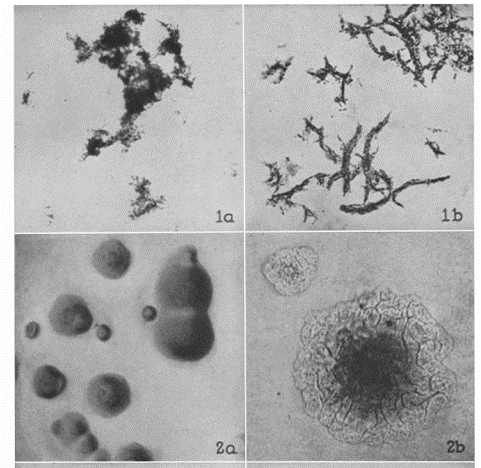
The phenomenon of cording is distinct to organisms cultured in liquid media like Middlebrook 7H9 broth. But in 1947 Middlebrook (where Middlebrook 7H9 broth gets its name), Dubos and Pierce published a key paper showing that cording Mtb strains also grew as rough colonies on solid agar and that this phenotype was associated with virulent and not avirulent Mtb strains.

Figures from 1947 Middlebrook et al., showing avirulent Mtb clumping (1a) and smooth colonies (2a) and virulent Mtb with cording (1b) and rough colonies (2b).

Only a few years later in 1950, the actual cell wall component, the so-called “cording factor,” that causes these growth characteristics was extracted and identified. Trehalose-6,6-dimycolate (TDM), a major glycolipid from the cell walls of virulent strains of Mtb.

Further work suggested that, not only was this TDM glycolipid the cause of the unique cording appearance and rough colonies in in vitro culture conditions, but that directly was a virulence factor: studies in animal models showed that TDM not only directly allowed Mtb to avoid phagocytosis from macrophages by virtue of forming large clusters of bacilli, but it also directly prevented macrophage intracellular killing mechanisms (see Hunter, 2006).

The association between cording and clinical isolates of Mtb was seen as a very sensitive and specific finding. Such a robust feature, in fact, that a number of publications from clinical microbiology labs specifically to cording as a reliable method to quickly identify Mtb (see McCarter 1998) or at least to select which isolates should be further identified by more specific methods(see Nelson, 1998).

Cording in non-tuberculosis Mycobacteria

Though there was a strong the association between cording and Mtb, scientists had known for years that other Mycobacterium species, outside the M. tuberculosis complex, also expressed TDM. But beginning with a case report in 2008, an isolate of Mycobacterium marinum was seen to have a biofilm with “cording morphology.” Other reports of cording in M. marinum followed (see Staropoli 2008).

Importantly, cording in non-tuberculosis Mycobacterium species is 1) actual cording and 2) visually indistinguishable from cording seen in Mtb.

In my laboratory, (Spokane, Washington, USA) we regularly see isolates of Mycobacterium abscessus, a rapid growing mycobacterium species, with clear cording morphology. These twisting structure are clearly cords, not just clumps.

Researchers have since identified not just different levels of TDM in isolates of M. abscessus but also that those levels correlate to the known rough or smooth appearance of these isolates (see Llorens-Fons, 2017). It is interesting to consider that more virulent isolates of M. abscessus are likely to be rough, cording-type growers, similar to what is seen with Mtb.

Beyond what I hope was an interesting look into the history of Mycobacterium identification, and a great chance to show some beautiful AFB cording, it’s a good reminder that in our lab culture (pun definitely intended!) visual clues to organism identification may not fit what you were first taught.

References

  1. Middlebrook G, Dubos RJ, Pierce C. VIRULENCE AND MORPHOLOGICAL CHARACTERISTICS OF MAMMALIAN TUBERCLE BACILLI. J Exp Med. 1947 Jul 31;86(2):175-84. doi: 10.1084/jem.86.2.175. PMID: 19871665; PMCID: PMC2135722.
  2. Hunter RL, Olsen MR, Jagannath C, Actor JK. Multiple roles of cord factor in the pathogenesis of primary, secondary, and cavitary tuberculosis, including a revised description of the pathology of secondary disease. Ann Clin Lab Sci. 2006 Autumn;36(4):371-86. PMID: 17127724.
  3. McCarter YS, Ratkiewicz IN, Robinson A. Cord formation in BACTEC medium is a reliable, rapid method for presumptive identification of Mycobacterium tuberculosis complex. J Clin Microbiol. 1998 Sep;36(9):2769-71. doi: 10.1128/JCM.36.9.2769-2771.1998. PMID: 9705435; PMCID: PMC105205.
  4. Nelson SM, Cartwright CP. Comparison of algorithms for selective use of nucleic-acid probes for identification of Mycobacterium tuberculosis from BACTEC 12B bottles. Diagn Microbiol Infect Dis. 1998 Aug;31(4):537-41. doi: 10.1016/s0732-8893(98)00049-2. PMID: 9764392.
  5. Hall-Stoodley L, Brun OS, Polshyna G, Barker LP. Mycobacterium marinum biofilm formation reveals cording morphology. FEMS Microbiol Lett. 2006 Apr;257(1):43-9. doi: 10.1111/j.1574-6968.2006.00143.x. PMID: 16553830.
  6. Staropoli JF, Branda JA. Cord formation in a clinical isolate of Mycobacterium marinum. J Clin Microbiol. 2008 Aug;46(8):2814-6. doi: 10.1128/JCM.00197-08. Epub 2008 Jun 25. PMID: 18579723; PMCID: PMC2519507.
  7. Llorens-Fons M, Pérez-Trujillo M, Julián E, Brambilla C, Alcaide F, Byrd TF, Luquin M. Trehalose Polyphleates, External Cell Wall Lipids in Mycobacterium abscessus, Are Associated with the Formation of Clumps with Cording Morphology, Which Have Been Associated with Virulence. Front Microbiol. 2017 Jul 25;8:1402. doi: 10.3389/fmicb.2017.01402. PMID: 28790995; PMCID: PMC5524727.

-Dr. Richard Davis, PhD, D(ABMM), MLS(ASCP)CM is a clinical microbiologist and regional director of microbiology for Providence Health Care in Eastern Washington. A certified medical laboratory scientist, he received his PhD studying the tropical parasite Leishmania. He transitioned back to laboratory medicine (though he still loves parasites!), and completed a clinical microbiology fellowship at the University of Utah/ARUP Laboratories in Utah before accepting his current position. He is a 2020 ASCP 40 Under Forty Honoree.

Microbiology Case Study: A 30 Year Old with Fever Post Stem Cell Transplant

Case History

A thirty year old female with refractory acute leukemia was admitted to undergo allogeneic stem cell transplantation. Her initial admission had multiple infectious complications and chemotherapy-induced pancytopenia with profound absolute neutropenia. The patient was placed on prophylaxis/therapy including bacterial, viral, and fungal coverage. On hospital day 14, the patient was febrile to 38°C; vancomycin/piperacillin-tazobactam were added as empiric therapy due to concern for sepsis with fluctuation in mental status. CT Brain without contrast revealed a large intracranial hematoma with mass effect. Her mental status continued to decline and intubation was required for airway protection. An emergent decompressive hemicraniectomy was performed where necrotic brain tissue with hemorrhage/clot were found.

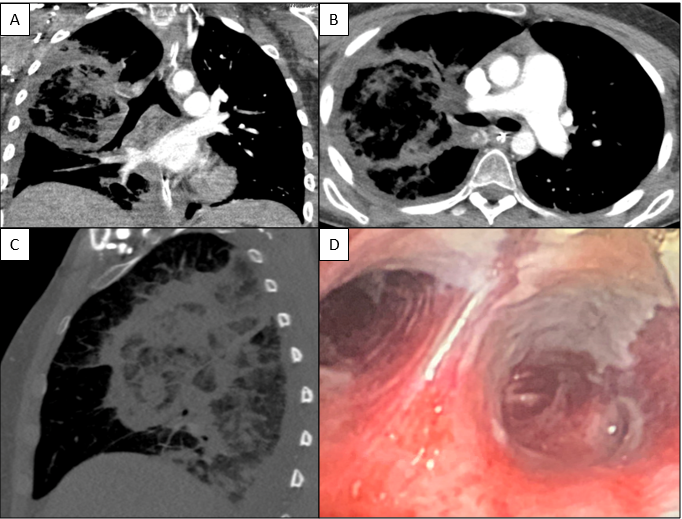
Due to ongoing fevers, empiric antimicrobial therapy was further broadened with meropenem, doxycycline, trimethoprim/sulfamethoxazole, and liposomal amphotericin B (L-AMB). Repeat cultures and imaging studies were ordered to evaluate for infection as a fever source. CT Angiography Chest (Image 1A-C) was performed and revealed an extensive non-enhancing area of ground glass opacity with peribronchovascular consolidation (“Reversed Halo” sign) in the right lung concerning for angioinvasive fungal infection. A tracheal aspirate was sent for bacterial and fungal culture. Subsequent bronchoscopy revealed extensive necrosis involving all visualized airways of the right tracheobronchial tree to the first subsegmental level (Image 1D). By contrast, the left lung appeared relatively normal and uninvolved. Bronchial washings of the right lung were also submitted for culture.

Image 1. Computed Tomography (CT) Angiography Chest images: Coronal (A), Cross-section (B) and Sagittal (C) sections reveal a large central ground glass opacity surrounded by a dense consolidation in the shape of a ring “Reversed Halo” sign. Bronchoscopy (D) revealed extensive necrosis and friable mucosa in the visible airways of the right lung.

Laboratory Identification

Respiratory specimens were sent to the microbiology laboratory for bacterial and fungal cultures. Hyphal elements were observed on the Gram stain of the submitted tracheal aspirate (Image 2A). Robust fungal growth was noted within 48 hours on Brain Heart Infusion and Inhibitor Mold agars from both the tracheal aspirate and bronchial wash specimens (Image 2B). A lactophenol cotton blue prep revealed broad hyphae with few septations, consistent with a member of the Mucorales (Image 3). Sporangiophores were noted to be long, dark and branched with round sporangia. Few rhizoids were observed and located between the sporangiophores. A definitive identification of Rhizomucor sp. was obtained through the use of matrix-assisted laser desorption ionization mass spectrometry (MALDI-TOF MS).

Image 2. A: Gram stain (400X) of direct sample from tracheal aspirate with broad, irregular, long, pauciseptate hyphae consistent with infection from a fungal species belonging to the order Mucorales. B: Fluffy “cotton candy” appearing light brown-grey colonies grew rapidly (<4 days) on brain heart infusion agar from both tracheal aspirate (pictured) and bronchial washing specimens.
Image 3. Lactophenol cotton blue stain obtained by tape preparation direct from fungal colony (A; 200X, B-D; 400X). Numerous branched dark brown non-apophysate sporangiophores with spherical columella were seen along with numerous broad, irregular pauciseptate hyphae with right angle branching (A, B). Rudimentary rhizoids developing off stolons (C, D) were rarely identified.

Discussion

Members of the order Mucorales can be identified in the laboratory by their rapid, robust growth and cotton candy-like appearance on conventional fungal media excluding those containing cycloheximide.2 Microscopically, these molds exhibit pauciseptate, broad (9-15 μm wide) hyphae with sporangia. Some species elaborate root-like structures called rhizoids (e.g Rhizopus, Rhizomucor) while others lack them (e.g. Mucor).2 Rhizomucor sp. can be differentiated microscopically from other related members of the Mucorales by its branched, dark brown sporangiophores with absent apophysis, round columella and the presence of few, short, rudimentary rhizoids (Image 3A-D). In practice, the rhizoids can be challenging to identify microscopically.2 Some species can also grow at elevated temperatures (~38-58°C) which can be utilized as a tool for use in identification.2 Newer methods including the use of MALDI-TOF MS and DNA probes allow for rapid, accurate identification of these fungi, but are not routinely available in all laboratories.

Infections caused by Mucorales (Mucormycosis) usually involve immunocompromised patients with defects in cell-mediated immunity. Rapid and often fatal, these infections can prove extraordinarily difficult to manage. They are known to be angioinvasive and can widely disseminate. Debridement of involved tissues and higher-level antifungal agents (e.g. posaconazole, amphotericin B) are mainstays of therapy. The most recognized group of patients where these infections are identified are uncontrolled diabetics, frequently in diabetic ketoacidosis, often with nasal/orbital sinus involvement. Patients with leukemia/lymphoma who are undergoing stem cell transplantation are another group often affected. In addition to the nasal/orbital sinuses, the gastrointestinal tract, skin and lungs also serve as important sites for these infections, especially if mucositis occurs.1

Rhizomucor sp. are an occasional cause of mucormycosis, but have a predilection for leukemic patients such as in this case.2 Given the significant bronchoscopy findings and the intraoperative presence of necrotic brain tissue, there was substantial clinical concern for invasive pulmonary mucormycosis with possible central nervous system involvement. Isavuconazole was discontinued, and posaconazole and micafungin were added to her antifungal therapy (L-AMB). Granulocyte infusions were used in an attempt to increase her cell-mediated immune response to the mold. Cardiothoracic surgery evaluated the patient but the lesion was deemed unresectable. Due to the presence of epistaxis, the otolaryngology service evaluated the patient for invasive fungal sinusitis; however, nasal endoscopy did not reveal any nasal/sinus involvement. The patient never regained significant neurological function and continued to medically decline during the hospitalization. She was placed on comfort care where she died shortly afterwards.

References

  1. Love GL, Ribes JA. 2018. Color Atlas of Mycology, An Illustrated Field Guide Based on Proficiency Testing. College of American Pathologists (CAP), p. 244-274
  2. Walsh TJ, Hayden RT, Larone DH. 2018. Larone’s Medically Important Fungi, A Guide to Identification. ASM Press, p. 185-190

-John Markantonis, DO is the current Medical Microbiology fellow at UT Southwestern and will be completing his Clinical Pathology residency in 2022. He is also interested in Transfusion Medicine and parasitic diseases.

Kim Stewart BS, MT(ASCP)SM holds a bachelor’s degree from Texas Tech University and is medical technologist in the microbiology section at UT Southwestern Medical Center with 35 years’ experience.

-Andrew Clark, PhD, D(ABMM) is an Assistant Professor at UT Southwestern Medical Center in the Department of Pathology, and Associate Director of the Clements University Hospital microbiology laboratory. He completed a CPEP-accredited postdoctoral fellowship in Medical and Public Health Microbiology at National Institutes of Health, and is interested in antimicrobial susceptibility and anaerobe pathophysiology.

2020: Lessons Learned in Lab Safety

2020 will be a year for many to remember, no matter your profession. If you worked in a laboratory, though, you know many things happened along the way which were both difficult and unexpected, and much of the year was consumed with work surrounding the COVID-19 pandemic. Changes and challenges came along which would test the resiliency of any lab safety professional. With luck, though, there were good lessons learned and new ideas about how to face certain lab safety issues in the future.

The Fear of Biohazards

One of the earliest challenges many lab leaders faced this year was dealing with the fears of staff who would have to work with COVID-19 patients and specimens. With the news reporting daily death tolls and unscientific data (like mortality rates when the total number of cases could not be determined), the amount of fear that was generated for some people became obvious at work. Staff members became afraid of handling any specimens, and people began unnecessary practices like double-bagging swabs or wearing gloves when transporting specimens.

Getting employees to deal with those fears and to continue to work became a priority for many very quickly. Many lab leaders conducted meetings and educational sessions. It was important to remind staff that they usually handled specimens every day which contain bacteria and other viruses that could be as harmful to them. They had to remember that if they used Standard Precautions with all samples, they could remain safe. In some locations COVID-19 FAQ newsletters were used to address hot-button issues and answer common questions about PPE, high-touch surfaces, and aerosol generating procedures. It was a good lesson to learn, lab staff need regular information about the proper handling of the hazards they work with and knowledge about how to remain safe on the job.

PPE Changes

Another challenge that arose was trying to keep up with the changes in recommendations for PPE use in the lab and for those who collected COVID-19 swab specimens. In the beginning of the year, masks were not required in the workplace, but that changed. Then cloth masks were not allowed in some organizations. The use of face shields or goggles was mandated, in some locations they were even required in break rooms and hallways. Phlebotomists who once wore only gloves now had to wear gowns, masks and face shields, and in some instances N95 respirators were used. These changes required education, training and an explanation for staff as to why the extra PPE was necessary.

Changes also came to how laboratorians would utilize PPE. Because of international shortages of supplies, the CDC provided information about extended use and re-use of the equipment. Organizations moved from using disposable lab coats and gowns to reusable ones. Hospitals had to set up methods for reprocessing and disinfecting gowns and N95 respirators for reuse using UV lighting or a hydrogen peroxide vapor treatment. Laboratorians and other healthcare workers learned how to extend the normal wear time of N95 respirators, masks, and other disposable PPE and how to store items rather than toss them out. While PPE supply issues seem to have calmed down, labs learned many lessons about how to handle such shortages in the future.

New Testing

As the pandemic progressed, many labs were asked to bring on board new COVID-19 testing. This testing typically had to be brought on board quickly, and in some cases new laboratory space had to be found. Many considerations had to be discussed such as room ventilation, safety equipment (BSCs, eyewash stations, spill kits, etc.), and proper specimen transport.

The best approach for this (as with any new process in the lab) is to conduct a complete risk assessment. One method is to identify the risks associated with the new testing, rate the likelihood and consequences of potential hazards in the process, and then implement steps to mitigate those hazards. Performing these assessments routinely and reviewing them will help to keep your staff safe as work continues in the department all year.

The COVID-19 pandemic affected other areas of work in the laboratory. Accreditation agencies delayed inspections, and now they are trying virtual auditing. Staffing levels are affected by virus exposures in the community or within the department, and while organizations do their best to follow national safety guidance, many have different approaches. The pandemic is not over, and soon healthcare workers will be offered a vaccine. What new lessons will we continue to learn as the situation continues to develop? Time will tell. The important thing for lab leadership is to stand for what keeps those in their department safe. Continue to follow standard precautions, and escalate issues when the unusual occurs. Remember, we will get through this, but as we do, take the opportunity to learn from the experience this year and when moving ahead!

Dan Scungio, MT(ASCP), SLS, CQA (ASQ) has over 25 years experience as a certified medical technologist. Today he is the Laboratory Safety Officer for Sentara Healthcare, a system of seven hospitals and over 20 laboratories and draw sites in the Tidewater area of Virginia. He is also known as Dan the Lab Safety Man, a lab safety consultant, educator, and trainer.

Microbiology Case Study: 68 Year Old Female with Streptococcus anginosus in a Tracheostomy Wound

Case History

A 68 year old female was admitted to our hospital for emergent tracheostomy due to airway obstruction. Her symptoms began months ago with cough, dysphagia, and hoarseness of voice, difficulty breathing, slowly growing neck mass, and weight loss. Surgical biopsy from the neck mass confirmed the presence of squamous cell carcinoma of the hypopharynx “stage IVB”.

Chest CT scan indicated the possibility of metastatic disease to the lungs. Recently, she experienced a slow onset of paraparesis and blurring of vision in her left eye, which raised a concern about the disease metastasized to the brain. Brain MRI was performed and came back negative for metastasis to the brain. Additionally, she is at risk of refeeding syndrome due to muscle wasting, cachexia, dysphagia, 25% body weight loss, and significant failure to thrive. Radiation oncologists recommended concurrent radiation with chemotherapy, with a prescribed 70 Gray of radiation dose.

Physical examinations showed bilateral coarse lung sounds. Prior to her presentation, she had been treated with docusate, hydrocodone-acetaminophen, morphine, ondansetron, and labetalol. Her past medical history was notable for essential hypertension and an extensive history of smoking 1 PPD for 45 years. She was also started on weekly carboplatin and paclitaxel for five weeks.

The surgical biopsy from the tracheostomy lesions was sent to the microbiology laboratory for bacterial culture. The Gram stain of the culture showed gram positive cocci in chains. After 48 hours of incubation, the cultures grew a pure culture of α-hemolytic colonies (Figure 1). The organism was identified as Streptococcus anginosus by MALDI-TOF mass spectrometry (VITEK MS).

Image 1. Alpha-hemolytic colonies of Streptococcus anginosus growing on Sheep Blood Agar (SBA) plate after 48 hours of incubation.

Discussion

Streptococcus anginosus group (SAG) “formerly named as streptococcus milleri” are members of the Viridians Streptococci group, which are known to cause endocarditis due to their ability to bind extracellular matrix proteins such as fibronectin, fibrinogen, and laminin, by facilitating bacterial adhesion to the heart valves.1

In general, SAG consists of three main strains: Streptococcus intermedius, Streptococcus constellatus, and Streptococcus anginosus. Streptococcus intermedius tends to be associated with central nervous system (CNS) infections, while S. anginosus is commonly found as commensals at the genitourinary and gastrointestinal systems.2 Since S. anginosus strains can be virulent due to its ability to survive in an acidic environment and cause systemic bacteremia, skin and soft tissue infections (SSTIs), osteomyelitis, and CNS infections, isolation of this organismfrom invasive sites should not be regarded as a contaminant. Besides, S. anginosus infection is occasionally associated with liver abscesses and colonic adenocarcinoma.3

Notably, the recovery of this organism from our patient’s tracheostomy biopsy wound indicates the likely association of S. anginosus and oral squamous cell carcinoma (OSCC). Sasaki M et al. demonstrated that the dental plaques in oral squamous cell carcinoma patients could act as a reservoir for SAG, which might cause significant DNA damage in oral mucosa, thus predisposing to accumulated mutations.4 Two other studies have also shown that SAG is recovered exclusively in oral squamous cell carcinoma patients compared to individuals without oropharyngeal cancer.5,6

SAG are usually susceptible to penicillin, ampicillin, or ceftriaxone, while sometimes they can be resistant to clindamycin.7 In our case, the patient received multiple doses of IV ampicillin-sulbactam and metronidazole in the emergency department. After S. anginosus had been identified from her tracheostomy wound, the patient was discharged on oral ampicillin-sulbactam, along with the carboplatin and paclitaxel treatment.

References

  1. Asam D, Spellerberg B. Molecular pathogenicity of Streptococcus anginosus. Mol Oral Microbiol. 2014;29(4):145-155. doi:10.1111/omi.12056
  2. Whiley RA, Beighton D, Winstanley TG, Fraser HY, Hardie JM. Streptococcus intermedius, Streptococcus constellatus, and Streptococcus anginosus (the Streptococcus milleri group): association with different body sites and clinical infections. J Clin Microbiol. 1992;30(1):243-244. doi:10.1128/JCM.30.1.243-244.1992.
  3. Masood U, Sharma A, Lowe D, Khan R, Manocha D. Colorectal Cancer Associated with Streptococcus anginosus Bacteremia and Liver Abscesses. Case Rep Gastroenterol. 2016;10(3):769-774. Published 2016 Dec 13. doi:10.1159/000452757
  4. Sasaki M, Yamaura C, Ohara-Nemoto Y, et al. Streptococcus anginosus infection in oral cancer and its infection route. Oral Dis. 2005;11(3):151-156. doi:10.1111/j.1601-0825.2005.01051.x
  5. Robayo DAG, Erira HAT, Jaimes FOG, Torres AM, Galindo AIC. Oropharyngeal Squamous Cell Carcinoma: Human Papilloma Virus Coinfection with Streptococcus anginosus. Braz Dent J. 2019;30(6):626-633. doi:10.1590/0103-6440201902805.
  6. Tateda M, Shiga K, Saijo S, Sone M, Hori T, Yokoyama J, Matsuura K, Takasaka T, Miyagi T. Streptococcus anginosus in head and neck squamous cell carcinoma: implication in carcinogenesis. Int J Mol Med. 2000 Dec;6(6):699-703. doi: 10.3892/ijmm.6.6.699. PMID: 11078831.
  7. Tracy M, Wanahita A, Shuhatovich Y, Goldsmith EA, Clarridge JE 3rd, Musher DM. Antibiotic susceptibilities of genetically characterized Streptococcus milleri group strains. Antimicrob Agents Chemother. 2001;45(5):1511-1514. doi:10.1128/AAC.45.5.1511-1514.2001.

-Ahmed Ismail Younes, MD., is a first year pathology (AP/CP) resident at the East Carolina University Brody School Medicine. He is interested in specializing in dermatopathology. He is also passionate about conducting translational research. In his spare time, Ahmed enjoys spending his time watching movies, baking homemade pizza, and playing soccer.

-Phyu M. Thwe, Ph.D., MLS (ASCP)CM is Technical Director/Technical Consultant at Vidant Medical Center Clinical Microbiology Laboratory. She completed a Clinical and Public Health Microbiology Fellowship through a CPEP-accredited program at the University of Texas Medical Branch (UTMB) in Galveston, Texas. She is interested in extrapulmonary tuberculosis pathophysiology and developing diagnostic algorithms.

The Pathology Value Chain and Global Health

When Michael Porter conceptualized the Value Chain in 1985, histology as an idea was at least 184 years old and the use of a microtome to cut sections was 155 years old. Now 35 years into value chain as an established lens for markets and firms to approach those markets, numerous publications and reports discuss the value chain of diagnostics, of digital pathology, and of laboratories as profit centers from a variety of sources and as a profitable business model. With the core tool—histology—being such an old technology, easily duplicated, and standardized for skill, quality, and output, can it create competitive advantage or be part of a firm’s value chain? The framework of diagnostic anatomic pathology services (for example, a histology diagnosis for cancer) as a profit model creates ethical questions around what the true value of these services are when the tool is so common. No one chooses to have cancer. Therefore, no one chooses to have a diagnostic procedure for cancer. Stated another way, the consumer’s choice for the product is a potential matter of life and death—that is not true of breakfast cereal. One of the most important features of a capital market is free choice by consumers to choose or not choose products and services. Today, there are people that get by with a flip phone that only makes phone calls and perhaps sends text messages while other people choose essentially supercomputers to carry around in their pocket; however, no one is going to die if they don’t have a telephone on their person. Without a diagnostic procedure for cancer—with histology serving as the primary tool—patients will commonly die from that disease; but with a diagnosis they have a chance of cure, a chance which increases greatly the more rapidly and the earlier in the course of disease the diagnosis is made. One paradigm of healthcare that differs from actual business sectors is an inverse relationship of cost to supply. As competition increases in business, prices are driven downward and reach a level barely above margin which sustains the supply of the goods but often requires the business to diversify or innovate to reach higher margins. In healthcare, costs for the same procedures which are standard of care have gone up, year over year, even while new innovations emerge at higher costs. From a business perspective, creating a feasible value chain around healthcare and, specifically histology, seems unlikely to be sustainable in the long run. However, patients are the center of healthcare and there is high value to patients in having services that meet their medical needs. In applying the concept of “value” and established value chain concepts to anatomic pathology, we shall assume that the maximum value the system can achieve is the shortest time interval from development of cancer in the patient to cure. Fortunately, this value lens mirrors the most efficient pathology laboratory system which would process and sign out large volumes of small biopsies. Coincidentally, that is also the best profit model.

Many countries and large segments of the population in general do not have access to diagnostic histology services due to a range of barriers and challenges that are specific to each site. In some instances, these systems simply do not exist, for example, on many island nations and some nations that are less than 2 million people. The reason for this absence in such settings is due to a massive cost of such services because economies of scope and scale cannot be achieved without a particular threshold of case volume which results in excessively expensive—and thus, unsustainable–services. In larger yet low-resourced countries, private diagnostic histology services with variable quality exist with the main barriers being the out-of-pocket costs of those services to patients although quality could be considered the more important barrier. In high income countries, impoverished patients and patients with insufficient insurance coverage may never be able to access services while others who can access services initially may be inundated with bills related to cancer care that lead to financial disaster. However, all of these “gloom-and-doom” anecdotal observations are not solving the large range of problems that can be found across the patient’s pathology value chain. In order to approach this in the spirit with which Michael Porter intended but framed for a patient, let’s look at the pathology value chain with our value being maximum benefit to the patient, frame it in the context of global health, and assign solutions based on the original Porter activities. This is part 1 of a 4-part series dissecting value chain and pathology in global health. The activities are inbound logistics, operations, outbound logistics, marketing & sales, and service. Let us look at inbound logistics in this part.

Inbound Logistics – This activity encompasses the “receiving, warehousing, and inventory control of a company’s raw materials.” For the lens of maximum value to the patient, from the moment a biopsy is taken until delivery to the laboratory should be minimized and, when the sample arrives, it should be able to be processed immediately with all reagents available. For anatomic pathology, this portion of the value chain includes controlled and uncontrolled raw materials. The controlled raw materials are all of the purchased reagents, supplies, and other consumables that are used in the process of histology and include hazardous materials, flammable materials, and bulky materials such that inventory control should be optimized for both maximum efficiency and value but also maximum safety of staff. “Stock outs”, which are relatively rare in high-income settings, on the laboratory side can include lack of any of the essential reagents and tools to process samples including formalin, alcohol, xylene, paraffin, glass slides, cassettes, etc. Stock outs are the most common challenge in LMICs followed by complete lack of supply chain or lost supply chain. In HIC, bulk purchases, long-term contracts, and volume pricing reduce the cost of the controlled raw materials and can create slight competitive advantage.

Uncontrolled raw materials are the inbound patient tissue samples which can range from minute to whole bodies (in the special case of autopsy) and may be “packaged” by a diverse set of suppliers (i.e., clinical teams) with variable resources. These materials are also “precious” in that they are unique to each customer, cannot be easily reobtained, do not have a fiscal loss value that is easily quantifiable, and may have a large impact on the patient from which they are derived. These materials are also “flawed” because the pre-analytic collection of them by individuals that are not part of the laboratory may create inadequate, insufficient, inappropriate, or damaged materials. In HIC, considerable effort goes into educating clinical teams on collection, creating referral networks, providing collection vessels, etc.; yet laboratories still receive inadequate or insufficient samples. When we consider low- and middle-income countries, observed delays/deficiencies in this part of the value chain are quite common. “Stock outs” on the clinical side can include lack of supplies of clinicians for obtaining biopsies from a specific patient such as sterile biopsy tools, surgical services, and adequate formalin. “Skill lacks” include insufficient training or understanding of the laboratory operations by the clinical team to obtain a biopsy from a patient or properly prepare it for delivery to the laboratory. “System lacks” include an absent or poorly functioning specimen transportation and/or communication system which delays or prevents samples from reaching a laboratory. For a given patient or even population of patients that are to be served by a clinical health system feeding to a specific laboratory, the value chain can be massively depreciated if these inbound logistics are not rectified. When encountered and depending on the specific gap in controlled or uncontrolled raw materials, the solutions can include training of clinical staff; local production of reagents; supplier contract negotiations; bulk ordering; collaborative ordering; cost cross-subsidization; public-private partnerships; capital investment in transportation; and coordination with other convenient transportation networks.

To summarize this part, inbound logistics for a pathology laboratory include controlled and uncontrolled raw materials that have variable costs, safety, inherent value, and flaws that must be considered when planning laboratory operations. With rare exception, these inbound logistics are standardized which leaves little opportunity for major competitive advantage. In LMICs, stock outs (complete or delayed) can invalidate the work of a pathology laboratory by creating significant time delays in diagnosis which make the final diagnosis useless to the individual patient and erode the clinical confidence in the overall system.

In part 2, we will look at operations.

References:

Porter, M. (1985). The value chain and competitive advantage, Chapter 2 in Competitive Advantage: Creating and Sustaining Superior Performance. Free Press, New York, 33-61.

Histology. Wikipedia. https://en.wikipedia.org/wiki/Histology#:~:text=In%20the%2019th%20century%20histology,by%20Karl%20Meyer%20in%201819.

Thorpe A et al. The healthcare diagnostics value game. KPMG International. Global Strategy Group. https://assets.kpmg/content/dam/kpmg/xx/pdf/2018/07/the-healthcare-diagnostics-value-game.pdf

Digital Pathology Market CAGR, Value Chain Study, PESTEL Analysis and SWOT Study|Omnyx LLC, 3DHISTECH Ltd, Definiens AG. https://www.pharmiweb.com/press-release/2020-06-30/digital-pathology-market-cagr-value-chain-study-pestel-analysis-and-swot-study-omnyx-llc-3dhistec

Friedman B. The Three Key Components of the Diagnostic Value Chain. Lab Soft News. January 2007. https://labsoftnews.typepad.com/lab_soft_news/2007/01/the_three_eleme.html

XIFIN. The Evolution of Diagnostics: Climbing the Value Chain. January 2020. https://www.xifin.com/resources/blog/202001/evolution-diagnostics-climbing-value-chain

Sommer R. Profiting from Diagnostic Laboratories. November 2011. Seeking alpha. https://seekingalpha.com/article/305931-profiting-from-diagnostic-laboratories#:~:text=The%20three%20year%20average%20operating,current%20operating%20margin%20of%2012.9%25.

milner-small


-Dan Milner, MD, MSc, spent 10 years at Harvard where he taught pathology, microbiology, and infectious disease. He began working in Africa in 1997 as a medical student and has built an international reputation as an expert in cerebral malaria. In his current role as Chief Medical officer of ASCP, he leads all PEPFAR activities as well as the Partners for Cancer Diagnosis and Treatment in Africa Initiative.

Solving Complex Clinical Puzzles: A Memorable Autopsy Experience

I walked into the autopsy suite, trembling and drenched in sweat, even though the atmospheric temperature was as cool as it could ever be. It was my second autopsy experience as a pathology resident and I could not make out exactly how I was feeling. My first session had exposed me to the critical role of pathologists in solving complex clinical puzzles and had left me shaken for days. And, I still wasn’t sure how the second session was going to be. But, one thing I was sure of was the fact that I still felt uncomfortable.

Not uncomfortable because of the task that had been given to us to find out the cause of death of the person I was going to meet. But I felt very uneasy with the fact that I did not know what to expect, yet again. The first session had been that of a middle-aged woman. This was going to be a case of a young man. Two different scenarios and diagnoses. I did not know what to expect. My stomach turned and churned and I could also feel my heart thumping loudly in my chest.

I looked up at my senior resident, with my attending physician observing our every move. He looked very comfortable with what we were about to do. He seemed to approach the entire situation like it was a routine procedure for him. I questioned myself, “would I ever get comfortable with doing autopsies like him?”

I listened attentively as the senior resident walked me through the process of performing an autopsy and what our duties as pathologists was supposed to be. I tried to listen as my senior colleague who was obviously very familiar with the process gave me a detailed lecture. I felt my mind wandering away, even though it seemed as though I was paying attention to what he was saying. My attention drifted back and forth as I couldn’t help thinking about so many other things including the complexities surrounding life and death.

As we went through the organs and finally began working on the lungs and heart were his primary pathologies were supposed to be, I was amazed at the pathology I was being exposed to. His bilateral lungs were severely fibrotic, encased with numerous calcified nodules that eventually turned out to be non-caseating granulomas. He also had calcified hilar nodules also confirmed histopathologically as non-caseating granulomas and his heart was markedly enlarged, with hypertrophy of biventricular walls, more prominent on the right side. His pulmonary arteries also showed signs of severe vascular disease with hyalinization and fibrosis. He had disseminated sarcoidosis, with his heart and lungs more severely affected. The sarcoid granulomas had spared the other organs and had domiciled in the lungs, with downstream effects on the heart. He fit the stereotypical case of cor-pulmonale-right sided heart failure from severe lung disease. The facts of the case suddenly began to make a lot of sense to me. I thus had a better understanding of why the patient had progressed so rapidly with his disease course with a fatal outcome.

I realized later that all my prior apprehension about performing the autopsy had been replaced by an interesting curiosity to find out more about his disease. My initial trepidation about performing that autopsy was quickly replaced by a determination to answer the “why” question. I became more involved and present with the procedure that by the time we left the autopsy suite, I thought I had learned something new that day.

That experience of being able to solve a clinical puzzle from autopsy findings made a huge impact on me. Therefore, the role of pathology and laboratory medicine in the advancement of medicine and patient care can never be overstated.

-Evi Abada, MD, MS is a Resident Physician in anatomic and clinical pathology at the Wayne State University School of Medicine/Detroit Medical Center in Michigan. She earned her Masters of Science in International Health Policy and Management from Brandeis University in Massachusetts, and is a global health advocate. Dr. Abada has been appointed to serve on the ASCP’s Resident’s Council and was named one of ASCP’S 40 under Forty honorees for the year 2020. You can follow her on twitter @EviAbadaMD.

Critical Values: The Burden, Promise and Realization of Virtual Interviews for Pathology Residency During a Pandemic

The SARS-CoV-2 virus continues to cause increased infections and deaths around the world with considerable impact on clinical and laboratory medicine communities. Meanwhile, medical students and the medical community are also undertaking the yearly tribulation of residency interview season. Following the May announcement by the Coalition for Physician Accountability’s Work Group on Medical Students,1 the 2020 interview season will be entirely conducted utilizing virtual interviews. In pointed response to this change in format, residency programs rapidly scrambled to bolster websites, increase their social media presence, add virtual tours and prepare for the virtual interview format prior to the start of interview season. Now, at the midpoint of interview season, it is evident that some burdens of traditional on-site interviews are indeed being alleviated. Whether or not online resident socials and virtual tours can sufficiently substitute for all aspects of on-site visits and if the promise of increased spread of geographic and cultural diversity can be realized remains to be accurately assessed. The survival of the virtual format may even depend on this assessment.

The average cost of traditional on-site pathology interviews has continued to increase for medical students from a per person average of $3400 in 2015 to $4000 in 2020.2 Much of this expense comes from travel/transportation while some pathology programs provided accommodations. Additionally, interview season required about 20 total days away from medical school. To cover these expenses, about half (49%) of medical students borrow money for interviews . Not surprisingly, the majority of them agree that travel (79%) and lodging (65%) are overly burdensome components of interview season.2 Beyond accounting, the salient impact of these time and financial investments is that they were influencing the majority (58%) of interview decisions.

While the rising time and financial burdens of traditional on-site residency interviews were well-known and there was and continues to be a myriad of ideas3 on how to best address these concerns and the match overall, a small burgeoning literature on virtual resident interviews was available prior to the pandemic that showed promise for addressing these concerns.4,5 That is, in the 2020 – 2021 residency interview season, medical students are estimated to spend about 3.5 hours on an average virtual interview day instead of the 8 hour day of a traditional interview and through the elimination of travel time they may spend 7 less days on the interview trail. Thus, the cost of interviewing is also projected to be skeletonized to that of necessary professional clothing and computer hardware. Additional promising data from this small body of research suggests that 85% of virtual interviewees were satisfied with their understanding of the program and their ability to present themselves to residency programs.6 Furthermore, the fact that the residency program’s rank list showed no significant impact based on whether candidates interviewed virtually or in-person suggests that residency programs may feel capable of fairly assessing candidates.7

Beyond time and financial savings for pathology residency applicants and the assessment of candidates by residency programs and vice versa, the measurability of additional outcomes may be critical to the continuation of virtual resident interviews. In particular, there is great interest in online social events and interview day resident panels as a sufficient substitute for the naturally evolving casual conversations that occur during the dinners, lunches and tours available with on-site visits. Also, whether or not these socials combined with interviews with a small subset of faculty can accurately portray a pathology residency program’s culture. In prior surveys that compared in-person, virtual or a combined approach to interviews, candidates always favored in-person assessment when given the choice. The present circumstance will perhaps be the best attempt at an unbiased assessment of the perception of culture through virtual interviews. Last but not least, given the turbulent nature of race relations and culture in the United States over the last year combined with the ability of applicants to virtually interview without travel or financial restrictions, it will be absolutely critical to understand if virtual interviews portend to increase the spread of geographic and cultural diversity among applicants to pathology residency programs. That is, if current trends in resident recruitment can be altered from the current rate of 40 – 60% intraregional resident matriculation or whether the needs of financial and family assistance and/or intraregional familiarity are insurmountable.8 For if the potential for greater diversity is attainable in a significant manner that can be perpetuated into the future, it will be hard to argue for a return to the traditional format. That said, there will likely be bias in the data as an increasing number of pathology residency programs have heard the call to arms and are marching towards diversity, inclusion and equity through greater promotion, recruitment and retention efforts.9

In a tumultuous year that has included race relations reminiscent of the Civil Rights Era combined with a total number of worldwide pandemic deaths similar to the 1957 or 1968 influenza pandemics, medicine continues its steady progression toward improved healthcare and education for all. Following the May 2020 recommendations to implement virtual residency interviews, pathology residency programs moved expeditiously to bolster their websites, increase their social media presence, add virtual tours and prepare for the virtual interview format. Amid this tumult, the virtual interview format has already served to lessen the burdens of time and cost while also serving the practical needs of interview assessments for both medical students and residency programs. Yet, only time and methodical assessment will tell if the virtual interview format eliminates the impact of these burdens on residency decisions, allows both parties to adequately assess cultural fit and if the format and its advantages are here to stay. Regardless, it is imperative that the emphasis on diversity, inclusion and equity remains irrespective of future format.

References

  1. The Coalition for Physician Accountability’s Work Group on Medical Students in the Class of 2021 Moving Across Institutions for Post Graduate Training Final Report and Recommendations for Medical Education Institutions of LCME-Accredited, U.S. Osteopathic, and Non-U.S. Medical School Applicants.
  2. Pourmand, A., Lee, H., Fair, M., Maloney, K. & Caggiula, A. Feasibility and usability of tele-interview for medical residency interview. Western Journal of Emergency Medicine 19, 80–86 (2018).
  3. Hammoud, M. M., Andrews, J. & Skochelak, S. E. Improving the Residency Application and Selection Process: An Optional Early Result Acceptance Program. JAMA – Journal of the American Medical Association 323, 503–504 (2020).
  4. Chandler, N. M., Litz, C. N., Chang, H. L. & Danielson, P. D. Efficacy of Videoconference Interviews in the Pediatric Surgery Match. J. Surg. Educ. 76, 420–426 (2019).
  5. Vining, C. C. et al. Virtual Surgical Fellowship Recruitment During COVID-19 and Its Implications for Resident/Fellow Recruitment in the Future. Ann. Surg. Oncol. 1 (2020). doi:10.1245/s10434-020-08623-2
  6. Healy, W. L. & Bedair, H. Videoconference Interviews for an Adult Reconstruction Fellowship: Lessons Learned. Journal of Bone and Joint Surgery – American Volume 99, E114 (2017).
  7. Vadi, M. G. et al. Comparison of web-based and face-to-face interviews for application to an anesthesiology training program: a pilot study. Int. J. Med. Educ. 7, 102–108 (2016).
  8. Shappell, C. N., Farnan, J. M., McConville, J. F. & Martin, S. K. Geographic Trends for United States Allopathic Seniors Participating in the Residency Match: a Descriptive Analysis. J. Gen. Intern. Med. 34, 179–181 (2019).
  9. Ware, A. D. et al. The “Race” Toward Diversity, Inclusion, and Equity in Pathology: The Johns Hopkins Experience. Acad. Pathol. 6, (2019).

-Josh Klonoski, MD, PhD, is a chief resident at the University of Utah, Salt Lake City, Utah, with a focus in neuroinfectious disease and global health. He has completed the first year of a neuropathology fellowship (out of sequence) and is in his final year of an anatomical and clinical pathology residency. Dr. Klonoski will return to the second neuropathology fellowship year in 2021 – 2022 and apply for a mentored clinical scientist research career development award (K08). The focus of his laboratory research is influenza and active projects include flu pneumonia, super-infections, encephalitis and oncolytic virotherapy.