Perspectives on Lab Safety

I attended a work shop where different people were allowed to express their views on life from their generation’s perspective. One group representative said that members of the “Millennials” generation often acted as if entitled to things in life and don’t feel as if they have to work for it. A Millennial representative spoke up. She said that she did not feel entitled, but felt a victim of broken promises. She watched the generation before her live the good life- go to school, get a job, get married, buy a house, etc. – and now she was done with school, full of debt and still living at home. The economy and the world had changed, and the life she hoped for was not the one she now faced. Listening to a different perspective was truly eye-opening, and it reminded me about an important aspect of lab safety coaching.

In conversations with long-term lab safety professionals (or those lab managers, POCT supervisors and others who share the lab safety role), I often hear about the constant frustrations with lab safety compliance. Staff does not wear PPE, they don’t follow safe work practices, or they don’t think about chemical or bloodborne pathogen safety. Some who oversee lab safety have become so frustrated that they have given up on coaching or talking to the people they are assigned to keep safe. That is most definitely an incorrect approach, and if you find yourself in that situation, it may be necessary to take a step back, look in the mirror, and notice that the problem could be you.

That’s not meant to sound accusatory, but if your lab is suffering from a poor safety culture, the best place to begin with a solution is in your head, and understanding that can be powerful. First, remember that each time you are in the laboratory and you see a safety issue that you ignore, you are seriously damaging the culture. Few are scrutinized more than those who manage the safety program in the lab, and if ignoring safety regulations is witnessed by staff, they will know how unimportant safety is in the department, and they will act accordingly. If you are burned out from years of battling the culture, it may be time for someone else to enter the safety role so that the culture is not damaged further.

Next, if you plan to remain the safety role, it may be time to examine your approach to staff. Instead of becoming frustrated with people when the need to coach arises, try to change your perspective. How a safety coaching episode will play out is largely determined by what you (the coach) are thinking as you approach the situation. It is important to remember that each time a staff member does not act in a way you wish or expect as it relates to safety, there are several possible reasons or influences on the situation, and all should be considered before acting.

Janet is in chemistry handling specimens without gloves. This alone could generate a range of negative feelings when you see this- anger, frustration, or even apathy. What are the possibilities? She was not trained properly, there are no gloves that fit her, she is having a reaction to gloves and is embarrassed to confess it, or gloves are kept in the store room and she doesn’t know the door combination. Any of these scenarios and more is possible. Your emotions about the situation are real, they can result from a broken promise (you’ve spoken to Janet before), judgement (she’s not a stellar tech anyway), or failed expectations (you recommended she be hired). However, you should not act on those emotions; there is little chance the coaching will go well. Approach Janet with a question that will start a reasonable, two-way conversation. “Hi, Janet. I notice you aren’t wearing gloves. What size can I get you?” Or “Janet, I see you are handling samples with no gloves and that is dangerous. Can you tell me why?” If this is a repeat situation, put the ball in Janet’s court. “Janet, we discussed glove use last week, but you are not wearing them. You told me you would. What’s going on?” Now the focus is on the important issue for you, Janet’s broken promise. The answer may help you understand her behavior, and help you to rectify the situation permanently. Remember to use a soft approach and a civil tone. Otherwise, the work of your thought-out coaching will be for naught.

Everyone has their own perspective. That in no way excuses all behaviors, especially failing to follow lab safety guidelines, but understanding a perspective will go far in helping you succeed with coaching those bad behaviors when needed. Think first, always act, and be the safety role model you need to be for your department. Those are the powerful steps to a strong lab safety culture.


Scungio 1

-Dan Scungio, MT(ASCP), SLS, CQA (ASQ) has over 25 years experience as a certified medical technologist. Today he is the Laboratory Safety Officer for Sentara Healthcare, a system of seven hospitals and over 20 laboratories and draw sites in the Tidewater area of Virginia. He is also known as Dan the Lab Safety Man, a lab safety consultant, educator, and trainer.

Elizabeth Holmes Presents New Technology at AACC2016

Yesterday, I had the opportunity to attend the Theranos presentation at the AACC 2016 meeting in Philadelphia. While several outlets have already reported on it (Wired did a particularly good job with their write-up), I wanted to give a few of my thoughts as a laboratory professional.

  1. Holmes didn’t present information or data on their Edison platform. Instead, she presented on a whole new tabletop device called the MiniLab.
  2. Essentially, the MiniLab is just that–it’s one machine that performs (dozens? hundreds? that part is unclear) tests on patient samples. It appears to be a counter-top sized analyzer, and will be able to perform chemistry, hematology, and immunology tests from one sample.
  3. Most of the data presented was performed using the MiniLab and venous blood samples.
  4. While the box is indeed small and all-inclusive, non of the tech inside–at least, as far as I could tell–was revolutionary or groundbreaking in anyway.
  5. There seems to be a lot of waste. The cartridge includes the consumables to do dozens of tests, but what if a patient only wants, say, a CBC performed?
  6. I’m finding it hard to believe that this analyzer would make laboratory testing affordable. Accessible, maybe, but it’s not going to be cheap.

If you’d like to see the presentation and the Q&A, you can watch it on YouTube.

If you’d like to see the slide deck with Holmes’ presentation, it’s here..


Swails

-Kelly Swails, MT(ASCP), is a laboratory professional, recovering microbiologist, and web editor for Lab Medicine.

CMS Proposes Rule that Promotes Antibiotic Stewardship

In mid-June, CMS proposed a rule that, in part, will help promote antimicrobial stewardship in hospitals. The 60-day comment period is nearing its end, so if you have thoughts on this proposed rule, let them know.

CMS press release


Microbiology Case Study: A 43 Year Old Man with AIDS

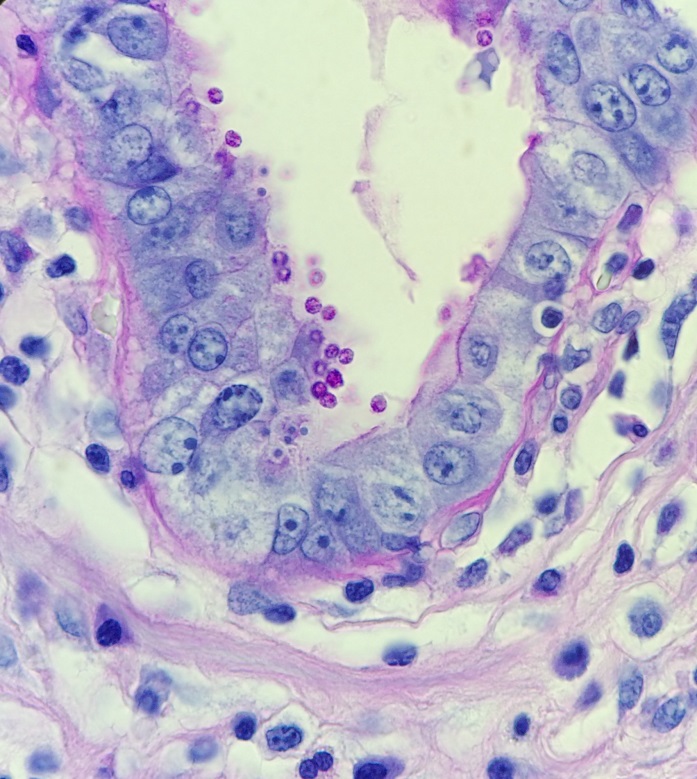
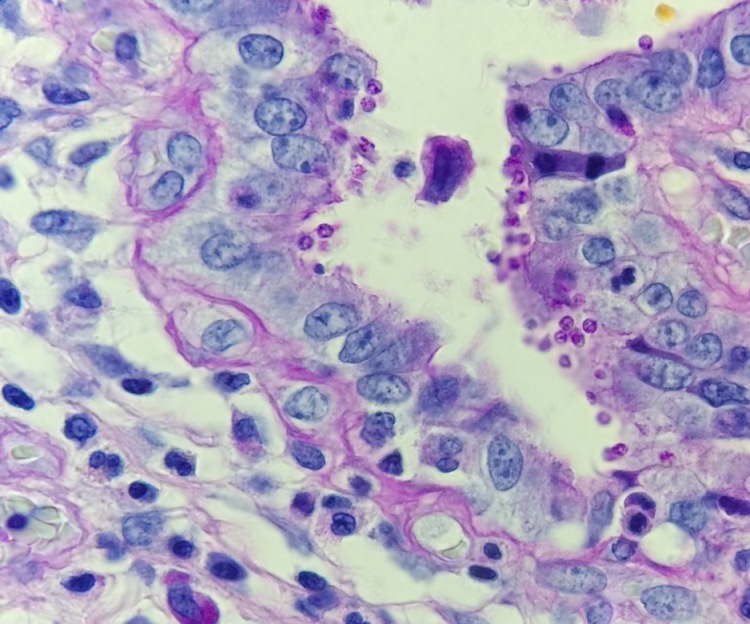
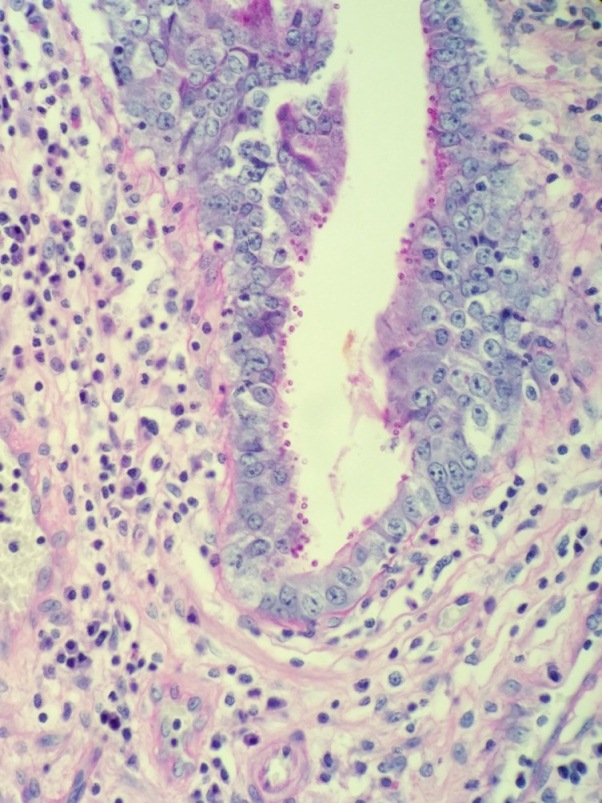
A 43-year-old man with AIDS with a complicated medical history, including multiple recent hospitalizations for CMV esophagitis, recurrent Clostridium difficile, multiple Klebsiella urinary tract infections and pyelonephritis, presented with right upper quadrant pain and profuse watery diarrhea. The ensuing work-up results in a diagnosis of cholecystitis and the patient underwent cholecystectomy. Subsequently, he developed an infected biloma necessitating the placement of a biliary drain. Photomicrographs of his cholecystectomy specimen are shown below.

crypto1
H&E stain of the gallbladder (20x).
crypto2
H&E stain of the gallbladder (100x).
crypto3
H&E stain of the gallbladder (100x).


Laboratory Identification

The diagnosis of cryptosporidiosis was made by H&E section. In a background of acute and chronic inflammation, numerous spherical organisms were identified lining the epithelial surface. Special stains, including PAS and mucin, were performed. The PAS was positive and the mucin stain negative in the organisms. The organisms measured between 2-5 microns. Important differential diagnoses include Cyclospora cayatanesis, which is a bit larger in size (8 microns), Isospora belli, which is much larger (20 microns) and Microsporidia, which is smaller (1-4 microns). Of note, microsporidia appears to be within the apical cytoplasm of mucosal epithelial cells on histology.

While a stool sample was not submitted to the microbiology laboratory in this case, there are several characteristic features of cryptosporidia that should be noted. Importantly, the detection of the oocysts by traditional O&P methods can be very difficult because they can look like yeast which is normal bowel flora. If a clinician suspects cryptosporidiosis, a modified acid fast stain should be performed as cryptosporidia oocyts are weakly acid fast. They also have the ability to autofluorescence when exposed to UV light. More sensitive techniques being used in laboratories today include direct fluorescent antibody [DFA], and/or enzyme immunoassays (ELISAs) for detection of Cryptosporidium sp. antigens.


Discussion

Cryptospoidiosis usually causes watery diarrhea, abdominal pain, nausea, vomiting, fever and weight loss. In a patient with an intact immune system, symptoms usually last 1-2 weeks, and eventually resolve without medical therapy. In an immunocomprimised host such as our patient, however, ingestion can result in severe and even life-threatening disease. Furthermore, use of usual antimicrobial drugs is generally ineffective in this patient population, making them particularly vulnerable.

Cryptosporidium belongs to the taxonomic group Protozoa, phylum Apicomplexa. This group of organisms includes many other important parasites such as Toxoplasma, Plasmodium, Babesia, Cyclospora, and Isopora. The Apicomplexan group is significant for the fact that they possess an apical structure enabling their penetration of host cells. Interestingly, Cryptosporidium is considered to be a eukaryotic intracellular, but extracytoplasmic pathogen as it resides in the columnar brush border of epithelial cells. This particular niche is thought to allow the parasite to evade the immune surveillance while being able to simultaneously take advantage of the solutes transported across the host microvillus membrane. Of the many Cryptosporidium species that exist, Cryptosporidium parvum and Cryptosporidium hominis are the most important in human disease (cryptosporidiosis).

Excretion of thick-walled sporulated oocysts by an infected host results in transmission of the disease through contaminated water sources, such as drinking supplies and recreational water sources. Occasionally contaminated food sources and zoonotic transmission may occur. Importantly, the oocysts are infective upon excretion, thus permitting direct and immediate fecal-oral transmission. Following ingestion, the oocyst excyts in the stomach and then undergo two stages of reproduction within the gastrointestinal tract, an asexual followed by a sexual phase referred to as merogony. Merogony is important in the pathogenicity of many Apicomplexa organisms as it results in massive DNA replication and the creation of hundreds of daughter cells simultaneously.

Cryptosporidia is an important public health hazard because of its resistance to chlorine. Chlorine is often used in water treatment facilities and public water sources as a disinfectant as it kills important pathogens such as Salmonella, Campylobacter, and norovirus. It is ineffective, however, against the thick walled cysts of cryptosporidia. UV light or a filtration system is needed to eradicate cryptosporidium from a contaminated water source.

References

  • CDC website, accessed 2/8/2016 http://www.cdc.gov/parasites/crypto/diagnosis.html
  • Forbes, B, Sahm, D, Wessfeld, A, Bailey & Scott’s Diagnostic Microbiology, 12th ed. 2007.
  • Chalmers, RM, Cryptosporidium: From Laboratory Diagnosis to Surveillance and Outbreaks. Parasite, 2008, 15, 372–378.


-Jessica Crothers, MD is a 4th year anatomic and clinical pathology resident at the University of Vermont Medical Center.

Wojewoda-small

-Christi Wojewoda, MD, is the Director of Clinical Microbiology at the University of Vermont Medical Center and an Assistant Professor at the University of Vermont.

FDA Halts Blood Donation in Two Florida Counties Due to Zika Virus

From the Washington Post:

“In a notice sent to blood centers and posted on the agency’s website Wednesday evening, the FDA said it is requesting all blood centers in Miami-Dade and Broward counties to ‘cease collecting blood immediately’ until those facilities can test individual units of blood donated in those two counties with a special investigational donor screening test for Zika virus or until the establishments implement the use of an approved or investigational pathogen-inactivation technology.”


Potential Antimicrobial Therapy Hiding in Plain Sight

Yesterday, Nature published a paper that might help in the fight against MRSA. In a nutshell, German researchers discovered that Staphylococcus lugdunensis–a common bacteria in commensal flora–produces a compound that reduces colonization with MRSA.

From the abstract:

“Notably, human nasal colonization by S. lugdunensis was associated with a significantly reduced S. aureus carriage rate, suggesting that lugdunin or lugdunin-producing commensal bacteria could be valuable for preventing staphylococcal infections.”


A Brief Overview of 7-day Platelets

The transfusion community has targeted platelets as the primary culprit in transfusion-associated clinical sepsis and fatal microbial infection. Platelets (PLTs) are associated with a higher risk of sepsis and related fatality than any other transfusable blood component. Concerns over bacterial contamination in PLT concentrates prompted the US Food and Drug Administration (FDA) in 1986 to issue a memorandum limiting the storage time of platelet products to 5 days. Only recently did the FDA issue draft guidance describing bacterial testing to improve the safety and availability of PLTs, and outlined the steps necessary for transfusion services to extend apheresis PLTs to 7 days.

Microbial infections were the 4th leading cause of transfusion-related mortality, accounting for 8% of them between 2010 and 2014. PLT storage at ambient room temperature supports high titer bacterial proliferation. Skin flora are the most common source of contamination, occurring at the time of collection. Despite the introduction of improved pre-collection arm preparation and analytically sensitive culture-based bacterial detection methods, the risk of fatal and non-fatal clinical sepsis has persisted.

Most recently, the 2016 AABB standards stated that PLTs may be stored for 7 days only if: 1) storage containers are cleared or approved by FDA for 7-day PLT storage and 2) labeled with the requirement to test every product stored beyond 5 days with a bacteria detection device cleared by FDA and labeled as a “safety measure.” The Verax PGD test is a rapid, single use, lateral flow immunoassay, and the only rapid, day of transfusion test the FDA has cleared as a “safety measure.” The proprietary test detects surface bacterial antigens, namely lipotechoic acid found on gram positive organisms and lipopolysaccharide found on gram negatives. The PGD test as a “safety measure” is to be used in concert with culture, not replace it.

Verax PGD test

Approximately 2.2 million PLT transfusions are administered yearly in the United States, of which more than 90% consist of apheresis PLTs. If the available data were generalized to the entire US apheresis PLT supply, approximately 650 contaminated apheresis PLTs would be caught with the PGD test, preventing septic transfusion reactions and potential fatalities each year. The FDA approval of this test allows non-culture based testing to extend dating from 5 to 7 days and further closes the safety gap that exists in apheresis PLTs.


Rogers

-Thomas S. Rogers, DO is a third-year resident at the University of Vermont Medical Center, a clinical instructor at the University of Vermont College of Medicine, and the assistant medical director of the Blood Bank and Transfusion Medicine service.

The author declares that he has no disclosures.

Microbiology Case Study: A 61 Year Old Male with Productive Cough and Altered Mental Status

Case History

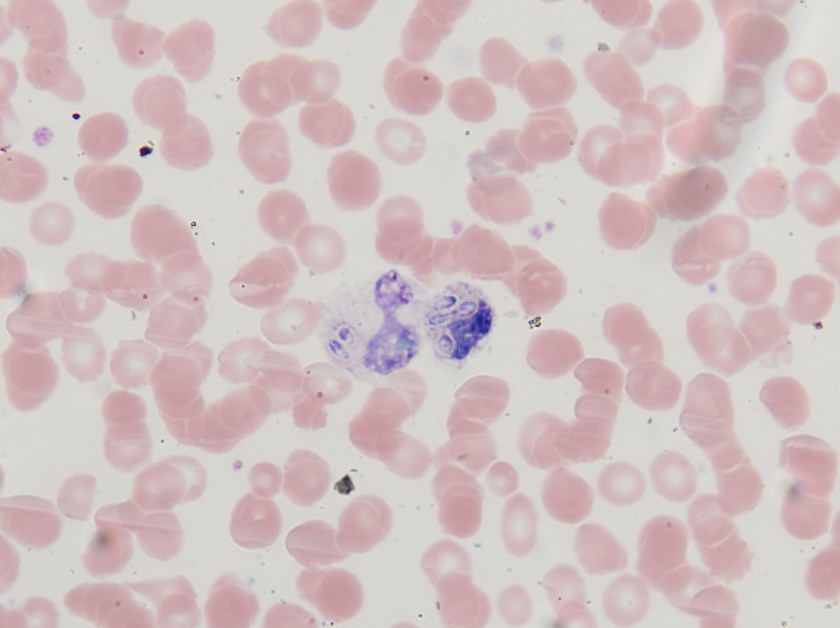
A 61 year old African American male presents to the emergency department with complaints of a productive cough, dyspnea and altered mental status. His past medical history is significant for HIV and currently he is non-compliant with his anti-retroviral medications. On arrival, he is found to be hypoglycemic (glucose 49 mg/dL) and tachycardic (heart rate between 160-180 beats/min). He lives in a group home and they report decreased oral intake for several days but he denies fever, chills, chest pain or abdominal pain. He is a tobacco smoker and admits to previous illicit drug use. On physical exam, he is lethargic and respiratory auscultation reveals coarse lung sounds, bilaterally. A chest x-ray shows bilateral interstitial and airspace opacities suggestive of an infectious process. His CD4 count is markedly decreased at 3 cells/cmm. Peripheral blood and bronchoalveolar lavage (BAL) fluid are sent to the hematology and cytology laboratories for microscopic examination. Blood and BAL specimens were also transported to the microbiology lab for bacterial, fungal and mycobacterial cultures.

Laboratory Identification

histo1
Figure 1. Peripheral blood smear highlighting small, intracellular yeast forms with narrow based budding (Giemsa stain, 1000x oil immersion).
histo2
Figure 2. Fluid from a bronchoalveolar lavage showing macrophages filled with numerous small yeast forms that have an “acorn-like” appearance (Giesma stain, 1000x oil immersion).
histo3
Figure 3. White colonies with a fine, cottony texture growing on Mycosel agar after 21 days of incubation at 25°C.
histo4
Figure 4. Numerous tuberculate, thick-walled macroconidia with septate hyphae in the background (Lactophenol cotton blue stain, 400x).

Both the peripheral blood smear and BAL showed intracellular, small, ovoid yeast cells with narrow based budding (Figures 1 & 2). The yeast forms measured between 2-4 µm in diameter. The characteristic “acorn-like” appearance of the yeast cells surrounded by a thin halo is the result of staining fixation. The blood and the BAL cultures grew white colonies with a fine, cottony texture after incubation for 21 days at 25°C (Figure 3). The mold form grew on Sabouraud dextrose, SAB with chloramphenicol and Mycosel agars. Microscopic morphology of a lactophenol cotton blue prep illustrated septate hyphae bearing round to pear-shaped microconidia as well as tuberculate, thick-walled macroconidia, which measured between 8-15 µm in size (Figure 4).  The dimorphic mold was confirmed to be Histoplasma capsulatum by DNA probe testing. The patient also had a positive Histoplasma urinary antigen and fungitell was found to be >500 pg/ml.

Discussion

Histoplasma capsulatum is a thermally dimorphic fungus and the most common endemic mycosis in North America. In the United States, the disease is most prevalent in areas surrounding the Mississippi and Ohio River valleys. Inhalation of conidia occurs as a result of environmental exposure to soil contaminated with bird dropping or exploring caves and other dwelling inhabited by bats. Pulmonary infections are the most frequent manifestation of disease; however, disseminated infection can occur in individuals with underlying cell-mediated immunological defects, including those with HIV, transplant recipients, and individuals receiving tumor necrosis factor alpha inhibitors for rheumatologic conditions. Other extra-pulmonary sites from which H. capsulatum has been isolated include the skin, liver, spleen, central nervous system and bone marrow.

In the environment and when cultured in the laboratory at 25°C, H. capsulatum is a filamentous mold and exhibits both pear shaped microconidia (2-5 µm) and thick walled macroconidia that display characteristic tubercles or projections on their surface (8-15 µm). The yeast phase occurs in tissue and at temperatures above 35°C. The yeast phase is characterized as small oval budding cells, 2-4 µm in diameter and are  often found in clusters within macrophages. Historically, mold to yeast culture conversion was used to confirm the diagnosis, but with the advent of more rapid DNA probe technologies, this has been discontinued. Other rapid tests routinely utilized include a urine test to detect the Histoplasma antigen.

H. capsulatum var. duboisii, which is endemic in central and western Africa, is also implicated in causing disease in humans. It can be distinguished from H. capsulatum var. capsulatum due to its larger diameter in tissue where the yeast form of H. capsulatum var. duboisii measures between 8-15 µm in diameter as opposed to 2-4 µm for var. capsulatum. Caution is recommended, however, due to the yeast forms of the two variants being the same size when grown in culture.

Amphotericin B is the antifungal agent used to treat disseminated histoplasmosis infections.  In cases of less severe disease, itraconazole is effective and commonly utilized. In the case of our patient, he received 14 days of amphotericin B infusion as an inpatient and was then transitioned to oral itraconazole upon discharge.


JK

-Joy King, MD, is a third year Anatomic and Clinical Pathology resident at the University of Mississippi Medical Center. 

Stempak

-Lisa Stempak, MD, is an Assistant Professor of Pathology at the University of Mississippi Medical Center in Jackson, MS. She is certified by the American Board of Pathology in Anatomic and Clinical Pathology as well as Medical Microbiology. Currently, she oversees testing performed in both the Chemistry and Microbiology Laboratories.  Her interests include infectious disease histology, process and quality improvement and resident education. 

An Emerging Trend: Multi-Drug Resistant Fungus

Over on her blog, Maryn McKenna discusses the latest emerging microscopic threat: drug-resistant fungal infections. It mentions the organism Candida auris and states: “The Centers for Disease Control and Prevention (CDC) is so concerned that it recently sent an alert to U.S. hospitals, even though only one possible case of the resistant fungus has been identified in the United States so far.” 


Is Renting Laboratory Equipment a Viable Option?

While equipment rental agency aren’t new–anyone who’s done a home renovation or taken a vacation is familiar when such services–I would guess that not many laboratory professionals would consider using one. A relatively new online equipment rental company called Kwipped is trying to change that.

You can read an article written by the company’s CEO here.

Browse the company’s laboratory offerings here.

What do you think? Could equipment rental be a viable option for the laboratory?