Chemistry Case Study: Unexplained Metabolic Acidosis

Case Workup

A 24-year-old female at 34 weeks of gestation was transferred from an outside hospital with history of nephrolithiasis and right side pyelonephritis, for which she underwent stent placement 2 weeks ago. She started experiencing severe pain and muscle spasms in her hip and was unable to move her leg due to the pain. She had decreased appetite and also noted vomiting. Her bilirubin and aminotransferases were found to be elevated. Additionally, her blood gas analysis showed a bicarbonate of 9 mEq/L, pH of 7.2 with 99% SpO2. Our clinical chemistry team was consulted on her low pH.

Patient’s laboratory workup is shown in the table below. We first ruled out some common causes of metabolic acidosis, including lactic acidosis and diabetic ketoacidosis. Ingestion of toxic alcohols was ruled out based on normal osmolality and osmolar gap. Normal BUN, creatinine, and their ratio ruled out renal failure.

Positive urinary ketones were noted, with an elevated anion gap. Serum beta-hydroxybutyrate was therefore measured and a result of 3.0 mmol/L (ref: <0.4 mmol/L) confirmed ketoacidosis. Patient had no history of diabetes and no recent alcohol consumption. On the basis of excluding other causes, and also considering her decreased appetite and recurrent vomiting, it is believed that ketoacidosis was caused by “starvation.”

Test Result Ref * Test Result Ref *
Albumin 2.0 3.5 – 5.0 g/dL pH 7.24 7.32-7.42
ALK 139 35 – 104 U/L pCO2 (V) 21 45-51 mmHg
ALT 177 5 – 50 U/L pO2 (V) 46 25-40 mmHg
AST 159 10 – 35 U/L O2 Sat (V) 72 40 – 70 %
Total Bili 2.0 0.0 – 1.2 mg/dL Glucose 74 65-99 mg/dL
Direct Bili 1.5 0.0 – 0.3 mg/dL Urine ketones 2+ Negative
Lactic acid 0.9 0.5 – 2.2 mmol/L Urine protein 2+ Negative
Protein 6.0 6.3 – 8.3 g/dL Chloride 104 98-112 mEq/L
Sodium 138 135-148 mEq/L CO2 9 24-31 mEq/L
Potassium 4.6 3.5-5.0 mEq/L Anion gap 25 7-15 mEq/L
Creatinine 0.6 0.5 – 0.9 mg/dL eGFR >90  >90 mL/min/1.73 m2
BUN 8 6 – 20 mg/dL Osmolality 286 275 – 295 mOsm/kg

* Reference ranges are for normal adults, not for pregnant women.

Discussion

With optimal glucose level and sufficient insulin secretion, glucose is converted by glycolysis to pyruvate, which is then converted into acetyl-CoA and subsequently into the citric acid cycle to release chemical energy in the form of ATP. When glucose availability becomes limited, fatty acid is used as an alternative fuel source to generate acetyl-CoA. Ketone bodies are generated in this process, and their accumulation result in metabolic acidosis. In healthy individual, fasting is seldom suspected to be the cause of metabolic acidosis. Sufficient insulin secretion prevents significant free fatty acid accumulation. However, under certain conditions when there is a relatively large glucose requirement or with physiologic stress, 12 to 14 hour fast could lead to significant ketone bodies formation, resulting in overt ketoacidosis (1-3).

Ketoacidosis is most commonly seen in patients with diabetic ketoacidosis. Similar metabolic changes are seen with poor dietary intake or prolonged fasting and resulting acidosis is referred to as “starvation ketoacidosis” (2). During pregnancy, especially in late pregnancy, there is an increased risk for starvation ketoacidosis, due to reduced peripheral insulin sensitivity, enhanced lipolysis, and increased ketogenesis. In this setting, short period of starvation can precipitate ketoacidosis (1-2, 4). Other cases described with starvation ketoacidosis include patients on strict low-carbohydrate diet (5-6), young infants after fasting (7), and patients with prolonged fasting before surgery (3).

Although starvation ketoacidosis is rare, healthcare provider should be aware of this entity especially in pregnant patients, because late recognition and delay in treatment are associated with a greater risk for impaired neurodevelopment and fetal loss (2). Moreover, given the popularity of low-carbohydrate diet nowadays, starvation ketoacidosis should be considered when assessing patient’s acid-base imbalance in conjunction with their dietary lifestyles.

References

  1. Frise CJ,Mackillop L, Joash K, Williamson C. Starvation ketoacidosis in pregnancy. Eur J Obstet Gynecol Reprod Biol. 2013 Mar;167(1):1-7.
  2. Sinha N,Venkatram S, Diaz-Fuentes G. Starvation ketoacidosis: a cause of severe anion gap metabolic acidosis in pregnancy. Case Rep Crit Care. 2014;2014:906283.
  3. Mostert M, Bonavia A. Starvation Ketoacidosis as a Cause of Unexplained Metabolic Acidosis in the Perioperative Period. Am J Case Rep. 2016; 17: 755–758.
  4. Mahoney CA. Extreme gestational starvation ketoacidosis: case report and review of pathophysiology. Am J Kidney Dis. 1992 Sep;20(3):276-80.
  5. Shah P,Isley WL. Ketoacidosis during a low-carbohydrate diet. N Engl J Med. 2006 Jan 5;354(1):97-8.
  6. Chalasani S, Fischer J. South Beach Diet associated ketoacidosis: a case report. J Med Case Rep. 2008;2:45. Epub 2008 Feb 11.
  7. Toth HL, Greenbaum LA. Severe acidosis caused by starvation and stress. Am J Kidney Dis. 2003;42(5):E16.


Xin-small

-Xin Yi, PhD, DABCC, FACB is a board-certified clinical chemist. She currently serves as the Co-director of Clinical Chemistry at Houston Methodist Hospital in Houston, TX and an Assistant Professor of Clinical Pathology and Laboratory Medicine at Weill Cornell Medical College.

Microbiology Case Study: A 58 Year Old Female with Lung Nodules

Case History

A 58 year old female with past medical history significant for Type II diabetes, hypertension, hyperlipidemia, chronic diastolic heart failure, and hypothyroidism was hospitalized for following a fall and was found to have compression fractures. The hospitalization was complicated by flash pulmonary edema requiring intubation. CT chest obtained during this hospitalization demonstrated lung nodules, which were biopsied and cultured.

Laboratory Identification

The bacterial and mycobacterial cultures grew gram positive bacilli which were positive on Modified Kinyoun stain. They were negative for Auramine/Rhodamine. The organism grew on several media, including 7H11, Chocolate, and Buffered Charcoal Yeast Extract (BCYE). They formed chalky, white-pink colonies. The organism was confirmed as Nocardia nova by a reference laboratory.

nocard1

Image 1. Modified acid fast bacilli on Modified Kinyoun stain.

nocard2

Image 2. Chalky white-pink colonies on BCYE agar.

Discussion

Nocardia nova is a weakly acid fast, aerobic filamentous, beaded, gram positive bacilli with right-angled branching. It is identified by a Modified Kinyoun stain. Nocardia grows best on BCYE agar; however it also can grow within 3-5 days on blood and chocolate agar. It forms chalky white-pink colonies. Molecular testing is performed to speciate Nocardia, primarily 16S ribosomal RNA gene sequencing, as well as mass spectrometry. Most infections can be treated with sulfonamides for 6-12 months, however, the CDC recommends performing speciation and susceptibility testing on every isolate due to specific susceptibility profiles and drug resistant strains. Our patient was treated with high dose sulfamethoxazole/trimethoprim and meropenem.

Nocardia nova is commonly found in soil and is one of several pathogenic Nocardia species. Nocardia is often inhaled and presents as a chronic pulmonary infection with cough, shortness of breath, and fever. Nocardia can also cause pleural effusions, empyema, pericarditis, abscesses, or dissemination to deep organs, especially the brain. Nocardia can also be contracted though trauma, causing cutaneous diseases such as a mycetoma or cellulitis. Because of its low virulence, Nocardia generally affects immunocompromised patients, however those with preexisting pulmonary disease can also be susceptible to infection.


-Mustafa Mohammad, MD is a 3rd year anatomic and clinical pathology resident at the University of Vermont Medical Center.

Wojewoda-small

-Christi Wojewoda, MD, is the Director of Clinical Microbiology at the University of Vermont Medical Center and an Assistant Professor at the University of Vermont.

Hematopathology Case Study: A 69 Year Old Female with Persistent Monocytosis

Case History

A 69 year old female with a past medical history significant for endometrial adenocarcinoma, traumatic brain injury, atrial fibrillation, hypertension, hyperlipidemia, and persistent monocytosis (absolute monocyte count ranging from 1.6-3.7 K/uL) who had an indeterminate lesion identified in the T5 vertebra, read as “hemangioma, although surrounding edema is worrisome for malignancy” upon staging imaging for history of endometrial carcinoma.

CBC at the time was: WBC 9.8; HGB 12.9; HCT 37.6; PLT 154; MCV 92 fL; MCH 31.7.

Automated differential showed: 43.0 Neutrophils; 34.8 Lymphocytes; 20.0 Monocytes; 1.4 Eosinophils; 0.2 Basophils; 0.6 Immature granulocytes.

Absolute monocyte count was 1.95 K/uL.

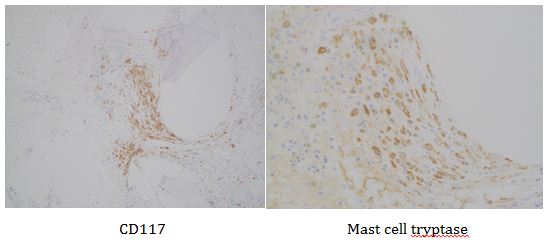
This lesion was biopsied and given the findings, a subsequent bone marrow biopsy was performed on 5/4/2017. The bone marrow core biopsy contained multiple compact aggregates of spindle shaped cells with hypogranular cytoplasm, morphologically compatible with atypical mast cells. Within these aggregates, numerous eosinophils are present. By immunohistochemistry, the mast cells are brightly positive for CD117 and mast cell tryptase. Concurrent bone marrow aspirate flow cytometry demonstrated a small population of mast cells that co-expressed CD2 and CD25.

Of note, the patient was found to have a persistent absolute monocytosis. Flow cytometry revealed an abnormal population of monocytes that displayed aberrant phenotypic expression of CD2 and CD56 (subset).

Next-generation sequencing revealed two truncation mutations in the TET2 gene (K988* in 34.6% of the reads and Q1138* in 36.4% of the reads). Cytogenetic analysis revealed a normal female karyotype (46,XX).

myelomono1

myelomono2

myelomono3

Overall, an immunophenotypically abnormal population of mast cells and monocytes are present in the context of a long-standing absolute monocytosis and the presence of two TET2 truncating mutations, supporting a diagnosis of systemic mastocytosis with an associated hematologic non-mast cell lineage disorder (best classified as chronic myelomonocytic leukemia).

Discussion

A diagnosis of systemic mastocytosis is a combination of clinical, morphologic, immunophenotypic, and molecular analyses, as required by the World Health Organization (WHO 2008). By current consensus guidelines, SM variants are partly distinguished by clinicopathologic criteria referred collectively as B and C findings. B findings include: >30% of bone marrow mast cells (MC) on biopsy and/or serum tryptase levels >200 ng/mL; increased marrow cellularity/dysplasia without meeting diagnostic criteria for another myeloid neoplasm; or enlargement of liver, spleen, or lymph nodes without evidence of organ damage. C findings include: evidence of organ damage caused by a local MC infiltrate, such as abnormal liver function and/or ascites, hypersplenism, cytopenias, large osteolytic lesions/fractures, and malabsorption with weight loss caused by MC infiltrate in the gastrointestinal tract.

Systemic mastocytosis commonly occurs in two types with different clinical courses based upon the aforementioned findings. Indolent SM (ISM) is defined by the absence of C findings. Smoldering SM is a subtype of ISM that displays 2 or more B findings. ISM may become more aggressive and a descriptive term of advanced SM refers to a category including aggressive SM (ASM), mast cell leukemia (MCL), and “SM with an associated myeloid neoplasm.” The latter entity comprises more than 90% of cases that have previously been referred to as SM with an associated hematologic non-mast cell lineage disorder (SH-AHNMD).

ASM and MCL are characterized by organ damage and histologic characteristics. ASM often exhibits multifocal bone marrow infiltration of atypical mast cells that are often spindled in shape with hypogranular or immature morphology. Marked fibrosis often accompanies the infiltrate as well as a KIT D816V mutation. MCL is codified by more than 20% of the marrow aspirate nucleated cells represent by mast cells and on core biopsy, a compact infiltrate is often identified with usually low level fibrosis. In MCL, circulating mast cells are greater than 10% of nucleated cells but according to Gotlib et al., the aleukemic MCL (less than 10% circulating mast cells) is more common.

In the context of our patient, myeloid neoplasms associated with SM are often represented by MDS, MPN, or MDS/MPN overlap disorders, and occasionally AML.

Associated lymphoid or plasma cell neoplasms have been described, but in a much lower frequency.

In accordance with the diagnostic implications, KIT D816V mutational analysis is important therapeutically. Most patients with SM harbor the KIT D816V mutation (>80% in one clinical series; 90-100% in research studies using purified MCs), which is a considered imatinib-resistant mutation. Midostaurin (a second generation TKI) may provide some disease response while nilotinib or dasatinib are usually less likely to lead to a durable response. The rare patients who have a juxtamembrane domain KIT mutation are much more likely to respond to imatinib or masitinib.

For disease response, criteria were first published in 2003 by Valent, et al. In a reiterated version published in 2007, the evaluation of clinical evidence of organ damage (C findings), was the foundation for determining appropriate response. Another facet to determining response was in relation to BM MC burden, serum tryptase level, and organomegaly, which further subcategorized the levels of major response (MR). MR was defined as normalization of 1 or more C findings. In turn, MR was divided into 3 categories:

  1. Complete remission (resolution of MC infiltrates in organs, serum tryptase less than 20 ng/mL, and disappearance of SM-associated organomegaly)
  2. Incomplete remission (decrease in MC infiltrates in organs and/or serum tryptase levels and/or visible regression of organomegaly by >50%)
  3. Pure clinical response (without decrease in MC infiltrates, serum tryptase levels, or organomegaly)

Partial response (PR) is defined as incomplete regression of 1 or more C findings and include good partial response (GPR; >50% regression of 1 or more C findings) and minor response (<50% regression).

Lastly, the Mayo Clinic published revised response criteria in 2010 which established minimal baseline laboratory abnormalities for organ damage to be evaluated in order to allow for more accurate assessment of response to therapy that is clinically more relevant.

Overall, systemic mastocytosis is a rare entity that displays a range of presentations that can be described as indolent up to an aggressive (advanced) phenotype. The hallmarks for diagnosis include histologic, immunophenotypic, molecular, and clinical findings.


References

  1. Gotlib, J et al. “International Working Group-Myeloproliferative Neoplasms Research and Treatment (IWG-MRT) & European Competence Network on Mastocytosis (ECNM) consensus response criteria in advanced systemic mastocytosis,” Blood, 2012.
  2. Horny HP et al. “Mastocytosis,” In: Swerdlow S et al. WHO Classification of Tumours of Haematopoietic and Lymphoid Tissues. Lyon: IARC Press; 2008:53-63
  3. Valent P et al. “Aggressive systemic mastocytosis and related mast cell disorders: current treatment options and proposed response criteria.” Leuk Res. 2003;27(7):635-641.
  4. Pardanani A, et al. “A critical reappraisal of treatment response criteria in systemic mastocytosis and a proposal for revisions. Eur J Haematol. 2010;84(5):371-378.


PhillipBlogPic-small

-Phillip Michaels, MD is a board certified anatomic and clinical pathologist who is a current hematopathology fellow at Beth Israel Deaconess Medical Center, Harvard Medical School, Boston, MA. His research interests include molecular profiling of diffuse large B-cell lymphoma as well as pathology resident education, especially in hematopathology and molecular genetic pathology.

Applying the Flipped Classroom to Medical Laboratory Science

Our Medical Laboratory Science (MLS) program curricular model applies the “reverse-lecture-homework-paradigm” (more commonly known as “flipping the classroom”) to the majority of our didactic courses. For our MLS program, this model works best for those MLS courses that we are able to provide strong hands-on laboratory lessons in our classroom setting. For those courses that are not amenable to this (like clinical chemistry where the laboratory procedures are highly automated), we provide the learning content in a traditional lecture-based format with supplemental laboratory lessons. This combination of approaches to instruction and learning—whereby we provide both traditionally designed courses (live, synchronous, “face-to-face” learning) and online courses (virtual, asynchronous, distance learning)—ends up supporting all of our students’ varied learning styles.

As an example, in our course in bacteriology, we can teach hands-on laboratory lessons using manual procedures for identifying bacteria that can be readily instituted in our program classroom/teaching laboratory. Because we can easily reproduce these techniques for our students, we use the flipped-classroom approach in this course and provide all of the lecture material as online learning lessons that our students complete as homework before the next day’s laboratory session. By having our students complete the lecture material as homework, we can dedicate more classroom time to learning laboratory techniques that are more closely anchored in what our students are going to do for a living.

From the standpoint of education theory and Bloom’s cognitive domain of learning, lesson content that requires basic recall of information (knowledge and comprehension) is presented as homework in the online lesson. In the hands-on laboratories, more of the higher level cognitive domains of interpretation and problem solving are applied, and the lab techniques are performed in the presence of the instructor, allowing for greater instructor-student interaction, questions, and joint problem solving.

The instructor role radically changes in this model, and he/she is no longer put in the position of “expert at the lecture podium,” allowing for greater opportunity to partner with the students in the classroom as a facilitator or guide in their learning. The literature commonly refers to the redefining of the instructor’s role in educating the student as moving away from being the “sage on stage” to that of facilitator or “guide on the side.” Our instructors have more time to help the students hone their laboratory techniques and apply the learning material in context and also answer questions.

Our instructors have found the experience rewarding, and they have been very successful using this format. They are able to partner with our students more collaboratively, and they can assume more of a mentorship role. It should be noted that there is a substantial amount of front-end time required to build the courses. Each lesson plan includes learning objectives, an online lesson, a hands-on lab, and a self-assessment. Our courses also include online discussion boards, homework assignments, and study guides for exam preparation (both written tests and laboratory practicals). Once an online course is built, however, we have found that it is easier to update and maintain versus a lecture-based course that may need redevelopment when instructors change.

The students’ role in the classroom also changes. When they are presented with the lecture material as online homework, they gain a newfound control over the material that doesn’t exist in a face-to-face traditional lecture format. They have control over when they study the learning content and the length of time they study. They can go in and out of the online lecture content as often as they want. The lesson material can include links to additional resources that they can delve further into if they desire. This format places each student in the “driver’s seat,” and the student moves from being a passive learner to active.

As for our students, they consistently come to class prepared for each hands-on activity, ask questions, and perform well on their written and practical examinations. Our students tend to form study groups outside of the classroom, and they review and process the online content with their peers, which results in a classroom environment that is collegial, team-oriented, and mutually supportive.

Reference

Bloom, Benjamin S., (Ed.), Taxonomy of Education Objectives: Handbook I: Cognitive Domain, N.Y., David McKay Company, Inc. 1956.


Lehman_small

-Susan M. Lehman, MA, MT(ASCP)SM graduated from the University of Wisconsin-Madison in 1983 with a BS in medical technology. She is program director for the Medical Laboratory Science Program and course director for Clinical Microbiology I and II; her areas of interest include distance education and education methodology.

Microbiology Case Study: A 60 Year Old Male with Longstanding Skin Lesions

Case History

A 60 year old male from Louisiana presents to his family doctor with a chief complaint of longstanding skin lesions for approximately the last two years. On physical exam, there are several sharply defined reddish-brown plaques on his upper back and extremities. He reports sensory loss involving his chest, back and upper extremities. The lesions have not responded to conventional topical anti-fungal treatments. Punch biopsies along the margin of the most active lesion were obtained and sent to the Microbiology laboratory for bacterial, fungal and mycobacterial cultures and to the Pathology Department for histologic diagnosis.

Tissue sections

mycolep1
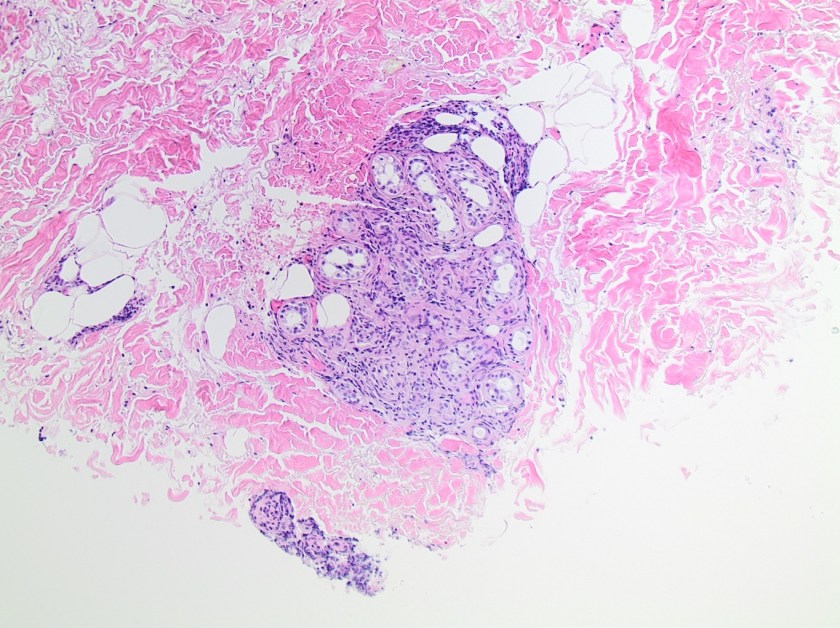
Image 1. Section from the right upper extremity skin punch biopsy demonstrates a normal basket-weave stratum corneum and normal epidermis with nodular superficial and deep granulomatous inflammatory infiltrate. A Grenz zone, a narrow layer beneath the epidermis that is not infiltrated or involved in the same way as are the lower layers of the dermis, is noted (H&E, 40x).
mycolep2
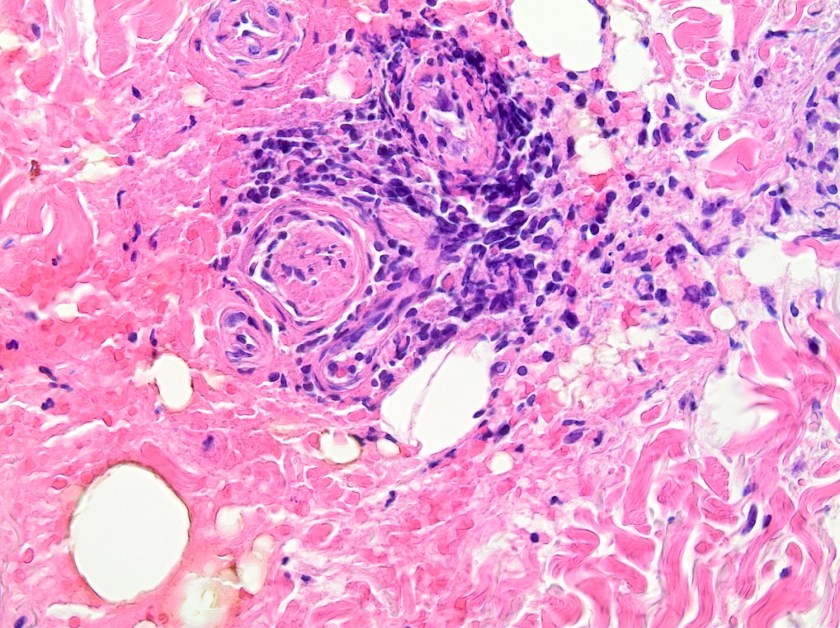
Image 2. Inflammation engulfing eccrine glands in the deep portion of the dermis (H&E, 100x).
mycolep3
Image 3. Portion of punch biopsy demonstrating perineural inflammation consisting predominantly of mononuclear cells (H&E, 400x).
mycolep4
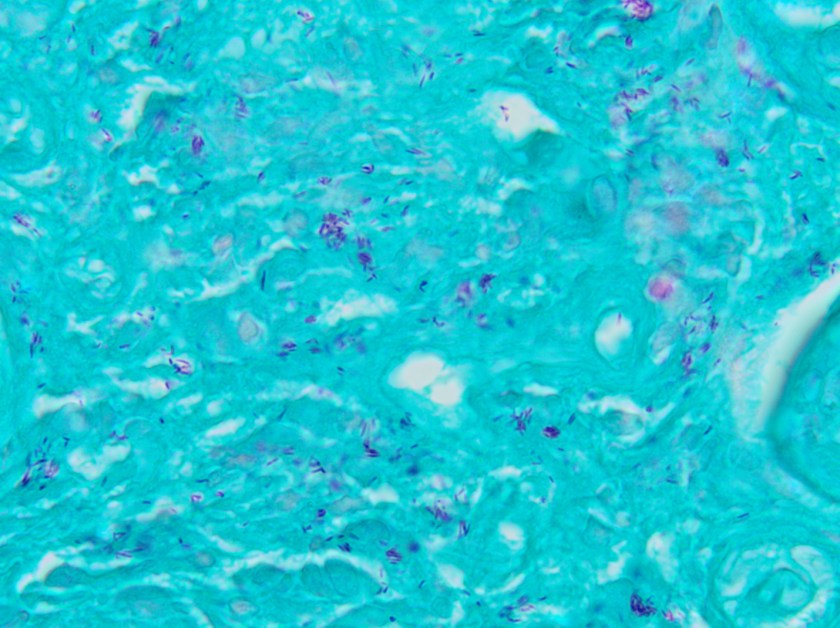
Image 4. Fite stain highlighting numerous acid fast bacilli within macrophages surrounding the eccrine glands (1000x oil immersion).


On histologic examination of the skin biopsy, nodular, superficial and deep granulomatous inflammation was noted surrounding eccrine glands and engulfing nerves (Images 1-3). Fite staining illustrated numerous acid fast bacilli (Image 4) and, given the geographic location of the patient and clinical symptoms, was felt to be highly suggestive of Mycobacterium leprae. The case was sent for confirmatory testing by polymerase chain reaction (PCR). All cultures collected were negative.

Discussion

Mycobacterium leprae is a chronic, granulomatous disease which presents as anesthetic skin lesions and peripheral neuropathy with nerve thickening. While rare in the United States (US) today, historically it was one of most prominent pathogens in Mycobacterium genus apart from M. tuberculosis. In the past, leprosy (also known as Hansen’s disease) was prevalent throughout Europe, but due to systematic control programs aimed at underserved and rural locations, the number of cases drastically decreased and countries with the majority of recent cases include India, Brazil and Indonesia. According to National Hansen’s Disease Registry, a total of 178 cases were reported in the US in 2015. Of these, 72% (129) of cases were reported in Arkansas, California, Florida, Hawaii, Louisiana, New York and Texas. Transmission to those who are in prolonged and close contact with an infected person is thought to occur via shedding from the nose. While humans are the only known reservoir of leprosy, infections with organisms indistinguishable from M. leprae have been detected among wild armadillos in parts of the southern US.

The diagnosis of M. leprae is largely a clinical one as the organism is not able to be grown on artificial media, but histology and confirmatory PCR are useful adjuncts. Skin biopsies should be full thickness and include the deep dermis. Ideally, the most active edge of the most active lesion should be biopsied. There is a spectrum of M. leprae which ranges from few lesions and a paucity of bacilli (tuberculoid leprosy) to widespread skin involvement with numerous bacilli (lepromatous leprosy).  Histologically, there are granulomatous aggregates of epithelioid cells, multinucleate giant cells and lymphocytes and inflammation often engulfs sweat glands and nerves. Small lesions that have poorly defined borders and are found on the elbows, knees or ears are where bacilli tend to be located. A Fite stain is useful to highlight the acid fast bacilli located in the macrophages within the inflammatory nodules. M. leprae PCR can also be performed on blood, urine, nasal cavity specimens and skin biopsies as a sensitive diagnostic technique. PCR can also be used to detect certain genes that confer resistance to common treatment drugs such as rifampin, ofloxacin and dapsone.

As with other mycobacterial diseases, the treatment for M. leprae infections consists of a long term multidrug regimen. The six most commonly used medications include rifampin, dapsone, clofazimine, minocycline, ofloxacin, and clarithromycin.


kt

-Katie Tumminello, MD, is a fourth year Anatomic and Clinical Pathology resident at the University of Mississippi Medical Center. 

Stempak

-Lisa Stempak, MD, is an Assistant Professor of Pathology at the University of Mississippi Medical Center in Jackson, MS. She is certified by the American Board of Pathology in Anatomic and Clinical Pathology as well as Medical Microbiology. She is the director of the Microbiology and Serology Laboratories.  Her interests include infectious disease histology, process and quality improvement and resident education. 

Metrics, Goals, and Lab Leadership

In an April 2015 publication in Lab Manager, then ASCP President Dr. William Finn discussed the Lab Management University (LMU) program “designed to help pathologists and lab professionals take their laboratory management skills to the next level.” He also cited “gaps” in professional training and experience that revealed a lack of management skills in “pathologists, laboratory professionals, and pathology residents.” Utilizing advanced coursework available to them from LMU, laboratorians of various specialties would stand to benefit from this knowledge and effectively influence more positive outcomes for patients.

Within the last year, I’ve been writing about utilizing data from epidemiology, laboratory studies, and community partnerships in an integrated public health initiative combating mosquito-borne illness on the island of Sint Maarten. It is an ongoing multidisciplinary project I started which reaches various fields of study from immunological seroprevalence, to community health work, to social determinants of health, and team leadership and coordination. What started as a group of six students in the fall of 2016, has flourished into a team of now more than fifteen with partners in local government, local NGOs including the Red Cross, social and broadcast media, and our individualized message of local self-motivated disease prevention has reached well into the thousands.

Citing this experience as a process of a simple medical literacy proposal to an expansive public health initiative, I believe there are some significant advantages that being a laboratory professional can give you. Experiences during my time in clinical laboratories gave me many parallels to study as I became a leader of a dynamic and diverse program. Here is what I consider is a highly-oversimplified model for successful problem-solving, leadership, and ultimately measured success. As a common laboratory metric of efficiency/success—and something I have had experience with before—consider turn-around-time (TAT) as a problem many labs face. Compared to the problem of addressing risk reduction and source control for mosquito-borne illnesses like Zika, I found myself in the same model I had recognized many times before.

Example 1: Outside the Lab

Addressing Zika as a Public Health Concern

Example2: Inside the Lab

Addressing TAT as an Efficiency Metric


START: Clearly and Specifically Define the Problem or Need to be Addressed
With the advent of a local outbreak and information from local government regarding the increase of epidemiologic cases, behavioral change for risk reduction was highlighted as a major obstacle in improving public health outcomes. Creating self-sufficiency in the community would not only improve health but create sustainability. As a laboratory potentially signs on new clinics or accounts because of local changes in hospital structures, efficiency is being examined as workflow is slated to increase. Staffing, instrumentation, LIS/LAS, and other tools are being considered to reduce TAT and improve overall patient outcomes and strengthen quality control and quality assurance metrics.
Locate Potential Helpful Partners, Staff, or Tools that Can Assist Your Cause
To gain access to resources otherwise unavailable, it is imperative to collaborate with partners in the Ministry of Health as well as NGOs like the Red Cross. To reach communities most affected by the problem at hand, it is necessary to implement cultural liaisons to act as intercessors preserving the autonomy of individuals while creating a safe environment to communicate an effective public health message. As part of initial assessments to discover a clear problem, vendors may offer instrumentation or technology that would improve the conditions affecting the TAT. It would be highly prudent to reach out to the new accounts or clinical sites to determine if TAT is affected by workflow, personnel, communication, or procedural faults. Assessing the staffs’ skills and competency are also crucial for implementing corrective action.
Implement Initial Intervention, Paying Attention to Results Before/After
In the case of Zika virus education and prevention, initial interventions include utilizing community partners as liaisons to introduce us to targeted audiences/communities. Results should focus on the pre-and-post-survey data collected, referenced in earlier articles regarding engagement, knowledge, and behavior. In the case of TAT efficiency/improvement, initial interventions should include collecting data points regarding how specimen-to-result turnover is affected at every checkpoint while implementing changes as necessary. Data should indicate success in particular measures which improve TAT incrementally.
Take Measures to Make Further Interventions More Successful Along the Way
Educating communities about the risks associated with standing water and the spread of arboviral infections with clear demonstrations/examples of how to enact improvements. Distribution of educational or advertising materials throughout targeted areas will bolster an effective message. When staff or other changes effectively improve the streamlining process, they should be recognized and praised. Moreover, clients should be consulted in both inpatient and outpatient settings to inform procedural change and deter further external compromise of TAT.
Implement Follow-Up Intervention, Paying Attention to Results Before/After
Like before, interventions with Zika virus education include community partner meetings to hold engaging discussions about health promoting behavior. Similar surveys collect data before and after the presentation and are correlated with the previous meeting, however, with the addition of data regarding the effectiveness of secondary measures (i.e. advertising and educational materials). With the implantation of various measures to improve turnaround, assessments of protocol, instrument utility, effective transport, and other previously mentioned aspects would indicate successful outcomes. Combined with the supplemental consultation to steps both inside and outside of the laboratory, an comprehensive conclusion can be established to indicate a permanent solution via these metrics.
Conduct More Comprehensive/Translational Analysis of Intervention Effectiveness
Correlating the primary intervention with follow-up measures can indicate possible opportunities for further improvement. It can also highlight areas of significant success where interventions had the greatest impact. If significant enough, these results should promote the process and further the original cause set forth early on. Continuous metrics which analyze the TAT as a marker for productivity and efficiency before, during, and after interventions can offer insight into effective changes. Extrapolating this data can improve processes across departments and models made from this process can improve TAT and other metrics in a laboratory.
Share Significant Successes and Challenges with Partners/Staff and Share the Success
Based on standards in current literature, community partners benefit significantly from both repeat-visits as well as becoming involved and informed participants for positive change. As laboratories face staff shortages and personnel challenges, sharing the success and making sure the rewards are collectively appreciated can improve workplace dynamics.
Create a New Protocol, SOP, or Publication to Influence a New Standard
As with any successful public health interventions, shared information can lead to future improvements elsewhere. Publications often cite the process of creating a platform and approach to tackling social health concerns and highlights emphasize these positive outcomes. Many productivity projects in clinical settings are difficult, successes should be shared between departments and outside the laboratory. Ultimately, publication might present an ample opportunity for improving standings for overall hospital metrics and larger outcomes.
FINAL: Implement the Same Model Outlined Here for Potential Future Challenges

Obviously, this is a crude and generalized model for how to approach leadership both inside and outside the laboratory, but some of the key aspects of clear goals, interdisciplinary teamwork, resource management, and creativity are paramount. Having my laboratory experience was critical for finding success with my team here with our public health work. Laboratory professionals have strong skills and unique insights for a variety of important fields. Having that experience has truly enabled me to contribute in a meaningful way as I pursue my medical career. As you can clearly see, there are so many useful tools that apply across disciplines. Furthermore, the most important part of managing a project aimed at a positive outcome is answering the simple question: how do I utilize and interpret the data I collect along the way?

And here’s another question: who does data analysis better than us laboratory folks?

Thanks for reading, until next time…

ckanakisheadshot_small

Constantine E. Kanakis MSc, MLS (ASCP)CM graduated from Loyola University Chicago with a BS in Molecular Biology and Bioethics and then Rush University with an MS in Medical Laboratory Science. He is currently a medical student at the American University of the Caribbean and actively involved with local public health.

Hematology Case Study: An 80 Year Old Male with History of CLL

Case History

80 year old male patient with history of CLL presented to the emergency room with cough and not feeling well. He was diagnosed with CLL 4 years ago; had been asymptomatic and hence had not received any treatment. CBC done in the emergency room revealed a markedly elevated WBC count of 136 K/uL, decreased hemoglobin of 6.4 g/dl and mildly decreased platelet count at 131 K/uL.

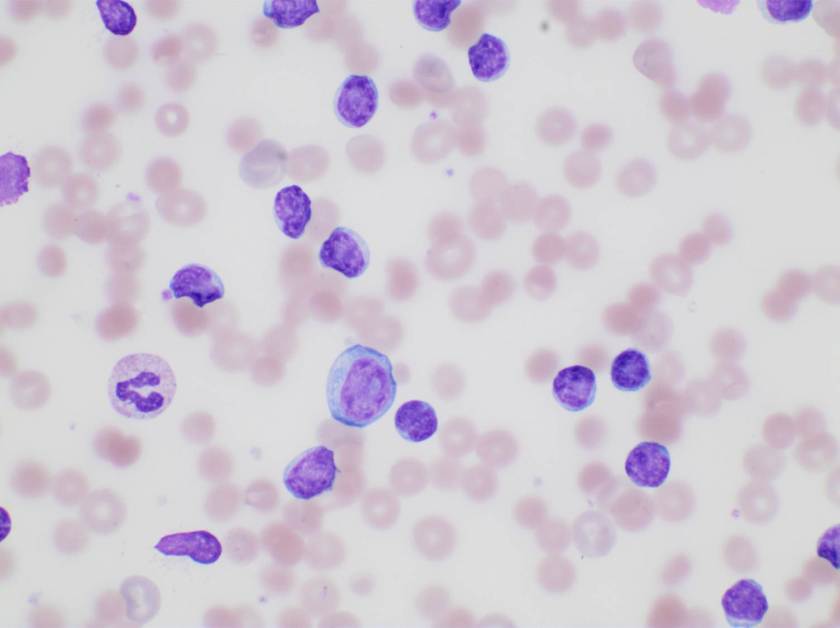
Examination of peripheral blood smear revealed marked lymphocytosis (114.91 K/uL). Majority of the lymphocytes were small with round to oval nuclei. Few larger cells with morphology consistent with prolymphocytes were also noted (overall <5%). Further there was increased polychromasia and spherocytes were easily identified. The patient’s blood type was A positive and the antibody screen was positive. Direct antiglobulin test was positive (IgG) and the antibody identification panel was consistent with the presence of a warm autoantibody. His bilirubin and LDH were both elevated at 3.1 g/dl and 574 U/L, respectively.

The findings were consistent with warm immune mediated hemolysis.

aiha-cll
Image 1. Prolymphocyte, smudge cell, and abundant lymphocytes.

Discussion

Autoimmune hemolytic anemia (AIHA) due to the presence of warm agglutinins is mostly always due to the presence of IgG antibodies that react with protein antigens on the red blood cell (RBC) surface at body temperature.

Underlying causes or conditions that may be associated with AIHA include the following:

  • Preceding viral infections (usually in children).
  • Typical AIHA due to the presence of warm agglutinins has been described in patients with HIV infection.
  • Autoimmune and connective tissue diseases (eg, systemic lupus erythematosus, autoimmune lymphoproliferative syndrome).
  • Immune deficiency diseases, such as common variable immunodeficiency.
  • Malignancies of the immune system (eg, non-Hodgkin lymphoma, chronic lymphocytic leukemia [CLL], with a higher incidence in those treated with purine analogs).
  • Prior allogeneic blood transfusion, hematopoietic cell transplantation, or solid organ transplantation

The incidence of autoimmune hemolytic anemia (AIHA) in patients with CLL is difficult to determine with certainty. As many as one-third of patients with CLL may develop AIHA over the course of their illness unrelated to treatment modality. The prevalence increases with disease stage, from a rate of approximately 4 percent in Binet stage A to 10 percent in stages B and C. The incidence of AIHA may be higher following purine analog treatment.

Vajpayee,Neerja2014_small

-Neerja Vajpayee, MD, is the director of Clinical Pathology at Oneida Health Center in Oneida, New York and is actively involved in signing out surgical pathology and cytology cases in a community setting. Previously, she was on the faculty at SUNY Upstate for several years ( 2002-2016) where she was involved in diagnostic work and medical student/resident teaching.

Microbiology Case Study: A 51-Year-Old Woman with a Tick Bite

Case History

A 51-year-old female with a past medical history of chronic lower back pain, depression, and anxiety presented to an outpatient dermatology clinic for a lesion on her left cheek that was present for years but has recently grown and become irritated.  Additionally, she reported a “skin taggy thing” that she first noticed on her posterior neck about two days ago.  Upon physical examination, a tick was observed latched onto the right posterior neck.  After being alerted to the presence of a tick, the patient did disclose that she was in the woods three days prior.  The bite site was locally anaesthetized and the tick was removed and sent to the laboratory for arthropod identification.  Furthermore, the patient received a single prophylactic dose of doxycycline 200 mg.

deertick1
Image 1. Ixodes scapularis, adult female, dorsal surface: an anterior capitulum (A) that contains mouth parts (paired palpi (B) and a median (partially intact) hypostome (C)) and the basis capituli (D) with two porose areas (E). The scutum (F) is inornate. 
deertick2
Image 2. Ixodes scapularis, adult female, ventral surface: eight coxa (G) of paired legs I-IV, a genital aperture (H), two spiracular plates (I), and an anal groove (J) that is anterior to the anus (K).


Discussion

Ixodes scapularis (black-legged ticks), also known as deer ticks (their preferred hosts are white-tailed deer), are small arachnids.  As obligate ectoparasites of vertebral hosts, I. scapularis are also willing to feed on humans.  Importantly, infected arthropods can be vectors of multiple pathogens including: the spirochete, Borrelia burgdorferi, that causes Lyme disease; the intracellular gram-negative bacterium, Anaplasma phagocytophilum, that causes human granulocytic anaplasmosis; the Apicomplexan parasites, Babesia spp, that cause babesiosis; and the flavivirus, Powassan virus, that causes encephalitis.

The I. scapularis life cycle, ranging from one to two years in length, is composed of four developmental stages: egg, larva, nymph, and sexually dimorphic adult.  Compared to nymphs and adults that have eight legs, larvae are smaller and have six legs.  The term “three-host cycle” implies that during each of the three motile stages, I. scapularis takes a blood meal from a different host animal, at which time the tick’s saliva is injected and transmission of pathogens can occur.

Hard ticks possess an anterior capitulum (Image 1, A) whereas soft ticks lack a capitulum.  The capitulum is made up of mouth parts that are attached to the basis capituli.  The mouth parts refer to paired appendages called palpi (Image 1, B) that are parallel to a median hypostome (Image 1, C).  The hypostome holds teeth-like structures, called denticles, arranged in a specific formula useful for identification.  The mouth parts (palpi and hypostome) are longer than the width of the basis capituli (Image 1, D) and this ratio is also useful in identification.  The dorsal surface of the basis capituli has two porose areas (Image 1, E) in adult females that secrete wax to waterproof eggs.  The dorsal shield, called a scutum (Image 1, F), is absent in soft ticks and inornate compared to other hard ticks.  In adult males, the scutum covers nearly the entire dorsum.  Other hard ticks have eyes (lateral markings on the scutum) and festoons (grooved bulges on the posterior margin) that are both absent in I. scapularis.  The ventral surface demonstrates coxa (Image 2, G) that are the basal segments of paired legs, numbered I-IV from anterior to posterior.  Posterior to coxa IV are paired spiracular plates (Image 2, I), external openings of the respiratory system.  A median genital aperture (Image 2, H) is present in adults.  The distinct anal groove (Image 2, J) is an inverted U-shaped curve located anterior to the anus (Image 2, K) in all Ixodes species, as opposed to posterior or indistinct anal grooves of other genera of hard ticks.

Following arthropod identification in parasitology, microbiology laboratory reports include: the genus (Ixodes), species (scapularis), developmental stage (adult female), level of engorgement (unengorged), and status of mouth parts (partially intact).  The genus and species are of medical importance because of their characteristic associations with various human pathogens.  Of the developmental stages, nymphs and adults are most frequently associated with human transmission of A. phagocytophilum.  Also, larvae are unable to transmit B. burgdorferi because the spirochete is not transmitted vertically to eggs; as such, a blood meal from a reservoir host is required.  Nymphs, being smaller in size than adults, are more likely to complete feeding undetected and thereby transmit B. burgdorferi.  Feeding is necessary for adult females to achieve fertility; therefore males are less likely to be discovered on hosts.  The level of engorgement, an estimate of feeding time, is relevant because approximately 36 hours are required for B. burgdorferi to multiply in the tick’s midgut and migrate to salivary glands for transmission to a host, by which time ticks are visibly engorged.  Lastly, if the mouth parts (palpi and hypostome) are intact, this suggests that there was only brief host contact and it is less likely that pathogen transmission occurred.

Reference

-Patterson FC and Winn WC. Practical identification of hard ticks in the parasitology laboratory. Pathology Case Reviews 2003; 8(4):187-198.


-Adina Bodolan, MD is a 1st year anatomic and clinical pathology resident at the University of Vermont Medical Center.

Wojewoda-small

-Christi Wojewoda, MD, is the Director of Clinical Microbiology at the University of Vermont Medical Center and an Assistant Professor at the University of Vermont.

Everything DiSC Workplace

As part of my work as a leadership coach and consultant, I’ve had the good fortunate to participate in several life- and work-transforming certification programs and courses. Everything DiSC Workplace stands out from the others because of its simple yet transformative power. For me personally it has given me direct insights into how I can adapt my behavior to become more effective with people who behave similar to me and with those who behave differently. Understanding the four different personality types of the Everything DiSC Workplace model allows me to get better results, be more productive as an employee, and it gives insights into my own workplace preferences. As a result of this course, I’ve learned how to tailor my approach to the situation and the people involved. Should I be more direct or soften my language? Should I focus on building rapport or present a lot of data to get my point across? Here at ASCP, Everything DiSC Workplace is one of our fundamental courses that every employee takes.

Everything DiSC Workplace focuses on people’s behavioral patterns and preferences while at work. The model distinguishes between four main styles:

  • D for Dominance
  • i for Influence
  • S for Steadiness
  • C for Conscientiousness

All styles are equally valuable and useful. In fact, all people use all four styles, but everyone has a preference of one or two styles.  Typically speaking, those with a preference for the D style would describe themselves as active and questioning. Those with the i-Style are more active and accepting. The S style relates to people who are accepting but thoughtful, and those with the C Style are thoughtful and questioning.

There are behaviors, motivators, stressors, and priorities associated with each style. Understanding your own preferences and your strengths and growth opportunities is a great foundation for your leadership development.


lotte-small

-Lotte Mulder earned her Master’s of Education from the Harvard Graduate School of Education in 2013, where she focused on Leadership and Group Development. She’s currently working toward a PhD in Organizational Leadership. At ASCP, Lotte designs and facilitates the ASCP Leadership Institute, an online leadership certificate program. She has also built ASCP’s first patient ambassador program, called Patient Champions, which leverages patient stories as they relate to the value of the lab.

—-

I thoroughly enjoyed the Everything DiSC Workplace. It was an assessment that I hadn’t done before and I found it to be very accurate in describing my behaviors and attitudes. I have gained quite a few insights about myself, the people I work with, and even the leaders that I report to.

I am a C DiSC style, the conscientious style, the one who likes to take the time to consider all the facts and make an objective decision. Great, right? Well, I don’t always remember to be personable. So, when I look over a project, I can be rather blunt. My input can come across as corrections or criticisms. This is something I need to watch out for as a C. In the past I have tried to explain that there were no bad feelings on my part; no dislike or intention to belittle. Those who were upset by my manner often continued to react in the same way. Now I have learned to never lead with a correction or change, but to stop and consider what someone has done first. If what they have done will work, even if it is not what I would have done, I thank them for taking care of it and doing such a great job. If it won’t work I still thank them first, but I may ask a few leading questions as well. Perhaps we can come up with some improvements together. I seem to have a much better rapport with my coworkers now and they seem to be more willing to add their own suggestions.

As I look around my workplace, I can see the styles that many of my coworkers prefer.

A D-style that I know gets argumentative when I dismiss her ideas without explanation, yet doesn’t allow me time for the full explanation. There have been many disagreements between us. I have learned that if I acknowledge her ideas first and then add a few bullet points, it turns out that we are often actually working towards the same goals.

If I need to sell an idea to everyone, I know an “i” that I can go to. Once she gets excited about it and starts bouncing ideas off everyone, things take off from there. It is an awesome talent. It is also one that doesn’t usually work on me. This is another situation where I have learned to appreciate her ideas first and then, considerately, discuss them in more detail. I want to encourage her spirit but not dampen it if I happen to disagree.

I see the S-styles as the backbone of my lab. As I get all wound up about sudden changes, they take it all in stride. That is my C-style again, wanting to think it through before making the change. The S’s have been through a lot of changes though, and calmly accept most of them. A little appreciation goes a long way with these guys. If they feel compelled to complain about a change, it’s time to listen.

Interestingly, I have also started paying close attention to how my leaders talk to me. I have one who talks to me about big changes, explains the situation, listens to my thoughts, and gives me time to think about it. I don’t necessarily get my way, but when I go into her office ready to fight to prevent a change, I generally come back out supporting it and eager to help. It’s a C thing. Make me feel like I’m a part of what’s happening and I’m fine.

SRobinson-small

-Stacey Robinson, MS, MLS(ASCP)CMSHCM,QCYMCM is a graduate of the Clinical Laboratory Science program at the University of Texas Health Science Center in San Antonio and holds a Masters in Science in Biotechnology from Johns Hopkins University. She currently serves as the Vice Chair of the Hematology Exam Committee for ASCP.