Managing the Emergency in Your Lab

So far in 2017, the United States has seen blizzards, fires, tornadoes, floods, and other disasters. Have any of these disasters struck near you or affected your laboratory? If it did strike your area, would you be prepared? Would your lab staff know what to do and how to work to continue lab operations? A comprehensive emergency operations plan is not something that should be dusted off and considered when an emergency situation occurs. It should be reviewed and tested on a regular basis, and all lab staff should know how to put it into action easily.

The College of American Pathologists (CAP) requires laboratories to have “written policies and procedures defining the role and responsibilities of the laboratory in internal and external disaster preparedness.”  A second related standard also requires that labs have a functional evacuation plan in case work can no longer be performed in the department because of unsafe conditions. These policies should be developed with input from lab leaders, medical directors, and other key hospital or facility emergency management personnel. The disaster plan for the lab must work for the department, but consideration must be given to other areas if the lab does not stand alone in the building.

As with many lab safety guidelines and rules, regulatory agencies often put forth changes or updates as they deem necessary. At the end of 2016, the U.S. Centers for Medicare & Medicaid Services (CMS) published an updated final rule for healthcare providers- and that includes labs- regarding Emergency Preparedness. The purpose of the rule was to establish national emergency preparedness requirements, to ensure adequate planning for both natural and man-made disasters, and to provide coordination with federal, state, tribal, regional and local emergency preparedness systems.

The CMS requirements can be broken down into four elements, Policies and Procedures, Risk Assessment and Emergency Planning, Communication Plans, and Training and Testing. First, all lab and hospital emergency management policies or procedures need to comply with federal and state laws. As stated earlier, these policies need to be easily understood so that any staff member can put them into motion. There may be disaster scenarios in which lab leadership may not be able to get to the site. Lab emergency operations plans should be reviewed or updated annually.

Hospitals and labs should review the hazards in the local areas and assess what disaster types are most likely. Consider situations like equipment or power failures, and even an interruption in communications, including cyber-attacks. CMS also wants facilities to plan for the loss of all or a portion of a facility, or even the loss of supplies.

Laboratories should have a plan to contact staff, including physicians or other necessary persons. This communication system should be well-coordinated within the facility and across health care providers. The state and local public health departments and emergency management agencies need to be included in the facility communication plan as well.

The final CMS-required core element for emergency response includes testing and training. All staff needs to be familiar with the contents of the response plan, and the plan should be well-maintained through regular training of staff and testing. That testing can include the use of table-top drills or even assessing how the plan worked in a real disaster scenario. While CAP allows many lab policies to be reviewed once every other year, CMS requires an annual review or update of these disaster policies and procedures.

Developing a comprehensive emergency management plan is no small undertaking, and if you don’t have one in place already, make sure you gather a team to help with that project since there is much to consider. If you belong to a system of laboratories, you also need to consider how the plan will connect the actions of multiple sites. If you have a plan in place, make sure you assess it regularly for ease of use and the ability to achieve its goals. Those goals should include the safety of staff, the continued delivery of services (if possible), and recovery to normal operation. We know that emergency situations aren’t all that rare, and following this pathway can help your lab be ready when the next disaster strikes.


Scungio 1

Dan Scungio, MT(ASCP), SLS, CQA (ASQ) has over 25 years experience as a certified medical technologist. Today he is the Laboratory Safety Officer for Sentara Healthcare, a system of seven hospitals and over 20 laboratories and draw sites in the Tidewater area of Virginia. He is also known as Dan the Lab Safety Man, a lab safety consultant, educator, and trainer.



Serotypes and Stereotypes: the Path to Pathology

Hello and welcome back! After a hiatus for the holidays, I’m now back at school and gearing up to write about more Arbovirus-related public health endeavors. But, with projects on hold until now, I’m going to briefly depart the world of mosquito source reduction and epidemiology to discuss something that relates to my experiences in medical school. If you read my Lablogatory bio, you’ll see I spent a number of years studying and working in some of Chicago’s great clinical laboratories. In the past decade, I’ve been very close to the field of pathology and laboratory medicine. As I reach the “half-way” mark in medical school now, I have become increasingly aware of the way people across healthcare professions and specialties view laboratory clinicians. One thing that stands out strikingly is, what I argue, a potential stereotype.

Let me tell you one of my pet peeves. As a medical student, I am fortunate enough to learn and work under the guiding hands of physicians, nurses, and other educators. I work my hardest to learn how to provide the best care possible as I learn the skills needed for my future practice. In debriefing from a simulation, a good performance might spark conversation which culminates to the paramount question: “Have you thought about a specialty?” My heart set on it for a while, I often remark “Pathology” before I correct myself to “Clinical Pathology” since I’ve learned to curtail jokes about autopsies. (Disclosure: autopsies are a very important part of medicine, and the number of autopsies have experienced an unfortunate downward trend.)

As a result of my AP/CP answer, many people are often surprised, citing that I’ve been “great with the patient(s).” So that begs the question: why does my current answer surprise people? And more importantly, what perpetuates the stereotype of an introverted, microscope jockey who doesn’t want to be near patients? Yes, hyperbole, but I’ll come back to this stereotype.

While I was stateside visiting family, I coordinated some clinical shadow time with a colleague and alumnus of my medical school in her pathology residency at University of Alabama at Birmingham (UAB). I spent time rounding with their teams in derm-path, watching sign-outs for endless cases, and getting up close and personal with autopsy training with another pathology resident. Each interaction with the faculty and staff were familiar and expected—full of enthusiasm and passion about their respective field of research or clinical work. What struck me as special, however, was that I was neither questioned for my motives in seeking pathology as a specialty, nor did I surprise anyone by being social and amicable. Everyone was quite sociable and proud of their work. My interactions were limited to the anatomic and clinical pathology departments so I suspect there may have been some bias. When I was a medical laboratory science student, I recall working with other disciplines, and, though I may have been in a nascent time in school to notice any stereotypes, they became clearer as I progressed through various jobs across the city. Large trauma centers, small community hospitals, even a shadow stint at the Cook County Medical Examiner’s Office, all taught me valuable lessons on varied scope and different professional perspectives. And all the while, people seemed surprised I would be interested in such a misunderstood specialty.

On Lablogatory, I’ve enjoyed just about every post and one of my favorites is a series by Dr. Lori Racsa, “Lonely Life of a Clinical Pathologist.” Dr. Racsa discussed things about laboratory medicine I had observed in my time as a medical laboratory scientist: the critical role of pathologists on committees, the value of built-in mentorships, the [aforementioned] mystery about the particularities of the job to clinicians and laypeople alike, and the value of technologists like myself! One of the most poignant posts she wrote addressed the potential for a clinical pathologist to round with other “floor” clinicians. That was something I thought I’d dreamed up in my ambition to go to medical school, blazing a trail in Path where I could put some cracks in that stereotype. Dr. Racsa cited a great article from Critical Values by Dr. H. Cliff Sullivan where he recommended pathologists become more actively involved with fellow clinicians to directly improve patient outcomes. Having freshly attended several events at the ASCP National Meeting in Long Beach just prior to his article, I rode a wave of his “rally call” for changing the face and accessibility of pathology as a specialty. I saw myself in both his and Dr. Racsa’s stories of interdisciplinary teams, rounds, and committees and I’ve been excited ever since.

Back to that stereotype. Those articles about pathologists’ roles in medicine reflect a distinct lack of visibility to fellow colleagues. While we all recognize that nearly 100% of cancers are lab-dependent diagnoses and 70% of patient records are tied to diagnostic laboratory data, why are nearly half the residency spots for Pathology in the US National Resident Matching Program unfilled for the past few years? According to recent surveys by the American Medical Association, Pathology has one of the lowest relative rates of physician burn-out compared to other specialties. Pathologists are earning within 15% of the average physician income, with one of the highest relative satisfaction scores to match. So with lifestyle and career quality reporting positive values, I would argue that the seeming lack of interest stems from the possible lack of exposure of pathology as a dynamic field. The stereotype I’ve been talking about might also be one of attrition—“out of sight, out of mind.” Some great pieces of work on Lablogatory focus on promoting the value of laboratory medicine as an integral part of any patient’s care. Just recently, Dr. Sarah Riley discussed CO poisoning and public health, while her bio calls for “bringing the lab out of the basement and into the forefront of global health.” I feel close to that cause myself, hopefully made evident in my previous posts. Stay tuned for next month’s where I’ll be discussing the next steps in our public health project on Sint Maarten. After celebrating a successful 2016 effort presented by the Ministry to the Global Health Securities Agenda, our team has a number of projects lined up to demonstrate effective integration of lab medicine, epidemiology/public health, and social outreach.

A friend and mentor once told me to keep a completely open mind about my medical career and let whatever specialty fits best “find me,” so to speak. I couldn’t have asked for more sound advice. I’ll admit I have my biases and comfort zones, and for now that’s what they’ll remain. In this post, I had hoped to shine some light on the disparities in career reputation between pathology versus other disciplines. Is the stereotype founded in any truths I may have missed? Don’t pathologists have the social tact to work up and down the ladder, working with lab assistants to government health officials? Have you ever been challenged for your career choices in pathology? What reasons do you think contribute to the stereotypes I mentioned? What words can you offer students like me just starting to find a foothold in their newfound careers in medicine?

Leave your comments below! Thanks!


ckanakisheadshot_small

Constantine E. Kanakis MSc, MLS (ASCP)CM graduated from Loyola University Chicago with a BS in Molecular Biology and Bioethics and then Rush University with an MS in Medical Laboratory Science. He is currently a medical student at the American University of the Caribbean and actively involved with local public health.

Toilet Paper Safety

As the years have passed, I have noticed many changes in the toilet paper dispensers in the healthcare setting. First there was the standard rolling style. This was great- you could get as much paper as you wanted, and the only issue was whether or not the roll was installed properly (I prefer “over”). The next style to come along was the bumpy roller. As it rolled out, the lop-sided holder would cause tissue to rip off before the user was ready. Then came covered paper holders that forced the user to reach under a sharp edge for paper access. The latest version I have seen completely covers the roll leaving a tiny access port that allows one piece of paper to be ripped off at a time.

As each dispenser style was replaced by a newer, more insidious model, I began to wonder why hospitals were being so cheap with the paper. Was it being stolen often? Was there a black market for toilet paper? Did the hospitals understand that each newer model forced staff to remain in the rest rooms for longer periods of time in order to get an adequate tissue supply? Surely this was affecting productivity in the work place. Clearly I had given this too much thought, and I let it bother me. I learned this year, however, that I was wrong about the topic for many years.  I found out that in hospital rooms with patients under contact precautions (such as patients who have contracted C. difficile) all of the open paper products must be discarded. In fact, it is a common practice to dispose of any open tissue when any patient room is cleaned. This latest dispenser designs prevents the wasting of paper and actually saves money. Once I received education about the issue, I had a better mindset about the tissue issue.

This is often true with laboratory safety, and providing the necessary education can truly improve safety compliance. There are many who have worked in the lab setting for years, and some have ignored safety regulations while others have followed them grudgingly. Often, the staff approach to lab safety can be improved with basic knowledge; information about the regulations, leadership expectations, and potential consequences of non-compliance.

I approached a lab manager about the need for his staff to utilize face protection when pouring chemicals. He said he was not aware of the need, and it would be an enormous change for the staff. We had a discussion about OSHA’s Chemical Hygiene standard and the Bloodborne Pathogen standard, both of which require face protection when handling open specimens and chemicals. Once he knew this and could also locate it in the safety policies, he immediately covered the information with his staff and compliance was improved. In this case, simple knowledge of the regulations was enough reason for the lab safety to be improved. Knowing the reason why is an important motivator for lab staff.

Lab leaders can make a strong impact on PPE compliance both by voicing expectations with staff and by being a good role model. If you lead lab safety, talk to new employees about what is expected, and regularly remind current staff about the safety policies that are to be followed. Every successful leader also has to be a positive role model. If you expect certain safety practices to be followed, you need to make sure you follow them when you are in the lab as well. A safety professional that walks through the lab in mesh sneakers is going to have a (pardon the pun) paper-thin positive impact on the overall culture.

Some long-term lab employees who regularly comply with safety regulations do so because they have learned an unfortunate lesson. Lab staff that has been the victim of an exposure or injury knows the consequences, and sometimes the cost has been very high. Exposures from an unknown source, for example, can result in treatments that cause illness and that will interfere with personal lives. An exposure that results in contracting an illness or a career-altering injury can be devastating. Our goal as lab safety professionals should be to get staff to comply with regulations proactively, rather than as a response to an incident. Teaching about potential consequences often can have an impact on safety behaviors. You may be surprised at how little laboratorians (and lab leaders) may think of the effects of poor safety conduct. Use real life incidents to tell stories and discuss other possible bad outcomes of non-compliance.

As the average age of laboratory professionals in the country continues to rise, we may be working with some folks who have had the same weak safety mindset for quite some time. They remember the days of eating, drinking and smoking in the lab, and they don’t understand why all of these rules are now in place. They’re healthy today, aren’t they? It’s time to change that way of thinking. It’s time to explain that while they may have practiced unsafe behaviors without incident, it just means they were lucky, not smart. Getting staff to think about the regulations, the expectations, and the consequences will help them to have a new and positive mindset about the lab safety issue.


Scungio 1

-Dan Scungio, MT(ASCP), SLS, CQA (ASQ) has over 25 years experience as a certified medical technologist. Today he is the Laboratory Safety Officer for Sentara Healthcare, a system of seven hospitals and over 20 laboratories and draw sites in the Tidewater area of Virginia. He is also known as Dan the Lab Safety Man, a lab safety consultant, educator, and trainer.
Choosing Wisely

Having recently completed the 2016 survey regarding topics to be considered in the updated ASCP Choosing Wisely campaign, there were several thoughts that came to mind.

First, I applaud the ASCP for taking the initiative to participate early on with Choosing Wisely and now to review and update these elements. As we all know, as the evidence and needs of our patients change, so must we. We should always strive to maintain the “latest and greatest” particularly given the continued growth of laboratory medicine. Identifying appropriate and necessary laboratory utilization shows our concern as individual practitioners and as a professional society. Our involvement clearly influences patient outcomes and we must remain diligent about putting forth this message.

Secondly, I will admit that there were numerous tests and the questions regarding their usefulness listed in the Survey that were completely unfamiliar to me. This highlighted how lab menus are expanding and many of these were subspecialty oriented, pointing out how intricate and complicated our scope of laboratory practice has become. With the multitude of tests available and their complexity, is it any wonder our clinical colleagues suffer the same, and I venture to say even MORE, angst than we face given this array of testing options? Therefore it is even more important, then, that we as a Society continue to be about the forefront of laboratory initiatives, educating ourselves and helping those healthcare providers that live outside “our walls.”

Of course, the Choosing Wisely campaign is also focused on patients and the information needed for solid patient-centered decision-making. It is thus incumbent upon us to participate in this national campaign, for who better than laboratory professionals to help navigate these waters on the behalf of patients?

The onus is upon us, then, to pursue this initiative and provide guidance regarding laboratory utilization, appropriate testing, testing intervals, adequate test menus and laboratory interpretation. The ASCP participation in the Choosing Wisely campaign allows us to solidly insert our expertise in this arena. Each of us, as members, is responsible for our participation, not just in this Survey, but on an ongoing daily basis as part of the patient care team.


Burns

-Dr. Burns was a private practice pathologist, and Medical Director for the Jewish Hospital Healthcare System in Louisville, KY. for 20 years. She has practiced both surgical and clinical pathology and has been an Assistant Clinical Professor at the University of Louisville. She is currently available for consulting in Patient Blood Management and Transfusion Medicine. You can reach her at cburnspbm@gmail.com.

The ABCs of BSCs

Many labs have received notices this year that their Biological Safety Cabinet (BSC) certification company will no longer certify a certain type of BSC that those labs have had for years. NSF International (formerly the National Sanitation Foundation) is an organization that supplies product testing, inspection and certification. NSF is accredited by the American National Standards Institute (ANSI) to develop American National Standards, and in 2010 an updated version of the NSF/ANSI 49 was published. This is better known as the Biosafety Cabinetry: Design, Construction, Performance, and Field Certification standard.

The names can be confusing, but the important message is the revisions to the standard eliminated the option of direct-connected Type A cabinets (which had been previously allowed). Also, an alarm requirement was added for canopy connected Type A cabinets. There was time allowed for sites with these types of BSCs to make necessary adjustments, and in 2016 field certification agencies have been told they can no longer certify BSCs which do not meet the updated standards.

That means that some labs that have not updated their BSCs or purchased new ones, they are left with uncertified (and therefore unusable) cabinets.

There are three main classes of BSCs. Class I offers the least amount of protection, and it pulls air in and over the work area. The air is then exhausted via a HEPA filter. Class II BSCs are the most commonly-used cabinets in clinical laboratories. They offer a maintained inward airflow, a HEPA-filtered unidirectional airflow within the work area, and a HEPA-filtered exhaust into the room or to the facility exhaust system. Class III BSCs (or glove boxes) are for use with high risk biological agents, and they are typically sealed and gas-tight enclosures.

The commonly-used class II cabinets come in a variety of designs or types:

  • A1 – 70% of the air recirculates through the supply HEPA filter, the other 30% of air goes through the exhaust HEPA filter.
  • A2 – 70% of the air is recirculated through the supply HEPA filter, the other 30% of air goes through the exhaust HEPA filter. The air intake is faster than in a type A1 cabinet.
  • B1 – 40% of the air is recirculated, 60% of air is exhausted.
  • B2 –   No air is recirculated within, it is all exhausted into the facility system.

Some older Class II Type A cabinets had the exhaust directly connected to the facility exhaust system. This is no longer permitted since hard connections need to meet specific regulated criteria and is not considered the safest type of connection. If connected to an exhaust system, the cabinets must use a canopy (thimble or air-gap) connection which has an opening to the room. Because there is always the potential for equipment failure (and a possibility of air contamination to the room via the opening), an alarm system must also now be in place to alert the user of this possible danger. In 2016, all BSC field service workers were notified not to certify Type A cabinets with a hard connection or with a non-alarmed canopy connection. If you received a memo and had an issue with certification this year, that’s why!

No matter what Class II type of BSC you are using, there are some basic safety guidelines every user should know in order to keep protected while working. If the blower is not kept on all the time, turn it on about ten minutes before use. This will stabilize the protective air flow in the cabinet.  Adjust the seat height so that the user’s face is above the front opening. Set all specimens and materials that are needed inside the work space, and separate the clean from the dirty. Do not set anything on the front grille.  Objects too close to the front, side, and rear air grilles can disturb airflow and compromise the specimen and the worker’s safety.

When working in a BSC, avoid frequent and fast motions. When moving arms in and out of BSC, move them slowly and perpendicular to the sash. This will allow less interference with the air flow. Be sure to limit traffic in the area when working- people walking behind a BSC in use will disturb the air flow such that air will pass out of the cabinet into the breathing zone of the user. In general, fume hoods and BSCs should never be located in high traffic areas.

Once work is completed inside the BSC, properly dispose of all waste material. Disinfect the cabinet surfaces using an extension apparatus to reach the back wall. Never put your head inside the BSC. Use a bleach solution for disinfection. If damage to the surface is a concern, wipe down the surface with water after using the bleach. Let the BSC run for at least 10 minutes before turning off.

It is important to remember that a Biological Safety Cabinet is an engineering control designed to protect the worker, but it only does so if used properly. Make sure all users are properly trained to use a BSC safely. Have them certified annually, and let certified professionals perform the required maintenance. If you received a memo this year, it may be time to purchase a newer BSC in order to maintain safe work practices in your lab. Ask your field service representatives for the best option for your laboratory.


Scungio 1

-Dan Scungio, MT(ASCP), SLS, CQA (ASQ) has over 25 years experience as a certified medical technologist. Today he is the Laboratory Safety Officer for Sentara Healthcare, a system of seven hospitals and over 20 laboratories and draw sites in the Tidewater area of Virginia. He is also known as Dan the Lab Safety Man, a lab safety consultant, educator, and trainer.
An Arbovirus Abroad

Hello! My name is Constantine Kanakis and I am very happy to contribute to Lab Medicine’s online blog! As my first post, I would like to introduce myself, tell you a little bit about my interests in laboratory medicine, and also discuss Zika virus research I’m actively involved in.

I studied molecular biology at Loyola University and medical laboratory science at Rush University, both in Chicago. From undergraduate to graduate school, I was fortunate enough to work on research topics involving the neurology of nematodes, enzymatic plant assays, social justice/urban planning work, microbiological lab equipment development, and novel biochemical hematopoietic interventions. This comprehensive experience in research work provided a strong foundation which I have found useful in my career both in and out of the hospital laboratory. Other than research, I spent nearly nine years working in some of Chicago’s busiest hospitals. I learned the ropes in a variety of settings: trauma center transfusion medicine, academic center quality assurance, public health work, and community hospital laboratory work. I feel personally drawn to laboratory medicine and pathology, as it connects translational research to patient outcomes and puts us in a position to mobilize fellow professionals to improve health care in our communities.

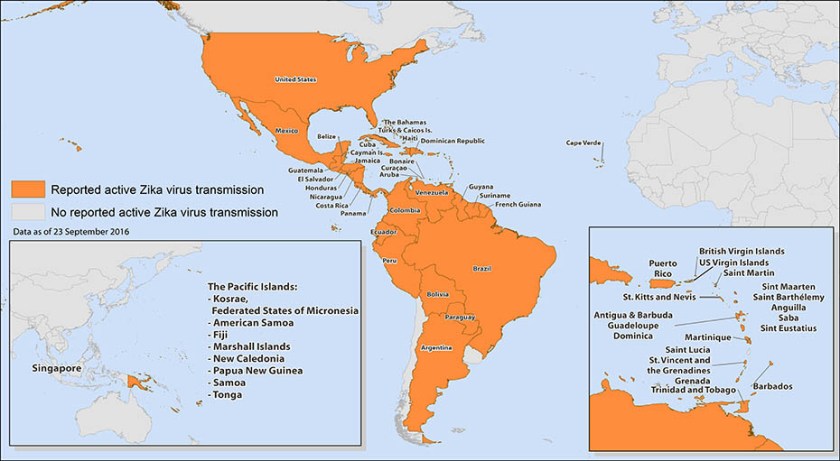
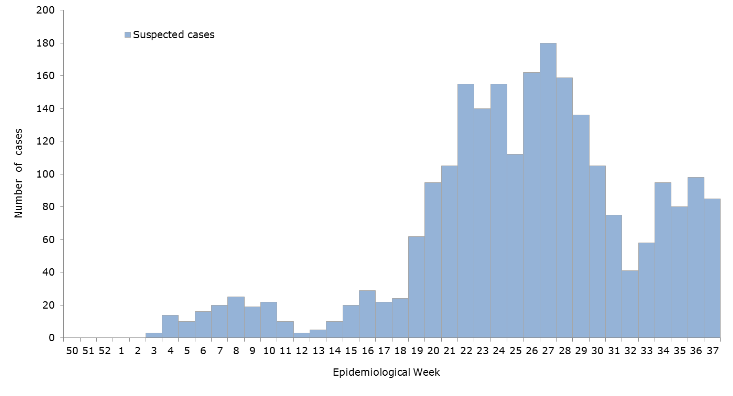
This bridge from lab discoveries to bedside and beyond motivated me to write for this blog community. The current Zika virus outbreak as well as the start of my medical school career has provided a great opportunity for me to explore translational research and its direct impact into a local community. Currently, I am a second year medical student at American University of the Caribbean School of Medicine located on the island of Sint Maarten, in the Netherlands Antilles (Figure 1). I find myself in the epicenter of the now infamous viral epidemic of everyone’s new favorite Arbovirus: Zika. Studying in the Caribbean, I am actively involved in projects assessing the emergence of this viral phenomenon. Today, CDC lists countries with active infections with a Level 2 travel active warning notice, “[to] Practice Enhanced Precautions.” These projects have three tiers: laboratory studies, collaboration with local health partners, and integration of research with public health efforts. My location here provides ample opportunity to gather information at its source, most notably from our neighbors in Brazil, Puerto Rico, and even Florida. This island is high on the list of endemic countries with 1,730 suspected Zika cases reported as of July, 2016, however only 12% of those cases were serologically confirmed. The suspected cases have been rising in the last few months (Figure 2) and epidemiologists are watching the trends very closely.

10-24-fig1

Figure 1. The Centers for Disease Control and Prevention (CDC), updates regions on the world map which have reported active Zika virus infections, CDC 5 October 2016.

10-24-fig2

Figure 2. Suspected Zika viral infection cases per epidemiological week, Pan-American Health Organization (PAHO) and World Health Organization (WHO) 2016.

As a primer for those who are interested, the Zika virus is a Flavivirus/Arbovirus undergoing its second recent epidemic spread in the last decade. Discovered in the 1950s, it has been considered a minor viral infectious agent. To date, researchers near and far are exploring both potential vaccination and prevention measures, as well as infection control efforts as some claims link the virus to microcephaly, Guillain-Barre, and other various sequale. It is transmitted primarily by mosquito bites directly into the blood, though its antigenic presence has persisted in urine and even seminal fluid. Research in public health and epidemiology has also related the management of this outbreak to previous ones, including that of the 2014 Ebola epidemic. There is contention between various public health organizations and laboratory researchers in detailing any exact correlation of the viruses secondary effects as well as the difficulty in specific detection and diagnosis relative to reported vs. confirmed cases (Figure 3).

10-24-fig3

Figure 3. A general demonstration of the purported Zika infection cases and how this reflects the true nature of the epidemic in the Caribbean in collaboration with the PAHO and WHO, from the Caribbean Public Health Agency (CARPHA) 2016.

Several research projects are starting here on campus, a majority of which involve serologic prevalence and surveillance studies. Some new studies are aimed directly at using commercially available testing, while others compound data from previously significant outbreaks of other arboviruses (e.g. Chikungynya, Dengue, Yellow Fever, West Nile). Our work in the laboratories here is also matched with significant public outreach. I am involved in one particular service and outreach project through the university here which targets the dissemination of Zika prevention/infection knowledge through various informational outlets such as town hall meetings, health drives for children, and vector control projects in the field. Our school-based task forces have been fortunate enough to form partnerships with the local Ministry of Public Health, Social Development, and Labor here on the island. And, coordinating with their Collective Prevention Services, they are now involved in reaching out to the community at large (see Figure 4).

10-24-fig4

Figure 4: One of the newest school projects sponsored this year included a vector control initiative partnership with the Sint Maarten Red Cross, and the Ministry of Health’s Collective Prevention Services, conducting home inspections in areas of statistically high reportable cases, photo credit: A. Yancone 2016.

On a personal note, I will add that my wife and I, along with several of our friends here have ironically been “bitten by the Zika bug.” We all suffered the same relative symptoms (fever, malaise, myalgia, headaches, and the infamous maculopapular rash), so I can speak personally on the effects of an active Zika infection! Really though, it isn’t that bad; it felt like a bad flu—most locals are not too worried about Zika because they already have several other arthropod-borne viral infections to stay away from with significantly worse courses of infection. Chikungynya, Dengue Fever, Yellow Fever, West Nile, less often Plasmodium/Malaria, and others offer more of a threatening presence than the several day woes of a Zika infection. Moreover, those other infections sometimes have even worse complications and clinical presentations.

As I begin and continue my work through these projects, I will provide updates—both on our efforts here in the laboratory as well as our work in reaching out and partnering with local public health officials to try and make a positive impact on our local community. And since I am now “inoculated,” I’ll be happy to get really close to the action for all of you.

Thanks for reading!


ckanakisheadshot_small

-Constantine E. Kanakis MSc, MLS (ASCP)CM graduated from Loyola University Chicago with a BS in Molecular Biology and Bioethics and then Rush University with an MS in Medical Laboratory Science. He is currently a medical student at the American University of the Caribbean and actively involved with local public health.


Online Learning for Clinical Laboratory Science Programs

What does “Reversing the Lecture Homework Paradigm,” “Transactional Distance Theory,” and constructivism have to do with teaching? Everything! These are all education theories that can provide a road map for creating a solid learning strategy in the online world of distance and blended education.

In 2008, when our first class of medical laboratory science students came to class, there was no lecture, nor furious note taking. Instead, when these 24 students met face-to-face, they came to our new teaching laboratory at Mayo with their first lesson already under their belts and finished assignments in hand. My intent for this blog post (and those to follow) is to talk about the strategies we implemented to bring up our 43-credit medical laboratory science curriculum as a blended learning model, incorporating both online and traditional methods, and I will also share our experiences.

We can all relate to the desire to have the latest and greatest online lessons that entertain like movie trailers and infomercials, but medical laboratory science faculty often work within the constraints of a budget that translates into a “DIY” model. Knowledge of related education theories is important because it helps us prioritize and understand what really makes for effective online learning experiences. It turns out that it’s not necessarily the “bells and whistles” within a lesson plan but the quality of the actual written content, how it’s formatted, and how readily the learner can navigate the online software platform.

If you are at all like me, you probably took on educational responsibilities because you have a passion for teaching and learning and a desire to utilize your creative side. I began this journey back in 1998 when my employer partnered with another academic center to offer a degree in medical laboratory science for our employees through distance learning. I quickly realized that I knew very little about online learning theory and enrolled in a distance education certificate program at the University of Wisconsin – Madison, my alma mater.  The experience and success of our partnership delivering a distance education program for our employees gave us the confidence to bring up our own accredited program utilizing a blended model of curriculum delivery. In the upcoming months, I will outline our specific online learning strategies, discuss our experiences and highlight our successes and challenges.


Lehman_small

-Susan M. Lehman, M.A., MT(ASCP)SM graduated from the University of Wisconsin-Madison in 1983 with a BS in medical technology. She is program director for the Medical Laboratory Science Program and course director for Clinical Microbiology I and II; her areas of interest include distance education and education methodology.

The Lonely Life of a Clinical Pathologist: Joining Committees

My first rotation in pathology was at a smaller community hospital; one of the pathologists there used to say, “If you aren’t at the table, you’re on the menu.” I’m not sure the source of this quote, but his point was  good pathologists are involved with different committees in the hospital system, not only to contribute to the well-being of the institution, but to let them know how the laboratory could be of assistance, or if the items they were discussing were not feasible from the laboratory standpoint. This also ensured that any decisions made did not negatively affect the laboratory.

When I started working as a pathologist, it felt like before I could even put my bag down the microbiology coordinator was introducing me to the infection control nurse, whom requested I be a part of the infection control committee. My original plan had been to ease into my position and not over-commit myself, rather just observe the first year and then decide where I could best be utilized and dedicate my focus outside the lab. However, I figured infection control would be a great place to talk microbiology so I went to the meeting and was added to the members list that day. The involvement in this committee has led to some great relationships and changes in our labs. The infection control staff had a difficult time with our C. difficile assay since it was performed as a batch test, leaving their patients in isolation for up to 24 hours after submitting specimens. By attending these meetings I was able to see how the lab could implement a change and we brought in a different assay that had random access for C. difficile. This helped improve patient care, and strengthened the relationship between infection control staff and the laboratory. Since that time, I have gotten involved in a couple of other in-house committees on an ad-hoc basis. The involvement has allowed me to actively participate in other areas of the hospital and make connections with staff and physicians to see how the lab can best serve our patients.

In addition to the in-house committees, I was asked to participate in corporate laboratory service group that includes members of each corporate affiliate in our system. This committee discusses laboratory issues that affect the corporate system as a whole and has a sub-committee for test utilization.  This committee was very active in laboratory utilization and gave me great information and a strong foundation to start from on how our own institute could implement some of these standards. For instance, there was a drive to remove sedimentation rates from most order sets and replace with CRP. This topic gave me a purpose to interact with other clinicians within our institution and talk about how these changes will affect lab results, ultimately the care of their patients, and get everyone on the same page.

While my year of ease and observation did not become a reality, the mentor I had in medical school’s advice did. Being involved with these committees has really shown me that by being at the table as a laboratory representative, we have a voice for how issues will affect patient care.

How about you – what has been the best committee you have gotten involved with? How are you sitting at the table? I look forward to hearing how others have been the voice for the laboratory.


racsa_small

-Lori Racsa, DO, is the director of microbiology, immunology, and chemistry at Unity Point Health Methodist, and a Clinical Assistant Professor at the University Of Illinois College Of Medicine at Peoria. While microbiology is her passion, has a keen interest in getting the laboratory involved as a key component of an interdisciplinary patient care team.

Facing CJD and Prion Diseases in the Lab

According to the National Institute of Health (NIH), Creutzfeldt-Jakob disease (CJD) is a rare, degenerative, fatal brain disorder that affects about one person in every one million people per year worldwide. In the United States there are about 300 cases per year. Some of us know the ailment better as “Mad Cow disease,” but that is only one form of this illness which is not caused by a virus or bacteria. CJD is a prion disease. A prion is a protein that exists in both a normal form, which is a harmless, and in an infectious form. The infectious form of the protein takes on a different folded shape, and once these abnormal proteins appear, they aggregate or clump together. Investigators think these prion aggregates may lead to the neuron loss and other brain damage seen in CJD. However, they do not know exactly how this damage occurs.

Since laboratory professionals may deal with specimens from possible CJD patients, we need to know how to properly handle them should such a situation arise. If the Operating Room calls your labs to process a brain biopsy specimen from a patient who was suspected of having a prion disease, would you know what to do? Can your lab do that? Should your lab do that?

Prions are dangerous, but CJD cannot be transmitted through the air or through touching or most other forms of casual contact. Prion transmission can occur, however, from contact with highly-infectious specimens. Brain tissue, eye tissue, and pituitary tissue are considered high-risk specimens, and contact with these should be avoided. When asked to handle a brain biopsy, medical staff and safety experts should work out a plan. For instance, a lab tech who is trained in Category A packaging could go to the OR, dress in fully protective PPE (including a body suit, gloves, and hood), and receive the specimen in the OR and package it there. The specimen is then ready for transport to the reference laboratory. If another department asks you to handle tissue samples from a suspected CJD patient, stop everything and escalate the issue immediately. Contact your medical director, your manager, or the safety officer and await further instructions.

There are other specimen types a lab might receive from a prion patient. Blood, serum, urine, feces, and sputum are considered no-risk specimens. Prions are not found in these types of specimens, and they may be handled and processed as usual.

The last category of specimens from prion patients is known as “low-risk.” These specimens include CSF, kidney, liver, spleen, lung, lymph nodes, placenta, and olfactory epithelium tissues. Of course the most common specimen a lab would see from this group is a spinal fluid, and labs do need to make sure they do not handle it as a normal specimen.

Lab staff should be notified when a specimen is going to be sent from a prion patient, particularly when a low-risk specimen like a CSF is on the way. Procedures should be in place, and it is recommended that such specimens have special labels on them to alert those of the potential risks.

There is no record of lab employees becoming infected with prions from handling low-risk specimens, but they must still be handled with care. All testing of low-risk specimens should be performed inside a Biological Safety Cabinet (BSC). Use disposable equipment as much as possible. For example, use disposable cups for stains or reagents where possible. Perform manual testing only; do not run low-risk specimens on automated analyzers as disinfection is not easily accomplished.

While using standard bleach solutions to disinfect surfaces is recommended after processing low-risk specimens, a lab spill of such a specimen is an entirely different matter, and this is why lab specimens should have special labeling. When a low-risk specimen spills, the area should be flooded with 2N Sodium Hydroxide (NaOH) or undiluted sodium hypochlorite (bleach). Remember, never mix bleach with formaldehyde as it produces a dangerous gas, so if a pathology specimen is spilled, only use NaOH. Leave the solution on the spilled material for one hour, then rinse with water. Place the spill materials into a sharps container so that they will be incinerated. If a spill of a low-risk CJD or prion specimen occurs, contact a manager, a medical director, or the safety officer immediately.

Laboratory professionals handle infectious specimens every day which is why it is so important that we utilize Standard Precautions. Wear PPE when working in the lab and treat all specimens as if they were infectious. It’s the only way to prevent a lab-acquired infection. If you see a co-worker not wearing gloves or a lab coat and working at a lab counter or computer, use coaching to remind them that those surfaces are potentially contaminated with pathogens, and they can be deadly. We can protect ourselves from low-risk prion disease (and other pathogens) with everyday PPE. If a specimen is processed in the lab and it is found later the patient was prion-positive, you do not want to be the one who wasn’t wearing PPE when you handled the specimens. The results will be potentially disastrous for you and your family.

Remember, if you receive a phone call that a CJD or prion specimen is being sent to the lab, escalate the situation immediately. Find out if your lab is able to receive and process that type of specimen. Protect yourself, and keep your lab safe from CJD and other infectious pathogens.


Scungio 1

-Dan Scungio, MT(ASCP), SLS, CQA (ASQ) has over 25 years experience as a certified medical technologist. Today he is the Laboratory Safety Officer for Sentara Healthcare, a system of seven hospitals and over 20 laboratories and draw sites in the Tidewater area of Virginia. He is also known as Dan the Lab Safety Man, a lab safety consultant, educator, and trainer.


Local is Global

The words “global health” usually triggers thoughts of exotic diseases in exotic locales. But, we should remember that “global” includes our own backyard! Public health and clinical laboratories and lab professionals in the US play an important role in global health efforts, just as labs and lab initiatives in remote, resource poor areas. Labs are important for healthcare at local, national, and international levels. Without labs, we risk antimicrobial resistance, spread of infectious diseases, environmental exposures, and inadequate management of chronic non-communicable diseases like diabetes.

Despite their significant role in healthcare, our labs at home face funding and staffing challenges. It is estimated that 7,000 medical technologist positions need to be filled annually, and only 6,000 are produced each year. The number of training programs have decreased by 15% since 1990. CMS has recently announced that a bachelor’s degree in nursing is equivalent to a degree in biological sciences required to perform high-complexity testing. While nursing education provides invaluable medical knowledge, it does not include in-depth scientific study of principles behind laboratory testing and technology.

Both clinical and public health labs in the US are facing financial challenges. Public health labs, especially, have functioned on minimal budgets for several years. With these challenges, maintaining status quo can be difficult let alone scaling up activities when needed for managing crises. We see this play out with the Zika virus. The CDC has already spent 87% of funding allotted for Zika. State public health labs are worried about their ability to continue to meet routine needs while scaling up to be able to perform Zika testing. The FDA recommendation for screening donated blood products puts additional burden on laboratories and blood banks.

The reason we don’t think of our own backyard when we hear “global health” is because we don’t have as many of the exotic diseases seen in other locales. This is in large part because we do have quality laboratory systems in place. While in the field, comments such as “I had no idea pathologists did this much” have been made to me. As lab professionals we need to advocate for laboratory medicine, at home and abroad.


Sarah Brown Headshot_small

-Sarah Brown, PhD, DABCC, is an Assistant Professor of Pediatrics and Pathology and Immunology at Washington University in St. Louis School of Medicine. She is passionate about bringing the lab out of the basement and into the forefront of global health.