Team Dynamics

Teams are one of the most discussed work units. We throw “teamwork” and “team ethic” around during job interviews and performance reviews. When we apply for jobs, we highlight our teamwork capabilities on our resumes. Teams are indeed essential to productive work environments because they are the vital learning units in an organization. In other words, when teams learn, the entire organization learns.

But what constitutes a team exactly? Simply put, teams are a group of two or more people that have a shared goal. Not only that, they are committed to the team process and use team language (“we” instead of “I”) when discussing accomplishments and failures. Teams also focus on learning, whether that learning comes from outside information, success, or failure. Finally, teams possess a strong sense of commitment and accountability.

Teams that consistently perform above expectations are called high-performance teams. Everyone wants to be a part of a high-performance team, but how do they happen? These teams consistently have one trait in common: experiencing and working through conflict. Conflict is one of THE best things that can happen to a team, because when handled and resolved well, teams learn, grow, and function better as a unit.

Each person has different preferences for their role on a team. Everyone gravitates toward one these five team roles: Creator, Advancer, Refiner, Executor, and Flexer. The Creator focuses on generating ideas; the Advancer communicates the ideas; the Refiner challenges ideas; the Executor implements the ideas; and the Flexer assumes any of the other four roles based on the needs of the team. High-performing teams have members who are in their preferred role where they can excel and are sustained because those roles give them energy. It is our job as leaders to find jobs, tasks, and team roles where others can flourish. Without energized people, leaders will not be able to create high-performing teams or high-performing organizations.

lotte-small

-Lotte Mulder earned her Master’s of Education from the Harvard Graduate School of Education in 2013, where she focused on Leadership and Group Development. She’s currently working toward a PhD in Organizational Leadership. At ASCP, Lotte designs and facilitates the ASCP Leadership Institute, an online leadership certificate program. She has also built ASCP’s first patient ambassador program, called Patient Champions, which leverages patient stories as they relate to the value of the lab.


The team dynamics module gave me a great insight into my tendencies and an understanding on effectively getting the best out of teams.

When I received my assessment results, I learned I am an “advancer.” I tend to focus on execution and I pay attention to team interactions. One weakness of this profile, though, is how it potentially interacts with creators and refiners. If one is unaware of the valuable differences in prospective creators and refiners bring to the table, an advancer may get frustrated working with them in a team.

I came to realize I should be sure to include a refiner on the team, since having only executors or advancers could mean bypassing the analysis piece. I also gained new prospective on how I perceive creators. While in the past I may have discounted them as scattered or unrealistic, I learned this stems from the fact I like concrete ideas. Embracing innovation is essential to advancement and this is where creators excel.

The sections about communication and team roles were enlightening. How creators can easily get bored with discussions that are too concrete, and how executors are uninterested in theoretical discussions. On the flip side of things, creators need to partner with advancers, refiners and executors to bring about innovation. Advancers rely on refiners and refiners can benefit from the enthusiasm and networking of the advancers. I use these important concepts now in meetings and when I try to put teams together for a given project.

Although this may come with time, leadership and team member selection are paramount to foster the trust and respect and to facilitate free expression of ideas and sharing of information.

wareth-small

-Laila Osama Abdel Wareth, MBBCh, FCAP, MRCPC, EMHCA is the Chief of Clinical Pathology for the Pathology & Laboratory Medicine Institute at the Cleveland Clinic Abu Dhabi in the United Arab Emirates.



Bringing it Home

A recent report from the Centers for Disease Control (CDC) found that twenty-four laboratory workers were infected with a strain of Salmonella typhimurium, an enteric pathogen. The infections were reported in sixteen states across the country. Of those infected, six were hospitalized with symptoms such as diarrhea, fever, and severe abdominal cramps. Luckily, there were no deaths reported. These infections occurred in various teaching and clinical laboratories. The worst part? This could have been avoided.

When interviewed, some of those who became ill said they remembered specific exposure events. Many others who were unsure of how they became exposed described unsafe behaviors in the laboratory. Those victims admitted to working in the lab setting without lab coats or gloves, and many reported not washing their hands before leaving the department.

If you’re a laboratory leader, you very likely work during the day shift. Hopefully, when management is on site, staff is compliant with safety. If not, you may need to examine your safety program and leadership style. Do you enforce safety regulations in the lab? Do you lead by example? Do you don PPE when you pick up the phone or use a computer in the lab?

If safety seems to be good during the day, you may want to make a visit during the off-shifts. Depending on the level of safety culture, there may be anything happening from solid safe practices to open eating and drinking in the department. I know that was the norm in many labs 25 years ago, but those unsafe practices and safety violations should now be ancient history. Unfortunately, that is not the case, and that is one reason we have bacterial infection outbreaks in our laboratories.

An experienced lab auditor will tell you it is not difficult to assess the lab safety culture in a department, even on inspection day. I once entered a lab as part of an accreditation inspection team, and I watched as the lab staff struggled to find gloves. Even though they knew the inspection was imminent, they could not hide the fact that glove use was not the norm for them in that lab. A complete lab safety audit can reveal a number of inappropriate practices such as improper PPE use, gum chewing, cell phone use, and many others.

The National Institute for Occupational Safety and Health (NIOSH) has educated workers for years about hazard and exposure control. The “Hierarchy of Controls” is an excellent model to use in the laboratory setting, although certain facts about it may be surprising. The first and best two controls to remove hazards are elimination and substitution. Of course, these are not always possible in the lab setting. While there are substitutes for hazardous chemicals, the inherently dangerous specimens that are handled cannot be replaced or removed.

Engineering controls create physical barriers between the hazard and the employee. Biological Safety Cabinets (BSCs) and Chemical Fume Hoods are powerful engineering controls. Administrative and Work Practice controls are the safety policies and actual practices that help prevent infection. Written safety procedures are designed to change the way people work, and standard work practices include not eating or drinking in the lab setting and practicing hand hygiene when necessary.

The final control for infection prevention is Personal Protective Equipment (PPE). In the hierarchy, PPE is considered the last resort for staff protection. Since the lab hazard cannot be eliminated, and since humans commit errors with procedures, that final method of protection must be utilized. Lab coats, gloves and face protection need to be used at all times when working in the laboratory. Without it, the worker is at great risk for exposure- and that is what happened in the labs where the Salmonella infections occurred. Each of the controls that should be in effect in the lab were bypassed, and there were consequences.

It is always better to read about incidents that occur in other laboratories rather than have to report them about your own. When I hear of such stories, I always look at my own labs to see if such an event could occur there. What opportunities exist in my lab safety program? What about yours? Be sure to learn from these unfortunate events and keep your own staff safe.

The personal (and probably painful) part of the infection outbreak was that these laboratory workers were infected on the job, and then they brought it home. The CDC report says nothing about infections being spread to family members or friends, but it certainly could have happened. If there are weaknesses in your lab safety program, what could your staff be bringing home? What infections or diseases could be spread because of unsafe work practices? Now is the time to take the lead for your safety program before such an event can occur. Bring safety home for your staff. Teach them and lead them so that the unsafe practices of the past turn into practices that keep everyone healthy into the future.


Scungio 1

Dan Scungio, MT(ASCP), SLS, CQA (ASQ) has over 25 years experience as a certified medical technologist. Today he is the Laboratory Safety Officer for Sentara Healthcare, a system of seven hospitals and over 20 laboratories and draw sites in the Tidewater area of Virginia. He is also known as Dan the Lab Safety Man, a lab safety consultant, educator, and trainer.

Guest Post: Drone Transport of Specimens

On a hot afternoon in late September 2016 the Johns Hopkins Medical Drones team drove to a flight field in the Arizona desert with 40 vacutainer tubes filled with human blood obtained from volunteers. The individually wrapped tubes sat in two custom-designed white plastic cooler boxes which had wires coming out of one end, ventilation holes at the other, and ran off the drone’s battery power. We carefully placed one of the boxes on the drone, stood back, and flew the samples around for 260 kilometers in what seemed like an unending series of concentric circles. Great. But why would doctors be involved in this exercise?

For the last 3 years, the Johns Hopkins medical drones team has examined the stability of human samples transported via drone. Our approach has been similar for each study. Get two sets of samples, fly one on the drone, then take both sample sets back to laboratory for analysis to see if there are any changes. However, until this study in Arizona we had only flown these samples up to about 40km, in mild weather, and for up to 40 minutes at a time. A request to set up a drone network in a flood-prone area of a country in Southwestern Africa made us realize that we needed to repeat the stability tests in warmer weather and for longer flights. This drone network would serve clinics that were up to 50 km away from each other, therefore requiring round-trips of at least 100km. Once we received this request it became clear pretty quickly that our previous tests flying for to 40km were not good enough for an aircraft that would have to fly in a hot environment between several clinics that were each 50km away from each other.

After the 3-hour 260km flight, we took both sets of samples back to the Mayo Clinic laboratories in Scottsdale, Arizona and performed 19 different tests on the samples. Each pair of samples was compared to check for differences between the flown and not-flown sample sets. Although results from sample pairs were similar for 17 of the 19 tests, small differences were seen in Glucose and Potassium, which do also vary in other transport methods. We suspect the differences seen in this test arose because the not-flown samples were not as carefully temperature controlled as the flown samples in the temperature-controlled chamber. This study (which is the longest flight of human samples on a drone to date) shows that drones can be used for blood samples even for long flights in hot conditions. However, the temperature and other environmental variables must be well-controlled to keep the blood stable.


TimAmukele-small

-Dr. Timothy Amukele is an Assistant professor in the Department of Pathology at the Johns Hopkins School of Medicine and the Director of Clinical Laboratories at Johns Hopkins Bayview Hospital. He is also the Medical Director of two international research laboratories in Uganda and Malawi. He has pioneered the use of unmanned aerial systems (colloquially known as drones) to move clinical laboratory samples.

Jeff Street-small

-Jeff Street is an unmanned systems engineer and pilot at the Johns Hopkins School of Medicine with more than 10 years of experience in the development of new and innovative vehicles. He is leading the Johns Hopkins aircraft development efforts for a wide range of medical cargo applications.


Here’s to Fresh STARTs: Sustainable Transitions And Reachable Targets

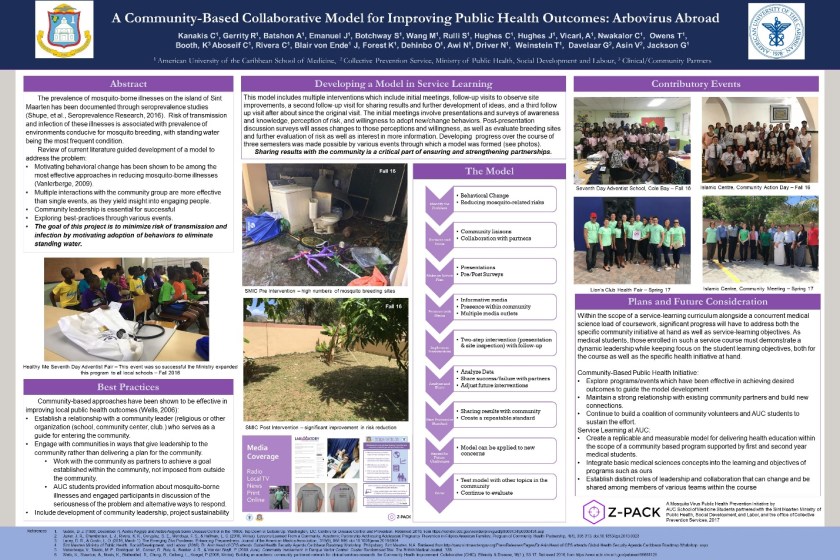
From the title, you might be able to tell that I’ve been busy on Lab Management University (LMU). Going through the online modules and lessons in the LMU certificate program I mentioned this past May, I’ve been able to hone several skills in interpersonal communication, resource management, and project leadership. (A worthwhile investment through ASCP which I highly recommend!) Another thing that’s kept me quite busy over the last two years has been Zika-virus and mosquito-related public health initiatives both inside and outside the laboratory. In a recent blog post, I discussed the correlation between measuring success in projects like these just as one would with common lab-centric goals. And, as a conclusion to that hard work, this will be my last directly-related Zika/public health post. Transitioning to the second half of medical school, I’ll be leaving behind a true grassroots project that not only reached countless people but has the promise to be sustainable after my departure from the island of Sint Maarten back to the states.

As with many times in life, I would say fresh starts are a welcome chance to reflect and grow upon things you might have learned or goals you might be closer to finishing. What has been made clear to me in my time working through classrooms, cases, exams, and projects is that the “jargon” we use as laboratorians is definitely worth its weight. It isn’t full of hollow charges for metrics and goals; it’s about real data and real solutions. Having the ability to apply my prior experiences in laboratory medicine throughout medical school—both inside and outside the classroom—has been an invaluable benefit. The general principles that guided my last blog post reflected simple goals (i.e. turnaround time compared with public health metrics) which utilize fundamental models of data collection, adjustment, and success. The essential model I described a few months ago is now a mainstay of a project that will continue to improve public health statistics slowly as time goes on.

8-28-1

The model as it stands now consists of clear steps to identify problems which require interventions, highlight gaps in current practice, data collection from literature exists currently, collaboration with partners in a community of trust, and continuing those partnerships as improvements are made incrementally over time. The model has been repeated and successfully modified for these last two years from on-campus blood testing with procedural write-ups and data evaluation, to teaching school-aged children about mosquito prevention, to partnering with local government officials and having your projects adopted into their portfolio, and visiting individuals in their homes to discuss health and prevention.

To keep it brief, I’ve had an amazing experience here being able to lead and contribute to a wonderful and impactful project such as this. It has become increasingly clearer to me throughout this work that the values and skills programs like LMU teach are directly parallel with successes in various clinical settings. From the bedside to the laboratory to public health in the field, the lessons of how to effectively engage people and solve problems are critical. My time in laboratories before medical school, the daily grind of classwork here, and the projects I’ve been able to write about have all given me the space to try these skills on real situations—and hopefully that will make me the best clinician I can be after medical school is completed. Check out my “highlight reel” of partnerships, workshops, and active management in Zika prevention below.

Be sure to check back here next time, I’ll be writing from my hometown as I’ll explore ASCP’s Annual Meeting in Chicago, IL this coming September and report back on why it’s important to network and stay involved with our great professional community. Thanks for reading!

8-28-2

8-28-3


ckanakisheadshot_small

Constantine E. Kanakis MSc, MLS (ASCP)CM graduated from Loyola University Chicago with a BS in Molecular Biology and Bioethics and then Rush University with an MS in Medical Laboratory Science. He is currently a medical student at the American University of the Caribbean and actively involved with local public health.


Listening With a Purpose

Everyone understands that listening is an essential skill for effective leadership. But many people do not realize that there are multiple ways to listen to someone. No, I am not talking about active and passive listening, where you either do or don’t reflect back what was just said. Honestly, reflective listening can become quite awkward during a long conversation… been there, done that (and not recommended).

The five different listening approaches that this course refers to are either feeling oriented, meaning that people listen to the emotions behind what someone is saying, or information oriented, meaning that they listen for data, arguments, and structure. The two feeling oriented listening approaches are appreciative and empathic which listen for a speaker’s enthusiasm and how to provide support respectively. The information oriented approaches are discerning, comprehensive, and evaluative. Discerning listeners want to gather complete and accurate information, comprehensive listeners organize the information, and evaluative listeners critique the information and make decisions.

The job of the leader (and speaker) is to provide the information and emotion that their listeners respond to well.  The key is, therefore, to provide something for each of the five types of listeners when you are giving your next presentation.

lotte-small

-Lotte Mulder earned her Master’s of Education from the Harvard Graduate School of Education in 2013, where she focused on Leadership and Group Development. She’s currently working toward a PhD in Organizational Leadership. At ASCP, Lotte designs and facilitates the ASCP Leadership Institute, an online leadership certificate program. She has also built ASCP’s first patient ambassador program, called Patient Champions, which leverages patient stories as they relate to the value of the lab.


Considering myself to be a “good listener,” I was particularly interested in the “Listening with Purpose” course during the leadership institute program. I was keen to see how the “scientific approach” of the leadership institute would be applied to this particular skill. Before the course, I answered a series of questions; my answers were analysed and I received a personalized listening profile. This profile included statements about my listening tendencies in specific situations. Some were uncannily accurate: “You may mentally argue with speakers as they talk,” for example, is a true description of my frequent mental disposition at meetings and conferences!

In addition to identifying my natural listening approach (the “information-oriented evaluative” style), my profile also indicated how likely I am to use the other listening approaches. Not surprising to me was the observation that I tend not to adopt the more feeling-oriented approaches of appreciative and empathic listening. My attitude has typically been to “cut through the red tape and stick with the facts.”

Beyond the characterization of my natural listening style, my personal profile also provided guidance on how to work with my listening style and identified areas where I could grow as a listener. It was clear that with regards to listening approaches, one size does not fit all. My “good listening” skills need a lot improvement. Miscommunication, with a loss of intended meaning, will occur if I consistently use only my natural listening style without regard for the differing circumstances and situations. This certainly explains some of my struggles with people who try to appeal to my emotions instead of (or in spite of) facts to make decisions.

The course also covered communication, defined as the actual exchange of information. The course highlights the various reasons why people try to communicate: to persuade, to inform, to self-express, or to entertain. I was surprised to learn that over fifty percent of face-to-face communication may be dependent on body language and less than ten percent on the words spoken! One then has to be careful to actually process what is being said rather than just the speaker’s body language, tone, and energy so as not to lose the message.

The most important message I took from the course was the importance of letting people know you are listening to them. This requires situational awareness and understanding the intention of the speaker.  I found especially useful the behavioural indicators that let a speaker know the listener is engaged. I have actually found practical utility and deployed a couple of these: “Demonstrating an open, laidback posture” and “remaining relatively silent, not offering solutions immediately.” The course has shown me a practical way to improve my listening skills.

MK pic

-Dr. Modupe Kuti, MB, MS(Ib), FWACP (Lab Med), has served as an attending pathologist for the past thirteen years for a tertiary hospital in Southwest Nigeria, West Africa.


Will Anyone See This Test Result?

We are all aware that there is substantial waste in testing. The mantra of utilization management is “the right test for the right patient at the right time.” This month, I want to focus on the right time. It turns out that many test results are never seen because they arrive after the patient has been discharged. This occurs for both routine and send-out testing. I will examine both.

Turnaround times for send-out testing are generally longer than those for tests performed in house. This means that results for tests ordered toward the end of a hospital stay are likely to be received after the patient has been discharged. Sendout tests are often expensive and, unlike tests performed in house, reducing sendout testing saves the hospital the full charge of the test. The savings can be substantial.

How do you prevent this? A recent article by Fang et al. shows one approach.[1] In this study, conducted at Stanford University, researcher displayed the cost and turnaround time of sendout tests in the computerized provider order entry (CPOE) system and achieved a 26% reduction in orders. I am aware of another hospital that restricts orders of sendout tests when the expected turnaround time is close to the expected remaining length of stay. Consider the graph in Figure 1. The upper panel shows the expected length of stay for a particular patient. The lower panel shows the expected turnaround time for a sendout test. In this case, there is a 62% chance that the test result will arrive after the patient has left the hospital.  Expected discharge dates are routinely kept and it is relatively easy to maintain a database of turnaround times. A hospital could combine these data and set a threshold for orders based on the probability that the result will arrive in time.

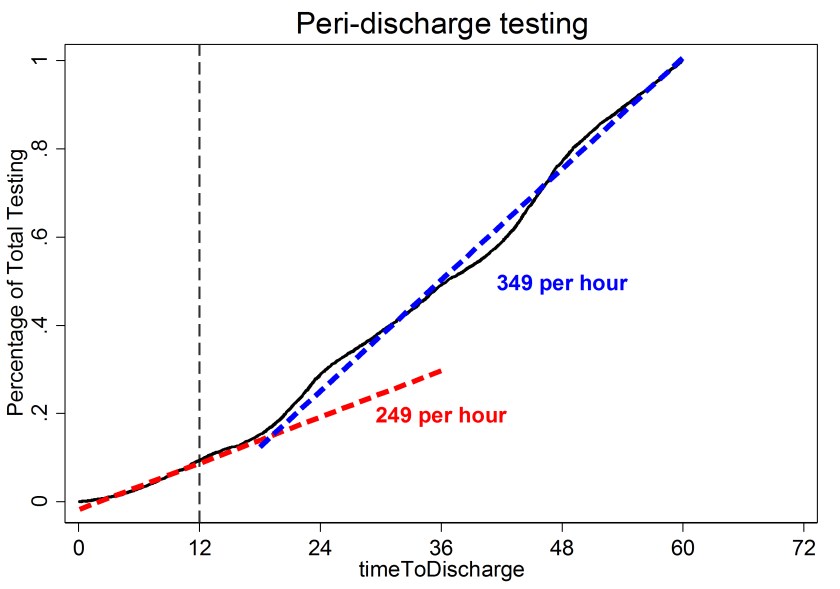
Standing orders are another source of waste.  I recently performed an analysis of the test rate as a function of the time until discharge (Figure 2). The test rate was 249 tests per hour for patients who were within 12 hours of discharge and 349 tests per hour for all other patients. It seems odd to me the testing rate in the final 12 hours is 70% of the “normal” testing rate. Further, the distribution of tests in both groups (those about to be discharged vs. all other patients) is very similar (Table 1). The main tests are basic metabolic panels and complete blood counts.  I suspect the majority of the testing within 12 hours of discharge is due to standing orders and the results were not needed for patient care.  The best intervention is less clear in this case because some peri-discharge testing is appropriate and it is difficult to distinguish the appropriate testing from the inappropriate testing. Education is one option. Perhaps the CPOE could raise a flag on orders for patients who are about to be discharged; however, this could be cumbersome and clinicians object to flags and popups that interfere with their workflow. I would be interested in readers’ thoughts on methods to reduce inappropriate peri-discharge testing.

In summary, some results do not reach clinicians in time to affect patient care. This is a source of waste. It is relatively easy to create an intervention to reduce inappropriate sendout testing but more difficult to reduce unnecessary peri-discharge testing.


Reference

  1. Fang DZ, Sran G, Gessner D, Loftus PD, Folkins A, Christopher JY, III, Shieh L: Cost and turn-around time display decreases inpatient ordering of reference laboratory tests: A time series. BMJ Quality and Safety 2014, 23(12):994-1000.


8-2017-fig-1
Figure 1: Comparison of expected length of stay (upper) and turnaround time (lower) for a sendout test.
8-2017-fig-2
Figure 2: Peri-discharge testing
8-2017-tab-1
Table 1: Test patterns stratified by time to discharge. The table shows the percentage of total testing accounted for each group. For example, BMP represents 15% of the total test volume among patients who are within 12 hours of discharge.

Schmidt-small

-Robert Schmidt, MD, PhD, MBA, MS is a clinical pathologist who specializes in the economic evaluation of medical tests. He is currently an Associate Professor at the University of Utah where he is Medical Director of the clinical laboratory at the Huntsman Cancer Institute and Director of the Center for Effective Medical Testing at ARUP Laboratories.


Owning Safety in the Autopsy Suite

The hospital security guard placed the deceased patient into the morgue refrigerator while chatting with his co-worker. They walked away without realizing the door did not close completely. Within the hour the automated temperature recording system sent an alert to the lab on the third floor.

The body had been unclaimed, and it stayed on the bottom shelf in the morgue. No one in the hospital wanted to take ownership of it. After a couple of months, fluids began to fill the shelf where the body was. The environmental services staff refused to clean up the mess since some staff were afraid.

The pathologist wanted to finish the autopsy quickly, so he started before the complete patient chart arrived. When the phone rang in the morgue, the physician on the other end of the phone said he believed the patient may have Creutzfeldt-Jakob Disease (CJD).

Managing safety in the autopsy suite can be difficult, but as these case studies show, it is important. One reason for the struggle is that clear ownership of the area is often not defined. Multiple internal departments and even external agencies may work in the morgue and autopsy suite. Pathologists, medical examiners, research physicians, security personnel, nurses, and organ procurement staff are just some of the various people that may perform tasks in the autopsy suite. This can create some unique and unwanted problems. The laboratory should take the lead in making sure all safety regulations are followed and that other users of the suite comply to avoid any unfortunate mishaps.

The morgue should be treated as a laboratory space, and it should be designed similarly to a BSL-3 laboratory space which includes an anteroom. Warning signs indicating the presence of biological and chemical materials should be placed on entry doors. Whenever work is performed in the area, proper personal protective equipment should be utilized. This PPE may include lab coats, gowns, gloves, respirators, and face protection. Make sure PPE is available in the area at all times. The autopsy space should be adequate, such that procedures may be performed effectively and that items such as knives and saws can be stored and used safely. Ventilation should be adequate (with a recommended minimum 12 air exchanges per hour), and the ambient temperature should be monitored as well.

While other personnel may access the morgue body storage refrigerator, it is often the lab or security departments who monitor the temperature. Since CAP inspectors set specific morgue refrigerator temperature ranges (1.1 to 4.4° Celsius), it can be important to communicate with the people who utilize the unit often. If placing or removing a body takes longer than expected, make sure there is adequate communication so that proper documentation of the temperature outages can be made. If a department other than the lab is responsible for temperature monitoring, make sure it is done correctly so there are no citations during an inspection.

Proper decontamination in the morgue is crucial. Instruments, tables, and counters must be disinfected to remove contamination of bloodborne pathogens. Use a chemical germicide for instrument and surface decontamination such as a 10-percent solution of sodium hypochlorite (or bleach). This intermediate-level disinfection will eliminate most bacteria (including Mycobacterium tuberculosis), and all fungi, and it inactivates viruses such as the hepatitis B virus. Rinsing with water or ethanol after disinfecting will help prevent the pitting of any stainless-steel surfaces.

Dealing with Creutzfeldt-Jakob Disease (CJD) in the autopsy suite requires special safety measures. Procedures should be posted in the area directing staff how to handle tissue and clean up in cases where patients are infected with CJD. The intact brain should be fixed in formaldehyde for one to two weeks before handling or cutting in order to reduce the prion activity. Non-disposable implements used with such patients should be immersed in 1N sodium hypochlorite (NaOH) for one hour before reuse. Surfaces on which autopsies occurred should also be immersed in NaOH for one hour for disinfection purposes.

Chemicals are stored and used in the autopsy suite, and standard safe lab practices should be used. Make sure staff is trained in proper the handling, labeling, and storage of chemicals as well as prepared to handle spills. Spill kits should be available and suitable to the chemicals used in the area. If formaldehyde is used, be sure an appropriate neutralizer is available for spill incidents.

As the most involved and best educated about its dangers, laboratory personnel should take the lead in making sure safety is a priority in the morgue, and educate all who may enter the area. Make sure communication is clear about who will use the suite and when- it’s never good to have someone walk in during an autopsy or organ removal. Use signage when necessary, and be willing to help in any unusual situations, because with a morgue, they definitely will arise. Work together as a team with all who utilize the area, and that ownership of safety will translate into safety for all.


Scungio 1

Dan Scungio, MT(ASCP), SLS, CQA (ASQ) has over 25 years experience as a certified medical technologist. Today he is the Laboratory Safety Officer for Sentara Healthcare, a system of seven hospitals and over 20 laboratories and draw sites in the Tidewater area of Virginia. He is also known as Dan the Lab Safety Man, a lab safety consultant, educator, and trainer.

Groupthink and the Abilene Paradox

Everyone makes decisions and everyone makes decisions in groups. But we all have been part of groups that felt anything but productive: the end result was subpar, the process took a lot longer than if you had done it yourself, and the endless arguments and indecision caused you and everyone else on the team a lot of stress.

So how can we ensure that an effective group decision-making process is in place? How can we be certain that the decision we make as a group are the right ones?

Groupthink is when group members’ desire for harmony and unanimity overrides their motivation to realistically consider alternative courses of action. Not considering alternatives can have severe consequences as this additional information could have altered an idea or process to make it more effective. An example of Groupthink is with the company Theranos, where the entire board went along with Holmes’ ideas without looking for alternative solutions. Needless to say, they would have benefitted from those alternative options. Groupthink occurs because members of a group do not feel comfortable sharing their dissenting opinions due to high group cohesiveness, stressful situations, and a feeling that the group will always be successful.

The Abilene Paradox complements the Groupthink concept: with Groupthink it is a few members of a group that do not speak up, while with the Abilene Paradox the majority (or the entire group) remains silent. Furthermore, with Groupthink even the dissenting (and silent) member will usually feel good about the final decision, while with the Abilene Paradox members feel resentment. The reasons the Paradox occurs revolve around fears of separation and reprimand. The results are group projects that never go anywhere or fail, and separation from the group.

The good news is that both situations can be avoided by one main thing: creating an open environment in which dissenting opinions are encouraged, listened to, and incorporated. So next time you are in a group or meeting, pay attention to the number of dissenting opinions stated and how people respond to them. Reflect on how you respond to those opinions and if there is something you can do to increase the openness in your team or department.

lotte-small

-Lotte Mulder earned her Master’s of Education from the Harvard Graduate School of Education in 2013, where she focused on Leadership and Group Development. She’s currently working toward a PhD in Organizational Leadership. At ASCP, Lotte designs and facilitates the ASCP Leadership Institute, an online leadership certificate program. She has also built ASCP’s first patient ambassador program, called Patient Champions, which leverages patient stories as they relate to the value of the lab.


In pursuit of efficiency and continuous improvement, the pathologists, residents and technical staff at Makerere University, meet every Wednesday. They are also joined by colleagues from the Mulago National Referral Hospital under the Ministry of Health of Uganda.  The purpose of this meeting is to make decisions that pertain to teaching, operation of the histopathology service, and conducting research.

Since 2003, I have attended several of these meetings. However, the realization and achievement of goals has been poor and nearly zero in some instances. No prior agenda is sent out. During the meetings, counter-productive decisions are made. The generation of ideas, alternatives and creativity has dwindled meeting after meeting. Attendance and contribution to meetings are viewed as a waste of time and effort. This has led to low motivation, and attendance has hit an all-time low.

There is always somebody to blame for the failure in teaching, the inefficient biopsy service and the low research productivity at the end of each year. In the last team building workshop, the Mulago team did not show up despite an earlier commitment and receiving an invitation three weeks to time. In the first workshop, the executive director of Mulago did not show up even when he was scheduled to speak! We have had a share of failed projects and ventures; the FNA clinic and teaching of Cytotechnology have not gone well, establishment of the “pay for service” laboratory is struggling and embedding QA and QC systems in the histopathology laboratory has been a total failure. Lately, we lost the bid to the ASCP Cancer Diagnostics for the Africa telepathology project.

In summary, the department seems to be stuck in thick mud! What is in play here?  It is the groupthink and Abilene paradox; the making of irrational decisions and failure to manage group agreement respectively.  This is an expected natural occurrence in decision making involving groups.

The motivation for being on the ASCP leadership academy is my passion for change through leadership. That is what drives me. I love effective participation and being part of productive teams.

Following the completion of the two courses, I now clearly understand what has been happening in my department. I look back and easily recognize the symptoms of groupthink; the illusion of unanimity, self-censorship, mind guards, and shared stereotypes.

Recognition of the problem is half way to the solution. Techniques to avoid the problem are now known to me. The style of meetings in the department needs to be changed. The chair should avoid being too directive in order to ensure an open climate during discussions.  The chair should also assign a member the role of a critical evaluator and once in a while open up the meetings to important outsiders.

All the decisions to do the above had to be agreed upon by members during the weekly meetings. I now recognize and understand the play of the Abilene paradox here; that some members said “yes” when indeed they meant to say “no.” I look back and recognize action anxiety, fear of separation, real risk, negative fantasy, perceived risk and confusion of risk and certainty.

Looking at the 15 reasons as to why one ends on the road to Abilene, I can surely identify with each of them. This, I am sure, is shared by each of the staff members.

We need to avoid the trip to Abilene by making changes in the conduct of meetings. We should plan before the meetings, invite the right people, clearly state the decisions to be made, plan enough time for discussion, and set a climate of openness. During the meetings, vital questions should be asked. It takes a lot to plan but in the end, the returns are long term and a good on time invested.

What can be done differently now? Sharing the new knowledge learned during the course is the first step. The second step is to put into practice the techniques to avoid the group think and endless trips to Abilene. These must eventually become the new culture of practice and eventually spread across other university departments.

RL

-Robert Lukande is trained as an anatomical pathologist and is currently employed at the College of Health Sciences, Makerere University, Kampala Uganda. He is a teacher, research and consultant, and is passionate about changing the lives of others through leadership. He’s the current president of APESCA and is acting chair of the Department of Pathology.

Does Price Transparency Improve Lab Utilization?

Physicians often have poor awareness of costs. For that reason, many believe that providing cost information to physicians would increase awareness that, in turn, could improve laboratory utilization. For example, costs of lab tests could be displayed as a field in the computerized provider order entry system. Interventions of this type are attractive because they are relatively inexpensive to implement and do not disrupt workflow with popups. Further, unlike other interventions, cost display is sustainable. Some interventions require constant training and followup whereas cost display is a one-time intervention. For these reasons, organizations are experimenting to see the effect of cost display on laboratory utilization.

Does cost display reduce lab utilization? Studies have shown wide variation in impact. Most studies have focused on orders for laboratory testing and imaging; however, a few studies have looked a pharmaceuticals.  A recent systematic review concluded that cost display is associated with a modest reduction in laboratory utilization.(1) The review included twelve studies on lab utilization and all of these showed improvement.(2-13) However, a more recent study by Sedrak et al. found that cost-display had no impact on utilization.(14) Similarly, two imaging studies found that cost-display had no effect on orders.(4, 15). There was a wide variation in impact: test utilization reduction ranged from 0% to over 30% in some cases. Overall, it appears that cost display tends to reduce utilization; however, it sometimes has no effect as shown in the Sedrak study. So far, cost display has never been associated with an increase in utilization. We have experimented with cost display at University of Utah and, like the Sedrak study, found no effect.

Why is there such a range of effects? Can we predict which organizations are likely to benefit? The short answer is that nobody knows.  The twelve studies on lab utilization where conducted in a wide range of settings (community, academic and pediatric hospitals), included different numbers of tests, or had other differences that could affect results. The way in which costs are displayed also varies. Some sites use the Medicare Maximum Allowable Reimbursement Rate, some use a series of dollar signs to indicate cost categories, and others use charges. It is not clear whether these differences matter.

There are a number of factors that might affect the impact of cost display. For example, cost display might have less impact at an institution that has an effective utilization management program in place because there is less opportunity for improvement. Or, the number of tests with costs displayed may have an impact. For example, some studies have displayed costs for a relatively few number of tests whereas other studies showed costs for a large number of tests.  Cost display for a few tests may send a different signal to providers than providing costs for all tests. Also, we don’t know how long the intervention works. Is there an initial effect that wears off? If so, how long does it last? These questions will need to be resolved by future studies.

In the meantime, should you provide cost feedback at your institution? It is hard to predict what will happen but most evidence suggests that you will see some improvement in utilization. It is not expensive to implement and some organizations have seen a significant impact. At worst, the evidence suggests that you will see no effect on testing behavior.  On balance, cost-display seems like a low-risk intervention.


References

  1. Silvestri MT, Bongiovanni TR, Glover JG, Gross CP. Impact of price display on provider ordering: A systematic review. Journal of Hospital Medicine 2016;11:65-76.
  1. Fang DZ, Sran G, Gessner D, et al. Cost and turn-around time display decreases inpatient ordering of reference laboratory tests: A time series. BMJ Quality and Safety 2014;23:994-1000.
  1. Nougon G, Muschart X, Gérard V, et al. Does offering pricing information to resident physicians in the emergency department potentially reduce laboratory and radiology costs? European Journal of Emergency Medicine 2015;22:247-52.
  1. Durand DJ, Feldman LS, Lewin JS, Brotman DJ. Provider cost transparency alone has no impact on inpatient imaging utilization. Journal of the American College of Radiology 2013;10:108-13.
  1. Feldman LS, Shihab HM, Thiemann D, et al. Impact of providing fee data on laboratory test ordering: A controlled clinical trial. JAMA Internal Medicine 2013;173:903-8.
  1. Horn DM, Koplan KE, Senese MD, Orav EJ, Sequist TD. The impact of cost displays on primary care physician laboratory test ordering. J Gen Intern Med 2014;29:708-14.
  1. Ellemdin S, Rheeder P, Soma P. Providing clinicians with information on laboratory test costs leads to reduction in hospital expenditure. South African Medical Journal 2011;101:746-8.
  1. Schilling UM. Cutting costs: The impact of price lists on the cost development at the emergency department. European Journal of Emergency Medicine 2010;17:337-9.
  1. Seguin P, Bleichner J, Grolier J, Guillou Y, Mallédant Y. Effects of price information on test ordering in an intensive care unit. Intensive Care Medicine 2002;28:332-5.
  1. Hampers LC, Cha S, Gutglass DJ, Krug SE, Binns HJ. The effect of price information on test-ordering behavior and patient outcomes in a pediatric emergency department. Pediatrics 1999;103:877-82.
  1. Bates DW, Kuperman GJ, Jha A, et al. Does the computerized display of charges affect inpatient ancillary test utilization? Arch Intern Med 1997;157:2501-8.
  1. Tierney WM, Miller ME, McDonald CJ. The effect on test ordering of informing physicians of the charges for outpatient diagnostic tests. N Engl J Med 1990;322:1499-504.
  1. Everett GD, Deblois CS, Chang PF. Effect of Cost Education, Cost Audits, and Faculty Chart Review on the Use of Laboratory Services. Arch Intern Med 1983;143:942-4.
  1. Sedrak MS, Myers JS, Small DS, et al. Effect of a Price Transparency Intervention in the Electronic Health Record on Clinician Ordering of Inpatient Laboratory Tests: The PRICE Randomized Clinical Trial. JAMA Internal Medicine 2017.
  1. Chien AT, Ganeshan S, Schuster MA, et al. The effect of price information on the ordering of images and procedures. Pediatrics 2017;139.


Schmidt-small

-Robert Schmidt, MD, PhD, MBA, MS is a clinical pathologist who specializes in the economic evaluation of medical tests. He is currently an Associate Professor at the University of Utah where he is Medical Director of the clinical laboratory at the Huntsman Cancer Institute and Director of the Center for Effective Medical Testing at ARUP Laboratories.

Conflict Resolution and Prevention

When it comes to the herb cilantro, people either love it or they hate it because it tastes like soap. Conflict is much the same way: either you see it as constructive or destructive. In my case, I used to think cilantro tasted like soap and it would ruin any food it came near. When I became a teenager, my taste buds changed. Now I will eat an entire bunch of cilantro on top of a taco or khao tom. Similarly, I used to feel conflict was a destructive force, and now I sometimes even look forward to a conflict (assuming it’s handled effectively) because it is an essential stage of team development.

The Thomas-Kilmann Conflict Mode Instrument (TKI) gives you insights into how you prefer to manage conflict, whether that is through:

  • Competing
  • Collaborating
  • Compromising
  • Avoiding
  • Accommodating

Knowing what your go to method is for handling conflict allows you to actively increase your skills in the other conflict modes and applying each mode when the situation requires it. Having more than one or two management skills will allow you to respond to different types of conflict effectively and nip unnecessary conflict in the bud.


lotte-small

-Lotte Mulder earned her Master’s of Education from the Harvard Graduate School of Education in 2013, where she focused on Leadership and Group Development. She’s currently working toward a PhD in Organizational Leadership. At ASCP, Lotte designs and facilitates the ASCP Leadership Institute, an online leadership certificate program. She has also built ASCP’s first patient ambassador program, called Patient Champions, which leverages patient stories as they relate to the value of the lab.

———–

Do you know that we have a comfort zone when we are handling conflicts? The Conflict Management course conducted by ASCP’s Leadership Academy offers an assessment of your conflict management style using the Thomas-Kilmann Conflict Mode Instrument (TKI). This assessment is eye-opening and helped me gain a better appreciation of my management style.

I scored high on “accommodating skills” on the TKI, meaning that when in conflict, I tend to be reasonable and accommodating with others, creating goodwill in the process. This method is particularly helpful for managers who inherit a new department through restructuring and aim to preserve harmony and avoid disruption to the work process. It is also helpful for building social credits to be use in the future for more important tasks that need larger buy-ins. As companies in the healthcare and diagnostic testing sectors evolve and adapt to the new regulatory and fiscal environment, departments within companies will continue to be restructured to ensure efficiency and relevancy. In my current position as a manager, I find these skills to be immensely useful, particularly as I’m recently given oversight responsibilities of new departments. The skills are helpful to ensure seamless transition while continuing to provide patients with unsurpassed diagnostic insights and innovation.

The course also asks us to look at our blind spots. I find that I tend to spend too little time discussing issues in depth and hashing out personal differences. “Collaborating mode” encourages us to work through issues, think outside the box, and to create a win-win solution. I’m learning to set aside time to proactively reach out to others with varying views and to understand their thoughts and evaluate their viabilities and applications. This gives me an opportunity for integrative solutions to merge insights from people with different perspectives on a problem and gain commitment from various stakeholders.

The ASCP Leadership program and the TKI gave me important revelations into my conflict management comfort styles and provided insights into my blind spots. While my favorite conflict behaviors are results of both my personal predispositions and the requirements of my work situations, I try to utilize other management styles based on the specifics of the situation. I have no doubt that the leadership program has augmented my management tool box. Now I have different tools at my disposal, whether it be “kill your enemies with kindness” (accommodating), “two heads are better than one” (collaborating), “Leave well enough alone” (avoiding), “might makes right” (competing), or “split the difference” (compromising), to approach future conflicts.

Chiou-pic-small

-Paul Chiou, MPH, SCT (ASCP) CM is a supervisor of Cytology and FISH at Miraca Life Sciences. Paul is a CAP inspector and an active member of the laboratory community having served on various professional committees over the years.