Serotypes and Stereotypes: the Path to Pathology

Hello and welcome back! After a hiatus for the holidays, I’m now back at school and gearing up to write about more Arbovirus-related public health endeavors. But, with projects on hold until now, I’m going to briefly depart the world of mosquito source reduction and epidemiology to discuss something that relates to my experiences in medical school. If you read my Lablogatory bio, you’ll see I spent a number of years studying and working in some of Chicago’s great clinical laboratories. In the past decade, I’ve been very close to the field of pathology and laboratory medicine. As I reach the “half-way” mark in medical school now, I have become increasingly aware of the way people across healthcare professions and specialties view laboratory clinicians. One thing that stands out strikingly is, what I argue, a potential stereotype.

Let me tell you one of my pet peeves. As a medical student, I am fortunate enough to learn and work under the guiding hands of physicians, nurses, and other educators. I work my hardest to learn how to provide the best care possible as I learn the skills needed for my future practice. In debriefing from a simulation, a good performance might spark conversation which culminates to the paramount question: “Have you thought about a specialty?” My heart set on it for a while, I often remark “Pathology” before I correct myself to “Clinical Pathology” since I’ve learned to curtail jokes about autopsies. (Disclosure: autopsies are a very important part of medicine, and the number of autopsies have experienced an unfortunate downward trend.)

As a result of my AP/CP answer, many people are often surprised, citing that I’ve been “great with the patient(s).” So that begs the question: why does my current answer surprise people? And more importantly, what perpetuates the stereotype of an introverted, microscope jockey who doesn’t want to be near patients? Yes, hyperbole, but I’ll come back to this stereotype.

While I was stateside visiting family, I coordinated some clinical shadow time with a colleague and alumnus of my medical school in her pathology residency at University of Alabama at Birmingham (UAB). I spent time rounding with their teams in derm-path, watching sign-outs for endless cases, and getting up close and personal with autopsy training with another pathology resident. Each interaction with the faculty and staff were familiar and expected—full of enthusiasm and passion about their respective field of research or clinical work. What struck me as special, however, was that I was neither questioned for my motives in seeking pathology as a specialty, nor did I surprise anyone by being social and amicable. Everyone was quite sociable and proud of their work. My interactions were limited to the anatomic and clinical pathology departments so I suspect there may have been some bias. When I was a medical laboratory science student, I recall working with other disciplines, and, though I may have been in a nascent time in school to notice any stereotypes, they became clearer as I progressed through various jobs across the city. Large trauma centers, small community hospitals, even a shadow stint at the Cook County Medical Examiner’s Office, all taught me valuable lessons on varied scope and different professional perspectives. And all the while, people seemed surprised I would be interested in such a misunderstood specialty.

On Lablogatory, I’ve enjoyed just about every post and one of my favorites is a series by Dr. Lori Racsa, “Lonely Life of a Clinical Pathologist.” Dr. Racsa discussed things about laboratory medicine I had observed in my time as a medical laboratory scientist: the critical role of pathologists on committees, the value of built-in mentorships, the [aforementioned] mystery about the particularities of the job to clinicians and laypeople alike, and the value of technologists like myself! One of the most poignant posts she wrote addressed the potential for a clinical pathologist to round with other “floor” clinicians. That was something I thought I’d dreamed up in my ambition to go to medical school, blazing a trail in Path where I could put some cracks in that stereotype. Dr. Racsa cited a great article from Critical Values by Dr. H. Cliff Sullivan where he recommended pathologists become more actively involved with fellow clinicians to directly improve patient outcomes. Having freshly attended several events at the ASCP National Meeting in Long Beach just prior to his article, I rode a wave of his “rally call” for changing the face and accessibility of pathology as a specialty. I saw myself in both his and Dr. Racsa’s stories of interdisciplinary teams, rounds, and committees and I’ve been excited ever since.

Back to that stereotype. Those articles about pathologists’ roles in medicine reflect a distinct lack of visibility to fellow colleagues. While we all recognize that nearly 100% of cancers are lab-dependent diagnoses and 70% of patient records are tied to diagnostic laboratory data, why are nearly half the residency spots for Pathology in the US National Resident Matching Program unfilled for the past few years? According to recent surveys by the American Medical Association, Pathology has one of the lowest relative rates of physician burn-out compared to other specialties. Pathologists are earning within 15% of the average physician income, with one of the highest relative satisfaction scores to match. So with lifestyle and career quality reporting positive values, I would argue that the seeming lack of interest stems from the possible lack of exposure of pathology as a dynamic field. The stereotype I’ve been talking about might also be one of attrition—“out of sight, out of mind.” Some great pieces of work on Lablogatory focus on promoting the value of laboratory medicine as an integral part of any patient’s care. Just recently, Dr. Sarah Riley discussed CO poisoning and public health, while her bio calls for “bringing the lab out of the basement and into the forefront of global health.” I feel close to that cause myself, hopefully made evident in my previous posts. Stay tuned for next month’s where I’ll be discussing the next steps in our public health project on Sint Maarten. After celebrating a successful 2016 effort presented by the Ministry to the Global Health Securities Agenda, our team has a number of projects lined up to demonstrate effective integration of lab medicine, epidemiology/public health, and social outreach.

A friend and mentor once told me to keep a completely open mind about my medical career and let whatever specialty fits best “find me,” so to speak. I couldn’t have asked for more sound advice. I’ll admit I have my biases and comfort zones, and for now that’s what they’ll remain. In this post, I had hoped to shine some light on the disparities in career reputation between pathology versus other disciplines. Is the stereotype founded in any truths I may have missed? Don’t pathologists have the social tact to work up and down the ladder, working with lab assistants to government health officials? Have you ever been challenged for your career choices in pathology? What reasons do you think contribute to the stereotypes I mentioned? What words can you offer students like me just starting to find a foothold in their newfound careers in medicine?

Leave your comments below! Thanks!


ckanakisheadshot_small

Constantine E. Kanakis MSc, MLS (ASCP)CM graduated from Loyola University Chicago with a BS in Molecular Biology and Bioethics and then Rush University with an MS in Medical Laboratory Science. He is currently a medical student at the American University of the Caribbean and actively involved with local public health.


Microbiology Case Study: A 72 Year Old Man with Extreme Fatigue

Patient History

A 72 year old Caucasian man with diabetes presented to his primary care physician in late September complaining of recent extreme fatigue while baling hay on his farm in southern New England. A thorough interview revealed recent anorexia with a 15 pound weight loss, dyspnea on exertion, joint pain and easy bruising. Blood work demonstrated pancytopenia with 17% blasts on peripheral smear. Further work-up established a diagnosis of acute myelomonocytic leukemia (AML) and the patient was started on chemotherapy.  During his admission, he spiked a fever (101°F) and based on a chest x-ray showing a left basilar consolidation was consistent with pneumonia and he treated with vancomycin and Zosyn. Symptoms persisted despite the addition of acyclovir and anidulafungin. Given an infectious etiology was continually suspected based on a chest CT showing right upper and left lower lobe opacities, infectious disease (ID) was consulted.

The detailed ID work-up noted an exposure history including interaction with chickens and cows, though the veterinarian reported that the livestock were avian flu negative and vaccinated against brucellosis, respectively. Further, it was revealed that the farmer’s hay had recently been infested with voles and that mold had been found growing in his home and barn. ID recommended a bronchoscopy and a CT-guided lung biopsy to characterize the patient’s pathology more completely. The patient remained febrile (102.9°F) and his condition deteriorated to the point of requiring MICU admission. A new chest CT showed rapid progression of airspace opacities.

Gross findings from the bronchoscopy raised concern for an invasive fungal infection but all specimens obtained for cytology and culture were negative for a fungal process.  The patient continued to decline with multisystem organ failure, the development of new hypoechoic liver lesions on ultrasound and a brainstem mass without evidence of herniation on head CT. His fever peaked at 106.2°F at which time he was transitioned to comfort measures only and passed away shortly after.

Pathology Identification

Post-mortem, a limited autopsy was performed and gross, histologic and special stains finding are shown in Figure 1.

lichthem1

Figure 1. Gross and histologic lung images from autopsy. Target shaped lesions on the lung surface can be seen in this gross photograph of the upper and middle lobes of the right lung in situ (A). A sample of lung parenchyma was sectioned and H&E staining revealed broad, irregularly branched, pauci-septate fungal elements admixed with a brisk inflammatory infiltrate within damaged alveoli (B). Depiction of angioinvasion as the fungal organisms penetrate the walls of pulmonary vessels; GMS and PAS fungal stains, respectively (C and D).

Grossly, both lobes were abnormal. Specifically, as seen in Figure 1A, the right upper lobe exhibited multiple target shaped lesions on its surface in addition to a thin fibrinous coat involving the visceral and parietal pleurae. Moreover, the right upper lobe was adhered to the chest wall. Histologic examination of the lesions demonstrated abundant inflammatory cells and board fungal hyphae that were irregular and “ribbon like” with occasional septations within the disrupted lung parenchyma and invading into blood vessels as seen in Figure 1B-D.  Tissue from the lung lesions were cultured at autopsy and grew Lichtheimia spp.

A battery of additional tests collected premortem for Streptococcus pneumoniae, Cryptococcus neoformans, Mycoplasma, Histoplasma, Blastomyces and Toxoplasma gondii were all negative.  The AFB culture from the BAL specimen grew Mycobacterium avium after 8 weeks of incubation.

Discussion

Lichtheimia is a fungal genre, which shares the order Mucorales with variety of other clinically relevant organisms including Rhizopus, Rhizomucor and Mucor. It was formerly referred to as Absidia and many resources still use this term. As a saprophyte, Mucorales species live freely in the environment and can often be found indoors as well as outdoors. In the healthcare setting, infections are most frequently encountered in diabetic patients. In fact, along with its other Mucorales relatives, Lichtheimia spp. demonstrate a particular tropism for high glucose environments. Immunosuppressed individuals, especially those with hematologic malignancy, are also commonly infected with the fungi of this order – an observation, which speaks both to the ubiquity of these organisms in the human environment as well as the crucial role played by the immune system in their control. Today, the infection caused by Lichtheimia and its relatives is referred to as mucormycosis, though the related term zygomycosis remains deeply ingrained in the medical lexicon. The most striking presentations of mucormycosis are those involving the rhino-orbital-cerebral tissues. However, Mucorales organisms can also colonize many other organ systems. Relevant to this case, pulmonary mucormycosis is a particularly severe form of the infection with a mortality rate nearing 90%. Further, in a patient with pulmonary mucormycosis, the likelihood of concomitant disseminated mucormycosis is also very high (nearing 50%). Though in the present case the post-mortem examination was limited to only particular lung lobes, clinicoradiographic findings preceding the patient’s death strongly suggested that the infection also involved the liver and brain.

Diagnosis of pulmonary mucormycosis can be tricky and often hinges upon histopathologic findings and culture results. As in the present case, Mucorales organisms are differentiated from other common fungi with similar presentations based on their broad hyphae with limited septations and irregular branching. By contrast, Aspergillus spp. exhibits more narrow hyphae with septations and regular, acute-angle branching patterns. Additionally, Mucorales organisms, like Lichtheimia, are often angioinvasive and histologic examination may demonstrate fungal elements entering vascular lumina and even inducing thrombotic infarctions (both noted in the current case). In the laboratory, if a Mucorales is in the differential diagnosis, the tissue specimen should be minced instead of ground in order to preserve viability of the organisms. Mucorales grow rapidly as non-descript, whitish-gray molds within 4 days and are described as “lid lifters” due to their predilection to completely fill the plate. Due to its highly infectious nature, plates should be wrapped in parafilm and only examined in certified biosafety cabinets. On a lactophenol cotton blue prep, the sporangiophores of Lichtheimia and Rhizomucor spp. arise internodally between the rhizoids. This is in contrast to Rhizopus spp. in which the sporangiosphores arise directly over the rhizoids and Mucor spp. where rhizoids are not produced.

While there is little doubt that the patient in the above case was particularly susceptible to environmental Lichtheimia spores as a consequence of his immunosuppressed condition and status as a diabetic, the contribution played by his occupational exposures is less clear. Though provocative, it would be challenging to establish a link between the patient’s terminal infection and his agricultural encounters with decaying vegetable matter and the associated molds.

lavik

-JP Lavik, MD/PhD, is a 3rd year Anatomic and Clinical Pathology Resident at Yale New Haven Hospital.

Stempak

-Lisa Stempak, MD, is an Assistant Professor of Pathology at the University of Mississippi Medical Center in Jackson, MS. She is certified by the American Board of Pathology in Anatomic and Clinical Pathology as well as Medical Microbiology. She is the director of the Microbiology and Serology Laboratories.  Her interests include infectious disease histology, process and quality improvement and resident education. 

Silent and Deadly

This post was intended to be about mosquito borne diseases. But, as I look out my window at an ice-encrusted landscape, I found it difficult to concentrate on tropical diseases. Instead, I started thinking of public health issues that are commonly associated with cold weather. What came immediately to mind was carbon monoxide poisoning.

Carbon monoxide poisoning accounts for nearly half of all fatal poisonings in many countries (1). Each year, 430 people in the U.S. die from CO poisoning, and 50,000 visit emergency rooms for treatment of CO exposure.  CO is odorless, colorless, tasteless, and absorbed rapidly through the lungs. CO is produced during endogenously during respiratory metabolism, and as a product of combustion of carbon containing fuels. Thus, CO exposure can occur when using fuel burning heaters in enclosed areas. Examples include kerosene or propane burning generators, stoves, lanterns, gas ranges, and burning charcoal and wood. The majority of CO poisonings in most countries occur in the fall and winter, when people seek means of heating their homes.

CO toxicity is caused by the formation of carboxyhemoglobin (COHb). CO binds to hemoglobin with an affinity approximately 200 times that of oxygen. COHb causes a left shift in the oxyhemoglobin dissociation curve, so that less oxygen is delivered to tissues at a specific partial pressure of oxygen. Clinical manifestations of CO poisoning are due to hypoxia and progress as the COHb% increases. Symptoms include: headache (1-10% COHb), dizziness and nausea, syncope, elevated pulse and respirations, coma, seizures, and death (70-80% COHb).

COHb should be promptly measured when CO exposure or toxicity is suspected. The proper specimen for COHb measurement is arterial or venous whole blood. The primary laboratory method for measuring COHb is spectrophotometry with CO-oximetry, which uses several wavelengths to differentiate hemoglobin, reduced hemoglobin, and dyshemoglobins. It is not recommended to use pulse oximetry to measure COHb, as this method does not have the capacity to resolve oxy-hemoglobin and COHb. In fact, patients presenting with respiratory distress in spite of normal oxygen saturation should be evaluated for COHb. Blood COHb concentrations in healthy nonsmokers is 1-2%, and in smokers the normal concentrations are 5-10%. The clinically actionable concentrations are >10% (Goldfrank’s). CO poisoning is treated with the administration of normobaric oxygen. Severe cases are sometimes treated with hyperbaric oxygen therapy (2).

The incidence of CO poisoning in the US is likely to be underestimated due to under-reporting. The Council of State and Territorial Epidemiologists issued a statement proposing the inclusion of CO poisoning in standard health reporting. CSTE criteria for case ascertainment include both clinical criteria (headache, dizziness and nausea, elevated respirations, coma, death) and laboratory criteria (COHb > 5.0%).

But, CO poisoning doesn’t just occur in the cold months. Certain occupations (like auto mechanics, taxi drivers, and bus drivers) are at increased risk for harmful CO exposure. For example, CO poisoning ended the career of NASCAR driver Rick Mast. Neither is CO poisoning a problem limited to industrial countries. Developing countries also have CO exposures that are under-reported to an even greater degree than the incidence in the US. A common source of CO exposure in developing countries is indoor air pollution from cooking over coal fires. Environmental exposures occur from the use of diesel engines in vehicles and generators, compounded by the lack of emissions controls and standards. Not only do we not know the incidence of CO toxicity in developing countries, we don’t know that much about the pathology of chronic exposure to CO. Suggested impact includes neurological damage that may or may not be reversible, and cardiac damage caused by myocardial ischemia. Portable electrochemical devices that can be used to measure CO in the field. Measuring CO concentrations in different environments such indoor cooking areas and street corners (see picture), as well as screening for CO poisoning in developing countries could help us better understand the degrees of exposure and the physiological impact of these exposures.

co1

Dr. Joe Steensma of Washington University Brown School of Social Work and research assistants from Universite Publique du Nord (Cap-Haitien, Haiti) read results from a portable carbon monoxide monitor that was placed in a home in Petit-Anse, Haiti.

References

  1. Raub et al. Carbon monoxide poisoning – a public health perspective. Toxicology 2000; 145:1-14.
  2. Weaver et al. Hyperbaric oxygen for acute carbon monoxide poisoning. NEJM 2002; 347: 1057-1067.


Sarah Brown Headshot_small

Sarah Riley, PhD, DABCC, is passionate about bringing the lab out of the basement and into the forefront of global health.  

Microbiology Case Study: A 50 year Old Man with Dysuria and Hematuria

Case History

A 50 year old healthy man presented with dysuria and hematuria for 4 months. He had briefly lived in the Middle East 3 years ago. The patient underwent cystoscopy which demonstrated a solid mass in the lateral wall of the bladder. Bladder biopsies were performed and showed invasive squamous cell carcinoma associated with ova consistent with Schistosoma haematobium (Figures 1&2).

schisto1

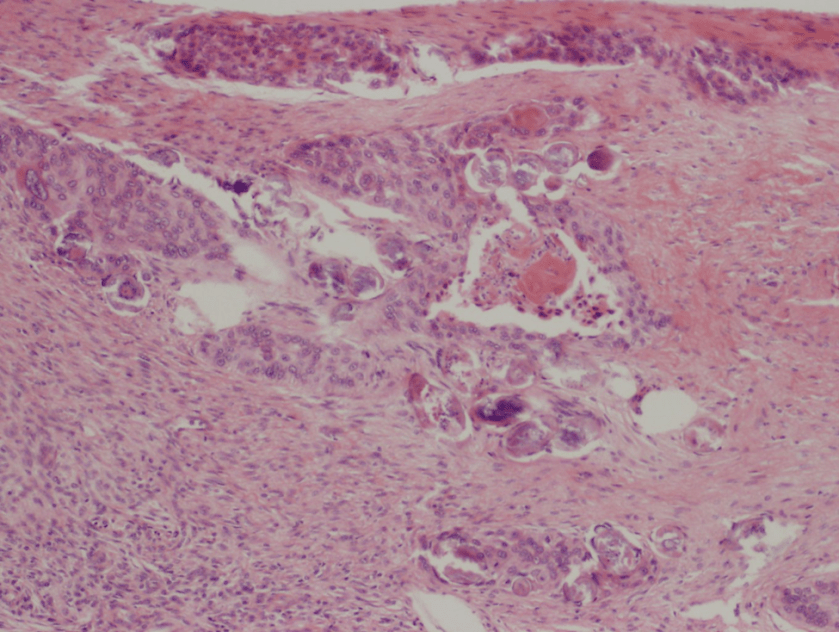
Figure 1. H&E of bladder biopsy showing invasive squamous cell carcinoma and ova of Schistosoma haematobium.

schisto2

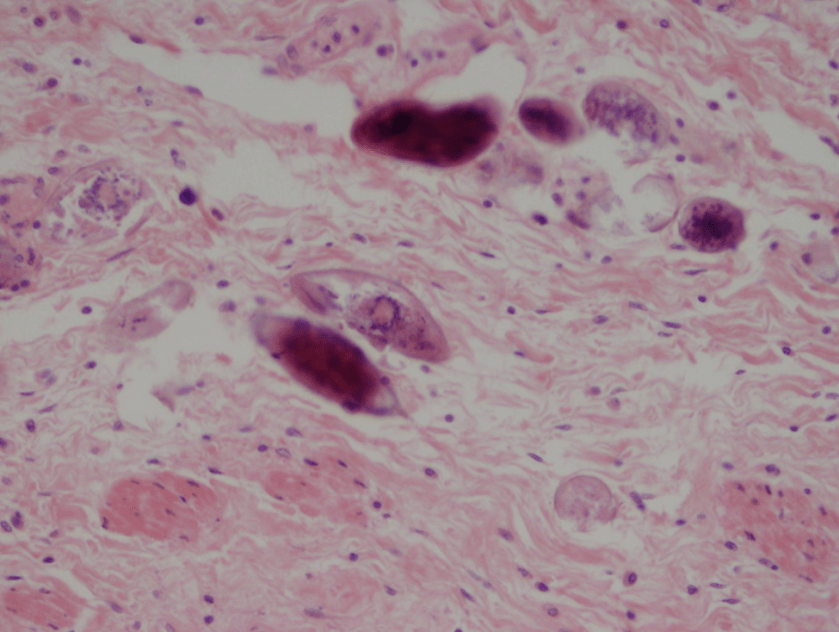
Figure 2. High power view of Schistosoma haematobium ova.

Discussion

Schistosomiasis is caused by blood flukes of the genus Schistosoma. There are three major species related to human disease: S. haematobium, S. japonicum, and S. mansoni. Clinical presentation of schistosomiasis depends on the species. S. haematobium infection causes urinary schistosomiasis. Urinary schistosomiasis can range from asymptomatic to gross hematuria and possible obstruction resulting in renal failure.  S. haematobium is geographically distributed primarily in Africa and the Middle East. Transmission to humans requires direct contact with water harboring snails infected with S. haematobium. The cercaria that are released from infected snails penetrate human skin and then migrate to venules of the bladder and ureters. The cercaria develop into adult male and female flukes.  The adult schistosomes reside in the bloodstream and lay eggs that pass through the urine. The eggs are highly immunogenic and produce an intense inflammatory response resulting in hematuria and dysuria. Progression to fibrosis, renal failure and carcinoma may occur as in our patient with squamous cell carcinoma of the bladder. In addition to detection in surgical specimens, S. haematobium may be detected by identification of ova in urine. The ova of S. haematobium are oval and 112-170 µm x 40-70 µm in size with a characteristic terminal spine.  In patients with a high clinical suspicion of S. haematobium, serology may be useful when ova are not identified in urine or surgical specimens. The recommended treatment for schistosomiasis is praziquantel.  The timing of treatment is important because praziquantel is most effective against the adult worm and requires a mature antibody response to the parasite. The Centers for Disease Control and Prevention recommend starting treatment for infected travelers at least 6-8 weeks after the last exposure to contaminated water.


-Jill Miller, MD is a 4th year anatomic and clinical pathology resident at the University of Vermont Medical Center.

Wojewoda-small

-Christi Wojewoda, MD, is the Director of Clinical Microbiology at the University of Vermont Medical Center and an Assistant Professor at the University of Vermont.

Microbiology Case Study: A 4 Day Old with Eye Drainage

A 4 day old infant presented to the ED with copious amounts of left eye drainage. He was born at 38 weeks via vaginal delivery and was discharged home on day 2 of life. On day 3 of life the baby had acute onset of left eye drainage. On day 4 of life the discharge had become so profuse that the mother was cleaning the baby’s eye several times per hour and his eye was red. In the ED, the discharge was collected and sent to the lab for culture. The specimen Gram stain was reported as many polymorphonuclear leukocytes (pmns) and rare gram negative diplococci. Two days later the following growth was noted on chocolate, 5% sheep blood, and Thayer Martin agars (Figure 1).

ngono1

Figure 1. Growth of organism on (A) chocolate, (B) 5% sheep blood, and (C) Thayer Martin agars

Discussion

The organism was identified as Neisseria gonorrhoeae. N. gonorrhoeae are gram negative diplococcic that grow on solid media in 24-48 hours when incubated under aerobic conditions at 35-37°C with 5% CO2. They exhibit more robust growth on chocolate agar, but can grow on 5% sheep blood agar as well (Figure 1A and B). Like most other Neisseria spp., N. gonorrhoeae are oxidase and catalase positive. Species-level identification can be made by testing carbohydrate utilization; N. gonorrhoeae can only utilize glucose while N. meningitidis can utilize glucose and maltose.

To increase the sensitivity of N. gonorrhoeae detection from mucosal (non-sterile) sites, selective media such as Thayer Martin agar is commonly used (Figure 1C). Selective media for N. gonorrhoeae contains colistin, vancomycin, and antifungal agents to suppress gram negative bacteria, gram positive bacteria, and yeast, respectively, along with other inhibitory agents. N. gonorrhoeae are fastidious bacteria that are at great risk for dying in transport. For maximal recovery of N. gonorrhoeae, special transport packs have been developed. Figure 2 is an image of a Thayer Martin transport pack including agar plate, CO2 generating tablet, and plastic bag for transport back to the lab.

ngono2

Figure 2. Components of the Thayer Martin transport system for bedside plating of specimen.

Neisseria spp. reside in the mucosal membranes of animals including humans and most species are considered normal flora of the upper respiratory tract. N. gonorrhoeae is an exception and is always considered a pathogen no matter what amount or from what location it is isolated. N. gonorrhoeae is spread by sexual transmission where it infections the mucosal surfaces of the urethra, cervix, rectum, and pharynx. Infection presents as acute urethritis in men with symptoms of urethral discharge and sometimes dysuria, but infection is asymptomatic in up to 10% of cases. In women, N. gonorrhoeae infection is most often asymptomic. If symptoms are present, they are generally mild and non-specific including increased vaginal discharge, dysuria, and intermenstrual bleeding. Delay in treatment due to lack of recognition of infection can lead to assentation of the bacteria resulting in pelvic inflammatory disease. Rectal and pharyngeal infections occur in both men and women and are generally asymptomatic. N. gonorrhoeae can cause conjunctivitis which leads to corneal ulceration. In adults conjunctivitis is caused by autoinoculation of the eye. In newborns, such as our case patient, it is transmitted from infected mother to child as the baby moves through the birth canal. In the olden days N. gonorrhoeae infection of newborns was a cause of blindness, but now it is standard to administer 1% aqueous solution of silver nitrate or antibiotic ointment containing erythromycin to newborns just after birth to prevent infection.

These days, molecular detection of N. gonorrhoeae from urine is the most common method used to identify N. gonorrhoeae infection in adult males and females. One of the benefits of molecular detection is that it does not require live bacteria for detection. Many reference laboratories and public health clinics have validated their molecular assays for detection of N. gonorrhoeae from rectal and pharyngeal swabs. Traditionally for sites such as eyes, molecular detection was not available and culture was the only means of N. gonorrhoeae detection. This is a rapidly changing area of microbiology as we were able to get our patient’s eye drainage tested by transcription-mediated amplification (APTIMA) at our reference lab and the specimen was positive.

Our patient was treated with cefotaxime and is being followed outpatient by his pediatrician and ophthalmology clinic.

References

  1. MCM, 10th edition
  2. CDC (https://www.cdc.gov/std)


-Erin McElvania TeKippe, PhD, D(ABMM), is the Director of Clinical Microbiology at Children’s Medical Center in Dallas Texas and an Assistant Professor of Pathology and Pediatrics at University of Texas Southwestern Medical Center.

Association for Molecular Pathology – A Bunch of Party Loving Pathologists…

I was privileged to attend this year’s Association for Molecular Pathology (AMP) meeting in Charlotte, North Carolina, in the beginning of November. I really enjoy this meeting – it is relevant to everything our lab does with sessions offered in topics of Hematopathology, Infectious Diseases, Solid Tumors, Inherited Diseases, and just recently added, Bioinformatics.

It is exciting to meet and discuss with others in this field, especially other laboratory technologists. AMP has done a wonderful job of including those of us who perform the bench work, offering discounted memberships, as well as learning opportunities on their website, and even an award especially for technologists’ exemplary posters/abstracts presented at the annual meeting.

This year’s meeting offered the previously mentioned topics, but an emerging trend was evident – testing cell-free DNA (cfDNA) obtained from sources other than tissue biopsies, such as plasma or urine. This quarter’s post will deal with the reason behind this and the technology for testing such specimens, specifically plasma.

Cell-free DNA has become an attractive source for tumor testing recently. This source can be tested when a tissue biopsy is just not possible, such as when a patient has progressed to the point that surgery is not recommended. Here is the biology behind why this can work as a source of tumor DNA:

1-17-fig1

Figure 1. http://www.intechopen.com/books/methylation-from-dna-rna-and-histones-to-diseases-and-treatment/circulating-methylated-dna-as-biomarkers-for-cancer-detection

The sources of DNA in a sample of whole blood (as shown in Figure 1) are:

  • white blood cells
  • degraded white blood cells (cfDNA)
  • degraded tumor cells (cfDNA)
  • circulating tumor cells (CTCs).

Because of the biology of tumor cells, they have higher turnover than other cells in the body. Due to this, a larger fraction of the cfDNA in the plasma is from tumor cells. We can take advantage of this with a so called “liquid biopsy” – with 10 cc’s of whole blood, we can attempt to capture about 10ng of cfDNA and test this for possible resistance mutations to the therapies the patient may be on.

Many of the posters and several of the sessions at the AMP meeting dealt with cfDNA. Several pre-analytical steps were stressed in order to have success with this type of specimen.

  1. The whole blood needs to be collected, as any other blood specimen should, with care taken to not lyse any of the cells during collection.
  2. The collection tube type varies depending on how much time it will take to centrifuge the specimen to obtain the plasma. If it can be spun within two to four hours, a simple EDTA tube is sufficient. If it cannot be spun within a short time, then another tube with special preservatives is required. A Streck tube has been the tube of choice in these situations, but others are becoming available on the market as the demand increases. These specific tubes offer a greater amount of time to capture the cfDNA without white blood cell lysis becoming an issue. This is important, because as the white blood cells lyse, the plasma is flooded with the patient’s normal cfDNA that will dilute out the tumor cfDNA fraction, making it even more difficult to detect.
  3. Centrifugation procedures must be altered. The brake should not be applied when stopping the centrifuge because braking can cause the white blood cells to be sheared, which will, again, flood the plasma sample with normal cfDNA. An initial spin should be performed to obtain the plasma, then an additional spin should be performed before extraction of the DNA.

There are multiple kits available on the market for extraction of cfDNA. Once the DNA is extracted it is suggested to measure the DNA fraction with a method that will display the size of the fragments, such as with a Bioanalyzer. Cell-free DNA is about 160-170bp in size and, with the readout from an instrument such as the Bioanalyzer, one can see the size of the DNA, quantitate it, as well as observe any contamination from genomic DNA (shown by a peak >>170bp in size).

Many types of testing are being performed on this cfDNA fraction such as real time PCR, digital droplet PCR, and next generation sequencing. Whichever platform is used, a validation must be performed to ensure a fairly low level of detection (as low as 0.1% or 0.01%) because, many times, the positive tumor cfDNA allele fraction will be very low due to the normal cfDNA in the plasma.

This method of testing non-invasive specimens from patients is an amazing way to help save possibly very sick people from having to undergo a risky surgery. This is yet another use of a new technique in the ever changing world of Molecular Diagnostics!


rapp_small

-Sharleen Rapp, BS, MB (ASCP)CM is a Molecular Diagnostics Coordinator in the Molecular Diagnostics Laboratory at Nebraska Medicine. 

Microbiology Case Study: A 43 Year Old Woman with Headaches and Stiff Neck

Case history

A 43 year old woman with no significant medical history arrived at the emergency room complaining of several days of right-sided headaches, and worsening neck stiffness. Two days prior to coming into the emergency room, she had noticed some “bumps” on her posterior scalp, which her hairdresser looked at for her and confirmed the presence of a rash. Physical exam revealed a low-grade temperature of 100.6F. A small rash on the right side of the head was seen, consisting of a few erythematous patches and vesicles. A lumbar puncture was performed revealing clear and colorless cerebrospinal fluid, and the patient was given doses of ceftriaxone, vancomycin, and acyclovir.

Laboratory diagnosis

Analysis of the CSF was as follows:

  • Glucose: 45
  • Total Protein: 148 (H)
  • RBC Count: 15
  • Nucleated cell Count: 314
  • Neutrophils: 5%
  • Lymphocytes: 72%
  • Monocytes: 20%
  • Eosinophils: 3%

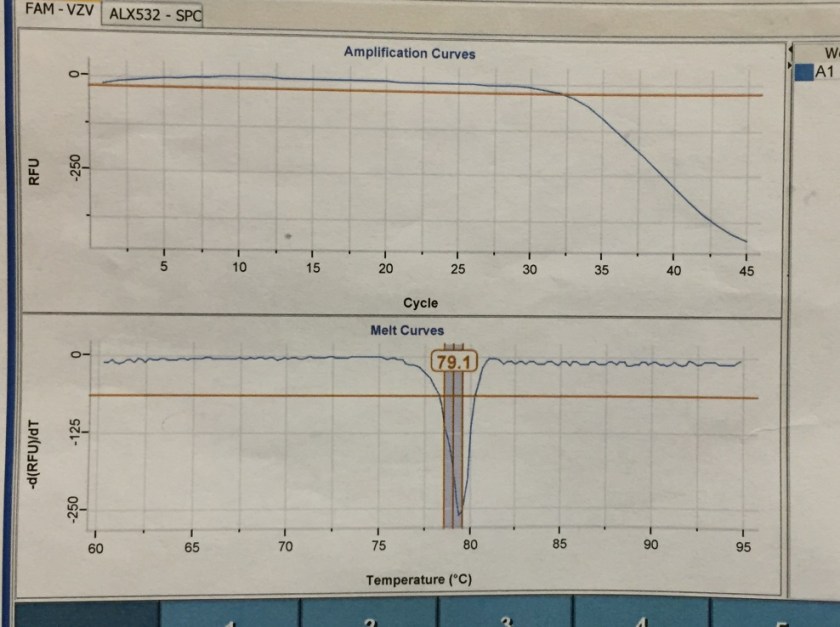
PCR of the CSF was positive for varicella-zoster virus (Figure 1).

vzv1

Figure 1. Real-time PCR amplification curves and melting curves for Varicella Zoster Virus in patient’s CSF sample. The amplification curve demonstrates decrease of Relative Fluorescence Units (RFUs) corresponding with detection of viral DNA. The melting point is determined by the composition of nucleic acids, and is unique to VZV, confirming the identity of the virus detected.


Discussion

Primary infection with VZV causes the classic chickenpox illness characterized by a widespread vesicular rash, with lesions of varying ages. Herpes zoster (shingles) occurs when latent varicella-zoster virus (VZV) in a sensory ganglion becomes reactivated, resulting in a painful vesicular rash typically in a dermatomal distribution. By 7-10 days after eruption, the vesicles of the rash will crust over and are not considered infectious. However, in immunocompromised patients, new vesicles may continue to erupt. The predominant complaint is pain along the site of the rash, in 75% of patients.

Even in immunocompetent patients, there is a risk of aseptic meningitis and even encephalitis with VZV reactivation. This can occur from the virus spreading centrally, to the CNS, rather than distally down a spinal nerve. Some studies have even indicated that subclinical meningitis (defined as CSF pleocytosis) occurs in up to 50% of individuals with herpes zoster. In one study, 0.5% of patients with herpes zoster developed meningitis. The typical findings of zoster meningitis on lumbar puncture include elevated protein as well as lymphocytosis.

Antiviral therapy (either with valacyclovir, famciclovir, or acyclovir) is often advised for the treatment of shingles if patients present within 3 days of symptom onset; it has the benefits of shortening the duration of skin lesions and acute neuritis, though its effects on post-herpetic neuralgia are less clear. After three days, the clinical benefit of antiviral treatment is debatable; however, it is recommended for patients with neurologic complications or with compromised immune systems.

The patient had chickenpox when in college. Although she had her zoster outbreak for 4 days by the time of presentation, because of the meningitis a course of oral Valtrex was prescribed. She was discharged home as she was clinically stable.


-Alison Krywanczyk, MD is a 3rd year anatomic and clinical pathology resident at the University of Vermont Medical Center.

Wojewoda-small

-Christi Wojewoda, MD, is the Director of Clinical Microbiology at the University of Vermont Medical Center and an Assistant Professor at the University of Vermont.