Interference in Lab Assays

A 69 year old patient with cirrhosis presented to the ER with fever. Her bilirubin was markedly elevated at 7.4 g/dl and her hemoglobin and hematocrit were measured at 13.4 g/dl and 35.6% respectively with a MCV of 103.2 fl and MCH of 38.5 pg. The next day her H/H were 11.9 g/dl and 31.3 % respectively. While her hemoglobin one day later was 11.9 g/dl, the reported hematocrit was 39.3%. Patient had a bilirubin level of 8.7 g/dl at this time.

The fluctuating numbers together with the discrepancy between hemoglobin and hematocrit over a very short period of time was concerning. We realized that presence of markedly icteric plasma was responsible for these discordant values. Saline replacement and spun crit were performed in order to correct interference by bilirubin. Subsequent measurements of H/H revealed hemoglobin in the range of 12.9 g/dl with a hematocrit of 38% and a MCV of 113 fl. As the bilirubin levels started dropping (in the range of 6.5 g/dl) the hemoglobin level measured by the analyzer fell in the range of 10.3 to 11 g/dl. The instrument (XN-200) gave no error codes and therefore we were able to report out the analyzer results without correction. It was however very important to convey to the clinical team that the H/H values did not truly represent a fall from the previous values. As the two methodologies were different (spun crit and plasma replacement was being no longer performed) the numbers should be interpreted accordingly. Patient was not bleeding actively and did not require any blood transfusion.

Interference occurs when a substance or process falsely alters an assay result. Interferences are classified as endogenous or exogenous. Endogenous interference originates from substances present in the patient’s own specimen. Exogenous interferences are substances introduced into the patient’s specimen. Interference from hemolysis, icterus and lipemia are most frequently studied. Protein interferences are most often associated with paraproteins and predominantly with IgM or IgG and rarely with IgA. Drug interference may be due to the parent drug, metabolite(s) or additives in the drug preparation. Determining if interference is significant requires deviation limits from the original result. Once interferences are identified there is a need to establish procedures for handling affected results as part of the quality system.

Hemoglobin is quantified based on its absorption characteristics. Conditions such as hyperlipidemias, hyperbilirubinemia, a very high white blood cell count, and high serum protein can interfere with this measurement and result in falsely elevated hemoglobin values. When the values of hemoglobin, red cell count, and MCV are affected, MCH and MCHC also become abnormal, since these indices are calculated and are not directly measured. Sometimes a set of spurious values may be the first clue to an otherwise unsuspected clinical condition (e.g., the combination of low hematocrit, normal hemoglobin, and high MCV and MCHC is characteristic of cold agglutinins).

Although one must pay attention to very high amounts of bilirubin within the plasma, most hematology analyzers do not presently demonstrate any interference with bilirubin, at least for concentrations up to 250 mg/l. Above these values attention is however needed.

High serum or plasma bilirubin concentrations can cause spectral interference with assays near the bilirubin absorbance peak of ~ 456 nm. Chemical interference e.g. with peroxidase-catalysed reactions may also occur.

 

Vajpayee,Neerja2014_small

-Neerja Vajpayee, MD, is the director of Clinical Pathology at Oneida Health Center in Oneida, New York and is actively involved in signing out surgical pathology and cytology cases in a community setting. Previously, she was on the faculty at SUNY Upstate for several years ( 2002-2016) where she was involved in diagnostic work and medical student/resident teaching.

Hematopathology Case Study: A 54 Year Old Male with Acute Onset of Progressive Neck Swelling

Case History

A 54 year old male with a diagnosis of HIV (last CD4 count was 301 on 11/2016) currently on HAART presented to the Beth Israel Deaconess Medical Center (BIDMC) ED on 2/28/2017 with an acute onset of progressive neck swelling over the course of 4-5 days. Laboratory values on presentation was significant for a LDH of 1061 IU/L. Other laboratory values were stable. Upon CT imaging with contrast of the neck, an extensively necrotic right cervical lymphadenopathy was present and was extending into the supra- and infraclavicular chain. No mediastinal or hilar lymphadenopathy was noted.

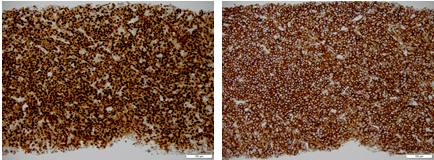
On 3/1/2017, the patient underwent an ultrasound guided core needle biopsy of the right cervical mass (see images). By immunohistochemistry, the neoplastic cells are positive for CD138 and MUM1. PAX5 shows dim and heterogeneous staining in a subset of cells while CD79a highlights a minor component of the lymphoid population. CD3 and CD5 are positive in T-cells occupying a small subset of the lymph node. CD20, BCL2, BCL6, BCL1, CD30, CD56 and HHV8 are negative. By Ki-67 immunostaining, the proliferation index approaches 100%. In-situ hybridization for Epstein-Barr virus encoded RNA (EBER ISH) is positive in a major subset of cells.

3-23-fig1

3-23-fig2
CD20 (left) and CD3
3-23-fig3
MUM1 (left) and CD138
3-23-fig4
EBER ISH (left) and Ki-67

By cytogenetic analysis, only two cells were available for metaphase interpretation and it showed a translocation between the long arms of chromosomes 8 and 14 and by FISH, a t(8;14)(q24.1;q32) was noted, indicating an IGH/MYC rearrangement.

3-23-fig5

Overall, the morphologic, immunophenotypic, and cytogenetic findings in conjunction with the clinical features of a HIV positive male and EBV association, the diagnosis is in keeping with a plasmablastic lymphoma.

3-23-fig6

Discussion

Plasmablastic lymphoma is a diffuse proliferation in which the cells resemble immunoblasts but share an immunophenotype similar to that of plasma cells. First described in the oral cavity, especially among HIV infected patients, it can present in a variety of extranodal sites, such as skin, soft tissue, and gastrointestinal tract. Although uncommon, plasmablastic lymphoma has its highest incidence among HIV infected individuals. Most patients are at stage III or IV at presentation with an intermediate to high risk IPI score. The tumor cells of plasmablastic lymphoma are invariably infected by Epstein-Barr virus (EBV) and are consistently negative for HHV8. According to Balague et al.2, up to 39% of plasmablastic lymphomas demonstrate a MYC translocation, all of which involved the IGH gene. Generally, plasmablastic lymphoma displays a complex karyotype, although some cases display an isolated MYC rearrangement without a complex karyotype. Taddesse-Heath et al.3 has shown a small cohort that is positive for gains in odd-numbered chromosomes 3, 5, 7, 9, 11, and/or 15, similar to that seen in plasma cell myeloma. The clinical course of plasmablastic lymphoma is quite aggressive with most patients dying within one year after diagnosis. Current first line treatment for plasmablastic lymphoma is dose-adjusted EPOCH with or without bortezomib, intrathecal prophylaxis, and possible autologous stem cell transplantation in first remission candidates. Future directions of therapy include chimeric antigen receptor (CAR) T-cells and small molecular inhibitors against the MYC bromodomain4.

References

  1. Swerdlow, S., et al., WHO Classification of Tumours of Haematopoietic and Lymphoid Tissues, 4th. ed., IARC press: 2008
  2. Balague, O., et al., “Plasmablastic lymphomas are genetically characterized by frequent MYC translocations [abstract],” Mod Pathol 2009; 22:255A.
  3. Taddesse-Heath, L., et al., “Plasmablastic lymphoma with MYC translocation: evidence for a common pathway in the generation of plasmablastic features,” Mod Pathol 2010; 23:991-999.
  4. Castillo, J., et al., “The biology and treatment of plasmablastic lymphoma,” Blood 2015; 125:2323-2330.


PhillipBlogPic-small

-Phillip Michaels, MD is a board certified anatomic and clinical pathologist who is a current hematopathology fellow at Beth Israel Deaconess Medical Center, Harvard Medical School, Boston, MA. His research interests include molecular profiling of diffuse large B-cell lymphoma as well as pathology resident education, especially in hematopathology and molecular genetic pathology.

Automated Body Fluid Cell Counts

Body fluid cell count has been part of the hematology laboratory and remains a time-consuming manual task for technologists. The cell count test provides valuable information to clinicians in the diagnosis and treatment of a various medical conditions. Albeit the diagnostic prowess of cell counts, there has also been an intrapersonnel variation in counts that proves the lack of precision among testing personnel. As laboratory professionals, we are trained that precision is important in the performance of cell counting procedures; therefore the implementation of automated body fluid counts will improve these quality parameters.

Automated methods for body fluid cell counts have been rapidly replacing manual hemacytometer methods. Advances in medical technology, especially in hematology instrumentation, have decreased the turnaround times and improved precision counts for body fluids. Technological advances in hardware and software engineering have developed instruments with expanded analytical capabilities that enable processing multiple specimen types including urine, CSF, peritoneal fluid, pleural fluid, synovial fluid, and lavages on a single analyzer.1 Most body fluid instruments like the Sysmex XE-5000 have analyzed body fluids easily and quickly. In a study published in Lab Medicine, the Sysmex XE5000 technology showed significant improvement in the ability of automated hematology analyzers regarding body fluid analysis.2 This technology provides counting nucleated cells in an acellular fluid(i.e. Cerebrospinal fluid). This technology also offers differential capabilities between mononuclear and polymorphonuclear cells, providing laboratory technologists and clinicians rapid, cellular differential analysis.

Laboratory technologists should not fear that their jobs will be replaced by these instruments. In fact, laboratory professionals should be enthused that it provides ease in their work, improves quality, decreases work load, and increases efficiency in their processes. The limitations that need to be considered in automated cell counts analyzers are the use of purulent specimens where the main concern is clogging the instrument’s flow cell apertures. Crystals in synovial fluids may cause a false increase in counts; in these cases, manual intervention in cell count may be warranted. Extremely clear fluids with low cell counts also limit the application of automated methods and may warrant manual analysis. Of important consideration as well is the microscopic review of cellular distribution when malignancy is of diagnostic consideration.

Modernization of laboratory equipment and analysis provide ease in operation from a management stand point but also efficiency, accuracy and precision in reporting of results. Automation of body fluid counts provides help to technologists and a rapid diagnosis tool for clinicians.


Reference


  1. Scott, G. (2014, June 9). An automated approach to body fluid analysis. Medical Laboratory Observer.

Williams, J., MD. (2011). Gaining Efficiency in the Laboratory – Automated Body Fluid Cell Counts: Evaluation of the Body Fluid Application on the Sysmex XE-5000 Hematology Analyzer . Lab Medicine, 42(7).

ledesma_small

Carlo Ledesma, MS, SH(ASCP)CM MT(ASCPi) MT(AMT) is the program director for the Medical Laboratory Technology and Phlebotomy at Rose State College in Midwest City, Oklahoma as well as a technical consultant for Royal Laboratory Services. Carlo has worked in several areas of the laboratory including microbiology and hematology before becoming a laboratory manager and program director.

Hematology Quiz: A Patient with Multiple Myeloma

What is the red cell phenomenon in this blood smear from a patient with multiple myeloma?

roux1

  • Agglutination
  • Erythrocytosis
  • Polychromasia
  • Rouleaux
  • Anisocytosis


The red cell phenomenon in this blood smear is rouleaux. The massive amount of serum immunoglobulin in patients with multiple myeloma interferes with the normal repellent force between red cells, allowing the cells to pile up on top of each other in formations that resemble stacks of coins. Rouleaux formation can also occur in hyperproteinemia due to other causes, such as chronic inflammation or hyperfibrinogenemia of pregnancy, and it usually occurs artifactually in the thick end of any blood smear.


Krafts

-Kristine Krafts, MD, is an Assistant Professor of Pathology at the University of Minnesota School of Medicine and School of Dentistry and the founder of the educational website Pathology Student.


Stomatocytes: Inherited or Acquired?

A 40 year old patient presented with macrocytic anemia.

CBC Results:

  • WBC: 8.6 K/uL                     Normal
  • RBC: 3.60 M/uL                   Decreased
  • Hb : 13.1 g/dl                       Normal
  • MCV: 111.3 fl                        Increased
  • MCH: 36.4 pg                      Increased
  • MCHC:  32.7                        Normal
  • RDW:     15.5%                     Increased
  • Platelet: 360 K/uL              Normal

Review of peripheral smear showed several stomatocytes (Figures 1-3).

stoma1
Figure 1


stoma2
Figure 2
stoma3
Figure 3

Serum vitamin B12 and folate levels were normal and serum iron studies were consistent with anemia of chronic disease. Typically anemia of chronic disease is normocytic normochromic. Based on presence of numerous stomatocytes and macrocytosis (which can be seen in patients with hereditary stomatocytosis) it was recommended that patient be investigated for hereditary stomatocytosis and acquired causes of stomatocytosis.

STOMATOCYTES

“Stomatocyte” describes the appearance of red blood cells (RBCs) on the peripheral blood smear. Stomatocytes (also called hydrocytes) contain a mouthlike or slitlike pattern that replaces the normal central zone of pallor.

Mechanism of stomatocyte formation — When the normal biconcave disc becomes a uniconcave cup red blood cell (RBC) will appear as a stomatocyte on the peripheral blood smear. There are several mechanisms by which this change can occur:

  • In hereditary stomatocytosis (HSt), the mechanism of stomatocyte formation often involves changes in cell volume caused by reduced intracellular ion content.
  • In most cases of acquired stomatocytosis and rare inherited conditions that affect lipid metabolism formation often involves either a decrease in RBC membrane surface area or qualitative changes in the composition of the membrane lipid bilayer.


DISORDERS WITH STOMATOCYTES ON PERIPHERAL BLOOD

  1. Hereditary stomatocytosis (HSt) is an inherited autosomal dominant condition characterized by an excess of stomatocytes Patients have variable degrees of hemolysis and anemia. Hereditary stomatocytosis (HSt) is a rare disorder that presents with various degrees of hemolytic anemia and abnormal red blood cell (RBC) morphology. The genetic abnormalities responsible for these conditions remain incompletely characterized. Some of the defects associated with this condition involve membrane transporters such as Piezo1, Gardos, Rhesus antigen-associated glycoprotein, and the anion exchanger band 3.
  2. Several rare inherited defects affecting membrane lipid composition have been reported to have stomatocytosis on the peripheral blood smear.
  • Tangier’s disease
  • Rh null disease
  • Phytosterolemia
  1. Liver disease/medications. Stomatocytes can be seen with some acquired conditions such as chronic liver disease (most often due to alcoholism) or acute alcohol intoxication. The stomatocytosis with acute alcohol intoxication appears to be transient, and it may affect a significant proportion of RBCs. The mechanism is thought to be due to a reduction in RBC membrane surface area rather than an increase in RBC volume. Also, dministration of some medications can cause transient stomatocytosis. This was demonstrated in a study that demonstrated formation of stomatocytes upon exposure of RBCs to drugs like vinblastine and chlorpromazine. Intercalation of the drug into the inner half of the lipid bilayer may be responsible for creating the abnormal morphology.
  1. In some healthy individuals, stomatocytes occasionally can be found on the peripheral blood smear. This is thought to be due to a drying artifact; hence, it is important to evaluate several different areas of the peripheral smear before determining that a patient has circulating stomatocytes.

Hereditary stomatocytosis (HSt)

HSt can be completely asymptomatic or can present with chronic hemolytic anemia of varying severity. The age of presentation depends on the specific gene mutation, presence of other inherited conditions, and other environmental factors. The increasingly routine use of the complete blood count (CBC) in asymptomatic individuals has resulted in earlier diagnosis in some individuals who otherwise might never have come to medical attention. There does not appear to be a relationship between the degree of peripheral stomatocytosis on the blood smear and the severity of hemolytic anemia

The diagnosis of HSt is made by demonstrating the presence of anemia associated with the characteristic changes in RBC morphology (stomatocytosis) in conjunction with altered RBC indices and osmotic fragility. Genetic testing for PIEZO1 or Gardos channel mutations is confirmatory but not required.

The evaluation for HSt includes review of the complete blood count (CBC) and peripheral blood smear, which may show stomatocytes.The blood smear should be reviewed closely to ensure there are no abnormalities of white blood cells (WBCs) or platelets. The RBC indices typically show an increased mean corpuscular volume (MCV) in the range of up to 140 femtoliters (fL) and abnormally low or high mean corpuscular hemoglobin concentration.


Vajpayee,Neerja2014_small

-Neerja Vajpayee, MD, is an Associate Professor of Pathology at the SUNY Upstate Medical University, Syracuse, NY. She enjoys teaching hematology to residents, fellows and laboratory technologists.


Hematology Quiz: A 22 Year Old Male with Fatigue

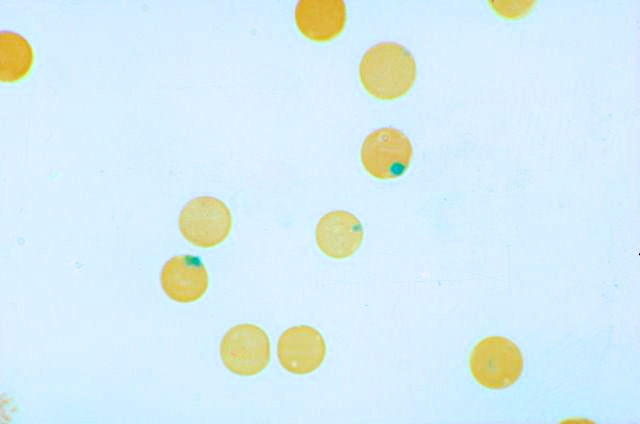
A 22-year-old male presents with shortness of breath and fatigue. He is planning a trip to an area in Africa in which chloroquine-resistant malaria is endemic, and he was started on a prophylactic antimalarial drug regimen several days ago. A blood smear is performed, and stained with a supravital stain. What are the round inclusions within the red cells?

heinz

  1. Pappenheimer bodies
  2. Howell-Jolly bodies
  3. Heinz bodies
  4. Hemoglobin H bodies
  5. Warthin-Finkeldey bodies


The inclusions in these red cells are Heinz bodies, which are characteristic of G6PD deficiency. In this disease, the red cells are less able to handle oxidant exposure (common precipitating factors include infection, drug ingestion, and exposure to certain foods, such as fava beans). Following oxidant exposure, hemoglobin denatures and precipitates, forming so-called Heinz bodies which stick to the inside of the red cell membrane, leading to intravascular hemolysis and splenic destruction. Patients with G6PD deficiency typically develop symptoms of hemolysis after a period of two to three days following oxidant exposure. The anemia is usually short-lived and self-limiting.


Krafts

-Kristine Krafts, MD, is an Assistant Professor of Pathology at the University of Minnesota School of Medicine and School of Dentistry and the founder of the educational website Pathology Student.

Blast Morphology Predicting Presence of a Specific Translocation

A 60 year old patient with history of breast cancer presented with pancytopenia and bone marrow study was done to evaluate for metastatic tumor.

CBC revealed pancytopenia with a WBC count of 1.9 K/uL, macrocytic anemia (Hb 7.6 g/dl, MCV 106.2 fl) and decreased platelets at 15 K/uL.

Review of peripheral smear revealed circulating blasts.

Differential Count (100 cells):

  • 13% Blasts
  • 18% Neutrophils
  • 69% Lymphocytes

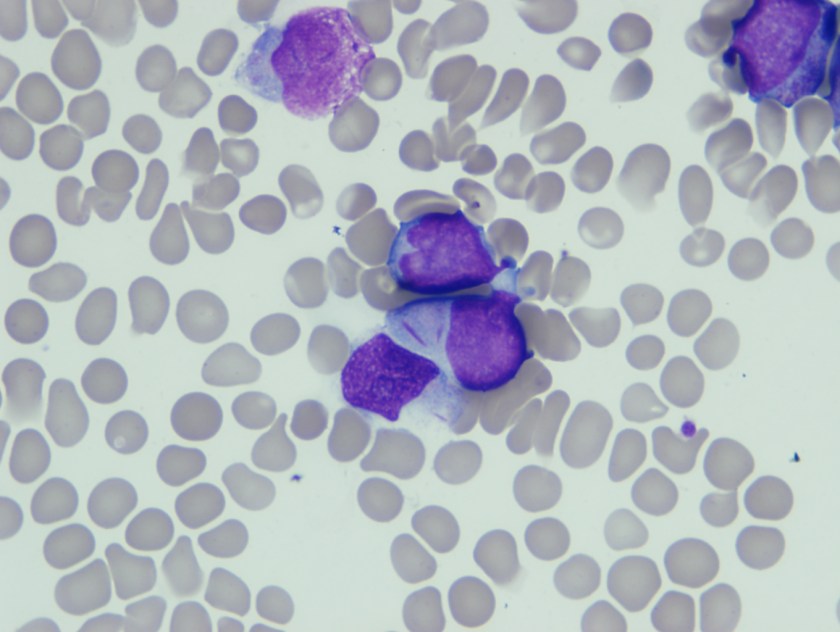
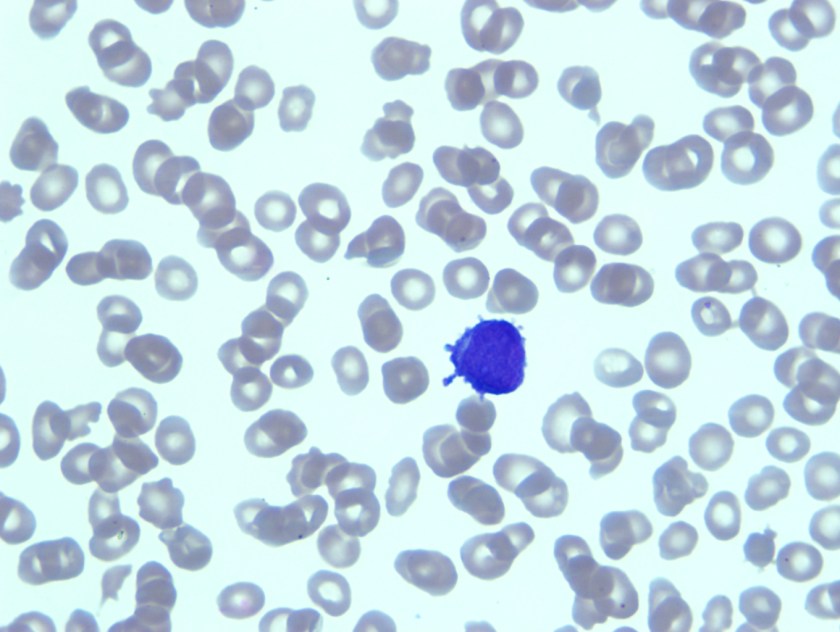
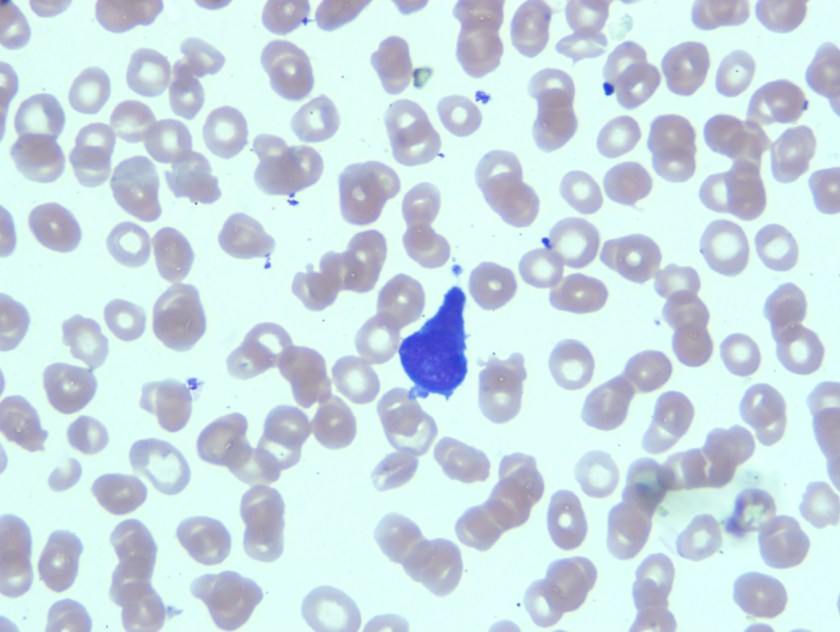
Blasts were intermediate in size with high N/C ratio, fine nuclear chromatin, 0-1 nucleoli, and scant basophilic cytoplasm. Few blasts have convoluted nuclei and in an occasional blasts slender Auer rod was seen.

blast1
Peripheral blood smear showing blast with slender Auer rod
blast2
Peripheral blood smear showing blast with slender Auer rod
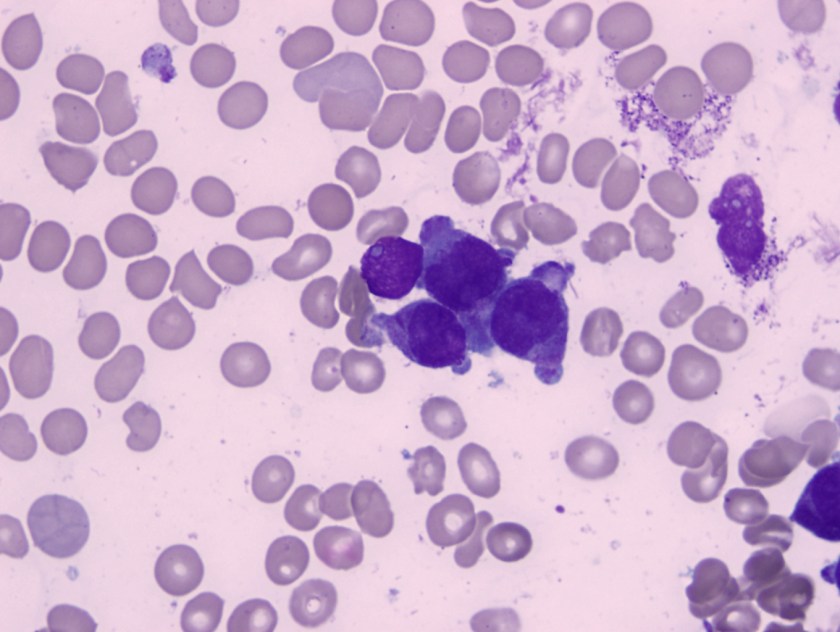
blast3
Bone marrow aspirate smear showing blasts with elongated Auer rods.

Based on this morphological finding FISH for t8;21) was ordered along with karytoype analysis.

Translocation (8;21) was detected by both karyotype and FISH analysis (50.5% cells).

Cytogenetic results

Karyotype

46,X,?inv(X)(p22.1q22),der(8)t(8;21)(q21.3;q22),der(21)t(8;21)(q21.3;q22)add(8)(q24.3)[19]

46,XX[1]

FISH Results:

nuc ish (RUNX1T1,RUNX1x3)(RUNX1T1 con RUNX1x2)[101/200]

nuc ish (MYC,IgH)x2[97/200]

Based on presence of complex karyotype and t(8;21) together with prior history of chemotherapy for breast carcinoma diagnosis of Therapy related AML with t(8;21) was made.

Discussion

Acute myeloid leukemia (AML) associated with the t(8;21)(q22;q22) represents approximately 5% to 12% of de novo AMLs. At the molecular genetic level, this neoplasm is defined by the presence of the t(8;21)(q22;q22) involving the AML1 (RUNX1) gene on chromosome 21q22.3 and the ETO (RUNX1T1) gene on chromosome 8q22. TheAML1ETO (RUNX1RUNX1T1) fusion product disrupts the core binding factor transcription complex, which affects cell differentiation, proliferation, apoptosis, and self-renewal and, thus, initiates leukemogenesis. Patients with de novo AML-t(8;21) have a high complete remission rate and relatively long disease-free survival, especially adults treated with high-dose cytarabine in the consolidation phase.

Therapy-related AML (t-AML) is a known complication of cytotoxic chemotherapy and radiation therapy, which are known to be mutagenic. Causative agents include alkylating agents and topoisomerase-II inhibitors and platinum drugs. The outcomes for patients with t-AML have been historically poor compared with those for patients with de novo AML. t-AML-t(8;21) is uncommon.

Blasts in t-AML and de novo AML associated with t(8;21)(q22;q22) share characteristic morphologic and immunophenotypic features, and affected patients have a comparable initial response to induction chemotherapy. Patients with t-AML-t(8;21), however, have been reported to have a shorter survival.

Therapy related AML with t(8;21) shares morphologic and immunophenotypic features with de novo AML-t(8;21).

Common morphological features include the presence of large blasts with abundant cytoplasm, often containing Auer rods which appear long and slender with tapered ends as was seen in our patient. Additional common morphological findings seen in AML with t(8;21) include presence of numerous azurophilic granules and perinuclear clearing or very large granules (pseudo-Chediak-Higashi), suggesting abnormal fusion.

Both de novo AML with t(8;21) and therapy related AML with t(8;21) are characterized by the AML1ETO (RUNX1RUNX1T1) fusion. However, AML1ETO fusion in t-AML does not predict a favorable outcome in the therapy-related setting. Patients with t-AML-t(8;21) usually have a higher frequency of KIT mutations, which is an adverse prognostic indicator.


Vajpayee,Neerja2014_small

-Neerja Vajpayee, MD, is an Associate Professor of Pathology at the SUNY Upstate Medical University, Syracuse, NY. She enjoys teaching hematology to residents, fellows and laboratory technologists.

And They Thought it was a Metastatic Tumor

A 74 year old patient presented to the emergency room with a syncopal attack. He had an underlying history of untreated adenocarcinoma of the prostate and reported of a 10 to 15 pound weight loss in the recent months.

CBC revealed pancytopenia with white cell count of 0.4 K/uL, hemoglobin of 9.9 g/dl and platelets of 22 K/uL. The clinical suspicion was widespread metastatic adenocarcinoma.

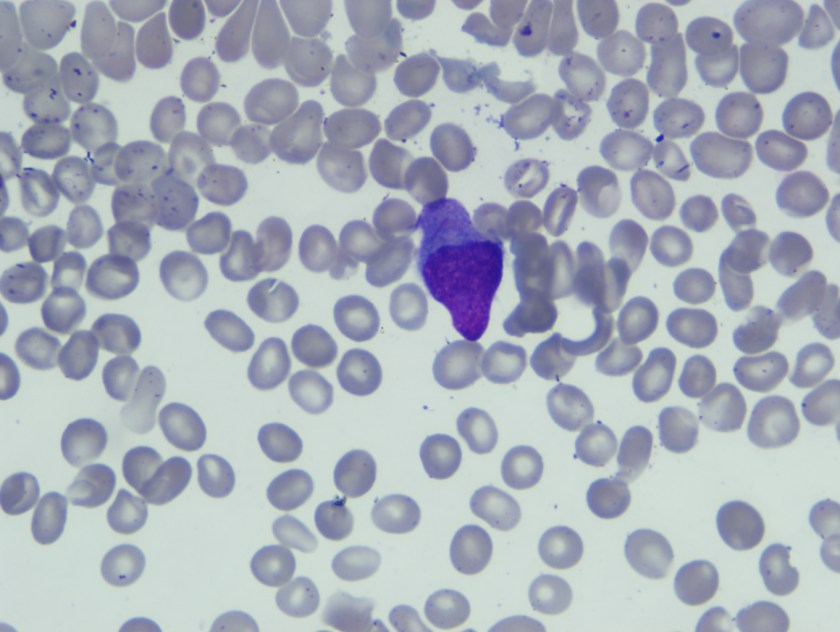
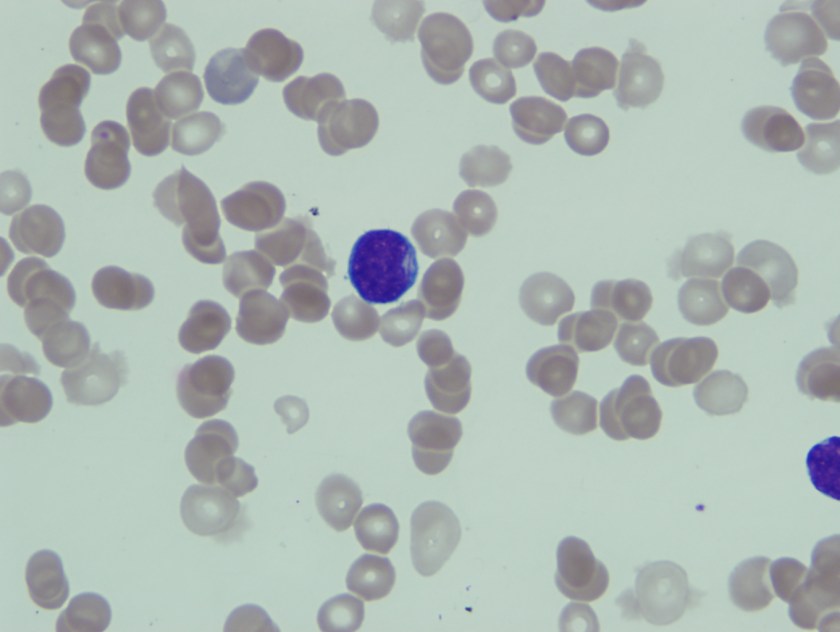
Review of peripheral smear revealed mostly lymphocytes, one blast and a large cell with very granular cytoplasm and large eccentric nucleus.

aml1
Peripheral blood, Wright-Giemsa stain. Blast with increased N/C ratio, enlarged nucleus and scant cytoplasm.
aml2
Peripheral blood, Wright- Giemsa stain. Large cell with eccentric nucleus and hypergranular cytoloplasm, reminiscent of abnormal promyelocyte.

Having reviewed the peripheral smear acute leukemia, likely acute promyelocytic leukemia was considered in the differential diagnosis. As there were no dacrocytes or nucleated red blood cells that were seen on the peripheral smear, it seemed less likely that patient would have metastatic tumor. Bone marrow biopsy was recommended.

aml3
Bone marrow aspirate, Wright Giemsa stain. Abnormal promyelocytes with lobulated nuclei, Auer rods and hypergranularity.
aml4
Bone marrow aspirate: Hypergranular promyelocytes with folded nuclei.

Bone marrow apsirate revealed hypercellular particles with numerous abnormal promyelocytes which were lobulated and hypergranular. Both the karytotype and FISH confirmed the presence of t(15;17).

Acute promyelocytic leukemia with t(15;17)(q22;q12);PML-RARA is an AML in which abnormal promyelocytes predominate. Typical forms are hypergranular (like this patient), although hypogranular (microgranular) forms also exist. Morphological review of the smear is the key to ordering the FISH testing for t(15;17). Often patients with APL present are at increased risk of DIC and needed to be treated on a more emergent basis.

Presence of t(15;17) defines the disease and has a significant therapeutic impact. APL has a particular sensitivity to treatment with ATRA , which acts as a differentiating agent. Prognosis of APL treated with ATRA is much more favorable than other acute myeloid leukemias.


Vajpayee,Neerja2014_small

-Neerja Vajpayee, MD, is an Associate Professor of Pathology at the SUNY Upstate Medical University, Syracuse, NY. She enjoys teaching hematology to residents, fellows and laboratory technologists.

Our Value Add

As a clinical laboratory scientist or a pathologist, perhaps you have questioned from time to time your value in the backdrop of our current state of healthcare. During my career, I admit to having felt that pathologists and laboratory staff are under-recognized for their contributions to provision of care on a day-to-day basis. Effective, efficient and most importantly, quality laboratory testing is clearly one of the key components for safe patient-centered care.

Laboratory testing is the single highest volume medical activity and lab tests directly affect a majority of medical decisions. Laboratory activity generates significant and potentially expensive downstream costs including prescriptions, imaging studies, and procedures. Although the laboratory most often provides indirect patient care, it is both necessary and critical. In particular, laboratory testing is becoming more intricate and “personalized” and thus brings us the golden opportunity to intervene on behalf of the patient.

A classic and current example is the recent development of novel “target-specific” oral anticoagulants. These drugs certainly provide benefit to patients on several levels, but also are still associated, unfortunately with risks of bleeding (as with all anticoagulants). These drugs came to the market without specific coagulation tests or antidotes, both of which are necessary in the event of bleeding.

Some tests are on the horizon (e.g. dilute thrombin time) and some are available with proper validation/calibration (e.g. anti-factor Xa activity). Late 2013 and early 2014 saw the approval of Kcentra prothrombin complex concentrate for emergent warfarin reversal in patients with active hemorrhage and just a few weeks ago, idarucizimab (Praxbind) was FDA-approved for reversal of dabigatran-associated bleeding. Andexanet, a Factor Xa inhibitor reversal agent is in Phase III trials and we should anticipate its arrival on the market soon. These are, of course, welcome additions to our armament.

Although these drugs and their reversal agents may be housed and released from our pharmacies upon order, the onus is on us as laboratory professionals to stay abreast of these new entities, therapeutics etc. so we can aid in their appropriate use. Our hematology, coagulation and transfusion services, along with pathologists, should be “at-the-ready” to answer questions and guide our clinical colleagues. Protocols for reversal strategies are key and we must take on a prominent role on the committees that develop these.

Never forget the important role YOU play in everyday diagnosis, prognosis and treatment decisions! Each day represents an opportunity for us to step up to the plate and be major players in this ever-changing and challenging healthcare environment. Let’s continue to make our presence and our value known!


Burns

-Dr. Burns was a private practice pathologist, and Medical Director for the Jewish Hospital Healthcare System in Louisville, KY. for 20 years. She has practiced both surgical and clinical pathology and has been an Assistant Clinical Professor at the University of Louisville. She is currently available for consulting in Patient Blood Management and Transfusion Medicine. You can reach her at cburnspbm@gmail.com.

Vitamin Deficiency or Acute Leukemia?

67 year old patient with a history of uterine carcinoma (leiomyosarcoma), presented with pancytopenia and history of B-12 deficiency. CBC showed

  • WBC 4.1 K/ul
  • RBC *2.37 M/ul
  • Hgb *7.2 g/dl
  • MCV 91.1 fl
  • MCH 30.4 pg
  • MCHC 33.3 %
  • Platelets *25 K/ul

Peripheral blood differential count showed 3.5 % bands, 68.5 % Neutrophils, 3.5 % Eosinophils, 11.5 % Lymphocytes and 13.0 % Monocytes

Bone marrow differential count of the bone marrow showed 65.0 % Erythroid Precursors with 48.4% erythroblasts and 7% myeloblasts

Several erythroblasts were seen, which often had overlapping morphological features with myeloblasts. Erythroblasts had slightly coarser nuclear chromatin compared to myeloblasts and often had deeply basophilic vacuolated cytoplasm. Erythroid maturation was markedly megaloblastic /dysplastic and left shifted with marked preponderance of erythroblasts. Dysplastic forms characterized by presence of precursors with irregular nuclear borders along with few multinucleated forms and gigantoblasts were present.

Cells counted as myeloblasts had high N/C ratio, finer nuclear chromatin with occasionally distinct 1 to 2 nucleoli and scant cytoplasm.

Bone marrow with erythroid hyperplasia
Megaloblastic erthroid precursors with binucleate forms

Discussion:

The current WHO classification subtypes acute erythroid leukemia into two categories based on the presence or absence of significant myeloid component.

Erythroleukemia or Erythroid/Myeloid (FAB subtype A – M6a) comprises of more than 50% erythroid precursors among all nucleated cell population of bone marrow and more than 20% myeloblasts among non erythroid cells.

Pure erythroid leukemia (FAB subtype B – M6b) comprises of more than 80% immature cells of erythroid lineage with no evidence of a significant myeloid component

The most common reactive process that can mimic acute erythroid leukemia is megaloblastic anemia caused by vitamin B12 and folate deficiency. Features associated with pernicious anemia are hemolysis with increased mean corpuscular volume (MCV), hypersegmented neutrophils, leukopenia and thrombocytopenia increased LDH and urobilinogen. Bone marrow findings show hypercellular marrow witn marked erythroid hyperplasia. Other non-neoplastic diseases mimicking acute erythroid leukemia are post-chemotherapy recovery, parvovirus infection, drug effect, heavy metal intoxication and congenital dyserythropoiesis. A detailed clinical history, laboratory work up, peripheral blood and bone marrow examination, cytochemical, immunoshistochemical, flow cytometry, cytogenetic and molecular studies are required for the diagnosis of acute erythroid leukemia.

The oncologist was contacted and it was confirmed that B12 was repleted before the bone marrow study was performed. Diagnosis of acute erythroid /myeloid leukemia was only made after it was confirmed with the oncologist that patient was not B12 deficient at the time of the study.

Vajpayee,Neerja2014_small

-Neerja Vajpayee, MD, is an Associate Professor of Pathology at the SUNY Upstate Medical University, Syracuse, NY. She enjoys teaching hematology to residents, fellows and laboratory technologists.