One Part Interpreter

I’m thoroughly convinced that in order to change laboratory information systems (LIS) and get the new LIS to work correctly you need a mixture of one part laboratory professional, one part information technology (IT) specialist, and one part interpreter. Add together and then vortex vigorously.

The laboratory professional is a given. It is absolutely necessary to have a person or people who understand the lab tests inside and out, from linear range to reference intervals to instrument capabilities to antibiotic susceptibilities to type and cross-match. There must be people with an understanding of how the tests work and what type of information is needed in order to ensure that when a test result appears in the electronic medical record for the doctor to see, it is an accurate result that makes sense and is interpretable.

The IT specialist is also a given. This person or people must completely understand not only how to program the system, but what type of programming is possible – what the computer system is capable of doing – or not doing. Being currently immersed in changing LIS systems at my institution, I have come to appreciate more and more how these two individual types must be able to communicate with each other and work together to design and implement an LIS that is functional for everyone.

Which brings us to the “interpreter”. Sometimes IT and lab people simply don’t speak the same language. I know I sometimes feel as though the IT people have begun speaking in tongues. I’m occasionally amused by the totally blank looks on the faces around me, and no doubt on my own. Thus what a project like this requires is a facile communicator with enough knowledge of both the lab and the programming to successfully interpret between the experts. I’m calling this person an “interpreter”, but calling him/her a communicator would be just as accurate.

In my institution the interpreter role is most frequently filled by laboratory technologists who have gone over to the Dark Side, otherwise known as Information Technology. Much as I hate to lose them as medical laboratory scientists, they are pretty nearly worth their weight in gold as interpreters when changing LIS systems. To continue the analogy, without their input in the mix, the vigorous vortexing necessary often results in an emulsion, not a smooth mixture. The finished product may not function as desired simply because the programmer did not understand what was needed, or the laboratory professional did not understand the inherent capabilities of the LIS.

With any luck, we have enough interpreters in our mix to end up with a functional LIS we can all live with. I know the current meetings are going as smoothly as they are due to these people’s work.


-Patti Jones PhD, DABCC, FACB, is the Clinical Director of the Chemistry and Metabolic Disease Laboratories at Children’s Medical Center in Dallas, TX and a Professor of Pathology at University of Texas Southwestern Medical Center in Dallas.


 

Replication Basics

To gain a solid understanding of Molecular Diagnostics, one has to grasp the fundamentals of DNA Replication. The double helix nature of DNA requires numerous moving parts working together to produce two identical strands of DNA from one original DNA molecule.

Image courtesy of http://genmed.yolasite.com/fundamentals-of-genetics.php

The Origin of Replication

The semi-conservative process of DNA replication occurs in a 5’ to 3’ anti-parallel direction. The replication process is described as semi-conservative because the sequence of nucleotides is maintained through new generations of replication. An extremely important enzyme involved in the beginning stages of DNA replication, is called Topoisomerase. It is responsible for regulating the over-winding and under-winding of DNA just ahead of the replication fork. Topoisomerase binds to the DNA then “cuts” the phosphate backbone so that the DNA can be unwound then resealed at the end of replication. Also, before replication can begin, an enzyme called helicase must first unwind and untangle the double-stranded DNA. Single stranded binding proteins (ssbp) prevent premature binding as well as protect the single stranded DNA from being digested by nucleases.

Leading Strand vs. Lagging Strand

During replication, two separate strands of DNA are formed in different ways. The lagging strand exhibits discontinuous 3’ to 5’ growth away from the replication fork and requires primase to “prime” the synthesis of the lagging strand. An RNA primer is added to the lagging strand of the DNA by RNA polymerase. This RNA primer begins synthesis of the lagging strand. The separate fragments of the lagging strand are termed Okazaki fragments. It’s important to note that due to the discontinuous formation of the lagging strand, each Okazaki fragment requires its own, separate, RNA primer. Finally, DNA ligase forms phophodiester bonds between the existing DNA strands to join the Okazaki fragments together. Alternatively, the leading strand during replication grows towards the replication fork in a 5’ to 3’ direction. The leading strand only needs one single RNA primer to immediately begin replication and therefore does not require DNA ligase.

LEADING STRAND SYNTHESIS REQUIREMENTS
Toward Replication Fork Single RNA Primer
5’→ 3’
Continuous Growth
LAGGING STRAND SYNTHESIS REQUIREMENTS
Away from Replication Fork Primase
3’→ 5’ Multiple RNA Primers
Discontinuous Growth DNA Ligase
Creation of Okazaki Fragments

DNA Polymerase III and its Role in Replication

While you should become familiar with the extensive list of DNA Polymerases (shown below), the core polymerase involved in DNA replication is DNA Polymerase III. It functions as a catalyst in the formation of the phosphodiester bonds between an incoming deoxyribose nucleotide triphosphate (dNTP) determined by hydrogen bonding to the template at the 3’ end of the primer.

PROKARYOTIC DNA POLYMERASES FUNCTION
DNA Polymerase I Recombination, Repair, Replication
DNA Polymerase II Repair
DNA Polymerase III Core Polymerase

Replication

DNA Polymerase IV and V Bypass DNA Damage (Y-Family DNA Polymerases)
EUKARYOTIC DNA POLYMERASES FUNCTION
Alpha (α) RNA Primase

Lagging Strand

Replication (Initiation, Okazaki Fragment Priming)

Beta (β) DNA Repair
Delta (δ) Leading Strand

Repair

Epsilon (ε) Sensor of DNA replication that coordinates transcription cycle

Repair

Gamma (γ) Mitochondrial Replication
RNA POLYMERASES FUNCTION
RNA Polymerase I rRNA (ribosomal RNA)
RNA Polymerase II mRNA (messenger RNA)
RNA Polymerase III tRNA (transfer RNA)

sbRNA (small nuclear RNA)

L Noll Image_small

-LeAnne Noll, BS, MB(ASCP)CM is a molecular technologist at Children’s Hospital of Wisconsin and was recognized as one of ASCP’s Top Five from the 40 Under Forty Program in 2015.

Microbiology Case Study: A Two-Week-Old Infant with Fever and Fussiness

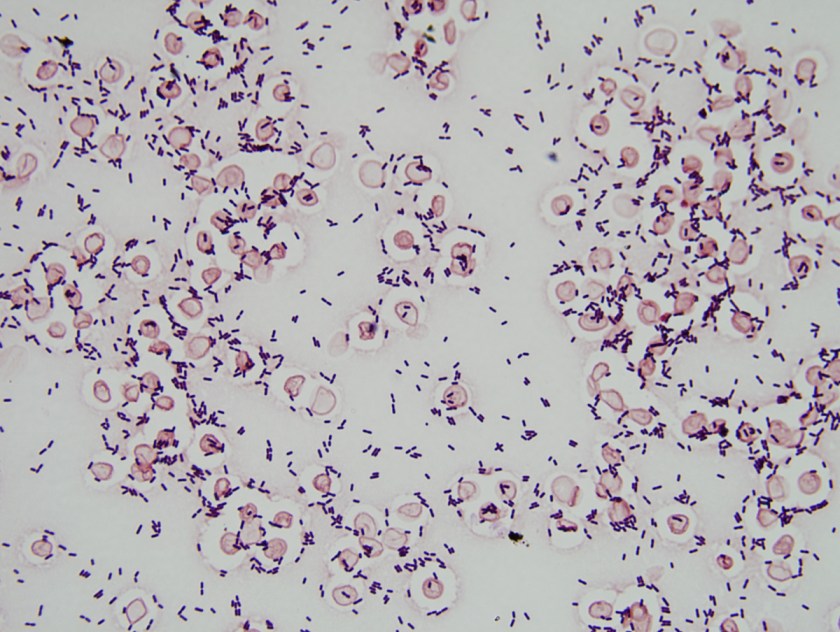
A two week old infant presents to the ED with fever and fussiness. She was born at 37 weeks gestation after an uncomplicated vaginal birth. Her mother reports she was in good health during her pregnancy and there are no family sick contacts since the infant was brought home from the hospital. In the ED, the infant was febrile and had a bulging fontanel. Blood and CSF were sent to the microbiology laboratory for culture. The following organism was isolated from blood and CSF specimens.

OLYMPUS DIGITAL CAMERA
Gram stain of positive blood culture showing short, Gram-positive bacilli


list2
Organism growing on 5% sheep blood agar plate exhibiting a narrow zone of beta-hemolysis after 48 hours of incubation


The organism isolated was Listeria monocytogenes.

L. monocytogenes is a short, Gram-positive bacilli on Gram stain (Image 1). In the microbiology laboratory, L. monocytogenes grows on 5% sheep blood, chocolate, and colistin naladixic acid (CNA) agars. The bacteria form small colonies of 1-2 mm after 24 hours of incubation at 35-37⁰C. On sheep blood agar these colonies have a narrow zone of b-hemolysis, which is very subtle. To highlight the hemolysis, the blood agar plate must be held up to a light source (Image 2) or colonies can be removed to reveal hemolysis of the agar directly below the growing bacterial colony. L. monocytogenes is catalase, Voges-Proskauer, and methyl red positive but oxidase and urea negative. It is also CAMP test positive using a S. aureus streak and has tumbling leaf motility. L. monocytogenes is routinely identified in our laboratory by MALDI-TOF MS. In addition, many rapid diagnostic panels such as the Nanosphere Verigene Gram-positive Blood Culture Assay (Northbrook, IL, USA) and Biofire FilmArray Blood Culture Identification Panel (Salt Lake City, UT, USA) include a target for rapid identification of Listeria spp./L. monocytogenes from positive blood culture.

L. monocytogenes can grow at a wide range of temperatures between 0-50⁰C. Its ability to grow at 4⁰C allows the organism to persist and replicate under refrigerated conditions on food products such as meat, vegetables, raw milk, and cheeses. For the same reason, L. monocytogenes is also a concern for contamination of refrigerated blood products.

It is estimated that 1-5% of healthy adults are asymptomatically colonized with L. monocytogenes. The organism is most often contracted by consuming contaminated foods, which causes a mild gastrointestinal illness in otherwise healthy hosts. L. monocytogenes infection in pregnant women can present as a mild, self-limited, influenza-like illness Infection and 1/3 of women report no symptoms at all. The bacteria from infected mothers are able to cross the placenta, resulting in transmission to the fetus in utero or infants can be infected during the birthing process.

L. monocytogenes infections that occur within the first 7 days of life are characterized as early-onset. Patients often present with symptoms of preterm birth, pneumonia, and sepsis. Patients may also have an erythematous rash with small papules histologically described as “granulomatosis infantisepticum.” Late-onset infection occurs between 8-30 days of life with patients most often presenting with sepsis and meningitis. Both neonatal presentations are reported to have a high mortality rate—14-56% for early-onset and 25% for late-onset infection. Luckily, invasive neonatal L. monocytogenes infections have been declining over the past decades and are now a rare occurrence in newborns. These days, invasive listeriosis is more common in immunocompromised patients with defects in cell-mediated immunity. In 2013, the last year for which there is data, the CDC reported 633 cases of invasive listeriosis, but only 68 (11%) were pregnancy-associated. These infants had a 76% survival rate. More information about Listeria epidemiology in pregnant and non-pregnant populations can be found at the CDC website http://www.cdc.gov/listeria/pdf/listeria-annual-summary-2013-508c.pdf.

L. monocytogenes is intrinsically resistant to cephalosporins. Ampicillin is considered the “gold standard” for treatment. The addition of an aminoglycoside for synergy is often used in practice, but a retrospective cohort study showed it had no effect on reducing infant mortality. Trimethoprim-sulfamethoxazole, quinolones, or vancomycin can be used to treat penicillin allergic patients. Newer Gram-positive antibiotics including linezolid, daptomycin, and tigecycline have also shown clinical efficacy against L. monocytogenes infections.

 References:

Manual of Clinical Microbiology, 11th edition

Pediatric Red Book, 2015 Report of the Committee on Infectious Diseases, 30th edition

Centers for Disease Control and Prevention listeriosis website http://www.cdc.gov/listeria/


-Erin McElvania TeKippe, Ph.D., D(ABMM), is the Director of Clinical Microbiology at Children’s Medical Center in Dallas Texas and an Assistant Professor of Pathology and Pediatrics at University of Texas Southwestern Medical Center.

Microbiology Case Study: 64 Year Old Male with Swollen Finger

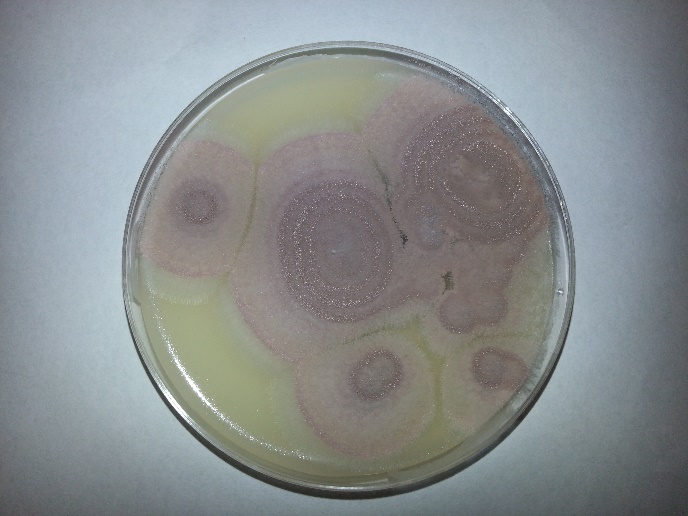
A 64 year old male presented with one week of swelling in his right 4th finger. He was initially treated for a suspected bacterial infection, but did not respond to treatment and the finger was aspirated. The specimen was positive for fungal organisms.

Fungal plates grew the following:

Note the flat powdery/velvety colony growth.  It is common for the colonies to have a purple or lavender color with a white border.
Note the flat powdery/velvety colony growth. It is common for the colonies to have a purple or lavender color with a white border.

Scotch tape prep revealed the following morphology:

Note that the elongated Phialides, and taper to a long slender tube, resembling bowling pins.  Sometimes this morphology has also been referred to as "skeleton hands."
Note that the elongated phialides, and taper to a long slender tube, resembling bowling pins. Sometimes this morphology has also been referred to as “skeleton hands.”

Discussion:
Purpureocillium lilacinum (formerly Paecilomyces lilacinus) is a fungus that is found ubiquitously within our environment, but has rarely been associated with disease in humans. A review paper in 2004 found 119 reported cases that implicated P. lilacinum from 1964 to 2004. It has been most commonly associated with ocular infections, often linked to intraocular lens implantations. There is scarce data concerning its susceptibility. In the event of a cutaneous infection such as the one presented in this case, it is recommended that posaconazole be used as first line therapy. In the event of treatment failure, or intolerance, there is little data about which antifungals to treat with, though voriconazole has been shown to have successful in-vitro.

The patient in this scenario had a history of undifferentiated spondylarthropathy, and was on methotrexate for a monoarthropathy in same finger in which the fungal growth occurred. He also received a cortisone injection into the joint adjacent to, but not directly into the site of the infection approximately a month prior to presentation. It could be possible that the cortisone injection had allowed the fungus to be inoculated into the finger, but we may never be certain. The patient also was gardening prior to his infection, and that could have also possibly contributed to his fungal infection.

P. lilacinum is found readily in the environment, and should be considered on the differential of cutaneous infections. Though immunocompromised patients have historically been more susceptible, it has been reported in immunocompetent individuals and should be considered, especially in the event of failure of response to antibiotic treatment. More research needs to be done to better understand treatment regimens for this organism, though this is difficult as it has been difficult to test in animal models.

Reference:

Clinical manifestations, treatment and outcome of Paecilomyces lilacinus infections. F.J. Pastor and J. Guarro. Volume 12, Issue 10, pages 948–960, October 2006 DOI: 10.1111/j.1469-0691.2006.01481.x

-Rich Smith is a Pathology Student Fellow at University of Vermont Medical Center.

Wojewoda-small

-Christi Wojewoda, MD, is the Director of Clinical Microbiology at the University of Vermont Medical Center and an Assistant Professor at the University of Vermont.

Vitamin Deficiency or Acute Leukemia?

67 year old patient with a history of uterine carcinoma (leiomyosarcoma), presented with pancytopenia and history of B-12 deficiency. CBC showed

  • WBC 4.1 K/ul
  • RBC *2.37 M/ul
  • Hgb *7.2 g/dl
  • MCV 91.1 fl
  • MCH 30.4 pg
  • MCHC 33.3 %
  • Platelets *25 K/ul

Peripheral blood differential count showed 3.5 % bands, 68.5 % Neutrophils, 3.5 % Eosinophils, 11.5 % Lymphocytes and 13.0 % Monocytes

Bone marrow differential count of the bone marrow showed 65.0 % Erythroid Precursors with 48.4% erythroblasts and 7% myeloblasts

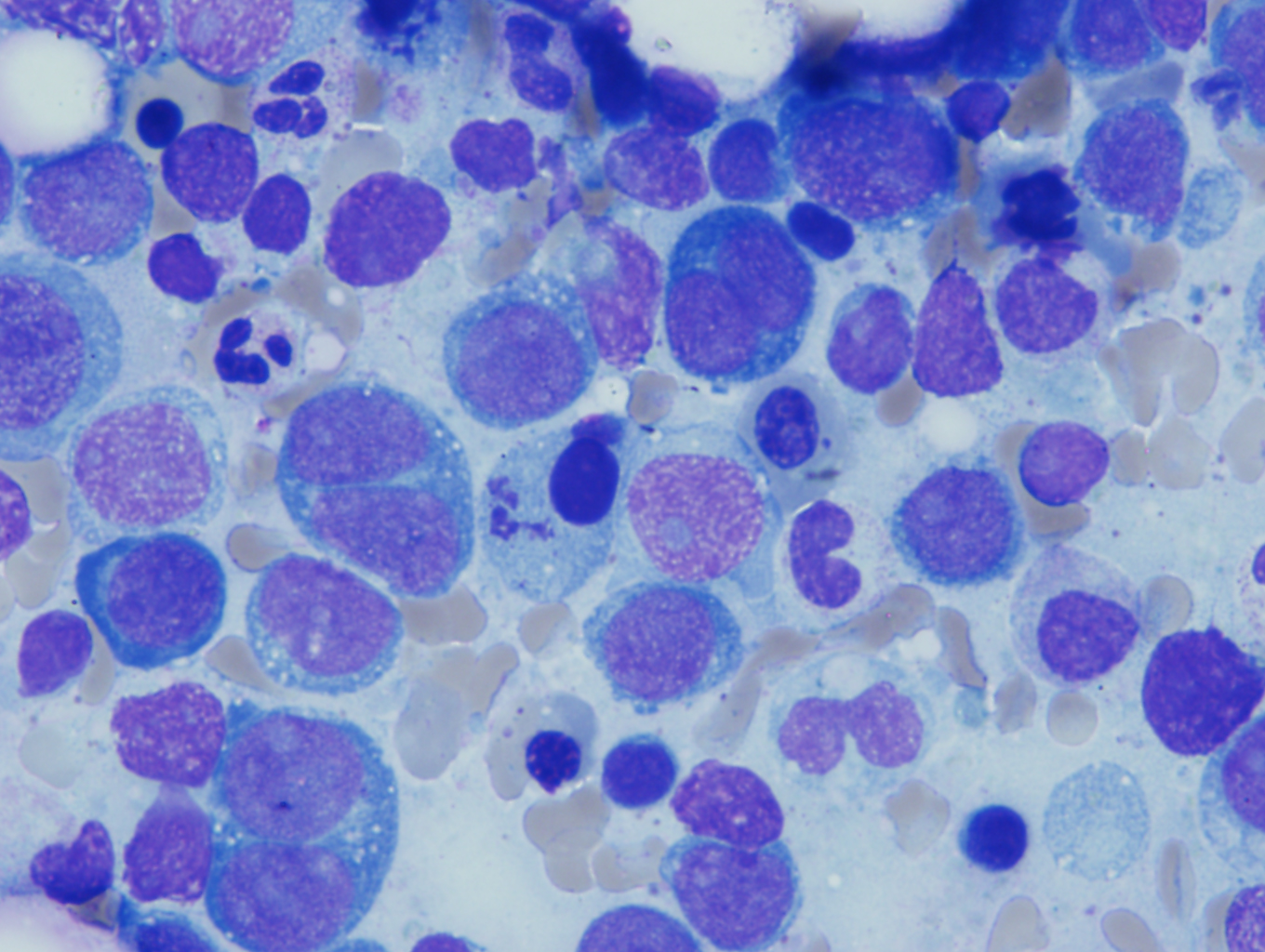
Several erythroblasts were seen, which often had overlapping morphological features with myeloblasts. Erythroblasts had slightly coarser nuclear chromatin compared to myeloblasts and often had deeply basophilic vacuolated cytoplasm. Erythroid maturation was markedly megaloblastic /dysplastic and left shifted with marked preponderance of erythroblasts. Dysplastic forms characterized by presence of precursors with irregular nuclear borders along with few multinucleated forms and gigantoblasts were present.

Cells counted as myeloblasts had high N/C ratio, finer nuclear chromatin with occasionally distinct 1 to 2 nucleoli and scant cytoplasm.

Bone marrow with erythroid hyperplasia
Megaloblastic erthroid precursors with binucleate forms

Discussion:

The current WHO classification subtypes acute erythroid leukemia into two categories based on the presence or absence of significant myeloid component.

Erythroleukemia or Erythroid/Myeloid (FAB subtype A – M6a) comprises of more than 50% erythroid precursors among all nucleated cell population of bone marrow and more than 20% myeloblasts among non erythroid cells.

Pure erythroid leukemia (FAB subtype B – M6b) comprises of more than 80% immature cells of erythroid lineage with no evidence of a significant myeloid component

The most common reactive process that can mimic acute erythroid leukemia is megaloblastic anemia caused by vitamin B12 and folate deficiency. Features associated with pernicious anemia are hemolysis with increased mean corpuscular volume (MCV), hypersegmented neutrophils, leukopenia and thrombocytopenia increased LDH and urobilinogen. Bone marrow findings show hypercellular marrow witn marked erythroid hyperplasia. Other non-neoplastic diseases mimicking acute erythroid leukemia are post-chemotherapy recovery, parvovirus infection, drug effect, heavy metal intoxication and congenital dyserythropoiesis. A detailed clinical history, laboratory work up, peripheral blood and bone marrow examination, cytochemical, immunoshistochemical, flow cytometry, cytogenetic and molecular studies are required for the diagnosis of acute erythroid leukemia.

The oncologist was contacted and it was confirmed that B12 was repleted before the bone marrow study was performed. Diagnosis of acute erythroid /myeloid leukemia was only made after it was confirmed with the oncologist that patient was not B12 deficient at the time of the study.

Vajpayee,Neerja2014_small

-Neerja Vajpayee, MD, is an Associate Professor of Pathology at the SUNY Upstate Medical University, Syracuse, NY. She enjoys teaching hematology to residents, fellows and laboratory technologists.

Are Feasibility Limits Feasible?

In the laboratory we’re constantly seeking ways to check that the test results that we put out are accurate. Our primary reason for doing this is that we want to make sure the patient is treated appropriately based on the results of the tests we run. Also, it’s nice not to release values that appear to be nonsense. A tool that is sometimes used to help us check results is something called feasibility limits.

Lab computer systems often allow you to enter feasibility limits for your test results or for your test parameters. These are values outside of which you would not expect to find an analyte concentration in a living person. For example, you might expect a serum creatinine of 200 mg/dL (17,680 µmol/L) in a zombie, but you wouldn’t expect to find one in a living human being. Setting feasibility limits helps you catch things that make no sense before the physician calls you on them, for instance if you have a decimal malfunction and mistakenly try to report a plasma calcium value of 90 mg/dL (22.5 mmol/L) instead of 9 mg/dL (2.25 mmol/L). The trick to feasibility limits is deciding on the highest or lowest value you might expect to see in a living human being. In the case of calcium, upper feasibility limits of 20 mg/dL (5 mmol/L) may give you wiggle room without letting you report nonsense. However, feasibility limits have their drawbacks also. One of those drawbacks is that I’ve found that with human beings, nearly anything is feasible, especially in the pediatric realm. I finally removed the feasibility limits from the LIS in my institution, after a couple of different episodes led me to that conclusion.

One was a body temperature on a blood gas analysis. Under normal circumstances one would not expect to encounter a body temperature much below 90° F (32.2 °C) ever. But of course hospitals are not known for their populations being “under normal circumstances”. The body temperature of the patient in question was 70° F (21°C) on a patient who had been cooled down for surgery. The blood gas instrument accepted the temperature, but the lab computer system would not because of the feasibility limits set in the computer. The patient’s blood gas results could not be released in the computer until we took the temperature feasibility limits out.

Another example was with sodium. It would seem reasonable to have an upper feasibility limit of 180 mmol/L for sodium. Yet we had a patient whose sodium was 199 mmol/L when he arrived in the ED. Reasonably expecting some sort of contamination issue, we requested another sample, which had a sodium of 204 mmol/L, followed by 200 mmol/L in the next sample. These were real sodium results and over the course of several days’ time the physicians managed to get the patient’s electrolytes normalized. Again, feasibility limits interfered with result reporting and had to be removed from the computer.

These episodes caused us to remove most of our feasibility limits from the computer. They also helped me to remember and important point: Tools are fine, but you must understand their uses and their limitations in order to use them appropriately. Feasibility limits can be useful as long as you keep in mind that with humans, you often see the unfeasible.


-Patti Jones PhD, DABCC, FACB, is the Clinical Director of the Chemistry and Metabolic Disease Laboratories at Children’s Medical Center in Dallas, TX and a Professor of Pathology at University of Texas Southwestern Medical Center in Dallas.
Education Proposals for ASCP’s 2016 Annual Meeting

Are you interested in presenting an education course at ASCP’s 2016 Annual Meeting? If so, the call for proposals is now out. You can find it at the direct link below.

ASCP’s 2016 Annual Meeting will be held at the Mandalay Bay Hotel & Casino in Las Vegas, NV on September 14-16, 2016.

Click here to access the 2016 Call for Proposals submission site

Do Children of Teenage Fathers Have an Elevated Rate of DNA Mutations?

If you recall one of my previous posts about DNA mutations, I discussed briefly the difference between somatic and germ-line mutations as well as the various types of mutations and resulting consequences.

Recently, I came across a research article that suggests an elevated germ-line mutation rate in teenage fathers, thus leading to an unexpectedly high level of DNA mutations in the children born to teenage fathers.

Many studies have been conducted on the theory that male germ cells go through a higher number of cell divisions when compared to that of female germ cells, and that the higher number of paternal cell divisions leads to an increased DNA mutation rate. The paper suggests that the increased presence of DNA mutations in sperm cells of teenage boys could explain why their offspring might be at higher risk for a spectrum of disorders when compared to parents in their twenties.

It’s an interesting read! More information as well as the full article can be found at http://rspb.royalsocietypublishing.org/content/282/1803/20142898


L Noll Image_small

-LeAnne Noll, BS, MB(ASCP)CM is a molecular technologist at Children’s Hospital of Wisconsin and was recognized as one of ASCP’s Top Five from the 40 Under Forty Program in 2015.

AMP Submitts Written Testimony about LDTs

From the press release:

“The Association for Molecular Pathology (AMP), the premier global, professional society serving molecular diagnostics professionals, yesterday submitted written testimony to the House Energy and Commerce Subcommittee on Health for their hearing on “Examining the Regulation of Diagnostic Tests and Laboratory Operations.” AMP urged the Committee to use AMP’s proposal to modernize the Clinical Laboratory Improvement Amendments (CLIA) at the Centers for Medicare & Medicaid Services (CMS) as the basis for legislation that would preserve innovative patient care by building upon the current CMS-based system for oversight of laboratory developed procedures (LDPs).

‘Molecular pathologists are highly trained professionals and our professional judgment is used throughout the design, validation, performance, ongoing monitoring, and interpretation of test results. It is our mission to ensure that patients have access to innovative, accurate, reliable, and medically useful laboratory testing procedures,’ said Roger D. Klein, MD, JD, AMP Professional Relations Chair. ‘The AMP CLIA Modernization proposal preserves patient access to essential laboratory services that would no longer be offered if a costly FDA-based regulatory system were imposed upon academic medical centers, cancer centers, hospitals and small independent laboratories,’ he added.

To read the press release in full, visit www.amp.org.

CLSI Publishes a Revised Microbiology Document

From the press release:

“The Clinical and Laboratory Standards Institute (CLSI) has published a revised document titled Methods for Antimicrobial Dilution and Disk Susceptibility Testing of Infrequently Isolated or Fastidious Bacteria (M45-Ed3).This guideline informs clinical, public health, and research laboratories on susceptibility testing of infrequently isolated or fastidious bacteria that are not included in CLSI documents M02, M07, or M100. Antimicrobial agent selection, test interpretation, and quality control are discussed.
“Susceptibility testing is particularly necessary in situations in which the etiological agent belongs to a bacterial species for which resistance to commonly used antimicrobial agents has been documented, or could arise. The intent of this document revision is to assist labs in determining an approach for testing that is relevant to their individual practice settings.”

To order the document go to shop.clsi.org/m45.