The Value of Electives (Both Internal and External) During Pathology Residency

It’s been a while since my last blog. I haven’t had as much time and energy as I would like this past year. For now, I’ll just say…appreciate all that your chief residents do because much more time and effort lies beneath the surface than everyone is able to see.

But the topic for this blog is the value of electives during pathology residency. Our programs vary with respect to electives in terms of number and ability to take them externally or not. My previous program had five electives that could be taken internally or externally. However, external electives did not receive salary support and I didn’t take any electives although I could’ve during my two years in Chicago. Since we had a decent number of electives, many residents scheduled them internally during fourth year to have lighter months to study for boards although a handful did utilize them during earlier years for external electives.

My current program has two and we do receive salary support with external electives. For my first, I had an extra month of hematopathology internally because I wanted to see another perspective on one of my chosen subspecialties. Internal electives are good to spend more focused time in an area of subspecialty interest that you may have for fellowship. It also allows for the opportunity to develop deeper relationships with the faculty who will most likely be writing your letters of recommendation for that fellowship. They may also provide you with the opportunity to become more involved in research and/or publications (eg – book chapters, case reports, research articles) with a mentor and these are all helpful in enhancing your fellowship and future job applications and build up your CV.

Currently, I’m on an external elective at the institution where I’ll do both my hematopathology and molecular genetic fellowships. I’m laying the groundwork for molecular hematopathology research now that hopefully results in data analysis over the ensuing months to culminate in an abstract submission for the American Society of Hematology (ASH) which has a deadline only a month after I start fellowship. I also want to use this time away to get to know people at my future program better, prepare for my eventual move here, and study for boards. Hopefully, I’ll also get a sense of the daily work flow as I am also attending signouts and intra- and interdepartmental conferences so that I can manage my time as efficiently as I can from day 1 of fellowship. I really like the culture and people here, but that’s subject matter for a future blog. I also am enjoying the benefits of attending inter-program activities as TMC is the largest medical center in the world with active interaction and collaboration between member hospitals. Not so much in my case since I obtained both my consecutive fellowships last year as a PGY-3, but for many, the value of an early external elective is that it can be seen it as an “audition” rotation to obtain a desired fellowship. You may even be able to ask for an interview before you finish (which saves you time and money). I also have some friends who were offered fellowship spots at the end of their elective rotation because they impressed the fellowship director. Obtaining fellowship positions is pretty competitive and there tends to be fewer spots than there are for residency. And in many cases, positions are not even available if an internal candidate is chosen early (even during their PGY-1) so anything to augment your fellowship application is a plus.

Now that I’ve mentioned external electives, I’d like to give some advice on setting up an external elective. First, start as EARLY as possible! Even a year or more before isn’t too early to ask about getting the ball rolling. Start preparing and updating your CV from your PGY-1 as you’ll need this for both external elective and fellowship applications. Scan and keep a PDF of all your vaccinations and work-related health requirements (eg – PPD/Quantiferon results, flu vaccine, hepatitis B testing, MMR and hepatitis B antibody titers, and N-95 fit testing) as well because its likely you’ll also have to include this in your external elective application.

I initiated the elective rotation request about a half year prior to the actual rotation. And even then, that was not early enough and everything came down to the wire. It’s far more complicated than when we applied for elective rotations as a medical student and takes much more time. Since we are now physicians, you are more than likely required to have at least a medical permit in that state to rotate and this process can take a while. Also the back-and-forth between program coordinators and the respective GME departments can appear glacial at times, and in my case, was the main cause of delay. I hit several delays at obtaining paperwork (especially between Christmas and New Year’s when many staff were off at both programs, my medical school, and the Texas Medical Board where I needed paperwork from). It can be time-consuming to have to make multiple phone calls, and often, the process cannot be completed until its antecedent step has been approved. I know residents who have had to postpone external rotations because paperwork between GME departments (eg – PLAs or malpractice agreements) were not in place in time. Maintaining constant and open communication between all parties involved is a must and sometimes easier said than done the more people that are involved.

In addition to obtaining the state medical permit (which generally requires an application fee; in my case, $135), there may be other requirements that are also time-consuming and financially expensive. You may be required to do pre-employment-type health screening (in my case, a $36 urine drug screen) at your own cost as you are not a true employee. I also had to become ACLS certified (at $120, despite being BLS certified and a former American Red Cross CPR instructor). But since I’m going to be a fellow here, I can get it reimbursed through my GME funds and would have to do it later anyways so I might as well do it now. But if you are not doing an elective at your future fellowship institution, it’s good to find out what items may incur cost in your application for your elective since you are not likely to get reimbursed and so you can decide whether those expenses are acceptable. One way to defray costs is to apply for grants such as the ASCP subspecialty grant which is administered to six residents twice a year (Jan/Aug). In fact, the next deadline is this Friday, Jan 15th! You can find more information on how to apply at http://www.ascp.org/Residents/Resident-Grants.

 

Chung

-Betty Chung, DO, MPH, MA is a fourth year resident physician at Rutgers – Robert Wood Johnson University Hospital in New Brunswick, NJ.
You Make the Diagnosis: A 68 Year Old with Epigastric Pain

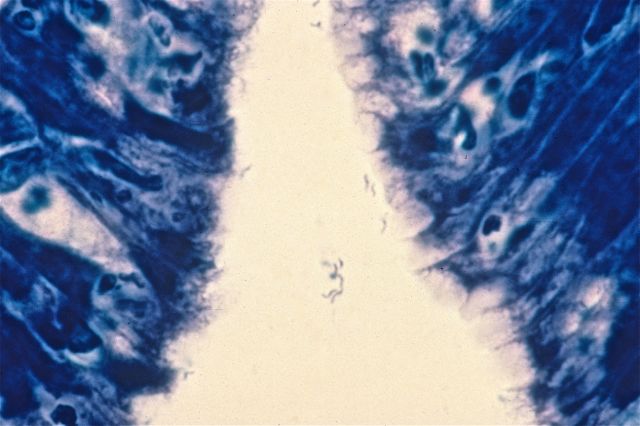
A 68 year old male presents with chronic, gnawing epigastric pain which has been getting worse over the past year. An endoscopy is performed and a representative gastric biopsy section, stained with Giemsa stain, is shown here. What organism is responsible for this patient’s symptoms?

gastric biopsy Giemsa stain
A. Candida albicans
B. Helicobacter pylori
C. Bacillus cereus
D. Staphylococcus aureus
E. Campylobacter jejunum

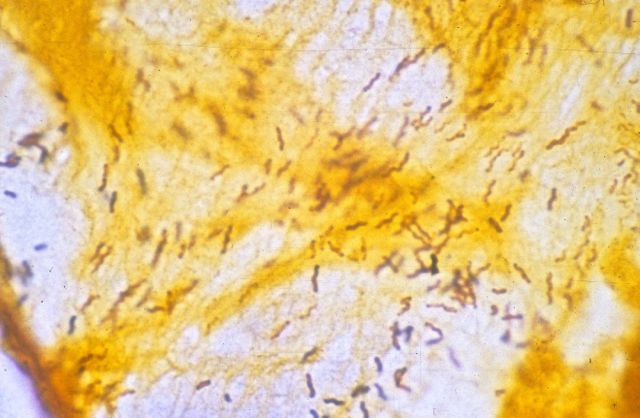
The diagnosis in this case is Helicobacter pylori. Described by Warren and Marshall in 1983, Helicobacter pylori is now known to be the cause of most cases of chronic gastritis and peptic ulcer. Helicobacter is a tiny, corkscrew-shaped bacillus, and is easily missed on routine H and E-stained histologic sections. Giemsa staining, as seen in the image above, can be helpful, as can silver staining, as seen in this image:

H. pylori

Helicobacter does not invade the gastric mucosa, but produces its symptoms through continual stimulation of the host immune response. Treatment involves triple therapy (e.g., omeprazole, amoxicillin and clarithromycin), and prognosis is excellent. A small number of patients, however, develop gastric adenocarcinoma or MALT lymphoma.

Krafts

-Kristine Krafts, MD, is an Assistant Professor of Pathology at the University of Minnesota School of Medicine and School of Dentistry and the founder of the educational website Pathology Student.

The Importance of Mentors

Hello again readers. It’s been a while as I took some time off from blogging. But I hope to update you every once in a while when I can. So, I’m currently in my final year of residency and have been serving as chief since April 1st. My chief term ends before the end of the year to provide time to focus on studying for the boards (we take our boards in mid-May).

When I reminisce about residency, I can’t believe that almost four years have flown by so quickly. I remember arriving in Chicago for a 2 week boot camp we had prior to our start date on July 1st just like it was yesterday. It was nice to be back in a familiar city (The University of Chicago is my alma mater), although many things had changed in the two decades since I had last been a college student in the Windy City.

Thinking about it now, I really appreciate all the thought and hard work that my director of surgical pathology, Dr. Elizabeth Wiley, had put into organizing this boot camp to ease us into the transition to residency (and surgical pathology). We learned Rokitansky method of autopsy dissection on 3 pig blocks that she personally picked up from the butcher’s for us and later had to complete a competency exam by ourselves on a 4th pig block. We learned to cut frozen sections on various tissues from our pig blocks (and of course, had a competency exam on that as well). We learned to gross uteri and prostates on ground turkey versions (complete with chickpea leiomyomas) that she and her fellows had made for us. We had weekly online exams on histology (we had a slide scanner which I now appreciate that not everyone has one) and special didactics on surgical pathology topics we don’t see much during general sign-out (dermatopathology, neuropathology, hepatopathology, and nephropathology) in addition to the usual goings-on during a surgical pathology rotation. We eventually had online modules on surgical pathology as well. And of course, we had three months straight (I hear its five months now) of learning to gross with our awesome fellows. I now appreciate more deeply just how innovative and dedicated Dr. Wiley was to our surgical pathology education. And even though I ultimately chose to pursue fellowships in hematopathology and molecular genetic pathology, the foundation in surgical pathology that was established during that boot camp still helps and influences me now.

During my first year, I was also fortunate to have hematopathology at Jesse Brown VA Medical Center with Dr. John Kennedy. He is a hematopathologist who was trained as a morphologist before the heavy reliance on flow cytometry and IHC. And he taught me to love the morphology of blood cells especially with respect to lymphomas. I had enjoyed my hematology sub-I at the NIH when I was a medical student but had originally entered residency thinking that I’d pursue molecular genetic pathology and clinical microbiology. But a great mentor can really open your mind to a different path and that is what Dr. Kennedy did for me. The second time I rotated with him, he was away for much of the rotation. But I loved the opportunity that I was given to take care of the hematopathology service in his absence. I looked at all the daily cases and performed path reviews and counts on peripheral blood smears and body fluids and the surgical pathology attending at the end of the day would review and sign-out my work. This experience of graduated responsibility helped me to decide to pursue hematopathology and it was nice to have someone believe in me and my abilities. I was also fortunate that I was in a city where the Lymphoma Foundation also held quarterly inter-program Lymphoma Rounds which I was able to attend.

So my advice is to identify mentors early on in your residency. You may not be able to see the ripple effect they have on your life until later on but I promise that they will touch your lives in an indelible manner that will help shape the pathologist you will become later on in life.

This week I’m at the ASCP Annual Meeting and will write about those experiences in a future blog, but for now, I’d like to take this opportunity to personally thank my mentors. I hope that I take your lessons and make you proud as a future physician-scientist with a public health (molecular epidemiology aka biomarker discovery which was one of my areas of specialization during my MPH) focus. You have touched my life in ways that I may not always be able to articulate but do acknowledge and appreciate.


Chung

-Betty Chung, DO, MPH, MA is a fourth year resident physician at Rutgers – Robert Wood Johnson University Hospital in New Brunswick, NJ.

You Make the Diagnosis: a 32-Year-Old with Mild Jaundice

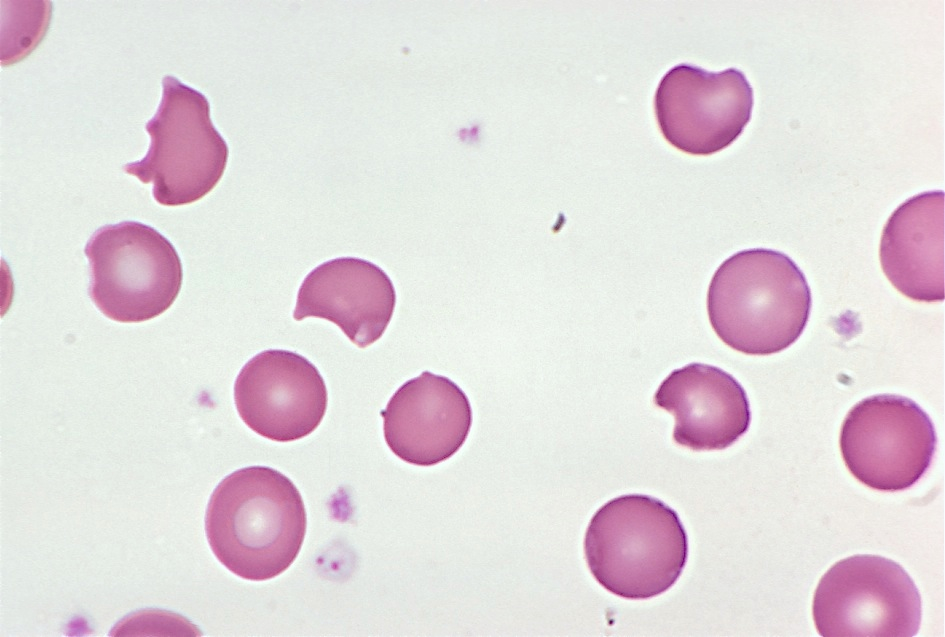
A 32-year-old male presents with mild jaundice and flank pain. He recently developed sinusitis, which was treated with trimethoprim-sulfamethoxazole, but is otherwise healthy. His hemoglobin is 10.2 g/dL (13.5-17.5), MCV is 90 μm3 (80-100), and total bilirubin is 3.4 mg/dL (0.2-1.5). A representative field from his blood smear is shown here. What is the most likely diagnosis?

g6pd1

  1. Aplastic anemia
  2. Iron-deficiency anemia
  3. Glucose-6-phosphate dehydrogenase deficiency
  4. Autoimmune hemolytic anemia
  5. Megaloblastic anemia

The answer is glucose-6-phosphate dehydrogenase (G6PD) deficiency. G6PD deficiency is an X-linked recessive disorder in which patients produce decreased amounts of G6PD, a red blood cell enzyme involved in detoxifying free radicals.

When a patient with G6PD deficiency is exposed to an oxidant stress (which can be anything from an illness to ingestion of certain foods or drugs), the resulting reactive oxygen species attack structures within the red cell.

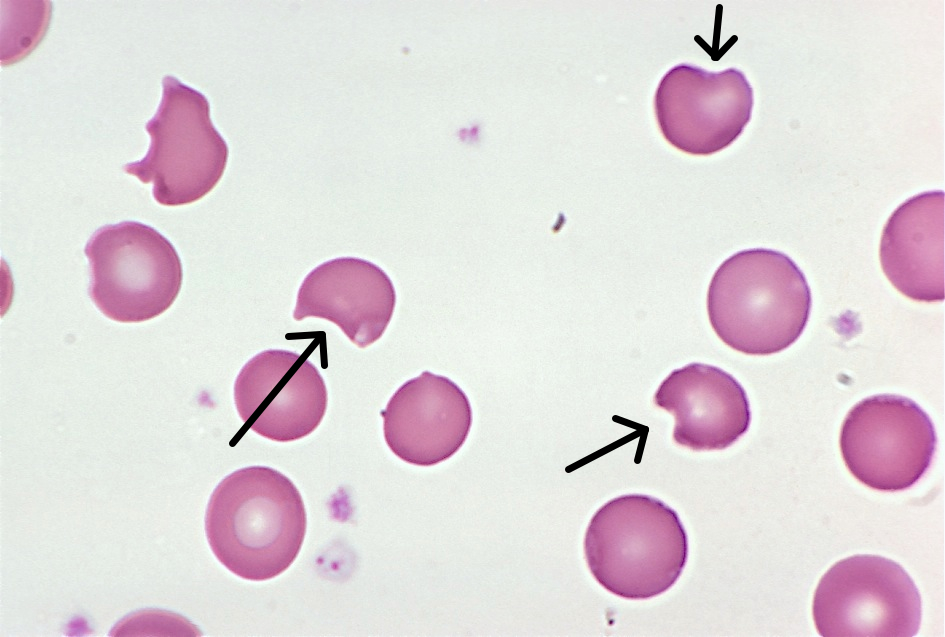
Globin chains are particularly vulnerable to oxidant damage. They become denatured and stick to the inside of the red cell membrane, forming inclusions called Heinz bodies, which are visible on crystal violet staining. Heinz bodies are removed by macrophages in the spleen, leaving visible “bites” in the red cells. Several bite cells are visible in this patient’s blood smear (arrows).

g6pd2

Most episodes of hemolysis in patients with G6PD deficiency resolve on their own after the offending substance is removed.

Krafts

-Kristine Krafts, MD, is an Assistant Professor of Pathology at the University of Minnesota School of Medicine and School of Dentistry and the founder of the educational website Pathology Student.

You Make the Diagnosis: A 62 Year Old Female with Hemoptysis and Fatigue

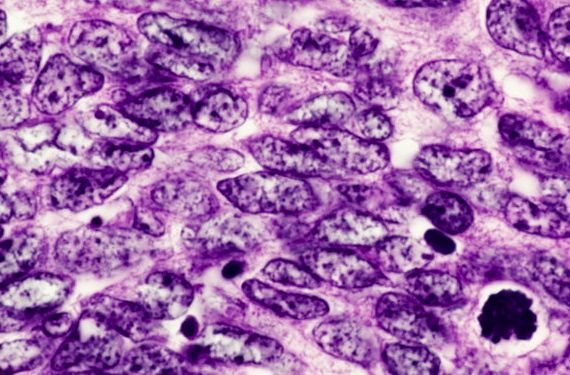
A 62-year-old female presents with hemoptysis and fatigue. A large mass is found adjacent to the right main bronchus. A representative field is shown here. What is the diagnosis?

smallcell

  1. Invasive adenocarcinoma
  2. Squamous cell carcinoma
  3. Adenocarcinoma in situ (formerly bronchoalveolar carcinoma)
  4. Small cell carcinoma
  5. Large cell carcinoma


The diagnosis in this case is small cell carcinoma. Also called “oat cells,” the malignant cells in this tumor tend to be round to somewhat elongated in shape, with the typical “salt-and-pepper” chromatin of neuroendocrine tumor cells. The cells are often so closely apposed that their nuclear contours show a characteristic “molding” effect. Small cell carcinoma is a fast growing tumor (note the large mitotic figure at 4 o’clock) with a poor prognosis.


Krafts

-Kristine Krafts, MD, is an Assistant Professor of Pathology at the University of Minnesota School of Medicine and School of Dentistry and the founder of the educational website Pathology Student.


Bad Press

Have you heard the expression “there’s no such thing as bad Press?” This saying makes the assumption that getting your name out there is the important thing, whether it’s something good you did or something bad you did that put you forward. I think there’s some truth to this saying because people’s memory tends to be short. They’ll remember a name but not necessarily a context for that name. This probably explains why crooked politicians, even when it’s known that they’re crooked, continue to be elected.

Thinking about this saying from a lab perspective, it means that even when a mistake is made, you may be able to capitalize on it to make contacts outside the lab, to effectively put your name out there. Even if it is a significant mistake, or is a situation you had no control over, using it as an opportunity to introduce lab personnel and lab concepts to the greater medical community is a good thing. Okay, it may take them a bit to forget the bad incident, but they will remember you and now have a lab contact for other lab-related issues.

I was considering this in the context of notifying physicians of a reagent recall, on a reagent we have been using for about 3 months. Luckily, I have a good rapport with the majority of the physicians involved, but even when fielding negative phone calls from those who do not know me, I used this event as an opportunity, an introduction and an offer of lab help on any other issues they may be having.

As a field, the laboratory tends not to blow its own horn very much outside of lab and pathology. Because that’s true, we need to learn to grab opportunities when they arise, even if they arise from less than ideal situations. It’s also an opportunity to suggest that a laboratory professional sitting on various committees may prevent future issues. Being this “forward” sometimes places people firmly outside their comfort zone, but in this day and age of decreasing test reimbursement, and decreasing money in the medical and laboratory fields overall, being an integral part of the healthcare team is more important than ever.

So, the next time you have to notify other healthcare professionals that test results that were reported may be less than accurate, try considering it as an opportunity to create new contacts and build cross-medical-field relationships. Quickly acting on every opportunity to become a well-recognized and needed part of healthcare is the best way to keep our profession alive and flourishing.

-Patti Jones PhD, DABCC, FACB, is the Clinical Director of the Chemistry and Metabolic Disease Laboratories at Children’s Medical Center in Dallas, TX and a Professor of Pathology at University of Texas Southwestern Medical Center in Dallas.

Microbiology Case Study: 38-Year-Old with Intermittent Straight Catheterization

Case History:

A 38 year old man with history of secondary progressive multiple sclerosis complicated by neurogenic bladder requiring intermittent straight catheterization presented with fevers, chills, and weakness. Clinical evaluation revealed hypotension and leukocytosis concerning for sepsis. His urinalysis was positive for 3+ blood, 1+ leukocyte esterase and nitrites. Urine was sent to our laboratory for culture and grew bacteria with the below gram stain and colony morphology.

Gram stain showing gram negative bacilli.
Sheep blood agar growing nonhemolytic grey-yellow mucoid bacterial colonies.
MacConkey agar growing mucoid lactose fermenting (pink) bacterial colonies.


Laboratory identification:

Klebsiella and Raoultella both are gram negative bacilli that form lactose fermenting, yellow, mucoid bacterial colonies. The bacterial colonies appear mucoid because of the bacteria’s polysaccharide capsule. Distinguishing these two types of bacteria requires molecular analysis as their morphology can be identical. In our initial identification process, only one type of bacteria was detected on the urine culture. Given the gram stain and colony morphology, our differential included Klebsiella, Enterobacter, and Roaultella. The bacteria was verified as Roaultella species using mass spectrometry. However, our laboratory also received two sets of blood cultures which showed the same morphology as above but the bacteria was identified as K. oxytoca. This prompted a review of the urine culture in which a subtle second bacterial colony morphology was seen and confirmed as K. oxytoca.

Discussion:

In summary, our patient had a urinary tract infection caused by Roaultella and Klebsiella which was the source of the patient’s sepsis. Only the Klebsiella was detected in his blood stream. Raoultella and Klebsiella are both gram negative, oxidase negative, non-motile, capsulated, facultative anaerobic bacilli within the Enterobacteriaceae family. Raoultella was initially classified within the Klebsiella genus, but reclassified based on comparative analysis of the 16S rRNA gene and rpoB gene which encodes the β subunit of bacterial RNA polymerase. Members of the Raoultella genus include R. electrica, R. terrigena, R. planticola, and R. ornithinolytica and are found in the environment, specifically in plants, soil, and water. Raoultella species are rare in human disease but have been documented to cause bacteremia, urinary tract infection, conjunctivitis and cholecystitis.

Klebsiella causes human disease much more frequently than Roaultella. Klebsiella are part of human oropharynx and gastrointestinal flora that act as opportunistic pathogens. Mode of transmission may occur endogenously or through person to person spread, hence nosocomial infections are common. K. oxytoca and K. pneumoniae are the most frequently implicated species in human disease and may cause a wide spectrum of infections such as urinary tract infections, respiratory infections, enteritis, meningitis and bacteremia.

For our patient, we reported antibiotic sensitivities that were susceptible to both types of bacteria. The patient was treated with ceftriaxone and then transitioned to cefpodoxime with resolution of his urosepsis. In general, Raoultella’s susceptibility to antimicrobial agents are not well studied and should be based on the antibiotic sensitivities of each strain. In contrast, Klebsiella is well documented to have increasing antimicrobial resistance. Most clinical strains are resistant to ampicillin, carbenicillin and ticarcillin as well as extended spectrum beta-lactam drugs. Resistance to beta-lactam drugs is the result of Klebsiella bacteria that harbor plasmids which produce beta-lactamase enzymes.


-Jill Miller, MD is a 2nd year anatomic and clinical pathology resident at the University of Vermont Medical Center.

Wojewoda-small

-Christi Wojewoda, MD, is the Director of Clinical Microbiology at the University of Vermont Medical Center and an Assistant Professor at the University of Vermont.


Using Evolution to Thwart Resistance

The very act of using antibiotics contributes to antibiotic resistance. Bacteria are exposed to an antimicrobial agent and develop genetic strategies to survive repeated exposures. But what if using antibiotics in a certain sequence could revert resistant strains to the wild type? Researchers from California and Washington DC tested that theory and discovered some promising results.

You can read the PLOS ONE study and the Scientific American article to learn more.

Microbiology Case Study–35-Year-Old with a Puncture Wound

Case History:

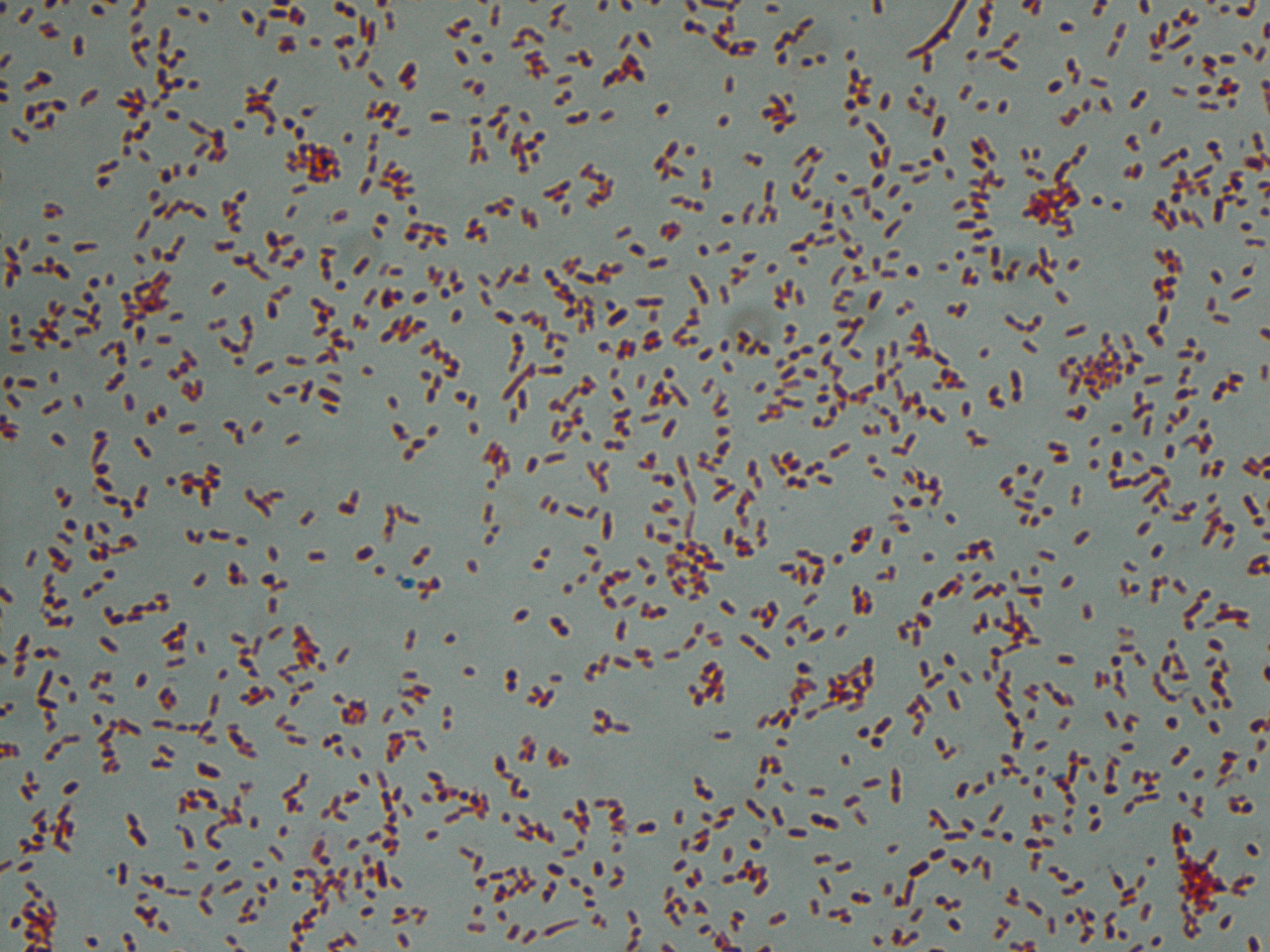
A 35 year old healthy man presented with a puncture wound of the left hand. He was bit by his neighbor’s dog. Fluid expressed from the wound was sent to the microbiology laboratory with the following gram stain and colony morphology.

past1
Gram stain showing small gram negative coccobacilli.
Sheep blood agar with smooth, gray, non-hemolytic bacterial colonies.


Laboratory Identification:

Bacterial colonies, as shown above, grew on sheep blood and chocolate agars. No growth was present on CNA or MacConkey agars which in combination with the gram stain indicated a type of fastidious gram negative bacteria. Additionally, the bacterial colonies were oxidase positive, catalase positive and indole positive. These findings were consistent with Pasteurella species and confirmed to be P. multocida by mass spectrometry.

Discussion:

Pasteurella species are nonmotile, gram-negative, facultative anaerobic coccobacilli or rods. P. multocida is the most common species involved in human disease. P. multocida is part of the normal oropharyngeal flora in multiple animals including cats, dogs, cattle, horses, rodents and other animals. This bacteria has been reported in up to 70-90% cats and 40-60% of dogs. Humans who have frequent exposure to animals may also harbor P. multocida as part of their normal flora.

Pasteurella are opportunistic pathogens that require mechanical disruption of host barriers. The vast majority of P. multicida related diseases are wound infections and/or cellulitis as a result of a cat bite or scratch. Transmission of Pasteurella also occurs in partially healing wound or regions of poor skin integrity that are licked by a cat or dog. Pasteurella infections may be complicated by septic arthritis and osteomyelitis if wounds are deep and inoculate the underlying soft tissue. Patients who are immunocompromised may develop bacteremia with more widespread infections. The majority of Pasteurella species are susceptible to penicillin, cephalosporins and tetracycline. Our laboratory does not report antibiotic sensitivities for P. multocida for a few reasons: Pasteurella is rarely resistant to penicillin, and bite wounds are generally mixed infections.


-Jill Miller, MD is a 2nd year anatomic and clinical pathology resident at the University of Vermont Medical Center.

Wojewoda-small

-Christi Wojewoda, MD, is the Director of Clinical Microbiology at the University of Vermont Medical Center and an Assistant Professor at the University of Vermont.