Peritoneal Problems

A 74 year old male patient with an extensive cardiac history initially presented to the ER with black stool, warranting a CT scan, upper endoscopy, and colonoscopy, identifying a large, obstructive mass in the colon, smaller, yet unresectable polyps, and subcentimeter liver lesions and lung nodules. The colonic mass was biopsied, consistent with adenocarcinoma; however, the liver lesions were too small to characterize. One month after the onset of symptoms, a right hemicolectomy was performed, and the pathology was signed out as moderately differentiated adenocarcinoma, microsatellite stable, with evidence of lymphovascular and perineural invasion, placing the patient’s stage at IIA (pT3, pN0, cM0). Through shared decision-making, the medical oncologist and patient elected for surveillance due to multiple comorbidities. Forgoing adjuvant therapy, the patient was discharged to physical therapy/rehabilitation. The patient returned for imaging 4 months after his hemicolectomy, demonstrating an enlargement in one of the liver lesions, but then, the patient was lost to follow-up for 20 months.


The patient reestablished care and surveillance imaging, which demonstrated a hypodense liver lesion (in a background of poorly visualized subcentimeter liver lesions), a nonocclusive thrombus in the right portal vein, a heterogenous enhancement of the left portal vein (suggestive of an underlying tumor thrombus), and an 8 cm heterogenous right adrenal mass. Based on the most recent CT scan, the differential diagnoses of the adrenal mass include metastatic disease or a primary adrenal lesion including adrenal cortical carcinoma or pheochromocytoma (for which biochemical analysis should be performed before attempting a biopsy). Extensive peritoneal lymphadenopathy was visualized as well. The area of the right hemicolectomy, however, did not show evidence of recurrence. After biochemical evaluation for metanephrines ruled out a pheochromocytoma, the patient underwent a CT scan-guided adrenal FNA and core biopsy.

The Diff-Quik smear assessed at the time of biopsy revealed a highly cellular specimen, some cells with bare nuclei, enlarged nuclei, and some pseudoglandular structures.

Images 1-2: Adrenal Gland, Right, Fine Needle Aspiration. 1-2: DQ-stained smears

Telepathology confirmed an adequate sample of tumor cells present, and core biopsies were obtained.

The following morning, the pap-stained smears and H&E cell block sections were screened. The cells appeared polygonal with a high N/C ratio and prominent macronucleoli. Cell arrangements formed thickened trabeculae. However, the cytoplasm is more granular than the lipid-rich cytoplasm seen in an adrenal cortical carcinoma. The H&E cell block sections depicted a beautiful trabecular pattern with endothelial cells wrapping the periphery.

Images 3-6: Adrenal Gland, Right, Fine Needle Aspiration. 3-4: Pap-stained smear; 5-6: H&E Cell Block sections.

The preliminary morphology was interpreted as carcinoma, and both cytotechnologist (or cytologist, as we now prefer to be called) and pathologist suggesting features of adrenal cortical carcinoma; however, the IHC markers proved otherwise!

Images 7-9: Adrenal Gland, Right, Fine Needle Aspiration, IHC Cell Block Sections. 7:HepPar1+; 8: Arginase+; 9: pCEA (canalicular pattern)+.

Other differential diagnoses considered renal cell carcinoma and pheochromocytoma (to be safe). The IHC profile ruled out adrenal cortical carcinoma as the cells of interest were negative for inhibin, calretinin, and Melan A. Negative PAX-8, EMA, AE1/AE3, and vimentin staining ruled out renal cell carcinoma, and negative chromogranin, synaptophysin, GATA-3, vimentin, and S100 staining enabled us to safely say that a pheochromocytoma was out of the equation as well. Positive staining for HepPar1, arginase, pCEA (canalicular pattern), and CAM5.2 supported the unlikely diagnosis of metastatic hepatocellular carcinoma (HCC).

This diagnosis placed the patient at Stage IV HCC. It came to light that the patient has a remote history of hepatitis and a high-risk history of drinking, contributing to a poor prognosis. Due to the patient’s condition, they held off on HCV antiviral therapy and decided to observing viral load through regular blood work. The patient and clinician discussed the risks and benefits along with alternatives of systemic therapy, as his multiple comorbidities still pose a significant risk. Immunotherapy was determined to be the best option to delay the progression of his cancer and maintain quality of life.

-Taryn Waraksa, MS, SCT(ASCP)CM, CT(IAC), has worked as a cytotechnologist at Fox Chase Cancer Center, in Philadelphia, Pennsylvania, since earning her master’s degree from Thomas Jefferson University in 2014. She is an ASCP board-certified Specialist in Cytotechnology with an additional certification by the International Academy of Cytology (IAC). She is also a 2020 ASCP 40 Under Forty Honoree.

Validations/Verifications of Alternative Anticoagulants for Platelet Clumping

Platelet clumping can cause a falsely lowered platelet count on hematology instruments and can be difficult to resolve. With thrombocytopenia, physicians need an accurate count to diagnose, treat, or monitor patients. Clumping can be due to pre-analytic issues with specimen handling, can be caused by medications, or may be an in vitro phenomenon caused by anticoagulants. The clumping makes precise counting impossible and even estimates can be very tricky. If there are clumps, and recollection of the sample still yields platelet clumping, then many labs will have an alternate tube drawn or an alternative method to help resolve clumping.

Many of us have heard of using sodium citrate tubes for patients who have clumped platelets in EDTA. So, if you are having platelet clumping headaches, you can just order some sodium citrate tubes and start using those on your hematology analyzers, right? Not so fast. There are many published references of the use of sodium citrate tubes to resolve EDTA induced thrombocytopenia but we still see samples in which the clumping is not resolved with the sodium citrate tube. Published studies have shown that several other alternate methods have been helpful in resolving platelet clumping issues. These include drawing specimens in CTAD, ACD, or ‘ThromboExact’1 tubes, or adding amikacin or kanamycin to the EDTA after the specimen is drawn.

So, why can’t we just order one of these other tubes and start reporting results? Hematology analyzers are only FDA approved for EDTA tubes. Before you can use any modified method, and before you can report any patient results, your laboratory must do validation or verification studies to prove that the method produces valid results.

A validation provides objective evidence that a test performs as intended. A validation uses a defined process and is used when setting up and implementing a new test. One example is a laboratory developed test (LDT), which is a test performed by the clinical laboratory in which the test was developed. A LDT can be one that is neither FDA-cleared nor FDA-approved or can be one that is FDA cleared/approved but has been modified by the performing laboratory. The use of sample types or the use of collection devices not listed in manufacturer instructions constitute modifications, by this definition. In a validation, accuracy should be tested with at least 40 samples across the analytical measurement range (AMR). Correlations are then performed. Precision should be tested over approximately 20 days. A verification, on the other hand, uses an abbreviated process and is used when setting up and implementing new tests that are cleared or approved by FDA. Before reporting patient results, the laboratory must demonstrate that a test performs in agreement with prior claims and must demonstrate performance specifications are comparable to the manufacturer’s specifications. Verification therefore is a confirmation that a test method meets specified requirements and would be applied to a method which has already been validated. For a verification, a smaller sample size may be used, and precisions tested over 5 or more days.

Table 1. Validations vs. Verifications

So, which would you do if you wanted to use an alternate method for reporting platelet counts? Hematology analyzers are only FDA approved for platelet counts on EDTA, but the by which the sample is analyzed does not change with an alternate tube, so it may be possible to do a limited validation or verification with a smaller sample size. A laboratory needs to prove correlation, accuracy, and precision. Follow your laboratory SOPs for validation/verification and consult with your accrediting agencies, if necessary. A plan needs to be written and signed off by laboratory director. Choose the alternative method you wish to investigate and run correlations for platelet counts on EDTA and the alternate anticoagulant. If your instrument has more than one platelet mode, it is important to run samples in the mode which you would normally use for thrombocytopenia or flagged platelet counts. Apply any dilutional factors and calculate correlations. This data will be Included in your report, which, along with a procedure needs to be signed by the laboratory director.

The most important thing is to write a plan and a follow-up report according to your SOPs and to make sure any requirements of accrediting agencies are included. There can be some differences in interpretation of standards, so it is the laboratory’s responsibility to make sure what you have done meets the standards that apply to your lab.

The use of alternate tubes for platelet counts has been well reviewed in literature. Sodium citrate tubes are the most common, likely because they are the easiest to use and the most cost effective. Remember though that sodium citrate and other methods cannot resolve all case s of pseudothrombocytopenia. There are several special notes to consider. Counts from sodium citrate tubes are known to be stable for approximately 3 hours, after which counts decrease. As well, it has been shown in literature that sodium citrate tubes do show a negative bias. It has been reported that the 10% dilutional factor may be too low. Some studies have been done to determine dilution factors that correlate more closely with EDTA tubes, and researchers have suggested factor of 17%-25%. If your laboratory wishes to determine its own dilutional factor for sodium citrate or other tubes, this will also have to be included in your platelet studies. Lastly, CBCs are calibrated for EDTA, so only the platelet count should be reported from an alternative anticoagulant.

The end of another busy and challenging year is upon us, and at this time of year we can find ourselves rushed to finish ‘end of year’ tasks such as competencies and continuing education requirements. and a response to Sysmex’s recent webinar “Those Sticky, Tricky Platelets – Solving the Puzzle of Platelet Clumping” (Oct.20,2021). After the webinar I had many questions from techs asking, “Do we need to validate our alternative method?” and “How do we go about doing that?” The webinar discusses pseudothrombocytopenia and its causes in more detail than my earlier blog from Oct 2019, “Hematology Case Study: The Story of the Platelet Clump: EDTA-Induced Thrombocytopenia”. The webinar can be found at https://webinars.sysmex.com/webinars/11ae743e-ac99-47e7-acb7-2b24cedc1a1a and is available for CEU, free of charge.

References

  1. Baccini V, Geneviève F, Jacqmin H, et al. Platelet Counting: Ugly Traps and Good Advice. Proposals from the French-Speaking Cellular Hematology Group (GFHC). J Clin Med. 2020;9(3):808. Published 2020 Mar 16. doi:10.3390/jcm9030808
  2. Bizzaro N. (2013): Pseudothrombocytopenia. In: Platelets, Vol. 3, ed Bizzaro N, Elsevier, Amsterdam, pp. 989–997 
  3. Chae H, Kim M, Lim J, Oh EJ, Kim Y, Han K: Novel method to dissociate platelet clumps in EDTA-dependent pseudothrombocytopenia based on the pathophysiological mechanism. Clin Chem Lab Med 50, 1387–1391 (2012)
  4. Socha, Becky. Calibration and Calibration Verification: Who, What, Where, When, Why, How & Did I Pass or Fail?. AMT 81st Educational Program and annual meeting, 2019
  5. Zhou X, Wu X, Deng W, Li J, Luo W: Amikacin can be added to blood to reduce the fall in platelet count. Am J Clin Pathol 136, 646–652 (2011)
  6. https://www.cms.gov/Regulations-and-Guidance/Legislation/CLIA/downloads/6065bk.pdf
  7. https://www.cap.org/laboratory-improvement/proficiency-testing/calibration-verification-linearity
  8. https://www.westgard.com/cal-verification-criteria.htm
  9. https://labmedicineblog.com/2019/10/29/ hematology-case-study-the-story-of-the-platelet- clump-edta-induced-thrombocytopenia/
Socha-small

-Becky Socha, MS, MLS(ASCP)CMBBCM graduated from Merrimack College in N. Andover, Massachusetts with a BS in Medical Technology and completed her MS in Clinical Laboratory Sciences at the University of Massachusetts, Lowell. She has worked as a Medical Technologist for over 40 years and has taught as an adjunct faculty member at Merrimack College, UMass Lowell and Stevenson University for over 20 years.  She has worked in all areas of the clinical laboratory, but has a special interest in Hematology and Blood Banking. She currently works at Mercy Medical Center in Baltimore, Md. When she’s not busy being a mad scientist, she can be found outside riding her bicycle.

Microbiology Case Study: An Adult Patient with a Tender Mass and Rash

Case History

An adult patient with no significant past medical history presents with a tender right inguinal mass and rash over the right buttock measuring 5×7 cm. A skin punch biopsy was performed on the gluteal rash and sent to histopathology for analysis. Histology (Image 1) revealed an intradermal acantholytic vesicular dermatitis and associated folliculitis. Chronic inflammatory infiltrates surrounded neurovascular bundles as well as adnexal structures. Multinucleated Tzank cells were identified with the characteristic multinucleation, margination, and molding. Scattered eosinophilic Cowdry A inclusions were seen. Stains for bacteria and acid-fast bacilli (AFB) were not performed. A periodic acid-Schiff (PAS) stain (Image 2) demonstrated the absence of fungal elements.

Image 1. A hematoxylin and eosin (H&E) slide reveals a chronic inflammatory infiltrate surrounding (A) neurovascular bundles and (B) adnexal structures. (C) Tzank cells and (D) Cowdry A inclusions are also seen.
Image 2. A PAS stained slide of the same region as Image 1. (A) highlights a chronic inflammatory infiltrate where no fungal hyphae are seen.

Histopathology demonstrated “folliculitis suspicious for herpetic dermatitis.” PCR molecular testing for herpes simplex virus (HSV) and varicella zoster virus (VZV) were ordered on the punch biopsy. HSV was not detected; however, VZV was detected by PCR (Image 3, Image 4).

Image 3. The Simplexa VZV Direct Assay (Diasorin) targets a portion of the VZV DNA polymerase. The PCR amplification curve reveals the presence of VZV DNA (green) as well as that of the internal control (purple).
Image 4. A separate PCR assay targeting TP53 was performed to assess DNA quality of the fixed tissue. The presence of TP53 amplification in both the IC, the patient sample (Sample), as well as other samples on the same run (unlabeled) demonstrates the DNA quality is adequate. The absence of amplification of the NTC demonstrates a lack of nucleic acid contamination.

Discussion

Varicella zoster virus (VZV) is an enveloped double-stranded DNA virus belonging to the herpesviridae family.5 Transmission during primary infection occurs via inhalation of aerosolized respiratory secretions or lesional secretions, and to a lesser extent, via direct contact with lesional secretions. Transmission during secondary infection occurs mainly via physical contact with the secretions of herpetic lesions or the lesions themselves. The window for primary infection of transmissibility is 1-2 days before the onset of the rash lasting until either all lesions have crusted over or 24 hours have passed without the formation of new lesions, whereas secondary infections are only contagious during the presence of active lesions.6 Primary infection causes chicken pox, which is characterized by a vesicular rash, fever, and malaise. After primary infection, VZV resides in the dorsal root ganglia and trigeminal ganglia. VZV may reactivate, possibly as a result of stress or some other immunosuppressive state, as a painful vesicular rash known as shingles or herpes zoster. The rash is limited to the dermatome innervated by the ganglion from which the virus reactivated. Severe cases of shingles may result in meningitis, myelitis, as well as encephalitis, and can be fatal.1 Though the lesions of herpes zoster (secondary VZV infection) are infectious, they are significantly less so than those of varicella (primary VZV infection).6

The histology of VZV infection is characterized by intradermal and sub-epidermal vesicles with associated acantholysis, necrosis, and spongiosis. Tzanck cells demonstrate the characteristic “3 Ms” of multi-nucleation, marginated chromatin, and nuclear molding. The dermis is notable for perivascular, periadnexal, and perineural lymphocytic infiltrates. Folliculitis and syringitis may be present along with small vessel necrotizing vasculitis. Late stage lesions are notable for encrusted ulcers. Though there is significant histologic overlap between VZV infection as those caused by others in the herpes family, VZV histology tends to demonstrate a more substantial follicular involvement.2 Besides other herpes viruses, the differential diagnosis includes erythema multiforme, coxsackievirus, ecthyma contagiosum, pemphigus vulgaris and paravaccinia infection.3

While molecular methodologies are now the gold standard for diagnosis, a number of modalities including immunohistochemistry, immunofluorescence, in-situ hybridization, and serology can be used to aid in diagnosis.3 In the aforementioned case, diagnosis was made using a real time polymerase chain reaction (RT-PCR) assay (Simplexa VZV Direct Assay, Image 3) using previously extracted DNA. Forward and reverse primers target a well conserved portion of the VZV DNA polymerase. In between synthesis cycles, fluorescent probes anneal to the target sequence, separating the fluorophore from the quencher, thus generating a fluorescent signal. Amplification is measure by the cycle threshold (Ct), the number of PCR cycles needed for the fluorescent signal to exceed the background. An internal positive control (IC) is spiked in to assure negative results are not the result the presence of PCR inhibitors. To assess the quality of DNA present, a separate PCR was also performed on TP53, which amplifies if sufficiently high quality DNA is present, irrespective of the presence of VZV DNA (Image 4). A negative control (no template control, NTC) should be run to interrogate the presence of nucleic acid contamination.4

Treatment, if warranted, should be administered as soon as possible. Antiviral options include acyclovir, valacyclovir, or famcyclovir. Central nervous system, ocular, or renal VZV cases are considered emergencies and are typically treated with intravenous acyclovir.6 While resistance is rare, at least three mechanisms of resistance have been shown to endow VZV resistance to the aforementioned drugs: reduced or absent thymidine kinase, altered thymidine kinase activity leading to decreased phosphorylation of the drug, or decreased affinity of VZV DNA polymerase for acyclovir triphosphate.5, 8 If an infection with a resistant strain is identified or suspected, foscarnet is often used in place of acyclovir. Unlike the nucleoside analogs, this pyrophosphate analog does not rely on phosphorylation for the activation of its anti-VZV DNA polymerase activity.7 Historically plaque reduction assays were used, but this method is both labor intensive, low yield, and slow. Thus, molecular testing interrogating mutations in the DNA polymerase or thymidine kinase genes have increased in popularity.8

Two live attenuated vaccines are available, either in isolation or in combination with the measles mumps, and rubella vaccines (MMRV), in a 2 dose series to prevent primary infection. Since the VZV vaccine contains live virus, it should not be administered to pregnant women or the severely immunocompromised. Vaccine administration has been found to be 90% effective in preventing primary infection and 99% effective at preventing severe or complicated disease.7 Additionally, there is a recombinant vaccine consisting of the VZV glycophorin E protein in addition to an adjuvant that is used to prevent shingles. This formulation is recommended for adults over the age of 60 in prevention of secondary infections as well as to immunocompromised individuals at higher risk from exposure to the live attenuated vaccine.9

References

  1. Depledge DP, Sadaoka T, Ouwendijk WJD. Molecular Aspects of Varicella-Zoster Virus Latency. Viruses. 2018;10(7):349. Published 2018 Jun 28. doi:10.3390/v10070349
  2. Busam, K. J. Dermatopathology. 2nd Edition. Published 2014.
  3. Hall, B. Diagnostic pathology: Nonneoplastic Dermatopathology. 3rd Edition. Published 2021.
  4. Simplexa™ VZV Swab Direct REF MOL3655. 2021
  5. Sauerbrei A. Diagnosis, antiviral therapy, and prophylaxis of varicella-zoster virus infections. Eur J Clin Microbiol Infect Dis. 2016;35(5):723-734. doi:10.1007/s10096-016-2605-0
  6. https://www.cdc.gov/chickenpox/about/transmission.html
  7. https://www.cdc.gov/vaccines/vpd/varicella/hcp/index.html
  8. Piret J, Boivin G. Antiviral resistance in herpes simplex virus and varicella-zoster virus infections: diagnosis and management. Curr Opin Infect Dis. 2016;29(6):654-662. doi:10.1097/QCO.0000000000000288
  9. https://www.cdc.gov/vaccines/hcp/vis/vis-statements/shingles-recombinant.html

-Jeremy Adler, MD is a Molecular Genetic Pathology fellow at the University of Chicago Medicine and NorthShore University HealthSystem. He completed his MD at SUNY Stony Brook and his AP/CP residency at the Pennsylvania Hospital of the University of Pennsylvania Health System.

-Paige M.K. Larkin, PhD, D(ABMM), M(ASCP)CM is the Director of Molecular Microbiology and Associate Director of Clinical Microbiology at NorthShore University HealthSystem in Evanston, IL. Her interests include mycology, mycobacteriology, point-of-care testing, and molecular diagnostics, especially next generation sequencing.

Safety in the Moment

Often I am asked how one who is responsible for laboratory safety (yet has other duties as well) can get the job done well. In today’s labs there is tight staffing, tight budgeting, and a score of regulatory duties that must be accomplished, and not all of these things revolve around safety. Many who oversee the lab safety program also must run the point of care program, the lab quality program, or even manage all of the day to day operations of the department. It’s a great deal to juggle, but there are methods you can use to make sure that laboratory safety doesn’t take a back seat.

One way to incorporate safety into your multiple roles each day is to start every meeting or huddle with a safety moment or story. Ask for a team member to discuss a safety story they witnessed or in which they were involved. Placing safety first lets the team members know it has priority, and relating an issue or incident has benefits as well. The safety moment may be as brief as reporting on how an employee provided PPE to a vendor that came into the department. That is a safety success worth mentioning, and there are doubtless others that can be mentioned. These safety stories may also be those that do not necessarily illustrate a success. Telling people about an incident and asking how it could have been avoided is a fast yet educational plus for your safety culture. Reviewing safety incidents is also beneficial so that others know what happened and they can be thinking of how to avoid the same thing from happening to others or themselves. Talking about safety in these ways takes little time, but if safety is incorporated into the language of the department, the culture will remain improved, and it is easy to fit this habit into your schedule.

Acting as a consistent role model is another way to incorporate safety into your multiple roles. Make sure you wear the correct clothing and shoes. If you walk in and out of the department, you should dress the part. Open-toed shoes or mesh sneakers should not be worn. Wear PPE when performing any work in the lab, including huddles or team meetings. It doesn’t take any extra time to model the safety behaviors you expect from the staff, and doing this shows the staff where safety stands in the department.

A third way to insert safety into your busy day is to make sure you are able to quickly spot safety issues and address them immediately. Developing your “Safety Eyes” is a vital tool – learn how to notice safety problems as you work in the lab. Train yourself to be able to do this by looking for one thing each week. For instance, look for PPE and dress code issues on week one. Purposely notice what people are wearing on their feet, look for proper PPR like lab coats and gloves. Check to see that they are worn properly. If you do this for one week, you will become much better at noticing issues with just a glance. The next week look for proper chemical labels, then fire safety issues, etc. Once your Safety Eyes are enabled, you will be able to easily see issues and manage to rectify them while performing your other lab duties.

No matter your role in the laboratory, part of the job involves talking to other people. Make safety a part of those conversations when the opportunity arises. You might speak to your lead technologist about an instrument installation. Ask about new reagents that might need to be added to the chemical inventory.  Find out if there will be new waste streams generated. Was a risk assessment performed to look for other possible dangers?

Incorporating safety into your already busy day might seem like an impossibility, but it can be done. It is important that it is done. You are managing different parts of the lab, but if people are getting injured and exposed because there is no focus on safety, there won’t be much left to manage! Try these few ways to blend safety into your schedule- add one at a time and see how it works. In time you will notice that these small tasks make a big improvement on your lab safety culture.

Dan Scungio, MT(ASCP), SLS, CQA (ASQ) has over 25 years experience as a certified medical technologist. Today he is the Laboratory Safety Officer for Sentara Healthcare, a system of seven hospitals and over 20 laboratories and draw sites in the Tidewater area of Virginia. He is also known as Dan the Lab Safety Man, a lab safety consultant, educator, and trainer.

Microbiology Case Study: A Female with Diabetes and Renal Disease

Case history

A middle-aged female with a past medical history of diabetes and end stage renal disease resulting in kidney transplant presented for evaluation of right hip and knee pain for the previous two months. An MRI of the hip revealed a large effusion with evidence of septic arthritis, myositis in the surrounding muscle, and osteomyelitis of the hip. Blood cultures remained negative for the duration of her presentation. The patient underwent a joint aspiration, and synovial fluid was sent to the microbiology laboratory for culture. Due to subsequent culture positivity and the extent of the involvement of the surrounding anatomy, the patient was started on ceftriaxone and underwent a total joint replacement. Her symptoms improved post-procedure, and post-operative vertebral MRI and TTE revealed no evidence of osteomyelitis or endocarditis. The patient was discharged on post-operative day six with continued IV ceftriaxone for an additional 5 weeks.

Laboratory identification

The synovial fluid received in the microbiology laboratory was plated onto blood, chocolate, and MacConkey agars. No organisms were visible on direct Gram stain, but the culture revealed scant growth of alpha-hemolytic colonies on blood and chocolate plates. These colonies were comprised of faintly staining gram positive rods (Image 1). The organism was catalase negative. Given the characteristic appearance by Gram stain, the organism was inoculated to a triple sugar iron (TSI) slant where it demonstrated H2S production. A definitive identification of Erysipelothrix rhusiopathiae was achieved by MALDI-TOF MS.

Image 1. Synovial fluid culture sent to the microbiology laboratory. E. rhusiopathiae colonies growing on Sheep’s blood agar are denoted by black arrowheads. Characteristic Gram stain of the E. rhusiopathiae colonies from the plate revealing poorly staining gram positive rods. TSI slant from the colonies demonstrating H2S production.

Discussion

Erysipelothrix rhusiopathiae is a facultatively aerobic, non-spore forming, gram positive pathogen that is a resident of the digestive and respiratory tracts of mammals, bird, fish, and pigs.1 It is the etiological agent of Swine Erysipelas, causing either an acute septicemia, cutaneous disease, endocarditis, or chronic arthritis in pigs. Human infections with E. rhusiopathiae are usually due to exposure to infected animals or contaminated animal products or environments. Certain occupations with frequent animal exposure are at increased risk for infection (including fishermen, veterinarians, farmers, and butchers). Infection requires entry into the skin through cutaneous abrasions, which can be caused by sharp hooks, fish scales, teeth, and other occupational tools or hazards that damage epithelial barriers.1,2

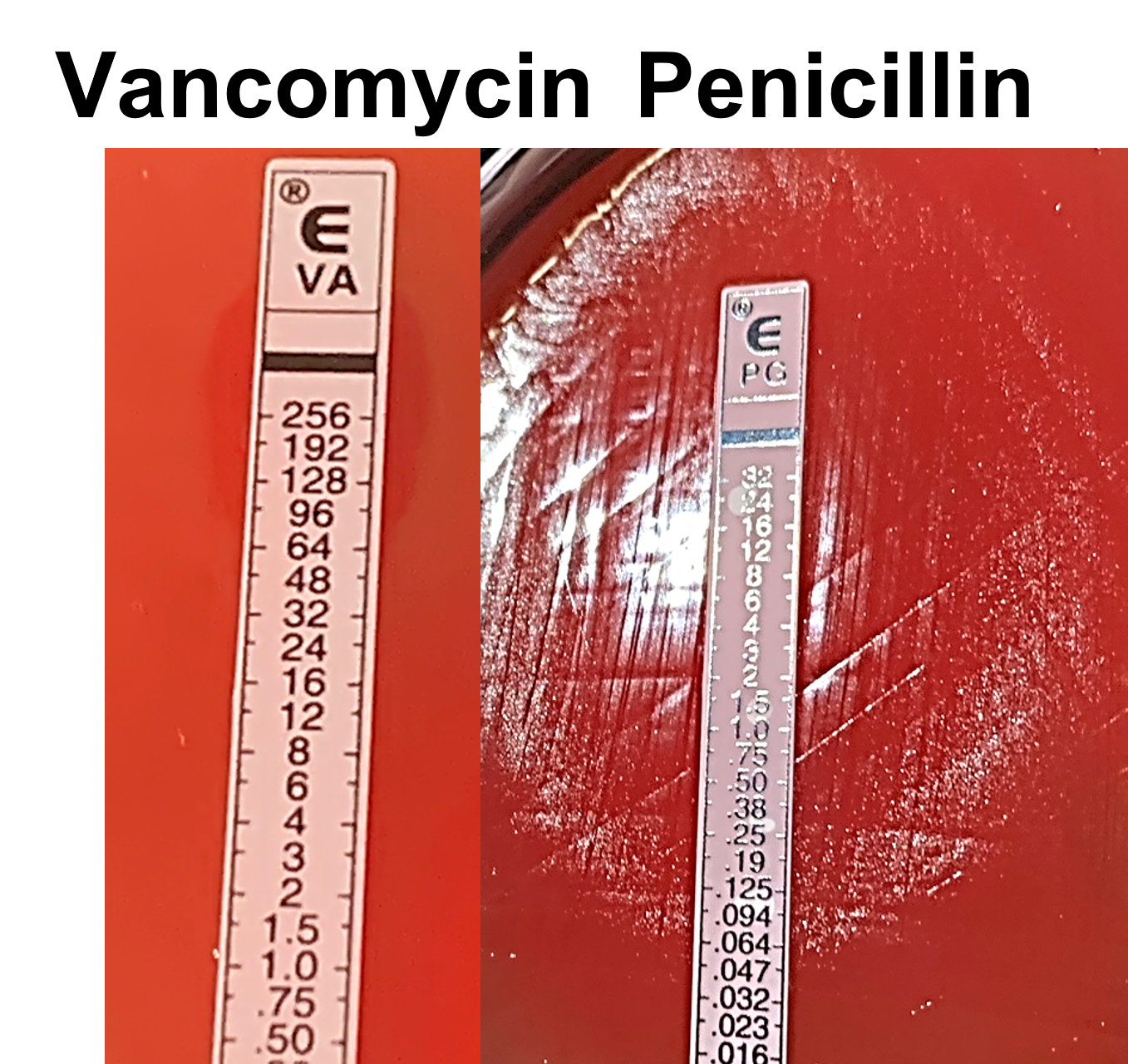
Human E. rhusiopathiae infection can manifest as three distinct forms. An acute, localized cellulitis named eryspieloid (not to be confused with streptococcal erysipelas) is the most common manifestation. This usually impacts the hands, fingers, or other parts of the upper extremities that have contact with animals or animal products.3 A generalized cutaneous form more often associated with systemic symptoms including fever, joint aches, lymphadenitis, lymphadenopathy, and arthritis can also occur. Finally, septicemia frequently associated with endocarditis is a third manifestation. E. rhusiopathiae endocarditis is often subacute, with a tropism for native valves (particularly the aortic valve). Due to its indolent nature, this presentation often requires valve replacement at the time of diagnosis and is associated with increased mortality.1,4 While cases of non-severe eryspieloid may self-resolve, ampicillin or penicillin are the treatments of choice for cutaneous and systemic infections. Cephalosporins and fluoroquinolones are also efficient alternative agents.3 Importantly, the organism is intrinsically resistant to vancomycin, thus accurate and timely identification is critical to ensure appropriate intervention (Image 2). Susceptibility testing is generally not performed but may be useful in the setting of penicillin allergy.

Image 2. E. rhusiopathiae is intrinsically resistant to vancomycin. E. rhusiopathiae exhibits elevated MICs to vancomycin. Penicillin is the treatment of choice.

Laboratory identification of E. rhusiopathiae can be challenging.  Erysiepelothrix can easily decolorize during gram staining and can be mistaken as gram negative due to lack of stain retention. Additionally, the cells can exhibit variable morphologies including pairs, chains, and filaments. Colonies can also exhibit variable morphotypes when grown on routine media, including both rough and smooth forms.2An environmental exposure to animals was investigated in this patient’s case to possibly serve as the source of infection. While a direct link cannot be definitively proven, it was revealed that the patient owned a large fish tank which she regularly cleaned which could have been a potential source of infection. 

References

  1. Wang Q, Chang BJ, Riley TV. 2010. Erysipelothrix rhusiopathiae. Veterinary Microbiology 140:405-417.
  2. Clark AE. 2015. The Occupational Opportunist: an Update on Erysipelothrix rhusiopathiae Infection, Disease Pathogenesis, and Microbiology. Clinical Microbiology Newsletter 37:143-151.
  3. Veraldi S, Girgenti V, Dassoni F, Gianotti R. 2009. Erysipeloid: a review. Clinical and Experimental Dermatology 34:859-862.
  4. Brooke CJ, Riley TV. 1999. Erysipelothrix rhusiopathiae: bacteriology, epidemiology and clinical manifestations of an occupational pathogen. Journal of Medical Microbiology 48:789-799.

-Timothy J. Kirtek, M.D., originally from Grand Blanc, Michigan, graduated from American University of the Caribbean School of Medicine located on the island of Sint Maarten. There, he conducted research on tropical arboviruses including Dengue, Chikungunya, and Zika viruses. He then returned to Michigan to complete his clinical training and, upon graduation from medical school, moved to Dallas, Texas where he is currently an Anatomic and Clinical Pathology resident physician at UT Southwestern.

-Andrew Clark, PhD, D(ABMM) is an Assistant Professor at UT Southwestern Medical Center in the Department of Pathology, and Associate Director of the Clements University Hospital microbiology laboratory. He completed a CPEP-accredited postdoctoral fellowship in Medical and Public Health Microbiology at National Institutes of Health, and is interested in antimicrobial susceptibility and anaerobe pathophysiology.