Hematopathology Case Study: A 23 Year Old Man with Epistaxis, Fever and Pancytopenia

Case History

A 23 year old man presented to the hospital with recurrent fever up to 103F with associated nausea and vomiting, epistaxis, watery diarrhea, dyspnea, and decreased appetite for several days. Blood cultures from admission were positive for MSSA and a stool PCR was positive for Vibrio species. He was admitted and treated for sepsis. His CBC demonstrated a marked pancytopenia ( WBC count 0.6 K/μL) and the hematopathology team was consulted to review the peripheral blood film.

Peripheral blood smear.

Review of the peripheral blood confirmed a markedly pancytopenic picture with virtually no leukocytes in the region of best RBC “spread” (Image 1A). In the periphery of the smear (1B and C) clusters of leukocytes were noted where left-shifted granulocytes were seen. Many demonstrated nuclear irregularity and abnormal granulation (B) and some showed the presence of numerous Auer rods (Image 1C, arrows).

The presence of abnormally granulated immature neutrophilic precursors, and cells with numerous Auer rods was morphologically compatible with acute promyelocytic leukemia (APL) and a rush preliminary diagnosis was rendered. The patient was started on ATRA therapy and FISH for PML-RARA was expedited.

Discussion

Acute promyelocyticleukemia (APL) is characterized as an acute myeloid leukemia in which promyelocytes with the PML-RARA fusion predominate. The PML-RARA fusion is the result of a balanced translocation between chromosomes 15 and 17, designated ast (15;17)(q24.1;q21.2).  The promyelocyte progenitor cell is the cell of origin of APL. APL occurs most frequently in middle aged individuals, but can occur at any age.

The first account of APL was originally discussed in the late 1950s in which L. K.Hillestad, a hematologist from Norway, described a disorder as “a white blood cell picture dominated by promyelocytes and severe bleeding caused mainly by fibrinolysis.” The gene fusion was elucidated in the late 1970s at the University of Chicago demonstrating the balanced translocation between chromosomes 15 and 17. Cure rates at that time were still very low, until in the mid 1980s when researchers in China demonstrated the use of all-trans retinoic acid causing complete remission in APL patients.

Two distinct subtypes of APL exist: hypergranular (typical) or microgranular. The hypergranular variant is filled with large Auer rods and with dense cytoplasmic granules that can obstruct the nucleus. In contrast, the microgranular variant has a scantiness of cytoplasmic granules or small azurophilic granules.

The immunophenotype for APL is quite distinct and characterized by low or absent expression of CD34 and HLA-DR (in keeping with the cellular differentiation from blast to promyelocyte). APL cells are positive CD33 and CD13 with most cases showing expression of CD117 (sometimes weak). APL cells are usually negative for CD15, CD65, CD11a, CD11b, and CD18. The microgranular variant may display positive staining for CD34 and CD2. For both variants, IHC with antibodies to the PML gene demonstrates a nuclear multi granular pattern with nucleolar exclusion, a finding that is unique to APL and not seen in AML or normal promyelocyte morphology.

The main clinical symptom of APL is hemorrhagic, including gingival bleeding and ecchymosis but can progress to disseminated intravascular coagulopathy (DIC). Other symptoms of APL include those related to pancytopenia, including weakness, fatigue, and infections.

The prognosis for APL is considered to be excellent. Tretinoin (ATRA) interacts with the PML-RARA fusion product allowing for maturation and differentiation to occur along the granulocytic lineage, eliminating the promyelocyte population. Combination therapy with tretinoin and arsenic trioxide has become the gold standard of care leading to excellent remission rates.

References

  1. Kakizuka,A., et al. “Chromosomal translocation t (15; 17) in human acutepromyelocytic leukemia fuses RARα with a novel putative transcription factor,PML.” Cell 66.4 (1991): 663-674.
  2. Lo-Coco,Francesco, and Laura Cicconi. “History of acute promyelocytic leukemia: atale of endless revolution.” Mediterranean journal of hematologyand infectious diseases3.1 (2011).
  3. Rowley,JanetD, HarveyM Golomb, and Charlotte Dougherty. “15/17 translocation, aconsistent chromosomal change in acute promyelocytic leukaemia.” TheLancet 309.8010 (1977): 549-550.
  4. Swerdlow,Steven H. WHO Classification of Tumours of Haematopoietic and LymphoidTissues. International Agency for Research on Cancer, 2017.

-Christopher Felicelli is an M3 at Loyola University Chicago Stritch School of Medicine. Follow Chris on Twitter at @ChrisFelicelli

-Kamran M. Mirza, MD PhD is an Assistant Professor of Pathology and Medical Director of Molecular Pathology at Loyola University Medical Center. He was a top 5 honoree in ASCP’s Forty Under 40 2017. Follow Dr. Mirza on twitter @kmirza.

On Lab Medicine: A Model for Quality Improvement

What do gopher holes have in common with quality improvement? More than you might think! In a paper available on Lab Medicine’s advanced access, Dr. Yaolin Zhou writes about a novel framework for quality improvement initiatives called EPIDEM, or “explore, promote, implement, document, evaluate, and modify.”

Read the paper and let us know what you think! 

Microbiology Case Study: A 21 Year Old With Chronic Kidney Disease

Case History

The patient is a 21 year old male with a history of developmental delay and chronic kidney disease secondary to posterior urethral valves, status post kidney transplant at age 14, who presents for a routine office visit with his pediatric nephrologist. In the past year, he has had chronic antibody-mediated transplant rejection despite immunosuppression. In addition, he drinks 1-1.5 gallons of water daily, self-catheterizes every three hours, and has an indwelling Foley at night. During the office visit, he denies any urinary symptoms, including dysuria, hematuria, cloudy urine, reduced output, or fever. However, given his significant risk factors for urinary tract infection, his provider orders a urinalysis and urine culture.

Laboratory Identification

The urine was noted to be cloudy, was positive for nitrites and leukocyte esterase, and had 11-50 white blood cells per high-powered field. 

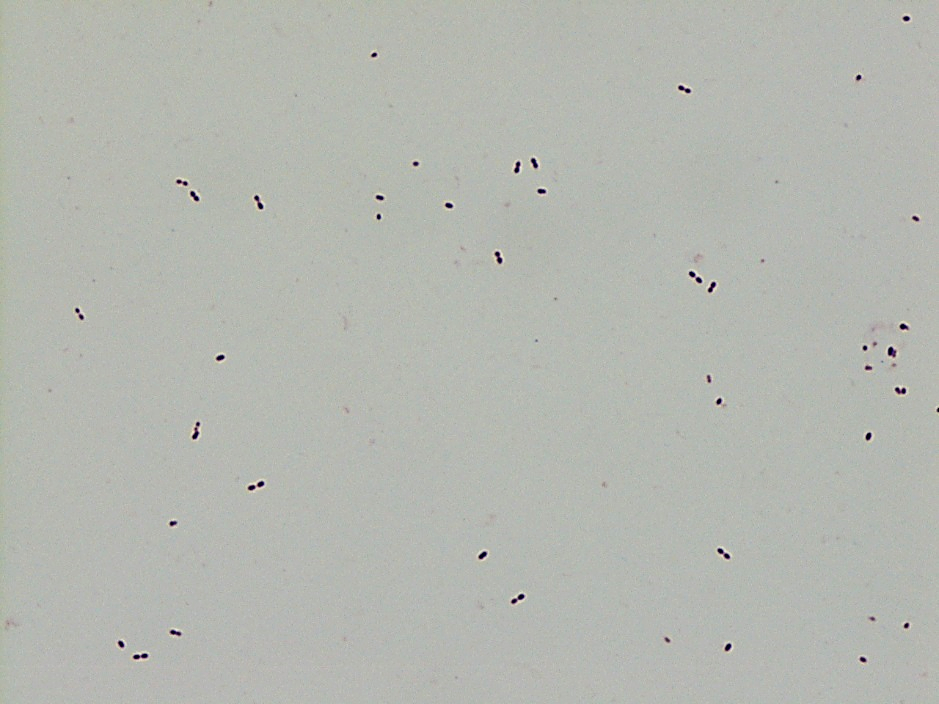
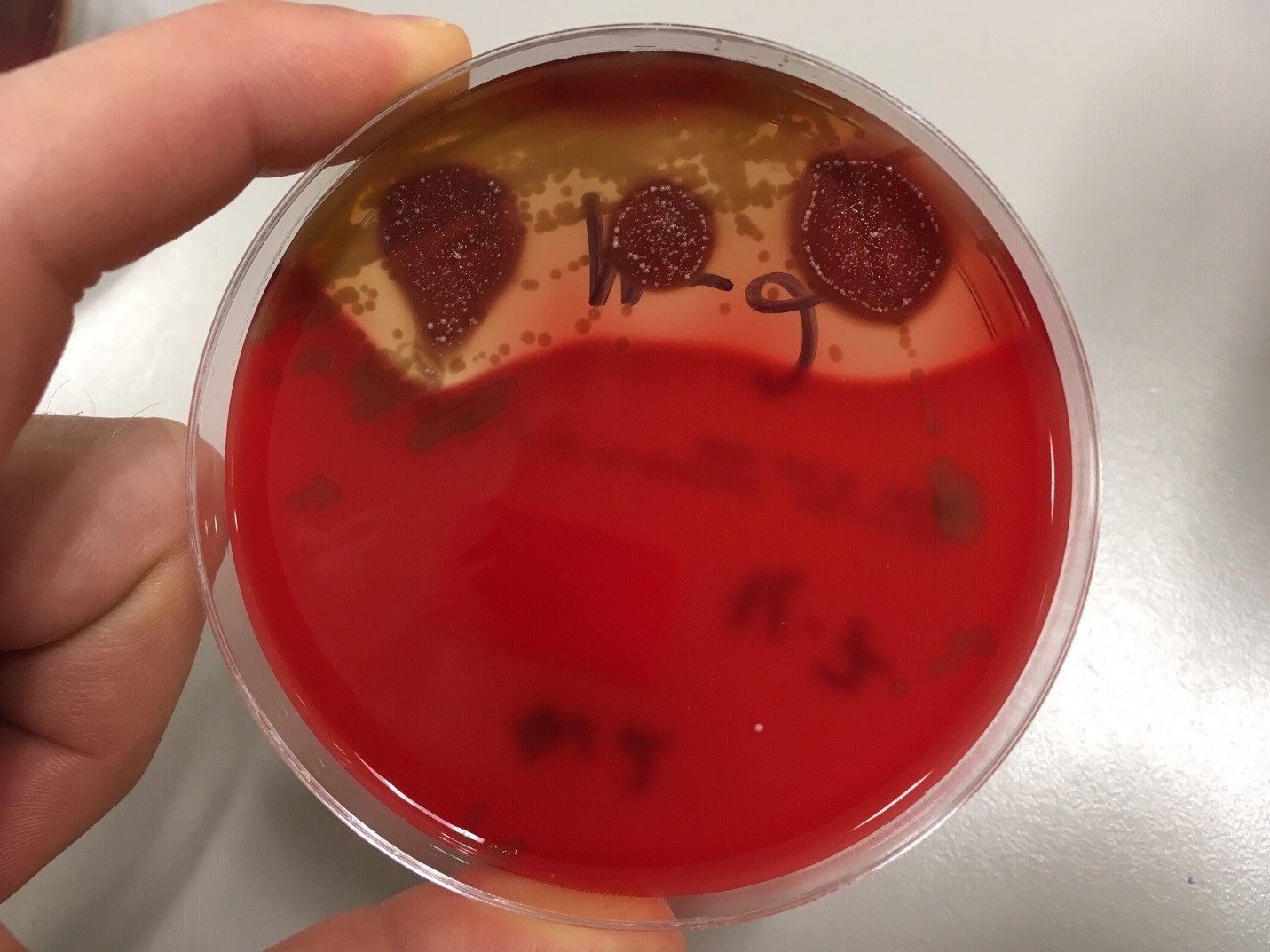
Urine culture demonstrated the growth of two organisms, one of which was identified to be greater than 100,000 CFU of Proteus miribalis, and the second of which grew 10,000-100,000 CFU, was isolated, and is shown below:

Image 1. Appearance of the second organism’s growth on blood agar after the bile solubility test.
Image 2. Gram stain showing gram positive diplococci.

Mass spectrometry by MALDI-TOF confirmed that this second organism is Streptococcus pneumoniae, a bile-soluble gram positive diplococci. 

Discussion

S pneumoniae is implicated in a number of diseases, but it is an uncommon pathogen in the urine. Several case-series and case reports have been published demonstrating a predilection of pathogenic urinary S pneumoniae for pediatric patients with urinary tract abnormalities. In one series, 26 urine cultures from 18 patients were identified as growing S pneumoniae, with CFU counts ranging from 100 to 100,000. Sixteen of the 26 cultures grew only S pneumoniae. Of the 18 patients, only six were adults, eight had had a kidney transplant, and four others had chronic problems with their kidneys (1). In another series of three pediatric cases, one patient had congenital bilateral duplication of the renal collecting system, one had a “congenital imperforate anus (high type 1A) with a rectovesical fistula and grade 4 bilateral vesicoureteral reflux,” and the third had bilateral renal dysplasia (2). Neither case series was able to identify a specific serotype of S pneumoniae responsible for these infections.

As discussed by Choi et al, the altered flow dynamics of the abnormal urinary systems in these patients may be compromising normal host immune clearance mechanisms, thereby increasing the susceptibility to infection (2, 3). However, it is unclear why S pneumoniae infections have a predilection for congenital urinary tract abnormalities, as opposed to all urinary tract abnormalities. Choi et al postulate that some of the gene polymorphisms known to predispose individuals to UTI or pneumococcal infections could be genetically linked to genes responsible for urinary tract abnormalities, thus increasing the probability that an individual with a congenital urinary tract abnormality would have an S pneumoniae urinary tract infection (2,4).

Given the patient’s history and risk factors, the presence of S pneumoniae in his urine was found to be significant. Treatment of both organisms and appropriate follow-up was recommended.

References

  1. Burckhardt, Irene, Jessica Panitz, Mark van der Linden, and Stefan Zimmermann.  “Streptococcus pneumoniae as an agent of urinary tract infections – a laboratory experience from 2010 to 2014 and further characterization of strains.”  Diagnostic Microbiology and Infectious Disease.  2016; 86: 97-101.
  2. Choi, Rihwa, Youngeun Ma, Kyung Sun Park,  Nam Yong Lee, Hee Yeon Cho, and Yae-Jean Kim.  “Streptococcus Pneumoniae as a uropathogen in children with urinary tract abnormalities.”  The Pediatric Infectious Disease Journal.  2013; 32(12): 1386-1388.
  3. Bogaert, D, R de Groot, PWM Hermans.  “Streptococcus pneumoniae colonization: the key to pneumococcal disease.”  The Lancet Infectious Diseases.  2004; 4(3): 144-154.
  4. Yuan, Fang Fang, Katherine Marks, Melanie Wong, Sarah Watson, Ellen de Leon, Peter Bruce McIntyre, John Stephen Sullivan.  “Clinical relevance of TLR2, TLR4, CD14, and Fc gamma RIIA gene polymorphisms in Streptococcus pneumoniae infection.”  Immunology and Cell Biology.  2008; 86(3): 268-270.

-Fritz Eyerer, MD is a first year Anatomic and Clinical Pathology Resident at the University of Vermont Medical Center.

-Christi Wojewoda, MD, is the Director of Clinical Microbiology at the University of Vermont Medical Center and an Associate Professor at the University of Vermont.