
So Long …

I decided to take this year-end opportunity to say good bye for a while. It’s with some regret that I hang up my blogging hat for now. My next year is going to extraordinarily busy, as I take on the role of President of AACC. As much as I have enjoyed writing posts to this blog for the last 2 ½ years, I’m afraid blogging routinely will have to take a back seat for 2016. I do hope to get an occasional post in, but we’ll see.

It has been my distinct pleasure to write posts for Lablogatory. I encourage any of you who have any inclination at all to write about lab related issues, to take up blogging for this feature. Putting your thoughts on paper is one of the best ways I know to clarify those thoughts. Writing about something is somewhat akin to teaching it; doing so helps you to understand and learn it yourself. It has also let me see just how clearly I can express the concepts I’m trying to get across.

Another thing that blogging has clearly taught me is to be sure of my facts. Seeing something in writing always gives it so much more weight than simply hearing it. I have always been surprised by the number of things that I “know” to be fact from my laboratory years of experience, that I cannot find backing or literature support for. Thus when I’m blogging about a topic, I often find myself suddenly questioning, exploring and confirming things that I’ve always assumed were “fact”. And if I can’t find supporting references, I clearly express that it is an opinion and where that opinion arises from.

And lastly, writing posts for this blog has allowed me to interact with a wide variety of people I would not have met otherwise, starting with Kelly Swails, who often tweaked my posts into something better, and continuing on with people who have responded, both online, and in person. Even one of my hospital administrators in Risk Management stopped me one day in the hall to say, “Oh! I read your blog about dilutions!”

Posting articles for this blog has given me the opportunity to think about a variety of topics, to clarify my thoughts by putting them into writing, and to interact with some great people. I hope to be able to pick this back up after my term of office. In the meantime, many thanks to everyone who has read my posts. See y’all on the other side!


-Patti Jones PhD, DABCC, FACB, is the Clinical Director of the Chemistry and Metabolic Disease Laboratories at Children’s Medical Center in Dallas, TX and a Professor of Pathology at University of Texas Southwestern Medical Center in Dallas.

 

Microbiology Case Study: 29 Year Old in Preterm Labor at 30 Weeks Gestation

Case History:
A 29 year old woman presents to the hospital with contractions at 30 weeks gestation. This is her first pregnancy and it was previously uncomplicated. She did not experience loss of fluid or vaginal bleeding and did not have a history of recent illness or fever. A swab for group B Streptococcus (GBS) was collected and the patient was started on prophylactic penicillin. Clinical evaluation revealed evidence of acute infection with an elevated C-reactive protein and an increased white blood cell count with 97% neutrophils. Amniocentesis was performed and the amniotic fluid was sent to the laboratory for Gram Stain and culture.

Labor was allowed to progress and the infant was delivered vaginally. Cultures of cerebrospinal fluid and blood from the neonate were negative. The placenta was sent for histologic evaluation.

Gram stain shows Gram negative bacilli.
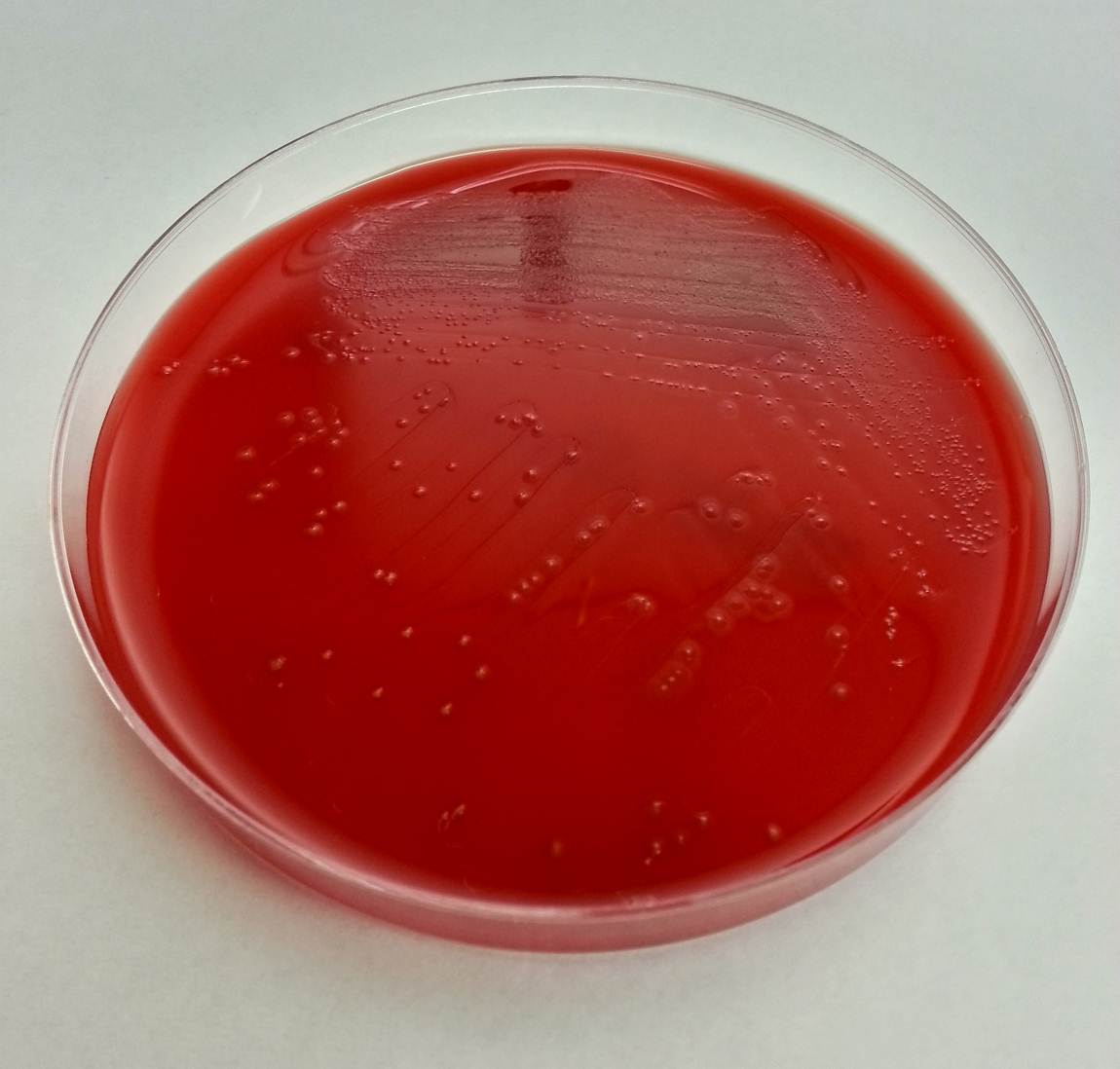
Tiny gray colonies on blood agar with a bleach-like odor.
Small, pale yellow colonies on chocolate agar.

Laboratory Identification:
The laboratory workup revealed a gram negative bacillus with rounded ends that grew small grey to pale yellow colonies on blood and chocolate agars. The colonies had three regions; a raised central region, a refractile flat region, and an outer rougher spreading region. The colonies had a distinct bleach-like smell. There was no growth on MacConkey agar. The organisms were oxidase positive, catalase and indole negative. Mass spectrometry was utilized to identify the organism as Eikenella corrodens.

Discussion:
Eikenella corrodens is a component of normal mouth and upper respiratory tract flora. It is most notable for causing head and neck infections, periodontal disease, and as a significant player in “fight bite” infections. “Fight bite” results when a clenched fist hits another person’s mouth and the teeth cause lacerations to the hitter’s hand, which can subsequently lead to infection. Eikenella is implicated approximately 25% of the time in these types of infections. Only on very rare occasion is Eikenella known to cause gynecologic infections. Endometritis or cervicitis may infrequently be caused by colonization of an intrauterine contraceptive device (IUD) by Eikenella. And rarely, Eikenella is implicated as the isolated bacteria in cases of acute chorioamnionitis.

In the medical literature there are currently only 8 reported cases of chorioamnionitis caused by a pure Eikenella infection. As in our case, each of the women in the case reports had clinically silent infections and only presented with preterm labor. Most of the women were found to have elevated white blood cell counts in the absence of fever or alterations in other vital signs. In each case, the fetal membranes were intact. Two of the cases resulted in fatal infection of the neonates. Of note, three of the women were mentioned to be the recipients of oral intercourse throughout their pregnancies.

One of the reported cases involved a woman whose partner had a tongue piercing and it was noted that they engaged in daily oral sex during the pregnancy.  The authors speculated that the tongue piercing played a role in the development of chorioamnionitis by either ascending vaginal infection or hematogenous spread caused by trauma from the tongue ring.

It is not known if a similar history was present in this case. The patient was treated with ampicillin and gentamycin and discharged following delivery. She is currently doing well. The infant has had no signs of infection, but at the time of this writing he is being treated in the neonatal intensive care unit for sequelae of prematurity.

References:
Garnier F, Masson G, Bedu A, et al. Maternofetal infections due to Eikenella corrodens. J Med Microbiol 2009; 58, 273-275.

Jadhav A, Belfort M, Dildy G. Eikenella corrodens chorioamnionitis: modes of infection? Am J Obstet Gynecol 2009; 200, e4-5.

-Britni Bryant, MD is a 2nd year anatomic and clinical pathology resident at the University of Vermont Medical Center.

Wojewoda-small

-Christi Wojewoda, MD, is the Director of Clinical Microbiology at the University of Vermont Medical Center and an Assistant Professor at the University of Vermont.

Our Value Add

As a clinical laboratory scientist or a pathologist, perhaps you have questioned from time to time your value in the backdrop of our current state of healthcare. During my career, I admit to having felt that pathologists and laboratory staff are under-recognized for their contributions to provision of care on a day-to-day basis. Effective, efficient and most importantly, quality laboratory testing is clearly one of the key components for safe patient-centered care.

Laboratory testing is the single highest volume medical activity and lab tests directly affect a majority of medical decisions. Laboratory activity generates significant and potentially expensive downstream costs including prescriptions, imaging studies, and procedures. Although the laboratory most often provides indirect patient care, it is both necessary and critical. In particular, laboratory testing is becoming more intricate and “personalized” and thus brings us the golden opportunity to intervene on behalf of the patient.

A classic and current example is the recent development of novel “target-specific” oral anticoagulants. These drugs certainly provide benefit to patients on several levels, but also are still associated, unfortunately with risks of bleeding (as with all anticoagulants). These drugs came to the market without specific coagulation tests or antidotes, both of which are necessary in the event of bleeding.

Some tests are on the horizon (e.g. dilute thrombin time) and some are available with proper validation/calibration (e.g. anti-factor Xa activity). Late 2013 and early 2014 saw the approval of Kcentra prothrombin complex concentrate for emergent warfarin reversal in patients with active hemorrhage and just a few weeks ago, idarucizimab (Praxbind) was FDA-approved for reversal of dabigatran-associated bleeding. Andexanet, a Factor Xa inhibitor reversal agent is in Phase III trials and we should anticipate its arrival on the market soon. These are, of course, welcome additions to our armament.

Although these drugs and their reversal agents may be housed and released from our pharmacies upon order, the onus is on us as laboratory professionals to stay abreast of these new entities, therapeutics etc. so we can aid in their appropriate use. Our hematology, coagulation and transfusion services, along with pathologists, should be “at-the-ready” to answer questions and guide our clinical colleagues. Protocols for reversal strategies are key and we must take on a prominent role on the committees that develop these.

Never forget the important role YOU play in everyday diagnosis, prognosis and treatment decisions! Each day represents an opportunity for us to step up to the plate and be major players in this ever-changing and challenging healthcare environment. Let’s continue to make our presence and our value known!


Burns

-Dr. Burns was a private practice pathologist, and Medical Director for the Jewish Hospital Healthcare System in Louisville, KY. for 20 years. She has practiced both surgical and clinical pathology and has been an Assistant Clinical Professor at the University of Louisville. She is currently available for consulting in Patient Blood Management and Transfusion Medicine. You can reach her at cburnspbm@gmail.com.

CLSI Publishes a New Document on Management of Critical- and Significant-Risk Results

From the press release:

“The Clinical and Laboratory Standards Institute (CLSI) has published a new document titled Management of Critical- and Significant-Risk Results (GP47-Ed1). This guideline provides current best practice recommendations for developing and implementing a policy and procedures for the identification, reporting, and management of critical- and significant-risk laboratory results. Emphasis is placed on management responsibilities such as development of the policy, the process, procedures, job descriptions, and monitoring systems that ensure effective reporting and compliance with regulatory requirements.

This new document refers to results as critical risk and significant risk, depending on the degree of risk to the patient. The recommendations in the standard are intended to be consistent with best practices for patient safety, and compliant with current, pertinent regulatory and accreditation requirements. GP47 includes an executive summary and appendixes with sample policies, reporting methods, escalation procedures, and monitoring tools.

This document is intended for clinical and laboratory directors, managers, and personnel who develop and implement laboratory policies and processes. The standard is also intended for health care administrators who oversee compliance with regulatory requirements, accreditation, and clinical practice standards related to patient safety. The recommendations cover every laboratory discipline and pertain to clinical laboratories of every size, scope, and complexity.”


Lab Safety: A Deadly Ride?

Mumbai is one of the financial capitals in India, and millions of commuters ride its railway network to and from work every day. However, over the past several years, the available public transportation has not increased in proportion to the city’s rise in population. This has resulted in overcrowded trains and a staggering death toll from accidents and falls. In 2005, a total of 494 passengers lost their lives after falling from running trains. This figure went up subsequently in the coming years and climbed to 901 by 2013. In 2015 nine people a day, on average, lose their lives while on the move.

Knowing these facts, how inclined would you or your lab staff be to take a train ride in Mumbai? Not very. Yet, there are people in that city who willingly get on board every day. These conditions of danger are normal for them. This is their culture. They have become immersed in it, and it has become difficult for them to step back and look at the big picture–even for their own safety. They have to get to work.

In the past, laboratory professionals worked in departments where mouth-pipetting was normal, where eating, drinking and smoking was common, and where working without PPE was accepted. Today we look at old lab pictures of these behaviors and react (I hope) with surprise. But what applies to the commuters in Mumbai might also apply to labs of the past as well—those technologists were immersed in their culture.

Since those times, many lab safety regulations have been put in place, but that hasn’t fixed the safety culture everywhere. There may be, of course, other reasons for unsafe conduct in the laboratory. There may be behaviors that have been held onto after years of practice, there may be a lack of safety education, or safety may simply not be a priority for lab leadership. All of these factors are a part of the lab safety culture. Do you know the culture on your lab?

Assessing the culture in your laboratory is important. If you are in leadership, you should not assume that your singular view of the culture is accurate. There are several ways to evaluate the culture; make a visual assessment, review injury and exposure incidents, or have staff take a written culture assessment.

Provide adequate safety education for your staff. Are they aware that there might be a better, safer way? Do they know where the PPE and engineering controls are? Have they been trained in their use? Is there any safety leadership holding staff accountable so that there are not too many people on the train?

Laboratory professionals have to get to work, but unlike the workers of Mumbai, it’s not necessarily the trip to work that’s an issue; it’s the work places which are not inherently safe. It takes knowledge, education, training and focus to keep people safe in the laboratory. Put safety in its proper perspective: we are not dealing with falling from a train, but we do encounter injuries, exposures, and lab-acquired infections, some of which can be just as deadly as a fall. Know your safety culture, and learn what it will take to make the needed changes so that no one in your lab becomes a statistic.


Scungio 1

-Dan Scungio, MT(ASCP), SLS, CQA (ASQ) has over 25 years experience as a certified medical technologist. Today he is the Laboratory Safety Officer for Sentara Healthcare, a system of seven hospitals and over 20 laboratories and draw sites in the Tidewater area of Virginia. He is also known as Dan the Lab Safety Man, a lab safety consultant, educator, and trainer.

One Part Interpreter

I’m thoroughly convinced that in order to change laboratory information systems (LIS) and get the new LIS to work correctly you need a mixture of one part laboratory professional, one part information technology (IT) specialist, and one part interpreter. Add together and then vortex vigorously.

The laboratory professional is a given. It is absolutely necessary to have a person or people who understand the lab tests inside and out, from linear range to reference intervals to instrument capabilities to antibiotic susceptibilities to type and cross-match. There must be people with an understanding of how the tests work and what type of information is needed in order to ensure that when a test result appears in the electronic medical record for the doctor to see, it is an accurate result that makes sense and is interpretable.

The IT specialist is also a given. This person or people must completely understand not only how to program the system, but what type of programming is possible – what the computer system is capable of doing – or not doing. Being currently immersed in changing LIS systems at my institution, I have come to appreciate more and more how these two individual types must be able to communicate with each other and work together to design and implement an LIS that is functional for everyone.

Which brings us to the “interpreter”. Sometimes IT and lab people simply don’t speak the same language. I know I sometimes feel as though the IT people have begun speaking in tongues. I’m occasionally amused by the totally blank looks on the faces around me, and no doubt on my own. Thus what a project like this requires is a facile communicator with enough knowledge of both the lab and the programming to successfully interpret between the experts. I’m calling this person an “interpreter”, but calling him/her a communicator would be just as accurate.

In my institution the interpreter role is most frequently filled by laboratory technologists who have gone over to the Dark Side, otherwise known as Information Technology. Much as I hate to lose them as medical laboratory scientists, they are pretty nearly worth their weight in gold as interpreters when changing LIS systems. To continue the analogy, without their input in the mix, the vigorous vortexing necessary often results in an emulsion, not a smooth mixture. The finished product may not function as desired simply because the programmer did not understand what was needed, or the laboratory professional did not understand the inherent capabilities of the LIS.

With any luck, we have enough interpreters in our mix to end up with a functional LIS we can all live with. I know the current meetings are going as smoothly as they are due to these people’s work.


-Patti Jones PhD, DABCC, FACB, is the Clinical Director of the Chemistry and Metabolic Disease Laboratories at Children’s Medical Center in Dallas, TX and a Professor of Pathology at University of Texas Southwestern Medical Center in Dallas.


Replication Basics

To gain a solid understanding of Molecular Diagnostics, one has to grasp the fundamentals of DNA Replication. The double helix nature of DNA requires numerous moving parts working together to produce two identical strands of DNA from one original DNA molecule.

Image courtesy of http://genmed.yolasite.com/fundamentals-of-genetics.php

The Origin of Replication

The semi-conservative process of DNA replication occurs in a 5’ to 3’ anti-parallel direction. The replication process is described as semi-conservative because the sequence of nucleotides is maintained through new generations of replication. An extremely important enzyme involved in the beginning stages of DNA replication, is called Topoisomerase. It is responsible for regulating the over-winding and under-winding of DNA just ahead of the replication fork. Topoisomerase binds to the DNA then “cuts” the phosphate backbone so that the DNA can be unwound then resealed at the end of replication. Also, before replication can begin, an enzyme called helicase must first unwind and untangle the double-stranded DNA. Single stranded binding proteins (ssbp) prevent premature binding as well as protect the single stranded DNA from being digested by nucleases.

Leading Strand vs. Lagging Strand

During replication, two separate strands of DNA are formed in different ways. The lagging strand exhibits discontinuous 3’ to 5’ growth away from the replication fork and requires primase to “prime” the synthesis of the lagging strand. An RNA primer is added to the lagging strand of the DNA by RNA polymerase. This RNA primer begins synthesis of the lagging strand. The separate fragments of the lagging strand are termed Okazaki fragments. It’s important to note that due to the discontinuous formation of the lagging strand, each Okazaki fragment requires its own, separate, RNA primer. Finally, DNA ligase forms phophodiester bonds between the existing DNA strands to join the Okazaki fragments together. Alternatively, the leading strand during replication grows towards the replication fork in a 5’ to 3’ direction. The leading strand only needs one single RNA primer to immediately begin replication and therefore does not require DNA ligase.

LEADING STRAND SYNTHESIS REQUIREMENTS
Toward Replication Fork Single RNA Primer
5’→ 3’
Continuous Growth
LAGGING STRAND SYNTHESIS REQUIREMENTS
Away from Replication Fork Primase
3’→ 5’ Multiple RNA Primers
Discontinuous Growth DNA Ligase
Creation of Okazaki Fragments

DNA Polymerase III and its Role in Replication

While you should become familiar with the extensive list of DNA Polymerases (shown below), the core polymerase involved in DNA replication is DNA Polymerase III. It functions as a catalyst in the formation of the phosphodiester bonds between an incoming deoxyribose nucleotide triphosphate (dNTP) determined by hydrogen bonding to the template at the 3’ end of the primer.

PROKARYOTIC DNA POLYMERASES FUNCTION
DNA Polymerase I Recombination, Repair, Replication
DNA Polymerase II Repair
DNA Polymerase III Core Polymerase

Replication

DNA Polymerase IV and V Bypass DNA Damage (Y-Family DNA Polymerases)
EUKARYOTIC DNA POLYMERASES FUNCTION
Alpha (α) RNA Primase

Lagging Strand

Replication (Initiation, Okazaki Fragment Priming)

Beta (β) DNA Repair
Delta (δ) Leading Strand

Repair

Epsilon (ε) Sensor of DNA replication that coordinates transcription cycle

Repair

Gamma (γ) Mitochondrial Replication
RNA POLYMERASES FUNCTION
RNA Polymerase I rRNA (ribosomal RNA)
RNA Polymerase II mRNA (messenger RNA)
RNA Polymerase III tRNA (transfer RNA)

sbRNA (small nuclear RNA)

L Noll Image_small

-LeAnne Noll, BS, MB(ASCP)CM is a molecular technologist at Children’s Hospital of Wisconsin and was recognized as one of ASCP’s Top Five from the 40 Under Forty Program in 2015.

Microbiology Case Study: A Two-Week-Old Infant with Fever and Fussiness

A two week old infant presents to the ED with fever and fussiness. She was born at 37 weeks gestation after an uncomplicated vaginal birth. Her mother reports she was in good health during her pregnancy and there are no family sick contacts since the infant was brought home from the hospital. In the ED, the infant was febrile and had a bulging fontanel. Blood and CSF were sent to the microbiology laboratory for culture. The following organism was isolated from blood and CSF specimens.

OLYMPUS DIGITAL CAMERA
Gram stain of positive blood culture showing short, Gram-positive bacilli


list2
Organism growing on 5% sheep blood agar plate exhibiting a narrow zone of beta-hemolysis after 48 hours of incubation


The organism isolated was Listeria monocytogenes.

L. monocytogenes is a short, Gram-positive bacilli on Gram stain (Image 1). In the microbiology laboratory, L. monocytogenes grows on 5% sheep blood, chocolate, and colistin naladixic acid (CNA) agars. The bacteria form small colonies of 1-2 mm after 24 hours of incubation at 35-37⁰C. On sheep blood agar these colonies have a narrow zone of b-hemolysis, which is very subtle. To highlight the hemolysis, the blood agar plate must be held up to a light source (Image 2) or colonies can be removed to reveal hemolysis of the agar directly below the growing bacterial colony. L. monocytogenes is catalase, Voges-Proskauer, and methyl red positive but oxidase and urea negative. It is also CAMP test positive using a S. aureus streak and has tumbling leaf motility. L. monocytogenes is routinely identified in our laboratory by MALDI-TOF MS. In addition, many rapid diagnostic panels such as the Nanosphere Verigene Gram-positive Blood Culture Assay (Northbrook, IL, USA) and Biofire FilmArray Blood Culture Identification Panel (Salt Lake City, UT, USA) include a target for rapid identification of Listeria spp./L. monocytogenes from positive blood culture.

L. monocytogenes can grow at a wide range of temperatures between 0-50⁰C. Its ability to grow at 4⁰C allows the organism to persist and replicate under refrigerated conditions on food products such as meat, vegetables, raw milk, and cheeses. For the same reason, L. monocytogenes is also a concern for contamination of refrigerated blood products.

It is estimated that 1-5% of healthy adults are asymptomatically colonized with L. monocytogenes. The organism is most often contracted by consuming contaminated foods, which causes a mild gastrointestinal illness in otherwise healthy hosts. L. monocytogenes infection in pregnant women can present as a mild, self-limited, influenza-like illness Infection and 1/3 of women report no symptoms at all. The bacteria from infected mothers are able to cross the placenta, resulting in transmission to the fetus in utero or infants can be infected during the birthing process.

L. monocytogenes infections that occur within the first 7 days of life are characterized as early-onset. Patients often present with symptoms of preterm birth, pneumonia, and sepsis. Patients may also have an erythematous rash with small papules histologically described as “granulomatosis infantisepticum.” Late-onset infection occurs between 8-30 days of life with patients most often presenting with sepsis and meningitis. Both neonatal presentations are reported to have a high mortality rate—14-56% for early-onset and 25% for late-onset infection. Luckily, invasive neonatal L. monocytogenes infections have been declining over the past decades and are now a rare occurrence in newborns. These days, invasive listeriosis is more common in immunocompromised patients with defects in cell-mediated immunity. In 2013, the last year for which there is data, the CDC reported 633 cases of invasive listeriosis, but only 68 (11%) were pregnancy-associated. These infants had a 76% survival rate. More information about Listeria epidemiology in pregnant and non-pregnant populations can be found at the CDC website http://www.cdc.gov/listeria/pdf/listeria-annual-summary-2013-508c.pdf.

L. monocytogenes is intrinsically resistant to cephalosporins. Ampicillin is considered the “gold standard” for treatment. The addition of an aminoglycoside for synergy is often used in practice, but a retrospective cohort study showed it had no effect on reducing infant mortality. Trimethoprim-sulfamethoxazole, quinolones, or vancomycin can be used to treat penicillin allergic patients. Newer Gram-positive antibiotics including linezolid, daptomycin, and tigecycline have also shown clinical efficacy against L. monocytogenes infections.

 References:

Manual of Clinical Microbiology, 11th edition

Pediatric Red Book, 2015 Report of the Committee on Infectious Diseases, 30th edition

Centers for Disease Control and Prevention listeriosis website http://www.cdc.gov/listeria/


-Erin McElvania TeKippe, Ph.D., D(ABMM), is the Director of Clinical Microbiology at Children’s Medical Center in Dallas Texas and an Assistant Professor of Pathology and Pediatrics at University of Texas Southwestern Medical Center.

Microbiology Case Study: 64 Year Old Male with Swollen Finger

A 64 year old male presented with one week of swelling in his right 4th finger. He was initially treated for a suspected bacterial infection, but did not respond to treatment and the finger was aspirated. The specimen was positive for fungal organisms.

Fungal plates grew the following:

Note the flat powdery/velvety colony growth.  It is common for the colonies to have a purple or lavender color with a white border.
Note the flat powdery/velvety colony growth. It is common for the colonies to have a purple or lavender color with a white border.

Scotch tape prep revealed the following morphology:

Note that the elongated Phialides, and taper to a long slender tube, resembling bowling pins.  Sometimes this morphology has also been referred to as "skeleton hands."
Note that the elongated phialides, and taper to a long slender tube, resembling bowling pins. Sometimes this morphology has also been referred to as “skeleton hands.”

Discussion:
Purpureocillium lilacinum (formerly Paecilomyces lilacinus) is a fungus that is found ubiquitously within our environment, but has rarely been associated with disease in humans. A review paper in 2004 found 119 reported cases that implicated P. lilacinum from 1964 to 2004. It has been most commonly associated with ocular infections, often linked to intraocular lens implantations. There is scarce data concerning its susceptibility. In the event of a cutaneous infection such as the one presented in this case, it is recommended that posaconazole be used as first line therapy. In the event of treatment failure, or intolerance, there is little data about which antifungals to treat with, though voriconazole has been shown to have successful in-vitro.

The patient in this scenario had a history of undifferentiated spondylarthropathy, and was on methotrexate for a monoarthropathy in same finger in which the fungal growth occurred. He also received a cortisone injection into the joint adjacent to, but not directly into the site of the infection approximately a month prior to presentation. It could be possible that the cortisone injection had allowed the fungus to be inoculated into the finger, but we may never be certain. The patient also was gardening prior to his infection, and that could have also possibly contributed to his fungal infection.

P. lilacinum is found readily in the environment, and should be considered on the differential of cutaneous infections. Though immunocompromised patients have historically been more susceptible, it has been reported in immunocompetent individuals and should be considered, especially in the event of failure of response to antibiotic treatment. More research needs to be done to better understand treatment regimens for this organism, though this is difficult as it has been difficult to test in animal models.

Reference:

Clinical manifestations, treatment and outcome of Paecilomyces lilacinus infections. F.J. Pastor and J. Guarro. Volume 12, Issue 10, pages 948–960, October 2006 DOI: 10.1111/j.1469-0691.2006.01481.x

-Rich Smith is a Pathology Student Fellow at University of Vermont Medical Center.

Wojewoda-small

-Christi Wojewoda, MD, is the Director of Clinical Microbiology at the University of Vermont Medical Center and an Assistant Professor at the University of Vermont.