The Gloves Are Off … Or Are They?

The manager of the microbiology laboratory walked into the monthly staff meeting to discuss safety. Her first announcement was that the one clean hand washing sink in the department was going to be removed. The techs were shocked, and some were angry. Didn’t the manager care about infection prevention and control? Didn’t she know that hand hygiene should always occur after PPE is removed and before leaving the lab? The manager waited for the reactions to subside, then she explained that since the staff treated the lab as a clean area in many instances, that there should be no need for hand washing. The staff went on to argue that they were working with microbiological pathogens, and that they did wear lab coats and gloves, especially when handling specimens and setting them up for cultures. Some of those specimen containers were pretty disgusting, in fact.

That was when the manager dropped the charade. She had no real intention of removing the sink, but she wanted to make a point. She was tired of watching her staff reading culture plates with no gloves. She had spoken about it before, but no one agreed- they had been handling incubated plates for years.

One of the most common issues lab managers and safety professionals face is maintaining Personal Protective Equipment (PPE) compliance in the work area. An effective weapon in this battle is telling stories of lab incidents with bad outcomes, or explaining the consequences of this unsafe behavior. That is a valuable piece of lab safety education. It is unfortunate that we sometimes have to learn from others’ mistakes, but when it comes to safety, that’s better than learning from your own. Some lab accidents and exposures can be career-altering or career-ending.

OSHA’s Bloodborne Pathogen Standard states that PPE (specifically gloves) must be worn when there is a risk of exposure. That is as specific as they get on the topic. Anytime patient specimens are handled or opened, it follows that gloves should be worn. That means that in the microbiology area, staff is handling specimens and agar plates with gloves while they streak plates and set up gram stain slides. These contaminated gloves are handling plate after plate, and then those plates are placed into the incubators. Like any other contaminated item in the lab, those plates should be treated and handled with gloves until properly discarded. That means that gloves are necessary when removing plates from the incubator, and when reading those cultures. Not only is staff handling contaminated plates, but they are working with bacterial and fungal colonies. There is a high risk of exposure in those processes.

OSHA also requires PPE under its Chemical Hygiene Standard (or Lab Standard). Gloves are required when handling chemicals, so they would be needed when performing simple chemical tests (oxidase, catalase, etc.) and when performing gram stains. Make sure you use chemical-resistant gloves when selecting the appropriate PPE for these tasks.

In 2010, OSHA responded to an inquiry specifically about the use of gloves while handling culture plates in the microbiology laboratory. The letter “strongly suggests” the use of gloves for the task, but OSHA’s own standards already address the issue and clearly require the need for PPE in that situation.

The story at the beginning of this entry is true- there was a lab manager who was fed up with her staff not wearing gloves, so she told them she was removing the sink. She was kidding, but she made her point. In that microbiology lab they all wear gloves to read cultures today.

Laboratory-acquired infections occur every year, and some of the easiest ones to investigate are the cases in which techs are infected with pathogenic bacteria. It is fairly easy to trace the sources of those exposures. What is the staff doing in your microbiology laboratory? Are they doing everything they can to prevent exposure to pathogens? As a manager or safety professional, are you enforcing the use of PPE when exposure is possible? Keep your staff from becoming a safety statistic- provide PPE, teach consequences of unsafe behaviors, and monitor the continual use of those safe work practices in your lab.


Scungio 1

-Dan Scungio, MT(ASCP), SLS, CQA (ASQ) has over 25 years experience as a certified medical technologist. Today he is the Laboratory Safety Officer for Sentara Healthcare, a system of seven hospitals and over 20 laboratories and draw sites in the Tidewater area of Virginia. He is also known as Dan the Lab Safety Man, a lab safety consultant, educator, and trainer.

Advances in Automation and Assessment of Nucleic Acid Extractions

When considering methods to extract nucleic acids (DNA and RNA) to be used in downstream applications, it is important to think about what the sample source will be, as well as if it will be able to be used in an eventual assay. Being able to extract and purify DNA can lead to important information on infectious disease testing as well as patient genotype analysis. Purification of RNA can aid in understanding gene expression. However, once nucleic acid is extracted from a specimen, an additional set of parameters and guidelines are put in place to ensure that quality standards are met and the nucleic acid has not been compromised, ultimately leading to its ability to be used in patient testing.

Specimens / Sample Sources
Fresh Tissue in the form of cells such as, buccal cells, swabbed cervical cells, and even fresh DNA from the root of a single hair are all easily collected, stored, and provide enough DNA to be used in downstream PCR assays.

Whole Blood samples are easily available and require relatively simple methods to extract nucleic acid. However, the main source of issues comes from the type of anticoagulant that the blood specimen is mixed with. EDTA, Heparin, and ACD are all available as coating in blood collection tubes and are used to prevent clotting of the sample. Studies have shown that EDTA and ACD are acceptable anticoagulants that minimally interfere the quality and quantity of extracted nucleic acid as well as downstream PCR applications. Conversely, heparin is not completely removed during extraction procedures and can have an inhibitory effect on PCR and other enzyme based assays. Methods to eliminate heparin from a sample can be employed and include ethanol precipitation, boiling, and filtering.

Formalin-Fixed, Paraffin-Embedded Tissues provide a wealth of samples as these types of preserved tissues are typically stored in great numbers by pathology departments. The problem with tissues preserved in this manner is that quality is definitely compromised. When nucleic acids are exposed to fixatives, such as formalin, they become seriously fragmented and degraded. While these sources of samples aren’t ideal, there still are many benefits to using formalin-fixed or paraffin-embedded samples.

Extraction Methods
While most high volume laboratories employ automated extraction methods carried out on large pieces of instrumentation, there are laboratories that perform manual extractions at the bench. Manual extraction provides some of the best quality of nucleic acid samples. Typically, the purity of the nucleic acid is slightly compromised when automated methodology is employed; however the effect is somewhat negligible and allows a high volume of samples to be processed in various downstream applications.

Regardless of the sample type, the first steps of any extraction involve tissue isolation, disruption, and lysis of the cells. Paraffin-embedded samples require an initial step to remove the paraffin from the sample and this is accomplished via heat or the use of xylene. When isolating nucleic acids from blood, the white blood cells are isolated prior to extraction. Molecular detergents, such as SDS (Sodium Dodecyl Sulfate) are utilized to lyse the cells. Sometimes laboratories include a Proteinase K step due to the high amount of protein present in cell lysates.

Extraction methods vary, but the most common fall into three typical groups: Organic, Inorganic, or Solid Phase. Organic extractions utilize organic chemicals such as phenol or chloroform. Inorganic extractions use inorganic chemicals such as detergents, EDTA, acetic acid, or salt. Solid phase extractions immobilize nucleic acid on solid support system such as a spin columns or beads. Many automated extraction instruments employ silica bead based extraction chemistry.

 Quality Assessment of DNA (Measurements)
Many PCR assays require a quality check for the nucleic acid purity and/or concentration. Spectrophotometers are an easy way to assess these two quality measures. Nucleic acids exhibit maximum absorption at 260nm and proteins at 280nm. Therefore, purity of a sample is assessed by measuring the optical density (OD) at 260nm and 280nm and calculating the ratio: OD260/280. A nucleic acid purity ratio of 1.8 – 2.0 is considered relatively pure. A reading less than 1.8 suggests protein contamination and readings above 2.0 suggest increased presence of RNA.

Note: An OD260 of 1.0 corresponds to 50 μg/mL of double stranded DNA or 40 μg/mL of RNA

A simple formula is used to calculate the quantity (concentration) of nucleic acid:

A= εbc

Where: A = Absorbance
ε = molar absorptivity
DNA is 50 L/mol-cm and RNA is 40 L/mol-cm
b = Path length (cm)
c = Concentration (mg/L)

Storage of Nucleic Acid
DNA can safely be stored long term if stored in Tris-EDTA buffer at 4°C. Typically, the colder the temperature, the less chance for degradation. Ideally, store DNA at -80°C and reduce the amount of freeze-thaw cycles. RNA should be stored in the same type of buffer at -80°C.

Test your Knowledge!

  1. The following DNA samples are extracted from a whole blood sample and assessed on a spectrophotometer. Calculate the purity of each sample and comment on its quality:
Sample A260 A280
1 0.500 0.270
2 0.320 0.310
3 0.445 0.219


  1. Calculate the concentration of DNA and RNA if the A260 reading = 0.225 at a 1:100 dilution and the spectrophotometer has a 1.0 cm pathlength.


Answers

1.
Sample 1 = 1.85. The purity is considered ideal for DNA
Sample 2 = 1.00 which suggests protein contamination
Sample 3 = 2.11 which is ok for RNA

2. Solving for concentration (“c” from the formula above)
DNA: 1125 μg/mL
RNA: 900 μg/mL


L Noll Image_small

-LeAnne Noll, BS, MB(ASCP)CM is a molecular technologist at Children’s Hospital of Wisconsin and was recognized as one of ASCP’s Top Five from the 40 Under Forty Program in 2015.

FDA Gives Emergency Use Authorization to CDC-Developed Zika Test

At the end of February, the FDA authorized the emergency use of the CDC’s test for Zika infection. This test is called the CDC Zika IgM Antibody Capture Enzyme-Linked Immunosorbent Assay (Zika MAC-ELISA), and detects antibodies against the Zika virus. This test will be distributed to qualified laboratories that perform high-complexity testing.

For more information, read the FDA and CDC press releases.

Along the same lines, Siemens Healthcare Diagnostics has developed a real-time PCR assay for Zika virus and intends to apply for Emergency Use Authorization for the test in the US, according to GenomeWeb.

New Developments in Zika Testing

Two companies have recently announced development and/or release of Zika virus assay. MD Biosciences has released a rapid assay to detect the virus in human blood and urine samples, and Luminex is partnering with University of São Paulo, Brazil to validate an assay that detects multiple infectious agents, including Zika.

If you’d like to learn more, read the MD Biosciences and GenArraytion press releases.

Edit 3/11/2016: Turns out FDA has something to say about the MD Biosciences test. Read about it in the Minneapolis Star-Tribune.

Microbiology Case Study: Asymptomatic 12 Year Old Girl

A 12 year old girl who recently emigrated from Nepal was seen in clinic to establish care. She was entirely asymptomatic. Stool ova and parasite exam was performed and on the permanent trichrome-stained section, the following parasites were identified.


Image (A)
Image (A)
Image (B)
Image (B)
Image (C)
Image (C)
Image (D)
Image (D)
Image (E)
Image (E)

Laboratory Identification:

The first image (A) is morphologically diagnostic for Dientamoeba fragilis trophozoites. They are approximately 10 microns in diameter and have 1-2 nuclei, which appear fractured. The next two images are diagnostic for Endolimax nana cysts (B) and trophozoites (C). The cysts are approximately 7 microns in diameter and most have 4 nuclei with blot-like karyosomes that are red on trichrome stain with clearing around the nuclei. The trophozoites are approximately 10 microns in diameter with a single large blot-like karyosome that is red on trichrome stain. The last two images are diagnostic for Entamoeba coli cysts (D) and trophozoites (E). The cysts are approximately 20 microns in diameter and have five to eight nuclei with karyosomes that are red on trichrome stain. The trophozoites are approximately 22 microns in diameter and have a single nucleus with a large kayosome that is darkly staining on trichrome stain. There is peripheral chromatin that is ring-like or clumped.

Discussion:

Dientamoeba fragilis, an ameboflagellate, is a potential pathogen that can be associated with diarrhea, vomiting, abdominal pain, and anorexia, particularly in children. Transmission is via ingestion of contaminated food and water. Some studies postulate co-transmission via helminth eggs, particularly with Enterobius vermicularis. Historically, this intestinal parasite is only known to have a trophozoite form. However, there are now case reports describing the presence of cysts and precysts in humans.1 Treatment is with metronidazole or paromomycin in patients who are symptomatic.

Endolimax nana and Entamoeba coli are protozoa that are considered non-pathogenic and therefore no treatment is necessary. However, when identified, they should be reported since their presence indicates exposure to contaminated food and water. Transmission is via ingestion of cysts. Once in the small bowel, they ex-cyst and migrate to the large bowel where they divide by binary fission and produce cysts. Both cysts and trophozoites are passed in stool.

Reference

  1. Stark D, Garcia LS, Barratt JLN, Phillips O, Roberts T, Marriot D, Harkness J, Ellis JT. Description ofDientamoeba fragilis cyst and precystic forms from human samples. Journ Clin Micro. 2014; 52: 2680-2683.


-Joanna Conant, MD is a 4th year anatomic and clinical pathology resident at the University of Vermont Medical Center.

Wojewoda-small

-Christi Wojewoda, MD, is the Director of Clinical Microbiology at the University of Vermont Medical Center and an Assistant Professor at the University of Vermont.

ASCP’s 40 Under Forty

ASCP’s 40 under Forty program recognizes forty pathologists, lab professionals, and residents under the age of 40 who are making significant contributions to the fields of Pathology and Laboratory Science. If that sounds like someone you know (or maybe it’s you!) head over the nomination page and start the process. Good luck!

Microbiology Case Study: A 33 Year Old Female with Abdominal Pain

Case History:

A 33 year old African American female presents to the hospital complaining of mild abdominal pain for the past couple of days. She is 17 weeks pregnant and has a history of two prior spontaneous abortions at 15 and 16 weeks due to a shortened cervix. She is afebrile and denies any vaginal bleeding or leakage of amniotic fluid. A complete blood count reveals mild leukocytosis and anemia. On physical examination, her cervix is 2 cm dilated with bulging membranes. She is admitted for a possible cerclage placement, and an amniocentesis is performed to rule out infection prior to the procedure. The microbiology lab received 20 ml of clear, amber fluid for Gram stain and bacterial culture.

fuso1
Figure 1. Direct Gram stain from the amniotic fluid showing many neutrophils and fusiform Gram negative bacilli (1000x oil immersion).
fuso2
Figure 2. Wright-Geimsa stain of the amniotic fluid specimen containing many acute inflammatory cells which have engulfed the fusiform bacteria (1000x oil immersion).
fuso3
Figure 3. Small, greyish-white colonies growing on Brucella blood agar after 48 hours of incubation under anaerobic conditions at 35°C.

Laboratory Identification:

The Gram stain showed moderate fusiform Gram negative bacilli in a background of many acute inflammatory white blood cells. Bacterial cultures grew small, greyish-white colonies as Brucella blood agar and routine blood agar after 48 hours of incubation under anaerobic conditions at 35°C. No growth was observed on kanamycin-vancomycin laked blood (KVLB) agar. The organism was identified by MALDI-TOF as Fusobacterium nucleatum and confirmed using the Vitek anaerobic identification card.

Discussion:

Fusobacterium nucleatum is an anaerobic, Gram-negative rod that is non-spore forming. It is considered normal flora of the oral cavity and gastrointestinal & genitourinary tracts of healthy adults. F. nucleatum has been implicated in the pathogenesis of oropharyngeal infections, especially in neutropenic patients with mucositis after receiving chemotherapy or bone marrow transplant. It is an important etiologic agent in a wide spectrum of extraoral infections including bacteremia, brain abscess, osteomyelitis and infections of the genitorurinary tract, including the fetal membranes. There have been many documented cases linking infections with F. nucleatum to chorioamnionitis, preterm birth, and neonatal sepsis. The mode of transmission of F. nucleatum to the amniotic fluid can be as a result of direct extension from the vaginal tract, hematogenous spread or as recently implicated, orogenital transmission.

Given that F. nucleatum is the most common of Fusobacterium species found in clinical specimens and it’s potential to cause significant disease, early identification of the pathogen is important. It grows well on a non-selective anaerobic agar and its growth is inhibited on Bacteroides bile esculin (BBE) and kanamycin-vancomycin laked blood (KVLB) agars. After 48 hours of incubation under anaerobic conditions, the colonies measure 1-2 mm in diameter and have been noted to have a characteristic internal flecking quality that is referred to as “speckled opalescence”. On Gram stain, the fusiform cells of F. nucleatum are long (usually 5-10 µm in length), slender filaments with tapered ends and may contain spherical swellings. In regards to biochemical testing, it is indole positive and lipase negative. Disk testing for Fusobacterium spp. shows the bacteria are resistant to vancomycin and susceptible to kanamycin and colistin.

While susceptibility testing is not routinely performed for all anaerobes, testing is indicated for organisms in pure culture isolated from normally sterile sites or for those more virulent organisms for which susceptibilities cannot be predicted. In the case of Fusobacterium spp., penicillin and ampicillin resistance among isolates of has been reported due to beta-lactamase production and it is recommended that all Gram negative anaerobes have a beta-lactamase screen performed. F. nucleatum is routinely susceptible to metronidazole, clindamycin and beta-lactam beta-lactamase inhibitor combination antibiotics.

In the case of our patient, her diagnosis of F. nucleatum in the amniotic fluid specimen precluded her from obtaining a rescue cerclage procedure. She was transferred to labor and delivery for a uterine evacuation secondary to the intra-amniotic infection and delivered a non-viable fetus. She received ampicillin and gentamicin as intravenous antibiotics.


sims

-Brooke Sims, MD, is a third year Anatomic and Clinical Pathology resident at the University of Mississippi Medical Center.

Stempak

-Lisa Stempak, MD, is an Assistant Professor of Pathology at the University of Mississippi Medical Center in Jackson, MS. Currently, she oversees testing performed in both the Chemistry and Microbiology Laboratories.


Listen: Zika Virus Podcast

Dr. Diamond from the Washington University School of Medicine talked with Lab Medicine about all things Zika Virus: a brief history of the virus, modes of transmission, and the implications for laboratory professionals and pathologists.

Give it a listen.

And They Thought it was a Metastatic Tumor

A 74 year old patient presented to the emergency room with a syncopal attack. He had an underlying history of untreated adenocarcinoma of the prostate and reported of a 10 to 15 pound weight loss in the recent months.

CBC revealed pancytopenia with white cell count of 0.4 K/uL, hemoglobin of 9.9 g/dl and platelets of 22 K/uL. The clinical suspicion was widespread metastatic adenocarcinoma.

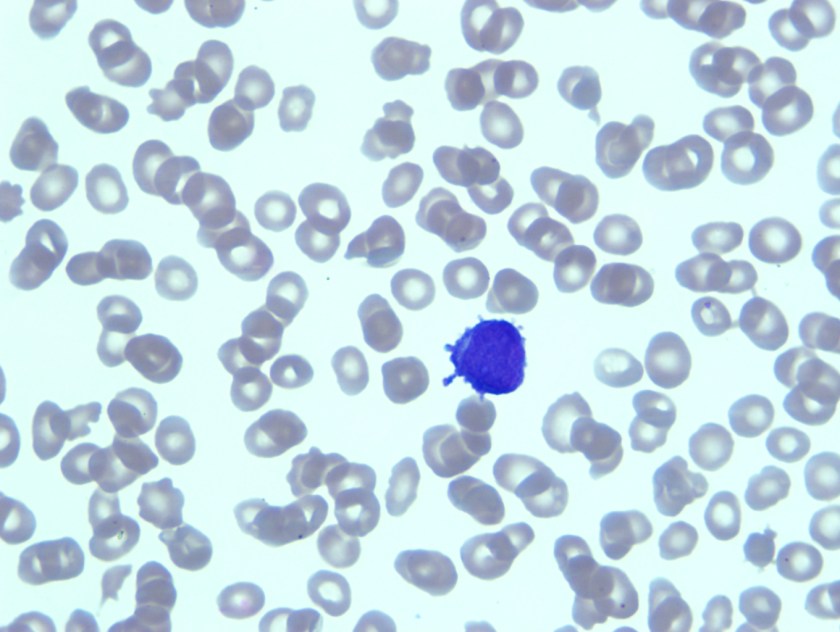
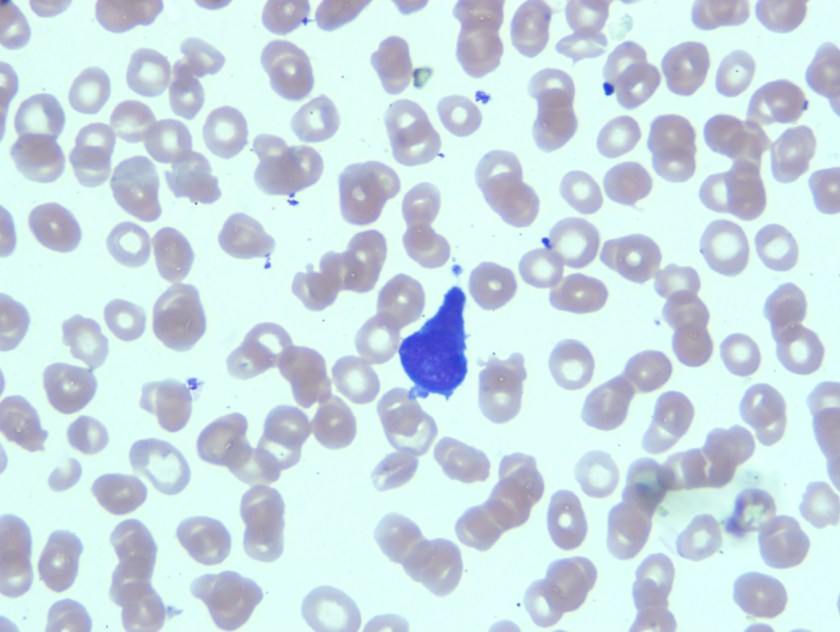
Review of peripheral smear revealed mostly lymphocytes, one blast and a large cell with very granular cytoplasm and large eccentric nucleus.

aml1
Peripheral blood, Wright-Giemsa stain. Blast with increased N/C ratio, enlarged nucleus and scant cytoplasm.
aml2
Peripheral blood, Wright- Giemsa stain. Large cell with eccentric nucleus and hypergranular cytoloplasm, reminiscent of abnormal promyelocyte.

Having reviewed the peripheral smear acute leukemia, likely acute promyelocytic leukemia was considered in the differential diagnosis. As there were no dacrocytes or nucleated red blood cells that were seen on the peripheral smear, it seemed less likely that patient would have metastatic tumor. Bone marrow biopsy was recommended.

aml3
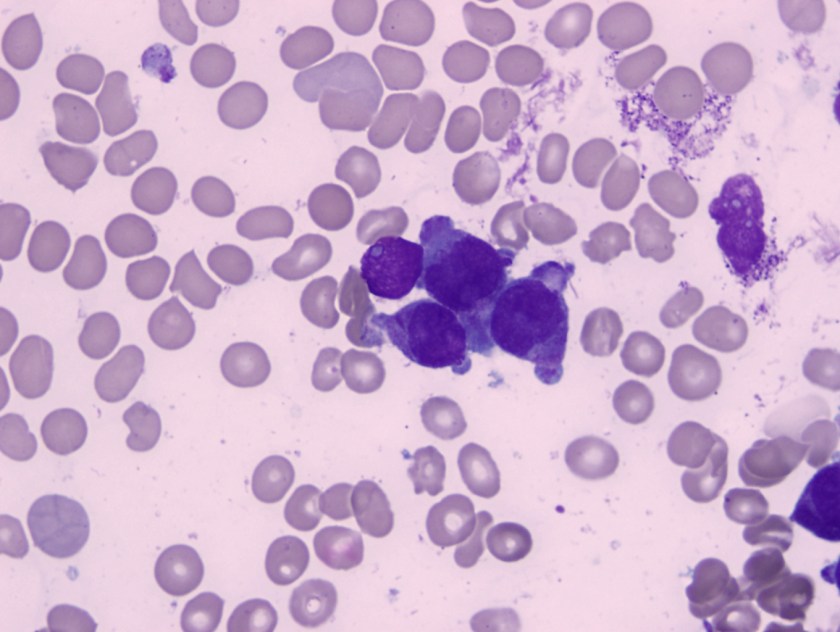
Bone marrow aspirate, Wright Giemsa stain. Abnormal promyelocytes with lobulated nuclei, Auer rods and hypergranularity.
aml4
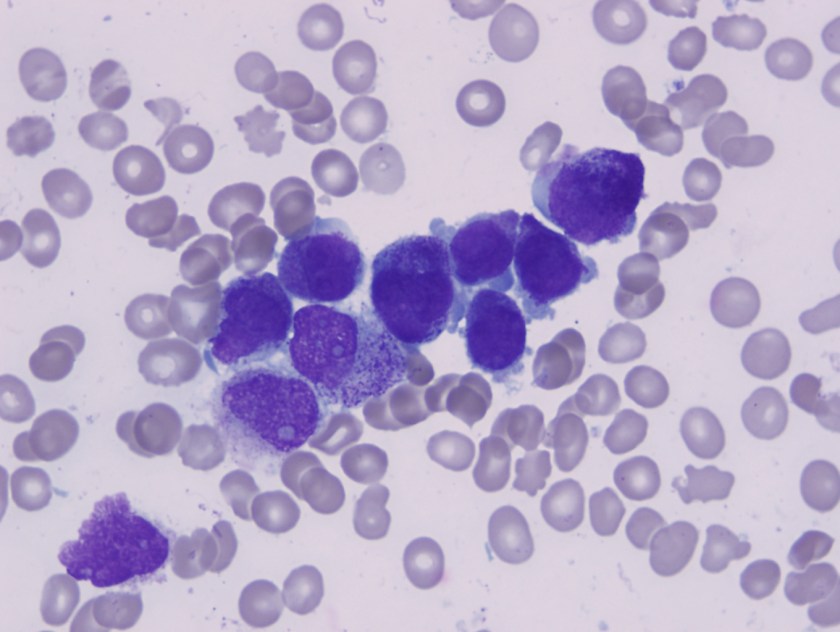
Bone marrow aspirate: Hypergranular promyelocytes with folded nuclei.

Bone marrow apsirate revealed hypercellular particles with numerous abnormal promyelocytes which were lobulated and hypergranular. Both the karytotype and FISH confirmed the presence of t(15;17).

Acute promyelocytic leukemia with t(15;17)(q22;q12);PML-RARA is an AML in which abnormal promyelocytes predominate. Typical forms are hypergranular (like this patient), although hypogranular (microgranular) forms also exist. Morphological review of the smear is the key to ordering the FISH testing for t(15;17). Often patients with APL present are at increased risk of DIC and needed to be treated on a more emergent basis.

Presence of t(15;17) defines the disease and has a significant therapeutic impact. APL has a particular sensitivity to treatment with ATRA , which acts as a differentiating agent. Prognosis of APL treated with ATRA is much more favorable than other acute myeloid leukemias.


Vajpayee,Neerja2014_small

-Neerja Vajpayee, MD, is an Associate Professor of Pathology at the SUNY Upstate Medical University, Syracuse, NY. She enjoys teaching hematology to residents, fellows and laboratory technologists.

Microbiology Case Study: An 84 Year Old Man with Weakness and Back Pain

An 84 year old man with atrial fibrillation, coronary artery disease status post bypass surgery, and type II diabetes with chronic peripheral neuropathy presented to the ED with weakness, multiple falls, back pain, chills, and confusion. He was found to have a fever of 102o F. A workup for sepsis was performed but no source of infection was identified. Blood cultures were drawn and the patient was started on broad spectrum antibiotics. Fevers, chills, and confusion improved but patient continued to have back pain. A CT scan showed a pathologic fracture of L3 vertebrae, presumed to be secondary to infection with adjacent myositis.

Multiple blood culture bottles were positive for the organism with the following Gram smear morphology and colony morphology on blood agar.

yerpse1

yerpse2

Laboratory Identification:

Gram smear showed Gram negative cocobacilli. The colonies were gray-white on blood agar, colorless on MacConkey and oxidase negative. The organism was identified as Yersinia pseudotuberculosis by MALDI-ToF and confirmed by VITEK.

Discussion:

Yersinia pseudotuberculosis is a gram negative bacillus that belongs to the Enterobacteriaceae family and therefore ferments glucose, is oxidase negative, and can reduce nitrates to nitrites. This bacterium is endemic in a wide variety of animals and is presumed to be a possible foodborne pathogen due to similarities to Yersinia enterocolitica. There have been reported cases of outbreaks associated with milk and iceberg lettuce sprayed with untreated water. Growth is optimal at 25-32o C, but can grow at 4o C. Infection is rare but typically causes enterocolitis and ileitis. Children may present with mesenteric lymphadenitis, which may mimic acute appendicitis. Sepsis is rare but is associated with those with underlying disorders such as cirrhosis, hemochromatosis, and diabetes. Reported mortality rates may be as high as 75% despite proper antibiotic treatment.

In this patient, it was determined that the most likely source of infection was consumption of raw milk. Due to presumed vertebral and paravertebral soft tissue involvement, he was treated with six weeks of IV ceftriaxone.


-Joanna Conant, MD is a 4th year anatomic and clinical pathology resident at the University of Vermont Medical Center.

Wojewoda-small

-Christi Wojewoda, MD, is the Director of Clinical Microbiology at the University of Vermont Medical Center and an Assistant Professor at the University of Vermont.