Microbiology Case Study: Bacteremia with Long, Gram Negative Rod in a 34 Year Old Patient

Case History

A 34 year old male presented to the emergency department (ED) with acute onset abdominal pain, nausea, vomiting, persistent fever, and chills. His physical examination at that time was consistent with appendicitis. Patient was treated with Zosyn for broad coverage. Imaging showed a normal appendix. Three days later after blood was drawn, his blood cultures flagged positive for gram negative, elongated, thin rods. Growth was determined to be Fusobacterium mortiferum by MALDI-TOF. Ampicillin/sulbactam was started and patient was given Amoxicillin/clavulanic acid for outpatient treatment. Further follow-up of the patient showed normal white blood count and normal urinalysis. Repeat blood cultures were negative.

Images of Gram stain demonstrating long, slender, gram negative rods (top) and bacterial growth on anaerobic plate (bottom) from positive blood culture bottle.

Discussion

Fusobacteria are anaerobic, gram negative, spindle-shaped rods with pointed ends. They are part of the upper respiratory and gastrointestinal flora in humans but can cause diseases ranging from tonsillitis to septic shock.1 Fusobacterium nucleatum and necrophorum are commonly isolated in human diseases, although other species such as Fusobacterium mortiferum, as described in our case, have occasionally been documented as a secondary cause of septicemia 2 or bacteremia 1 and in rare instances implicated in the development of thyroid abscess.3

F. nucleatum is a member of oropharyngeal flora and unsurprisingly involved in gingival and periodontal diseases.4 It has been also described as the most likely cause of extra-oral infections among oral anaerobes.5 F. nucleatum has been detected in various fetal and placental tissues associated with adverse pregnancy outcomes, such as preeclampsia, chorioamnionitis and preterm rupture of membranes.6 Recent studies have reported this species to be abundant in colon, esophageal carcinoma, pancreatic and breast cancers. It is associated with poor prognosis in colon, rectal, pancreatic and esophageal cancers by promoting pro-tumorigenic immune microenvironment and reduction in the number of tumor-infiltrating lymphocytes.7, 10 One of the proposed theories is the involvement of the Fap2 virulence factor that has been described to inhibit tumor cell clearance in colorectal cancer cells.8 The other commonly isolated species is F. necrophorum, which is associated with oropharyngeal infection followed by septic thrombophlebitis of the internal jugular vein with sepsis and metastatic diseases typically involving the lungs. This syndrome is known as Lemiere’s disease first described in 1936 by Andre Lemierre. F. necrophorum usually causes infection in young, otherwise healthy adults in contrast to F. nucleatum1 which is associated more with the elderly population. According to Afra et al most of the mortality cases were due to F. nucleatum as opposed to F. necrophrum. This could be attributed to co-morbidities in elderly patients with positive F. nucleatum cultures.

Fusobacterium species can be identified using mass spectrometry MALDI-TOF. Typically, Fusobacterium species are resistant to vancomycin, but susceptible to colistin and kanamycin disk identification tests; however, F. nucleatum is susceptible to all three drugs. F. mortiferum and F. varium grow in the presence of bile. F. necrophorum shows positive indole and negative nitrate testing. Sequencing of the 16S RNA gene and 16S-23S rRNA gene spacer region can be used to determine the different species3,9

Fusobacterium species are usually susceptible to penicillin, clindamycin, metronidazole, and chloramphenicol and resistant to macrolides. F. nucleatum and F. necrophorum may produce beta-lactamases.3 In rare cases, surgical intervention is warranted for abscess formation.

References

  1. Afra K, Laupland K, Leal J, Lloyd T, Gregson D. Incidence, risk factors, and outcomes of fusobacterium species bacteremia. BMC Infect Dis. 2013;13(1). doi: 10.1186/1471-2334-13-264.
  2. Prout J, Glymph R. Fusobacterium mortiferum septicemia. Clinical Microbiology Newsletter. 1985;7(4):29. doi: 10.1016/s0196-4399(85)80052-0.
  3. Stavreas NP, Amanatidou CD, Hatzimanolis EG, et al. Thyroid abscess due to a mixed anaerobic infection with fusobacterium mortiferum. J Clin Microbiol. 2005;43(12):6202. doi: 10.1128/jcm.43.12.6202-6204.2005.
  4. Moore WE, Moore LV. The bacteria of periodontal diseases. Periodontol 2000. 1994 Jun;5:66-77. doi: 10.1111/j.1600-0757.1994.tb00019.x. PMID: 9673163.
  5. Bolstad AI, Jensen HB, Bakken V. Taxonomy, biology, and periodontal aspects of Fusobacterium nucleatum. Clin Microbiol Rev. 1996 Jan;9(1):55-71. doi: 10.1128/CMR.9.1.55. PMID: 8665477; PMCID: PMC172882.
  6. Han YW. Fusobacterium nucleatum: A commensal-turned pathogen. Current Opinion in Microbiology. 2015;23:141. doi: 10.1016/j.mib.2014.11.013.
  7. Alon‐maimon T, Mandelboim OO, Bachrach G. Fusobacterium nucleatum and cancer. Periodontology 2000. 2000;89(1):166. doi: 10.1111/prd.12426.
  8. Umaña A, Sanders BE, Yoo CC, Casasanta MA, Udayasuryan B, Verbridge SS, Slade DJ. Utilizing Whole Fusobacterium Genomes To Identify, Correct, and Characterize Potential Virulence Protein Families. J Bacteriol. 2019 Nov 5;201(23):e00273-19. doi: 10.1128/JB.00273-19. PMID: 31501282; PMCID: PMC6832068.
  9. Garcia-Carretero R, Lopez-Lomba M, Carrasco-Fernandez B, Duran-Valle MT. Clinical features and outcomes of fusobacterium species infections in a ten-year follow-up. The Journal of Critical Care Medicine. 2017;3(4):141. doi: 10.1515/jccm-2017-0029.
  10. Brennan CA, Garrett WS. Fusobacterium nucleatum — symbiont, opportunist and oncobacterium. Nat Rev Microbiol. 2018;17(3):156. doi: 10.1038/s41579-018-0129-6.

-Dr. Hayk Simonyan was born and raised in Yerevan, Armenia. He attended Yerevan State Medical University after Mkhitar Heratsi where he received his doctorate degree. He did his research at The George Washington University. His studies were focused on transcription factor activation in the SFO-PVN axis that leads to cardio-metabolic changes mediated by obesity, oxidative stress, and angiotensin-II. One of his other projects included collaboration with the National Cancer Institute, working on alternative treatment for glioblastoma multiforme. His academic interests include surgical pathology and molecular. In his spare time, Hayk enjoys spending time with family, playing soccer, tennis, and skiing. Hayk is pursuing AP/CP training. 

-Rebecca Yee, PhD, D(ABMM), M(ASCP)CM is the Chief of Microbiology, Director of Clinical Microbiology and Molecular Microbiology Laboratory at the George Washington University Hospital. Her interests include bacteriology, antimicrobial resistance, and development of infectious disease diagnostics.
Histio Makes History

An 81 year old female presented to the head and neck clinic after being diagnosed with cutaneous T cell lymphoma of the posterior mid-parietal scalp at an outside institution. She was initially treated with Brentuximab every three weeks but developed significant toxicities. The patient’s previous “T cell lymphoma” material was reviewed at our institution and the immunophenotypic report described the neoplastic cells as being positive for CD45, CD2, CD4, BCL6+, CD3 (subset), and CD123 (scattered), while negative for CD7, CD8, CD20, CD30, CD56, EBER ISH, PAX5, and lysozyme. Immunohistochemical slides were not provided for review. Flow cytometric analysis determined that there was no immunophenotypic evidence of a clonal T cell population in the patient’s peripheral blood.

A second scalp biopsy was performed at another outside institution, and the findings were similar to the parietal scalp; however, there were atypical pleomorphic cells which displayed irregular contours, hyperchromasia, and multiple nucleoli. The atypical cells were predominantly positive for CD4 and diffuse positivity for CD1a. These same pleomorphic cells were negative for CD3, CD8, CD20, CD30, ALK1, BCL6, CD56, EBER, AE1/AE3, SOX10, Desmin, PAX5, MUM1, CD5, and Cam 5.2.

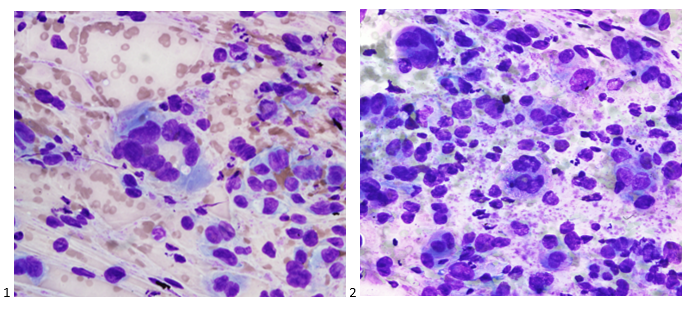
The smears contained large, highly pleomorphic cells with irregular, elongated, and multilobated nuclei, frequent nuclear grooves and folds, fine chromatin, prominent nucleoli, and variable amounts of pale, eosinophilic cytoplasm, alt.

The outside tissue block on the original scalp biopsy was requested, and our pathology department performed additional immunostains. The neoplastic cells of interest were positive for CD1a, S100, CD68 (a small subset), and negative for lysozyme, CD21, CD30, and CD3. Ki67 proliferation index was interpreted at approximately 60%. An unstained FFPE tissue section was sent to a reference laboratory, and the neoplastic cells were strongly positive for Langerin.

While the Brentuximab treatment initially appeared to have a positive impact on the overall disease burden, the PET CT following 3 cycles showed a mixed response, including resolution of cervical lymphadenopathy and identification of multiple new lung nodules and bulky mediastinal lymphadenopathy. Between that and numerous reported toxicities, the treatment protocol was discontinued. The patient was then referred to radiology for a CT-scan guided right lower lobe lung biopsy measuring 2.2 x 1.3 centimeters with an SUV or 29.6.

In the CT Scan suite, we received multiple FNA passes from the interventional radiologist and made air-dried and alcohol-fixed smears, rinsing the residual needle material into a tube of balanced salt solution for a cell block preparation. We determined our specimen was adequate for scant tumor cells, as depicted on the Diff-Quik smears below.

Images 1-2. Lung, right lower lob, CT-guided FNA. Diff-Quik stained smears.

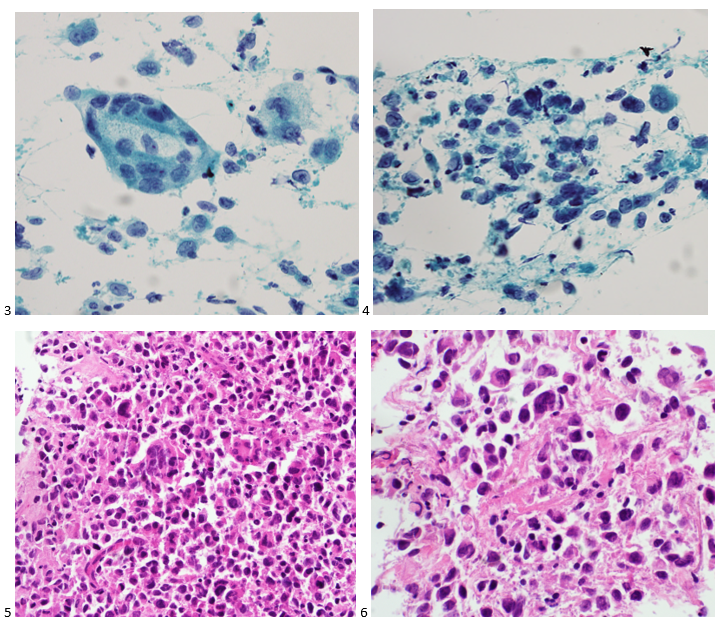
In comparison to the material from the second scalp biopsy, the cells from the lung biopsy appeared identical. Our Pap-stained smears and H&E cell block sections also demonstrated the highly pleomorphic cells described above.

Images 3-6. Lung, Right Lower Lobe, CT-guided FNA. 3-4: Pap-stained smears, 5-6: H&E sections (5: 100x, 6: 400x).

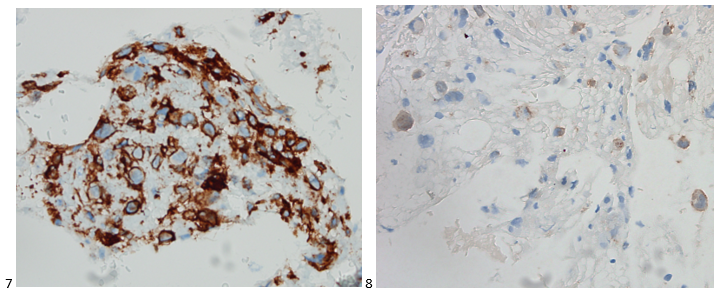
Immunostains performed on the cell block slides with adequate controls show that the tumor cells are positive for CD1a, CD4, partially positive for CD45 and S100, negative for AE1/3, TTF-1, and p40.

Images 7-8. Lung, Right Lower Lobe, CT-guided FNA. Cell block section immunohistochemistry. 7: CD1a-positive; 8: partially S-100-positive.

Our pathologists felt the cells from the second scalp biopsy and the lung biopsy were representative of a Langerhans cell sarcoma, a form of malignant histiocytosis, rather than a T-cell lymphoma. It is possible that the first scalp biopsy’s diagnosis of T-cell lymphoma was due to sampling error and the pleomorphic cells of interest were missed. The Ki-67 proliferative index of 60% helped to distinguish between Langerhans cell histiocytosis and Langerhans cell sarcoma.

Molecular testing performed on the core biopsy was negative for a BRAF mutation and positive for an NF1 inactivating mutation. The tumor may then be sensitive to mTOR inhibitors and MAPK pathway inhibitors, such as MEK inhibitors. Appeals for a MEK inhibitor were denied by insurance, but fortunately, the tumor also demonstrated high PD-L1 expression at 90%, making this specific patient a candidate for pembrolizumab, which was fully covered by insurance.

____________________________________________________________________________________________

I can’t help but think about the disparities associated with cancer and the inaccessibility of potentially lifesaving or life-prolonging treatments. Sure, there may be viable alternatives, such as this case, but what if we had equal access to cutting edge, personalized therapies? What if the only therapy available was too costly to bear? Just because a cancer might be rare, such as Langerhans cell sarcoma, it doesn’t mean access to a proven effective therapy should also be rare. Even with drug assistance programs, so many patients face the harsh reality of tapping into their life savings to just to save their own life. When we became medical laboratory professionals, we promised to provide timely and accurate for all of our patients. Now, it’s time that pharmaceutical companies and our healthcare system as a whole work together to provide high quality, low-cost, readily accessible and personalized treatment options to every patient. They deserve that chance to overcome or at least manage their cancer.

-Taryn Waraksa-Deutsch, MS, SCT(ASCP)CM, CT(IAC), has worked as a cytotechnologist at Fox Chase Cancer Center, in Philadelphia, Pennsylvania, since earning her master’s degree from Thomas Jefferson University in 2014. She is an ASCP board-certified Specialist in Cytotechnology with an additional certification by the International Academy of Cytology (IAC). She is also a 2020 ASCP 40 Under Forty Honoree.

Microbiology Case Study: A 70 Year Old with Fevers, Rigors, and Dizziness

Case Description

A 70 year old female arrived in the hospital with chief complaints of 6 days of fever, rigors, weakness, headache, and dizziness; she has a history of asthma, type 2 diabetes, supraventricular tachycardia and exercise-induced ventricular tachycardia. The patient was also seen 5 days before the current visit for abdominal pain, nausea, and fever. The abdominal pain has gone, but she has had a loss of appetite. She admitted that she sleeps with her dog in bed during that visit. No scleral icterus, rash, cough, urinary tract burning, or neck stiffness was reported on any visits.

CT scan, CBC with differential, BMP, liver function panel, Coag, blood culture, and blood parasite tests were ordered. On the CBC, the cells below were flagged for review (Figure 1).

Figure 1. A Cellavision capture of morulae inside a neutrophil.

Discussion

The round light purple dots pointed by the arrow in Figure 1 are morula indicative of Anaplasma phagocytophilum, formally named “human granulocytic anaplasmosis (HGA)”. Historically, Ehrlichia phagocytophila and Ehrlichia equi were recognized separately (Sexton & McClain, 2022). HGA is a tick-borne illness more commonly found in the northeast U.S., and the case number has continuously increased in recent years (Centers of, 2022). The tick bite is not painful, and the first symptom usually shows after about a week from the bite. Early diagnosis can be hard at the initial stage since laboratory serology tests often give negative results for the antibodies. It is essential to carefully review the clinical signs and symptoms, travel history, outdoor activity, and animal contacts (Centers of, 2022). PCR is the most sensitive and specific method of diagnosis. Blood smears can be made to confirm the parasite morphology, although patients can have leukopenia leading to decreased sensitivity.

Lab results showed critical hyponatremia (121 mmol/L) and thrombocytopenia (33 K/uL) in this case. The patient was admitted to the floor and prescribed 10 days of doxycycline.

Extreme hyponatremia related to anaplasmosis is not common, and the causing mechanism is unclear; however, all the reported cases fit the description of SIADH – syndrome of inappropriate secretion of antidiuretic hormone (Ladzinski et al., 2021).

References

  1. Centers for Disease Control and Prevention. (2022, August 15). Epidemiology and statistics. Centers for Disease Control and Prevention. Retrieved 2022, from https://www.cdc.gov/anaplasmosis/stats/index.html
  2. Ladzinski, A. T., Baker, M., Dunning, K., & Patel, P. P. (2021). Human granulocytic anaplasmosis presenting as subacute abdominal pain and hyponatremia. IDCases, 25. https://doi.org/10.1016/j.idcr.2021.e01183
  3. Sexton, D. J., & McClain, M. T. (2022, March 21). Human ehrlichiosis and anaplasmosis. UpToDate. Retrieved 2022, from https://www.uptodate.com/contents/human-ehrlichiosis-and-anaplasmosis

-Sherry Xu is a Masters Student in the Department of Pathology and Laboratory Medicine at the University of Vermont Larner College of Medicine.

-Christi Wojewoda, MD, is the Director of Clinical Microbiology at the University of Vermont Medical Center and an Associate Professor at the University of Vermont.

Microbiology Case Study: An Elderly Adult Presenting with Foodborne Illness Related to Shellfish Consumption

Case History

An adult consumed shellfish at a restaurant. Approximately 12 hours after this dinner, the patient experienced the first signs of loose stools, fever, and abdominal cramping. The patient had watery diarrhea for the next three days with 8 bouts a day. The patient did not have a fever after the first day. The patient denied blood in stool or nausea or vomiting. The patient did not have a recent travel history and denied recent antibiotic use. On the 4th day of symptoms, the patient was seen by their primary care provider. The physical exam was unremarkable except for dehydration. A stool and blood sample were obtained and aggressive hydration was recommended. Blood smear, complete blood panel, and basic metabolic panel resulted in normal. Shigella, Salmonella, Campylobacter, and Shiga-toxin-producing gene were not detected by PCR. The stool sample was set up for culture. Mucoid colonies were noticed after 12 hours on the blood agar plate. MALDI revealed Grimontia hollisae.

Discussion

The genera of Grimontia is one of the new members of the Vibrionaceae family. Grimontia hollisae, previously known as Vibrio hollisae, is currently the only known pathogenic species in the Grimontia genera. Vibrio hollisae was first described and named by Hickman et al. in 1982.1 However, based on phylogenetic and phenotypical differences V. hollisae was placed into a novel genus, named Grimontia.2 It is named after French microbiologist Patrick P. A. Grimont.

G. hollisae are halophilic, gram negative, oxidase-positive, indole-positive, ornithine-negative, and motile by a single polar flagellum.2 One of the most important features of G. hollisae is its failure to grow on thiosulfate-citrate-bile salts-sucrose (TCBS) agar, the main phenotypical difference from vibrios.2 However, it does grow well on sheep blood agar and marine agar.3 G. hollisae is generally transmitted via shellfish (mostly oysters, mussels, and prawns etc.).2 However, it can also be transmitted through infected ocean water, and other foods that are cross-contaminated with the organism.4 To date, the person-to-person spread has not been documented.4

Diagnosis of G. hollisae can be challenging since it does not grow on Vibrio-selective media (TCBS agar) or on MacConkey.5 However, the organism grows well on blood agar plate. Spot oxidase and indole tests may be helpful to rule-in a possible Vibrio or Grimontia species in suspicious cases.5 It is important that the stool sample should be collected as soon as possible in patients suspicious for vibrio gastroenteritis.5 Cary-Blair medium should be used as transport medium.5

The incubation period of G. hollisae is usually 12-24 hours (ranging between 4-96 hours).4 It primarily causes moderate to severe gastroenteritis.3 Signs and symptoms of G. hollisae gastroenteritis include fever, abdominal cramping, watery diarrhea, nausea, and vomiting. Although it is mostly self-limited, it may also cause serious conditions such as hypovolemic shock, sepsis, hepatitis, and ileus.3, 6-8 Rarely, grossly bloody stool can be seen in severe cases.9 Treatment is mostly supportive, oral hydration is preferred over intravenous in tolerating patients.

G. hollisae disease, clinically, is still considered Vibriosis.4 Janda et al. showed that among the all other causes of Vibriosis, G. hollisae comprises only 1.2% of the cases.5 In 83% of these cases, the organism was isolated from the gastrointestinal system.5 Skin and soft tissue specimens were other resources where G. hollisae was isolated.5 In the same study, it has been shown that unlike V. cholerea, V. mimicus, and V parahaemolyticus, G. hollisae has never caused an epidemic, a pandemic, or an outbreak.5 However, unfortunately, the numbers of vibriosis are in increasing trend due to rising sea surface temperature.10 Considering the record high temperatures and heat waves in recent years, it is more than a lucky guess that we may see more and more Vibriosis cases in the next years, especially in the summer seasons. As microbiologists and healthcare workers we should be aware of these organisms, their capabilities, their limits, and how to prevent the spread of them.

References

  1. Hickman FW, Farmer JJ 3rd, Hollis DG, Fanning GR, Steigerwalt AG, Weaver RE, Brenner DJ. Identification of Vibrio hollisae sp. nov. from patients with diarrhea. J Clin Microbiol. 1982 Mar;15(3):395-401. doi: 10.1128/jcm.15.3.395-401.1982. PMID: 7076812; PMCID: PMC272106.
  2. Thompson FL, Hoste B, Vandemeulebroecke K, Swings J. Reclassification of Vibrio hollisae as Grimontia hollisae gen. nov., comb. nov. Int J Syst Evol Microbiol. 2003 Sep;53(Pt 5):1615-1617. doi: 10.1099/ijs.0.02660-0. PMID: 13130058.
  3. Hinestrosa F, Madeira RG, Bourbeau PP. Severe gastroenteritis and hypovolemic shock caused by Grimontia (Vibrio) hollisae infection. J Clin Microbiol. 2007 Oct;45(10):3462-3. doi: 10.1128/JCM.01205-07. Epub 2007 Aug 17. PMID: 17704283; PMCID: PMC2045321.
  4. https://www.oregon.gov/oha/PH/DiseasesConditions/CommunicableDisease/ReportingCommunicableDisease/ReportingGuidelines/Documents/vibrio.pdf
  5. Janda JM, Newton AE, Bopp CA. Vibriosis. Clin Lab Med. 2015 Jun;35(2):273-88. doi: 10.1016/j.cll.2015.02.007. Epub 2015 Apr 9. PMID: 26004642.
  6. Edouard S, Daumas A, Branger S, Durand JM, Raoult D, Fournier PE. Grimontia hollisae, a potential agent of gastroenteritis and bacteraemia in the Mediterranean area. Eur J Clin Microbiol Infect Dis. 2009 Jun;28(6):705-7. doi: 10.1007/s10096-008-0678-0. Epub 2008 Dec 17. PMID: 19089475.
  7. Gromski MA, Relich RF, Siwiec RM. Grimontia hollisae: A Cause of Severe Ileus in a Seafood-Loving Traveler: 968. American Journal of Gastroenterology: October 2015 – Volume 110 – Issue – p S415-S416
  8. Edouard S, Daumas A, Branger S, Durand JM, Raoult D, Fournier PE. Grimontia hollisae, a potential agent of gastroenteritis and bacteraemia in the Mediterranean area. Eur J Clin Microbiol Infect Dis. 2009 Jun;28(6):705-7. doi: 10.1007/s10096-008-0678-0. Epub 2008 Dec 17. PMID: 19089475.
  9. Abbott SL, Janda JM. Severe gastroenteritis associated with Vibrio hollisae infection: report of two cases and review. Clin Infect Dis. 1994 Mar;18(3):310-2. doi: 10.1093/clinids/18.3.310. PMID: 8011809.
  10. Baker-Austin C, Trinanes J, Gonzalez-Escalona N, Martinez-Urtaza J. Non-Cholera Vibrios: The Microbial Barometer of Climate Change. Trends Microbiol. 2017 Jan;25(1):76-84. doi: 10.1016/j.tim.2016.09.008. Epub 2016 Nov 12. PMID: 27843109.

-Kadir Isidan, MS, MD is a pathology resident at University of Chicago (NorthShore). His academic interests include gastrointestinal pathology and cytopathology.

-Paige M.K. Larkin, PhD, D(ABMM), M(ASCP)CM is the Director of Molecular Microbiology and Associate Director of Clinical Microbiology at NorthShore University HealthSystem in Evanston, IL. Her interests include mycology, mycobacteriology, point-of-care testing, and molecular diagnostics, especially next generation sequencing.

Feed the Safety Need

Ben was excited to bring the new analyzer into the laboratory until he discovered the manufacturer’s newest security feature. Anytime a user was to log into the analyzer’s computer to diagnose issues or to perform maintenance, a unique numeric passcode would have to be entered, and that code would be sent via text to the app that staff could download on their cellphones. John knew that the use of cell phones in the lab violated the personal electronic device policy.

Emily was proud of the work she had done to design the new outpatient collection draw area. It included a row of collection rooms each with their own computer for order entry. The central area outside the rooms had a phone and printer set up for an efficient workflow. However, every time she performed a site visit she noticed her staff were using cell phones in the patient collection rooms. When she asked why, they told her they often had to make calls to clarify orders, and that talking on the central phone meant discussing patient information in front of people seated in the waiting area.

When a basic need of a human being is not met, conflict is automatically set up in the mind, and humans will deal with that conflict with a workaround or possibly with aggression. Often laboratories and their procedures are designed without considering all of the potential needs of the staff who will work there. Conflict will arise, and policies will not be followed, and you may also wind up with unhappy employees.

When it comes to safety policies and procedures, it is important to educate why they must be followed. It is vital to discuss the possible outcomes of not using safe practices. That may mean exposures to chemicals and biohazards, and it may also mean injuries. It can take time to explain that the use of a smart watch with contaminated gloves can lead to infection and potentially severe illness at work and in the home.

While this understanding is important, it must be coupled with a system of practices that allows staff to easily follow the prescribed safe practices. It must be easy for staff to perform safe acts, there should be no hindrances in their way for that to happen. Otherwise, conflict will occur, and the set policies will not be followed. Staff may know the regulations, they may even understand the potential consequences of not following them, but they will not conform to the policies because of some software glitch or because some vital tool is missing in their environment.

When you notice a lab safety violation, or if a safety incident has occurred, the first thing to look for in the investigation is something in the system that may have caused it. Unless the incident occurred because of a blatant act by the employee, blame should never first be focused on the person. What departmental design flaw exists? What engineering control could have been in place? What PPE should have been readily available? What was the temperature and humidity in the department, etc.?

Upon further discussion with the vender, Ben learned that the manufacturer’s security code system could not be bypassed, but that the app could be downloaded onto an electronic tablet rather than a cell phone. Ben purchased a tablet that could be used in the lab and remain there so as not to create any infection control issues. The tablet was also used for lab safety and quality audits so that pictures of issues could be taken and that results of audits could be entered directly. It became a real time saver, and no cell phones were needed in the laboratory.

Upon review, Emily realized that access to phones in the new outpatient collection area needed to be better. There was no way to even call or help from a collection room should there be an adverse reaction to phlebotomy. Emily was able to acquire portable phones in the short term until she could get permanently-mounted telephones into each of the three blood collection rooms. Staff no longer needed to use cell phones in the biohazardous areas.

Humans have basic needs like food, shelter, and clothing. When those needs are not met, some may act in surprising ways to obtain them. The same holds true in the laboratory. There is a need to be safe, there is a need to follow safety regulations and policies, and unsafe behaviors will arise if it cannot be achieved. Feed the safety needs of your employees. Provide a safe working environment with good engineering controls, PPE, and polices that allow for workdays that have no safety conflict.

Dan Scungio, MT(ASCP), SLS, CQA (ASQ) has over 25 years experience as a certified medical technologist. Today he is the Laboratory Safety Officer for Sentara Healthcare, a system of seven hospitals and over 20 laboratories and draw sites in the Tidewater area of Virginia. He is also known as Dan the Lab Safety Man, a lab safety consultant, educator, and trainer.

Please Don’t Tell Me I Died of Cardiac Arrest

Ask any forensic pathologist what their professional pet peeve is and many of them will likely say “bad death certificates” (right after needing to scratch one’s nose in the middle of an autopsy). Despite the importance of death certificates to public health statistics, studies repeatedly demonstrate an unacceptably high error rate. Death certification isn’t taught in medical schools, and physicians usually learn on the fly. The media often perpetuates these errors, which is why you’ll see news headlines declaring a celebrity died of “cardiac arrest.” However, death certification is a relatively simple concept which can be easily grasped with a little instruction.

Cause of death is “that which in a continuous sequence, unbroken by an efficient intervening cause, results in death and without which death would not have occurred”. Put more simply, it is the etiologically specific disease or injury which triggers the chain of events leading to death. There’s no time limit; a cause can take years (as in breast cancer) or seconds (as in a gunshot wound). Conversely, mechanism of death describes the biochemical and biophysical processes by which the cause exerts its lethal effects. Mechanisms are non-specific and often happen in everyone who is dying (for example, hypoxia, metabolic acidosis, kidney failure). It’s easy to see why doctors list mechanisms on the death certificate—usually in a critically ill patient we’re focused on treating these mechanisms, by providing oxygen, replenishing electrolytes, and performing dialysis until kidney function has returned.

The most common example of this is “cardiac arrest.” Everyone who is dead is in cardiac arrest, by definition—what caused the cardiac arrest is what we really need to know. Putting only a mechanism on a death certificate doesn’t help families understand why their loved one died or inform them of their own potential medical risks, and it provides no useful information to public health prevention efforts.

Finally, manner of death describes the circumstances surrounding death. There are typically five options – natural, accidental, suicidal, homicidal, or undetermined. The most common manner of death error is ignoring fall-related injuries in the elderly or debilitated. A ground-level fall with femoral neck fracture can lead to death in a susceptible individual by blood loss, deconditioning, pneumonia, decubitus ulcers, or thromboembolism. Falls are not a “natural” event – they are potentially preventable, and especially in a vulnerable population may be a warning sign for neglect or abuse. For this reason, we categorize these deaths as accidental.

The nuances around death certification demonstrate one of my favorite roles as a forensic pathologist—public health informaticist. Accurate categorization of deaths allows us to track mortality data and intervene (for example, by notifying communities of a new potent fentanyl analog, or identifying trends in suicide). A death certificate of “cardiac arrest” is therefore frustratingly vague, and our patients and their families deserve a better answer. An academic autopsy program may find it worthwhile to do a quality assurance review of hospital death certificates to identify systemic errors or deficiencies. The CDC offers a free online tutorial (at https://www.cdc.gov/nchs/nvss/training.htm), which is an excellent resource for physicians or family members who want to learn more about this process.

Causes of DeathMechanisms of Death
Atherosclerotic cardiovascular diseaseCardiac ischemia
Type II Diabetes MellitusAcute renal failure
Blunt force injuriesExsanguination
Aspiration pneumonia due to cerebral infarctSepsis

Causes vs Mechanisms of Death: Notice that the causes are all etiologically specific diseases or injuries. The mechanisms are non-specific and lead the reader to ask “…due to what?”. For example, cardiac ischemia can be due to atherosclerosis, vasospasm, or blood loss from trauma.

-Alison Krywanczyk, MD, FASCP, is currently a Deputy Medical Examiner at the Cuyahoga County Medical Examiner’s Office.

Microbiology Case Report: Left Upper Quadrant Abdominal Pain in a 39 Year Old Male

A 39 year old male presented to a hospital in Dallas, TX with left upper quadrant abdominal pain, nausea, decreased appetite, and a feeling of bloating. The abdominal pain was described as a gradual onset of pain over the course of 2 to 3 weeks. He had no known weight loss, night sweats, chills, diarrhea, or recent trauma. The patient was afebrile on exam with unremarkable vital signs and reported tenderness in the left upper quadrant on palpation of the abdomen. Of note, he was admitted to the hospital 6 weeks prior with abdominal discomfort and was found to have a splenic abscess on computed tomography (CT) scan of the abdomen. There was no surgical drainage of the abscess at that time, and he was treated with two weeks of antibiotics with initial improvement in symptoms. The patient had a past medical history of 3 previous episodes of acute sigmoid diverticulitis that were each treated with bowel rest and 14 days of empiric antibiotics. After the second episode of diverticulitis, the patient had a colonoscopy with findings of colitis and 2 polyps were removed that were negative for malignancy. Following the third episode of diverticulitis, the patient had a sigmoid and partial descending colectomy about 2 years prior to the current presentation.

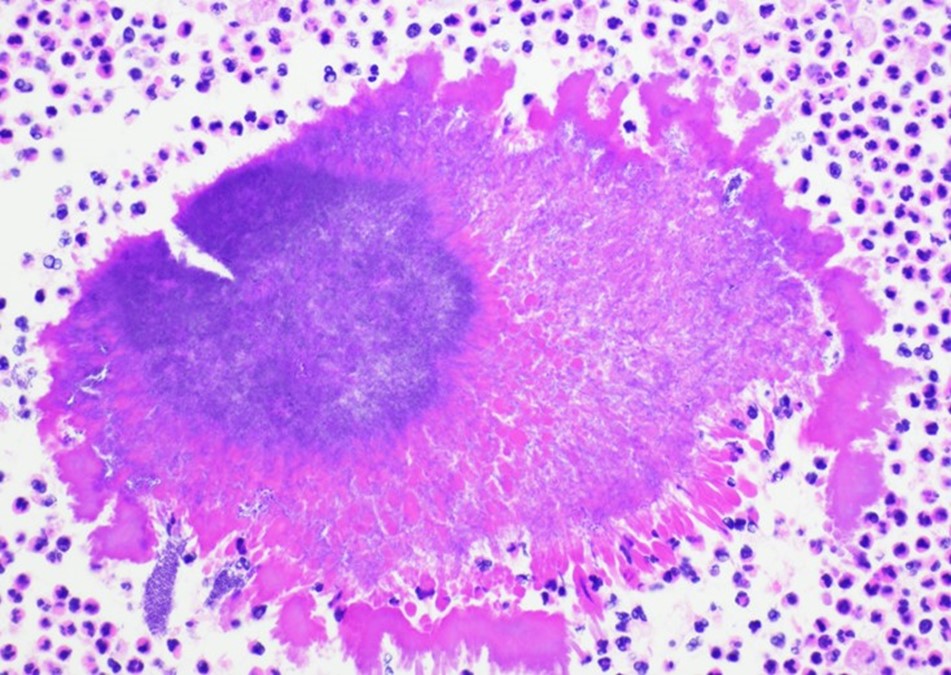
On admission, a CT scan of the abdomen and pelvis revealed a 3.5 x 1.9 cm air and fluid collection of the inferior border of the spleen and 5.2 x 1.6 cm fluid collection of lateral spleen. The collections were noted to be increased compared to the prior imaging 6 weeks before. Blood cultures were without growth at 5 days. A transthoracic echocardiogram showed no significant valvular abnormalities or vegetations. On hospital day 5, the patient was taken to the operating room for a laparoscopic splenectomy and left diaphragm repair. Surgical findings included a large spleen with omental adhesions and a thick rind along the spleen, which was closely adherent to the diaphragm. A portion of the colon closely adherent to the spleen was also noted. Histopathologic examination showed multifocal splenic abscesses with surrounding fibrosis on hematoxylin and eosin (H&E) stain and granules with surrounding Splendore-Hoeppli material on higher magnification (Figure 1). On Grocott-Gomori methenamine silver (GMS) stain, the granule was seen to be composed of mixed bacterial morphologies with a predominance of filamentous rods typical of Actinomyces (Figure 2). Based on histopathological examination, a diagnosis of splenic actinomycosis was rendered.

Figure 1. Granule with surrounding Splendore-Hoeppli material (H&E 400x magnification).
Figure 2. Granule with mixed bacterial morphologies (GMS 100x magnification).

Discussion

Actinomycosis is a slowly progressive infection characterized by fibrotic mass-like lesions, abscesses, granules, progression across tissue planes, and the development of sinus tracts. The incidence of actinomycosis has declined in the U.S., which is thought to be due to better oral hygiene and the organism’s susceptibility to a wide range of antibiotics.4 The clinical manifestation of actinomycosis is classified by the anatomical site of infection. This includes oral-cervicofacial, thoracic, abdominopelvic, central nervous system, musculoskeletal, and disseminated forms of disease. Oral-cervicofacial disease is the most common form and classically develops with fevers and perimandibular soft tissue swelling that may have a firm or “woody” consistency on palpation.4 Abdominopelvic disease occurs in about 20% of cases with intra-abdominal manifestations usually due to appendicitis, inciting trauma, or previous surgical procedure and pelvic disease most often due to intra-uterine contraceptive devices.1 The clinical manifestations of actinomycosis are often difficult to correctly diagnose, and the presentation and imaging findings often mimic malignancy further complicating the assessment. Diagnosis relies on consideration of the disease process and diagnostic sampling for histopathology and microbiologic studies.

Although most actinomycotic lesions are polymicrobial, species of the genus Actinomyces are the predominant etiologic agents.2 Actinomyces are a group of gram positive filamentous facultatively anaerobic or microaerophilic bacteria that are normal flora of the gastrointestinal and genitourinary tracts. The organisms typically have true branching and may appear beaded due to irregular Gram staining. Importantly, Actinomyces spp. will be negative with modified acid-fast staining, which can be used to differentiate it from Nocardia spp. The bacteria are relatively slow growing on primary culture and mature colonies may have a variety of morphologies. The classic “molar tooth” appearance is characteristic of A. israelii.3 On histopathology, actinomycotic lesions have a surrounding area of fibrosis and central suppurative inflammation with granules. The granules consist of accumulations of organisms with club-shaped ends and filamentous rods seen on special staining.4 Optimal diagnosis would consist of visualization of these features on histopathology or other direct method. Isolation of the organism can be useful but should be taken in the context of the clinical picture as the mere isolation of Actinomyces in culture does not always imply actinomycosis.

Splenic involvement of actinomycosis is an uncommon cause of the intra-abdominal disease process. In our case, the most likely etiology for splenic actinomycosis was due to the recurrent episodes of acute sigmoid diverticulitis with breaches in the mucosal barrier and direct invasion into the spleen. The surgical management in this case was splenectomy to avoid splenic rupture. Medical management involves antibiotic therapy with high-dose penicillin as first-line therapy. The treatment duration has historically been to treat with parenteral penicillin for 2 to 6 weeks and then transition to oral penicillin or amoxicillin up to a year based on clinical response.

References

  1. Bennhoff D: Actinomycosis: diagnostic and therapeutic considerations and a review of 32 cases. Laryngoscope 1984; 94: pp. 1198-1217.
  2. Blaser MJ, Dolin R, Bennett JE. Mandell, Douglas, and Bennett’s Principles and Practice of Infectious Diseases. Ninth edition. Elsevier; 2020.
  3. Pfaller, M. A., Carroll, K. C., & Jorgensen, J. H. (2015). Manual of clinical microbiology (11th edition.). ASM Press.

-Zane Conrad, MD is a medical microbiology fellow at UT Southwestern Medical Center.

-Dominick Cavuoti, DO is a professor at UT Southwestern and practices Infectious disease pathology, medical microbiology and cytology.

-Andrew Clark, PhD, D(ABMM) is an Assistant Professor at UT Southwestern Medical Center in the Department of Pathology, and Associate Director of the Clements University Hospital microbiology laboratory. He completed a CPEP-accredited postdoctoral fellowship in Medical and Public Health Microbiology at National Institutes of Health, and is interested in antimicrobial susceptibility and anaerobe pathophysiology.

-Clare McCormick-Baw, MD, PhD is an Assistant Professor of Clinical Microbiology at UT Southwestern in Dallas, Texas. She has a passion for teaching about laboratory medicine in general and the best uses of the microbiology lab in particular.

Microbiology Case Study: A 28 Year Old with Unilateral Groin Pain

Case History

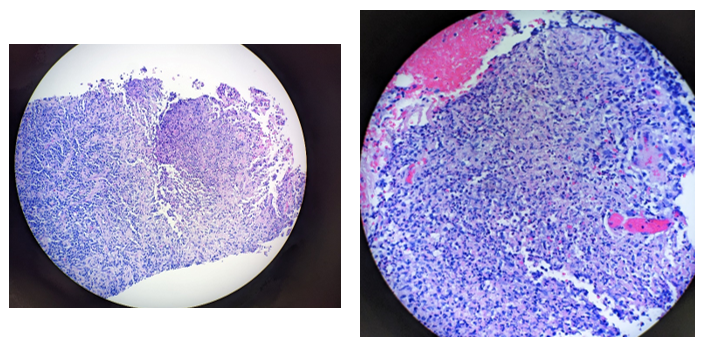
A 28 year old male reported to the ED with complaints of right groin pain, nausea, and vomiting for the past five days. The patient was not taking any active home medications and reported no chronic medical conditions at the time of presentation. He reported that he and his fiancée have a 5 month old kitten but denied any scratches or bites. Physical exam showed a tender right inguinal region covering a hard, non-reducible mass with no overlying erythema or fluctuance. Due to fever and tachycardia (temperature: 38.3 ˚C/ pulse: 136 beats/min), patient met criteria for sepsis without shock. CT of the abdominal pelvis showed enlarged right inguinal lymph nodes with suspected lymphadenitis and no inguinal hernia. Patient was started on ampicillin/sulbactam, ceftriaxone to cover possible STD, and azithromycin to cover possible cat-scratch disease. STI testing was negative for trichomonas, syphilis, chlamydia, and gonorrhea. Due to suspected azithromycin allergy, doxycycline was administered instead for empiric cat scratch disease treatment. Serology studies for Bartonella henselae in addition to right inguinal lymph node biopsy (Images 1 and 2). Lymph node biopsy revealed multiple cores displaying reactive lymphoid tissue with microabscesses surrounded by palisading histiocytes concerning for cat scratch disease lymphadenitis. Serology results showed elevated IgG and IgM titers for Bartonella henselae and PCR testing for Bartonella henselae performed on the lymphoid tissue confirmed the diagnosis. Patient was discharged on doxycycline and pain management medications.

Images 1 (left) and 2 (right). Lymph node biopsy showing necrotizing stellate   granulomas with neutrophilic infiltration and necrosis.

Discussion

The majority of cat scratch disease infections are caused by Bartonella henselae, a facultative, intracellular gram negative bacillus.1,2 Bartonella henselae is usually acquired through a cat flea (Ctenocephalides felis) vector or transferred from a cat scratch or bite.1 Culture and polymerase chain reaction (PCR) have demonstrated Bartonella presence in cat saliva, gingiva, blood, claws, skin, and feces.3 Due to its fastidious nature, it is difficult to culture Bartonella henselae from samples taken from the human lymph node.4 In the past, Warthin-Starry or Steiner stains have been used to identify Bartonella henselae microscopically. 5,6,7 However, these silver stains are historically expensive, bulky, and difficult to interpret. Therefore, diagnosis typically relies on the combination of a variety of factors, including clinical, epidemiological, serological, and histological.4 PCR and serology or immunofluorescence have proven to be effective in detection of Bartonella henselae and are commonly used in the clinical setting for confirmation of diagnosis.4,8 Necrotizing stellate granulomas with neutrophil infiltration are the characteristic findings on histology (Images 1 and 2). Early histological findings are more likely to show histiocytes, follicular hyperplasia, and microabscesses bordering a thickened lymph node capsule.9

Cat scratch disease is most frequently characterized by self-limiting lymphadenopathy.1 The lymphadenopathy is usually close to the location of the cat scratch or bite and develops 1-2 weeks after exposure, although nearly a quarter of patients with cat scratch disease do not report close contact with cats.1 A papule or wheal may develop at the site of infection prior to lymphadenopathy.1 Cat scratch disease has not been documented to be transmitted between individuals.1 Fever, malaise, arthralgia and headache are other commonly reported symptoms.1 While most symptoms will resolve spontaneously, lymphadenopathy may last for weeks to months.1, Nonclassical presentations of cat scratch disease are reported in 10-15% of cases. Less common presentations that have been reported include, but are not limited to endocarditis, ophthalmic disease, central nervous system disease, hepatitis, splenitis, osteomyelitis, musculoskeletal arthropathy, and pulmonary disease. Immunocompromised patients infected with Bartonella henselae may present with widespread disease or with other diseases associated with Bartonella, including bacillary angiomatosis. While the majority of cases will resolve spontaneously, antimicrobial therapy including azithromycin can be used for treatment.1 In patients allergic to macrolides, doxycycline has proven to be effective. Pharmacologic pain management is also indicated when necessary.1

References

  1. Zangwill, K. M. (2021). Cat Scratch disease and Bartonellaceae: the known, the unknown and the curious. The Pediatric Infectious Disease Journal40(5S), S11-S15.
  2. Welch, D. F., Hensel, D. M., Pickett, D. A., San Joaquin, V. H., Robinson, A., & Slater, L. N. (1993). Bacteremia due to Rochalimaea henselae in a child: practical identification of isolates in the clinical laboratory. Journal of Clinical Microbiology31(9), 2381-2386.
  3. Lappin MR, Hawley J. Presence of Bartonella species and Rickettsia species DNA in the blood, oral cavity, skin and claw beds of cats in the United States. Vet Dermatol. 2009 Oct;20(5-6):509-14. doi: 10.1111/j.1365-3164.2009.00800.x. PMID: 20178489.
  4. Hansmann Y, DeMartino S, Piémont Y, Meyer N, Mariet P, Heller R, Christmann D, Jaulhac B. Diagnosis of cat scratch disease with detection of Bartonella henselae by PCR: a study of patients with lymph node enlargement. J Clin Microbiol. 2005 Aug;43(8):3800-6. doi: 10.1128/JCM.43.8.3800-3806.2005. PMID: 16081914; PMCID: PMC1233974.
  5. Cotter B, Maurer R, Hedinger C. Cat scratch disease: evidence for a bacterial etiology. A retrospective analysis using the Warthin-Starry stain. Virchows Arch A Pathol Anat Histopathol. 1986;410(2):103-6. doi: 10.1007/BF00713512. PMID: 2432720.

-Grant Whitebloom is a second-year medical student at the Medical College of Georgia. He is interested in Internal Medicine and its subspecialties.

-Hasan Samra, MD, is the Director of Clinical Microbiology at Augusta University and an Assistant Professor at the Medical College of Georgia.

Microbiology Case: Immunocompromised Patient with Altered Mental Status

Case Presentation

Patient is a 45 year old Vietnamese male who presented initially to the Emergency Room with altered mental status at home. Patient presented with hypotension and hypothermia and was admitted to the ICU. Past medical history is significant for HIV although the patient has not be on antiretroviral therapy (ART), syphilis, and active Pneumocystis infection. His CD4 count was 15 on arrival, and he was placed on multiple prophylactics for prevention of opportunistic infections. Blood and cerebrospinal fluid (CSF) were submitted for cultures. Encapsulated yeast were seen on the CSF which was positive for Cryptococcus neoformans on a rapid multiplex-PCR panel (BioFire Film Array Meningitis/Encephalitis panel) followed by isolation of the yeast in culture and identification using the MALDI-TOF. Yeast was also found in the blood cultures, also identified as Cryptococcus using a rapid blood culture identification panel (BioFire Film Array Blood Culture Identification Panel 2.0) which subsequently grew out C. neoformans, also identified using MALDI-TOF.

Discussion

Cryptococcus species areencapsulated yeast cells with a natural habitat in the soil. Promotion of organism replication happens in alkaline pH environments with higher nitrogen concentrations. For example, soil contaminated with turkey, chicken, bat, or pigeon droppings can contribute to this growing environment. Yeast cells can become airborne with soil disruption, and contribute to increased risk of infection to immunocompromised hosts with certain activities. Aside from pulmonary infections, meningoencephalitis is another common manifestation of infection.1 Patients may have neurological deficits and increased intracranial pressure. A wide spectrum of symptoms have been reported including fever, malaise, headache, neck stiffness, photophobia, nausea, vomiting and sometimes rarely a cough, dyspnea, and skin rashes. Generally speaking, Cryptococcus neoformans is usually associated with infections in immunocompromised patients while Cryptococcus gatti is associated with infections in immunocompetent patients.2 Positive blood cultures with Cryptococcus is typically representative of disseminated infection.

The major virulence factor is the capsule which plays a role in preventing phagocytosis and providing an adherence mechanism to mucosal linings. Not all strains produce capsules, but the colony on growth medium could be mucoid (image 1). The capsules of Cryptococcus may group to one another, almost forming a ‘honeycomb’ matrix with the polysaccharide capsule separating the forms from each other. Additionally, Cryptococcus produce a melanin pigment, which is considered a virulence factor because it protects the yeast from oxidant-induced stressors. As such, the Fontana-Masson stain used in histopathology will be positive due to the melanin production of the organism. Cryptococcus neoformans is responsible for most human infections, and Cryptocococcal infections are considered to be opportunistic, with immunocompromised populations being at highest risk.3

Image 1. Visible capsule stained with Giemsa on the CSF specimen is highly indicative of Cryptococcus (top left). Budding yeast stained with Gram-stain observed in blood cultures (top right). Mucoid colony growth of Cryptococcus neoformans on Chocolate agar, Sheep Blood agar, and cream-white colonies on Sabouraud dextrose agar (bottom).

Microscopically, Cryptococcus is an irregularly sized (4-10µm), round, encapsulated yeast. It can also appear as a budding yeast.3 Direct staining of the CSF specimen can be done using India ink which will form a “halo” around the yeast cells as the ink stains the capsule. Cream-colored, sometimes mucoid, colonies will appear in agar plates in 3-7 days. Aside from PCR and MALDI-TOF, differentiation between Cryptococcal neoformans and Cryptococcal gatti can be possible using canavanine, glycine, bromothymol blue agar. Growth of Cryptococcus gatti will turn the agar blue. Detection of cryptococcal antigen through immunodiagnostic tests of the serum and the cerebrospinal fluid can also provide a diagnosis of the infection. CSF parameters of infected individuals typically show low white blood cell count, low glucose, and elevated protein but up to 30% of the cases have also reported normal CSF parameters.4 Histopathology staining using mucicarmine is specific for the presence of Cryptococcus. Radiograph imaging of the brain have also been shown to be helpful.

Rapid detection of Cryptococcal infections and other opportunistic infections are imperative to improving patient outcomes. Mortality from cryptococcal meningitis in the “meningitis belt” of Sub-Saharan Africa approaches 75%, with an 89% incidence rate.5 A combination of factors including higher HIV carriage rate, lack of available preventative care, and dry seasons with dry winds and cold nights lend to this region’s higher incidence rates. Moreover, lack of cheaper and reliable testing methods for detection and possible initiation of prophylactic medications are contributors of higher mortality rate. Recent studies investigate how the efficacy of rapid antigen assays like lateral flow assays might have a role in filling some of these care gaps in an efficient and cost-effective way, but further study is required.5 Mainstays of treatment for cryptococcal infections include amphotericin B, flucytosine, and fluconazole.2 Monitoring intracranial pressure and keeping it under check plays an important role in reducing the mortality associated with cryptococcal meningitis.6 Lumbar puncture is the recommended option for management of intracranial pressure and either a ventricular drain or ventricular peritoneal shunt is used in patients who require frequent lumbar punctures.

References

  1. Park BJ, Wannemuehler KA, Marston BJ, Govender N, Pappas PG, Chiller TM. Estimation of the current global burden of cryptococcal meningitis among persons living with HIV/AIDS. AIDS. 2009 Feb 20;23(4):525-30.
  2. Cox, Gary M, Perfect, John R. Cryptococcus neoformans meningoencephalitis in patients with HIV: Treatment and prevention. June 9, 2021, UptoDate. https://www.uptodate.com/contents/cryptococcus-neoformans-meningoencephalitis-in-patients-with-hiv-treatment-and-prevention?search=cryptococcal%20meningitis%20treatment&source=search_result&selectedTitle=1~83&usage_type=default&display_rank=1. Accessed 10/7/2022
  3. Winn, Washington C. Jr. et al. Koneman’s Color Atlas and Textbook of Diagnostic Microbiology, 6th Edition. 2006. Lippincott Williams and Wilkins.
  4. Garlipp CR, Rossi CL, Bottini PV. Cerebrospinal fluid profiles in acquired immunodeficiency syndrome with and without neurocryptococcosis. Rev Inst Med Trop Sao Paulo. 1997 Nov-Dec;39(6):323-5.
  5. Okolie CE, Essien UC. Optimizing Laboratory Diagnostic Services for Infectious Meningitis in the Meningitis Belt of sub-Saharan Africa. ACS Infect Dis. 2019 Dec 13;5(12):1980-1986. doi: 10.1021/acsinfecdis.9b00340. Epub 2019 Nov 18. PMID: 31738509.
  6. Rolfes MA, Hullsiek KH, Rhein J, Nabeta HW, Taseera K, Schutz C, Musubire A, Rajasingham R, Williams DA, Thienemann F, Muzoora C, Meintjes G, Meya DB, Boulware DR. The effect of therapeutic lumbar punctures on acute mortality from cryptococcal meningitis. Clin Infect Dis. 2014 Dec 01;59(11):1607-14.

-Dr. Katelyn Swanson is a currently a PGY-1 pathology resident at George Washington University. She completed a clinical laboratory science program at Franciscan Health in Indianapolis, IN, and received her MLS (ASCP) certification before attending and graduating medical school from Lake Erie College of Osteopathic Medicine at Seton Hill. She completed a transitional year internship at Walter Reed National Military Medical Center and one General Medical Officer billet with the Navy before starting pathology residency. She is still exploring her research interests.

-Rebecca Yee, PhD, D(ABMM), M(ASCP)CM is the Chief of Microbiology, Director of Clinical Microbiology and Molecular Microbiology Laboratory at the George Washington University Hospital. Her interests include bacteriology, antimicrobial resistance, and development of infectious disease diagnostics.
Forensic Pathology: Getting to the Heart of the Matter

When I was about to complete residency in anatomic and clinical pathology, I was speaking with a colleague and mentioned I was pursuing dual fellowships in forensic and cardiovascular pathology. He furrowed his brow and asked, “What are you going to do with that?”

I was slightly surprised by this response, but he’s not the only person who would react that way. Many people (even pathologists) think of forensic pathology as gunshot wounds and motor vehicle accidents. While those deaths do come to our office, the majority of autopsies performed in the forensic setting are still due to natural causes, with heart disease making up a significant proportion. My interest in cardiovascular pathology was piqued when, as a medical student, I observed an autopsy on a healthy adolescent athlete who collapsed during a cross country race. The pathologist identified a congenital anomaly in his coronary arteries, in which the left coronary artery arose from the opposite cusp and traveled between the aortic and pulmonary arteries. This meant the coronary artery was susceptible to compression by the two surrounding, larger arteries, leading to ischemia and potential lethal arrhythmia whenever his heart rate became elevated. In another case, a relatively healthy young man had suddenly collapsed shortly after taking his first dose of prescribed azithromycin for a sinus infection. While the autopsy was macroscopically unremarkable, postmortem genetic testing revealed a likely pathogenic variant in a gene associated with long QT syndrome. In the context of the azithromycin (a drug known to prolong the QT interval), a lethal arrhythmia was triggered. His family was unaware of this heritable channelopathy, and they were urged to see a cardiologist themselves for a risk assessment.

These experiences made me see how our ability to detect and identify subtle cardiac disease at autopsy could have profound impacts on the emotional and physical well-being of families. It’s not news that pathology is facing a shortage of recruits, and both forensics and cardiovascular pathology are particularly feeling the squeeze. Unsurprisingly, these are both fields to which residents have very little exposure. Many residents don’t rotate through forensics until their 3rd year (after they’ve already chosen a specialty) and few academic centers have a specialized cardiovascular pathology service. The required number of autopsies to complete residency has now been decreased from 50 to 30, meaning residents see even less cardiovascular pathology during training. I can anecdotally add that myself and several other forensic pathologists I’ve met were occasionally discouraged from entering the field by academic mentors, who considered it a waste of potential. As a profession, we need to recognize the public health impact and academic worth of forensic autopsies and encourage residents’ exposure to the field. Not only is a well-trained forensic pathologist needed to accurately interpret injuries at autopsy, they are the front line in recognizing natural diseases that went undiagnosed prior to death. Additional cardiovascular training helps us to recognize potentially heritable cardiovascular disease; this not only helps families understand why and how their loved one died, but it also affords them the opportunity to obtain screening and interventional measures. It isn’t just natural deaths, either; people who died from any cause could have early signs of heritable disease, and overlooking them could mean disastrous consequences for the family. I would strongly encourage any pathology trainee with an interest in public and preventative health, molecular pathology, and non-neoplastic disease to consider combined training in forensics and cardiovascular pathology. The National Association of Medical Examiners offers free membership to trainees, and the Society for Cardiovascular Pathology offers a one-on-one mentorship program to introduce new members to the field – you will be a welcome addition to either or both groups! If you have specific questions you’d like to ask, I’m available at akrywanczyk@cuyahogacounty.us.

-Alison Krywanczyk, MD, FASCP, is currently a Deputy Medical Examiner at the Cuyahoga County Medical Examiner’s Office.