Why We Should Care and Act on the Proposed FDA Regulation of LDTs

So, I wrote briefly to bring awareness about this topic when the U.S. Food and Drug Administration (FDA) first formally proposed in July of 2014 that they intend to begin regulating laboratory developed tests (LDTs). Now that draft regulations have been released, I want to encourage you to not only learn more about this issue but also to decide where you stand and most importantly, to act — to add your individual voice to strengthen a collective voice, whichever side of the argument you choose to stand by. You can read the FDA’s proposed Framework for Regulatory Oversight of LDTs (which are currently non-binding recommendations) to help decide your opinion on this issue.

Congress declared that most diagnostic tests are considered “medical devices” in the Medical Device Amendments (MDA) of 1976. The FDA oversees medical device regulation, but until recently, had only exercised “enforcement discretion” with respect to LDTs. There are 3 classifications for a medical device based on the presumed risk and regulation thought necessary to ensure validity and safety: class 1–general controls for devices considered low risk for human use, class 2–performance standards for devices considered moderate risk for human use, and class 3–premarket approval for devices considered high risk for human use.

So, what is a LDT? Lab developed tests are neither FDA-cleared or approved and are validated and performed in the same lab in which they are developed. While the majority of molecular genetic pathology tests that are currently offered in clinical labs are LDTs (often referred to as “home brew” or “in-house developed” tests), labs can—and do—develop tests for all areas of the laboratory. They would most likely fall under class 2, or for the more highly complex tests, class 3. And the time is now for the pathology workforce to show their value as the diagnostic experts in the development, validation, and interpretation of such tests.

The completion of the Human Genome Project and the basic and translational research that followed has ushered in a new clinical practice landscape. Personalized or precision medicine is a buzz word often touted in the media these days. I was a graduate student researching transcriptional regulation and signal transduction pathways during the Human Genome Project. It was an exciting time where those of us in research could imagine a future where our discoveries would form the foundation for clinical decisions to treat disease. It was a dream that we knew would take at least a decade to begin to achieve its first nascent steps. But personalized/precision medicine, albeit still immature, has arrived and is progressively demanding our care and attention.

It is a term that can be employed to incorrectly exaggerate the implications of diagnostic tests. It can be especially dangerous when misused to support testing that lacks a transparently or rigorously vetted validation process. And inflated clinical claims by a handful of test providers have focused the FDA’s attention in the direction of LDTs. No one disagrees that these highly complex diagnostic tests should require both analytic and clinical validation and continuous monitoring. The questions are who is the best to ensure that these parameters are met? And how can we best encourage the flexibility necessary to incorporate innovation and new discoveries into timely clinical care?

Currently, the Centers for Medicare and Medicaid (CMS) are charged with overseeing all clinical laboratory testing and enforcing adherence to Clinical Laboratory Improvement Amendments (CLIA) that regulate testing on patient specimens. So, all LDTs are under the purview of CLIA regulation and their analytic validation is reviewed biannually. However, CLIA does not address clinical test validity which falls under the FDA’s purview over medical devices during the PMA process. These two regulatory schemes are meant to be complementary and the FDA also includes a more rigorous analytic validation process.

Many clinical labs also participate in the College of American Pathologists (CAP) peer-reviewed biannual inspection process which has requirements more comprehensive than those currently required by CLIA. And having just co-inspected a new molecular genetic lab for the CAP last week, I can state that I believe in the peer-review inspection process. Inspectors must have specific and extensive training in the inspection topic area(s) in order to be certified to inspect those types of labs after successful completion of a certification process. We also have access to resources available through a large network of volunteer inspectors and CAP support so that we are not overburdened and can perform a thorough inspection. Those of us who are certified inspectors also hold the conviction that fastidiously enforcing compliance to accreditation standards is the best for patient care. This is because we know that we are the frontline–we not only know how to develop and validate these tests but need to make sure that other labs follow the same standards.

The average time and cost to complete the FDA approval process from concept to market can be prohibitive to patient care, on the order of 3-7 years and an average $24 million for a successful PMA. Even the time for 510(k) fast track FDA premarketing notification for class 2 devices that are “substantially equivalent” to a pre-existing marketed device (predicate) in terms of safety and effectiveness averages at least 6 months and this process has been criticized as flawed by the Institute of Medicine (IOM). Additionally, both the time and cost for approval have progressively increased over the years, making it more difficult to obtain with the exception of highly financially solvent commercial labs.

At this point, I want to be very clear that these are my personal opinions and not those of any of the organizations that I am affiliated with who may hold more moderate or opposing opinions to mine. Since we all have personal bias, I’ll fully disclose mine: 10 years of basic science research utilizing molecular and cell biology and transgenics, completion of a basic science graduate degree with molecular based research, a future molecular genetic pathology (MGP) fellowship, and hopefully, a future career as a public health (molecular epidemiology/biomarker discovery) focused physician-scientist practicing diagnostics and molecular hematopathology research. So I may have a more vested interest toward a particular view. But what is most important to me and one of the reasons I blog, is that others become aware and inspired to become more informed and engaged in the public health policy process, not that they necessarily agree with me.

Let me give an example of where I stand on this issue which I feel would be a more cogent argument than merely stating my opinion. Advanced non-small cell lung cancer (NSCLC) patients without an EGFR mutation prior to the discovery of the EML4-ALK fusion protein had very few effective therapeutic options. The FDA gave accelerated approval in August of 2011 and regular approval in November of 2013 for the use of crizotinib, a tyrosine kinase inhibitor, for ALK-positive lung cancers diagnosed with a break-apart probe ALK rearrangement fluorescent in-situ hybridization testing kit (Abbott Vysis) on genomic material derived from formalin-fixed paraffin embedded tissue.

Subsequently, ROS1, another tyrosine kinase like ALK, regardless of fusion partner, has also been shown in NSCLC to show 72% tumor shrinkage in response to crizotinib. Since there is no FDA-approved companion test for ROS1, under the current definition of an LDT and proposed regulation (of which this would fall under “LDT for Unmet Needs”), patient specimens would either need to be sent to a lab with an FDA-approved LDT to detect ROS1 rearrangement (of which, none currently exist) or receive diagnosis and treatment at the same facility that has a developed LDT. Currently, these types of specimens can be sent to one of the CLIA-approved labs for this test and the patient treated at their home institution.

Additionally, since the aforementioned FDA approval, genomic material derived in cases of tissue limitation from cytology specimens (eg – pleural effusions) and tested through alternative methods (IHC, qRT-PCR) has been shown to yield at minimum, similarly sensitive, and concordant results. Access to these options would be unavailable if the labs that developed these LDTs could not afford the cost to undergo the FDA PMA or 510(k) process. And even if labs could afford these costs, these tests would not be available to patients in a rapid enough timeframe from the initial discovery of a biomarker and its responsiveness in clinical trials to a targeted therapeutic. If FDA regulation of LDTs does become a reality, what I would like to see is an interdisciplinary conversation that results in an expedited approval process that would still ensure test validity and patient safety.

In response to healthcare reform, many academic based labs are increasingly implementing multidisciplinary clinical care and research teams and utilizing highly complex testing platforms such as next-generation sequencing and microarrays to guide diagnosis, prognosis, and/or treatment. More so now than ever before, healthcare professionals and trainees need to learn to continuously evaluate and practice evidence-based medical care – to really scrutinize whether these tests are valid, safe, and efficacious before recommending them to their patients. The highly dynamic and fast-paced momentum of “-omics” based research demands timely recognition, clinical validation, and test incorporation in order to provide the most up-to-date personalized/precision medical care. Government regulation has proven in the past to be unable to adequately meet this challenge, but I do admit that it is possible. So the time has come for stakeholders (and I hope you realize that you are one) to become informed and stand united behind their principles on this topic. Advocacy is a potentially powerful way that we can shape the current and future healthcare landscape that we will navigate as practitioners and patients. Many of our pathology and other subspecialty advocacy organizations have come out with position statements and signed on to currently available petitions. So FIND YOUR VOICE, STAND UP, and BE COUNTED!

A recent and well-written blog post by a current patient with metastatic lung cancer on this topic can be found at http://www.curetoday.com/community/janet-freeman-daily/2015/02/call-to-action-proposed-fda-regulations-could-limit-cancer-patient-access-to-life-saving-therapies.

References:

  1. Centers for Medicare and Medicaid (CMS). CLIA Overview: Frequently Asked Questions. Published online on 10/22/13. Accessed on 2/15/2015 at https://www.cms.gov/Regulations-and-Guidance/Legislation/CLIA/Downloads/LDT-and-CLIA_FAQs.pdf
  2. A Gutierrez, RB Williams, GF Kwass. FDA’s Plan to Regulate Laboratory Developed Tests (webinar powerpoint). Published online on 9/3/14. Accessed on 2/15/15 at http://www.cap.org/apps/docs/membership/fda-ldt-plan-webinar.pdf
  3. Institute of Medicine (IOM). Medical Devices and the Public’s Health: 510(k) Clearance Process. Released 7/29/11. Accessed on 2/15/15 at https://www.iom.edu/Reports/2011/Medical-Devices-and-the-Publics-Health-The-FDA-510k-Clearance-Process-at-35-Years.aspx
  4. National Cancer Institute (NCI) at the National Institutes of Health (NIH): Clinical Trials at cancer.gov. Crizotinib Improves Progression-Free Survival in Some Patients with Advanced Lung Cancer (updated). Last updated on 12/4/14. Accessed on 2/15/15 at http://www.cancer.gov/clinicaltrials/results/summary/2013/crizotinib-NSCLC0613
  5. Schorre. How long to clear 510(k) submission? Published online on 2/2014. Accessed on 2/15/15 at http://www.emergogroup.com/resources/research/fda-510k-review-times-research
  6. H Thompson. How much Does a 510(k) Device Cost? About 24 Million. Published online on 11/22/10. Accessed on 2/15/15 at http://www.mddionline.com/blog/devicetalk/how-much-does-510k-device-cost-about-24-million
  7. KM Fargen, D Frei, D Fiorella, CG McDougall, PM Myers, JA Hirsch, J Mocco. The FDA Approval Process for Medical Devices. J Neurointervent Surg, 2013; 5(4): 269-275. Accessed on 2/15/15at http://www.medscape.com/viewarticle/807243_2

Chung

-Betty Chung, DO, MPH, MA is a third year resident physician at Rutgers – Robert Wood Johnson University Hospital in New Brunswick, NJ.


Are We Creating Wisdom After Y2K?

We all remember the panic and drama over the centennial turn of the century? Well, here we are in the middle of the second month of the fifteenth year of this “new millennium.” Who could imagine we’d be this far into the future this fast?

As the world turns, we balance on the precipice of our “seasoned and experienced” laboratory professionals reinventing, repurposing, redefining their careers, or just moving on to enjoy life after laboratory service—and leaving the bench at a rate that looks like a diabetic insulin spike. We are also experiencing a surge of new laboratory interest, (thanks, CSI!) and it’s refreshing to see students eager to learn and practice in our labs and specialty departments. But there is a “gap” in the middle, a desert of years when schools closed, students went into nursing or pharmacy or radiology instead of laboratory science, and we didn’t “feel” it because we were in the prime years of our careers. This “gap” is very soon going to appear on the horizon and it’s looking a bit like the Olduvai Gorge…deep and wide with not too many ways to cross unscathed.

It is with urgency that those of us still active in the field begin to engage, mentor, sponsor and grow new laboratory professionals around the world. Seek out that student you don’t know yet, take that youngest tech to lunch, make friends with a student/young tech from another country, take a turn at teaching and training (yep, without the stipend or salary bonus—just do it because someone did it for you a long time ago, and I’m guessing they weren’t compensated either…) I’d like to challenge everyone to leave some knowledge behind as you take the next step on life’s path. There are so many ways to do it, find a way to give a little bit back, help complete the circle.

Just remember…the next generation of medical technologists and laboratory scientists are going to be performing tests and releasing results for us one of these days. Wouldn’t it be great if they were as good as I want them to be when they’re doing my CBC and chemistries, and cross matching that unit I hope I don’t need during surgery? I’ll be crossing my fingers, and counting on the fact that YOU were one of their mentors!

Here’s to the next 15 years in our Y2K world! Cheers!

???????????????????????????????

Beverly Sumwalt, MA, DLM, CLS, MT(ASCP) is an ASCP Global Outreach Volunteer Consultant.

The ABCs of Vitamin D

Vitamin D is produced from 7-dehydrocholesterol in the skin when the skin is UV-irradiated by sunlight. In humans, vitamin D3 or cholecalciferol is specifically produced. Plants produce predominately vitamin D2 or ergocalciferol. While human bodies can utilize vitamin D2, they preferentially use D3 and the rest of this post will be talking about D3.

Vitamin D is actually more of a steroid hormone than a vitamin. Unlike vitamins, Vitamin D is produced in the body, and like hormones, it is produced in skin cells and acts on cells at sites distant from its site of production. The primary functions of vitamin D include actions to increase blood calcium levels. Low blood calcium levels cause a release of parathyroid hormone (PTH), which in turn activates vitamin D. Vitamin D then actively increases calcium absorption from the intestine and helps mobilize calcium from the bone. Vitamin D has been studied and associated with health benefits ranging from decreasing the risks of getting various types of cancer to lowering the risks of heart attacks and type 1 diabetes, causing it’s measurement to become an almost routine part of most physicals and resulting in a large testing volume in the lab.

In the body, Vitamin D exists in multiple forms. The vitamin D produced in the skin is hydroxylated in the liver to give 25-hydroxy-vitamin D (25-OH-D), the main circulating form of Vitamin D. This form is not biologically active. When the correct physiological signals are received however (low calcium and high PTH), another hydroxyl group is added to 25-OH-D in the kidneys, to form the biologically active form, 1,25-dihydroxy-vitamin D (1,25-diOH-D). 1,25-diOH-D is present in very low concentrations.

25-OH-D is the form measured when assessing a person’s overall vitamin D status. It is in the greatest concentration in the body and has a half-life of 2 to 3 weeks. It can be measured by a variety of immunoassays as well as by tandem mass spectrometry. Unfortunately not all assays measure the same forms of 25-OH-D, and thus values can differ significantly depending on the assay used to measure them. This is a major problem because vitamin D has health-based reference intervals, not population based. This means that studies have determined that 25-OH-D concentrations below 30 µg/dL suggest vitamin D deficiency. So all assays use this 30 µg/dL cut-off, even though all assays don’t measure the same amount of vitamin D in samples. Cholesterol is another example of an analyte with health-based reference intervals. We say a person’s cholesterol should not exceed 200 mg/dL, rather than establishing the population-based reference intervals for cholesterol for our population.

1,25-diOH-D is much more difficult to measure because it occurs in much lower concentrations, with a half-life in the body of 4 to 6 hours. It is generally only measured when renal function is impaired, or to check for diseases involving vitamin D metabolism. It is often ordered in error when the healthcare provider actually wants to know the patients overall vitamin D status, the 25-OH-D concentration. Assays for measuring 1,25-diOH-D include radioimmunoassays and extraction followed by liquid chromatography-tandem mass spectrometry. This testing is usually performed in reference labs.

-Patti Jones PhD, DABCC, FACB, is the Clinical Director of the Chemistry and Metabolic Disease Laboratories at Children’s Medical Center in Dallas, TX and a Professor of Pathology at University of Texas Southwestern Medical Center in Dallas.

Microbiology Case Study–Back and Flank Pain in a Transplant Patient

Clinical Summary:

59 year old male with a history of acute myeloid leukemia, status post allogeneic bone marrow transplant complicated by graft-versus-host disease and relapse presented to the ED complaining of flank and back pain. His work-up identified multiple pulmonary lesions, thought to be infarcts and a left upper extremity deep vein thrombosis. He was started on cefepime for neutropenic fever and lovenox for the emboli. His symptoms worsened and imaging revealed progressive lesions in the lung that were concerning for invasive aspergillosis. A biopsy of one of the lesions was non-diagnostic but an aspergillus serum antigen test was positive. He was started on voriconazole. He remained hospitalized and began showing improvement, but then again developed a febrile neutropenia and became hypotensive with a decreased hemoglobin level. A CT of the abdomen showed typhlitis in the cecum and possible liver phlegmons, and a CT of the chest showed bilateral pulmonary effusions. He went into respiratory failure and passed away. An autopsy was performed and they sent lung tissue for fungal cultures.

Microbiology:

Plates:

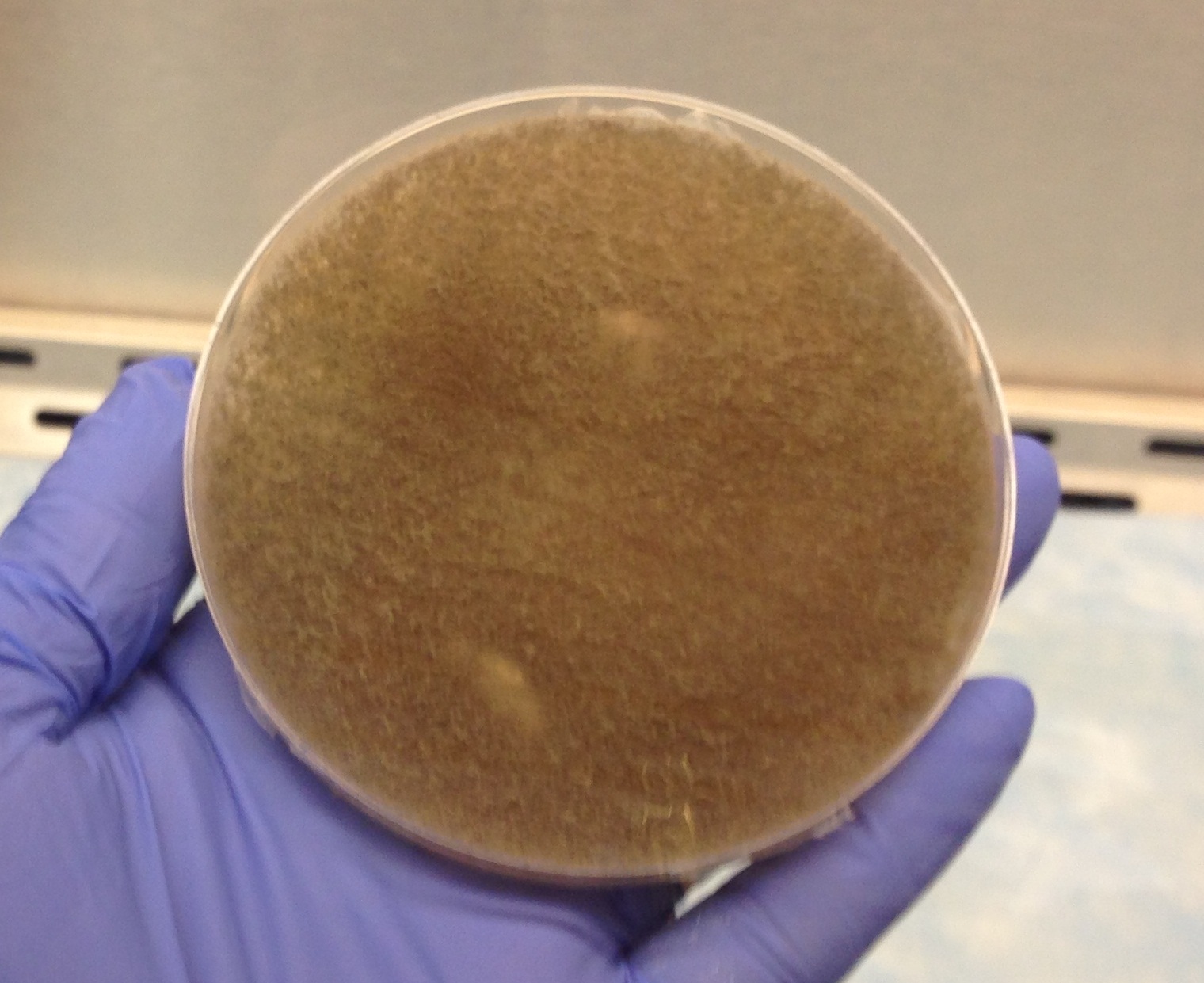
Potato flake agar shows a brown, rapid growing mold that was raising the lid of the plate. No growth on the Mycosel plate.
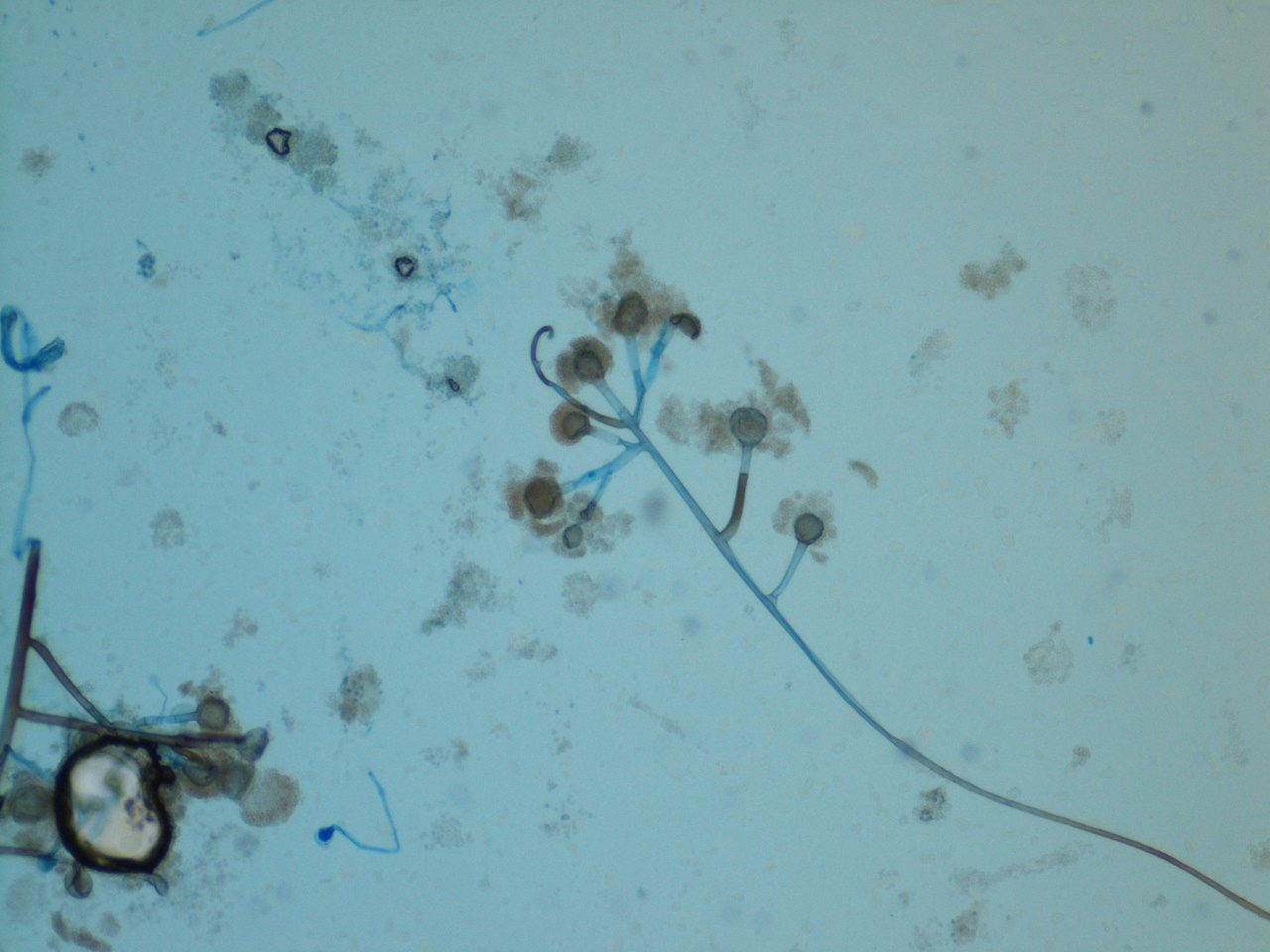
Scotch-tape prep shows ribbon-like hyphae with few septations.

Temperature Studies:

The mold grew at both 37° and 42°C.

Discussion:

The above findings lead to the classification of a Zygomycete which are hyaline, pauciseptate molds that include Rhizopus, Mucor, Absidia, Rhizomucor, Synecephalastrum, Cunninghamella, and others.

The colonies are fluffy, white to gray or brown. They are rapid-growers and diffusely cover the agar within 24-96 hours. The hyphae appear to be coarse and fill the entire culture dish with loose, grayish hyphae dotted with brown or black sporangia. It is not possible to differentiate the organisms based on colony morphology. Temperature studies can differentiate between some species: Rhizopus grows best between 40-50°C; Rhizomucor grows best around 38-58°C; Mucor grows best at less than 37°C; Absidia grows between 45-50°. Since our specimen grew at both 37° and 42°C, that would lead us to have Rhizomucor high on our differential.

Zygomycetes produce large, ribbon-like hyphae that are irregular in diameter and contain occasional septae. Classification of specific organisms relies on identifying the characteristic saclike fruiting structures called sporangia. The sporangia produce sporangiospores, which are within the sporangia and are spherical and yellow or brown. Each sporangium is formed at the tip of a sporangiophore which is a supporting structure. The sporangiophores are connected by hyphae with occasional septations called stolons. These are contact points where rootlike structures called rhizoids attach to the hyphae. The presence and location of the rhizoids helps to identify the organism. Rhizopus has unbranched sporangiophores with rhizoids at their base where the stolon arises. Mucor has singularly produced or branched sporangiophores that have round sporangium filled with sporangiospores at their tips. It does not have rhizoids or stolons. Absidia has rhizoids that are between sporangiophores, and the sporangia are pyriform and have a funnel-shaped area called apophysis at the junction of the sporangium and the sporangiophore. Usually a septum is formed in the sporangiophore just below the sporangium. Our microscopic exam did not show any rhizoids at first, but a second exam after a longer growth period showed potential rhizoids at the base of the sporangiophores, which would lead us to have Rhizopus on our differential. Our case did not clearly define itself at the species level, so it was signed out as a Zygomycete and there were no treatment implications.

Zygomycetes are not a common cause of infection, but are an important cause of morbidity and mortality in patients who are immunocompromised. They have a worldwide distribution and are commonly found on decaying vegetable matter, soil, or old bread. Infection occurs by inhalation of spores, and once established, it is rapidly progressive, particularly in patients with diabetes mellitus who have infections that involve the sinuses. The organisms have a propensity for vascular invasion and rapidly produce thrombosis and necrosis of tissue. A common presentation is invasion within the nasal mucosa, palate, sinuses, orbit, face, and brain showing massive necrosis with vascular invasion and infarction. Perineural invasion can also occur which can spread retro-orbitally into the brain. They can also infect the lungs and GI tract as well as have disseminated infection. They can cause skin infections in patients who have severe burns and infections of subcutaneous tissue of patients who have undergone surgery.

Follow up:

Lung tissue, area of necrosis; H&E stain, 10x
Lung tissue, vasculature; H&E stain, 40x
Lung tissue, vasculature; silver stain, 10x
Lung tissue vasculature; silver stain, 40x
Lung tissue, areas of necrosis; silver stain, 10x

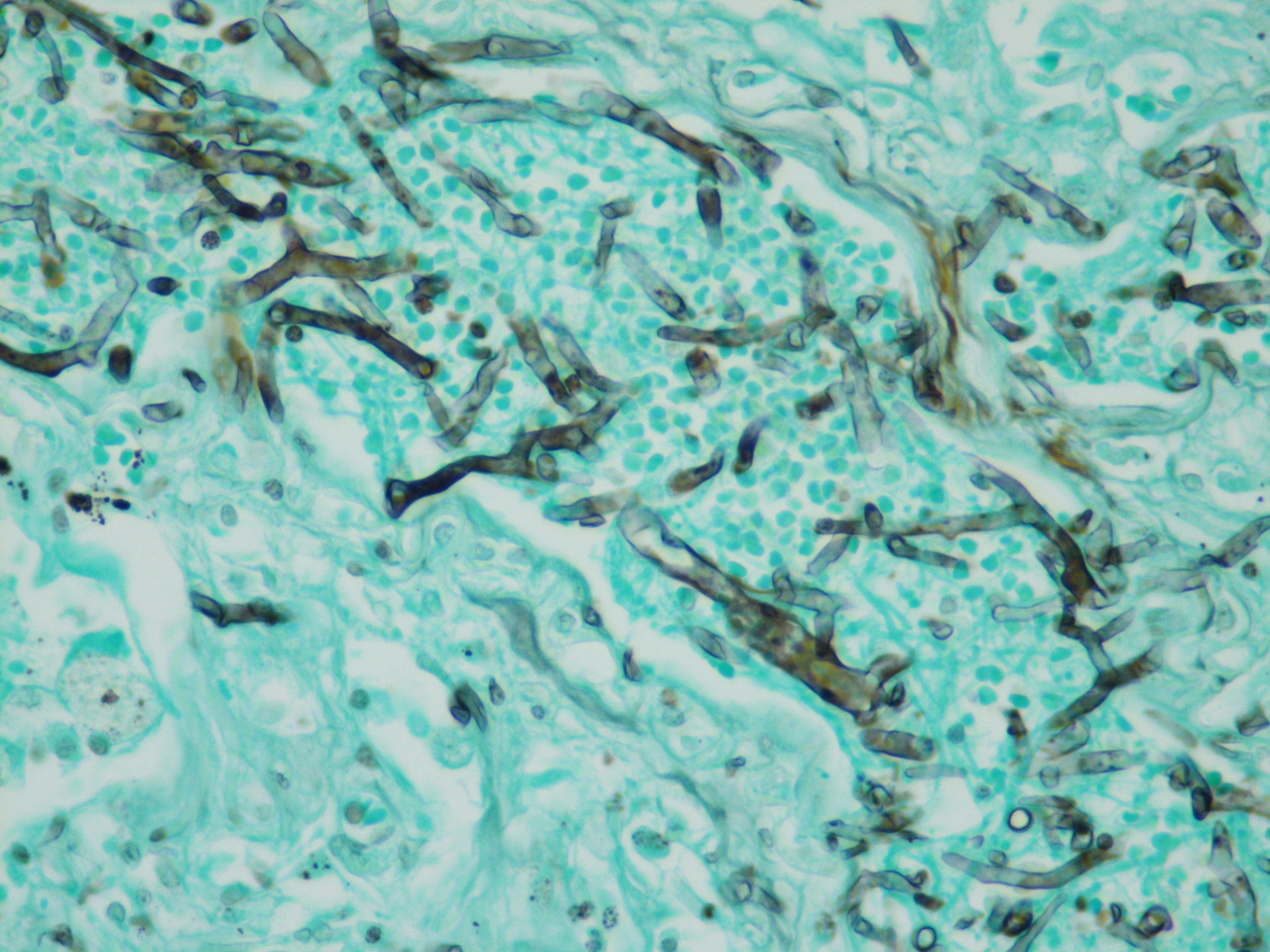
The histology on H&E stain shows areas of necrosis with faint septate hyphae as well as broad, ribbon-like hyphae within the vasculature. The silver stain nicely highlights the broad hyphae which we can identify as a zygomycete. The silver stain also accentuated the massive amounts of thinner hyphae with parallel walls and 45 degree branching which is consistent with aspergillus. This patient was found to have both an aspergillus infection which caused the positive serum antigen test, but then also developed a zygomycete infection which led to his death. We did not identify aspergillus on our fungal culture which may be explained by several possibilities. Our patient had been treated with voriconazole for a potential aspergillus infection which may make it more difficult for the aspergillus to grow on fungal culture. Zygomycetes are rapid growers which could have inhibited the growth of another organism or could have inhibited our ability to identify a second organism growing on the plate.


Kirsten Threlkeld, MD is a 4th year anatomic and clinical pathology resident at the University of Vermont Medical Center.

Wojewoda-small

-Christi Wojewoda, MD, is the Director of Clinical Microbiology at the University of Vermont Medical Center and an Assistant Professor at the University of Vermont.

CAP Inspections and the Resident

Hello, fellow blog readers! It’s about 4 weeks since we communicated last. Since my first half of the year was loaded with lighter CP rotations to allow me to complete interviews for two successive fellowships, this half of the year is surgpath heavy and so that’s why I took a short hiatus from posting.

Well, I have a 4 week reprieve before I have another surgpath rotation and I am on what we refer to as our “comprehensive CP” rotation. Basically, it’s a combination chemistry-microbiology rotation. Since both of those rotations don’t always have enough work to require a resident to remain at the hospital for the usual 8-5 schedule, we cover both rotations simultaneously. We also have 11 comp CP rotations throughout the 4 years at my new program which is quite a lot but after the initial 2 months of “wet lab” rotating through all the stations in the chemistry and microbiology labs, we have the flexibility to tailor our comp CP rotation. And so, right now, I write as I sit in a hotel in Baltimore about to meet for our third preparation meeting before my attending and I go inspect a new molecular genetic pathology laboratory for the College of American Pathologists tomorrow. Since this is this lab’s first inspection, unlike the usual CAP inspection, this one is announced – they know we are coming and can prepare for our visit. The two of us will complete the entire inspection; my program counts this as rotation duties even though I am off-campus.

This is the second CAP inspection that I’ve been asked to assist with since I transferred to my program as a PGY-3. I think it’s great that my program gives our residents this opportunity since as attendings (whether we are AP or CP), we will also have to either assist in or enforce adherence to CAP or other accreditation standards and supervise preparations for lab inspections every other year and self-inspections on the alternate off-years. At my program, residents assist in both the preparations for CAP and off-year inspections. I’ve said it before, but residency is the transition from passive learning to active learning where we should participate in the daily responsibilities that our attendings oversee and that we will have in the future.

So, this inspection will be much more work than when I inspected the chemistry and special chemistry sections with my last team. Since there are only two of us, we are responsible for splitting the duties for the lab director, general, common, and molecular pathology accreditation checklists. CAP suggests a “ROAD” approach: read (through their binders of policies, SOP’s, etc), observe (a sample from receipt in the lab and though processing and interpretation of results), ask (open ended questions), and discover.

Well, I guess it’s time for me to go inspect but before I leave, I’d like to encourage all trainees (residents and fellows) to apply to serve as a junior member on one of the CAP’s committees or councils. You need to be a junior member but membership is free as a resident. Each committee or council (that oversees multiple committees in a topic area) usually has one junior member on it, very rarely, two. I’m currently serving my second year as the junior member on the Council on Education and I can say it has been a very rewarding experience where I have met many role models who definitely take an interest in what I have to say about the trainee opinion and who also think of me when opportunities arise that they think might be good for me. You can access both the instructions to apply (which includes a list of the committees/councils with junior member positions opening up in 2016) and the junior member application here – you will need a letter of recommendation from your program director and email in your app before the deadline of March 31st. Good luck guys! If you have any questions, feel free to email me.

Chung

-Betty Chung, DO, MPH, MA is a third year resident physician at Rutgers – Robert Wood Johnson University Hospital in New Brunswick, NJ.
Microfluidics + Consumer Electronics = The Future of Point of Care Testing?

In a paper published yesterday in Science Translational Medicine, researchers tested a low-cost smartphone attachment (a “dongle”) that detects the presence of HIV and syphilis antibodies using ELIZA technology. While the research took place in Rwanda and highlights the usefulness of such technology in low-resource settings, the implications are potentially far-reaching in terms of point-of-care and direct-to-consumer testing.

What do you think? Do you think using smartphone attachments could replace full laboratories in the not-so-distant future?

Swails

Kelly Swails, MT(ASCP), is a laboratory professional, recovering microbiologist, and web editor for Lab Medicine.

Pancytopenia in a 67-Year-Old Female

A 67-year-old female presents with pancytopenia, a markedly enlarged spleen, and extramedullary hematopoiesis. Her blood smear is shown here. She is found to have a JAK-2 mutation. What is the diagnosis?

myeloprolif

  1. Chronic myelofibrosis
  2. Chronic myeloid leukemia
  3. Hairy cell leukemia
  4. Metastatic breast carcinoma
  5. Renal cell carcinoma

The diagnosis in this case is chronic myelofibrosis. Chronic myelofibrosis is one of the four main chronic myeloproliferative disorders (the others are chronic myeloid leukemia, essential thrombocythemia, and polycythemia vera). In this disorder, the bone marrow is initially hypercellular, with proliferation of all of the myeloid cell lines (neutrophils, red cells, and megakaryoblasts). Over time, however, the marrow becomes progressively fibrotic. Eventually, there is not enough room for normal hematopoiesis, and the body starts making hematopoietic cells elsewhere (most notably in the spleen, which becomes markedly enlarged).

In these later stages of chronic myelofibrosis, the blood is characterized by pancytopenia (a decrease in white cells, red cells and platelets). Teardrop-shaped red cells (dacryocytes) may also be seen as a result of the red cells wending their way through a fibrotic marrow. Red cell precursors, such as the normoblast present in this image, are also commonly present, as there is less and less room for red cells to mature fully before leaving the marrow.

These blood smear findings are not specific for chronic myelofibrosis. Teardrop-shaped red cells may be seen when the marrow is fibrotic for other reasons, such as metastatic cancer, and pancytopenia and normoblasts may be seen in many other conditions. The JAK-2 mutation, however, is seen most frequently in three of the four chronic myeloproliferative disorders: polycythemia vera, essential thrombocythemia, and chronic myelofibrosis.

Krafts

-Kristine Krafts, MD, is an Assistant Professor of Pathology at the University of Minnesota School of Medicine and School of Dentistry and the founder of the educational website Pathology Student.

New Study Suggests No Difference in Mortality Rate in Two Different Transfusion Ratios

From the study published in the Journal of the American Medicine Association: Among patients with severe trauma and major bleeding, early administration of plasma, platelets, and red blood cells in a 1:1:1 ratio compared with a 1:1:2 ratio did not result in significant differences in mortality at 24 hours or at 30 days. However, more patients in the 1:1:1 group achieved hemostasis and fewer experienced death due to exsanguination by 24 hours.”

You can read the NIH press release here.

You can read the abstract for the study here.

Doctor, There’s a Snake in My Poop

Case history:
A mother brought her 5 year old son into his pediatrician with a “snake” that she found in his stool. Otherwise, the patient was completely asymptomatic.

Specimen sent for ID:

ascaris1

ascaris2

Ascaris is the most common Helminth affecting humans. It is also the largest of the roundworms (nematodes), growing up to 35 cm in length. There are several species of Ascaris however only A. lumbricoides affects humans.

Epidemiology
Ascaris occurs in areas with poor sanitation, hygiene and solid waste practices. Worldwide it is most common in tropical and subtropical areas.

Transmission & Life Cycle
Ascaris is transmitted through the fecal-oral route, and is therefore most prevalent in areas with poor sanitation and waste practices. Transmission occurs when an uninfected person swallows a fertilized egg which was originally passed through the stool of an infected person.

The adult male and female forms live in the small intestine. The female passes up to 200,000 eggs per day. If there is also a male worm living in the small intestine, these eggs may then be fertilized. Both fertilized and unfertilized eggs are eventually passed in the stool.

Unfertilized eggs are not infective and do not cause disease if ingested. Fertilized eggs are only infective after approximately three weeks of maturation. The exact amount of time required before the fertilized egg becomes infective will depend on environmental conditions, such as temperature and humidity.

Once ingested, the fertilized egg travels to the small intestine, where it hatches and becomes a larva. The larval form invades the small intestinal mucosal wall and enters the bloodstream. Upon reaching the lung, the larva invades the capillary and alveolar walls and continues to grow within the alveoli. After about two weeks of maturation, the larva then migrates up through the airspaces and into the trachea, where it is eventually swallowed and transported back down into the small intestine. The fully mature larval forms are now adult worms and will continue to live in the small intestine for the rest of their lifespan (up to 1 to 2 years).

Laboratory Diagnosis
In most cases, Ascaris is diagnosed in the egg form on ova and parasite exam. The fertilized egg is round, 45-70 microns in diameter and has a thick, mammillated outer wall which stains brown with bile. The unfertilized egg is larger (90 microns), are has a more oval shape with a less regular mammillated contour. Patients may also pass adult worms in the stool or less commonly they may cough them up through the mouth. The adult worms have tapered ends with a three-lipped mouth (“tricuspid” mouth). The female is larger than the male (female: 20-35 cm, male: 15-30 cm).

Clinical Symptoms
Clinically, most people affected with Ascaris are asymptomatic. With a very high worm load however patients may begin to develop complications related to obstruction, including abdominal pain, constipation, appendicitis and obstructive cholangitis. In younger children infection with Ascaris may result in stunted growth. Of note, immune reaction to larva in the lung may result in an eosinophilic immunologic response known as Löffler’s pneumonitis.

Treatment
Ascaris is treated with anthelminthic medication (albendazole, mebendazole or ivermectin). Therapy for Ascaris extremely effective and rids the patient of all adult, larval and egg forms.

-Javier De Luca-Johnson, MD is a 2nd year anatomic and clinical pathology resident at the University of Vermont Medical Center.

Wojewoda-small

Christi Wojewoda, MD, is certified by the American Board of Pathology in AP/CP and Medical Microbiology. She is currently the Director of Clinical Microbiology at the University of Vermont Medical Center and an Assistant Professor at the University of Vermont.

Something for Nothing

I’m probably going to be a little bit on a soap box with this post, but this is something that is bothering me. It’s about the society we live in and how it’s becoming more and more of a “something for nothing” society. We expect to get things without having to pay for them. In fact we’re so used to it that we even get angry when someone asks for payment. Let me give you some examples:

How many times have you gone to Wikipedia to look for an answer to a question? Or any other site on the Internet for that matter? And how many times have you donated any funds at all to the upkeep and maintenance of that site? Guess what. It costs money to maintain a website.

How many times have you downloaded a song off the Internet without paying for it in any way? People spend money to record songs and money to make movies. Where does the money come from to allow them to continue doing those things if nobody pays for the ones already made?

The reason this is bothering me is in relation to our professional associations. Even here, people want to receive benefits without paying for a membership – something for nothing. Our professional associations are worth supporting. They offer us educational opportunities, networking opportunities and a host of other benefits. All of these things cost our associations money to produce and provide. And even big associations cannot afford to continue eating the costs without eventually being financially unable to continue. You might be surprised to know how much of any given board meeting for your association is spent discussing staying financially viable.

Nobody, including your professional associations, can stay in business if they cannot make enough of a profit margin to survive, basically if they give away too much for free. I think it’s time for us to stop expecting everything to be handed to us without needing to give anything in return. So go for it. Donate to Wikipedia, buy your CDs, blue-rays and downloads, and join your professional societies. You will not regret it.


-Patti Jones PhD, DABCC, FACB, is the Clinical Director of the Chemistry and Metabolic Disease Laboratories at Children’s Medical Center in Dallas, TX and a Professor of Pathology at University of Texas Southwestern Medical Center in Dallas.