Three Rules to Manage Chemical Waste- It’s Complicated!

The lab technologist approached the Lab Safety Officer to ask what should be done with a collection of liquid wastes that were collected from the chemistry analyzers. The LSO had worked with multiple labs for years helping to determine how to dispose of their liquid chemical wastes according to the regulations. He thought he was pretty well aware of the hazardous chemical wastes coming from the labs, but he had no idea this chemistry analyzer waste existed. He dug a bit deeper. As he called around to the different labs in the system, he learned not all sites were handling the waste the same way. Some sites saved the excess waste and poured it into other containers to use on the analyzers. Some labs threw the containers in the trash with liquid inside, and other sites simply poured the excess chemicals down the sink drain.

Some laboratories and lab systems are very large, and there are probably many practices, some newer, some older, that have developed over time, because “someone said so,” or because a vendor said it was acceptable. The LSO may not always be able to know about every practice in each lab. Staff should always escalate questions about waste processes when there is a concern.

Managing hazardous (chemical) wastes is a complicated process, and training and education is needed in all laboratories. The regulations surrounding waste are numerous and complicated, and it would be unlikely that every lab employee would aware of all of them. Here are some basics that are true for all laboratories:

Pouring Bulk Wastes Down the Drain is (Usually) Incorrect and Possibly Illegal

In general, manually pouring bulk amounts of chemical waste down the drain is not permitted by the EPA. What is a bulk waste? It is defined as 200 mL or more. That means if you have >200 mL of a reagent left over in a container, you cannot pour it down a drain for disposal. That chemical is now waste and must be properly collected, labeled, and stored until a waste contractor can pick it up.

There are, of course, exceptions to every rule. If a waste drain line is connected to a drain, for example, that is not considered “pouring,” and it is acceptable provided a lab has informed the local wastewater treatment center about what is going down the drain. Performing a gram stain in microbiology and letting the residual chemicals go down the drain is allowed also. That is considered part of the gram stain process, and it is not viewed as “pouring” chemicals down the drain. Also, the wastewater facility is aware that these chemicals are going down the drain.

Another exception exists in some laboratories that have an external “chemical pit” which is tied to certain sinks and drains in the lab. That means that all wastes poured down these drains go straight to a collection tank which neutralizes the chemicals. The tank is emptied periodically by a contracted vendor. Since there is no waste going to the local wastewater system, the local authority does not need to be contacted about what goes down the lab drains.

Hazardous Waste Must be Properly Stored

Anytime a lab collects chemical waste, it must be properly stored. There are two types of waste storage areas, Satellite Accumulation Areas (SAA) and Central Accumulation Areas (CAA). A Satellite Accumulation Area is a storage area near to where the waste is generated. The SAA must be within the line of sight of where the waste is made, it cannot be in another room or around the corner. You must store the waste where it can be seen from where it was generated. You cannot move waste from one SAA to another SAA. You can. However, move waste from a SAA to a Central Accumulation Area (like a hazardous waste shed outside, for example).

SAAs can store up to 55 gallons of waste. Waste must be stored inside of a flammable cabinet if it is flammable, and acid wastes cannot be stored next to bases. SAAs and CAAs must have a specific emergency contact poster hung nearby which indicates the location of the nearest fire extinguisher as well as an emergency contact in case of a spill or accident. CAAs must be checked weekly for proper labeling, open containers, and leaking, and these checks must be documented.

Hazardous Waste Must be Properly Labeled

Anytime a lab collects chemical waste, it must be properly labeled per EPA regulations. All waste containers must be labeled with the identity of the contents and the words “Hazardous Waste.” There must also be an indication of the waste hazard(s), such as a pictogram or an NFPA diamond. If waste is collected into an empty reagent jug, you may not use the wording or warning label from the original jug.

Dates should never be placed on chemical waste labels when stored in a Satellite Accumulation Area, but dates always need to be on containers once moved to the Central Accumulation Area. If the waste vendor picks up containers directly from your SAA, you never need to place dates on the containers.

Again, the proper management of the laboratory hazardous wastes is complicated. There is a great deal to learn and to put in practice. Many regulations have exceptions, and some of them depend on the facility’s waste generator status. If you have questions, reach out to your EPA (or state branch) representative, or ask an available safety expert. Make sure your lab is handling chemical wastes appropriately and safely.

Dan Scungio, MT(ASCP), SLS, CQA (ASQ) has over 25 years experience as a certified medical technologist. Today he is the Laboratory Safety Officer for Sentara Healthcare, a system of seven hospitals and over 20 laboratories and draw sites in the Tidewater area of Virginia. He is also known as Dan the Lab Safety Man, a lab safety consultant, educator, and trainer.

Hematology Case Study: An Unusual case of Leukemic Reticuloendotheliosis (aka Hairy Cell Leukemia)

Leukemic Reticuloendotheliosis (LRE) is a term that was first used in 1923 but is a name that most of us would not recognize today. In 1958, Bournocle et al. published a paper that characterized LRE as a separate clinical disorder and described the clinical course, pathologic features, treatment options and prognosis. The study also described an unusual morphology of the malignant cells seen in this condition. The malignant cells were noted to be small mononuclear cells with projections around the circumference of the cytoplasm. Another decade went by before these cells were given the nickname “hairy cells”. At the time, though LRE was considered a fatal disease, splenectomy appeared to be a beneficial treatment, thus pointing to a lymphocytic disorder. Later, in 1976, an article was published that suggested that these hairy cells were monocytic rather than lymphocytic in origin. The true lineage of these hairy cells was unknown until the development of newer immunophenotypic methodologies in the mid to late 1970s. Today, hairy cell leukemia (HCL) is considered a rare, chronic B cell leukemia that comprises 2% of lymphoid leukemias and responds well to therapy.

Patients may be entirely asymptomatic at diagnosis, and the finding of hairy cells on the peripheral smear from a routine CBC prompts further investigation. Patients do not usually require treatment at diagnosis, and many patients live a normal lifespan. Originally, diagnosis was based on clinical and laboratory result correlation: CBC results, observation of the characteristic hairy cells, and splenomegaly. One of the first tests used for  diagnosis of HCL was tartrate-resistant acid phosphatase activity (TRAP stain). Today, standard practice is immunophenotyping by flow cytometry. HCL is characterized by the expression of B-cell antigens CD19, CD20, and CD22 in addition to bright CD11c expression with CD103, CD25, CD123 and Annexin A1 (ANXA1) co-expression. Annexin A1 is the most specific immunohistochemical marker for HCL. In 2011, the BRAF-V600E mutation was identified as the genetic causal event of HCL, allowing even more advances in the diagnosis and therapy for HCL.

As the disease progresses, most patients experience increasing cytopenia, including monocytopenia, and persistent splenomegaly. Treatment is usually started when a patient meets certain guidelines, which include a severe cytopenia or pancytopenia, malignant lymphocytosis, increased susceptibility to infection or symptomatic splenomegaly. Historically, the only available treatment was splenectomy. In the 1980’s, interferon therapy was introduced and was able to induce partial responses in some patients. In the 1990’s the purine analogs, cladribine or pentostatin, became available as the preferred first line treatment for HCL. Treatment response is good and offers prolonged remission rates. For patients who experience relapse, rituximab may be used in combination with a purine analog. Most recently, anti-CD22 immunotoxins and molecular targeted therapy with BRAF inhibitors have been introduced for cases that do not respond to other therapies.

Additional discoveries into the biology of the disease have identified new subtypes of HCL. It is important to distinguish between classic HCL and Hairy Cell leukemia variant (HCLv) because they are treated differently. HCLv may be more aggressive and does not respond well to purine analogs alone. HCLv is often diagnosed at older age than classic HCL In HCLv the WBC is often elevated, with lymphocytosis, and there is a lack of monocytopenia. The hairy cells seen on a peripheral blood smear may be more abundant than in classic HCL. These HCLv cells also often have a distinct nucleolus not seen in HCL cells. As well, these cells can have a morphology that appears to be somewhere between prolymphocytes and hairy cells. Unlike HCL, HCLv cells are negative for CD25 and BRAF-V600E. HCLv represents only about 10% of HCL cases. Because of its rarity, and the gray areas surrounding differential diagnosis between HCL and HCLv, studying these rare cases can help lead to a better understanding and management of both HCL and HCLv patients.

About 1200 new cases of HCL are diagnosed each year in the US. HCL is 4-5 times more common in males, with a median age at diagnosis of 55-60. This is an unusual case because the patient is female, was older at diagnosis, with no cytopenia or splenomegaly noted. This patient is a 79-year-old female who, one year ago, was referred to a Hematology Oncology practice with a several year history of a mildly elevated WBC with increased lymphocytes, without absolute lymphocytosis. She was referred after a peripheral smear exhibited prolymphocytes and the “hairy’ appearing lymphocytes shown below in Image 1.

Image 1. Hairy Cells seen on peripheral blood smear.

Peripheral blood was sent for myeloid/lymphoid disorders and acute leukemia analysis by flow cytometry. Remarkable in this case were the results of the flow cytometry studies. Flow cytometry performed on the peripheral blood revealed 2 distinct morphological populations of lymphocytes. The majority of lymphs appeared to be small, with scant cytoplasm, round nucleus, clumped chromatin, and inconspicuous nucleoli. These cells were identified as a monoclonal kappa restricted B cell population exhibiting co-expression of CD23 and CD5, consistent with chronic lymphocytic leukemia/small lymphocytic lymphoma (CLL/SLL). A second population of lymphs were larger, with more abundant granular cytoplasm and hairy projections, large nuclei, condensed chromatin, and inconspicuous nucleoli. This second population displayed CD20 expression and was positive for CD11c, CD103 and FMC-7. CD25, CD5 and CD23 were negative.

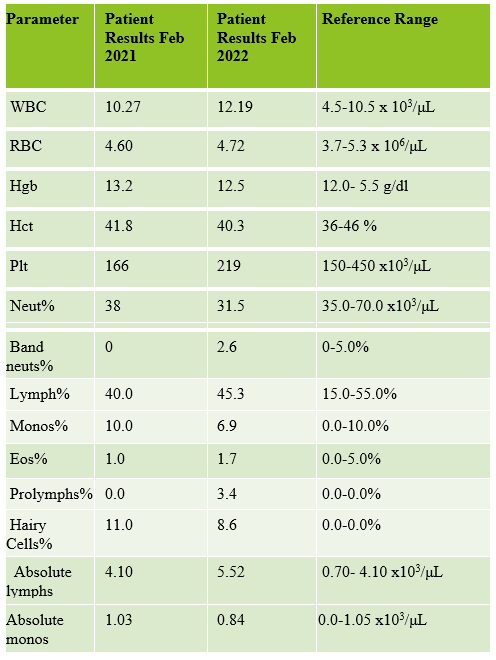
The immunophenotyping of this second population of cells suggests a diagnosis HCL; or is it suggestive of HCLv? The patient was older at diagnosis, leukocytosis and lymphocytosis are present, and monocytopenia is absent. Hairy cells were over 8% of the differential, though lacking the distinct nucleoli of HCLv. Prolymphocytes were noted. CD25 was negative in this patient and is usually exhibited in HCL.

An immunological scoring system for HCL has been proposed with one point given to each of markers for CD11c, CD103, CD123 and CD25. One point is given if the marker is expressed and no point when it is not expressed. A score of 3 or 4 is observed in 98% of cases of HCL and is usually 0-1 in other HCL-like disorders. This patient’s cells showed expression of CD11c and CD103, was CD25 negative and CD123 was not evaluated so would score at least a 2, which puts her somewhere in an inconclusive score. Additionally, a bone marrow biopsy has not been done and there therefore results for TRAP or annexin A1 immunostaining, or BRAF-V600E mutations are not available.

With a diagnosis of a B-lymphocytosis consistent with CLL/SLL and a simultaneous HCL, or HCLv, this patient is an interesting case. Several articles and reviews in literature of other patients with CLL and HCL give further insight into the biology of HCL. Literature suggests that concurrent HCL and CLL may indicate a common origin. Patients with HCL may subsequently develop CLL, which can mimic a relapse of HCL. Therapy requires treating each case individually and watchful waiting in asymptomatic cases. Rituximab with or without purine analogs have been useful to treat both disorders simultaneously.

Table 1. CBC results from a patient in 2022 and 2022.

This patient at 1 year following diagnoses has developed a mildly increasing lymphocytosis and is being monitored. Both her CLL/SLL and HCL still appear to be in the indolent, “wait and see” stage. The patient has declined further workups at this time.

References

  1. Bain, Barbara J. Blood Cells: A Practical Guide. 5th ed. Wiley Blackwell, 2015. Print.
  2. Chang-Hun Park, Hyun-Young Kim, M.D.et al. Efficacy of Annexin A1 Immunostaining in Bone Marrow for the Diagnosis of Hairy Cell Leukemia. Laboratory Medicine Online 2019; 9(4): 236-241
  3. Falini B, Tiacci E. New treatment options in hairy cell leukemia with focus on BRAF inhibitors. Hematol Oncol. 2019; 37(Suppl. 1): 30– 7..Maitre, E.; Cornet, E.; Troussard, X. Hairy cell leukemia: 2020 update on diagnosis, risk stratification, and treatment. Am. J. Hematol. 2019, 94, 1413–1422.
  4. Obiorah IE, Francischetti IMB, Wang HW, Ahn IE, Wang W, Raffeld M, Kreitman RJ, Wiestner A, Calvo KR. Concurrent chronic lymphocytic leukemia/small lymphocytic lymphoma and hairy cell leukemia: clinical, pathologic and molecular features. Leuk Lymphoma. 2020 Dec;61(13):3177-3187.
  5. Scheinberg M, Brenner AI, Sullivan AL, Cathcart ES, Katayama I. The heterogeneity of leukemic reticuloendotheliosis, “hairy cell leukemia”. Evidence for its monocytic origin. Cancer. 1976 Mar;37(3):1302-7
  6. Shao, Haipeng et al. “Distinguishing hairy cell leukemia variant from hairy cell leukemia: development and validation of diagnostic criteria.” Leukemia research vol. 37,4 (2013)
  7. Verma V, Giri S, Bhatt VR, Amador-Ortiz C, Armitage JO. Synchronous or Metachronous Hairy Cell Leukemia and Chronic Lymphocytic Leukemia: A Case Series and Literature Review. Front Oncol. 2017 Jan 9;6:270.
  8. X. Troussard, M.R. Grever. The revised guidelines for the diagnosis and management of hairy cell leukaemia and the hairy cell leukaemia variant. r J Haematol, 193 (1) (2021), pp. 11-14
Socha-small

-Becky Socha, MS, MLS(ASCP)CMBBCM graduated from Merrimack College in N. Andover, Massachusetts with a BS in Medical Technology and completed her MS in Clinical Laboratory Sciences at the University of Massachusetts, Lowell. She has worked as a Medical Technologist for over 40 years and has taught as an adjunct faculty member at Merrimack College, UMass Lowell and Stevenson University for over 20 years.  She has worked in all areas of the clinical laboratory, but has a special interest in Hematology and Blood Banking. She currently works at Mercy Medical Center in Baltimore, Md. When she’s not busy being a mad scientist, she can be found outside riding her bicycle.

Microbiology Case Study: A 69 Year Old Man with Chronic Cutaneous Disease

Case Description

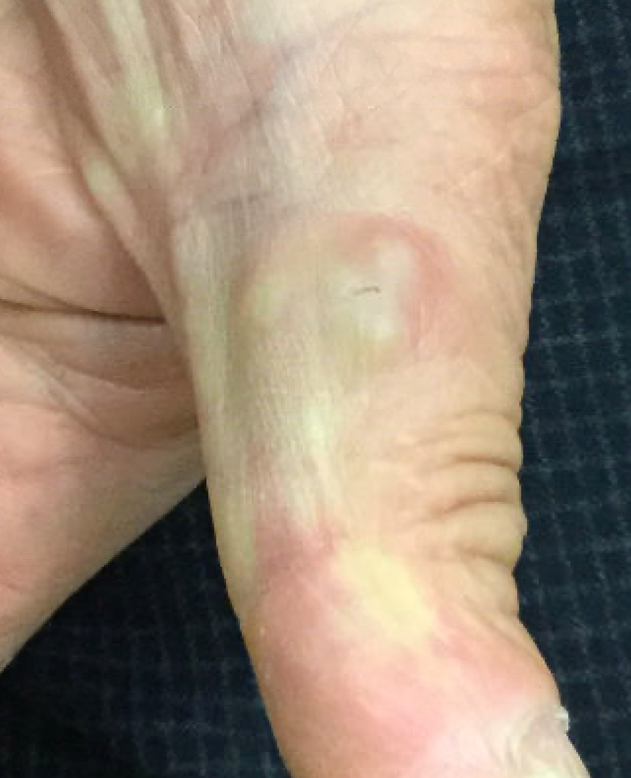
A 69 year old man with hepatitis B and chronic cutaneous Rosai-Dorfman disease presented to the dermatology clinic for regular follow-up. He was being treated with subcutaneous injection of methotrexate every other week and intralesional Kenalog (ILK) injections for individual lesions. The patient presented with a new complaint of a painful nodule on his left thumb where he was stuck with a splinter two months prior. He denied fever, chills, weight loss, or other systemic symptomology. Upon physical examination, an erythematous nodule on the lateral left thumb with central pallor and crusting consistent with a foreign body was observed (Figure 1). Surgical excision was recommended.

Figure 1. Photograph of a nodular lesion on the lateral aspect of the left thumb with surrounding erythema and central pallor, which was described as painful, and had been present for two months following traumatic splinter implantation.

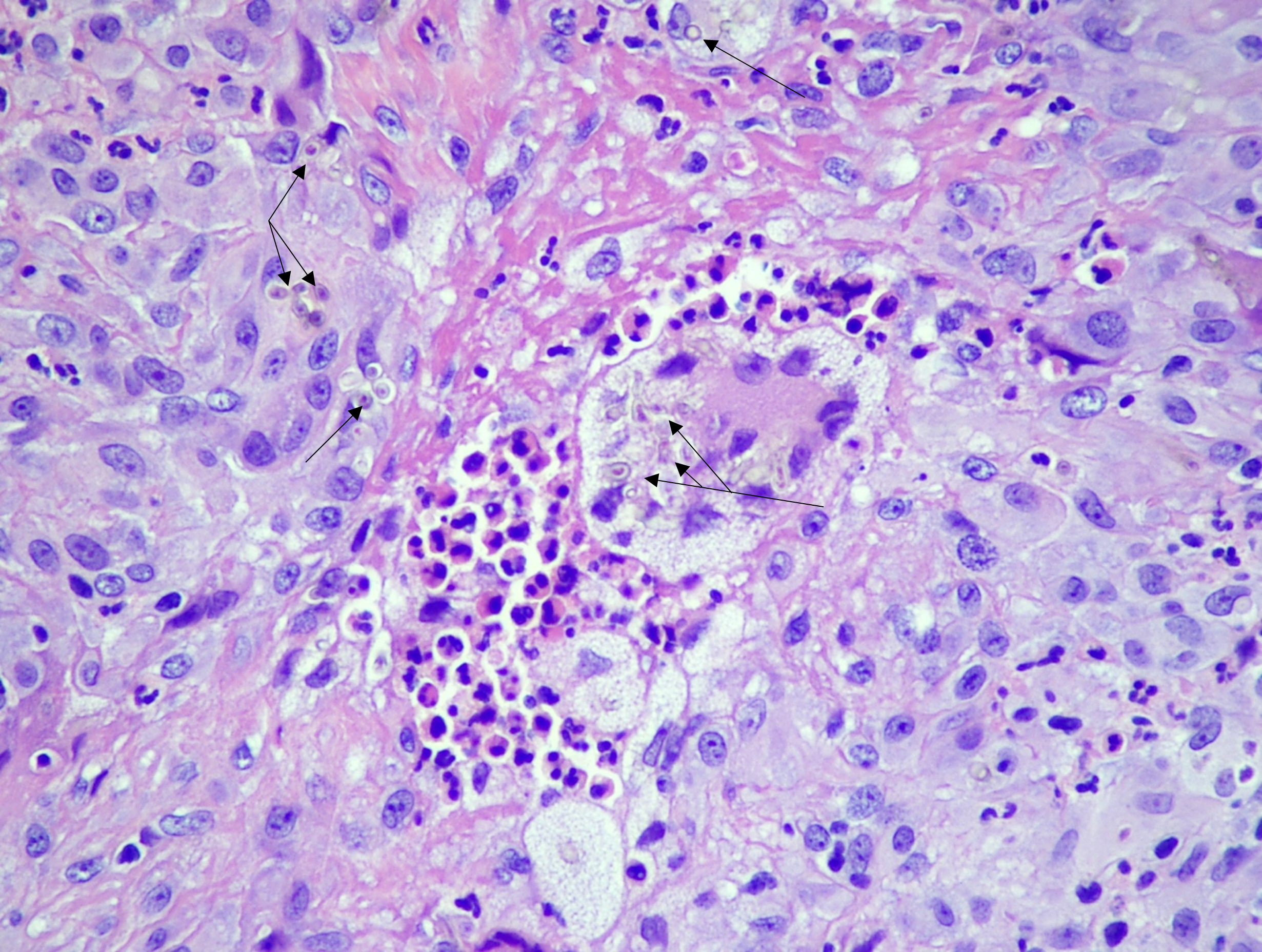
Following excisional biopsy, histopathology revealed a relatively circumscribed lesion with suppurative granulomatous dermatitis and numerous pigmented hyphae observed on hematoxylin and eosin stained slides (H&E; [Figures 2-3]). A diagnosis of phaeohyphomycosis was made; the patient’s methotrexate was held and an infectious disease (ID) consult was placed. Precautionary blood cultures were drawn which remained negative following five days of incubation. The patient was started on a course of empiric oral doxycycline for two weeks which he completed. At presentation for ID follow up, the patient felt well and denied constitutional symptoms or recurrence of the thumb lesion. Physical exam revealed no associated sporotrichoid lesions (lymphocutaneous spread of infection) or palpable lymphadenopathy. ID recommended a 3-month course of oral itraconazole as secondary prophylaxis, which was completed without adverse effects or recurrence of symptoms.

Figure 2. Hematoxylin and Eosin (H&E) stained excisional biopsy demonstrating a relatively circumscribed lesion with suppurative granulomatous inflammation (100x magnification). Thick arrows highlight lavender staining epithelioid-histiocytes that comprise the bulk of the granuloma and arrowheads point to the admixed aggregates of dark pink and purple staining neutrophils, giving this granuloma its suppurative nature.
Figure 3. High-power magnification photomicrograph of the lesion with a close-up view of the suppurative nature of this granulomatous inflammation with small arrows highlighting the numerous cross-sections of hyphae that demonstrate melanized pigment observed in this case of phaeohyphomycosis (H&E stain; 400x magnification).

Case Discussion

Phaeohyphomycosis describes a constellation of clinical syndromes caused by infection with a broad group of “dematiaceous” or “melanized” molds and some pigmented yeasts.1 Many of these organisms are ubiquitous in the environment though some are more selective in their habitat, restricting the likelihood of infection to specific geography or select patient populations.2,3 Despite significant microbiological diversity, a unifying characteristic of dematiaceous molds is the production of the pigment melanin. Melanin is theorized to serve as a virulence factor, as loss of melanization often results in attenuation.3,4  In contrast to other diseases caused by dematiaceous molds with more defined etiologies and presentations (e.g., eumycetoma, chromoblastomycosis), manifestations of phaeohyphomycosis are highly variable and can include keratitis, cutaneous disease, pulmonary infection, central nervous system penetration and/or disseminated disease.

Laboratory diagnosis of phaeohyphomycosis is reliant on histopathological evaluation, as surgical debridement is often necessary for management. In this setting, darkly pigmented, septate hyphae invading tissue in a nonspecific background of inflammation may be observed.1 H&E staining is generally sufficient to confirm diagnosis; however, special stains that can highlight fungi, namely Grocott-Gomori methenamine silver (GMS) or periodic acid-Schiff (PAS) stains, can outline the presence of hyphal elements. Additionally, melanin production can be highlighted using Fontana-Masson staining. Careful evaluation and interpretation of fungal cultures, when collected, are important as results can be complex given the ubiquitous nature of many etiological agents, particularly from non-sterile anatomical sites. Additionally, there are no alternate methods routinely available to aid in diagnosis, outside of culture, to specifically identify etiologic agents of phaeohyphomycosis.3 Importantly, optimal antifungal therapy for these infections remains unclear due to a lack of randomized control trials and relative infrequency of presentation.

Superficial infections, such as the one described in this case, are generally considered to be consequences of local trauma, and exhibit minimal tissue invasion. However, in the setting of the immunocompromised host or immunosuppression, disseminated infection can occur.3 The prognosis of invasive phaeohyphomycosis is poor, exhibiting a mortality is as high as 10% for deep local infections and 50% for disseminated disease.1 This patient’s advanced age and chronic immunosuppression were cause for great concern. Fortunately, the biopsy demonstrated granuloma formation effectively localizing the infection to the subcutaneous tissue of the thumb. The patient has remained free of further disease to date, suggestive of a curative surgical resection.

References

  1. Arcobello, JT, Revankar, SG. Phaeohyphomycosis. Respiratory and Critical Care Medicine. 2020. DOI: 10.1055/s-0039-3400957
  2. Wong EH, Revankar SG. Dematiaceous Molds. Infectious Disease Clinics of North America. 2016. 10.1016/j.idc.2015.10.007
  3. Revankar, SG., Baddley, JW., Chen, S.C-A., Kauffman, CA., Slavin, M., Vazquez, JA, Seas, C., Morris, MI., Nguyen, MH et. al. A Mycoses Study Group International Prospective Study of Phaeohyphomycosis: and Analysis of 99 Proven/Probable Cases. Open Forum Infectious Diseases. 2017. DOI: 10.1093/ofid/ofx200
  4. Sharkey PK, Graybill JR, Rinaldi MG, Stevens DA, Tucker RM, Peterie JD, Hoeprich PD, Greer DL, Frenkel L, Counts GW, et al. Itraconazole treatment of phaeohyphomycosis. Journal of the American Academy of Dermatology. 1990. doi: 10.1016/0190-9622(90)70259-k

-Kevin Burningham is a 4th year medical student at UT Southwestern Medical School.

-Dominick Cavuoti is a Professor at UT Southwestern Medical Center who specializes in Cytopathology, Infectious Disease pathology and is a medical director of the Microbiology laboratory at Parkland Health and Hospital System.

-Clare McCormick-Baw, MD, PhD is an Assistant Professor of Clinical Microbiology at UT Southwestern in Dallas, Texas. She has a passion for teaching about laboratory medicine in general and the best uses of the microbiology lab in particular.

-Andrew Clark, PhD, D(ABMM) is an Assistant Professor at UT Southwestern Medical Center in the Department of Pathology, and Associate Director of the Clements University Hospital microbiology laboratory. He completed a CPEP-accredited postdoctoral fellowship in Medical and Public Health Microbiology at National Institutes of Health, and is interested in antimicrobial susceptibility and anaerobe pathophysiology.

Microbiology Case Study: An Elderly Women Presents with Altered Mental Status, Fever, and Gastrointestinal Symptoms

Case Description

An elderly woman presented to the emergency department with sudden onset diarrhea, fever and altered mental status for 1 day. On admission, she had fever with chills, tachycardia, tachypnea, and diminishing mental status. Her white blood cell (WBC) count was slightly elevated from baseline with neutrophilia and thrombocytopenia. Blood and CSF were sent for bacterial culture. Stool was sent for C. difficile PCR and occult blood, which came back negative.

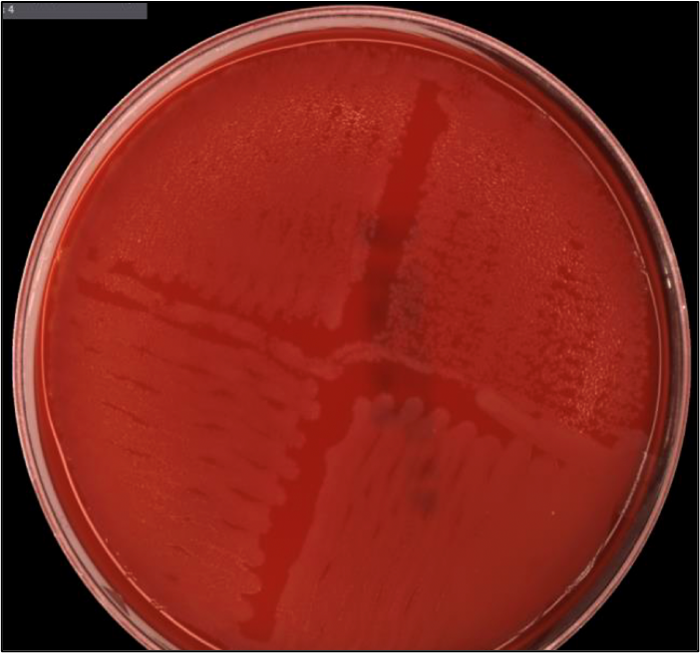
Organisms were recovered from the aerobic blood culture bottle. Gram stain showed gram positive short rods. A multiplex PCR was run directly from the blood, which detected Listeria monocytogenes. The care team was notified immediately. The organism grew on blood agar and aerobic Columbia Naladixic Acid Agar (CNA agar) with characteristic beta hemolysis. The identification was re-confirmed by MALDI-TOF MS as Listeria monocytogenes.

Image 1. Listeria colonies with beta-hemolysis on blood agar

Discussion

Listeria monocytogenes is an intracellular Gram positive rod that is pathogenic to humans. The organism is a non-spore forming facultative anaerobe which thrives at low temperature and can survive at low pH and high salt concentration, making it an organism of concern in ready to eat- refrigerated food products, including soft cheese, deli meat, and packaged salads. There have been multiple outbreaks of Listeria infection related to certain these food products. The most recent Listeria outbreaks, as per the CDC’s report December 2021, has been linked to Dole packaged salads.

The primary route of infection with Listeria is oral ingestion. The amount of inoculum ingested is responsible for the degree of severity of infection. Most people get noninvasive gastroenteritis, which is self-limited, and recovery typically occurs within a week of infection with supportive treatment. Invasive infection is mostly seen in immunocompromised people, people with hematologic malignancies, chronic illnesses like diabetes, pregnant individuals, and extremes of ages. Infected pregnant woman can transmit the infection to fetus vertically, which can lead to fetal demise. Because of this, pregnant women are advised to avoid foods where Listeria is often found, such as deli meat. The infection rate in US currently is 24 cases per thousand and around 800 cases are reported annually, this number does not include the cases that are unreported which is most likely comprised of the noninvasive gastroenteritis cases.1,2,5

Invasive disease can range from severe form of gastroenteritis to meningoencephalitis. The fetal infection with Listeria is known to result in the most severe form of outcomes ranging from granuloma infantisepticum to fetal demise in utero. Bacteria enter the gastrointestinal tract through the intestinal lining. Upon entry, the bacteria travel intracellularly through the lamina propria into the vascular system and get disseminated throughout the body including the brain and placenta in pregnant woman.1,2,5


Bacterial culture remains the gold standard, of which blood culture is the most sensitive test when it comes to invasive diseases. Blood culture takes about 24 hours to grow the organism. Listeria can be cultured in media containing horse, sheep or rabbit blood. Listeria produces smooth, round, translucent colonies with a narrow zone of beta- hemolysis. Listeria can be morphologically difficult to differentiate from other Gram positive rods. In these cases, simple biochemical tests can help identify the organism. For example, catalase test, esculin test, oxidase test that are typically positive in case of Listeria, while H2S and indole are not produced by the organism and urea and gelatin are not hydrolyzed. Additionally, hanging drop method can help demonstrate the characteristic tumbling motility of the organism. With motility agar, Listeria demonstrates an umbrella motility pattern. Direct identification of organism from a positive blood culture, CSF or tissue specimen by using PCR assays should be performed, when available, and is particularly useful in patient who have undergone antimicrobial therapy. There is microarray based nucleic acid test available that can identify Listeria from blood culture within 3 hours. MALDI-TOF mass spectrometry is an efficient assay for rapid identification of L. monocytogenes once an organism is recovered in culture.2.6

For the treatment of severe listeriosis in at risk populations, ampicillin is commonly used and aminoglycosides can be added for synergy. Trimethoprim/sulfamethoxazole (TMP/SMX) can be given in case of Beta-lactam allergy. Listeria is intrinsically resistant to cephalosporins and therefore these agents should not be used for therapy. In case of suspected treatment failures, antimicrobial susceptibility testing can be performed as per the available CLSI guidelines, which provides susceptibility breakpoints for penicillin, ampicillin, TMP/SMX and meropenem.2,6 Our patient received ampicillin along with gentamicin for her symptoms and recovered well.

References

  1. Radoshevich, L., Cossart, P. Listeria monocytogenes: towards a complete picture of its physiology and pathogenesis. Nat Rev Microbiol 16, 32–46 (2018). https://doi.org/10.1038/nrmicro.2017.126
  2. https://www.cdc.gov/listeria/index.html
  3. Bierne, H. & Cossart, P. When bacteria target the nucleus: the emerging family of nucleomodulins. Cell. Microbiol. 14, 622–633 
  4. Boujemaa-Paterski, R. et al. Listeria protein ActA mimics WASP family proteins: it activates filament barbed end branching by Arp2/3 complex. Biochemistry 40, 11390–11404 (2001)
  5. Lancet Infect Dis. 2017;17(5):510. Epub 2017 Jan 28
  6. Nele Wellinghausen
  7. , 2019. Listeria and Erysipelothrix, Manual of Clinical Microbiology, 12th Edition. ASM Press, Washington, DC. doi: 10.1128/9781683670438.MCM.ch28

-Kritika Prasai, MD. is a PGY-1 Anatomic and Clinical Pathology resident at University of Chicago (NorthShore). 

-Paige M.K. Larkin, PhD, D(ABMM), M(ASCP)CM is the Director of Molecular Microbiology and Associate Director of Clinical Microbiology at NorthShore University HealthSystem in Evanston, IL. Her interests include mycology, mycobacteriology, point-of-care testing, and molecular diagnostics, especially next generation sequencing.