
Pre-July 1st Reflections

So, July 1st is fast approaching. It is that date each year when new residents officially start their employment. And for us senior residents, even though it may not be as momentous as our first, it still is the start of our next year of rotations and a great time for reflection. As I sit here amidst an apartment full of unpacked and half-packed boxes as I prepare to move cross-country to start my new residency, like many of the PGY-1’s, I’m reflecting on what I’ve learned, what I should’ve learned but haven’t yet, and the journey that is to come at my new residency.

First, I’d like to congratulate all the graduating seniors and fellows! You finally are on to the next phase, whether that means fellowship or employment. Most of you have put the dreaded beast of boards behind you and have reached a milestone that says you are assumed to be ready for practice with less supervision. Gone is the safety net of having your attending verify the cases but you are not completely on your own because you will still have more veteran physicians who can help you. I know that there is a lot of negativity, especially on the internet, about the current job market and decreasing reimbursement codes, but persevere. There are pathologists and advocacy organizations lobbying for our profession. It’s easy to become disillusioned but uncertainty about our future can also be looked at in a ‘glass half-full’ view – we can shape how that future evolves because nothing is set in stone as of yet. In my grassroots organizing experiences, I have seen the underdog aka ‘the little guy’ win but only when they believe that they can bring about change, mobilize and organize together with like-minded individuals, and fight for what they believe is right.

Next, I’d also like to congratulate the incoming PGY-1 again for surviving that beast we call med school. You should be very proud. I know you are probably moving cross-country now and excited about what is to come. There’s a lot to learn but it’s a great time for you. My guess is that most of you will start with an introductory surgical rotation, although I do have some friends who are starting with a CP rotation. Either way, you have probably started your orientation and/or ‘boot camp’ so you can get acquainted with your hospital’s medical record system, dictation system, and pathology basics. Although I know that some of you won’t get a boot camp and will start on rotation immediately after orientation. Don’t despair…every first year in your program with you is in the same boat. And even if some people start off ahead of others on the learning curve, what I’ve seen is that by the end of first year, most people are caught up and at the same place. The thing that may set others apart is more the effort that they put in once residency starts.

So, what is essential during residency, not just for newbies but for all of us? Here’s some surgpath advice that can also apply to other rotations:

  1. Comfortable footwear: I can’t stress this enough, especially on rotations where you may standing for all or most of the day. I personally like Merell’s but I know that Dansko clogs are also popular – these may be expensive and sometimes not the prettiest but oh so worth every penny when your feet are not killing you at the end of the day.
  2. Teamwork: Working long hours with high expectations where your work will impact a patient’s health can be daunting. This element really can make things easier or much harder for you. So, be observant of your peers when they are having a hard time, don’t just point out that they “are getting slammed,” offer to help (eg – gross, take pictures for a conference they need to give soon but are stuck grossing, etc) and hopefully, they will return the favor. Sharing resources with each other is also helpful. Think of the Golden Rule.
  3. Responsibility: Pathology is one of those specialties where our hours can be reasonable and we do not have overnight call or night float. It’s also one where residents can feel as if they can leave the hospital early (especially on CP rotations) and no one will notice. But your attending will notice, especially if you are on call (eg – autopsy) and you’re not there when a task does come up. Make sure that you really take ownership of your assigned tasks. People want to know that you are reliable and keep your word (implied and explicit). And be honest…people don’t like liars who say they completed a task when they haven’t.
  4. 100% commitment: There will always be a task/rotation that we are not thrilled about (eg – performing/writing up autopsies) but remember that for each task, there is a patient attached to it. Even with autopsy, there is the patient’s family. There is always someone waiting for your diagnosis so take that responsibility seriously even though we may not feel the same urgency as those in fields who take care of the patient in person. Don’t cut corners (we all know what this means and have seen residents who do this even while we were in med school). Do things right the first time and you won’t have to repeat and waste resources.
  5. Make a plan and set aside dedicated study time: It helps if you have a (mental) checklist (eg – read one chapter or half of one in Robbins/your book of choice, work on writing that publication, etc) of tasks and a consistent time that you devote to it each week (eg – every Sunday night), otherwise, it’s very easy to get distracted…and behind…and it will just get worse as more time passes until you re-commit to doing this. But if at first you don’t succeed, you can always try again until you perfect your discipline and time management. A few trusted sources that fit your learning style is better than having too many sources. The internet is great for this (but also make sure that the info you get is correct and from a trusted source).
  6. Never stop reading: In addition to studying, you need to keep up on what’s current, whether via hard copy or the internet. This will help you in your daily work and also help develop yourself as a lifelong learner.
  7. Find a good mentor and learn from them: Learn from their experience and knowledge but also develop rapport with them as these are the people who will ‘go to bat’ for you and give you recs when you apply for fellowship or a job. Be a role model and give them good things to say about you through the quality of your work and dedication. And also don’t be afraid to ask for advice or help but be humble.
  8. Get involved: Whether it’s research, the GME council, a pathology advocacy organization, or something else, participate. It will enrich your experience and also help prepare you for when you are in these types of leadership roles as an attending.
  9. Learn to tie in the clinical with the practice of pathology: Make sure you know the clinical history, radiology, and previous pathology on your patient and tie them together. Get the previous slides or lab results for your patient (eg – biopsies) and compare the diagnosis with what you are seeing now. It usually matches up but occasionally you may get a surprise. Understand what’s needed for staging and the implications (eg – surgery, radiation, amputation, etc) of our diagnoses for our patients.
  10. Double check your work and QA yourself: One of my attendings has this method and I find it useful for surgpath – “skim” your slides to get a “feel”, then look at them again more closely and fill out your diagnosis, and finally, QA yourself after you’ve written in the diagnosis to confirm and to check for anything you’ve missed.
  11. Fix well and cut good sections: I have attendings who for cancer specimens will have you prep the specimen but fix overnight (and others who say cut fresh). Believe me, the specimen cuts better if fixed well and if you cut with skill (and a fresh sharp scalpel blade) but not force, especially with friable lesions. If you cut good sections, then you get good slides.

Above all, put the patient first and stay positive!
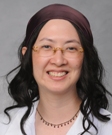
 

Chung

Betty Chung, DO, MPH, MA is a second year resident physician at the University of Illinois Hospital and Health Sciences System in Chicago, IL.

Musings After the RISE

So how did you fare on your recent resident in-service exam, aka the RISE? For most of the residents I know, they did better on the AP portion over the CP portion. I would have to say that not surprisingly, I feel that I did the opposite. Last year, I definitely did much better on the CP portion than the AP portion but my overall percentile was still good.

Even though I usually narrowed down the answers on the AP section to the correct one and a distractor, when I looked up content after I got home, I discovered that I often picked the wrong answer. But even then, I feel that the AP section was fair and not overwhelmingly difficult for someone who is probably better at AP than me.

For me, I thought that the CP section was not that difficult but most other residents that I talked with thought the opposite. They felt that many of the questions were esoteric and possibly not relevant to the practice of pathology once we are out of residency.

What are your thoughts after taking the RISE? Did you feel that it was a fair test? Did you feel that the questions asked are relevant to what we need to learn in residency and for our practice as real-world pathologists?

In other specialties like surgery and anesthesiology, in-service exams have a greater importance and scores are often asked for on fellowship applications. For pathology, this is not the case but it still is important that we test ourselves yearly to pinpoint our strengths and weaknesses in some manner. Do you think that the RISE is the answer or does it need a revamp?


Chung

Betty Chung, DO, MPH, MA is a second year resident physician at the University of Illinois Hospital and Health Sciences System in Chicago, IL.

For Whom the Match Tolls

Last week, hundreds of M4 students across this country hoping to match at pathology residencies learned their fates. On the flip side, training programs also learned whom they would welcome as trainees come end of June/July 1st. We also learned that there were 51 unmatched positions, even at some of the so-called “highly prestigious” programs that one expects to always fill. That’s the most I’ve seen in recent memory and more than double the number that were unfilled when I matched 2 years ago.

Several questions went through my mind when I learned of the increased number of unfilled spots this year. Is this a harbinger of things to come for our profession? Did programs make their rank lists too short? Was there a significant decrease in the number and/or quality of the applicants this year? And if less people applied, what is the reason? Are the significant anticipated reimbursement cuts, for pathology services in the most recently released federal physician fee schedule part of the problem? Besides the decrease in compensation, did the uncertainty of the pathology job market also contribute?
I was talking with another resident who thought that it was a good thing that we had more unmatched spots. He felt that we have too many trainees and not enough jobs for when we graduate. Although I did point out that after the SOAP week, the majority, if not all of those 51 positions would most certainly fill. This year’s match results may indicate the start of a possible trend for our profession or it may just be a fluke…we’ll have to wait until next year to have a better idea.

Robboyet al in an article entitled the “Pathologist Workforce in the United States” in the Archives of Pathology and Laboratory Medicine predicted that a retirement cliff would begin in 2015, resulting in a steady decline in the number of working pathologists in this country. I served as the resident representative on ASCP’s Future of the Pathologist Workforce Round Table that discussed some of the preliminary data that was included in the aforementioned article. I’ve also participated on other ASCP and CAP committees/councils since then. Despite the predictions, what I’ve heard personally from the physicians that I’ve worked with on those committees/councils is that at their current locations of employment, the overwhelming majority are not looking to hire any new pathologists in the near future.

So for those of us hoping for employment as new physicians in the next few years, will we have even more difficulty finding jobs than those who are currently struggling now to get enough interviews to ensure employment? Do you have suggestions as to a solution to this issue? It’s hard to predict what our profession will look like in a couple of years, especially with all the changes occurring post-ACA. But instead of being passive bystanders to this process, we need to actively interact with other specialties and engrain our worth into the clinical process in a very visible and palpable manner that we are missed when we’re absent, or be left behind.

The results of the match highlighted to me that our profession is going through some growing pains right now. While the etiology is unclear, we can start attempting to treat our differential to shape the outcome we would like to see. So how did the match go for your program? Do you feel that the match results were a good measure of the pulse of our profession right now? And what do you see as our profession’s biggest issues and what are some possible solutions?


Chung

Betty Chung, DO, MPH, MA is a second year resident physician at the University of Illinois Hospital and Health Sciences System in Chicago, IL.

The Utility of the RISE…Or Not…

So, that time of year is now again upon us…the Resident In-Service Exam, aka the RISE. Even though this test is meant to assess our knowledge of what we’ve learned thus far, the competitive natures that have brought to this point in our careers push us to do well on it. We feel an impulse, regardless of whether we act on it or not, to cram some knowledge into our brains at the last minute for a test that we are told we are not supposed to study for. This is quite a paradoxical conundrum.

But just how much does it really test? We are graded on percentiles in comparison to others in our year taking the RISE. But there are those rumors we all have heard, of programs that have remembrance databases or have year-long RISE specific lectures or students taking the test at home unproctored…so how much of our scores are true measures versus our peers if we don’t have access to these things?

Additionally, there is the other question: just how relevant is the RISE? Rinder et al. published the article “Senior RISE Scores Correlate with Outcomes of the American Board of Pathology Certifying Exams” in 2011, but how much of their findings truly are tied to our RISE scores and how much to our inherent study habits and test taking skills? These questions may be even more apropos at this time when there is a stronger recognition that we need to develop curricula to teach true competency and not just the ability to pass standardized tests. So yet again we are confronted with this question of just what does true competency mean and how do obtain it?

For me, the competency that I want to gain means possessing the ability and confidence to practice with very little supervision the day after I finish my studies and get a job. For some, this may be directly after residency and for the majority of us, after fellowship(s). So do you believe that the RISE helps us to pinpoint our weaknesses or really doesn’t help us much on our journey to competency? Does it help predict whether we will pass the AP and/or CP boards or is just a meter of our test taking ability? As a second year resident at a program where we do not, to my knowledge, have any of those aforementioned aids, I’m not so sure that I can answer these questions. All I know is that I’m still not done taking day-long standardized tests.

So, do you feel that the RISE is useful? Why or why not?


Chung

Betty Chung, DO, MPH, MA is a second year resident physician at the University of Illinois Hospital and Health Sciences System in Chicago, IL.


Balance Between Service Obligations and Education

These past couple of days I attended the CAP Residents Forum and USCAP in San Diego. It was both an inspiring and daunting experience. Inspiring because of the breadth and depth of research and amount of scholarly expertise in the room every time I attended a lecture; daunting because of this same fact and also because of the reminder that someday soon I will need to be as expert and competent as these speakers.

With these thoughts in mind, I attended the first half of the morning of the CAP Residents Forum for their “Dating Game” panel where new-in-practice and veteran pathologists spoke about to getting and keeping your first job. It was actually an engaging panel and I learned practical information that was new to me and that will help me not only to obtain my first job but also when I apply for fellowship in a couple of months.

I attended mostly molecular pathology talks and the cytology short course that for someone who hasn’t had cytology yet, was informative. I got to hang out with friends from other programs that I met through the CAP Residents Forum and to hear how they are taught the practice of pathology. These conversations got me to thinking about whether service obligations can compromise our education.

For someone who is CP-oriented, I am at a program that is heavy on the surgical pathology (we do 17 months; previous classes did many more). And most of us are trained at academic institutions but my program also has rotations at a VAhospital and two community private practice hospitals. Life is different at the community hospitals but I hear that most residents will go on to practice in this type of setting. The volume can be high, there may be many tumor boards/conferences to present at or attend, and the turnover time is so strictly adhered to that you might not always be able to get protected preview time – even if eventually you do get to sign-out with the attendings after they’ve verified a case.

But does it matter about protected preview time if you don’t look at the verified diagnosis before you sign out with your attending? Does your program have CP residents covering autopsy call? Do your residents gross on Saturdays? Just what constitutes service obligations interfering with resident education in your perspective? Working in a clinical setting, patient safety and service obligations can take on a predominant role, but the quality of our work cannot suffer. So what makes for the right balance between service obligations and resident education and what can we do to ensure that resident education is made a priority?


Chung

Betty Chung, DO, MPH, MA is a second year resident physician at the University of Illinois Hospital and Health Sciences System in Chicago, IL.

All I Really Need to Know I Learned in Residency

If you are old as I am (I was a non-traditional medical student), then you might remember a book called All I Really Need to Know I Learned in Kindergarten that remained on the NYT Bestseller List for an impressive two years back in the 80s. It was full of aphorisms of how a simpler perspective might prove to be a better and/or happier way to live. So, I’ve been wondering all week while frantically trying to get my USCAP poster done before the rush fee deadline goes into effect (I guess I never learn)…do we really learn everything we need to know to be good pathologists during residency?

Training programs are variable – some make you work for it while others, not so much. But in the end, the day after graduation, we are all expected to be full-fledged competent pathologists…as if, in those magical 24 hours, we have all become smarter, have mastered our inefficiencies and time management issues, and are suddenly better than we were a short time before.  But honestly, since you probably spent that last day not in pathology mode, the only thing that we can be sure of is that you are 24 hours older. Despite the differences in our training, the majority of us will go on to pass our boards, and scary thought, practice the day after we graduate (although that might mean postponement until after fellowship).

Residents are also variable in terms of how and what they learn. I admit that I never expect to be the best at surgpath, especially grossing. But I do keep trying and hope that I don’t hurt patients in the process. I hope to at least survive until I’m done with surgpath for good. And I know regardless, it will still help me whether I decide to go into molecular pathology or hematopathology or a combination of both. I do know that I excel on my most of my CP rotations. But what do we need to do to learn and improve on our deficiencies and move past our comfort zones? For me, I’m comfortable in the lab since I went to graduate school, originally was a dual degree medical student, and had a decade of research experience prior to medical school but I’d love to hear advice and stories of how residents improved their grossing skills and surgpath differentials or finally triumphed over that weakness or deficiency that kept showing up on your evaluations.

Despite where we train (even at the best programs), I’ll bet that most of us in our initial years will need to know the following, but not in any particular order:

  1. When in doubt or you don’t know, ask for help from someone you trust and respect
  2. The printed word…whether journals, textbooks, or Google…is your friend, so use it, and use it often
  3. Sticky notes or checklists really do help keep us organized
  4. There is never enough time in the day so plan and use it wisely
  5. Getting angry (at ourselves or others) really won’t help so re-direct that energy towards something positive
  6. You are never too old to learn something new
  7. If at first you don’t succeed, keep trying until you do (hopefully)
  8. Learning doesn’t stop with graduation
  9. Make time for yourself to recharge your batteries
  10. Despite everything we do, we will make mistakes, but try to learn from them so we don’t repeat them.


Chung

Betty Chung, DO, MPH, MA is a second year resident physician at the University of Illinois Hospital and Health Sciences System in Chicago, IL.

Preventing (Pathology) Resident Physician Burnout

Fellow residents, do you sometimes feel burned out, especially with the dismal winter weather than many of us have been experiencing lately? There have been many, predominantly small sample size, cross-sectional studies over the years on this topic. Methodological deficiencies in many of these studies may bring into question some of the generalized conclusions that they assert but does not discredit the truth that resident burnout exists and should be taken seriously by training programs.

In 2004, an article in JAMA on this topic defined “burnout” as a “pathological syndrome in which emotional depletion and maladaptive detachment develop in response to prolonged occupational stress.”1 Multiple studies have identified factors such as time demands, variability in faculty expectations, work overload that inhibits learning, systemic program issues, inadequate elective time, and lack of communication and support from faculty and peers as potent contributors to resident burnout.1,3 Furthermore,a subsequent study identified that burnout was associated with absenteeism, low job satisfaction, and medical errors.2

So, first, how can we identify if we are experiencing burnout? As with everything in life, know thyself. Conduct an honest self-assessment of your strengths and weaknesses as well as your absolute needs, both at work and outside of it. If you are not good at honestly evaluating yourself, then ask a trusted person who has your best interests at heart their opinion and truly listen. Then set aside designated time to recharge your batteries. For some this means exercise, for others, it may mean spiritual or community volunteer experiences, or even, just doing “nothing.” The key is to not do any residency work during this time. This is often easier said than done but the first step is to make a commitment to try to do so.

Next, be proactive to bring out the change you want to see. Often when we feel that a situation is out of our control or that we have no choice but to submit to a situation that makes us unhappy, fatigued, or emotionally drained, these negative feelings we internalize may manifest as burnout. So, find a way to take back some control. Frequently, part of this does mean cutting out those aspects of your life that have become toxic, whether it be negative situations or negative people. Of course, this is also easier said than done. If I had the cure for this, I’d bottle it and sell it.

Finally, find support. This statement can mean interacting with a mentor who will both personally and professionally “be in your corner” and help guide you through acquiring the necessary skills you need to be a good doctor. It also means to turn to those positive people in your life, whether it is a family member or a good friend, who will listen to you without judgment, let you vent, encourage you in healthy pursuits, but most importantly, remain honest with you and not just be your cheerleader.

Interestingly, a small survey study in 2013 by Medscape of pathologists showed that only 32% of respondents stated that they were burned out.4 Even though the methodology for this study is not stated to be able to determine the legitimacy of this study, it at least gives me hope that if I survive residency, there is hope at the end of the tunnel for a reprieve from those often seemingly, hydra-like tentacles of burnout that threaten to bring us down.

  1. NK Thomas. Resident Burnout. JAMA, 2004;292(23):2880-2889.
  2. LW McCray, PF Cronholm, RA Neill. Resident Physician Burnout: Is There Hope? Fam Med, Oct 2008; 40(9): 626-632.
  3. L Joseph, PF Shaw, BR Smoller. Perceptions of Stress Among Pathology Residents. Am J ClinPathol 2007; 128:911-919.
  4. Pathologist Lifestyles – Linking to Burnout: Medscape Survey. Last updated on 3/28/13. Accessed on 2/11/14 at http://www.medscape.com/features/slideshow/lifestyle/2013/pathology#1


Chung

Betty Chung, DO, MPH, MA is a second year resident physician at the University of Illinois Hospital and Health Sciences System in Chicago, IL.

Find Your Passion and Become Engaged

What does it mean to be engaged? Since I’ve been involved in grassroots organizing and health advocacy for most of my adult life, I believe its means to find your passion and become a proactive participant and not just a spectator – for me that has always meant educating those in minority and immigrant communities and those who affect these communities on health equity issues as well as fighting for the rights of those who are marginalized within these communities. I spent much of my time in medical school working as the head of our mobile migrant farm worker clinic, as a Schweitzer Fellow helping to promote free hepatitis B screenings and free vaccinations at two free health clinics, and co-organizing multiple health fairs that served the Philadelphia Asian community. I also worked as the national grassroots leadership coordinator and subsequently, national chair of AMSA’s Race, Ethnicity, Culture in Health (REACH) action committee.

Even though I’m back in Chicago where much of my grassroots experiences began, I’ve had to put these types of efforts on hold. Unfortunately, residency doesn’t always afford enough time for a consistent commitment in terms of my health advocacy. I do have at least enough time to still remain engaged to drive systems change within our profession. If this is something you’re passionate about, what do you need to do first?

Educate yourself on the opportunities out there. Organizations that focus on AP/CP issues like ASCP (the CP here means clinical medicine as opposed to research, not just clinical pathology) and CAP are good places to start. Check out their webpages (www.ascp.org and www.cap.org) to see how residents can become involved. Both organizations have junior positions for residents on their committees and councils and both also have resident councils that you might be able to become a part of. Often, there are also reserved resident positions on committees within specialty organizations (eg – Association of Molecular Pathology aka AMP) as well. Google is your friend. So check their websites often and get on their email lists as most of these position applications or elections (for CAP resident forum aka RF) have deadlines in the early spring. ASCP and CAP also have resident representative and delegate to the RF positions available and each residency program handles the appointment or election of residents to these positions differently so ask your PD.

Many of these committee positions are fairly competitive so you might not succeed at first; simply try again. Build your CV and network at conferences as there are often opportunities built-in for physician leaders of these organizations and residents to meet. You’d be surprised how an innocent encounter with one of these organizational leaders results in an unexpected opportunity. Last weekend, I was in Tampa as the only resident representing our interests with the educational planning committee for the 2014 ASCP Annual Meeting. I had no idea that sitting at lunch with an ASCP leader last spring when I was chosen to be the resident representative at their Future of the Pathology Workforce Roundtable and Leadership Forum would result in her recommending me for this position. I had a great time (and away from the snow and cold in Chicago although I did get stranded in Birmingham for a day on my way back), my opinions were appreciated, and I think the conference is going to be awesome (btw, there is a resident boards mini-course built into this conference every year). But don’t be Machiavellian when you network – just be yourself and you may be surprised at the doors that open for you. If you’re sincerely passionate about something, trust that it will show and that good things will happen.

So, I gave an example of chance encounters that granted me unexpected opportunities and it happened because I was at a conference where I was presenting a poster. So, I highly encourage submitting abstracts and presenting posters at conferences. You never know whom you may meet or how they may touch your life. Plus presenting a poster or platform is a good experience to develop skills you need and to build your CV for subsequent fellowship and job applications. As I mentioned before, residency is not the same as medical school but more like the training ground for your first job. We all must be more pro-active at taking ownership of our education and we must no longer expect that our education will be spoon-fed or organized around our needs specifically. Be aware of and engaged in obtaining what you need because there isn’t necessarily a syllabus for how you should learn during residency.

Becoming engaged and involved with these organizations as a resident gives you a glimpse as to issues that affect our profession, now and in the future. It also gives you an outlet to be a part of that change because our opinions are truly valued – most of the ASCP and CAP committee and council positions support your travel and expenses to these meetings, so they really are making an investment in you and the resident opinion you represent.

And lastly, give your 110%. If you are chosen for a leadership role, take it seriously, work hard, and be humble – being entitled and saying that you were “too busy” if you miss a deadline won’t reflect well on you…after all, we all are busy and that’s where time management skills come into play. So find what you are passionate about and go after it!


Chung

Betty Chung, DO, MPH, MA is a second year resident physician at the University of Illinois Hospital and Health Sciences System in Chicago, IL.

Hacking Pathology Residency Training

As we celebrate the Christmas season and gear up for 2014, I’ve been thinking about resolutions and things in my life that warrant change. And since I was able to go home this year for Christmas break, I’ve had some time to do something that I enjoy but haven’t been able to do in a while – watch TED videos. I recently watched this one given by a 13-year old about hackschooling at TedxUniversity of Nevada. Makes me wish I had done some when I was younger (my first aspiration was to be an artist) but of course, I was raised in a traditional Asian household that revered education and practicality (“you can do drawing as a hobby but you should be a doctor”). Don’t get me wrong, I do not blame my parents and now at this point in my life, it is my choices that will determine my future and happiness.

And so I’ve been thinking about my education, both personally and professionally. In terms of nurturing my creative side, I realize that I need to set aside some “me time” where I engage in my previous interests (though probably not during PGY-2). And for my social justice/service side, I know that I will eventually return to my community activities when I can consistently have time to give, although I still watch from the sidelines and contribute when I can. But in terms of my chosen profession, I often wonder if there is a way to “hack” our residency training to make it both more creative and effective and to be proactive rather than reactive?

Tying together some themes I have previously blogged about (competency evaluation and transforming our profession), I’d like to address some issues I see. Pathologists need to be more engaged, both within the system and within society or be left behind. With healthcare reform, gone will be the days when a physician can continue to practice the way s/he was trained – there will be a constant drive for life-long learning, both in terms of knowledge and utilization of new technologies, especially disruptive or exponential ones, than is present currently. I’m not going to argue for or against the finer points of the ACA or the recent cuts in pathology codes in the new physician fee schedule except to say that the landscape we residents will inherit will be vastly different than the one our attendings, or even we, now currently train.

But competency needs to be more than a checklist. We need to learn how to navigate and show our worth within the value-based systems where we will most likely work. First, of course, we need to learn our material well. We cannot interpret data, educate non-pathologists, or advocate for specific decisions if this foundation is lacking. But how do we residents take ownership and accomplish this in addition to the training we may or may not receive in our residencies? And how do we learn to be a patient advocate rather than just a reporter of results?

I will leave you these questions to ponder until my next blog where I will elaborate on some of my observations and ideas on this topic. For those of you who attended Eric Topol’s keynote at CAP ’13, I will leave you with similar talk by Dr. Daniel Kraft given at TedxMaastrict about 2.5 years earlier – http://www.ted.com/playlists/23/the_future_of_medicine.html– and hopefully, it’ll spark some ideas.

I hope everyone has a prosperous year in 2014!


Chung

Betty Chung, DO, MPH, MA is a second year resident physician at the University of Illinois Hospital and Health Sciences System in Chicago, IL.