Beyond the CBC and Reticulocyte Count: Early Detection of Iron Deficiency Anemia

In my May 2018 post (Not your Grandmother’s Hematology), I discussed the history of hematology and chronicled how far we have come in the last 60 years. We have progressed from manual counting of cells to the first Coulter Counter in 1956, which revolutionized hematology by being able to automate the counting of red blood cells, to modern instruments that can report up to 30 parameters and perform up to 400 CBCs an hour. Among these parameters are what are termed advanced clinical parameters, new parameters which provide physicians with additional information about the state of blood cells. In this blog I will explore how one of these advanced clinical parameters, the Reticulocyte Hemoglobin content, can provide physicians with information that can assist them with earlier detection, differential diagnosis and better management of iron deficiency and iron deficiency anemia. 

Case Study 

A 29 year old female was seen by her gynecologist reporting a history of heavy menstrual bleeding with current bleeding lasting 15 days. The doctor discussed various treatment options with the patient and a CBC was performed. CBC results are shown below.

Test Result Flags Reference
WBC 7.23   4.5-10.5 K/CMM
RBC 4.38   3.70-5.30 M/CMM
HGB 12.0   12.0-15.5 GM/DL
HCT 36.2   36.0-46.0 %
MCV 82.6   80-100 FL
MCH 27.4   27.0-34.0 PG
MCHC 33.1   32.0-36.0 %
PLT 243   150-450 K/CMM
MPV 11.0   9.6-12.0 FL
RDW 12.5   0-15.1 %

This CBC shows no abnormal flags. Based on patient history and presentation, the physician questioned iron deficiency despite normal hemoglobin and hematocrit, MCV and MCHC. He ordered a reticulocyte profile on the same specimen with the following results:

Test Result Flags Reference Range
Retic 1.55   0.5-2.0 %
Abs Retic 0.0679 H 0.0391-0.057 M/CMM
Imm Retic Frac 14.9   2.3-15.9 %
Ret-Hgb 24.6 L 30-35 PG

Reticulocyte counts are the quantity of the youngest red blood cells released from the bone marrow into the peripheral blood. Reticulocytes are reported as a % and the absolute reticulocyte count is calculated by multiplying the Retic% by the RBC. The immature reticulocyte fraction (IRF) is the rate of production of reticulocytes and depends largely on the ability of the bone marrow to respond to erythropoietin. The reticulocyte hemoglobin (Ret-He) content is the amount of hemoglobin in newly formed red blood cells. (There are two different hematology systems that report reticulocyte hemoglobin content. The two nomenclatures used for reticulocyte hemoglobin are Ret-He and CHr and studies have been done that demonstrate their equivalence)

Note that the Ret-He reflects the quality of the newly formed reticulocytes. Ret-He is a direct measurement of the amount of hemoglobin in each reticulocyte, which indicates the amount of iron available for incorporation into the precursors of mature red cells. This patient’s retic% and IRF are within normal ranges, but her absolute reticulocyte count is high. A Ret-He less than 29 pg in an adult is indicative of iron deficiency. With a normal CBC and low Ret-He, this is an early indication that iron deficiency is indeed present. With the absence of sufficient iron, this patient would eventually develop a microcytic, hypochromic anemia. Therefore, Ret-He can measure and indicate inadequate hemoglobin production before the hemoglobin and hematocrit decrease.

In this case the importance of clinical awareness is illustrated. This physician remembered a recent laboratory technical bulletin announcing implementation of a new hematology analyzer system with the availability of new parameters for reticulocyte counts. When the CBC results came back from the laboratory, the patient had already gone home, and no serum had been drawn to perform a ferritin level. Rather than calling the patient back to have another sample drawn, the Ret-He could be done from the same blood sample already in the lab. Ret-He is a faster, easier and less expensive test than additional iron studies and bone marrow iron stains. Ret-He can easily be used at a very low cost to get that first piece of information to decide whether or not iron deficiency is a concern. A high or normal Ret-He would have ruled out an iron deficiency with a fairly high confidence level. In this case, the low Ret-He could be used to guide further workups. A subsequent blood drawn revealed a low ferritin and iron deficiency was confirmed. The patient was advised to take an iron supplement along with ongoing treatment for the bleeding.

This case is just one example of the clinical utility of the Ret-He. Using the Ret-He, physicians can determine iron deficiency before iron deficiency IDA develops. A low Ret-He can alert a physician to iron deficiency without the presence of anemia, microcytosis or hypochromia. Ret-He can also be used to monitor and show early response to iron therapy before any other parameters change. A case example is that of a 5 month old who was brought to the emergency room with a Hgb of 7 g/dl and a Ret-He of 11.9 pg. In pediatric patients, a Ret-He less than 27.5 is an indicator of IDA. In this child, treatment with oral iron showed that the Ret-He had risen to 24.6 pg seven days after the onset of iron therapy, while the CBC remained virtually the same. This provided a very early indication that the iron therapy was effective.1 The Ret-He can also been used to minimize transfusions. The AABB Choosing Wisely Campaign lists 5 things that physicians and patients should questions before transfusion. One of the guidelines states “Don’t transfuse red blood cells for iron deficiency without hemodynamic instability.“2 Historically, physicians have used a ‘wait and see’ approach and watched Hgb levels drop before they start looking at iron. Using a Ret-He, iron deficiency could be determined, for example, in a patient with a Hgb of 11 g/dl. Oral or intravenous iron could be started before the Hgb drops below 7 g/dl and transfusion becomes necessary. The AABB Choosing Wisely Campaign emphasizes this by stating that patients with chronic iron deficiency or pre-operative patients with iron deficiency should be given iron therapy before transfusion is considered.2 Ret-He can give the earliest indication of iron deficiency and can be used to monitor the response to iron therapy. Another clinical utility of Ret-He has been to help diagnose or rule out iron deficiency in oncology patients. Additionally, Ret-He has been included in guidelines for anemia management in end stage renal disease patients on dialysis and who get erythropoietin.

The Ret-He parameter has proved clinically useful in early determination of functional iron deficiency. Traditionally ordered chemistry iron studies are indirect measures that have certain inherent inaccuracies due to the presence of inflammation and infection, or in patients on iron therapy. Ret-He is a direct and very effective screening tool and physicians can use Ret-He with other RBC indicies to improve anemia diagnosis and management in many patient populations. Ret-He can be used as a screening measure, and used to reflex for iron studies. Therefore, laboratories who have instruments that can report Ret-He and CHr should develop an education program to help clinicians effectively use Ret-He. Together physicians and laboratorians can develop their own guidelines for reflex testing and improvement for patient care.

References

  1. Case Studies Demonstrating the Clinical Application of the Advanced Clinical Parameters (1/20/2016) Chantale Pambrun, MD, FRCPC, Head of Division of Hematopathology and Assistant Professor of Pathology and Laboratory Medicine, IWK Children’s & Women’s Health Centre and Dalhousie University
  2. https://www.aabb.org/pbm/Documents/Choosing-Wisely-Five-Things-Physicians-and-Patients-Should-Question.PDF
  3. Advanced parameters offer faster, surer guidance to cancer care. Anne Paxton. CAP Today. Sept 2017
  4. The Value-driven Laboratory. Reticulocyte Hemoglobin Content (Ret-He): A Parameter Well-Established Clinical Value. Sysmex America White Paper.
  5. Sysmex Clinical Support Team. Utility of RET-He, August 10. 2015
  6. Brugnara C, Schiller B, Moran J. Reticulocyte hemoglobin equivalent (Ret-He) and assessment of iron-deficient states. Clinical Laboratory Hematology 2006;28:303 – 308.


Socha-small

-Becky Socha, MS, MLS(ASCP)CM BB CM graduated from Merrimack College in N. Andover, Massachusetts with a BS in Medical Technology and completed her MS in Clinical Laboratory Sciences at the University of Massachusetts, Lowell. She has worked as a Medical Technologist for over 30 years. She’s worked in all areas of the clinical laboratory, but has a special interest in Hematology and Blood Banking. When she’s not busy being a mad scientist, she can be found outside riding her bicycle.

Microbiology Case Study: A 22 Year Old Female with Wound Infection


Case History

22 year old female with a past medical history of scoliosis presents for routine follow-up after hospital discharge for post-op wound infection following a spinal fusion surgery. Patient had an anterior and posterior spinal fusion with allograft and hardware on 1/18/18. She had a laminectomy and irrigation for post-op epidural hematoma on 1/19/18. Subsequently, she developed a lumbar spine abscess and underwent irrigation and debridement of the abscess on 3/1/18. Two operative cultures of the left paraspinal musculature grew only tiny clear colonies on the anaerobic blood plates. Gram stain of these colonies did not show any organism. MALDI-ToF MS identified these colonies as Mycoplasma hominis which was confirmed at a reference laboratory by PCR. The patient was given daptomycin plus levofloxacin. Since discharge from the hospital, she had wound healing with intermittent discharge.

Lab Identification

Mycoplasma hominis requires a specific rich and complex agar medium for growth and grows tiny colonies on standard media such as Columbia agar. In a patient with urogenital disease, Mycoplasma hominis is diagnosed with a urogenital specimen culture and confirmed by PCR. In a patient with spinal hardware infection, Mycoplasma hominis is diagnosed by a culture of infected tissue with PCR confirmation.

Discussion

Mycoplasma is a bacteria that lacks a cell wall and contains the smallest bacterial genome totally sequenced. Due to its lack of cell wall, Mycoplasma cannot be visualized with a Gram stain, and it is innately resistant to b-lactams.1 Due to its small bacterial genome, 580 kpb, it cannot be detected by light microscopy and requires complex nutrients for growth1.

Mycoplasmas are frequently part of the oropharyngeal and genital tract flora among healthy subjects.1 There are more than 200 Mycoplasma species, of which 13 have been isolated from humans. Only 6 species, among which 5 are pathogens, live in the urogenital tract.2 As one of the Mycoplasma species detected in the genitourinary tract, M. hominis can be either a pathogen or part of the normal flora.1 Colonization with M. hominis is associated with younger age, lower socioeconomic status, multiple sexual partners, African American ethnicity, and hormonal status.1 Infection with M. hominis is more common among pregnant women.1

Mycoplasma hominis is associated with genital infections in females but not in males. Examples of infections include pelvic inflammatory disease and bacterial vaginosis.1 In addition, it is responsible for pregnancy-related infections such as chorioamnionitis and post-partum fever secondary to endometritis.1 Moreover, M. hominis is associated with infections of the newborns, meningitis among premature babies, and low birth weight among neonates.1 Lastly, M. hominis can lead to extragenital infections including spinal hardware infections, septic arthritis, retroperitoneal abscess, hematoma infection, and osteitis.1

Infections by Mycoplasma hominis are infrequent and difficult to confirm prior to the start of empiric therapy.2 Urogenital and systemic infections due to Mycoplasma hominis are treated with oral tetracycline.1 For organisms resistant to tetracycline, fluoroquinolones are recommended.1 For wound infections or abscesses, doxycycline, clindamycin, or fluoroquinolones are recommended for at least 2 weeks.1 Drainage and debridement may be necessary.1

References

  1. Pereyre S. et Mycoplasma hominis, M. genitalium and Ureaplasma spp.  Antimicrobe http://www.antimicrobe.org/m06.asp
  1. Baum S. Mycoplasma hominis and ureaplasma urealyticum infections. (2017, Dec. 7th).  Last retrieved on March 27, 2018 from https://www.uptodate.com/contents/mycoplasma-hominis-and-ureaplasma-urealyticum-infections


-Ting Chen, MD is a 1st year anatomic and clinical pathology resident at the University of Vermont Medical Center.

Wojewoda-small

-Christi Wojewoda, MD, is the Director of Clinical Microbiology at the University of Vermont Medical Center and an Associate Professor at the University of Vermont.

Microbiology Case Study: A 70 Year Old Female with Bronchiectasis

Case History 

A 70 year old female presents with bronchiectasis with acute exacerbation. She is a non-smoker, although claims to have been exposed to secondhand smoke, and she has chronic sinusitis. The patient recently traveled to Savannah, Georgia where she developed a productive cough. She was prescribed doxycycline and was then sent home. She returned to the pulmonary clinic for a follow up consultation after her cough worsened.

Laboratory Identification

hflu1
Image 1. Intracellular gram negative coccobacilli with polymorphonuclear cells found in the sputum smear (100x oil immersion).
hflu2
Image 2. The predominant organism found in this patient’s sputum culture is growing 4+ on chocolate agar, but not growing on blood and MacConkey agars.
hflu3
Image 3. Close up of chocolate agar showing 4+ growth of wet, translucent colonies.

The Gram stain and smear showed 4+ neutrophils, 4+ gram negative coccobacilli and little to no mixed respiratory flora. The following day, the culture grew 1+ respiratory flora on the blood plate, no growth on the MacConkey plate, and 4+ translucent colonies on the chocolate plate. 

Discussion 

The predominant organism was identified by the MALDI-TOF as Haemophilus influenzae. The Gram stain and culture findings are consistent with the MALDI-TOF identification. H. influenzae is an oxidase positive, gram negative coccobacilli known for its requirement of X (hemin) and V (NAD) factors found in chocolate agar. Because of its growth requirements, H. influenzae will not grow on MacConkey agar despite being a gram negative organism. It may be cultured on blood agar if the agar is inoculated with an organism such as Staphylococcus aureus, which can provide the V factor, while the X factor is provided by the agar itself. This phenomenon is known as satelliting. Identification of H. influenzae may also be done using a Haemophilus ID Quad plate. Each section of the plate contains varying factors and allows for Haemophilus identification to the species level based on the growth and hemolysis pattern.

H. influenzae is normal flora of mucous membranes and frequently colonizes the human oral cavity and upper respiratory tract. Commonly, H. influenzae causes pneumonia, as with our patient, bronchitis, and ear infections. However, it is also a known cause for bacterial meningitis, endocarditis, and osteomyelitis. Transmission of H. influenzae occurs through respiratory droplets so proper PPE precautions must be taken by clinicians when working with infected patients. It is important for laboratory professionals to work with the organism using proper PPE and BSL-2 practices and plating of respiratory specimens should occur in a biosafety cabinet.

Susceptibility testing is not routinely performed on isolates of H. influenzae. β-lactamase production can be determined by using nitrocefin, a chromogenic cephalosporin spot test. 

References

  1. Haemophilus influenzae Disease (Including Hib). (2018, February 13). Retrieved June 28, 2018, from https://www.cdc.gov/hi-disease/index.html
  2. (2012, March 15). Retrieved June 28, 2018, from https://www.cdc.gov/meningitis/lab-manual/chpt09-id-characterization-hi.html. Identification and Characterization of Haemophilus influenzae
  3. Manual of Clinical Microbiology, 11th edition


MS

-Madaine Saguinsin, MLS (ASCP), graduated from Purdue University with a BS in Medical Laboratory Sciences and is a medical technologist at NorthShore University Health System. Her interests are microbiology and parasitology.

-Erin McElvania, PhD, D(ABMM), is the Director of Clinical Microbiology NorthShore University Health System in Evanston, Illinois.

Microbiology Case Study: A 60 Year Old Female with Right Ear Pain

Case History

60 year old female presents to the emergency department with increased pain in her right ear and decreased hearing. She denies ear discharge. She endorses vertigo for 7 months that is precipitated by sudden changes in head position. On physical exam, the right ear canal is obscured by a foreign body. Ear swab is positive for growth on fungal culture.

Lab Identification

Image 1. Salt and pepper fungal colonies isolated from ear swab.

aspniger
Image 1. Salt and pepper fungal colonies isolated from ear swab.
aspniger2
Image 2. Septate hyphae with unbranched condidiophore connected to a swollen vesicle covered in phialides that produce chains of conidia.

The identification of Aspergillus niger is made based on macroscopic colony morphology and microscopic structures. On the potato flake agar, Aspergillus niger grows salt and pepper colonies. For microscopic examination, a slide is made by touching the colonies with a piece of clear tape, putting a drop of lactophenol analine blue on a glass slide, and placing the tape on the slide. Microscopically, Aspergillus niger appears as septate hyphae with long smooth unbranched conidiophores. Compared with other Aspergillus species, the phialides of niger cover the entire vesicle and form a “radiate” head, which splits into several loose columns.

Discussion

Aspergillus is a common mold that lives both indoors and outdoors. The Aspergillus genus is composed of 180 species, among which 34 are associated with human disease.1 A. fumigatus is the most common cause of aspergillosis syndromes. A. terreus is a species of particular concern due to its resistance to amphotericin. An invasive disease due to A. terreus has a poor prognosis.1

Healthy individuals inhale hundreds of conidia of Aspergillus per day without illness. However, people with a weakened immune system or lung disease are at higher risk of developing infections from inhaling the condidia. Presentations of aspergillosis range from allergy to fungal balls, to dissemination.1 Examples of aspergillosis include asthma, allergic bronchopulmonary aspergillosis, and allergic sinusitis.1

Invasive otitis externa due to Aspergillus is a rare, potentially life-threatening invasive fungal infection affecting immunocompromised patients.2 It spreads from the external auditory canal to adjacent anatomical structures such as soft tissues, cartilage, and bone.2 The condition can lead to osteomyelitis of the base of the skull with progressive cranial nerve palsies, irreversible hearing, and neurological impairment.2 The infection can be treated with antifungals.

References

  1. Barnes PD, Marr KA. Aspergillosis: spectrum of disease, diagnosis, and treatment. Infect Dis Clin North Am. 2006 Sep;20(3):545-61, vi.
  2. Parize, P. et al. Antifungal Therapy of Aspergillus Invasive Otitis Externa: Efficacy of Voriconazole and Review. Antimicrobial agents and chemotherapy. 2018 April; 62(4). http://aac.asm.org/content/53/3/1048.long


-Ting Chen, MD is a 1st year anatomic and clinical pathology resident at the University of Vermont Medical Center.

Wojewoda-small

-Christi Wojewoda, MD, is the Director of Clinical Microbiology at the University of Vermont Medical Center and an Associate Professor at the University of Vermont.

Microbiology Case Study: A 10 Year Old with Fever and Chills

Case History

A 10 year old female presented to the pediatric emergency department (ED) with a chief complaint of persistent fever and chills for the past 10 days. Her mother reported the fevers reached up to 103°F and temporarily would respond to ibuprofen.  She also noted a decrease in the patient’s appetite, tiredness and a bumpy rash on her truck and extremities. In the ED, she was clinically stable but her temperature reached a max of 104.7°F. On physical examination, shotty cervical lymphadenopathy was noted and there was no appreciable enlargement of the liver or spleen. Initial laboratory testing showed a white blood cell count of 10.6 TH/cm2 (normal range: 4.3-11.4 TH/cm2) and elevated acute phase proteins (ESR 45 mm/HR and CRP 2.6 mg/dL). Blood cultures were collected and the patient was started on ceftriaxone. Pediatric infectious disease was consulted and a thorough infectious work up was completed.

Laboratory Identification 

  • Rapid influenza antigen test: Negative
  • Rapid Group A Strep antigen test: Negative
  • Rapid Monospot: Negative
  • HIV antigen/antibody (4th generation) test: Negative
  • Legionella urinary antigen: Negative
  • Histoplasma urinary antigen: Negative
  • Antinuclear antibody: Negative
  • Rheumatoid factor: Negative
  • Urine culture: Negative
  • Blood cultures: Negative
  • Bartonella henselae IgM: ≥1:20 (normal <1:20)
  • Bartonella henselae IgG: ≥1:1024 (normal <1:128)

Infectious disease and rheumatologic work ups, as listed above, were negative with the exception of a positive IgM and IgG serologic testing for Bartonella henselae, with the results suggesting a recent infection based on the elevated titers. Upon further questioning, the family did have many outdoor cats and dogs; however, the child denied any recent bites or scratches.

Discussion 

Bartonella henselae is a facultative, Gram negative coccobacillary rod that is the causative agent of cat scratch disease and bacillary angiomatosis. The main reservoir for B. henselae is cats and the disease is spread from cat to cat via the cat flea. Feral cats, outdoor cats and young kittens, especially those living in hot, humid environments where fleas are plentiful, are more likely to be infected and spread the disease to humans via infective flea feces during a scratch or bite from the cat.

The incubation period for B. henselae ranges from 1-3 weeks and the majority of patients present with systemic symptoms including fever, chills, malaise, anorexia and headache. In addition, painful lymphadenopathy, on the side of the body where the scratch occurred (most common upper extremity), can be present in the epitrochlear, axillary and cervical regions. Less frequently, B. henselae causing bacillary angiomatosis can result in the proliferation of vessels in organs (liver and spleen). Though rare, encephalopathy and endocarditis due to B. henselae are the most severe manifestations of disease.

In the microbiology laboratory, the diagnosis of B. henselae is challenging due to the fact it is slow growing, highly hemin dependent and requires high humidity conditions for growth. The organism will grow on chocolate and heart infusion agars containing 5% fresh rabbit blood. Plates should be incubated at 35°C with 5% CO2 with high humidity for at least 4 weeks. Colonies are irregular and off-white in color and B. henselae is negative for both catalase & oxidase and asaccharolytic.

Due to the identification difficulties with culture, serologic testing is the main methodology for the diagnosis of B. henselae. Enzyme linked immunosorbent assays (ELISA) are relatively easy to perform and provides good results, although the provider should be aware of the sensitivity of the particular platform, the fact that cross reactivity with other Bartonella spp. can occur and seronegative infections can sometimes occur. Warthin-Starry silver stain on fixed tissue sections from lymph nodes and other organs can be helpful as well; however, it is relatively insensitive and not highly specific.   

 With regards to treatment, there are no agreed upon breakpoints for B. henselae published by CLSI or EUCAST. Microdilution or Etests can be used for testing and isolates have been susceptible to many antibiotics. In general, for cat scratch disease, it does not respond to antibiotic therapy and there is only a minimal benefit of antimicrobial agents. In the case of our patient, she was switched from ceftriaxone to a five day course of azithromycin with a gradual improvement of her fever curve. She was scheduled to follow up with pediatric infectious disease in 2-3 weeks.


Stempak

-Lisa Stempak, MD, is an Assistant Professor of Pathology at the University of Mississippi Medical Center in Jackson, MS. She is certified by the American Board of Pathology in Anatomic and Clinical Pathology as well as Medical Microbiology. She is the Director of Clinical Pathology as well as the Microbiology and Serology Laboratories.  Her interests include infectious disease histology, process and quality improvement and resident education.

Microbiology Case Study: An 88 Year Old Male with Headache

Case History

An 88 year old male presents with fever, nausea, and headache. The patient reported a diffuse headache accompanied by malaise, fatigue, and nausea without vomiting. He denied confusion, irritability, or a personal and family history of headaches. According to the patient, he frequently attends cookout parties and enjoys fruits, salads, wine, and cheese. Temperature is 38.2 degrees Celsius, blood pressure is 96/65 mmHg, pulse is 102 beats/minute, and respiratory rate is 20 breaths per minute. Physical exam is negative for nuchal rigidity and Kernig sign. Funduscopic exam is negative for papilledema. CBC shows leukocyte count of 16,000/mm3. The patient’s blood culture is positive.

Laboratory Identification

listmono1
Image 1. Short gram positive bacilli identified on Gram stain of blood culture (100x oil immersion).
listmono2
Image 2. Aerobic growth of round and translucent colonies with a narrow zone of beta hemolysis subcultured from positive blood culture bottle to sheep blood agar plate.

The blood culture was positive for short, gram positive bacilli. Sheep blood agar plate grew round and translucent colonies which have a narrow zone of beta hemolysis as shown on our plate. The organism was catalase positive and motile at 25 degrees Celsius. It showed end over end tumbling motility in a wet prep and an umbrella pattern in semi-solid motility medium. It was identified by MALDI-ToF as Listeria monocytogenes.

Discussion

Listeria monocytogenes is a gram positive bacillus that is isolated from the environment and a variety of animals. It is associated with foodborne outbreaks from dairy and meat products. The most common foods associated with listeriosis outbreaks include unpasteurized raw milk, cold deli meat, hot dogs, raw sprouts, smoked seafood, and soft cheese.1

Listeria commonly infects pregnant women, immunocompromised individuals, and elderly 65 years or older.1 Among pregnant women, Listeria can lead to miscarriages, stillbirths, and newborn meningitis resulting in death.1 In 1985, an outbreak of Listeria due to soft cheese resulted in 142 individuals sick, 10 newborn deaths, 18 adult deaths, and 20 miscarriages.1 Among the immunocompromised and elderly, Listeria can cause septicemia and meningitis. In 2011, a cantaloupe outbreak due to Listeria resulted in 147 people sick in 28 states and 33 deaths.1 The infected population was mostly over the age of 65 years.1 In addition, Listeria can cause acute febrile gastroenteritis in healthy individuals.2 Patients typically present with fever, watery diarrhea, nausea, headache, and pain in joints and muscles.2 Symptoms start 24 hours after the ingestion of bacteria and resolve by themselves in 2 days.2

Treatment of Listeria depends on the severity of symptoms. Although pregnant women with Listeria infection typically present with a self-limited flu-like illness, they are treated with IV ampicillin to prevent infection of the fetus.1 For patients other than pregnant women, the treatment of Listeria infection depends on the severity of symptoms.

References

  1. Information for Health Professionals and Laboratories. (2017, June 29). Retrieved on March 1st, 2018 from https://www.cdc.gov/listeria/technical.html
  2. Say Tat Ooi, Bennett Lorber; Gastroenteritis Due to Listeria monocytogenesClinical Infectious Diseases, Volume 40, Issue 9, 1 May 2005, Pages 1327 1332, https://doi.org/10.1086/429324


-Ting Chen, MD is a 1st year anatomic and clinical pathology resident at the University of Vermont Medical Center.

Wojewoda-small

-Christi Wojewoda, MD, is the Director of Clinical Microbiology at the University of Vermont Medical Center and an Associate Professor at the University of Vermont.

Microbiology Case Study: A 45 Year Old Woman with Breast Abscess

Case History

Our patient is a 45-year-old female who presents to the Emergency department with breast pain. She was diagnosed with granulomatous mastitis 3 months prior. She was treated with 3 weeks of steroids, but they were stopped when the mass was unchanged and the patient was experiencing increasing breast tenderness. Since then she and has undergone several procedures to drain her right breast abscess, the most recent being five days prior. The woman has been treated with sequential courses of sulfamethoxazole–trimethoprim and metronidazole without improvement. On this visit, the abscess was again drained and sent to the microbiology laboratory for culture. The Gram stain showed no bacteria and 3+ polymorphonuclear cells. After 48 hours incubation there was scant growth on the blood agar plate and no growth on the chocolate, MacConkey or CNA plates. The colonies growing on the blood plate were tiny, white, and lipophilic (Image 1).

corynekrop1
Image 1. Small, white, lipophilic colonies growing on blood agar plate at 48 h incubation.  There was no growth of this organism on chocolate or MacConkey agars this time point.

Discussion

The organism was identified as Corynebacterium kroppenstedtii.

Colonies on the blood agar plate were identified as Corynebacterium kroppenstedtii using MALDI-TOF mass spectrometry for identification. C. kroppenstedtii is catalase positive, non-motile and a facultative anaerobe. It grows better on 5% sheep blood agar than chocolate agar, as is the case for many Corynebacterium spp. Corynebacterium come in two varieties, lipophilic such as Corynebacterium jeikeium, and luxuriantly growing, such as Corynebacterium straitum. C. kroppenstedtii is part of the former lipophilic group, forming small colonies after extended incubation.  Lipids such as Tween-80 can added to the media to improve growth of lipophilic Corynebacterium such as C. kroppenstedtii, but clinically this is not routinely performed. When viewed on a gram stain, the bacteria are rod-shaped gram positive diptheroids with typical coryneform morphology. Both MALDI-TOF and 16S rRNA sequencing can accurately identify C. kroppenstedtii to the species level.

C. kroppenstedtii is a relatively newly recognized species within the Corynebacterium genus. It was first described in a case series of young Polynesian women with histological evidence of lobar mastitis, from which C. kroppenstedtii was identified from >40% of the patients’ abscesses. Since that time, isolation of C. kroppenstedtii has been clinically associated with breast abscesses and granulomatis mastitis. C. kroppenstedtii is a highly lipophilic bacterium. Its cell wall lacks many mycolic acids, which may explain its propensity to grow in lipid-rich sites such as mammary glands. C. kroppenstedtii typically affects women of reproductive age and can be difficult to diagnose due to the slow growing nature of the lipophilic organism and the relatively few organisms present in abscess specimens.

Prior to identification by MALDI-TOF MS and 16s rRNA sequencing this patient’s culture would have been reported as rare or 1+ “dipthroid,” “coryneform,” or “Corynebacterium spp.” Without knowing the clinical significance of this organism, the culture results could easily be dismissed as contaminating skin flora.

It is very difficult to treat C. kroppenstedtii in abscesses, with the most effective treatment requiring both surgical drainage of the abscess and long term antibiotic use. It is fairly difficult to get antibiotics to the site of infection, so antibiotics that test as susceptible in the laboratory may not eradicate the pathogen. Our patient’s isolate of C. kroppenstedtii was susceptible to ciprofloxacin, clindamycin, doxycycline, and intermediate to penicillin. She remains on ciprofloxacin therapy, but has ongoing right breast tenderness. She had another surgical drainage of her breast abscess a week after this case, and the culture also grew 1+ C. kroppenstedtii with 3+ PMN seen on Gram stain, so her infection has not yet been resolved.
References

  1. Tauch, Andreas, et al. “A Microbiological and Clinical Review on Corynebacterium Kroppenstedtii.” International Journal of Infectious Diseases, vol. 48, 2016, pp. 33–39., doi:10.1016/j.ijid.2016.04.023. ScienceDirect.
  2. Johnson, Matthew G., et al. “The brief case: recurrent granulomatous mastitis due to Corynebacterium kroppenstedtii.” Journal of clinical microbiology 54.8 (2016): 1938-1941.
  3. Paviour, Sue, et al. “Corynebacterium species isolated from patients with mastitis.” Clinical Infectious Diseases 35.11 (2002): 1434-1440.


CW

-Carolyn Wiest, MT(ASCP) graduated from Michigan State University with a BS in molecular genetics and is a medical technologist at NorthShore University HealthSystem.  Her interests are in microbiology and molecular diagnostics. 

-Erin McElvania, PhD, D(ABMM), is the Director of Clinical Microbiology NorthShore University Health System in Evanston, Illinois.

Microbiology Case Study: A 28 Year Old Female with Perirectal Abscess

Case History

A 28 year old female with a history of Ulcerative Colitis on humira and azathioprine presented with proctitis and a recent perirectal abscess. The patient reported a two week history of progressively worsening pain and swelling in the perianal region. In addition, she reported recent purulence excreted with bowel movements.  On physical exam, the patient was afebrile and negative for rash, oral lesions, joint pain, or abdominal pain. A perirectal abscess was identified and drained. Abscess culture was positive. Patient reported recently engaging in high-risk sexual behavior with multiple male sexual partners often without protection.

Lab Identification

neissgono
Image 1. Kidney-bean shaped gram negative cocci identified on Gram staining of perirectal abscess culture (100x oil immersion).  
neissgono2.png
Image 2. Aerobic growth of flat, gray-white, and moist colonies from perirectal abscess on chocolate agar plate.  

Abscess culture grew kidney-bean shaped gram negative diplococci. Colonies on chocolate agar plate appeared medium sized, flat, gray-brown, and moist. The organism was oxidase positive and identified by MALDI to be Neisseria gonorrhoeae.

Discussion

Neisseria gonorrhoeae is a kidney-bean shaped gram negative diplococci for which humans are the only host. The organism causes gonorrhea, a common sexually transmitted disease, among young people between the ages of 15-24 years. Gonorrhea is spread by sexual contact or through the birth canal. The most common site of infection is the urogenital tract.2 Males commonly present with dysuria with penile discharge.2 Females commonly present asymptomatically or with symptoms such as mild vaginal mucopurulent discharge and severe pelvic pain2. In addition, gonorrhea can cause infections of the anus, conjunctiva, pharynx, ovary and uterus.2 In the neonate, the culprit organism can lead to ophthalmia neonatorum.2 Lastly, gonorrhea causes disseminated disease such as arthritis, endocarditis, meningitis, and skin lesions on extremities.2 CDC currently recommends treating gonorrhea with dual therapy, a single dose of 250 mg intramuscular ceftriaxone and 1g of oral azithromycin.1

Antibiotic resistance in gonorrhea is an increasing public health concern. The World Health Organization has a program that monitors the global antimicrobial resistance of gonorrhea.3 The data from 77 countries between 2009 and 2014 showed that 66% of reporting countries had encountered gonorrhea strains with either resistance or reduced susceptibility to ceftriaxone.3 81% of reporting countries had encountered gonorrhea strains resistant to azithromycin.3 Given these data, it is important to improve gonorrhea prevention and continue to monitor gonorrhea antibiotic resistance at both the national and global levels.

References

  1. Gonorrhea treatment and care. (2017, Oct 31st). Retrieved on March 1st, 2018 from https://www.cdc.gov/std/gonorrhea/treatment.htm
  2. Miller KE. Diagnosis and Treatment of Neisseria gonorrhoeae Am Fam Physician. 2006 May 15:73 (10): 1779-1784.
  3. Wi T, et al. Antimicrobial resistance in Neisseria gonororheae: Global surveillance and a call for international collaborative action. PLoS Med 14(7): e1002344.https://doi.org/10.1371/journal.pmed.1002344


-Ting Chen, MD is a 1st year anatomic and clinical pathology resident at the University of Vermont Medical Center.

Wojewoda-small

-Christi Wojewoda, MD, is the Director of Clinical Microbiology at the University of Vermont Medical Center and an Associate Professor at the University of Vermont.

Hematopathology Case Study: A 16 Year Old Male with Fatigue, Fevers, and Weight Loss

Case History

16 year old male with a history of chronic pilonidal cyst presented with fatigue, fevers and weight loss. He was febrile and noted to have cervical and inguinal adenopathy. Labs were significant for a white count of 77,000 with 85% peripheral blasts, anemia and thrombocytopenia.

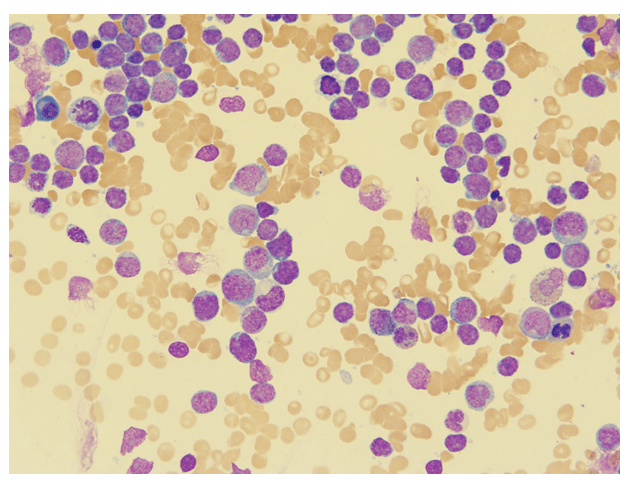
MPAL1
Bone marrow aspirate
MPAL2
Bone marrow core biopsy
MPAL3.png
Flow cytometry myeloid markers
MPAL4
Flow cytometry cytoplasmic markers
MPAL5
Flow cytometry T-cell markers

Diagnosis

The bone marrow aspirate shows cellular spicules with sheets of intermediate-to-large sized mononuclear cells with irregular nuclei, distinct nucleoli, dispersed chromatin, and scant to generous amphophilic cytoplasm, with occasional vacuoles, consistent with blasts.

The bone marrow core biopsy shows a greater than 95% cellular marrow, hypercellular for age with approximately 90% of the cellularity composed of an interstitial population of intermediate-to-large sized mononuclear cells with irregular nuclei, distinct nucleoli, dispersed chromatin, and scant to generous amphophilic cytoplasm, with occasional vacuoles, consistent with blasts.

Flow cytometry shows leukemic cells that express immaturity markers (TdT, CD34, CD117, HLA-DR), T cell lineage markers (CD2, CD7 cCD3), and multiple myeloid markers (CD13, CD117, and variable CD15 and CD11b as well as MPO in a small subset).

Bone marrow core biopsy staining (not shown) had similar findings with blasts showing dim-to-strong positivity for myeloperoxidase, lysozyme, CD34 and CD117, as well as strong positivity for TdT. CD7 was weakly positivity, as well as CD3. CD4 and CD5 were negative.

MPAL6
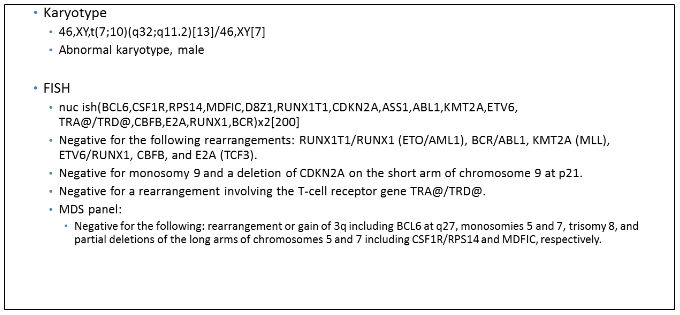
Genetics diagnostics
MPAL7
NGS panel

With the expression of MPO by flow cytometric analysis and immunohistochemistry, a final diagnosis of acute leukemia with myeloid and T lymphoid phenotypic features, most consistent with T/Myeloid Mixed Phenotype Acute Leukemia (MPAL) was rendered. 

Discussion

Most acute leukemias are definitively assigned to either myeloid, T or B lymphoid lineages. However, approximately 2-5% of patients diagnosed with acute leukemia display an ambiguous lineage after immunophenotyping. A portion of these cases are classified under the category of mixed phenotype acute leukemia (MPAL) by the current WHO nomenclature.1

In a study of 117 MPAL patients by Yan et al, 55% of the cases had combined B/Myeloid, while 33% had T/Myeloid, and 12% had B/T/Myeloid. CD34 was strongly positive in 82% of cases, which reinforces the idea that the cell of origin is a multi-potent stem cell capable of differentiating into both myeloid and lymphoid progenitors. Cytogenetic analysis revealed no chromosomal abnormality in 36% of the patients with MPAL, while 64% had complex karyotypes (>3 aberrations). Translocation (9;22) was the most common abnormality, found in 15% of patients. Monosomy 7, a common finding in myelodysplastic syndromes as well, was found in 7.6% of patients. Mutational analysis revealed IKZF1 deletions in 13% of patients, ASXL1 in 6.5% of patients and a variety of other mutations including ETV6, NOTCH1 and TET2.2

In 2016, Eckstein and colleagues demonstrated epigenetic regulatory genes such as DNMT3A, IDH2, TET3 and EZH2 are the most commonly mutated in MPAL. RAS mutations including NRAS and KRAS and tumor suppressors, such as TP53 and WT1, were frequently identified as well.3

Interestingly enough, the genetic features of MPAL often overlap with early T-cell precursor acute lymphoblastic leukemia (ETP-ALL). ETP-ALL is a high-risk subgroup, representing 10% of adult T-lineage acute lymphoblastic leukemia. It is defined by a characteristic immunophenotype (CD1a/CD8 negative with weak CD5) and distinct gene expression associated with early arrest in T-cell development. This subgroup, called the LYL1 group, expresses the early hematopoietic marker CD34 as well as myeloid antigens (CD13 or CD33), but lacks expression of both CD4 and CD8. These leukemias are associated with a poor prognosis, with a 10- year overall survival of 19% compared to 84% for all other T-ALLs.4

Zhang et al in 2012 performed whole genome sequencing on ETP-ALL cases and found a high frequency of mutations in factors mediating cytokine receptor, tyrosine kinase and RAS signaling. It also showed inactivating mutations in genes encoding transcription factors (GATA3, ETV6, RUNX1, IKZF1) as well as genes involved in histone modification, such as EZH2.5

Overall, the genetic features of both ETP-ALL and MPAL display an identical genomic pattern that involves multiple pathways, including tyrosine kinase signaling, cytokine receptor response, RAS pathway activation, and loss of function in tumor suppressors. These findings give credence to the hypothesis that the early T-cell precursor actually displays more of a pluripotent stem cell profile that is similar to myeloid neoplasms, thus confounding findings found during molecular profiling. With this paradigm in mind, molecular diagnostics cannot differentiate between ETP-ALL and in this case, MPAL.


References

  1. Swerdlow, Steven H. WHO Classification of Tumours of Haematopoietic and Lymphoid Tissues. Revised 4th ed., International Agency for Research on Cancer, 2017.
  2. Yan et al. Clinical, immunophenotypic, cytogenetic, and molecular genetic features in 117 patients with mixed-phenotype acute leukemia defined by WHO-2008 classification. 2012 November;97(11):1708-12.
  3. Eckstein OS et al. Mixed Phenotype Acute Leukemia (MPAL) Exhibits Frequent Mutations in DNMT3A and Activated Signaling Genes. Exp Hematol. 2016 August; 44(8):740-744.
  4. Ferrando AA et al.  Gene expression signatures define novel oncogenic pathways in T cell acute lymphoblastic leukemia. Cancer Cell. 2002. 1:75–87.
  5. Zhang J et al. The genetic basis of early T-cell precursor acute lymphoblastic leukemia. Nature. 2012 Jan 11;481(7380):157-63.


Marcus, Chelsea_099-Edit

Chelsea Marcus, MD is a third year resident in anatomic and clinical pathology at Beth Israel Deaconess Medical Center in Boston, MA and will be starting her fellowship in Hematopathology at BIDMC in July. She has a particular interest in High-grade B-Cell lymphomas and the genetic alterations of these lymphomas.

Microbiology Case Study: A 27 Year Old Male with Unintended Weight Loss

Case History

A 27 year old African American male presented to the emergency department with confusion and abdominal pain. His past medical history was significant for a 100 pound unintended weight loss and oral candidiasis which prompted a recent diagnosis of HIV. He was prescribed anti-retroviral therapy and antibiotic prophylaxis with which he reported compliance. Currently, he had no fever or chills. An abdominal CT scan showed an enlarged liver & spleen, generalized lymphadenopathy and a small amount of fluid. Significant lab work included anemia with a platelet count of 18,000 TH/cm2, absolute CD4 100 cells/cm2 (reference range: 506-3142 cells/ cm2) and a HIV viral load of 4,871 vc/mL. Given the concern for an infectious process, the infectious disease service was consulted and the patient underwent a thorough infectious work up including lumbar puncture, was started on board spectrum antibiotics and antifungals and was placed in airborne isolation until Mycobacterium tuberculosis could be ruled out.

Laboratory Identification

mac1
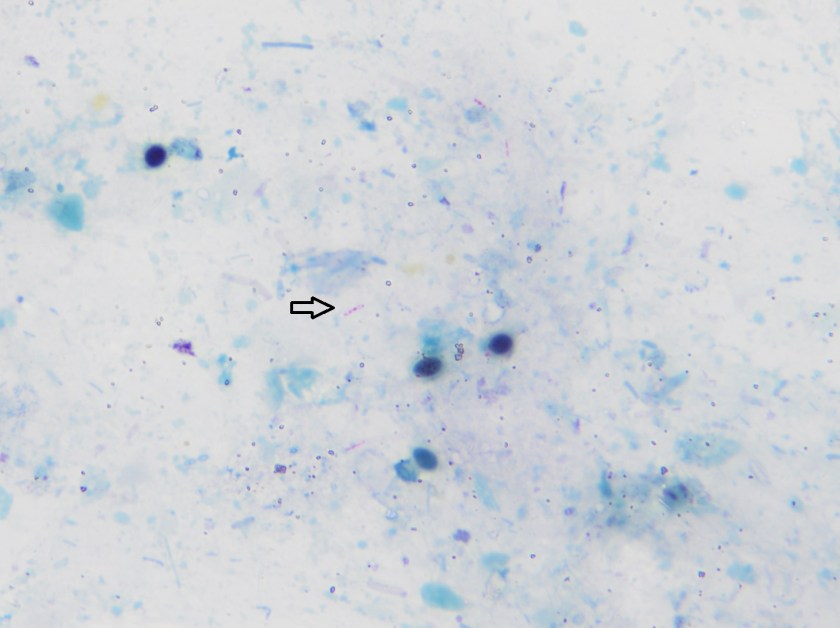
Image 1. Direct smear from a stool specimen showed beaded acid fast bacilli (Kinyoun stain, 1000x oil immersion).
mac2
Image 2. Direct smear from a stool specimen showed beaded acid fast bacilli (Kinyoun stain, 1000x oil immersion).

Initial diagnostic testing for bacterial, fungal and viral pathogens was negative. Three concentrated sputum AFB smears as well as a TB PCR were negative. The quantiferon gold TB test was also negative. The physician additionally ordered AFB blood and stool cultures. The direct smear from the stool specimen showed rare, beaded acid fast bacilli in a background of bacteria and yeast normally present in the stool via Kinyoun stain (Images 1 & 2). The specimen was sent to the department of health for additional work up. There was growth after 21 days incubation and Mycobacterium avium complex was identified by high performance liquid chromatography (HPLC).

Discussion

Mycobacterium avium complex (MAC) is a slow growing nontuberculous mycobacteria (NTM) frequently involved in human disease. Historically, it was classified as Runyon group III which are non-chromogens and do not produce pigment regardless of culture conditions. The group encompasses two taxa, M. avium and M. intracellulare. The species M. avium can further be classified into four subspecies: subsp. avium, subsp. silvaticum, subsp. paratuberculosis and subsp. hominissuis. Of interest, M. avium subsp. paratuberculosis can often be seen in association with Crohn’s disease.

In general, MAC organisms have low pathogenicity, but in the setting of those with lung disease (including cystic fibrosis), heavy smokers, immunocompromised patients and those with HIV, it is a well-known cause of disease. Infections with MAC can range from localized mycobacterial lymphadenitis and isolated pulmonary disease to bacteremia with dissemination to almost any organ. The organisms are located in circulating monocytes and further spread most commonly to the lungs, gastrointestinal tract and lymph nodes. In the case of HIV positive patients, MAC is the most common environmental NTM causing disease, especially in those with CD4 counts less than 100 cells/mm3 who are more likely to have disseminated disease.

In order to diagnosis MAC infections, specimens from blood, sputum, lymph nodes and other tissues are preferred. In addition, stool may also be an acceptable alternative in HIV patients if other specimens are negative or unable to be obtained. However, the sensitivity of a direct stool smear is only 32 to 34% making it not a very effective approach to identifying those at risk for disseminated infections. Once the culture has growth, various methods can be used to identify MAC, including phenotypic methods, DNA probe testing, HPLC, pyrosequencing and other forms of PCR & sequencing.

In the case of our patient, he was started on M. tuberculosis therapy: rifabutin, isoniazid, pyrazinamide & ethambutol (RIPE) until TB was ruled out. At that time, he was removed from isolation and switched to a drug regimen that included azithromycin, rifabutin and ethambutol. He showed clinical improvement and his cell counts, renal function and liver enzymes trended to normal ranges.


Stempak

-Lisa Stempak, MD, is an Assistant Professor of Pathology at the University of Mississippi Medical Center in Jackson, MS. She is certified by the American Board of Pathology in Anatomic and Clinical Pathology as well as Medical Microbiology. She is the Director of Clinical Pathology as well as the Microbiology and Serology Laboratories.  Her interests include infectious disease histology, process and quality improvement and resident education.