Make the Diagnosis–A 58 Year Old Male with Abdominal Pain

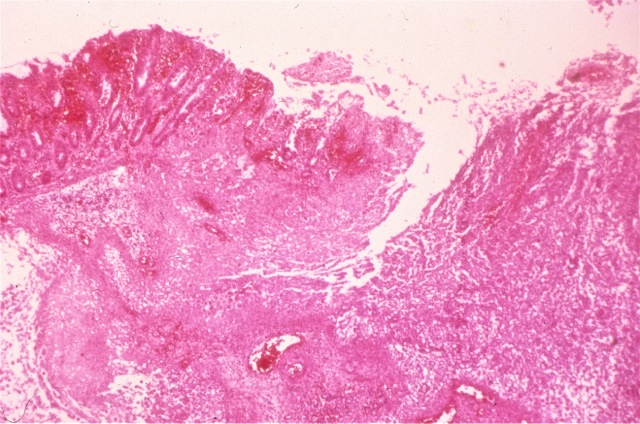
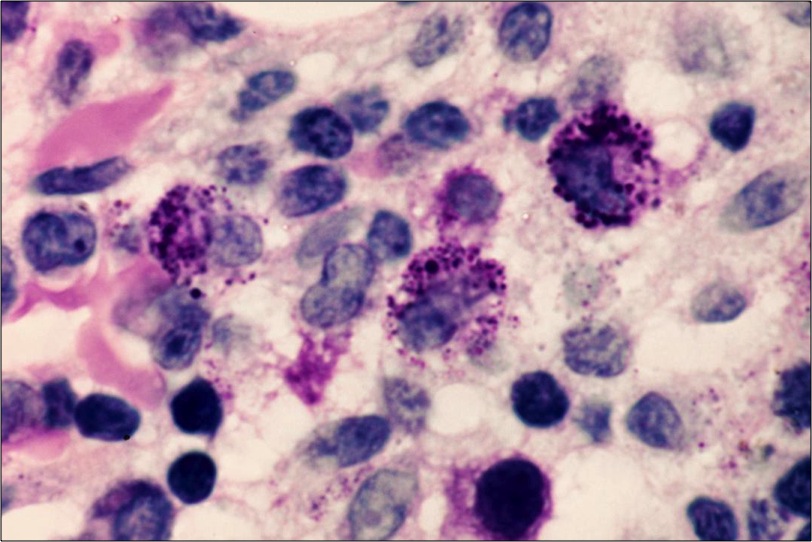
A 58-year-old male presents with abdominal pain and bloody diarrhea which had a gradual onset over the last 3 weeks. He has lost 8 pounds during this period of time. A cecal biopsy is performed, and a representative section is shown here. What is the most likely diagnosis?

amoebiasis1

  1. Amoebiasis
  2. Ascariasis
  3. Candidiasis
  4. Cryptosporidiosis
  5. Giardiasis

The diagnosis in this case is amoebiasis. The most common cause of amebic enterocolitis is Entamoeba histolytica, an organism spread through ingestion of cysts in contaminated food or water. The trophozoite forms are round, and frequently show intracytoplasmic red cells.

Amoeba with intracytoplasmic red cells

Occasionally, the organisms invade other organs, such as the liver, lung, and heart. Most patients may be treated on an outpatient basis, unless there is severe colitis or extraintestinal disease.

The organisms frequently invade through the mucosa and into the submucosa, often with lateral extension.

"Flask-shaped" ulcer in amoebiasis
“Flask-shaped” ulcer in amoebiasis

Occasionally, the organisms invade other organs, such as the liver, lung, and heart. Most patients may be treated on an outpatient basis, unless there is severe colitis or extraintestinal disease.

Krafts

-Kristine Krafts, MD, is an Assistant Professor of Pathology at the University of Minnesota School of Medicine and School of Dentistry and the founder of the educational website Pathology Student.

Microbiology Case Study–Upper Thigh Pain

An 85 year old man presented with right medial upper thigh pain and swelling.  Imaging revealed a large pseudoaneurysm in the right superficial femoral artery with evidence of rupture. The patient was taken to the operating room for placement of a gortex stent graft. His postoperative course was complicated by development of a large hematoma at the surgical site. Incision and drainage of the hematoma was surgically performed and fluid from the hematoma was sent to the microbiology laboratory.

Gram stain with multiple gram negative bacilli.
White-grey bacterial colonies growing on blood agar plate.
Grey semi-translucent non-lactose fermenting colonies growing on MacConkey agar.


Laboratory Identification:

The gram stain and plates confirmed the bacteria were non-lactose fermenting, non-hemolytic gram negative bacilli which is consistent Salmonella. Salmonella species was confirmed by mass spectrometry. Another feature helpful in the identification of Salmonella is its ability to produce hydrogen sulfide. Although not performed in this case, Salmonella will produce colonies with black centers when grown on Xylose lysine deoxycholate agar (selective agar that has thiosulfate which Salmonella metabolize to hydrogen sulfide).

The bacterial isolates of Salmonella were forwarded to the public health laboratories where serotype is determined based on serologic reactions to O and H antigens. The O antigen is the most external component of the lipopolysacccharide of gram negative bacteria and the H antigen is the antigenic determinant that makes up the flagellar subunits . This Salmonella species was identified to be S. enteritidis. Two sets of the patient’s blood cultures also grew S. enteritidis.

Discussion:

Salmonella are motile, gram negative bacilli that are widely disseminated in nature. Various animals such as turtles, lizards, snakes and birds are associated with Salmonella. Salmonella may infect humans via ingestion of contaminated food products that are typically of poultry or dairy origin. Person to person transmission may also occur by fecal-oral route. Salmonella has multiple virulence factors that allow it to evade the immune system. One of its virulence factors is the polysaccharide capsule that surrounds the O antigen. The O antigen is highly immunogenic and shielding the O antigen prevents its recognition by antibodies. Additionally, Salmonella can periodically change its H antigen as another protective mechanism against antibodies.


Jill Miller, MD is a 2nd year anatomic and clinical pathology resident at the University of Vermont Medical Center.

Wojewoda-small

Christi Wojewoda, MD, is certified by the American Board of Pathology in AP/CP and Medical Microbiology. She is currently the Director of Clinical Microbiology at the University of Vermont Medical Center and an Assistant Professor at the University of Vermont.


The Importance of Truly Internalizing Feedback and Learning From It

Recently, I’ve felt a shift in the timeline. Part of this I can attribute to having less time to myself as I ease into chief resident duties. Time I would’ve spent doing (or postponing) other activities is now relegated to this new role. But this increased demand on my time is not the only factor. Time feels like it is more rapidly passing with each year of residency, and more accelerated as of late.

Taking the annual RISE this time of year also contributes to this. I’m reminded that I should have reached some invisible bar on the meter stick in terms of my knowledge base and hope that I am commensurate with where I should be at this point in my residency. Because sooner than I may feel comfortable with, I will be expected to be “competent” enough to serve as a junior attending during my fellowships. And even though I’ve put it off until a later date, I know that I should also start composing a study plan soon for my boards because time is short between now and graduation.

Lately, probably because it was my most recent rotation, I’m reminded of my surgpath fellows during my PGY-1 telling me that I would learn the most from my cases, both AP and CP. Even though I was listening, I don’t think that I quite understood the depth of those words until my third year. During residency, we often don’t have much time to think because our service duties occupy much of that time. And the desire and need for sleep occupies much of the remainder of the time. But the light bulb moment has gone off so to speak in terms of what they meant by “learning from my cases” – be deliberate and start early.

For much of my first two years, as I’ve previously written, I’ve had a love/hate relationship with surgpath. Maybe those words are too strong, because I neither loved nor hated it, more like was ambivalent toward it. I naturally gravitated toward those subspecialties (obviously not surgpath) that I felt more comfortable with because of my previous training and interests – we all do.

But now I find that grossing is more meaningful and less of a chore to get through for me because I truly understand now how important it is that I do it well – be able to identify the important lesions and sections (90-95% of the diagnosis is off the gross, after all), cut thin and deliberate sections that look like “sushi” as one resident described my grossing, and understand how the sections I provide contribute to staging in the case of cancers. I understand these aspects better now because my grossing skill was called into question during my 2nd year. Since then, I’ve put a good amount of effort into correcting any deficiencies. Even the rotation director who originally brought up this issue, joked about the disasters of my first day on surgpath at his hospital at every end-of-the-rotation evaluation I had since then. His method of feedback may have been dramatic at the time but he really did provide me with a defining moment that changed my outlook and approach and for that I am grateful.

But it’s necessary to be deliberate and start early whatever rotation you’re on. Even though I read about the diagnoses for most of my big resection cases or at least did a quick pathology outlines search each time, I really wish that I would’ve spent even more time really reading up on those cases besides the cursory skim to come up with a diagnosis earlier in my residency. These days, I try to read a little every day, whether it be from a textbook or a journal article. And I’ve found that my knowledge, understanding, and skills improve at a faster rate. But I do wish that I had started this process from my PGY-1 so that I wouldn’t feel like I’m behind where I should be in terms of being ready for boards…so that I didn’t feel like I’m going to have to cram like I used to during college and med school for boards or wonder how to retain info that I learned two years ago on a rotation I haven’t had since PGY-1.

So really listen to the feedback from those more experienced then you. It probably took them longer than they would’ve liked to get to that light bulb moment. That is probably why they are making it a point to bring up that pearl of wisdom to you that they should’ve and wished they could’ve known then.


Chung

-Betty Chung, DO, MPH, MA is a third year resident physician at Rutgers – Robert Wood Johnson University Hospital in New Brunswick, NJ.

Microbiology Case Study–Abdominal Pain

A 60 year old man presented with abdominal pain and bloody diarrhea. He denied fever, chills, nausea, vomiting or recent travel. A stool culture was sent to the microbiology laboratory.

Colony Gram stain showing Gram-negative bacilli
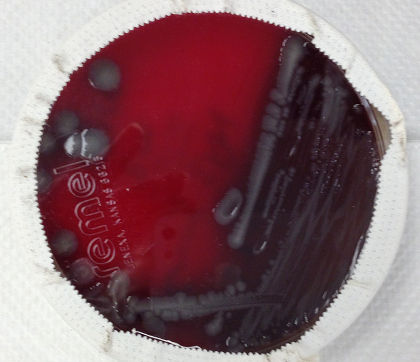
Grey-white bacterial colonies growing on a blood agar plate.
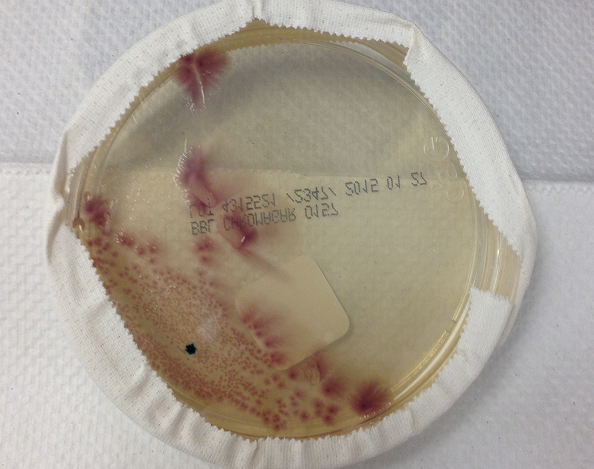
Fuschia colonies growing on CHROMagar O157.


Laboratory Identification:

E. coli O157:H7 is most likely to be detected in the acute phase of illness and may be missed after 5-7 days from onset of symptoms. In general, laboratory identification is based on the detection of Shiga toxin-producing strains or detection of the O157:H7 serotype through various methodologies. In our laboratory, we identified E. coli O157 based on the above gram stain and colony morphology in combination with growth with the appropriate color on a selective plate for E. coli O157, CHROMagar O157. We used our automated microbial identification system, Vitek 2, which performs multiple biochemical reactions to confirm the bacteria as E. coli O157:H7. Additionally, we identified the presence of Shiga toxin through an immunochromatographic lateral flow rapid test using monoclonal antibodies specific to Shiga toxins.


Discussion:

E. coli are gram negative rods that are beta hemolytic, indole positive and lactose fermenters. E. coli is part of the normal colon flora but certain types of E. coli can cause disease depending on their virulence factors. Enterohemorrhagic E. coli (EHEC), also known as Shiga toxin producing E.coli (STEC), is one of six major groups of E. coli that causes diarrhea. EHEC produce a Shiga toxin that inhibits protein synthesis of intestinal epithelial cells via inhibition of the 60S ribosome. The most common serotype is E. coli O157:H7. Transmission occurs through ingestion of raw milk or uncooked ground beef. Hamburgers have been the cause of many outbreaks of infection in the United States although majority of E. coli O157:H7 infections are not associated with outbreaks.

Clinical manifestations from E. coli O157:H7 infection usually occurs at three days from time of exposure but may vary from one to eight days. Clinical symptoms typically begin with abdominal cramps, vomiting, and bloody diarrhea without fever. However, patients may experience a spectrum of disease ranging from asymptomatic infection (less common) to hemorrhagic colitis with progression hemolytic-uremic syndrome (HUS). HUS is the most common cause of acute renal failure in children and results from toxin-mediated damage of endothelial cells in the kidney. HUS is characterized by the triad of acute renal failure, microangiopathic hemolytic anemia, and thrombocytopenia. Supportive therapy is recommended for treatment of E. coli O157:H7 infections. Antibiotics are not recommended because of the potential to increase Shiga toxin production. For this reason, we do not report antibiotic sensitivities for E. coli O157:H7.


Jill Miller, MD is a 2nd year anatomic and clinical pathology resident at the University of Vermont Medical Center.

Wojewoda-small

Christi Wojewoda, MD, is certified by the American Board of Pathology in AP/CP and Medical Microbiology. She is currently the Director of Clinical Microbiology at the University of Vermont Medical Center and an Assistant Professor at the University of Vermont.

Hematology Case Study: 60-Year-Old Male with Hives

A 60-year-old male presents with hives, skin flushing, and headaches. After an appropriate preliminary work-up, a bone marrow biopsy is performed. A representative section from the bone marrow biopsy is shown here. What are the granulated cells at the center of this image?

mast

A. Megakaryocytes
B. Promyelocytes
C. Mast cells
D.Myeloma cells
E. Adenocarcinoma cells

The granulated cells in this image are mast cells, which are identified by their abundant, metachromatic granules. This patient was diagnosed with systemic mastocytosis, a clonal disorder of mast cells and their precursors.

Mastocytosis is actually a spectrum of rare disorders, all of which are characterized by an increase in mast cells. Most patients have disease that is localized to the skin, but about 10% of patients have systemic involvement, like the patient in this case. There is a localized, cutaneous form of mastocytosis called urticaria pigmentosum that happens mostly in children and accounts for over half of all cases of mastocytosis.

Clinically, the skin lesions of mastocytosis vary in appearance. In urticaria pigmentosum, the lesions are small, round, red-brown plaques and papules. Other cases of mastocytosis show solitary pink-tan nodules that may be itchy or show blister formation. The itchiness is due to the release of mast cell granules (which contain histamine and other vasoactive substances).

In systemic mastocytosis, patients have skin lesions similar to those of urticaria pigmentosum – but there is also mast cell infiltration of the bone marrow, lymph nodes, spleen and liver. Patients often suffer itchiness and flushing triggered by certain foods, temperature changes, alcohol and certain drugs (like aspirin).

Krafts

-Kristine Krafts, MD, is an Assistant Professor of Pathology at the University of Minnesota School of Medicine and School of Dentistry and the founder of the educational website Pathology Student.

Tumor Boards and Multidisciplinary Conferences (MDC)

Even if we are not as visible to the patients that we care for as other physicians, pathologists are amazing! Of course, I admit that I’m biased since I am a pathology resident but, this does not make this fact any less true. Others may not always realize that pathologists often have to make life altering diagnoses on the most miniscule of tissue samples. Or that we need to incorporate clinical histories, imaging, and previous clinical test and pathology results just as much as the primary clinician, I’ll dare say, sometimes, even more so, since we often do not have the opportunity to talk with the patient face-to-face. And that in the future, especially as precision medicine develops an increasing foothold in the treatment decision making process, we should, and will be, taking more active leadership roles within multidisciplinary teams.

One of the places where I feel that pathologists can show their value to the patient care team is in the multidisciplinary conference (MDC) setting. These can include tumor boards where we discuss specific patient cancer cases or other interdepartmental conferences where we explore an area of common interest that doesn’t necessarily have to be neoplastic. “Doctor” is derived from the Latin word, docere, which means “to teach” and it is within MDC’s that we can shine as teachers. It is impossible to learn about you need to know in medical school in terms of patient care. Not only is the fount of knowledge ever increasing but also our training directs us toward subspecialization since the volume knowledge is so vast, we have to choose which areas we will spend more time mastering.

Way back in the day, surgery residents had to spend significant time (often at least six months) rotating on the surgical pathology service. I find that these more experienced attendings are often the ones who scrub out and sit with our pathologists at the multi-headed scope during frozen sections. And they are also the ones who can make the surgical pathology diagnosis and know the staging summaries even better than junior, and even some senior, pathology residents. But training requirements change. Most of the other clinical physicians we will interact with as colleagues were not trained in this manner.

One of the reasons I chose hematopathology was because I enjoy the daily increased face-to-face interaction I experienced while on this rotation. At most of the hospital sites I’ve trained (four at my previous program and two at my current program), hem/onc physicians and fellows often make the trek to the pathology department to discuss patient cases with the hematopathologist, especially over the microscope. They had some idea of what they were looking at, too. In fact, at a couple of the programs I interviewed (Hopkins and UW), hem/onc physicians are, or were in past in the case of UW, responsible for reading the liquid specimens (peripheral blood smears and aspirates). They also often had multiple interdisciplinary conferences – leukemia, lymphoma, coagulation/benign heme.

But, since I’m on a surgical pathology rotation right now, I was thinking about when we interact most with our surgeons – and I think that is during tumor board. A few of the “old school” surgeons will scrub out and come to the department to look over a frozen with us but most often than not, this is not the case. But during tumor boards, there is always active discussion which includes the pathology in order to come to a treatment decision on not-so-straightforward cases. And these are opportunities to demonstrate just how important the pathologist is to the process. At least in the difficult cases, we do not merely write out diagnoses for other doctors to read and move on without us to treat the patient. It is in these moments when we not only educate but can also actively participate in helping to direct care. But in order to do so, we need to be able to integrate the clinical, epidemiologic, morphologic, radiologic, ancillary diagnostic, and prognostic (lots of “-ogics” there) factors along with know the potential treatment alternatives. We don’t just deal with the morphologic and leave everything else to the referring physicians…at least, if you want to be the best pathologist that you can be. This is also the time when we can leave a lasting impression on other trainees (medical students, residents, and fellows) about how a pathologist can contribute when added to the team mix so that they will be more apt to seek out and work together with pathologists when they become attending physicians.

We are the physicians who understand the intricacies and implications of many of the ancillary tests if we understand well how they are performed and why and also what can cause erroneous or false positive/negative results. I think that I learned a lot of those types of things through serving as an accredited lab inspector (or you can help with your department’s lab self-inspections) and also by being more pro-active during my CP rotations to work with the lab staff and not just sit at my desk and read a book (or study for boards). And we can help guide other physicians regarding which tests are useful for specific situations and which tests really won’t impact prognosis or treatment management. So, be deliberate during your rotations! Try to understand the “big picture” and how important we can be (and really are) in the patient safety and care process! I think that tumor boards and interdepartment MDC’s are a great venue for us to showcase the “true” contributory potential of what pathologists to the patient care team.

Chung

-Betty Chung, DO, MPH, MA is a third year resident physician at Rutgers – Robert Wood Johnson University Hospital in New Brunswick, NJ.

Can You Identify This Structure?

What is this dark structure in the center of this biopsy of a thyroid nodule?

thyroid

A. Foreign body
B. Artifact
C. Psammoma body
D. Area of necrosis
E. Collection of fungal organisms

The structure at the center of this image is a psammoma body. Psammoma bodies are lamellated, calcific structures commonly seen in papillary carcinomas, such as this papillary carcinoma of the thyroid. The exact underlying cause or mechanism of psammoma bodies is not well understood. However, some studies have shown that in papillary thyroid carcinoma, psammoma bodies are associated with a lower disease-free survival and an overall worse prognosis.

Krafts

-Kristine Krafts, MD, is an Assistant Professor of Pathology at the University of Minnesota School of Medicine and School of Dentistry and the founder of the educational website Pathology Student.

Next Steps in Cytotechnology

ASCP and ASC have put together a program to enable cytotechnologists to grow their skills and advance their careers. During this workshop, attendees will learn how to engage as a part of the clinical team and broaden their skill set to include fluorescent in-situ hybridization and interpretation of applied molecular tests.

AJCP_ACE

If you’d like to attend this program, you can register before April 30 to get a discount.

Why We Should Care and Act on the Proposed FDA Regulation of LDTs

So, I wrote briefly to bring awareness about this topic when the U.S. Food and Drug Administration (FDA) first formally proposed in July of 2014 that they intend to begin regulating laboratory developed tests (LDTs). Now that draft regulations have been released, I want to encourage you to not only learn more about this issue but also to decide where you stand and most importantly, to act — to add your individual voice to strengthen a collective voice, whichever side of the argument you choose to stand by. You can read the FDA’s proposed Framework for Regulatory Oversight of LDTs (which are currently non-binding recommendations) to help decide your opinion on this issue.

Congress declared that most diagnostic tests are considered “medical devices” in the Medical Device Amendments (MDA) of 1976. The FDA oversees medical device regulation, but until recently, had only exercised “enforcement discretion” with respect to LDTs. There are 3 classifications for a medical device based on the presumed risk and regulation thought necessary to ensure validity and safety: class 1–general controls for devices considered low risk for human use, class 2–performance standards for devices considered moderate risk for human use, and class 3–premarket approval for devices considered high risk for human use.

So, what is a LDT? Lab developed tests are neither FDA-cleared or approved and are validated and performed in the same lab in which they are developed. While the majority of molecular genetic pathology tests that are currently offered in clinical labs are LDTs (often referred to as “home brew” or “in-house developed” tests), labs can—and do—develop tests for all areas of the laboratory. They would most likely fall under class 2, or for the more highly complex tests, class 3. And the time is now for the pathology workforce to show their value as the diagnostic experts in the development, validation, and interpretation of such tests.

The completion of the Human Genome Project and the basic and translational research that followed has ushered in a new clinical practice landscape. Personalized or precision medicine is a buzz word often touted in the media these days. I was a graduate student researching transcriptional regulation and signal transduction pathways during the Human Genome Project. It was an exciting time where those of us in research could imagine a future where our discoveries would form the foundation for clinical decisions to treat disease. It was a dream that we knew would take at least a decade to begin to achieve its first nascent steps. But personalized/precision medicine, albeit still immature, has arrived and is progressively demanding our care and attention.

It is a term that can be employed to incorrectly exaggerate the implications of diagnostic tests. It can be especially dangerous when misused to support testing that lacks a transparently or rigorously vetted validation process. And inflated clinical claims by a handful of test providers have focused the FDA’s attention in the direction of LDTs. No one disagrees that these highly complex diagnostic tests should require both analytic and clinical validation and continuous monitoring. The questions are who is the best to ensure that these parameters are met? And how can we best encourage the flexibility necessary to incorporate innovation and new discoveries into timely clinical care?

Currently, the Centers for Medicare and Medicaid (CMS) are charged with overseeing all clinical laboratory testing and enforcing adherence to Clinical Laboratory Improvement Amendments (CLIA) that regulate testing on patient specimens. So, all LDTs are under the purview of CLIA regulation and their analytic validation is reviewed biannually. However, CLIA does not address clinical test validity which falls under the FDA’s purview over medical devices during the PMA process. These two regulatory schemes are meant to be complementary and the FDA also includes a more rigorous analytic validation process.

Many clinical labs also participate in the College of American Pathologists (CAP) peer-reviewed biannual inspection process which has requirements more comprehensive than those currently required by CLIA. And having just co-inspected a new molecular genetic lab for the CAP last week, I can state that I believe in the peer-review inspection process. Inspectors must have specific and extensive training in the inspection topic area(s) in order to be certified to inspect those types of labs after successful completion of a certification process. We also have access to resources available through a large network of volunteer inspectors and CAP support so that we are not overburdened and can perform a thorough inspection. Those of us who are certified inspectors also hold the conviction that fastidiously enforcing compliance to accreditation standards is the best for patient care. This is because we know that we are the frontline–we not only know how to develop and validate these tests but need to make sure that other labs follow the same standards.

The average time and cost to complete the FDA approval process from concept to market can be prohibitive to patient care, on the order of 3-7 years and an average $24 million for a successful PMA. Even the time for 510(k) fast track FDA premarketing notification for class 2 devices that are “substantially equivalent” to a pre-existing marketed device (predicate) in terms of safety and effectiveness averages at least 6 months and this process has been criticized as flawed by the Institute of Medicine (IOM). Additionally, both the time and cost for approval have progressively increased over the years, making it more difficult to obtain with the exception of highly financially solvent commercial labs.

At this point, I want to be very clear that these are my personal opinions and not those of any of the organizations that I am affiliated with who may hold more moderate or opposing opinions to mine. Since we all have personal bias, I’ll fully disclose mine: 10 years of basic science research utilizing molecular and cell biology and transgenics, completion of a basic science graduate degree with molecular based research, a future molecular genetic pathology (MGP) fellowship, and hopefully, a future career as a public health (molecular epidemiology/biomarker discovery) focused physician-scientist practicing diagnostics and molecular hematopathology research. So I may have a more vested interest toward a particular view. But what is most important to me and one of the reasons I blog, is that others become aware and inspired to become more informed and engaged in the public health policy process, not that they necessarily agree with me.

Let me give an example of where I stand on this issue which I feel would be a more cogent argument than merely stating my opinion. Advanced non-small cell lung cancer (NSCLC) patients without an EGFR mutation prior to the discovery of the EML4-ALK fusion protein had very few effective therapeutic options. The FDA gave accelerated approval in August of 2011 and regular approval in November of 2013 for the use of crizotinib, a tyrosine kinase inhibitor, for ALK-positive lung cancers diagnosed with a break-apart probe ALK rearrangement fluorescent in-situ hybridization testing kit (Abbott Vysis) on genomic material derived from formalin-fixed paraffin embedded tissue.

Subsequently, ROS1, another tyrosine kinase like ALK, regardless of fusion partner, has also been shown in NSCLC to show 72% tumor shrinkage in response to crizotinib. Since there is no FDA-approved companion test for ROS1, under the current definition of an LDT and proposed regulation (of which this would fall under “LDT for Unmet Needs”), patient specimens would either need to be sent to a lab with an FDA-approved LDT to detect ROS1 rearrangement (of which, none currently exist) or receive diagnosis and treatment at the same facility that has a developed LDT. Currently, these types of specimens can be sent to one of the CLIA-approved labs for this test and the patient treated at their home institution.

Additionally, since the aforementioned FDA approval, genomic material derived in cases of tissue limitation from cytology specimens (eg – pleural effusions) and tested through alternative methods (IHC, qRT-PCR) has been shown to yield at minimum, similarly sensitive, and concordant results. Access to these options would be unavailable if the labs that developed these LDTs could not afford the cost to undergo the FDA PMA or 510(k) process. And even if labs could afford these costs, these tests would not be available to patients in a rapid enough timeframe from the initial discovery of a biomarker and its responsiveness in clinical trials to a targeted therapeutic. If FDA regulation of LDTs does become a reality, what I would like to see is an interdisciplinary conversation that results in an expedited approval process that would still ensure test validity and patient safety.

In response to healthcare reform, many academic based labs are increasingly implementing multidisciplinary clinical care and research teams and utilizing highly complex testing platforms such as next-generation sequencing and microarrays to guide diagnosis, prognosis, and/or treatment. More so now than ever before, healthcare professionals and trainees need to learn to continuously evaluate and practice evidence-based medical care – to really scrutinize whether these tests are valid, safe, and efficacious before recommending them to their patients. The highly dynamic and fast-paced momentum of “-omics” based research demands timely recognition, clinical validation, and test incorporation in order to provide the most up-to-date personalized/precision medical care. Government regulation has proven in the past to be unable to adequately meet this challenge, but I do admit that it is possible. So the time has come for stakeholders (and I hope you realize that you are one) to become informed and stand united behind their principles on this topic. Advocacy is a potentially powerful way that we can shape the current and future healthcare landscape that we will navigate as practitioners and patients. Many of our pathology and other subspecialty advocacy organizations have come out with position statements and signed on to currently available petitions. So FIND YOUR VOICE, STAND UP, and BE COUNTED!

A recent and well-written blog post by a current patient with metastatic lung cancer on this topic can be found at http://www.curetoday.com/community/janet-freeman-daily/2015/02/call-to-action-proposed-fda-regulations-could-limit-cancer-patient-access-to-life-saving-therapies.

References:

  1. Centers for Medicare and Medicaid (CMS). CLIA Overview: Frequently Asked Questions. Published online on 10/22/13. Accessed on 2/15/2015 at https://www.cms.gov/Regulations-and-Guidance/Legislation/CLIA/Downloads/LDT-and-CLIA_FAQs.pdf
  2. A Gutierrez, RB Williams, GF Kwass. FDA’s Plan to Regulate Laboratory Developed Tests (webinar powerpoint). Published online on 9/3/14. Accessed on 2/15/15 at http://www.cap.org/apps/docs/membership/fda-ldt-plan-webinar.pdf
  3. Institute of Medicine (IOM). Medical Devices and the Public’s Health: 510(k) Clearance Process. Released 7/29/11. Accessed on 2/15/15 at https://www.iom.edu/Reports/2011/Medical-Devices-and-the-Publics-Health-The-FDA-510k-Clearance-Process-at-35-Years.aspx
  4. National Cancer Institute (NCI) at the National Institutes of Health (NIH): Clinical Trials at cancer.gov. Crizotinib Improves Progression-Free Survival in Some Patients with Advanced Lung Cancer (updated). Last updated on 12/4/14. Accessed on 2/15/15 at http://www.cancer.gov/clinicaltrials/results/summary/2013/crizotinib-NSCLC0613
  5. Schorre. How long to clear 510(k) submission? Published online on 2/2014. Accessed on 2/15/15 at http://www.emergogroup.com/resources/research/fda-510k-review-times-research
  6. H Thompson. How much Does a 510(k) Device Cost? About 24 Million. Published online on 11/22/10. Accessed on 2/15/15 at http://www.mddionline.com/blog/devicetalk/how-much-does-510k-device-cost-about-24-million
  7. KM Fargen, D Frei, D Fiorella, CG McDougall, PM Myers, JA Hirsch, J Mocco. The FDA Approval Process for Medical Devices. J Neurointervent Surg, 2013; 5(4): 269-275. Accessed on 2/15/15at http://www.medscape.com/viewarticle/807243_2

Chung

-Betty Chung, DO, MPH, MA is a third year resident physician at Rutgers – Robert Wood Johnson University Hospital in New Brunswick, NJ.

CAP Inspections and the Resident

Hello, fellow blog readers! It’s about 4 weeks since we communicated last. Since my first half of the year was loaded with lighter CP rotations to allow me to complete interviews for two successive fellowships, this half of the year is surgpath heavy and so that’s why I took a short hiatus from posting.

Well, I have a 4 week reprieve before I have another surgpath rotation and I am on what we refer to as our “comprehensive CP” rotation. Basically, it’s a combination chemistry-microbiology rotation. Since both of those rotations don’t always have enough work to require a resident to remain at the hospital for the usual 8-5 schedule, we cover both rotations simultaneously. We also have 11 comp CP rotations throughout the 4 years at my new program which is quite a lot but after the initial 2 months of “wet lab” rotating through all the stations in the chemistry and microbiology labs, we have the flexibility to tailor our comp CP rotation. And so, right now, I write as I sit in a hotel in Baltimore about to meet for our third preparation meeting before my attending and I go inspect a new molecular genetic pathology laboratory for the College of American Pathologists tomorrow. Since this is this lab’s first inspection, unlike the usual CAP inspection, this one is announced – they know we are coming and can prepare for our visit. The two of us will complete the entire inspection; my program counts this as rotation duties even though I am off-campus.

This is the second CAP inspection that I’ve been asked to assist with since I transferred to my program as a PGY-3. I think it’s great that my program gives our residents this opportunity since as attendings (whether we are AP or CP), we will also have to either assist in or enforce adherence to CAP or other accreditation standards and supervise preparations for lab inspections every other year and self-inspections on the alternate off-years. At my program, residents assist in both the preparations for CAP and off-year inspections. I’ve said it before, but residency is the transition from passive learning to active learning where we should participate in the daily responsibilities that our attendings oversee and that we will have in the future.

So, this inspection will be much more work than when I inspected the chemistry and special chemistry sections with my last team. Since there are only two of us, we are responsible for splitting the duties for the lab director, general, common, and molecular pathology accreditation checklists. CAP suggests a “ROAD” approach: read (through their binders of policies, SOP’s, etc), observe (a sample from receipt in the lab and though processing and interpretation of results), ask (open ended questions), and discover.

Well, I guess it’s time for me to go inspect but before I leave, I’d like to encourage all trainees (residents and fellows) to apply to serve as a junior member on one of the CAP’s committees or councils. You need to be a junior member but membership is free as a resident. Each committee or council (that oversees multiple committees in a topic area) usually has one junior member on it, very rarely, two. I’m currently serving my second year as the junior member on the Council on Education and I can say it has been a very rewarding experience where I have met many role models who definitely take an interest in what I have to say about the trainee opinion and who also think of me when opportunities arise that they think might be good for me. You can access both the instructions to apply (which includes a list of the committees/councils with junior member positions opening up in 2016) and the junior member application here – you will need a letter of recommendation from your program director and email in your app before the deadline of March 31st. Good luck guys! If you have any questions, feel free to email me.

Chung

-Betty Chung, DO, MPH, MA is a third year resident physician at Rutgers – Robert Wood Johnson University Hospital in New Brunswick, NJ.