
Investing in the Best Testing

“Damn that q-tip goes in deep!

But it lit up negative so d/c to street

But it was flu, cuz he bounced back again

And now my Press Gayney’s a minus ten…”

Video 1. Another classic excerpt from a favorite: ZDoggMD, singing about this year’s flu season and available testing options on the horizon—because, let’s face it—rapid flu tests aren’t quite cutting it anymore.

Hello again everyone! Back again to talk about a new set of recommendations from last month’s post. This time it’s about influenza. Recommendation: get vaccinated. Thank you. See you next time…

Seriously, as the 2018-2019 flu season dawns upon us, it’s time to talk about vaccines, tests, prevention, and health literacy. I’m sure many of your social media pages are filled with various debates, articles, and fake news stories on one side or another pitting science, pseudo-science, and non-science all against each other for public spectacle. In the lens of laboratory science and medicine at large, I think most if not all of us agree that preventable diseases should be prevented, and if not, at the very least detected accurately, sensitively, and early. Influenza A/B is a prime example of a consistent threat to our health and safety that has wavered responses in various socio-medical circles.

Official communication and guidance from the Centers for Disease Control and Prevention (CDC) clearly tells those of us in health-care to embrace a multi-tiered approach to protecting public health regarding the flu. That approach includes vaccination, testing, infection control, anti-viral treatment, and anti-viral prophylaxis. And why such a fuss over the flu? It’s a big deal! Last year, the CDC reported approximately 80,000 deaths associated with influenza as a primary cause. 80,000 deaths! That’s almost 7 times as many that died from H1N1/Swine Flu complications back in 2009, where only 12,000 patients were killed by the virus. And even more so, in the terrifying Ebola epidemic of 2016—in which there was a staggering 1 recorded death in the US—nearly 29,000 people were infected globally and only 11,300 died (despite under-reporting). I’m being dramatic, I know. But it’s important for us to recognize true epidemics when they happen, and even more important for societies like ours to be at the forefront of preventing them from developing any further.

flu1.jpg
Image 1. The CDC recommends you get your flu shot every year, because obviously.

flu2.jpg

Image 2. I’m not here to talk about the anti-vax elephant in the room. That’s not fair to elephants. But imagine if the CDC reported 44% of flu vaccine misconceptions were addressed!

As an aside, I’ll probably recommend that you get your annual flu shot a hundred times in this post alone. But just to have a clear reference, please look at the following table. It’s critical to be able to both distinguish common cold versus influenza symptoms for yourself, as well as educate your patients and peers about the differences between the two. This information can change the way people perceive treatments (i.e. why the doctor only recommended rest/Tylenol and didn’t give out antibiotics for their symptoms) and why it’s absolutely crucial to protect vulnerable populations from an otherwise fatal virus. So, micro-rant aside, it should be clear that by now we should be working on a way to both improve our prophylaxis with vaccines and medications as they always leave room for improvement—I’m looking at you Tamiflu and Relenza! Notwithstanding any analysis of efficacy for the flu vaccine, the CDC reports a variable and transparent success rate of vaccines. It can be difficult to predict and assess epidemiologic trends and mutations as the influenza virus continues to change annually.

flu3.JPG
Table 1. Distinguishing the common cold, and “flu-like symptoms” from a proper influenza viral infection.
flu4.jpg
Image 3. CDC Report on seasonal flu vaccine effectiveness since 2004.

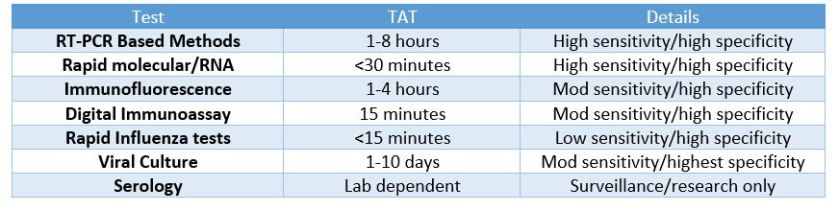
So, what was the deal with ZDoggMD plugging some PCR testing in the opening credits here? That’s a good question and one that inspired this article in the first place. Obviously, if you follow my posts you know I follow his, and at the end of this latest video he discusses new available options for influenza point-of-care testing (POCT) for clinics and emergency rooms. This was a partnership with the company Cepheid and linked with their promoting their POCT PCR-based FluA-B testing. Here’s a quick paraphrasing of the CDC recommendations on influenza testing: because of the numerous false negative tests every season, the bests tests in order of preference are RT-PCR, immunofluorescence, and rapid antigen testing. Did you catch that? Rapid Flu swabs are bottom of the barrel stuff here. UpToDate, the clinical resource for current practices and standards discusses rapid influenza tests as sacrificing turn-around-time (TAT) for accuracy: “commercially available rapid antigen tests for influenza virus yield results in approximately 15 minutes or less but have much lower sensitivity than RT-PCR, rapid molecular assays, and viral culture.” (I didn’t bold those words, they did). Most of the places I’ve worked run through boxes of rapid flu swab kits ALL DAY LONG. But what are we missing? Clinically, this is supposed to be an important “no miss” diagnosis—it’s dangerous, it’s contagious, it’s mutatable…

Who remembers learning biostatistics in school? Remember SPIN and SNOUT? “Specificity is used to rule IN, Sensitivity is used to rule OUT” So why are we relying on the LOWEST sensitivity available to us for ruling out influenza? Probably because of technological/practical limitations up to this point in time, and of course the most glaring limiting reagent of all: funding, also known as “administrative buy-in.” Have I hit enough lab management buzz words in this post? Not yet.
flu5.JPG
Table 2. Per UpToDate, these are the quick and dirty details on our favorite available flu tests currently on lab benches across the country. I’d say there’s got to be a better way, but there already is.

Sweet. So, it’s a little expensive but ultimately better for our patients, right? Done and done, whip up a cost-benefit-ratio report for the suits upstairs and let’s start a validation project! Well, yes and no. I’m a big proponent of utilizing MALDI-TOF—the mass spectrometry based system to replace traditional bacterial identifications. A 2015 study published in the Journal of Clinical Microbiology stated, “The use of MALDI-TOF MS equated to a net savings of 87.8%, in reagent costs annually compared to traditional methods. …The initial cost of the instrument at our usage level would be offset in about 3 years. MALDI-TOF MS not only represents an innovative technology for the rapid and accurate identification of bacterial and fungal isolates, it also provides a significant cost savings for the laboratory.” What promise! Cepheid’s ED POCT PCR Flu test promises 18% fewer tests needed, 17% fewer antibiotics prescribed, and overall savings per patient visit of up to $700. But this sounds like another, too familiar, recent promise from another voice in our profession. Something about quick, easy, and accurate testing on chips with micro-laboratories available commercially and only using microliters of whole blood for analysis. “Unfortunately, none of those leads has materialized into a transaction. We are now out of time,” read the goodbye letter to the company’s stockholders—Theranos, that’s the one. The moral of the story here: it’s good to remain fiscally prudent when deciding what your clinic or hospital should invest in with regard to testing. However, when something has been a proven and successful replacement which ultimately is recommended by multiple societies within the field then something’s got to give.

flu6
Image 4. MALDI-TOF saves money! You spend a little upfront, but then your hospital can write articles about how your bacteriology department has a swab-to-sensitivity TAT of a few hours. Less errors, less antibiotics, more likes on social media!

What do you see in your practice or laboratory as far as influenza testing? Are there issues I missed? What is your experience with rapid tests, or PCR testing? Is anyone else as big a fan of MALDI-TOF as I am? Did you get your flu shots yet? Leave your comments and questions below! Share with a colleague today!

See you next time!

I have absolutely no affiliation with Cepheid, financial or otherwise, but as an educational/professional resource read more information about Cepheid’s molecular rapid flu tests, read their literature at www.GetTheRightTest.com

flu7

References

  1. Carreyrou J. (2018) Blood Testing Firm Theranos to Dissolve. Wall Street Journal. Health: Theranos Co. Letter to Shareholders. Accessed at: http://online.wsj.com/public/resources/documents/Theranos_Stockholders_Letter_2018.pdf?mod=article_inline
  2. Cephid (2018) Is it really flu? Cutting emergency department costs with bedside rapid molecular tests. Accessed at: http://www.cepheid.com/images/Cepheid-WP-ED-Cost-FINAL.pdf
  3. CDC (2017) Interim guidance for influenza outbreak—management in long-term care faciltites. e Recommendations of the Advisory Committee on Immunization Practices – United States, 2016-17 Season. Accessed at: http://cepheid.com/images/CDC-interim-guidance-outbreak-management.pdf
  4. CDC (2018) Seasonal Influenza Vaccine Effectiveness, 2004-2008. Accessed at: https://www.cdc.gov/flu/professionals/vaccination/effectiveness-studies.htm
  5. CDC (2018) Flu Symptoms and Complications. https://www.cdc.gov/flu/consumer/symptoms.htm
  6. Dayhoff-Brannigan, M (2018) To Tamiflu or Not to Tamilflu? National Center for Health Research. Accessed at: http://www.center4research.org/tamiflu-not-tamiflu/
  7. Dolin, R. (2018) Diagnosis of Seasonal Influenza in Adults. UpToDate. https://www.uptodate.com/contents/diagnosis-of-seasonal-influenza-in-adults?search=influenza&source=search_result&selectedTitle=6~150&usage_type=default&display_rank=6#H1289544319
  8. McNeil, D. (2015). “Over 80,000 Americans Died of Flu Last Winter, Highest Toll in Years” The New York Times.
  9. McNeil, D. (2015). “Fewer Ebola cases go unreported than thought, study finds”. The New York Times
  10. ZDoggMD (2018) This Flu Test https://www.youtube.com/watch?v=YKTYw-7ikJQ#action=share
  11. Tran A, et al. (2015) Cost Savings Realized by Implementation of Routine Microbiological Identification by Matrix-Assisted Laser Desorption Ionization–Time of Flight Mass Spectrometry. Journal of Clinical Microbiology. DOI:1128/JCM.00833-15

ckanakisheadshot_small

–Constantine E. Kanakis MSc, MLS (ASCP)CM graduated from Loyola University Chicago with a BS in Molecular Biology and Bioethics and then Rush University with an MS in Medical Laboratory Science. He is currently a medical student actively involved in public health and laboratory medicine, conducting clinicals at Bronx-Care Hospital Center in New York City.


Reflective Judgment

Reflective judgment—the ability to evaluate and process information in order to draw plausible conclusions—is one of the most critical leadership skills. People move through three different phases (pre-reflective judgment, quasi-reflective judgment, and reflective thinking) as they learn to develop their judgment skills.

During the pre-reflective thinking period, people acquire knowledge through experience, observations, evaluation, and authority figures. All information collected is seen as absolute and the truthfulness of the data is not questioned. Problems and challenges views through this lens are resolved with well-structured assumptions and people are certain about the effect of their solutions. This phase has three stages itself. People in the first stage see knowledge as absolute and concrete. Different beliefs are not seen and/or believed. The second stage is exemplified by a similar view, namely that knowledge is certain and absolute, but it is understood that knowledge is not always immediately available. People in this stage also heavily rely on authority figures to get their knowledge from and there is no critical thinking. The third stage embodies knowledge that is either certain or uncertain for a short period of time. If knowledge is uncertain, people in this stage rely on personal beliefs. Authority figures still play an essential role in providing information and all their information is seen as absolute.

The second developmental phase for reflective judgment is the quasi-reflective thinking phase. During this period, people start to recognize and understand that not all information is completely accurate or absolute. Additionally, people acknowledge that claims from authority figures also contain some uncertainty. This uncertainty can be caused by missing or incomplete information or by the methods that were used to gather information. People in this phase use evidence to draw conclusions, but they do not yet understand to process of how to get to a sound conclusion. In this phase, there are two different stages. During the first stage, people understand that knowledge is not absolute or certain. People also acknowledge that there is always a sense of ambiguity in knowledge. In the next stage, context starts playing a significant role. People start to understand that knowledge is bound by a certain context and that it is therefore more subjective than initially assumed. Conclusions are sometimes delayed, because knowledge is created through individual perceptions of reality. During both these stages, information from authority figures are thus not seen and absolute, but as more subjective and uncertain.

The third developmental period of reflective judgment is reflective thinking. In this phase, people understand that knowledge is never certain or absolute. However, instead of becoming stuck because of this understanding, people in this phase work to make conclusions that are reasonable. Knowledge and knowledge claims are actively evaluated based on their context. Critical thinking is an important part of this phase, as knowledge is judged and reflected upon prior to making conclusions. This phase also has two different stages: in the first stage, people understand that knowledge is not absolute and certain. However, information is evaluated and judged by comparing evidence and different opinions about the information. During this stage, the solutions people create are based on certain criteria, for example if the solution is pragmatic. During the final stage of reflective judgment, knowledge is created and accepted through a reasonable inquiry process that promotes critical thinking. The solutions are evaluated based on their probability and reasonableness.


lotte-small

-Lotte Mulder earned her Master’s of Education from the Harvard Graduate School of Education in 2013, where she focused on Leadership and Group Development. She’s currently working toward a PhD in Organizational Leadership. At ASCP, Lotte designs and facilitates the ASCP Leadership Institute, an online leadership certificate program. She has also built ASCP’s first patient ambassador program, called Patient Champions, which leverages patient stories as they relate to the value of the lab.

Regulatory Inspections: Are You Ready?

Part Two: The inspectors are here!

In last month’s post we reviewed the importance of being prepared for your regulatory inspections, as well as some tips for how to accomplish this task. This month we’ll focus on the inspection process itself – areas the inspectors may focus on, and how your preparation work last month will make the process go smoothly.

Once your formal inspection is underway, don’t panic. Based on all of your preparation work in the months prior, you should be organized and ready to answer any question the inspectors may have regarding your current procedures and policies. The focus of each inspection will vary based on the regulatory agency it is being performed by, but the following areas have a high likelihood of being reviewed.

Utilize a Patient Tracer.  One of the easiest ways to evaluate your laboratory processes from pre-analytical, through analytical phase, and finally the post-analytical phase is to utilize a patient tracer. Inspectors may pick a specific date or date range, and ask to see all associated documents for a particular test.

Pre-Analytic. Gather a copy of the test requisition indicating the patient information, ordering physician, and specific tests requested. Ensure your phlebotomy team knows where your policies related to patient identification and specimen collection are located, and ensure they are following the requirements within these procedures. Inspectors may ask to observe the phlebotomy collection process, so prepare your staff ahead of time to reduce the potential for nervousness.

Analytic. All records related to the testing of the sample will need to be produced. This includes the actual instrument print-out for the sample in question and/or worksheets used to document results, quality control records for the day of testing, instrument maintenance and calibration records, as well as the training and competency records for the technologist who performed the test that day. Training and competency assessment are two different tasks – ensure you have documentation to support both of these activities at the required intervals for the staff member in question. Depending upon the actual circumstances surrounding that particular sample, there may be additional documentation requested such as corrective action logs, critical call notification records, or confirmation testing records.

Post-Analytic. Inspectors will also need to review how your results are being documented and displayed on the patient charts. They will be focusing on accurate transcription of results including units of measure and reference ranges; the correct timing of sample collection, receipt in the lab, and result reporting times; in addition to all of the patient demographics properly being displayed. They may also ask to see a corrected report to see how clinicians are notified about any changes, so patient treatment can be adjusted accordingly in a timely manner.

Proficiency Testing (PT) Results. One of the common requirements of a laboratory accreditation program is the participation in a proficiency testing program for all regulated analytes. Since the intent of this program is to ensure accuracy in your patient testing results, inspectors will be focused on any unsuccessful PT surveys, and the root cause analysis you performed to investigate the occurrence. Was this an isolated and random error, or is there a systemic quality issue which caused the inaccurate result? Did you perform a look-back to confirm accuracy of patient results being reported between the time of PT analysis and when the laboratory was notified of the unsuccessful event? Were your preventive actions implemented and sustained, or are you still continuing to experience accuracy problems with your testing? Be sure to document all steps of your investigation, and have that documentation available to inspectors for review.

Quality Metrics. Laboratory directors have a responsibility to provide oversight of their laboratory’s quality program, and to ensure that medically reliable data is being generated. There are many ways to monitor the quality of your laboratory program, and you should be prepared to speak on your methods in use to the inspectors. Although labs are not expected to be perfect, there is a responsibility to monitor for issues and initiate appropriate corrective and preventive actions when they are identified. Ensure that your monthly performance improvement metrics are reviewed and signed by your laboratory director, and any metrics not meeting performance goals have documented corrective action initiatives. Metrics should be meaningful and demonstrate continuous monitoring and improvements within the laboratory.

Be Honest and Transparent. If an inspector asks for specific documentation which you do not have, be upfront and let them know. Trying to hide a problem or misdirect an inspector away from a problem area can result in even more citations as it creates an environment of mistrust. Inspections are an opportunity to identify and improve upon the weak points in your laboratory program, and the inspectors themselves can offer ideas and suggestions on better ways to meet certain requirements that you may be struggling with. Some regulations can be interpreted differently by different individuals – ensure that your staff can speak to your practices in use and explain to the inspectors how you are satisfying the requirements.

Coming up in part 3, we’ll discuss what to do next – how to address any issues identified during the inspection process, and how to keep the overall experience positive and beneficial to your staff.


Nevins-small

-Kyle Nevins, MS, MLS(ASCP)CM is one of ASCP’s 2018 Top 5 in the 40 Under Forty recognition program. She has worked in the medical laboratory profession for over 18 years. In her current position, she transitions between performing laboratory audits across the entire Northwell Health System on Long Island, NY, consulting for at-risk laboratories outside of Northwell Health, bringing laboratories up to regulatory standards, and acting as supervisor and mentor in labs with management gaps.

Regulatory Inspections: Are You Ready?

Whether your laboratory is accredited by CAP, COLA, JCAHO, or simply adheres to local state and federal CLIA regulations, all laboratories are subject to regular inspections from their accrediting agencies. Normally the thought of an inspection places staff into panic or hiding mode (“Whew, glad I’ll be off that week!”), but if you prepare ahead of time, the inspection process can be an extremely valuable tool to access the overall quality of your laboratory program. Over the next 3 blog posts we’ll review tips on 1) how to prepare before your inspection, 2) what to expect during the inspection itself, and 3) how to address any deficiencies identified by the inspection team.

Part One: The Inspectors Are Coming!

Know the Regulations. As technology evolves and new laboratory methodology is introduced, the requirements for your respective regulatory agencies will be updated as well. Know what version of your checklists or standards you will be getting inspected on, and ensure all staff are familiar with any updates and changes. By engaging all staff in the inspection process from lab assistants up through management, everyone will be aware of what the requirements are and can actively participate to ensure the lab is meeting those requirements.

Focus on Previous Citations. Your inspectors will have access to your previous inspection results, and will be following up on any citations. Ensure that the corrective actions and preventive actions you said you were going to implement have actually gone into effect. For any procedural changes, have documentation (Read & Understand) ready to show that all staff were made aware of and have been trained on the changes. Make sure that those corrections have been sustained and are effective at addressing the noted citation. It’s great to add on new forms to document instrument maintenance – but not if your staff doesn’t have the time to complete them. Again, engage your staff to see what is working, and what needs to be reevaluated.

What is New? New regulatory requirements, new staffing, new instruments, new testing methodologies… These are all key areas that the inspectors will focus on. Have you kept current with your regulatory updates and implemented any necessary changes to address the new requirements? Do you have documented training and competency for each new staff member for each task they are performing? For new instruments, ensure they have been fully validated and correlated to similar instruments prior to being placed into use for patient testing. When adding on new tests, ensure you have a full validation summary with medical director approval and sign off, and that your testing activity menu has been updated as well.

Have a Plan. Depending upon the size and scope of your laboratory, there can be a lot to cover for your inspection preparations. If you wait until your inspection window opens to start getting ready, things will be overlooked or simple “quick fixes” will be implemented instead of finding a long term sustainable solution to any potential issues. Instead, schedule tasks throughout the year to continually review your quality assurance program. Ask management to review 3 – 5 SOPs each month for content (does SOP match the current manufacturer package insert, does SOP match current practice in use), rather than a mass annual sign off. Perform quarterly reviews of your maintenance documentation to ensure all logs have been filled out completely with corrective action documented when appropriate. Utilize calendar reminders to track proficiency testing sample results, and ensure proper follow-up for any non-satisfactory results.

Perform Meaningful Self-Audits. For most regulatory agencies, performing self-audits on your non-inspection years is a requirement. Make this task meaningful by using a fresh set of eyes to review your documents. Ask the hematology staff to inspect the chemistry department; chemistry to inspect urinalysis; urinalysis to inspect microbiology…. You don’t need to understand how to actually perform a specific weekly maintenance task on a particular instrument; you just need to ensure that all those weekly tasks have been documented every 7 days (or less). You don’t need to understand what reagent ‘XYZ’ is used for, you just need to ensure that the vial is properly labeled with an open and expiration date, and that it is not currently expired and still being used. Self-audits should not be punitive; they are meant to catch things that you may be taking for granted are compliant, when in fact they truly are not.

Stay tuned for part 2 coming out next month, where we’ll discuss the inspection process itself and what to expect from the inspection team.


Nevins-small

-Kyle Nevins, MS, MLS(ASCP)CM is one of ASCP’s 2018 Top 5 in the 40 Under Forty recognition program. She has worked in the medical laboratory profession for over 18 years. In her current position, she transitions between performing laboratory audits across the entire Northwell Health System on Long Island, NY, consulting for at-risk laboratories outside of Northwell Health, bringing laboratories up to regulatory standards, and acting as supervisor and mentor in labs with management gaps.

Leadership Development Characteristics

Several characteristics can influence a leader’s effectiveness: self-regulation, goal orientation, self-efficacy, self-awareness, and implementation intention.

Self-regulation is one of the most essential skills a leader can have. Being able to control behavior, emotions, and cognitive processes allows leaders to adapt their behavior to specific situations and interactions. Self-regulation is similar to willpower, as both act like a muscle, meaning that leader can exercise it to make it stronger. For example, a leader can practice not to be the first one to speak even though it might be their automatic behavior. Learning how to control behavior in insignificant situations will build up the ability to control them when it is critical. Increasing a leader’s willpower and self-regulatory processes will increase a leader’s situational effectiveness as it helps a leader maintain consistency and focus to deal with challenges that arise.

A leader’s goal orientation plays a significant role in their approach to learning, which, in turn, increases leadership effectiveness. Leaders with a learning goal orientation focus on developing their competence through developing new skills. Such an orientation increases a leaders’ efforts and persistence when facing challenges, which, in turn, improves the chance of a successful outcome. Goal-orientation, therefore, indicates the current and future potential of a leader.

Internal beliefs about how well one can complete a task or handle a challenge is referred to as self-efficacy. Self-efficacy is important in leadership development because it forms the attitude towards development, which guides if a leader will participate in developmental opportunities. In other words, if a leader has a self-efficacy view that they are able to communicate effectively in all situations, this leader is unlikely to participate in opportunities to further increase their communication skills.

Self-awareness is related to self-efficacy as it revolves around the understanding of a leader’s own strengths and development areas. Self-awareness essential to leadership effectiveness because leaders need to be aware of how others respond to their communication, behavior, and leadership styles. Understanding other people’s reactions through their self-awareness, leaders can adapt their behavior to the needs of each situation and person.

Implementation intention relates both to goal orientation and self-regulation. One of the challenges of leadership is starting a task or finishing one. Implementation intention strategies can help leaders with this challenge by establishing certain behaviors that lead to goal completion. Whereas goal intention is focused on reaching a specific outcome, implementation intention revolves around performing a particular behavior when encountering a certain situation. For example, a leader’s goal intention might be to stop procrastinating on answering challenging emails, while their implementation intention might be to write a draft immediately after reading a challenging email and rereading and sending the answer an hour later. Implementation orientation guides leaders towards behavioral actions that are easy to understand and act upon. Such an orientation will guide leaders to adapt their behaviors to be more effective and will allow them to fulfill their goals proactively.

When looking at this list of leadership development characteristics, which could you further develop in order to increase your leadership potential and effectiveness?


lotte-small

-Lotte Mulder earned her Master’s of Education from the Harvard Graduate School of Education in 2013, where she focused on Leadership and Group Development. She’s currently working toward a PhD in Organizational Leadership. At ASCP, Lotte designs and facilitates the ASCP Leadership Institute, an online leadership certificate program. She has also built ASCP’s first patient ambassador program, called Patient Champions, which leverages patient stories as they relate to the value of the lab.

The Pyramid and the Power

In 1950 the National Safety Council began describing a safety system known as the “hierarchy of controls.”  This new model was created to show that that design, elimination and engineering controls are more effective in reducing risk to workers than ‘lower level controls’ such as warnings, training, procedures and personal protective equipment (PPE). The National Institute for Occupational Safety and Health (NIOSH) began to use the hierarchy of controls, and it has been an effective safety teaching tool for that organization and others over the years. The philosophy of the hierarchy- or the pyramid- is simple: “Controlling exposures to occupational hazards is the fundamental method of protecting workers.” It is simple, and although it may not be rocket science, it’s a powerful idea.

While this hierarchy is represented differently by multiple organizations, the basic protection levels of the pyramid remain the same; Elimination, Substitution, Engineering Controls, Administrative Controls, and PPE. The most effective part of the pyramid (Elimination) is at the sharp end, or the top, and the least effective (PPE) lies at the bottom.

Unfortunately, the top two most-effective layers of the safety pyramid do not work well in the laboratory setting. We can’t eliminate or substitute the biohazards we work with- that would mean not being able to perform our work. Laboratorians handle and analyze patient samples and chemicals, and they are a necessary hazardous part of the job. There is some substitution possible in the lab when considering chemicals (the use of a non-hazardous xylene substitute, for example), but for the most part, this level of the hierarchy of controls is not very helpful to the lab.

Engineering Controls involve the use of engineered machinery or equipment which reduces or eliminates exposure to a chemical or physical hazard. Engineering Controls are definitely favored over other levels on the pyramid for controlling existing worker exposures in the workplace because they are designed to remove the hazard at the source, before it comes in contact with the worker. Well-designed engineering controls can be very effective in protecting lab employees, and they are typically independent of worker interactions so they can provide that high level of protection. Sometimes the initial price of certain engineering controls can be high, but over the longer term, operating costs are frequently lower, and the controls can ultimately provide a cost savings. Good examples of engineering controls include Biological Safety Cabinets, Chemical Fume Hoods, centrifuges, and glove boxes.

The next level of the hierarchy is represented as Administrative Controls.  These controls seek to improve workplace safety by creating safer policies and procedures in the workplace. Administrative Controls can range from the placement of warning signs throughout a lab, the provision of safety training programs, and the implementation of proper ergonomics. The part of the pyramid may be the most difficult to manage. The onus of workplace safety here begins to shift from management over to staff, and sometimes the results can be… unpredictable.

An off-shoot of Administrative Controls that is discussed often in safety models is known as Work Practice Controls. These controls are not truly part of hierarchy, but they can be important safety practices in the lab setting. OSHA describes Work Practice Controls as “procedures for safe and proper work that are used to reduce the duration, frequency or intensity of exposure to a hazard.” These are the not the actual written procedures, but the actions that put those written policies into action. Following proper hand hygiene and preventing eating or drinking in the laboratory are good examples of those actions.

PPE is at the bottom of the hierarchy of controls- by definition that means that it is the least effective method to keep employees from hazard exposure. It is the last resort for safety in the lab. That’s a powerful point, and it should be discussed when providing lab safety training. All too often lab staff carelessly perform tasks without wearing PPE, and the danger is immediate and potentially disastrous. Even though this level of protection is considered the least effective, this last barrier between the employee and the hazardous material is crucial. Lab staff are required to have PPE education, and they should be able to provide a return demonstration for the proper donning and doffing of that PPE.

The Hierarchy of Controls is typically represented as a pyramid. It’s a simple symbol, but it’s really a powerful and complex model for safety. When you look at each separate level, you can see that there is a great deal of information that can provide a lab safety professional with helpful resources. As a lab leader, you can use the model to provide education, train staff, and help to enforce good safety behaviors which will improve the lab safety culture and keep employees from harm.


Scungio 1

Dan Scungio, MT(ASCP), SLS, CQA (ASQ) has over 25 years experience as a certified medical technologist. Today he is the Laboratory Safety Officer for Sentara Healthcare, a system of seven hospitals and over 20 laboratories and draw sites in the Tidewater area of Virginia. He is also known as Dan the Lab Safety Man, a lab safety consultant, educator, and trainer.

History of Generations: Millennials

Of all the generations, it is my personal experience that this generation has received the most pushback regarding their work style, work ethics, and its influence. However, this generation is absolutely essential in today’s work environments. They bring a different perspective to work because they care about self-expression and having a purpose.

Millennials are typically born between 1981 and1999.. Their parents are Baby Boomers or Gen Xers. This is the first generation that has never known work without computer, even though not every household had (and has) one. Schools started to invest in computer labs and computer training and it started to become mandatory in the Western World to submit homework that was typed instead of handwritten. This generation was young, or sometimes not even born yet, when the internet connected the world and information became was readily and widely available. One of the characteristics of Millennials is valuing instant gratification, because they are used to having the world at their fingertips. Another is self-expression, due in large part to the widespread use of cell phones and social media.

Because of the internet and globalization, this is the most diverse generation. This is another great benefit they bring to organizations, because they create a diverse work force with people from different ethnical, educational, and socio-economic backgrounds.

This generation was told that they could achieve anything they wanted, so they are creative, optimistic, and focused. They experienced tremendous academic pressures and school shootings, which caused many students to feel unsafe in school. This led many millennials to live by the notion “You Only Live Once” (YOLO), which is also embedded in their professional lives through a focus on purpose and professional development opportunities.


lotte-small

-Lotte Mulder earned her Master’s of Education from the Harvard Graduate School of Education in 2013, where she focused on Leadership and Group Development. She’s currently working toward a PhD in Organizational Leadership. At ASCP, Lotte designs and facilitates the ASCP Leadership Institute, an online leadership certificate program. She has also built ASCP’s first patient ambassador program, called Patient Champions, which leverages patient stories as they relate to the value of the lab.


When the Millennial generation is discussed, most sources agree they share these common traits:

  • live in a world of technology, have never known a world without computers, and get most information from the internet
  • Are rewarded for participation, not achievement, yet are achievement and career oriented
  • Experience enormous academic pressure
  • Want to make a difference in this world and find a career with a purpose

I was thinking about writing this post as I went to the gym for a personal training session.  As I was stretching and lifting weights, I noticed all the millennials in the fitness center!  It occurred to me that instead of relying on what researchers say are important to them, I could do my own small survey. I decided to use the KISS Principle.  In other words, “Keep It Simple Stakenas!”  I focused on one question with three parts, “What are the three most important things to you in your life as a millennial?

When I was done with my workout, I began to walk up to people who looked like they could be millennials.  Of course I made a few errors, and fortunately, they were Gen Xers and received my first question as a compliment.

Those that I interviewed who chose to elaborate all seemed to center on one shared opinion.  They sought a cause greater than themselves and a strong desire for meaningful experiences, such as learning about different cultures, people, and travel.  One stated, “I want to be the best citizen of the world that I can be.”

The first response in the first interview took me by surprise.  When asked what the most important things to her were, she said, “wifi.” The second person I interviewed immediately said, the “phone,” then finished with Family and Friends. Five of the 12 interviewed stated that their career was important and work-life balance.

As I grouped the interview answers in topics of importance, I found a common thread. I learned that 11 of the 12 people I interviewed shared what I have called “The 4 F’s,” Family, Friends, Fitness and/or Faith.

Millennials will always be there if you need a “charge!”  They understand that “wifi and cell phones” carry with them opportunities for friendships, family connections, careers, education, and even access to ways of worship regardless of your faith.

God Bless Our Millennials!


Stakenas-small

-Catherine Stakenas, MA, is the Senior Director of Organizational Leadership and Development and Performance Management at ASCP. She is certified in the use and interpretation of 28 self-assessment instruments and has designed and taught masters and doctoral level students.  

Crisis Communication

It’s not every day, but most days it seems like I’m “putting out a fire”…. or two. I’m sure you know exactly what I’m talking about. Four people called in sick and now you’re extremely short staffed, your automated instrument just broke and now you have to process everything manually, you just found out that product X is contaminated and patient care could be jeopardized; the list goes on and on.

Unfortunately, not everyone is prepared for crisis. This is a problem because poor crisis management can result in harm to the organization, its stakeholders (patients, clinicians, vendors, staff, employees), or its reputation. A major threat to good crisis management is poor communication. You can prepare a great plan, but if your plan is not communicated well/properly, then your crisis could turn into a major disaster. 

The Issue

Without proper communication, operational response can break down, which can cause a significant delay in crisis resolution (1). The financial and/or reputational effect becomes more severe the longer it takes to resolve an issue. Additionally, poor communication can cause your stakeholders to react in a negative way, such as get angry, become confused, or perceive your operation/department as incompetent, or even worse- negligent.

The Solution

Anticipate the crisis. Having a plan in place can really save the day. When planning, your team should consider pre-analytical, analytical, and post-analytical risk. To some extent, analytical risk assessments should already be in place as they are required for individualized quality control plan (IQCP). The IQCP assesses specimen, test system, reagent, environmental, and testing personnel risks (2).

Identifying a communication team can help to ensure that your crisis management plan is communicated properly. The communication team should be trained on the policies and crisis management plan. Make sure that staff and leadership know who the members of the crisis communication team are, so that when a crisis does occur everyone knows who to turn to or where to look for information.

Establish a crisis notification system. Most hospitals have notification systems, but does your laboratory or department have an established notification system? Depending on the situation you will need to contact different groups of people. Having a list prepared ahead of time eliminates forgetting to communicate to a particular group or individual in the heat of the moment. Pagers, phone numbers, addresses, text messages, emails. Make sure all information is easy to access and up-to-date.

Assess the crisis situation. Ask questions. Make sure you have all the appropriate information before reacting. Our gut reaction is to act fast, which is usually a good thing, but not to the detriment of your crisis management plan. Keep calm and carry on.

Perform a post-crisis analysis. After the crisis is resolved (not too long after), it is important to review the event and determine if the process was a success. Document lessons learned; key steps to keep and areas of improvement.

The Conclusion

The laboratory is like a box of chocolates- you never know what you’re going to get….so it’s best to be prepared. Organizational response to crisis should include a good communication plan. Lastly, don’t forget to test you plan and make sure it works. 

The References

  1. https://www.bernsteincrisismanagement.com/the-10-steps-of-crisis-communications/
  2. https://www.cms.gov/Regulations-and-Guidance/Legislation/CLIA/Downloads/IQCP-Workbook.pdf


Martinez Headshot-small 2017

-Raquel Martinez, PhD, D(ABMM), was named an ASCP 40 Under Forty TOP FIVE honoree for 2017. She is one of two System Directors of Clinical and Molecular Microbiology at Geisinger Health System in Danville, Pennsylvania. Her research interests focus on infectious disease diagnostics, specifically rapid molecular technologies for the detection of bloodstream and respiratory virus infections, and antimicrobial resistance, with the overall goal to improve patient outcomes.

Stress: When to Use It and When to Reduce It

To be honest, the word “stress” makes me feel stressed. As soon as this little six-letter words pops up in my head, my heart rate increases, my blood pressure increases, and I lose focus. Even the good type of stress, called eustress, does not sound good in my ear. It evokes thoughts of panic, of too much to do and too little time, and of shutting down.  I want to turn off all the lights and hide underneath my bed so that the stress-goblins can’t find me.

There many types of stress, including acute stress, episodic acute stress, and chronic stress. Acute stress is short, but it can be frequent. It happens for example when you make a mistake at work or when you are about to give a presentation. Acute stress is not necessarily detrimental to your well-being, but it can become harmful is you experience it a lot. Episodic acute stress is when this type of stress occurs often. It makes people irritable, short-tempered, and aggressive because they live in a constant feeling of running behind, as if they can never catch up with life. Chronic stress is when you experience stress over long periods of time. It has a significant impact on a person’s mental, emotional, and physical health and it can lead to burnout. Burnout is the physical and/or mental collapse caused by prolonged or chronic stress. It can take weeks or even months to fully recover from it, during which a person is typically not able to work. Needless to say, it is critical to avoid burnout at any cost.

Knowing how to recognize and reduce symptoms of stress has become a critical part of today’s professional life. The constant pressure to be reachable can create or increase stress, so what we really need to learn is how to create a balance between work and taking time to rejuvenate so that we are more productive during the hours we need to focus.

People develop coping resources to handle stress throughout their personal and professional lives. When you experience stress, keep track of what work best for you so that you end up with a personal coping resource list. For example, when I am stressed, exercise helps me feel better. I also know that I at times I need to check my email first thing when I wake up to get a sense of any urgent issues, and sometimes I need to delete my work email off my phone in order to cope with my stress levels. Knowing what works for YOU is the key, so trying new things and exploring different options is a great way to keep your stress levels at bay.

Work is never done. However, knowing when and how to take a break to clear and refresh your mind needs to be part of everyone’s long-term professional goal. Life and work is a marathon, so developing coping skills to handle both acute and chronic stress is essential to make sure we all make it across the finish line.

Note: Stay tuned for the upcoming release of our ASCP Leadership Institute course called Stress Analysis and Coping Resources!


lotte-small

-Lotte Mulder earned her Master’s of Education from the Harvard Graduate School of Education in 2013, where she focused on Leadership and Group Development. She’s currently working toward a PhD in Organizational Leadership. At ASCP, Lotte designs and facilitates the ASCP Leadership Institute, an online leadership certificate program. She has also built ASCP’s first patient ambassador program, called Patient Champions, which leverages patient stories as they relate to the value of the lab.

Lab Safety for Every Member of the Team

Gretchen had been the lab secretary for six months, and she was getting comfortable in the role. From her office she scheduled meetings for the manager and paid bills, but her job took her into the lab proper at least once every day. She liked that her job allowed her to wear skirts and sandals in the hot summer months-she was glad she didn’t have to follow the dress code that was used in the lab.

Stephan was new to the lab courier team, and his training had to occur quickly since he replaced someone who filled weekend slots often. He was shown the routes to drive, but when trained in the lab area, he was only shown where to pick up and drop off specimens.

Dr. Kane had been the lab medical director for many years. One day she was talking to the histology tech and noticed the use of pictogram labels on secondary chemical containers. She had no idea what they were for, and she asked how long the lab had been using them.

Unfortunately, these scenarios are realistic, and they illustrate a problem that can create deep roots in a laboratory, and those roots can lead to a poor safety culture that will be difficult to manage. If you’re in charge of safety in the lab, it is vital to know who needs safety training, how to give that training, and when to provide it.

The who is important. Does your lab host students for clinical rotations? Do research personnel perform tasks in the department? Administrative personnel and even lab leaders who enter the department should also have safety training on record. Don’t expect pathologists to keep up with the latest safety regulations on their own either, they have many other things on their plates. Even if they are under contract and not truly employees, they should be included with certain safety training offerings. Consider biomedical engineering personnel and maintenance workers- some safety training can prevent accidents and exposures for those important team members as well. Fully train couriers and phlebotomists or anyone else who will process specimens in the lab setting. If you’re just starting to figure out safety training in your lab, make a list of all the different people who may enter the area.

Clearly all of these various people will not need the same level of lab safety training. A courier might need to know about dry ice safety, for example, but that information may mean nothing to the secretary. Be sure to customize the training for the different employees as needed. Nothing will turn people off faster than information they don’t need. If there are changes to safety regulations that require new education, be sure to involve laboratory medical staff. For example, the implementation of the Globally Harmonized System in 2016 or this year’s EPA Generator Improvement Regulations both created major changes with lab safety processes. The lab medical director is responsible for oversight of the lab, and not having knowledge about such major changes can hinder that responsibility and expose the lab to both safety and accreditation issues.

Now that you know who to train and what education is needed for each role, it is time to figure out when and how to provide that lab safety training. Some topics require annual training by OSHA and other agencies, and a computer-based module is usually acceptable. That said, other required training must include live interaction, quizzes, return demonstrations and certificates of completion. It can be a complicated task to figure out which is which, and reviewing the requirements from the source agency (OSHA, DOT, EPA, CAP, etc.) will guide you. Next, it becomes important to know your audience- those who will receive the training. What type of education will work best- a live class, computer modules, webinar, interactive round-table sessions- there may be a need for a combination of these styles.

Once you determine your safety training needs and methods, there will be more to consider in order to maintain a steady culture of safety. Conducting regular drills to ensure staff understanding should be added to your calendar. Fire drills, evacuation drills, disaster drills, and hazardous spill drills are just some that can be conducted throughout the year to ensure staff readiness. Consider giving out information on a specific safety topic each month at staff meetings. This reinforcement of the required training will benefit the entire team and the lab safety program.

It takes time and effort to create a solid laboratory safety training program. If you have to start at the beginning, learn your resources and ask for help. If you are taking over a safety program already in place, make sure the on-going training meets regulations, and create a plan to continually raise safety awareness in the laboratory for all whose job may take them into the department. That will create long-lasting value and safety for every member of the team.


Scungio 1

Dan Scungio, MT(ASCP), SLS, CQA (ASQ) has over 25 years experience as a certified medical technologist. Today he is the Laboratory Safety Officer for Sentara Healthcare, a system of seven hospitals and over 20 laboratories and draw sites in the Tidewater area of Virginia. He is also known as Dan the Lab Safety Man, a lab safety consultant, educator, and trainer.