Livestock-Associated MRSA

Over at her new blog Germination, Maryn McKenna discusses a recent study in Clinical Infectious Diseases about livestock-associated MRSA and infections in farmers. For those clinical laboratory scientists who work in labs that serve a rural population, this is a must-read.


Swails

Kelly Swails, MT(ASCP), is a laboratory professional, recovering microbiologist, and web editor for Lab Medicine.


Microbiology Case Study–Upper Thigh Pain

An 85 year old man presented with right medial upper thigh pain and swelling.  Imaging revealed a large pseudoaneurysm in the right superficial femoral artery with evidence of rupture. The patient was taken to the operating room for placement of a gortex stent graft. His postoperative course was complicated by development of a large hematoma at the surgical site. Incision and drainage of the hematoma was surgically performed and fluid from the hematoma was sent to the microbiology laboratory.

Gram stain with multiple gram negative bacilli.
White-grey bacterial colonies growing on blood agar plate.
Grey semi-translucent non-lactose fermenting colonies growing on MacConkey agar.


Laboratory Identification:

The gram stain and plates confirmed the bacteria were non-lactose fermenting, non-hemolytic gram negative bacilli which is consistent Salmonella. Salmonella species was confirmed by mass spectrometry. Another feature helpful in the identification of Salmonella is its ability to produce hydrogen sulfide. Although not performed in this case, Salmonella will produce colonies with black centers when grown on Xylose lysine deoxycholate agar (selective agar that has thiosulfate which Salmonella metabolize to hydrogen sulfide).

The bacterial isolates of Salmonella were forwarded to the public health laboratories where serotype is determined based on serologic reactions to O and H antigens. The O antigen is the most external component of the lipopolysacccharide of gram negative bacteria and the H antigen is the antigenic determinant that makes up the flagellar subunits . This Salmonella species was identified to be S. enteritidis. Two sets of the patient’s blood cultures also grew S. enteritidis.

Discussion:

Salmonella are motile, gram negative bacilli that are widely disseminated in nature. Various animals such as turtles, lizards, snakes and birds are associated with Salmonella. Salmonella may infect humans via ingestion of contaminated food products that are typically of poultry or dairy origin. Person to person transmission may also occur by fecal-oral route. Salmonella has multiple virulence factors that allow it to evade the immune system. One of its virulence factors is the polysaccharide capsule that surrounds the O antigen. The O antigen is highly immunogenic and shielding the O antigen prevents its recognition by antibodies. Additionally, Salmonella can periodically change its H antigen as another protective mechanism against antibodies.


Jill Miller, MD is a 2nd year anatomic and clinical pathology resident at the University of Vermont Medical Center.

Wojewoda-small

Christi Wojewoda, MD, is certified by the American Board of Pathology in AP/CP and Medical Microbiology. She is currently the Director of Clinical Microbiology at the University of Vermont Medical Center and an Assistant Professor at the University of Vermont.


The Importance of Time Management and Benefits Outside of Residency Training

So I was recently in beautiful Miami for the ASCP Leadership Forum as the resident representative on their Commission on Science, Technology, and Policy (CSTP). While I can’t talk about the specific details of our work, I’d like to take this time to elaborate on some benefits of working within organized medicine for residents and on the realizations that it has brought me concerning the importance of time management.

As residents, it’s difficult to see the “big picture” sometimes because residency training feels like a journey with multiple landmarks we must pass in order to reach a destination far into the future. But I’ve found that my work in organized medicine has always expanded my peripheral vision. In these roles, I have increased my exposure by meeting residents and attendings from other programs – I’ve been able to hear how training differs between their experiences and mine. And this provides me with a context in which to view both the strengths and weaknesses of my previous and current training. And as a chief resident, these experiences have provided me with invaluable insight that allows me to come up with creative solutions to improve both myself and my program. Of course, organized medicine also has provided me with a myriad of benefits from networking.

But participating in extracurricular activities, and in particular, organized medicine efforts as well as union efforts (as one of my hospital’s five CIR/SEIU delegates), takes a lot of time and as expected, time management. In terms of long term time management, I would say that the many leadership positions I have held have helped me to plan out tasks and to meet deadlines. And so as a first year resident, after my first three months or surgical pathology, I was surprised to see “needs to improve time management skills” on my evaluation. And even though I improved on subsequent rotations, I think it has taken me until now as a third year and as a chief to truly understand what that comment meant.

My time management is fine when planning long term goals and overseeing the tasks of those I supervise – skills I honed while participating in organized medicine for many years. But what my first evaluation as a resident was pointing out was that I had trouble initially managing my time in terms of my DAILY service duties (ie – very short term goals). Despite rotating in pathology as a medical student, as a neophyte first year, I didn’t truly understood the scope of what pathologists really did day in and day out, and more importantly, the workflow to achieve these goals. And each year, my skills have improved and shaped my outlook about what is required to be a good, patient and public health centered pathologist. But as a chief now, my view has again been further refined in this regard.

When I interviewed for fellowships, the #1 attribute that programs mentioned as important in a fellow was great time management skills. #2 was being a good team player. My yearly residency training and leadership roles in organized medicine have both hopefully nurtured those two desirable characteristics. But I guess we’ll see when I start my first fellowship in July 2016. Don’t forget to include in your planning time to relax, eat and exercise, sleep well, and set aside one day each weekend to do some casual training-related work such as reading on your current rotation topic.

Chung

-Betty Chung, DO, MPH, MA is a third year resident physician at Rutgers – Robert Wood Johnson University Hospital in New Brunswick, NJ.

Osmolality

Just like molarity, normality and mass units such as mg/dL, osmolality is a way of expressing concentration. In fact, osmolality is the concentration, of dissolved ions/particles of all types in a solution. It is expressed as milliosmoles per kilogram of water (mOsm/kg of H2O) and it takes into account everything dissolved in that solution, regardless of size or charge. In a solution of serum, plasma or urine, that’s a LOT of dissolved particles!

The most commonly used osmometers measure this combined concentration by means of a technique called freezing point depression. Any time you dissolve a solute in a solution, you lower the solution’s freezing point below that of the pure solvent. Thus ocean water freezes at a lower temperature than pure water. Serum, which is a water-based solution, also has a lower freezing point than pure water. Measuring how much the temperature is lowered is an accurate means of measuring the number of particles present.

On the other end of the spectrum, dissolved particles also change the temperature at which a solution becomes a vapor. There have been osmometers on the market that measure osmolality by vapor pressure measurements. These osmometers have the drawback of not being capable of detecting volatile solutes which may be present in the solution, as they would boil off before the serum reached its boiling point. This would include such compounds as ethanol, methanol, isopropanol and ethylene glycol. A freezing point osmometer detects and includes these solutes in its measurement.

Osmolality can also be estimated from the concentrations of the major solutes present. This is referred to as a calculated osmolality. Many main chemistry analyzers currently in use will give a calculated osmolality, or the LIS can be programmed to calculate it. There are multiple formulas in use for calculating osmolality, but they all use the concentrations of the major solutes contributing to osmolality, sodium (and chloride), glucose and urea nitrogen (BUN). In the US the formula for a calculated osmolality is some version of:

(2 X Na+ in mEq/L) + (glucose in mg/dL ÷ 18) + (BUN in mg/dL ÷ 2.8)

Two times the sodium accounts for the chloride also. If you are using SI units, this formula is simply 2 times the sodium + glucose (in mmol/L) + BUN (in mmol/L).

A calculated osmolality cannot be used to replace a measured osmolality. Since the calculated osmolality uses only sodium, glucose and urea nitrogen, this method will give falsely low osmolalities whenever there is a significant excess of solutes other than these three. The presence of the volatile solutes mentioned earlier will not be detected. In addition, more common solute excesses such as severe lactic acidosis or ketoacidosis will also cause an elevated osmolality that would be missed with a calculated value. The primary clinical utility of a calculated osmolality is in conjunction with a measured osmolality. Subtracting the calculated from the measured value can tell you whether there is an “osmolal gap” present. The difference in the two values is caused by solutes other than the three included in the calculation, and may indicate the presence of an agent that should be followed up on, like alcohol or ethylene glycol.

Measuring urine osmolality is a good way to determine the ability of the kidneys to retain water and concentrate the urine.

-Patti Jones PhD, DABCC, FACB, is the Clinical Director of the Chemistry and Metabolic Disease Laboratories at Children’s Medical Center in Dallas, TX and a Professor of Pathology at University of Texas Southwestern Medical Center in Dallas.


The Importance of Truly Internalizing Feedback and Learning From It

Recently, I’ve felt a shift in the timeline. Part of this I can attribute to having less time to myself as I ease into chief resident duties. Time I would’ve spent doing (or postponing) other activities is now relegated to this new role. But this increased demand on my time is not the only factor. Time feels like it is more rapidly passing with each year of residency, and more accelerated as of late.

Taking the annual RISE this time of year also contributes to this. I’m reminded that I should have reached some invisible bar on the meter stick in terms of my knowledge base and hope that I am commensurate with where I should be at this point in my residency. Because sooner than I may feel comfortable with, I will be expected to be “competent” enough to serve as a junior attending during my fellowships. And even though I’ve put it off until a later date, I know that I should also start composing a study plan soon for my boards because time is short between now and graduation.

Lately, probably because it was my most recent rotation, I’m reminded of my surgpath fellows during my PGY-1 telling me that I would learn the most from my cases, both AP and CP. Even though I was listening, I don’t think that I quite understood the depth of those words until my third year. During residency, we often don’t have much time to think because our service duties occupy much of that time. And the desire and need for sleep occupies much of the remainder of the time. But the light bulb moment has gone off so to speak in terms of what they meant by “learning from my cases” – be deliberate and start early.

For much of my first two years, as I’ve previously written, I’ve had a love/hate relationship with surgpath. Maybe those words are too strong, because I neither loved nor hated it, more like was ambivalent toward it. I naturally gravitated toward those subspecialties (obviously not surgpath) that I felt more comfortable with because of my previous training and interests – we all do.

But now I find that grossing is more meaningful and less of a chore to get through for me because I truly understand now how important it is that I do it well – be able to identify the important lesions and sections (90-95% of the diagnosis is off the gross, after all), cut thin and deliberate sections that look like “sushi” as one resident described my grossing, and understand how the sections I provide contribute to staging in the case of cancers. I understand these aspects better now because my grossing skill was called into question during my 2nd year. Since then, I’ve put a good amount of effort into correcting any deficiencies. Even the rotation director who originally brought up this issue, joked about the disasters of my first day on surgpath at his hospital at every end-of-the-rotation evaluation I had since then. His method of feedback may have been dramatic at the time but he really did provide me with a defining moment that changed my outlook and approach and for that I am grateful.

But it’s necessary to be deliberate and start early whatever rotation you’re on. Even though I read about the diagnoses for most of my big resection cases or at least did a quick pathology outlines search each time, I really wish that I would’ve spent even more time really reading up on those cases besides the cursory skim to come up with a diagnosis earlier in my residency. These days, I try to read a little every day, whether it be from a textbook or a journal article. And I’ve found that my knowledge, understanding, and skills improve at a faster rate. But I do wish that I had started this process from my PGY-1 so that I wouldn’t feel like I’m behind where I should be in terms of being ready for boards…so that I didn’t feel like I’m going to have to cram like I used to during college and med school for boards or wonder how to retain info that I learned two years ago on a rotation I haven’t had since PGY-1.

So really listen to the feedback from those more experienced then you. It probably took them longer than they would’ve liked to get to that light bulb moment. That is probably why they are making it a point to bring up that pearl of wisdom to you that they should’ve and wished they could’ve known then.


Chung

-Betty Chung, DO, MPH, MA is a third year resident physician at Rutgers – Robert Wood Johnson University Hospital in New Brunswick, NJ.

Microbiology Case Study–Abdominal Pain

A 60 year old man presented with abdominal pain and bloody diarrhea. He denied fever, chills, nausea, vomiting or recent travel. A stool culture was sent to the microbiology laboratory.

Colony Gram stain showing Gram-negative bacilli
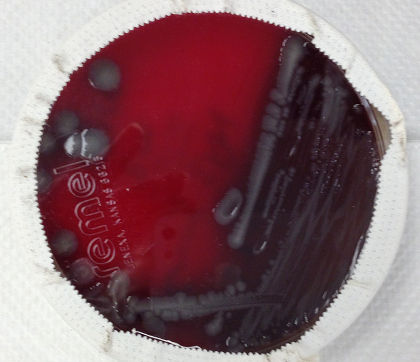
Grey-white bacterial colonies growing on a blood agar plate.
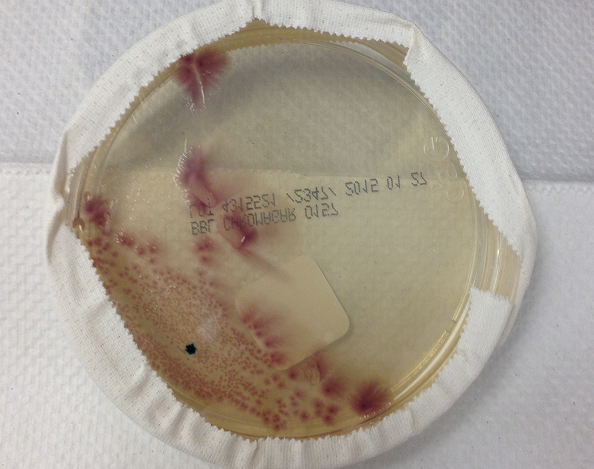
Fuschia colonies growing on CHROMagar O157.


Laboratory Identification:

E. coli O157:H7 is most likely to be detected in the acute phase of illness and may be missed after 5-7 days from onset of symptoms. In general, laboratory identification is based on the detection of Shiga toxin-producing strains or detection of the O157:H7 serotype through various methodologies. In our laboratory, we identified E. coli O157 based on the above gram stain and colony morphology in combination with growth with the appropriate color on a selective plate for E. coli O157, CHROMagar O157. We used our automated microbial identification system, Vitek 2, which performs multiple biochemical reactions to confirm the bacteria as E. coli O157:H7. Additionally, we identified the presence of Shiga toxin through an immunochromatographic lateral flow rapid test using monoclonal antibodies specific to Shiga toxins.


Discussion:

E. coli are gram negative rods that are beta hemolytic, indole positive and lactose fermenters. E. coli is part of the normal colon flora but certain types of E. coli can cause disease depending on their virulence factors. Enterohemorrhagic E. coli (EHEC), also known as Shiga toxin producing E.coli (STEC), is one of six major groups of E. coli that causes diarrhea. EHEC produce a Shiga toxin that inhibits protein synthesis of intestinal epithelial cells via inhibition of the 60S ribosome. The most common serotype is E. coli O157:H7. Transmission occurs through ingestion of raw milk or uncooked ground beef. Hamburgers have been the cause of many outbreaks of infection in the United States although majority of E. coli O157:H7 infections are not associated with outbreaks.

Clinical manifestations from E. coli O157:H7 infection usually occurs at three days from time of exposure but may vary from one to eight days. Clinical symptoms typically begin with abdominal cramps, vomiting, and bloody diarrhea without fever. However, patients may experience a spectrum of disease ranging from asymptomatic infection (less common) to hemorrhagic colitis with progression hemolytic-uremic syndrome (HUS). HUS is the most common cause of acute renal failure in children and results from toxin-mediated damage of endothelial cells in the kidney. HUS is characterized by the triad of acute renal failure, microangiopathic hemolytic anemia, and thrombocytopenia. Supportive therapy is recommended for treatment of E. coli O157:H7 infections. Antibiotics are not recommended because of the potential to increase Shiga toxin production. For this reason, we do not report antibiotic sensitivities for E. coli O157:H7.


Jill Miller, MD is a 2nd year anatomic and clinical pathology resident at the University of Vermont Medical Center.

Wojewoda-small

Christi Wojewoda, MD, is certified by the American Board of Pathology in AP/CP and Medical Microbiology. She is currently the Director of Clinical Microbiology at the University of Vermont Medical Center and an Assistant Professor at the University of Vermont.

Computers and Diagnostic Algorithms

As sophisticated as computers are now, isn’t about time we began using them more to help with the diagnosis of disease? Physicians tend to be diagnosticians, and primary care physicians need to have a massive breadth of knowledge these days in order to correctly diagnose the multitude of disorders in patients that may walk through their doors. The same goes for ER physicians. Currently, new doctors are relying more and more on information at their fingertips rather than information remembered. Perhaps relying even more on computers than we already do makes sense. Currently, we routinely use simple computer algorithms in clinical laboratory testing. Things like test results above an AMR causing the computer to direct the instrument to dilute and repeat the assay on that sample before reporting a result. Or diagnostically, a negative monospot test for Epstein Barr Virus (EBV) on a child under 4 years of age can be programmed to automatically order an EBV IgM and IgG, since the utility of the monospot test is unclear in that age group. This sort of “reflex” testing is already in use, and requires no operator intervention.

Here’s an example of a diagnostic approach that could be used: A sick infant comes in to the ED and has blood work run immediately. The initial results show a low pH, low bicarbonate and high pCO2. When a software program sees that combination of results, it could reflexively order more tests based on the differential diagnoses associated with a high anion gap metabolic acidosis (for example, ordering a blood glucose to detect diabetic ketoacidosis). If that is ruled out, the software then looks at the next most common cause of metabolic acidosis, and so on. The computer would not be diagnosing the child; the software would simply be ordering the appropriate next step tests to allow a rapid diagnosis, and probably doing it faster than the average multi-tasking ED doctor.

Software-based diagnostic systems exist and are on the market. So why are we so slow to adopt these systems into everyday use? We should let technology help us as much as we can. Software-based diagnostic systems have not been shown to be better than humans for diagnosing (http://www.nejm.org/doi/full/10.1056/NEJM199406233302506), and may never be. However, I would opine that they are faster than humans at deciding what tests to order based on lab results, or on a combination of lab results and clinical signs and symptoms. Using them this way would then leave the human to human interactions and the final diagnosis to the doctor and his patient when he has all the necessary test results at hand.


-Patti Jones PhD, DABCC, FACB, is the Clinical Director of the Chemistry and Metabolic Disease Laboratories at Children’s Medical Center in Dallas, TX and a Professor of Pathology at University of Texas Southwestern Medical Center in Dallas.

NIH Funds Antimicrobial Resistance Diagnostics Projects

As I mentioned in a previous post, diagnostic uncertainty drives antibiotic use, so getting answers to clinicians faster is an important piece of the antimicrobial stewardship pie. NIH is stepping up and funding several efforts around the country. From the press release:

“The National Institute of Allergy and Infectious Diseases (NIAID), part of the National Institutes of Health, has awarded more than $11 million in first-year funding for nine research projects supporting enhanced diagnostics to rapidly detect antimicrobial-resistant bacteria.”

The funded researchers include a mix of companies and academic centers including BioFire Diagnostics, LLC and Brigham Young University in Provo, Utah.

Read the full press release here.


Swails

Kelly Swails, MT(ASCP), is a laboratory professional, recovering microbiologist, and web editor for Lab Medicine.


The Passing of the Gauntlet

Time passes in cycles. And the time has come for the passing of the gauntlet. Two weeks ago, anxious and eager fourth year medical students found out what their fates would be in terms of internship or residency (in the case of pathology, where we don’t do an intern year) for the coming year. Those of us who are newly appointed chief residents either have already transitioned or are starting our terms soon. And as chief resident, I’ve made that last connection to loop in the new and been in contact with our incoming first years and new CP only senior.

Two weeks ago in Boston at our ASCP Resident Council meeting, I listened to a presentation by the CEO of USCAP and a resident working with him and ASCP on the development of our resident engagement strategy. It was a thoughtful presentation and I wondered to myself as the resident presented his experiences with engagement entitled “From the View of a Chief Resident” whether there would have been any difference in how he felt whether he had been chief resident or not. And I can’t say that I know the answer yet to that question.

I’ve always been pretty proactive and I can be mad vocal sometimes, especially when it comes to ethical, policy, and health equity issues that I feel affect marginalized populations that often don’t have a voice. I’ve spent decades organizing and advocating for health equity for the minority and immigrant communities so I’m quite passionate about improving health for these populations. Part of my MPH study was dedicated to this. And I went to medical school after spending significant time in biomedical research so I am much older than the average resident. So I’m not always sure if I see things differently because of those things about me or that I would’ve anyway despite them.

But the gauntlet has been passed. My two co-chiefs this past year were great. They were organized and dealt with much more than was perceptible to the eye. Since our program is small, they so did much more than make our schedules and sign off on our leave of absence forms – they were masters of conflict resolution. They had many additional meetings in addition to their rotation duties. They were responsible for teaching and guiding the first years in grossing and through their first year of residency and for solving the frequent quality improvement issues that would come up between technical staff and house staff and between our residents and our distant off-site hospital that we also rotate at.

So, I guess as a chief resident, I might see things differently, or have no choice but to. I’ve never been the best about being early but I know that I need to be a role model now. So even though it’ll be tough for me, I’m going to have to do things that I normally wouldn’t do. My schedule will need to be more conducive to this new role – like I will have surgpath in July so that I can train the PGY1 in grossing. And since I signed contracts for two consecutive fellowships last year, I won’t need to dedicate any of my PGY4 to interviewing and should have more time to mentor the PGY1. Chiefs set the tone for resident culture which can be especially important for incoming PGY1.

I’m not sure if my thinking will magically change. And because I have no co-chief, I can see that my life will change drastically in terms of what I take into consideration when I make decisions since I will have more responsibilities that will demand my time.

Regardless, it does seem like we’ve passed a moment. The PGY4 are now focused on studying for their boards since they’ve passed on their chief duties. The PGY2 are starting to think about fellowship interviews and setting up audition rotations. And the PGY1 are now starting to feel less like the newbies and more comfortable in their residency duties and rotations. One thing is certain, time does keep on moving.


Chung

-Betty Chung, DO, MPH, MA is a third year resident physician at Rutgers – Robert Wood Johnson University Hospital in New Brunswick, NJ.