
A Bayfront Convention – ASCP 2014 in Tampa, FL

From October 8-10th this year, ASCP members met at the Tampa Bay Convention Center. The convention center overlooks the picturesque calm waters where the Hillsborough River drains into Tampa Bay, waters which are alight at night with city lights and reflections from neon-lit bridges. Opposite the convention center stands the imposing figure of Tampa General Hospital, the metropolitan area hospital at which the University of South Florida residents undergo portions of their training.

Inside, the atmosphere was quiet and relaxing on the first day. Pathologists, cytotechnologists, laboratory professionals, residents, fellows, and others mulled about, some sipping coffee and catching up on news, others hurrying to get to one of the many available lectures or seminars.

Some lectures were star-studded, others from lesser-known speakers, but they were outstanding overall in subject and quality. Dr. Richard DeMay’s lecture on cytopathology was a real treat; he interjected humor and humility into his lecture, a remarkable feature for someone with an internationally renowned series of books under his belt. It was fascinating to watch him speak, with his keen blue eyes and wavy brown hair, with a single shock of white at the front. His demeanor was poised but colloquial, brilliant but accessible. I had the pleasure of shaking his hand after and thanking him for his contributions to the field, but others were more prescient; attendees lined up afterward to get their books signed and have photos taken.

Some of the more popular lectures had standing room only, although arriving 10-15 minutes prior to the start guaranteed a seat. Pathologists – old and young – stood up against walls or sat on the floor, fumbling with beverages and notepads, to hear about Head and Neck Surgical Pathology and Medical Liver Pathology. Yet other lectures had to be missed; I regret not being able to attend what I heard was a high quality lecture given by Steven Marionneaux, MS, MT(ASCP) on the topic of platelet counts and their impact on transfusion protocols.

The resident review courses, designed for pathology residents for the purpose of board review, were well done also. They were narrower in focus than many of the other lectures, but cut into the meat of their subjects. For the fourth-year residents who attended, no doubt the reviews served as a free complement to the Osler Review courses, which began on the Sunday in Tampa following the convention.

By Thursday, the posters and exhibits were up, and the exhibit hall (Science Connections Central) was bustling with activity. Presenters from all over the country (and some international) with varied backgrounds were there, with posters on everything from laboratory media for HPV testing to the utility of peripheral blood examinations of myelodysplastic syndromes.

The exhibits were the standard fare, with laboratory hardware vendors, molecular testing services, and booksellers all present. My favorite, after meandering for some time, was the Pathology Outlines booth with Dr. Nat Pernick. He was gracious enough to share his impetus for founding his company, which was to eliminate the need to carry books when he went from site to site doing PRN work in the Northeast, He was also gracious enough to give me an autograph. I had learned my lesson from the previous day.

After rounds of lectures, and a boisterous Lab Management University graduation ceremony, ASCP 2014 began to wind down. The Friday lectures grew more sparsely attended throughout the day, but many stayed for the ending awards ceremony.

On Friday evening, at the cusp of dusk, drinks and hors d’ouvres were served, and sharply dressed laboratory professionals watched as ASCP President Dr. Steven Kroft thanked everyone for coming, and the poster awards were handed out. The international award recipient gave an excellent improvisational speech, telling the assembly that he was honored to be studying in the United States, and that he looked forward to becoming “stronger together,” a nod to the ASCP’s newly minted motto. Yet my favorite award recipient was Dr. Kun Jiang of Moffitt Cancer Center, one of my attending physicians and in my considered opinion one of the most talented pathologists in the country. With his characteristic humility, he gave no speech and hurried off the stage too quickly to be photographed, but we were glad to see recognition of his hard work and talent. He was the recipient of much hand-shaking and back-slapping when he returned to his table.

Dusk came over the bay, but the convention was not yet over. Residents were invited to a classy meet-and-greet reception at Jackson’s Bistro, an upscale restaurant just a short walk away. Dr. Kroft appeared again to remind the residents that we are the future of pathology, and to inspire us to embrace the legacy we were being left with. Dr. Rebecca Johnson was there also, and it was interesting talking to her. I learned that the pathology board exams are not scaled with a Gaussian distribution, with the necessity of a certain number of exam failures, but are structured using a standards-based approach. This ensures that minimal criteria are met, and failure is not essential to the examination model. So, theoretically, everyone can pass on the first time. That knowledge was perhaps as inspirational as Dr. Kroft’s parting words.

The music popped on and residents mingled with residents, students, attendings, and a few others who showed up. It was a lively and convivial atmosphere with swimming lights, laughter, and good times. Smiling faces abounded as a room full of stressed and overworked people took at least one night out of the year to live a little. They also exchanged stories and news, cards and numbers. It was one of those moments of being caught up in l’esprit de temps, not as part of a country or a movement, but as part of a select group of people who have dedicated their lives to the accurate diagnosis of disease. We are a truly unique group in these modern times, caught between the legendary accomplishments of our forebears and a growing world of scientific modernity. I looked over the water for a moment, over the orange and white dots and the neon streaks, and I wondered, what will our future be?
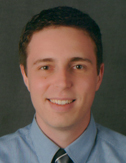
 

markow

-Michael Markow, MD is a third-year resident at the University of South Florida, Tampa, FL
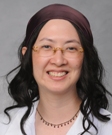
ASCP Annual and Resident Council Meetings from the Big Guava

I just spent most of this past week at the ASCP Annual Meeting in Tampa. Even though many of us had just met, every night we socialized over food and drinks (and for some, over a hockey game because the arena was just across the street from the convention center). Inevitably, our conversations would touch on our training, boards, fellowships, and the job market…slightly different journeys to similar destinations.

This past January, I served as the resident on the Annual Meeting Steering Committee Education Working Group. At that time, which was freezing in Chicago, I was glad to be in warm Tampa (during Gasparilla, their quasi-Mardi Gras-like pirate festival). Since I worked half a day and flew in late, I had missed the tour of the convention center and USF’s Center for Advanced Medical Learning and Simulation (CAMLS). But I was there representing the resident voice when we finalized and scheduled all the educational sessions that attendees enjoyed this past week at the Annual Meeting. Since I had also helped with making sure that the marketing was more resident-focused, I was glad to see many residents in attendance. It’s always nice to see the final product of the fruits of one’s labors so attending this past week meant a lot to me.

I usually don’t visit too many posters at conferences because I’m usually presenting a poster. But this time as a member of the AMSC EWG, I served as a poster judge and was able to speak with many of the poster presenters, even international ones from Spain and France! It was surreal to be on the other side and asking questions and thinking thoughts that judges probably once thought of me. Some even came up and asked for feedback after the judging was over and I hope I helped with my comments.

I also was able to be a resident attendee as well. I attended the Thyroid Ultrasound FNA CAMLS and performed ultrasound-guided FNAs of silicone slabs filled with “olives” as nodules. And I found that it’s much harder that I previously realized. But I was able to use my newly learned skill when I performed a breast FNA this week. Most of the talks I attended focused on hematopathology and molecular pathology topics. I also attended Dr. DeMay’s ‘basics of cytology’ session which was jam packed and even asked him to autograph my copy of “baby DeMay” after his talk (gosh, I’m such a groupie) which I had with me since I’m on cytology now. Others took selfies and pictures with the cytopathology rock star.

The Mixology Lab where the poster and oral presentation as well as the 40 under 40 winners were announced was a great hit – good food, free drinks, and a fun time where attending physicians and trainees mingled next to the azure, calm Hillsborough River. And the fun didn’t end there as we closed the conference with a Resident Reception at the sushi bar across the river that was attended trainees, attending physicians, lab professionals, and friends/spouses of attendees. I even saw a Conga line composed of attending physicians, resident council members, and fellow trainees!

After the meeting, I stayed for the ASCP resident council meeting. It always inspires me to see those committed to organized medicine (or any cause) at work. Everyone was passionate, not afraid to speak up, and brought different skills and experiences to the table. ASCP is always looking for new leaders. But I realize that it’s not always easy to find opportunities to become involved with so I’ll try to advertise those I hear about here on this blog. Feel free to email me to pass along your name within the organization. I promise that getting involved with organized medicine is always rewarding and you will develop leadership skills that will help for when you are a pathologist without even realizing it.

Fellow readers, for the next few weeks, I’ll be taking a break and you’ll be hearing from other trainees about their experiences at the Annual Meeting and with ASCP.


Chung

-Betty Chung, DO, MPH, MA is a third year resident physician at Rutgers – Robert Wood Johnson University Hospital in New Brunswick, NJ.

Thoughts from Pathology Job Market Conversations

So, as you know, I recently attended the 2014 CAP Annual Meeting in Chicago. In addition to meeting with residents, I also had many interesting conversations and meals with non-trainees. I met new-in-practice pathologists who had completed two or three fellowships who were unemployed and were at the meeting networking with potential job prospects. I met veteran pathologists who were working in part-time or locums tenens positions while searching for a more permanent position. And finally, I met pathologists who were currently working but who told me that over the years, the amount of work that they have had to do for the same or less pay had significantly increased.

These conversations left me wondering how we can address this issue. How do the reports that this country would see an impending shortage of pathologists in the near future fit in with these first-hand stories? Most, if not all, of the reports about a pathology workforce shortage were based, at least partially, on survey data. This can be influenced by selection bias, volunteer bias, or both depending on how the survey was conducted. Also the modeling applied, at best, can only make estimates about future occurrences based on the data available now. It cannot take into account unforeseeable game changers (eg – Affordable Care Act) that may significantly alter the practice of medicine compared to the practice today. I’m not saying that we should discount these reports, just that we should be aware of how to critically analyze the conclusions from them.

I do believe that there is a pathologist shortage in terms of misdistribution geographically and subspecialty-wise, but this is a trend that holds true for most medical specialties. We may not have enough pathologists per person (aka a shortage) in this country but we definitely have a surplus in many urban settings where it may be more popular to practice. Certain popular and well-paying subspecialties, like dermatopathology, could have a surplus but don’t because the number of fellowship positions are limited. But other popular subspecialties like hematopathology seem to be saturated in terms of positions near cities that are popular to live in from my anecdotal experience.

And even though an impending shortage is always the battle cry to increase the number of residency spots, our community is polarized on this issue. Some residents and pathologists I’ve spoken with feel that we should, like other specialties have done in the past, limit the number of residency positions we have. Without more data, I can’t really say which side of the argument I agree with but I do acknowledge that we are at a crossroads. The decisions we make now about how we train our residents and what roles pathologists should fill (eg – molecular diagnostics) will affect our future, patients’ futures, and our profession’s future.

But regardless, the problem does remain that the job market currently seems tight and that pathologists have had to perform more work than they have had to in the past. So, what is your take on the situation and your suggestions for a possible solution? And how can we incentivize to address misdistribution of pathologists to address a shortage in more underserved areas?


Chung

-Betty Chung, DO, MPH, MA is a third year resident physician at Rutgers – Robert Wood Johnson University Hospital in New Brunswick, NJ.


Resident Concerns, Part 3: Networking Opportunities

Just as an addendum to my previous post about fellowship applications, my suggestion would be to have everything ready to send by July 1st or earlier, if possible. I’ve found that some programs started accepting applications on July 1st. And this includes asking for letters of recommendation as early as possible so that they are ready by then as well or you may find yourself, like I have, in the bottleneck with programs emailing weekly that all they need are your letters because they have started reviewing and/or interviewing already and won’t look at your materials until its complete with letters of rec. I submitted most of my applications (minus letters of rec which still have to come) by September 9 and one of the programs had already filled for both hematopathology and molecular pathology. I would guess with an internal candidate or an early interview candidate because their website didn’t list yet that the position was filled. Some of the programs for molecular genetic pathology, in particular, have early deadlines of September 1st, so make sure you know the deadlines and have your materials ready to go way in advance.

Now on to this week’s topic: networking. Throughout our journey to and during medical school, it was often hard work and studying that got us to where we needed to be. Yes, there were the “legacy” students who got into colleges and medical school based on who their parents or families were but those are not the students that I speak of. I speak of those like myself who form the majority and who didn’t have those types of connections. But in the workplace, if we take the group of “legacies” out, we still have to deal with the power of connections but at a more palpable and potent level than previously encountered. On multiple workplace surveys, the #1 manner through which people (and pathology trainees) obtained jobs is through “word of mouth” and referrals. Having someone make a call on your behalf can be a powerful factor in helping you to obtain that fellowship or job.

With respect to fellowships or jobs, the market is tighter. There are far fewer positions available. So how do you set yourself apart from the crowd of others with similar or even, slightly better, credentials than yourself? Connections can greatly help so start early. Local and national conferences are great places to meet other residents but more importantly, other pathologists in your intended field. Make yourself business cards and give them out like there’s no tomorrow. If you impress someone, they most likely will keep your business card and remember to get in contact with you when a position opens up that you’re a great fit for. At annual meetings, there often are networking receptions for residents to meet practicing pathologists. Also at these venues, job seekers get the word out that they are available and have access to job boards. This also holds true for attending your state society or other local subspecialty meetings.

Another way to meet and make connections is through getting involved with organized medicine and advocacy organizations. ASCP, CAP, USCAP, and subspecialty organizations (like AMP for molecular pathology) often have junior positions on their committees and councils for a resident. Find one in an area of pathology that you have an interest in and apply. Many also have travel awards to their annual meetings or grants for research also set aside for residents. I’ve found that many of the people who volunteer in national leadership positions in these organizations frequently overlap so once you start meeting people, you will see them at other meetings, and it makes it easier to meet more people. So if you are able to obtain a junior member/resident position, work hard. People recognize and value hard work and enthusiasm and it’s a way to make a great impression doing work that you are passionate about. And if you apply and are not chosen, then don’t give up. These positions have many more people applying for them than positions that are available. But persistence is a virtue and when TPTB (“the powers that be”) see your name on a subsequent application, they might be impressed that you applied again.

Some of these positions are advertised and others are through referrals. As a resident, I never found it that easy to find when many of these positions have an opening so I’ll try my best to advertise through this blog when those times arise. But you can get involved early and at a more junior level first by being a representative for your program to ASCP (contact angela.papaleo@ascp.org) or a delegate to the CAP Residents Forum (contact Jan Glas at jglas@cap.org). I know that at some programs, this is through election, but even if you are not elected, you can still attend the CAP Residents Forum (you just won’t be your program’s voting delegate) and still ask to get the ASCP e-newsletter (where they advertise when new resident volunteer positions are open).

If you can decide early what you want to do when you are a pathologist (subspecialty-wise, etc), then the easier it will be for you to get involved with your specific pathology community in leadership/volunteer positions early. You can even participate in other activities such as blogging, creating podcasts, and writing for these organizations. You’ll be surprised that you meet people through these venues as well. You can write about a pathology topic of interest for CAP NewsPath which is then converted into a podcast. I blog for ASCP’s Lab Medicine Lablogatory as you all know, but we are always looking for resident bloggers. If you can’t commit to writing weekly, then contact me (chungbm@rwjms.rutgers.edu) and I’ll happily have you do a guest blog here one week! For those of you attending the upcoming ASCP Annual Meeting in Tampa, I’ll be looking for bloggers to write on their experiences at the meeting so just shoot me an email or find me at the meeting (I’ll be one of the poster judges). Check out the websites of organizations you are interested in to see how you can get involved – it does take some effort on your part but you won’t be disappointed! For positions that work through referrals (where I didn’t have one), I was still able to apply because I identified the person in charge (internet searches are your friend), contacted them, and asked. So, it never hurts to be proactive.

And in my attempt to keep you all informed of opportunities, for those of you who want to do an external/away elective or international/global elective and need financial support, the application period is now open for round 2 of ASCP’s subspecialty grants. You can find more info at the ASCP website but you need to apply by Jan 16th!


Chung

-Betty Chung, DO, MPH, MA is a third year resident physician at Rutgers – Robert Wood Johnson University Hospital in New Brunswick, NJ.

Resident Concerns, Part 2: Fellowship Applications

So, continuing on with resident concerns I heard about during conversations at the 2014 CAP Residents Forum and Annual Meeting, let’s move on to the fellowship application process.

One nice offering by the Residents Forum for the past two years at the Annual Meeting is a mock fellowship interview. The process was simple in that I only needed to fill out a brief application prior to the meeting with my fellowship interests and I was matched up with a member of the CAP Board of Governors or another CAP national leader who either practiced or had experience in my area of interest (or as close to it as CAP could find out of the available pool of mock interviewers). Once matched, I emailed my personal statement and CV to my mock interviewer (who turned out to be someone I already knew from my work on a CAP Council). I also participated in the mock interviews last year with a pathologist who I didn’t know beforehand. Both times, I received valuable feedback on my submitted materials and advice for the actual interview as well as an open invitation to contact them in the future if I had questions or needed more advice. I highly recommend these mock interviews if you are attending a future CAP Annual Meeting.

Obtaining fellowships can be even more competitive than getting into a residency. There are far fewer spots in that some may only offer one position per year in that subspecialty, programs may have already filled their positions with internal candidates, and the majority of residents (96%) apply for at least one fellowship (85% of third and fourth year residents according to the 2014 ASCP Fellowship and Job Market Survey had already accepted fellowship positions by the time of this survey during the RISE).

The trend these days is to complete at least one fellowship (56% answered yes to this question on the ASCP survey) and many often complete two (39% on the ASCP survey indicated that they would pursue two fellowships). I personally also know individuals who completed three although they are in the minority.

And it’s currently fellowship application season. Even though the suggested deadline is December 1st, we all know that most programs start accepting applications in September. I called some programs in August with questions and they had received applications already! Suffice it to say, from totally anecdotal evidence that I’ve heard, it seems that there are two periods for interviews: Oct/Nov for those accepting applications early and Jan/Feb for those who wait until December 1st to look at their applications. Even from friends in other specialties also going through this process, it seems that the process actually begins the year prior to application.

For those who want to be ahead of the game, at least start getting your CV and personal statements together. Since I’ve been updating my CV whenever something new came up since college, the CV was no problem. But I can tell you that I wished that I had started on the personal statement as a second year. I thought that I was being a semi-early bird to write my initial draft in August. But it took about a month of back-and-forth feedback from people who I asked to read it for me to whittle it down to less than one page. Turns out that most programs want something short and sweet (one page or <500 words). One program even wanted <250 words so I gave them a super abridged version of what I submitted to other programs. So, second years, start now so that you can submit everything in complete form on September 1st. The other part of applications are letters of recommendation. I’ve only heard residents from one program tell me that their letter writers will give them a letter within a day after being asked. If you’re like me, you’ll probably need to ask your letter writers way in advance and sometimes, give quiet reminders. So start early if you want letters ready by the time you submit.

The controversial issue that I always hear whispers about at the three Residents Forums I have attended is that of a standardized fellowship match like we had when we applied for residency. There are pros and cons for and against a standardized match. I was speaking with someone from the Association of Pathology Chairs (APC) and he supported a match. I would agree that it would deter residents from being subjected to undue pressure from programs to decide quickly once an offer is made (most 4th year residents who I spoke with said that they had up to 1 week at most to decide). It would also eliminate the situation that many of them found themselves in where they had accepted a position but later interviewing programs encouraged them to still interview and disregard their previous acceptances (which I think is unethical and I’d politely decline to interview at that program). But I can understand the conundrum that the later interviewing programs that follow the suggested CAP deadlines are subject to when many of their desirable candidates have already signed by the time they interview.

Unlike when the NRMP decided to go a match system for residencies, and later on, to bar pre-matching from participating institutions, the incentives and ability to leverage are very different when it comes to fellowships. Most fellowship programs offer a small number of single digit positions which they can usually easily fill without a centralized application service. And fellowships are a quasi-limbo state between school and our first “real” job. The job market does not cater to regulation and it is hoped that free competition is enough to ensure that everyone ends up where they are meant to be (although we know that connections and word of mouth still matter, especially in the small world of pathology). Programs (supposedly 51% from one study) will also often fill their spots with internal candidates and residents often feel the need to apply earlier and undertake audition rotations for the most competitive fellowships (eg – 2nd year for dermatopathology). While a standardized match may alleviate some of the aforementioned pressures, it does provide some of its own. Residents often have to spend more money to interview at a larger number of programs to feel secure that they will match somewhere and they also need to wait until later in the year to learn their fate. They also would likely have difficulty if they are trying to match for two successive fellowships which is not that unheard of, especially when those fellowships are related.

So, in terms of a standardized match, even though I usually have an opinion on most topics, I’m not sure which is better and the jury is still out. But I do know that the ability to incentivize programs into such a match process is much more difficult than it was for residency programs. It does seem though that residents do prefer a standardized application timeline according to multiple ASCP surveys even if they don’t support a match process. APC and PRODS (program directors section) tend to support a pan-pathology fellowship match while other organized groups within pathology and most residents remain skeptical that one would solve all the issues on both the resident and institution sides of the equation.

Well, for my compadres who are wading in these murky waters this interview season as I will also be, it’s a moot point. So I leave you with this: CAP had a great webinar last year by two pathologists-in-training who had survived this process as well as a program director. The webinar can be accessed here as well as a Q&A FAQ PDF from that webinar.

References:

  1. KD Bernacki, BJ McKenna, and JL Myers. Challenges and Opportunities in the Application Process for Fellowship Training in Pathology. AJCP, 2012; 137: 543-552. Accessed at http://ajcp.ascpjournals.org/content/137/4/543.full.pdf+html
  2. WS Black-Schaffer and JM Crawford. The Evolving Landscape for Pathology Subspecialty Fellowship Applications. AJCP, 2012; 137: 513-515. Accessed at http://ajcp.ascpjournals.org/content/137/4/513.full.pdf+html
  3. JM Crawford, RD Hoffman, WS Black-Schaffer.Pathology Subspecialty Fellowship Application Reform, 2007-2010. AJCP, 2011; 135: 338-356. Accessed at http://ajcp.ascpjournals.org/content/135/3/338.full.pdf+html
  4. RE Domen and A Brehm Wehler. An examination of professional and ethical issues in the fellowship application process in pathology. Hum Path, Apr 2008; 39(4): 484-488.
  5. N Lagwinski and JL Hunt. Fellowship Trends of Pathology Residents. Arch Path Lab Med, Sept 2009; 133(9): 1431-1436. Accessed at http://www.archivesofpathology.org/doi/pdf/10.1043/1543-2165-133.9.1431
  6. JL Myers, SA Yousem, BR DeYoung, ML Cibull (on behalf of ADASP). Matching Residents to Pathology Fellowships: The Road Less Traveled? AJCP, 2011; 135: 335-337. Accessed at http://ajcp.ascpjournals.org/content/135/3/335.full.pdf+html

Chung

-Betty Chung, DO, MPH, MA is a third year resident physician at Rutgers – Robert Wood Johnson University Hospital in New Brunswick, NJ.

Resident Concerns, Part 1: Boards Prep

So I’m writing this blog while taking a break from the 2014 CAP Annual Meeting (I hate high heels and my feet are killing me from standing by my poster). As a resident, one of the most enjoyable parts of every conference that I attend is meeting and speaking with other residents. It’s even better if the conference planners organize specific events, networking receptions, or a resident lounge where residents can meet and socialize with each other and other trainees and pathologists. The CAP Annual Meeting is always good in terms of providing residents such outlets.

The best part for me is hearing stories of other resident experiences different than my own in addition to making new friends and colleagues. So my next couple blog posts will be about some of the topics that came up as the most important from the residents I spoke with: boards preparation, the fellowship application process, and networking/engagement opportunities for residents.

So, in terms of the boards, two themes seemed to emerge. First, many felt that the Resident-In-Service-Exam (RISE) does not correlate well with what we need to know to prepare for boards. For instance, this example was given to me: a decent percentage of questions on the RISE focused on forensics while most had heard that the boards have very questions dealing with forensics. My opinion on this topic is that it depends on what your expectations are concerning the RISE. If you are hoping that the breakdown of the RISE is a simulation of the boards in mini-form, then you might be disappointed. But if you like to advocate change for a different focus for the RISE, then I’d encourage you to bring your concerns to the RISE committee at rise@ascp.org and provide a cogent argument for your views…my motto is always, “you never know, the worse that they can say is no, so it’s better to try.” It certainly is not irrational to want our in-service exam to reflect what we need to know most for the boards and for real-world practice so let the RISE committee know.

Secondly, the topic came up of what is tested on the boards in terms of breakdown. I also wondered the same thing since I need to prepare chemistry and molecular pathology podcasts for for ASCP’s Lab Medicine Podcast Series and had no clue what would be high-yield topics that I could focus on (if you have a specific topic or test in these areas that you’d like a podcast on, please feel free to let email me and I’ll try my best).

So, I asked someone I know at the American Board of Pathology (ABP) about this issue. She directed me to the APCP Exam Blueprints which outlines the overall breakdown of number of questions in specific topic areas on the most recent board exam. I’ve also been told that they will post category codes for the various exams (ie – something like a “table of contents”) to the ABP website soon.

Looking at the blueprints, I have a better idea of some of the board topic areas that I will need to concentrate on (although there is nothing listed for molecular pathology but maybe there isn’t that much yet on the boards or it’s included within other AP/CP areas like soft tissue or hematology). And apparently, this is much more info than has been previously provided. But again, if you want a more detailed breakdown or other information that you can’t find on the ABP website, I also encourage you to communicate your concerns to Dr. Rebecca Johnson, the CEO of the ABP. Remember, positive change only occurs if there is a stimulus for change, and that stimulus can be you! As attendings, we need to be pro-active in questioning and changing the status quo for the better, so why not start practicing or acquiring those skills while a resident.


Chung

-Betty Chung, DO, MPH, MA is a third year resident physician at Rutgers – Robert Wood Johnson University Hospital in New Brunswick, NJ.


Generation Gap from a Resident’s POV

I was talking with my attending and fellow this week and was struck by the generation gap in terms of how we were/are trained. When my attending was in residency, he had to handle over 100+ CP calls in a week – he even keeps one of his call sheets to back up his stories. In some ways, we are spoiled because we can just say that there is an APP to do many of the calculations he had to do then and so we’re not even paged on these types of calls. These days, I may average 10+ CP calls/week at the same institution where he trained at. He also said that they didn’t have PAs back then and it wasn’t unusual to gross until close to midnight…and the grossing resident also covered all frozen sections at the same time, too. His is not the first attending story that I’ve heard like this. Obviously, this was before we had work hour reform. But I wonder what we’ve lost in training since his time?

I’ve often heard residents complain that we have too many service duties and that they feel that service duties supersede our education. Most of the time these complaints revolve around not having enough time to read and too much “scutwork” including grossing routine specimens. I’m no expert by any means but I feel that for me, I’ve learned more when I’ve had to do things as opposed to reading textbooks. And by doing things, I mean performing those duties that are required of my attending as close as possible to the real experience. And yes, that does include lots of reading, not just textbooks but also journal articles and other resources, but is not limited mainly to reading.

Gone are the days where I could skip (or attend) my medical school classes and watch a video of the lecture and read the textbook and do well on exams. The more important difference is that now the consequences of my actions can more directly harm patients so it’s vitally important to gain “attending skills” as well and as soon as I can. And even after graduation, I know that it will still take a few years before I am comfortable in my clinical competency. I know that I’ll be more stressed and OCD about details because it will be my name at the end of the report that is responsible for patient care decisions and also liable for medico-legal action. But I want to be as prepared as possible when that time comes.

Residency is the time when we should transition from passive learning (ie – learning mostly by reading textbooks) to active “on the job” learning. Sure, if no one at your program wants to teach you, then you may be stuck with textbooks and online resources. But I’ll take a bet that even at the most “malignant” programs, there is always at least one golden mentor (including non-attendings) who wants to teach. And remember, that during fellowship, your attendings will expect that you have most of these skills in your portfolio and that you have good time management skills. No one expects that we have knowledge of everything (even our attendings don’t have that), but they will expect that we know how to approach that situation if we find ourselves unsure.

Anyway, that’s not my most important point. I find that complaining just wastes my energy that can be directed to a more useful endeavor. Yes, if I feel something is truly unjust, I will be one of the first to say something. But I realize that the patient is the center of my training and not me, their needs supersede mine, and yes, there will always be scut but it depends on how I approach it what I get out of it. Plus, I realize that compared to other specialties, I didn’t have an intern year and don’t have to do overnights, so I’m thankful that my residency experience is not as bad as it could be.

A generation gap exists where our attendings can’t understand why we complain and where we don’t feel our attendings understand us. But I think that there is a middle ground. I don’t think that we should go back to unregulated work hours where we are dangerously fatigued and never get to see our family and friends. But I also don’t believe that residency training is there to spoon-feed me. It is the time for me to spread my wings (with supervision, of course) and learn how I’d navigate my clinical duties as a future independent attending.

For those going into surgical pathology, you may still end up working at a hospital where you may need to gross or at least, look at specimens or teach how to gross. The end of residency doesn’t necessarily mean the end of grossing (or insert you least favorite aspect of residency here). A friend was telling me that he overheard attendings at a networking reception complaining about a new hire they had who didn’t know how to gross. If that was at a private practice, I would expect that after a short time allowed for remediation, that if that new hire didn’t improve, s/he would be fired. There may be more leniency at an academic or VA institution, but I also believe that if a better replacement could be found, that person would still be fired.

So residency is the time to make sure we gain competency in skills like grossing, lab management, billing, CLIA regulations…even if these are usually the things that we find to be boring. Sign-out is not even half of what will be required of us when we are full-fledged attendings, especially if you want to work in private practice, which is where most of us end up since the compensation is greater.

Getting involved in leadership positions, whether at your hospital, state society, or within a national advocacy organization in my experience opens doors to many practical opportunities as well. For instance, I’ll be going with my hospital’s CAP lab accreditation inspection team this month to help inspect the hematology section of a lab in another state. Because my department chair knows I have an interest in hematopathology and because I performed well on my first CP rotation here, I was given this great opportunity. I’m now certified as a CAP inspector and will have a better idea of lab management issues after this experience. Due to my involvement as the junior member on CAP’s Council on Education, I’ve also been given the opportunity to serve as the ACCME/AMA compliance monitor at a joint CME activity of CAP and a state pathology society in the near future. I see this as active learning and a step toward gaining the competencies that I will need.

Right now, we are buffered from much more than we realize. Probably as a fellow, we will understand the end game better, just how much our attendings’ days are filled with more than just sign-out. I suggest reading the article, “Adequacy of Pathology Resident Training for Employment: A Survey Report from the Future of Pathology Task Group” that outlines specific competencies that employers wanted and that residents did not possess adequate competencies in. It goes on to state that 50% of employers felt that new graduates that they hired needed more support and guidance than was required 10 years ago. So what can we do now during training to ensure that we are not those new graduates who are perceived as needing “more” supervision at our first job?


Chung

-Betty Chung, DO, MPH, MA is a third year resident physician at Rutgers – Robert Wood Johnson University Hospital in New Brunswick, NJ.

Radiologic and Pathologic Correlations

So last night I stayed later than usual after work to prepare for an interdepartmental conference that I will be giving next Friday before I fly out that night to attend the CAP Residents Forum and Annual Meeting. A radiology resident and I will be presenting two cases together to correlate their radiology and pathology, two specialties that have much in common, at least on the surface.

Both radiologists and pathologists, at least pre-ACA era and except for subspecializations like interventional radiology and transfusion medicine, do not often interact with patients directly. Therefore, both fields rely heavily on clinical observations and notes written by the primary care doctors caring for “their” patients. Both also require a broad knowledge of disease differentials, and frequently, understanding the prognostic and treatment considerations of the disorder under examination even though they are not involved in direct care of the patient. Additionally, both fields require good communication with primary care physicians.

Senior radiology residents attend a month-long course correlating radiology with the corresponding pathophysiology of diseases at the Armed Forces Institute of Pathology (AFIP) now known as the American Institute for Radiologic Pathology (AIRP). I remember during medical school trying to set up an elective at what was then called AFIP but was not able to since it is only open to radiology residents.

At both my previous and current institution, the “rads-path conference” as it is affectionately called, is informal and driven by the radiology department in terms of case choices. It’s meant to be a learning experience but generally the only pathology residents who attend are the one(s) presenting while all the radiology residents available have to attend. Seems somewhat ironic that the learning is mostly one-sided, and it’s bad that our two departments don’t do this more as a true inter-departmental conference.

Pathology and radiology are two fields that also often get left out when publications are written even though our final diagnoses, and sometimes, even images are used within publication submissions. As residents in these fields, we should make an active effort to interact with our primary care counterparts frequently. We should do this not only to be included in such scholarly endeavors but also to show that we are also equal members of the patient care team and are not forgotten when treatment discussions take place.

It also happens with tumor boards as well that most of the choice of cases and topics for discussion come from the non-pathology department. So what are your opinions on how we should interact with other departments for patient care discussions and inter-departmental conferences?


Chung

-Betty Chung, DO, MPH, MA is a third year resident physician at Rutgers – Robert Wood Johnson University Hospital in New Brunswick, NJ.

The Importance of Supportive Mentorship and “Junior Attending” Experiences

Over the last few weeks I have spent more time revising my fellowship application personal statements than I would like. While my attendings have been a great source of feedback, it’s hard to know what fellowship directors would like to see highlighted. But going through this process, I have realized even more palpably than I had previously thought before, that two things have been important in bringing me to this point: supportive mentorship and “junior attending” experiences.

Let’s start with supportive mentorship and the definition of mentor. The word Mentōr derives from the Greek name of the friend of Odysseus and advisor to his son, Telemachus, in Homer’s Odyssey. Therefore, first and foremost, a mentor is an advisor: someone who is more expert and who guides you. But what I’ve found is that a professional mentor is more than a mere advisor.

I have been extremely blessed and grateful when it comes to my mentors. Not only do they advise me but they also think of me when opportunities arise such as a possible research project or publication or to be a member of their CAP lab accreditation team that inspects another institution’s lab. Besides building up my CV, these activities also help me to acquire skills that I will need in my future professional capacity. I at first didn’t necessarily think of including some of these experiences on my CV but after a talk with a fellowship director, realized that these are the types of experiences that they would like to know about – if I’ve had previous experience where I gained a skill, then they feel I will be faster to train in terms of skills that build on that initial skill.

This brings me to my second point: the importance of “junior attending” experiences. What I mean by this term is the opportunity to participate in patient care or directorship duties in as close to a capacity as your attending would have. This could mean initial sign-out without direct supervision (of course, attending review has to occur prior to true verification) in terms of patient cases, whether it be AP or CP cases, or the initial preview of a frozen section. In terms of lab management, this could mean participating in preparation for a CAP inspection or serving on a CAP inspection team that goes to another institution. And in terms of most CP rotations, serving as the primary consultant for primary physicians about lab tests and discussing evidence-based and cost-effective ordering of appropriate tests or developing, troubleshooting, or validating a new assay.

Whatever the attending does in the course of their daily workload is where we should focus on acquiring skills. While writing my personal statement and CV, I talked with fellowship directors, and this became clearer to me. It’s all about having the proper attitude. Yes, there can be a lot of “scut” during our training but in comparison to other specialties (and those who have to do an intern year), we are fortunate to have less of it. Either way, the work has to get done, “scut” or not, so might as well learn from it and you might be surprised how it helps you later. Our attendings are not free from “scut” in their daily work either. If we think of the “scut” as attached to a patient who is waiting for their diagnosis, it makes the work go easier and faster in my opinion.

Having a positive attitude, working hard, and becoming known for certain qualities and skills only help in terms of developing strong relationships with mentors (who will one day be your colleagues) and being given those “junior attending” opportunities. Strive to be the first person they think of in those situations. Remember we are no longer in school and the faster you acquire the characteristics, knowledge, and skills of an attending, the better off you will be when it comes to progressing to the next phase.


Chung

-Betty Chung, DO, MPH, MA is a third year resident physician at Rutgers – Robert Wood Johnson University Hospital in New Brunswick, NJ.


Ebola Information for Laboratory Professionals

While it’s unlikely you will ever encounter a case of Ebola, it’s best to be prepared. The CDC has a health advisory page full of information, including specimen requirements for Ebola testing. The laboratory’s first step is to contact their state health department.