The Power of Safety Stories: Enhancing Lab Safety through Real Experiences

In the hazardous and dynamic environment of the laboratory, precision and safety are paramount, and it is crucial to both understand and adhere to proper safety protocols. Despite comprehensive training and strict guidelines, lapses in safety practices still occur, and in many labs, these deviant behaviors are the norm. One powerful tool to bridge the gap between knowledge and practice is the sharing of personal stories about the consequences of laboratory injuries and exposures. This storytelling can enhance compliance with personal protective equipment (PPE) use, and it can even foster safer lab work practices.

Stories are a fundamental part of human communication. They resonate with us on a personal level, making abstract concepts tangible and memorable. In the context of laboratory safety, sharing real-life incidents of injuries and exposures can drive home the importance of following safety protocols in a way that theoretical training cannot.

Consider the case of a histology technician who suffered a severe laceration because they used their bare hand to handle a cutting blade as it was being replaced on the microtome. Hearing this technician’s account of the pain, the disruption to their work, and the long recovery process is far more impactful than a generic reminder to always use implements or cut-resistant gloves to handle blades. It personalizes the risk and underscores the real consequences of non-compliance.

Understanding the potential consequences of unsafe lab practices is vital. Many lab workers know the rules but might not fully appreciate the risks involved in breaking them. Let’s delve into three common unsafe practices and their possible repercussions.

Using Cell Phones in the Lab

The use of cell phones in the laboratory is a growing concern. Phones can be a source of distraction, but more importantly, they can harbor contaminants. Imagine a scenario where a lab worker uses their phone in a biohazard area. Pathogens from their gloved hands can transfer to the phone’s surface. Later, they use the same phone outside the lab without proper decontamination, potentially spreading harmful agents to themselves, colleagues, or even their family.

I recall a story from a colleague who witnessed a near-miss incident involving a phone. A technician was distracted by a text message and accidentally knocked over a beaker of caustic chemicals. Fortunately, no one was injured, but the incident was a wake-up call about the dangers of distractions in the lab. This story is one way to highlight the importance of keeping personal devices out of the laboratory environment.

Eating or Drinking in the Lab

Despite clear prohibitions, some lab workers still eat or drink in the lab, often thinking that it is harmless if they are careful. However, the risk of contamination is significant. A real-life example involved many lab workers who developed a serious gastrointestinal infection after unknowingly ingesting a pathogen that had contaminated their food. They had been eating at their workstations, where they also processed clinical specimens.

This case underscores the critical importance of designated eating areas and the strict separation of food and drink from laboratory activities. Sharing such stories can vividly illustrate the hidden dangers of complacency and reinforce the necessity of adhering to safety protocols.

Not Using PPE When Necessary

On the Hierarchy of Controls, PPE is the last line of defense against many laboratory hazards, yet some workers skip this vital protection for the sake of convenience or comfort. The consequences of such decisions can be severe. For instance, a lab worker handling corrosive chemicals without proper eye protection suffered a splash injury, leading to partial vision loss. Hearing this person’s experience, from the immediate pain and panic to the long-term impact on their life and career, can be a powerful motivator for consistently using PPE. It is likely there are several other real stories in your own labs that can be used.

To foster a culture of safety in the laboratory, it is essential to create an environment where sharing stories about injuries and near-misses is encouraged and valued. This openness helps to demystify safety protocols and makes the abstract risks more concrete. There are strategies to build this culture.

Create forums for lab workers to share their experiences without fear of blame or retribution. This could be in the form of regular safety meetings, anonymous reporting systems, or informal discussions. The key is to ensure that these stories are used constructively to improve safety practices.

Integrate real-life stories into safety training sessions. Use the narratives to illustrate the importance of compliance and to discuss what went wrong and how it could have been prevented. This approach not only makes the training more engaging but also more relatable.

Lastly. Lab leadership plays a crucial role in shaping the overall safety culture. Managers and senior staff should model safe behaviors and share their own experiences with safety lapses and near-misses. When leaders demonstrate a commitment to safety, it sets a powerful example for the entire team. Stories can be a potent tool for enhancing laboratory safety. By sharing real experiences of injuries and exposures, we can bridge the gap between knowing and doing, making the importance of safety protocols vividly clear. In a laboratory setting, where the stakes are high, these stories can drive better compliance with PPE use and foster a culture of safety that protects everyone. Remember, every story shared is a lesson learned and a step towards a safer work environment in your laboratory.

Dan Scungio, MT(ASCP), SLS, CQA (ASQ) has over 25 years experience as a certified medical technologist. Today he is the Laboratory Safety Officer for Sentara Healthcare, a system of seven hospitals and over 20 laboratories and draw sites in the Tidewater area of Virginia. He is also known as Dan the Lab Safety Man, a lab safety consultant, educator, and trainer.
Microbiology Case Study: Not all Gram-Positive Bacilli from Positive Blood Cultures are Contaminants

A 78 year old woman was transferred from a nursing home to the Emergency Room because of delirium and worsening bilateral chronic foul-smelling hip wounds. Physical exam was notable for a fever of T103.2°F and purulence from the right hip wound.

Lab results included wbc 17.2K/mm3, hct 26%, platelets 694K/mm3, CRP 9.4 mg/dL, and ESR >130 mm/hr. A pelvic CT scan and X-rays of the hips and femurs showed signs of necrotizing infection, with soft tissue defects over both hips accompanied by subcutaneous fluid, inflammation, gas tracking deep to the femurs, and cortical irregularities of both greater trochanters.

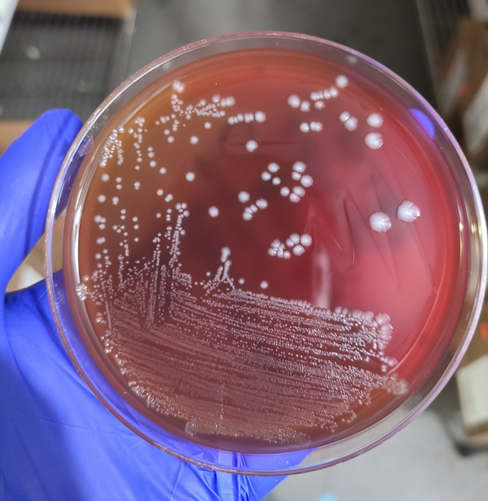
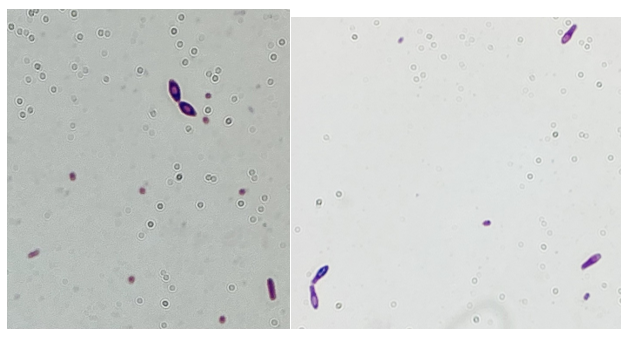
Gram-positive rods grew from the anaerobic bottles of two blood culture sets drawn on arrival at the hospital. Anaerobic blood agar plate growing colonies of gram-positive rods after 48 hours of anaerobic incubation are shown in Figure 1, and Gram stains of the same organism grown in cooked meat broth are shown in Figures 2A and 2B.

Fig 1. Anaerobic CDC blood agar plates growing gram positive bacilli
Fig 2A and 2B: Gram stain from Cooked meat broth

Gram-positive bacilli (GPB) were isolated from the blood. GPB in blood cultures are often brushed off as possible contaminants. However, in the setting of a possible necrotizing soft tissue infection (NSTI) and the growth of GPB in anaerobic bottles only, concern for Clostridium spp. is reasonable. NSTI can be caused by a variety of different bacteria, but empiric treatment should reliably cover Clostridium species, Streptococcus pyogenes, and Staphylococcus aureus, as they are the most commonly implicated pathogens. While C. perfringens is a common cause for gas gangrene, C. septicum frequently causes non-traumatic gas gangrene because of its aerotolerance.1

The GPB in this patient’s blood was identified by Matrix-assisted laser desorption ionization time of flight mass spectrometry (MALDI-ToF MS) as C. sporogenes/botulinum group I. While C. botulinum is a more familiar pathogen, both of these two closely related bacteria can produce botulinum neurotoxin (BoNT). In a comparative genomic study, C. botulinum Group I was found to possess genes for BoNT A, B, and/or F, while the C. sporogenes possessed BoNT B only.2 Detection of BoNT remains a challenge. Additionally, MALDI-ToF MS cannot distinguish between C. botulinum and C. sporogenes in most cases due to the similarity between these two species.

Since BoNT is considered a category A Biological agent, caution must still be taken when processing suspicious C. botulinum isolates in the laboratory during the identification. While the specimen collection and transport guidelines from American Society of Microbiology (ASM) described not attempting to culture the organism, the guidelines stated that clinical laboratories may still perform routine cultures that may contain Botulinum that potentially produces BoNT.

While it can be challenging to determine the presence of C. botulinum in wound cultures due to the gram feature similarities to skin flora gram positive rods, the laboratories should process the culture workup in biosafety level-2 (BSL-2) cabinet and avoid aerosol-generating procedures (e.g. catalase) to minimize the potential aerosolization of the toxin. The best practice would be an open communication between clinicians and the laboratory – for clinicians to notify the laboratory of potential BoNT cases/cultures when they send microbiology specimens. Post-analytical safety measures must be performed. So, what lesson did we learn here? While it is challenging to distinguish between C. botulinum and C. sporogenes in this case, a proper chain of actions (analytical and post-analytical measurements) should have been taken place to rule out/in BoNT-producing C. botulinum.

Susceptibility testing for anaerobes is not performed routinely and is only appropriately performed on isolates from sterile sources. Globally, rates of clindamycin resistance appear to be increasing among Clostridium spp. However, metronidazole and amoxicillin-clavulanate remain viable options for treatment of Clostridium spp.3-6 

References

  1. https://www.nejm.org/doi/full/10.1056/NEJMra1600673 
  2. https://asm.org/ASM/media/Policy-and-Advocacy/LRN/Sentinel%20Files/Botulism-July2013.pdf
  3. https://www.ncbi.nlm.nih.gov/pmc/articles/PMC7551954/
  4. Sárvári KP, Rácz NB, Burián K. Epidemiology and antibiotic susceptibility in anaerobic bacteraemia: a 15-year retrospective study in South-Eastern Hungary. Infect Dis (Lond). 2022 Jan;54(1):16-25. doi: 10.1080/23744235.2021.1963469. Epub 2021 Sep 24. 
  5. Ali S, Dennehy F, Donoghue O, McNicholas S. Antimicrobial susceptibility patterns of anaerobic bacteria at an Irish University Hospital over a ten-year period (2010-2020). Anaerobe. 2022 Feb;73:102497. Epub 2021 Dec 5. 
  6. Di Bella S, Antonello RM, Sanson G, Maraolo AE, Giacobbe DR, Sepulcri C, Ambretti S, Aschbacher R, Bartolini L, Bernardo M, Bielli A, Busetti M, Carcione D, Camarlinghi G, Carretto E, Cassetti T, Chilleri C, De Rosa FG, Dodaro S, Gargiulo R, Greco F, Knezevich A, Intra J, Lupia T, Concialdi E, Bianco G, Luzzaro F, Mauri C, Morroni G, Mosca A, Pagani E, Parisio EM, Ucciferri C, Vismara C, Luzzati R, Principe L. Anaerobic bloodstream infections in Italy (ITANAEROBY): A 5-year retrospective nationwide survey. Anaerobe. 2022 Jun;75:102583. Epub 2022 May 11.

-Antoinette Acobo, PharmD, is 2nd year pharmacy resident specialized in infectious diseases in her 2nd year of residency. She performed several quality initiative and improvement projects, including antimicrobial stewardship program (ASP) and cost/benefit analyses of rapid blood culture identification (BCID) multiplex panels.

-Phyu Thwe, Ph.D, D(ABMM), MLS(ASCP)CM is Associate Director of Infectious Disease Testing Laboratory at Montefiore Medical Center, Bronx, NY. She completed her medical and public health microbiology fellowship in University of Texas Medical Branch (UTMB), Galveston, TX. Her interests includes appropriate test utilization, diagnostic stewardship, development of molecular infectious disease testing, and extrapulmonary tuberculosis.

Microbiology Case Study: Tinea cruris in a Middle-Aged Male

Case Presentation

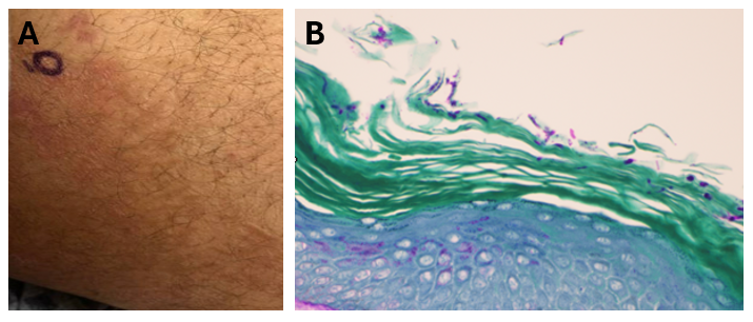
A middle-aged male presented for a chronic inguinal and back rash present for over two years (Figure 1A). Travel history was notable for trips to the Middle East and Canada during that time. He was clinically diagnosed with tinea cruris at an outside healthcare facility, and his history was notable for an extensive use of several topical antifungals including clotrimazole with betamethasone, ketoconazole, and triamcinolone without improvement. Months long oral therapy with terbinafine and fluconazole resulted in only mild improvement, after which he was started on itraconazole. The patient noted some improvement while taking itraconazole, but following subsequent disease recurrence, presented to our institution. 

Figure 1: A) Red annular, scaly rash of the inguinal skin involving the inner thigh.  Skin biopsy of the thigh rash (40X, PAS stain) revealing dermatophyte hyphal elements in the stratum corneum.

Laboratory workup

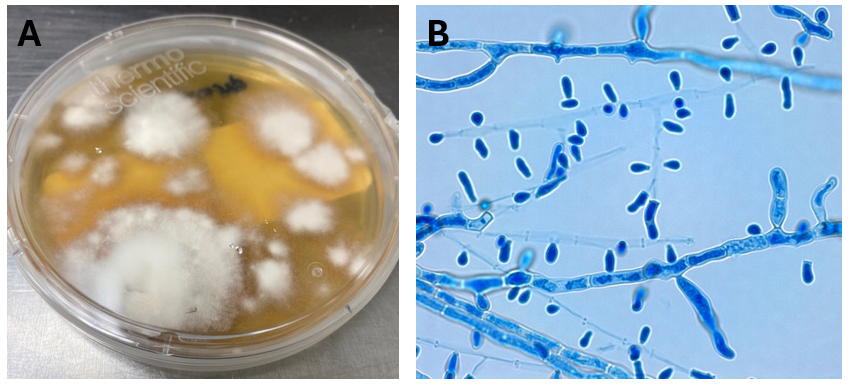
An inguinal skin scraping was obtained, which revealed the presence of a superficial fungal infection consistent with the diagnosis of tina cruris. Fungal cultures on Sabouraud Dextrose Agar (Figure 2A), lactophenol blue stain (Figure 2B), and a skin biopsy (Figure 1B) all confirmed a dermatophyte infection. The organism was morphologically consistent with Trichophyton sp. Due to the unusual clinical history of a recalcitrant dermatophyte infection persisting through multiple rounds of topical and oral antifungal therapy, additional testing for definitive identification was undertaken. MALDI-TOF identified the organism as a member of the Trichophyton tonsurans/mentagrophytes species complex, further confirmed to be Trichophyton indotineae by sequencing.

Figure 2: A) Dermatophyte growth from the skin scraping of the leg on Sabouraud Dextrose agar.  Fungal colonies were fast-growing and peripherally white-beige to light brown, flat and granular.  B)  Lactophenol Cotton Blue stain revealing septate hyphae with cigar-shaped macroconidia, small round microconidia clustered on branched conidiophores.

Discussion

Ringworm, also referred to as “tinea” or “dermatophytosis,” is a commonly occurring fungal infection affecting the skin, hair, or nails, caused by dermatophytes.1 Typical symptoms include itching, a ring-shaped rash, redness, scaliness, cracked skin, and/or hair loss. The transmission of ringworm happens through direct contact between individuals, contact with infected animals, or exposure to contaminated environments such as public showers.1 Around 40 different species of fungi can lead to ringworm infection.2 Over the last decade, healthcare providers have observed a rise in severe cases of ringworm that are resistant to topical antifungal treatment3 which are an emerging public health concern.

The emergence of drug-resistant dermatophyte infections is attributed to the inappropriate use of topical products containing combinations of antifungal agents and corticosteroids.4  T. indotiniae has a complicated taxonomic history.  The organism was initially identified as a sequence type of the Trichophyton mentagrophytes complex which exhibited elevated MICs to terbinafine. The earliest cases of T. indotineae infection were reported in India, quickly spreading to Australia, Oman, Iran, and other middle-eastern countries.  Subsequent spread to Europe and North America soon followed.5  Initial reports of T. indotineae infections in North America involved individuals with a history of travel to endemic locations.  Recently however, local transmission of T. indotineae within the United States has been documented among patients without travel history.6  It is hypothesized that resistant strains of T. indotineae emerged due to inappropriate antibiotic use, as infections are frequently terbinafine-resistant and require prolonged therapies with second-line therapies or antifungals traditionally utilized for invasive fungal infections.7

Diagnosis of T. indotineae infection is challenging as it requires advanced molecular techniques like genomic sequencing or expansion of MALDI-TOF MS capabilities to discriminate within the T. mentagrophytes complex, which many clinical laboratories lack.1 Thus, diagnosis is largely reliant on the activities of reference laboratories. A high level of clinical suspicion is required as well, as the degree of dermatophyte workup undertaken in the routine setting is variable among institutions. T. indotineae infections often show resistance to conventional antifungal therapies including allylamines (terbinafine) and azoles (itraconazole and fluconazole), further highlighting the importance of susceptibility testing before initiating treatment and reassessing nonresponsive cases,4 another testing capability not offered by routine laboratories. The patient in this case was managed with Posaconazole, leading to significant improvements symptomology.

References:

  1. Emerging antimicrobial-resistant ringworm infections (2023) Centers for Disease Control and Prevention. Available at: https://www.cdc.gov/fungal/diseases/ringworm/dermatophyte-resistance.html (Accessed: 9 April 2024).
  1. Havlickova B, Czaika VA, Friedrich M. Epidemiological trends in skin mycoses worldwideexternal icon. Mycoses. 2008 Sep;51 Suppl 4:2-15.
  2. Hay RJ. The Spread of Resistant Tinea and the Ingredients of a Perfect Storm. Dermatology. 2022;238(1):80-81.
  3. Gupta AK, Venkataraman M, Hall DC, Cooper EA, Summerbell RC. The emergence of Trichophyton indotineae: Implications for clinical practice. Int J Dermatol. 2023 Jul;62(7):857-861. doi: 10.1111/ijd.16362. Epub 2022 Jul 22. PMID: 35867962.
  4. Jia S, Long X, Hu W, Zhu J, Jiang Y, Ahmed S, de Hoog GS, Liu W, Jiang Y. The epidemic of the multiresistant dermatophyte Trichophyton indotineae has reached China. Front Immunol. 2023 Feb 16;13:1113065. doi: 10.3389/fimmu.2022.1113065. PMID: 36874152; PMCID: PMC9978415.
  5. Caplan AS, Chaturvedi S, Zhu Y, Todd GC, Yin L, Lopez A, Travis L, Smith DJ, Chiller T, Lockhart SR, Alroy KA, Greendyke WG, Gold JAW. Notes from the Field: First Reported U.S. Cases of Tinea Caused by Trichophyton indotineae – New York City, December 2021-March 2023. MMWR Morb Mortal Wkly Rep. 2023 May 12;72(19):536-537. doi: 10.15585/mmwr.mm7219a4. PMID: 37167192; PMCID: PMC10208369.
  6. Lockhart, SR, Smith, DJ, and Gold, J.A.W. Trichophyton indotineae and other terbinafine-resistant dermatophytes in North America. J. Clin. Microbiol. 2023 Dec; 61(12): e00903-23. PMID: 38014979.

Tasnim Alkayyali is a second-year AP/CP resident at UT Southwestern Medical Center in Dallas, Texas.


Clare McCormick-Baw, MD, PhD, FACP is a board certified Anatomic and Clinical Pathologist with a subspecialty in Medical Microbiology. She has a love for Infectious Disease Pathology and teaching the pathologists of tomorrow. She is the Southwest Regional Medical Director for Quest Diagnostics, Inc and is based out of Dallas, Texas.

Andrew Clark, PhD, D(ABMM) is an Assistant Professor at UT Southwestern in the Department of Pathology and Director of the Microbiology Laboratory at Parkland Health and Hospital System. He completed a CPEP-accredited postdoctoral fellowship in Medical and Public Health Microbiology at National Institutes of Health.

Sprains, Strains, and Automobiles

When you get into your car, what’s the first thing you do? Perhaps you are the sole owner/operator of that vehicle and can just slide in, fasten your seatbelt, and take off. If you share a vehicle, driving away may take a few extra steps. My wife and I sometimes share vehicles, so I know when she has to take mine to work or to run an errand. I can tell right away if my wife was the last to drive my car because my knees are pressed up against the steering wheel the moment I get in. I have to slide the seat away from the dashboard and recline the backrest. I am a bit taller too, so I have to move the entire seat down, otherwise my head would be jammed up against the top of the headliner. Once I make it more comfortable, only then can I adjust the mirrors to ensure that I can safely see around the vehicle. Now my legs are at the correct distance from the pedals to ensure smooth transition from brake to accelerator. My arms are at the perfect distance from the steering wheel and the cup holder which has my essential jug of coffee. Most importantly, the seat belt comes over my shoulder and across my chest at an angle that ensures I am secure while not being strangled by the belt. A lot goes into ensuring smooth and safe operations of the vehicle, all stemming from that initial adjustment of the seat. The same goes for the lab. Whether you are sitting at a low desk or at an elevated workbench, you should adjust your chair height and recline. This important initial step can make or break the ergonomic setup of your workstation.

When I work at a shared bench or workspace, I first like to adjust the height of the chair. This ensures that my legs are positioned properly, with my knees at 90° angles with feet flat on the floor or on a footrest. I make sure that the height of the chair is not too high so that I have to jump into the seat or risk twisting an ankle when I get down from a taller task chair. A proper chair height in relation to the desk or bench also makes sure that my body is aligned properly with my workbench. My knees aren’t slamming into the bench, and my arms are at the correct height in line with the keyboard, also forming 90° angles from my body. Now that my body is positioned properly, I can ensure that my monitor is at the correct height with my head aligned with the top of the monitor. I reposition the mouse and keyboard, so they are at the correct distance from my body, and that I am not overreaching to type. Don’t forget the wrist rest – relieving the pressure on the base of the wrist is key in preventing carpal tunnel syndrome. In addition, if you use the angle-adjusting stands at the back of the keyboard, wrist rests are a must to straighten your wrists. Another great tool to avoid ergonomic complications is the 20-20-20 rule, which helps reduce digital eye strain. Many of us in the lab industry are looking at computer screens for much of the day. The 20-20-20 rule teaches us that every 20 minutes, we should shift our gaze away from our monitors and look at an object at least 20 feet away for 20 seconds.

Shared workstations are common in the lab and in some office spaces as well, and these ergonomics tips can apply to both areas. Of course everyone has their favorite chair in the lab. It’s never good to see someone getting upset because someone stole “their chair” or changed the height of “their chair”. That’s what people are supposed to do. We should be encouraging individuals to adjust their workstation to make it more ergonomically efficient for them. Everyone should take a few minutes when we arrive in the lab or office to set themselves up appropriately.

You may be wondering what else you can do to help ensure ergonomic safety in your workplace. If your lab is CAP-accredited, you should follow the general checklist item GEN.77200. This standard states that there must be a written ergonomics program to help prevent muscular skeletal disorders in the workplace through prevention and engineering controls. So just having a policy isn’t good enough, you need to show that you’re actively participating in ergonomic evaluations and recommendations as well as implementing the appropriate corrective actions from your findings. We all know the lab environment is a dynamic one, one that’s constantly changing. So, your ergonomics evaluations might become outdated quickly. It’s great practice to include an ergonomics section in your lab safety audit and to use it regularly. This will ensure that your workstations and lab environment are checked annually for any areas of opportunity.

Of course, there’s much more to ergonomics than just adjusting your chair or computer. It’s the same as with your car- there’s more to driving than simply adjusting your seat. If you can’t see the vehicles around you or can’t reach the pedals fast enough, the consequences of those errors could be an accident which is immediate and can happen in the blink of an eye. Years of stretching, bending, or sitting improperly will take a toll on the body that might not be realized in the moment. We won’t see the aftereffects until it’s too late. In the fast-paced world we live in, we sometimes forget about taking a moment to ensure our safety at work, but we should. It’s difficult to operate your vehicle if you’re uncomfortable and can’t reach the pedals, but you are likely to adjust your seat before you start driving. Take that moment to think about good ergonomics before you slide into the driver’s seat at work.

-Jason P. Nagy, PhD, MLS(ASCP)CM is a Lab Safety Coordinator for Sentara Healthcare, a hospital system with laboratories throughout Virginia and North Carolina. He is an experienced Technical Specialist with a background in biotechnology, molecular biology, clinical labs, and most recently, a focus in laboratory safety.

Microbiology Case Study: Fastidious Bacteria from a Patient with Aortic Valve and Implanted Device

Case History

A 73 year old male with a complex medical history, including type 1 diabetes, coronary artery disease, atrial fibrillation, hypothyroidism, hyperlipidemia, glaucoma, previous coronary artery bypass grafting (CABG), transcatheter aortic valve replacement (TAVR), and an implanted cardioverter-defibrillator (ICD), presented with bilateral persistent paraspinal neck pain, shaking chills, and myalgias. The initial evaluation involved broad laboratory and imaging work-up, which showed mildly elevated CRP and erythrocyte sedimentation rate (ESR). Chest X-ray, CTA head/neck, and CT thorax were normal. The patient was discharged with symptoms resolved using Tylenol and Valium, and instructions for follow-up care were provided. Two days later, the patient was recalled to the ED after blood cultures were positive for gram positive cocci in pairs and chains. The patient, asymptomatic at the time, was informed of the findings and agreed to return for further evaluation.

The patient had undergone a tooth extraction followed by implant placement one month prior, raising concerns for endocarditis due to prosthetic valve and pacemaker. He was transferred to the cardiology service, and repeat cultures were ordered. Initially afebrile, he later developed a fever (101.7°F), and his condition was complicated by diabetic ketoacidosis (DKA) and septic shock requiring ICU admission. The patient was treated with IV Vancomycin 1.5 g q24h and recommended to have repeat blood cultures until clearance. The discharge diagnosis was bacteremia caused by Abiotrophia defectiva, with a possible prosthetic valve endocarditis. A six-week course of Vancomycin was prescribed.

(A) Gram stain of the positive blood culture bottle revealed gram positive cocci in chains and pairs. (B) Inoculation of the positive blood culture bottle onto bacterial agar plates showed no growth on sheep’s blood agar but growth on chocolate agar.

Discussion

The genus Abiotrophia most resembles well-known gram positive cocci in chains and pairs such as streptococci and enterococci. Abiotrophia were originally thought to be a relative of the viridans Group Streptococcus but sequencing analysis created a new genus called Abiotrophia which consisted of two species, A. defective and A. adiacens.1 Abiotrophia is classified as nutritionally variant streptococcus (NVS) and is a part of normal flora in the intestinal tract, oral cavity, and urogenital tract. The organism accounts for up to 6% of streptococcal infective endocarditis and have been associated with native and prosthetic valve infection.2 Other types of infections that have been described for Abiotrophia include sepsis, infections of the eye, central nervous system, musculoskeletal, and arthritis.3-6 It is crucial to recognize A. defectiva for timely and effective treatment, given its propensity to cause severe complications like septic embolization.7

Abiotrophia is coined a NVS because this microorganism requires specific nutrients like L-cysteine or pyridoxal for growth on sheep’s blood agar. They can usually grow without supplementation on chocolate agar, brucella agar with 5% horse blood, and in thioglycolate broth. Sometimes sheep’s blood agar supplemented with pyridoxal can also be used. Due to the release of specific nutrients by lysed red blood cells, the satellite test is important for growth and identification. Briefly, the suspected isolate is streaked for confluent growth on an agar that does not support growth for Abiotrophia (such as sheep’s blood agar) and then overlaid with a cross streak of beta-hemolytic Staphylococcus aureus. After incubation, colonies of Abiotrophia can grow near the S. aureus streak, giving rise to the ‘satellite’ phenomenon. However, it should be noted that other fastidious organisms such as Granulicatella and some Haemophilus species can also satellite around the S. aureus streak. Hence, further confirmation is needed for identification. For example, Abiotrophia is non-motile. Common biochemicals reactions to help characterize Abiotrophia genus is PYR (production of pyrrolidonyl arylamidase) positive, LAP (production of leucine aminopeptidase) positive, and no growth in 6.5% NaCl.

Molecular approaches have been proven to be accurate for identification of Abiotrophia . Sequencing of the 16S rRNA gene have shown to be more accurate than phenotypic, biochemical tests. PCR testing for the rpoB, groESL, and also the ribosomal 16S-23S intergenic spacer region (ITS) genes have all shown to be reliable targets for identification.8-10 The introduction of MALDI-TOF mass spectrometry has facilitated more accurate identification in clinical settings.11

Prompt diagnosis and targeted antimicrobial therapy are essential in managing infections caused by Abiotrophia defectiva, especially in older patients with underlying health conditions. Early detection and appropriate treatment are vital to mitigate potential complications.6,7 Abiotrophia species exhibit varying antibiotic susceptibility, with increasing resistance to penicillin. Common treatments include penicillin, ceftriaxone, and vancomycin.

References

1.         Kawamura, Y., et al., Transfer of Streptococcus adjacens and Streptococcus defectivus to Abiotrophia gen. nov. as Abiotrophia adiacens comb. nov. and Abiotrophia defectiva comb. nov., respectively. Int J Syst Bacteriol, 1995. 45(4): p. 798-803.

2.         Christensen, J.J. and R.R. Facklam, Granulicatella and Abiotrophia species from human clinical specimens. J Clin Microbiol, 2001. 39(10): p. 3520-3.

3.         Niu, K. and Y. Lin, Abiotrophia defectiva Endocarditis Complicated by Stroke and Spinal Osteomyelitis. Cureus, 2024. 16(3): p. e56904.

4.         Wilhelm, N., et al., First case of multiple discitis and sacroiliitis due to Abiotrophia defectiva. Eur J Clin Microbiol Infect Dis, 2005. 24(1): p. 76-8.

5.         Taylor, C.E. and M.A. Fang, Septic arthritis caused by Abiotrophia defectiva. Arthritis Rheum, 2006. 55(6): p. 976-7.

6.         Yang, M., et al., Abiotrophia defectiva causing infective endocarditis with brain infarction and subarachnoid hemorrhage: a case report. Front Med (Lausanne), 2023. 10: p. 1117474.

7.         Faria, C., et al., Mitral Valve Subacute Endocarditis Caused by Abiotrophia Defectiva: A Case Report. Clin Pract, 2021. 11(1): p. 162-166.

8.         Drancourt, M., et al., rpoB gene sequence-based identification of aerobic Gram-positive cocci of the genera Streptococcus, Enterococcus, Gemella, Abiotrophia, and Granulicatella. J Clin Microbiol, 2004. 42(2): p. 497-504.

9.         Hung, W.C., et al., Use of groESL as a target for identification of Abiotrophia, Granulicatella, and Gemella species. J Clin Microbiol, 2010. 48(10): p. 3532-8.

10.       Tung, S.K., et al., Identification of species of Abiotrophia, Enterococcus, Granulicatella and Streptococcus by sequence analysis of the ribosomal 16S-23S intergenic spacer region. J Med Microbiol, 2007. 56(Pt 4): p. 504-513.

11.       Christensen, J.J., et al., Matrix-assisted laser desorption ionization-time of flight mass spectrometry analysis of Gram-positive, catalase-negative cocci not belonging to the Streptococcus or Enterococcus genus and benefits of database extension. J Clin Microbiol, 2012. 50(5): p. 1787-91.

-Maher Ali, MD was born in and raised in Amman, Jordan. He attended Jordan University of Science and Technology, where he received his doctorate degree. After graduation, he completed two years of anatomic pathology residency at King Hussein Cancer Center in Jordan. He then relocated to the United States to start his combined anatomic and clinical pathology (AP/CP) training at The George Washington University. His academic interests include gastrointestinal and breast pathology. Outside of the hospital, he enjoys cooking, hiking, exploring new restaurants, and spending quality time with his family and friends.

-Rebecca Yee, PhD, D(ABMM), M(ASCP)CM is the Chief of Microbiology, Director of Clinical Microbiology and Molecular Microbiology Laboratory at the George Washington University Hospital. Her interests include bacteriology, antimicrobial resistance, and development of infectious disease diagnostics. She is also a top 5 honoree among the 2023 ASCP 40 Under Forty.

Digitalizing the Art & Science of Cytology

Change is inevitable. Humans naturally resist change, and it is a leader’s responsibility to help inspire their followers to embrace the continuous improvement mindset and become change agents. Clearly, this topic is dear to me as it fueled my dissertation. In laboratory medicine, we’re privy to some remarkable technologies, yet our fear of being replaced by technology often outweighs our curiosity. I can promise you, at least in our lifetime, laboratory professionals will not and cannot be replaced by technology. I remember back in my cytology program (yes, it’s been a decade, and no, we don’t need to discuss that further), seasoned cytologists were panicking about molecular testing. They’d say, “we’re done. They’re not going to need us anymore! Look for another career because you’re wasting your time here.” I’m not sure why I never believed them, or maybe I’ve just never been able to fully trust AI and that gave me some sense of security. Regardless, I persevered and fell in love with our field. In school, I learned about telepathology. Users were able to attach a camera to a microscope and capture static and dynamic images of pathology slides for digital archiving and for performing consultations rapid onsite evaluations (ROSE). Institutions were piloting novel yet comprehensive systems for ROSE so that cytologists could attend the biopsy procedures to prepare and maneuver the slides, allowing the pathologist to perform an adequacy assessment remotely. I thought it was fascinating and such a phenomenal use of resources.

Cytology is both an art and a science, as Dr. Richard DeMay so eloquently described. From a scientific standpoint, there has been substantial effort in developing imaging algorithms that systematically capture the unique features of dysplastic and malignant cells and differentiate them from benign-appearing cells. My first experience with this was the ThinPrep Imaging System (TIS), which helps reduce the rate of false-negative pap smears by providing 22 fields of view that may prompt a full manual review. I can comfortably say that, even after more than a decade, this system has not replaced the human eye, but assisted in our primary screening. Now with AI advancement, the Genius Digital Diagnostics System was designed to expand upon computer-assisted screening. The Genius system not only identifies features of dysplasia, but suggests benign components that are fundamental to the overall diagnosis, such has glandular cells and microorganisms. Presenting these fields in a gallery view along with the whole slide digitally imaged enables the user to better classify the whole picture and review cells surrounding the gallery-selected objects of interest. For someone who has missed a single pseudohyphae of candida lurking between a few squamous cells (hi, it’s me), this technology is a game-changer. Again, this is not a substitute for the cytologist because the cytologist is still responsible for primary screening and rendering a diagnosis. With that said, technology is not perfect. To err is to human, to fault is to… technology. But in a world where cytologists are afraid that HPV primary testing will replace the need for cytology, the continuous development of digital cytology for gynecologic specimens is ever in our favor. Just like there will always be HPV-negative dysplasias, there will always be cells that technology won’t capture, the skilled art that we practice will always have a critical value in patient care.

On the educational and logistics front, imagine being able to digitally archive study sets from the most unique cases your institution has seen. Whole slide imaging (WSI) and Z-stacking technology enables a user to create and access an expansive digital reference library with the ability to zoom in and focus on fields of view from a computer screen. Yes, I prefer using a microscope just as I prefer reading a paperback book, but the world has adopted e-books, so I’m fairly certain we can adapt to e-slides as well. Regardless, publishing and sharing a digital reference set is beneficial to the field of anatomic pathology, whether you’re studying for a board exam or rendering a diagnosis on an unknown by comparing to previously diagnosed cases elsewhere. Logistically, the same principle applies for pathology consultations. The idea of never losing a patient’s original slide in the mail is titillating. Digitalizing pathology slides for consultation and sending the file to another institution through a secure server is more efficient yet just as diagnostic as a traditional consultation through the mail.

But wait! There’s more. AI technology can help us interpret ancillary tests, such as FISH/UroVysion. It is still up to us to agree with the machine’s classifications, but tools like this can ideally reduce turnaround time. Pathologists are already familiarizing themselves with algorithms for IHC and predictive biomarkers. Larger academic medical centers are securing grants left and right to develop and train both diagnostic and prognostic algorithms. Digital pathology can improve efficiency, reallocate our resources, and serve as an aid.

Granted, these technologies are costly and require ample digital storage space. I’m talking petabytes of data here, and of course, there’s a need for impenetrable security in the cloud. WSI can be tedious and time-consuming, and may even warrant the need for an additional full-time employee (or two). Additionally, many of these technologies require extensive validation. Other than cost and storage, one of the more significant challenges in digital cytology is adequately capturing a variety of cytopreparations. Unlike smooth histology sections, cytopreparations including smears, cytospins, and even liquid-based preparations, preserve (to some extent) the three-dimensional nature of cell groups. While it’s beautiful to be able to manually fine-tune our focus throughout a cluster of cells under the microscope, AI may struggle with capturing and systematically categorizing cells within these groups or clusters. Current technologies that work well for histology slides might be insufficient for cytology slides, which serves as a hurdle for research and development teams and a barrier to users embracing a technology that has not yet been “perfected” for a field.

Digital cytology is relatively young, and like any early technology, there are going to be bumps and hiccups. With that said, the benefits of digital pathology overall far outweigh any possible negatives, and we must continue to move forward. We, as laboratory professionals, cannot slow down and resist the future of our field. We must serve as change agents and reassure our future colleagues that there is a secure place for them pathology and laboratory medicine. This is my call to all of you to let your curiosity take over. Take the plunge and let technology be your ally, your diagnostic companion.

Note: I have no financial interests or relationships to disclose. Opinions are purely my own and are not representative of my employer or ASCP.

-Taryn Waraksa-Deutsch, MS, SCT(ASCP)CM, CT(IAC), has worked as a cytotechnologist at Fox Chase Cancer Center, in Philadelphia, Pennsylvania, since earning her master’s degree from Thomas Jefferson University in 2014. She is an ASCP board-certified Specialist in Cytotechnology with an additional certification by the International Academy of Cytology (IAC). She is also a 2020 ASCP 40 Under Forty Honoree.

Microbiology Case: A 36 Year Old Male with Headache and Worsening Mental Status

Case History

A 36 year old male with no past medical history presented to an outside hospital with two weeks of worsening headache, fever, and altered mental status. The patient initially presented to his primary care physician with a headache, for which he received an antibiotic injection. Over the next several days, he developed a fever to 39.4oC, worsening mental status, and bowel incontinence. Once admitted, he experienced an intractable seizure, was subsequently intubated, and transferred to the ICU. CT imaging revealed multiple ring-enhancing lesions throughout the brain, most prominent in the right parietal lobe. Additionally, he was found to have a new diagnosis of HIV (CD4 count 40). He was transferred to our institution for a higher level of care but experienced a rapid progression of disease with deterioration of brainstem reflexes and marked cerebral edema, prompting a brain biopsy.

Laboratory Identification

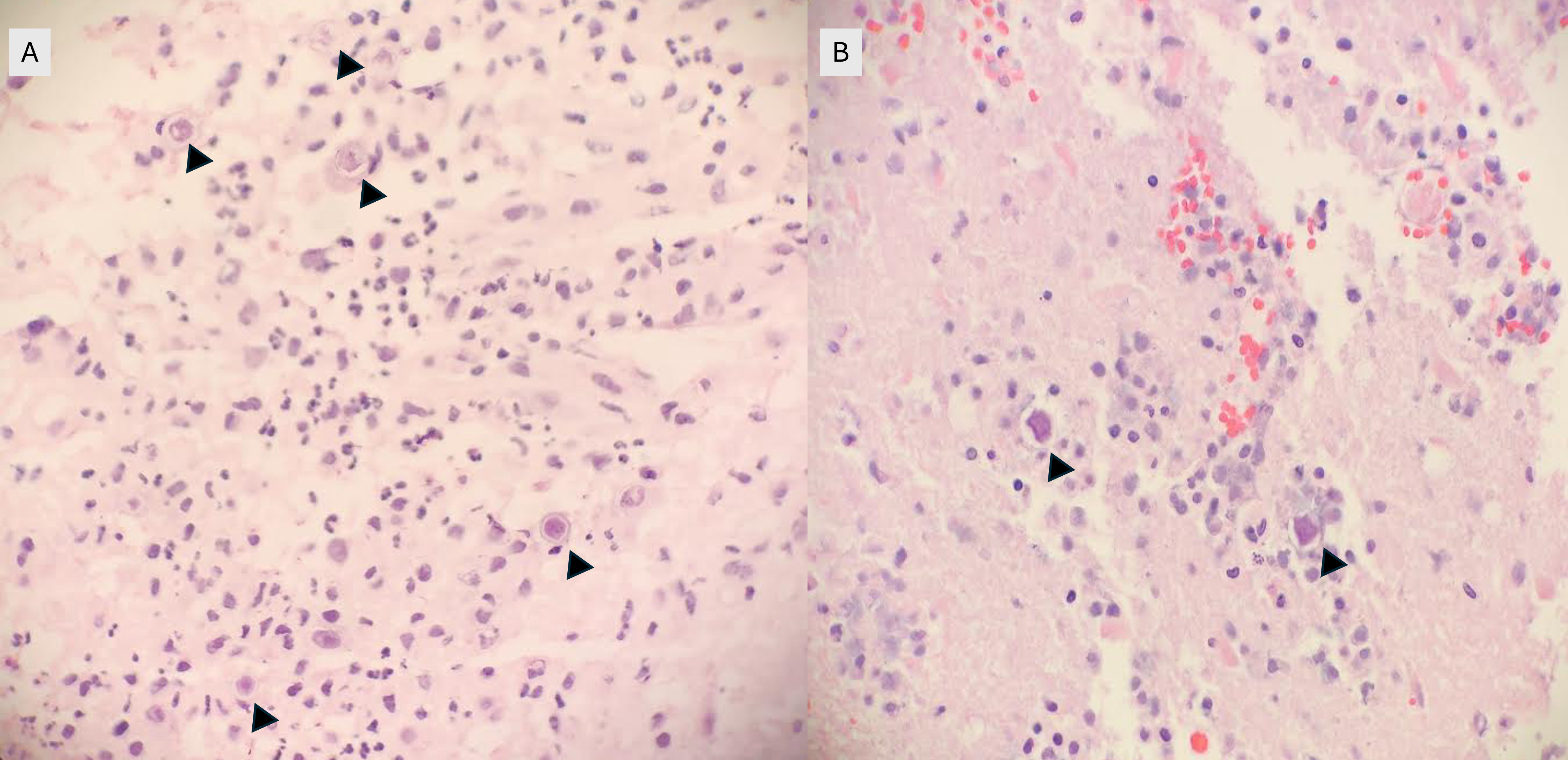
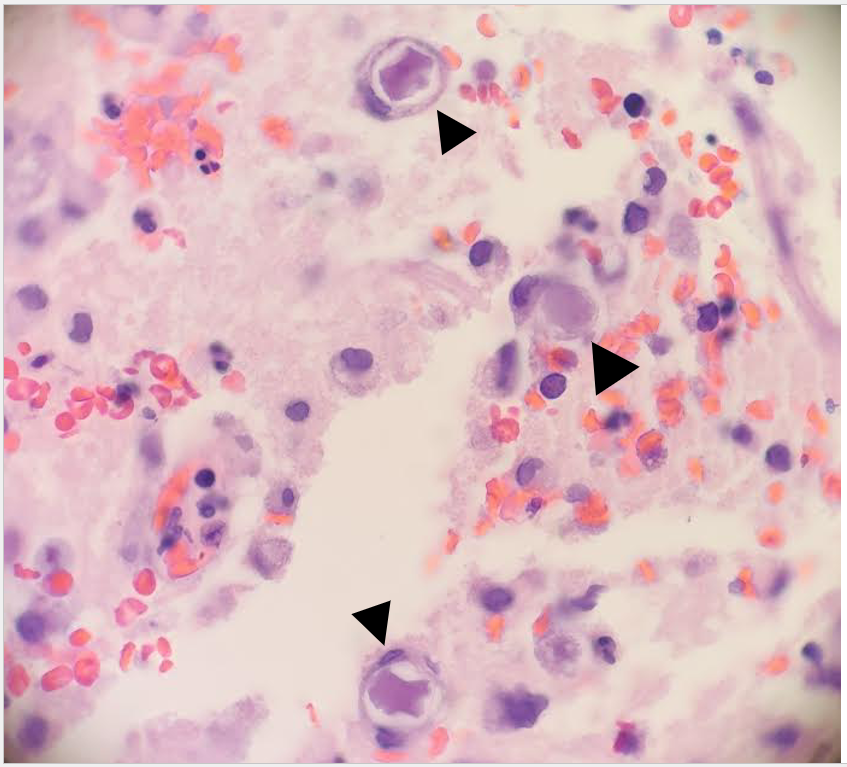
Frozen and permanent sections of a right temporal biopsy revealed frankly necrotic brain tissue with amoebic cysts and trophozoites, consistent with free-living amoeba (Figure 1 and 2). Cerebrospinal fluid (CSF) cytology was unremarkable. A specific immunohistochemistry (IHC) assay for Acanthamoeba species was performed at the Centers for Disease Control and Prevention (CDC; Atlanta, GA), confirming the diagnosis of granulomatous amoebic encephalitis from Acanthamoeba.

Figure 1. Frozen (A) and permanent (B) sections of a right temporal brain biopsy demonstrated amoebic cysts (arrowheads) in a background of necrosis, hemorrhage, and inflammation (H&E, 400x magnification).
Figure 2: Double-walled cysts (arrowheads) are observed in the brain biopsy  with admixed inflammation and hemorrhage (H&E, 1000x oil immersion magnification). 

Discussion

Acanthamoeba are free-living amoebae found worldwide in a variety of environmental sites, including soil, water, sewage, swimming pools, contaminated contact lens solution, and heating, ventilating, and air conditioning systems.1,2 The Acanthamoeba lifecycle consists of two stages: cysts and trophozoites. Although trophozoites represent the infective form, both cysts and trophozoites can enter the body through various means, including the eye, nasal passages, or broken skin.2,3. There are three distinct diseases that can be caused by Acanthamoeba: Acanthamoeba keratitis, disseminated infection, and Granulomatous Amebic Encephalitis (GAE).1

GAE is a parenchymal disease that occurs when Acanthamoeba enters the body through the respiratory system or broken skin, spreads hematogenously, and invades the central nervous system.2,3. Risk factors include immunocompromised status, such as HIV/AIDS, history of organ transplant, uncontrolled diabetes mellitus, liver cirrhosis, and malignancy.1,3 The clinical course tends to be subacute to chronic, with progressive neurological decompensation over weeks to months and eventual death. Imaging may reveal ring-enhancing lesions, arterial occlusions, infarctions, ventricular shifts, and areas of abnormal enhancement.3 CSF analyses may show a pleocytosis with lymphocyte predominance, increased protein, and decreased glucose; amoebae are typically not identified.3. While microscopic evidence of double-walled cysts and/or trophozoites demonstrates the presence of free-living amoeba in infected tissues, diagnosis of Acanthamoeba must be confirmed via specific IHC assays or PCR-based molecular techniques.4

There is currently no standardized recommended treatment, and no single agent has been shown to be universally effective.3. Rare successful cases have involved prolonged therapy using combinations of pentamidine isethionate, sulfadiazine, amphotericin D, azithromycin, flucytosine, and fluconazole or itraconazole.3,5

The patient was treated with miltefosine, fluconazole, pentamidine, flucytosine, and sulfadiazine, sulfamethoxazole/trimethoprim and azithromycin for HIV prophylaxis, and levetiracetam for seizure prophylaxis. Though repeat MRI of the brain/brain stem showed interval improvement of disease burden, he remained unresponsive to verbal, tactile, and painful stimuli, and his overall prognosis remained guarded. The patient was discharged to a long-term acute care facility, but returned to the emergency department one week later with recurrent seizures, hypotension, and fevers. Imaging revealed new areas of restricted diffusion in the right occipital and left parietal lobes. Despite continued treatment, the patient continued to decline and died approximately three months following his initial diagnosis.

References

1 Centers for Disease Control and Prevention. Parasites – Acanthamoeba – Granulomatous Amebic Encephalitis (GAE); Keratitis. https://www.cdc.gov/parasites/acanthamoeba/index.html. Accessed April 24, 2024.

2 Centers for Disease Control and Prevention. DPDx- Free Living Amebic Infections. https://www.cdc.gov/dpdx/freeLivingAmebic/index.html. Accessed April 24, 2024.

3 Siddiqui R, Khan NA. Biology and pathogenesis of Acanthamoeba. Parasit Vectors. 2012 Jan 10;5:6. doi: 10.1186/1756-3305-5-6. PMID: 22229971; PMCID: PMC3284432.

4 Haldar SN, Banerjee K, Modak D, Mondal A, Sharma C, Vasireddy T, Karad RK, Patel HB, Majumdar D, Bhattacharjee B, Khurana S, Ghosh T, Guha SK, Saha B. Case Report: A Series of Three Meningoencephalitis Cases Caused by Acanthamoeba spp. from Eastern India. Am J Trop Med Hyg. 2024 Jan 9;110(2):246-249. doi: 10.4269/ajtmh.23-0396. PMID: 38190743; PMCID: PMC10859797.

5 Visvesvara GS, Moura H, Schuster FL. Pathogenic and opportunistic free-living amoebae: Acanthamoeba spp., Balamuthia mandrillaris, Naegleria fowleri, and Sappinia diploidea. FEMS Immunol Med Microbiol. 2007 Jun;50(1):1-26. doi: 10.1111/j.1574-695X.2007.00232.x. Epub 2007 Apr 11. PMID: 17428307.

-Cristine Kahlow, MD, Pathology PGY-1 at UTSW Medical Center


-Clare McCormick-Baw, MD, PhD is an Assistant Professor of Clinical Microbiology at UT Southwestern in Dallas, Texas. She has a passion for teaching about laboratory medicine in general and the best uses of the microbiology lab in particular.

-Andrew Clark, PhD, D(ABMM) is an Assistant Professor at UT Southwestern Medical Center in the Department of Pathology, and Associate Director of the Clements University Hospital microbiology laboratory. He completed a CPEP-accredited postdoctoral fellowship in Medical and Public Health Microbiology at National Institutes of Health, and is interested in antimicrobial susceptibility and anaerobe pathophysiology

Waste Management Plus One

The latest Japanese Godzilla movie, Godzilla Minus One, is now available for home viewing or streaming, and as a life-long G-fan, I was excited to watch it again. The story begins in a ravaged Tokyo, right after the end of World War II, and everything is a mess. When Godzilla arrives, even more waste is created (hence the “minus one” designating another step backwards). The clean-up process would be tremendous, and it reminded me of the many waste types in the laboratory and how important it is to segregate it properly.

Proper lab waste segregation is not just about keeping the lab clean, it’s about minimizing the risk of contamination, protecting our environment, and adhering to legal requirements. Mismanaging waste can lead to high costs, serious health hazards, fines, and a tarnished reputation.

In a lab, waste can generally be classified into several categories. Biological waste is the most common. This includes any materials that have come into contact with biological specimens, such as cultures, stocks, and items contaminated with blood or other potentially infectious materials (OPIM). Sharps waste is a second type of biological waste. This includes needles, blades, and any other items that can puncture or cut. Sharps pose a high risk of injury and contamination if not disposed of correctly. Hazardous (chemical) waste is any discarded chemicals, whether they are reagents, solvents, or compounds. Proper handling is crucial to avoid dangerous reactions and to follow strict regulations. The lab may generate radioactive waste if it handles radioactive materials. Even small amounts of radioactive waste must be segregated and managed with utmost care due to their hazardous nature. Lastly, general waste includes items that don’t fall into the above categories, such as paper, packaging, and non-contaminated plastics.

One of the most effective ways to ensure proper waste segregation is through clear labeling and signage. Each waste container should be clearly marked with its category. Use color-coded bins (e.g., red for biological waste, yellow for chemical waste) and ensure the labels are large and legible. Place detailed posters near waste stations to remind staff of what goes where. Strategically place waste containers around the lab to make it easy for staff to dispose of waste correctly. For instance, have sharps containers readily available at workstations where needles or blades are used, and place chemical waste bins near areas where reagents are handled.

Training laboratory staff about proper waste segregation is key. All lab personnel should have this training during their onboarding process, and regular refresher courses and drills can help keep everyone up-to-date with any changes in protocols or regulations. Encourage immediate disposal of laboratory waste. Allowing waste to accumulate on benches or in undesignated areas increases the risk of accidents and contamination. Make it a rule that waste is disposed of in the correct container immediately after use.

Conduct regular audits of waste segregation practices. This can help identify any recurring issues or misunderstandings. Provide constructive feedback and take corrective actions as needed. Celebrating improvements can also motivate staff to maintain high standards. Lab leadership plays a crucial role in promoting a culture of safety and compliance. Provide the necessary resources, such as adequate waste containers, labeling supplies, and time for training. Discuss how mismanagement of waste can harm the environment, create regulatory fines, and increase lab costs. Tossing paper items into a sharps container, for example, is costly and wasteful. Extra money spent for container purchases and disposal could be better spent on new lab equipment and staff pay.

Proper waste segregation is truly a team effort. It requires the commitment and cooperation of every person in the lab. Review your lab’s waste management protocols today and make any necessary improvements. By following these guidelines, you not only protect yourself and your colleagues but also contribute to a safer, more sustainable world. It’s not a world with giant fire-breathing monsters wreaking messy destruction, but we need to do our best to keep it clean. That way labs can be designated a step ahead- or a “plus one” – for lab safety.

Dan Scungio, MT(ASCP), SLS, CQA (ASQ) has over 25 years experience as a certified medical technologist. Today he is the Laboratory Safety Officer for Sentara Healthcare, a system of seven hospitals and over 20 laboratories and draw sites in the Tidewater area of Virginia. He is also known as Dan the Lab Safety Man, a lab safety consultant, educator, and trainer.
Microbiology Case Study: A 70 Year Old With A Postoperative Wound Infection

Case History

A 70 year old female with a medical history of treatment-related acute myeloid leukemia with absolute neutropenia due to chemotherapy presented to our emergency department with a two-day history of fever (Tmax 102°C) with progressively increasing erythema and tenderness reported in her right elbow around a healing surgical incision. Approximately one month prior to presentation the patient underwent surgical excision of her right upper extremity (RUE) cephalic vein for supportive thrombophlebitis as a complication of peripheral IV insertion. Additionally, two weeks prior to presentation the patient was noted to have three small areas (< 1 cm) of wound dehiscence along the surgical incision without overt signs of infection at her outpatient surgical follow-up visit (Figure 1A). These wounds were packed with iodoform gauze and wrapped with sterile kerlix gauze wrap followed by an elastic wrap. The patient was instructed to change the packing and dressing one to two times daily; however, the patient reported non-compliance with these instructions and the packing and dressing had not been changes in the two weeks from the clinic visit until ED presentation.

Figure 1. Images of right upper extremity wound. Image A was obtained two weeks prior to presentation at an outpatient surgical follow-up appointment showing three small areas of wound dehiscence (black arrows) but no overt signs of infection. Image B was obtained at presentation and reveals the three areas of wound dehiscence filled with old iodoform gauze with erythema surrounding the surgical incision. Image C taken ~24 hours after image B shows worsening and progression of the cutaneous erythema surrounding the wound.

The patient was admitted to the hospital. Blood cultures were drawn and IV vancomycin, cefepime and metronidazole were initiated for empirical antimicrobial therapy in the setting of neutropenic fever and RUE cellulitis. 18 hours after collection both sets of blood cultures grew a gram positive rod. The infection diseases service was subsequently consulted to determine the significance of the gram positive rods growing in blood culture, if it represented contaminant vs a true pathogen. Imaging of the arm was recommended to further evaluate the extent of the RUE skin & soft tissue infection. CT imaging of the humerus and forearm revealed a thick-walled fluid collection concerning for abscess formation along the operative site involving both the arm and forearm of the patient (Fig. 2). The plastic surgery service was also consulted and noted old iodoform gauze in the areas of wound dehiscence with surrounding erythema (Fig. 1B); however, no purulence was noted from these areas. The erythema surrounding the wound continued to progress (Fig. 1C) during the hospitalization and the patient remained febrile despite the broad-spectrum antibiotic regiment. Given the patient treatment failure by medical management, the patient was taken for surgical washout and debridement of the wound. Deep cultures were obtained during the surgery. Both the tissue culture and blood cultures would grow Corynebacterium jeikeium. The patient developed a maculopapular cutaneous rash several days into the admission which was deemed to be an antibiotic-induced rash. The antimicrobial regiment was narrowed down to daptomycin due to the concern that vancomycin and/or cefepime may be responsible for the drug rash. The cellulitis and abscess resolved following surgical debridement and treatment with vancomycin/daptomycin; however, the patient elected to pursue comfort care status due to her underlying malignancy. She was transitioned to inpatient hospice where she would die shortly afterwards due to progression of her AML.

Figure 2. Images of the computed topography (CT) with contrast from RUE. Views of the humerus (Image A) and forearm (Image B) revealed likely abscess formation (white arrows) measuring approximately 6.8 cm in length and approximately 1.5 cm in greatest dimension in both the arm (humerus) and forearm.

Laboratory

Corynebacterium species are non-motile, facultatively anaerobic, club-shaped gram positive rods that have a characteristic picket fence appearance when stained due to snapping division. These organisms are commonly encountered in clinical samples; however, given their low virulence in general and prevalence as common skin flora they are often considered contaminants or colonizers. The clinical significance of diphtheria toxin (DT)-producing strains has been known for decades. Non-DT-producing  Corynebacterium species were historically considered as non-virulent but in recent years several non-DT-producing Corynebacterium species have been noted to be pathogenic. The wide spread availability of MALDI-TOF MS in most clinical microbiology labs has allowed for rapid and accurate species level identification of Corynebacterium allowing for identification of these pathogenic species in clinical settings. Some Corynebacterium species are highly lipophilic due to the presence of fatty acids, such as mycolic acid, in their cell wall. Isolation of lipophilic Corynebacterium species on standard culture media can be challenging but can be accomplished utilizing blood agar, due to the presence of lipid-containing red cell membranes, with at least 48 hours of incubation. For optimal recovery of lipophilic strains agars supplemented with Tween 80 produce the best recovery rates.

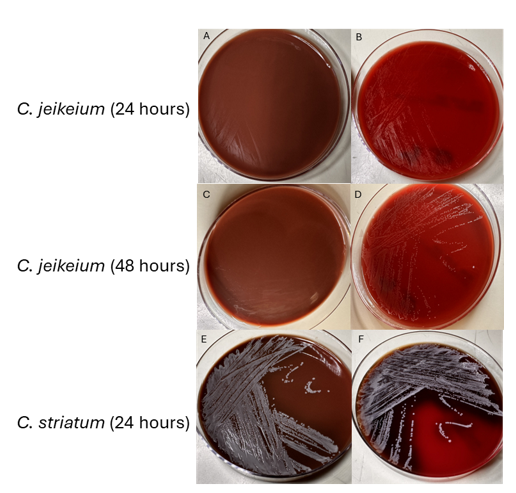
As a lipophilic species, C. jeikeium can be difficult to identify and propagate. It does not grow well on chocolate agar (Fig. 3A & 3C). On blood agar it tends to have scant or dusky growth at 24 hours (Fig. 3B) and appear as translucent, pinpoint colonies at 48 hours (Fig. 3D). Identification using MALDI-TOF can be challenging before 48 hours due to its poor growth on standard media. For comparison, C. striatum, a non-lipophilic Corynebacterium spp. grows relatively well on both blood and chocolate agar. Several Corynebacterium species, including C. jeikeium and C. striatum, are known to be multidrug resistant, especially towards beta-lactam antibiotics.

Figure 3.Images of secondary culture of C. jeikeium and C. striatum inoculated onto chocolate agar (left column) and blood agar (right column) and incubated aerobically at 35°C for 24-48 hours.

Discussion

Corynebacterium jeikeium was initially identified in 1976 and classified by CDC as group JK diptheroids. It is considered part of normal skin flora like most other Corynebacterium spp. In immunosuppressed individuals, especially in persons with hematolymphoid malignancies, invasive disease including dissemination infections have been reported. Infections can also be seen in hardware-associated and prosthetic joint-related infections. Due to its predilection for biofilm formation, C. jeikeium can be difficult to treat in these cases. Cases of infective endocarditis have been reported as well. Like many Corynebacterium species, C. jeikeium is often multidrug resistant. Vancomycin is the first line agent for treatment of infections due to C. jeikeium. Linezolid and daptomycin are other alternative treatment options. When isolating C. jeikeium from blood sources especially in immunocompromised patients like in our case, physicians and other health-care providers must thoroughly assess the total clinical picture before dismissing it as a contaminant.

References

1. Bernard K., Identification of Gram-Positive Bacteria (2023) in AL Leber & CAB Burnham (Eds.) Clinical Microbiology Procedures Handbook (5th ed.) doi:10.1128/9781683670438.CMPH.ch3.18

2. Gupta R, Popli T, Ranchal P, Khosla J, Aronow WS, Frishman WH, El Khoury MY. Corynebacterium Jeikeium Endocarditis: A Review of the Literature. Cardiol Rev. 2021 Sep-Oct 01;29(5):259-262. doi: 10.1097/CRD.0000000000000355. PMID: 32976125.

3. Mattos-Guaraldi AL, Sanchez Dos Santos L, & Vieira VV, Coryneform Gram-Positive Rods (2023) in Carroll et al. (Eds.) Manual of Clinical Microbiology (15th ed.) doi:10.1128/9781683670438.MCM.ch28

4. Moore Pardo SM, Patel RH, Ramsakal A, Greene J. Disseminated Corynebacterium jeikeium Infection in Cancer Patients. Cureus. 2020 Jun 22;12(6):e8764. doi: 10.7759/cureus.8764. PMID: 32714702; PMCID: PMC7377673.

5. Murray BE, Karchmer AW, Moellering RC Jr. Diphtheroid prosthetic valve endocarditis. A study of clinical features and infecting organisms. Am J Med. 1980 Dec;69(6):838-48. doi: 10.1016/s0002-9343(80)80009-x. PMID: 7446550.

6. Ozdemir S, Aydogan O, Koksal Cakirlar F. Biofilm Formation and Antimicrobial Susceptibility of Non-Diphtheria Corynebacterium Strains Isolated from Blood Cultures: First Report from Turkey. Medeni Med J. 2021;36(2):123-129. doi: 10.5222/MMJ.2021.60252. Epub 2021 Jun 18. PMID: 34239764; PMCID: PMC8226407.

7. Tauch A, Kaiser O, Hain T, Goesmann A, Weisshaar B, Albersmeier A, Bekel T, Bischoff N, Brune I, Chakraborty T, Kalinowski J, Meyer F, Rupp O, Schneiker S, Viehoever P, Pühler A. Complete genome sequence and analysis of the multiresistant nosocomial pathogen Corynebacterium jeikeium K411, a lipid-requiring bacterium of the human skin flora. J Bacteriol. 2005 Jul;187(13):4671-82. doi: 10.1128/JB.187.13.4671-4682.2005. PMID: 15968079; PMCID: PMC1151758.

-Arooj Devi MD is a second-year pathology (AP/CP) resident at Brody School of Medicine at East Carolina University. She is interested in breast and gynecological pathology.

-John E. Markantonis DO D(ABMM) is the head of microbiology at ECU Health Medical Center and an assistant professor at Brody School of Medicine at East Carolina University. 

Advances in Determining Time of Death: A Cautionary Note

“Those who cannot remember the past are condemned to repeat it.”

– George Santayana.

Unfortunately, there are many mistakes to learn from if we examine the history of forensic science. Despite being a relatively new discipline, there have been several disastrous failures that were only realized following the advent of DNA analysis – bite mark analysis, tool mark comparison, and arson investigation techniques (to name but a few) have all contributed to past wrongful convictions. Suffice to say that there is historical precedent for “bad” science making its way into the courtroom (see https://innocenceproject.org/misapplication-of-forensic-science/ if you’re interested in reading more).

Lately, I’ve seen several articles about a new method of determining time of death – analysing the “microbial succession” of a decomposing body.1,2 We reviewed the basics of time of death in a previous blog https://labmedicineblog.com/2023/01/25/determining-time-of-death-separating-science-from-pseudoscience/), where we established that estimating postmortem interval is nowhere near as precise as depicted on television. This new technique hopes to change that, and the concept is ingenious. We know the body’s microbiome shifts as postmortem decomposition and putrefaction progress. By measuring and quantifying these changes in different body sites over time (using 16s rRNA sequencing), researchers then identify how our bacterial profiles change. These patterns can then be used to estimate postmortem intervals in cases where it is unknown.

Despite the impressive nature of the preliminary data, I have several reservations about the intent of this research. Many articles discuss microbiome analysis in the context of investigating homicidal deaths, and mentioning this technique in the same sentence as fingerprint and bloodstain evidence draws a direct connection in the readers’ minds to a criminal investigation. It isn’t an unreasonable jump; considering the budgetary limitations of most forensic offices, such an innovative test would likely only be performed in high-stakes cases. If we follow this chain of logic, there is a good probability that this kind of “evidence” would eventually end up as a factor in a homicide trial. When we face the risk of convicting an innocent person, sending them to death row or a life of imprisonment, our excitement around scientific achievement needs to be tempered with pragmatism.  

Research environments are typically well-controlled, in stark contrast to the variety of situations in which people die. This most recent study included 36 cadavers in varying environments; the largest study to date included 63 cadavers had 63.3,4 This sounds like a large number, but imagine the number of variables that need to be considered. Even with attempts to consider factors like soil moisture levels and temperature, the same inevitable problem will arise: each decedent will represent new, unique variables outside of our existing dataset. What if the body has been set on fire? Covered with bleach? Heavily soiled with blood, feces, or vomit? How would gastrointestinal injuries affect the microbiome? Add in varieties of body habitus, baseline commensal bacteria, and environmental variations – the possibilities are nearly endless.

Something can also be statistically significant yet lack practical utility. The reported precision of this method is highly variable between different studies. One recent study estimated time of death within +/- 3 days,3 but other studies have shown higher uncertainty (up to +/- 34 days).4 But how does this error rate compare to our gold standard of investigative context to determine someone’s “window of death”? When were they last seen alive? When did they last text someone, or post on social media? What’s the expiration date on the milk in their fridge? These are methods that seem less “scientific” to a layperson, but they are much more reproducible.

The researchers acknowledge the preliminary nature of these findings, and note further studies are needed. With these admissions, it may sound like my concerns are overly pessimistic. However, even if scientists and pathologists can understand the limitations and nuance, can we also expect lawyers and law enforcement professionals to understand and act accordingly? Most lawyers, judges, and police officers do not have a scientific background.

There may be occasions where a rough estimate is appropriate and helpful to an investigation. If resources eventually allow adoption of microbiome testing on a widespread, affordable basis, I’m sure many families would be interested in knowing what it means for their loved one. But the uncertainty is too high right now to accept microbiome analysis as a tool in criminal proceedings. A high level of scientific scrutiny needs to be applied before any new forensic science techniques are adopted in the courtroom. If this test could possibly be the deciding factor in a person’s innocence or guilt, we need to be absolutely certain the science behind it is quantifiable and reproducible, lest we allow mistakes of the past to be repeated.

REFERENCES:

  1. Barron, Madeline. “Microbial fingerprinting: postmortem microbiome and forensics”. American Society for Microbiology. Published June 3, 2022. Accessed May 18, 2024. https://asm.org/articles/2022/june/microbial-fingerprinting-postmortem-microbiome-and
  1. Schwaiger, Christopher, and LiveScience. “‘Microbiome of death’ uncovered on decomposing corpses could aid forensics”. Scientific American. Published Feb 27, 2024. Accessed May 18, 2024. https://www.scientificamerican.com/article/microbiome-of-death-uncovered-on-decomposing-corpses-could-aid-forensics/#:~:text=’Microbiome%20of%20Death’%20Uncovered%20on%20Decomposing%20Corpses%20Could%20Aid%20Forensics,-Microbes%20that%20lurk&text=The%20same%20%E2%80%9Ckey%20decomposers%E2%80%9D%20show,their%20location%20or%20surrounding%20climate.&text=Microbiology-,Microbes%20that%20lurk%20in%20decomposing%20human%20corpses%20could%20help%20forensic,death%2C%20a%20new%20study%20finds.
  1. Burcham, Z.M., Belk, A.D., McGivern, B.B. et al. A conserved interdomain microbial network underpins cadaver decomposition despite environmental variables. Nat Microbiol 9, 595–613 (2024). https://doi.org/10.1038/s41564-023-01580-y
  1. Tozzo P, Amico I, Delicati A, Toselli F, Caenazzo L. Post-Mortem Interval and Microbiome Analysis through 16S rRNA Analysis: A Systematic Review. Diagnostics (Basel). 2022 Oct 31;12(11):2641. doi: 10.3390/diagnostics12112641. PMID: 36359484; PMCID: PMC9689864.

-Alison Krywanczyk, MD, FASCP, is currently a Deputy Medical Examiner at the Cuyahoga County Medical Examiner’s Office.