Resident Didactic Training – How Do You Learn Best?

Lately, I’ve been thinking about what I need from my residency training to become a competent pathologist when I graduate and how I learn best. I’ve never been a good audio learner so I don’t learn as much from a purely lecture-based education. And truth be told, I often skipped classes during medical school but wasn’t reprimanded probably because I did fine in my classes. It’s taken me years to realize but I learn best by making connections. Maybe it’s the scientist in me but I remember more, and can figure out the concept again if I forget it, if I understand mechanisms than by rote memorization. So for me, what I need most is time that often is not afforded in a live lecture. I often prefer to watch video recordings on pathology topics because I can stop the recording and think (or jot down a note or two). The “flipped classroom” concept works better for someone like me.

And so, this brings me to resident education. Unlike other specialties, we spend a lot of time on didactics. But there are many different permutations to how programs accomplish this objective. At my program, we have a lot of live lectures or multi-scope sessions. I faithfully try to attend (especially since we have a 90% attendance policy), but most of my attendings know that this is not how I learn best. Anything I have to learn by hearing on the spot has never been my strength.

But, I’ve found two methods at my program that do fit my learning style. First, we have a whole slide scanner. It’s great because we are allowed to scan slides to build our own virtual slide sets for repetitive study later if we so choose. Also, our surgical pathology director has given much of her time to annotating slides for us to use for “unknowns.” She can even compile data such as tracking how long it takes us to find an important required feature on the slide as well as our movements on the slide. She can also compare our scores from year to year if we use the same slide set (which we found didn’t significantly increase our knowledge if tested on the same subject the following year so we’re no longer required to do so).

With digital slides, I like having the option to go back and look over the slides as many times as I need. I didn’t realize how fortunate we were to have a slide scanner at our disposal until I presented some of this data at USCAP during my first year – many residents and attendings that stopped by my poster told me that they didn’t have access to digital slides or a slide scanner at their institutions. But looking at whole slide imaging (WSI) is a skill we all need to master since up to 2/3 of our AP boards can be digital (not glass) slides so I’m glad that I’m exposed to it early and throughout my training.

The second method that I found that really helps me to learn surgical pathology is the unknowns conference conducted at one of our four hospitals. We’re given four slides (which is the perfect number to cover in up to an hour) a couple of days in advance and the residents work together to come up with a differential and diagnosis. Since our attending always gives us papers on the diagnoses, we often read articles while we are working up the differential – which for someone who is used to reading journal articles and reviews, is right down my alley! We take turns during the conference driving at the scope and describe what we see at low then high power and then we give our differential and begin to narrow it down.

After each slide, our attending will reveal the correct diagnosis, point out salient morphologic features (especially with mimickers that can confuse us), and ask us about appropriate ancillary tests and expected results before giving us articles to read on the diagnosis. I’ve found that the interactive approach really helps but more so than that is the visual learning (ie – reading books and articles, googling on the internet) that I did to prepare for this conference. More important than getting the right diagnosis by “wallpapering” (ie – matching up a picture with the slide to reach a diagnosis) is the thought process to narrow down the differential.

And lastly, this is not specific to my program, but I am a strong supporter of open sourcing and sharing of free online didactics. I’ve often found great videos from other programs online or on YouTube to supplement my learning. So how do you learn best? Does your program provide all the tools that you need?

 

Chung

Betty Chung, DO, MPH, MA is a second year resident physician at the University of Illinois Hospital and Health Sciences System in Chicago, IL.


Dispensaries

I know a lot of you have heard already, but for those of you who haven’t, last week CMS ruled to amend CLIA regulations that will now allow laboratories to release test results directly to patients.  Once you pick your jaw back up off the floor your mind will start processing a mile a minute what this means for individual laboratories.  If you are a supervisor/manager such as me your mind is going exponentially faster thinking of all the ways that this now makes your life more difficult.

Right off the bat as a supervisor/manager you should be thinking about producing an SOP (standard operating procedure) that details how you will handle requests and what you are and are not responsible for when it comes to providing information to patients.  You are going to need detailed information on how you will properly identify the patient, patient’s personal representative; or my personal favorite, a person designated by the patient.  I can hear the phone ringing now.

“Laboratory this is Matt, How can I help you?”

“Yes, Hello, My name is Lenny Lipase and my neighbor Pete Potassium wanted me to call in to your laboratory and get some of his lab results.”

There is most definitely going to be some individual interpretation of this new amendment and each laboratory is going to have to determine how it wants to address requests.  No matter which direction you go a solid policy/procedure for handling these new requests will be your best friend.  When you receive complaints, and you know they will come, you will have something to fall back on that states a definite policy/procedure and that meets the new standard that has been set forth by CMS.

So let us address the 800lb. gorilla in the room.  You have started taking requests for results and a patient comes to your lab, picks up the results, opens them, and then says, “Why is my glucose so high? Does eating a candy bar for breakfast affect this?”  Your worst nightmare, right?  A patient wanting counsel on results will be the biggest challenge for any laboratory and may have been a possible oversight by CMS on this ruling.  One way to nip this right off the bat is to send hard copies of results in the mail.  This assures that patients will not be wandering around your lab asking for counsel on their results.  If you decide to be brave and let patients physically pick their results, I would either have a disclaimer page with every result handed/mailed out or written very clearly in your policy/procedure stating that patients only discuss their results with their physician.  You must protect yourself from liability when it comes to discussing results with patients.  I felt as though the previous ruling was a laboratory professional’s layer of protection against this.  We could not directly give patients results so it forced them to speak with their physicians.

I have read that some laboratory professionals are happy with this saying that patients should take more of the responsibility of their own healthcare.  I agree with this but I also have spoken to physicians who are not happy with this ruling because they want to go over results with their patients to properly explain what they mean.  More than likely a physician will still have to release the results first before a patient can view them but if not you may have a panicked patient calling physician offices or even worse 911.  This may seem extreme but you don’t know how patients will react seeing results they do not know anything about.  We will now be another controller of patient information that has been deregulated a bit.  It is for medical use only of course but how comfortable will you feel being a result dispensary?


Herasuta

Matthew Herasuta, MBA, MLS(ASCP)CM is a medical laboratory scientist who works as a generalist and serves as the Blood Bank and General Supervisor for the regional Euclid Hospital in Cleveland, OH.

Customer Service—A Global Perspective

Last time we talked about how customer service changes the perspective of our patients/customers, and how they judge the quality of our laboratories by their snapshot visit to the drawing station. Over the years, I’ve seen some good, some bad, and some very ugly customer service practices…one I discovered even in my own laboratory one day, just by having my blood drawn in the outpatient phlebotomy draw station!

There are lots of “best practices” around the world, and it is interesting for me to hear from colleagues or observe practices that I think are worth knowing, and worth sharing. One comes to mind in a favorite place in Africa. The rural clinic was always very busy, people everywhere lined up on benches waiting to be seen or for pharmacy or for a lab/radiology procedure. It looked like every busy primary clinic everywhere, except for the lovely colorful headdresses on the women and the different kinds of “baby carriers.” When you looked closely, many people did not have shoes, and also had their lunch nearby in a tin carrier because they were prepared to spend the day. When you looked even more closely, sometimes you see smiles and congenial conversation…but more often you can see eyes showing pain or illness, tears, fear, compassion and concern on the faces of those there to receive care, and those there for support.

In this particular busy clinic, the laboratory drawing room was down a narrow hall off to one side, and had steel bars on the door with a buzzer for entry. A necessity, but not very inviting. My African colleagues were concerned that patients would be intimidated by the negative appearance, as many of them travelled miles to get there with children or family and often didn’t even speak the dialect of the district. So they decided to do what they called “walk around draws.” Two phlebotomists took turns, one in the “caged drawing room” and one with a lab tray “roaming the waiting room.” The “roamer” would ask if the patient wished to have their blood drawn in the room down the hall, or if they would prefer a “bed side draw” right there where they were waiting. It provided opportunity to smile at the children, reassure a grandmother, speak to a caregiver if the patient was very ill, and greet people around the patient while also (bonus!) talking out loud about lab procedures—VERY important in that culture. The patient felt surrounded by the clinic community, which was parallel to being in the healer’s hut in their village while everyone gathered around to hear and see the care being given. It worked for them, and even improved their drawing room wait times.

As we explore how we can make patients more at ease, more knowledgeable, and provide improved access to our lab services, we tend to think in terms of how it will improve the lab processes. I learned a valuable lesson from my Africa colleagues: we should also think of how to improve the “patient experience” in safe and culturally appropriate ways. There are many stories and observations on how we do things wrong, but this is an enlightened one about how our global colleagues are doing it right!

As I mentioned in my last blog, the next time YOU have to have your blood drawn, take a close look around and notice what your patients and customers see. I guarantee you will always be surprised by something, and will leave the drawing room with at least one idea of how your lab can do it better.   And, if you have a great example of improving the patient experience in the laboratory, let me know at bsumwalt@pacbell.net I’m always in the market for new ideas to share.


???????????????????????????????

Beverly Sumwalt, MA, DLM, CLS, MT(ASCP) is an ASCP Global Outreach Volunteer Consultant.

ASCP Call for Abstracts

Do you want to present your research at a national meeting? The American Society for Clinical Pathology is currently accepting abstract submissions for their Annual Meeting. This year it’s in October in Tampa, Florida. Soak up the sun while presenting your work and networking with your peers.

Pediatric Reference Intervals

All laboratory professionals are aware of the importance of reference intervals (RI). Without appropriate reference intervals, a test result is just a number. A numeric result for any given analyte cannot be used to diagnose or monitor treatment of disease unless there is an accompanying reference interval indicating what amount of that analyte should normally be present. In pediatrics, that’s even more important because as an infant develops through childhood and into adulthood, his or her biochemistry changes, adapts and develops with him or her. Using an adult RI to interpret a test result from an infant or child is likely to result in misinterpretation of the test, including misdiagnosis of disease states. A good example would be using adult alkaline phosphatase RI to interpret the results of a teenage boy’s test during accelerated bone growth in puberty.  His result will look pathological if interpreted using adult RI. Pediatric reference intervals (PRI) are age-related and often also gender-related intervals that must be used to interpret testing in the pediatric population.

Establishing reference intervals is problematic at the best of times because of the need to use 120 healthy individuals to establish them. In the pediatric population, especially in infancy, obtaining 120 healthy infants at each necessary time interval can be a daunting task. There are references available that present methods which allow the establishment of RI with smaller sample numbers (1,2). Also the CLSI document (2) allows the “validation” and “transfer” of current or literature RI, rather than complete “establishment” of RI in some cases.  Validating a current reference interval can be done with as few as 20 samples in a correlation study. “Transferring” a reference interval also involves using a correlation study and bias evaluation to adapt or adjust a current RI for use with a new assay. Transferring can also be performed with 20 – 60 patient samples.

These techniques especially come in handy with the hardest PRI to establish, the hormones during puberty. During this time, the RI are not really related to the child’s age, but related to the child’s phase of development, or Tanner Stage. To establish a PRI for these hormones, the healthy child donating the blood sample must also have his/her Tanner Stage determined, usually by an Endocrinologist.

Another consideration when dealing with PRI is that although all pediatric institutions use PRI, not all PRI are the same, even when the same instrument is used. An informal poll of 9 pediatric institutions using the same instrument resulted in 9 different PRI for common analytes such as electrolytes. There is a need to harmonize PRI, as we harmonize test results, in order to allow non-pediatric institutions a set of PRI that they can use also.

  1. Horn PS, Pesce AJ. Reference Intervals: a User’s Guide. AACC Press, Washington DC, 2005
  2. Defining, Establishing, and Verifying Reference Intervals in the Clinical Laboratory: Approved Guideline – Third ed. CLSI C28-A3


???????????????????????????????????????????????????????????????????????????????????

-Patti Jones PhD, DABCC, FACB, is the Clinical Director of the Chemistry and Metabolic Disease Laboratories at Children’s Medical Center in Dallas, TX and a Professor of Pathology at University of Texas Southwestern Medical Center in Dallas.


Love Is in the Air

And so are STDs.

Well, not the air so much as … other places … but anyway. It’s that time of year again. My personal anecdotal experience is that testing for STDs tends to spike in late winter/early spring (Thanks, Valentine’s Day and Spring Break). Several STDs can make your Valentine’s Day one to remember, though the big three in this country are gonorrhea, Chlamydia, and syphilis. The incidence of these STDs are rising, and the biggest demographic for infections are 15-24 year-olds. (If you want to read the full CDC surveillance report in all its glory, it’s here. Make some popcorn. It’s long.)

What does all of these mean for laboratory professionals? Microbiologists need to be aware that Neisseria gonorrheoeae can grow on blood agar, albeit not as well as it does on chocolate or Thayer-Martin. On blood agar, the colonies are grayish to white and more opaque than those on chocolate agar. The gram stain shows gram-negative diplococci, but as always, a gram stain result should be considered presumptive until confirmed by culture or molecular tests. Laboratories should be aware of their patient demographics; if your lab serves a large population of teenagers and young adults, you might see an influx of specimens.

Swails

Kelly Swails, MT(ASCP), is a laboratory professional, recovering microbiologist, and web editor for Lab Medicine.

The African Century

“In demographic terms, it seems, the Asian century could be followed by the African century…Whether Africa is able to prepare for its coming population boom may well be one of the most important long-term challenges the world faces right now.” So says Max Fisher in the Washington Post article “The amazing, surprising, Africa-driven demographic future of the Earth, in 9 charts.” I found these charts and Fisher’s commentary incredibly interesting and well-worth exploring (especially with the future of health care resources in mind).  As he points out, the next century being the ‘African century’ will have good, bad, and unforeseen consequences. Even if it is does not turn out to be the ‘African century,’ continued population growth seems to becertain and will put increasing burdens on resources in African countries. With more people, there is need for more water, more food, more jobs, more sources for transport, etc. More people also mean the need for more health care and thus, increased capacity for laboratory services.  Yet another argument for the importance of expanded and improved laboratory (and all health care) services in the next decade.

Another interesting statistic from Max Fisher’s charts is that life expectancy in Africa in the next 80 years is expected to increase by 50%. However, in 2090, it will still not be equivalent to that in the U.S., Europe, South America or Asia. From a health care perspective this is interesting both in the reasons why it will still be the lowest life expectancy in the world, and, in how health care is affected by a growing aging population (much like challenges we are beginning to see and expecting to see expand in the coming years in the U.S.). However, with this in mind, take a close look at his chart number 9 on dependency ratios (the ratio of the population under age 15 and over age 64 and thus ‘dependent’ on others and the government to provide for them). Africa’s dependency ratio is projected to decrease from 80% today to 60% by 2055, while the dependency ratios in the rest of the world are projected to increase. This could mean a more productive work force, and more people to take care of a population that is living longer. As Mr. Fisher points out, however, a large younger population can result in increased political instability.

While these charts are all projections and any number of factors could completely alter the course of these projections, it is fascinating to think about and study, and certainly worthwhile preparing for.

I originally stumbled across Mr. Fisher’s charts through a different article of his in the Washington Post called “40 more maps that explain the world.”  This one is equally fascinating and I could have spent hours absorbed in the various maps.

On an unrelated note, a quick update to my post from last month: President Obama nominated Dr. Deborah Birx to become the next Global AIDS Coordinator. Dr. Birx has spent her career focusing on immunology, vaccine research, and global health. From the laboratory-strengthening perspective she is an exciting choice for this role. Her nomination still needs to be approved by the Senate. Her bio on the CDC website.


Levy

-Marie Levy spent over five years working at American Society for Clinical Pathology in the Global Outreach department.

Preventing (Pathology) Resident Physician Burnout

Fellow residents, do you sometimes feel burned out, especially with the dismal winter weather than many of us have been experiencing lately? There have been many, predominantly small sample size, cross-sectional studies over the years on this topic. Methodological deficiencies in many of these studies may bring into question some of the generalized conclusions that they assert but does not discredit the truth that resident burnout exists and should be taken seriously by training programs.

In 2004, an article in JAMA on this topic defined “burnout” as a “pathological syndrome in which emotional depletion and maladaptive detachment develop in response to prolonged occupational stress.”1 Multiple studies have identified factors such as time demands, variability in faculty expectations, work overload that inhibits learning, systemic program issues, inadequate elective time, and lack of communication and support from faculty and peers as potent contributors to resident burnout.1,3 Furthermore,a subsequent study identified that burnout was associated with absenteeism, low job satisfaction, and medical errors.2

So, first, how can we identify if we are experiencing burnout? As with everything in life, know thyself. Conduct an honest self-assessment of your strengths and weaknesses as well as your absolute needs, both at work and outside of it. If you are not good at honestly evaluating yourself, then ask a trusted person who has your best interests at heart their opinion and truly listen. Then set aside designated time to recharge your batteries. For some this means exercise, for others, it may mean spiritual or community volunteer experiences, or even, just doing “nothing.” The key is to not do any residency work during this time. This is often easier said than done but the first step is to make a commitment to try to do so.

Next, be proactive to bring out the change you want to see. Often when we feel that a situation is out of our control or that we have no choice but to submit to a situation that makes us unhappy, fatigued, or emotionally drained, these negative feelings we internalize may manifest as burnout. So, find a way to take back some control. Frequently, part of this does mean cutting out those aspects of your life that have become toxic, whether it be negative situations or negative people. Of course, this is also easier said than done. If I had the cure for this, I’d bottle it and sell it.

Finally, find support. This statement can mean interacting with a mentor who will both personally and professionally “be in your corner” and help guide you through acquiring the necessary skills you need to be a good doctor. It also means to turn to those positive people in your life, whether it is a family member or a good friend, who will listen to you without judgment, let you vent, encourage you in healthy pursuits, but most importantly, remain honest with you and not just be your cheerleader.

Interestingly, a small survey study in 2013 by Medscape of pathologists showed that only 32% of respondents stated that they were burned out.4 Even though the methodology for this study is not stated to be able to determine the legitimacy of this study, it at least gives me hope that if I survive residency, there is hope at the end of the tunnel for a reprieve from those often seemingly, hydra-like tentacles of burnout that threaten to bring us down.

  1. NK Thomas. Resident Burnout. JAMA, 2004;292(23):2880-2889.
  2. LW McCray, PF Cronholm, RA Neill. Resident Physician Burnout: Is There Hope? Fam Med, Oct 2008; 40(9): 626-632.
  3. L Joseph, PF Shaw, BR Smoller. Perceptions of Stress Among Pathology Residents. Am J ClinPathol 2007; 128:911-919.
  4. Pathologist Lifestyles – Linking to Burnout: Medscape Survey. Last updated on 3/28/13. Accessed on 2/11/14 at http://www.medscape.com/features/slideshow/lifestyle/2013/pathology#1


Chung

Betty Chung, DO, MPH, MA is a second year resident physician at the University of Illinois Hospital and Health Sciences System in Chicago, IL.
Stocking Shelves

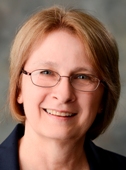
My struggle in the community hospital setting is having the appropriate inventory for the patient population I need to serve. When I stocked the refrigerator during my golf club days the oldest inventory went up front and the new product went to the back. Later in graduate school I learned that was the FIFO method of inventory management. Blood Bankers have a unique twist thrown our way in that as blood sits on our shelves certain things happen that make an older unit less desirable than one collected a few days prior. The life span of a red cell is around 100-120 days depending on which literature you cite. Our job as blood bankers is to get the freshest blood to each patient we serve, so inventory management becomes more of an art than science.

Let’s take first the type specific debate. Some will say always transfuse type specific blood; if the patient is type A then the patient receives type A blood. Some will say to give whatever is most fresh; if we have fresh O cells an A person will get O. What I found when I first came to be the supervisor in my blood bank is that we were outdating a lot of type A blood. So instead of just decreasing the amount of type A, I also increased the number of type O I had on my shelf. This allowed me to be more flexible; I would give out more O when my inventory of A was low. Also, the blood I was giving out was always fresher than before I changed the inventory.

Let’s take this another direction. My policy states that any patient with an antibody has to have two red cell units set up so there is no delay if a transfusion is necessary. I would rather have two type O units typed for some antigens, because if the patient with the antibody doesn’t need it, the units are readily available to anyone else.  I use the flexibility of type O blood to be more versatile and to make sure that my patients are getting the freshest possible unit. I have searched for literature that says giving type specific blood is better for patient outcomes but I haven’t found it. If anyone has literature on the topic please send it my way.

This really comes down to what type of setting your blood bank serves. If you are in a medium size community hospital you will need to make these type of decisions to be flexible with your inventory. If you are a large medical center and are going through blood as soon as it gets delivered then you may not have to worry as much. The majority of us do not work for large centers, however, so we must look and analyze how we can best use this precious resource.


TommyTransfusion

Tommy Transfusion is the pseudonym of a blood bank supervisor in the midwest.