Forensic Pathology and Heritable Cardiovascular Disease: Room for Growth

In most areas of the United States, the sudden and unexpected death of a previously healthy person falls under the jurisdiction of a forensic pathologist. Forensic pathologists are therefore often in a position to diagnose a multitude of potentially heritable diseases including cardiomyopathies, channelopathies, and aortopathies. Importantly, these conditions can remain clinically undetected until lethal complications occur—for example, a cardiac arrhythmia or an aortic dissection—and the first chance for diagnosis may come at autopsy.  While finding a genetic diagnosis at this stage obviously comes too late for our patient, it affords families the chance to seek diagnosis and proactive treatment. If we identify a causative mutation, cascade testing of family members can identify those who are at risk and those. This information can also give peace of mind to family members who do not carry the gene and allow them to safely forgo follow-up screening.

Despite the potential benefits of postmortem genetic testing, there are many obstacles which have prevented routine implementation. One of the main barriers is cost. Insurance companies do not reimburse for postmortem genetic tests, and while the affordability has improved, a single panel (testing multiple genes at once) typically costs hundreds of dollars. If expanded testing (whole exome or whole genome) is needed, the cost is even greater.  Medical Examiner and Coroner offices are funded by local or state governments and have limited resources which are typically strained by high rates of homicides and overdoses. On such tight budgets, the occasional genetic test may be pursued – one or two a year, perhaps – but more regular testing is out of reach. Some families are willing and able to pay for genetic testing, but many cannot afford the cost.

Additional challenges can arise when interpreting the results of genetic testing, which are more complex than a simple ‘positive’ or ‘negative’ result. The classification of cardiovascular gene variants as either benign (normally found in the population) or pathogenic (causative of disease) is more challenging than the classification of cancer-related genes, and many fall in the indeterminate category of ‘VUS’ – a variant of uncertain significance.  Typically, in clinical settings when the patient is still alive, a genetic counselor helps the family interpret the findings. With a “VUS”, they may help coordinate further testing of family members to identify whether the variant shows an association with the disease phenotype; they can also be a point of contact if genetic variants are reclassified as more data becomes available. Having the input of a clinician is imperative because family members need phenotypic screening as well – by CT or MRI scans, echocardiogram, electrocardiogram, and/or other modalities – as the yield of postmortem genetic testing is far from 100%, even for disorders that show clear autosomal dominant inheritance patterns.

Some medical examiner offices have successfully developed regional systems to ensure that decedent’s families receive coordinated care in the event a heritable cardiovascular disease is suspected. These systems are multidisciplinary and include the forensic pathologists, genetic counselors, cardiologists, and specialists in connective tissue disease, and are often informally built networks of clinicians with a common goal. While this is an excellent way to care for families, the majority of the United States lacks such coverage because of regional variation in death investigation and access to medical specialists. Even in the face of these limitations, forensic pathologists can have a huge impact by simply recognizing the potential for genetic disease and saving a sample for possible testing. Genetic testing is expensive and complex, but a phone call to a next-of-kin is cheap and straightforward. Freezing a sodium-EDTA tube of whole blood is also relatively inexpensive, yet preserves an otherwise irretrievable sample. Notifying families of their potential risk for disease, and encouraging them to seek medical diagnosis and treatment, provides a forensic pathologist the opportunity to potentially save lives—a rarity in our field.

-Alison Krywanczyk, MD, FASCP, is currently a Deputy Medical Examiner at the Cuyahoga County Medical Examiner’s Office.

Microbiology Case Study: The Importance of Process Workflows and Stains in Positive Blood Culture Bottles with No Organisms Seen

Case History

An 83 year old female with history of type 2 diabetes presented to the emergency room (ER) with two month history of dysuria and diarrhea. Upon admission, Clostridiodes difficile (C. difficile ) GDH/TOX with reflex to nucleic acid amplification test (NAAT), urine culture, and 2 sets of blood culture specimens were collected for testing. C. difficile test was positive for GDH and Toxin A/B production. Urine culture was positive with 50,000 – 99,000 colony forming units (CFU)/mL of Klebsiella pneumoniae. Patient was administered ceftriaxone, metronidazole and vancomycin and discharged three days post admission. On day of discharge, blood cultures were documented as “no growth at 3 days”. The patient visited her primary care physician the day after discharge. Two days later, the primary care office was notified of a corrected report. The patient’s blood culture collected on day of admission was being corrected from no growth to a positive with growth of Fusobacterium nucleatum. The patient was contacted to check on her status and medication compliance was verified. Patient continued to demonstrate symptom improvement during follow up at physician’s office 10 days post discharge.

What happened here?

The blood culture was collected at an acute care hospital. The system microbiology laboratory policy for a first blood culture positive that is read as no organisms seen (NOS) from an acute care hospital laboratory, is to inoculate appropriate media and prepare three smears. Gram stain is to be performed on one of the smears and if organisms are not seen, a stained and unstained smear, along with inoculated media, are to be sent to the core microbiology laboratory (core lab). The bottle is then to be reloaded on the blood culture instrument.

The policy for a second positive alert from the same NOS bottle is to inoculate appropriate media and prepare 3 cytospin smears. Gram stain is to be performed on one of the cyto-smears and if organisms are still not seen, a stained and unstained smear are to be sent to the core lab along with the positive bottle and inoculated media. The core lab is to use the unstained cytospin smear to make and read an acridine orange (AO) stain.

In this patient’s case, the anaerobic blood culture bottle from one set flagged as positive on day 4 of incubation. The gram stain was read as NOS and inoculated media and smears were sent to the core lab. The bottle was reloaded on the instrument and the bottle alerted as positive a second time that day. The cytospin gram stain was read as NOS and inoculated media, smears, and blood culture bottle were sent to the core lab. At the core lab, a new unspun smear was made from the bottle. AO was performed on this smear and read as NOS.

In our laboratory, if a gram stain result is not entered for a blood culture, it will auto verify as a negative blood culture every 24 hours with a final negative result at 5 days. Both blood culture sets on this patient resulted as no growth at 5 days.

At the 48 hour (6 days post-collection) culture read, BAP, CHOC, and MAC demonstrated no growth, but the CDC ANA had growth. The isolate was setup for MALDI identification and resulted as 99.9% Fusobacterium nucleatum.

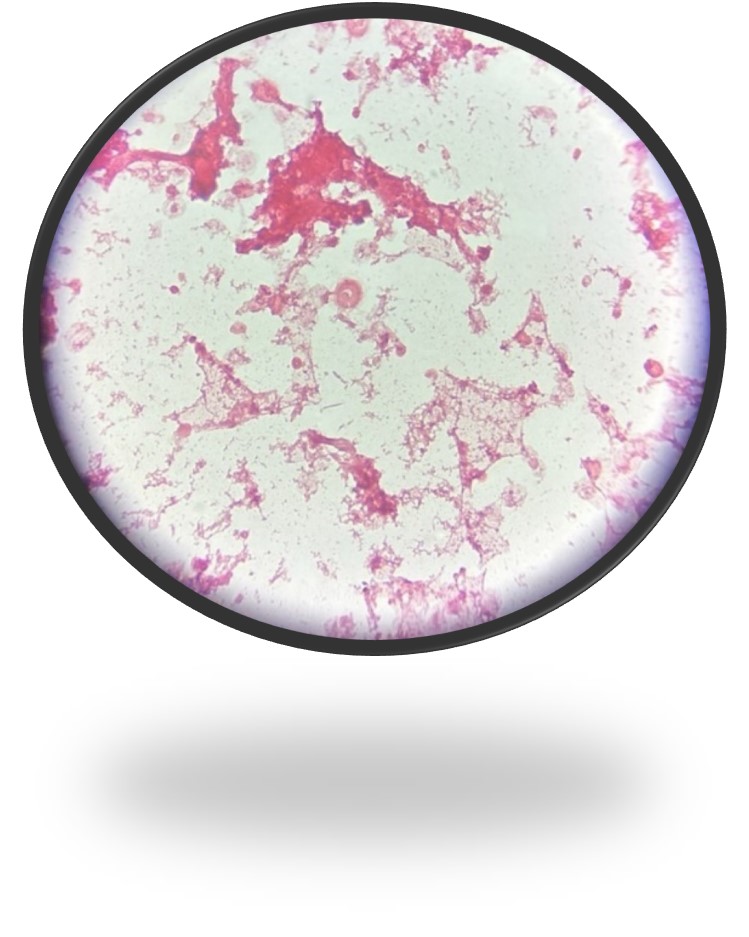
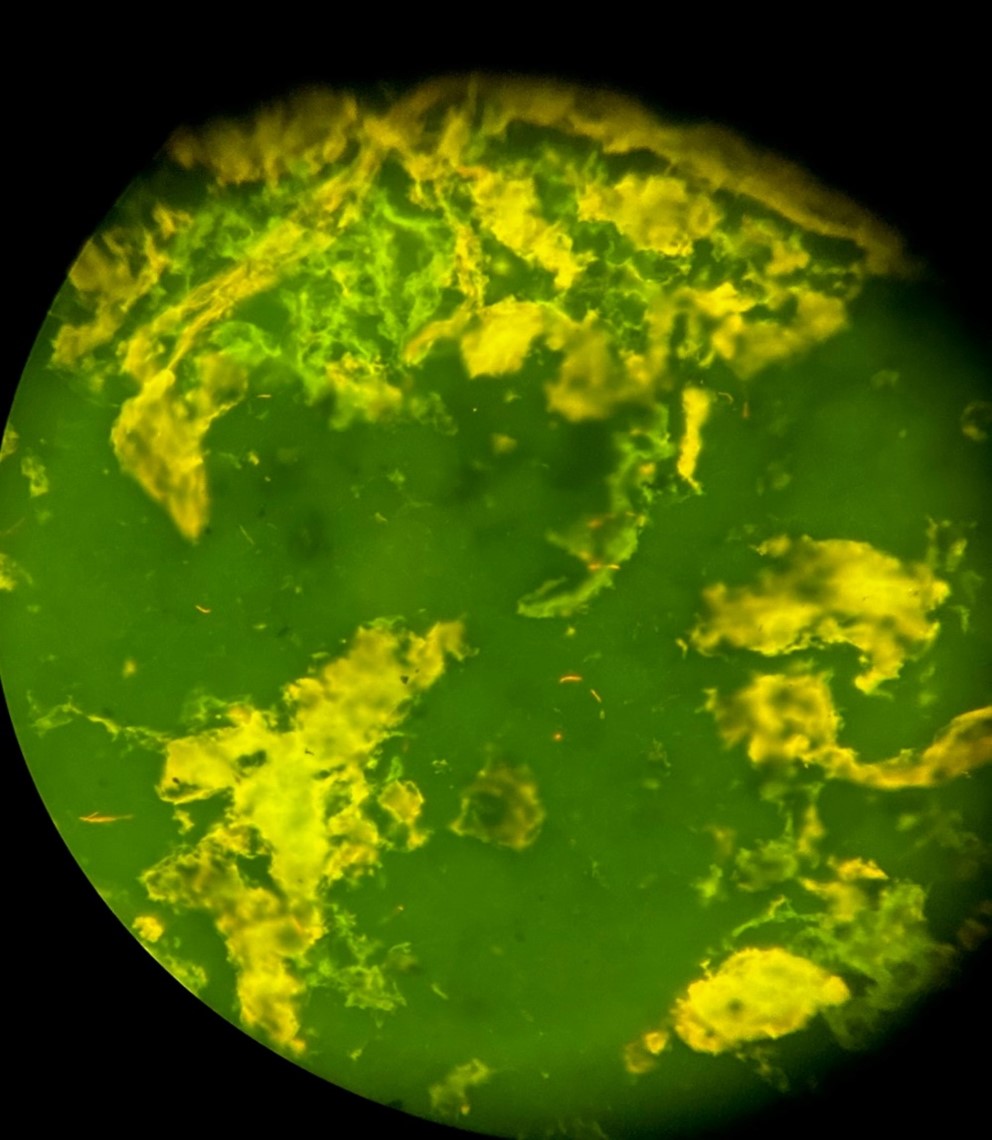
Per protocol, a review of smears was performed on this discrepant smear-culture. The unstained cyto-smear sent by the acute care laboratory had not been stained with AO and read per protocol. Rather, as was mentioned above a Gram stain was made on a new unspun smear and read as NOS. Reviewing this AO stain during the investigation revealed long thin fluorescing rods with tapered ends (Fig 1)

The cyto-smear that had been sent after the second positive alert, but did not get stained and read was also stained with AO and long thin fluorescing rods with tapered ends were observed (Fig 2).

At this point in the investigation, the unspun gram stain from the 1st positive alert that was sent over from the acute care hospital laboratory was also reviewed. Knowing that the bottle was positive for F. nucleatum the technologist shared that she eventually saw rare long thin gram-negative rods with pointed ends that matched what was seen in the AO (Fig 3). As part of the investigation, safranin was added for an additional 10 minutes revealing the organism more clearly (Fig 4).

Figure 1. Acridine orange of unspun slide.
Figure 2. Acridine orange of cytosmear
Figure 3. Gram stain of unspun smear.
Figure 4. Gram stain of unspun smear with 10 minutes of safranin

Discussion

Fusobacterium is an obligate anaerobic gram-negative rod that gram stains as a light staining thin rod with pointed ends. Fusobacterium are found in oropharyngeal flora and are commonly seen in oral biofilms. It is a primary pathogen seen in peri-implantitis, root canal infections, dentoalveolar abscesses and spreading odontogenic infections. It can also be a pathogen seen in abscesses in various parts of the body and seen in the blood stream.

Due to the staining characteristics of Fusobacterium species, they often blend into the background of gram stains from positive blood cultures. As a result, the miss in gram stain and delay in culture growth combined with the late detection of Fusobacterium on blood culture instrumentation for these fastidious organisms can result in a false negative report that is only caught after the organism grows from the original NOS bottle.

Safranin is a secondary stain or counterstain, utilized in the Gram stain, that will stain the colorless gram negative bacteria pink or red. Legionella, Brucella melitensis, Legionella and Campylobacter species are all reported to be enhanced with safranin left on for 2 minutes and it is recommended if anaerobes are suspected and not seen to leave on for 3-5 minutes or use basic fuchsin in order to enhance the morphology of these organisms. For this reason, some laboratories routinely use basic fuchsin as the counterstain.

Acridine orange (AO) is a fluorochromatic dye which binds to nucleic acids of microorganisms and human cells. Acridine orange is a fluorochrome stain that binds to the nucleic acid of cells and bacteria.  RNA and single‐stranded DNA will appear orange and double‐stranded DNA found in human cells, with the exception of red blood cells, will appear yellow or yellow‐green, when visualized under UV light. Therefore, bacteria and fungi stain bright orange while epithelial, white blood cells, and background debris will appear pale green to yellow. To name a few, some common applications for AO include routine screening of normally sterile body fluids and rule‐out of Gram‐positive microorganisms versus crystal violet stain precipitate. Of important note, while not able to differentiate the actual organism, it does work for detecting Mycoplasma and Ureaplasma.

Conclusion

Blind subculturing of NOS gram stains from positive blood cultures, longer staining with safranin, and AO stains are beneficial to be added to the micro lab armamentarium. They are especially beneficial when added into the protocol for processing sterile body site specimens in which organisms, that stain lightly and blend in the background, may be suspected. For further review, Special Media or Stains for Fastidious and Infrequently Encountered Organisms can be found in the Clinical Microbiology Procedures Handbook 5th edition.

References

Kononen E, Nagy E, Conrads G. 2023. Bacteroides, Porphyromonas, Prevotella, Fusobacterium, and Other Anaerobic Gram-Negative Rods. Manual of Clinical Microbiology 13th edition. ASM Press, Washington, DC.

Tille PM.  Bailey & Scott Diagnostics Microbiology, 14th ed., St. Louise, Mosby, Inc., 2017.

Dallas SD and Harrington A. 2023. 3.2 Staining Procedures. Clinical Microbiology Procedures Handbook 5th edition. ASM Press, Washington, DC.

-Jennifer Tedrick MLS(ASCP), Technical Specialist

-Maureen Bythrow, M(ASCP), Microbiology Manager

-Frances Valencia-Shelton, PhD, D(ABMM), SM(ASCP)CM is the Clinical Infectious Diagnostics Director for the Baptist Health System in Jacksonville, FL. She is actively engaged in the Jacksonville Area Microbiology Society and the American Society for Microbiology. Her interests include defining and utilizing clinical best-practice for testing and reporting. She is equally interested in learning with and educating others in the field of clinical microbiology.

Microbiology Case Study: A 62 Year Old Lung Transplant Recipient with Shortness of Breath

Presenting History 

A 62 year old male, former smoker, with status post double lung transplant three months prior, presented to the lung transplant clinic for a follow-up appointment in July complaining of shortness of breath, which had worsened over the past 3 weeks and prompted the need for O2 again with minimal daily activities. He denies any chest pain, fevers, headaches, dizziness, N/V/D. He was admitted for further management of possible organ rejection and worsening respiratory function tests.  

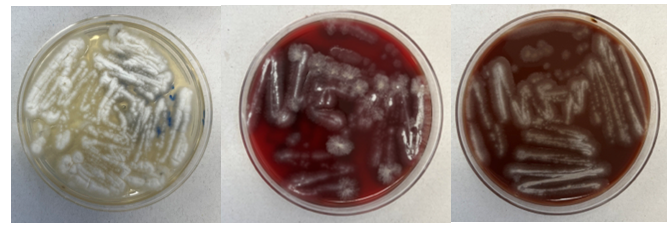
The patient was started on IV solumedrol followed by a prednisone taper. A chest CT (non-contrast) showed patent bronchial anastomoses and stable bilateral small right greater than left loculated pleural effusions. Respiratory pathogen panel results were negative, and Cryptococcus Antigen and titer were negative. He then underwent bronchoscopy and biopsy, showing no signs of rejection. BAL was sent to microbiology for cultures. Fungal culture grew 3 days after incubation (Fig 1), and the Lactophenol cotton blue (LCB) prep shows septate hyphae with long and short conidiophores in small groups, which was identified as Scedosporium spp.

Figure 1: (left to right) Sabouraud agar, Blood agar, Chocolate Agar
Figure 2: Lactophenol cotton blue (left) low magnification and (right) high magnification

Discussion

Scedosporium apiospermum is an environmental mold increasingly reported as an opportunist organism due to the increasing use of corticosteroids, immunosuppressants, antineoplastics, and indiscriminate use of broad-spectrum antibiotics.1 The organism can cause various diseases, including colonization in cystic fibrosis, neurological infection associated with near-drowning incidents, and disseminated disease in immunocompromised individuals.2,3

Laboratory diagnosis of a Scedosporium infection is primarily based on the histopathologic exam from a direct specimen or microscopic examination of lactophenol cotton blue prep of fungal culture growth combined with the clinical or radiographic findings suggesting infection. Since the microconidia of Scedosporium could resemble Blastomyces spp, care should be taken to rule out the dimorphic mold. Scedosporium grows well and faster than Blastomyces on routine mycological media such as Sabouraud’s glucose agar, blood agar, and chocolate agar. Patient’s travel/demographic history is particularly important since Blastomyces is commonly found in Ohio and Mississippi River Valley regions and endemic in Southcentral and Southeastern US whereas Scedosporium is ubiquitous.4 

Scedosporium growth is also observed on the media with a high concentration of cycloheximide5 which is inhibitory for clinical Aspergillus species. A competing fungal flora of rapidly growing Aspergillus and Candida species is frequently present. Isolation using benomyl agar6 or cycloheximide-containing agar is then recommended. Culture of sputum or bronchoalveolar lavage (BAL) or secretions from the trachea or external ears, particularly in CF patients, may be hampered by their mucoid consistency. 

Typically, fungal identification is achieved primarily via microscopic examination in clinical microbiology laboratories. At the same time, more laboratories have adopted matrix-assisted laser-desorption-ionization Time-of-Flight (MALDI-ToF) for more accurate and rapid identification. Microscopic examination from a fungal culture requires a significantly longer time for mold sporulation. With MALDI-ToF, identification can be achieved rapidly as soon as sufficient growth for protein extraction. Nucleic-acid-based identification methods, such as DNA polymerase chain reaction (PCR) combined with ITS (Internal transcribed spacer) or 28s rRNA, can also be used for identification directly from clinical samples or the mold grown on culture.7 Histopathologic examination is helpful for determining the presence of invasive mold infection, but it is not possible to establish definitive identification without culture because various hyaline molds have a similar appearance. For this reason, culture is still an essential part of the diagnostic evaluation. Culture is also vital for testing in vitro susceptibility since Scedosporium spp can be resistant to multiple antifungal agents.7

References

[1] Khan A, El-Charabaty E, El-Sayegh S. Fungal infections in renal transplant patients. J Clin Med Res. 2015;7:371–8.

[2]  K.J. Cortez, E. Roilides, F. Quiroz-Telles, J. Meletiadis, C. Antachopoulos, T. Knudsen, et al. Infections caused by Scedosporium spp Clin Microbiol Rev, 21 (1) (2008), pp. 157-197

 [3] W.J. Steinbach, J.R. Perfect Scedosporium species infections and treatments J Chemother, 15 (2003), pp. 16-27

[4] Kim MK, Smedberg JR, Boyce RM, Miller MB. The Brief Case: “Great Pretender”-Disseminated Blastomycosis in Western North Carolina. J Clin Microbiol. 2021 Nov 18;59(12):e0304920. doi: 10.1128/JCM.03049-20. Epub 2021 Nov 18. PMID: 34792387; PMCID: PMC8601235.

[5] Rippon JW. , Medical Mycology. The Pathogenic Fungi and the Pathogenic Actinomycetes3rd edn, 1998PhiladelphiaSaunders

[6] Summerbell RC. The benomyl test as a fundamental diagnostic method for medical mycology, J Clin Microbiol, 1993, vol. 31 (pg. 572-577)

[7] De Pauw B, Walsh TJ, Donnelly JP, Stevens DA, Edwards JE, Calandra T, Pappas, et al. European Organization for Research and Treatment of Cancer/Invasive Fungal Infections Cooperative Group; National Institute of Allergy and Infectious Diseases Mycoses Study Group (EORTC/MSG) Consensus Group. Revised definitions of invasive fungal disease from the European Organization for Research and Treatment of Cancer/Invasive Fungal Infections Cooperative Group and the National Institute of Allergy and Infectious Diseases Mycoses Study Group (EORTC/MSG) Consensus Group. Clin Infect Dis. 2008 Jun 15;46(12):1813-21. doi: 10.1086/588660. PMID: 18462102; PMCID: PMC2671227.

-Abdon Lopez Torres, M.D., is a second year AP/CP resident of Pathology Department at Montefiore Medical Center, Bronx, NY. He completed his medical degree in Saint George’s University in Grenada. He’s interested in pursuing a surgical pathology fellowship after completing his residency.

-Phyu Thwe, Ph.D, D(ABMM), MLS(ASCP)CM is Associate Director of Infectious Disease Testing Laboratory at Montefiore Medical Center, Bronx, NY. She completed her medical and public health microbiology fellowship in University of Texas Medical Branch (UTMB), Galveston, TX. Her interests includes appropriate test utilization, diagnostic stewardship, development of molecular infectious disease testing, and extrapulmonary tuberculosis.

Letting Safety Slip

On a recent trip to my parents’ house for Thanksgiving, the second-row seat in my wife’s crossover vehicle broke. My wife and I, along with our two daughters were excited to set out for a long holiday weekend, the first in many years. We took that vehicle with three rows of seating so that when we visited my folks, everyone can fit in one car. While on vacation, we returned from a park, and my father exited the second row, followed by my daughter. The lever was flipped in order to fold the seat forward.  When the lever was activated again to fold the seat back into its normal position, I noticed the pop-up indicator on the seat did not retract (the indicator lets you know when the seat is locked into place and safe for passengers). After tinkering with the lever, I discovered that the bottom right side of the seat was not locking completely into the floorboard. I immediately thought about the trip home. Our oldest child gets car sick when she rides in the last row, and our youngest’s car seat occupies the other second row seat. Should I take the risk and let my child ride in the semi-broken seat? After all, three out of the four sides were locked in place, and she would only be in danger if we got into an accident. I just had to make sure we drove extra carefully, and nothing would go wrong. The alternative was dealing with a carsick child- a very unpleasant option.

 I share this story because I have seen lab staff having to make similar decisions and potentially compromising their safety. I wonder how many of you reading this blog have one piece of broken equipment in your lab that you continue to use. Maybe it is not all the way broken. Perhaps it is just a centrifuge with a broken latch or lock. It might be a drawer with a missing handle, and the drawer falls off the track when you open it all the way. There are worse scenarios. Right now there is someone working in a lab where the biological safety cabinet sash doesn’t go down all the way, and all the chairs have at least one rip in the leather. I know lab chairs are not cheap, and the company that comes out to fit the BSC costs a pretty penny, but how much do you think do you think it would cost if something catastrophic occurred because these issues were not addressed?

Sometimes we don’t think too much about broken equipment until something bad happens. Why would someone continue to use a broken centrifuge? Would you get on a rollercoaster if it were broken? Would you put your child in a seat that was not fully locked into place? I hope not. I sometimes hear managers say they are looking into fixing the issue, or they are waiting to get a quote, but they are still using the broken equipment. We should never be complacent when it comes to safety. Accidents will happen, fires will occur, and people will get injured while working in the lab. We put safeguards in place to reduce these occurrences, but when we choose to work with broken equipment, we negate all of those efforts. If you notice a piece of broken equipment, you need to take it out of service immediately and let your supervisor or manager know. Managers may not be aware of everything that happens in the department, and they depend upon staff to keep them in the loop when equipment gets damaged. Do not encourage working in an unsafe environment.

We made the executive decision to let our daughter ride in the far back row on the trip home. It was raining and we knew there would be a great deal of traffic. My child’s life was on the line, so of course I chose to do the right and safe thing. Did we have to make a few extra stops? We sure did, about three extra stops were included because she felt nauseated.  We were actually about 15 minutes from home before she got sick. I knew it would happen; it was just a matter of time. I didn’t mind this time because it beat the alternative of having something happen to her if we were involved in an accident. In life we have to assume the worst will happen so we can make decisions that protect those we care about. It made the trip a little longer, a little messier, but for safety’s sake we have to be willing to take the long road, work a little harder, and maybe even be inconvenienced at times. Lab life isn’t always easy either, but it is worth the effort to protect those in our department. We should always take on the work to make sure the patients, our coworkers, ourselves, and even our loved ones are always as safe as possible.

-Jason P. Nagy, PhD, MLS(ASCP)CM is a Lab Safety Coordinator for Sentara Healthcare, a hospital system with laboratories throughout Virginia and North Carolina. He is an experienced Technical Specialist with a background in biotechnology, molecular biology, clinical labs, and most recently, a focus in laboratory safety.