Blunt Versus Sharp Force Injuries: A Primer on Terminology

Often in casual conversation (and even in medical records) all open skin wounds are called “lacerations,” despite the fact that this term has a fairly narrow definition. Forensic pathologists need to be very particular about using correct terminology for injuries. Different types of injuries correspond to different mechanisms of injury, which can have real consequences for an ongoing investigation. Excluding gunshot wounds, (a separate wound type that requires its own blog post), the other main categories of trauma are blunt and sharp force injuries. Blunt injuries are inflicted by dull objects, whereas sharp force injuries are inflicted by a blade or other edged object. Chop wounds, less commonly encountered in practice, have features of both.

Blunt Force Injuries

There are three cutaneous manifestations of blunt impacts. An abrasion is the equivalent of a scrape, wherein the superficial skin layer is removed. A contusion refers to a bruise, in which there is hemorrhage in the skin and subcutaneous tissue. Finally, lacerations occur when the skin and underlying tissues are crushed and tear apart from each other, resulting in an open wound. Neurovascular bundles in the subcutaneous tissue have high resistance to crushing forces and remain intact, resulting in characteristic “tissue bridging” within the wound depths. The edges of lacerations are often abraded, as well. Because blunt force injuries result from direct application of force, the object involved can impart a pattern onto the skin, or deposit potential trace evidence (hair, fibers, paint chips). It’s always important to look for patterns and try to correlate injuries with scene findings. If a patterned (or suspected patterned) injury is found at autopsy, scale photographs must be taken with a specific ruler (the ABFO ruler), to produce scale photographs for comparison if the object is found.

Deaths related to blunt force injuries can be accidental, suicidal, or homicidal in nature, and cover a wide variety of situations. Motor vehicle accidents, falls or jumps from heights, and homicidal beatings are all situations where the cause of death is blunt force injuries. Each of these situations have particular wound patterns that forensic pathologists are trained to recognize.

Sharp Force Injuries

Sharp injuries can be divided into stab wounds or incised/cutting wounds. The difference is wound dimensions: stab wounds are deeper than they are long, and incised wounds are longer than they are deep. In contrast to lacerations, sharp forces cleanly transect all tissues including neurovascular bundles, meaning stab and incised wounds show no tissue bridging. As mentioned in the first paragraph, distinguishing a laceration from a cut made with a blade can be critical. Mis-identifying a laceration as a “cut” or “stab,” or vice versa, may send law enforcement down the wrong path. Similar to blunt force, deaths by sharp force can be accidental, suicidal, or homicidal, although in my experience accidental deaths by sharp force are extremely rare.

These categories make the definitions sound clear-cut (no pun intended), but it’s important to keep in mind that in actual practice, as with everything else in medicine, unusual situations occur. ‘Chop’ wounds have features of both sharp and blunt force and are typically inflicted by a heavy object with an edge (like an axe or propeller blade). As one example, a beating with a hatchet or machete may cause sharp, blunt, or chop wounds, depending on the sharpness of the blade and what part of the weapon impacts the body. Even when an unusual object is used as a weapon, recognizing the different components of a wound and any patterns imparted on the skin can help guide an investigation.

This decedent was an ejected passenger in a motor vehicle accident. The large abrasions over the arm involve one surface of the extremity and have a faint internal pattern of parallel lines, consistent with “brush burns” or “road rash.”
This patterned contusion on the back of a pedestrian run over by a truck matches the tire tread pattern of the vehicle.
This is a classic example of a laceration. Note the bands of intact tissue which span the width of the wound (the “tissue bridging”) which are characteristic of lacerations.
A typical stab wound. Note the cleanly transected wound edges, and the absence of tissue bridging. The squared-off margin on the right, in contrast to the left side of the wound, suggests this was a single-edged blade.

-Alison Krywanczyk, MD, FASCP, is currently a Deputy Medical Examiner at the Cuyahoga County Medical Examiner’s Office.

It’s Getting Hot in Here

Each laboratory is required to create and maintain a fire prevention plan. What exactly does this plan entail? A fire prevention plan should include, at minimum, the identification of potential fire hazards in your lab, your available firefighting tools, and an action plan that outlines employees’ responsibilities during a fire or evacuation.

First, it is best to determine what fire risks are present in your labs. The best way to begin would be to inventory any flammable chemicals used and stored on-site. Some flammable materials such as alcohol can accumulate quickly, and it is necessary to know how much is stored in the department and where. The Occupational Safety and Health Administration (OSHA) mandates that quantities of flammable liquids greater than 25 gallons in a single room must be stored inside of a flammable storage cabinet (1926.152(b)(2)). The National Fire Protection Agency (specifically standards NFPA 45 and 30) takes it a bit further and focuses on limits based on total square footage in the lab. The NFPA limits the amount of flammable liquid stored outside a flammable storage cabinet to no more than 1 gallon per 100 ft2, or 2 gallons per 100 ft2 if you use fire safety cans. This storage limit doubles if an automatic fire suppression system is in place. The limitation of flammable materials in a concentrated area enables a fire suppression system to more easily extinguish a fire if one were to occur.

Next, look at the amount of combustible items stored around the lab. Are there several boxes of paper stacked next to photocopiers? Large amounts of combustible material in a single area can help fuel a potential fire. Are items stored too close to the ceiling? Check to see that there is at least 24 inches of clearance from the ceiling so that sprinklers are not blocked. Finally, inspect your electrical equipment. Look for daisy chains or permanently placed extension cords in the lab. As part of routine physical environmental rounding, it is best to search for these prohibited situations while also seeking out frayed cords and damaged electrical equipment.

                Another component of the labs’ fire prevention is having the correct tools in place to combat a fire should one occur. The local fire authority will determine how many fire extinguishers are required in the laboratory and where they should be placed. To ensure adequate operation of this firefighting equipment, extinguishers should undergo routine checks which include annual maintenance. OSHA also requires a monthly visual inspection of all portable extinguishers (OSHA-1910.157(e)(2)). Verify that staff know the locations of their nearest fire extinguishers and that they can operate the specific types provided. Is there an automated sprinkler system in the facility? Staff should be aware of the location of fire pull alarms and have education about the alarm process (including calling any emergency numbers).

Lastly, the fire prevention plan should detail information about staff response to a fire, including fire drill and evacuation training. The safest way to evacuate is to have a predetermined evacuation route and muster (meeting) location. Staff should physically walk their full evacuation route annually all the way to their muster location and back. If this route becomes impassable, there should be an alternative evacuation route. During drills, walk one route to the muster location, then walk back via the alternate route. It is also wise to outline the expectations of staff members once they reach that muster location during the drill. If a large group evacuates at the same time, using a checklist or a buddy system can help staff keep track of who is present and who is not. Encourage your staff to stay at the muster location and not to wander off. If a supervisor is taking a roll call at the muster location, a staff member might be counted as missing if they leave to chat with a buddy in a different area. The last thing anyone wants is for a rescue worker to run into a burning building to search for a person who is not even at work that day. As the laboratory grows, so should the fire prevention plan. The addition of new equipment or a change in the current procedure warrants a review of the plan. It is recommended that fire safety policies and procedures are reviewed annually, and when changes are made, communicate that information to staff quickly. Ensuring that equipment is in place, that items are stored properly, and that staff are made ready to respond can lead to much better outcomes should a real fire occur in the laboratory.

-Jason P. Nagy, PhD, MLS(ASCP)CM is a Lab Safety Coordinator for Sentara Healthcare, a hospital system with laboratories throughout Virginia and North Carolina. He is an experienced Technical Specialist with a background in biotechnology, molecular biology, clinical labs, and most recently, a focus in laboratory safety.

Microbiology Case Study: An Unusual Case of Herpes Reactivation

Case history

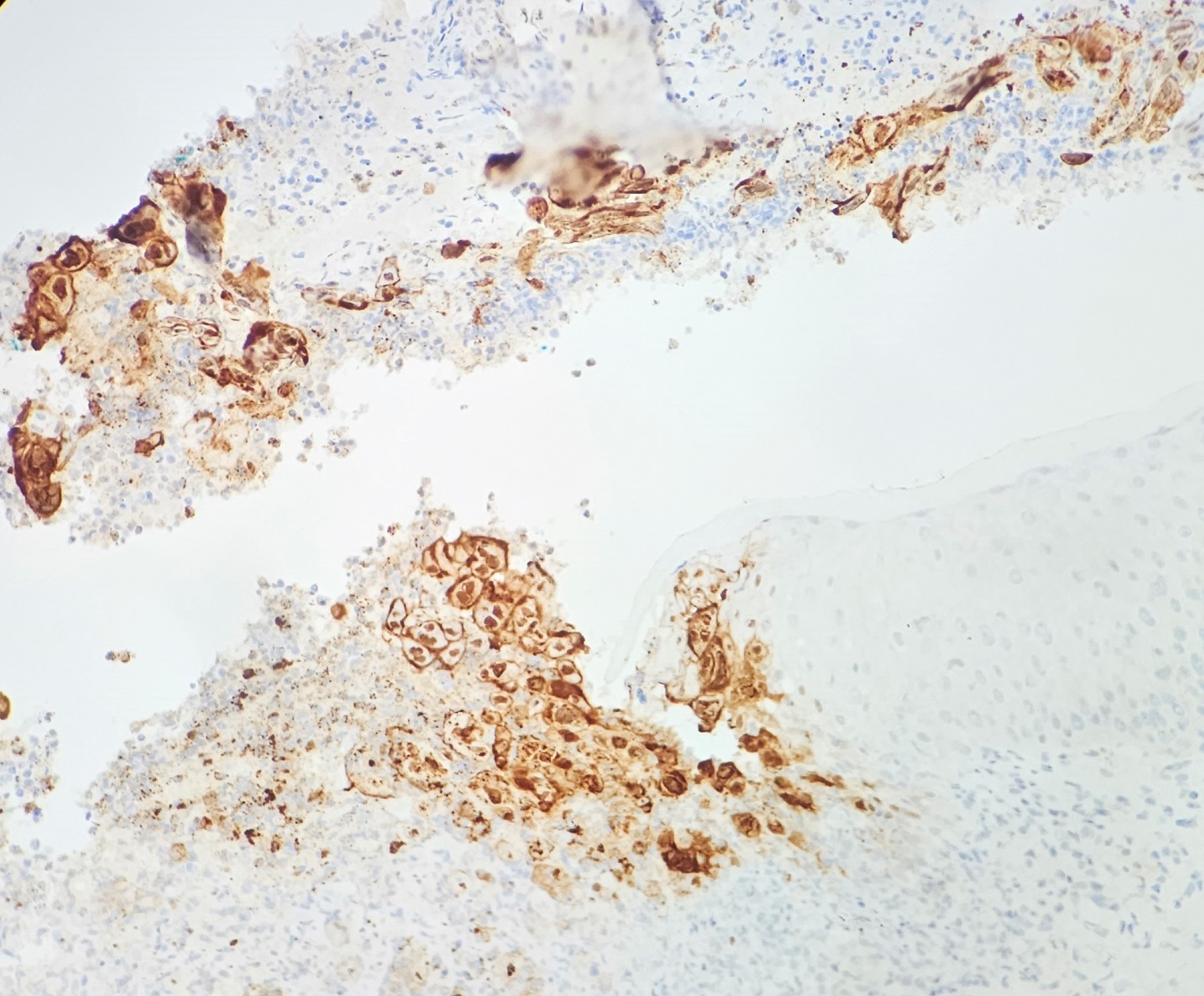
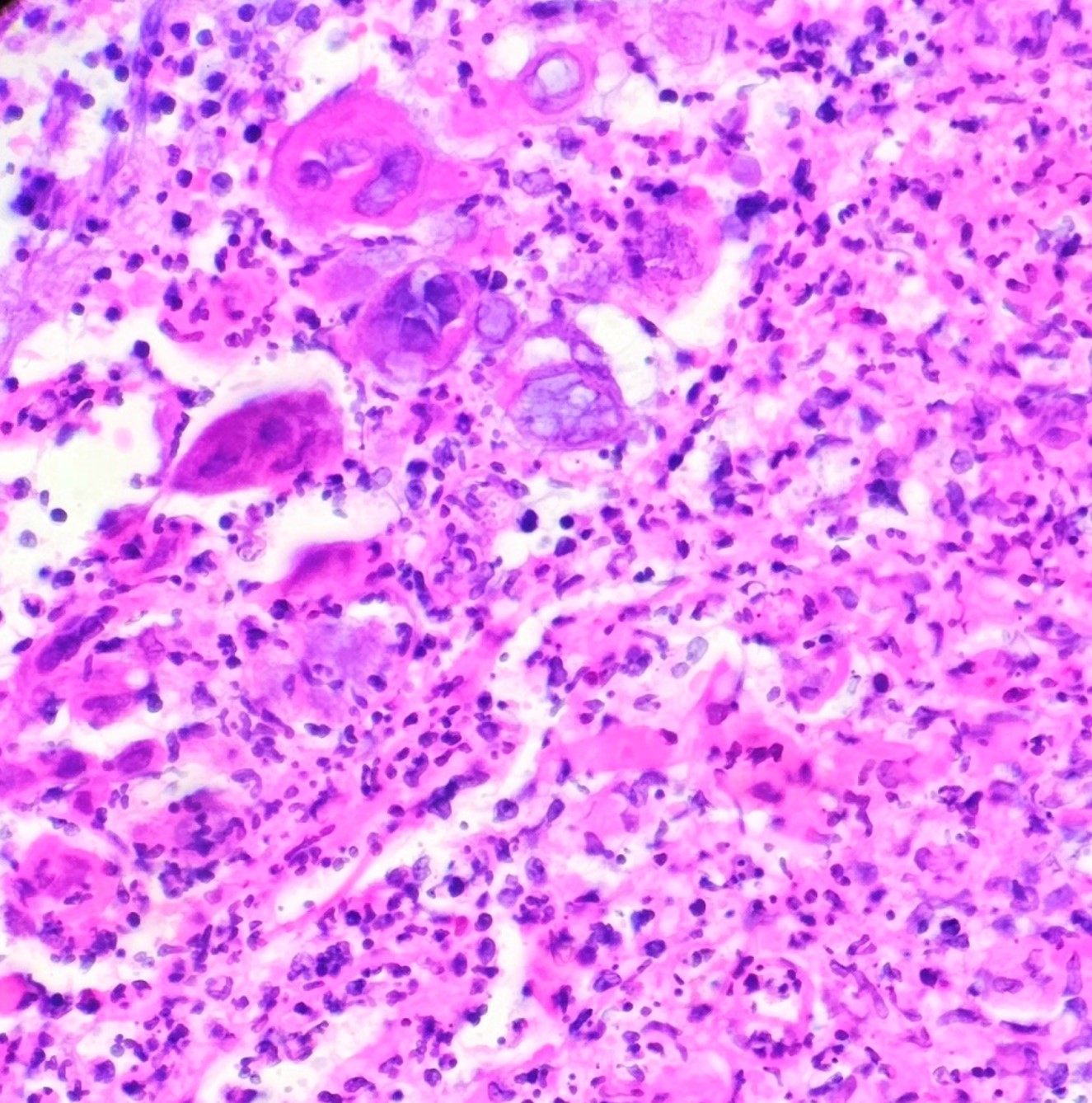
A 37-year-old female with a past medical history of psoriasis and common variable immunodeficiency disorder (CVID) presented to her dermatologist for an ulceration on her right buttock following a camping trip about 1 month ago. She thought that she had been bitten by a bug, for the lesion became extremely pruritic and painful. The patient was self-treating the area with over-the-counter antibiotic ointment and an anti-itch cream, but the symptoms persisted. At the time, the dermatologist was also treating a lower extremity dermatophyte infection, and the antibiotic cream and anti-itch cream were discontinued and replaced with clobetasol 0.05% ointment for potential allergic dermatitis. The patient returned to the dermatologist about a month later as the site was becoming increasingly inflamed and painful. The patient had also started experiencing night sweats and fever, so she was transferred and further evaluated in the emergency department. In the ED, the differential included soft tissue infection, cellulitis, or abscess of a fungal, viral, or bacterial etiology. Labs showed evidence of inflammation with an elevated ESR and CRP. A punch biopsy was performed and pathologic examination showed an ulcer bed with prominent acute inflammatory cell infiltrate and necrosis. The infected squamous epithelium showed the3 Ms findings (Molding, Margination, Multinucleation) consistent with herpetic infection (figure 1). The diagnosis was confirmed with HSV complex IHC (figure 2) and PCR testing of the lesion came back positive for HSV-2. Of note, the patient did have a history of genital herpes; however, she was not having a typical flare, and she had been treated with a 10-day course of valacyclovir 2 weeks prior to her ED visit. The gram stain showed no evidence of neutrophils, squamous epithelial cells, or organisms, but bacterial cultures came back positive for MRSA.

Figure1. H&E section showing mixed acute and chronic inflammation with squamous cells
showing herpes viral cytopathic effect (400x magnification)
Figure 2. HSV complex (HSV1 and 2) IHC staining virally infected epithelial cells (200x).

Discussion

Herpes simplex virus (HSV) is a large, double-stranded DNA virus from the Herpesviridae family.1,2 HSV-2 is generally considered a sexually transmitted infection because it can be transmitted by contact with infected genital secretions.2,3 The viral particles within these secretions can enter epithelial cells and begin replicating, causing the characteristic intranuclear inclusions and multinucleated giant cells that can be seen under the microscope.2 When the virus infects the cells in this manner, it can also cause these infected cells to separate from each other and form grouped vesicles filled with these cell remnants.2 The virus infects nerve endings and then travels backwards to the sacral ganglia, and it can remain latent there permanently, giving it the ability to recur during the infected person’s lifetime.1 A patient can initially present with symptoms of dysuria, lymphadenopathy, fever, headaches, and myalgias, but more than half of patients may not know they have genital herpes.1,3 Recurrences can present with symptoms of tingling, burning, itching, and pain in the nerve’s distribution pattern, similar to the pain and pruritis in our presented case.2 When there is a suspected HSV infection, PCR for HSV DNA is generally the best diagnostic tool, and it is faster and more sensitive than viral culture.1,2 A patient with known herpes infection should be treated with antivirals; however, the lesions should also self-resolve within 3 weeks if the patient is not treated.1

One abnormality in our presented case was that the patient’s reactivation of genital herpes was on the buttocks. A repeat infection with HSV at a site other than genitalia is more common when the primary infection also occurred at a site other than the genitalia.4 Infections occurring at non-genital sites such as the buttocks can also occur due to self-inoculation, which may have been the case in our patient.4 Additionally, repeat infections with HSV in non-genital sites are more common when the initial infection was with HSV1, but our patient’s PCR showed the presence of HSV-2 DNA.4 One explanation for this phenomenon is that HSV-2 recurrences can occur on the buttocks due to the retrograde transport to the root ganglia in the areas that correspond to these dermatomes.4

Another abnormality in our presented case involves the patient’s persistent infection despite treatment with a course of valacyclovir for 10 days. Generally, an initial herpes infection self-resolves in a matter of weeks, and a recurrent episode will self-resolve in a matter of days, usually less than ten.1,2 It is unusual that her infection persisted despite therapy, but the patient does have a medical history significant for CVID. Patients with weakened immune systems can take longer to fight off herpes infections even if they are taking antivirals.2 Additionally, there is a theory that herpes buttocks infections last longer than in other regions due to the greater travel distance along the nerves as well as a higher concentration of nerve endings in this region.4 The patient in our case also had tissue cultures that were positive for MRSA, meaning she had a concomitant bacterial and viral infection of the buttock region, and treatment with an antiviral would not be sufficient to eradicate her coinfection.

References

1.  Johnston C, Corey L. Current Concepts for Genital Herpes Simplex Virus Infection: Diagnostics and Pathogenesis of Genital Tract Shedding. Clin Microbiol Rev. Jan 2016;29(1):149-61. doi:10.1128/cmr.00043-15

2.  Gupta R, Warren T, Wald A. Genital herpes. Lancet. Dec 22 2007;370(9605):2127-37. doi:10.1016/s0140-6736(07)61908-4

3.  Groves MJ. Genital Herpes: A Review. Am Fam Physician. Jun 1 2016;93(11):928-34.

4.  Benedetti JK, Zeh J, Selke S, Corey L. Frequency and reactivation of nongenital lesions among patients with genital herpes simplex virus. Am J Med. Mar 1995;98(3):237-42. doi:10.1016/s0002-9343(99)80369-6

-Lillian Acree is a fourth-year medical student at the Medical College of Georgia. She is interested in head and neck pathology.

-Hasan Samra, MD, is the Director of Clinical Microbiology at Augusta University and an Assistant Professor at the Medical College of Georgia.