Recognizing Disruptive Innovation in Global Health

One of the challenges of providing healthcare to patients of any type is “staying current” or “keeping up with the literature.” This can be especially challenging in the diagnostics laboratory where novel or unique approaches to a given test or test method or disease may show early promise but have no clinical utility, be too expensive, or not actually significantly change work-flow and/or patient value to justify implementation. On the other hand, sometimes a technology or test which is in development or approval can be so anticipated that clinicians and laboratorians are frustrated that it is not yet available.

In global health, there is a different problem that is encountered every day. There are technologies and tests that are approved, have documented clinical utility, and add great value to patients but they are simply not available because of supply chain, cost, administration, or geography. In such situations, the practitioners in these settings face extreme frustration—especially with stock-outs—and can become jaded and non-dependent on laboratory testing as part of care. This latter issue is a major challenge in cancer care where cancer diagnoses are required before treatment can begin; yet, in a large number of countries, access to cancer diagnostics routinely is not available. It is to that end that ASCP along with a whole host of NGO, industry, academic, and government partners are making great efforts to improve cancer care in each part of the continuum.

In this environment, however, disruptive innovations are, in fact, much easier to recognize as forthcoming. In the early 2000’s when I was working and traveling in Malawi, our project had a landline in the hospital to call the landline at the doctor’s house for issues overnight with patients. This required 24-hour nurses to be physically in the ward, tied to the phone and the patients. Landlines were expensive to install, had a very long waiting list to be installed, and, for the most part, the majority of the population in the country had never had a phone line in their dwelling. By the mid-2000’s, our project had one or more cellphones (as did the nurses) and communications through texting were nearly constant (especially since it was less expensive than making a phone call). By 2010, cell phones were ubiquitous in Malawi (and almost everywhere else in Africa) and there was no demand for landlines. Although this is a commonly used example, consider the adoption of cellular telephones and now smartphones in the US compared with Africa. There was push back, denial, avoidance, and even refusal to use them because there was an existing, well established system of landline communication.  If you want to install cable television and internet in your home as late as 2016, you were often required to bundle with a landline. The point is that the adoption pattern was significantly different because there was a pre-existing competitor with the new technology although—clearly—the new technology was superior.

Now consider a woman of 35 years who has a breast mass on mammogram in downtown Boston today. She will likely have an imaging study with immediate ultrasound and fine needle aspiration and/or core biopsy subsequent. A pathological diagnosis will be issued within 3 to 4 business days (or sooner) which includes a histological diagnosis along with hormone receptor status and Her2 staining. She will see a clinician likely within a week for a positive cancer diagnosis and a treatment plan will be decided upon and executed. If we consider a similar woman in downtown Nairobi, Kampala, or Lagos, they may, in fact, have a similar experience because of the recent efforts globally to improve cancer awareness, diagnosis, and treatment. There may be some delays (reports may take several weeks), potential stock-outs, etc. but, in these major cities, the services might exist. They are likely, however, provided in private clinics, will cost a premium, and may or may not have any guarantees about quality.

The reality, however, is that the vast majority of women in the US or Europe who present with breast cancer do so at a very early stage because of active screening programs which include mammography. The vast majority of women in low- and middle-income countries (LMICs) present with later staged disease because of lack of screening. The latter group of women, however, often live in rural conditions and/or poverty conditions such that seeking care for a breast mass (of any size) will require them to spend time and money to travel to one of the major cities and attempt to access services. With this situation, many of these cancers are detected by the health system at a late stage where curative therapy windows have been missed.

Onto these observations let’s now overlay access to a test for a breast mass that can be performed on a fine needle aspiration biopsy and resulted in ~4 hours which will provide a diagnosis of cancer (or benign) along with prognostic features directing treatment. If we consider the woman in Boston, we may see such a test providing an incremental improvement in care because billing systems, litigation fears, compliance requirements, or accreditation standards still include routine histology and immunohistochemistry to be performed on a tissue biopsy. To some degree, the test may be rejected because it is adding a cost over the standard costs without adding value (other than speed) to the results. However, for the woman in the rural village who likely has access to a community health worker, access to such a test could mean that she starts oral therapy the same day she has the health visit without ever having to leave her village. We have now removed the journey to a clinic that can performed a biopsy, the costs associated with that travel, the time lost while traveling and waiting for a result, and removed the risk that this is not breast cancer—which would mean all the time and money were wasted. For this woman, enormous value is created for her with a test that is performed same day with immediate results.

This concept of point-of-care (POC) cancer diagnostics would arguable meet resistance in the US or European system because of competition with existing systems and other issues as mentioned previously. In an LMIC setting, as there may be no competition, such an innovation would sweep the system and become standard of care—almost regardless of cost. This last bit is very important because traditional systems for performing histology and IHC are complex, costly, and require multiple highly trained individuals to get a quality result. If that process costs $75 to $100 US dollars (to the health system) to provide and, for the individual patient, $10s to $100s of dollar for the travel, lodging, and lost wages, the cost of such a test could, in a stable, high-income country (HIC) market, fetch a hefty price. However, if such a test is priced at $25 to $50 USD (half the cost of the current system excluding the travel), the immediate replacement of the old system with this new system for the given indication must and will occur. This uptake is amplified in an LMIC when the POC test moves to the patient in a geographically distributed process. Breast cancer is an obvious target for such an approach because the tumors are easily accessible, the disease is quite common globally, and the primary therapies are very inexpensive. Could such a test have an impact in an LMICs for bone marrow-based, lung, bladder, colon, prostate, liver, kidney, or soft tissue tumors? The answer to that question lies in the availability of therapy, incidence of disease, and access to radiological equipment rather than availability of the actual POC device. That is, once you have a POC test for one cancer, creating a subsequent POC test for another cancer is a surmountable technical hurdle. But will such a test be able to have an impact because of the alignment of the other factors? It is likely that as you are reading this sentence, you have thought of a few yourself but there are certain cancers where you are likely thinking, “not possible”.

For breast cancer, two such POC approaches are coming down the pipeline. The first is the Cepheid GeneXpert Breast STRAT4 assay which measures quantitative RNA (qRNA) for ESR1, PGR, ERBB2, and MKi67. These four assays are surrogates for standard immunohistochemical staining for ER, PR, Her2, and Ki-67, respectively. In a series of published and in press feasibility and validation studies, the qRNA assay is essentially equivalent to IHC. There are nearly a dozen studies of this new testing cartridge using formalin-fixed, paraffin embedded (FFPE) tissue throughout Africa where the test is being compared to standard IHC. However, in at least one site, the test is being performed directly on FNA material. The second test is from the laboratory of Dr. Sara Sukumar at Johns Hopkins which uses a set of DNA methylation markers that can separate benign from malignant disease on FNA using only 10 markers. By combining these two approaches (benign vs. malignant followed by STRAT4 for positive tumors), a diagnosis of malignant breast disease with prognostic factors for treatment could be obtained in less than 4 hours.

Let’s jump forward to the point in time when both of these POCs are available (or, in fact, any POC for cancer is available). How would they change the approach to breast or other cancer in an LMIC? Because both tests require only an FNA of a mass and because tumors of the breast and other organs today are often late staged, community health workers could be trained to evaluate patients with masses, perform the sampling, and run the test in a remote village. Regardless of stage, starting a breast cancer patient on estrogen receptor antagonists can provide palliative relief or pre-surgical treatment. As a population down stages—which occurs as community health workers begin routine screening—the testing can triage benign and malignant disease at a fraction of the cost for both the system and the patient. Based on population epidemiology, nearly exact costs for these services can be predicted for a population and stock outs can be avoided. Corollary note: Only for those cancers for which you HAVE a POC.

How would these tests change the approach to breast cancer in an HIC? There would likely be resistance at many levels but, eventually, the relatively low cost and the increased patient value would allow the tests to replace or displace standard diagnostics. Without complete replacement, there could, at a minimum, be multimodality redundancy which increases quality. However, the tests would find purchase within the system because in some settings their cost and added value would make any other choice impossible.

For both settings, we can now add other market entrants, other tests for other cancers, and a generalize increased in cancer awareness in the community, all of which would increase demand, improve morbidity and mortality, but decrease costs. Such a situation would be highly valued by the patients and, therefore, is the most important eventuality as this disruption ensues. Recognizing forthcoming change is sometimes hard and sometimes easy; however, accepting and embracing forthcoming change in healthcare can lead to best outcomes for our patients—the central mission of ASCP.

Dr. Milner has no financial disclosures regarding this blog post and has received no fiscal or in-kind support from any entity, named or otherwise, that involves this blog post.

References

  1. Wu NC, Wong W, Ho KE, Chu VC, Rizo A, Davenport S, Kelly D, Makar R, Jassem J, Duchnowska R, Biernat W, Radecka B, Fujita T, Klein JL, Stonecypher M, Ohta S, Juhl H, Weidler JM, Bates M, Press MF. Comparison of central laboratory assessments of ER, PR, HER2, and Ki67 by IHC/FISH and the corresponding mRNAs (ESR1, PGR, ERBB2, and MKi67) by RT-qPCR on an automated, broadly deployed diagnostic platform. Breast Cancer Res Treat. 2018 Nov;172(2):327-338.
  2. Wasserman BE, Carvajal-Hausdorf DE, Ho K, Wong W, Wu N, Chu VC, Lai EW, Weidler JM, Bates M, Neumeister V, Rimm DL. High concordance of a closed-system, RT-qPCR breast cancer assay for HER2 mRNA, compared to clinically determined immunohistochemistry, fluorescence in situ hybridization, and quantitative immunofluorescence. Lab Invest. 2017 Dec;97(12):1521-1526.
  3. Downs BM, Mercado-Rodriguez C, Cimino-Mathews A, Chen C, Yuan JP, Van Den Berg E, Cope LM, Schmitt F, Tse GM, Ali SZ, Meir-Levi D, Sood R, Li J, Richardson AL,  Mosunjac MB, Rizzo M, Tulac S, Kocmond KJ, de Guzman T, Lai EW, Rhees B, Bates M, Wolff AC, Gabrielson E, Harvey SC, Umbricht CB, Visvanathan K, Fackler MJ, Sukumar S. DNA Methylation Markers for Breast Cancer Detection in the Developing  World. Clin Cancer Res. 2019 Nov 1;25(21):6357-6367.
milner-small

-Dan Milner, MD, MSc, spent 10 years at Harvard where he taught pathology, microbiology, and infectious disease. He began working in Africa in 1997 as a medical student and has built an international reputation as an expert in cerebral malaria. In his current role as Chief Medical officer of ASCP, he leads all PEPFAR activities as well as the Partners for Cancer Diagnosis and Treatment in Africa Initiative.

Global Health Narratives Interview Series: Meet Dr. Von G. Samedi

Von G. Samedi, MD, PhD, is a cytopathologist at the University of Colorado in Denver, CO. I had the pleasure of meeting Dr. Samedi as a result of the thoughtful introduction facilitated by Dr. Melissa Upton, who thought we should talk given our shared interest in global pathology.

I learned that Dr. Samedi is originally from Haiti and completed his MD, PhD, and pathology training in the US. He has always been interested in global health as part of his personal and professional passion and has spent the last decade dedicating his expertise to improving pathology services in low resource settings. It was readily apparent to me that Dr. Samedi’s approach to the world’s healthcare issues is based in the fact that he views these as shared problems – ones that he can and does help solve. This mindset is reflected in the way he lives his life – admirably contributing to society in any way that he possibly can. I was eager to hear of the opportunities he’s found in order to contribute, so that I might learn and share with all of you the ways that we can all get involved. Read on to discover the inspiring story of someone who has persisted in finding ways to give to the world through service!

Q: When did you first get started working in global health through pathology?

A: I started working with ASCP when I was a 4th year pathology resident in 2010 when they called me to assist their project in Haiti, which was in response to the tremendous damage caused from the earthquake. I had signed up as a potential volunteer on their website prior to this and they reached out to me seeing that I had language proficiency in both French and Creole. I spent 21 days working with them and my residency program allowed me to count this time as an outside elective. Their main goal was to work with the Haiti’s national public health laboratory (Laboratoire National de Santé Publique) and its various national and international partners to set up and run a laboratory in this acute disaster situation, and the hands-on experience I gained in doing this was well worth my program elective time.

After this, ASCP requested that I continue to volunteer with them and since then, I have been working on pathology and laboratory medicine improvement projects at their partner sites all over the world.

Q: Can you tell me about your experiences volunteering with ASCP’s global health initiatives?

A: Working with ASCP at their global partner sites has allowed me to volunteer in a variety of ways which is unique to the needs of each situation. Every trip has been different. In Botswana, I helped process and read the cervical biopsy specimens that had accumulated as a result of a government program to address the high incidence of cervical cancer. The biopsy program was successful except that there weren’t enough pathologists to give results from the tissue samples – so the government reached out to ASCP to help fill the gap in care. In Ukraine, I worked with laboratorians and clinicians in which I helped conduct a workshop on HIV related testing services. In the Ivory Coast, I worked as a part of a mentorship program to assist a newly formed pathology organization gain functional independence. In Rwanda, the project was focused on bringing telepathology services into the laboratory. In Kenya, I worked with ASCP to offer support to the local pathology association. I’ve also returned to Haiti since 2010 and now we’ve shifted away from disaster management and focused on local laboratorian training with the goal of achieving sustainability.

Q: Why do you volunteer to improve global pathology services?

A: Historically, pathology and global health are not thought of as connected, yet without pathology, there is no practice of modern medicine. It is the same anywhere in the world as it is in the US, you must have a functioning pathology laboratory in order to effectively deliver health care. Once you understand this, you understand the need that exists in low- and middle-income countries where there is ample opportunity to serve and give back. Doing so gives me a sense of purpose and it is not just a one-way relationship, as I also benefit from interacting with my global colleagues and learning from them. What I have seen my colleagues do with so few resources is impressive and inspiring.

Q: How do you fit volunteering into your schedule?

A: My volunteering experiences have ranged anywhere between 3 to 21 days. I prioritize this work and have been fortunate to work for departments that support it, often allowing me to use professional time and vacation time to work on these projects.

Q: What advice would you give someone new to engaging in global health?

A: The key is to focus on building relationships for the long term. Be patient, flexible, and realize that what you want to accomplish may not happen in the first or even the second visit. Sometimes things just don’t go as planned and you have to keep working and go with the flow. If anyone in laboratory medicine is looking for volunteering opportunities, reach out to ASCP and volunteer to get involved – you can travel to their partner sites, volunteer to read cases through their telepathology program, or serve on ASCP’s global health committees. There’s a way for everyone and anyone working in laboratory medicine to get involved, no matter what your specialty and capacity to serve is.

-Dana Razzano, MD is a former Chief Resident in her fourth year in anatomic and clinical pathology at New York Medical College at Westchester Medical Center and will be starting her fellowship in Cytopathology at Yale University in 2020. She is passionate about global health and bringing pathology and laboratory medicine services to low and middle income countries. She was a top 5 honoree in ASCP’s Forty Under 40 in 2018 and was named to The Pathologist’s Power List of 2018 and 2019. Follow Dr. Razzano on twitter @Dr_DR_Cells.

Global Health Narratives Interview Series: Meet Dr. Constantine E. Kanakis.

Constantine E. Kanakis, MSc, LS(ASCP)CM is a board certified Medical Laboratory Scientist and is a newly minted MD. Any pathology program director reading this should pay close attention, since he is currently completing the Pathology Match for July 2020 and you would be lucky to have him in your program. Constantine has done incredible work in the field of pathology already, and was recognized in the prestigious ASCP 40 Under Forty award program in 2017 and he was recognized as a Top Ten medical student with the ASCP Academic Achievement Award in the same year.It was his passion for working to better his community that earned him these, and I can only imagine what else he will do in his career. I came across his work through reading his ASCP Lablogatory blog contributions, to which he has contributed insightful and quality material for years. His work in global health particularly stands out as what he has been able to accomplish in such a short time and while in medical school is really spectacular. If you want to know how to get engaged in your community and make a tremendous impact in the world, read on, you will surely be inspired to do so after reading this!

Q: Can you tell me about your background and what led you into Pathology for your career choice?

A: I received my undergraduate and masters in Chicago studying molecular biology, political science, bioethics, and medical laboratory science. I’ve worked in various laboratory roles for the last ten years, mostly in blood bank and hematology. After some time, I decided to return to pursuing a more advanced career in medicine and go to medical school and was naturally drawn to pathology from having worked extensively in the lab.

Public health was always something I was interested in, but didn’t know how to get involved. This changed when I had an opportunity to take a service-learning elective course in medical school focused on community outreach. We were prompted to choose a project to focus on, and since Zika virus was such a heightened threat to the community of Sint Maarten in 2015-2016, as well as the region at-large, I decided to focus my efforts there. I organized an effort to reach out to the community and help educate them on Zika prevention/infection through speaking at town hall meetings, health drives, and by creating vector control projects in the field. Together with a team, we developed school-based task forces to educate children so they would bring the information home to their parents and siblings. This arm of the project was mirrored after the recycling initiative in the 90’s that was targeted at US school children to bring recycling programs into the home. Recycling started in schools and it was effective in changing the home culture. Our Zika education based program was so successful that the Sint Maarten Ministry of Health adopted it as an official outreach program as part of their Collective Prevention Services. And was even touted as a success by representatives at the 2016 Global Health Security Agenda session in Miami.

I also married this community outreach project to the Zika virus research that I was involved in with my medical school. We used commercially available antibody kits and I both wrote the SOPs and ran testing alongside other team members in the laboratory.

With my background in public health, research, and working in the laboratory as a technologist, Pathology is a career that will allow me to engage in all of these things. Pathology is a perfect career for focusing on global health due to its ability to intervene on behalf of the population in a data driven way. Rather than helping one person at a time, I can help entire demographics through epidemiologic based interventions. 

Constantine Kanakis (center right, first row) and the team in the fight against mosquito borne diseases.

Q: Why do you think medical students should get involved in global or public health?

A: Getting involved in solving the problems in your community enriches your education in a way that solely reading about issues cannot. When you are actively engaged in the solution, the problem becomes more than just something you are reading and learning about in the text. Not only does this enhance your education and understanding, but it also gives you the benefit of being part of your community in a meaningful way. There are so many preventable issues to focus on – in the US and abroad.

Q: How can someone get started in serving their community?

A: Start by looking around at your immediate surroundings and take an assessment of the issues affecting the community. Anyone can do this, whether you are a physician, scientist, or a community member. The first step is to collect data to define the issue and narrow your target. Next is to plan an intervention; start small and organize or join a group working on the issue and just get involved. You will be surprised at how quickly things can develop. And don’t be afraid of failure—taking setbacks are critical in a continuing process of reevaluating and readjusting your project!

Q: Now that you have finished with medical school, what is next for you and where do you see for your future?

A: In between residency program interviews this month, I will be flying to Sint Maarten to deliver a TEDx talk about the rapid evolution of medicine and how we can prepare for the changing landscape. [You can view the talk here: https://vimeo.com/365844585 (skip ahead to 5:00 to jump straight to Constantine’s presentation)].

Next I’m planning to present an abstract in the next Caribbean Center for Disaster Medicine conference. With hurricanes threatening the Caribbean islands and in particular Sint Maarten which was hit in 2016, there’s been a lot of energy centered around disaster preparedness. My focus is on making sure the planning efforts including blood bank and other lab services are ready in the case of a major disaster.

In the future, as a pathology resident and beyond, I want to continue to work in both my local US setting and abroad. In the US, there are many public health issues that need to be focused on. For example, there’s been a record resurgence in preventable infectious diseases due to the anti-vaccination movement. There are also people suffering from Hepatitis C related cirrhosis who aren’t aware that Hepatitis C is curable. There are many educational campaigns for issues like this that can change lives, and pathologists are the ones that can fulfill that role as health educators.

My wife is a RN, has a master’s of nursing science (MSN), is a certified nurse leader (CNL), and is finishing her Doctorate of nursing practice (DNP) in advanced public health with a focus on vulnerable populations and disaster planning, has been an excellent partner and resource for community outreach all along and we hope to focus on these issues throughout our careers. It’s exciting to think of all the possible ways we can help make our community better!

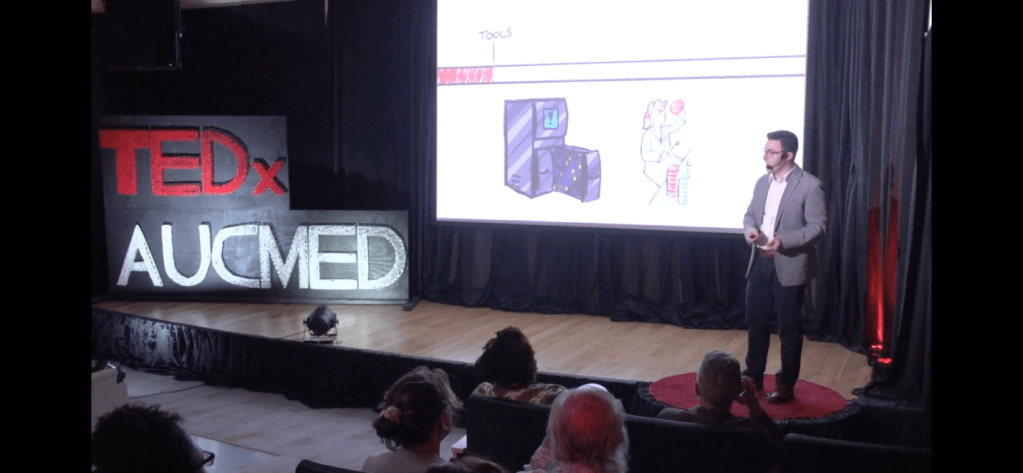
Constantine Kanakis delivering a recent TEDx talk.

-Dana Razzano, MD is a former Chief Resident in her fourth year in anatomic and clinical pathology at New York Medical College at Westchester Medical Center and will be starting her fellowship in Cytopathology at Yale University in 2020. She is passionate about global health and bringing pathology and laboratory medicine services to low and middle income countries. She was a top 5 honoree in ASCP’s Forty Under 40 in 2018 and was named to The Pathologist’s Power List of 2018 and 2019. Follow Dr. Razzano on twitter @Dr_DR_Cells.

Pathology in Ethiopia: Here is the Data… What Do We Do?

Giorgis Okubazgi, an ASCP certified histotechnologist living and working in Ethiopia, and colleagues have published a brief editorial this month in AJCP detailing the current state of histopathology in Ethiopia: https://academic.oup.com/ajcp/article/doi/10.1093/ajcp/aqz144/5581862/. This type of cross-sectional survey of pathology infrastructure is crucial to understanding the gaps that exist in the current service provision models and where resources need to be focused to improve patient care and outcomes. If we just consider the incidence and prevalence of cancer in Ethiopia in a given year, we can start to grasp the magnitude of the problem. It is not fair or just to talk about the “current volume” of any of the 13 pathology laboratories Okubazgi et al reviewed because we can assume (and rightly so based on dozens of other observations in African countries) that, whatever the current volume of these laboratories, it is only a fraction of the population need for services. Consider the 2018 IARC data for Ethiopia, which estimates 67,573 new cancers for Ethiopia per year with 47,954 deaths (71% mortality). Comparing this directly with the US where 1,762,450 new cancers are expected in 2019 with 606,880 deaths (34% mortality), we can see immediately that the mortality differences is horrendous (and must be dealt with immediately) but that the relative rates of cancer seem to be skewed (why so many more cancers in the US?). These numbers for the US work out to about ~5400 cancers per year per 1,000,000 people in the US. Subtracting out skin cancers in Caucasians, assuming Ethiopia will economically improve its healthcare system overtime such that patient access increases, and shooting for a 50% malignant/benign ratio in surgical pathology biopsies of suspect lesions, we can estimate that the total country volume for suspected cancer tissue biopsies will eventually be between 131,146 and 2.5 million. Although that range seems quite vast, it at least provides us with figures to now understand the massive capacity challenges in Ethiopia. Considering there are 13 laboratories currently and equally dividing all that work among them, that would be 10,088 to 192,307 cases per lab per year. Another way to parse this would be by pathologists (again, assume a completely even distribution) for which there are currently 70 in country and 75 trainees. That would be 1873 to 35,714 cases per pathologist per year today or 904 to 17,241 cases per pathologists per year within the next 5 years. Keep in mind that this is JUST for suspected cancer biopsies and does not consider medical disease biopsies, asymptomatic screening tests (such as cervix or colon), obviously benign lesions, or products of conception evaluation. Considerations also have to be included for cytology samples which have been in practice in Ethiopia since 1965 and the role and volume of both forensic and medical autopsies. And, of course, as Okubazgi points out, 54% of these current labs serve only 20% of the population. So, what should surgical pathology services look like in Ethiopia going forward? Despite having three recognized major population concentrations, with a population of over 100 million, multiple populations of more than 1 million people are located in rural/non-urban settings. Only 6 of the current 13 laboratories are located in these areas and some 40 million people live in regions with no access to pathology. There are two solutions (not exclusive) to this type of access challenge which include 1) building additional laboratories and 2) created clear specimen referral networks. Several countries with much smaller populations such as Uganda and Rwanda have either built country-wide referral networks or increased the number of labs and pathologists/technicians to meet the current and projected population needs, respectively. Although neither of these countries has solved every challenge or optimized pathology services perfectly, they have instigated the programs and built value around these solutions which will lead to improved capacity and better patient care. However, for Ethiopia and its West African cousin, Nigeria, the distribution of citizens and size of the population will require a combined approach of both increased numbers of laboratories AND regional and/or national specimen referral networks. For both Nigeria and Ethiopia, there is a spectrum of wealth within the countries which means that robust public and private systems are needed in order to provide access to all citizens. With such a lack of capacity and resources currently in Ethiopia, the time is right for investment in Ethiopia through solid public programs with universal healthcare ideals, diversified private systems, and, most importantly, the opportunity to forge public-private partnerships as the system is being built up. As Paul Kagame has said, “In Africa today, we recognized trade and investment, and not aid, are pillars of development.” The gross domestic product (GDP) per capital in Ethiopia is currently $712; however, Ethiopia has one of the fastest growing economies in the world which means that disposable income and income spent on healthcare for a large cohort of citizens is expanding. By matching both internal and external investors in health, infrastructure, and technology with the sectors of the economy that are either under capacity or expected to grow, Ethiopia is ripe for solving its healthcare challenges, including access to diagnostics, through sustained economic development. This proposition is not without its challenges due to Ethiopia’s current restrictive policies on foreign investment as a non-collaborative endeavor. Despite this situation, there are channels and processes, most of which require local Ethiopian entrepreneurs and/or investing partners, through which powerful investments can be made for the betterment of health and society. It is at this moment when the healthcare infrastructure is under capacity but the economy is growing that Ethiopia needs investments in both public and private sector services so that the result on the far end of this economic boom is NOT a lack of access for the lowest incomed citizens. Nigeria’s boom in GDP and growth in economy happened nearly 30 years ago (with a relatively flat economy now) but those types of investments were not made such that now, the lowest incomed or impoverished citizens of Nigeria are left with essentially zero access to a global fee-for-service healthcare system. Let’s learn from the history of economies on the brink of transformation and not leave a single patient in Ethiopia without the chance for treatments and cure.

milner-small

-Dan Milner, MD, MSc, spent 10 years at Harvard where he taught pathology, microbiology, and infectious disease. He began working in Africa in 1997 as a medical student and has built an international reputation as an expert in cerebral malaria. In his current role as Chief Medical officer of ASCP, he leads all PEPFAR activities as well as the Partners for Cancer Diagnosis and Treatment in Africa Initiative.

Global Health Narratives Interview Series: Meet Julie SG. Papango

Julie SG. Papango, MLS(ASCPi)CM is a medical technologist currently working in Albany Medical Center in Albany, NY. She was born and raised in the Philippines, where she trained as a medical technologist. I had the pleasure of talking with Julie recently as I had read about her extensive work in global health through Doctors Without Borders which was highlighted by ASCP when they designated her as a Top 5 honoree of the prestigious 40 under Forty recognition program in 2019.

I was impressed by the extent of her work before talking with her, but after digging in and hearing the details, I was entirely blown away and fell nearly speechless. Julie is truly the bravest person I have ever met. She has spent years of her life serving in some of the world’s most difficult places and has done so seeking no reward. One can only imagine the kind of daily challenges that would arise working in these conditions. Not only that, but Julie has done all of this while transitioning as a person of transgender experience. Knowing that in some countries this has been met by death, Julie chose to serve those in desperate need anyway. Take a moment to really digest that. Her bravery and dedication to humanity goes beyond anything most of us will ever hope to parallel.

I hope you enjoy reading about her contributions to the world and are left inspired to make your own contributions too!

Q: What made you interested in global health and how did you have the idea to work with Doctors Without Borders?

A: After graduating as a medical technologist in 2003, I had a very vague idea about working in global health inspired by what I had seen portrayed in movies. My ideas were almost romantic as I pictured myself working with people in need. I heard of Doctors Without Borders around 2005 and thought this might be a good avenue to work through. The idea became more solidified in mid-2007 when I heard a former colleague of mine speak about his experiences working with them around the world. I was so inspired by his impact and realized that I could make my dream a reality. I immediately applied and went through their lengthy interview process and was accepted in December 2007. Although I was matched to a project early the next year, I was not able to go as I stayed back to take care of my mother who had become very ill at the same time. Once she became stable, I re-volunteered and went through the process again and finally started out in my first project in 2009.

Q: Can you tell me about your time working with Doctors Without Borders?

A: The first project I was matched to was in the Kampong Cham province in Cambodia. I spent one year and two months there to help the Ministry of Health improve their tuberculosis detection program and set up a lab for diagnosis with bacterial liquid culture. This was challenging because there were no public laboratories performing these tests at the time and we started from scratch. I worked to train the local workforce to function as medical technologists and to take over and expand the project. At the time, it was challenging for Doctors Without Borders to fulfill their mission to improve the laboratory services because there are not a lot of medical laboratory technicians working as volunteers. Many laboratory members just don’t realize there is a real need and opportunity to work in this capacity. I was originally supposed to stay only for six months but extended my stay because they weren’t able to find a replacement for me for another eight months.

After this, I returned home for a short time when I was then contacted to work in a town called Arua in Uganda in 2010. Admittedly, I was scared to go to Uganda because there had been open hostility towards the LGBT community there, and an activist of homosexual orientation had been killed in his own home there recently. I am a person of transgender experience so this was frightening for me. But I decided to push forward because there was an increasing incidence of HIV/AIDS and the laboratories that were in existence needed serious quality improvement to properly perform testing. For six months, I served as a laboratory supervisor and worked to bring the testing standards up to par.

My next time working with Doctors Without Borders was in October of 2012 when I spent six months working in an extremely remote setting of Papua New Guinea. I spent my time there on the island of Bougainville which hosted only 6 non-native persons in the entire town of Buin where I worked. Transportation across the island was a full twelve-hour trip, which meant crossing numerous rivers and very rough roads. The project focused on maternal and child health, and I was there to help improve the laboratory which was manned by just one technician, who had received the entirety of his training on-the-job without a formal degree. When I arrived, the lab looked like nothing more than a stock room. I spent two weeks alone just cleaning! Eventually, we were able to set up a basic functioning laboratory offering rapid testing for HIV, HCV, syphilis, as well as microscopy, blood counts, and basic transfusion services.

After this, in August of 2013, I was recruited to work in South Sudan for an emergency project. Sudan had split into two countries in 2011 and there was conflict in the Nuba mountain border area over oil land ownership. This created a refugee crisis which resulted in 60,000 refugees rapidly fleeing the area and were forced to live in camps. There were major issues with child mortality due to malnutrition, cholera, meningitis, and malaria. Doctors Without Borders was in the camp and set up a tent that served as part hospital, part living quarters for us working there. The living quarter capacity was meant for just 6 people as there was already a team there, but out of necessity was shared among 30. This situation was challenging, as food and water were very limited – for a camp population of this size, there were only three water points in the entire makeshift facility. Working in this setting is known among the volunteers as the “true litmus test” due to its extreme challenges. My role there was to set up the tent in which we would run the laboratory, help train local staff, and to set up the point of care and basic blood testing for transfusion services. With a break in between, I spent a total of almost two months in the camp working on this project before returning home for a month or two. After this, I returned to work again in South Sudan because there was a need to verify the accuracy and quality of the testing that was being performed in the refugee camp. There were many issues with transporting the specimens to referral labs, and we wanted to analyze if these samples were being handled appropriately to yield reliable results. This is one of the frustrating things about working in these situations, nothing is done perfectly, and you have to find a way to make it work. I was scheduled to work there for four months but after month three, all non-essential Doctors Without Borders staff had to be evacuated out due to a civil war that broke out and made the region too dangerous.

I was then supposed to go to Ethiopia to spend a month working on a primary care health project. I was delayed because of a visa issue pertaining to the fact that I was transgender. The difference between how I appeared on the outside as female and what my passport showed as male was an issue. Eventually, after returning to the embassy every day for a week, I was denied a visa. I was given an invalid reason and I knew that this was just a power-play and was really due to the fact that I was of transgender experience. Eventually, after more paperwork and delay, I made it through the process and worked in Ethiopia for a month to perform a quality analysis on the basic laboratory testing and ensure an adequate chain of supplies that had been initiated by Doctors Without Borders before passing it on to the Ministry of Health. Being there for only a month was frustrating because there were still more gaps to fill, and there was only so much I could do. This is just the reality of the situation and you have to accept that it is not always perfect.

After settling in back home in the Philippines for a short time, I felt that I wanted to return to Cambodia to continue the work that I had started there. So, in March of 2013, I went back to work in the laboratory that I had helped start. This time the laboratory had expanded to other sites where more advanced tuberculosis testing was being done and the government was increasing the support for the labs. I worked in quality improvement and helped to create a network for transporting specimens to larger referral laboratories. At the end of my stay in November 2015, we were able to finish the project, donate all of the equipment that had been provided by Doctors Without Borders, and hand the reigns over to the Ministry of Health. I decided at this time that I would look to stay in the country and worked as a private citizen in a developmental aid project, which was aimed to improve the country’s diagnostic microbiology services. There I found the organization called Diagnostic Microbiology Development Program. This was an interesting shift from the humanitarian aid work that I had done with Doctors Without Borders since it focused more on sustainability rather than immediate intervention in a crisis.

Q: What brought you to the US?

A: Over the years of volunteering abroad, I have had countless challenges when I am crossing a border and the fact that my external appearance of a woman does not match the gender marker that is designated on my passport. I decided that it had come time to go through the process of rectifying this situation and so I applied for a visa to work in the US with the eventual goal to change my gender marker on my passport. I moved to the US in 2016 and have been working as medical technologist in Albany since.

Q: I know that working in global health can sometimes be equally as challenging as it is rewarding, and you have certainly faced your fair share of challenges. What would you say to those wondering if they have what it takes to contribute?

A: I encourage people to go out of their comfort zones and look at what you can give, and just give it. It can be scary, but we have a responsibility to the global world to share what we are privileged to have. For me, being a person of transgender experience, labels are assigned to me that this is not the “right type” of work for me, that I might be more suited for the fashion and beauty industry for instance. This is like any stereotype that puts people in boxes based off race, gender, religion, or sexual orientation. This box should not be the reality, and at the end of the day, we must realize that we are not boxes and we are all just human beyond labels. I encourage everyone to break the glass ceiling, get out of their comfort zones and look for ways to share what you have with the world.

-Dana Razzano, MD is a former Chief Resident in her fourth year in anatomic and clinical pathology at New York Medical College at Westchester Medical Center and will be starting her fellowship in Cytopathology at Yale University in 2020. She is passionate about global health and bringing pathology and laboratory medicine services to low and middle income countries. She was a top 5 honoree in ASCP’s Forty Under 40 in 2018 and was named to The Pathologist’s Power List of 2018 and 2019. Follow Dr. Razzano on twitter @Dr_DR_Cells.

The NEXT Storm in Puerto Rico

In 2017, Puerto Rico had a very challenging year with both Hurricane Irma and Maria bombarding its shores. Just last month, Puerto Rico was spared a hit from Dorian. However, a major storm (of sorts) will be hitting Puerto Rico on September 30, 2019, regardless of what the weather says. On that day, the Section 2005 of the Affordable Care Act expires which provided PR with $5.4 Billion in Medicaid funding (from July 1, 2011 to September 30, 2019). If it were any other state of the United States, the expiration of this relief funding would not be such a challenge because of the current matching programs afforded to those states by the federal government. However, PR is unique in that it is only provided a block grant (i.e., a set amount of money) and that block grant is significantly lower than what other states get overall. Based on current estimations of costs in PR, the block grant funding will be exhausted by March 2020. At that point (well after hurricane season), PR will have to cover all costs for Medicaid for its citizens 100%. Why is that a problem?

In order to understand this, we have to look at PR’s healthcare system (removing the stress, strain, and destruction on the system delivered by Irma and Maria) in its base state. The public health care system in PR was privatized and now includes forced managed care participation. Of the 3 million citizens living in PR (which is on the decline), more than half are covered by Medicaid. The Medicaid eligibility limits in PR are much lower than other states ($6,600 in PR vs. $17,236) and with other states ability to expand coverage to 138% of the poverty line, PR can not go above 40% of the poverty line. This leaves a significant portion of the population ineligible. The cost of living in PR is actually higher than many mainland states while the average income is much lower. The per enrollee Medicaid benefit in PR is $2,144 compared with the lowest mainland state ($3,342) and the median state ($6,763) for projected 2020 budgets. If PR were afforded the same system of delegating funds from Medicaid to its enrolled citizens (i.e., matching based on income), the Medicaid matching rate would be 83%; however, because of the block grant the effective matching rate is between 15 and 20% for PR. Reimbursements for equivalent services in the mainland US are significant less in PR (for example, as low as $10 to a physician for an office visit). Unlike other mainland states, a US federal act (PROMESA) created an oversight board (FOMB) to manage the island’s finances and one of the main tools of the FOMB to control costs in PR has been to deeply cut Medicaid spending. 

Given that situation, it should not be surprising that prior to the 2017 crisis, healthcare professionals were leaving PR in large numbers and that trend increased after 2018. In an effort to stem this exodus, Act 14-2017 was enacted (February of 2017) which reduced certain physicians’ income tax in PR to 4% (down from 33%). This act went into effect in April of 2017 but data show physicians continue to leave, evidence that physicians value ability to care for their patients (i.e., resources to provide quality care) over their own income. Jennifer Gonzalez-Colon, the resident commissioner for PR (the only representative to Congress with limited voting rights and a marginalized role) introduced the Puerto Rico Integrity in Medicare Advantage Act in September of 2018 to stabilized Medicaid payments in PR following Maria (as an amendment to XVIII of the Social Security Act), which would have improved payments including to physician providers. The Act died in when the 115th Congress concluded in 2019 having never been enacted.

PR’s Medicaid program is, thus, in a crisis situation which will either need to be resolved before March 2020 or will result in potentially increased challenges (i.e., assuming additional healthcare professionals leave the island). With an already aging healthcare professional population (i.e., young professionals leave) and an aging population of patients, an enormous storm that has been brewing for years will be unleashed in the spring. The solution is for those controlling the healthcare finances of the island to create equitable systems of payment to support the US citizens of PR.

References

  1. Urban Institute Report – PR HC Infrastructure
  2. Revitalize Puerto Rico
  3. Judith Solomon on PR’s Medicaid Program
  4. Rick Shinto on Ending PR’s Health Care Crisis
  5. Caribbean Business June 2018 PR challenges
  6. Puerto Rico – Medicaid.gov
  7. Finding Health Insurance in PR
milner-small

-Dan Milner, MD, MSc, spent 10 years at Harvard where he taught pathology, microbiology, and infectious disease. He began working in Africa in 1997 as a medical student and has built an international reputation as an expert in cerebral malaria. In his current role as Chief Medical officer of ASCP, he leads all PEPFAR activities as well as the Partners for Cancer Diagnosis and Treatment in Africa Initiative.

Global Health Narratives Interview Series: Meet Dr. Adebowale Adeniran

Adebowale Adeniran, MD is a surgical pathologist and cytopathologist currently practicing at Yale University and serves as the Director of Cytopathology there. He completed his medical school training in Nigeria and moved to the United States to complete a residency and fellowship.

I am fortunate enough to know him as my future attending, as I will be joining the cytopathology fellowship program at Yale in 2020. I also know him through attending last year’s Friends of Africa meeting at USCAP, where he gave a presentation about the status of pathology services in Africa. His points were compelling and he spoke with passion and heart about the issue. He is a true global health advocate and I was delighted to have the chance to talk with him about the work that he is doing in Africa and learn more about the USCAP Friends of Africa group. Read on to be inspired by his commitment to global health and learn how you can also get involved!

Q: How did you recognize the need to contribute to improving pathology services in Africa?

A: Being from Nigeria and having worked there for a short time as a House Officer, I knew that there were improvements to be made in the healthcare delivery system, but I hadn’t thought of improving pathology services specifically. It wasn’t until I was in my second fellowship at Memorial Sloan Kettering that I had the opportunity to meet Dr. Brian West. He told me about the USCAP Friends of Africa group in which he was an active part and had been since the start. He was involved in education initiatives and would routinely travel to Africa to give lectures and educational seminars.

I went to the next Friends of Africa meeting at the annual USCAP meeting and was able to speak to others doing similar work to Dr. West. This inspired me to also get involved and have been participating in the group ever since. I learned that pathologists practicing back home in Nigeria, and in most other countries in Sub Saharan Africa, face challenges in practicing pathology that we don’t have in the US. It only takes seeing the situation once to realize the great need there is. There are a range of problems, from outdated equipment, to supply shortages, to all of the things that we take for granted like consistent access to electricity and water supply. In general, governments tend to be apathetic to funding healthcare and especially pathology services, which results in compromised patient care with very few pathologists to read cases, long turnaround times, and limited diagnoses. The training programs are usually working with few or old textbooks and limited exposure to advanced testing modalities. You see these problems and your heart bleeds; you feel compelled to get involved and give back.

Q: What is the mission of the USCAP Friends of Africa?

A: The organization has evolved and expanded over the years to increase their outreach to Sub Saharan Africa with the aim of improving pathology services there. The main leaders in the group, Drs. Adekunle Adesina, Patrick Adegboyega, Kunle Adesokan, and Jaiye Ogunniyi-Thomas have made big strides since the start and pathology has come a long way because of it. The group is supported by the USCAP Foundation and they work to distribute free educational materials to pathologists and training programs. They also work with the East and West African divisions of the IAP in developing and hosting teaching projects called “Schools of Pathology”, which are special yearly meetings. They are usually around a weeklong of intensive teaching and mentoring, and they will be held in different countries in West and East Africa to equalize the opportunities for people to participate. Pathologists from across the regions travel to be a part of it.

Q: What ways have you found to contribute to improving pathology services in Africa?

A: For the last five or six years, I’ve worked most frequently in Nigeria in my medical school alma mater, where I travel back yearly to give lectures and teach residents with slide sessions. It’s also a good opportunity for me to review any difficult cases with the department and offer an outside consultation. I also send journals and reading materials they don’t have access to otherwise. I’ve also had opportunity to work with three other medical schools in the area in similar ways.

Volunteering with USCAP Friends of Africa, I participated in last year’s School of Pathology meeting that was held in Lagos, Nigeria. This was the first time that I was able to teach in that program and it was a very good experience.

Q: In what ways can the pathology community get involved with global health?

A: One very simple and easy way to contribute is to give a donation to the USCAP Foundation Global Partners. Every year since 2015, they sponsor pathologists from low and middle income countries to travel to the USCAP meeting through a scholarship, the Global Partners Travel Award. This supports those who often don’t have easy access to attending academic conferences and who cannot afford the travel cost and meeting registration fees to travel to USCAP.

Another is by attending the USCAP Friends of Africa meeting at the annual USCAP meeting and signing up for the many ways you can volunteer your time and expertise. Anyone who has the desire and ability to go and teach, organize slide sessions, or collaborate on research projects, has the opportunity to do so through this organization. These things go a long way and are really appreciated.

Donations of textbooks, supplies, and equipment such as cryostats are also needed. Developing the laboratory services in these countries is really needed and I would encourage those who can to set up private pathology laboratories to help meet the need.

Academic institutions in the US can offer ways of enhancing training opportunities for African pathologists and trainees by offering short- or long-term exchange programs. This helps to bridge the gap between practiced based learning in resource limited vs. US institutions.

-Dana Razzano, MD is a Chief Resident in her third year in anatomic and clinical pathology at New York Medical College at Westchester Medical Center and will be starting her fellowship in Cytopathology at Yale University in 2020. She was a top 5 honoree in ASCP’s Forty Under 40 2018 and was named to The Pathologist’s Power List of 2018. Follow Dr. Razzano on twitter @Dr_DR_Cells.

An ASCP Volunteer’s Experience Abroad

I volunteered in April 2019 in Tanzania at the Kilimanjaro Christian Medical Center. I was there specifically to teach breast mastectomy grossing. There are two pathologists at KCMC, Dr. Mremi and Dr. Patrick, but finding time in their schedule to work with them proved to be the biggest challenge. The pathologists have many responsibilities outside of just looking at slides. Dr. Alex Mremi is the head of the department, but he also teaches at the medical school and meets with medical students. The pathologists at KCMC perform autopsies, including the forensic autopsies that would normally be sent to a medical examiner or coroner’s office in the United States. Dr. Mremi was pulled away one day to do an autopsy and two other days to go to court to discuss autopsy findings. One of the days Dr. Mremi also performed an FNA, where he was not only preparing the slides, but procuring the specimen from the patient himself.

In the end I was able to go over one mastectomy case with each pathologist, but I had hoped to discuss my case study examples and talk to them about the differences in our grossing techniques in greater detail. When the pathologists were busy I would go over grossing techniques of the less complex specimens with the lab aides that perform grossing. Unfortunately the lab aides have responsibilities as accessioner, histotech, grossing aide, transcriptionist, etc. They do it all, so it was equally difficult to find time in their busy schedule. In addition to scheduling conflicts, there was also the issue of ventilation in the gross room. Because there is a window fan, but not proper ventilation, whoever is grossing could only be in the gross room for a limited amount of time before formalin exposure would be too much. I did bring a formalin 3m mask that was donated by a colleague of mine with some replacement cartridges that I hope they will implement into their routine.

In retrospect I wish I had known how difficult it would be to schedule my grossing time with both the pathologists and the lab aides. It takes a forceful and persistent personality to wrangle people into the gross room when they are bogged down with their other work. I wish I had known about this blog before my trip to Tanzania because this seems to have been previously stated by PAs. I would also recommend that the PA make sure to have all their transportation arrangements and initial appointments at the hospital set up in advance because you will essentially be dropped in a place with no Wi-Fi. I made sure to arrange all of this with the help of Alpa Pandya, Dr. Milner’s assistant, who was incredibly helpful. If you are able to exchange money in advance or schedule a trip to the bank with your airport driver this will be very helpful. The day I arrived was a Sunday so banks were closed. It was somewhat of a challenge to find a restaurant or local transportation that would take US dollars. I would recommend getting your visa before your trip because this may prove difficult to accomplish at the airport upon arrival. Be sure to get all the recommended vaccines and anti-malarial medicine if necessary in the area you are travelling. I was very surprised to see no mosquitos at all during my entire trip and find out that malaria is nearly eradicated in the Kilimanjaro region. I also had my clothing sprayed with an anti-bug spray that may have helped keep flies away from me. I would recommend people learn basic phrases (hello, thank you, please, etc.) in the language of the country they are visiting to be more respectful of the local people. Language apps such as Duolingo or Babel are a great help.

I recommend that if a PA is volunteering in a low resourced setting they find out exactly what would be most beneficial to the pathology department in that setting. Since my trip was more focused on breast mastectomy grossing I brought Lester, breast diagrams, templates, inking diagrams, breast protocols and procedures from my hospital, as well as multiple case examples. Some of which I laminated in advance so they could be used again and again in this setting. If I were to volunteer again I would try to set up a more concrete schedule in advance with exact times blocked out to discuss techniques, be in the gross room or give presentations. I am incredibly grateful I got to have this experience, I only wish I was able to make more of an impact. I hope that more PAs will continue to volunteer and that pathologists will participate in the telepathology volunteer roles to free up more time for the few pathologists in these low resource environments. Thank you again to ASCP, Dr. Milner and Alpa for this opportunity!

-Faith Fletcher is a Pathologists Assistant at Henry Ford Hospital in Detroit, Michigan.

Global Health Narratives Interview Series: Meet Dr. Kumarasen Cooper.

Kumarasen Cooper, MD, PhD completed his medical training from his home country in South Africa and his PhD at Oxford. He now works as a surgical pathologist at the University of Pennsylvania and is responsible for leading the initiative to engage the pathology department in the Botswana-UPenn partnership through the Perelman School of Medicine Center for Global Health. He has over 260 publications and has lectured in 5 continents. Despite this busy schedule, Dr. Cooper devotes two separate months of the year to work in Botswana’s only academic pathology department, where he pours his energy into helping the department advance.

I met Dr. Cooper through email when I heard about the work he was doing in Africa. He generously agreed to come visit my department to give an excellent Grand Rounds lecture on his experiences working in Global Pathology, and he led a much-appreciated resident slide session of unusual and difficult cases from his work in Botswana. Humility and grace envelop Dr. Cooper despite his brilliant accomplishments. He also proved to be incredibly generous with a refusal of his speaker honorarium, in exchange for an agreement that we would collect pathology textbooks to send to the under-supplied residency program in Botswana. I’m excited to share the inspiring work that he does through the Botswana-UPenn partnership with all of you today, as I think this program could be used as a model for all institutes to involve their pathology departments in global health opportunities.

Q: What began your interest in global health?

A: I was born, raised, and completed my medical training in South Africa. I spent 15 years working as a Pathologist and served as the Chair of Pathology in Johannesburg until I was recruited to the US to work as Vice-Chair at the University of Vermont. I knew when I left Africa that I would always come back, and that I could use what I learned abroad to give back in some way. I wasn’t sure in what form that would take at the time, but I knew there was work that still needed to be done. This was also influenced by my visits to the pathology departments in many different countries over the years…I was able to gain a sense of the ‘haves and have-nots’, and so developed a strong feeling that I needed to give back.

Q: How did you hear about the Botswana-University of Pennsylvania (BUP) partnership and was pathology an active part in that already?

A: When I first discovered the partnership, I thought that this may be an avenue for me to participate in global pathology. At the time, the pathology department was not involved in any of the ongoing BUP projects, though other clinical departments at UPenn were. After my initial assessment of the Botswana pathology department and its resources in April of 2016, I was able to identify ways that I could help. Together with the Director of BUP, I approached the Chairman of my department with the proposal, and we started the pathology partnership program in October of that year. Since then, I travel to Botswana twice a year for one month at a time, and each time I take 1-2 residents from UPenn along with me.

Q: Can you describe the pathology department in Botswana?

A: To serve a population of just over 2 million people, Botswana has only one academic pathology department, a College of the University of Botswana (UB) School of Medicine, which consists of six pathologists who are all from other countries. There are currently no Botswana pathologists working in the department. There are about six technicians working in the laboratory, all of whom were trained internationally. The laboratory receives around 7,000 surgical specimens yearly, plus cytology, and autopsy. They work with an extremely limited panel of immunostains that are not routinely used but are spared for the rare case that cannot be diagnosed with morphology alone.

The residency program is still very new. There are six residents in the program at the present time, and the program is designed so that they will spend the first two years in Botswana and then they will continue their final years of training in South Africa. I look forward with anticipation to the first Botswana trained pathologists in the country.

Q: What is your role when visiting Botswana?

A: We try to help with everything we can. I sign out cases with the residents during the time I am there, and I teach the residents using these cases every day. The UPenn residents that I bring with me are eager to teach as well, so they deliver didactics regularly also. We all participate in tumor boards and the FNA clinic. We each take on projects that we can partner with them to tackle…things like improving turnaround time, quality improvement, and SOP preparations.  We also work on developing academic programs, grossing templates and manuals (A UPenn pathology PA spent two weeks working in Botswana on this project), synoptic reports, cancer guidelines…anything they need I try to help them with.

Q: How are the UPenn pathology residents given credit in their home program to join you?

A: As of this year, the BUP pathology program is now offered as one of the official electives that residents are allowed to choose from. They are able to use elective time and their travel expenses are paid for by a resident travel grant.

Q: In your role as supervisor of the UPenn residents, what do you see the residents gaining from the experience?

A: The residents that have come with me to Botswana are very compassionate and are eager to contribute in any way they can. Experiencing pathology in Botswana, where people are trying to achieve so much with so little resources, it makes the UPenn residents even more grateful for all of the resources they have available to them. They also have the opportunity to not only learn from the unusual cases that present in Botswana, but also the opportunity to contribute their own unique set of skills – some have focused on teaching autopsy technique, others give enthusiastic  and detailed lectures, and one gave a talk about successful study techniques. [For more information about the resident experience, one can read more about it in the UPenn blog here: https://pathology.med.upenn.edu/department/blogs/residency-matters/penns-pathology-residency-program-reaches-botswana]

Q: How do you see the BUP pathology partnership affecting the trainees in Botswana? What changes have you seen since you started working with them?

A: The residents in Botswana really appreciate the partnership that we have formed.  I have seen the residents develop so much since working with them. At first, they were reserved and now they actually request lectures on topics they feel they could improve on. They are still very humble and respectful, but I have encouraged them to be advocates for themselves. They have really embraced their program and I’m very proud of them. We have a deep appreciation for each other and are proud of what we have achieved together.

We’ve also started hosting Botswana residents at UPenn for a one month rotation so they have the opportunity to supplement their training even further. We fly them to the US, house them, and include them in our residency training program for the month. They have the opportunity to sit in on sign-outs, shadow grossing and autopsy, attend conferences, and be exposed to the advanced testing that we routinely perform in the US.

Q: How do you see the pathology partnership growing in years to come?A: I’m currently helping them find placements in South Africa or possibly partnering with private laboratories to help expose the residents to a greater diversity and volume of cases. As the program continues to grow, we look forward to seeing the fruits of the partnership for many years to come.


-Dana Razzano, MD is a Chief Resident in her third year in anatomic and clinical pathology at New York Medical College at Westchester Medical Center and will be starting her fellowship in Cytopathology at Yale University in 2020. She was a top 5 honoree in ASCP’s Forty Under 40 2018 and was named to The Pathologist’s Power List of 2018. Follow Dr. Razzano on twitter @Dr_DR_Cells.

Not Starbucks but the DMV

I merrily wait in line at Starbucks for my iced cappuccino with soy milk, pay $5+ for $0.25 worth of goods poured into my $14.00 souvenir mug, and walk out the door with my head held high, joyous with the privileges of conspicuous consumption. My server was super-cheery and the brief exchange we had was so pleasant—they really love me!  I need that high because I am off to the Department of Motor Vehicles (DMV) for a driving-related task and know–just know–that there will be an incredibly long line at the end of which sits a disgruntled government employee who doesn’t care if I show up or not. Their motivation to help us is non-existent. “Why would anyone ever work here?” I ask, sipping my delicious beverage.

Today, a doctor called someone in the United States (US) and told them the biopsy taken from their leg earlier this week has come back as invasive cancer. A bit distraught and nervous, the patient called up a nationally recognized cancer center, from which they only live a few miles, and on the end of the line is a caring, pleasant voice who informs them they can be seen today! The valet parking is gorgeous, the building is gleaming with glass and steel, and every face they see as they journey from check-in to clinic is smiling, compassionate, and sincere. Their nurse and then doctor are both genuine people with their patient’s best interest in mind, and they carefully and completely explain what has been found, what needs to be done, and how they are going to get through all of this together. As they depart, the receptionist grabs them for a brief moment to return their private insurance card and waves at them as they depart, adding, “We will see you soon!”

Today, someone in Africa went back to the hospital—an 8-hour journey from their home—where their biopsy was performed a month ago, hoping to get the result. After several people searched multiple offices and inquired with several people, the result is found and brought to them, a single piece of paper. Payment is required before they can receive the biopsy results. They have brought money with them, which they gathered from three neighbors, their brother, and by selling some chickens, and pays for the report. They read the report and, at the bottom, notices that it says additional testing is needed. Confused, they ask for help and a pathologist comes to find them. Respectfully, the pathologist explains that additional testing is needed, which is not available in the hospital despite the pathologist’s strong desire to have it, but they can send the biopsy to a lab elsewhere to do the testing which will cost about 3 times what they just paid for the primary report. They happen to have enough and pay the amount requested. The report will be back in about a month. Two months later, they have returned to the hospital for the 4th time and the report is now available. The testing that was done simply confirms that the primary diagnosis is accurate. They go to the oncology clinic on the same campus and sit in the waiting area with 3 dozen other people. They sleep at the clinic overnight outside with about a dozen people. The following afternoon, they are finally seen and the oncologist reviews the report. He notes that if the patient had come to the clinic as soon as they had the biopsy result three months ago, a simple surgery would have cured them of this lesion. But now, because they waited so long, there is only chemotherapy available which is expensive and, the oncologist reports, doesn’t actually work very well for this tumor.

Before you shed a tear for this terrible situation (while I sip my cappuccino and a nurse begins someone’s chemotherapy in a shiny, brightly lit, and expansively windowed infusion unit not far away), we have to ask ourselves what is really going on? First and foremost, this is an allegory to make a few points but the situation is repeated over and over again every day in the US and Africa. However, as a simple, superficial explanation, the person with cancer in the US is receiving their cancer therapy from Starbucks and the person in Africa had to go to the DMV.

Cancer care in the United States is almost entirely in the private sector, dispersed among the 1500 cancer treatment facilities, of which 70 are comprehensive cancer centers.[i] Based on the US population, the expected cancer rate, 100% detection, and 240 working days for a given cancer center, there are on average only 5 new patients per day per cancer center. Is that why one can often get that appointment right away in a major cancer center or is it really a concierge customer service effort? A standard private insurance plan for which I pay, for example, $250 per month and my employer pays $1300 per month is accepted by cancer centers and results in small co-pays for multiple appointments, which can be covered with a Flexible Spending Account (FSA) or Health Savings Account (HSA). On insurance statements after appointments, some of the services received cost thousands of dollars but the patient portion was only, say, a hundred dollars, again, which may be paid with FSA/HSA. It’s so great that we have insurance because the insurance company is bearing the brunt of costs. But are they?

In the United States, 79% of facilities providing health care are private, a mix of non-profit and for-profit.[ii] But 64% of all healthcare in the United States is paid for by the US government through Medicare, Medicaid, the Veterans Administration (VA) system, and Children’s Health Insurance Program (CHIP).[iii],[iv] Since almost every cancer care facility is private (or, stated another way, “not free”), that means that for every one of us at the cancer center getting treatment, for which we and our employer are paying through insurance, there are two people getting the same treatment at the same high-level quality of care for which the government is paying. Those other deductions from our paychecks for Medicare and Medicaid (which everyone pays, regardless of how old, as long as they are employed and regardless of their own health insurance plan) are going towards the 64% coverage. The point is not that the US healthcare system is expensive. The point is that there is a lot of revenue and resource being put into the healthcare system and, thus, there is a high-quality product or experience that is available.

If we look at any low GINI index country and compare their GDP with the US GPD and compare their spending on healthcare as a % of GDP, we don’t even need to do the math to see that there is very little money per person available in the system for any type of healthcare. The challenge in low-resourced settings (by which it is meant low-resourced patients in low-resources locations) is both a lack of funding available to provide healthcare services along with a lack of “stuff” to provide those services. We can invoke the law of supply and demand to try and argue that the people can rise up and demand more healthcare facilities and “someone” will meet that supply. In the US, this results in the Starbucks model. In a low-resourced setting who has the incentive to meet that supply? Where does the government get the money from to create such a system? What private corporation is going to start a healthcare program that provides universal coverage regardless of what you can pay?

The answer is really quite simple. This model of healthcare is insufficient for cancer and isn’t going to work for all patients. Moreover, the Starbucks model is not really applicable, sustainable, nor equitable. When we go to Starbucks for their coffee, to some degree, our choice of Starbucks is because of the a) flavor of the coffee, b) cost of the coffee, c) perception of the coffee, and/or d) convenience of the coffee. We could always choose Dunkin’, Peet’s, Tim Horton’s (maybe let’s not go there for this analogy), or Green Mountain coffee at a different location. There is variation in pricing and convenience. There is variation in the condiments we can use to doctor our coffee. An economy and series of markets exist which allow Starbucks to gather resources from dozens of other companies to provide your coffee. But, ultimately, we are all buying coffee which has caffeine which has a desired effect. We can go to a free AA meeting or to a soup kitchen and get some pretty basic coffee if we don’t have the money to pay. The point is we have choices and we can pay a high price, a low price, or no price and we get coffee.

The Starbucks model does work for a certain sector of the population but not everyone. Since vast majority of cancer care in the US is private, the Starbucks model falls down because we don’t actually have any free options as a society and “low-cost healthcare” is not typically appealing to most Americans with cancer because they have their mortality at stake (no one wants cancer nor does anyone want to die from cancer). In fact, desperation in the face of cancer is what makes the US one of the only places in the developed world where people go bankrupt trying to be treated for cancer. The ultimate inequity is that cancer care is “pay to play” in the US and there essentially aren’t safety nets for any populations that can’t pay (homeless) or are living below a certain income threshold (i.e., the ~10% of Americans without healthcare plus a large percentage with insufficient insurance).[v]

Please remember, these are human beings and they didn’t choose to get cancer (there is no demand for cancer… there is only demand for cancer care!). Since they didn’t have a choice in the disease they have to be burdened with, why is there an expectation that they should pay for the treatment? Moreover, if a patient has a stage I cancer, easily surgically removed and cured vs. a Stage III cancer requiring months of various therapies at a very high cost, how do we ethically explain an increased cost for a worst state of disease? It’s really an inverse quality spectrum and we make patients pay more for getting a lot less. We pay for insurance in case we ever do get cancer (or other major disease). It’s a risk reduction or risk aversion pre-payment. Like we do with our car or our house or our boat. Those last three things we choose to have (and are luxuries). We don’t get to choose to have health. It’s just an inherent part of being human so holding someone accountable for it because they didn’t have the resources to “prepare for the worst” is really the wrong attitude. Our healthcare system isn’t perfect but there are gaps that could be easily filled if resources are allocated efficiently to meet the whole populations needs—that’s the benefit of having a large resource supply into the system. We just have to find the operational efficiency to make the costs work.

However, when we remove the luxuries of insurance, Medicare, and Medicaid and other payments systems from the health sector or, worse, simply assume the government’s role is to provide healthcare 100% free to all citizens in a resource-limited or resource-constrained setting, we suddenly have an untenable situation. The economy and tax-base are not there to create the resources. We find overworked, underpaid, and undersupplied medical staff working in crowded conditions. For single entity care (e.g., HIV, tuberculosis, malaria), vertical programs have made great strides in combatting these diseases even in some of the poorest countries in the world. But cancer is anything but simple with the complexity of cross-discipline collaboration, spectrum of disease, range of treatments, and inherent costs creating huge gaps in the delivery of cancer care. Economic and physical infrastructure for the provision of care is what is needed to meet this challenge. Our current Starbucks model in the US would be extremely difficult to replicate in a low-resourced setting due to the lack of infrastructure. However, when this infrastructure is assessed, planned for, and implemented, cancer care can be delivered in these settings at a significantly lower cost per patient. Adding infrastructure implementation high-quality private facilities and public-private partnerships creates a way forward to pump resources into the system and insure that no patient is left behind. To round out this allegory, AAA locations (a commercial car-servicing company) in various parts of the US allow one to renew your driver’s license with them, rather than the DMV. I did this once, it was VERY fast, friendly, and efficient. This type of public-private partnership worked for me and I believe it will work for cancer if we are willing to try.

References

[i] NCI-designated Cancer Center. https://en.wikipedia.org/wiki/NCI-designated_Cancer_Center  Retrieved May 21, 2019.

[ii]  “Fast Facts on US Hospitals”. Aha.org. Retrieved December 1, 2016.

[iii] Himmelstein DU, Woolhandler S (March 2016). “The Current and Projected Taxpayer Shares of US Health Costs”. American Journal of Public Health. 106 (3): 449–52. doi:10.2105/AJPH.2015.302997. PMC 4880216. PMID 26794173. Government’s share of overall health spending was 64% of national health expenditures in 2013

[iv] ^ Leonard K (January 22, 2016). “Could Universal Health Care Save U.S. Taxpayers Money?”. U.S. News & World Report. Retrieved July 12, 2016.

[v] https://www.kff.org/uninsured/fact-sheet/key-facts-about-the-uninsured-population/

milner-small

-Dan Milner, MD, MSc, spent 10 years at Harvard where he taught pathology, microbiology, and infectious disease. He began working in Africa in 1997 as a medical student and has built an international reputation as an expert in cerebral malaria. In his current role as Chief Medical officer of ASCP, he leads all PEPFAR activities as well as the Partners for Cancer Diagnosis and Treatment in Africa Initiative.