Well, last week my fellowship applications became quasi-complete. All my letters were sent for molecular genetic pathology (MGP) programs although I did find out that several never received them. Most of the hematopathology programs I am applying to had received three out of four letters of recommendation. And some did offer interview invites before the third letter came in (but most programs want at least three letters to consider my application complete for review). Basically, I’ve been receiving one to two interview invitations by email each day.
I thought to myself that I should’ve started this whole process earlier. I thought that I had started early enough. I had asked for letters of recommendation (LoR) informally before I transferred from my previous program in June and then formally asked at the beginning of August. I had intended to submit my applications on September 1st and hoped that the letters would be in by then or shortly thereafter. Throughout this process, I did find out that some programs began accepting applications as early as July 1st and some had deadlines of September 1st. I hadn’t been able to research as much as I would’ve liked before I left Chicago because I was on our busiest surgpath rotation (with over an hour drive twice a day and I only got the last day off) and I was also in the middle of moving cross-country.
I encourage you all to be early birds – to put everything together and ask early enough so that your application is complete (ie – letters are written and ready to be sent) by sometime in July, August by the latest. Remember that your letter writers are probably writing letters for other residents are well, especially if they are your program director since every program requires a PD letter.
After I sent my applications in early September, some programs responded with a thank you email but most did not respond at all and so I wasn’t sure if they had received my application materials. I would receive weekly emails from a couple of programs telling me that my letters were missing but that was the exception and not the norm. So I would suggest following up with programs to make sure about the status of your application. I had no idea that programs were missing some letters I believed had been sent until I received an email from one. So then I called or emailed all the others to find that other programs were just waiting for letters as well to send my application for review.
Some of this confusion could have been avoided. I think that some of this happened because I added on additional programs – I was overcompensating thinking that I might not have applied to enough programs – and my letter writers weren’t sure which programs they had already sent letters to. Avoid this scenario by researching your programs early. Then make ONE master list of places you are applying to for your letter writers to have to (e)mail their recs all at once (at their convenience).
In terms of personal statements, programs seem to like them short and sweet. Most had limits of 500 words or one page and a couple even had a limit of 250 words. I found it very helpful to have multiple attendings in my subspecialty of interest and fourth year resident friends (who had gone through this process last year) read my personal statement and give feedback. You can write the personal statement any which way you like but the advice I received that helped me most was to write it in 3-paragraph (not too many sentences) form: 1) why/how I decided to pursue the subspecialty, 2) what I bring to the table in terms of the programs I am applying to, and 3) what I am looking for in a program and my future as a practicing pathologist.
As for CV’s, there is no one accepted way (like there is in the business world) to write a pathology-oriented CV (or at least that I know of; enlighten me if you know better). I’ve been updating my CV since college so I already had the basic structure. I’ve had a lot of leadership positions so much of it had to be abridged or left out when I composed my CV for residency applications so I didn’t need to do much this time around either. Speaking with one MGP fellowship director, it was suggested that I include my lab based skills on my CV since I have significant research/wet lab experience and she would like to see where I would start from in terms of my knowledge base. I already had this information from one of my previous job resumes so I just added it on to the end of my CV. So, if you are applying for MGP and have some skills in the lab, then highlight them!
The tricky part I’m finding is scheduling interviews. It’s not as easy to get time off during residency especially with call/tumor board/conference schedules and other service duties as when we had residency interviews as a medical student. So plan ahead and ask for lighter months during the interview season when your chiefs/PD compose the schedules for the coming year. I’ve found that it helps to call programs that are near each other to ask about the review process timeline once I receive an invite in a city where I applied to multiple programs. Let them know the situation and ask politely when a decision will be made so that you can schedule interviews in the same city/area together (especially if they are on the opposite coast from where you live).
There hasn’t been any method to the madness when it comes to each program’s interview schedule. One program emailed last week and asked if I could interview during their first round this week but I’ll be leaving for ASCP Annual Meeting for the whole week in a couple of hours. Other programs gave me dates to choose from in either October or November. For those programs which adhere to the CAP suggested deadline of December 1st (which I’m finding to be rare), those interviews occur in Jan/Feb but since I’m on rotations like surgpath where it’s difficult to get time off, I most likely won’t be able to make these. And with limited vacation days and finances to interview for 2 consecutive fellowships, I’ll most likely not be able to attend all the places I’ve received invites from for interviews.
I’ll let you know how it goes from time to time and hopefully someone will find my experiences on the interview trail useful.
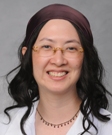
-Betty Chung, DO, MPH, MA is a third year resident physician at Rutgers – Robert Wood Johnson University Hospital in New Brunswick, NJ.

 Lablogatory