Microbiology Case Study: Disseminated Disease Confirmed by Bone Marrow Biopsy in a Patient with HIV

Case History

A 35 year old female patient with a past medical history of uncontrolled HIV, retinitis caused by cytomegalovirus and recurrent colitis presented to the Emergency Department with body pain, fever, severe neutropenia, and diarrhea. CT scan revealed worsening sigmoid/rectal wall thickening. Patient also presented with esophageal candidiasis. Blood workup revealed that the patient had sickle cell disease (HBSC), anemia (Hgb 5.6 gm/dl) that required multiple transfusions, and elevated white blood cell count (up to 17,000). The patient also had leukopenia (neutropenia and lymphopenia), which, in addition to the anemia without hemolysis or bone marrow compensation and CD4 count <50, led to strong suspicious of disseminated mycobacteria infection.  A bone marrow biopsy was performed and AFB staining revealed loose granulomas and numerous acid-fast bacilli seen. Culture of the bone marrow grew out acid-fast bacilli further identified as Mycobacterium avium complex (MAC).

Discussion

Mycobacterium avium complex (MAC) is made up of several nontuberculosis mycobacterial (NTM) species that require genetic testing to be speciated.1 MAC is predominantly made of the slow-growers mycobacteria (SGM) such as M. avium, M. intracellulare, M. chimaera, and M. colombiense.2,3 Most species of nontuberculosis mycobacteria are found in environmental sources. The MAC organisms are found throughout the environment, particularly in the soil and water, mainly in the Southeast of the United States.1 Human diseases are most likely from exposure to environmental sources either through direct inhalation, implantation or indirect consumption or contamination food or water. MAC is considered the most commonly encountered group of slow growers.

The MAC cause pulmonary disease that is clinically similar to tuberculosis, mostly in immunocompromised patients with CD4 cell counts less than 200/μL, such as those with HIV/AIDS. They are the most frequent bacterial cause of illness in patients with HIV/AIDS and immunosuppression.1,4  MAC is also the most common nontuberculosis mycobacterial species responsible for cervical lymphadenitis in children. Additionally, hypersensitivity pneumonitis-like symptoms can occur which were initially thought to be an allergic reaction only, but current studies suggests infection and inflammation. Traditionally, MAC cause chronic respiratory disease, populations such as middle-aged male smokers and postmenopausal females with bronchiectasis (also known as Lady Windermere syndrome). 

Diagnostic testing for pulmonary infection caused by MAC includes acid-fast bacillus (AFB) staining and culturing of the appropriate specimens. Respiratory specimens are the most commonly tested specimen type. If disseminated MAC (DMAC) infection is suspected, culture specimens should include blood and urine. Blood cultures are typically used to confirm the diagnosis of DMAC in an immunocompromised patient with clinical signs and symptoms 5. MAC can also be isolated from bodily fluids and other tissues, such as lymph nodes and bone marrow. If diarrhea is present, stool cultures can be collected. Skin lesions should be cultured if clinically warranted. To determine pulmonary involvement, imaging studies of the chest should be performed. Lymph node biopsy or complete lymph node excision is usually used to diagnose MAC lymphadenitis in children. Skin testing (MAC tuberculin test) has little value in establishing a diagnosis.6 Routine screening for MAC in respiratory or GI specimens is not recommended.

Organisms part of the MAC are not stained well by the dyes used in Gram stain, but instead are acid-fast positive. The ability of an organism to hold onto the carbol-fuchsin stain after being treated with a mixture of ethanol and hydrochloric acid is referred to as “acid-fast.” The high lipid content (around 60%) in mycobacteria’s cell wall makes them acid-fast. SGM require more than 7 days of incubation.  Growth of M. avium species can be visualized in both LJ and 7H11 media 5. Colony morphology can be smooth or rough. Biochemical reactions to both niacin and nitrate reduction are negative. Upon growth, colonies can be identified using the MALDI-TOF mass spectrometry 6. However, depending on the database and technology used, reports from the MALDI-TOF may report MAC as M. avium complex or into the individual subspecies. Molecular techniques such as polymerase chain reaction or whole genome sequencing, as well as high-performance liquid chromatography, are required for species identification. Direct detection of nucleic acid in clinical specimens by PCR methods have been reported, although most tests are laboratory-developed and FDA-approved. Molecular technologies typically target the 16S rRNA gene, the 16S-23S internal transcribed spacer (ITS) region or the heat shock protein 65 (hsp65) gene. Prior to PCR, the AccuProbe test was the first commercial molecular assay for identification of mycobacteria by targeting 16S RNA 7. In Japan, an enzyme immunoassay (EIA) kit was used to detect serum IgA antibodies to MAC-specific glycopeptidolipid core antigen. This could be useful for serodiagnosis of pulmonary infections caused by the MAC. This EIA kit’s sensitivity and specificity have been reported to be 54-92% and 72-99%, respectively 8. Other serologic tests are also being investigated. 

While this may not aid in the direct detection of MAC infection, a complete blood count (CBC) in DMAC patients frequently shows anemia and, on rare occasions, pancytopenia due to bone marrow suppression caused by the infection, though either leukocytosis or leukopenia may be present. Hypogammaglobulinemia may be another possibility 9. Patients with DMAC typically have elevated transaminase and alkaline phosphatase levels on liver function tests. An HIV test should be performed if pulmonary or disseminated MAC infection is suspected.

            MAC is extremely resistant to antituberculosis medications, and a combination of up to six medications is often needed for effective treatment. The preferred medications at the moment are ciprofloxacin, rifabutin, ethambutol, or azithromycin combined with one or more of these other medications 4. For patients with HIV, azithromycin is currently advised as a preventative measure. Of note, preventive treatment of MAC colonization in asymptomatic patients is also not advised. The Clinical and Laboratory Standards Institute (CLSI) recommends performing antimicrobial susceptibility testing using broth microbroth dilution technique. Breakpoints for clarithromycin, amikacin, moxifloxacin, and linezolid are reported 10. Although ethambutol, rifampin, and rifbutin are useful, no official breakpoints are available as there are no strong correlation studies showing the relationship between minimal inhibitory concentrations (MIC) and clinical outcomes.

Figure 1. Acid-fast staining of the bone marrow aspirate revealed many acid-fast bacilli (left, 100X; right, 50X).

References

1.            Akram SM, Attia FN. Mycobacterium avium Complex. StatPearls. Treasure Island (FL) ineligible companies. Disclosure: Fibi Attia declares no relevant financial relationships with ineligible companies.: StatPearls Publishing Copyright © 2023, StatPearls Publishing LLC.; 2023.

2.            Miskoff JA, Chaudhri M. Mycobacterium Chimaera: A Rare Presentation. Cureus. 2018;10(6):e2750.

3.            Murcia MI, Tortoli E, Menendez MC, Palenque E, Garcia MJ. Mycobacterium colombiense sp. nov., a novel member of the Mycobacterium avium complex and description of MAC-X as a new ITS genetic variant. International journal of systematic and evolutionary microbiology. 2006;56(Pt 9):2049-2054.

4.            Kwon YS, Koh WJ, Daley CL. Treatment of Mycobacterium avium Complex Pulmonary Disease. Tuberculosis and respiratory diseases. 2019;82(1):15-26.

5.            Hamed KA, Tillotson G. A narrative review of nontuberculous mycobacterial pulmonary disease: microbiology, epidemiology, diagnosis, and management challenges. Expert review of respiratory medicine. 2023:1-16.

6.            Body BA, Beard MA, Slechta ES, et al. Evaluation of the Vitek MS v3.0 Matrix-Assisted Laser Desorption Ionization-Time of Flight Mass Spectrometry System for Identification of Mycobacterium and Nocardia Species. Journal of clinical microbiology. 2018;56(6).

7.            Ichiyama S, Iinuma Y, Yamori S, Hasegawa Y, Shimokata K, Nakashima N. Mycobacterium growth indicator tube testing in conjunction with the AccuProbe or the AMPLICOR-PCR assay for detecting and identifying mycobacteria from sputum samples. Journal of clinical microbiology. 1997;35(8):2022-2025.

8.            Hernandez AG, Brunton AE, Ato M, et al. Use of Anti-Glycopeptidolipid-Core Antibodies Serology for Diagnosis and Monitoring of Mycobacterium avium Complex Pulmonary Disease in the United States. Open forum infectious diseases. 2022;9(11):ofac528.

9.            Gordin FM, Cohn DL, Sullam PM, Schoenfelder JR, Wynne BA, Horsburgh CR, Jr. Early manifestations of disseminated Mycobacterium avium complex disease: a prospective evaluation. The Journal of infectious diseases. 1997;176(1):126-132.

10.         CLSI. [Performance Standards for Susceptibility Testing of Mycobacteria, Nocardia spp., and Other Aerobic Actinomycetes, 1st ed. CLSI M62. Clinical and Laboratory Standards Institute; 2018

-Dr. Abdelrahman Dabash is currently a PGY-2 pathology resident at George Washington University. He was born in Dakahlia, Egypt, and was raised in Al-Khobar, KSA. He attended the Faculty of Medicine at Cairo University, where he received his doctorate degree. He worked as an NGS analyst for 2 years prior to coming to GWU. His academic interests include Gastrointestinal pathology, hematopathology, and molecular pathology. In his spare time, he enjoys playing soccer, swimming, engaging in outdoor activities, and writing Arabic calligraphy. Dr. Dabash is pursuing AP/CP training.

-Rebecca Yee, PhD, D(ABMM), M(ASCP)CM is the Chief of Microbiology, Director of Clinical Microbiology and Molecular Microbiology Laboratory at the George Washington University Hospital. Her interests include bacteriology, antimicrobial resistance, and development of infectious disease diagnostics.
Microbiology Case Study: A Case of Alpha-Gal Syndrome and Information on the Lone Star Tick

A 72 year old male presented to UVMMC in July, after being found unconscious and not breathing in his home. The patient presented with swelling of the throat and tongue, which had obstructed his airway. In addition to the swelling, the patient also presented with a hive-like rash along his upper torso and arms along with low blood pressure. The patient was successfully treated by an injection of epinephrine and asked about food allergies, as his clinical presentation was indicative of anaphylaxis. Having declared no food allergies, the patient was asked what he had eaten before the episode, noting that he had a beef burger for dinner hours earlier, which was not unusual for his diet. The attending physician noted the time between the man’s last meal and symptoms of anaphylaxis, which seemingly ruled out a food allergy. The patient was eventually discharged home, with recommendations to monitor his diet and return if symptoms resumed.

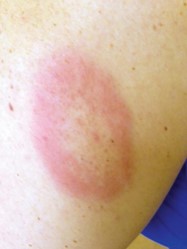
Two days later, the patient returned to UVMMC with coughing, shortness of breath, swelling of his tongue and throat, and heartburn. Once again, the patient was treated with injectable epinephrine, which alleviated his symptoms. When asked again about his diet, the man mentioned that hours earlier at dinner he had pork chops, which was also not unusual for his diet. Upon closer examination, a circular rash was observed on the patient’s right shoulder and the patient was tested for Lyme Disease. While awaiting the results of the test, the patient was asked about any exposures to ticks. Upon the mention of tick exposure, the man recalled seeing one a week prior crawling on his arm while he was watering his garden. Insisting that he did not feel a bite and quickly brushed the tick off of his arm, the man described the tick as being brown with a singular white dot on the center of its body. When the Lyme Disease test returned negative, the attending physician ordered a blood test, looking for specific antibodies to alpha-gal. The test returned positive, and the man was diagnosed with Alpha-Gal Syndrome (AGS) from exposure to a Lone Star Tick (Amblyomma americanum) bite. The patient was then referred to an allergist for symptom management.

Figure 1. Image of the rash discovered on the patient’s right shoulder

Lone star ticks (Amblyomma americanum) are aggressive human-biting ticks that actively seek out potential hosts through the use of CO2 trails and vibrational movements.4 This strategy is a distinct behavior when compared to other tick species that commonly employ the ‘ambush strategy’ involving lying in wait for a potential host to pass by.4,5 A complete life cycle for a lone star tick involves three distinct stages, including a larval, nymph and adult stage.3 While the bite of a larval tick is considered less dangerous due to it feeding for the first time and being less likely to have exposure to infected hosts, there is a risk that certain pathogens can be passed from the mother tick to the larvae.4 All three stages of the Lone Star tick’s life cycle require a blood meal from three different hosts, and all stages will feed on humans along with other vertebrate animals.3 These ticks live primarily in areas of woodlands where there is plenty of undergrowth and tall grasses.5

Due to changes in the climate, such as shorter, milder winters and an increased abundance of preferred hosts, the Lone Star tick has increased in both abundance and distribution over the last several decades.3 Despite these concerning trends, these ticks are commonly found throughout the eastern, southeastern, and south-central regions of the United States.3 Because Lyme Disease places such a huge burden on public health populations, the Lone Star tick is often overshadowed in public health messaging by black-legged ticks such as “deer” ticks (Ixodes scapularis) due to their Lyme-carrying abilities.4 In contrast, the Lone Star tick is incapable of transmitting the spirochete that causes Lyme Disease (Borrelia burgdorferi)3, which is a reason why the patient’s blood test was negative for the pathogen in the current case.

Despite being incapable of carrying Lyme Disease, symptoms associated with a Lone Star tick bite may present similarly to that of Lyme Disease including the presence of a rash on the skin.3,4 While similar, this rash is considered distinct from the rash observed in Lyme Disease and has been termed Southern Tick-Associated Rash Illness (STARI).3 While the specific etiologic agent has not yet been identified, the rash is often accompanied by fatigue, headache, fever, and muscle pains and will usually present within seven days of a tick bite.3 While no diagnostic test is available to distinguish STARI from Lyme disease, diagnosis is usually based on symptoms, geographic location, possibility of a tick bite, and the presentation of the rash which is typically a red circle expanding to around 8cm in diameter.3

Lone Star ticks can transmit a variety of bacterial and viral pathogens, but they are most commonly associated with Alpha-Gal Syndrome (AGS).2,3,4,5 Alpha-Gal refers to the sugar molecule galactose-alpha 1,3-galactose, which is commonly found in most mammals except people, fish, reptiles, and birds.2 The sugar molecule is found in meats (pork, beef, rabbit, lamb, venison, etc.), as well as in mammalian products such as gelatin, cow’s milk, or milk products.2 Lone Star ticks transmit this sugar to humans by feeding on hosts and maintaining trace amounts of alpha-gal within their salivary glands, which is then injected into the next host.2,4 In humans, the immune system reacts to alpha-gal in the bloodstream similarly to a foreign invader, initiating an IgE-mediated allergic response.4 Symptoms will often vary between each individual but can include hives, nausea, vomiting, heartburn, dizziness or fainting, and anaphylaxis, among many other symptoms.2,4

It is estimated that between 2010 and 2022, more than 110,000 people were suspected of having AGS, and diagnosis is usually confirmed by blood tests which look for specific antibodies to the sugar.2 Interestingly, not every exposure to alpha-gal will result in an allergic reaction, and unlike food allergies where exposure can result in immediate reaction symptoms, it could take up to several hours after ingestion of an animal product containing alpha-gal for symptoms to appear in AGS patients.4 Unfortunately, there is no treatment for AGS, but patients are typically managed by an allergist with recommendations of carrying an injectable epinephrine device, avoiding foods containing alpha-gal, taking antihistamines as needed, and monitoring or adjusting other medications which may be manufactured using gelatin capsules.2,4

References

1 [Figure 1 Image]: ACP Internist. (n.d.). MKSAP Quiz: Evaluation for a Skin Eruption [website]. Accessed online on December 5th 2023 from, https://acpinternist.org/archives/2016/10/mksap.htm

2 CDC. (2023). Alpha-gal Syndrome [website]. Accessed online on November 17th 2023, from https://www.cdc.gov/ticks/alpha-gal/index.html

3 CDC. (2018). Lone star tick a concern, but not for Lyme disease [website]. Accessed online on November 17th, 2023 from https://www.cdc.gov/stari/disease/index.html

4 Kennedy, A. C., BCE1, & Marshall, E. (2021). Lone Star Ticks (Amblyomma americanum):: An Emerging Threat in Delaware. Delaware journal of public health, 7(1), 66–71. https://doi.org/10.32481/djph.2021.01.013

5 Vermont Department of Health. (2023). Information on Ticks in Vermont [website]. Accessed online on November 17th, 2023 from https://www.healthvermont.gov/disease-control/tickborne-diseases/information-ticks-vermont

-Maggie King is a Masters student in the Department of Pathology and Laboratory Medicine at the University of Vermont.

-Christi Wojewoda, MD, is the Director of Clinical Microbiology at the University of Vermont Medical Center and an Associate Professor at the University of Vermont.

Incidental Finding of Parasitic Infection in a 75 Year Old Male with Persistent Hiccups

Case History

A 75 year old man came to the Emergency Room because of intractable hiccups.  He had a medical history of esophagitis, gastroesophageal reflux disease, gastric metaplasia diagnosed during a previous esophago-gastroduodenoscopy (EGD), and a significant episode of hiccups for several years. His esophagogastroduodenoscopy revealed diffuse edema and erythema on the duodenal mucosa. Histopathological examination of the duodenal biopsies (Figures 1-3) showed the presence of Strongyloides stercoralis within a few crypts of the duodenum, and adjacent eosinophil-rich inflammatory infiltrate within the mucosa. These findings provided an incidental finding of the parasite’s presence in the duodenal mucosa.  

Figure 1. H&E stain of the biopsy at 10X 
Figure 2. H&E stain of the biopsy at 400X  
Figure 3. H&E stain of the biopsy at 400X 

Discussion

Strongyloidiasis is a parasitic infection caused by the nematode Strongyloides – most commonly S. stercoralis. While it is commonly seen in tropical and subtropical regions, cases can also occur in temperate climates. Notably, our patient had a recent travel history to Jamaica, a known endemic region for Strongyloides infection. 

The life cycle of Strongyloides stercoralis involves both free-living and parasitic stages. The infectious filariform larvae penetrate the human skin typically after contact with contaminated soil or exposure to infected fecal matter. Subsequently, they migrate to the lungs through the bloodstream, and eventually reach the small intestine, where they mature into adult worms. The adult worms reside in the duodenal and proximal jejunal mucosa, reproducing asexually by parthenogenesis. Some of the eggs hatch within the intestine, releasing rhabditiform larvae into the feces. It causes autoinfection by penetrating the intestinal wall or the perianal skin area.  

The diagnosis of Strongyloides is typically accomplished by morphologic identification of larvae in the stool, duodenal aspirate, or sputum in disseminated cases. Strongyloides serologic testing is often performed in transplant patients who have a pertinent demographic and clinical history of potential exposure. The presence of eggs is rarely observed in the stool; therefore, microscopic examination of stool samples may have a lower sensitivity in uncomplicated infection with a low organism burden. In our case, stool samples were not collected for evaluation. Hyper-infection syndromes associated with disseminated Strongyloides could present as subclinical infection in patients under immunosuppression. As the larvae invade other organs, such as CNS, lungs, and blood stream, intestinal flora from the GI tract is carried along with the larvae, which causes super-infections, such as bacteremia and meningitis.  

No FDA-cleared molecular testing is available for Strongyloides while some reference laboratories may offer laboratory-developed-tests. Therefore, the laboratory diagnosis frequently relies on the morphologic identification of the filariform larvae or eggs from clinical samples.    In our case, the histopathological examination of the duodenal biopsies that were obtained to evaluate persistent hiccups revealed a significant eosinophil-rich inflammatory infiltrate within the mucosa, along with the presence of the larvae within the crypts. While hiccups can be due to various etiologies, including gastrointestinal disturbances and certain medications, and may not be directly related to parasitic infections, the diagnosis of Strongyloides in this case was purely incidental.  

References 

  1. Gulwani, Hanni. “Strongyloides Stercoralis.” Pathology Outlines – Strongyloides Stercoralis, Aug. 2012, http://www.pathologyoutlines.com/topic/smallbowelstrongyloides.html. &nbsp;
  2. Carrada-Bravo, Teodoro. “Strongyloides Stercoralis: Vital Cycle, Clinical Manifestations, Epidemiology, Pathology and Treatment.” Revista Mexicana de Patolog, 1 Jan. 1970, http://www.medigraphic.com/cgi-bin/new/resumenI.cgi?IDARTICULO=16127. &nbsp;
  3. “Strongyloides Stercoralis.” RCPA, 2023, http://www.rcpa.edu.au/Manuals/RCPA-Manual/Clinical-Problems/S/Strongyloides-stercoralis. &nbsp;
  4. De la Cruz Mayhua, Juan Carlos, and Bisharah Rizvi. “Strongyloides Hyperinfection Causing Gastrointestinal Bleeding and Bacteremia in an Immunocompromised Patient.” Cureus, 24 June 2021, www.ncbi.nlm.nih.gov/pmc/articles/PMC8310433/.  

-Inas Mukhtar, MD, is from Sudan and graduated medical school from University of Khartoum and started a pathology residency in Sudan before applying here to the US. She is currently PGY-2 at Montefiore Medical Center. Her hobbies include watching documentaries and spending time with friends and family.

-Phyu Thwe, Ph.D, D(ABMM), MLS(ASCP)CM is Associate Director of Infectious Disease Testing Laboratory at Montefiore Medical Center, Bronx, NY. She completed her medical and public health microbiology fellowship in University of Texas Medical Branch (UTMB), Galveston, TX. Her interests includes appropriate test utilization, diagnostic stewardship, development of molecular infectious disease testing, and extrapulmonary tuberculosis.

ESBL: What are they and how are they detected?

Background

A recent report from the Centers for Disease Control and Prevention (CDC) revealed that after the emergence of the COVID-19 pandemic, antibiotic resistance has increased by at least 15%. In particularly, the extended spectrum beta-lactamase (ESBLs) producing Enterobacterales have gone up to 32%. This group includes E. coli, K. pneumoniae, K. oxytoca and P. mirabilis.1

ESBLs are β-lactamases capable of conferring resistance to β-lactam antibiotics such as penicillins, first, second and third generation cephalosporins and aztreonam (but not cephamycins or carbapenems) (Table 1). A key characteristic is that these enzymes hydrolyze the antibiotics but are inhibited by β -lactamase inhibitors such as clavulanic acid, tazobactam and sulbactam. Thus, diagnostic assays utilize this key characteristic to develop tools to screen for ESBL producers as discussed below.1-3

Figure 1. Disk diffusion test for ESBL detection. (A) A >5mm difference between the cefotaxime (CTX) and cefotaxime/clavulanic acid (CTX/CLA) disks, and ceftazidime (CAZ) and ceftazidime/clavulanic acid (CAZ/CLA) disks suggest a ESBL producer (top). (B) A <5 mm difference between CTX and CTX/CLA disks, and CAZ and CAZ/CLA does not suggest an ESBL-producer.

The genes encoding ESBLs are found on plasmids which enable rapid and easy transfer between Enterobacterales and some non-Enterobacterales as well. TEM-1, one of the first plasmid encoded β-lactamase enzymes, was identified in E. coli. Another one, SHV1 was subsequently discovered in Klebsiella.2 These original β-lactamases were narrow spectrum, but mutations have led to enzymes with broad spectrum activity, hydrolyzing many of the commonly used antibiotics. Today, there are over 100 variations of these enzymes that have spread resistance worldwide. The most dominant ESBL today is CTX-M, an enzyme that originated from Kluyvera species. CTX-M encoded resistance has now been reported among Enterobacterales as well as P. aeruginosa and Acinetobacter sp.2 Other ESBL families include IRT, CMT, GES, PER, VEB, BEL, TLA, SFO, and OXY.4

Detection of ESBL producers

The most common method for ESBL screening is the disk diffusion assay with clavulanic acid and cefotaxime and/or ceftazidime also called the double disc synergy test5 (Figure 1). ESBL producers are resistant to cefotaxime and ceftazidime. However, presence of clavulanic acid recovers the activity of cefotaxime and ceftazidime making the organism susceptible. If the activity of either one of these 3rd generation cephalosporin is recovered by clavulanic acid, then the presence of an ESBL is confirmed. A positive ESBL interpretation is resulted when there is ≥5 mm increase in zone diameter for either agent tested in combination with clavulanate versus the zone diameter of the agent tested alone. A broth microdilution approach is also possible. A positive ESBL interpretation would be a ≥3 ‘2-fold’ concentration decreases in an MIC for either agent tested in combination with clavulanate versus the MIC of the agent tested alone. Clinical Laboratory and Standards Institute (CLSI) guidance does not require ESBL testing for Enterobacterales but testing is recommended for infection prevention or specific institutional practices. For reporting of cephalosporin results, if current breakpoints are used for one or more cephalosporins, it is advised that the MICs are reported per usual. However, if obsolete cephalosporin breakpoints are used, then all penicillins, cephalosporins and aztreonam should be reported as resistant.6 It should be noted that there may be trivial differences between CLSI and European Committee on Antimicrobial Susceptibility Testing (EUCAST) guidelines and it is up to the individual institution to decide which guidelines to follow.

Table 1. Breakdown of the different generations of cephalosporins.

Other phenotypic based methods to detect for ESBLs include commercially available testing systems that have built in phenotypic ESBL screening. Performance varies depending on the manufacturer and ranges from 84-99% and 52-78% for sensitivity and specificity, respectively.7 Other commercially available assays include the colorimetric tests such as the Rapid ESBL Screen Kit (Rosco Diagnostica) that detects ESBL producers without differentiating between the various enzymes.5,8 This test has sensitivity of >90% when tested with cultured isolates or various specimens (blood, urine or respiratory) but variable specificity. There is also a lateral flow test (NG-Test CTX-M MULTI assay, NG Biotech, Guipry, France) developed to detect for CTX-M enzymes with reported sensitivity and specificity of >98%.9

Advancements in molecular testing have included ESBL genes as targets on commercially available diagnostic panels. As CTX-M is the most common and wide-spread ESBL gene, commercial, FDA-approved platforms including blood culture identification panels and pneumonia panels include the CTX-M marker as a target. Sensitivity ranging from 85-95% have been reported with variable specificity.10-12 Recently, the Acuitas AMR gene panel became the first FDA-cleared diagnostic test that includes a wide panel of 28 AMR markers including ESBL-related family of genes such as TEM and SHV with reported positive predictive agreement of 98.5% and 100%, respectively.13

Overall, there are various methods to detect for ESBL producers and detection for ESBL producers may not be a straightforward matter as there are many ESBL families of genes and in general, antibiotic resistance mechanisms in gram negative organisms are heterogeneous. However, given the rise in antimicrobial resistance, identification of ESBL producers is vital both in treatment of patients as well as surveillance.

REFERENCES

1. CDC. 2022. Special report – Covid-19 U.S. Impact on antimicrobioal resistance.

2. Castanheira M, Simner PJ, Bradford PA.2021. Extended-spectrum beta-lactamases: an update on their characteristics, epidemiology and detection. JAC Antimicrob Resist 3:dlab092.

3. Jacoby GA.2009. AmpC beta-lactamases. Clin Microbiol Rev 22:161-82, Table of Contents.

4. Castanheira M, Simner PJ, Bradford PA.2021. Extended-spectrum β-lactamases: an update on their characteristics, epidemiology and detection. JAC Antimicrob Resist 3:dlab092.

5. Dortet L, Poirel L, Nordmann P.2015. Rapid detection of ESBL-producing Enterobacteriaceae in blood cultures. Emerg Infect Dis 21:504-7.

6. Fay D, Oldfather JE.1979. Standardization of direct susceptibility test for blood cultures. J Clin Microbiol 9:347-50.

7. Wiegand I, Geiss HK, Mack D, Stürenburg E, Seifert H.2007. Detection of extended-spectrum beta-lactamases among Enterobacteriaceae by use of semiautomated microbiology systems and manual detection procedures. J Clin Microbiol 45:1167-74.

8. Rood IGH, Li Q.2017. Review: Molecular detection of extended spectrum-beta-lactamase- and carbapenemase-producing Enterobacteriaceae in a clinical setting. Diagn Microbiol Infect Dis 89:245-250.

9. Bernabeu S, Ratnam KC, Boutal H, Gonzalez C, Vogel A, Devilliers K, Plaisance M, Oueslati S, Malhotra-Kumar S, Dortet L, Fortineau N, Simon S, Volland H, Naas T.2020. A Lateral Flow Immunoassay for the Rapid Identification of CTX-M-Producing Enterobacterales from Culture Plates and Positive Blood Cultures. Diagnostics (Basel) 10.

10. Murphy CN, Fowler R, Balada-Llasat JM, Carroll A, Stone H, Akerele O, Buchan B, Windham S, Hopp A, Ronen S, Relich RF, Buckner R, Warren DA, Humphries R, Campeau S, Huse H, Chandrasekaran S, Leber A, Everhart K, Harrington A, Kwong C, Bonwit A, Dien Bard J, Naccache S, Zimmerman C, Jones B, Rindlisbacher C, Buccambuso M, Clark A, Rogatcheva M, Graue C, Bourzac KM.2020. Multicenter Evaluation of the BioFire FilmArray Pneumonia/Pneumonia Plus Panel for Detection and Quantification of Agents of Lower Respiratory Tract Infection. J Clin Microbiol 58.

11. Peri AM, Ling W, Furuya-Kanamori L, Harris PNA, Paterson DL.2022. Performance of BioFire Blood Culture Identification 2 Panel (BCID2) for the detection of bloodstream pathogens and their associated resistance markers: a systematic review and meta-analysis of diagnostic test accuracy studies. BMC Infect Dis 22:794.

12. Klein M, Bacher J, Barth S, Atrzadeh F, Siebenhaller K, Ferreira I, Beisken S, Posch AE, Carroll KC, Wunderink RG, Qi C, Wu F, Hardy DJ, Patel R, Sims MD.2021. Multicenter Evaluation of the Unyvero Platform for Testing Bronchoalveolar Lavage Fluid. J Clin Microbiol 59.

13. Simner PJ, Musser KA, Mitchell K, Wise MG, Lewis S, Yee R, Bergman Y, Good CE, Abdelhamed AM, Li H, Laseman EM, Sahm D, Pitzer K, Quan J, Walker GT, Jacobs MR, Rhoads DD.2022. Multicenter Evaluation of the Acuitas AMR Gene Panel for Detection of an Extended Panel of Antimicrobial Resistance Genes among Bacterial Isolates. J Clin Microbiol 60:e0209821.

-Athulaprabha Murthi PhD is currently a Fellow at the NYC Public Health Laboratory. She is interested in antibiotic resistance and hopes to work towards better diagnostic testing and surveillance methods for monitoring resistance. She also enjoys writing and teaching whenever opportunity presents.

-Rebecca Yee, PhD, D(ABMM), M(ASCP)CM is the Chief of Microbiology, Director of Clinical Microbiology and Molecular Microbiology Laboratory at the George Washington University Hospital. Her interests include bacteriology, antimicrobial resistance, and development of infectious disease diagnostics.

Microbiology Case Study: Pseudomonas aeruginosa In an Adult Case of Cystic Fibrosis

Case Presentation

A 74 year old male presented to UVMMC for a routine sputum culture at the adult cystic fibrosis (CF) clinic. At this visit, there were no pulmonary complaints, but chest imaging indicated scarring and atelectasis of the right upper lung and left mid lung. The imaging did not show signs of pulmonary infection.

The patient’s initial diagnosis of CF occurred at age 69 after a history of recurrent respiratory infections, bronchiectasis, and infertility. An elevated sweat chloride confirmed a CF diagnosis and subsequent genetic testing showed heterozygosity for 2 disease-causing CFTR mutations: p. Leu206Trp and p. Phe508del. Additional relevant medical history includes a history of smoking and ongoing pancreatic issues likely related to CF. The patient has been prescribed elexacaftor/texacaftor/ivacaftor which seems to be improving his pulmonary symptoms, as well as supplemental pancreatic enzymes which have moderately improved his pancreatic symptoms. Routine sputum cultures are often performed in CF patients to monitor treatment and disease progression, as well as detect any possible latent infections.6 A culture from this same patient in 2022 indicated an infection with Pseudomonas fluorescens, highlighting the importance of routine disease monitoring in CF patients.

Laboratory Workup

The sputum sample taken from the patient was routinely processed and planted to blood, chocolate, MacConkey, CNA, and Burkholderia cepacian agars. Growth from both the blood agar plate and the chocolate agar plate contained an organism with mucoid morphology, in addition to normal oropharyngeal flora. After subbing out these mucoid colonies, organism growth was observed on both a blood agar plate and a MacConkey medium plate. Growth from the MacConkey agar plate indicated the organism was a non-lactose fermenter, as observed in the un-pigmented colonies and the agar itself remaining a pink color.3 The mucoid organism was determined to be a mucoid strain of Pseudomonas aeruginosa from MALDI-ToF.

Figure 1. A blood agar plate. This plate shows growth of normal oropharyngeal flora, while also containing a bacterium of mucoid morphology. There are numerous colors, colony morphologies, and organisms present on the plate.
Figure 2. A chocolate agar plate displaying mixed microbial growth. Some colonies are yellow in color with poorly defined margins, while other colonies are white with clearly defined margins. It was determined that the majority of the colonies present on this plate are normal oropharyngeal flora.
Figure 3. Blood agar plate with mucoid morphological growth which was isolated from the plate shown in Figure 1.
Figure 4. MacConkey medium growing bacteria with mucoid morphology. The bacteria itself remains an un-pigmented, brownish color while the agar itself had stayed pink. Both the colony color and agar color are indicative that the organism is not a lactose fermenter.3

Discussion

Cystic fibrosis (CF) is an autosomal recessive disease with the potential to affect multiple organ systems including the respiratory, digestive, and reproductive systems.7 The primary cause for this disease stems from mutations in the cystic fibrosis transmembrane conductance regulator (CFTR) gene, of which more than two thousand different mutations have been described.1 In healthy individuals, this gene is responsible for the production of a protein that transports salts across different bodily tissues, yet mutated versions of this gene produce proteins that are absent or dysfunctional, and thus cannot promote salt transport and water movement as efficiently.2 The various mutations of the CFTR gene can result in numerous types of clinical presentations, but these mutations are most often observed to impact mucus viscosity with thick, sticky mucous along with chronic respiratory infections considered a hallmark of this disease.7 Further, decades of research have described additional manifestations of CF, including infertility, chronic sinusitis, and pancreatic damage, as well as an increased risk for dehydration.2

The most commonly performed diagnostic test for CF patients includes a sweat chloride test, for which a sweat chloride concentration above 60 mmol/L is indicative of a CF diagnosis and results directly from the loss of function of the CFTR proteins.1 Since the first descriptions of CF in 1935,1 newborn screening programs have been implemented with the hopes of catching potential cases early and improving prognoses. The newborn test screenings are often focused on the detection of immunoreactive trypsinogen in the blood, as the levels of this chemical are often elevated in patients with CF.1

Further, DNA analysis has proven to be an extremely useful tool in the diagnosis of CF patients, but these analyses are limited to the detection of only the most common mutations and can misdiagnose some of the rare variants of the disease.7 Additionally, because there is a wide range of disease-causing genotypes resulting in CF, some patients may exhibit a late onset of symptoms while still having two CFTR mutations, accounting for the increase of diagnoses made during adulthood.1 This would explain why the patient, in this case, may have been diagnosed so late in life; with two separate gene mutations, the patient may not have exhibited the classical symptoms of CF earlier in life.

Pseudomonas aeruginosa is a common pathogen found in CF patients and contributes significantly to patient morbidity and mortality.4 P. aeruginosa, upon infection of the lung, promotes the accelerated decline of pulmonary function in CF patients and has been shown to exhibit significant resistance to both the innate immune system and antibiotics through the expression of specific virulence factors.5 Because CF patients are susceptible to chronic lung infections, repeat treatment with antibiotics has also been shown to promote adaptive mutations to P. aeruginosa, making this pathogen a particularly dangerous organism for CF patients.5 The versatility of the organism makes it capable of causing both acute and chronic infections, and the persistence of P. aeruginosa within CF patient airways into adulthood can be explained by the complex relationship between the organism’s pathogen traits and various host factors.4

Because P. aeruginosa has a reputation for being especially resistant to antibiotics, it is especially difficult to treat in CF patients who are routinely treated for chronic infections. The best treatment course would be to conduct an antibiotic resistance panel from the sputum culture sample to determine which of the available antibiotics might have the greatest treatment response against the bacteria.

References

1 De Boeck K. (2020). Cystic fibrosis in the year 2020: A disease with a new face. Acta paediatrica (Oslo, Norway : 1992)109(5), 893–899. https://doi.org/10.1111/apa.15155

2 Endres, T. M., & Konstan, M. W. (2022). What Is Cystic Fibrosis?. JAMA327(2), 191. https://doi.org/10.1001/jama.2021.23280

3 Jung, B., Hoilat, G.J., (2022, September) MacConkey Medium. In: StatPearls [Internet]. Treasure Island (FL): StatPearls Publishing; 2023 Jan-. Accessed on September 26th, 2023, from: https://www.ncbi.nlm.nih.gov/books/NBK557394/

4 Jurado-Martín, I., Sainz-Mejías, M., & McClean, S. (2021). Pseudomonas aeruginosa: An Audacious Pathogen with an Adaptable Arsenal of Virulence Factors. International journal of molecular sciences22(6), 3128. https://doi.org/10.3390/ijms22063128

5 Malhotra, S., Hayes, D., Jr, & Wozniak, D. J. (2019). Cystic Fibrosis and Pseudomonas aeruginosa: the Host-Microbe Interface. Clinical microbiology reviews32(3), e00138-18. https://doi.org/10.1128/CMR.00138-18

6 National Guideline Alliance (UK). Cystic Fibrosis: Diagnosis and management. London: National Institute for Health and Care Excellence (NICE); 2017 Oct 25. (NICE Guideline, No. 78.) 9, Pulmonary monitoring, assessment and management. Available from: https://www.ncbi.nlm.nih.gov/books/NBK535669/

7 Radlović N. (2012). Cystic fibrosis. Srpski arhiv za celokupno lekarstvo140(3-4), 244–249. Accessed on September 28th, 2023, from: https://pubmed.ncbi.nlm.nih.gov/22650116/

-Maggie King is a Masters Student in the Department of Pathology and Laboratory Medicine at the University of Vermont Larner College of Medicine.

-Christi Wojewoda, MD, is the Director of Clinical Microbiology at the University of Vermont Medical Center and an Associate Professor at the University of Vermont.

Microbiology Case Study: Young Female with Facial Lesions

Case Presentation

A young female presented to the dermatology clinic with a 6-month history of two worsening painless lesions on her nose and left cheek but was otherwise well. The lesions appeared while the patient was living in Ethiopia. On physical examination, two irregular, bumpy, yellow-brown lesions with surrounding erythematous papules (Figure 1A) were documented. Erythema and hyperpigmented patches surrounding the lesions were also noted. Both lesions were non-pruritic, and no other cutaneous or mucosal lesions were observed. A punch biopsy was obtained, and the lesion was sent for culture and histopathological review.

Laboratory Workup

Histopathological examination of the biopsy specimen revealed granulomatous inflammation with numerous intracellular and extracellular Leishmania sp. amastigotes (Figure 2A). The amastigotes measured 2–4 µm in diameter and were oval to round with a defined nucleus and kinetoplast (Figure 2B). A diagnosis of cutaneous leishmaniasis (CL) was made, and the patient was referred to the infectious disease (ID) clinic for further evaluation and management. The patient was prescribed miltefosine for 28 days with planned follow up with ID, dermatology and ear nose and throat (ENT) groups. At a subsequent follow up visit two months later, her lesions have visibly improved, and she continues to be followed outpatient (Figure 1B).

Figure 1. Clinical presentation of a young woman with Leishmaniasis. Photographs of the patient’s left cheek at initial presentation (A) and following 28 days of miltefosine treatment (B).
Figure 2. Histopathology of Leishmania in the patient’s biopsy from the left cheek (H&E). A) A dense dermal infiltrate composed of histiocytes and lymphocytes with numerous forms consistent with amastigotes of Leishmania (orange boxes) within histiocytes (400x magnification). B) High magnification of amastigote-containing histiocytes with observable kinetoplasts (orange arrows) (1000x magnification, oil immersion).

Discussion

Leishmaniasis is a vector-borne disease transmitted by sandflies. The disease is caused by obligate intracellular protozoan parasites of the genus Leishmania. Human infection is caused by 21 of 30 known species that infect mammals in the Eastern and Western hemispheres. Examples of common species causing disease in the Eastern hemisphere include the L. donovani complex, L. tropica, L. major, and L. aethiopica whereasthe most common species found in the Western hemisphere include L. mexicana complex, L. braziliensis, and the subgenus Viannia.1 The different species are morphologically indistinguishable and can only be differentiated by isoenzyme analysis, molecular methods, or monoclonal antibodies.2

Leishmaniasis presents as a diverse range of diseases depending on the species associated with the infection. Visceral Leishmaniasis (VL) is associated with L. donovani complex in the Eastern hemisphere and L. chagasi in the Western, can be life threatening, and is characterized by fever, weight loss, hepatosplenomegaly, and pancytopenia.1 More than 90 percent of the world’s cases of VL are in India, Bangladesh, Nepal, Sudan, and Brazil.2 Worldwide, it has an estimated annual incidence of 0.7–1.0 million cases.3 The disease primarily affects the skin and can result in disfiguring lesions.

CL is the most common manifestation observed worldwide. L. major, L. tropica and L. aethiopica are common causes of CL in the East and L. braziliensis and L. mexicana are common causes of CL in the West.1 The clinical presentation of cutaneous leishmaniasis can vary depending on the Leishmania species involved, the immune status of the host, and the local immune response at the site of infection. The incubation period of cutaneous leishmaniasis can range from several days to months, with disease presenting as solitary or multifocal lesions. Affected areas may be ulcerated or nodular.4 This patient’s presentation was more nodular in appearance. Additionally, L. braziliensis can cause mucocutaneous leishmaniasis frequently months to years after spontaneously healed CL, which can erode the nasal septum, palate, or other mucosal structures.2

Serological tests can detect the presence of antibodies against Leishmania but cannot be used as a surrogate for treatment success because antibodies can continue to circulate following successful treatment.5 Histopathological examination of a skin biopsy is the gold standard for the diagnosis of cutaneous leishmaniasis. The presence of intracellular and extracellular amastigotes in a granulomatous inflammatory infiltrate is highly suggestive of the disease.6 Treatment of leishmaniasis depends on the presentation and disease severity. Topical therapy, such as paromomycin ointment, can be used for CL. Systemic therapy (such as what this patient received) is indicated in the setting of immunosuppression, or if the lesions are large, multifocal, affect the joints, hands, or feet. Various antiparasitic agents are available for the treatment of leishmaniasis, including pentavalent antimonials. amphotericin B, miltefosine, and paromomycin.6 In some cases, surgical intervention may be required to remove larger ulcers or nodules.

References

1.         Garcia, L. Diagnostic Medical Parasitology, 6th edition. “Leishmaniasis”. ASM Press. 2016. Chapter 27, p778-793.     

2. CDC – DPDx – Leishmaniasis. Published January 18, 2019. Accessed February 20, 2023. https://www.cdc.gov/dpdx/leishmaniasis/index.html

3. Burza S, Croft SL, Boelaert M. Leishmaniasis. Lancet. 2018;392(10151):951-970. doi:10.1016/S0140-6736(18)31204-2

4.         Reithinger R, Dujardin JC, Louzir H, Pirmez C, Alexander B, Brooker S. Cutaneous leishmaniasis. Lancet Infect Dis. 2007;7(9):581-596. doi:10.1016/S1473-3099(07)70209-8

5.         Aronson NE, Joya CA. Cutaneous Leishmaniasis: Updates in Diagnosis and Management. Infect Dis Clin North Am. 2019;33(1):101-117. doi:10.1016/j.idc.2018.10.004

6.         Handler MZ, Patel PA, Kapila R, Al-Qubati Y, Schwartz RA. Cutaneous and mucocutaneous leishmaniasis: Differential diagnosis, diagnosis, histopathology, and management. J Am Acad Dermatol. 2015;73(6):911-926; 927-928. doi:10.1016/j.jaad.2014.09.014

L. Jonathan He is a fourth year AP/CP resident at UT Southwestern Medical Center in Dallas, Texas.

-Dominick Cavuoti, DO is a professor in the Department of Pathology who practices Medical Microbiology, Infectious Diseases Pathology and Cytology.

-Andrew Clark, PhD, D(ABMM) is an Assistant Professor at UT Southwestern Medical Center in the Department of Pathology, and Associate Director of the Clements University Hospital microbiology laboratory. He completed a CPEP-accredited postdoctoral fellowship in Medical and Public Health Microbiology at National Institutes of Health, and is interested in antimicrobial susceptibility and anaerobe pathophysiology.

-Clare McCormick-Baw, MD, PhD is an Assistant Professor of Clinical Microbiology at UT Southwestern in Dallas, Texas. She has a passion for teaching about laboratory medicine in general and the best uses of the microbiology lab in particular.

A Traveler from Southern America with Nightly Fevers and Dysuria

Case Presentation

A 26 year old male presented to the emergency department (ED) with 1 week of malaise, high nightly fevers, abdominal pain, dark urine, and dysuria. He had no past medical history and was not taking any medications. He had been living in shelters since arriving in the US approximately 1 month ago after several months traveling through South and Central America from Venezuela. On review of systems, he also reported 3-4 days of constipation and a single episode of non-bilious, non-bloody vomit 2 days ago, accompanied by nausea. He denied mosquito bites, bloody or dark stools. On physical exam, patient appeared thin, mildly jaundiced, and had LUQ/LLQ moderate tenderness to palpation without guarding and splenomegaly. Given his travel history and presenting symptoms, the infectious disease service was consulted, and blood was drawn in the ED for further analysis. CBC and CMP were significant for normal WBC (10.21 x 10³/mcL), normocytic anemia (hemoglobin 11.3 gm/dL, MCV 80.4 femtoliters), thrombocytopenia (48 x 103/mcL), hyperbilirubinemia (total bilirubin 2.4 mg/dL, indirect bilirubin 1.7 mg/dL), and slightly elevated AST (46 units/L). Thin blood smear showed relatively enlarged erythrocytes infected with multiple ring forms and trophozoites with ameboid cytoplasm, consistent with Plasmodium vivax. Parasitemia was calculated to be 0.4%. The patient was diagnosed with uncomplicated malaria and started on artemether-lumefantrine for 3 days. He was found to a severe deficiency (41 units/1012 RBC) of glucose-6-phosphate dehydrogenase (G6PD) and therefore, at high risk of hemolysis if administered primaquine. Given his complex social situation, the patient decided to monitor himself for symptoms of relapse and defer starting primaquine for treatment of the liver stages of P. vivax. He was discharged to a local shelter with plans to follow-up closely with the outpatient infectious disease department, with strict precautions to return to the ED urgently for recurrent symptoms.

Figure 1. Thick (left) and thin (right) peripheral blood smears from patient reveal large infected red blood cells and “amoeboid” forms suggestive of P. vivax. Photo taken by Dr. Zoon Tariq, PGY3, Department of Pathology at The George Washington University School of Medicine and Health Sciences.

Discussion

Malaria should be suspected when a patient presents with a febrile illness and a travel history within a malaria-endemic region. Diagnosis of P vivax can be made through microscopic examination of blood smears, immunochromatographic rapid diagnostic tests (RDTs) and nucleic acid detection through amplification techniques.1 Examination of a thick blood smear allows efficient screening for malaria parasites, while a thin blood smear allows for species identification since parasite morphology is more clearly visualized.2 Upon examination of thin blood smears, infections by P. vivax and P. ovale may appear indistinguishable as both species infect immature, enlarged erythrocytes (1.25-2x normal), can be visualized at any stage in peripheral blood (ring, trophozoite, schizont, and gametocyte) and because Schuffner’s dots are a common morphologic feature during most stages. Defining characteristics of P. vivax include the presence of a large, ameboid trophozoite cytoplasm, and fine Schuffner’s dots and schizonts with >12 merozoites. Of note, preparation with Giemsa stain over Wright stain is preferred for demonstration of Schuffner’s dots.2 Immunochromatographic RDTs detect parasite-specific antigens (e.g., Plasmodium lactate dehydrogenase, Plasmodium specific aldolase) in a finger-prick blood sample. These tests are commercially available and relatively simple to perform and interpret, making them a useful tool for resource-limited regions.1 Nucleic acid amplification-based tools (e.g., PCR, loop-mediated isothermal amplification) are not routinely used for clinical management of malaria but do have diagnostic advantages over light microscopy and RDTs.3 PCRs are highly sensitive, can detect mixed infections even at low parasite densities, and are useful for epidemiological studies such as drug resistance identification.1

Malaria is a potentially fatal, but preventable and treatable, disease caused by infection of erythrocytes with protozoan parasites of the Plasmodium genus. Parasites are transmitted by the bites of infected female Anopheles mosquitos. Five species of Plasmodium (P. falciparum, P. vivax, P. ovale, P. malariae, P. knowlesi) infect humans. While each species of Plasmodium has unique characteristics, all species follow a similar life cycle. Erythrocyte lysis and release of merozoites cause release of pyrogens and production of inflammatory cytokines such as IL-1 and TNF-alpha, resulting in the symptomatic presentation of Plasmodium sp. infection, termed malaria. An important distinction between P. vivax and P. ovale and other Plasmodium species is that P. vivax/ovale may remain dormant in the liver (“hypnozoites”) and may resume intrahepatic replication, causing relapse of malaria weeks to years later.4 According to the WHO Malaria Report 2021, approximately half the world’s population lives in areas at risk of malaria infection. P. vivax is found predominately in Asia, Latin America, and some parts of Africa. It is the most common infective species in Latin America, accounting for an estimated 71.5% of cases in 2021.

The typical incubation time between transmission of parasites and onset of disease is approximately 14 days. P. vivax parasitesprimarily infect immature erythrocytes, representing 1-2% of the cell population. Synchronous replication and rupture of infected erythrocytes leads to the hallmark clinical presentation of cyclical severe fever and chills. Classically, P. vivax and P. ovale present with “tertian” malarial paroxysms, with fever and chills occurring every 48 hours. Patients may also complain of fatigue, malaise, headache, diaphoresis, abdominal pain, myalgias, dark urine, nausea, and vomiting. Additional clinical features and complications include anemia, jaundice, splenomegaly, and hepatomegaly. Severe infection presents with hemodynamic instability, pulmonary edema, coagulopathy, organ failure, neurological dysfunction, and potentially death.4, 5

Chloroquine or artemisinin-based combination therapy (ACT) are both effective treatments against uncomplicated, non-falciparum malaria (P. vivax, P. ovale, P. malariae, P. knowlesi).In a large systematic review, ACTs were found to be at least equivalent to chloroquine when treating the blood stage of P. vivax infection.6 ACTs are the drug of choice for non-falciparuminfections in countries where chloroquine resistance has developed, notably New Guinea and Indonesia.7To prevent relapse caused by hypnozoites of P. vivax/ovale, initial treatment is followed by administration of primaquine. Before treatment initiation with primaquine, quantitative testing for glucose-6-phosphate dehydrogenase (G6PD) deficiency should be completed since this drug may induce hemolysis in those who are deficient. A modified dosing schedule under close medical supervision is used for those who are G6PD deficient. Treatment of severe malaria is with at least 24 hours of intramuscular or intravenous artesunate, with an option to transition to an ACT regimen once oral therapy can be tolerated.1

Malaria caused by P. falciparum is typically more severe than malaria caused by P. vivax since P. falciparum infects erythrocytes of all ages, causing extensive hemolysis and related complications.4, 5 P. vivax malaria may also cause severe malaria and also relapses, emphasizing the importance of radical cure of hypnozoites with primaquine.8 Expedient and appropriate treatment leads to resolution of fever and parasitemia within days, with successful treatment confirmed by undetectable parasitemia on blood smear. Recurrence of a febrile illness should prompt re-evaluation and may suggest recrudescence or relapse due to failed therapy, or reinfection.

References

1. World Health Organization. (‎2023)‎. WHO guidelines for malaria, 14 March 2023. World Health Organization. https://apps.who.int/iris/handle/10665/366432.

5. Despommier DD, Griffin DO, Gwadz RW, Hotez PJ, Knirsch CA. Chapter 9: The Malarias. In: Parasitic Diseases. 7th ed. Parasites Without Borders, Inc.; 2019:93-122.

4. Ryan KJ. Chapter 51: Apicomplexa and Microsporidia. In: Sherris & Ryan’s Medical Microbiology. 8th ed. McGraw Hill; 2022. Accessed June 20, 2023. https://accessmedicine-mhmedical-com.proxygw.wrlc.org/content.aspx?bookid=3107&sectionid=260929904

2. DPDx – Laboratory Identification of Parasites of Public Health Concern: Malaria. Centers for Disease Control and Prevention. Updated: October 6, 2020. Accessed: June 20, 2023. https://www.cdc.gov/dpdx/malaria/index.html

3. World Health Organization. Malaria Policy Advisory Group: Meeting Report of the Evidence Review Group on Malaria Diagnosis in Low Transmission Settings. Geneva, Switzerland: WHO Headquarters, 2013. Accessed June 20, 2023. https://www.who.int/publications/m/item/meeting-report-of-the-evidence-review-group-on-malaria-diagnosis-in-low-transmission-settings

6. Gogtay N, Kannan S, Thatte UM, Olliaro PL, Sinclair D. Artemisinin-based combination therapy for treating uncomplicated Plasmodium vivax malaria. Cochrane Database Syst Rev. 2013;2013(10):CD008492. Published 2013 Oct 25. doi:10.1002/14651858.CD008492.pub3

7. Price RN, von Seidlein L, Valecha N, Nosten F, Baird JK, White NJ. Global extent of chloroquine-resistant Plasmodium vivax: a systematic review and meta-analysis. Lancet Infect Dis. 2014;14(10):982-991. doi:10.1016/S1473-3099(14)70855-2

8. Dini S, Douglas NM, Poespoprodjo JR, et al. The risk of morbidity and mortality following recurrent malaria in Papua, Indonesia: a retrospective cohort study. BMC Med. 2020;18(1):28. Published 2020 Feb 20. doi:10.1186/s12916-020-1497-0

-Cleo Whiting is a fourth-year medical student at George Washington School of Medicine and Health Sciences. Her research interests include infectious disease, autoimmune disease, and dermatopathology.

-Rebecca Yee, PhD, D(ABMM), M(ASCP)CM is the Chief of Microbiology, Director of Clinical Microbiology and Molecular Microbiology Laboratory at the George Washington University Hospital. Her interests include bacteriology, antimicrobial resistance, and development of infectious disease diagnostics.

Microbiology Case Study: Middle Aged Female Undergoing Nephrolithotomy with an Encrusted Stent

Case history

A middle-aged female with a one-year history of obstructive pyelonephrosis caused by a large nephrolith was admitted for a percutaneous nephrolithotomy and cystolitholapaxy. Previous medical history was notable for hypertension, type 2 diabetes, and peripheral vascular disease. A previously placed stent and nephrostomy tube had become encrusted, necessitating surgical intervention. CT imaging demonstrated moderate hydronephrosis, progressive encrustation of the stent, and high stone burden. Pre-operative urine cultures yielded greater than 3 organisms of unclear significance. Intraoperative findings revealed a calcified stent and large renal pelvic matrix stone which was removed and sent for culture and mineral analysis.

Laboratory identification

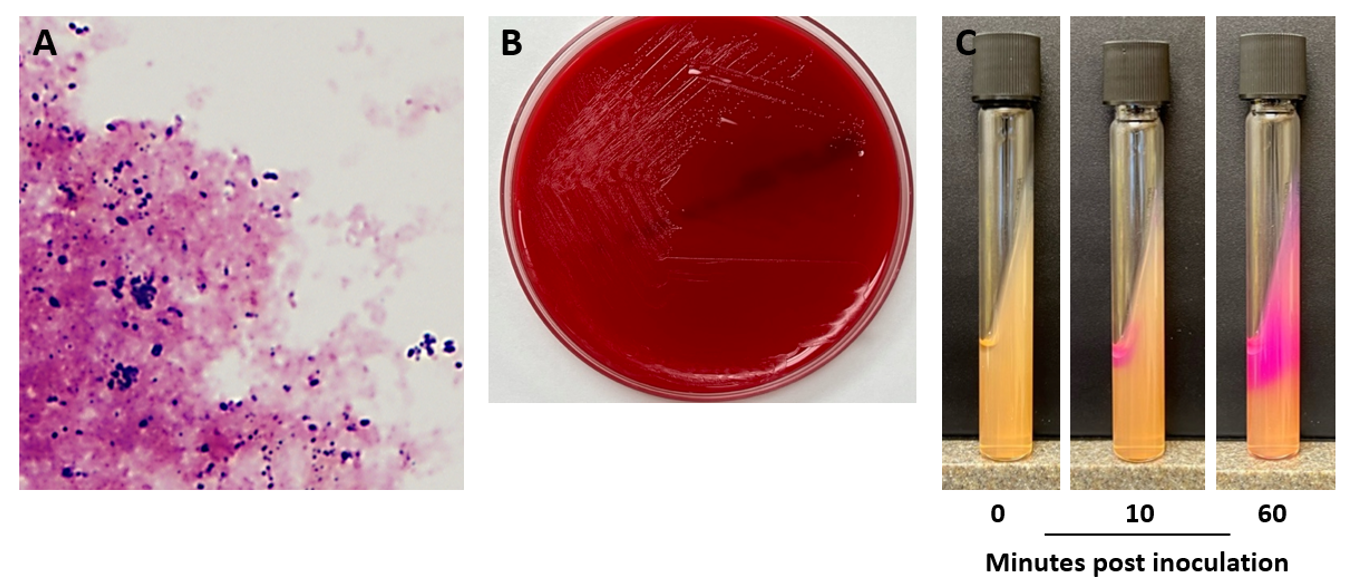
Intraoperative specimens were sent to the microbiology laboratory for routine culture. Gram stain of the nephrolith and associated tissue was performed, revealing gram positive coryneform rods and gram positive cocci (Image 1A). Light growth of Enterococcus faecalis was observed after 24 hours, along with a heavy amount of pinpoint, gram positive rods (Image 1B). It was noted that growth was only observed on blood agar (not chocolate agar), a feature suggestive of a lipophilic species of Corynebacterium. Colonies were visible on blood agar after prolonged incubation, and the organism was determined to catalase positive. The organism produced copious amounts of urease, leading to tube positivity within 10 minutes (Image 1C). The organism was definitively identified by MALDI-TOF MS as Corynebacterium urealyticum.

Image 1.  A) Representative Gram stain obtained from grind of nephrolith, and associated tissue submitted to the microbiology laboratory.  A mixture of coryneform rods and Gram-positive cocci can be seen.  B) Pinpoint growth of C. urealyticum on sheep’s blood agar media after 24 hours.  Extended in incubation or the addition of lipid to the culture media is needed for more robust growth.  C) Rapid urease production of C. urealyticum.  Christiansen’s urea agar slant was inoculated with C. urealyticum and photographed at different timepoints post inoculation.  Urease positivity can reliably be demonstrated within 10 minutes.

Discussion

Corynebacterium urealyticum is a lipophilic corynebacterial species frequently recovered from the urinary tracts of patients with renal or urological disease. While this organism is often associated with alkaline encrusted cystitis, it also plays an important role in renal stone formation. Due to its indolent and slow growing nature, the organism can be challenging to recover from routine urine cultures; thus, disease burden attributable to C. urealyticum is likely underestimated. Risk factors for disease include patients with urinary tract abnormalities, catheterization, prolonged hospitalization, history of immunocompromising conditions or renal transplant, and extended therapy with broad-spectrum antibiotics.1 Indeed, most contemporary clinical isolates are multidrug resistant, making antibiotic therapy of C. urealyticum challenging.

C. urealyticum is a member of the colonizing flora of both the skin and the urinary tract, and its ability to adhere to the uroepithelium is believed to mediate its ability to cause disease. The organism is frequently detected in the groin of hospitalized and institutionalized patients.2 As a member of the lipophilic corynebacteria, enhanced growth can be achieved through the addition of 0.1% Tween 80 to culture media. The impressive urease activity of C. urealyticum is central to pathogenesis as hydrolysis of urea in the GU tract leads to ammonia production and alkalinization (Image 1C). This, in turn, leads to saturation of the microenvironment with calcium phosphate and struvite crystallization which can result in sone formation.1 In settings where C. urealyticum infection may be suspected (including encrusted cystitis and encrusted pyelitis), prospective discussions with the laboratory are warranted to avoid dismissal of the organism as a diphtheroid bacilli that is a normal component of the urogenital flora. This is particularly important if the laboratory does not routinely hold cultures for longer than 24 hours.

Chronic and recurrent urinary tract infections in patients of advanced age is usually the primary presentation of C. urealyticum infection. By contrast, encrusted uropathies can develop in 4-16% of patients with C. urealyticum bacteruria and are subacute-to-chronic conditions associated with urease-producing bacteria.2 C. urealyticum is the principal cause of encrusted uropathies. This case represents a more complex case of encrusted disease leading to extensive nephrolith formation requiring surgical intervention. For urinary tract infections, vancomycin remains the antibiotic of choice for management in addition to removal of the impacted mucosal encrustations and urological consultation.3 C. urealyticum also exhibits near uniform susceptibility to linezolid. The excised nephrolith in this patient’s case was found to be composed of 90% struvite and 10% calcium phosphate. Following the procedure, imaging revealed no visible, residual stones in either the impacted kidney, ureter, or bladder. The patient is followed as an outpatient and continues to do well.

References

  1. Salem, N., Salem, L., Saber, S., Ismail, G., and Bluth, M.H. Corynebacterium urealyticum: a comprehensive review of an understated organism. Infect. Drug Resist. 2015:8 129-145.
  2. Van de Perre, E., Reichman, G., De Geyter, D., Geers, C., Wissing, K.M., and Letavernier, E. Encrusted uropathy: a Comprehensive Overview – to the Bottom of the Crust. Front. Med. 2021. 7:609024
  3. Kim, R. and Reboli, A.C. Chapter 205: Other Coryneform Bacteria, Arcanobacterium haemolyticum, and Rhodococci in Mandell, Douglas and Bennett’s Principals and Practice of Infectious Diseases 9th Ed. Elsevier, Philadelphia, PA. Pgs: 2532-2542.

-Andrew Clark, PhD, D(ABMM) is an Assistant Professor at UT Southwestern Medical Center in the Department of Pathology, and Associate Director of the Clements University Hospital microbiology laboratory. He completed a CPEP-accredited postdoctoral fellowship in Medical and Public Health Microbiology at National Institutes of Health, and is interested in antimicrobial susceptibility and anaerobe pathophysiology.


-Clare McCormick-Baw, MD, PhD is an Assistant Professor of Clinical Microbiology at UT Southwestern in Dallas, Texas. She has a passion for teaching about laboratory medicine in general and the best uses of the microbiology lab in particular.

Microbiology Case Study: An Unusual Case of Herpes Reactivation

Case history

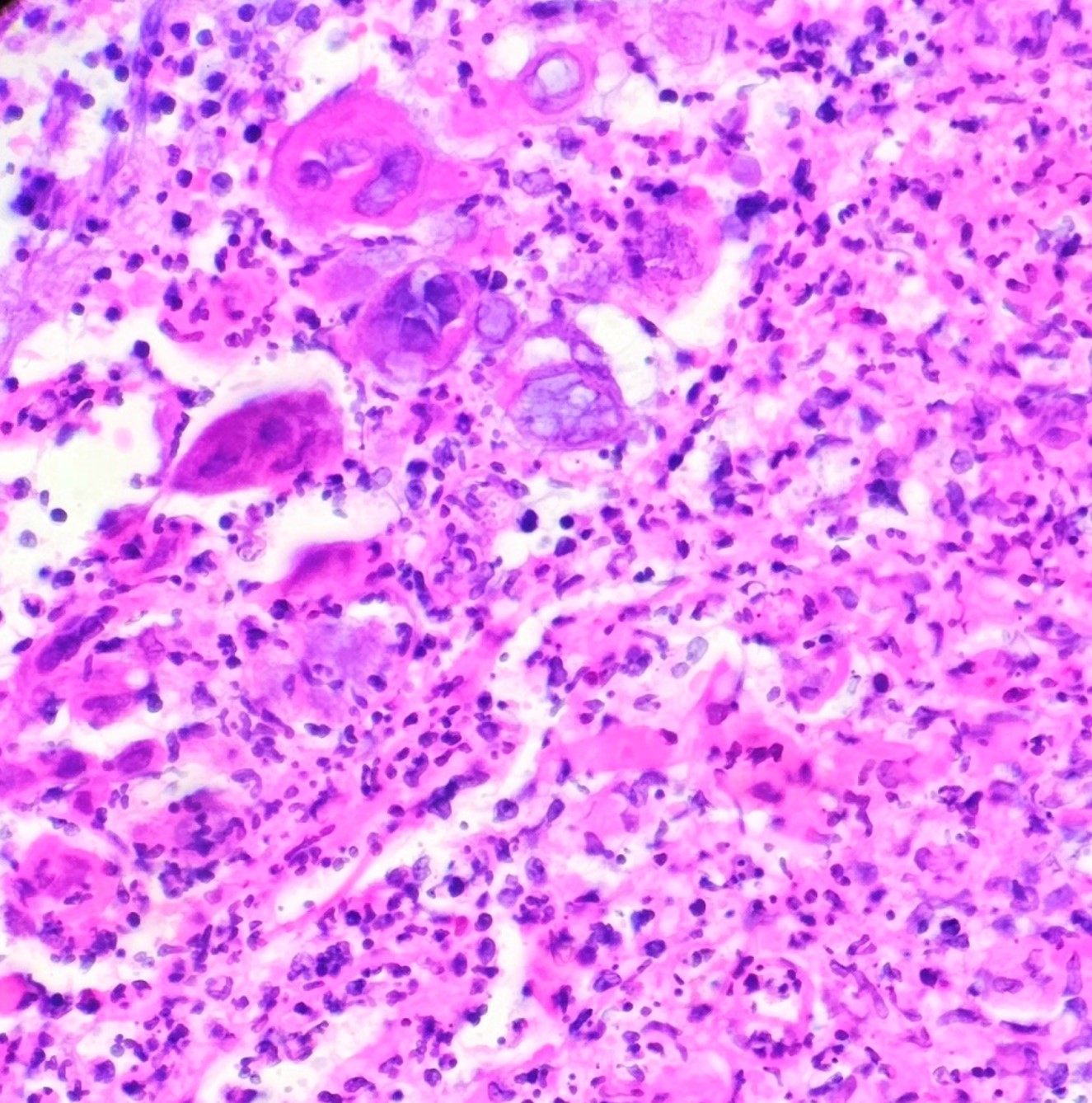
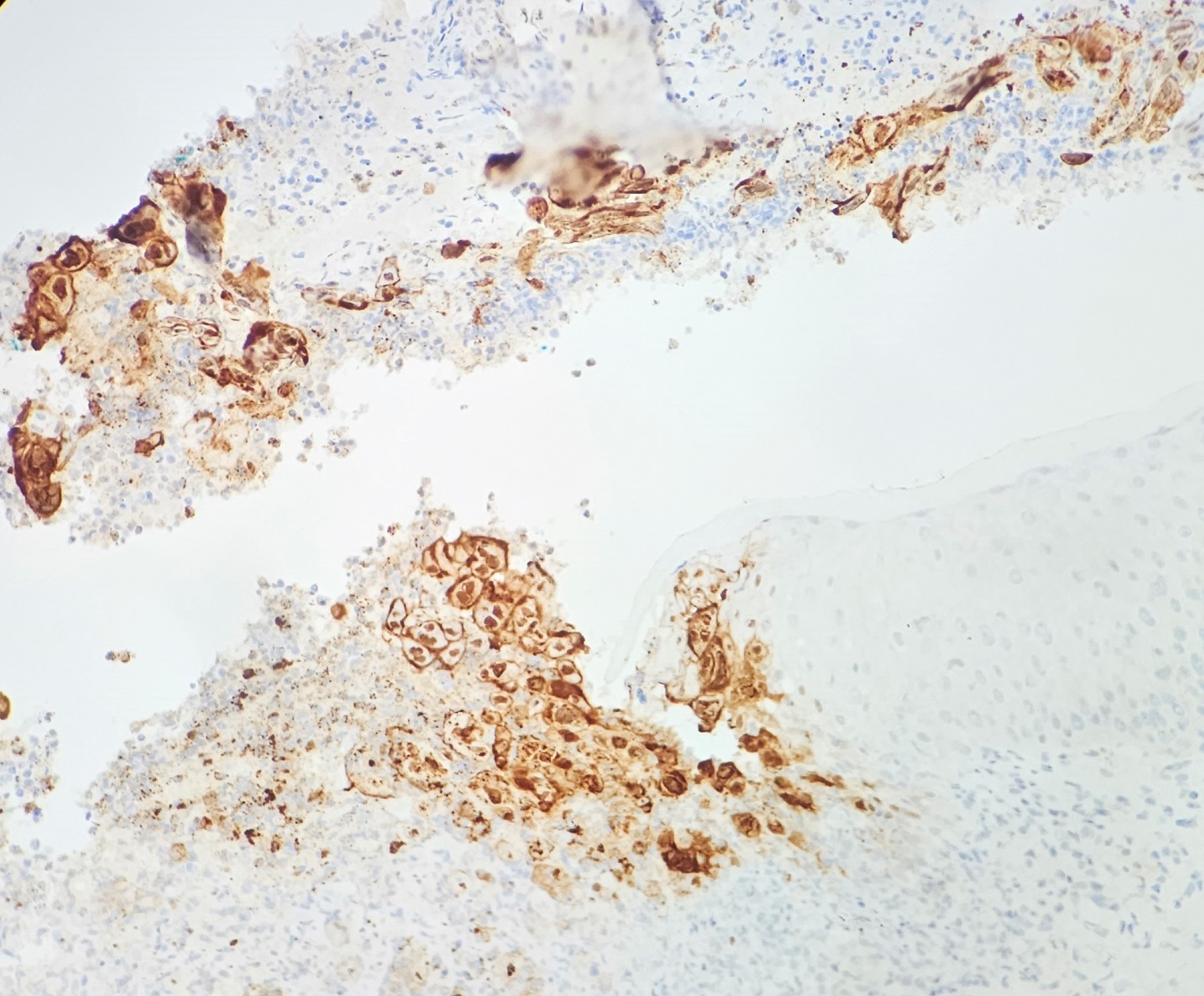
A 37-year-old female with a past medical history of psoriasis and common variable immunodeficiency disorder (CVID) presented to her dermatologist for an ulceration on her right buttock following a camping trip about 1 month ago. She thought that she had been bitten by a bug, for the lesion became extremely pruritic and painful. The patient was self-treating the area with over-the-counter antibiotic ointment and an anti-itch cream, but the symptoms persisted. At the time, the dermatologist was also treating a lower extremity dermatophyte infection, and the antibiotic cream and anti-itch cream were discontinued and replaced with clobetasol 0.05% ointment for potential allergic dermatitis. The patient returned to the dermatologist about a month later as the site was becoming increasingly inflamed and painful. The patient had also started experiencing night sweats and fever, so she was transferred and further evaluated in the emergency department. In the ED, the differential included soft tissue infection, cellulitis, or abscess of a fungal, viral, or bacterial etiology. Labs showed evidence of inflammation with an elevated ESR and CRP. A punch biopsy was performed and pathologic examination showed an ulcer bed with prominent acute inflammatory cell infiltrate and necrosis. The infected squamous epithelium showed the3 Ms findings (Molding, Margination, Multinucleation) consistent with herpetic infection (figure 1). The diagnosis was confirmed with HSV complex IHC (figure 2) and PCR testing of the lesion came back positive for HSV-2. Of note, the patient did have a history of genital herpes; however, she was not having a typical flare, and she had been treated with a 10-day course of valacyclovir 2 weeks prior to her ED visit. The gram stain showed no evidence of neutrophils, squamous epithelial cells, or organisms, but bacterial cultures came back positive for MRSA.

Figure1. H&E section showing mixed acute and chronic inflammation with squamous cells
showing herpes viral cytopathic effect (400x magnification)
Figure 2. HSV complex (HSV1 and 2) IHC staining virally infected epithelial cells (200x).

Discussion

Herpes simplex virus (HSV) is a large, double-stranded DNA virus from the Herpesviridae family.1,2 HSV-2 is generally considered a sexually transmitted infection because it can be transmitted by contact with infected genital secretions.2,3 The viral particles within these secretions can enter epithelial cells and begin replicating, causing the characteristic intranuclear inclusions and multinucleated giant cells that can be seen under the microscope.2 When the virus infects the cells in this manner, it can also cause these infected cells to separate from each other and form grouped vesicles filled with these cell remnants.2 The virus infects nerve endings and then travels backwards to the sacral ganglia, and it can remain latent there permanently, giving it the ability to recur during the infected person’s lifetime.1 A patient can initially present with symptoms of dysuria, lymphadenopathy, fever, headaches, and myalgias, but more than half of patients may not know they have genital herpes.1,3 Recurrences can present with symptoms of tingling, burning, itching, and pain in the nerve’s distribution pattern, similar to the pain and pruritis in our presented case.2 When there is a suspected HSV infection, PCR for HSV DNA is generally the best diagnostic tool, and it is faster and more sensitive than viral culture.1,2 A patient with known herpes infection should be treated with antivirals; however, the lesions should also self-resolve within 3 weeks if the patient is not treated.1

One abnormality in our presented case was that the patient’s reactivation of genital herpes was on the buttocks. A repeat infection with HSV at a site other than genitalia is more common when the primary infection also occurred at a site other than the genitalia.4 Infections occurring at non-genital sites such as the buttocks can also occur due to self-inoculation, which may have been the case in our patient.4 Additionally, repeat infections with HSV in non-genital sites are more common when the initial infection was with HSV1, but our patient’s PCR showed the presence of HSV-2 DNA.4 One explanation for this phenomenon is that HSV-2 recurrences can occur on the buttocks due to the retrograde transport to the root ganglia in the areas that correspond to these dermatomes.4

Another abnormality in our presented case involves the patient’s persistent infection despite treatment with a course of valacyclovir for 10 days. Generally, an initial herpes infection self-resolves in a matter of weeks, and a recurrent episode will self-resolve in a matter of days, usually less than ten.1,2 It is unusual that her infection persisted despite therapy, but the patient does have a medical history significant for CVID. Patients with weakened immune systems can take longer to fight off herpes infections even if they are taking antivirals.2 Additionally, there is a theory that herpes buttocks infections last longer than in other regions due to the greater travel distance along the nerves as well as a higher concentration of nerve endings in this region.4 The patient in our case also had tissue cultures that were positive for MRSA, meaning she had a concomitant bacterial and viral infection of the buttock region, and treatment with an antiviral would not be sufficient to eradicate her coinfection.

References

1.  Johnston C, Corey L. Current Concepts for Genital Herpes Simplex Virus Infection: Diagnostics and Pathogenesis of Genital Tract Shedding. Clin Microbiol Rev. Jan 2016;29(1):149-61. doi:10.1128/cmr.00043-15

2.  Gupta R, Warren T, Wald A. Genital herpes. Lancet. Dec 22 2007;370(9605):2127-37. doi:10.1016/s0140-6736(07)61908-4

3.  Groves MJ. Genital Herpes: A Review. Am Fam Physician. Jun 1 2016;93(11):928-34.

4.  Benedetti JK, Zeh J, Selke S, Corey L. Frequency and reactivation of nongenital lesions among patients with genital herpes simplex virus. Am J Med. Mar 1995;98(3):237-42. doi:10.1016/s0002-9343(99)80369-6

-Lillian Acree is a fourth-year medical student at the Medical College of Georgia. She is interested in head and neck pathology.

-Hasan Samra, MD, is the Director of Clinical Microbiology at Augusta University and an Assistant Professor at the Medical College of Georgia.

Microbiology Case Study: Cryptococcal Meningitis In Immunocompromised Patient

Case History

A 47-year-old male originally from Dominican Republic, with a recent diagnosis of acquired immunodeficiency syndrome (AIDS) and diffused large B cell lymphoma (DLBCL), was admitted because of seizures and a rapidly increasing left neck mass. ​MRI of the brain showed a 2.5 x 1.2 cm (about 0.47 in) lesion in the left inferior parietal lobe – (1.4×0.7cm) in the right frontal lobe, plus multiple scattered bilateral lesions. Because of this, he underwent craniotomy/craniectomy for possible resection. A biopsy was taken from the right temple lesion and sent for aerobic, anaerobic, fungal, mycobacterial culture, surgical pathology and Toxoplasma PCR (Polymerase Chain Reaction). ​

Gram stains, KOH prep, acid-fast stains, and Toxoplasma PCR of the tissue were all negative. Aerobic and anaerobic cultures did not show any growth.

Histopathology slides (GMS and H&E stains in Fig A and B) show budding yeasts morphologically consistent with Cryptococcus. Mucicarmine stain was also positive. Lumber puncture was performed the next day and Cryptococcal antigen was positive, with a titer of 1:640. Interestingly, the CSF culture and Gram stain did not reveal any organisms.

Figure A. H&E shows encapsulated variably sized transparent/gray color yeasts with thin walls. Black arrows show organisms.
Figure B. GMS stains highlight very faint staining of capsule (black arrow). Yellow arrow highlights background inflammatory cells.

Discussion

Among several species of Cryptococcus, C. neoformans and Cryptococcus gattii are pathogenic, with C. neoformans causing meningitis in immunocompromised patients worldwide whereas C. gattii has a preference for immunocompetent individuals.1 Cryptococcal disease remains a major opportunistic infection and a leading cause of mortality in patients infected with HIV in much of the developing world. Most HIV-related meningitis cases are caused by Cryptococcus neoformans.2

Cryptococci are found in soil, due to contamination with pigeon droppings. The infection occurs through inhalation, with or without symptoms of pneumonia, with subsequent dissemination to the central nervous system (CNS) via blood. Imaging findings are often unspecific or negative. CT or MRI examination of the central nervous system is performed to rule out alternative diagnoses. The diagnosis of ‘meningitis’ is made with a lumbar puncture, which typically shows lymphocytosis, an increased protein and decreased glucose concentration. Few neutrophil granulocytes are often found in CSF. This is likely because neutrophil migration is inhibited by specific polysaccharides that are part of the cryptococcal capsule.3

Cryptococci can be seen directly in the sediment of centrifuged CSF stained with India ink. The sensitivity and specificity of India ink is poor; therefore, CSF Gram stain and culture, multiplex meningitis/encephalitis PCR, and lateral flow antigen (LFA) tests have replaced the use of India ink. The cryptococcal lateral flow antigen test should be performed in CSF and serum, in addition to Multiplex ME PCR panel, and is a preferred test because of high sensitivity (93-100%) and specificity (93-98%).4

High organism burden at baseline (indicated by quantitative CSF culture or CSF antigen titre) and abnormal mental status are the most important predictors of death, while high opening pressures and a poor inflammatory response in the CSF have also been associated with poor outcome.5

On H&E it has the characteristic appearance ofencapsulated variably sized yeasts (2-20 microns) with thin walls which can be highlighted with the GMS stain. Although the presence of a capsule differentiates Cryptococcus from Histoplasma capsulatum and Blastomyces dermatitidis with the H&E or mucicarmine stain, additional confirmation can be made with Fontana-Masson stainin the absence of capsules.6 Since both C.neoformans and C. gattii produce melanin, the pathology report by FM silver or H&E/GMS stain cannot further distinguish these two closely resembled species.

Occasionally, cryptococcal meningitis cases with sterile CSF culture and/or negative Cryptococcal CSF antigen are observed in HIV individuals, regardless of the CD4 counts.7,8 However, serum Cryptococcal antigen and blood culture may be positive in those individuals.7 In our case, the diagnosis of Cryptococcal meningitis was made by the pathology report and positive CSF Cryptococcal antigen.

-Fnu Sapna is a 2ndyear AP/CP pathology resident in the Department of Pathology at Montefiore Medical Center in Bronx, NY. She completed her Medical education at Chandka Medical College in Pakistan. Her interests are putting efforts to improve screening guidelines for diagnosis of preventable gynecological and breast cancers.

-Phyu Thwe, Ph.D, D(ABMM), MLS(ASCP)CM is Associate Director of Infectious Disease Testing Laboratory at Montefiore Medical Center, Bronx, NY. She completed her medical and public health microbiology fellowship in University of Texas Medical Branch (UTMB), Galveston, TX. Her interests includes appropriate test utilization, diagnostic stewardship, development of molecular infectious disease testing, and extrapulmonary tuberculosis.