
Case history
An 81 year old man with prior history of bladder cancer treated with Bacillus Calmette–Guérin (BCG) presented with dysuria. Three urine samples were sent for AFB culture.
Laboratory Workup
The urine samples were plated on 7H11 solid media and Middlebrook liquid media. Colonies grew in the liquid media in five days and the solid media in 6 days (Figure 1). The colonies were subcultured to 7H11 solid media and Lowenstein-Jensen (LJ) media. At this time, the colonies were probed for Mycobacterium tuberculosis complex, M. avium complex and M. gordonae, all of which were negative. The organism grew on all of the subcultured media within one day. This fulfilled the criteria for rapidly- growing Mycobacterium species given the organism had grown in less than 7 days on subculture from solid media to solid media. The specimen was sent out to our reference laboratory for further speciation and was identified as Mycobacterium chelonae.
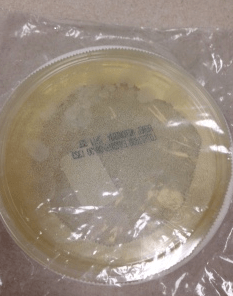
Figure 1: 7H11 media with non-pigmented white colonies.
Discussion
Rapidly growing mycobacteria include many species, but the main clinically relevant species are M. fortuitum, M. chelonae, and M. abscessus. These organisms are widely distributed in nature and can survive nutritional deprivation and extreme temperatures. They have been isolated from soil, dust, natural surfaces, water, wild animals and domestic animals. Risk factors for infection include patients with immunosuppression, organ transplant and autoimmune disorders. Immunocompetent patients are also at risk if they have had trauma or invasive medical procedures. M. chelonae may cause a spectrum of human disease. The most common manifestations are cutaneous infection, osteomyelitis and catheter infections. Nosocomial outbreaks of M. chelonae have been reported and linked to various water sources, including water-based solutions, distilled water, tap water and ice. Rapidly growing mycobacterium are generally resistant to the classic antituberculosis drugs (rifampin, ethambutol and isoniazid). M. chelonae is usually sensitive to aminoglycosides, however treatment should be determined by antibiotic susceptibility testing. In our patient, we had expected the colonies to be M. bovis because of the patient’s history of BCG treatment which is a live attenuated strain of M. bovis. Cystitis induce by M. chelonae is a rare clinical manifestation. We believed this is a true infection, as opposed a contaminated patient sample, given the patient’s symptoms in conjunction with all three urine samples being positive for M. chelonae.
-Jill Miller, MD is a 4th year anatomic and clinical pathology resident at the University of Vermont Medical Center.

-Christi Wojewoda, MD, is the Director of Clinical Microbiology at the University of Vermont Medical Center and an Assistant Professor at the University of Vermont.

 Lablogatory