
Microbiology Case Study: A 62 Year Old Lung Transplant Recipient with Shortness of Breath

Presenting History 

A 62 year old male, former smoker, with status post double lung transplant three months prior, presented to the lung transplant clinic for a follow-up appointment in July complaining of shortness of breath, which had worsened over the past 3 weeks and prompted the need for O2 again with minimal daily activities. He denies any chest pain, fevers, headaches, dizziness, N/V/D. He was admitted for further management of possible organ rejection and worsening respiratory function tests.  

The patient was started on IV solumedrol followed by a prednisone taper. A chest CT (non-contrast) showed patent bronchial anastomoses and stable bilateral small right greater than left loculated pleural effusions. Respiratory pathogen panel results were negative, and Cryptococcus Antigen and titer were negative. He then underwent bronchoscopy and biopsy, showing no signs of rejection. BAL was sent to microbiology for cultures. Fungal culture grew 3 days after incubation (Fig 1), and the Lactophenol cotton blue (LCB) prep shows septate hyphae with long and short conidiophores in small groups, which was identified as Scedosporium spp.
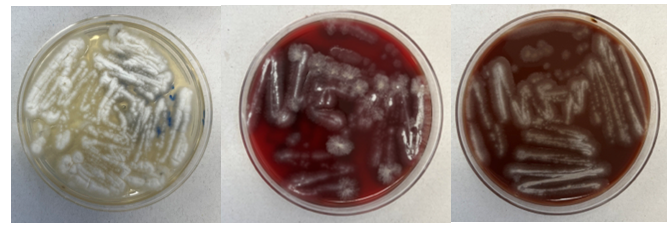
Figure 1: (left to right) Sabouraud agar, Blood agar, Chocolate Agar
Figure 2: Lactophenol cotton blue (left) low magnification and (right) high magnification

Discussion

Scedosporium apiospermum is an environmental mold increasingly reported as an opportunist organism due to the increasing use of corticosteroids, immunosuppressants, antineoplastics, and indiscriminate use of broad-spectrum antibiotics.1 The organism can cause various diseases, including colonization in cystic fibrosis, neurological infection associated with near-drowning incidents, and disseminated disease in immunocompromised individuals.2,3

Laboratory diagnosis of a Scedosporium infection is primarily based on the histopathologic exam from a direct specimen or microscopic examination of lactophenol cotton blue prep of fungal culture growth combined with the clinical or radiographic findings suggesting infection. Since the microconidia of Scedosporium could resemble Blastomyces spp, care should be taken to rule out the dimorphic mold. Scedosporium grows well and faster than Blastomyces on routine mycological media such as Sabouraud’s glucose agar, blood agar, and chocolate agar. Patient’s travel/demographic history is particularly important since Blastomyces is commonly found in Ohio and Mississippi River Valley regions and endemic in Southcentral and Southeastern US whereas Scedosporium is ubiquitous.4 

Scedosporium growth is also observed on the media with a high concentration of cycloheximide5 which is inhibitory for clinical Aspergillus species. A competing fungal flora of rapidly growing Aspergillus and Candida species is frequently present. Isolation using benomyl agar6 or cycloheximide-containing agar is then recommended. Culture of sputum or bronchoalveolar lavage (BAL) or secretions from the trachea or external ears, particularly in CF patients, may be hampered by their mucoid consistency. 

Typically, fungal identification is achieved primarily via microscopic examination in clinical microbiology laboratories. At the same time, more laboratories have adopted matrix-assisted laser-desorption-ionization Time-of-Flight (MALDI-ToF) for more accurate and rapid identification. Microscopic examination from a fungal culture requires a significantly longer time for mold sporulation. With MALDI-ToF, identification can be achieved rapidly as soon as sufficient growth for protein extraction. Nucleic-acid-based identification methods, such as DNA polymerase chain reaction (PCR) combined with ITS (Internal transcribed spacer) or 28s rRNA, can also be used for identification directly from clinical samples or the mold grown on culture.7 Histopathologic examination is helpful for determining the presence of invasive mold infection, but it is not possible to establish definitive identification without culture because various hyaline molds have a similar appearance. For this reason, culture is still an essential part of the diagnostic evaluation. Culture is also vital for testing in vitro susceptibility since Scedosporium spp can be resistant to multiple antifungal agents.7

References

[1] Khan A, El-Charabaty E, El-Sayegh S. Fungal infections in renal transplant patients. J Clin Med Res. 2015;7:371–8.

[2]  K.J. Cortez, E. Roilides, F. Quiroz-Telles, J. Meletiadis, C. Antachopoulos, T. Knudsen, et al. Infections caused by Scedosporium spp Clin Microbiol Rev, 21 (1) (2008), pp. 157-197

 [3] W.J. Steinbach, J.R. Perfect Scedosporium species infections and treatments J Chemother, 15 (2003), pp. 16-27

[4] Kim MK, Smedberg JR, Boyce RM, Miller MB. The Brief Case: “Great Pretender”-Disseminated Blastomycosis in Western North Carolina. J Clin Microbiol. 2021 Nov 18;59(12):e0304920. doi: 10.1128/JCM.03049-20. Epub 2021 Nov 18. PMID: 34792387; PMCID: PMC8601235.

[5] Rippon JW. , Medical Mycology. The Pathogenic Fungi and the Pathogenic Actinomycetes3rd edn, 1998PhiladelphiaSaunders

[6] Summerbell RC. The benomyl test as a fundamental diagnostic method for medical mycology, J Clin Microbiol, 1993, vol. 31 (pg. 572-577)

[7] De Pauw B, Walsh TJ, Donnelly JP, Stevens DA, Edwards JE, Calandra T, Pappas, et al. European Organization for Research and Treatment of Cancer/Invasive Fungal Infections Cooperative Group; National Institute of Allergy and Infectious Diseases Mycoses Study Group (EORTC/MSG) Consensus Group. Revised definitions of invasive fungal disease from the European Organization for Research and Treatment of Cancer/Invasive Fungal Infections Cooperative Group and the National Institute of Allergy and Infectious Diseases Mycoses Study Group (EORTC/MSG) Consensus Group. Clin Infect Dis. 2008 Jun 15;46(12):1813-21. doi: 10.1086/588660. PMID: 18462102; PMCID: PMC2671227.

-Abdon Lopez Torres, M.D., is a second year AP/CP resident of Pathology Department at Montefiore Medical Center, Bronx, NY. He completed his medical degree in Saint George’s University in Grenada. He’s interested in pursuing a surgical pathology fellowship after completing his residency.

-Phyu Thwe, Ph.D, D(ABMM), MLS(ASCP)CM is Associate Director of Infectious Disease Testing Laboratory at Montefiore Medical Center, Bronx, NY. She completed her medical and public health microbiology fellowship in University of Texas Medical Branch (UTMB), Galveston, TX. Her interests includes appropriate test utilization, diagnostic stewardship, development of molecular infectious disease testing, and extrapulmonary tuberculosis.
Microbiology Case Study: A 59 Year Old Male with Acute Prostatitis

Clinical history

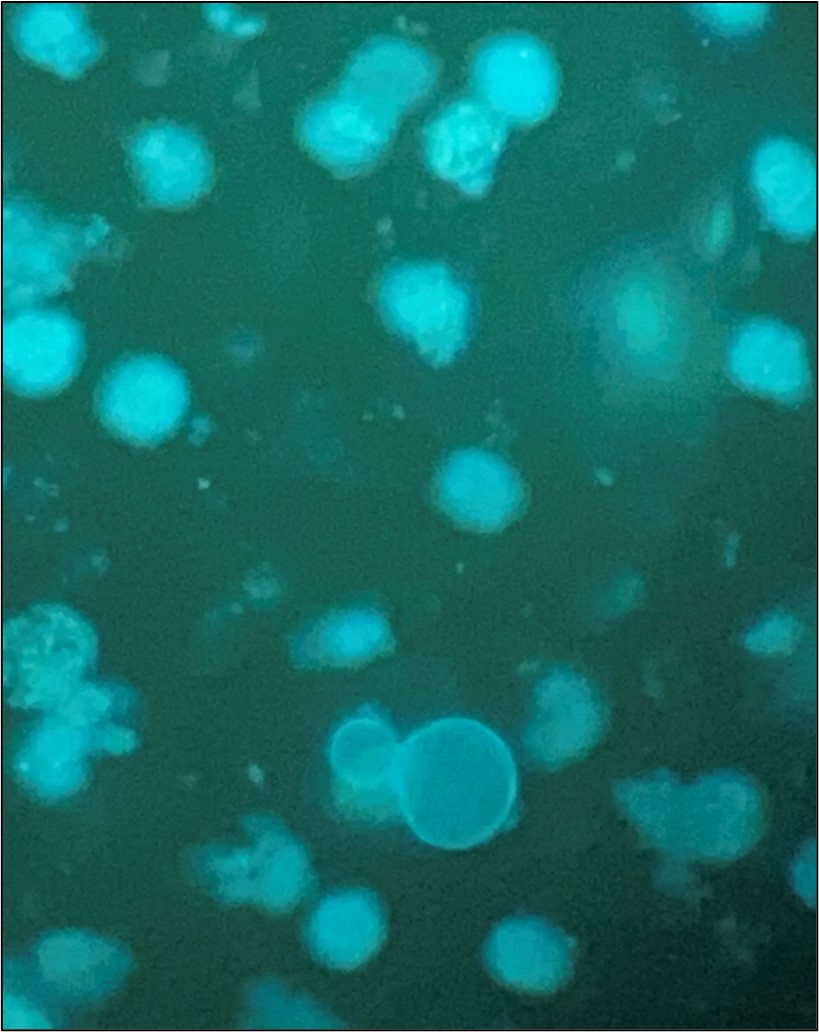
A 59 year old male with a past medical history of benign prostatic hypertrophy who presented to his primary care physician with complaints of dysuria, urgency, nocturia, and a weak stream. He was referred to a urologist who diagnosed him with acute prostatitis. The patient was given Flomax, a medication that relaxes the muscles in the prostate and bladder, and sulfamethoxazole-trimethoprim, an antibiotic for his possible bladder infection. The patient continued to have urinary symptoms despite antibiotics and multiple urinary cultures that were negative for growth of bacteria. Eventually the patient’s symptoms worsened and he presented to the emergency department with symptoms of fever (102.8ºF), bladder spasms, drenching night sweats, and painful urinary retention. His lab results showed a mild leukocytosis (15,500 cells /mm3) and increased leukocyte esterase, leukocytes, and erythrocytes in his urine. He was admitted and a pelvic computed tomography scan showed multiple prostatic abscesses. The infectious disease team ordered a urine fungal culture. The fungal stain showed broad-budding yeast forms (Image 1).

Image 1. Calcofluor white fungal stain highlighting brad-based budding yeast (100x oil immersion).

Laboratory identification

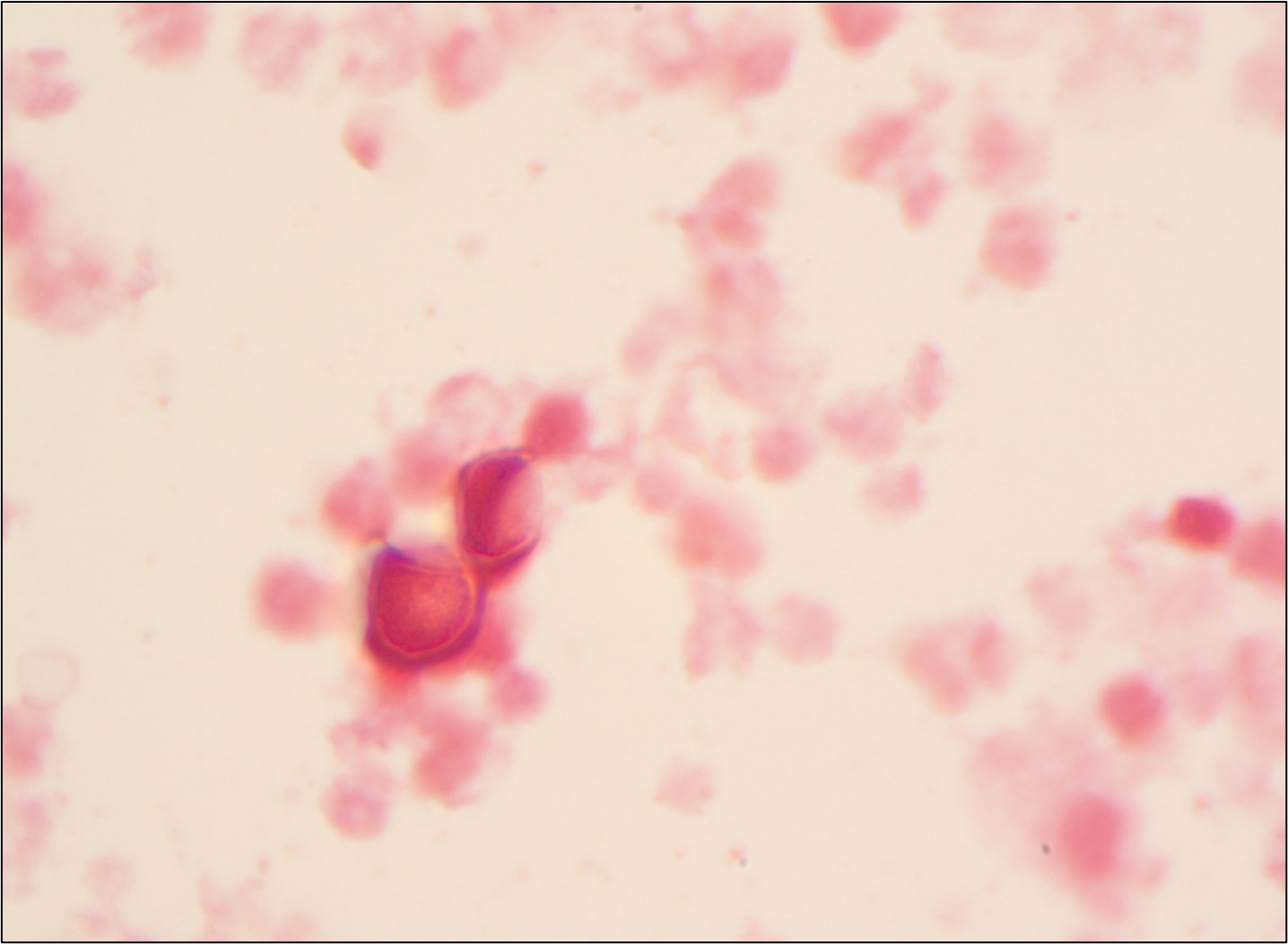
A cytospin Gram stain was made of the urine specimen which showed rare large yeast forms, numerous red blood cells and neutrophils (Image 2). These yeast forms are consistent with Blastomyces dermatitidis which are 10-15 µm in diameter and have thick contoured cell walls. The fungal culture grew a dirty white leathery mold on inhibitory mold agar after ten days. The lactophenol cotton blue adhesive tape preparation highlighted short to long conidiophores with large pear-shaped conidia at the tips of delicate conidiophores and septated hyphae. A positive urine antigen test supports the identification of the organism as Blastomyces dermatitidis.

Image 2. Large yeast with thick refractile walls seen on Gram stain. Flattened areas suggest recent separation.

Discussion

Blastomyces dermatitidis is a dimorphic fungus commonly found in the eastern half of the United States and Canada, specifically the Mississippi and Ohio River valleys, and Great Lakes Region. It typically grows as a mold in damp soil and decomposing vegetation; outdoor activities that disrupt the soil can increase the risk of infection. Infection occurs when the reproductive spores known as conidia are inhaled into the alveoli of the lungs. There the conidia transform into yeast and multiply causing the disease blastomycosis. Approximately 50% of those infected with Blastomyces are asymptomatic and clear the infection without trouble. For the other 50%, symptoms depend on the course of infection with a range of flu-like illness over a few days to chronic or severe illness that can last for months. Symptoms include fever, chills, headache, joint and muscle pains, shortness of breath, cough, night sweats, weight loss, and pleuritic chest pain. Twenty to forty percent of symptomatic patients will have disseminated disease. The common extra-pulmonary sites include skin, bone, urogenital, and the central nervous system, however, it has been reported in all organ systems.

In our case, the patient presented with prostatic blastomycosis which was quickly identified by calcofluor white fungal stain and urine antigen test. The patient was placed on itraconazole and a transurethral prostatic resection was performed. Histopathologic analysis showed necrotizing granulomas with fungal elements that are consistent with Blastomyces dermatitidis (Image 3). After a few days of treatment, the patient was discharged and is being followed on an outpatient basis.

Image 3. PAS stained tissue showing three budding yeast forms in a granuloma with extensive neutrophilic reaction.

– Joshua Wodskow, DO is a 1st year clinical and anatomic pathology resident at University of Chicago (NorthShore). Academically, Joshua has a particular interest in hematopathology and informatics. In his spare time, Joshua enjoys board games with his family and listening to podcasts.

-Erin McElvania, PhD, D(ABMM), is the Director of Clinical Microbiology NorthShore University Health System in Evanston, Illinois. Follow Dr. McElvania on twitter @E-McElvania. 

Microbiology Case Study: A 59 Year Old with History of Rheumatoid Arthritis

A 59 year old male with a history of rheumatoid arthritis, hepatitis C, non-small cell lung carcinoma presents to his rheumatologist. His joint pain has responded well to adalimumab and methotrexate, but over the past month his left elbow has become increasingly painful, despite multiple corticosteroid injections there. He does not report any fevers or chills. On physical exam, his left elbow is warm and swollen. Synovial fluid is aspirated and sent for gram stain and culture.

Image 1. Initial Gram stain findings.
Image 2. Growth on potato flake agar.

The yeast was identified as Candida parapsilosis, a common environmental species of Candida that is becoming increasingly prevalent as a cause of invasive candidal disease. It is easily transmitted by contact and is a source of nosocomial infections. It has the ability to form a biofilm and, thus, has a predilection for indwelling catheters and prosthetic devices. Highest-risk groups include immunocompromised patients, surgical patients, and very low-birth weight neonates.

The microbiology findings exemplify how fungi can be broadly categorized based on how they grow (as a yeast or a mold) in the host and in culture (a cooler environment). In this particular case, the initial gram stain (figure 1), representative of the phenotype in the host, demonstrates neutrophils with intracellular organisms with visible cell walls, suggestive of an active yeast infection with ongoing phagocytosis. The potato flake agar (figure 2) is also growing a yeast. Thus, the pathogen is classified as a yeast. In contrast, molds are characterized by the development of hyphae, which give them their classic “fluffy” appearance in culture (absent in this case). A clinically important subset of this group, the dimorphic fungi, are defined by a yeast phenotype in the host and a mold phenotype in culture.

References

  1. McGinnis, M, and S Tyring. (1996). Medical Microbiology (4th Edition). Galveston, TX: University of Texas Medical Branch at Galveston.
  2. McPherson, R, and M Pincus. (2011). Henry’s Clinical Diagnosis and Management By Laboratory Methods (22nd Edition, pp. 1155-1184). Philadelphia, PA: Elsevier Saunders.
  3. Trofa, D, A Gacser, and J Nosanchuck. “Candida parapsilosis, an Emerging Fungal Pathogen.” Clin Microbiol Rev. 2008 Oct; 21(4): 606-625.

-Frederick Eyerer, MD is a 3rd year anatomic and clinical pathology resident at the University of Vermont Medical Center.

-Christi Wojewoda, MD, is the Director of Clinical Microbiology at the University of Vermont Medical Center and an Associate Professor at the University of Vermont.