US Global AIDS Coordinator and the Laboratory

In early November, Eric Goosby, the U.S. Global AIDS Coordinator charged with leading the implementation of the President’s Emergency Plan for AIDS Relief (PEPFAR) announced that he is stepping down from his position  to take a professorship at the University of California, San Francisco, where he will focus on the implementation of health programs in developing countries.

The Global AIDS Coordinator is appointed by the President and confirmed by the Senate and reports directly to the Secretary of State. According to PEPFAR website, the Coordinator:

  • Leads the U.S. Government’s international HIV/AIDS efforts;
  • Ensures program and policy coordination among the relevant USG agencies and departments and nongovernmental organizations, avoiding duplication of effort;
  • Pursues coordination with other countries and international organizations;
  • Resolves policy, program, and funding disputes among the relevant USG agencies and departments;
  • Directly approves all activities of the United States relating to combating HIV/AIDS in 15 focus countries; and
  • Promotes program accountability and monitor progress toward meeting the Emergency Plan’s goals.

Given the influence this position has in the implementation of USG international HIV/AIDS efforts, the search to replace Dr. Goosby is of great importance. This person is in the position to guide the direction of PEPFAR implementation and thus may place emphasis on particular initiatives and programs. This Wall Street Journal article mentions four names that are on the short list for Dr. Goosby’s successor.

Certainly there are many important qualifications and characteristics that are needed to be effective in this position. However, as part of the laboratory community, it is my hope that one of those qualifications will be a high level understanding and knowledge of the lab.  With an understanding of the importance of the lab in terms of diagnostics and care and treatment I hope that this person will then guide the implementation of crucial laboratory strengthening programs. From the creation of region specific reference ranges, to better regulated supply chain management, to streamlined equipment and reagent procurement, to the training of personnel, there is much that can be improved in labs at the forefront of the fight against HIV/AIDS. With improved diagnostics, particularly at point of care sites, the care and treatment of HIV/AIDS can be improved, which will not only save and improve lives but will also save money and resources.

Thus, my plea to whomever is appointed, know the lab (or surround yourself with those who do) and make laboratory improvements a cornerstone to the continued work of PEPFAR and USG HIV/AIDS efforts.
 

Levy

-Marie Levy spent over five years working at American Society for Clinical Pathology in the Global Outreach department.
 

Another Passport Story, Part 2—A Bit of Horsing Around

In my last blog, I left off telling you about my lovely visit “on horseback” in the Kyrgyzstan mountains outside of Bishkek.  I had taken off with a guide, marshaling my skills to stay in the saddle on a scrawny but feisty equine.  As we traveled up the dirt road-trail, it was evident that my mountain pony was full of energy and a handful.  We trotted and danced a bit, and I was using my best skills staying in the saddle.  We were passed by a couple of cars racing up the dirt road and leaving a cloud of dust which didn’t help my nervous horse, and my guide kept a close eye on me.  After a short ride into the hills he had me weave my way up a side trail so he could take my picture with the rocks and mountains in the background.  As he was fiddling with my camera, a car came racing back down the dirt road and stopped just behind him, shouting out the car window.  He looked at them, at me, back at them, and then shouted something to me in Kyrgyz, pointing and gesturing.  I didn’t understand, so he raced his horse up the hill and shouted “Passport? Passport?”  I said yes, I had it in my pocket, and pointed.  “Show, show!” he said, and when I dug for it, the money was there but the passport was gone.  During the horse-dancing and prancing, it had apparently worked its way out of my pocket and fallen by the side of the road.  We looked back toward the car and the driver was waving a very familiar-looking little blue book out the car window and sporting a very mocking grin.

You can imagine that my rapidly increasing unease translated directly to my horse and he started a bouncing act amid trees and rocks, and dangerously close to a downhill cliff behind me.  It was nearly impossible to get off without killing myself—but get off I did, handed the reins to my guide and ran downhill toward the car.  The driver and his two passengers looked to be about college age, laughing and saying “road, road” and in gestures we communicated they had found it, showed me the picture and said “you!”.  Now, since passport pictures are like driver’s license pictures, and I was shaggy and windblown, any reasonable passport control agent would have looked twice for verification…but it was indeed me.   What they wanted was money and had they given it back I would have given them all I had, and gratefully.  But the young man holding it did not offer it back, and raced the car engine.  I was a bit angry and said rather forcefully “that is mine, you give it back!” I reached into the car and grabbed it from him, amid more laughter and a bit of harassment from his passengers that now he’d lost it and “no money!”  By then my guide was standing behind me and the two of us were more of a menace than they were interested in, so they laughed and raced on down the road.  Whew.  After a few deep breaths, my guide looked at me with a very serious scowl and said “put passport HERE!” and demonstrated by shoving his fingers down the front of his shirt. I immediately followed directions and we trotted on back.  My ASCP colleagues were waiting for me as we jogged back up the driveway at the resort and I quickly borrowed another $20 bill, tipped my guide heavily and thanked my lucky stars that:1) the passport didn’t fall out of my pocket into the river;  2) the kids in the car were more interested in a little fun money than fencing it and; 3) the driver had slow reflexes.  Later that evening over a much-needed glass of wine, I reflected I had probably used up a couple of my “nine lives” on that adventure!

So if you are ever in the mountains outside of Bishkek, Kyrgyzstan and want to go horseback riding, I have a wonderful guide and a rather skinny Cossack pony I can recommend, just contact me at bsumwalt@pacbell.net. However, I would advise putting your passport close to your body somewhere OTHER than your jeans hip pocket!


???????????????????????????????

Beverly Sumwalt, MA, DLM, CLS, MT(ASCP) is an ASCP Global Outreach Volunteer Consultant.

Another Passport Story, Part 1–A Bit of Horsing Around

On a recent trip to Kyrgyzstan, I had a wonderful time with an interactive training for laboratory pre-analytical procedures and specimen transport with key laboratory leaders. Our sessions were designed to give them a full picture of the challenges and opportunities ahead as they build stronger laboratory systems. The two week stay started with arrival in Bishkek, the capital city, on Easter Sunday morning. (Actually, it was the middle of the night!) It was still dark when we checked into the hotel and we took hot coffee to the hotel rooftop for an “Easter Sunrise”. I cherish sunrises all over the world, and taking a solitary moment to watch the sun move slowly through the haze over the distant mountains and bring the city to life was very special.

Sessions covered two weeks and in between we had a weekend to explore and see a bit of Kyrgyzstan. It was suggested we take an overnight into the mountains, which were covered in snow even in late spring, to enjoy their favorite “resort and spa.” A little relaxation and sightseeing in the mountains sounded excellent….we headed off with our ever-protective and accommodating driver.

One of the treats offered at the resort was a horseback ride along the dirt road into the mountains. Some of you may know I have horses and love to ride, so this was a natural attraction and I immediately signed up for a ride and a guide. They showed up with three of the tallest, skinniest, poorly-tacked horses I think I’ve ever seen and I secretly wondered how these ponies ever survived the tundra temperatures! But the ever tough “Cossack horses” are suited for it and much faster and well-adapted than our overly-coddled pleasure horses, so I quit frowning and clambered on. My mount was too tall and had a cock-eyed saddle, and I’m certain he could feel a bit of nervous body language. Riding takes your full attention and I wanted free use of both hands, and also a safe place for identification and tip money. So I put my passport, tip money, and the hotel phone number and cell phone in my jeans pockets. Safety first! However, this turned out to not be as safe as I thought …

Next time….the rest of the story!


???????????????????????????????

Beverly Sumwalt, MA, DLM, CLS, MT(ASCP) is an ASCP Global Outreach Volunteer Consultant.

Happy New Year—Making 2014 a Year to Remember

If you are one who likes to make a resolution for the New Year, let’s have a look at the word “resolve”:

re·solve:

verb:  settle or find a solution to (a problem, dispute, or conflict); to sort out, solve, deal with, rectify;  to decide firmly on a course of action; determine, decide, make up one’s mind, make a decision
noun: resolve, resolution; determination to do something, strength or decisive commitment

Or, another way to define it might be, “re – solve”.  Laboratory professionals are trained and skilled at solving problems, particularly analytical ones; why not “resolve” to “re – solve” something? Perhaps this is your year to make a commitment to giving back to your profession, your faith, your future. Consider volunteering, either at your laboratory, your hospital or clinic, your community, or perhaps even globally. There is no end to the list of opportunities for service, using skills and training to add value to improving health. If you want some ideas, just contact me at bsumwalt@pacbell.net and I’d be very happy to explore the idea with you!

This is one of my favorite quotes—let’s make 2014 a Year to Remember!

“How wonderful it is that nobody need wait a single moment before starting to improve the world.”  ~Anne Frank

???????????????????????????????

Beverly Sumwalt, MA, DLM, CLS, MT(ASCP) is an ASCP Global Outreach Volunteer Consultant.

Season’s Greetings—International Style

In this season of extending kindnesses and gifts and sharing the blessings of family and friends, I am reminded of something I have heard many times; World peace isn’t achieved in government board rooms or international caucuses…it is achieved quietly in each other’s homes, around the table, one-one-one, face to face.  I believe that is true; and some of the most lasting impressions I have of the world and the world’s people have been gifted to me in conversation, at the table, exchanging ideas, thoughts and building relationships and forging ways ahead to make health and care better globally.  This is the essence of change and the heart and soul of peace and prosperity.  May this season bring peace and joy, no matter where you live or what faith you follow, and may we all strive to sing the melody and the harmony together whenever we can.

Happy Holidays!


???????????????????????????????

Beverly Sumwalt, MA, DLM, CLS, MT(ASCP) is an ASCP Global Outreach Volunteer Consultant.

Passport Nostalgia—Looking Back

One of my life mottos is, “Never let your passport expire.”I just renewed mine and when they sent back the old one, punched full of holes, it was interesting see all the passport stamps and colorful visa stickers, and reflect on places I’ve been in the past ten years.  I enjoyed revisiting a variety of unexpected journeys and the opportunity to relive some very special travel memories.

The pages are home to circles, squares, and odd shaped stamps in a variety of inks. I find hurried and smeared signatures, kanji graphicsand Aramaic scripts, and a variety of illegible initials; there is a whole page devoted to the amount of US dollars and Ugandan currency I was required to pay for an “on foot” border entry; there are colorful images and seals; the back has a host of barely legible security stickers in a rainbow of colors; there is even a page announcing an “amendment” to add more page.  Ten years of travel history bound in a single, 3.5 x 5 inch dark blue booklet, and it speaks about the world in a subtle stillness from the corner of my desk.

As I flip through the pages, I’m reminded that this little booklet has been with me for all my laboratory consulting journeys, and occasionally has had a mind of its own.  The Johannesburg airport incident for one; and next time I’ll tell you about passports and horses.  I don’t have a stamp in there for this little side trip in the mountains outside Bishkek, Kyrgystan, but I’m thinking I should have—you can be the judge.Take a moment and thumb through your passport.  I promise it will jog travel memories, and perhaps invite you to take another international journey soon.  The world is indeed a small place, and I intend to fill as many pages as possible in the next ten years!


???????????????????????????????

Beverly Sumwalt, MA, DLM, CLS, MT(ASCP) is an ASCP Global Outreach Volunteer Consultant.

Global Health Engagement Month—A Different Perspective

Those of us who work in the international health field are connected in many ways.  We come from a variety of healthcare and public health careers and so approach the needs of global health in different ways. The common thread is strengthening the quality of healthcare and increasing and improving the availability to those in need around the world.

December is designated as Global Health Engagement Month for the US Military communities. All of our branches of service participate in humanitarian assistance and disaster response, and their efforts during times of international need are often the first assistance that some countries receive. In addition to providing care for our military active duty members and their families, our military medical corps from each branch of service provides care, assistance, teaching and disaster response in many different venues. They often work with NGO partners, other countries, and the Ministries of Health and the medical communities of nations in need. It is indeed a “global health engagement” effort that makes a difference. It has been my privilege to work with ASCP laboratory capacity building as a volunteer consultant, and I’ve also had an opportunity to work with the US Navy to build their partnerships with NGOs when they send their hospital ships on humanitarian assistance missions. Seeing global health outreach from several different perspectives keeps me ever mindful of the good work we do, and how much there still is to do in the world!

If you are interested in what our military is doing in providing humanitarian assistance , read about the hospital ships USS Mercy and USS Comfort and see why “Global Health Engagement Month” is so important to our military health colleagues here and here. I’m sure you’ll be amazed and proud of our country and inspired by their stories!


???????????????????????????????

Beverly Sumwalt, MA, DLM, CLS, MT(ASCP) is an ASCP Global Outreach Volunteer Consultant.


Reference Ranges

According to Wikipedia, reference ranges in health-related fields are generally defined as “the prediction interval between which 95% of values of a reference group fall into, in such a way that 2.5% of the time a sample value will be less than the lower limits of this interval, and 2.5% of the time it will be larger than the upper limit of this interval, whatever the distribution of these values.”

In other words, reference ranges are important! They provide the necessary context for medical analysis and diagnosis. Without a reference range (also sometimes referred to as reference value or reference interval) medical professionals have no comparison group for which to make diagnosis and advise treatment.

In all instances where reference ranges are used, context is key. In sub-Saharan Africa many labs use European established reference ranges which represent a primarily Caucasian population. This is because reference ranges specific to populations in sub-Saharan Africa do not universally exist. This presents a problem as many factors can contribute to what is considered “normal” in different populations. Genetics, dietary patterns, pregnancy, gender, age, ethnic origin, and prior exposure to pathogens all can influence reference range values.

Establishing accurate reference ranges for a given population takes time and an enormous amount of resources. It is often recommended that laboratories establish their own reference ranges based upon the population that they serve. This is cost and resource prohibitive for many laboratories in the developing world. In absence of region specific reference ranges, it is recommended that each lab validate existing ranges using their own population. However, even this can be prohibitive in resource (both physical and human) limited settings.

This can lead to egregious errors in disease diagnosis and treatment. Clement Zeh, Collins Odihiambo and Lisa Mills write that reference range research thus far reveals that African populations differ from their European/Caucasian counterparts with lower hemoglobin, red blood cell counts, hematocrit, mean corpuscular volume, platelet counts, and neutrophil counts  and higher monocyte and eosinophil counts (see http://www.intechopen.com/books/blood-cell-an-overview-of-studies-in-hematology/laboratory-reference-intervals-in-africa for their chapter on Laboratory Reference Intervals in Africa).

In addition to diagnosis and treatment of individuals, reference ranges are crucial components in drug and vaccine studies. Historically, clinical trials of drugs and vaccines have relied upon ranges developed in the Western world. This can have significant impact upon the research data resulting in health risks to study participants, poor data, and huge amounts of resources wasted.

Thus, while it is costly and time consuming, reference ranges specific to populations in countries in the developing world need to be established. This would help both the treatment of individuals, and the testing, study and development of important vaccines and drugs.

-Marie Levy

Internationally Thankful

Settling into November, fall is “in the air” and in the United States we all start to think about most everyone’s favorite holiday, Thanksgiving. I’ve been fortunate to have traveled to many places both for work, for volunteering, and for pleasure—and I always come home “thankful” for the people I’ve met.

Relationships with people are what matter most to a consultant. And over many years I’ve enjoyed reinforcing my belief that people are the same everywhere—our differences are so small compared to our similarities. We all laugh, we cry, we share with friends, we want the best for our families, we celebrate life and mourn death, we strive to do meaningful and challenging work that makes a difference, we seek to understand life and have moments of personal reflection when we look in the mirror. The fact that we do it in a myriad of languages, wearing different clothing, eating different foods and honoring different holidays and beliefs, coping with different weather and available resources are all just part of the platform.

A feast in any country, any language, any culture is a celebration, a way to say “welcome—come and share—you are friend and family”. Celebrating our holiday of Thanksgiving, it is very easy for me to say “thanks for what international work gives” to all of us! I’d be happy to share some “feast favorites” with you, just send me an email at bsumwalt@pacbell.net . But the real treat is the smiles!

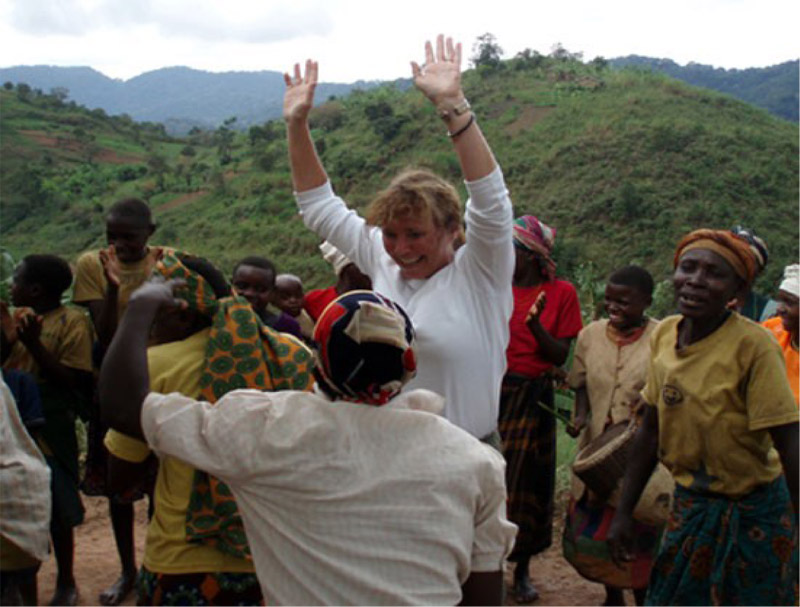
Blog 10 Celebrating with the Batwa
Celebrating with the Batwa

OLYMPUS DIGITAL CAMERA
My good friend Matthew in Namibia

Cheers,
Beverly Sumwalt

Never a Dull Moment

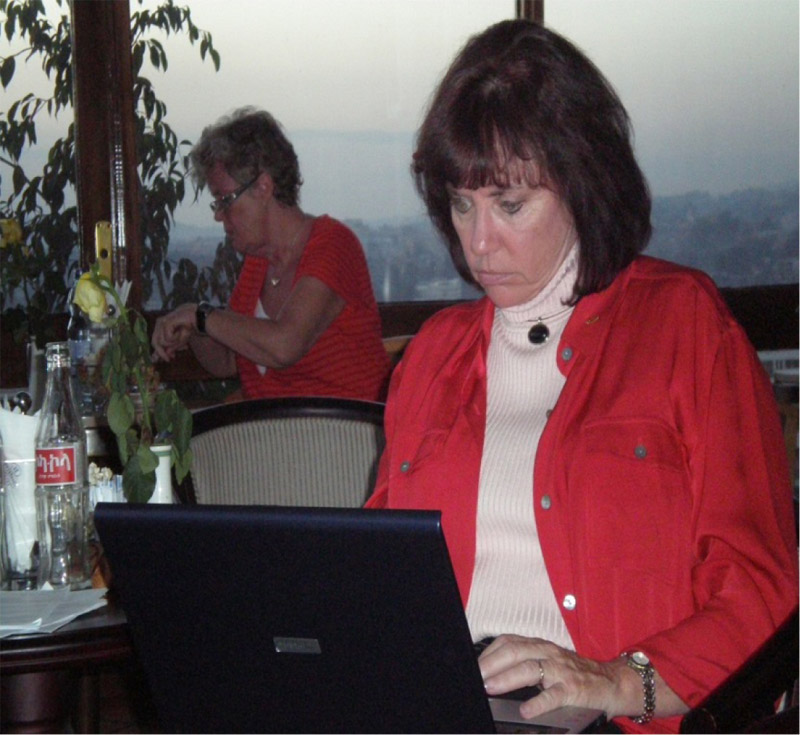
As an international laboratory consultant, there is never a dull moment.  One minute you are working with energized people from another country engaged in spirited dialogue, learning and sharing experiences—and the next you are up very late with your team colleagues in a smoke-filled hotel lounge with multiple computers plugged into walls trying to capture information into an assessment template not designed for the technically challenged.  It’s better than Sudoku for mental exercise!

I recall one trip where the biggest challenge was keeping our notes and information straight.  We were scheduled to visit two laboratories on the same day; small but relatively full service labs, so there was much to review, discuss and digest in order to understand their capability and progress.  Some people can type notes into a laptop, but I find that a pencil and paper are the most useful tools. Working with people, making eye contact and facilitating interactive discussion provides a backdrop for what you are able to observe.  After a walk-through and overview, questions and comments, log reviews and notations it is imperative to elaborate on your notes and add comments immediately after an assessment visit.  Believe me, after 6 laboratories in 4 days covering >1000 miles, they can very easily “all run together” if you are not careful and diligent.  Laboratorians  tend to be overly organized and a bit obsessive about documenting things—it’s the nature of the beast, since we live our career lives in data production and information dissemination—and it has to be correct, all the time, for every patient. I smile as I remember many nights on that trip with my ASCP colleague Wendy, plugged into the wall in a deserted hotel lobby and barely able to see the computer screens as we compared and contrasted assessment scores late into the night before getting up before dawn to take off and do it all over again.  Well, it was all in a day’s work!  She and I will both admit to wishing we’d had a little more sleep, and we would also tell you we wouldn’t have missed it!

So if you find yourself up late at night studying, preparing for a presentation, catching up on journals or even waiting for a teenager to get home at the appointed hour, I recommend keeping a hot cup of tea and some local chocolate near at hand.  I can highly recommend chocolate from Kazakhstan, and also from Namibia— contact me at bsumwalt@pacbell.net and I’ll send you the name of my favorite brands.  But even if you can’t read the label, the pictures are all you really need!

Blog 9 Working Late


Cheers,
Beverly Sumwalt